HENRY VII. of England had the reputation of being one of the most enlightened monarchs of his age, and in him, accordingly, Columbus hoped to find a patron at once able to appreciate his grand scheme of discovery, and disposed to advance the funds necessary for carrying it into effect. Unfortunately Henry, with all his talents, was of a penurious, avaricious temper, and remained so long in suspense between the advantages to be gained by the enterprise if it should succeed, and the pecuniary loss to which it would subject him if it should prove a failure, that he lost the opportunity, and only signified his intention to accept the services of the great Genoese navigator when it was no longer possible for him to obtain them. Before Bartolommeo Columbus could return to announce the success of his mission to England, the discovery of the New World had already been achieved, and his illustrious brother was prosecuting a second voyage.
The disappointment which Henry felt appears in the readiness with which he entered into a rival scheme of maritime discovery. A Venetian of the name of John Cabot, or Giovanni Caboto, had been settled for some time at Bristol, and to him and his three sons, Ludovico, Sebastiano, and Sanzio, the English monarch, on the 5th of March, 1496, granted a charter, empowering them, in the most unlimited terms, to make voyages of discovery in his name. There was no great liberality in the grant, for it cost him nothing; and while he refused to bear any part of the expense, he was niggardly enough to stipulate for a fifth of the whole profit. Simply for the privilege of sailing under the English flag, and becoming governors under the English crown of any lands which might be discovered, they were to bear the whole loss, and in the event of profit allow another to share it with them. It gives a high idea of the spirit of maritime enterprise in England at this period, that even when subjected to such rigorous terms, a Venetian stranger, and his three sons, were able to fit out five vessels for an experimental voyage to the West.
As a mercantile speculation the voyage entirely failed; but by the discovery of Newfoundland and of the west coast of North America, a foundation was laid for the series of colonies or plantations which, under the united influences of freedom and commerce, have made the language and not a few of the most valued institutions of England triumphant in the western world. The accounts of the early proceedings of the Cabots are so indistinct, that it is difficult to say whether one or two voyages were made. If, as seems most probable, there were two, the latter, which took place in 1498, was commanded by Sebastian, whose fame as a navigator ultimately threw that of his father and brothers into the shade. At this time, however, the encouragement he received was so small, that he quitted the service of England for that of Spain, which showed the high sense entertained of his merits by giving him a seat in the council of the Indies.
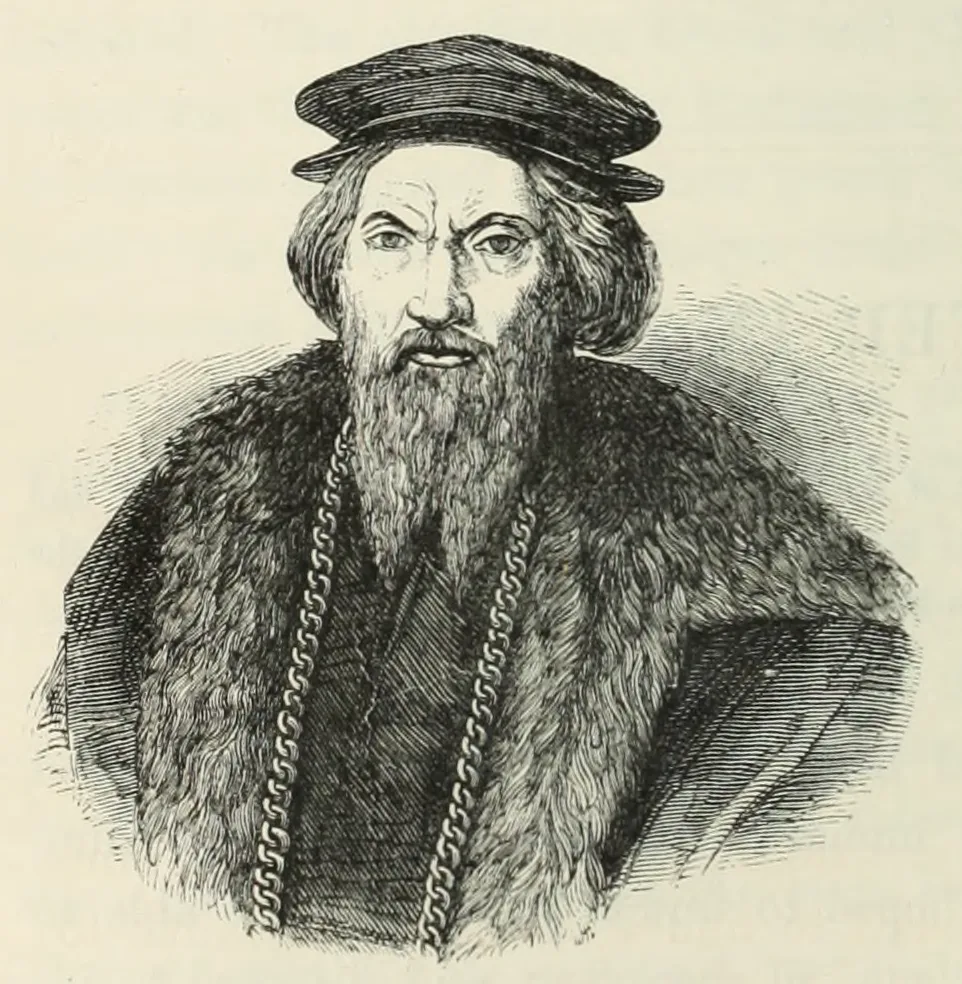
About the same time when England was attempting, though with slow and faltering steps, to follow Columbus in his career of discovery, Portugal was not so entirely absorbed in the prosecution of discoveries in the direction of Africa as to be insensible to the vast changes which might be anticipated from the discovery of a western world. If, according to the idea then generally entertained by geographers, the northern extremity of America formed a rocky headland, with an open sea beyond it, then all the efforts which Portugal had made to discover a passage to India by the south-east must prove in a great measure abortive, because a much nearer passage would enable the maritime nations of Western Europe to secure all the advantages for which she had been striving. This was a danger too obvious and imminent to be overlooked; and therefore the Portuguese no sooner were acquainted with the discovery of the New World, than they determined on an exploratory voyage to the north-west, for the purpose of ascertaining whether such a practicable passage existed, and if it did, of securing a monopoly of it on the ground of priority of discovery.
The only Portuguese navigators whose names figure in the voyages undertaken with this view, were a father and three sons, belonging to the illustrious house of Cortereal. Of the father, John Vaz Cortereal, scarcely anything is known, and hence, probably because fiction has been employed as a substitute for fact, it has been confidently maintained that he reached the shores of Newfoundland even before Columbus made his first voyage. The proceedings of his son Gaspar are better authenticated. In 1500, having been furnished by King Emanuel with two ships, he touched, first at Terceira, one of the Azores, and then sailed north-west, in the hope of finding an open ocean, by which he could penetrate directly to India. Having reached land in the parallel of 50°, he pursued his course northwards along the coast. Both from its position, and the description given of it, it must have formed part of Labrador, which, accordingly, in the earliest maps, bears not this name, but that of Corterealis. He advanced to latitude 60°, but being deterred by the rigour of the climate and floating mountains of ice from proceeding farther, he seized fifty-seven of the natives, and carried them off to Portugal, where, to his disgrace and that of his sovereign, they appear to have been employed as slaves. He arrived at Lisbon on the 8th of October, 1501, and immediately resolved on another voyage. Early in spring, having completed his preparations, he again set sail with his two vessels, and steered directly for the most northerly point he had previously reached. So far the voyage was prosperous; but immediately after, a violent storm, in a sea covered with icebergs, obliged the vessels to separate. That in which Gaspar sailed was never heard of.
As soon as tidings of the disaster reached Lisbon, a younger brother, of the name of Miguel, hastily fitted out three vessels, and set sail, with the double object of searching for the missing ship, and following up the course of discovery which Gaspar had began. On arriving at that arm of the Atlantic which branches off between the coasts of Greenland and Labrador, the vessels parted company, in order that each might explore a separate entrance. The expedient seemed judicious, but the result proved disastrous. Only two of the vessels returned to Portugal: in the third Miguel appears to have met the same fate as Gaspar. A third brother, Vasco Eanes, inspired by the heroic spirit of his family, volunteered to head a new expedition; but the king, thinking that enough had already been sacrificed in enterprises the success of which seemed now more than problematical, refused his consent, and the Portuguese desisted from any further attempt to discover a north-west passage to India.
Shortly after the accession of Henry VIII. to the throne of England an attempt was made to revive the spirit of maritime enterprise, which his father during the latter years of his life had allowed to languish, but other occupations more congenial to his taste, though less conducive to his honour, soon began to engross Henry’s attention, and during his long reign English maritime discovery presents an almost continuous blank. The only important exception is an expedition to the north-west in 1517. Sebastian Cabot had probably expected that Spain, to which he had transferred his services, would employ them in an endeavour to ascertain the practicability of a north-west passage. If this was his hope, it was disappointed; for the magnificent territories which Spain was acquiring in the more genial latitude of Mexico, and the immense wealth which had in consequence began to flow into her treasury, left her little inclination to prosecute a hazardous and doubtful enterprise in the frozen regions of the North. Cabot, however, having gained his earliest laurels in this field, was determined not to abandon it, and returned to England, where he had the satisfaction to learn that his services, again volunteered, were accepted. He was confident of success; and after entering Hudson’s Bay, considered himself on the fair way to Cataia, or China, to which, according to his own strong expression, he “both could and would have gone,” when the opposition of Sir Thomas Peart, under whom, as Vice-admiral of England, he held only a subordinate command, and a failure of courage on the part of his crew, obliged him to return.
The failure of this expedition seemed to justify Henry in the apathy he had previously manifested, and ten additional years had passed away, when his attention was once more called to the subject by an English merchant of the name of Robert Thorne, who, after a long residence at Seville, had finally settled in London. This gentleman, while in Spain, had formed a close connection with Sebastian Cabot, and become thoroughly imbued with his ideas as to the practicability of reaching the East Indies by some northern outlet from the Atlantic. Seeing how completely the subject had fallen into abeyance, he presented a memorial to the king, in which, after adverting to the natural desire which all princes have to extend their dominions, and which Henry himself had evinced by his recent expedition to France, he thus proceeds:— “Now I, considering this your noble courage and desire, and also perceiving that your grace may, at your pleasure, to your greater glory, by a godly meane, with little cost, perill, or labour to your grace, or any of your subjects, amplifie and inrich this your sayd realme, I know it is my bounden duety to manifest this secret unto your grace, which hitherto, as I suppose, hath beene hid; which is, that with a small number of ships there may be discovered divers new lands and kingdomes, in which without doubt your grace shall winne perpetual glory, and your subjects infinite profite."
The so-called “secret,” thus announced rather more pompously than the comparatively trite ideas composing it seem to justify, was simply the possibility of reaching the East by a voyage northwards. The memorial accordingly thus continues:—“There is left one way to discover, which is into the Northe; for that of the foure partes of the worlde, three partes are discovered by other princes. For out of Spaine they have discovered all the Indies and Seas Occidentall, and out of Portingall all the Indies and Seas Orientall; so that by this part of the Orient and Occident they have encompassed the worlde."
The North being thus the only field of maritime discovery not foreclosed, the memorial, after adducing several pithy reasons why Henry should immediately occupy it, enters into an explanation of the different courses which vessels fitted out for discovery might take, and the results that might be anticipated. The first object, of course, is to pass the pole; but of this, though really the crowning difficulty, Mr. Thorne makes light, and then proceeds:—
“If they will go toward the Orient, they shall injoy the region of all the Tartarians that extend toward the mid-day, and from thence they may goe and proceede to the land of the Chinas, and from thence to the land of Cathaio Orientall, which is of all the maine land most Orientall that can be reckoned from our habitation. And if from thence they doe continue their navigation, following the coasts that returne toward the Occident, they shall fall in with Malaca, and so with all the Indies which we call Orientall, and following the way may returne hither by the Cape of Buona Speransa; and thus they shall compass the whole worlde. And if they will take their course after they be past the Pole toward the Occident, they shall goe to the backe side of the New found land, which of late was discovered by your grace’s subjects, untill they come to the backe side and South Seas of the Indies Occidentall. And so continuing their voyage, they may returne through the Streight of Magellan to this countrey; and so they compass also the world by this way. And if they goe the thirde way, and after they be past the Pole, goe right toward the Pole Antartique, and then decline toward the lands and islands situated between the Tropikes and under the Equinoctiall, without doubt they shall find there the richest lands and islands of the world, of golde, precious stones, balmes, spices, and other thinges that we here esteeme most; which come out of strange countries, and may returne the same way.” The conclusion is:— “By this it appeareth, your grace hath not onely a great advantage of the riches, but also your subjects shall not travell half of the way that other doe which go round about as aforesayd.”
This memorial, though containing little that is new and much that is erroneous, seemed worthy of quotation, both because it gives a good account of the views entertained by the best geographers of the period, and because it appears to have had the effect of bestirring Henry to make a final effort of maritime discovery. As it led to no important results, and the accounts of it are scanty in the extreme, it is unnecessary to notice it further. In similar silence lies buried another expedition, undertaken, a few years after, at the expense, not of the crown, but of a wealthy inhabitant of London, who gave it an appearance so attractive that the youths of family and fortune were induced to embark along with him. Neither he nor his associates were well qualified for the task which they had undertaken; and disaster followed disaster till famine reduced them to the dire necessity of cannibalism. They were preparing to cast lots for the next victim, when the capture of a French vessel furnished a small remnant with provisions and the means of regaining their native land.
On the accession of Edward VI., in 1547, an era more favourable to maritime enterprise was anticipated, and would doubtless have been realized had his life been prolonged. Sebastian Cabot, as ardent and sanguine as ever, had arrived; and the youthful monarch, smitten with kindred enthusiasm, had appointed him grand-pilot of England, with a liberal salary. Under the stimulus thus applied, a new scheme of discovery was soon arranged and zealously supported by London merchants, “men of great wisdom and gravity.” Robert Thorne, in the memorial above quoted, had pointed out three different directions in which experimental voyages might be made. Hitherto only one of them had been tried, but the results were most discouraging; and it was therefore resolved that the next voyage should change the direction, and endeavour to discover a passage to the Indies by the north-east.
The requisite funds, amounting to £6000, were raised in shares of £25 each, apportioned among the members of a kind of joint-stock company formed for the purpose. With this sum three vessels were built, and fitted up in a style with which Sebastian Cabot, who was governor of the company, and undertook the management of its nautical affairs, was so well pleased as to declare that “the like was never in any realm seen used or known.” The chief command was given to Sir Hugh Willoughby, who sailed in the principal vessel. Under him, and in command of the second vessel, was Richard Chancellor. Besides a series of instructions drawn up by Cabot for the guidance of the officers and crew, the expedition was furnished by King Edward with a letter addressed to all “kings, princes, rulers, judges, and governors of the earth,” requesting them “to permit unto these our servants free passage by your regions and dominions, for they shall not touch anything of yours unwilling unto you,” and promising “by the God of all things that are contained in heaven, earth, and the sea, and by the life and tranquillity of our kingdoms, that we will with like humanity accept your servants if at any time they shall come to our kingdoms.” On the 10th May, 1553, the three vessels dropped down to Greenwich, where the court and
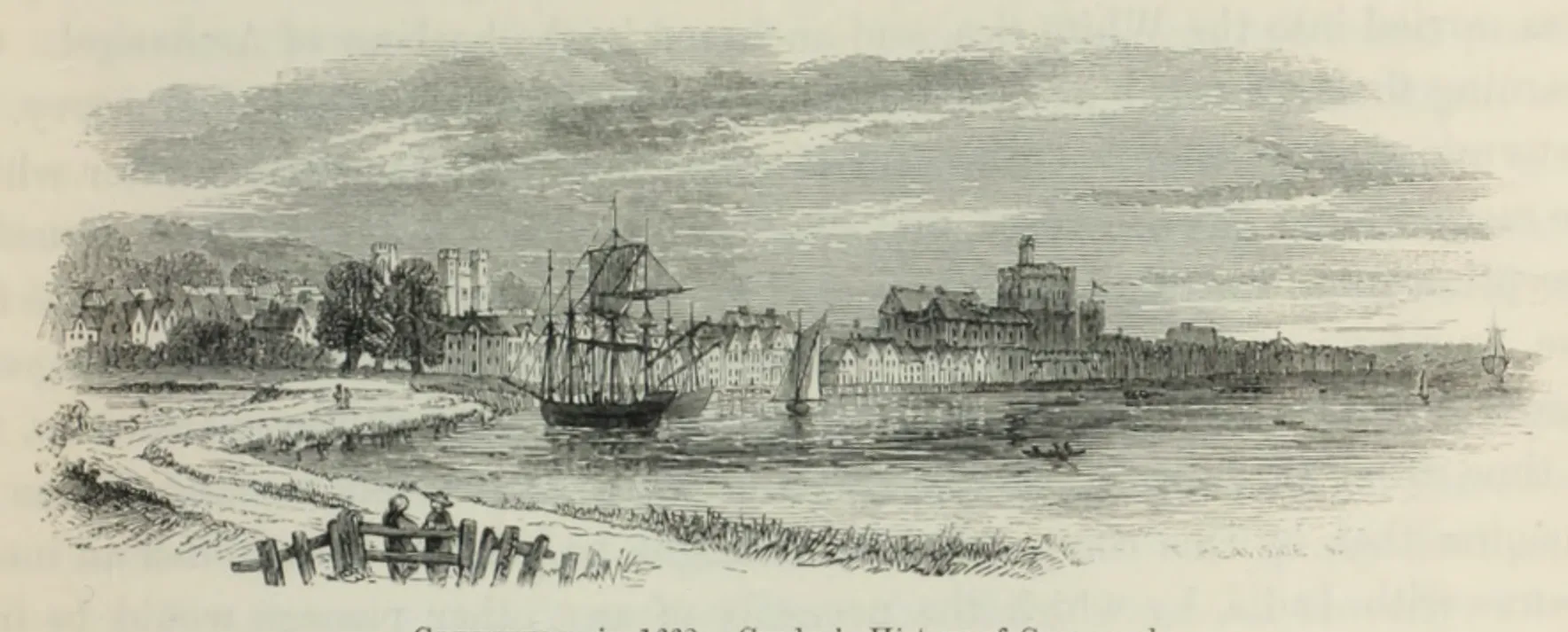
a vast assemblage from all quarters witnessed their departure amid salvos of artillery and the shouting of the mariners, “in such sort that the sky rang with the noise thereof.”
After leaving the river, the vessels were detained on the Essex coast till the 23d, when, the winds becoming favourable, they began their course across the German Ocean. On the 14th of July they had reached lat. 68°, among the islands of the Norway coast, and not long after came within sight of the North Cape. Their intention was to remain together; but in the event of their being obliged to part company, Wardhuys, in Finmark, was appointed as the port of rendezvous. The contingency thus provided for happened sooner than any had anticipated, and with very fatal results. Shortly after passing the cape, the weather became so stormy that the vessels were forced out to sea, and driven at the mercy of the winds. Willoughby, whose skill and caution seem not to have been equal to his courage, carried so much sail that Chancellor was unable to keep up with him, and never saw him more. His fate remained unknown till some Russian sailors discovered two tall vessels frozen in on the coast of Lapland. On entering them, they found the lifeless bodies of Willoughby and his companions. Along with the journal of the voyage was a note, showing, by its date, that the crews were alive in January, 1554. They had reached the coast of Nova Zembla without being able to land upon it, and then penetrated still deeper into the abysses of the Arctic Ocean. Convinced at last of their mistake, they retraced their steps, and in returning westward unfortunately missed the opening of the White Sea, within which they might have found a sheltered anchorage. On reaching the coast beyond, they had resolved to make it their winter-quarters, intending to prosecute their voyage in the ensuing spring. Before it arrived the intense cold had frozen them to death.
Chancellor was more fortunate. By keeping near the coast he had reached Wardhuys without much difficulty; and after waiting seven days in the hope that the other vessels might arrive, continued his course “till he came at last to the place where he found no night at all, but a continued light and brightness of the sun, shining clearly upon the great and mighty sea.” Ultimately he was carried into the White Sea, and anchored in the harbour of Archangel. On learning that it formed part of the vast dominions of the Czar of Muscovy, he determined on visiting his capital of Moscow; and by means of the letter which he carried from his sovereign, and his own address, obtained such a favourable reception from the reigning sovereign, Ivan Vasilovitsch, as enabled him to lay the foundation of the Muscovy or Russian Company on very advantageous terms. The important traffic secured by this company withdrew attention, for a time, from the north-east passage; and many were even so sanguine as to imagine that by this company alone it might be possible to establish an intercourse with India, by which the necessity of any other passage would be in a great measure superseded.
The plan was to make Archangel the starting point, and then, striking the Volga where it first becomes navigable, sail down into the Caspian, and thus form a communication with the ancient overland routes from the East. Journeys, with a view to the establishment of this communication, were actually undertaken, and several of the travellers employed penetrated far into the interior of Asia. The whole scheme, however, was a delusion. The Venetians, when in complete command of the overland traffic by much shorter and more convenient routes, had been driven from all the leading markets of Europe by the Portuguese. How, then, could the Russian Company hope to compete with them, when, in addition to the carriage paid by the Venetians, they were burdened with at least 2000 miles of expensive transport, part of it over an ocean always dangerous, and during half the year rendered inaccessible by mountains of ice?
These considerations soon opened men’s eyes to the hopelessness of establishing a profitable traffic with India by the way of the White Sea, and the exploration of the north-east and north-west passages was resumed more ardently than ever. The latter passage, indeed, continued to be explored long after the impossibility of using it as an ocean thoroughfare to the East was universally recognized; and even in our own times, in the formidable task of exploring this passage, some of our most distinguished British navigators have earned their best laurels, and some of them, too, have unhappily perished. The north-east passage, which at one time seemed the more hopeful of the two, was sooner abandoned, but not before the utmost skill and hardihood both of British and Dutch seamen had been expended upon it in vain. Some of their attempts, considered as preliminary steps in the process which eventually brought them into direct collision with the Portuguese, are here entitled to at least a passing notice.
About the time when the Muscovy-Indian scheme proved abortive, some accurate knowledge was obtained of the great Asiatic rivers, the Obe and Yenisei; and Gerard Mercator, the celebrated cosmographer, when consulted on the subject, gave it as his opinion that at no great distance beyond the point which navigators had already reached, a great headland, then supposed to form the north-east extremity of Asia, would be found. This headland once passed, nothing more was necessary than to turn south, and steer directly for Japan and China. This was an enormous blunder, for it cut off, at one sweep, more than a fourth of the whole circumference of the globe; but it is only fair to Mercator to observe, that it was not so much his blunder as the common blunder of the time, for all his contemporaries shared it with him.
In accordance with Mercator’s opinion, the great problem of a north-east passage to India now seemed on the eve of receiving a favourable solution. In 1580, two English vessels, under the command of Arthur Pet and Charles Jackman, sailed for Wardhuys, which they reached on the 23d of June. A few days after, they continued their voyage eastward, and on approaching Nova Zembla narrowly escaped being embedded in a field of ice. After disentangling themselves by taking a very circuitous route, they proceeded along an open passage, and had the mortification to discover that it formed a kind of cul de sac, from which they had no possible outlet except by retracing their steps. This accomplished, they had a most favourable wind, but found it impossible to avail themselves of it in consequence of enormous icebergs which blocked up the course, leaving no space between, and along which they could not steer without risking almost certain destruction. Thus obstructed, and obliged, as they piously express it, to wait with patience, “abiding the Lord’s leisure,” they did not arrive at Vaigatz Straits till the middle of August. It was consequently too late to advance further eastward, and the expedition returned without having added one particle to the information previously possessed. The English, having found more necessary and hopeful employment in another quarter, desisted for many years from all further attempts to discover a north-east passage. The task, however, instead of being abandoned, was only transferred to new hands.
The United Provinces, after a long, arduous, and noble struggle, had achieved their independence, and rid themselves for ever of the galling yoke of Spain. Even while groaning under that yoke, the untiring industry of the population, and the narrow scope for exercising it in a country hemmed in on all sides, and constantly threatened by the sea, had turned their attention chiefly to commerce. On the broad expanse of the ocean they found their true thoroughfare, and gradually rose to a foremost place among the maritime nations of Europe. Their own consumption was not great, but their vessels were found in all seas acting as common carriers for other nations. In this way they had obtained a large share in the Indian trade, which had its emporium at Lisbon, to which the goods were brought from the East by the Portuguese, and from which they were afterwards diffused over Europe. At the very time when the Dutch secured, the Portuguese were deprived of their independence, Philip II. of Spain having usurped the crown of Portugal, and incorporated its dominions with his own. Lisbon having, in consequence, fallen into the hands of their vindictive enemy, the Dutch were, in 1584, completely excluded from it. The injury thus inflicted on their trade was at first severely felt, but the only effect was to inspire them with a determination not to rest till they had succeeded in establishing a direct communication with the East. The route by the Cape of Good Hope was now well known; and as all the Portuguese possessions had fallen under the power of their declared enemy, they could have no scruple in attacking them. In the first instance, however, they imitated the example of the English, and endeavoured to discover an independent route by the north-east.
The first expedition, undertaken by a private company, with the sanction but without any direct assistance from the States, consisted of four vessels, under the command of William Barentz. They sailed from the Texel on the 5th of June, 1594, and on approaching Nova Zembla separated, two of the vessels taking the old route toward Vaigatz Straits, while the other two, under the command of Barentz, adopted the bolder course of sailing northwards, with the view of keeping clear of the masses of ice which clustered round the island. Barentz does not seem to have justified his high reputation as a seaman. By the 1st of August he had not advanced beyond the north extremity of Nova Zembla, in lat. 77°, and then, deterred by the violence of the wind and the large masses of floating ice, prematurely determined to return. The other detachment was more persevering. After working their way through Vaigatz Straits, and succeeding, with much difficulty, in sailing round some immense icebergs which had threatened to bar their future progress, the two vessels arrived at a blue open sea, and saw the coast trending rapidly southwards. It was only the Gulf of Obe; but, led astray by Mercator’s blunder, they believed that they had doubled the north extremity of Asia, and consequently discovered the passage of which they were in search. It might have been expected, that instead of resting satisfied with this conviction they would have endeavoured to make assurance doubly sure, and prevented the possibility of mistake by advancing some hundred leagues into the sea, which, if their opinion had been correct, would have carried them directly to Japan. Instead of this they immediately retraced their steps, and having again joined Barentz on the coast of Russian Lapland, arrived in the Texel on the 10th of September.
The tidings which they brought diffused universal joy; and the States-general, no longer satisfied with giving a bare sanction, took the lead, in 1595, in fitting out a new expedition on a more extensive scale. It consisted of six vessels, intended not merely to explore, but to commence the traffic which, according to the general belief, was about to be permanently established, and pour the wealth of the East into the ports of Holland. Such being the expectation, the arrangements were adapted to it; and the vessels, instead of being constructed as before to bear the rude shocks of the polar ice, were framed in the manner best adapted for the rich cargoes of merchandise with which they were laden. The very idea of such an expedition had originated in a gross error; but, as if this had not been sufficient, the period of sailing was protracted to the 2d of June, when nearly two months of the season most favourable for a northern voyage were already past. The vessels never got farther than the eastern entrance of the Straits of Vaigatz. When they reached it, they were met by immense bodies of floating ice, against which they struggled manfully till the end of September. Then at last the conviction forced itself upon them that they were labouring in vain, and that nothing more remained than to turn their face homewards.
Not one of the results so confidently anticipated had been obtained. In proportion to the extravagance of the expectation was the bitterness of the disappointment. The States-general at once disconnected themselves with the project, and deemed it sufficient to hold out a pecuniary reward to any individual or association who should first succeed in effecting the passage which they had themselves attempted in vain. The town of Amsterdam at once took up the gauntlet which the government had thus in a manner thrown down; and wisely, in the meantime, renouncing all idea of traffic, fitted out two vessels solely for exploration. The command of the one was given to William Barentz, whose previous voyage has already been mentioned; and of the other to John Corneliz Ryp. As some security against that longing for home, under the influence of which the previous expeditions were supposed to have returned prematurely, all the individuals belonging to the expedition were unmarried.
The vessels sailed on the 10th of May, 1596; and, in order to avoid the dangers of the coast, sailed nearly due north. Currents and easterly winds carried them so far west that they came in sight of the Shetland Isles on the 22d. Here the commanders, who appear to have had equal powers, differed in opinion. Barentz wished to tack about, and steer due east; while Ryp, who argued that in this way they would only become entangled, like previous expeditions, among the floating icebergs of the Vaigatz Straits, insisted on sailing N.N.E. His opinion prevailed. They were soon in the depths of the Arctic Ocean, and after a dangerous and dreary navigation, constantly obstructed by fields of ice, reached the coast of Spitzbergen, in lat. 80°. They now changed their course, and, sailing south, arrived at Bear Island, which they had previously passed. Here the captains again differed in opinion; and, as on this occasion neither would yield, the vessels parted company. Ryp proceeded north, with the view of following the east coast of Spitzbergen, and was ultimately obliged to retrace his steps without doing anything which his contemporaries deemed worthy of being recorded. Barentz sailed E.S.E., and met with a series of adventures which, though they form a most interesting narrative, would here be out of place, as they throw no new light on the attempted north-east passage to India. Suffice it to say, that, after wintering on the shore of Nova Zembla, he was obliged, in the June of the following year, to leave his ship embedded in the ice, and set out, with the survivors of his crew, to make the voyage homewards in two small boats. Anxiety, fatigue, and the severities of the climate had destroyed his health, and he died by the way. His companions, after enduring almost unparalleled hardships, reached Kola, where, to their astonishment and delight, they found the other vessel from which they had been so long parted, and proceeded in it to Amsterdam.
The existence of a north-east passage was now virtually disproved; and though subsequent explorations took place, particularly by the celebrated navigator, Henry Hudson, who was employed for this purpose on one occasion by the English, and on another by the Dutch, it is unnecessary to trace them. All reasonable men were now satisfied that no north-east passage to India, practically available for the ordinary purposes of commerce, existed; and the only choice now remaining was between the old beaten track of the Portuguese by the Cape of Good Hope, and a south-west passage by the southern extremity of the American continent. Of the latter passage a brief account must now be given.
The practicability of a south-west passage to the East was proved at a comparatively early period. Fernando de Magellan, or more properly Magalhaens, a native of Portugal, after serving five years in the East under Albuquerque, and distinguishing himself at the taking of Malacca, being dissatisfied with the niggardly manner in which his services had been rewarded, made an offer of them to the Emperor Charles V. They were accepted; and he immediately presented the project of a voyage, by which he proposed to reach the East Indies by sailing south-west. The great object of attraction in that quarter was the Moluccas, which grew the finest spices. These were then in such high and general request, that there was no branch of the Portuguese trade of which a share was more eagerly coveted. There was one great obstacle in the way. The pope had divided the world into two halves. How could Charles, as a professed champion of the church, appropriate any portion of the half which his holiness had given to the Portuguese? The true way of loosing the knot was to cut it, and
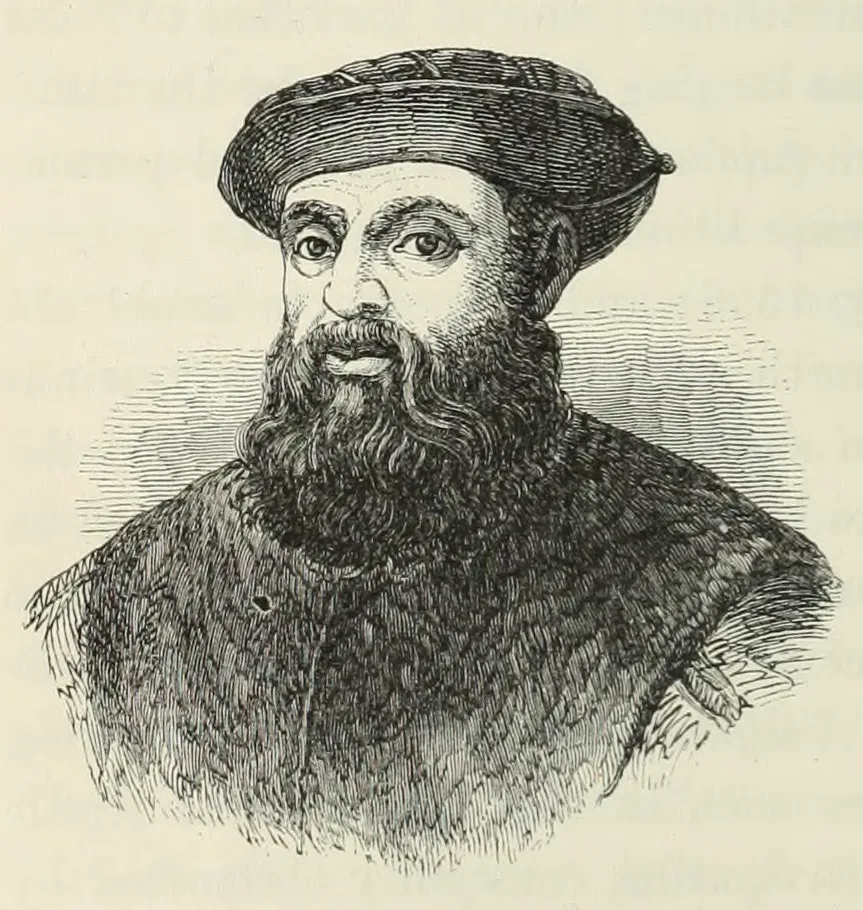
to maintain that, in this instance, as in many others, the pope had ignorantly and arrogantly made free with a property which did not belong to him. The time for such a solution of the difficulty was rapidly approaching, but it had not yet arrived; and Magalhaens undertook to rid Charles of his scruples by proving that the Moluccas were not in the Portuguese but in the Spanish half. He was wrong in fact, but correct according to the idea then entertained of the dimensions of the globe. It is probable, however, that the emperor was not difficult to satisfy, as he afterwards shewed, on many occasions, how easily he could dispose of Papal claims when they interfered with any of his favourite political objects. Be this as it may, Magalhaens obtained his wish.
On the 20th of September, 1519, he sailed from Sanlucar in command of five ships and 236 men. On the 12th of January, 1520, he reached the mouth of the La Plata, where he was detained for some time by a mutiny of his men, who deemed it degradation to obey one whom they stigmatized as a renegade Portuguese. By prudence and resolution he regained his ascendency; and towards the end of October began to enter the strait which has since borne his name. On the 27th of November he obtained his first view of the Pacific, and, steering directly across it, missed all the islands by which it is studded, and again saw land for the first time on the 6th of March, 1521, when he came in view of the islands which, from the thievish practices of the inhabitants, were named the Ladrones. Continuing onwards, he arrived at the archipelago of St. Lazarus, afterwards called the Philippines, in honour of Philip II. While here, he induced the chief of the island of Zebu to make a profession of Christianity, and become tributary to the King of Spain, on condition of being assisted in his war with the chief of the island of Matan. In fulfilling this condition, Magalhaens unfortunately lost his life on the 26th of April, 1521. The circumnavigation which he had so far successfully accomplished, was completed by Sebastian del Cano, who succeeded him in the command, and arrived at Sanlucar on the 22d of September, 1522, by doubling the Cape of Good Hope from the eastward.
Magalhaens’ voyage gave proof of two important facts—first, that there was no physical impossibility of reaching the East Indies by sailing west; and, secondly, that, under ordinary circumstances, this route never could become the ocean thoroughfare from Europe. It might be used for special purposes, but being far more circuitous, was also necessarily both more tedious and more expensive. Further notice of it would hence be unnecessary, were it not that an adventitious interest has been given to it as the route which first led the British to the East, and furnished the information which determined them not to rest satisfied till they had obtained a direct share in its traffic. Two of the voyages are, on this account, well entitled to special mention—the one by Sir Francis Drake, and the other by Mr. Thomas Cavendish.
After the accession of Queen Elizabeth, in 1558, and the decided refusal of her hand when impertinently asked by Philip II., the friendly relations between
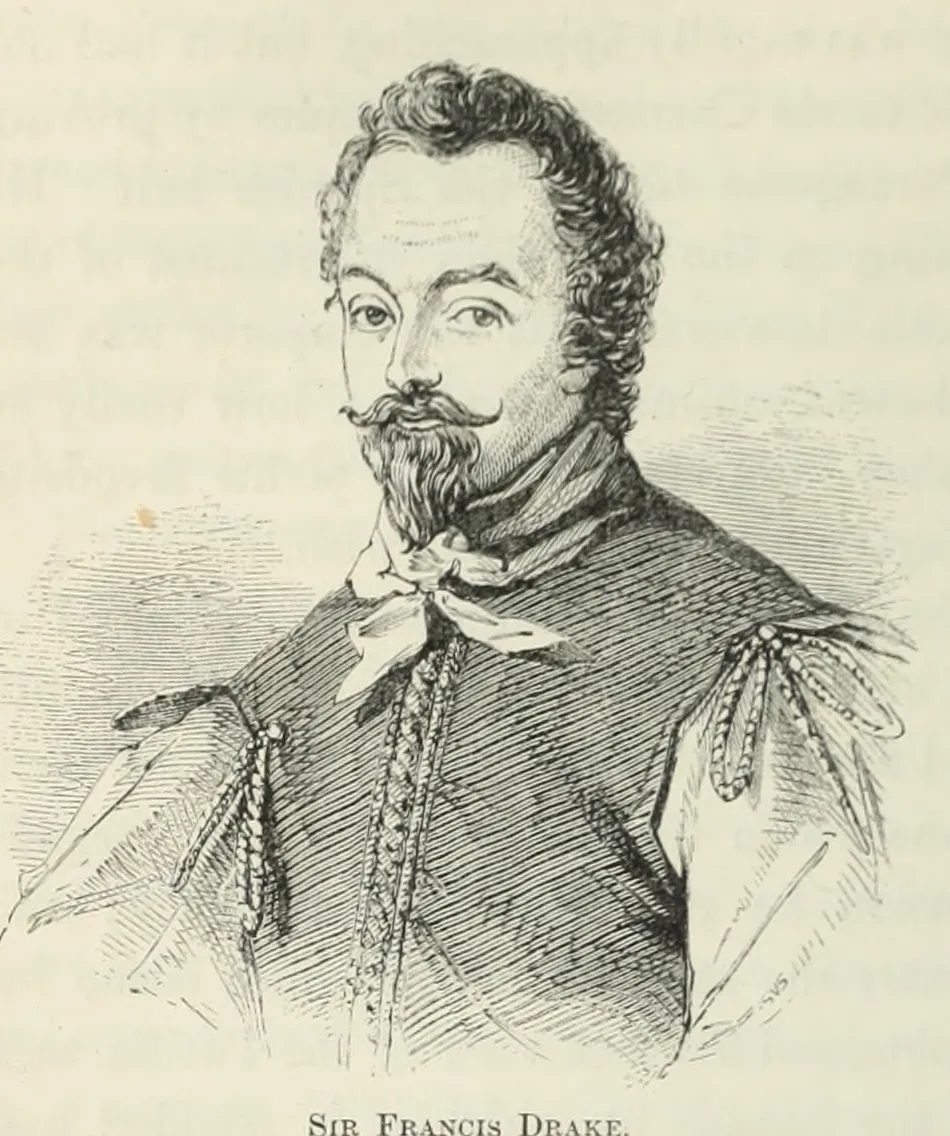
England and Spain were entirely at an end; and though hostilities were not openly declared, it was perfectly understood that, at least on the part of Spain, they were only delayed in order that the preparations for carrying them on with effect might be rendered more complete. It is not surprising that, under these circumstances, frequent rencounters took place; and the natives of either country, whenever favourable opportunities occurred, made no scruples of treating those of the other as open enemies. In this kind of irregular, predatory warfare, Francis Drake, who, originally of obscure parentage from the vicinity of Tavistock, in Devonshire, had won a high name for valour and seamanship, particularly distinguished himself. He had made two successful cruises against the Spaniards, and acquired so much wealth that he was able, in 1577, to fit out a fleet of five small vessels, with an aggregate crew of 164 men. The largest vessel, commanded by himself, did not exceed 100 tons; the smallest was only 15 tons. With these he set sail from Plymouth on the 13th of December, 1577, and steered directly across the Atlantic. On the 20th of August, 1578, he arrived in the Straits of Magalhaens, passed them, and then continued his course northwards along the west coast of America till he had reached 48° N. latitude. He had probably proceeded thus far in the hope of discovering some opening by which he might again pass into the Atlantic. Disappointed in this expectation, he retraced his steps for about 10°, and then, with the only vessel now remaining of his original five, shot boldly across the Pacific. On the 29th of September, 1579, he came in sight of the Moluccas. On the 4th of November he cast anchor at Ternate. He afterwards wound his way westward among the islands of the Indian Archipelago, doubled the Cape of Good Hope,
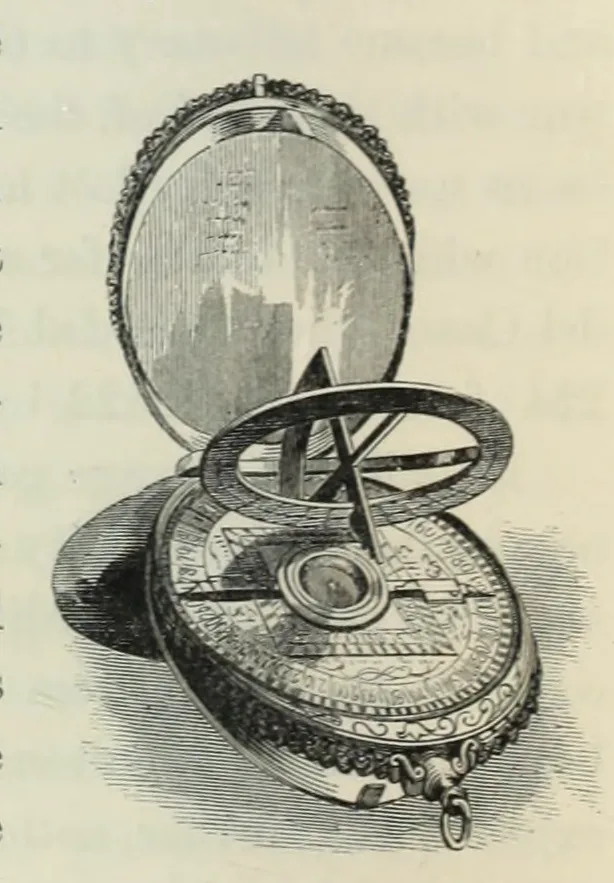
and, on the 26th of September, 1580, cast anchor again in the harbour of Plymouth.
It is presumed, that when Drake set out he had an understanding with the government, but it was not deemed politic to acknowledge it. His proceedings, as war had not been declared, were certainly of a piratical character; and when the Spanish court complained of them, it was easier to disavow his authority than to apologize for his conduct. The nation, however, was so much elated by his achievements, and the determination to profit by the information which he had brought home was so unanimous, that Queen Elizabeth, after standing aloof for some time, threw aside all reserve, publicly visited him on board his ship at Deptford, and attested her approbation of his conduct by conferring upon him the honour of knighthood. A few years later, Sir Francis Drake again awakened the public mind to the importance of the trade with India by the capture of a Portuguese carrack, whose cargo of almost fabulous value inflamed the imagination, while its papers and journals furnished most important information as to the means by which a direct trade with India might be most easily established, and most successfully carried on.
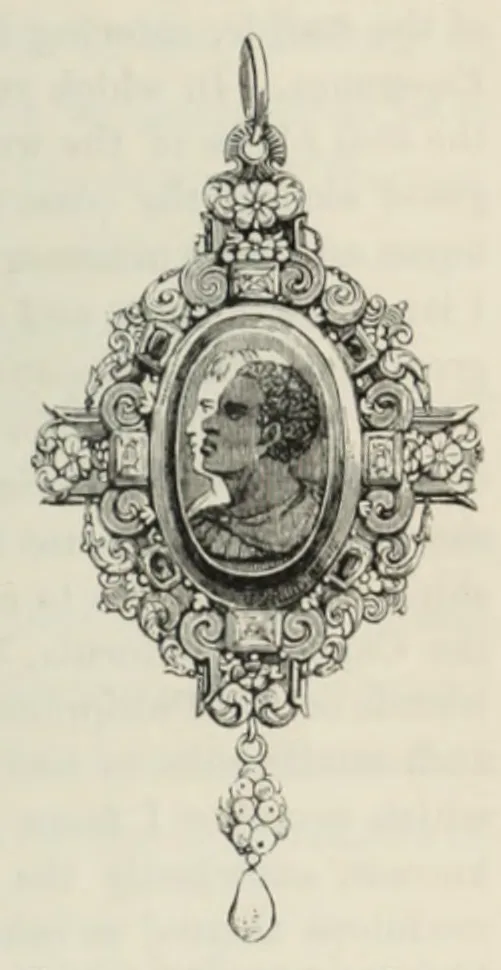
In 1586, about two years before Drake had made this capture, Mr. Thomas Cavendish commenced the other voyage by the Straits of Magalhaens above referred to. His fleet of three ships, fitted out at his own expense, was manned by 126 officers and sailors, several of whom had accompanied Drake when he circumnavigated the globe. The expedition sailed on the 21st of July; and, following the course which Drake had taken, proceeded through the Straits of Magalhaens, skirted the west coast of America, making many rich captures, and committing much unjustifiable devastation; and then steered across the Pacific for the Ladrones, which were reached on the 3d of January, 1587. The future course of the voyage is thus summed up by Cavendish himself. In a letter to Lord Hunsdon, lord-chamberlain, dated 9th September, 1588, he says,—
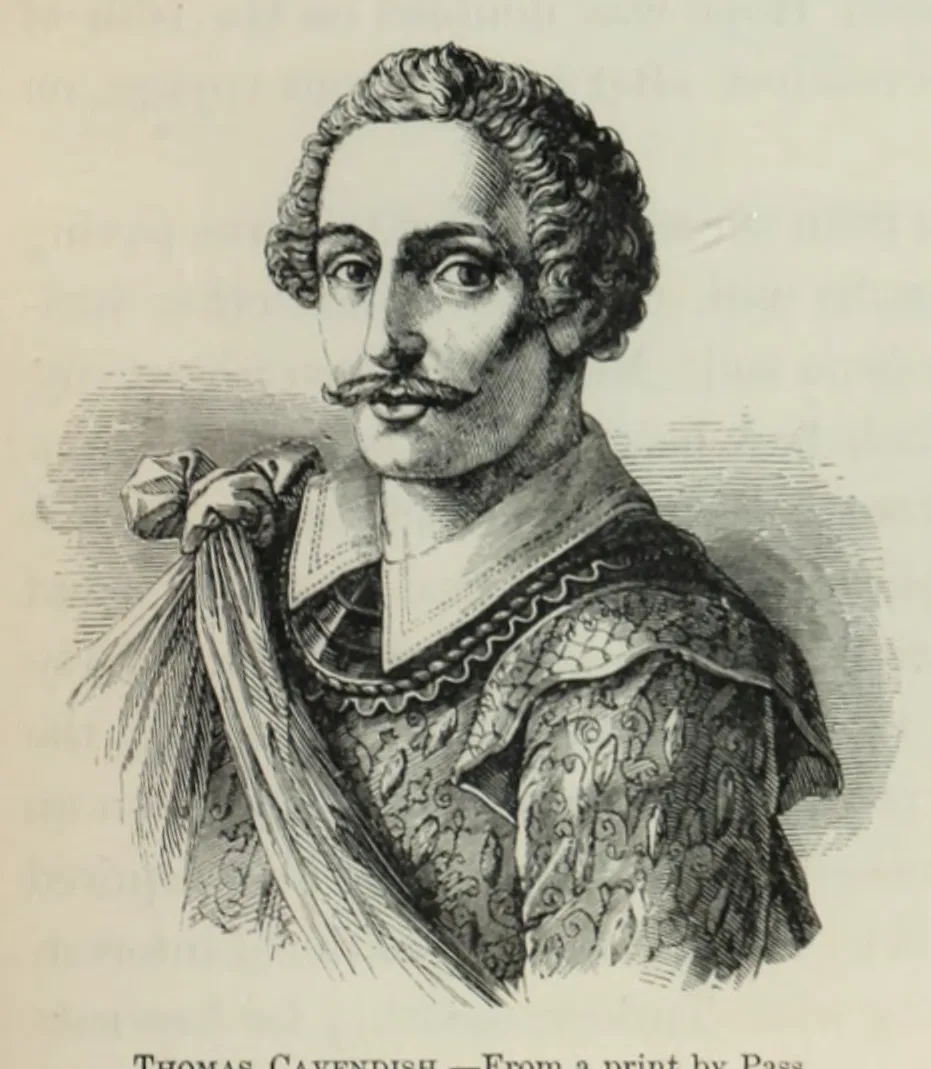
“I am humbly to desire your honour to make knowen unto her majesty the desire I have had to doe her majesty service in the performance of this voyage. And as it hath pleased God to give her the victory over part of her enemies, so I trust yer long to see her overthrowe them all. For the places of their wealth, whereby they have maintained and made their warres, are now perfectly discovered ; and if it please her majesty, with a very smal power she may take the spoile of them all. It hath pleased the Almighty to suffer me to circompasse the whole globe of the worlde, entering in at the Streight of Magellan, and returning by the Cape of Buena Esperança. In which voyage I have either discovered or brought certain intelligence of all the rich places of the world that ever were knowen or discovered by any Christian. I navigated alongst the coast of Chili, Peru, and Nueva Espanna, where I made great spoiles ; I burnt and sunk nineteen sailes of ships, small and great. All the villages and townes that ever I landed at I burnt and spoiled ; and had I not bene discovered upon the coast I had taken great quantitie of treasure. The matter of most profit unto me was a great ship of the king’s which I took at California, which ship came from the Philippinas, being one of the richest of merchandise that ever passed those seas, as the king’s register and merchants’ accounts did shew; for it did amount in value to —— in Mexico to be solde. Which goods (for that my ships were not able to conteine the least part of them) I was inforced to set on fire. From the Cape of California, being the uttermost part of all Nueva Espanna, I navigated to the islands of the Philippinas, hard upon the coast of China; of which country I have brought such intelligence as hath not been heard of in these parts. The statelinesse and riches of which countrey I feare to make report of, least I should not be credited : for if I had not knowen sufficiently the incomparable wealth of that countrey, I should have bene as incredulous thereof as others will be that have not had the like experience. I sailed along the islands of the Malucos, where among some of the heathen people I was well intreated, where our countrey men may have trade as freely as the Portugals if they will themselves. From thence I passed by the Cape of Buena Esperança, and found out by the way homeward the island of St. Helena, where the Portugals use to relieve themselves; and from that island God hath suffered me to return into England. All which services, with myself, I humbly prostrate at her majestie’s feet, desiring the Almighty long to continue her reigne among us; for at this day she is the most famous and victorious prince that liveth in the world.”
In returning homewards, the Cape of Good Hope was doubled on the 16th of March, 1588; and Plymouth harbour was reached, after a prosperous voyage, on the 9th of September.
While the information thus flowing in from successful navigators was paving the way for the establishment of direct traffic with the East Indies, other incidents were contributing powerfully to the same end. Notice has been repeatedly taken of the important Indian trade which had been carried on, almost from time immemorial, by the way of the Levant. For many centuries the English had been contented to receive their supplies of Indian produce at second hand from some one or other of the Italian maritime cities; but latterly, particularly after the accession of Queen Elizabeth, they had agents of their own in the different ports of the Levant, and thus procured the means of carrying on an active and lucrative trade in their own vessels. When this trade had acquired such extent and consistency as to entitle it to be regarded as a national interest, the queen entered into a commercial treaty with Turkey, securing for her subjects all the advantages which other nations enjoyed; and immediately thereafter, in 1581, granted a charter of exclusive privileges to a mercantile association which assumed the name of the Levant Company. This company, not satisfied with confining its connections to the ports of the Levant, extended them far into the interior, and sent out many agents, whose journals and travels furnished, from time to time, valuable information with regard to Indian traffic.
It has sometimes been alleged that the immediate occasion of the formation of the Levant Company, was the loss of a vessel laden with Indian produce on the Goodwin Sands. The argosy which is referred to, and is thought to have derived the name, common to all vessels of its class, from the town of Ragusa, in Dalmatia, belonged to the Venetians, and sufficed to carry, at a single voyage, as much Indian produce as supplied the demand of the kingdom of England for a whole year. The wreck of this vessel proved so disastrous, that the Venetians ceased thenceforth to pay their annual visit. The English, thus cut off from the supply on which they had been accustomed to depend, had no alternative but to send for the goods which they could not otherwise obtain; and hence the formation of the Levant Company. Such is the theory propounded; and, in accordance with it, it is added that the same circumstance which led to the formation of the Levant Company, suggested to Shakspeare the idea of the “Merchant of Venice.”
The loss of an argosy on the Goodwin Sands, about ten years before the date usually assigned to the first representation of Shakspeare’s immortal play, is a well-authenticated fact; and he speaks with all the truth of history when he says (act ii. scene 8) :—
Who told me, in the narrow seas that part
The French and English, there miscarried
A vessel of our country, richly fraught.”
And again (act iii. scene 1) :—
Unfortunately, however, for the theory, it is impossible to connect the loss of the argosy with the foundation of the Levant Company without committing a palpable anachronism. The charter of the company was granted in 1581; the argosy was not lost till 1587. If the Venetians sent no more argosies after this date, the fact was probably owing, not to any horror of “the narrow seas that part the French and English,” for they were well inured to brave far greater dangers, but to their inability to derive any profit from a traffic which could never have been very lucrative after the Portuguese had fairly entered the European market, and in which they had recently been brought into competition with a native company powerful in itself, and enjoying the special favour of the crown. The retirement of the Venetians was only one of the signs from which a sagacious merchant might have inferred that the Indian trade had deserted its ancient channels, and that England had become too well acquainted with its nature, and too much alive to its importance, to allow it to be any longer monopolized by Spaniards and Portuguese claiming the monopoly on the ground, not so much of priority of discovery, as of a brutum fulmen issued by the execrable pope, Alexander VI.
Queen Elizabeth had early struck at the root of all claims to monopolize the navigation of the ocean by declaring, in answer to the complaints of the Spanish ambassador against the English for navigating the Indian seas, “that the ocean was free to all, forasmuch as neither nature nor regard of public use do permit the exclusive possession thereof;” and again, “that as to Drake sailing on the Indian seas, it was as lawful for her subjects to do so as for the Spaniards; since the sea and air are common to all men.” This latter declaration was made in 1580; and evidence was soon given that, instead of being maintained merely as an abstract principle, the justice of which could not be disputed, it was henceforth to be carried into practical operation. In the third volume of Hackluyt, pp. 754-757, there is a paper dated 9th April, 1582, and entitled, “Instructions given by the right honourable the Lordes of the Counsell to Mr. Edward Fenton, Esquire, for the order to be observed in the voyage recommended to him for the East Indies and Cathay.”
It appears from these “Instructions,” which are twenty-four in number, that the direct, and, indeed, the exclusive route, intended for this voyage to “the East Indies and Cathay,” was by the Cape of Good Hope. The ninth Instruction is as follows:—“You shall use all diligence possible to depart from South-ampton with your sayd ships and vessels before the last of this present moneth of Aprill, and so goe on your course by Cape de Buena Esperança, not passing by the Streight of Magellan either going or returning, except upon great occasion incident that shall bee thought otherwise good to you, by the advise and consent of your sayd assistants, or foure of them at the least.” The tenth Instruction, following out the same route, says, “You shall not passe to the northeastward of the 40 degree of latitude at the most, but shall take your right course to the isles of the Mulucos, for the better discovery of the north-west passage, if without hinderance of your trade; and within the same degree you can get any knowledge touching that passage, whereof you shall do wel to be inquisitive, as occasion in this sort may serve.”
It does not exactly appear to what extent government had furnished the means of this voyage, but the language employed clearly implies that the lords of council possessed the entire control over it. Thus, at the very outset, they say (Instructions 1, 2, 3):—
“First, you shall enter as captaine-generall into the charge and government of these shippes, the Beare gallion, the Edward Bonaventure, the barke Francis, and the small frigate, or pinnesse. Item, you shall appoint, for the furnishing of the vessels, in the whole to the number of 200 able persons, accompting in that number the gentlemen and their men, the ministers, chirurgians, factors, &c., which sayd number is no way to be exceeded, whereof as many as may be to be sea-men; and shall distribute them into every vessels, as by advise here before your going shall be thought meete. Item, for the more and better circumspect execution, and determination in any waightie causes incident in this voyage, we will that you shall take unto you for assistants, Captaine Hawkins, Captaine Ward,” and six other persons named, “with whom you shall consult and conferre in all causes, matters, and actions of importance, not provided for in these Instructions, touching this service now in hand. And in all such matters so handled, argued, and debated, wee thinke that convenyent alwayes to be executed which you shall think meetest, with the assent also of any four of them, the matter having bene debated and so assented unto in the presence of your said assistants.”
The sixth Instruction proceeds in the same peremptory style:—
“Item, you shall not remoove Captaine William Hawkins, your lieutenant; Master-captaine Luke Ward, your vice-admiral, or captaine of the Edward Bonaventure; nor Captaine Carlile from his charge by land, whom we will not to refuse any such service as shall be appointed to him by the generall and the councill; nor any captaine of other vessels from these charges, but upon just cause duely prooved, and by consent of your assistants, or four of them at the least.”
From the appointment of a military officer, of course having soldiers under him, and in regard to whom it is added (Instruction 23), “in all occasions and enterprises that may fall out to bee upon the lande, wee will that Captaine Carlile shall have the generall and chief charge thereof,” it might be supposed that the government had undertaken the entire responsibility of the expedition. This impression is strengthened by Instruction 24, which shows that chaplains had been appointed by public authority. With reference to them, it is said:—
“And to the end God may blesse this voyage with happie and prosperous successe; you shall have an especiall care to see that reverence and respect bee had to the ministers appointed to accompanie you in this voyage as appertaineth to their place and calling; and to see such good order as by them shall be set downe for reformation of life and manners duely obeyed and perfourmed, by causing the transgressours and contemners of the same to be severely punished; and the ministers to remove sometime from one vessell to another.”
It is plain, however, from other Instructions, that the expedition partook of the character of a mercantile adventure. Thus it is said (Instruction 8):—
“You shall make a just and true enventorie, in every ship and vessell appointed for this voyage, of all the tackle, munition, and furniture belonging to them, at their setting foorth hence, and of all the provisions whatsoever; and one copie thereof under your hand, and under the hands of your vice-admirall and lieutenant, to be delivered to the Earle of Leicester, and the other to the governour of the companie for them, before your departure hence; and the like to be done at your returne home of all things then remaining in the sayd ships and vessels, with a true certificate how and by what meanes any parcell of the same shall have bene spent or lost.”
The mercantile character is still more fully brought out both by incidental mention of merchants and factors in various passages, and particularly in the following Instructions, in which equity, sound policy, and worldly prudence are so happily combined, that they seem not unworthy of being quoted entire:—
“12. Item, we do straightly enjoin you, and consequently all the rest employed in this voyage in any wise, and as you and they will answere the contrary at your comming home by the lawes of this realme, that neither going, tarrying abroad, nor returning, you doe spoyle or take anything from any of the queen’s majestie’s friends or allies, or any Christians, without paying justly for the same; nor that you use any maner of violence or force against any such, except in your owne defence, if you shall be set upon, or otherwise be forced for your owne safegard to do it.
“13. Item, wee will that you deale altogether in this voyage like good and honest merchants, trafficking and exchanging ware for ware, with all courtesie, to the nations you shall deale with, as well Ethniks as others; and for that cause you shall instruct all those that shall goe with you, that whensoever you, or any of you, shall happen to come in any place to conference with the people of those parts, that in all your doings and theirs, you and they so behave yourselves towards the sayd people as may rather procure their friendship and good liking toward you by courtesie than to turne them to offence or misliking; and especially you shall have great care of the performance of your word and promise to them.
“14. Item, wee will, that by the advise of your assistants, in places where you and they shall thinke most fit, you settl, if you can, a beginning of a further trade to be had hereafter: and from such places doe bring over with you some fewe men and women if you may; and do also leave some one or two, or more, as to you and your assistants shall seem convenient, of our nation with them for pledges, and to learn the tongue and secrets of the countreys, having diligent care, that, in delivering and taking of hostages, you deliver not personages of more value then you receive, but rather deliver meane persons under colour of men of value, as the infidels do for the most part use. Provided that you stay not longer to make continuance of further trade, then shall be expedient for good exchange of the wares presently carried with you.
“15. Item, you shall have care, and give generall warning, that no person, of what calling soever hee be, shall take up or keepe to himself or his private use, any stone, pearle, golde, silver, or other matter of commoditie to be had or found in places where you shall come; but he, the said person, so seased of such stone, pearle, golde, silver, or other matter of commoditie, shall with all speede, or so soone as he can, detect the same, and make deliverie thereof to your selfe, or your vice-admirall, or lieutenant, and the factor appointed for this voyage, upon paine of forfeiture of all the recompense he is to have for his service in this voyage by share or otherwise; and further, to receive such punishment as to you and your assistants, or the more part of them, shall seeme good, and otherwise to be punished here at his returne, if according to the qualitie of his offence it shall be thought needfull.
“16. Item, if the captaines, merchants, or any other, shall have any apparell, jewels, chaines, armour, or any other thing whatsoever, which may be desired in countreys where they shall traffique, that it shall not be lawfull for them, or any of them, to traffique or sell any thing thereof for their private accompt; but the same shall be prized by the most part of those that shall be in commission in the places where the same may be so required, rated at such value as it may bee reasonably worth in England; and then solde to the profite of the whole voyage, and to goe as in adventure for those to whom it doeth appertaine.”
This voyage, as the first in which a direct attempt was made by any European power to break up the Portuguese monopoly of navigation by the Cape of Good Hope, naturally excites a deep interest; and hence even the instructions to its commander, from the insight they give into the motives with which the voyage was undertaken, deserve all the space which has above been allotted to them. The voyage itself ought, of course, to have been still more interesting; but unfortunately the account of it written by Luke Ward, the vice-admiral, is meagre in the extreme, and does little more than establish the fact that it proved a complete failure. The good sense apparent in drawing up the instructions does not appear to have been employed in making the appointments; and the expedition had not proceeded far on its way when Fenton, who commanded it, appears to have betrayed, if not incompetency, at least indecision.
The four vessels, consisting of the Beare, which changed its name to the Leicester, the Edward Bonaventure, the Francis, and the Elizabeth, sailed on the 1st of May, but spent a whole month before they finally quitted the English coast, and launched out to sea. In the beginning of August, they reached the coast of Guinea; and then the commander, instead of deciding on his own responsibility as to the propriety of taking in water, deemed it necessary to summon a formal meeting of his assistants, or council, and submit two points for decision—first, whether they ought to water at all; and, secondly, assuming this was resolved upon, at what place? These points, it seems, occasioned long debates; and while all unanimously approved of watering, only a majority agreed in thinking that it ought to be at Sierra Leone. They accordingly proceeded for this locality, but had gone so far out of their reckoning that they were several days in finding it; and the council was again summoned to decide, after long debate, in what direction they ought to steer.
After leaving Sierra Leone, they appear to have acted as if they had thrown their instructions overboard; for they are afterwards found far south, on the coast of Brazil, not considering, in terms of their instructions, how they might best double the Cape of Good Hope, but debating on the expediency or inexpediency of passing the Straits of Magalhaens, though this was the direction which they had been expressly forbidden to take. It seems, however, that they would have taken it, had they not feared an encounter with the Spaniards. On this ground alone they abandoned the idea of prosecuting their voyage, and had determined to retrace their steps, when the vessels were obliged to part company. The Bonaventure was the only one which reached England; and this it did by sailing northwards to St. Vincent, and then across the Atlantic. The blundering manner in which the expedition had been conducted, may perhaps explain the silence which has been kept respecting it; and yet it undoubtedly entitles England to claim the high honour of having been the first European state which entered into competition with the Portuguese on their peculiar line of traffic, and sent a regular expedition for the purpose of trading with the East by the way of the Cape of Good Hope. The failure of the expedition was not owing to its projectors; and, however much it is to be lamented, cannot derogate from their merit in having both devised the expedition, and liberally furnished it with everything deemed necessary to insure its success.
Nine years passed away before any expedition intended to reach the East by the Cape quitted the shores of England. This apparent supineness, however, must be imputed, not to indifference to the object or despair of being able to accomplish it, but to political causes. Philip II. of Spain was engaged in fitting out his boasted Armada, and Queen Elizabeth, in her heroic efforts to defeat him, could not spare a single seaman; but no sooner was the battle of national independence fought and won, than the determination to establish a trade in the East was resumed. Accordingly, in October, 1589, the very year after the invincible Armada was discomfited, a body of English merchants presented a memorial to the lords in council, in which, after a rapid survey of the Portuguese settlements in the East, for the purpose of showing that, in the countries bordering on the Indian and China seas, there were many ports in which a trade in English manufactures and Eastern produce might be advantageously established, they prayed for permission to fit out three ships and three pinnaces to be employed in this trade, with the queen’s license and protection, and subject to no other condition than the payment of the usual customs on their return.
Before presenting this petition, the memorialists had felt so confident of success that they had actually obtained, or at least bargained for, possession of the vessels which they meant to employ: these are hence mentioned in the memorial by their names as the Royal Merchant, the Susan, and the Edward Bonaventure. These names are of some consequence, as, in the absence of any direct information as to the answer given to the memorial by the lords of council, we are enabled to infer that it was favourable from the fact that, in April, 1591, less than eighteen months from the date of the application, three ships, of which two were the same as those named, sailed on this very voyage.
As in the former case the accounts are very imperfect, and do little more than prove that a second failure, though not so complete as before, was experienced. The leading ship, the Penelope, was commanded by George Raymond, the Royal Merchant by Abraham Kendal, and the Edward Bonaventure by James Lancaster. They sailed from Plymouth on the 10th of April, reached the Canaries by the 25th, were off Cape Blanco on the 2d of May, passed the tropic of Cancer on the 5th, and continued with a fair wind at north-east till the 13th, when they were within 8° of the equator. Here they encountered a gale which obliged them to lie off and on in the sea till the 6th of June, when they passed the line. They had previously captured a Portuguese caravel, bound from Lisbon to Brazil, and loaded chiefly with wine, oil, olives, and divers necessaries. These last are said to have proved better to them than gold, as many of the crew had previously fallen sick.
An E.S.E. wind prevailing, carried them far west till within 100 leagues of the coast of Brazil. They had reached 26° south latitude, when the wind, veering round to the north, enabled them to steer for the Cape of Good Hope, which they saw for the first time on the 28th of July. Being prevented by contrary winds from doubling it, they cast anchor on the 1st of August in Saldanha Bay. Here, as the number of hands had been reduced by death, and many, from having been attacked with scurvy, had become inefficient, it was deemed expedient to send back the Royal Merchant with the sick, and continue the voyage only with the Penelope and the Edward. On reaching Cape Corrientes, on the east coast of Africa, near the tropic of Capricorn, a hurricane arose, during which the vessels parted company. The Penelope was never afterwards heard of; but Lancaster, who continues the account, persevered in the voyage. After coasting northward, and losing a large part of his crew by an attack of the Moors, who came suddenly upon them while procuring water, they sailed directly for Cape Comorin,
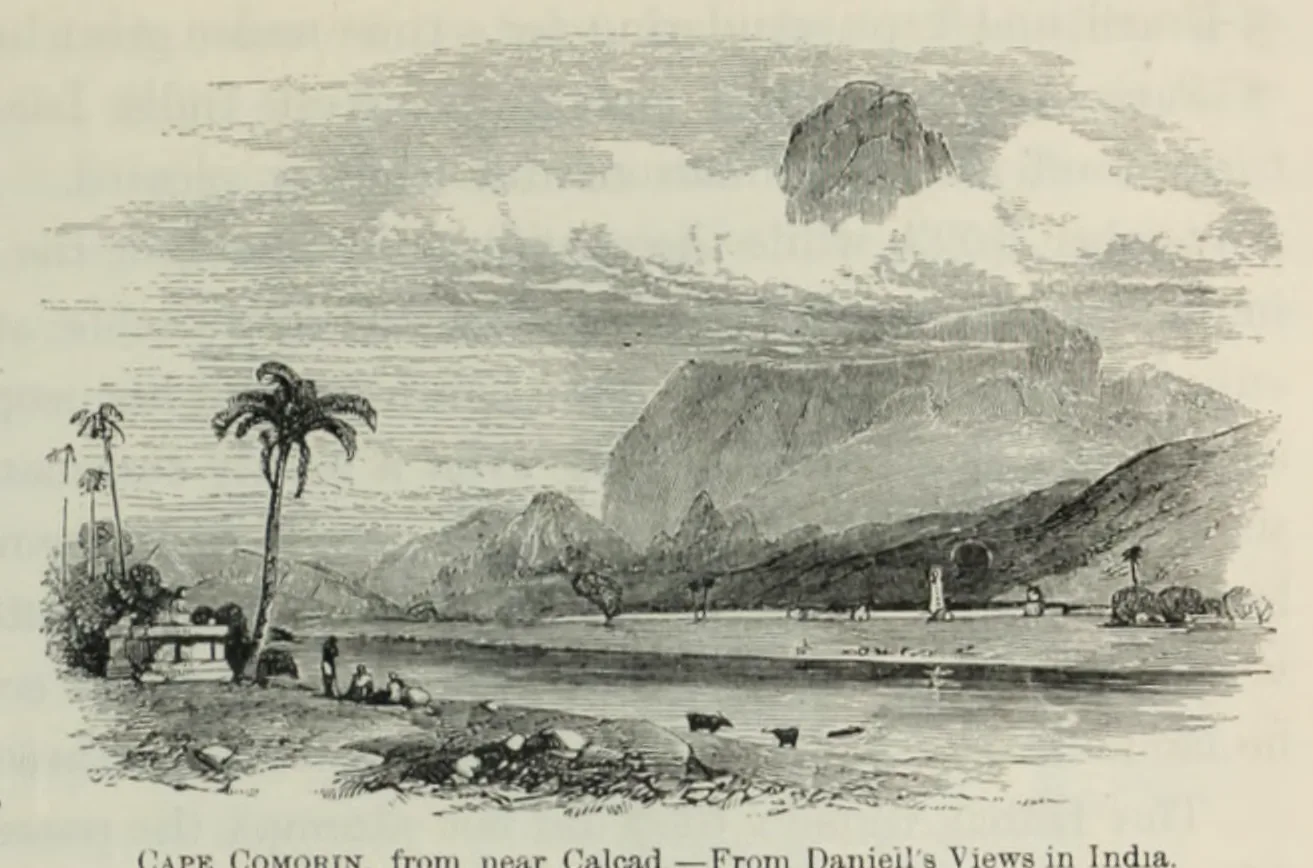
where they meant to cruise with a view to intercept and capture the richly laden vessels from the Indian peninsula, Ceylon, Malacca, the Moluccas, and Japan. The south-west monsoon having set in, they found great difficulty in doubling the Cape, but at length succeeded in May, 1592. Six days after, they arrived at the Nicobar Islands; and then, after plying off and on the coast of Sumatra, proceeded to the coast of Malacca, where they determined to pass what Lancaster calls the winter, meaning thereby the rainy season. They were now reduced to thirty-three persons in all; but, towards the end of August, having espied three vessels, each of about seventy tons, they were bold enough to attack and capture the whole of them. Two of them they released because they were the property of merchants in Pegu; but the third, which they understood to belong “to certain Portuguese Jesuits, and a biscuitbaker of the same nation,” was considered lawful prize. Its cargo of pepper was transferred to the Edward.
They next sailed for the Straits of Malacca, still bent on privateering, and made two important captures, the one a Portuguese ship of 250 tons, laden with rice from Negapatam to Malacca, and the other a Malacca ship of 700 tons, that came from Goa. The latter carried fifteen brass cannon, and had on board 300 men, women, and children, but made scarcely any defence against Lancaster’s mere handful. She was laden chiefly with wine and European goods, but had no treasure; and thus proving not so rich a prize as was anticipated, was sent adrift after the choicest goods had been taken out. The alarm of their presence being now spread, they deemed it dangerous to remain longer in this locality, and returned to the Nicobar Islands.
On the 21st of November they departed for the island of Ceylon, and, anchoring at the Point de Galle, waited in the hope of intercepting the Portuguese fleets from Bengal, Pegu, and Tenasserim. Owing, doubtless, to the irregular and predatory life which the crew had for some time been leading, a mutinous spirit began to appear; and advantage was taken of Lancaster’s sickness to announce their determination that they would stay no longer, but take their direct course for England. There was no means of preventing them from doing as they pleased; and the vessel having weighed anchor, set sail homewards, returning as it had come by the Cape of Good Hope. Here the weather was so stormy that four weeks were spent in doubling the Cape. In April they arrived at St. Helena. On leaving it they were carried westward to the coast of Brazil, and kept wandering for a time under great hardships, first in the Gulf of Paria, and afterward among the West India Islands. The crew, having thrown off all subordination, did as they pleased. At last, on the 15th of November, 1593, while the captain and sixteen of the crew were ashore searching for provisions, the carpenter cut the ship’s cable, and she drifted away with only five men and a boy in her. Lancaster and his people separated into parties, as the only means of obtaining even a scanty sustenance. Ultimately, he and six others got off in a French vessel, which took them to St. Domingo. Here, leaving the rest to follow, he embarked with his lieutenant in another French vessel for Dieppe. Having reached it in safety, he crossed over to Rye, where he landed, 24th May, 1594. He had been absent three years and six weeks.
The Dutch, though they did not attempt the passage by the Cape of Good Hope so early as the English, appear to have been more careful in preparing for it, and were accordingly rewarded with more abundant success. Their first voyage, undertaken by a number of merchants, who had assumed the name of the Company for Distant Countries, sailed from the Texel on the 2d of April, 1595. The expedition consisted of four vessels—the Maurice, of 400 tons, carrying twenty cannon and eighty-four men; the Holland, nearly of the same size and strength as the Maurice; the Amsterdam, of about 200 tons, carrying sixteen cannon and fifty-nine men; and a pinnace, of about 30 tons, carrying eight cannon and twenty men. The command of the vessels was given to captains of high naval reputation; but the general commercial superintendence was intrusted to Cornelius Houtmann, at whose suggestion, and on whose information, the voyage is said to have been undertaken. He had spent some time in Lisbon acquainting himself with the nature of the Portuguese traffic to the East; and, in the course of his inquiries, had incurred the suspicion of the Portuguese government, who imposed a heavy fine upon him, and imprisoned him till it should be paid. He had no means of doing so; but, having managed to communicate with some merchants of Amsterdam, induced them to pay the fine and obtain his release, in consideration of the valuable information which he would be able to communicate.
On the 19th of April, the four vessels reached the Canaries, and on the 14th of June they crossed the line. They had previously fallen in with several Portuguese vessels, which they might have taken as lawful prizes; but, with a moderation in which much good policy was combined, they met and parted like friends. They now began to long anxiously for land, as the crews were suffering much by scurvy, and reached it on the 4th of August. They had passed the Cape of Good Hope without seeing it, and had anchored in a bay called the Aguada de San Bras, situated about forty-five leagues beyond it. After some intercourse with the natives, they continued their voyage on the 11th of August, but were again obliged, by the ravages of scurvy, to seek refreshments on the coast of Madagascar. They had some difficulty in obtaining them; and, in the meantime, were so reduced by sickness, that they could scarcely muster twenty men fit for service, while they had actually lost seventy. Having somewhat recovered by means of the fruit and fresh provisions which they obtained ashore, they again set sail on the 14th of December; and, after various adventures not possessed of much interest, directed their course towards the southern islands of the Maldive group. They were thus carried beyond the Indian peninsula, and first saw land on the 1st of June, 1596. They were off the coast of Sumatra. Continuing southwards, they arrived, on the 11th, at the entrance of the Straits of Sunda, and proceeding through them, much impeded by contrary winds and currents, arrived at Bantam, on the north-west extremity of Java.
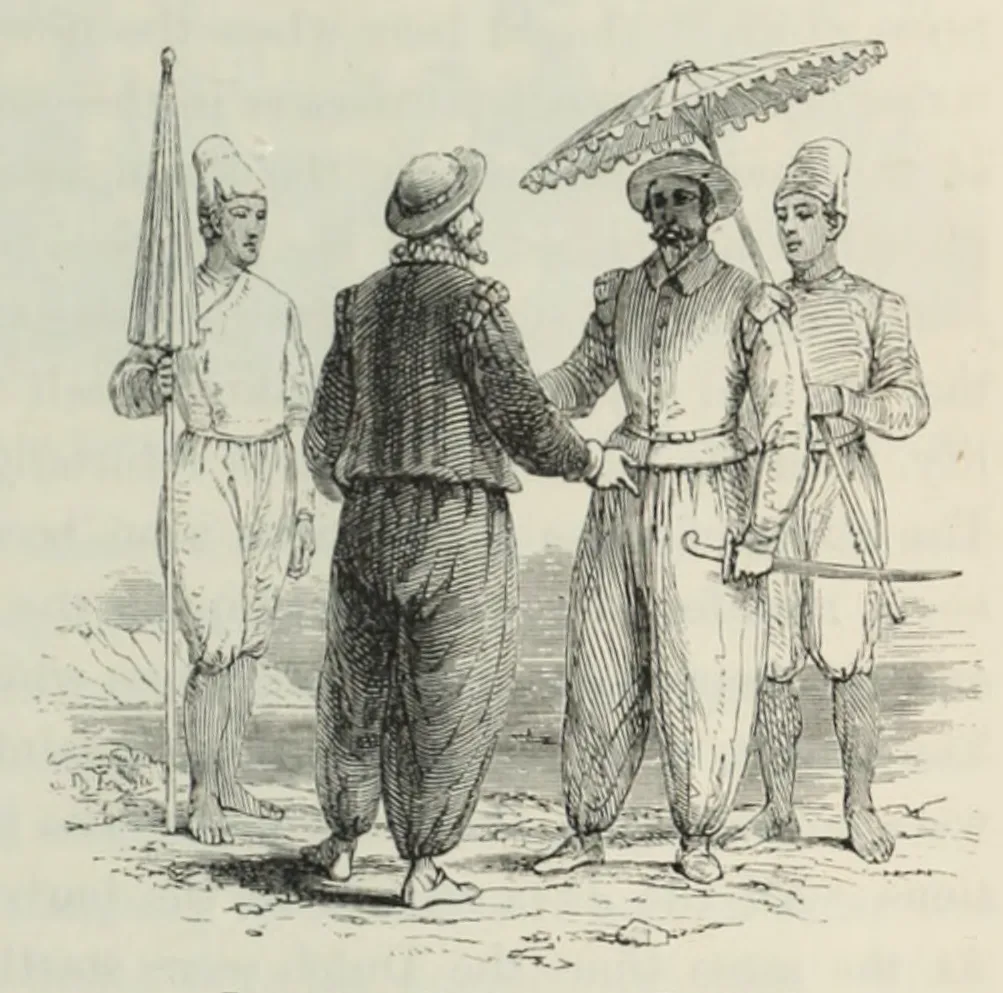
On their arrival they were visited by six Portuguese, with their slaves, who assumed the character of deputies, sent by the governor and people of Bantam to ascertain the object of their visit. The previous navigators from England, particularly Cavendish and Lancaster, had spread great alarm; but the Dutch endeavoured to dissipate all fear, by declaring that commerce was their only object. Under this impression a friendly intercourse commenced, and a full cargo of pepper, at a very moderate rate, might easily have been obtained; but Houtmann, determined to do everything at the cheapest, was induced to wait for the new crop, which was represented to him as so very abundant, that it would be obtained at almost nominal prices. This injudicious delay gave the Portuguese time to prepare a series of intrigues, by means of which the good understanding with the natives was on the point of being broken up.
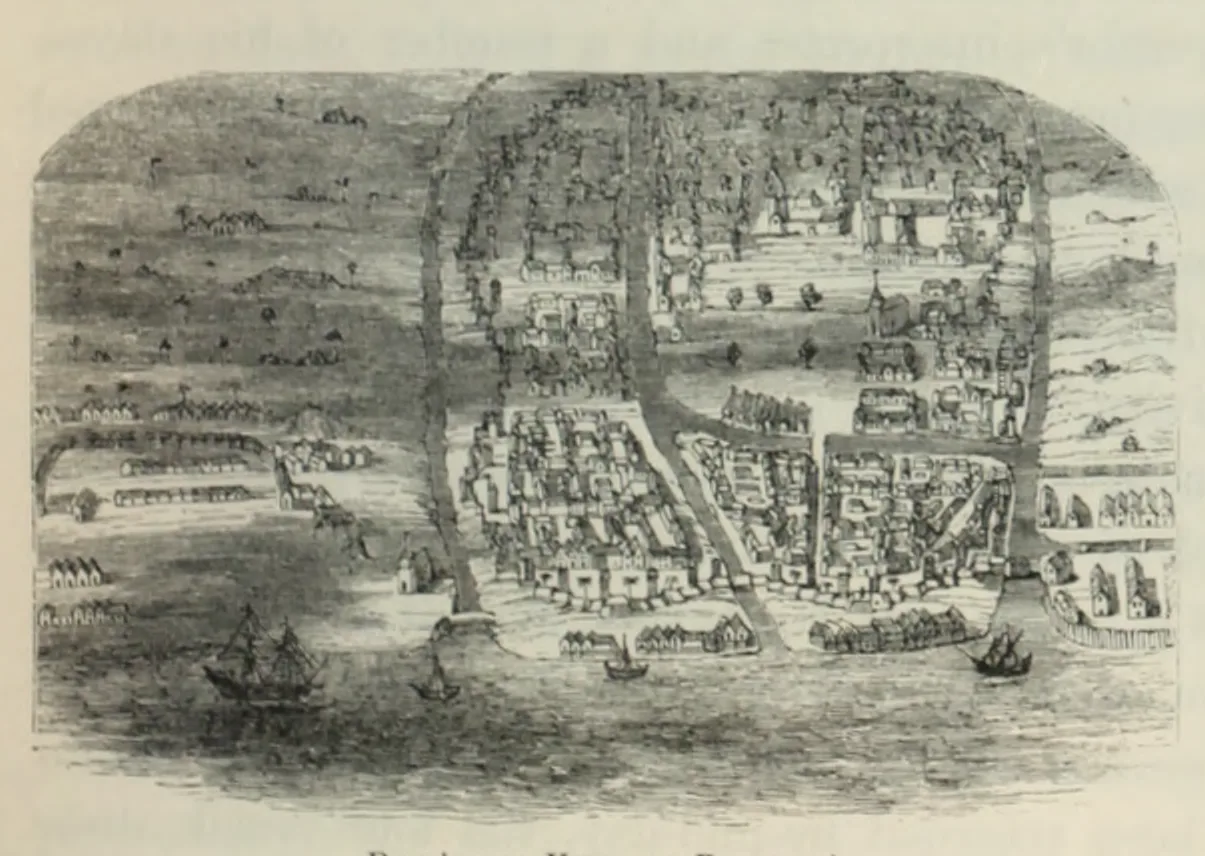
Ultimately, however, a treaty, offensive and defensive, was formed with the natives, though sufficient evidence was given, that whatever friendship the Portuguese might pretend, nothing but enmity in every form, secret or open, was to be expected from them. The immediate consequence of the treaty was the establishment of a Dutch factory at Bantam.
Houtmann, still continuing to wait for the anticipated reduction in the price of pepper, began to dispose of his merchandise, to be paid for in pepper, at the price which it should bear when the new crop should be delivered. On these terms he found ready purchasers in the governor and several of the other officials of the town. Meanwhile, the Portuguese continued their intrigues, and very plausibly maintained, that the irrational course which Houtmann was pursuing, could only be accounted for by assuming that commerce was only a pretext, and that his real object was to make himself thoroughly acquainted with the locality, with the view of afterwards returning and taking forcible possession of it. The effect of these insinuations soon became apparent. A pilot, who had all along manifested great friendship for the Dutch, was barbarously assassinated, and the pepper due on the purchases which had been made was not delivered. The Dutch, after uttering vain complaints, had recourse to menaces. These were not lost upon the inhabitants, who immediately took all possible precautions. All the Java vessels in the harbour cut their cables, and ran ashore. At the same time, the Dutch were startled by the alarming intelligence that a large fleet, destined to act against them, was being prepared in a neighbouring harbour.
Houtmann, though thus put upon his guard, had the rashness to go ashore with only seven attendants, and pay a visit to the governor. The result which might have been foreseen immediately followed; and the whole party, as soon as they entered the palace, were arrested. The Dutch immediately attempted reprisals, by seizing the governor’s interpreter and a number of his slaves. Houtmann’s position was now precarious in the extreme; and he only saved himself from the death with which he was threatened, by sending a letter to the fleet, ordering the interpreter to be delivered up. Five of his companions were accordingly released, and an appearance of trade was resumed, though he himself still remained in captivity.
It was impossible that matters could long remain in this position; and it was therefore formally resolved, at a council held on board the Maurice, to intimate to the governor, that if the captain, Houtmann, and all his people, with everything belonging to them, were not delivered on the following day, the utmost force which they possessed would forthwith be employed to obtain redress. No answer having been returned by mid-day, the four vessels drew near the town, and anchored in three fathoms. On the first news of this proceeding, the governor, in a rage, ordered the arrest of every Dutchman in the factory. They were all carried off, Houtmann along with them, to the place of public execution; and nothing but excruciating deaths were looked for, when the governor, who had begun to calculate the consequences, recoiled from them, and proposed negotiation. It was so spun out that the Dutch once more lost patience and commenced hostilities, in which their superiority soon became so apparent, that the governor saw the necessity of yielding. Many delays were still interposed, but ultimately an arrangement was come to, by which the Dutch agreed to pay a considerable sum of money for the damage they had caused, and Houtmann and his companions regained their freedom.
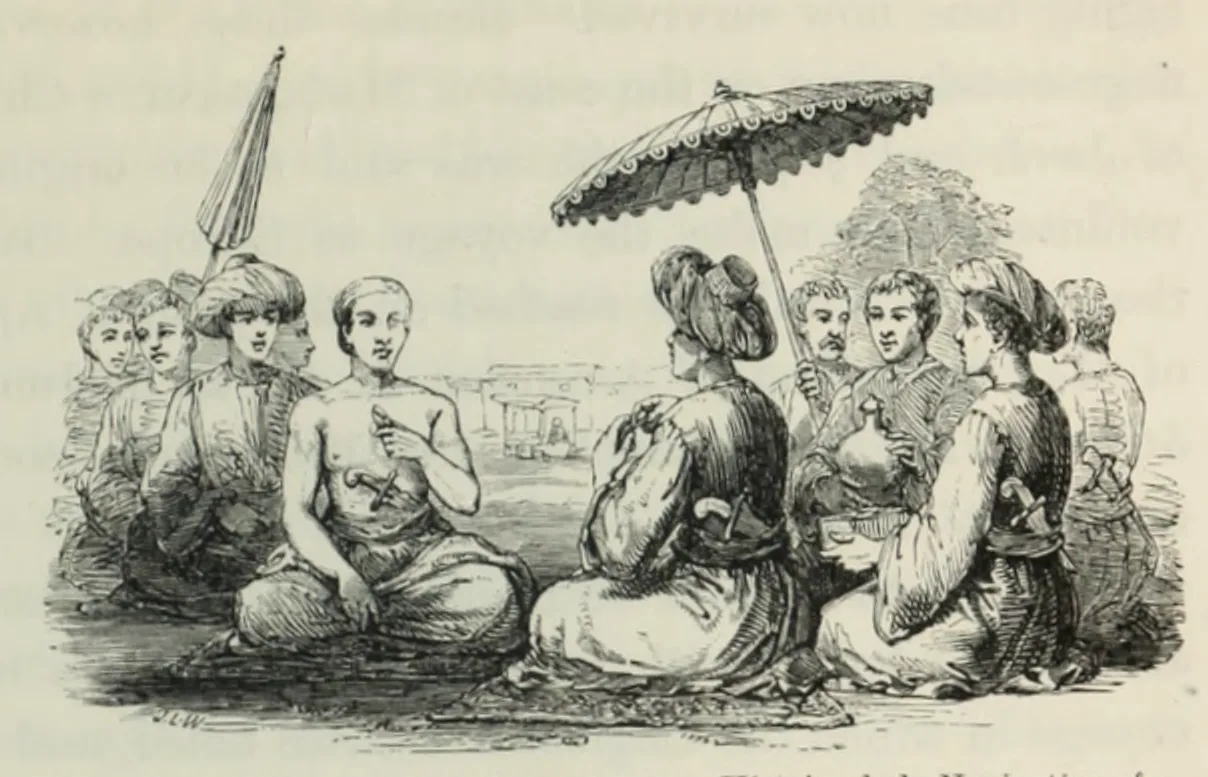
Friendship seemed about to be re-established, when a Portuguese deputy arrived from Malacca with a large present to the governor, and the promise of one still more valuable, provided he would shut the port against all commerce with the Dutch. The bribe was too tempting to be resisted; and an order was issued by the governor which left no doubt as to his hostile intentions. Houtmann, convinced that negotiation was now useless, hastened to remove with all his people and their effects. Immediately after, it was decided by a council held on board the Maurice, to give full scope to their resentment and take a signal revenge. Second thoughts proved better, and reflecting that nothing could be gained, and much might be lost by the indiscriminate carnage which they had contemplated, they weighed anchor, and proceeded eastward along the coast of Java. After a fearful encounter with the natives, in which many lives were lost on both sides, and all hopes of establishing a friendly intercourse were destroyed, the vessels quitted the north-west coast, and sailed north to the isle of Lubok, which they reached on the 9th of December. They now changed their course to west, but, on the 25th, after they had beaten about, obstructed by contrary winds and currents, they were astonished to find themselves still within sight of the island. Here, as they had only ninety-four men remaining, many of them unfit for service, it was resolved to abandon the Amsterdam, which had become so leaky that she could with difficulty be kept afloat.
On the 12th of January, 1597, anchor was again weighed, and the vessels proceeded for the eastern extremity of Java. On the 18th they came in sight of an active volcano, and, a few days after, entered the strait which separates Java from Bali. After some friendly intercourse with the inhabitants of the latter island, they turned their face homewards on the 26th of February, and began to steer for the Cape of Good Hope. Their vessels, as already mentioned, had been reduced to three; and of the 249 men who had quitted Holland, only eighty-nine now survived. Besides these, however, they had with them two negroes taken up on the coast of Madagascar, a Chinese, two Malabars, a native of Java, and a pilot, who was said to be originally from Gujerat, and had volunteered to make the voyage to Europe. Sailing by the south of Java, the coast of Natal was reached on the 24th of April, St. Helena on the 25th of May, the island of Ascension on the 2d of June, the Azores on the 12th of July, the English Channel on the 5th, and the port of Amsterdam on the 14th of August.
Though the results of Houtmann’s voyage were by no means brilliant, his arrival was hailed with loud acclamations. He had successfully performed a voyage in which the English had twice failed, and made it plain that, with due circumspection, a direct and lucrative trade with the East, by the way of the Cape of Good Hope, might easily be established. The Portuguese would doubtless throw every possible obstacle in the way; but their power of mischief was greatly abridged by the loss of their independence, and more was to be hoped from the victories which might be gained over them, than feared from the injuries which they might be able to inflict. The native powers, too, had evidently no love for the Portuguese, of whose tyranny and bigotry they had too good reason to complain, and were disposed to form friendly connections with any foreigners by whom the Portuguese supremacy might be undermined or finally overthrown. Even the returns by Houtmann’s voyage, though obtained under the most unfavourable circumstances, nearly covered the expense; and there was therefore every reason to hope, that in proportion as the navigation and the nature of the trade came to be better understood, great profits would be regularly realized.
Influenced by these and similar considerations, Houtmann’s return was no sooner announced than all the principal ports of Holland were eager to share in the new Indian traffic; and various companies, having that object in view, were formed. As before, the Company for Distant Countries, which had sent out Houtmann, took the lead, and made all haste to fit out four ships. Other four were fitted out by a rival company. The leading merchants in both, afraid of the injury which they might inflict on each other, by appearing in the Indian market as competitors, proposed and effected an amalgamation. The eight vessels thus fitted out at the expense of private individuals, but provided with cannon by the government, sailed in 1598. Four of them made a voyage remarkable for its rapidity at that early period, and in the course of fifteen months returned from Bantam with a valuable cargo of pepper; the other four occupied more time, but appear to have turned it to good account; and after visiting Amboyna, Banda, and Ternate, came home laden with rich spices, which yielded an immense profit. During another voyage, fitted out by Middelburg merchants, also in 1598, Houtmann, who had been intrusted with the command, was again unfortunate, and lost his life by an act of gross treachery on the part of the King of Acheen, in the island of Sumatra.
The Dutch East India trade might now be considered as fairly established. It had originated in private enterprise, and had the times been peaceful, might have been successfully carried on by the same means; but the Spaniards and Portuguese having left no doubt of their determination to cling to their monopoly at all hazards, it became necessary for the Dutch to provide themselves with the means of repelling force by force. At first the States-general contented themselves with granting the necessary authority for this purpose; but it soon appeared that separate companies, pursuing different, and it might be also adverse interests, could not well co-operate in repelling a common foe. In these circumstances, two courses lay open to the government. It might adhere to the system generally followed in Europe, and, while permitting individuals or associations full freedom of trade in every region of the East, provide for their protection against foreign enemies by stationing ships of war in every quarter where danger was apprehended; or it might, by uniting all private associations into one great and exclusive company, enable it to acquire sufficient strength not only to maintain its ground against all who might assail it, but even to become in its turn the aggressor and make new conquests. The latter was the plan adopted; and on the 20th of March, 1602, a general charter was granted, incorporating the different companies into one great association, and conferring upon it the exclusive privilege of trade to the East.. The plan, whatever be its merits or demerits, was not original, for the model had been furnished fifteen months before in a charter granted with a similar object by the crown of England. To this charter, and the preparatory measures taken to procure it, we must now turn.
If those who took the lead in the expeditions of Fenton and Lancaster had been deterred by their failure from persevering in the attempt to establish a direct trade with India, they must have been ashamed of their pusillanimity when they became acquainted with the success of the Dutch; and at all events must have felt the necessity of immediately bestirring themselves if they were not prepared to allow a rival nation to forestall them in what was then universally, though not very accurately, regarded as the most lucrative market in the world. The proceedings thus originated must be reserved for the next chapter
Notes
- 1. In Relacion del ultimo Viage al estrecho de Magellanes, Madrid, 1787.
- 1. Among the many relics of England’s naval heroes enshrined in that appropriate repository, Greenwich Hospital, few are more interesting, few attract more attention, than the subject of the above engraving— the astrolabe, or instrument for taking the altitude of the sun or stars—once belonging to the famous Drake, which was constructed for him prior to his first expedition to the West Indies in 1570.
- 1. From Histoire de la Navigation aux Indes Orientales par les Hollandais, par G. in A. W. L., Amst. 1609.