THE reigns of the Mogul emperors, Shah Jehan and Aurungzebe, together with the rise and progress of the Mahrattas, are so closely interwoven that it was necessary to link them together in a continuous narrative. In this way many years of the history of the London East India Company have been left behind. It will now be proper, therefore, to retrace our steps and return to the period of Cromwell’s death, which took place in 1658, the very same year in which Shah Jehan ceased to reign. The effects, direct or indirect, which both events produced in regard to the Company must now be detailed.
After Cromwell, on the recommendation of his council of state, had decided that the trade to the East Indies should in future be carried on by one joint stock, the Company now united with the body designated sometimes as Assada Merchants, and sometimes as Merchant Adventurers, raised the large subscription of £786,000, and despatched five ships, three of them consigned to Surat, Persia, and Bantam, one to Fort St. George, or Madras, and one to Bengal. The civil war which the contending claims of the sons of Shah Jehan had produced in India had a most injurious effect on trade. At Surat in particular the operations of the Company were almost entirely suspended, and the president and council were greatly perplexed as to the course which they ought to pursue; because, as they themselves expressed it, “it was equally dangerous to solicit or to accept of protection, it being impossible to foresee who might ultimately be the Mogul.” In England similar results were occasioned by the uncertainty which prevailed while the protectorate, feebly and almost reluctantly continued by Richard Cromwell, was gradually supplanted by the re-establishment of monarchical institutions under Charles II. During this anxious interval the servants of the Company abroad were left very much to their own discretion. When the homeward bound vessels were about to return, the council of Surat, after consultation with the different captains, endeavoured to provide for all contingencies by entering into an arrangement by which the captains agreed to sail as a fleet, and bound themselves under a penalty of £6000 each to keep together as far as practicable. On arriving at St. Helena, which had now become the Company’s principal intermediate station between Europe and India, they were to wait for intelligence from England, and in the event of its not proving favourable, to direct their course to Barbadoes, and there remain till assured of a safe return.
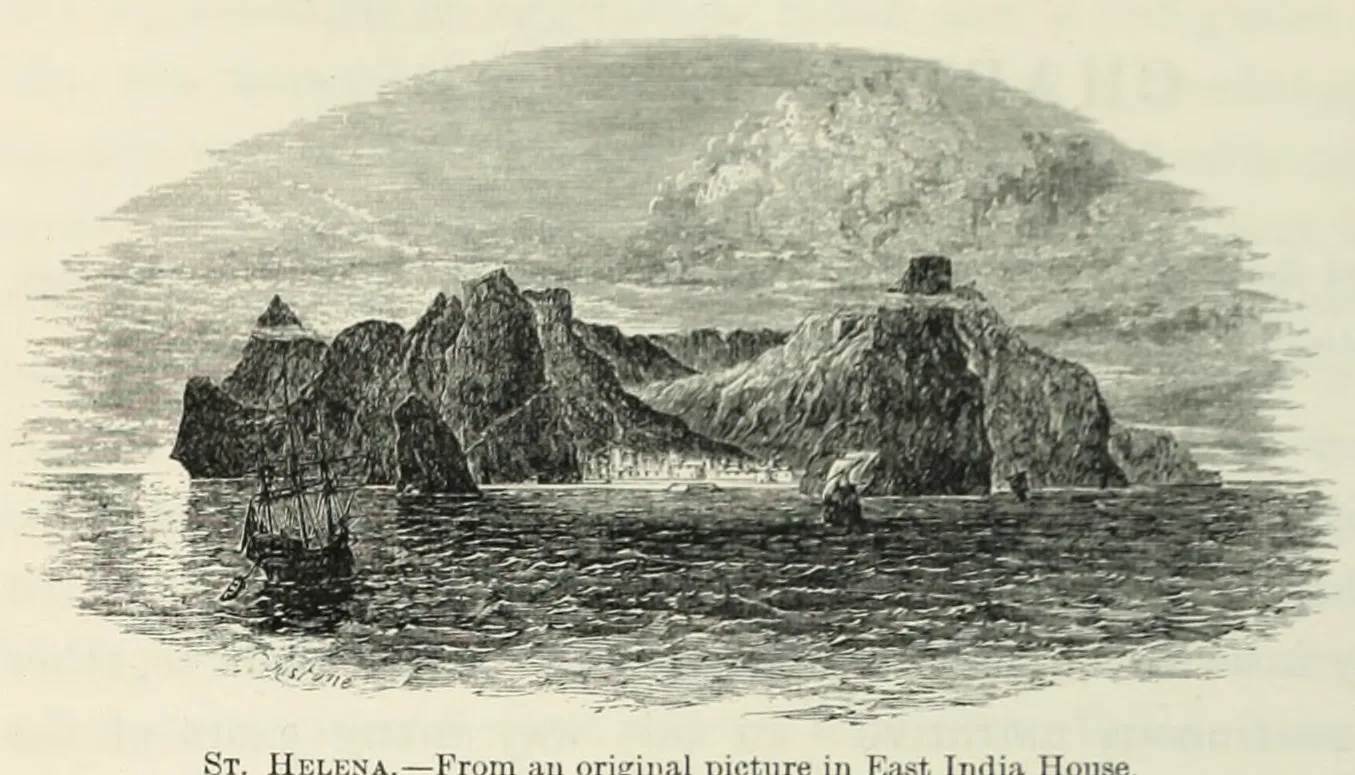
Formerly the Company had been averse to fortifications, or at least to the expense which it would be necessary to incur in erecting and maintaining them; but it was constantly becoming more and more apparent from the political state of India, as well as from the preponderating influence of the Dutch, that without fortifications, and the absolute control of them, it would be impossible to place the trade on a secure and lasting foundation. Accordingly we find the presidency of Surat, in accordance with instructions received from home, examining the west coast of the Indian peninsula, in order to discover some station which, strong by nature, might be made still stronger by art, so as to afford a secure asylum, and recommending for this purpose different stations which the King of Portugal might be induced to cede. It is rather remarkable that one of these was Bombay, which was shortly after to become the property of the British crown as part of the dowry of the Portuguese infanta. On the Coromandel coast the same necessity for strong fortification was felt, in consequence of the alarm which had been excited by the near approach of Sevajee to Madras when he was marching to his southern conquests. In the Persian Gulf, where the share of the customs of Gomberoon still formed a valuable branch of the Company’s revenue, the Persian government had given so many indications of hostility that it was seriously proposed to negotiate the occupation of Muscat. It would almost seem that in proposing this occupation some objects of a very questionable, if not piratical nature were contemplated; for among the inducements mentioned by the Surat presidency are not merely the beneficial effect it might have on their coast trade on the west of India, but the facility it would give “to seize in retaliation on the Malabar junks.” In Bengal, notwithstanding various acts of oppression by the governor, the hopeful character of the trade— which seemed capable of being increased to any extent, and rendered peculiarly valuable on account of the fine qualities of the goods, particularly saltpetre, raw silk, taffetas, and other manufactures—made a fortified station particularly desirable; but it could not be obtained voluntarily, and the Mogul government still seemed so strong that the idea of attempting to gain it by force would, if any had been bold enough to propose it, have been scouted at once as impracticable and monstrous.
The restoration of Charles II., in 1660, had at first a decidedly favourable influence on the interests of the Company. Amicable relations were at once re-established with Spain; the bonds of friendship with Portugal were drawn closer by royal affinity; and the States-general, while congratulating the king on his return, not only proposed a renewal of friendship, but gave a pledge of their sincerity by ordering the immediate cession of the island of Polaroon to the London East India Company. In regard to this cession it must, however, be added, that the Dutch governor of Batavia, to whom the order was issued, postponed it for several years under various pretexts, and at last obeyed it only in the letter, while he grossly violated it in spirit by previously destroying all the spice trees, so as to render the possession worthless. Some of the other benefits which the Company owed to the Restoration were of a more substantial nature. The first of these to which it is necessary to attend was a new crown charter.
This deed, dated 3d April, proceeds upon the following preamble:—“Whereas our well-beloved subjects, the Governor and Company of Merchants trading into the East Indies, have been of long time a corporation to the honour and profit of this nation, and have enjoyed and do enjoy divers privileges and immunities by force of several letters-patent and charters heretofore granted to them by our late royal progenitors Queen Elizabeth and King James of blessed memory: And whereas we are given to understand that of late divers disorders and inconveniences have been committed as well by our own subjects as foreigners, to the great prejudice of the said Company, and interruption of their trade, whereupon they have humbly besought us to grant and confirm their said charters, with some alterations and additions, tending to the benefit and advancement of their trade and traffick.” As it would be superfluous to give any analysis of the contents of this charter, in so far as it merely repeats and confirms those previously granted, it is necessary only to attend to the alterations and additions, several of which are very important.
In regard to duration no change is made, the only limit to perpetuity being, as before, a three years’ notice; but an alteration affecting the very constitution of the Company is produced by a clause which, abolishing the right which every member had hitherto enjoyed of giving one and no more than one vote, provides that in future “every person shall have a number of votes according to his stock, that is to say, for every £500 by him subscribed or brought into the present stock, one vote;” and that “any of those that have subscribed or brought less than £500 may give their respective sums to make up £500, and have one vote jointly for the same.”
By another series of still more important clauses the strictly mercantile character of the Company was revolutionized, and full provision made for the large exercise of judicial and even political functions. Thus “all plantations, forts, fortifications, factories, or colonies, where the said Company’s factories and trade are, or shall be in the East Indies, shall be immediately and from henceforth under the power and command of the said governor and Company,” with “full power and authority to appoint and establish governors, and all other officers to govern them.” The extent of the authority thus conferred is explained by its being added, that in each factory or place of trade the governor and his council “may have power to judge all persons belonging to the said governor and Company, or that shall live under them, in all causes whether civil or criminal, according to the laws of this kingdom, and to execute judgment accordingly.” As there might be factories where there were no governor and council, the chief factor and his council in such places were empowered, when any crime or misdemeanour was committed, “to transmit the party, together with the offence, to such other plantation, factory, or fort, where there is a governor and council, where justice may be executed, or into this kingdom of England, as shall be thought most convenient.” One can hardly help remarking how very absolute these powers are, and how very liable they must have been to abuse. One of the most frequent forms of alleged misdemeanour must have been the invasion of the Company’s exclusive privileges. In all such cases, the Company were the complaining parties; and hence, in violation of all recognized rules of judicial procedure—at least under governments not actually despotic— they were in fact constituted judges in their own cause.
The military and political privileges conferred are, if possible, still more ample. They include “free liberty and license for the said governor and Company, in case they conceive it necessary to send either ships of war, men, or ammunition into any their factories, or other places of their trade in the said East Indies, for the security and defence of the same; and to choose commanders and officers over them, and to give them power and authority by commissions under their common seal or otherwise, to continue or make peace or war with any prince or people that are not Christians in any places of their trade, or shall be most for the advantage and benefit of the said governor and Company and of their trade; and also to right and recompence themselves upon the goods, estate, or people of these parts, by whom the said governor and Company may sustain any injury, loss, or damage, or upon any other people whatsoever that shall any ways interrupt, wrong, or injure them in their said trade within the said places, territories, and limits.” Authority, moreover, is given “to erect and build such castles, fortifications, forts, garrisons, colonies or plantations at St. Helena, as also elsewhere” within their limits and bounds of trade, “as they in their discretions shall think fit and requisite; and for the supplying of such as shall be requisite to keep and be in the same, to send out of this kingdom to the said castles,” &c., “all kind of clothing, provision of victuals, ammunition, and implements necessary for such purpose, without paying of any custom, subsidy, or other duty for the same; as also to transport and carry over such number of men, being willing thereunto, as they shall think fit.”
The invasion of the exclusive privileges of the charter by unlicensed traders had occupied too much of the attention of the Company, and had too often been the subject of petition and complaint to the crown, to allow it to be overlooked. Several minute and stringent clauses are accordingly devoted to it. Thus “full power and lawful authority” is given “to seize upon the persons of all such English, or any other our subjects in the said East Indies, which shall sail in any India or English vessel, or inhabit in those parts, without the leave and license” of the Company, “or that shall contemn or disobey their orders, and send them to England.” The only security against the abuse of these enormous powers was an appeal, but the exercise of it was attended with consequences which must have made it a mockery; for the moment an appeal was entered the Company were empowered “to seize upon” the person or persons convicted and sentenced, “and to carry him or them home prisoners into England.” As unlicensed traders were not the only persons of whom the Company were apprehensive, it was provided that “for the better discovery of injuries and abuses to be done unto the said governor and Company, or their successors, by any of their servants by them employed in the said East Indies or voyages thither, it shall and may be lawful to and for the said governor and Company, and their respective presidents, chief agent, or governor in the said East Indies, to examine upon oath all factors, masters, pursers, supercargoes, commanders of castles, forts, fortifications, plantations, or colonies, or other person, touching or concerning any matter or thing as to which by law and usage an oath may be administered.” In spite of all these precautions, it was still possible that by smuggling or otherwise the exclusive privileges conferred by the charter might be invaded; and therefore, as an additional security, custom-house officers are enjoined not to “permit any entries to be made of any goods or merchandizes of the growth, production, or manufacture of the ports or places aforesaid in Asia, Africa, and America, above limited or appropriated to the trade of the said governor and Company, other than such as from time to time shall be allowed of by the said governor and Company, or their successors, under their common seal, or the hand of the officer to be by them appointed to sit in the custom-house for that purpose.” Thus the Company who not many years before had been threatened with utter extinction, had obtained a charter in which the crown, for the purpose of making their privileges as ample as possible, stretched its prerogative to the very utmost, and took every imaginable precaution for their security both at home and abroad.
At this very time when the Company seemed about to enter on a new course of prosperity, a severe shock was given to their trade in Bengal by the rashness of their agent at Hooghly. Irritated beyond measure at the oppression practised or countenanced by the governor, he resolved to take the remedy into his own hands, and seized a country junk in the Ganges with the determination to hold it as a security. Mir Jumla, the celebrated Mogul general, immediately threatened to retaliate both on the inland agencies and on their factory at Hooghly. The agent, now terrified at the result of his own boldness, sought counsel from the president and council of Surat, who directed him at once to repair and re-deliver the junk; and in the event of this concession not being deemed sufficient, to prepare for shipping all the Company's property and leaving the place. In sending these orders, the members of the Surat council put the agent on his guard against the wiles of the Mogul officers, who, they assured him, “usually offered civilities at the very moment when they intended to have recourse to violence and depredation.” The dispute was ultimately arranged, and the desperate measure of withdrawing entirely from Bengal was of course abandoned.
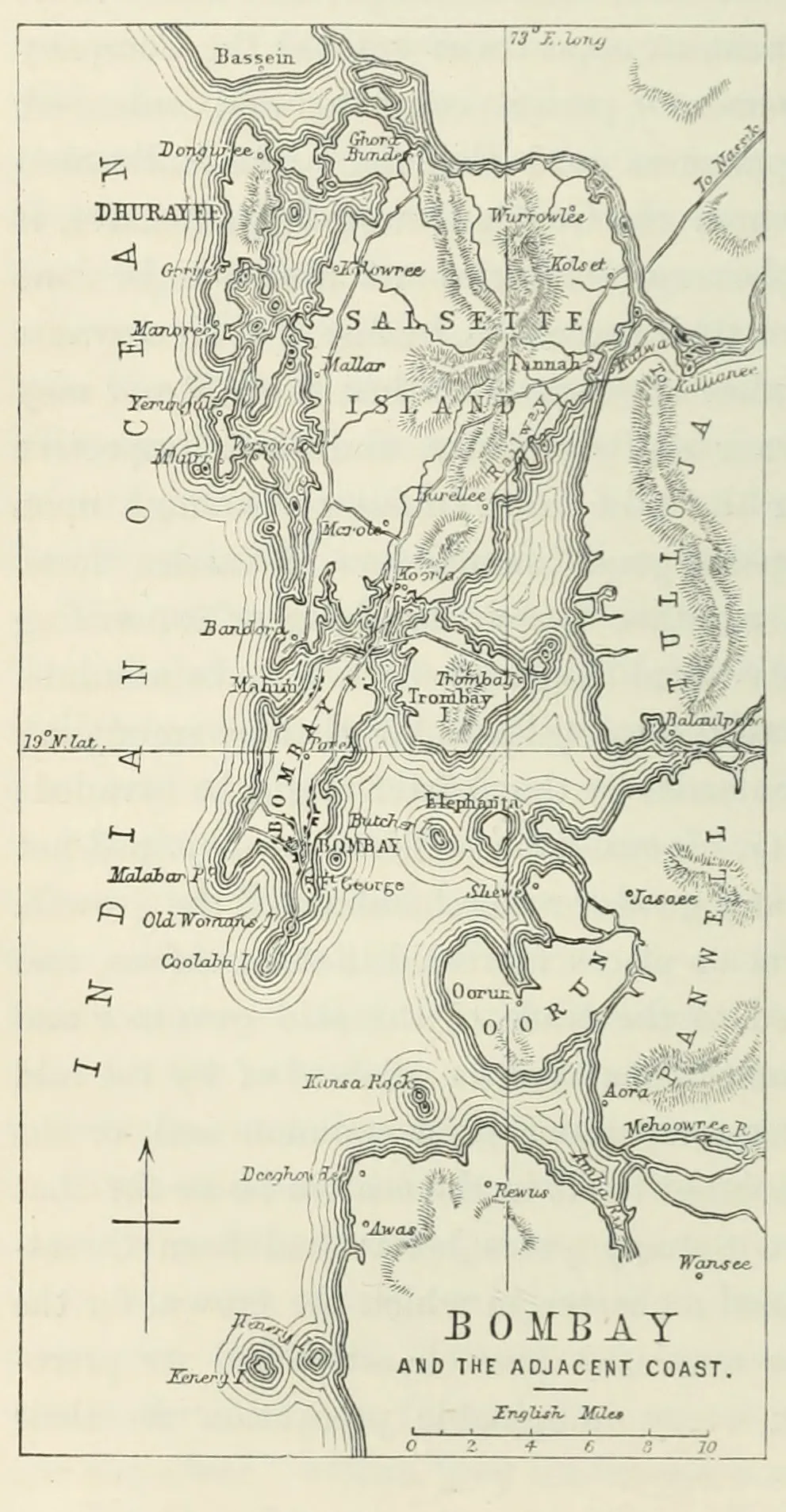
While the Company were thus threatened in the east of India, their footing in the west was about to become far firmer than it ever had been before by an event to which it is now necessary to attend. In June, 1661, two months after granting the above charter, Charles II. married the Infanta Catherine of Portugal, and obtained, as part of her dowry, “the port and island Bombay in the East Indies, together with all the rights, profits, territories, and appurtenances thereof whatsoever.” The island of Bombay, stretching eight miles from north-east to south-west, with an average breadth of three miles, has an estimated area of little more than eighteen square miles. Its value, however, must not be judged by its superficial extent. By land-locking a deep bay in a central locality, it forms the very best harbour in India. The use of such a harbour had long been earnestly desired by the Company; and it was now secured in the best possible form by becoming the property of the British crown, and consequently not liable to be interfered with on any pretext by the native powers.
In March, 1662, the English government despatched to the East Indies a fleet of five men-of-war, under the command of the Earl of Marlborough. On board the fleet were a viceroy from Portugal, authorized formally to complete the cession of the island, and Sir Abraham Shipman, with 500 soldiers, to take possession and thereafter remain as the first English governor. No opposition appears to have been anticipated; but the Portuguese at Bombay, naturally unwilling to be handed over to a foreign power, took advantage of some ambiguities in the treaty by which the island was ceded, and refused to deliver it up. The English were themselves partly to blame for the unexpected opposition, because instead of being satisfied with the “port and island Bombay,” which was all that the treaty with Portugal expressly granted, they insisted that this grant conferred with it a right to all the Portuguese stations in that locality, and more especially to the island of Salsette, only separated from Bombay by a narrow channel. The claim was certainly extravagant, as Salsette, thus represented as an accessory to Bombay, has an area of 150 square miles, and is consequently eight times larger than the principal.
The whole business was grossly mismanaged; and ultimately the English, prohibited from landing, and unwilling or unable to effect it by force, were obliged to look out for some other station where they might obtain refreshments, and employ proper remedies to diminish the mortality which, in consequence of protracted confinement in the ships, was now making fearful ravages. In this emergency application was made to Sir George Oxinden, who had been sent out by the Company as president and chief director of all their affairs “at Surat, and all others their factories in the north parts of India from Zeilon to the Red Sea,” for permission to land the troops at Surat, but even this could not be granted for fear of offending the Mogul; and Sir Abraham Shipman was reduced to the necessity of landing the troops on the island of Anjedivah, fifty miles south-east from Goa, where numbers of them perished. The Earl of Marlborough had in the meantime left them to their fate, and sailed for England.
These untoward events seriously affected the prospects of the Company. They had hoped much from the presence of the ships of war, which they thought would have the effect of procuring them more respect from the native powers, and of intimidating the Dutch, who were now openly aspiring at an ascendency on the Indian coast as complete as that which they had established in the Eastern islands. It had even been expected that the king’s ships might have been made instrumental in opening up new mercantile channels to the Company by receiving on freight Portuguese investments from Goa, and thus forming the commencement of a carrying trade which might yield lucrative returns. The failure of the expedition to Bombay disappointed all these expectations, and for some time the Company appear to have done little more than employ their servants in giving effect to the new clauses in their charter for the hunting down of those whom they stigmatized as interlopers. Indirectly, however, the failure of the Bombay expedition proved rather a gain than a loss to the Company, as it was doubtless one main cause of the transfer which the crown afterwards made to them of all the rights in India conferred by the marriage treaty. Indeed, Sir Abraham Shipman, while his men were wasting away at Anjedivah, made a voluntary offer of Bombay to the Company. In this he undoubtedly exceeded his powers; and Sir George Oxinden, to whom the offer was made, was too prudent to accept a grant to which, even if the Company had approved, legal effect could not be given. At the same time, it might have been foreseen that the acceptance was only postponed, and that the crown, burdened with the expense which the possession of the island could not but entail, would ere long require little inducement to part with it.
During several subsequent years the transactions of the Company are very imperfectly recorded. The reason may have been because they were comparatively insignificant. The same fleet which had brought Sir George Oxinden as president to Surat, had carried Sir Edward Winter as agent to Fort St. George. Besides that locality and the stations connected with it, all the agencies and factories in Bengal were placed under his immediate superintendence; and he had exerted himself apparently with good effect in adjusting the quarrel with Mir Jumla. Still, no idea appears to have been entertained of the vast expansion which the Company’s traffic was destined to assume in that quarter; and hence, while distant outposts were eagerly sought after, and the English monarch was importuned for letters to his royal brother of Bantam, whenever retrenchment became expedient, and a contraction of the sphere of operations was proposed, Bengal is almost invariably brought forward as the quarter where the experiment might be made with the least risk of injurious consequences. In accordance with this view orders were given, in 1663, to discontinue the factories which had been established at Patna, Cossimbazar, and Balasore, in order that all sales and purchases on the Company’s account in Bengal might in future be made only at Hooghly. When the Company are seen thus voluntarily withdrawing from the province within which the capital of their Indian empire was afterwards to be established, it is difficult to refrain from observing how little they are entitled to take credit for foresight. In fact, they were not so much the architects as the unconscious instruments of their future fortune.
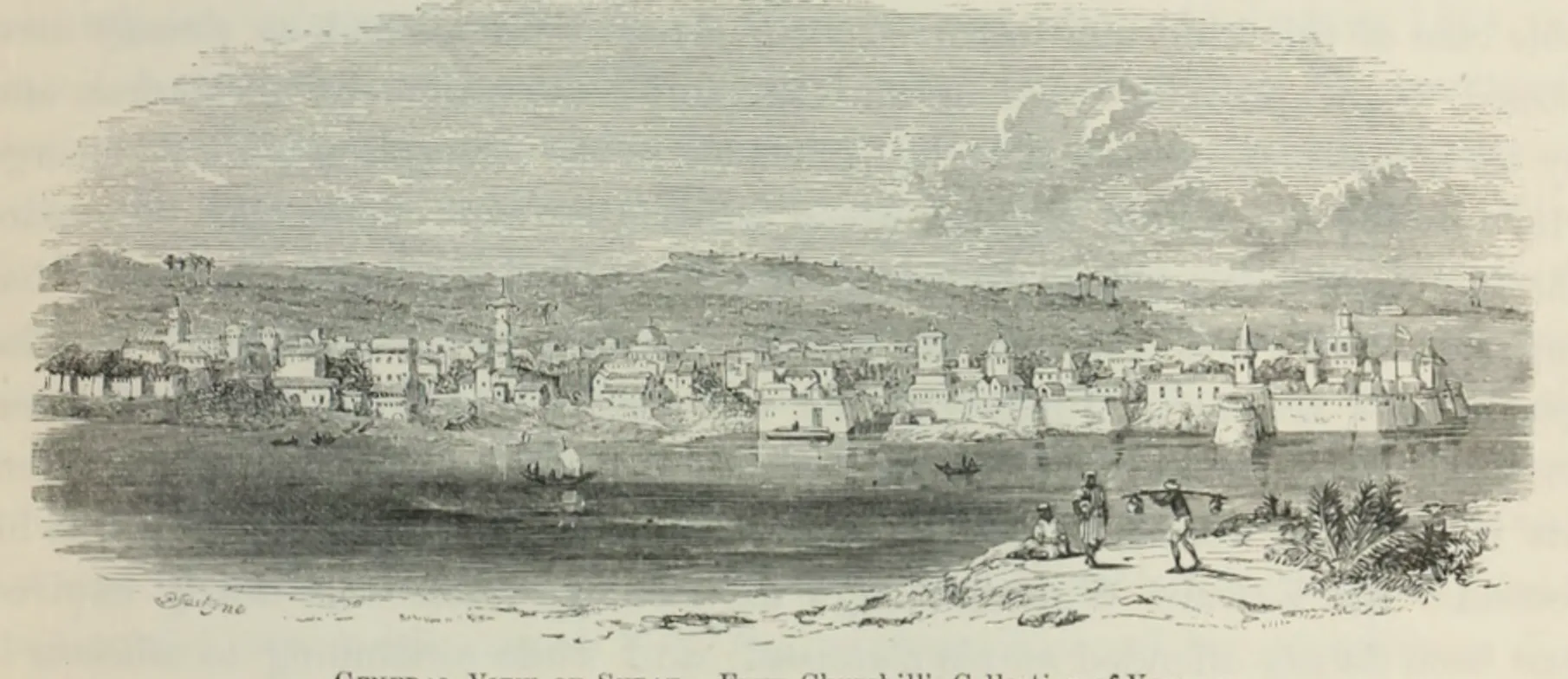
The year after the Company had thus begun, as it were, to turn their backs on Bengal, an event took place which produced general consternation. The Mahratta chieftain Sevajee, dexterously out-manœuvring the troops of Aurungzebe in the manner which has already been described, had advanced within fifteen miles of Surat on the 5th of January, 1664, before any tidings of his movements had been obtained. The town was then surrounded, not as at present by a brick, but by a mud wall; and hence no effectual resistance could be made when Sevajee entered it at the head of 4000 horse. The inhabitants allowed themselves to be systematically plundered during six days—Sevajee, according to the account of one Smith, an Englishman, who was taken prisoner and carried before him, sitting outside the town in his tent ordering heads and hands to be chopped off in cases where persons were supposed to be concealing their wealth. While the natives were thus pusillanimous, a better spirit was displayed by the inmates both of the Dutch and English factories. The English, in particular, greatly distinguished themselves. Having put their factory in as good a state of defence as the shortness of the time allowed, and called in the aid of their ships’ crews, they met Sevajee’s demands and threats with defiance; and when a number of Mahrattas, without venturing on an assault, forced their way into an adjoining house, a sally was made which dislodged them. By this valiant conduct the English saved not only their own property, but that of many natives whom they had taken under their protection, and rose high in the estimation of Aurungzebe himself, who granted them a firman exempting them for ever from a portion of the customs paid by other nations, and also from all transit charges. The visit of Sevajee, which at first threatened the Company with the loss of all their property at Surat,
estimated at £80,000, was thus eventually the indirect means of procuring for them important advantages.
In 1665, the politics of Europe again assumed a threatening appearance. A Dutch war was evidently impending. The Company, well aware that, in that event, the Dutch would sweep the Indian seas, scarcely ventured to prepare an outward voyage, and contented themselves with instructing their agents in India to make all possible haste in completing their investments, and despatching the homeward bound ships. Nor was a Dutch war the only source of their anxiety, as new competitors, who were afterwards to prove the most formidable of all, were about to enter the field. The French had long had an eye to the Indian traffic; and an exclusive company, sharing largely in royal patronage, and invested with important privileges, had been formed. This company had hitherto rested satisfied with promising great things without attempting to perform them; but a new spirit having been infused into it, it was now about to act in earnest, and on an extensive scale. On the very first voyage eight vessels well armed, so as to be equally prepared for war and commerce, had been despatched. Made aware of the fact only by imperfect rumours, the London Company were at first apprehensive, from the arming of the vessels, that piratical objects might be intended; and sent out instructions that the homeward ships should sail as a fleet, and be provided with the means of defence. On being better informed, they deemed it necessary only to inculcate the necessity of using caution, and guarding against misunderstandings which might lead to discussions between the two crowns. While giving these judicious counsels the court gave evident indications of uneasiness, and used language which might be interpreted into an instinctive foreboding of the great struggle which the two nations were afterwards to wage for supremacy in the East.
In the desire which the Company now felt for fortified stations, they had overlooked one danger. Their object was to secure an asylum against external foes, and it seems never to have occurred to them that foes of a different kind might arise and turn the fortifications against their own employers. A remarkable case of this kind now occurred. Sir Edward Winter had, as already mentioned, been appointed head of the Company’s establishment at Madras, and, by their instructions, had added considerably to the strength of Fort St. George. His subsequent conduct had not given satisfaction; and, under the impression that he was endeavouring to enrich himself by private trade, the court had superseded him, and sent out Mr. George Foxcroft as his successor. On that gentleman’s arrival in June, 1665, he was received with all due respect, and took his place at the head of the council, while his predecessor, agreeably to his instructions, continued, in the interval previous to departure, to act as his second. Sir Edward Winter, though his term for office was nearly expired, had been deeply offended at his dismissal; and while continuing to officiate in the council, had been constantly on the alert to detect something in the conduct or language of his successor on which he might found a charge against him. While under the influence of such feelings, he probably had little difficulty in finding what he wanted; and accordingly, Mr. Foxcroft, three months after his arrival, was attacked and violently carried off to prison, on the extraordinary ground of having uttered seditious and treasonable expressions against the king’s government. During the scuffle caused by the apprehension, a Mr. Dawes, a member of the council, lost his life, and Mr. Foxcroft himself, together with his son and Mr. Sambrooke, another member of council, was wounded.
After this outrageous proceeding, Sir Edward Winter was too far committed to be deterred by any other irregularity, and he at once re-assumed the government. It seems that he was not without supporters, for he succeeded in forming a council, including among its members the lieutenant of the garrison. During this internal strife, there was no small risk that the fort itself would be lost to the Company. The Dutch, now at war with England—the Portuguese viceroy at Goa, offended by the course of proceedings at Bombay—and the King of Golconda—were all anxious to obtain possession of it. The last had even taken steps for that purpose, and was meditating an attack by one of his officers, when he was called away for still more urgent service.
Sir Edward Winter at first took credit for loyalty to his sovereign and disinterested zeal to promote the interests of the Company, and endeavoured to justify himself by numerous letters addressed to influential quarters; among others, it is said, to the king and the Archbishop of Canterbury. His conduct, however, had been too gross to admit of apology; and on finding that, with the sanction of government, force was about to be employed against him, he managed, after persisting several years in rebellion, to obtain a free pardon, and disappeared from the scene. The leniency with which he was treated says little for the wisdom and vigour of the Company’s management at this period, and was doubtless an incentive to similar acts of rebellion on subsequent occasions.
Sir Abraham Shipman, after making an offer of Bombay to the Company, as has been already mentioned, had continued with his troops at Anjedivah, enduring the misery of seeing them dying around him. At last, in 1664, he himself became one of the victims. Mr. Cooke, who had been his secretary, assumed the command; and, under the conviction that it was the only chance of saving the lives of the soldiers still surviving, entered into a convention with the Viceroy of Goa, by which he agreed to accept of the port and island of Bombay, according to the treaty as interpreted by the Portuguese. In one respect the terms were even worse than those originally offered to the Earl of Marlborough, for, by an additional article not then mentioned, the Portuguese resident in Bombay were, along with other liberties, to be exempted from the payment of customs. When the survivors on Anjedivah left for Bombay, their numbers did not much exceed 100; the expense incurred by government for the pay and maintenance of the troops, from the date of their embarkation in England, was above £13,000.
Mr. Cooke’s convention with the Portuguese was no sooner known in England than it was disavowed; and, with the view of carrying out the cession as the English had interpreted it, Sir Gervase Lucas was appointed governor of Bombay. Before he sailed he drew up a report, founded on the documents transmitted by Mr. Cooke, and gave it as his opinion that the annual expense of the garrison necessary for the island would, without including contingencies, amount to at least £7371, and that, moreover, a large outlay for new stores would be immediately required. This report appears to have made government doubtful as to the propriety of continuing to retain Bombay as an immediate possession of the crown. As yet it had yielded nothing, though it had already cost much, and was apparently about to cost more. The conclusion therefore was, that in the meantime “it would be improper to incur any great expense upon it,” and that the whole establishment should be placed on a very narrow and economical footing.
Sir Gervase Lucas arrived at Bombay on 5th November, 1666, and, on assuming the government, found matters in a still worse state than his inquiries before leaving England had led him to anticipate. The Mogul government, when they saw the English in possession of an island which they were preparing to fortify, and which, by its natural position, might control the trade of Surat, became extremely jealous, and openly expressed their displeasure, especially after learning that an invitation had been given to the native merchants to settle at Bombay under British protection. The misunderstanding thus commenced was brought almost to an open rupture when Mr. Cooke, in order to compensate himself for some loss sustained during the pillage of Surat by Sevajee, took the unwarrantable step of seizing a Mogul junk which stress of weather had forced to seek shelter in Bombay harbour. This junk belonged to the governor of Surat, who instantly threatened to retaliate on the English factory. Sir George Oxinden remonstrated with Mr. Cooke, who, in consenting to restore the junk, took occasion to inform Sir George that he considered himself, as a king’s servant, in a higher and more independent position than one who was the servant only of a company. The question thus raised was at a later period revived, and led to considerable embarrassment. Sir Gervase Lucas, while condemning many parts of Mr. Cooke’s conduct, agreed with him on the subject of precedence. The misunderstandings and jealousies which in consequence arose, were injurious to the interests both of the crown and the Company. To the latter, however, the ultimate result was favourable, as the difficulty of procuring a cordial co-operation between the two services must have been an additional inducement to the crown to shake itself free of all further responsibility in regard to Bombay. Before giving an account of the step by which this was finally accomplished, it will be proper to refer to several incidents which occurred about this time, and are of sufficient interest to deserve special notice.
The first of these is a celebrated lawsuit in which the Company became involved, in 1666, by the zealous endeavours of their servants to put down unlicensed trading. Frederick Skinner was agent for the merchant adventurers at Jambi, on the north-east coast of Sumatra, and, on the union of the companies, quitted the district, after making over his assets and debts to the united stock. His brother, Thomas Skinner, who had apparently entered into possession of Frederick’s effects, continued to trade as a merchant on his own account. A ship and merchandise belonging to him having been discovered by the servants of the Company, was forcibly seized, by the aid of the Sultan of Jambi. The grounds of seizure were apparently of two kinds—the one that the property in question belonged not to him, but to the Company, to whom it had been, or ought to have been given up by Frederick Skinner; the other that, as the vessel was trading without license within the limits of the Company’s charter, both it and the goods found in it were forfeited. In terms of the charter, the judgment thus pronounced was subject to review, and Skinner, on making his appeal, was entitled to insist that, for the purpose of carrying it out, he should be sent home in one of the Company’s ships to England. This, however, was refused, and he was left to make his way to Europe as he best could, by an overland journey. His complaint, presented at first to the government, was referred successively to a committee of the council, and to the House of Peers. The Company, when ordered to answer, declined, on the ground that the House of Peers had no primary jurisdiction, and could only judge by appeal in the last resort. The lords found that they had jurisdiction, and peremptorily ordered the Company to plead. On their continued refusal judgment was given against them, to the amount of £5000. The Company’s plea raised a great constitutional question, which, on their petition, was keenly taken up by the House of Commons and decided in the Company’s favour. Two branches of the legislature were thus diametrically opposed, and carried on the dispute with more temper than judgment. When Skinner attempted to enforce the judgment, the commons interfered and sent him a prisoner to the Tower. The lords were not slow to follow this bad example, and imprisoned the governor, Sir Samuel Barnadiston, and three other members of the court. Not satisfied with this, they declared the petition of the Company to the commons to be false and scandalous, and the commons retaliated by resolving that any one who should execute the judgment in Skinner’s favour was a betrayer of the rights and liberties of the commons of England. The controversy threatened to be interminable, and was not settled till parliament had been adjourned seven times. At last the king held a conference with both houses at Whitehall, and succeeded, by personal persuasion, in inducing them to erase all the proceedings from their journals. In one sense this gave the Company the victory, as the judgment against them was not enforced, and Skinner remained without redress.
The next event of this period deserving of particular notice, is the general peace concluded by the treaty of Breda, 31st July, 1667. To this treaty Britain, France, Holland, and Denmark were parties. The benefit which commerce in general derived from the cessation of hostilities could not but be felt by the London East India Company. It was not, however, without alloy. The principle adopted in framing the treaty was that of uti possidetis, which of course left the parties, in regard to possession, exactly as they stood at its date. In the case of the Company, the effect was that they finally lost the islands of Polaroon and Damm, because, in the course of the war, the Dutch had availed themselves of their naval superiority to capture them. The loss seemed the more grievous because the Company had been sanguine enough to expect that, by the possession of them, they might be able to secure a share in the envied spice trade. So intent were they on this object that, even after these islands were wrested from them, they continued to maintain an unavailing struggle against the ascendency which the Dutch had established in the Indian Archipelago. The only consolation which the Company received was, that the loss which they sustained by the Breda treaty was not so serious as they apprehended when first made acquainted with its terms. During the usurpation of Sir Edward Winter at Fort St. George, information had been received that he was in communication with the Dutch governor of Ceylon, and contemplating the delivery of the fort. Had this act of treachery been completed, the rule of uti possidetis would have covered it, and thus one of the three seats of the presidencies acquired by the Company would in all probability have been lost to them for ever.
The only other incident of this period which it is necessary to notice is of a strictly commercial nature, and yet, when its consequences are traced, it will be found to have had a far mightier influence, not merely on the fortunes of the Company, but on society at large, than any single event, military or political, which occurred in the seventeenth century. In a letter dated 24th January, 1668, and sent out with the Company’s ships which made the voyage of that year, the agent at Bantam is desired “to send home by these ships 100 lbs. waight of the best tey that you can gett.” The language evidently implies that the article was already understood; and it is known that several years before, an order had been given to obtain small quantities of tea as a present to his majesty; but this is the first instance of a public order, and an order given, it is presumed, for the purpose not of making presents of it as a mere curiosity, but of ascertaining whether it might not become an article of lucrative investment. Within a century of the date of this order, the quantity imported by the Company approached 3,000,000 lbs.; and in 1834, the last year of the Company’s monopoly, it exceeded 33,000,000 lbs., and paid duty to government to the amount of £3,589,361. Since then the import into the United Kingdom has more than doubled.
On the 27th of March, 1669, the grant of the port and island of Bombay, which government had been for some time contemplating, was completed by a regular charter, issued as usual in the form of letters-patent addressed by the king to all his subjects. After stating the nature and extent of the right acquired by the marriage treaty from the Portuguese, eulogizing the Company for having managed the trade to the East Indies “to the honour and profit of the nation,” and expressing “an earnest desire that the said governor and Company may, by all good and lawful ways and means, be encouraged in their difficult and hazardous trade and traffick in those remote parts of the world,” his majesty bestows the island and its appurtenances upon them “in as large and ample a manner, to all intents, constructions, and purposes, as we ourselves now have and enjoy, or may or ought to enjoy the same, by virtue and force of the said grant of our said brother the King of Portugal,” constituting them “the true and absolute proprietors of the port and island, and premises aforesaid, and every part and parcel thereof.” Along with the island were granted “all the artillery, and all and singular arms, armour, weapons, ordnance, munition, powder, shot, victuals, magazines, stores, ammunition, and provisions of war, and other provisions whatsoever; and all and singular ships, junks, vessels, and boats, and all manner of merchandize, and wares, cloathing, implements, beasts,” &c., “which shall be or remain upon within the premises, or any part of thereof, and belong unto us at the time when the said port and island and premises shall be delivered up into the possession of the said governor and Company.” Power was, moreover, given them “to take into their service, at their own costs and charges, such and so many of our officers and soldiers as shall then be in or upon the said port or island, or within the territories and precincts thereof, as they shall think fit, and as shall be contented or willing to serve them either in the said port and island or elsewhere.”
The port and island thus granted were to be held of the crown “as of the manor of East Greenwich, in the county of Kent, in free and common socage, and not in capite nor by knight’s service, yielding and paying therefore to us, our heirs and successors, at the custom-house, London, the rent or sum of ten pounds of lawful money of England, in gold, on the thirtieth day of September yearly, for ever.” The only restrictions and reservations of any importance were, that the Company should not “at any time hereafter sell, alien, transfer, or otherwise dispose of the said island and premises, or any part or parts thereof, to any prince, potentate, or state, or other person or persons whatsoever, but such as are or shall be the subjects and of the allegiance” of the British crown, and that “the inhabitants of the said island, as our liege people, and subject to our imperial crown and dignity, jurisdiction and government, shall be permitted to remain there, and enjoy the free exercise of the Roman Catholic religion in the same manner as they did at the time of the said grant to us made by our said brother the King of Portugal as aforesaid, and that such order be observed for the exercise and conservation thereof in all things according to the purport and effect of the said article and treaty in that behalf; and further, also, that the said inhabitants, and other our subjects in the said port or island, shall and may peaceably and quietly have, hold, possess, and enjoy all their several and respective properties, privileges, and advantages whatsoever, which they or any of them lawfully had or enjoyed, or ought to have had or enjoyed, at the time of the surrender of the said port and island to us as aforesaid, or at any time since.”
All the inhabitants of Bombay, together with all afterwards born in it, or within its precincts and limits, were to have and enjoy all the liberties and privileges of British subjects under the government of the Company, who were to have full power to exercise judicial authority by themselves, their ministers, and agents, to repel force by force, by sea and land, in case of open hostilities with foreign enemies; and “in cases of rebellion, mutiny, or sedition, of refusing to serve in wars, fleeing to the enemy, forsaking colours or ensigns, or other offences against law, custom, and discipline military, in as large and ample a manner to all intents and purposes whatsoever as any captain-general by virtue of his office might do.”
The very liberal terms on which Charles II. conferred Bombay on the Company, and the very ample powers with which he invested them for the purpose of governing it, justify a suspicion that the act was not quite so disinterested as has been represented, and that the Company had already begun the practice they afterwards followed of smoothing the difficulties in their way by the free distribution of money in influential quarters. They did this to an enormous extent, as will afterwards be seen, in the comparatively pure period which immediately followed the Revolution, and endeavoured to justify it by alleging that it had long been customary. If so, it is not uncharitable to presume that Charles and his corrupt courtiers did not allow the custom to be forgotten in this instance. But whether obtained by a free grant or a corrupt bargain, the port and island of Bombay was unquestionably the most important acquisition which the Company had yet made. Even in a pecuniary view its value was by no means contemptible. According to a statement transmitted to the British government by the deputy-governor, Captain Gary, the year before the Company entered into possession, the annual revenue, derived principally from rent, produce, and customs, amounted to £6490, 17s. 9d. It was understood that this amount might be largely increased; and consequently that in Bombay the Company had not only acquired a position which might be rendered impregnable by land and sea, but a revenue which, duly husbanded, might meet all the outlay necessary for fortifications and other improvements. The brightening prospect thus opened appears to have emboldened the Company greatly to extend their operations, and their investments became larger than at any former period.