CHAPTER I.
Actual position of the United Company—Political state of India—The immediate successors of Aurungzebe—The Mahrattas and other native states—The invasion of Nadir Shah.
WHILE parliament was discussing the best mode of establishing the trade to the East, the trade itself had been almost suspended, particularly on the west coast of India, by an embargo which Aurungzebe had laid on all European ships in the harbour of Surat. Various acts of piracy had been committed, and the Mogul, instead of endeavouring to discover the guilty parties, took the more compendious method of throwing the responsibility on the different European nations on whom he had conferred privileges of trade. An imperial mandate accordingly was issued, obliging the English, Dutch, and French not only to pay the damage which had been sustained, but to give security for the payment of any similar damage which might be sustained in future. Remonstrances against this despotic proceeding proved unavailing; and the different companies saw themselves reduced to the necessity of saving their trade by submitting to injustice. Under an arrangement which bound them to clear the seas of pirates, the Dutch engaged for that purpose to cruise in the Red Sea, the French in the Persian Gulf, and the English along the Indian coast. The hardship thus inflicted entailed a serious loss on the London Company, at a time when the threatening aspect of their affairs at home made retrenchment and rigid economy more than ever desirable. It says much for their spirit and foresight, that in these untoward circumstances they even ventured on a heavy outlay, in order to make a valuable acquisition in another part of India.
This acquisition is described in the inventory above quoted as “the Fort William and the factory of Chuttanuttee, with a large territory thereto belonging.” The factory of Chuttanuttee had, it will be remembered, been established some years before, when, after the humiliating result of the war rashly entered into with the Mogul, an insulting permission was given to resume the trade; but the territory now acquired included the three entire towns, or rather villages of Chuttanuttee, Govindpore, and Calcutta—thus giving the Company a territorial footing in Bengal similar to that previously possessed at Madras and Bombay. Bengal was in consequence again raised to the rank of an independent presidency, and Fort William, newly erected, and so called in honour of the reigning English monarch, became its capital.
The United Company had thus at the very outset three distinct presidencies, each governed by its own president and council, and entitled to act independently of the others. Madras was the oldest, Bombay the strongest, and Bengal commercially the most important, but no one possessed any recognized superiority; and the only controlling power which could give them unity of purpose and action centred in the court of directors, who met in Leadenhall Street. This court, as constituted by the new charter, laboured under several very obvious defects. Its members, twenty-four in number, were elected by the general court of proprietors, composed of all who possessed at least £500 of stock. This amount gave one vote; but, contrary to the provisions of earlier charters, no additional amount of stock, however large, gave more votes than one. The proprietor of £500 and of £50,000 were placed on the very same footing, and, constitutionally at least, exercised the same degree of influence in the general management. The object of this provision apparently was to counteract the tendency to monopoly, and prevent the recurrence of the abuse which had taken place at an earlier period, when a few overgrown proprietors, with Sir Josiah Child at their head, usurped a selfish and injurious ascendency. If this was the object, the means employed were not well calculated to accomplish it. Common fairness required that some proportion should have been established between the power of voting and the interest at stake; and it is therefore not surprising that the larger proprietors took the remedy into their own hands, and had recourse to the obvious but not very creditable expedient of manufacturing votes by splitting up their stock into £500 shares, and conveying them to confidential parties, who were bound to vote at their dictation. While no precaution was taken against this practice, the evils produced by it were permitted to assume their most aggravated form. The directors held office only for a single year; and hence, as each annual election came round, it was not impossible that the whole body of managers, and consequently the whole system of management, would be changed. The electioneering carried on under such circumstances was not only unseemly but corrupt, and the directors often owed their seats far less to their qualifications than to the superabundance of their promises. In proportion as the Company extended their operations, extensive and valuable rights of patronage were acquired; and the appointments which might be obtained in return for votes, induced many to purchase stock who cared little for the dividends which might be realized from it. The true interest of the Company was to such voters a matter of secondary moment; and their influence was accordingly often employed not in promoting but in thwarting it. A court of directors elected on erroneous principles, and consisting of members who had no certainty of retaining office beyond a single year, could scarcely be expected to conduct the affairs of the Company on any regular and permanent system. This serious defect was aggravated by the constitution of the court itself. Under the old charters provision was made for the appointment of a governor and deputy-governor, who, by occupying the chair for a definite period, were able to arrange the business and give some degree of uniformity to the proceedings; but in the new charter this provision had been lost sight of, and for several years, whenever the directors met, the occupation of the chair was determined by a new election made on the spur of the moment. The obvious inconveniences of this arrangement were ultimately obviated by a by-law, which re-established the original practice. The other defects, however, remained; and more than half a century elapsed before any serious attempt was made to remedy them.
The history of the United Company during the first years of its existence furnishes few incidents deserving of special notice. The rivals who had questioned the legality of former charters with the view of securing a share in the East India trade, seeing themselves excluded by express acts of the legislature, had been obliged to quit the field; and encroachments on the exclusive monopoly which had been secured, being now deemed hopeless, were no longer attempted. All the commercial transactions of the Company were henceforth carried on according to a regular routine; and the record of them would only present a dry detail of exports and imports, varying in amount from year to year, yet exhibiting on the whole a permanent and important increase. The profit also increased, though not always in the same proportion, the amount of dividend often fluctuating with the state of affairs at home and abroad. In 1708, when the complete union of the companies was effected, the dividend was at the rate of only five per cent., in 1709 it was eight per cent., in 1710 and 1711 nine per cent., and thereafter annually till 1723 ten per cent. A decline then took place, and the rate settled down at eight per cent. In 1712 the exclusive privileges of the Company, previously terminable in 1726, were prolonged by 10 Anne, c. 28, to 1733. By a subsequent prolongation, three years were added to this period; and finally, by 17 Geo. II. c. 17, the exclusive trade was secured till the expiration of three years’ notice after 1780.
While the Company were thus secured at home against any attempts which might have been made to deprive them of their privileges, dangers threatened them from various other quarters. Of these, the first in order, if not the most alarming, was the state of anarchy with which the whole country seemed about to be overwhelmed, in consequence of the dismemberment of the Mogul empire. After Aurungzebe’s death in 1707, a kind of will was found under his pillow. He had foreseen the contest which would be waged for his succession, and endeavoured to prevent it by apportioning his dominions among his three sons. To Moazzim, the eldest, he destined the northern and eastern provinces, with the title of emperor; and to Azim, the second son, all the provinces to the south and south-west, including the Deccan, with the exception of the conquered kingdoms of Bejapoor and Golconda. These he left to his third son, Cambaksh. This proposed partition, which would have been injudicious under any circumstances, threw away the only chance which remained of once more consolidating the Mogul power. The Mahrattas had shaken it to its very centre—the leading Rajpoots had made themselves almost independent—and many other tributaries were watching the opportunity to imitate their example. The confusion was, however, destined to be even worse than Aurungzebe's will would have made it. The brothers, without paying any regard to that document, no sooner heard of his death than they flew to arms. Azim, who was nearest to the capital, took advantage of his position, and was immediately proclaimed sovereign of all India. Cambaksh, instead of questioning his title, formally acknowledged it, and was confirmed in possession of the kingdoms which his father had allotted him. Moazzim, though the true heir, was not indisposed to a compromise, and offered it on favourable terms; but Azim, strong in actual possession, refused to listen to any decision but that of the sword. Moazzim accordingly advanced from Cabool, where he had been residing as governor, while two of his sons—the eldest from Moultan, and the second from Bengal—hastened to join him. In the battle which ensued, Moazzim gained a complete victory. Azim, with his two grown-up sons, were slain in the field, and his only other son, an infant, was taken prisoner. It might have been supposed that the struggle for the succession was now at an end; but Cambaksh, who had submitted so readily to his second, rose in rebellion against his eldest brother. Moazzim, therefore, had no sooner mounted the throne in June, 1707, under the title of Bahadur Shah, than he found it necessary to march into the Deccan at the head of an army. His good fortune again attended him, and in a battle fought near Hyderabad, in February, 1708, Cambaksh was not only defeated, but fell mortally wounded.
On quitting the Deccan, Bahadur Shah conferred the viceroyalty on Zulfikar Khan, who had earned it by an opportune desertion of Azim, previous to the battle which decided his fate. Zulfikar immediately endeavoured to effect an accommodation with the Mahrattas. The circumstances were favourable. Saho, the legitimate rajah, after a long captivity, had been set at liberty by Azim, and had immediately laid claim to the Mahratta sovereignty. He was resisted by Tara Bai, the widow of his uncle, Rajah Ram, who claimed it for her infant son. Both claimants were strongly supported; and Zulfikar, taking advantage of the disunion thus produced, had made considerable progress in a negotiation with Saho. He was obliged, however, before concluding it, to repair to Delhi; but his deputy, Daoud Khan Panni, following out his views, procured exemption from Mahratta forays, by agreeing to levy the chout by his own officials, and pay Saho the proceeds. This was at the best a very humiliating arrangement, but the fortunes of the Mogul had already so far declined that any terms were deemed preferable to the hazard of a new struggle.
In returning from the Deccan, Bahadur Shah was encountered by a new confederacy of Rajpoots, headed by the Rana of Odeypoor and the Rajahs of Jeypoor and Marwar. Before he could crush it, a new alarm broke out which obliged him to comply with their demands, and in fact make them independent in everything but the name. The alarm proceeded from the Punjab, where the Sikhs, originally an insignificant religious sect, had risen rapidly into importance, and were now avenging themselves on their Mussulman persecutors by fearful devastations and wholesale massacres. The insurrection was deemed formidable enough to demand the emperor's personal presence, and was only partially suppressed when he died suddenly at Lahore, in February, 1712.
As usual, the succession was disputed by his four sons. Azim-u-Shan, the second son, was the favourite both with the nobility and the army ; and, by a rapid march from his government of Bengal, where he had for several years been providing himself with the sinews of war, gained so much upon his competitors that resistance seemed all but hopeless. The other three brothers, seeing that their only chance of success was to unite against him as a common enemy, joined their forces, and, under the able guidance of Zulfikar Khan, forced him to action under circumstances so disadvantageous, that after a short struggle he lost both the battle and his life. The question of precedence among the remaining brothers still remained to be determined ; but Zulfikar Khan settled it by a very summary process. Moiz-u-din, who, as the eldest, had the best legal title, seemed excluded by incapacity ; but to Zulfikar this was his strongest recommendation. He had determined to use him as a tool, and therefore, espousing his cause, found little difficulty in seating him on the throne, under the title of Jehandar Shah. Zulfikar, almost as a matter of course, became vizier, and wielded all the power of the state, while the pageant emperor gave himself up to folly and licentiousness.
One of the first acts of the new reign had been to seize and murder all who might have become rival claimants to the throne. Some of them, however, notwithstanding the remorselessness with which this barbarous policy was carried out, had escaped. Among them was Farokshir, son of the second brother, Azim-u-Shan, who, when he set out to contend for the succession, had left him to govern Bengal as his deputy. The incapacity of Jehandar Shah, and the arrogance and tyranny of Zulfikar Khan, having produced general discontent, Farokshir saw his opportunity, and resolved to improve it. Supported by two brothers, Abdallah Khan and Hosen Ali, who, as Seyeds, or descendants of the Prophet, were held in reverence by the Mahometans, while their possession of the respective governments of Allahabad and Behar placed a powerful force at their command, he raised the standard of revolt and advanced to the vicinity of Agra. There Jehandar and Zulfikar encountered him at the head of 70,000 men. The battle was so fiercely contested that the issue was long doubtful. Ultimately the imperial troops, who had little good-will to the cause for which they were fighting, gave way, and Jehandar, fleeing in disguise to Delhi, left Zulfikar to follow with the remaining troops as he best could. Farokshir was close upon his heels, and learned with delight, that instead of being obliged to wait the tedious process of a siege, the capital was already in his power. Zulfikar met him as he approached, and delivered Jehandar a prisoner into his hands. This new act of perfidy did not save him, and both he and his master were immediately put to death.
Farokshir having thus mounted the Mogul throne on 4th February, 1713, naturally conferred the highest offices of the state on the two Seyeds. Abdallah, the elder, was made vizier; and Hosen Ali, who had almost miraculously recovered after being left for dead on the field, became Ameer-ut-Omrah, or commander-in-chief. Pluming themselves on the important services which they had rendered, the brothers were disposed to repeat the game which had been played by Zulfikar Khan, by leaving Farokshir only the name of emperor, while they really governed. The task proved more difficult than they had anticipated. Farokshir, though of a feeble and irresolute character, had a high idea of his own qualifications for reigning, and was surrounded by worthless favourites, whose rapacity and ambition could not be satisfied while nothing but the shadow of power was left him. The Seyeds, accordingly, soon found themselves thwarted in their arbitrary proceedings by a strong court party, who, without venturing to provoke an open rupture, were unwearied in intrigue. The first scheme was to get rid of the presence of Hosen Ali by exciting a war which required his presence. In this there was no difficulty, as Ajit Sing, the powerful Rajah of Marwar, was again in rebellion, and was, moreover, actually encouraged in it by the court faction, who gave him to understand that obstinate resistance would please the emperor more than ready submission. The rajah, however, was too acute to play the game of Farokshir’s favourites; and, finding Hosen willing to grant him terms by which his own interests were secured, hastened to conclude a peace.
One of the stipulations of this peace was that the rajah should give his daughter in marriage to the emperor. What the attractions of the lady were is not mentioned, but Farokshir seems to have felt all the ardour and impatience of a lover. There was, however, a serious obstacle in the way. The dissipated course of life which he led had undermined his health, and he was labouring under a disease which did not permit him to marry. Fortunately, at this very period the Company had sent a formal embassy to Delhi to complain of the extortion and oppression practised upon them at their different factories, and more especially in Bengal. They had been induced to take this step in consequence of the favour which Farokshir had shown them while holding the government of this province, and their consequent hope that he would protect them against the harsh treatment which they were receiving from Jaffier Khan, his successor. The embassy carried with them presents to the value of about £30,000, intended partly for the emperor himself, and partly for the favourites by whom he was surrounded. It is not to be doubted that at a court where intrigue prevailed and all things had become venal, these presents must have smoothed down many difficulties; but the ultimate success of the embassy was owing not to them but to a cause on which they had not calculated. Mr. Hamilton, the physician to the embassy, had been called to court to give his professional aid, and succeeded so well, that the disease of the emperor, which had refused to yield to native treatment, was removed, and his marriage, which had been vexatiously delayed, was celebrated with unprecedented splendour. There was in consequence no limit to the favour which Mr. Hamilton enjoyed. The emperor publicly attested his gratitude by bestowing rich presents upon him in the presence of all his courtiers, and was afterwards easily induced to comply with the petition which the embassy had presented, by issuing a firman which invested the Company with new and extensive privileges. Besides the three villages which they already possessed in the vicinity of Fort William, authority was given them to acquire other thirty-seven on the same terms and in the same locality. For a time, in consequence of the hostility of Jaffier Khan, this grant was rendered inoperative; but at last full effect was given to it, and the Company, though not without serious misgivings of allowing themselves to be “encumbered with much territory,” acquired right to a tract extending nearly ten miles along both sides of the Hooghly, and completely commanding its navigation. Among the other more important privileges conferred by the firman were the conversion of the duties previously payable at Surat into a fixed annual sum, beyond which no charge of any kind was to be made; and above all, the removal of one of the greatest impediments which trade had experienced, by exempting all goods protected by the Company’s dustuk, or passport, from stoppage or examination by the officials of the Bengal government.
At the very time when Farokshir was making these concessions to the Company his own affairs were hastening to a crisis. While Hosen Ali was absent with the army, the courtiers had thrown off part of their former caution, and by evincing a more undisguised hostility, furnished him with a pretext for providing additional securities for his personal safety. Pretending an alarm which it is probable they did not feel, the two brothers at first refused to appear at court, and then began to prepare for open hostilities. After a period of general consternation, during which the capital was threatened with anarchy, Farokshir found it necessary to submit, and consented to become virtually a prisoner in the hands of the Seyeds, by allowing the gates of the citadel, within which his palace stood, to be occupied by their guards, while an attempt was made to effect a reconciliation. After various abortive proposals it was at last arranged that Mir Jumla, the emperor’s favourite and head of the court faction, and Hosen Ali, should both quit Delhi, the former proceeding to his government of Behar and the latter to his government of the Deccan, while Abdallah Khan should still retain his office of vizier. There was no sincerity on either side, and though the actual crisis was prevented, the course of intrigue continued as before.
During the confusion caused by the dissensions at Delhi, the Sikhs, after sustaining a series of disasters, had again become formidable. Their chief, Bandu, who had been made captive, had escaped, and suddenly issuing from his mountain retreat renewed his ravages in the level country. Feeble as the central government now was, the necessity of vigorous measures was so strongly felt, that a powerful force was despatched into the Punjab under the command of a chief called Abdusemed Khan, who conducted the campaign with consummate ability. After gaining repeated successes in the open field, he hunted the Sikhs out of their fastnesses, and made many of their leaders prisoners. Bandu himself was again among the number, and expiated his crimes on the scaffold at Delhi by a death in which all kinds of horrific tortures were accumulated. Numerous other executions followed, and the Sikhs, though still destined to play an important part in the history of India, were so completely subdued, that many years elapsed before their existence as a nation again became discernible.
In the Deccan the Mogul arms were less successful. At first, on Hosen Ali’s arrival in 1715, their employment was in civil warfare, said to have been instigated by the emperor himself. Daoud Khan Panni, who, as has been mentioned, was appointed by Zulfikar Khan to hold the government of the Deccan as his deputy, and negotiated a peace with the Mahrattas, was removed in 1713 on the accession of Farokshir, and was now governing the united provinces of Gujerat and Candeish. His immediate successor in the Deccan was Chin Kilich Khan, afterwards well known as the founder of the Nizam dynasty, under his title of Nizam-ul-Moolk, meaning "Regulator or Governor of the State." To make way for Hosen Ali, he was removed to the comparatively insignificant government of Moradabad. Both of these chiefs considering themselves aggrieved by the loss of their more important appointments, hated Hosen, and were disposed to throw their weight into any confederacy that might be formed against him. Daoud, naturally the more headstrong and impetuous of the two, was first worked upon; and no sooner learned that Hosen's destruction would be hailed at Delhi as a deliverance, than he resolved to attempt it, not covertly, but by open hostility. With this view, having mustered the forces of his own governments, and increased them by levies from the Mahrattas and other Deccan chiefs among whom he had any influence, he at once made his appearance in the field, and that there might be no doubt as to his intentions, sent Hosen his defiance. The trial of strength thus provoked was speedily decided. Daoud, acting with his usual impetuosity, commenced the battle with a charge, before which those opposed to him were fleeing panic-struck, when he fell, pierced through the brain with a bullet. The fortune of the day was immediately reversed, and Hosen saw his threatened defeat converted into a complete victory.
While Daoud Khan Panni and Nizam-ul-Moolk governed in the Deccan, the Mahrattas, either distracted by internal dissensions, or satisfied with the advantageous peace which they had extorted, gave little trouble. The aspect of affairs was now changed. Hosen, offended at the assistance which they had given to his enemies, and deeming himself strong enough to put them down by main force, was not at all dissatisfied when the proceedings of one of their leading chiefs gave him good ground for interfering. This chief, whose family name was Dabari, by establishing a line of fortified villages in Candeish, had become the terror of caravans and travellers along the highroad leading from the Deccan to Surat. A strong detachment which Hosen sent against him met with little obstruction, and marched on unconscious of danger till it became entangled in ravines. The Mahrattas, true to their mode of warfare, had possessed themselves of every possible outlet, and almost every man of the detachment perished by the sword or was made prisoner. The whole of the Mahratta confederacy was now in motion, and Hosen, fearing that he might be involved in an interminable and inglorious warfare, at the very time when his presence was imperatively required at Delhi, hastily concluded a peace with Saho, which confirmed him in the possession of a larger extent of territory than the Mahrattas had ever possessed before, and sanctioned the levying not only of the chout, but of the sirdesmuki, or an additional tenth of the whole remaining revenue throughout the Deccan. The only return which Saho made for these concessions was an agreement to guarantee the country from future depredations, to furnish a contingent of 15,000 for the maintenance of the public tranquillity, and to pay an annual tribute of ten lacs of rupees (£100,000).
Farokshir, while aware that his own intrigues had in a manner compelled Hosen to conclude this disgraceful treaty, refused to ratify it. The quarrels which ensued hastened the crisis. Farokshir, had he possessed any degree of steadiness and energy, might easily have found in the chiefs who envied or hated the Seyeds, a combination powerful enough to free him from their galling yoke. His father-in-law, Ajit Sing, Rajah of Marwar, Jei Sing, Rajah of Amber, Sirbu-land Khan, governor of Behar, and Nizam-ul-Moolk, who, considering himself exiled at Moradabad, was pining for higher employment, were all ready to have lent their aid. Instead of taking proper measures to court it, he only alienated them by the preference shown to unworthy favourites; and hence, when the period for a decisive trial arrived, found himself almost totally abandoned. Alarmed at the dangers by which he was beset, he now consulted only his fears, and endeavoured, by abject submission, to obtain at least a respite. Even this was denied; and after some attempts at a rescue, by a few partisans who still adhered to him in the capital, the Seyeds dragged him forth from his hiding-place in the seraglio, and caused him to be privately put to death in Feb. 1719.
The brothers, Hosen Ali and Abdallah Khan, were now absolute masters of the government, and might at once have put an end for ever to the Mogul dynasty. This was probably for themselves the safest course which they could have adopted; but its boldness deterred them, and they set up first one young prince of the blood and then another. By a singular fatality both died, it is said, not by violence, but naturally, within six months. A third was found of more robust constitution, and mounted the throne with the title of Mahomed Shah.
The Seyeds evidently contemplated a continuance of their arbitrary rule; but symptoms of opposition were soon manifested in various quarters, and were rather encouraged than repressed by a timid and vacillating policy on the part of the government. It would indeed seem from the timid measures of the brothers, that they were conscious of having fallen greatly in public opinion, and felt the ground slipping from beneath their feet. With some of the earlier rebels against their authority, they found little difficulty in effecting a compromise. It was otherwise when Nizam-ul-Moolk began to bestir himself. He had been in communication with Farokshir’s party; but, on seeing how little confidence could be placed in that fickle monarch, had given in his adhesion to the Seyeds. He expected that they would have rewarded him with the government of the Deccan, and was much dissatisfied on receiving only that of Malwah. Even here the Seyeds deemed him too formidable, and they endeavoured to remove him by pressing on his acceptance any one of the four governments of Allahabad, Agra, Candeish, and Moultan. He refused, and at the same time, considering it unnecessary any longer to dissemble, prepared to resist a threatened attempt to oust him by force. An open rupture ensued, and Nizam-ul-Moolk proceeded to execute a scheme which he had long been meditating. Instead of remaining in Malwah, he crossed the Nerbudda, gained possession by force or bribery of several important places, signally defeated two armies that were sent against him, obtained the adhesion of many chiefs, came to an understanding with the Mahrattas, and was soon virtually master of the whole Deccan.
His success had been greatly aided by a course of intrigue which had again commenced at the court of Delhi. Mahomed Shah, like his predecessor Farokshir, was bent on throwing off the yoke of the Seyeds. The revolt of Nizam-ul-Moolk seemed to promise the means, and that ambitious chief was accordingly made aware that he could not do the emperor a greater service than by persisting in the course which he had so successfully begun. The Seyeds, perfectly aware of the dangerous position in which they stood, were perplexed how to act, and lost much precious time before they were able to decide. The final resolution was, that Hosen, carrying the emperor and several of the suspected nobles along with him, should make the campaign of the Deccan against Nizam-ul-Moolk, while Abdallah should overawe the disaffected by residing and maintaining a strong force in the capital.
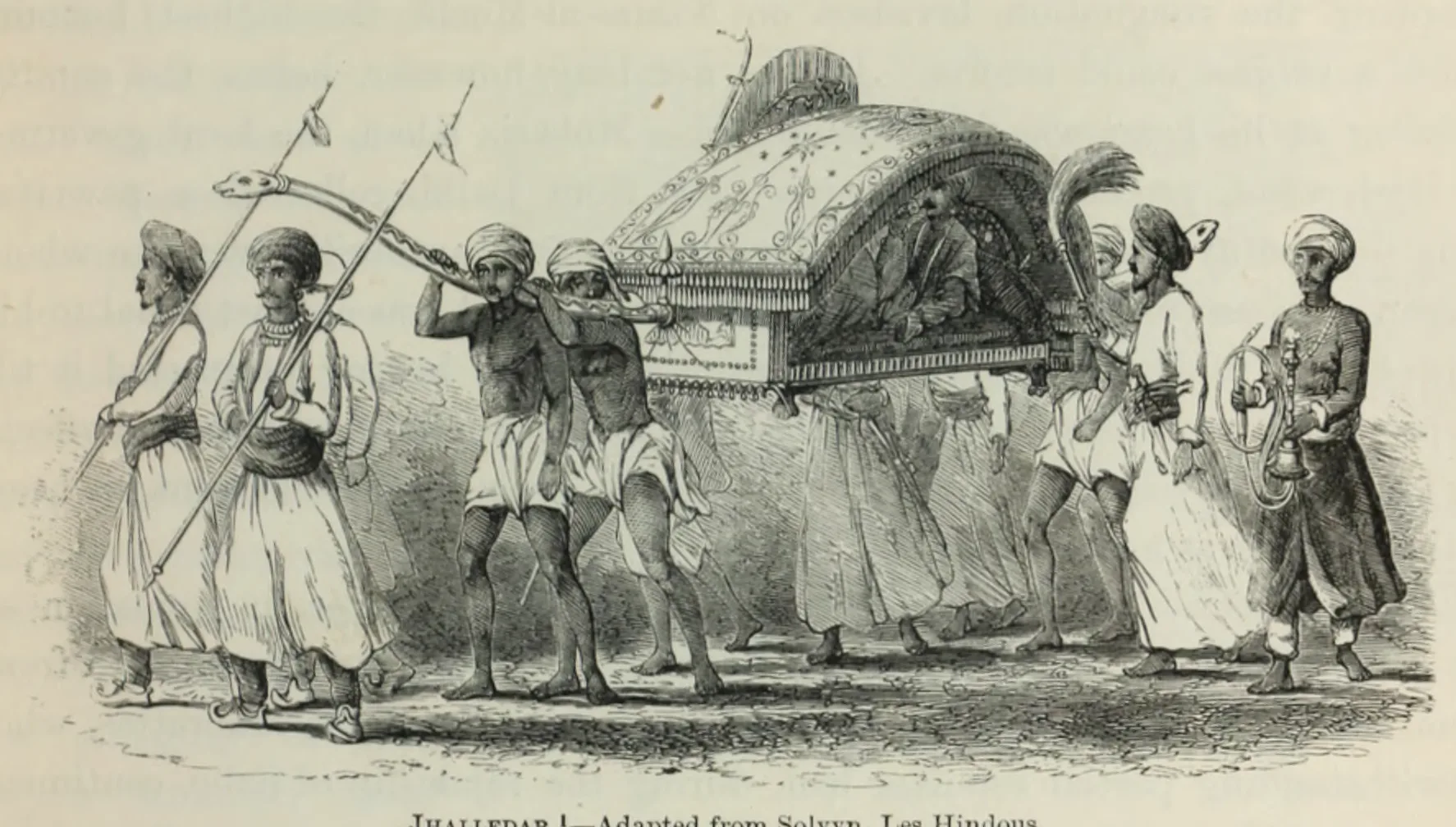
Meantime a conspiracy, to which the emperor himself was privy, had been formed. Its object was to get rid of the Seyeds at all events, by any means however atrocious. At the head of this conspiracy were Mahomed Ameer Khan, a nobleman of Turki origin, who, while ostensibly opposed to the emperor’s party, was deep in his confidence; and Saadut Khan, who, originally a merchant of Khorasan, rose to importance by his military talents, and ultimately became the progenitor of the Kings of Oude. The mode by which the conspirators proposed to effect their object was a barbarous assassination. It was not difficult to find both an agent and an opportunity. As Hosen was proceeding to the Deccan in his palanquin, a Calmuck, of the name of Meer Heider, approached with a petition, and while Hosen was reading it, drew a dagger and stabbed him to the heart. The whole camp was immediately thrown into commotion, and ultimately divided into two hostile bodies—the one composed of the adherents of the Seyeds, and the other of the adherents of the conspirators. The latter, now openly countenanced by the emperor, who placed himself at their head, proved victorious, and drove the former from the field. Abdallah, who was only on his way to Delhi when the intelligence reached him, endeavoured to maintain the struggle by setting up a new sovereign in the person of
one of the princes confined in the capital, and mustering a large army. It was, however, in a great measure undisciplined, and when the final encounter took place, offered little more than a show of resistance. Abdallah was taken prisoner; but, contrary to the usual practice on such occasions, was not put to death; Mahomed Shah returned to Delhi, and, not at all abashed at the atrocious means which he had employed, made a pompous celebration of his recovered authority.
The office of vizier, conferred at first on Mahomed Ameer Khan, as a reward for heading the conspiracy, was, on his sudden death, reserved for Nizam-ul-Moolk. He was still in the Deccan, and found so much employment in settling its affairs, that nearly two years elapsed before he reached Delhi. On his arrival in January, 1722, he found everything in disorder. Mahomed Shah, occupied only with his pleasures, acted at the dictation of a favourite mistress, who had acquired such an ascendency over him, that she was allowed to keep his private signet and use it for her own purposes. His principal counsellors were young men whose only qualification was companionship with their master in his revels. Nizam-ul-Moolk, who still retained the austere habits acquired in the court of Aurungzebe, soon became disgusted. Not only were all his reforms thwarted, but his personal appearance and manners, so different from those of the youthful courtiers, were held up to ridicule for their master’s special amusement. He was not the man to tolerate these rude and insulting liberties, and it was not long before the emperor and his vizier were mutually desirous to part. It is needless to dwell on the plots and counterplots to which this feeling gave rise. Suffice it to say, that in October, 1723, the vizier sent in his resignation, and set out for the Deccan. Ostensibly there was no quarrel; for the emperor, in accepting the resignation, lavished on Nizam-ul-Moolk the highest honours which a subject could receive. It was not long, however, before the enmity rankling at his heart was fully manifested. Mobariz Khan, the local governor of Hyderabad, proceeding on instructions from Delhi, collected a powerful army for the avowed purpose of extending his own authority over the whole Deccan. Nizam-ul-Moolk, whose skill as a diplomatist was at least equal to his prowess as a soldier, had recourse to negotiation, and having protracted it till his preparations were complete, defeated Mobariz in battle, slew him, and affecting ignorance of the instigation which had been given from Delhi, sent his head to the emperor as a trophy.
When Nizam-ul-Moolk marched off to the Deccan, he was in possession of the governments of both Malwah and Gujerat. He was formally removed from them, and took his revenge by encouraging incursions of the Mahrattas, who, notwithstanding partial repulses, had, during the rajahship of Saho, continued to make rapid progress. The main instruments of this success were the rajah's two ministers—first, Balajee Wiswanat, who, originally the accountant of a district of the Concan, became the founder of the Brahmin dynasty of Peishwas; and next, his son Bajee Rao, who, after Sevajee, ranks as the ablest leader whom the Mahratta nation has produced. Balajee, before his death in 1720, had obtained from Mahomed Shah a ratification of the treaty made with Hosen Ali during the reign of Farokshir; and Bajee Rao, following in his father's steps, had not only consolidated the rights of chout and sirdesmuki previously acquired, but introduced them into provinces where they had never before been levied.
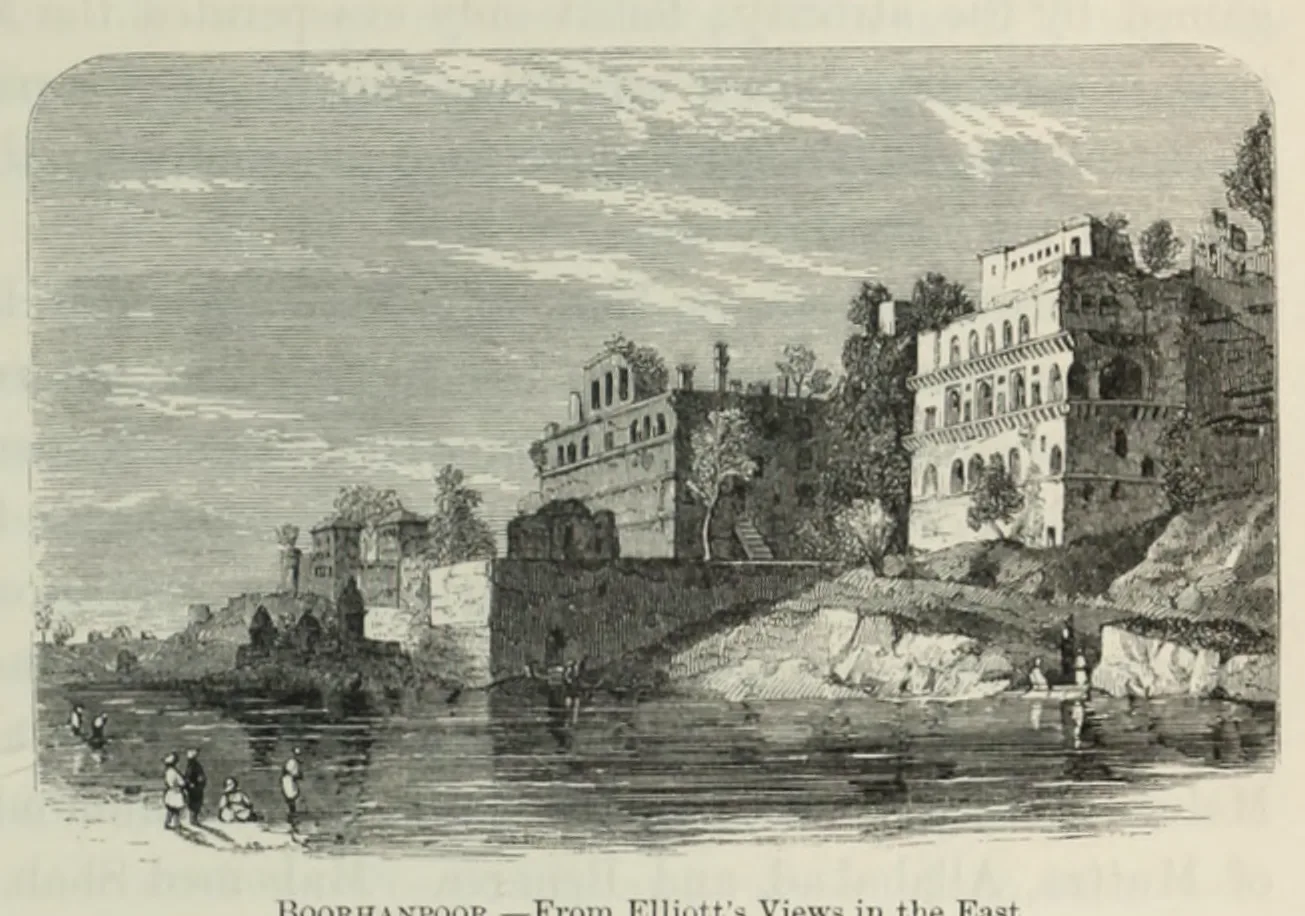
This extension of Mahratta power had, as already observed, been partly owing to Nizam-ul-Moolk, who, in revenge for his removal from Malwah and Gujerat, had encouraged the Mahrattas to invade them. His policy in the Deccan, which he now regarded as his own independent kingdom, was dictated by opposite motives, his great object here being to confine the Mahratta power and influence within as narrow limits as possible. With this view, shortly after his victory over Mobariz in 1724, he dexterously availed himself of the disputed succession by which the Mahratta counsels had long been distracted. Saho, under the able ministry of Bajee Rao, had established a complete ascendency over his rival Samba, and confined him to a comparatively insignificant district lying near the western coast to the south of Sattarah. Still, however, Samba was equally with Saho himself recognized as rajah; and there was at least plausibility in the answer of Nizam-ul-Moolk, when, without denying his obligation to pay chout and sirdesmuki for the Deccan, he asked which of the two rajahs had the legal right to it, and called upon them to exhibit their respective claims. Saho, indignant at the very suggestion of a doubt on such a subject, disdained to give any explanation, and sent Bajee Rao at the head of a numerous army to compensate himself by plunder for the more regular revenue which was withheld. Nizam-ul-Moolk had prepared for this result, and along with Samba, who had now openly joined him, advanced to the relief of Boorhanpoor, which was threatened by Bajee. The first effect of this advance was to send the Mahrattas into Gujerat. After a short time spent in pillaging it, they again suddenly made their appearance in the Deccan, and ultimately reduced Nizam-ul-Moolk to such straits, that he was glad to buy them off by humiliating concessions. His experience of the kind of enemy he had to deal with, left him little inclination to provoke a renewal of the contest; and though he did, on more than one occasion, endeavour to weaken their power by sowing dissensions among them, he came at last to a thorough understanding with Bajee, and entered into a formal agreement, by which he undertook to protect Bajee's interests in the Deccan, while the latter was ravaging Malwah and extending his authority over other portions of the Mogul dominions.
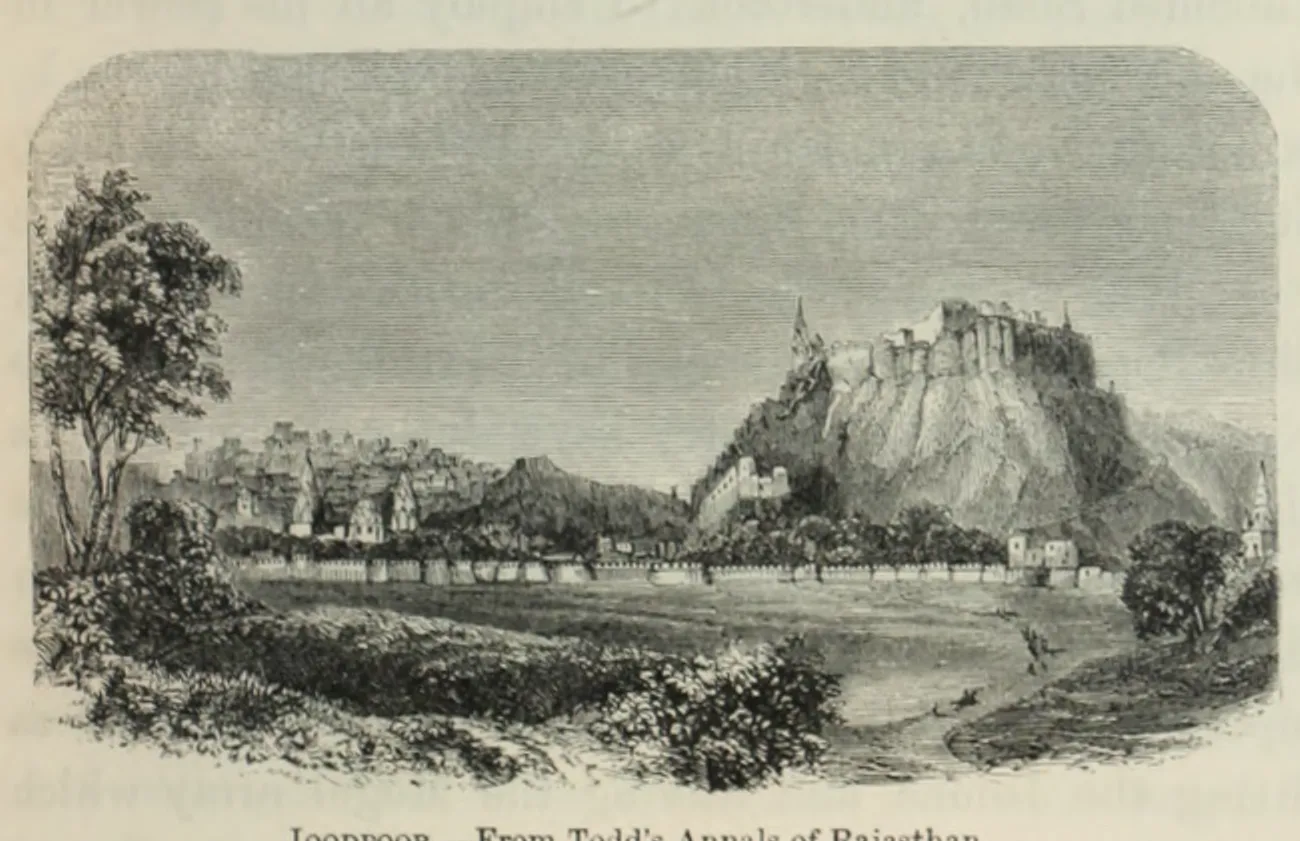
Bajee Rao easily found a pretext for this invasion. The grant of chout in Gujerat had been revoked, and Sirbuland Khan, who had consented to it, was recalled from the government to make way for a successor in Abhi Sing, Rajah of Joodpoor. The Mogul court, in making this appointment in favour of a rajah who, to other infamies, had recently added that of murdering his father Ajit Sing, was influenced chiefly by the expectation that his own resources would enable him to make head against the Mahrattas. He was far from fulfilling this expectation. The Mahratta Pilajee Guicowar, ancestor of the Guicowar family still ruling in Gujerat, resisted all his efforts to expel him, but was at last, at Abhi Sing’s instigation, basely assassinated. Nothing was gained by the atrocity; for it only exasperated the Mahrattas to such a pitch that, not satisfied with overrunning Gujerat, they carried their ravages to Joodpoor, and made the rajah glad to compound with the loss of Gujerat for the safety of his hereditary state.
In Malwah, where the Mahrattas were headed by Bajee Rao in person, their arms were equally triumphant; and the Mogul government, after several ineffectual expedients, tacitly concurred in the surrender of the province to the Peishwa in 1734. This important concession, so far from satisfying his ambition, only made it more grasping; and in proportion as the weakness of his adversaries was disclosed, he rose in his demands, and insisted not merely on levying the chout, but on holding, in full right, as a jaghire, the province of Malwah, and the whole country south of the Chumbul, together with the cities of Muttra, Allahabad, and Benares. Mahomed Shah, alarmed above measure by this new demand, evaded it for a time by temporizing, and endeavoured to induce the Mahratta to withdraw it by giving him a right to levy tribute on the Rajpoots, and to increase the amount of that already exigible from the Deccan. This last grant cost the emperor nothing, and was regarded as a stroke of good policy, because its natural tendency was to set the Mahrattas and Nizam-ul-Moolk at variance. In this respect it was not altogether a failure, as it drew Nizam-ul-Moolk’s attention to his true position, and convinced him that he had much more to fear from the Mahrattas than from the Mogul. Under the influence of this conviction, he adopted a new system of policy, and resuming friendly communications with Mahomed Shah, undertook to employ all his power in protecting him against the encroachments of the Mahrattas.
This engagement was not allowed to remain long as a dead letter. In 1737, at the very time when it was entered into, Bajee Rao was advancing on the Mogul capital. The only check he sustained was in the defeat, by Saadut Khan, governor of Oude, of Malhur Rao Holkar, the founder of the Holkar family, who with a marauding party was ravaging the country beyond the Jumna. This defeat elated the Moguls, who magnified it into a discomfiture of the whole Mahratta army, which was represented as in full retreat to the Deccan. When Bajee Rao was informed of these vain boastings, he simply remarked that he would soon show the emperor he was still in Hindoostan. He was as good as his word. Suddenly quitting the Jumna, and leaving the Mogul army which had been sent to oppose him inactive before Muttra, he hastened on by forced marches, and never halted till he presented himself before the gates of Delhi. The expedition, however, appears to have been undertaken rather in a spirit of bravado than with any serious design of attempting the capture of the city, for after a few days he disappeared and encamped at a considerable distance. Meanwhile, the consternation produced by his presence caused hasty messages to be despatched to every quarter from which relief might be expected; and while the Vizier Kamr-u-din Khan, who had formed a junction with Saadut Khan, was advancing from his encampment at Muttra, Nizam-ul-Moolk also hastened from the Deccan. Bajee Rao, true to the Mahratta tactics, avoided an encounter, and by a precipitate retreat soon placed the Nerbudda between himself and his pursuers.
Nizam-ul-Moolk, notwithstanding Bajee's departure, continued his march to Delhi, where on his arrival he was invested with full powers to adopt whatever measures might be necessary for the safety of the empire; and his eldest son, Ghazi-u-din, was appointed governor both of Malwah and Gujerat. So low had the Mogul resources now fallen, that after his utmost efforts the army under his command did not exceed 34,000 men. With this army, and a reserve commanded by the nephew of Saadut Khan, he set out in search of the Mahrattas; and proceeding southward past Seronge, took up a position near the fort of Bhopaul, while Bajee Rao crossed the Nerbudda and advanced to meet him. As Nizam-ul-Moolk was outnumbered by the Mahrattas, but possessed a powerful artillery while they were almost entirely destitute of it, he deemed it advisable to retain his position and act on the defensive. With an ordinary enemy this might have been expedient, but with the enemy with whom he had now to deal it was a decided blunder. The Mahrattas, keeping carefully beyond the reach of his artillery, commenced their usual system by laying waste the surrounding country, and cutting off his supplies. This they did so effectually that no alternative was left him but to commence a retreat. As may be supposed, it was only a series of disasters; and he was obliged to make a peace by which he conceded all the demands of the Peishwa, and bound himself to pay him £500,000 sterling. This humiliating peace, concluded in February, 1738, was only the forerunner of a far more overwhelming calamity.
The Persian dynasty of the Sophis or Safaris, after existing for two centuries, became so degenerate as to fall an easy prey to the Afghans of Kandahar in 1722, when, on the capture of Ispahan, after a dreadful siege, Shah Hosen, the last Sophi, went forth with his principal courtiers in deep mourning, and with his own hand placed the diadem on the head of Mahmood, his Khilji conqueror. It had been worn by the new monarch only for two years when he died raving mad, and was succeeded by his nephew Ashref, who was no sooner seated on the throne than he was called to struggle against both foreign and internal foes. The Turks and Russians, leagued together to dismember the kingdom and share it between them, advanced, the one from the west and the other from the north, with powerful armies, while Tahmasp, who had made his escape from Ispahan when his father Shah Hosen was obliged to surrender, had mustered a body of retainers, and announced his determination to make good his claim to the crown which his ancestors had so long worn. Of these various combatants, it might have been supposed that the Turks and Russians, from the superiority of their discipline, would be the most formidable. It proved otherwise. Ashref compelled the Turks, after repeated defeats, to acknowledge his title; and, before he had measured his strength with the Russians, had the satisfaction to learn that the death of the czar had induced them to withdraw. Tahmasp alone remained, and was not to be so easily disposed of. In himself he was not very formidable, but fortune had drawn to his standard one of the greatest warriors whom Persia has ever produced. This was Nadir Kouli, who began life as the head of a band of freebooters, and at last, after freeing his country from a foreign yoke, became the usurper of its throne. Victory scarcely ever failed to attend him; and by dexterously playing the two leading Afghan tribes, the Khiljies and the Abdalees or Dooranees, against each other, succeeded in crushing both. Patriotism seemed for a time to be his ruling passion, and Tahmasp, as the legitimate monarch, ascended the Persian throne; but patriotism was eventually supplanted by ambition, and Nadir, unable to brook a superior, first declared the throne vacant, and then took possession of it in his own name in 1737, alleging that he had been called to it by the popular voice.
Henceforth known as Nadir Shah, he resolved to pursue his career of victory; and proceeding eastward, at the head of an army of 80,000 men, laid siege to Kandahar. It originally belonged to the Persian monarchy, but had been wrested from it, and was now in possession of the Khiljies. It was valiantly defended, and stood several assaults before it was taken. The capture of Kandahar and conquest of the adjoining territory made Persia conterminous with India. Nadir Shah, as he looked eastward into the valley of the Indus, and beheld a mighty empire torn by intestine wars and tottering to its fall, must have been strongly tempted, if not to become its conqueror, to obtain a share in its spoils. He had already some ground of quarrel with its government. During the siege of Kandahar, not only had an application which he made for the delivery of some Afghans who had taken refuge within its territory been treated with neglect, but even the validity of his title to the Persian crown had been called in question. Instead of wasting time in unavailing remonstrance, he took a more effectual mode of expressing his resentment by seizing upon Cabool. The court of Delhi ought now to have
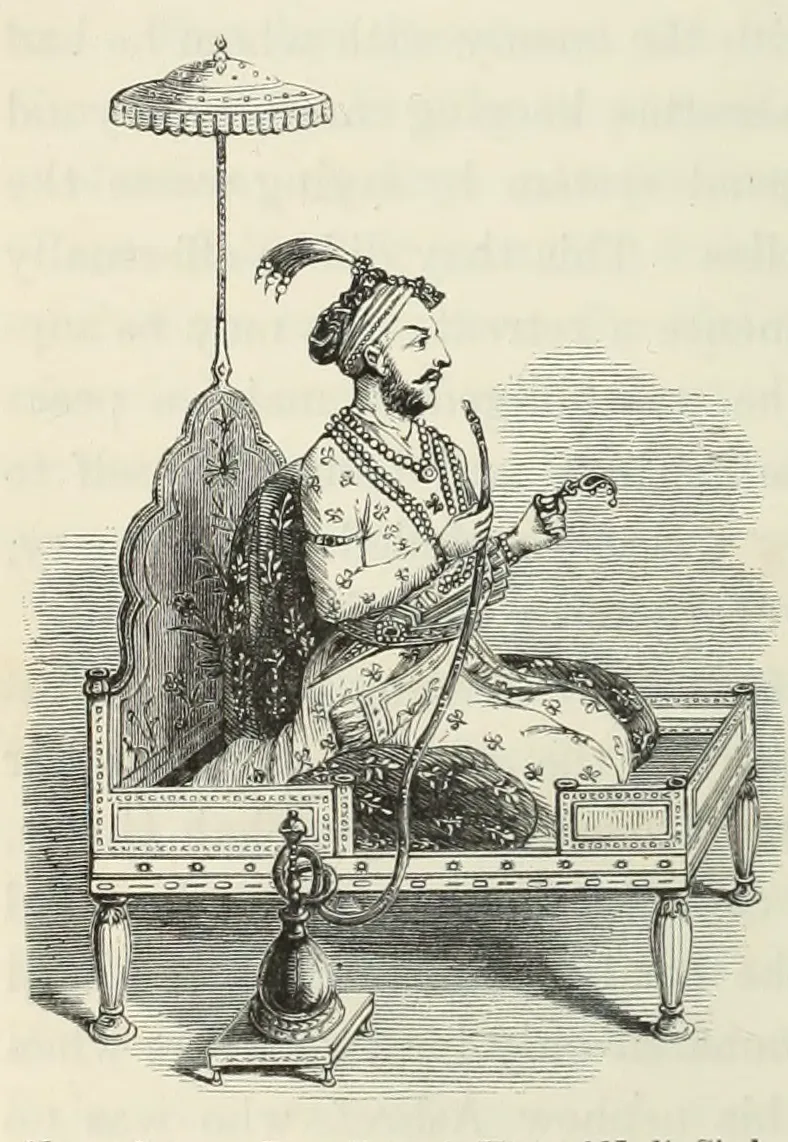
been fully alive to the danger, but months passed away, during which Nadir was left to settle his conquest and make new preparations. The actual invasion seemed indeed to have become impossible, at least for one season; for the winter was approaching, and it was never dreamed that he would commence a campaign which, in its very first operations, would expose him to the rigours of a mountainous country and the assaults of its warlike inhabitants. How great then must have been the consternation when it was learned that all these supposed impossibilities had been overcome, and that Nadir, after crossing the Indus by a bridge of boats in November, 1738, had advanced into the Punjab at the head of a mighty army!
Great as was the danger, so tardily were the means of defence provided, that Nadir for the first time came in sight of the Indian army after he had reached the banks of the Jumna, and was within 100 miles of the Mogul capital. Here, in the neighbourhood of Carnoul, Nizam-ul-Moolk, to whom the chief command was intrusted, occupied a fortified camp. Just at the time when Nadir was approaching, Saadut Khan arrived with a reinforcement from Oude, and the battle immediately commenced. The Indians, consisting for the most part of raw levies, were no match for the Persian veterans, and after little more than a show of resistance were signally discomfited. Mahomed Shah, deeming all further resistance hopeless, sent Nizam-ul-Moolk to make his submission, and then repaired in person to the Persian camp. He was courteously received, but was not permitted to attempt negotiation, as Nadir Shah, conscious of being complete master, had determined to dictate his terms within the walls of Delhi. Thither therefore the two monarchs proceeded, the one as a miserable captive, the other as a conqueror in triumphant procession at the head of his victorious army. The entrance took place in the beginning of March, 1739.
Nadir Shah took up his residence with Mahomed Shah at the palace, and appears, from the careful arrangements which he made for the maintenance of discipline and the protection of the inhabitants, to have meditated no greater severity than the levy of a very heavy contribution. This mild intention, if he had it, was frustrated by the inhabitants themselves. On the very second day, hastily believing a rumour of Nadir Shah’s death, they broke through all restraint, and commenced an indiscriminate massacre of the Persians at their various isolated stations throughout the city. The shah was furious, and forthwith issued orders for a fearful retaliation. From sunrise to sunset the city was given up to the fury of 20,000 soldiers, and lust, rapine, and slaughter raged in their most horrific forms. This was only a deed of vengeance. Nadir’s own claims still remained to be satisfied; and the work of confiscation and plunder was carried on for weeks without interruption. The “Peacock Throne” formed an important item in the spoils. At the most moderate estimate, the amount carried off in money, plate, and jewels, could not be less than £30,000,000 sterling.
After possessing Delhi during fifty-eight days Nadir Shah departed, leaving it a scene of wretchedness and desolation. The terror of the capital had spread into the provinces, the government was paralyzed, and the people remained sunk in a kind of stupor. The Mahrattas might now have completed their conquests, but even they were overawed by the suddenness and extent of the general calamity. Bajee Rao, adverting to it, expressed himself thus :—“ Our domestic quarrels are now insignificant; there is but one enemy in Hindoostan.” “ Hindoos and Mussulmans—the whole power of the Deccan must assemble.” These feelings of alarm soon began to subside, and the elements of disunion were again at work. At the court of Delhi old animosities resumed all their former bitterness. A powerful faction, composed of Turki, or as they were called Tooranee nobles, and headed by the Vizier Kamr-u-din Khan and Nizam-ul-Moolk, endeavoured to absorb the leading offices of the state, and even hold the emperor himself in subjection to their wishes, while their enemies were numerous and powerful enough to wage a constant struggle for ascendency. Feeble and discordant counsels were the necessary result, and no bond of union existed among the numerous dependencies still belonging nominally to the Mogul empire. In point of fact, the Mahrattas were now the most powerful nation on the Indian continent, and had the best prospect of becoming its ultimate masters. Even they, however, were not free from difficulties. Saho, the nominal head of the government, had been deprived of all real power, and reduced to a mere cipher. Several of the chiefs who willingly acknowledged his authority, were not disposed to yield the same submission to the usurpations of the Peishwa, and stood ready to avail themselves of the first favourable opportunity of either re-establishing the rajah or asserting their own independence. Bajee Rao, well aware of the precarious position in which he stood, was obliged to regulate his policy accordingly, and often abandoned the course which his judgment approved for that which his own immediate interest seemed to require. Before the Mogul government recovered from the shock given to it by Nadir Shah, he might easily have established the complete ascendency of his nation by mustering his forces and marching at once upon the capital. Instead of this, he suddenly withdrew into the Deccan. The only apparent inducement was, that he might be able more effectually to watch the proceedings of his countrymen, Ragojee Bosla and the Guicowar of Gujerat, who were plotting his overthrow. Of his feelings while thus employed he himself gave the following account :—“ I am involved in difficulty, in debt, and in disappointments, and like a man ready to swallow poison. Near the rajah are my enemies, and should I go at this time to Sattarah they will put their feet on my breast. I should be thankful if I could meet death.” This solemn event was nearer than he imagined, for he died shortly after, on the 28th of April, 1740, as he was returning to Hindoostan.
Bajee Rao left three sons, the eldest of whom, Balajee Rao, succeeded him as Peishwa. The succession would have been disputed; but fortunately for him, Ragojee Bosla, his most formidable opponent, was absent with his army in the Carnatic, on an expedition on which Bajee Rao had despatched him, mainly for the purpose of preventing him from plotting mischief nearer home. On hearing of Bajee's death, he hastened back to Sattarah; but as he came without his army, and found the Guicowar and the prtinidhi, or delegate of the rajah, on whose co-operation he had calculated, unprepared or indisposed to second him, he was obliged to abandon all thought of opposition, at least till a more favourable opportunity should arise. The death of Bajee Rao, and the time necessary to enable Balajee to secure himself in his new seat, gave Mahomed Shah a short respite from actual warfare. It was only a respite; for the clouds of another storm were again gathering thick around him, and indeed from so many quarters, that it was difficult to say from which it was destined first to come. On the one hand Balajee Rao, advancing into Malwah, insisted that this province should, in terms of the treaty which had been made with Nizam-ul-Moolk, but which had never received the imperial sanction, be formally confirmed to him; on the other hand the Rohillas, a recent Afghan colony occupying the tract which from them still bears the name of Rohilcund, had begun, under an able leader of the name of Ali Mahomed, to assume an alarming appearance. In themselves, indeed, the Rohillas were not so numerous as to be very formidable; but they belonged to the warlike race which had repeatedly devastated the fairest provinces of India, and the danger apprehended was, that in the event of a new invasion from the west, they would league with their countrymen. The idea of such an invasion was by no means chimerical. Ever since the visit of Nadir Shah, who on retiring declared the Indus to be the eastern boundary of the Persian monarchy, it had been threatened, and in consequence of recent political changes in Persia it was becoming a certainty.
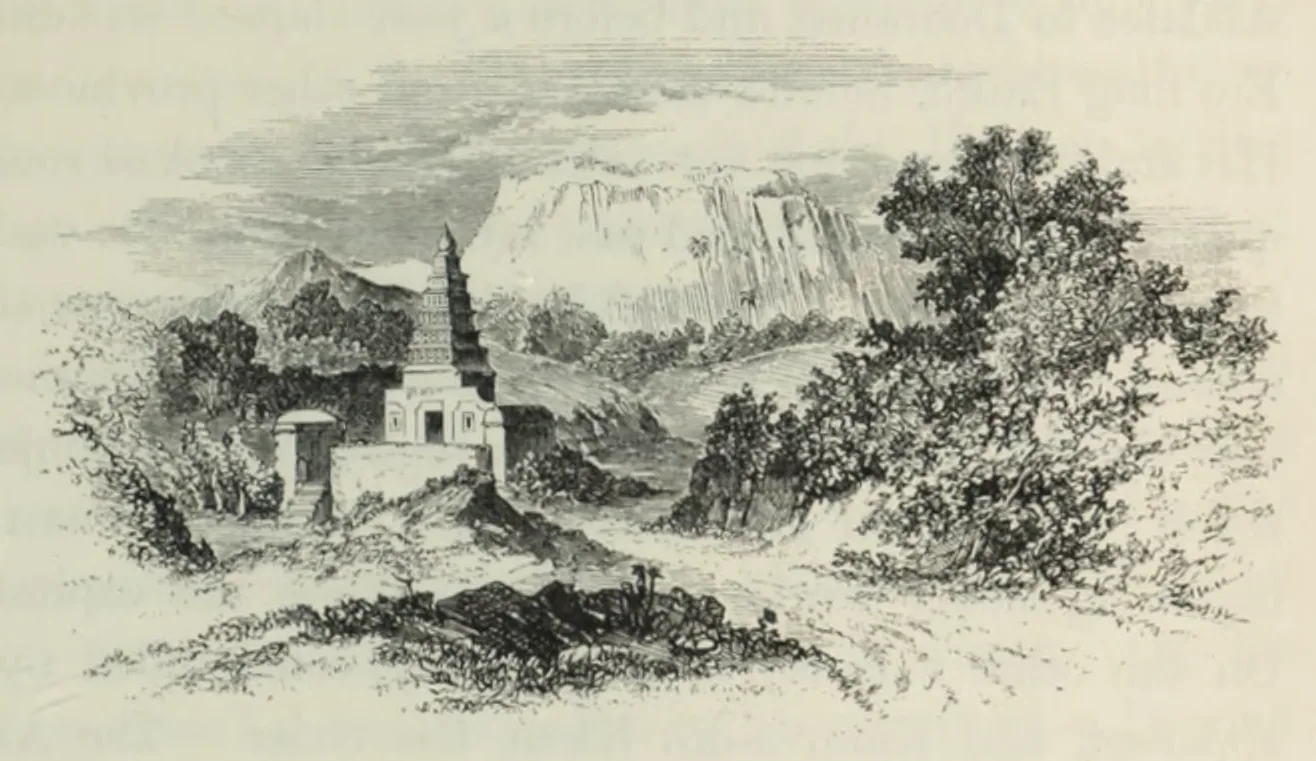
Nadir Shah perished by the hands of assassins in June, 1747. He had latterly become a cruel tyrant, and deserved his fate; though it was not so much his cruelty as his form of Mahometan faith that provoked it. He was a Sunnite, while the Persians were zealous Shiites. The repugnance between them was therefore invincible, and his death was the work of Persian conspirators. But the same cause which made the Persians abhor his rule was its greatest recommendation to the Afghans, who like him were Sunnites, and devotedly attached to his service. Accordingly the Abdalees, headed by their hereditary chief, Ahmed Khan, on hearing of the conspiracy, had hastened to the rescue; and, after finding that they were a day too late, fought their way through the hostile Persians, and succeeded in reaching their own country. Ahmed Khan immediately declared himself independent, changed the name of his tribe from Abdalee to Dooranee, and before a year elapsed was crowned king at Kandahar. Ere long Balkh, Scinde, Cashmere, and other provinces, acknowledged his sway. His ambition was not yet satisfied, and he looked round for new fields of conquest. Both the west and east lay before him, but various reasons induced him to prefer the latter. The left bank of the Indus was already in his power; and among other temptations to cross this river and commence an Indian campaign, was the fact that a civil war was raging in the Punjab in consequence of the revolt of its Mogul governor. Little opposition was made; and Ahmed, after capturing many towns, including Lahore, the capital, arrived at the Sutlej. On the other side lay a Mogul army, commanded by Prince Ahmed, the heir apparent, and Kamr-u-din Khan, the vizier. The Abdalee force, though not mustering 12,000 men, crossed the river by selecting a spot which, from not being fordable, was not watched; and, hastening on to Sirhind, made a rich capture of stores and baggage. This bold movement so intimidated the Moguls, that notwithstanding their superiority in numbers, they stood on the defensive, and even formed an entrenched camp. This course, dictated by excessive timidity, was the wisest which they could have pursued. The Dooranees had no alternative but to retreat, or hazard a battle under the most disadvantageous circumstances. They chose the latter and sustained a defeat, but took advantage of the night to escape.
The Mogul vizier had fallen, and the Mogul prince was prevented from following up his victory, by the intelligence that the succession to the crown had opened to him by the death of his father in April, 1748. Mahomed Shah thus ended a reign, remarkable only for its length, during a most disastrous period. Prince Ahmed, henceforth known by the title of Ahmed Shah, immediately repaired to Delhi; and his Afghan namesake, now distinguished from him by the name of Ahmed Shah Dooranee, instead of continuing his retreat, stopped short, and did not quit the Punjab till he had made it tributary. This, however, did not satisfy him. After a short absence he returned, and insisted on a formal cession of the whole province. As he was able to take it by force, it was deemed good policy to make a merit of necessity, and give him all he asked. This concession may serve to characterize Ahmed Shah’s short and inglorious reign. The office of vizier, first offered to Nizam-ul-Moolk, who declined it, and died almost immediately after, in 1748, was conferred on Sufder Jung, who had succeeded his father, Saadut Khan, as governor of Oude. He soon gave proof of his unfitness, by undertaking an expedition against the Rohillas, and so mismanaging it as to allow them to penetrate to Allahabad, and set the whole Mogul power at defiance. In this emergency he could devise no better remedy than to call in the aid of the Mahrattas, who indeed drove out the Rohillas, but compensated themselves by establishing a right to levy the chout over all the territory that they conquered. After a course of intrigue and crime, Sufder Jung was supplanted in the royal favour by Ghazi-u-din, one of Nizam-ul-Moolk’s grandsons, an unprincipled youth familiar with perfidy and murder. Like Sufder he employed the Mahrattas to extricate himself from difficulties, and ultimately succeeded by these means, in July, 1754, in seizing the person of his sovereign, Ahmed Shah, and raising to the throne a young prince of the blood, who assumed the title of Alumgeer.
Alumgeer—or, as he is often called, Alumgeer II., to distinguish him from Aurungzebe, who used the same title in all regular documents—usually closes the list of Mogul sovereigns who actually held the reins of government. For this reason, more than any other, he is entitled to a brief notice. When he was raised to the throne, Sufder Jung was still nominally vizier. On his death, which happened soon after, he was succeeded by his son Shuja-u-Dowlah in the government of Oude, but the viziership was immediately appropriated by Ghazi-u-din, under whose mismanagement nothing but additional confusion and disaster could be anticipated. By treacherously seizing the infant successor of the governor of the Punjab, whom Ahmed Shah Dooranee had appointed, he provoked the vengeance of this formidable foe, who, having crossed the Indus, did not halt till he had made himself master of Delhi, and inflicted on this ill-fated city a renewal of the calamities which it had suffered from Nadir Shah. So low had the authority of the sovereign now fallen, that Alumgeer is said to have besought Ahmed not to leave him to the mercy of his vizier. Accordingly, on departing, he endeavoured to provide a kind of counterpoise by giving the command of the army to an able Rohilla chief of the name of Najib-u-Dowlah. Ghazi-u-din only waited till Ahmed was out of India, and then endeavoured to set Najib aside, in order to make way for one of his own creatures. Meeting with a resistance which he was unable to overcome, he again called in the aid of the Mahrattas, who advanced from Malwah under Ragoba, the second son of Bajee Rao, entered Delhi, and after spending a month in the siege of the fortified palace, compelled Alumgeer to reinstate Ghazi-u-din in all his former authority.
As usual, the Mahrattas took good care to be fully compensated for their service. Feeling that no effectual resistance could be offered, they set no limits to their ambition, and openly talked of extending their conquests over the whole of Hindoostan. The Punjab first attracted their attention, and Ragoba, learning that it was feebly governed by Timour, a son of Ahmed Shah Dooranee, marched at once to Lahore, gained possession of it in May, 1758, and continuing his triumphant career, so intimidated the Dooranees, that they retired beyond the Indus without risking a battle. The Mahrattas next engaged in a similar attempt to subjugate Oude, but were met with spirit by Shuja-u-Dowlah, who, in league with the Rohillas, inflicted a severe loss on an isolated detachment, and drove it across the Ganges. Datajee Scindia, the Mahratta in command of the main body, deemed it expedient to come to terms, and a kind of peace, not intended to be long kept, was patched up.
One main inducement to the peace was the rumoured approach of Ahmed Shah Dooranee. When his son Timour arrived from the Punjab, he was engaged in suppressing a revolt among the Beloochees. This delayed him till September, 1759, when he commenced a new Indian campaign by crossing the Indus at Peshawer, and continuing his course to Saharunpoor, at some distance beyond the left bank of the Jumna. While he was thus advancing, Ghazi-u-din—remembering how Alumgeer had formerly obtained the protection of Ahmed, and nearly succeeded in expelling him from his viziership—was determined not again to run a similar risk, and followed the course which his cruel and perfidious nature dictated, by causing the unhappy monarch to be assassinated in November, 1759. Shah Alum, the heir apparent, was then absent in Bengal, and the new prince whom Ghazi-u-din seated on the throne was never recognized. There was thus no ostensible sovereign at Delhi; the Mogul empire had ceased to exist.
When the Mogul empire was extinguished, the general expectation was that a Mahratta empire would immediately arise on its ruins. Originally confined to a limited district in the Deccan, the Mahrattas had established their ascendency in every part of India, possessing immense tracts of territory in absolute right, and levying heavy tribute from nearly the whole of the remainder. One great obstacle to the establishment of a consolidated Mahratta empire had been disunion among the members composing its confederacy. Saho, its nominal head, had been deprived of all real power by the Peishwa. Latterly, indeed, he was unfit for government, and died in a state of imbecility, in 1749. This event led to new complications, which were not arranged until many of the chiefs had acquired a kind of independence and become the founders of minor dynasties. Among the more conspicuous of these were Petajee Guicowar in Gujerat, Mulhar Rao Holkar, and Datajee Scindia, who, by obtaining an assignment to nearly the whole revenues of Malwah, secured the dominions which still bear their name and are possessed by their descendants. Other chiefs who have not left such permanent traces of their authority were equally powerful. Ragojee Bosla and Ragoba have been already mentioned. Another, Sedashao Rao Bhao, or simply “the Bhao,” a cousin of the Peishwa Balajee, possessed great influence, but had been contented, while the other chiefs were pursuing distant conquests, to remain in the Deccan as home minister and commander-in-chief. He was acting in this capacity when Ragoba returned from his campaign in the Punjab. His success had not been obtained without a very heavy outlay, and the Bhao, on learning that, instead of bringing any sum into the treasury, he had made it liable to a debt of nearly £1,000,000 sterling, expressed his dissatisfaction so strongly, that Ragoba was piqued, and told him he had better conduct the next expedition himself. The Bhao, elated by some recent successes which had somewhat increased the Mahratta territory, and added largely to its revenue, was not disinclined to avail himself of an opportunity of acquiring new distinction. Treating Ragoba’s taunt as if it had been a serious proposal, he exchanged situations with him, and assumed the chief command in Hindoostan.
The only formidable enemy whom the Mahrattas had now to encounter was in the field. Ahmed Shah Dooranee, after nearly annihilating two separate Mahratta detachments, the one commanded by Holkar and the other by Scindia, had taken up a position at Anopsheher, situated on the right bank of the Ganges, seventy-three miles south-east of Delhi. The Bhao, accompanied by Wiswas Rao, the youthful son and heir of the Peishwa, and the leading Mahratta chiefs, advanced at the head of a numerous host, without encountering serious opposition, and having gained possession of the capital, disgraced himself by rapacity. Palaces, tombs, and shrines were defaced for the sake of their rich ornaments, and the silver ceiling of the hall of audience torn down was coined into rupees, to the amount, it is said, of seventeen lacs (£170,000). Ahmed, in addition to his own Dooranees, was cordially joined by the Rohillas, and rather lukewarmly by Shuja-u-Dowlah, governor of Oude, who would willingly have remained neutral, and afterwards made the most of the event by taking part with the winning side. As the contest, however, had assumed a religious aspect, the Hindoos being ranged on one side and Mahometans on the other, he found it impossible to withhold his aid from Ahmed, who was considered as the representative of the latter.
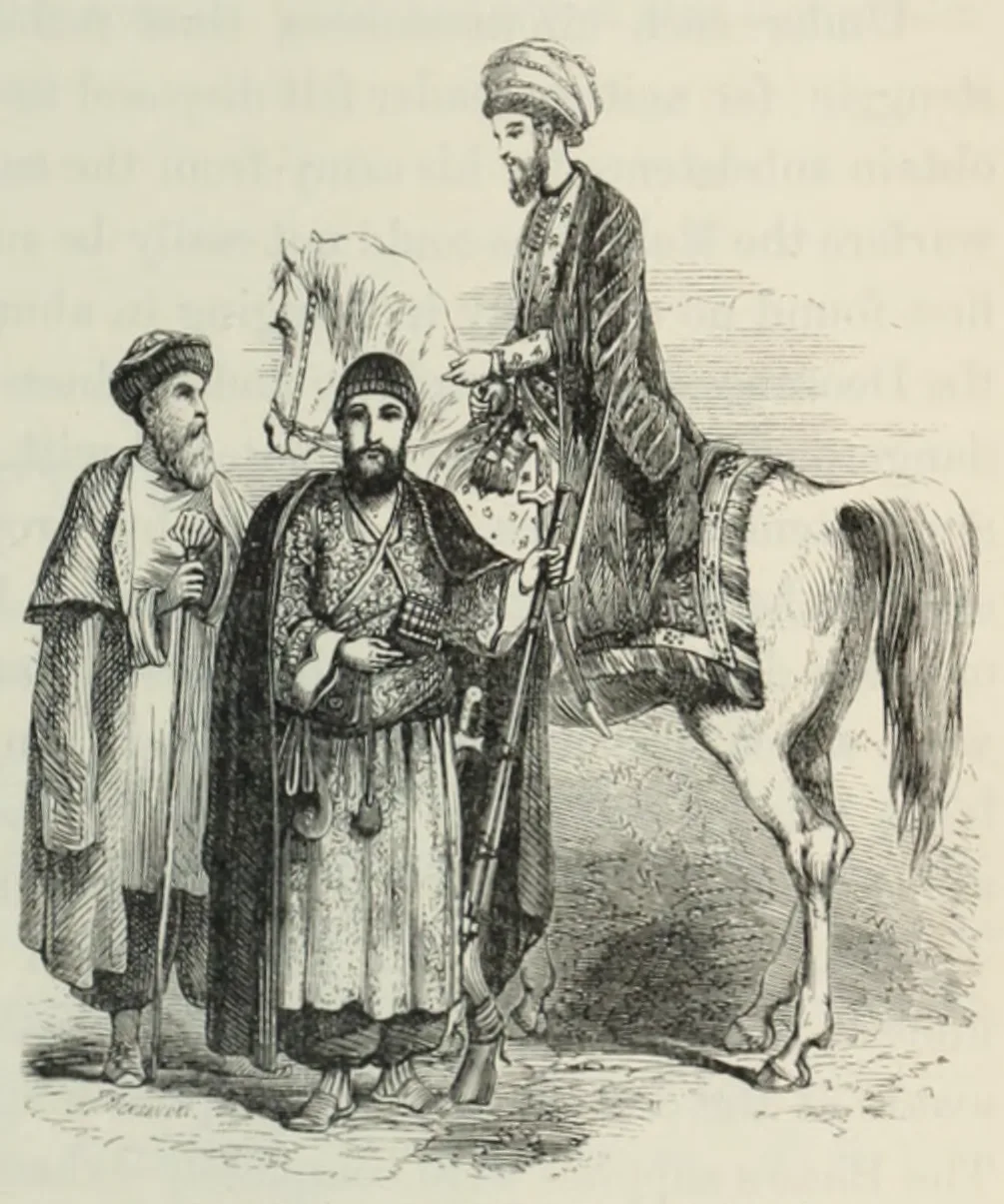
Ahmed, as soon as the rains permitted him to move, hastened to the Jumna, with the view of relieving a fort on its banks to which the Mahrattas had laid siege. He arrived only in time to learn that it had fallen, but showed such desperate determination, by effecting a passage of the river more by swimming than fording, that his enemies were intimidated and drew off to Paniput. Here the Bhao encamped with an army consisting of 70,000 cavalry and 15,000 infantry, of whom 9000 were disciplined sepoys. In addition to these were predatory and other followers to the number of 200,000. In artillery, an arm of war which the Mahrattas had at last learned to prize, he was amply provided, and was able, after surrounding his camp with a broad and deep ditch, to mount 200 guns for its defence. Ahmed’s army consisted of about 40,000 Afghans and Persians, and 50,000 Indians, of whom 13,000 were cavalry. The armies were thus not unfairly matched. In respect of available troops they were nearly equal, while at the same time each laboured under a great disadvantage—the Bhao, in the excessive number of followers, who, without adding to his strength, hampered his movements and consumed his provisions; and Ahmed, in an artillery so defective that it barely mustered thirty pieces of various calibre, and, furnishing no proper means of attack, compelled him to imitate the Bhao’s example, and remain on the defensive.
Under such circumstances, time rather than prowess was to decide the struggle; for neither leader felt disposed to force on an action so long as he could obtain subsistence for his army from the surrounding country. At this mode of warfare the Mahrattas could not easily be surpassed, and their foraging parties at first found no difficulty in bringing in abundant supplies. Gradually, however, the Dooranees, by the rapidity and boldness of their movements, made foraging so dangerous, that the Bhao, threatened with famine, saw the peril of his position, and attempted to escape from it by proposing negotiation. Ahmed, whose supplies had also begun to fail, was urged by his Indian allies to come to terms or risk a decisive action; but his constant answer was—“This is a matter of war with which you are not acquainted. In other affairs do as you please, but leave this to me.” He was aware of the straits to which his enemies were reduced; and, even after they had begun in a kind of desperation to make vigorous attacks upon his lines, seemed more inclined than ever to confine himself to skirmishing, in which he usually had the advantage. He was well aware of the crisis which was approaching, and fully prepared to profit by it. The Bhao’s supplies were completely exhausted; and after a last effort at foraging which proved utterly unavailing, becoming convinced that he could no longer maintain his position, he yielded to the urgency of his soldiers, and, with many prognostications of disaster, issued orders for a general attack. It was made with the utmost impetuosity, and so long as it was directed against the Rohillas and other Indian allies of Ahmed, seemed irresistible. The Dooranee chief endeavoured to rally the fugitives, but finding it impossible, ordered his own men to advance. This at once changed the fortune of the day. By a dexterous movement, while the main body attacked in front, a division wheeled round to the flank, and the whole Mahratta army, panic-struck by this double onset, turned their backs and fled. As no quarter was given, the slaughter was fearful. About 200,000 are said to have fallen. Among the slain were the Peishwa’s son Wiswas Rao, the Bhao, recognized only by what was supposed to be his headless trunk, and many other great Mahratta chiefs. The dream of a Mahratta empire had vanished. The wreck of the army, abandoning the acquisitions made in Hindoostan, retired beyond the Nerbudda; the Peishwa, shutting himself up in a temple near Poonah, died of a broken heart; and the whole nation, sunk in grief and despondency, became as it were paralyzed.
Strange to say, Ahmed did not profit much by his victory, for the Mahometan confederacy which he had formed having broken up, he quitted India, and never returned to take any share in its affairs. The only two powers which then seemed capable of wielding the sceptre, which had been wrested from the hands of the Mogul, having thus been providentially removed, the work of conquest passed to other hands. The two most powerful nations of Europe, after they had long been contented to play a subordinate part in the contest, resolved at last to become principals, and France and Great Britain started as rival candidates for the establishment of a new Indian empire. The history of this memorable struggle is now to engage our attention.
Notes
- 1. Jhalledar is a palanquin used by rajahs and wealthy persons. It is covered with silk embroidered with gold, &c.