SALABUT JUNG, indebted for his appointment of Soubahdar of the Deccan to French influence, naturally clung to Bussy, through whom that influence had been exercised, and made him almost the absolute disposer of his fortunes. The French commander possessed talents which enabled him to take full advantage of his position, but found a strong party at Salabut Jung’s court disposed to thwart him in all his proceedings. At the head of this party was Seid Laskar Khan, who, though he hated Bussy in his heart, was such an adept in cunning that he not only persuaded him of his sincere friendship, but had been invested with the office of dewan by his special recommendation. No sooner, however, was he firmly seated in this office than he threw off the mask and took open part with those who were jealous of Salabut Jung’s French partialities, and disposed to take any steps that might seem necessary to counteract them. While they were on the watch for an opportunity, Bussy, worn out by anxiety and fatigue, fell sick, and departed, by the advice of his physicians, to sequester himself from all business at Masulipatam, now become, along with a large tract of the adjoining territory, entirely a French possession. His enemies were immediately on the alert, and made it their first business to get rid of the French troops and sepoys whom Bussy had left behind, under the pretext that they were the best security of Salabut Jung’s person and authority against both foreign and intestine foes, but really for the purpose of controlling his measures. The task thus undertaken by the dewan and his associates was delicate and difficult. Salabut Jung, who was deficient in personal courage and sagacity, was unwilling to part with the troops; and the troops themselves, consisting of an European battalion and 5000 sepoys, all paid by Bussy himself and acting entirely under his orders, would have resisted any overt attempt to disband them. Underhand measures, therefore, were resorted to. First, the pay which had been furnished at certain regular periods was withheld; and when the troops complained, the reason assigned was, that several of the provinces at a distance from Hyderabad, where the soubahdar was then holding his court, had failed to replenish the treasury by the usual payment of revenue. As the most effectual remedy, it was suggested that the troops should be sent to enforce the collection of it. By this device they allowed themselves to be scattered over the country in detached parties.
One important difficulty being thus overcome, the dewan next persuaded Salabut Jung that his presence was imperatively required at Aurungabad. Here the mere distance from the French settlements tended greatly to diminish French influence, while the absence of the greater part of the battalion and sepoys removed all apprehension of danger from any opposition which they might have been disposed to offer to the removal of the court. Meantime the troops sent to collect the revenue made little progress, because thwarted by secret orders from the dewan himself, and their pay in consequence became more irregular than ever. Disappointment, clamour, and desertion had consequently begun to prevail, when Bussy, informed of the state of affairs, and the causes which had produced it, made his appearance in Hyderabad. He had previously given orders to all the scattered detachments to meet him there, and hence on his arrival found himself at the head of 500 Europeans and 4000 sepoys. With some difficulty having appeased their discontent, and satisfied their most pressing wants, by money obtained partly from the treasury and partly on his own credit with native bankers, he took the bold resolution of marching uncalled with his whole force to Aurungabad, a distance of 300 miles. What had now occurred might be repeated, and he was determined that in future the pay of his troops would be drawn from some source over which the French Company had full and undivided control.
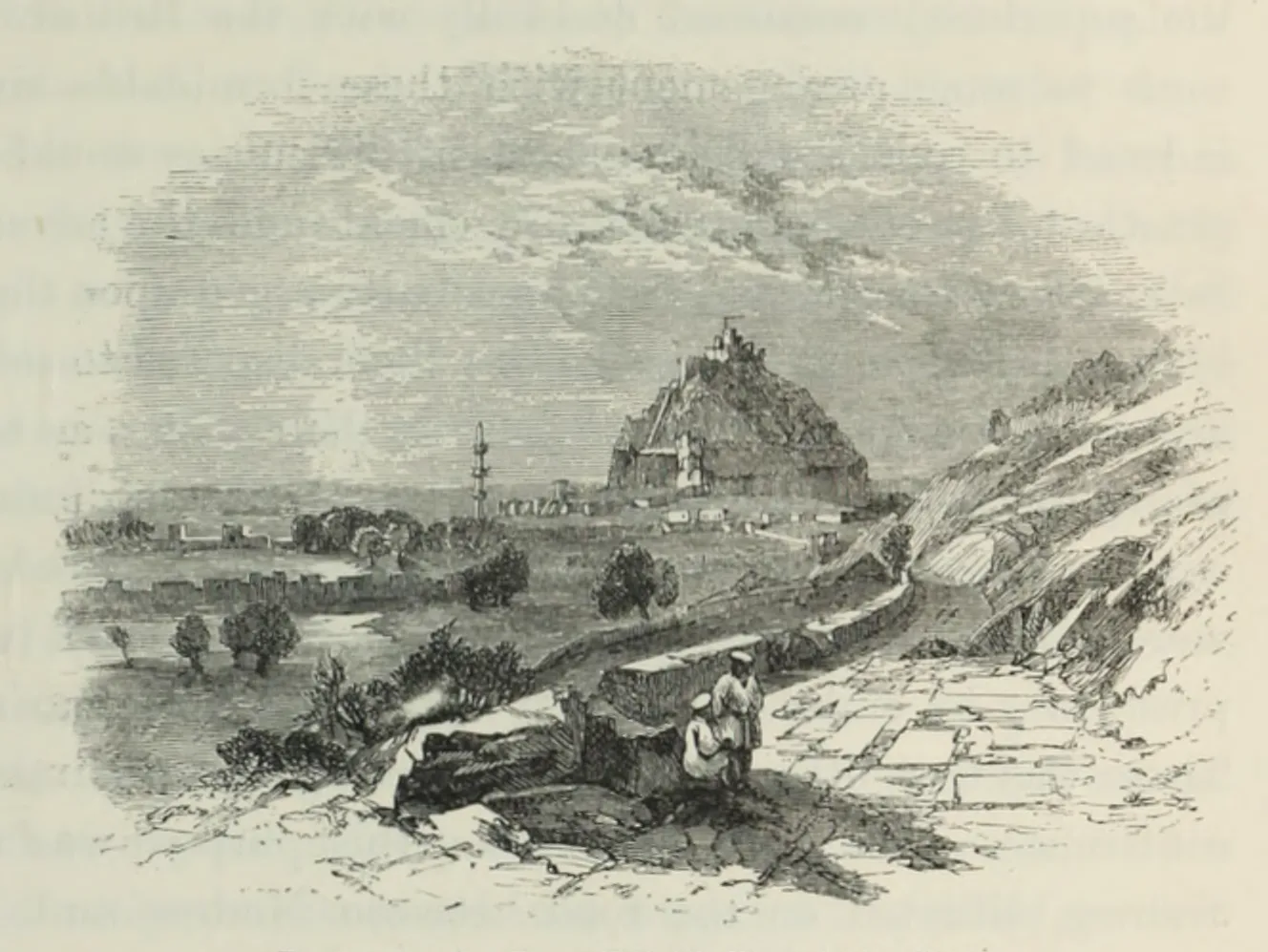
After a considerable delay, caused by the rainy season, he commenced his march. Seid Laskar Khan and his adherents were in consternation, but many reasons inclined Bussy to act with moderation. Instead of advancing directly to Aurungabad, he halted at some distance, to give an opportunity for the adoption of conciliatory measures. Salabut Jung, who still retained his French partialities, was ready at once to concede whatever might be asked of him ; and the dewan, who had at one time bethought himself of taking refuge in the strong fortress of Dowletabad, was delighted to discover that his peace could be made on terms which personally cost him nothing. Bussy had still more reason to be satisfied, for the object of his journey had been fully accomplished. The payment of his troops had formerly depended on sources which might easily be cut off by accident or design ; it was now secured by the allotment of a permanent revenue, not liable to be interfered with by native officials, but placed under the absolute control of the French East India Company. This revenue was derived from a tract of country called the Northern Circars, which, along with Masulipatam and the adjoining district previously ceded, made the French absolute masters of a line of coast extending about 600 miles along the Bay of Bengal, from the mouths of the Kistna to the Temple of Juggernaut, near lat. 20°. At a moderate estimate the revenue of the whole could not be less than £500,000 sterling. This immense grant having been made with a special view to the maintenance of the French troops, was strictly speaking revocable the moment these troops should be withdrawn from Salabut Jung’s service ; but no such contingency was then contemplated, and it appears to have been perfectly understood that, when the French were established in possession, nothing but force would suffice to deprive them of it. But how could such force be successfully employed ? The chain of mountains bounding the Circars on the west formed an almost impassable barrier to any invasion from the Deccan, while their long line of coast made it easy, if attacked, to employ all the resources of the other French settlements in their defence. This consideration had not escaped the notice of the dewan, who endeavoured without success to tempt Bussy to exchange the Circars for an inland territory of much greater extent and value.
The ambitious schemes which Dupleix had long meditated, and which aimed at nothing less than the establishment of French ascendency throughout the Deccan, seemed now in a fair way of being accomplished. Hitherto, however, the war in the Carnatic had been a serious obstacle. It formed a constant drain on the resources of the French Company; and what was worse, did not compensate for the cost by any adequate return. Beyond the Coleroon the position of affairs was still more unfavourable; and, after all the exertions which had been made, the superiority remained decidedly with the British. Could it be possible to come to some arrangement with these formidable rivals? If they could be induced to quit the field, a host of difficulties would at once disappear. The practicability of some such arrangement, and the advantages that would naturally follow from it, had been repeatedly urged upon the attention of Dupleix by his employers; and though he was little disposed to adopt a peaceful policy, he deemed it expedient so far to defer to their wishes as to make formal proposals of negotiation to the Madras presidency in the beginning of 1754.
The English Company, whose finances had suffered severely during the war, were still more desirous to terminate hostilities, and had repeatedly urged the presidency to embrace the first opportunity of securing so desirable a result. There was thus little difficulty in making the preliminary arrangements for a conference. The place selected for this purpose was the Dutch settlement of Sadrass, situated on the road between Madras and Pondicherry. Here the deputies appointed by the two companies met on the 3d of January, and opened the business by mutually producing their proposed basis of negotiation. It was at once perceived that their views were totally irreconcilable. The English Company insisted that Mahomed Ali should be acknowledged Nabob of the Carnatic, and the French that Salabut Jung should be acknowledged Soubahdar of the Deccan; in other words, each insisted that the other should yield the whole that had been at issue in the contest. As matters stood, Salabut Jung and Mahomed Ali were merely representatives of the two rival companies, and the recognition of either without any modification of their powers, or any effectual check on the abuse of these, would have been to place the one company entirely at the other’s mercy. This was too obvious not to be seen, and yet the negotiation was allowed to proceed, though there was no common point from which it could start. In the course of the discussions which followed, the French produced seven patents, two from Muzzuffer Jung, four from Salabut Jung, and one from the Great Mogul. Those from Muzzuffer Jung and Salabut Jung, inter alia, appointed Dupleix commander from the Kistna to Cape Comorin, and gave him the whole territories of Arcot and Trichinopoly after Chunda Sahib’s death. The patent from the Great Mogul was in the form of a letter confirming all the grants which Salabut Jung had made in favour of Dupleix and his allies. The English Company also professed to be in possession of patents from Nazir Jung, Ghazi-u-din, and the Great Mogul, giving and confirming the nabobship of the Carnatic to Mahomed Ali. Though the patents thus founded upon were contradictory and neutralized each other, it is not impossible that they may all have been genuine; for at this period of political confusion in India, there was little difficulty in obtaining any kind of document that might be wished, provided a sufficient sum of money was paid for it. Several suspicious circumstances, however, made the genuineness of the patent from the Great Mogul, which the French had produced, more than questionable. The seal was proved to be that of a former reign; and when attention was called to the circumstance, Dupleix, instead of courting examination, suddenly withdrew it and all his other documents, on the ground that those which Mahomed Ali was alleged to have in his possession at Trichinopoly had been only promised, not produced. As the production certainly ought to have been mutual, the objection was so far well founded; the absurdity, shared alike by both parties, was in hypocritically endeavouring to give a semblance of legality and equity to acquisitions which had originally been made in defiance of both, and were still only maintained by the sword. After a large amount of quibbling and tergiversation, the whole negotiation ended in smoke. Much recrimination followed, and the only result was, to leave both sides more exasperated than ever.
In carrying on the war in India the English Company were placed at a great disadvantage in being left to depend entirely on their own resources, while the French Company were directly countenanced and supported by their government. They had therefore good reason for the remonstrance which they presented to the British ministry, calling upon them to take the necessary steps either to terminate the war, or to furnish the resources by which it was to be carried on. The former alternative was adopted, and the position of matters in the East became the subject of an earnest correspondence between the two governments. After various conferences in London, between the Earl of Holderness, principal secretary of state, and two deputies sent over from Paris, the British ministry, dissatisfied with the little progress made towards a settlement, began to prepare for the worst, by equipping a squadron of men-of-war for the East Indies. The French ministry, made aware by this decisive step that procrastination would no longer avail, began to act in earnest, and entered into an arrangement by which the disputes of the companies were to be settled on a footing of equality. In order to carry out this arrangement, it was necessary that commissaries should be appointed to adjust the terms. Had talent and experience only been required, the choice of the French Company would naturally have fallen on Dupleix; but the policy about to be adopted was so opposed to that which he had all along pursued, that some degree of suspicion justly attached to him, and he was considered ineligible. But if ineligible to be appointed a commissary, to adjust the terms of a settlement, he was obviously unfit to be employed in giving effect to it, and could no longer be permitted to hold the government of Pondicherry. He was therefore superseded by M. Godeheu, a director of the French Company, who arrived on the 2d of August, 1754, invested with absolute authority over all the French settlements in the East Indies. It is easy to conceive how bitterly Dupleix must have felt when thus compelled to resign. Even when deprived of the substance of power he clung to its shadow, and was permitted during the two months which elapsed before he took his final departure for Europe, to gratify his vanity by wearing the dress and parading the streets with all the insignia belonging to him in his imaginary capacity of Nabob of the Carnatic. The fact of his being gratified by such an exhibition proves him to have been devoid of true dignity of character, and makes it impossible to take much interest in his future fortunes. Yet his fate was hard. He had not only spent his life, but embarked his whole fortune in the service of the French East India Company. From them, therefore, he was entitled to generous treatment. So far from this, they would not even do him justice, and he was obliged to seek it by a law process, which was still pending when he died, ruined and broken-hearted.
Immediately on his arrival, M. Godeheu entered into communication with Mr. Saunders, governor of Madras, and gave proof of his good faith and anxiety for a settlement by releasing the company of Swiss soldiers who had been captured while proceeding in country boats for Fort St. David. A favourable answer was returned, but meanwhile both parties continued their warlike operations. The French received a reinforcement of 1200 men, of whom 600 were hussars under the command of Fitscher, a partisan of some reputation; a still larger accession of force was made to the British, by the arrival of the squadron above mentioned. It was commanded by Admiral Watson, and consisted of three ships, of sixty, fifty, and twenty guns; together with a sloop of war and several Company’s ships, having on board the 49th regiment of 700 men, under command of Colonel Adlercron, forty royal artillerymen, and 200 Company recruits. The superiority was decidedly with the British, and probably had some effect in inducing M. Godeheu to propose terms so reasonable that they were at once acceded to, so far as to justify a suspension of hostilities, on the 11th of October, 1754. Its duration was fixed at three months; but before these expired, the terms of a treaty, conditional on the approbation of the two companies in Europe, were adjusted, and became the basis of an eighteen months’ truce. The leading principle of the treaty was, that on the east coast of India the two companies should be placed on a footing of perfect equality. With this view it was stipulated that they should for ever renounce all Moorish government and dignity, never interfere in quarrels among native princes, and restore to them all places and possessions except those which the treaty, when made definitive, should expressly reserve; that in Tanjore the English should retain Devicotta, and the French Carrical, with the districts at present attached to each; that on the Coromandel coast the English should retain Fort St. George and Fort St. David with their present districts, and the French Pondicherry, with either an additional district or a new settlement between Nizampatam and the Gundlacama, to compensate for the deficiency of the settlement of Carrical compared with those of Devicotta and Fort St. David; that at Masulipatam a district should be formed equal in extent to the island of Divy in the same vicinity, and then a partition should be made by mutual agreement, giving the district to the one company and the island to the other; that to the northward of Masulipatam, and within the Northern Circars, each company should have four or five subordinate factories, merely as places of trade, without any district attached to them, and so situated as not to interfere with each other. Till the treaty was made definitive by its ratification in Europe, existing possession should be retained by both companies in conformity with the principle of uti possidetis, but during the truce no new acquisitions should be made, and the allies should either be bound to act in accordance with it, or be repelled by the troops of both companies in the event of their making an attack upon either.
In this treaty the French Company apparently made the larger sacrifice. Their revenues within the territorial limits over which the treaty extended had been augmented during the war to at least £700,000 per annum, while those acquired by the English Company fell short of £100,000. By consenting to an equality of possession, they renounced an income nearly equal to the whole difference between these two sums. Such at least seems to be the plain meaning of its leading stipulations, and yet it must have been understood differently, for Bussy’s connection with Salabut Jung underwent no change in consequence of it; and, as if in direct defiance of the very first article, he continued to fight his battles as before. It may be alleged that it was impossible for him to do otherwise, as this was the condition on which the Northern Circars had been made over to him. The moment the troops were withdrawn, the Circars would have reverted to the ruler of the Deccan, and thus the principle of uti possidetis, which, according to another stipulation, was to be maintained so long as the treaty remained only conditional, would have been violated, to the manifest damage of the French Company. In point of fact, then, the suspension of hostilities was only partial; and while the English Company were specially excluded from attempting anything in the Carnatic, there was nothing to prevent the French Company from endeavouring, through the intervention of Bussy, to extend their influence, and pave the way for the establishment of a complete ascendency in the Deccan. It soon appeared that this was not the only serious flaw in the treaty. The allies had been made parties to it without being consulted, and could not understand why they should be obliged to follow in the wake of foreign mercenaries, and make peace and war at their dictation. Nunjeraj, in particular, continued to linger in Seringham, and openly declared that he would never quit it excepting for the purpose of making himself master of Trichinopoly. The nabob on his part was equally warlike; and having little fear of the Mysorean, now that the French were under an obligation not to assist him, began to meditate an expedition against Madura and Tinnevelly. Strange to say, the Madras presidency, as if they had already regarded the treaty as a dead letter, were no sooner applied to than they agreed to furnish 500 Europeans and 2000 sepoys for this expedition. The French remonstrated against this proceeding as a violation of the truce; but as they were themselves setting a similar example in the Deccan, little attention was paid to their remonstrance.
The nabob and his brother, Maphuze Khan, who was now acting as his representative in the countries south of the Coleroon, joined the expedition with 1000 horse; but the detachment was commanded by Lieutenant-colonel Heron, an officer lately arrived from England. Major Lawrence had previously left for Madras with the rank of lieutenant-colonel in the king’s service—an honour which, so far from rewarding him according to his merit, did not even compensate for the marked slight which he received when Colonel Adlercron, as his superior officer, superseded him in the chief command of the British forces in India. The expedition set out in the beginning of February, 1755, and, after some detention and loss among the Colleries, one of whose polygars made a vigorous resistance, gained undisputed possession of Madura. Tinnevelly made no resistance, and all the surrounding country professed submission to the nabob. It was soon found, however, that the submission was only nominal. The tribute promised was not paid, and the whole amount of revenue realized fell far short of the expenses of the expedition. In consequence of this unexpected and most unsatisfactory result, a rigid inquiry was instituted, and Colonel Hunter, convicted of having increased his private fortune by presents obtained at the sacrifice of his public duties, was dismissed the service.
During these transactions the Mysoreans, who had continued to linger at Seringham, in the hope that force or intrigue might yet put them in possession of Trichinopoly, suddenly marched off to meet a double danger which was threatening their own territory. Balajee Rao had appeared on the frontiers with his devastating Mahrattas, and at the same time Salabut Jung was advancing at the head of an army to exact alleged arrears of tribute. Part of this army consisted of the French battalion headed by Bussy, who in consequence found himself in a very awkward position. By the terms of his service he could not refuse to follow Salabut Jung on any expedition which it pleased him to undertake; and yet how could he, as the avowed servant of the French Company, take part in an expedition against the Mysoreans, with whom they had long been and still were in alliance? From this dilemma Bussy relieved himself by dexterous diplomacy. By acting as a mediator between the parties he induced the Mysoreans to accept Salabut Jung as a protector against the threatened Mahratta invasion. Balajee Rao, thus intimidated, was easily bribed to desist from his intended invasion; and Salabut Jung, after encamping under the walls of Seringapatam, consented to an arrangement which gave him a large sum in payment of past arrears, and a promise of punctuality in the future payment of tribute.
The British squadron under Admiral Watson, having no prospect of active employment on the Coromandel coast while the treaty between the two companies subsisted, returned in the beginning of November to Bombay. Here a considerable number of troops had recently arrived from England, for the purpose of acting in concert with Balajee Rao in an expedition which he had agreed to undertake against Aurungabad, the capital of the Deccan. It was hoped that Salabut Jung, thus attacked, would be frightened into a compromise, and induced to break off his connection with Bussy, as the only effectual means of securing his own safety. This expedition had been planned in England before the conditional treaty with the French was known, and the presidency of Bombay, taking the change of circumstances into consideration, resolved to abandon it. Clive, who had arrived with the troops with the rank of colonel in the king’s service, and the appointment of governor of Fort St. David, was of opinion that the expedition would not amount to a violation of the treaty, and urged that no time should be lost in carrying it into effect. His opinion, however, was overruled; the more easily, perhaps, that the original command of the expedition had been destined, not to him, though he was unquestionably best entitled to it, but to a Colonel Scott, on whom ministerial influence more than merit had conferred it. By Scott’s death, indeed, Clive had actually succeeded to the command, but the presidency were not to be moved from the view they had at first taken; and it was determined to employ the whole naval and military force then at Bombay on another expedition, as to the justice and expediency of which no doubt could be entertained in any quarter.
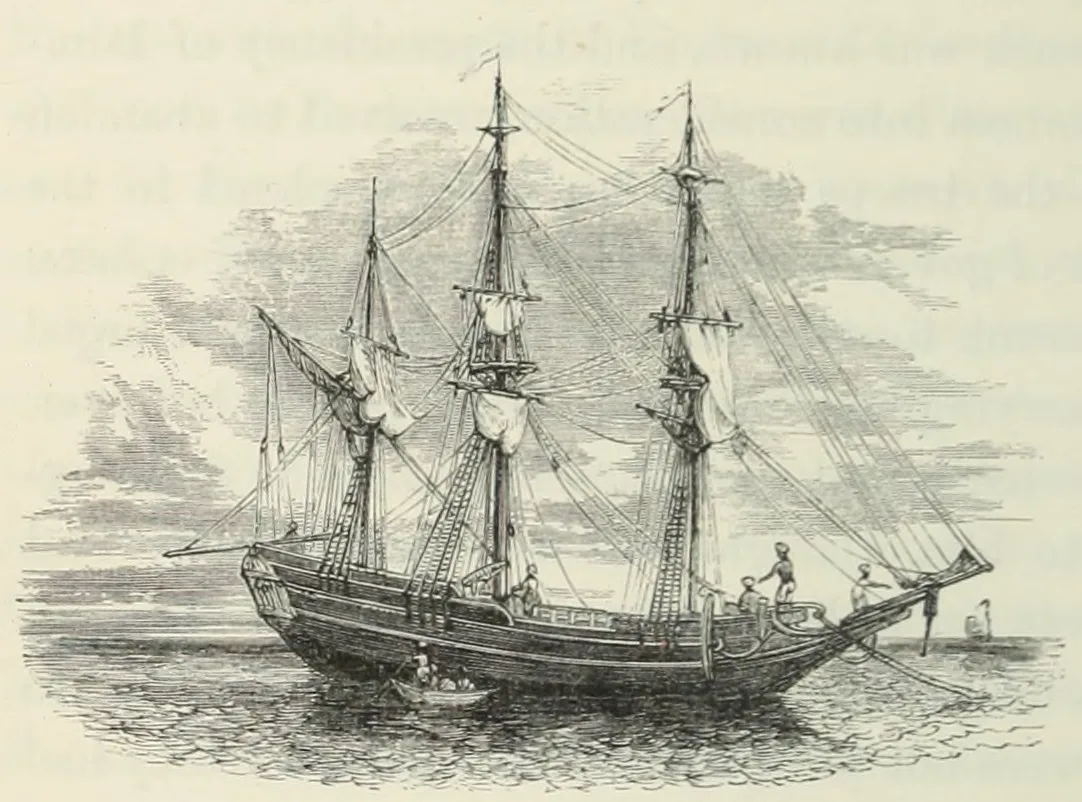
The west coast of India had long been infested by a body of pirates, who preyed indiscriminately on the vessels of all nations, native and foreign, and carried on their depredations so boldly, systematically, and successfully, as to have become in fact a formidable naval power. Kanhojee Angria, under whom they first acquired importance, was at one time commander of the Mahratta fleet, and in this capacity held the government of Severndroog, a strong fort situated on a small rocky island close to the coast, about seventy-eight miles south from Bombay. In course of time, finding himself strong enough, he aspired to independence, and having gained over a large portion of the fleet, set his old masters at defiance. A war ensued, but the results were so unfavourable to the Mahrattas, who were not only worsted at sea, but so vigorously encountered on shore, that they at last, in 1713, consented to a peace which, in return for a promise of allegiance and tribute, left Kanhojee in possession of ten forts and sixteen places of less strength, with their dependent villages. It is not to be supposed that when he had thus succeeded in reaping the fruits of his depredations, he would forthwith desist from them. On the contrary, he was only emboldened to extend them, and continued to levy what he called his chout by the indiscriminate plunder of all ships that came within his reach. Along the whole coast, from the vicinity of Bombay southwards to that of Goa, his vessels, protected by forts, and sheltered within creeks and the mouths of the numerous small streams which descend from the Western Ghauts, lay ready to pounce on any hapless vessel that might chance to heave in sight. In carrying on their depredations the pirates derived great facilities from the nature of the navigation. The sea and land breezes blow alternately in the twenty-four hours, dividing the day between them. The land breezes, however, do not reach more than forty miles out to sea, and hence vessels, in order to profit by them, must keep within that distance from the coast. They were thus obliged to run into the very danger which they were anxious to avoid, and fell a frequent and easy prey to Kanhojee’s fleet of grabs and gallivats. These two classes of vessels, which, for mercantile purposes, are still in common use on the Malabar coast, were admirably adapted for predatory warfare. The grabs, varying in burden from 300 to 150 tons, and made broad in proportion to their length, for the purpose of drawing little water, carried a number of guns, two of them from nine to twelve pounders, placed on the main deck so as to fire through portholes over the prow, and the rest, usually six to nine pounders, fitted to give a broadside. The gallivats, which never exceeded seventy tons burden, combined the double advantage of sailing and row boats. Besides a very large triangular sail, they were provided with forty to fifty stout oars, which enabled them to act as tugs to the grabs, and pull them even in a calm at the rate of four miles an hour. Thus attacked, it was scarcely possible for a merchant vessel to escape. Her enemies keeping at first at a safe distance, plied her with shot till they had dismasted her or thoroughly damaged her rigging, and then, as she lay helpless in the water, either compelled her to strike, or boarded her by sending forward a number of gallivats, each with from 200 to 300 men.
The East India Company tried both force and negotiation with Kanhojee. After an ineffectual attempt to coerce him in 1717, Mr. Charles Boone, then governor of Bombay, tried the effect of a written remonstrance, and in November, 1720, received a long and rambling, but very characteristic answer, in which Kanhojee, instead of seeking to disguise or palliate the principles on which he acted, says: “As touching the desire of possessing what is another’s, I do not find the merchants exempt from this sort of ambition, for this is the way of the world; for God gives nothing immediately from himself, but takes from one to give to another. Whether this is right or no, who is able to determine? It little behoves the merchants, I am sure, to say our government is supported by violence, insults, and piracies, forasmuch as Maharaja (which is Sevajee), making war against four kings, founded and established his kingdom. This was our introduction and beginning, and whether or no by these ways this government hath proved durable, your excellency well knows, so likewise did your predecessors."1 In 1722 the British and Portuguese, the latter furnishing the land forces, and the former three ships of the line under Commodore Matthews, made an attack on the strong fort of Kolabah, at that time the chief seat of Kanhojee’s power; but his usual good fortune, or the cowardice of the Portuguese, saved him; in 1724 the Dutch, with seven ships, two bomb-vessels, and a body of troops, made an equally unsuccessful attempt on Viziadroog or Gheriah. These ignominious failures strengthening a prevalent belief that the forts attacked were really impregnable, the reduction of them was abandoned as hopeless; and as the only other alternative, the Company were reduced to the necessity of giving convoy to their merchant ships by means of a naval force, which was maintained at an annual expense of £50,000. The expense of this expedient was not the worst part of it. Humiliating as it was, it proved unavailing; and Kanhojee, only emboldened by the ineffectual resistance opposed to his ravages, continued them with more daring, and on a more extended scale. At his death, in the end of 1728, he was possessed of immense wealth, a powerful fleet, and a territory stretching 100 miles along the coast, and backward to the mountains.
Kanhojee Angria left two legitimate and three illegitimate sons. The former were recognized as his successors, and fixed their residence, the one at Kolabah and the other at Severndroog. Ultimately, after various changes, produced partly by domestic dissensions and partly by foreign influence, the succession passed to one of the illegitimate sons, called Toolajee, who made Gheriah his capital. It was against him that the squadron under Admiral Watson and the troops under Colonel Clive were now about to be employed. His depredations committed on all ships not bearing his passport had been severely felt, as well by the Mahrattas as by the Bombay presidency; and both as early as 1751 had come to a mutual determination to put him down as a common enemy. Actual steps, however, were not taken till 1755. The very year before, the pirates had given new proof of their formidable power, by attacking at once three Dutch ships of fifty, thirty-six, and eighteen guns, burning the two first, and capturing the last; and it was resolved, at the earnest entreaty of Balajee Bajee Rao, the Peishwa, to attack Toolajee Angria both by land and sea. At this time neither Admiral Watson’s squadron nor the troops from England had arrived. The land forces were accordingly furnished entirely by the Mahrattas, who of course retained the command of them; but the ships, consisting of the Company’s marine force, the Protector, of forty-four guns, with a ketch of sixteen guns, and two bomb-vessels, and a Mahratta fleet of seven grabs and sixty gallivats, were placed under the sole command of the Company’s chief naval officer, Commodore James. This great armament must have made it almost impossible to doubt of its sufficiency, and yet such was the exaggerated idea entertained of the strength of Angria’s forts, that the presidency instructed the commodore to content himself with blockade, instead of risking the safety of his vessels by attacking them. If such were the fears of the presidency, we can hardly blame the Mahrattas for being still more timorous. On anchoring fifteen miles north of Severndroog, and disembarking the troops, in number 10,000, to proceed the rest of the way by land, Commodore James learned that the enemy’s fleet was lying securely at anchor within the harbour of Severndroog, and might, by stealing upon it during the night, be so effectually blockaded, as to make escape impossible. He made his arrangements accordingly; but the Mahratta admiral, after promising liberally to second him, soon found that he had promised more than he was able to perform. His officers refused to stir before morning; and thus, as much perhaps from treachery as from cowardice, appeared in sight only in time to alarm the enemy, and enable them to put to sea with all their ships.
Commodore James, after a chase, continued till the approach of night made it fruitless, returned to Severndroog. Beside the fort of this name on the island, there were three other forts on the mainland, within point blank distance of it. These, though originally built for the purpose of keeping it in check, had afterwards fallen into Angria’s hands, and now formed part of its defences. On returning dispirited from the chase, the commodore found the Mahratta army engaged in laying siege to the land forts. Such at least was the name which they gave to their operations; but there could not be a more ludicrous misnomer, for they were firing only from a single gun, a four-pounder, at the distance of two miles. To keep up a blockade for the purpose of assisting such besiegers would have been worse than futile; and it was therefore evident that, if the instructions which the excessive caution of the Bombay presidency had dictated were literally observed, this expedition against the Angria pirates would necessarily prove, like the others which had preceded it, a complete failure. Rather than expose himself and his employers to such disgrace, Commodore James determined to act on his own responsibility, and try the effect of a bombardment. The result soon justified his decision. In the course of a single day Severndroog, which imaginary fears had magnified into an impregnable fortress, hung out a flag of truce, and the land forts almost immediately followed the example. After this brilliant exploit the fleet and army proceeded north six miles, and attacked the fortified island of Bancoote, which yielded almost without a show of resistance.
The Mahratta commander was so elated by a success which far exceeded his utmost hopes, that he endeavoured to tempt the commodore by an offer of 200,000 rupees to continue his career of victory, and complete it by the capture of Dabul, another of Angria’s strongholds, situated on the coast about eight miles farther south. The commodore’s own wish would have been to comply with this proposal, but having already exceeded his instructions he did not venture to act without express sanction. In the hope of obtaining it, he hastened off in the Protector to Bombay. Here, however, notwithstanding his unexpected achievements, the presidency were still haunted by doubts and fears, and he was reluctantly compelled to desist from further operations.
Such was the state of matters when the Bombay presidency, by the arrival of Admiral Watson and Colonel Clive, found themselves in possession of a powerful force, for which, from their determination not to employ the troops in the Deccan, as originally intended, they had no immediate occasion. In these circumstances, the work which Commodore James had so ably begun, naturally suggested itself, and it was determined to strike at the root of Toolajee Angria’s power by attacking Viziadroog or Gheriah. This place, situated about 170 miles south of Bombay, was very imperfectly known by Europeans, and figured in their imaginations as a fortress built, like Gibraltar, on an inaccessible rock, and at least equal to it in strength. So prevalent was the idea, that it was deemed prudent, before actually undertaking the expedition, to reconnoitre. With this view Commodore James proceeded with the Protector and two other ships, and, undeterred by the fleet which lay crowding the harbour, advanced sufficiently near to the fort to obtain a full survey of it. His report was, that Gheriah, though undoubtedly strong, was very far from being impregnable. Its site was a rocky promontory, connected with the mainland by a narrow belt of sand, and stretching south-west about a mile in length by a quarter of a mile in breadth. The face of the promontory all round, where washed by the sea, formed a continuous precipice about fifty feet high. Above this rose the fortifications, consisting of a double wall flanked with towers. The sandy isthmus contained the docks where the grabs were built and repaired; and immediately beyond, on the north, was the harbour, partly formed by the mouth of a stream which descended from the Ghauts.
Commodore James returned from his survey in the end of December, 1755; but nearly six weeks were afterwards spent in making preliminary arrangements. Some of these related to the terms on which the Company and the Mahrattas were to co-operate, and it was expressly stipulated, that while the former were to obtain Bancoote and five adjoining villages in perpetuity, Gheriah, if taken, should belong to the latter. Another arrangement related to the distribution of the spoil which was expected to fall to the actual captors. With this the two governments could not well interfere; but it is difficult to understand how, in making this arrangement, the undoubted title of the Mahrattas to a fair proportion was altogether overlooked. Without paying the least regard to it, a committee of ten officers, representing the British naval and military forces about to be employed, met at Bombay, and made a distribution among themselves of the whole anticipated prize-money. In thus excluding their allies the British were guilty of an act of premeditated injustice. So mercenary, indeed, was the spirit which they manifested, that the two services were on the point of quarrelling as to the principle of division adopted. Clive’s rank as colonel entitled him only to the same share of prize-money as a naval captain; but it was contended on the part of the army, that his position as their commander-in-chief entitled him at least to share equally with Rear-admiral Pococke, who was only second in command in the navy. As neither service would give way, the quarrel would have proved serious had not Admiral Watson succeeded in terminating it by volunteering to make up the difference claimed out of his own pocket. There was, doubtless, generosity in the sacrifice thus offered by Admiral Watson, and generosity also in the conduct of Clive, who, when the actual deficiency, amounting to £1000, was afterwards tendered to him, refused to accept it; but it would have been more creditable to themselves individually, and to the services over which they presided, had they in the first instance recognized the just claims of their allies, and afterwards, instead of countenancing, sternly rebuked the higgling and rapacious spirit manifested by their subordinates. On a review of the whole transaction, it is difficult to agree with Sir John Malcolm, who thinks it “pleasing on this occasion to record the conduct of both the naval and the military commanders,” though at the same time he cannot refrain from censuring “that spirit of plunder, and that passion for the rapid accumulation of wealth which actuated all ranks.”1
The expedition, consisting of four ships of the line, and other vessels, amounting in all to fourteen, having on board a battalion of 800 Europeans and 1000 sepoys, sailed in the beginning of February, 1756. The Mahratta army, under Ramajee Punt, had previously advanced from Choul, a town and seaport twenty-three miles south of Bombay. On the appearance of the fleet, Toolajee Angria, in alarm, left the defence of the fort to his brother, and repaired to the Mahratta camp, where he endeavoured to avert his fate, by proposing terms of accommodation. Had he succeeded, the Mahrattas, on gaining possession, would doubtless have amply compensated themselves for the meditated injustice of excluding them from a share of the plunder. The British, convinced that this was their intention, and perhaps conscious that their own conduct afforded too good a justification of it, saw that no time was to be lost. The morning after their arrival, Admiral Watson having summoned the fort without receiving any answer, gave orders to prepare for action. The fleet, drawn up in two parallel divisions on the north side of the promontory, opened on the fort at the distance of only fifty yards, with 150 pieces of cannon and the mortars of five bomb-ketches.
Within ten minutes, one of the grabs which crowded the harbour was set on fire by a shell, and the whole of the piratical fleet, which for fifty years had been the terror of the Malabar coast, was in flames. Before night set in, the enemy’s fire was silenced, but no surrender was offered. There was little doubt that the fort would be obliged to succumb, and the great question now was how to secure the spoil. According to the report of a deserter the Mahrattas were to be put in possession of the place on the following day. What would then become of the prize-money, about the distribution of which the two services had been prematurely quarrelling at Bombay? Once accessible to such dexterous pillagers, every vestige of it would speedily disappear. This was to be prevented at all hazards; and therefore, as if the capture of the fort had been only a secondary object, or as if the Mahrattas, to whom the delivery of it in the event of its capture was guaranteed by treaty, had no right to take possession, Clive landed his troops, and took up a position commanding the only approach to the fort by land. The Mahratta commander, finding himself outwitted by this manœuvre, made secret overtures to Captain Buchanan, the officer on picket, and offered him a bill on Bombay for 80,000 rupees (£8000) if he would permit him and a few of his people to pass. The bribe, which would have rendered the receiver infamous, was indignantly rejected; but, as Duff remarks,1 “it is a circumstance worthy of notice as elucidating the character of the times, that the Bombay government thought common honesty so rare, as to present Captain Buchanan with a gold medal in consideration of his extraordinary good behaviour.”
The Mahrattas having been excluded access to the fort the bombardment was renewed, and at length, on the afternoon of the second day, on an intimation by the garrison to the advanced guard of the troops on shore, that they were ready to surrender, Clive marched up and took possession. The captors had reason to congratulate themselves on their good fortune. Though the cannonade had destroyed the artificial works, the rock still formed a natural bulwark, against which, if it had been valiantly defended, nothing could have availed but regular approaches on the land side. Within the fort were found 200 pieces of cannon, six brass mortars, a great quantity of naval and military stores of all kinds, and value in money and other effects to the amount of £120,000. This sum was divided as originally arranged at Bombay. The Mahrattas got nothing, and when they complained were told that whatever claim they might have had was forfeited by the treacherous attempt to bribe a British officer and obtain possession for themselves. It may be so; but, in considering the justice of the case, it is necessary to remember that those who now accused them of want of good faith had been the first to set them an example. It has been already mentioned, that in terms of a treaty made between the Company and the Mahrattas, the former obtained possession of Bancoote, with some dependencies, and the latter were, in the event of its capture, to obtain possession of Gheriah. Strange to say, the Company now showed great reluctance to fulfil their part of the agreement. Gheriah, it was thought, would be a most valuable acquisition to the Bombay presidency; and therefore, when delivery was asked by the Mahrattas, Mr. Bourchier, the governor, endeavoured to evade the obligation on pleas so frivolous as to be disgraceful. At first a compromise was attempted, and Bancoote was offered to the Mahrattas in exchange for Gheriah. When this was indignantly refused, a list of grievances was concocted, and the Mahrattas were told that they had failed in performing their part of the treaty —they had not properly fixed the limits of the Bancoote cession—they had not delivered up the person of Toolajee Angria—and the Peishwa had contracted for a supply of goods from the Dutch. The last grievance, though evidently regarded as the worst of all, had nothing to do with the point in question, and the other two were frivolous pretexts which scarcely deserved examination. Mr. Bourchier himself ultimately seemed ashamed of them, and the Mahrattas were put in possession of Gheriah. Pending the dispute the British squadron and troops remained to influence the issue, and did not return to Bombay till the beginning of April. Shortly after, they sailed for Madras, which was reached on the 12th of May. Clive’s ultimate destination was Fort St. David, where, by a singular coincidence, he entered on the duties of his office on the 20th of June, 1756, the very day on which Calcutta fell into the hands of Surajah Dowlah, Nabob of Bengal. This event, with the causes which led to it, and the momentous consequences by which it was followed, must now be traced.
Notes
- 1. This is a ship with three masts, a pointed prow, and a bowsprit. Its crew consists of a nicodar or captain, and a few clashies or Moorish sailors. The grabs are built at Bombay, where it appears that navigation was brought to some degree of perfection at a very early period. The pointed prow which distinguishes the grab belongs to the Hindoo construction, and is not met with in any other country. The Portuguese have imitated it in their Indian ships.—Solvyn, Les Hindous.
- 1. Duff’s History of the Mahrattas, vol. i. p. 459.
- 1. The Life of Robert, Lord Clive, vol. i. p. 135.
- 1. History of the Mahrattas, vol. ii. p. 991.