BENGAL, united as it usually was with Behar and Orissa, formed so important a branch of the Mogul empire, that the government of it became an object of ambition to the leading members of the imperial family, and the aspirants to the throne of Delhi were more than once indebted for their success to the sinews of war furnished by its revenues. In the war of succession which was waged on the death of Aurungzebe, Bahadur Shah, who, as the eldest son, undoubtedly possessed the best title, would in all probability have found it unavailing, had he not been opportunely furnished with the means of carrying on the contest by the arrival of his son, Azim-u-Shan, with the treasures which he had amassed as Viceroy of Bengal. At a later period, when, on the death of Bahadur Shah, Azim-u-Shan made an ineffectual attempt to seize the throne, to the prejudice of his elder brother, who succeeded, and reigned for a short period under the title of Jehandar Shah, Farokshir, Azim-u-Shan’s son, found an asylum in Bengal, where he had for a time, nominally at least, held the office of viceroy, and where he remained secure till he was able to issue at the head of a force which proved victorious, and placed him on the imperial throne. These, however, were the last instances in which Delhi may be said to have received its emperors from Bengal. Vast political changes were in progress, and the time was evidently approaching when the authority of the Great Mogul, though it might still continue to be formally recognized, even in distant provinces, would cease to have any real existence. The causes tending to this result in Bengal were not so visibly manifested as in the Deccan, but they had long been at work, and had made its governors virtually independent.
As early as the time of Aurungzebe, a governor of Bengal, who afterwards acquired celebrity under the name of Jaffier Khan, had begun to cherish ambitious designs. He was the son of a poor Brahmin, and spent the early part of his life at Ispahan, in the service of a Persian merchant, who had purchased him as a slave, and educated him as a Mahometan with his own children. On the death of the merchant he obtained his freedom, and returned to India, where he was employed in a subordinate situation by the Dewan of Berar. His expertness in accounts and general business habits brought him under the notice of Aurungzebe, who made him dewan successively of Hyderabad and Bengal. The latter position gave him full scope for the display of his talents; and by the introduction of various improvements he added greatly to the amount of the revenue. He thus rose high in the favour of Aurungzebe, but at the same time incurred the hatred of the viceroy, Azim-u-Shan, who was so offended by his interference in all pecuniary transactions that he sanctioned a plot against his life. As much by his courage as his good fortune he escaped the daggers of the assassins, and afterwards proceeding boldly to Azim-u-Shan’s palace, upbraided him as the author of the crime. The viceroy cowered before him, and made solemn protestation of his innocence; but the dewan was not to be duped, and took the most effectual measures both to manifest his suspicions and guard against a repetition of the attempt. Besides transmitting an authenticated statement of the whole circumstances to Aurungzebe, he quitted Dacca, where the viceroy resided, and removed, with all the officers of the dewany, to Moorshedabad, which in consequence ultimately supplanted Dacca as the capital of Bengal. In return for the dangers he had run new honours were conferred upon him; and at the time of Aurungzebe’s death he was not only dewan of the three provinces of Bengal, Behar, and Orissa, but also invested with a large share of military authority.
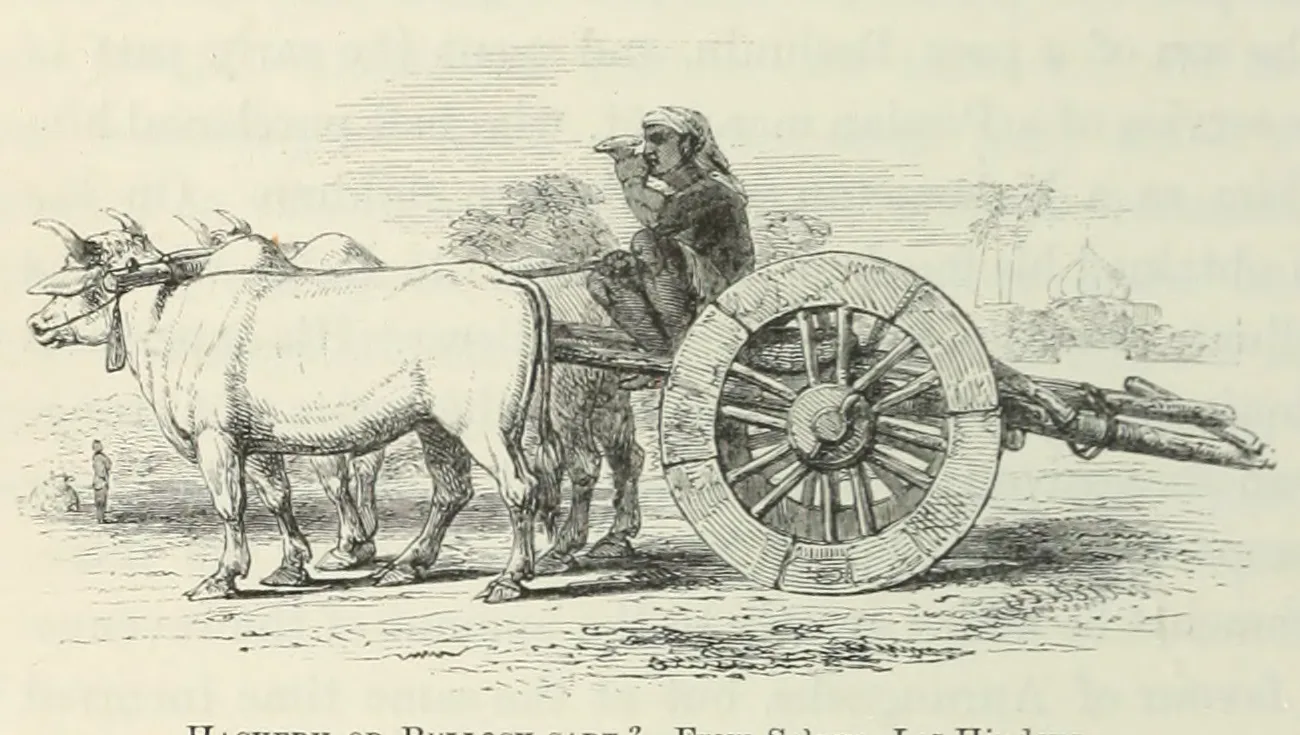
Fortunately for Jaffier Khan the contest for the succession to the throne called away Azim-u-Shan from Bengal, and thus delivered him from the enemy from whom he had most to fear. Farokshir, indeed, was left to act as his father’s deputy, but his authority, never confirmed at Delhi, was easily set at nought; and Jaffier Khan, bearing, among other lofty titles which Aurungzebe had conferred upon him, that of nawab, or nabob, continued to extend and consolidate his power. All important and confidential situations were filled by his own relations and dependants; and though he had many enemies at court, he was able to render all their machinations powerless, by the regularity with which he transmitted the revenue, increased by his exertions from £1,000,000 to £1,500,000 sterling. To a court so needy as that of Delhi, there could not be a greater recommendation of the merit of a provincial governor than the punctual arrival of long trains of bullock-carts laden with boxes of treasure. Still more to conciliate favour, the strong military escort which accompanied each train brought with them, as presents to the emperor and his ministers, numbers of elephants, horses, antelopes, hawks, shields made of rhinoceros hides, swordblades, Silhet mats, Dacca muslins, Cossimbazar silks, and various articles imported by Europeans.1 The nabob, well aware how much his favour at court depended on these transmissions, was careful to make them as widely known as possible, and gave them all the appearance of great public events. He himself, accordingly, attended by his principal officers, accompanied the convoy some miles from Moorshedabad; and besides intimating its approach by regular despatches to the vizier, caused it to be recorded and published in the royal gazettes. By this publication he not only relieved himself from responsibility in the event of the convoy not reaching its destination, but gave the necessary information to the governors on the line of route, and left them without excuse if they failed to provide for its safe transport through their territories.
Jaffier Khan, presuming on the importance of the service which he thus rendered, and being by nature strongly inclined to arbitrary measures, often stretched his authority to the utmost, and was guilty of many acts of oppression towards both natives and foreigners. The desire to increase the revenue furnished him with a pretext for numerous exactions. He was too clear-sighted not to perceive how much foreign commerce contributed to the general prosperity of the country, and he was therefore disposed to deal liberally with Mogul and Arabian merchants, strictly prohibiting the custom-house officers from demanding more than the prescribed duties of 2½ per cent. and the regulated fees. The Europeans, on the contrary, he regarded with the utmost jealousy, and would fain have expelled them from the country altogether. He hated them with all the rancour of Mahometan bigotry; he believed them to be politically dangerous; and he could not understand why the English in particular should be exempted from duties which all others were obliged to pay. Under the influence of such feelings, he soon made them aware that they must either forego this privilege, or compensate for it by presents renewed as often as he chose to intimate that he expected them. The system thus pursued proved so capricious and oppressive, that the East India Company resolved to bring their case under the notice of the emperor, by sending a deputation or embassy to Delhi. The result of this embassy, which took place during the reign of Farokshir, has been already mentioned. That monarch—influenced, partly by the magnificence of the presents which the ambassadors brought with them, partly by the grudge which he bore the nabob for having not only treated him superciliously when he was nominal Viceroy of Bengal, but also openly set him at defiance when he would have supplanted him in his government; and, above all, by gratitude to the surgeon of the embassy for effecting a cure on his person after all the native physicians had failed—granted the demands of the Company to their utmost extent. In point of fact, however, their success was only partial. The nabob, without venturing to question the authority which conferred the privileges, put his own interpretation upon them, and was thereby able to render some of them inoperative. Still a very decided advantage had been gained; and Portuguese, Armenian, Mogul, and Hindoo merchants, fixing their residence in Calcutta, in order to enjoy the protection of the English flag, added rapidly both to its population and its wealth.
During the troubles which preceded and immediately followed the deposition and death of Farokshir, he quietly looked on, as if he had been an unconcerned spectator; but as soon as Mahomed Shah seemed firmly seated on the throne, he resumed his intercourse with Delhi, and by sending his usual escort of revenue and presents, found no difficulty in obtaining a confirmation of his government. This, however, was now of comparatively little consequence to him personally, as he was far advanced in years. An object nearer his heart was the continuance of the government in his family. He had no son, and wished to give the succession to Serferaz or Suffraze Khan, his grandson by an only daughter. Her husband, Shujah-u-din Khan, was still alive, and thought himself better entitled to the government than his own son, who indeed had no claim to it except what was derived from the fondness of a doting grandfather. He therefore intrigued at Delhi, and successfully thwarted the designs of Jaffier Khan, who, unable to obtain the government for his favourite, did all he could to compensate him by delivering to him on his death-bed the key of all his treasures and valuables, and appointing him by will both his public and his private successor.
Immediately on the death of Jaffier Khan, in 1725, Shujah Khan and his son, who appear previously to have kept each other in the dark as to their real intentions, came to an understanding. The former accordingly took quiet possession of the government; and the latter consented to wait till the succession, now assumed to be hereditary, should open to him by course of nature. At the time when Shujah Khan thus seated himself on the musnud of Bengal, he was and had long been deputy-governor of Orissa. Shortly after he had fixed his residence at Cuttack, the capital of this government, a person named Mirza Mahomed, related to him by marriage, arrived with his two sons, and were all admitted into his service. The two sons—the elder named Haji Ahmed—the younger Mirza Mahomed Ali, but better known by the name of Ali Verdy Khan—were men of talent and education, and made themselves so useful to Shujah Khan, that they obtained a complete ascendency over him. As a matter of course they accompanied him to Bengal, and became influential members of his government. Serferaz Khan, in implement of the agreement made with his father, became Dewan of Bengal; but all the real power centred in a council consisting of the above two brothers, and two Hindoos—the one, Roy Alum Chund, who, under the name of comptroller of the household, performed all the duties pertaining to the office of dewan, while Serferaz Khan only nominally held it—and the other the imperial banker, Juggut Seat.
For a time the mildness and equity of Shujah Khan’s government contrasted favourably with the severity and injustice which had too often characterized the measures of Jaffier Khan. All his council were men of talents, and without having recourse to the oppressive exactions of his predecessor, the revenues were so well managed, that he was able even to increase the customary sum sent to Delhi. He thus stood high in favour at that court, and not only obtained, with many honourable titles, a confirmation of the government of Bengal and Orissa, but a re-annexation of the province of Behar, which had been dissevered from it.
This apparent increase of power ultimately proved the ruin of his family. The government of Behar fell vacant, and the nabob committed the fatal mistake of conferring it on Ali Verdy Khan. This crafty and talented favourite proceeded forthwith to Patna, the capital, and at the very outset assumed almost regal state, being accompanied by an escort of 5000 troops. The troubled state of the country was the pretext; but there cannot be a doubt that at this early period he was meditating the designs which he afterward carried into execution. Shortly after his arrival at Patna, he took a body of Afghans into his service. These, far superior in native courage and discipline to the ordinary Indian troops, put him in possession of a power which could hardly fail to give him the victory when the struggle which he contemplated should come to be decided. Meanwhile, Shujah Khan ceased to fulfil the early promise of his government, and exchanged its cares for indolence and luxury. He was thus governor only in name, and left all important affairs to be managed chiefly by the influence of Haji Ahmed. The two brothers were thus enabled to play into each other’s hands, and make all necessary arrangements for an emergency which was expected soon to arise. They saw that Shujah Khan’s life was fast drawing to a close, and they deemed it unnecessary to disturb him in his possession. Towards his son, however, their feelings were very different, and they had already set on foot a course of intrigue, by which they hoped to gain over the court of Delhi to their interest, and set the claims of Serferaz aside. Before their schemes were matured, Delhi itself was in the hands of the Persian conqueror, Nadir Shah, and Shujah Khan died. Ali Verdy Khan had previously secured his nomination to the government of Behar, free from any dependence on Bengal; but the higher objects to which his ambition pointed had not been secured, and Serferaz Khan took undisputed possession of the government in accordance with his father’s will, which, while it appointed him heir, bound him to act in all affairs of moment by the advice of Haji Ahmed, Roy Alum Chund, and Juggut Seat. Serferaz, though he promised compliance with this condition, could not have been sincere, for he had already become aware that Haji Ahmed was leagued with his brother Ali Verdy in plotting his overthrow. So far, therefore, was he from intending to take him into his council, that he was bent on destroying him, and only waited for an opportunity. It was necessary, however, to proceed with caution. The person of Haji might easily have been seized, as he resided in Moorshedabad; but Ali Verdy being at Patna, could not be reached, and would certainly break out in open revolt the moment any hostile proceedings were adopted against his brother. Had Serferaz Khan possessed common prudence and discretion, he would have secured himself against the designs of the brothers, by courting the esteem and attachment of the other two members of his council. Instead of this course, which good feeling as well as sound policy dictated, he insulted both, and converted them into implacable enemies. When Alum Chund, after obtaining a private interview, ventured to use the freedom of an ancient counsellor, and to remonstrate with his new master on the notorious licentiousness of his private life, and his total neglect of all serious public business, his counsel was scorned, and he only called forth a volley of ignominious abuse and invective. The treatment of Juggut Seat was still more outrageous. The fame of a lady of exquisite beauty, whom the banker’s son had married, excited the nabob’s curiosity, and he insisted on seeing her. According to oriental ideas there could not be a grosser insult; but Serferaz Khan, accustomed to listen only to his passions, which had been indulged to such an extent as to impair his intellect, was not to be dissuaded, and the lady, after Juggut Seat had implored in vain for the honour of his family, was carried to the palace in the evening. No violence was offered her; but even momentary exposure to the rude gaze of the licentious nabob was dishonour which was not to be effaced, and could only be avenged. From this moment Serferaz Khan was left without a sincere friend; and those who, for his father’s sake, were once disposed to have stood like a shield around him, entered eagerly into a conspiracy to effect his ruin.
The primary object of the conspiracy was to make Ali Verdy Khan Nabob of Bengal. To give some colour to the proceeding, application was made to the reigning emperor, Mahomed Shah, who, having never confirmed Serferaz Khan in his government, was easily induced to regard him as an usurper, and set him aside to make way for one who, while he far surpassed him in talents, promised to enrich the Delhi treasury by the present payment of £1,000,000 sterling, the transmission of Serferaz Khan’s confiscated property and effects—valued at several millions more, and the future delivery of the revenue with all the punctuality which had been observed by Jaffier Khan. The contemplated revolution thus obtained a kind of legal sanction, and secured the support of many who probably would have stood aloof if it had continued to wear its original form of conspiracy and rebellion. Everything being now prepared, one obstacle remained to be surmounted. Haji, with his family, was still at Moorshedabad, and completely at the mercy of Serferaz Khan, who, the moment the conspiracy was unfolded, would certainly make them the first victims of his rage and vengeance. By means of a series of dexterous and unscrupulous manœuvres, the nabob was deluded into the belief that Haji’s absence would prove his best security, and he allowed him to depart with his family for Patna. Ali Verdy, now free to act, at once commenced operations, and advanced with such rapidity that his movements were not known at Moorshedabad till he had surmounted the difficult passes of Terriagully and Sicklygully, among the Rajamahal Hills, where his progress might have been arrested, and about to penetrate into the very heart of Bengal. Serferaz Khan, confounded at the intelligence, looked about in vain for the counsel and aid of which he had deprived himself by his gross misconduct. At last, however, after wasting some time in unavailing negotiation, he began to display an energy of which he had not previously been deemed capable, and hastily collected an army of 30,000 men, with which he encamped on a plain near Comra, about twenty-two miles north of his capital. Though superior in numbers, his troops were no match for Ali Verdy’s Afghans, who speedily decided the fortune of the day. On seeing that all was lost, Serferaz Khan refused to join the fugitives, and rushed into the thickest of the enemy, when, after he had nearly expended his whole quiver of arrows, he fell pierced through the forehead by a musket-ball.
Ali Verdy, following up his victory, entered Moorshedabad without opposition, and seated himself on the musnud. The odious government of his predecessor made the change generally acceptable, and all ranks hastened to congratulate and do homage to the new nabob. He proved not unworthy of it. Contrary to the usual practice of eastern conquerors, he displayed no thirst for blood, and not only spared Serferaz Khan’s sons, but pensioned them, and sent them to reside with some degree of state at Dacca. The only quarter in which the new government met with open hostility was in Orissa. Here Moorshad Cooly Khan, a brother-in-law of the late nabob, was governor. Being well aware that it was intended to dispossess him, he at first endeavoured to make terms, but the utmost he could obtain was to quit the province with his property and family, without being subjected to molestation. As he was not of a warlike temperament, he would probably have submitted, had not a bolder course been almost forced upon him by his wife and the leading members of his court. Having determined on resistance, he at once raised the standard of revolt, and sent Ali Verdy a letter of defiance. The example might soon have spread, and therefore Ali Verdy, without losing a moment, left his brother Haji in charge of the government of Bengal, and hastened forward at the head of his troops to commence the campaign. The ultimate result could hardly be doubtful, though the struggle proved longer and more formidable than had been anticipated. Instead of waiting to be besieged in Cuttack, his capital,
Moorshad Cooly moved northwards to Balasore, and a little beyond it occupied a position where his camp, besides being fortified and defended by 300 cannon, was rendered almost inaccessible by a river and surrounding forests. Had the same wisdom been displayed in maintaining this position as in selecting it, Ali Verdy would have gained no laurels. The population, attached to their own governor, refused to furnish him with supplies, and his army began to melt away both by famine and desertion. The impatience and rashness of Mirza Boker Khan, the enemy’s general, brought on a battle at the very time when he ought to have avoided it, and the nabob gained a victory so complete that Moorshad Cooly, finding no safety within the province, was glad to seek an asylum in Masulipatam.
Ali Verdy, believing that the insurrection was at an end, gave the government of Orissa to Syed Ahmed, his brother’s second son, and set out for Bengal. He was scarcely seated in the capital when intelligence arrived which left him no alternative but to retrace his steps. Syed Ahmed, by profligacy and vindictiveness, had rendered himself so obnoxious that a new insurrection, headed by Boker Khan, had broken out, and made him prisoner. The fame of the nabob as a warrior was now so widely spread that his mere presence in Orissa sufficed to dissipate the revolt. Delighted not more at its suppression than at the recovery of his nephew, he again settled the province, which, as it was no longer to be governed by Syed Ahmed, but by an officer of experience, was expected to give no further trouble. In this belief, Ali Verdy disbanded the greater part of the troops he had brought with him; and, escorted only by about 5000 horse, proceeded by slow stages for Bengal, amusing himself on the way with hunting. After passing the frontiers of Orissa, he had entered the district of Midnapore, and was encamped near its capital, when he was startled by the intelligence that Bosker Punt, in the service of Ragojee Bhonsla, a Mahratta chief, who had established himself in possession of Berar, had arrived in Bengal, at the head of a formidable army, with the professed object of levying the chout, but more probably with the hope of making a permanent conquest. The nabob had not been unaware of the intended invasion, but expected that it would be made from the north-west through Behar, and at so late a period as would give him ample time to reach Moorshedabad and provide sufficient means of defence. He was therefore taken completely by surprise when he learned that they had entered by Orissa, and were following close upon his track. He immediately hastened northward to Burdwan, expecting that he might be able there to deposit his heavy baggage in safety. He had only reached it when the arrival of the Mahrattas was announced by smoking villages and the helpless inhabitants fleeing in terror before them. The Mahratta commander, with the usual policy of his nation, avoided a general action, and after several skirmishes endeavoured to induce the nabob to buy him off by offering to withdraw on the payment of a heavy contribution. Still hoping to be able to reach his capital, Ali Verdy refused to submit to the humiliating terms, and made an effort to continue his retreat. With this view he gave orders that the heavy baggage and camp-followers should remain at Burdwan, but the terror had now become so general that the orders were disobeyed, and the confusion became inextricable. The greater part of the baggage, artillery, and tents fell into the hands of the enemy.
The nabob would now gladly have escaped by paying the contribution first demanded. It was no longer in his option. Bosker Punt, who would have been satisfied at one time with ten lacs of rupees (£100,000), was too well aware of the advantage he had gained, and refused to take less than a crore (£1,000,000), together with all the elephants. Desperate as the case was, any risk was better than this ignominy; and after a struggle of four days, during which new losses and hardships were endured, the nabob succeeded in placing the Bhagaruttee between him and his pursuers. Here Nuazish Mahomed, the eldest son of his brother Haji, joined him with a considerable reinforcement, and he found little difficulty in obtaining sufficient supplies. It was now Bosker Punt’s turn to take alarm. The rainy season had commenced, and the whole country was becoming inundated. It seemed madness to remain, and he would have departed had not a bolder spirit than his own interfered. An Arab by origin, of the name of Meer Hubbeeb, was Dewan of Orissa when Moorshad Cooly governed it, and made no scruple, when satisfied as to the winning side, to abandon his old master and take service under Ali Verdy. His only object, however, was to serve himself; and having been taken, or rather, perhaps, allowed himself to be taken prisoner by the Mahrattas, he ingratiated himself with their commander, and was soon the most influential, as he was certainly the ablest of his advisers. From his thorough knowledge of the country he was able to turn every circumstance to advantage, and when Bosker Punt spoke of retreat, pointed to the defenceless state of Moorshedabad. When Bosker Punt hesitated, he volunteered to surprise it, and was provided with a detachment for that purpose. The nabob obtaining intelligence of his departure, tried to outstrip him. He was a day too late. Meer Hubbeeb had already plundered the suburbs, and extorted from the banker, Juggut Seat, a sum which has been estimated at £2,500,000 sterling. The success of this expedition induced Bosker Punt to abandon the intention of returning to Berar, and he encamped for the rainy season at Cutwah, on the Hooghly.
Though the season made operations on a large scale impossible, the Mahrattas made repeated incursions, and were at last masters of the whole of Bengal west of the Ganges, except Moorshedabad and its environs. The nabob, contented in the meantime with the possession of his capital, continued strengthening its works and making preparations for a decisive campaign. His resources on the east of the Ganges were still unimpaired, and his troops, placed in cantonments and abundantly supplied with provisions, suffered few privations. It was otherwise with the inhabitants of the districts overrun by the enemy. Plundered of their property, and pursued by fire and sword, multitudes fled across the river, carrying their terrors along with them, and sought shelter and protection in Calcutta. Even here the alarm became general; and an entrenchment, afterwards known by the name of the Mahratta Ditch, was commenced. It was intended to carry it round the territory, and form an inclosure seven miles in extent; but as the Mahrattas did not attempt to cross the river, and were believed not to possess the necessary means, the work was abandoned when scarcely half the distance was completed. At the same time when the ditch was begun, permission was obtained from the nabob to fortify the Company’s factory at Cossimbazar, by surrounding it with a brick wall, flanked with bastions at the angles.
As soon as the dry season commenced, Ali Verdy boldly assumed the offensive by crossing the Bhagaruttee on a bridge of boats. Another stream, which it was still necessary to cross in order to come to close quarters with the enemy, was bridged in the same manner; and though a serious loss was sustained by the sinking of a boat near the centre, when scarcely a half of the troops had passed, the Mahrattas were so intimidated on seeing themselves about to be attacked, that they fled with the utmost precipitation, seeking to gain the passes which led through the forests of Pachete into Behar. The rapidity of the pursuit having frustrated this intention, they suddenly doubled upon their track, passed eastward through the forests of Bishenpore, and gained the open country. The nabob, thus out-manœuvred, retraced his steps. From some cause not easily explained, Bosker Punt changed his tactics, and instead of continuing his flight, advanced to offer battle. The encounter took place at Midnapore, and resulted in the complete defeat of the Mahrattas, who at once evacuated Bengal, and made the best of their way back to Berar.
Ali Verdy returned in triumph to his capital, but not to enjoy a long repose. Ragojee Bhonsla, disappointed and enraged at the defeat of his general, determined to take the field in person. Fortunately for the nabob the Mahrattas were at this time divided into two powerful factions. The object of contention was the office of Peishwa, who, as the rajah had been reduced to a mere cipher, was to all intents the real head of the Mahratta confederacy. The rival claimants were Ragojee Bhonsla and Balajee Rao. The latter proved successful, but the strife was not ended, and Ragojee no sooner entered Bengal in one direction than Balajee made his appearance in another. Ali Verdy’s course of policy was plain, and he lost no time in purchasing the alliance of Balajee, who at once took the burden of the war upon himself, and drove his rival countryman before him without being obliged to strike a blow. Ragojee Bhonsla, notwithstanding this second failure, clung tenaciously to his purpose, and the very next year after he had been ignominiously chased from Bengal, sent Bosker Punt once more into it at the head of 20,000 cavalry. His aims, however, were somewhat lowered. He had once been sanguine of conquest, but he would now be satisfied with money. Bosker was accordingly instructed to offer peace in return for such a contribution as Balajee was supposed to have received. Ali Verdy had hitherto been contented to meet his enemies in the open field, but as defeat after defeat appeared to have no effect, he resolved to get rid of them at all events, though it should be by means of an atrocity. Taking advantage of the mercenary spirit which had been so unequivocally displayed, he professed to be extremely anxious for a termination of hostilities, and sent two of his principal officers to the Mahratta camp, with instructions to tempt Bosker Punt to an interview, by promising to concede whatever he should ask. Accordingly, when he demanded heavy contributions, he was told that he had only to pay the nabob a visit in order to obtain them. His avarice blinded him to the danger, and on a fixed day, moving out with the greater part of his army from Cutwah, where it had been encamped, he drew it up in order of battle, and advanced with his principal officers and attendants to the tent where the nabob was waiting to give them audience. The rest is soon told. A band of assassins had been concealed within the screens around the tent, and only waited a signal to commence their horrid butchery. When the Mahratta officers entered, Ali Verdy eagerly asked which was Bosker Punt, and on his being pointed out, cried aloud, “Cut down the infidel!” In an instant Bosker and nineteen chiefs who had accompanied him were despatched. To complete the atrocity, Ali Verdy put himself at the head of his troops, and without any note of warning, charged the Mahratta line, which immediately gave way and fled in confusion.
Ali Verdy gained little but infamy by this abominable treachery. As a just retribution, his principal general, Mustapha Khan, to whom he was indebted for most of his victories, rose in arms against him; his brother Haji, offended at being refused an unreasonable request, retired in disgust to Patna, to waste the residue of a long life in sensual indulgences; and his favourite grandson, whom he had destined for his heir, and spoiled by excessive indulgence, becoming too impatient to wait for the succession, endeavoured to seize it by force. Nor were the Mahrattas slow to avenge their murdered countrymen. Year after year Ragojee Bhonsla headed an invasion of some part of Bengal, and when he died, his son and successor, Janojee, continued the warfare with the same indomitable energy. The ultimate result was, that Ali Verdy, worn out by years and incessant fatigue, and broken in health, was obliged to compound with his relentless enemies by ceding to them the whole province of Orissa, and agreeing, moreover, to pay twelve lacs of rupees annually. This was truly a recognition of the claim to levy chout in Bengal; but to save the nabob’s dignity, that obnoxious term was not used in the treaty, which simply declared that the payment was to be made “on condition that the Mahrattas should not again set foot in his highness’s territories.” That there might be no doubt as to the limit thus fixed, it was added that “the river Soonamooky, which runs by Balasore, should be considered as the boundary between the two dominions; and that the Mahrattas should never cross that river, nor even set a foot in its waters.”
Before the nabob consented to this treaty, he had been rendered almost broken-hearted by the tragical deaths of his brother Haji and his favourite nephew, Zyn Addeen. The one, as already mentioned, had retired to Patna in disgust, and the other was residing in it as governor of Behar, when the nabob, having discovered that two Afghan chiefs, Shumsheer Khan and Serdar Khan, were intriguing with the Mahrattas, dismissed them and their followers from his service. The whole, numbering about 8000 men, arrived in the vicinity of Patna. Their presence could not be viewed without alarm, and it was deemed necessary to get rid of them by some means, foul or fair. Haji is said to have proposed a scheme for assassinating the leaders, but Zyn Addeen, who, though the youngest of the nabob’s nephews, was expecting to succeed him, thought it good policy to conciliate the Afghans, whose military prowess would give him a decided superiority over all rival claimants. The nabob is said to have preferred assassination as the safer policy, but at last, overcome by the urgency of his nephew, who represented that they were anxious to make their submission, he authorized him to receive it. The new terms of service having been adjusted, Zyn Addeen, anxious to give the chiefs a proof of his confidence, and obviate any fears they might have of treachery, received their visits of ceremony, on being restored to favour, in the absence of his guards and presence of only a few household officers. The first day, given to Serdar Khan, passed off quietly. The second day was allotted to Shumsheer Khan. His approach was announced by the arrival of nearly 1000 Afghan infantry, who arranged themselves in the square of the palace. Immediately after the hall of audience was entered by a chief named Morad Sheer Khan, and a crowd of officers, who pressed forward to present their offerings. While Zyn Addeen was intent on the ceremony, one of the Afghans aimed a blow at him with his dagger. It missed, but Morad Sheer Khan immediately followed it up with his sabre, and the governor fell dead on the pillow of his musnud. Haji was the next victim, but was not permitted to die so easily. He was known to have accumulated vast wealth; but, when dragged before Shumsheer Khan, refused to discover it. Every kind of torture and ignominy failed to overcome his firmness, and at last, after seventeen days of indescribable suffering, death came to his relief. On searching his house, seventy lacs of rupees (£700,000), besides jewels and other valuables to a great amount, were found buried. The insurgents gathering around them all the discontented spirits of Behar, gained possession of the entire province, and were even able, by leaguing with the Mahrattas, to threaten Bengal. The nabob, however, roused by the strongest of all motives, displayed even more than his wonted ability and intrepidity, and gained two victories in a single day, in the one avenging his murdered kindred by defeating and slaying Shumsheer Khan, and in the other, not so much defeating as terrifying the Mahrattas, who, after they had drawn up for the encounter, fled in confusion, without venturing to risk it.
After the treaty concluded with the Mahrattas in 1751, Ali Verdy enjoyed some respite from the toils of war. He was suffering, however, both from age and disease, and died of dropsy in 1756. He had attained his eightieth year. Death at such a period of life can scarcely be said to have been hastened by any adventitious cause, and yet it is thought that he might have lived longer had he not been visited anew by domestic calamities. His own family consisted only of three daughters, whom he married to his three nephews. The tragical death of the youngest at Patna has already been recorded. The eldest, Nuazish Mahomed, who was governor of Dacca, and the second, Syed Ahmed, who for many years had been governor of Purneah, where by good conduct he recovered the character which he had lost by his disastrous government of Orissa, died of fever, within a few months of each other, just before their uncle was seized with his last fatal illness. The only surviving members of the nabob’s family were his eldest daughter, Gheseety Begum, the widow of Nuazish Mahomed, and two grandsons: the one Shokut Jung, the son of Syed Ahmed, whom he succeeded in the government of Purneah, and the other Suraj-ad-Dowlah, or, as he is usually called, Surajah Dowlah, the son of Zyn Addeen, and the successor to the nabobship. This youth, who has already been seen ungratefully taking up arms against his grandfather, was stained with many other crimes. Several assassinations were known to have been perpetrated at his instigation; and there was no kind of vice with which he had not grown familiar. Ali Verdy was not ignorant of his real character, and truly described it on his death-bed, when, on being asked by some of his women to recommend them to the care of his successor, he answered with a ghastly smile, that “if he should for three days behave dutifully to his grandmother, then they might entertain hopes of his tenderness.”
The irrational partiality which Ali Verdy entertained for this worthless youth was his greatest folly, and the iniquity of appointing him to succeed him in the government, while aware how incapable he was of discharging its duties, is one of the blackest stains on his memory. The inhabitants of Bengal, though shocked at the crimes which the nabob committed in usurping the government, and in ridding himself of his enemies when they threatened to be too strong for him, felt that on the whole he had ruled them wisely and justly, and were sincerely attached to him. It was a poor return for their attachment to place them at the mercy of an ignorant, rapacious, heartless profligate.
During the sixteen years of Ali Verdy’s government, the East India Company had not much reason to complain. Like the inhabitants generally, they suffered by the unsettled state in which the country was kept by intestine dissensions and Mahratta incursions; but their privileges were respected, and the few irregular contributions exacted from them amounted to so small a percentage on their investments, as not seriously to affect the profits. We have seen that during the general alarm produced by the Mahrattas, Ali Verdy allowed the Mahratta Ditch to be dug and the factory of Cossimbazar to be put in some state of defence. He was not disposed, however, to permit any encroachment on his prerogative, and peremptorily prohibited the British and French, when at war, from carrying on any hostilities within his dominions. It would even seem that he eyed the progress of the European companies with a degree of suspicion, and had a presentiment of the ascendency which they were destined to establish. On one occasion he said, “he feared that after his death the Europeans would become masters of many parts of Hindoostan;” and on another occasion, when urged by Mustapha Khan, who was then his most influential counsellor, “to expel the English from Calcutta and seize their wealth,” he gave no answer till Mustapha had retired, and then observed to one of his nephews, who had seconded Mustapha’s iniquitous proposal, “My child, Mustapha Khan is a soldier, and wishes us to be constantly in need of his service; but how came you to join in his request? What have the English done against me, that I should use them ill? It is now difficult to extinguish fire on land; but should the sea be in flames who can put them out? Never listen to such advice as his, for the result would probably be fatal.” This distinct allusion to naval warfare shows that he had formed a just conception of the main arm of British power, and deprecated collision with it as at once unjustifiable and perilous. It would have been well for Surajah Dowlah had he entered into the enlarged views which dictated this advice, and acted upon them.
Notes
- 1. Stewart’s History of Bengal, p. 380.
- 2. The hackery is a cart consisting merely of an iron axle, traversed by two large bamboos, and is used for conveying merchandise; the whole is made of wood without any piece of iron. They are common in many of the towns of Hindoostan. The Hindoo carters are without mercy for the oxen yoked in the hackeries; they sit on the pole, and twist the tails of the poor oxen in the most cruel manner, goading them at the same time with sticks pointed with iron.—Solvyn.