CHAPTER I.
Mr. Macpherson governor-general—The Nabob of Arcot’s debts—Lord Macartney, proposed as governor-general, declines—Lord Cornwallis appointed—His civil and military reforms— The cession of Guntoor—New agreement with Nizam Ali.
WHEN Mr. Hastings quitted Bengal without waiting for the arrival of a regularly appointed successor, temporary possession of the chair was taken by Mr. John Macpherson, to whom it of right belonged as the senior member of council. This was the gentleman who was formerly seen intriguing for the Nabob of Arcot with the British ministry, and was rewarded for his zealous exertions to injure the Company, by the appointment of a writership in the presidency of Madras. His possession of talent, and more especially of that kind of talent which gains patronage, and thereby secures advancement, was fully evinced by his subsequent career. Governor Dupré, shortly after his return from England, admitted him to his confidence, and employed him in writing his despatches. Thus patronized, he in 1774 obtained the lucrative appointment of paymaster to the army. In 1776, he sustained what seemed to be a serious reverse of fortune, though it ultimately paved the way for his higher promotion. A memorial, detailing the manner in which he had intrigued for the nabob, had somehow fallen into the hands of Lord Pigot. It is probable that in the disputes which then prevailed at Madras, Mr. Macpherson had strenuously espoused the cause of his ancient patron; and that his lordship, who had been specially sent out to oppose the claims of the nabob, and reinstate the Rajah of Tanjore in his territories, was not unwilling to use the memorial for the purpose of ridding himself of a formidable opponent. He therefore caused Mr. Macpherson to be summoned before the council, and interrogated whether he acknowledged the memorial as his production. Having given what was held to be an evasive answer, he was forthwith, without being called upon for his defence, dismissed from the Company’s service. On his return to England, he appealed to the directors, a majority of whom seem to have been easily satisfied that he ought to be restored, but were puzzled how to proceed. By the Regulating Act, a servant dismissed could not be restored without the concurrence of three-fourths of the directors and three-fourths of the proprietors. Was this requisite in the present instance, or would a mere majority suffice? The Company’s standing counsel, while admitting that the dismissal was informal, held rather inconsistently that the concurrence of three-fourths was required, and volunteered advice on a subject on which it was not asked, by adding to his opinion the following postscript:—“It is worth considering, if Mr. Macpherson should be restored, whether he is a proper person to be continued in the Company’s service. He had in my opinion too much connection with the Nabob of Arcot; and when the Company’s interest and the nabob’s are affected, as they will often happen, they will greatly disturb a man of honour and integrity.” The directors, not yet satisfied, consulted the solicitor-general, Mr. Wedderburn, afterwards Lord-chancellor Loughborough, who solved the difficulty in a more lawyer-like manner, by holding that an irregular dismissal was in fact no dismissal at all, and consequently that the only thing now necessary was to declare that Mr. Macpherson was still in the service.
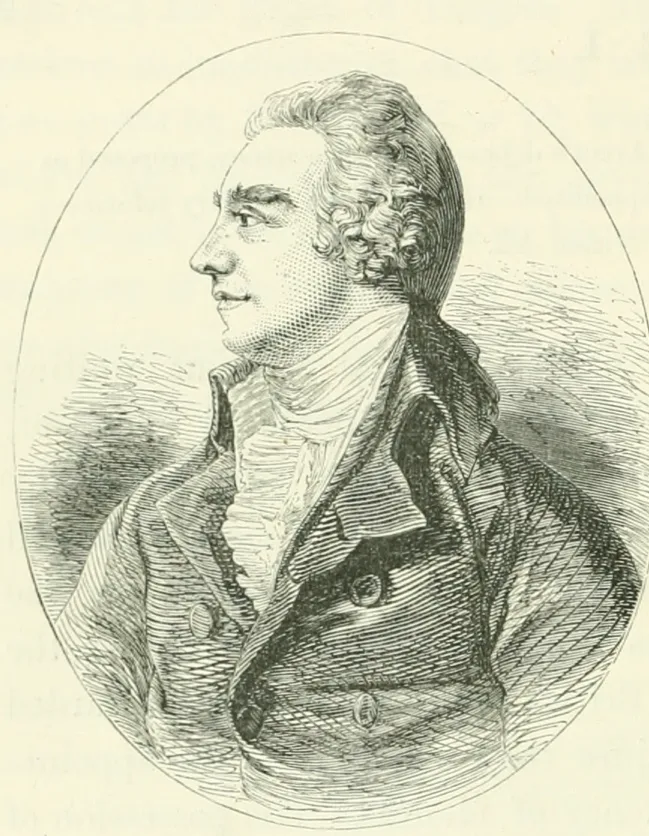
The directors, in acting upon this opinion, thought it necessary to soften the proceeding to the Madras council by adding, when they announced to them Mr. Macpherson’s restoration, that, “as his behaviour was disrespectful to the board, and in other particulars very reprehensible, we direct that you give him a severe reprimand, and acquaint him that a like conduct will meet with a severer punishment.” The directors could hardly have been serious in this part of the sentence, since they allowed him to remain in England till January, 1781, and then sent him out, not to Madras, but to Bengal, to supply the place rendered vacant in the supreme council by the resignation of Mr. Barwell. This brought him so near the chair that Mr. Hastings’ departure placed him in it, and thus, by a train of circumstances, an individual, over whose head a sentence of censure for conduct “very reprehensible” hung suspended, became Governor-general of India.
It is doubtful if any amount of administrative skill would have enabled Mr. Macpherson to surmount the obstacles arising from his early antecedents, and prove himself worthy of the honour which had been unexpectedly thrust upon him, and it was fortunate, both for him and the Company, that the short period during which he held the chair was one of comparative quiescence. He is far, however, from admitting that he had an easy task to perform. On the contrary, on the 4th of March, 1785, only a month after he had obtained his elevation, he declared in a letter to the directors—“The public distress was never so pressing as at this moment. The season of the heavy collections is over: the demands of Madras and Bombay are most pressing; and our arrears to the army are upwards of fifty lacs.” At a later period, when made aware of the appointment of a successor, and naturally desirous to set his own conduct in the most favourable light, he reminded the directors that he had become their governor-general “at a season of peculiar difficulty, when the close of a ruinous war, and the relaxed habits of their service, had left all their armies in arrear and their presidencies in disorder.” Some credit was given to Mr. Macpherson for financial ability, and for the exertions which he made to meet the pressure on the treasury, by enforcing economy and effecting reduction wherever it was practicable. Partly as a reward for this conduct, and partly also, it is presumed, for political services rendered at various times, he was created a baronet on the 10th of June, 1786. The directors also, when they appointed his successor, gave him an unanimous vote of thanks for his whole conduct as governor-general. It would seem, however, that in this vote they were somewhat premature, and that more careful inquiry would have thrown considerable doubts, both on the success and the purity of his administration. Promises of assistance, which he had unwarrantably made to the Mahrattas, placed his successor in a dilemma from which he found extreme difficulty in escaping, without serious offence either to them or to Tippoo, who, if such assistance had been given, would justly have complained of it as a gross violation of treaty; and Lord Cornwallis, writing confidentially to Mr. Dundas, does not hesitate to say, “I depend on your secrecy, and will not conceal from you that the late government (Sir John Macpherson’s) had no authority, and the grossest frauds were daily committed before their faces; their whole conduct, and all their pretensions to economy, except in the reduction of salaries, was a scene of delusion.”1 At a later period, when Sir John Macpherson was proposing to return to India, not seriously, but in the hope that the proposal might induce government to grant him a pension, Lord Cornwallis again wrote Mr. Dundas as follows (vol. i. p. 371): “That the former (Sir J. Macpherson) does not return to India, is indeed a fortunate event: but his being officially permitted to return, and his having been within a few days of embarking, has had an effect not easily to be removed. What must the people of this country, either Europeans or natives, imagine? They have seen that our measures have been as widely different as, I trust, they believe our dispositions and characters to be.” Again, he asks, “Why does Mr. Dundas let him return? Why does he not tell him, when he talks of grievances and pensions, that he may think himself well off that he is not impeached? —that he was guilty of a breach of an act of parliament in the offer which he made of aid to the Poonah government; and that he was guilty of basely degrading the national character by the quibbles and lies which he made use of to evade the performance of it;—that his government was a system of the dirtiest jobbing?” As Lord Cornwallis, at the time when he used this strong language, was personally offended at a rumour which Sir John Macpherson had circulated respecting him, perhaps some deduction ought to be made from this bitter censure, but his lordship never would have written in such terms without having ample proof that his charges were well founded, and that Sir John Macpherson, whose large stature and soft plausible manner had given him the surname of “the gentle giant,” was indeed what his antecedents lead us to expect—an unscrupulous intriguer and wholesale dealer in corruption.
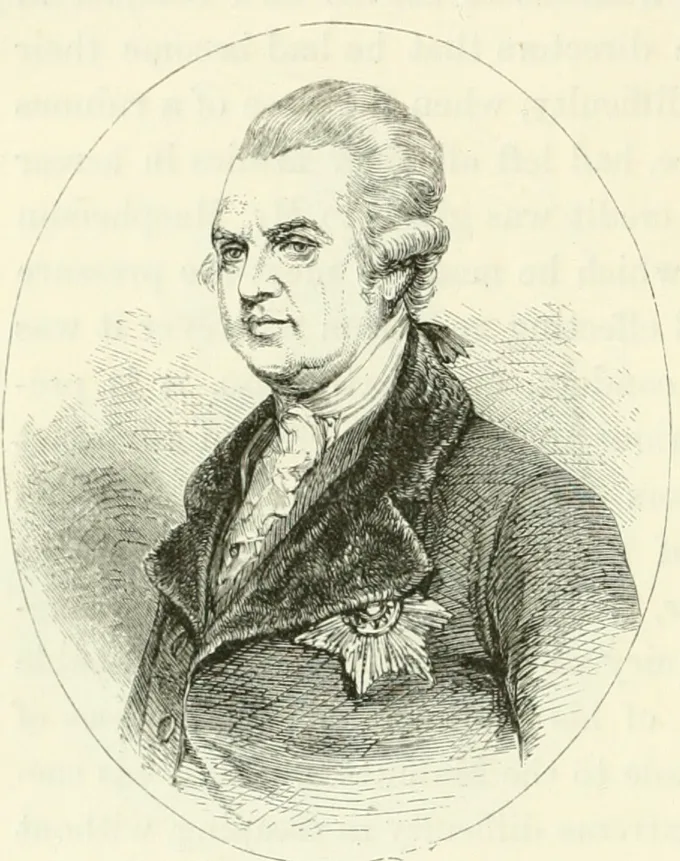
During Sir John Macpherson’s tenure of office, Lord Macartney paid a visit to Calcutta. He had been mainly instrumental in obtaining the assignment of the nabob’s revenues, and was convinced that the only effectual method of making these revenues available, both for the current expenses of government, and the liquidation of the debt due by the nabob to the Company, was to make that assignment permanent. This proposal was of course most obnoxious to the nabob, who insisted, with some show of reason, that, as the assignment had been originally made on the understanding that it was to exist only during the war, it was a breach of good faith to insist on continuing it, now that the war had ceased. In this view the nabob was strenuously supported by Paul Benfield and the other so-called creditors of the nabob, who left no means untried to prejudice both the supreme council and the court of directors against Lord Macartney’s plan. With the supreme council they were completely successful, and Mr. Hastings, now at open war with his lordship, had peremptorily enjoined him to make the re-assignment to the nabob without delay. The court of directors at first took an opposite view, but ultimately were induced, or rather perhaps compelled to change it, as the Board of Control was now in full operation, and had espoused the cause of Benfield and his coadjutors. Lord Macartney had braved the indignation of the supreme council, and in effect defied Mr. Hastings to do his worst by refusing to obey his orders. The same course could not be pursued with the directors, more especially as they were now understood only to express the sentiments of the government, and he therefore adopted the only alternative which could save his consistency by resigning. The resignation, however, was not a sudden thought. He had previously, on the ground of ill health, requested the appointment of a successor, and the same letter which ordered the restoration of the assignment, informed him that he was to be succeeded by Mr. Hollond, who, being already in the country, could enter on office at once. There was thus nothing to prevent Lord Macartney from carrying his resolution into immediate effect. Previous to the arrival of the final decision of the directors on the subject of the assignment, he had prepared for the worst. “Well apprised,” he says, “of the nabob’s extensive influence, and of the ability, industry, and vigilance of his agents, and observing a concurrence of many other circumstances, I was not without apprehensions, that before the government of Madras could have timely notice of the train, the assignment might be blown up at home, the sudden shock of which I knew must almost instantly overthrow the Company in the Carnatic. I therefore employed myself most assiduously in making preparations to mitigate the mischief; and by degrees collected and stored up all the money that it was possible to reserve with safety from other services and demands; so that, when the explosion burst upon us, I had provided an unexpected mass of little less than thirteen lacs of rupees (£130,000) to resist its first violence.” Whatever relief this might give, the future was still to be provided for, and therefore Lord Macartney, now relieved from the toils of office, agreed, at the request of his late colleagues, instead of sailing direct for England, to pay a visit to Calcutta, and endeavour, by a full and strong representation of the pernicious consequences of reinstating the nabob, to obtain the sanction of the supreme council to a postponement. Success could scarcely have been anticipated, since at the very head of the council sat a man whose sympathies must have been wholly enlisted in favour of the nabob, and who, after exposing himself to obloquy by acting as his agent and sitting in parliament as his nominee, was not now likely to turn his back upon him. There was still another resource. Hopes had been held out that the revenues of Bengal were about to yield a surplus by which the deficiencies of the other presidencies would be supplied, but the prognosticated funds were not forthcoming, and the supreme council, when solicited on the subject, could only point to their own necessities, and declare their inability to “give any extraordinary and continued aid to Fort St. George.”
While detained in Calcutta by illness, Lord Macartney received a flattering testimony to the value of his previous services, in a despatch from the directors appointing him governor-general. His health and other considerations induced him to decline the appointment, and, leaving Sir John Macpherson still in possession of the chair, he set sail for England. He did not then think that he had closed his Indian career. From the account of his biographer he appears not so much to have refused the appointment, as deferred acceptance of it till he should have had an opportunity of personally “submitting to his majesty’s ministers certain regulations, which he considered indispensable for the salvation of this part of the empire, and of laying before them those conditions on which only he felt himself able to fulfil the purposes of his appointment, with advantage to the public and reputation to himself.”1 When he arrived in England on the 9th of January, 1786, the appointment was still open, and he had conferences both with the directors and with ministers, by whom, while ostensibly disclaiming Indian patronage, the vacancy was truly to be supplied. His suggestions for the improvement of the administration in India were favourably received, and everything preparatory to his acceptance of the office seemed about to be arranged, when he intimated his expectation, that, instead of continuing only an Irish, he would be made a British peer. Mr. Dundas, who, as president of the Board of Control, had urged Lord Macartney’s appointment, and Mr. Pitt, who, on his suggestion, had concurred in it, in the face of considerable opposition from members of his administration and a strong party in the India House, felt hurt at this stipulation for honours, and without further communication with Lord Macartney, immediately conferred the office of governor-general on Lord Cornwallis.
The re-assignment of the revenues to the nabob was not the part of his affairs which had at this time occupied the attention of the directors and the Board of Control. The enormous claims of debt which Paul Benfield and others had reared against him were threatening to absorb all his revenues, and it therefore became necessary to make some final arrangement respecting them. Accordingly each of the three India bills brought into parliament by Mr. Dundas, Mr. Fox, and Mr. Pitt, contained a special clause on the subject. Mr. Dundas’s bill proposed to “take into consideration the present state of the affairs of the Nabob of Arcot, and inquire into and ascertain the origin, nature, and amount of his just debts.” Mr. Fox, in addition to a similar inquiry, proposed to strike at the root of the evil by enacting that in future it should be “unlawful for any servant, civil or military, of the Company to be engaged in the borrowing or lending of any money, or in any money transactions whatsoever, with any protected or other native prince,” and that the Nabob of Arcot, the Rajah of Tanjore, or any other protected native prince, should “not assign, mortgage, or pledge any land whatsoever, or the produce or revenue thereof, to any British subject whatsoever.” The clause in Mr. Pitt’s bill, the only one which became law, was as follows: “Whereas very large sums of money are claimed to be due to British subjects by the Nabob of Arcot, . . . . be it enacted that the court of directors shall, as soon as may be, take into consideration the origin and justice of the said demands; and that they shall give such orders to their presidencies and servants abroad for completing the investigation thereof, as the nature of the case shall require; and for establishing, in concert with the nabob, such fund for the discharge of those debts which shall appear to be justly due, as shall appear consistent with the rights of the Company, the security of the creditors, and the honour and dignity of the said nabob.”
In accordance with this enactment, the directors proceeded to “take into consideration the origin and justice” of these claims on the nabob, and “for completing the investigation,” prepared the draft of a despatch instructing the Madras government how to proceed. Having submitted this draft for approval to the Board of Control, they were astonished, on receiving it back, to find it so completely altered as to retain little of its original identity. In particular, the investigation contemplated by the legislature was entirely superseded, and it was declared in regard to two important classes of debts, described as “the loan of 1767 and the loan of 1777, commonly called the cavalry loan,” that their “origin and justice” was “clear and indisputable, agreeable to the true sense and spirit of the late act of parliament.” A third class of debts, described as the “consolidated debt of 1777,” was admitted to stand “upon a less favourable footing.” It had been contracted at a time when “an irreversible order of the directors” prohibiting their people “from having any dealings with the country governments in money matters” was “in full force and vigour;” it had been declared by the Madras council not to have been “in any respect whatever conducted under the auspices or protection of that government;” and in December, 1778, as soon as the consolidation of that debt became known to the directors, they had written as follows: “Your account of the nabob's private debts is very alarming; but from whatever cause or causes those debts have been contracted or increased, we hereby repeat our orders, that the sanction of the Company be on no account given to any kind of security for the payment or liquidation thereof (except by the express authority of the court of directors), on any account or pretence whatever.” The consolidated debt, accordingly, had received “no sanction or authority,” and the creditors moreover, when they made their alleged loans, were not only aware “how greatly the affairs of the nabob were at that time deranged,” but had taken “the most effectual means to postpone” the payment of his debt to the Company, “by procuring an assignment of such specific revenues for the discharge of their own debts as alone could have enabled” him to meet it. This debt, thus accumulated in direct violation of a subsisting order of the directors, and to the direct injury of the Company, had certainly no claim to their countenance, and ought, at all events, to have been subjected to a most rigid examination. The Board of Control arrived at a different conclusion, and using the directors as their mouth-piece, gave their decision in the following terms:—
“Under all these circumstances we should be warranted to refuse our aid or protection to the recovery of this loan; but when we consider the inexpediency of keeping the subject of the nabob's debts longer afloat than is absolutely necessary; when we consider how much the final conclusion of this business will tend to promote tranquillity, credit, and circulation of property in the Carnatic; and when we consider that the debtor concurs with the creditor in establishing the justice of those debts consolidated in 1777 into gross sums, for which bonds were given, liable to be transferred to persons different from the original creditors, and having no share or knowledge of the transactions in which the debts originated, and of course how little ground there is to expect any substantial good to result from an unlimited investigation into them, we have resolved so far to recognize the justice of those debts as to extend to them that protection which, upon more forcible grounds, we have seen cause to allow to the other two classes of debts.” The only distinction made between the debts was, that while the two former classes were to be admitted without question, complaints might be received against the third class “at the instance, either of the nabob himself, or of other creditors injured by their being so admitted, or by any other persons having a proper interest, or stating reasonable grounds of objection.”
In carrying out the above views the Board of Control classified the debts in the following manner:—1. The debt of 1767 to be made up to the end of 1784, with the current interest at ten per cent. 2. The cavalry loan to be made up to the same period, with the current interest at twelve per cent. 3. The debt consolidated in 1777 to be made up to the same period, with the current interest at twelve per cent. to November, 1781, and from thence, with the current interest at six per cent. Twelve lacs of pagodas (about £480,000) were to be received annually from the nabob, and applied to the liquidation of his debt in the following order:—1. To the growing interest on the cavalry loan at twelve per cent. 2. To the growing interest on the debt of 1777 at six per cent. The remainder was to be equally divided—one half given to settling the Company’s debt, and the other half to paying the growing interest at ten per cent. and towards the discharge of the principal of the debt of 1767. After the extinction of this debt a similar process was to be continued, the twelve lacs being applied, first, in paying the growing interest on the debt of 1777, and the remainder thereafter equally divided—one half to pay the current interest and principal of the cavalry loan, and the other half to discharge the Company’s debt. On the extinction of the cavalry loan, seven lacs were to be employed in extinguishing the Company’s debt, and five lacs in paying the growing interest and capital of 1777. On the extinction of the Company’s debt, the whole twelve lacs were to be applied to the debt of 1777 till the whole was discharged.
This complicated arrangement seemed to the Board “founded on justice and the relative circumstances of the different debts.” The directors thought differently, and proceeded to state objections to such of the amendments on their original draft as appeared to them “either insufficient, inexpedient, or unwarranted.” In thus objecting, they appear not to have felt sure of their ground, and hence, besides expressing “extreme concern” at a difference of opinion with the Board in this early exercise of their controlling power, employ the following apologetic terms: “In so novel an institution, it can scarce be thought extraordinary if the exact boundaries of our respective functions and duties should not at once, on either side, be precisely and familiarly understood, and we therefore confide in your justice and candour for believing that we have no wish to evade or frustrate the salutary purposes of your institution, as we on our part are thoroughly satisfied that you have no wish to encroach on the legal powers of the East India Company.” The directors were evidently under the impression that they still possessed some degree of independent power. The result of their remonstrance on this occasion must have gone far to open their eyes, and convince them that whenever the Board of Control chose to be peremptory they had no alternative but to obey.
In regard to the private debts of the nabob, and the application of the twelve lacs annually, the directors submitted “that at least the opportunity of questioning, within the limited time, the justice of any of the debts, ought to have been fully preserved,” and doubted “how far the express direction of the act to examine the nature and origin of the debts has been by the amended paragraphs complied with.” In respect to the mode of payment they use stronger language and say, “Our duty requires that we should state our strongest dissent. Our right to be paid the arrears of those expenses by which, almost to our ruin, we have preserved the country, and all the property connected with it, from falling a prey to a foreign conqueror, surely stands paramount to all claims for former debts upon the revenues of a country so preserved, even if the legislature had not expressly limited the assistance to be given to private creditors to be such as should be consistent with our own rights.” They conclude with declaring, “until our debt shall be discharged we can by no means consent to give up any part of the seven lacs to the private creditors; and we humbly apprehend that in this declaration we do not exceed the limits of the authority and rights vested in us.” The Board of Control condescended to return an answer, but in a style which evinced a full consciousness of the extent of their powers. After endeavouring to show that the debt of the nabob, if taken at three millions sterling, will, by the plan proposed, be discharged “in the course of the eleventh year,” they continued thus: “We cannot, therefore, be of opinion that there is the smallest ground for objecting to this arrangement as injurious to the interests of the Company, even if the measure were to be considered on the mere ground of expediency, and with a view only to the wisdom of re-establishing credit and circulation in a commercial establishment, without any consideration of those motives of attention to the feelings and honour of the nabob, of humanity to individuals, and of justice to persons in your service and living under your protection, which have actuated the legislature, and which afford not only justifiable but commendable grounds for your conduct.”
The directors after this rebuff were unable to carry their interference any further, but there was still another ordeal through which the resolution of the Board of Control was destined to pass. On the 28th of February, 1785, Mr. Fox brought the subject before parliament, by a motion “for papers relative to the direction for charging the Nabob of Arcot’s private debts to Europeans on the revenues of the Carnatic.” This motion was resisted by ministers, in a manner which showed that there was something behind the curtain which they were anxious to conceal. Mr. Burke drew the curtain aside, and in the celebrated speech from which we have more than once quoted, made it palpable, almost to demonstration, that the recognition of the debt without even the form of examination, was a shameless concession made to Paul Benfield, for the purpose of securing his parliamentary influence. After a damaging exposure of ministerial corruption, Mr. Burke sums up in the following terms:—“I have thus laid before you, I think with sufficient clearness, the connection of the ministers with Mr. Atkinson at the general election; I have laid open to you the connection of Atkinson with Benfield; I have shown Benfield’s employment of his wealth in creating a parliamentary interest to procure a ministerial protection; I have set before your eyes his large concern in the debt, his practices to hide that concern from the public eye, and the liberal protection which he has received from the minister. If this chain of circumstances do not lead you necessarily to conclude that the minister has paid to the avarice of Benfield the services done by Benfield’s connection to his ambition, I do not know anything, short of the confession of the party, that can persuade you of his guilt. Clandestine and collusive practice can only be traced by combination and comparison of circumstances. To reject such combination and comparison is to reject the only means of detecting fraud; it is indeed to give it a patent and free license to cheat with impunity.” It is rather singular that at the time of the debate, no reply to this speech was attempted. One reason assigned is, that from the little impression which it produced on the house, Mr. Pitt, after consulting with Mr. Grenville, considered a reply unnecessary. A more probable reason is, that a reply was deemed inexpedient. Ministers knew it was easier to find votes than arguments, and therefore hastened to close a discussion, which, the longer it was continued, only made the infamy of the transaction more apparent. How large the sums which fictitious creditors were enabled to extort under this corrupt arrangement with Benfield may be inferred from the fact that, under a commission which afterwards sat to adjudicate on other enormous debts alleged to have been contracted by the Nabob of Arcot, out of £30,400,000 claimed, only £2,687,000 was allowed.
Lord Cornwallis arrived at Calcutta in the beginning of September, 1786, and immediately assumed the two offices, conjoined for the first time in his person, of governor-general and commander-in-chief. Nearly four years before, when the Shelburne ministry was in power, the office of governor-general had been offered to him, and declined on grounds similar to those which afterwards induced Lord Macartney to defer his acceptance; and it was partly with a view to remove the objections of Lord Cornwallis, that Mr. Dundas introduced into his East India bill the clause empowering the governor-general to act in certain emergencies on his own responsibility, even in opposition to the majority of his council. In introducing this bill, Mr. Dundas had not only urged the recall of Mr. Hastings, but advocated the appointment of Lord Cornwallis, on whom, by way of contrast, he pronounced an eulogy more remarkable for plainness of speech than elegance. “Here,” he exclaimed, “there was no broken fortune to be mended! Here was no avarice to be gratified! Here was no beggarly mushroom kindred to be provided for—no crew of hungry followers gaping to be gorged!” An eulogy, in a much better spirit than this vulgar tirade, was pronounced by Mr. Fox, who, in bringing in his East India bill, referred to the above clause, and spoke of Lord Cornwallis in the following terms:—“A learned gentleman (Mr. Dundas) last year proposed to give the most extraordinary power to the governor-general of Bengal; he at the same time named the person who was to fill the office. The person was Earl Cornwallis, a person whom I name now only for the purpose of paying homage to his great character. The name of such a man might make parliament consent to the vesting of such powers in a governor-general; but certain I am that nothing but the great character of that noble lord, could ever induce the legislature to commit such powers to an individual at the distance of half the globe.” Mr. Pitt’s East India bill did not contain Mr. Dundas’s clause, and this may have been one reason why Mr. Dundas, when again in power, proposed that the appointment of governor-general should be offered, not to Lord Cornwallis, but to Lord Macartney. When, for reasons already explained, this appointment did not take effect, Lord Cornwallis was again applied to, and accepted, on being assured that the additional powers which he claimed, and the legal union of the offices of governor-general and commander-in-chief would be secured by a new application to parliament. Clauses to this effect were accordingly introduced into the bill, which was passed into act 26 Geo. III. c. 16, but had not received the royal assent when Lord Cornwallis sailed.
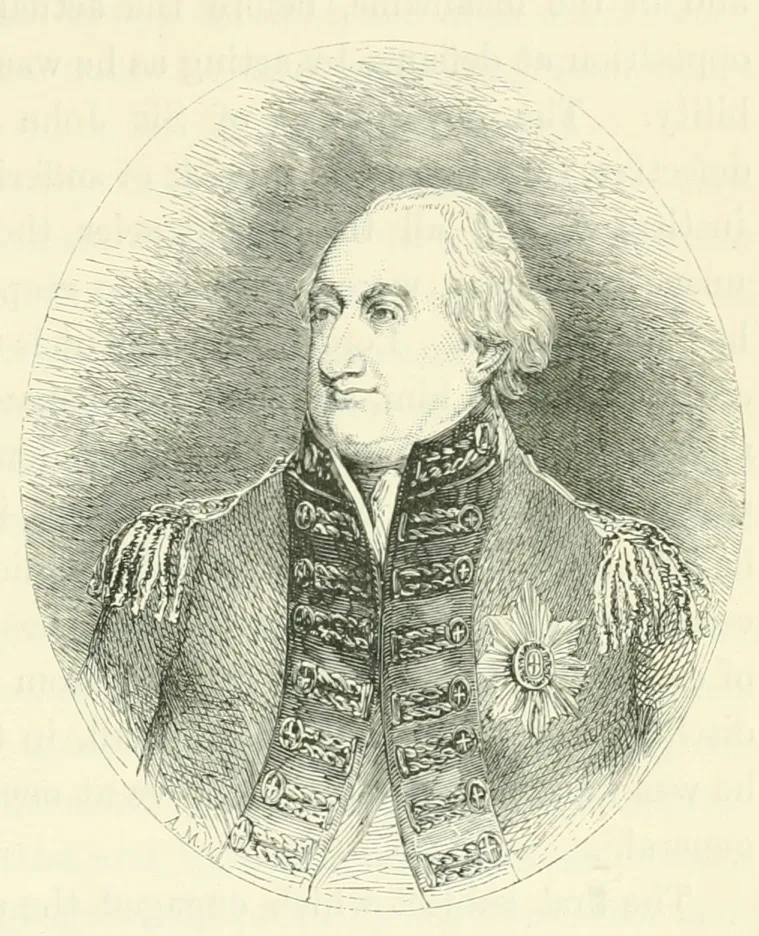
The new government undoubtedly commenced under favourable circumstances. The character of Lord Cornwallis, notwithstanding the disaster which had befallen him in America, stood justly high with all parties; at the head of the Board of Control, in which all the leading powers of the directors now centered, was his able and zealous friend, Henry Dundas; the absolute right of recall vested in the crown would be exercised the moment he intimated a wish to be rid of any member of his council who might threaten to be troublesome, and in the meantime, before the actual recall was pronounced, he could set opposition at defiance by acting as he was empowered to do on his own responsibility. The government of Sir John Macpherson had been so feeble and defective, that there was no risk of suffering by any comparison which might be instituted, and all the presidencies, though exhausted by an expensive and unsuccessful war, were beginning to reap the fruits of the general peace which had succeeded it. Lord Cornwallis, it is true, was entering on a field which was entirely new to him, and being in consequence obliged for a time at least to rely on the judgments of those whose long service had given them experience, was liable to be led through bad advice into serious error. On the other hand, he had nothing to unlearn, no old opinions to renounce, no entanglements to escape, and no interests to serve but those of the public. Thus disencumbered of everything that could divert him from the path of duty, or thwart him in the discharge of it, he could hardly fail, in the exercise of the talents and virtues he was known to possess, to prove at once a popular and an efficient governor-general.
The first subject which engaged the attention of Lord Cornwallis, after he assumed the government, was the treaty which Sir John Macpherson had made with the Mahrattas, and by which he had bound the Company to furnish them with a body of troops. This treaty had been concluded in the very teeth of the act of parliament, and was a palpable violation of the treaty made with Tippoo, since he was at that time actually engaged in hostilities with the Mahrattas, and could not but consider a supply of troops to them as equivalent to a declaration of war against himself. Within a fortnight after his arrival at Calcutta, Lord Cornwallis thus expressed his opinion in a letter to Mr. Dundas :—" You will see that we are got into a very awkward, foolish scrape, by offering assistance to the Mahrattas; how we shall get out of it with honour, God knows, but out of it we must get somehow, and give no troops."1 Accordingly, on the 27th September, he lodged a minute, in which, after exposing the illegality and injustice of the treaty, he adds, "It is unnecessary to examine the policy of a measure we are not at liberty to adopt; we cannot give the three battalions without going to war; we cannot go to war without offending the laws of our country. It is therefore high time to extricate ourselves from our present critical and dangerous situation, the continuance of which will not only give the most just grounds of offence to Tippoo, but will probably produce a quarrel with the Poonah ministers.” The course adopted was to take the opportunity of the change in the government, to intimate to the Mahrattas that “a strict adherence to subsisting treaties” would not allow the troops to be supplied, and soften the intimation by referring to this decision, as a proof that the government was determined in their future conduct to be guided by “a spirit of justice.” Nana Furnavese, and the other ministers at Poonah, on receiving the intimation, expressed much disappointment, and even made strong charges of duplicity, but the plain and honest course which had been taken proved also to be the most politic, and no open rupture was produced.
The pecuniary position of the Company next engaged attention. The view which Lord Cornwallis took of it was almost desponding. In a letter addressed to the Duke of York, who was then, it seems, engaged “in the pursuit of military knowledge under the great authorities of Potsdam and Brunswick,” he says, “The state of our finances is alarming, the difficulties are infinite; I feel that the whole may go to ruin in my hands, but I do not despair. I will not fail in my duty; I shall probably commit many errors, but I trust to the candid judgment of my king and country.” To the directors he wrote, “While our unavoidable expensive establishments, the interest due upon our debts, and the demands from the other presidencies, absorb the produce of the revenues, a considerable investment can only be made by fresh issues of paper. By this mode the evil, though protracted, is increased. It exhibits a delusive appearance of wealth which cannot be supported, and, by a temporary accommodation, entails permanent distresses.” His language would probably have been still more desponding, had he been at this time aware of the arrangement respecting the Nabob of Arcot’s debts. In ignorance of that arrangement, he had proposed to leave the creditors to recover their debts as they could, and written in a letter to Mr. Dundas, “I trust you will have approved of discouraging Campbell’s plan of taking that load on the shoulders of the Company, which I think are not able to bear this load of iniquity.” How much must he have been disappointed and disgusted on learning that not only had this load of iniquity been laid on the shoulders of the Company, but that in the doing of it another load of disgrace had been laid on the shoulders of the British government..
Shortly after the arrival of Lord Cornwallis, several of the native princes and other leading personages anxiously desired leave to visit Calcutta. The Nabob of Oude, whose difficulties had continued to increase, proposed to come in person, but was at last satisfied on being permitted to send his minister, Hyder Beg Khan. From the accounts which he had received, the governor-general seems to have had some fears of being overmatched by him. “This minister,” he says in a letter to the directors, “is described to me as a man of uncommon abilities, and he no doubt exercises at present the whole power of the vizier’s government.” Alluding to the same subject, in a letter to Mr. Dundas, he says, “I expect Hyder Beg in the course of next month, when I shall have a difficult game to play; but I think fairness, honesty, and firmness, will be a match for cunning, corruption, and timidity.” The interviews which took place in February, 1787, when the visit was made, appear to have justified this opinion. The account which Lord Cornwallis gives of these interviews, in a letter to Mr. Dundas, is worth quoting. “I have had several interviews with Hyder Beg Khan, the vizier’s minister. The total mismanagement of Oude, the confused manner of stating accounts between the vizier and the Company, and the constant practice on the one part of trumping-up charges, to extort every rupee that it was possible to get, and on the other, of making use of every art and evasion to defer payment, have rendered it very difficult to establish a fair open line between us.” “One great difficulty was to persuade the nabob’s minister that the promises made to him would be kept.” “Hyder Beg,” continues the letter, “constantly repeats a proverb of theirs—Whoever has been stung by a snake is frightened when he sees a rope. I have been greatly embarrassed to determine in my own mind what would be a fair bargain between the two governments, but it has been a much more arduous task to endeavour to make the minister believe what I said, or indeed understand the language I talked; I might almost as well have expected him to understand English.” Lord Cornwallis proposed as the basis of agreement, “that we should disclaim all manner of interference in the revenues, collections, commerce, and internal management of the country, and that, on the other hand, we should have the entire direction of political matters; and as no dependence can be placed on their own contemptible rabble, that it should be clearly admitted that they looked to us solely for defence, and were to enjoy the blessings of peace under the protection of the most formidable power in Hindoostan.” The ultimate arrangement was that the Company should keep two brigades in Oude, and that, instead of the seventy-four lacs with which the nabob was previously charged, he should in future pay only fifty lacs in full of all demands. The revenue of Oude at this time exceeded two millions sterling, and therefore fifty lacs, or a fourth of the whole, for complete protection was not a very unreasonable demand. The state of the country, however, must have made it doubtful if it would be paid, for at the very time when the arrangement was made, Lord Cornwallis drew the following picture of its government:—“From the best information I have been able to get concerning Oude, I hear that the vizier extorts every rupee he can from his ministers, to squander in debaucheries, cock-fighting, elephants, and horses; he is said to have a thousand of the latter in his stables, although he never uses them. The ministers, on their part, are fully as rapacious as their master; their object is to cheat him and plunder the country. They charge him seventy lacs for the maintenance of troops to enforce the collections, the greater part of which do not exist, and the money supposed to pay them goes into the pocket of Almas Ali Khan (a favourite eunuch) and Hyder Beg.”
Another visit was offered to the governor-general at Calcutta, by a guest of far higher pretensions than either Hyder Beg, or the nabob vizier his master. This was Jewan Bukt Behaudar Shah, the heir-apparent of Shah Alum, and consequently designated as the Shazada, or son of the king. His father, Shah Alum, had never been his own master since he left the protection of the Company, but had passed from hand to hand as a mere tool, according as each succeeding revolution gave some new chief the ascendency at Delhi. During one of these vicissitudes he fell into the power of Golam Kadir Khan (son of the Rohilla chief Zabita Khan, Nabob of Saharunpoor), who, having gained possession of Delhi in June, 1788, made Shah Alum prisoner, and barbarously with his own hand put out his eyes with the point of a dagger. With this exception, his person had been almost constantly in the possession of the Mahrattas, who endeavoured, by means of titles and grants which they compelled him to give, to extend their authority and dominion. Shortly after the death of Nujeef Khan, the Shazada quitted Delhi, and arrived at Lucknow in 1784, while Mr. Hastings was on his last visit there. He was favourably received by the nabob, who allowed him four lacs of rupees for his maintenance; and he appears to have succeeded in ingratiating himself with Mr. Hastings, who thus writes of him—“I saw him almost daily for six months, in which we were either participators of the same dues of hospitality, or he of mine. I found him gentle, lively, possessed of a high sense of honour, of a sound judgment, an uncommon quick penetration, and a well-cultivated understanding, with a spirit of resignation, and an equanimity of temper almost exceeding any within the reach of knowledge or recollection.” Such was the individual who was now engaged in a hopeless endeavour to revive the fortunes of his family, and in furtherance of this object was desirous of an interview with the new governor-general.
What encouragement the schemes of the Shazada received from Mr. Hastings has not been satisfactorily explained; but the intimate terms on which he had lived with him seems to have encouraged him to try whether he might be able to ingratiate himself equally with Lord Cornwallis. In the letter announcing his intended visit, he says—“As the particulars of the allegiance, and sincerity, and fidelity of the noble English gentlemen used to come to my hearing, I turned the reins of my desire toward Lucknow, in reliance upon the attachment and service of the English gentlemen; and my heart’s object was this, that, with the conjunction and advice of the noble English gentlemen, having provided for the settlement of the kingdom, and having planned the establishment of the throne of his majesty, I should obtain happiness from the title of heir-apparent which his majesty has bestowed upon me, and should, in return for this favour, perform some service which might be acceptable to his majesty, and might remain recorded in the annals of the world. Accordingly, after my arrival at Lucknow, discourses of designs and actions took place with Governor Hastings, but as his departure towards Europe was near, the event of this business did not come to light. As all matters depend on their season, the event of these happy objects was kept until your arrival. God be praised that the object of all my prayers to God is come to pass! Truly, from hearing the happy news of the arrival of you, worthy of favour, fresh delights and innumerable joys came to me, and it became fixed in my penetrating mind, that, by the assistance of God, the settlement of the affairs of his majesty’s throne will take place in the manner which I wish, through the wise plans of you, a peer gifted with sincerity.” He had therefore determined to make himself happy by an interview, and would very speedily arrive at Calcutta by the river. It was impossible for the governor-general to give any countenance to the objects which the Shazada was contemplating. He had formerly told him so, and could therefore now only request that his highness would remain at Benares, where, in consequence of orders which had been given to the officials, the attention and respect due to his exalted dignity would be paid with all assiduity.
Notwithstanding this refusal to receive the visit, it seemed probable that the Shazada would insist on paying it, and Lord Cornwallis had therefore made up his mind as to the manner in which he was to act. “I shall certainly,” he says, in a letter to the directors, “receive and treat him with much respect and the greatest kindness, but I have already prepared his mind not to expect many of the outward ceremonials usually paid in this country to the princes of the house of Timur, as they would not only be extremely irksome to me personally, but also in my opinion improper to be submitted to by the governor-general at the seat of your government. The whole political use that may be derived from this event is at present uncertain, but there may arise some future advantage if we can gain his affection and attachment; in the meantime you need not be afraid of my contracting any inconvenient engagements with him.” The course thus chalked out was evidently dictated both by good feeling and sound policy, and preferable to that pursued by Mr. Hastings when, on parting with the prince at Benares, he left him his guard of honour, for the purpose of keeping up a show of state after the reality had vanished. The Shazada, however, appears to have thought differently, for after learning that he would not only receive no countenance to his schemes, but be denied the gratification of exhibiting himself in full pomp as the heir-apparent of the Mogul, he gave up the idea of visiting Calcutta, and fixed his residence at Benares, where he was suddenly cut off by fever, in May, 1788. A year before his death, the interview which he had sought was obtained, as Lord Cornwallis was passing through Benares on a tour to the north. The answer to his urgent applications for troops, or money to assist in the re-establishment of his father’s throne, was a firm refusal, and at last all he asked was an asylum to himself and his family within the Company’s territories, in the event of his being obliged to flee from his enemies. This request was granted, and to make it more formal and secure, it was reduced to writing, and signed by the governor-general and council.
Among the instructions which Lord Cornwallis received from the directors before quitting England, one was to institute a strict inquiry into the mode in which the Company’s investment was provided, and into the gross abuses and frauds which were supposed to be practised, through a corrupt understanding between members of the board of trade and the contractors. The chief localities where these corrupt practices prevailed were Benares and Lucknow, the great marts for silk, and the extent to which they were carried may be inferred from the fact, that as soon as the contractors were dismissed and open competition was invited, the prices fell thirty per cent. So satisfied were the directors of the existence of collusion, that they ordered the prosecution of seven of their servants, who appeared to be most deeply implicated. Lord Cornwallis having, as he himself expressed it, undertaken the government with a full determination to suffer no private considerations to interfere with the discharge of what he conceived to be his public duty, did not hesitate to take all the steps that seemed necessary, both for suppressing malpractices and punishing those who were guilty of them. At the same time he was not blind to the fact, that much of the corruption was fostered by the injudicious custom of allowing inadequately paid officials to eke out sufficient salaries by underhand practices. On this subject he makes the following very startling statement: “I am sorry to say that I have every reason to believe, that at present almost all the collectors are, under the name of some relation or friend, deeply engaged in commerce, and by their influence as collectors and judges of adawlut, become the most dangerous enemies to the Company’s interest, and the greatest oppressors of the manufactures.” His remedy was to improve the position of the collectors, and thus raise them above the temptation of committing fraud, or leave them, if they committed it, without excuse. With the former salaries he held it “impossible that an honest man could acquire the most moderate competency.” He therefore made the necessary increase, and then announced his determination to make an example of every offender against the revenue regulations, and the prohibition to engage in trade. “I am clearly of opinion,” he remarks, “that in such a country as this, where the servants who hold the principal offices are surrounded with temptations, it will ever be found, that the only mode that can be successful to prevent peculation and other abuses, will be by annexing liberal allowances to those offices, and give gentlemen a prospect of acquiring a moderate fortune from the savings of their salaries.” This maxim, though sound, was not palatable to the directors, who disapproved of the additional salaries. Their conduct, in this respect, seemed to him as the result at once of false economy, and of a want of proper confidence in himself. Hence, in a letter to Mr. Dundas, dated August 26th, 1787, he animadverts upon it with some degree of indignation: “If the essence of the spirit of economy of the whole court of directors could be collected, I am sure it would fall very short of my earnest anxiety on that subject. But I never can or shall think that it is good economy to put men into places of the greatest confidence, where they have it in their power to make their fortune in a few months, without giving them adequate salaries.” And again, “I have saved, since I came, upon the salt, upon the various contracts, upon remittances, balances, and jobs of different kinds, ten times, I may say fifty times, the amount of the salaries that are retrenched. I am doing everything I can to reform the Company’s servants, to teach them to be more economical in their mode of living, and to look forward to a moderate competency, and I flatter myself I have not hitherto laboured in vain. But if all chance of saving any money, and returning to England without acting dishonestly, is removed, there will be an end of my reformation.”
The civil was not the only branch of the public service in which reform was required. The army was also in a most defective state. In a letter to the Duke of York, Lord Cornwallis wrote, on the 10th November, 1786:—“The East India Company’s artillery are very fine, but their European infantry, on whom the defence of their valuable possessions may one day depend, are in a most wretched state. The sepoys or native black troops are fine men, and would not in size disgrace the Prussian ranks; I have heard undeniable proofs of their courage and patience in bearing hunger and fatigue, but from the little I have hitherto seen of them, I have no favourable idea of their discipline.” One great cause of the inferiority of the Company’s European troops to those of the king’s army was the very nature and condition of the service. In the case of the officers “the mainspring,” continues his lordship, “has always been wanting; they have had no head to look up to; the promotion of rank has always gone by seniority; and the lucrative commands have been given to those who have had interest. Consequently there has been no spur to merit. The Company’s officers have no regiments or governments to look forward to; few constitutions can stand this climate many years. If they cannot save some money, they must go home without rank or pay, condemned to disease and beggary. Under these circumstances, the most rigid general must relax a little, and suffer practices that are in some degree repugnant to the nice feelings of a soldier.” Another main cause of inferiority in the Company’s army was the kind of materials from which recruits were obtained. Writing on this subject to the directors, he says, “The abuses or neglects in recruiting your Europeans appear to be scandalous, and if not corrected, may endanger the safety of your possessions in this quarter of the globe; the best men being picked from the whole of the recruits for the artillery, that corps both here and at Madras is in a good and serviceable state, but the other European regiments are in very bad condition, incomplete in numbers, and many of those numbers consisting of foreigners, sailors, invalids, or men under the proper size for military services.” Another singular class of recruits he refers to as “particularly embarrassing.” They were, as he describes them, “gentlemen (among whom there are even some half-pay king’s officers) who never meant to serve, and indeed are unfit for the duties of private soldiers, but who procured themselves to be enrolled as recruits, merely to get a passage on board the chartered ships to India.” On their arrival they escaped from service by providing a substitute, usually a sailor who took the first opportunity of deserting, or some man who would probably have enlisted of his own accord, and then remaining for the most part without employment, were in a short time in great want and distress. To get rid of future importations of such fictitious recruits, Lord Cornwallis begged the directors to notify as publicly as possible, that “if any such young men do come out, either by passing themselves for persons of the proper class for recruits, or by the collusion of others,” he would insist on their serving their time, or, in the event of discharge, on not only providing a substitute, but on giving security to return to Europe at their own expense by the first ships that sailed.
A serious obstacle to the efficiency of the Indian army had arisen in an early period of the Company’s history, from jealousies and disputes about precedence among the officers. Those of the king’s service assumed a superiority which was not only galling to the feelings of the Company’s officers, but detrimental to their interests, by interfering with and impeding the regular course of promotion. The remedy had been much discussed before Lord Cornwallis took his departure, and it had been all but determined to abolish all distinction between the two branches of the military service, and declare the whole European army in India to be king’s troops. Shortly after his arrival in India, Lord Cornwallis, who had previously concurred in this project, began to entertain serious doubts of its practicability or expediency, and did not venture further than to propose that the Company should be furnished with better powers of recruiting, and that the Company’s officers should rank with those of the king’s troops, according to seniority of commission. Both points, though conceded at a later period, were disapproved at home, especially by Mr. Dundas, who had suggested the plan of declaring all king’s troops, and continued strenuously to advocate it. In answer to Lord Cornwallis’ proposals he wrote, “I confess the plan I have suggested is a favourite child, and do not be surprised if I am loath to give it up.” “As to the first of these conditions” (better powers of recruiting), “I do not believe we could ever get the better of the grumbling of the army upon that idea, if it was proposed; and as to the second, I do not believe his majesty would ever be brought to yield up the notion of his commission having a pre-eminence over one flowing from a commercial body of his own subjects. I think my plan obviates all the difficulties.” Mr. Dundas was on this occasion too sanguine. His plan, instead of obviating all difficulties, raised several which could not be surmounted, and was destined, even after the king had formally approved of it and directed the consideration of it in the cabinet, to be thrown aside. The discussion of it, it may here be observed, has, in consequence of recent changes, been revived and still continues, as the highest authorities both civil and military have ranged themselves on opposite sides.
Before the design of declaring the whole India-European army king’s troops was abandoned, it had been resolved, preparatory to its completion, to send out four new regiments to India. When the resolution was first intimated to the directors they seemed rather pleased with it, because at the time a war with France was apprehended, and they did not see how they could otherwise provide effectually for the defence of their territories. The rumour of war having blown past, the directors changed their view, and not satisfied with objecting to the sending out of the regiments, declared their determination neither to receive them on board their ships nor allow their revenue to be employed in paying them. There was thus a direct collision between the directors and the Board of Control, and ministers, taking part of course with the Board, with which they are in fact identified, saw no better mode of explicating the matter than to bring in what they called a declaratory bill, for the purpose of explaining the powers vested in the Board by the act of 1784. This bill, which now ranks as 28 Geo. III. c. 8, was not passed without encountering an opposition which more than once threatened the existence of the ministry. It proceeds on the preamble that doubts had arisen whether the Board of Commissioners, under act 24 Geo. III. c. 25, were empowered to direct that the expense of troops deemed necessary for the security of the British territories in India shall be defrayed out of the revenues of these territories, “unless such troops are sent out at the express requisition of the East India Company,” and removes the doubts by enacting and declaring that the Board “was, and is by the said act, fully authorized and empowered to order and direct that all the expenses incurred, or to be hereafter incurred, for raising, transporting, and maintaining such forces as shall be sent to India for the security of the said territories and possessions, shall be paid, defrayed, and borne out of the revenues arising from the said territories and possessions; and that nothing in the said act contained extended, or extends, or shall be construed to extend, to restrain, or to have restrained the said commissioners from giving such orders or directions as aforesaid with respect to the expense of raising, transporting, and maintaining any forces which may be sent to India for the security of the said possessions, in addition to the forces now there.” So far the victory remained with the Board, but the directors could also boast of a victory, since the above power, instead of remaining absolute, is restricted by subsequent sections, which limit the number of king’s troops that might be paid by the commissioners as above to 8045, and of Company’s European troops to 12,200 men, and prohibits them from increasing salaries or bestowing gratuities beyond amounts proposed and specified in despatches from the directors. The account which Mr. Dundas gave Lord Cornwallis of the discussion on the above bill is amusing: “Although this contest at first began among the directors and proprietors of India stock, yet it was too tempting a bait not to be snatched at by higher powers. It became a complete opposition question, and brought forth all the secret foes and lukewarm friends of government. The Lord Marquis of Lansdowne rode one of the first horses, and it would have amused you in the House of Lords, to have seen him sitting between Lord Stormont and Lord Loughborough, and they all hugging and complimenting each other. It proved, however, all in vain; the bill was carried with a high hand in both Houses of Parliament, and the court of proprietors of India stock have had several meetings called by factious proprietors, but in place of gaining their end or being able to keep up any flame, the proprietors have, three to one, negatived all their motions, and proved to the world in the most unequivocal manner that their confidence is firm and unshaken in the present system of Indian government."1
While thus engaged in correcting abuses, and suggesting reforms in both the civil and military services, the attention of the governor-general was particularly directed to Guntoor, one of the Northern Circars. It was included in the original grant obtained by Clive from Shah Alum in 1765, but by the subsequent treaty made with Nizam Ali in 1768, it was agreed that the Company should defer taking actual possession during the lifetime of his brother Basalut Jung, to whom it had been granted in jaghire. Basalut Jung died in 1782, and the Company immediately claimed the reversion, but Nizam Ali, under various pretexts, eluded compliance. It was inconvenient at the time to use force, and the Company in the meantime so far compensated themselves by withholding payment of tribute for the other Circars. The value of Guntoor to Nizam Ali was greatly enhanced, because through it alone he could obtain access to the sea-coast. He had thus been enabled, when meditating war against the Company, to obtain supplies of military stores and a considerable body of French troops. To the Company the possession of Guntoor was desirable, both for the very reason which made Nizam Ali anxious to retain it, and because the want of it interrupted the communication between Madras and the other Circars. The directors had at length determined to gain possession of it at all hazards, and given Lord Cornwallis such specific instructions on the subject as scarcely left him an option. Shortly after his arrival, however, he became satisfied that the time was unseasonable. Nizam Ali was engaged in an unsuccessful war with Tippoo, and it would be thought ungenerous, under such circumstances, to subject him to any additional pressure. France, too, seemed to be preparing for war, and it could not be good policy to take a step which might throw him into their arms, and convert an ally into an inveterate and formidable foe. Lord Cornwallis therefore allowed the subject to remain in abeyance till June, 1788, when an European war being no longer apprehended, nor the interference of other native powers suspected, there was good ground to hope that the Nizam, however much he might be offended, would make a merit of necessity, by quietly yielding up a possession which he saw it would be impossible for him to retain. The result was as had been anticipated, and Captain (afterward Sir) John Kennaway, sent on a special mission to Hyderabad, found little difficulty in obtaining the peaceful and final cession of Guntoor.
Nizam Ali, in yielding Guntoor, was not without the hope of compensating himself in some other way. The claim to which he had been compelled to submit was founded on the treaty of 1768. That treaty must therefore, at least in the view of the Company, be still in force. If so, Was not he in like manner entitled to take shelter under it, and insist that its stipulations in his favour should also be fulfilled? No sooner had Nizam Ali started this idea, than he began to work it out in the manner which accorded best with his tortuous policy. He despatched two embassies, the one to Tippoo and the other to Lord Cornwallis. To Tippoo he pointed out that they two were now the only Mahometan princes of note in the Deccan, and that it therefore was at once their duty and their interest to combine against the infidels as common enemies. To give at once a religious character to the negotiation, and a sacred pledge of his earnest desire for permanent friendship and alliance, he sent the Sultan a splendid copy of the Koran. At the same time he endeavoured to arouse his suspicion and alarm his fears, by informing him of the apparent intention of the Company to enforce the stipulations of the treaty of 1768. He himself had already, under that treaty, been compelled to give up Guntoor, and Tippoo, a large portion of whose territories were to be given away under that treaty, might easily judge what he had to expect. These arguments, which accorded so well with the views Tippoo had long entertained, were not without effect, and he declared his readiness to return the sacred pledge, and enter into an offensive and defensive treaty, provided it were previously sanctioned by intermarriage between the families. To this condition Nizam Ali’s envoy could only answer that he had no orders; and therefore Kuttub-u-din and Ali Reza were sent back with the envoy to Hyderabad to make a formal proposal of affinity. Ali Reza, on being admitted to an interview, made known the object of his embassy by saying, “We are desirous of partaking of the sheker-bhat,” the dish of rice and sugar sent as the first preliminary ceremonial of marriage. Affinity with the family of Hyder Naick was more than the Nizam’s pride could brook. He disdained to give an answer, and the negotiation ceased.
The embassy to Lord Cornwallis was more successful. When the envoy Meer-Abd-ul-Kasim, better known as Meer Allum, referring to the recent cession of Guntoor, demanded the fulfilment of the other stipulations of the treaty of 1768, his lordship appears to have felt himself in a dilemma. He could not deny that the treaty was still in force, for he had just been acting upon it, and yet, how could he give effect to stipulations which stigmatized Hyder Ali as an usurper, and bound the Company to attempt the conquest of a large portion of the territories now belonging to Mysore. In 1769 a treaty had been made with Hyder, formally recognizing his right to the territories of which the treaty of 1768 would have deprived him, and in 1784 a treaty to the very same effect had been made with Tippoo. How, then, could it be maintained with any semblance of truth, that a treaty, on which the Company could not act without violating two treaties made subsequently to it, and declaring war against a state with which they were at peace, was still binding? It must be confessed, that in disentangling this difficulty Lord Cornwallis failed to display his usual sagacity and straightforwardness, and was betrayed into a series of gross inconsistencies and wretched subterfuges. Having good ground to suspect that Tippoo was meditating war, he was anxious to secure the Nizam as an ally. But a stringent clause in Mr. Pitt’s act of 1784, made it illegal to enter into any new treaty for this purpose, and therefore the singular device was fallen upon, of effecting the object by reviving an old treaty, and at the same time accompanying it with explanations and stipulations which entirely altered its character.
This device of reviving an old treaty so as to give it the effect of a new one, was carried out by means of a letter which Lord Cornwallis addressed to the Nizam, and which, while it purported to be explanatory of the treaty of 1768, was declared to be equally binding as a treaty. This letter, dated 1st July, 1789, after some preliminary explanations, declares it to be the intention of the governor-general, that the treaty of 1768 “be carried into full effect.” By the sixth article of the treaty, the Company was to furnish the Nizam with two battalions of sepoys and six pieces of cannon, managed by European artillerymen, “whenever the Company’s affairs would permit.” The letter declares the meaning of these words just quoted to be, that “the force engaged for by this article shall be granted whenever the Nizam shall apply for it; making only one exception, that it is not to be employed against any powers in alliance with the Company.” These powers are distinctly enumerated as the different “Mahratta chiefs, the Nabob of Arcot, the nabob vizier, the Rajahs of Tanjore and Travancore.” As there is no mention made of Tippoo, the only inference that can be drawn is, either that he was not considered to be one of the “powers in alliance with the Company,” or that, notwithstanding, the Nizam was at full liberty to employ the Company’s troops in attacking him. This is absurd enough, but still not so absurd as what follows. The treaty of 1768 contemplated the conquest of the Carnatic Balaghaut, which was then possessed by Hyder, and which, by subsequent treaties, was solemnly recognized as belonging to Mysore. The dewannee of this territory was to be granted to the Company, who engaged, in return, to pay the Nizam seven lacs annually, as the reserved revenue, and moreover volunteered, without being asked, to pay the Mahrattas their chout. In regard to this projected conquest, the letter goes on to state that “circumstances have totally prevented the execution of those articles of the treaty of 1768 which relate to the dewannee of the Carnatic Balaghaut; but should it hereafter happen that the Company, with his highness’ assistance, should obtain possession of the countries mentioned in those articles, they will strictly perform the stipulations in favour of his highness and the Mahrattas.” Thus, in order to conform to the letter of an act of parliament, enjoining a system of neutrality, Lord Cornwallis violated its spirit, by not only entering into what was, to all intents and purposes, a new treaty, but undertaking engagements which contemplated the dismemberment of the territories of an ally, and thereby broke faith with him. A proceeding so unjustifiable in itself, and so inconsistent with the course of policy which Lord Cornwallis was anxious to pursue, can only be palliated by referring to the circumstances. Tippoo, though nominally an ally, was acting in a manner which made it almost impossible to doubt that he would seize the first favourable opportunity of commencing hostilities. It was therefore absolutely necessary to prepare for the worst, and this could not well be done without forming alliances with other native powers. Unfortunately, the legislature, in their zeal for neutrality, had, by a stringent clause in the act of 1784, made this illegal, and Lord Cornwallis, finding his hands injudiciously tied up, had allowed himself to be betrayed into the above circuitous and not very honourable course of procedure. While apparently unconscious of the evasion he had practised, he furnished the true key to the explanation of it, when he wrote as follows:—“Some considerable advantages have no doubt been experienced by the system of neutrality which the legislature required of the governments in this country, but it has at the same time been attended with the unavoidable inconvenience of our being constantly exposed to the necessity of commencing a war, without having previously secured the assistance of efficient allies.” When this observation was made, Tippoo’s conduct had already furnished what his lordship justly called “a case in point.”