At the time of the establishment of the East India Company (1600) and for the next few years, England was at war with the united kingdoms of Spain and Portugal; and it was largely for this reason that the fleets of the First and Second Voyages made no attempt to visit the coasts of India itself, where the Portuguese were known to be in strong force, but went instead to the ports of Java, Sumatra, and the Far East. By the time, however, that a Third Voyage was under preparation, hostilities had been terminated by the Treaty of London (August 1604), and there was some hope that the Portuguese would not offer active opposition to the extension of English trade to the realm of the Great Mogul. Not that the negotiations preceding the treaty had afforded much ground for confidence in this respect. The Spanish commissioners had, in fact, pressed hard for a recognition of the illegality of English trade in the Indies, both East and West; but the utmost that the English negotiators would offer was that commerce with places actually occupied by King Philip’s subjects should be forbidden, provided that no attempt were made to exclude the English from trading with independent countries. This proposal proving unacceptable, matters were left as before, the whole subject being ignored in the treaty.
In deciding to put to the proof the intentions of the Portuguese, the ‘Committees’ of the East India Company were largely influenced by the consideration that the markets of the Far East afforded little opening for English goods, which might, however, find ready sale in India itself or at an Arabian port frequented by Indian traders. The latter seemed the safer alternative, as offering less opportunity or justification for Portuguese interference. When, therefore, the instructions for the Third Voyage1 were drafted, in March 1607, it was laid down that the fleet should make in the first instance for the island of Sokotra, to glean information and obtain the services of a pilot. Then, if the season permitted, a visit was to be paid to Aden, to see whether trade could be opened up there and a factory established. If a sufficient cargo could be obtained, the Hector was to be sent home direct; while the other two vessels were to proceed to Bantam, calling, if time permitted, on the coast of Gujarāt to inquire into the possibility of ‘a mayntenance of a trade in those parts heereafter in saffetie from the daunger of the Portingalls or other enymies, endevouring alsoe to learne whether the Kinge of Cambaya or Suratt or any of his havens be in subjection to the Portugalls, and what havens of his are not’. Should it prove, however, that the monsoon would not permit of the fleet going to Aden, all three ships were to repair to the Gujarāt coast; there, if such a course appeared safe, the Hector and the Consent were to be left to open up trade, for which purpose a letter was provided from King James to the Great Mogul, soliciting the grant of ‘such libertie of traffique and priviledges as shall be resonable both for their securitie and proffitt’. In the event of a favourable reception, one ship was to remain at Surat to lade a cargo for England, while the other was to proceed to Aden to carry out the original plan. In any case, the Dragon, the flagship of the ‘General’ or commander of the fleet, William Keeling, was to go on to Bantam as soon as possible.
The ‘Lieutenant-General’ of the fleet and captain of the Hector (in which vessel, by the way, Mildenhall had voyaged to the Levant in 1599) was William Hawkins, whose narrative we are now considering. Of his previous history we know but two facts—first, that he had been in the West Indies, and secondly, that he had spent some time in the Levant and was well acquainted with Turkish. The first of these two facts may have been Mr. Noel Sainsbury’s reason for suggesting (in the index to his Calendar of State Papers, East Indies, 1513–1616) the possibility of his identity with the William Hawkins who was a nephew of the famous Sir John Hawkins and acted as second in command in Fenton’s abortive expedition of 1582–3—a conjecture adopted as a certainty by Sir Clements Markham in his work on The Hawkins’ Voyages. In reality (as noted by Sir John Laughton in the Dictionary of National Biography, s.n.), what little evidence exists points rather the other way; and the only fact in his family history of which we can be sure is that he had a brother Charles. Possibly the general impression that Hawkins was a sailor by profession—‘a bluff sea-captain’, as one modern writer calls him—accounts for the ready acceptance of this theory. Such, of course, was not the case; the position of commander of a vessel in those days did not necessarily imply an expert knowledge of navigation—that was the business of the master—and no argument can be based thereon. In all probability Hawkins had been a Levant merchant, like so many of the East India Company’s servants at this time. Evidently it was his acquaintance with the Turkish language and his experience of Eastern ways that procured him his employment in the present expedition, for he was expressly designated as the person who was to deliver the royal letters to the Governor of Aden or (if available, for he might be going home direct from Aden with his ship) to the Great Mogul,1 and to take charge of the negotiations in either case. In order that he might appear with becoming splendour he was furnished with scarlet apparel, his cloak being lined with taffeta and embroidered with silver lace ; while suitable presents of plate and broadcloth to the value of £133 were provided, with a stipulation that anything received in return was to be considered the property of the Company.
The vessels started on their voyage early in March 1607.2 The Consent quickly lost company and never rejoined. The other two met with baffling winds near the equator and were forced to seek supplies at Sierra Leone, with the result that they did not reach Table Bay until the middle of December. Their next port of call was St. Augustine's Bay (Madagascar), whence they proceeded to Sokotra, arriving there in April 1608, more than a year from the commencement of the voyage. An attempt to get to Aden was foiled by contrary winds, and it was then decided that the Dragon should proceed direct to Bantam, while the Hector (with a pinnace which had been put together at Sokotra) should make the venture to Surat. Keeling sailed accordingly on June 24, and Hawkins departed on August 4. His vessel—the first to display the English flag on the coast of India—anchored at the entrance to the Tāpti River on August 24.
Surat, situated on the left bank of that river, about 14 miles from its mouth, was now one of the chief ports of India, and the centre of trade with the Red Sea. The harbour of its more northerly rival, Cambay, was fast silting up, and sea-going ships of any size could no longer lade there, but had to embark their goods from lighters at Gogha, on the opposite side of the Gulf of Cambay. Surat possessed the further advantage that vessels frequenting it were spared the voyage up that dangerous gulf, which was full of sandbanks; but, on the other hand, the only roadstead available for ships of any size was the exposed anchorage outside the bar at the mouth of the river, and this was safe merely during the period of fair weather. For customs purposes it was under the control of a certain Mukarrab Khān, who was also in charge of the port of Cambay—the customs of Gujarāt going thus directly into the royal treasury. This individual was a great favourite with the reigning Emperor Jahāngīr (the son of Akbar, whom he had succeeded in 1605), having won his regard by his skill in surgery and by his usefulness in the field sports to which that monarch was so much addicted. This esteem Mukarrab Khān took care to maintain by seeking out and presenting curiosities of all sorts, and it was doubtless for such purposes that he had obtained charge of the Gujarāt ports, where the trade carried on with the Portuguese gave him many opportunities of acquiring rarities of every description. In these circumstances the arrival of a ship belonging to an unfamiliar European nation was naturally of great interest to him, and he quickly dispatched his brother to Surat to examine the cargo, himself following a little later. In the meantime Hawkins prepared for the further voyage of the Hector by buying goods suitable for Bantam, much to the annoyance of the Surat merchants trading to those parts, who feared the competition of the new-comers. Hawkins himself had decided to remain behind and proceed to Agra with King James's letters; so he handed over the command of the ship to Anthony Marlow (one of the merchants who had come with him) and sent him down the river with the goods in two boats, manned by about thirty men. On their way they were attacked by some Portuguese frigates1 and many of their number, with all the goods, were captured. Hawkins at once demanded their restitution, but was answered only with insults and a declaration that the Indian seas belonged exclusively to Portugal. The captives were sent to Goa and thence to Lisbon; while the merchandise was confiscated. On October 5 the Hector departed for Bantam, leaving Hawkins with only William Finch and two English servants.
Two days earlier Mukarrab Khān had reached Surat. He was at first extremely gracious to Hawkins; but once he had got into his possession all the goods he specially coveted, his behaviour changed. He dared not prevent the Englishman from going to Agra, since the latter claimed (without any authorization) to be an ambassador and undoubtedly had royal letters to deliver to the Emperor; but he refused to pay for the goods he had bought (except at his own price) and, according to Hawkins, at the instigation of a Jesuit he plotted to have him murdered on the way. All the time of Hawkins's stay in Surat he was troubled by the threats and intrigues of the Portuguese, who, as he asserts, made several attempts to assassinate him.
However, on February 1, 1609, Hawkins got safely away from Surat, leaving Finch in charge of the remaining stock of merchandise; and on April 16 he reached Agra. He had meant to keep his arrival secret for a while; but the news soon spread that an ambassador from England was in the city, and Jahāngīr, who perhaps remembered the scene in his father's Court a few years earlier, when Mildenhall promised so confidently that his sovereign would dispatch an envoy with rich presents, was all eagerness to see the new-comer; and Hawkins was accordingly hurried into his presence. He had nothing but broadcloth to offer by way of gift, for Mukarrab Khān had taken possession of the articles sent out for that purpose; but notwithstanding this, he had an excellent reception from the Emperor, who, finding that the Englishman could speak Turkish, held frequent conversations with him about the countries of the West. So pleased was Jahāngīr with his visitor that he pressed him to remain as a resident ambassador, promising in that case to permit English trade with his ports on favourable terms. To this Hawkins readily agreed; whereupon he was made captain of four hundred horse, with a handsome allowance, was married to an Armenian maiden, and took his place among the grandees of the court. According to the Jesuits, he now assumed the garb of a Muhammadan noble; and Jourdain adds that 'in his howse he used altogether the custome of the Moores or Mahometans, both in his meate and drinke and other customes, and would seeme to bee discontent if all men did not the like'.
Meanwhile, his enemies had not been idle. The Jesuits at court did their best to disgrace him; while the Portuguese authorities at Goa stirred up Mukarrab Khān and other persons of influence in Gujarāt to represent the serious injury which the trade of that province would suffer if the English were allowed to gain a footing in India. Naturally, many of the courtiers, envying the favour with which Hawkins was regarded by the Emperor, joined willingly in these attempts to shake his position; and his hopes were beginning to decline when, at the end of October 1609, he was apprised, by letters from Finch, that an English ship, the Ascension, had reached Indian waters and was daily expected at Surat. This was excellent news, for, as Hawkins at once guessed, the vessel was bringing a fresh supply of presents for the Great Mogul.
He hastened to Court with the intelligence, begging that a farmān (order) might be granted for the establishment of a factory at Surat, and that he might be allowed to carry this down himself. The latter request was refused; but the farmān was at once made out and dispatched to Surat. Before it could arrive, however, tidings reached Agra that the Ascension had struck a sandbank and had become a wreck, and that her crew had landed in their boats at Gandevi, proceeding thence to Surat.1 Alarmed at the advent of so many Englishmen, the local authorities had insisted on their taking up their quarters in a village outside the city, where their conduct was anything but creditable to their nation. Hawkins appears to have represented to the Emperor that this exclusion was a grievance; whereupon another farmān was issued, directing that the Englishmen should be well treated and that assistance should be given towards recovering the cargo of the wrecked vessel. Evidently Jahāngīr was hoping that the presents he had been led to expect might still be forthcoming; in this, however, he was disappointed, and the influence of Hawkins commenced to diminish in consequence.
Early in December a number of the survivors from the Ascension arrived at Agra and were presented to the Emperor by Hawkins. Their disorderly behaviour lent colour to the representations of the Portuguese as to the undesirability of admitting such a nation to the Gujarāt ports; and it is clear that the ‘ambassador’s’ position was not improved by their advent, though he was still treated with respect and consideration. Covert, who left Agra in January 1610, says that Hawkins was then ‘in great credit with the King, being allowed one hundred ruckees [rupees] a day, which is ten pound sterling, and is intituled by the name of a Can [Khān], which is a knight, and keepeth company with the greatest noblemen belonging to the King; and he seemeth very willing to doe his country good’.
Towards the end of March 1610 Mukarrab Khān arrived from Gujarāt, bringing a large array of presents for the Emperor, including a number of European articles, among which Hawkins recognized some of his own goods. According to the text, Mukarrab Khān had been recalled in consequence of complaints made against his administration, and his goods had been seized by Jahāngīr’s orders; but there is no hint of this in the Emperor’s own memoirs.2 Soon after, however, Mukarrab Khān did fall into disgrace for a time, owing to a serious accusation brought against him; and Hawkins felt safe in pressing him to pay what was still due for the broadcloth he had bought. The account in the text may be compared with that given by Jourdain, who manifestly thought the attitude of Hawkins unwise. According to him Mukarrab Khān was willing to pay the greater part of the debt, but contended for the remission of the rest, on the ground that the original price was too high; Hawkins, however, demanded the full amount and threatened to complain to the Emperor. Khwāja Abūl Hasan, ‘the Kings chiefe Vizir,’ endeavoured to persuade the Englishman to accept the money offered, but in vain. The complaint was duly made, and Jahāngīr angrily ordered Abūl Hasan to see the debt discharged; whereupon the latter paid Hawkins the amount Mukarrab Khān had previously tendered, and added threats which effectually deterred him from applying again to the Emperor; so by his obstinacy he had gained nothing but the ill-will of Abūl Hasan, who took care to make him feel its effect by docking the pay due to him from the royal treasury.
The prospects of the English were now far from bright. A rich present arrived from Goa accompanied by a letter complaining that another European nation should be allowed to endanger the friendship that had so long existed between Portugal and the Mogul; while the effect of this was enhanced by the declaration of certain Surat merchants (then at court) that any encouragement of the English would mean the ruin of the trade of Gujarāt, owing to the reprisals threatened by the Portuguese. Moreover, Jahāngīr had long entertained the idea of sending Mukarrab Khān to Goa, and his actual departure on this errand had only been deferred until it should be known that the long-expected Viceroy had arrived from Portugal and would welcome the presence of such an emissary. The letter now received settled both points, and mentioned also that a merchant at Goa had for sale a particularly fine ruby, a model of which was sent. The Emperor was of course eager to acquire this gem, and accordingly Mukarrab Khān, now restored to favour, was ordered to proceed on his mission. He represented, however, that it was necessary that he should be able to assure the Viceroy that the English would be definitely excluded from trade in India; and this promise Jahāngīr at once gave.
Hawkins waited until the envoy was well on his way, and then applied afresh to the Emperor, with the result that the latter changed his mind and declared that the English should be freely admitted; but on hearing of this, Mukarrab Khān wrote that it would be useless in that case for him to proceed to Goa, and thereupon the promised farmān was withheld, in spite of all the entreaties of Hawkins. Another mortification for the Englishman was his exclusion from the place of honour he had hitherto enjoyed at court. This he ascribes to the malice of Abūl Hasan. The latter, however, would not have dared to take such a step without the Emperor’s sanction, and the real reason was probably that given by Jourdain, which is as follows. From time to time Jahāngīr made attempts to abstain from his usual indulgence in strong drink, and in one of these fits of temperance he ordered that none of his courtiers should come into his presence smelling of liquor. Hawkins, who had a weakness in that direction, offended against this regulation, and in consequence he was one day denounced in the presence of the court ; ‘ whereat the Kinge pauzed a little space and, consideringe that he was a stranger, he bid him goe to his howse, and when hee came next, he should not drinke. Soe, beeing disgraced in publique, he could not be suffred to come into his accustomed place neere the Kinge ; which was the cause that he went not soe often to courte ’ (Journal of John Jourdain, p. 156). Evidently Jahāngīr was by this time tired of his troublesome visitor, and an appeal from Hawkins ‘ either to establish me as formerly or give me leave to depart ’, produced only an immediate order for his passports to be made ready. He then applied for an answer to the letter he had brought from King James, but this was contemptuously refused.
The few Englishmen remaining in India now began to make plans for their departure. Finch, who had joined Hawkins early in 1610 but was now at Lahore, decided to go home overland. Jourdain, who had reached Agra in February 1611, left again towards the end of July for the coast, accompanied by three other Englishmen. At their farewell audience they presented Jahāngīr with ‘ a peece of gould of our Kings quoyne, which he looked earnestlie upon and putt itt in his pockett ’ (Jourdain, p. 166).1 Hawkins himself was in a difficulty, as he had his wife to consider, whose friends objected strongly to her quitting India. He decided to apply to the Jesuits (whom he had so persistently reviled) and to beg them to procure a pass from the Viceroy to enable him to proceed by way of Cambay to Goa (to which place his wife’s friends would allow her to accompany him), hoping then to obtain a passage to Lisbon. This the Fathers willingly agreed to effect ; and so he continued his preparations for departure.
However, the end was not yet. In the early summer of 1611 Khwāja Abūl Hasan was sent to the Deccan, and Ghiyās Beg, father of the celebrated Nūr Jahān (whom Jahāngīr had just espoused), was made Wazīr in his place. His son, known later as Āsaf Khān, was also in great favour; and as he was on very friendly terms with Hawkins, the envoy began to build fresh hopes upon this change of ministers, particularly as he had learned that an English fleet, under Sir Henry Middleton, was on its way to the Gujarāt coast. These vessels reached the bar of Surat on September 26, and as soon as the news arrived at court, Hawkins presented himself before Jahāngīr, with a handsome ruby ring by way of offering, and once more requested a farmān for the establishment of English trade at Surat. The Emperor, probably in expectation of the curiosities likely to be brought by the ships, at once ordered the desired document to be drawn up; but here one of his chief favourites interposed, representing that this was in flat contradiction to the promises made to the Portuguese and would entail ‘the utter overthrow’ of the trade of Gujarāt. Thereupon Jahāngīr retracted his concession, at the same time assuring Hawkins that if he would remain in India, he should receive in full the allowance previously assigned to him. The Englishman, however, replied with dignity that he could not remain if his fellow-countrymen were refused the liberty of commerce which had been promised to them; and, after another ineffectual attempt to procure an answer to the letter he had brought, he quitted Agra early in November 1611.
He and his wife got safely to Cambay; and from thence, in the following January, managed to reach Middleton’s fleet, bringing with them goods to the value of about £1,800. Having been finally refused by Mukarrab Khān, in view of the menaces of the Portuguese, permission to establish a factory at Surat, the English departed on February 11, 1612, for the Red Sea, where Middleton found Captain Saris with a fresh fleet from England, including Hawkins’s old ship the Hector. The Indian vessels trading to Mokha and Aden were now held up and forced to exchange their goods for English commodities, and finally those belonging to Diu and Surat were required to pay a heavy ransom, as a punishment for the action of the Gujarāt officials in excluding the English at the dictation of the Portuguese. These measures had a great effect in India, showing as they did that it was as dangerous to injure the one nation as to defy the other; and when, a little later, Best and Downton demonstrated that their countrymen were as powerful at sea as the Portuguese, the Gujarāt seaports were duly opened to English trade.
Having finished his business in the Red Sea, Middleton departed in August 1612 for Sumatra and Java. Hawkins and his household were on board the Trade's Increase, which, after running aground near Tiku (in Sumatra), reached Bantam four days before Christmas. There they found the Hector, the Solomon, and the Thomas, all preparing to start for England. Hawkins and his wife embarked on the lastnamed, and the vessels sailed in January 1613. The Hector and Thomas reached the Cape of Good Hope in April, and after a month's respite the voyage was resumed on the 21st of May. Next day the two ships lost company, and of the rest of the voyage we know but little. Sickness broke out on board the Thomas, with the result that most of the crew died; while at one time the vessel was in danger of being plundered by 'certain Newfoundland men'—probably rough traders tempted by the sight of a richly laden ship weakly manned. Fortunately, this danger was averted by the appearance of the Pearl, an interloping vessel homeward bound from the East. Her captain not only rescued the Thomas from the danger that threatened her, but also supplied her with much needed provisions. With this assistance she staggered home, arriving some time in the autumn of 1613; but Hawkins did not see his native land, for it was his fate to 'dye on the Irish shoare in his returne homewards' (Purchas His Pilgrimage, p. 521). When, and exactly where, this happened we are not told.
His widow came on to London in the Thomas. Besides her claim to her late husband's property, she was reputed to have many valuable jewels; and these considerations probably had a share in leading to her second marriage, early in 1614, to Gabriel Towerson, who had been captain of the Hector in the recent voyage. There was some haggling with the East India Company over the settlement of Hawkins's accounts. The 'Committees' who examined these reported that they included heavy charges for housekeeping, presents, 'goeinge to the campe with 60 horse,' and so on; and that, after allowing his full salary of £200 a year up to the day of his death, with £300 for the expense of bringing his household down to the coast, there still remained a balance due from his estate of £600. However, the Company, considering that the widow was 'a straunger', and that liberal treatment of her might have a good effect in India, agreed to forgo all claims; while in addition they presented her with a wedding gift of 200 jacobuses (about £240) as a 'token of there love'. In 1617 Mr. and Mrs. Towerson obtained permission from the Company to proceed to India in a private capacity, hoping to improve their fortunes by the aid of her relatives. From the journal of Sir Thomas Roe (who was much vexed by their vagaries) we learn that these hopes were disappointed. Towerson himself returned to England with the ambassador in 1619, leaving his wife with her friends at Agra, where, a couple of years later, we find her pestering the Company's factors for maintenance. Her second husband had evidently no intention of rejoining her, for in 1620 he obtained employment from the Company as a principal factor for the Moluccas. Three years later, while holding this post, he was put to death by the Dutch in what is termed 'the Massacre of Amboyna'.
The narrative here reprinted from Purchas His Pilgrimes (part i, book iii, chap. 7) represents Hawkins's own report to the East India Company. The reverend gentleman tells us, in his companion work the Pilgrimage (p. 520), that the traveller's 'booke or large journall, written by himselfe, was communicated to me by the Right Worshipfull Sir Thomas Smith' (the Governor of the Company); and elsewhere he describes it as 'written at sea-leasure, very voluminous, in a hundred sheets of paper'. This account Purchas edited freely, omitting, as he frankly tells us, 'many advices of the authour touching forts, Indian factories, &c.,' which he regarded 'as not so fitting every eye'. Unfortunately, the manuscript is no longer extant, and we are unable therefore to assess the value of what was thus excised.
Hawkins's story should be read in conjunction with the narrative of William Finch, which supplements it in many ways. It is a characteristic production and gives a vivid idea of the writer—enterprising and resourceful, but somewhat arrogant and blustering. Upon his contemporaries he made an impression not altogether favourable. Finch quarrelled with him; Jourdain, as we have seen, gives rather a hostile account of his behaviour, and declares that 'his promises weare of little force, for he was very fickle in his resolucion, as alsoe in his religion' (Journal, p. 162); and Roe, though he did not know him personally, wrote of him: 'For Hawkings, I fynd him a vayne foole' (British Museum, Addl. MSS., no. 6115, f. 148). But, at all events, we owe to him a most valuable account of the Court of the Emperor Jahāngīr, second only to that given by Roe himself; while his picturesque account of his adventures has an interest which is all its own.
At my arrivall unto the bar of Surat, being the foure and twentieth of August, 1608, I presently sent unto Surat Francis Buck, merchant, with two others, to make knowne unto the Governour1 that the King of England had sent me as his embassadour unto his king, with his letter and present. I received the Governours answere, both by them and three of his servants sent me from Surat, that he and what the countrey affoorded was at my command, and that I should be very welcome if I would vouchsafe to come on shore. I went, accompanied with my merchants and others, in the best manner I could, befitting for the honour of my king and country. At my comming on shore, after their barbarous manner I was kindly received, and multitudes of people following me, all desirous to see a new come people, much nominated but never came in their parts. As I was neere the Governors house, word was brought me that he was not well ; but I thinke rather drunke with affion [Hind. afiyun, opium] or opion, being an aged man. So I went unto the Chiefe Customer,1 which was the onely man that seafaring causes belonged unto (for the government of Surat belonged unto two great noblemen, the one being Viceroy of Decan, named Chanchana,2 the other Viceroy of Cambaya and Surat, named Mocreb-chan,3 but in Surat hee had no command, save onely over the Kings customes), who was the onely man I was to deale withall. After many complements done with this Chiefe Customer, I told him that my comming was to establish and settle a factory in Surat, and that I had a letter for his king from His Majesty of England tending to the same purpose, who is desirous to have league and amitie with his king, in that kind that his subjects might freely goe and come, sell and buy, as the custome of all nations is ; and that my ship was laden with the commodities of our land which, by intelligence of former travellers, were vendible for these parts. His answere was that he would dispatch a foot-man for Cambaya unto the nobleman his master, for of himselfe he could doe nothing without his order. So taking my leave, I departed to my lodging appointed for mee, which was at the custome-house.
In the morning I went to visit the Governour and, after a present given him, with great gravity and outward shew of kindnesse he entertained me, bidding me most heartily welcome, and that the countrey was at my command. After complements done, and entring into the maine affaires of my businesse, acquainting him wherefore my comming was for these parts, he answered me that these my affaires did not concerne him, because they were sea-faring causes, which did belong unto Mocrebchan, unto whom hee promised me to dispatch a foot-man unto Cambaya and would write in my behalfe, both for the unlading of my shippe, as also concerning a factorie. In the meane while, he appointed me to lodge in a merchants house that understood the Turkish, being at that time my trouch-man [interpreter (see p. 57) ], the captaine of that shippe which Sir Edward Michelborne tooke.1
It was twentie daies ere the answer came, by reason of the great waters and raines that men could not passe. In this time the merchants, many of them very friendly, feasted me, when it was faire weather that I could get out of doores ; for there fell a great raine, continuing almost the time the messengers were absent, who at the end of twenty daies brought answer from Mocrebchan with licence to land my goods and buy and sell for this present voyage, but for a future trade and setling of a factorie he could not doe it without the Kings commaundement, which he thought would be effected, if I would take the paines of two moneths travell to deliver my kings letter. And further, he wrote unto his Chiefe Customer that all whatsoever I brought should be kept in the custome-house till his brother, Sheck Abder Rachim [Shaikh Abdurrahīm], came, who should make all the hast that possibly could bee, for to chuse such goods as were fitting for the King (these excuses of taking goods of all men for the King are for their owne private gaine). Upon this answere I made all the hast I could in easing our shippe of her heavy burthen of lead and iron, which of necessitie must be landed.
The goods being landed and kept in the Customers power till the comming of this great man, perceiving the time precious and my ship not able long to stay, I thought it convenient to send for three chests of money, and with that to buy commodities of the same sorts that were vendible at Priaman and Bantam,1 which the Guzerats carry yearely thither, making great benefit thereof. I began to buy against the will of all the merchants in the towne, whose grumbling was very much, and complaining unto the Governour and Customer of the leave that was granted me in buying those commodities, which would cut their owne throates at Priaman and Bantam, they not suspecting that I would buy commodities for those parts, but onely for England.
At the end of this businesse this great man came, who gave me licence to ship it; before the shipping of which I called a councell, which were the merchants I had and those that I thought fitting for the businesse I pretended [i. e. intended], demanding every ones opinion according to his place what should be thought convenient for the delivery of His Majesties letter, and the establishing of a trade. So generally it was agreed and concluded that for the effecting of these waighty affaires it neither would nor could be accomplished by any but by myselfe, by reason of my experience in my former travels and language; as also I was knowne to all to be the man that was sent as embassadour about these affaires. After it was concluded, and I contented to stay, I made what hast I could in dispatching away the ship, and to ship the goods. This done, I called Master Marlow and all the company that was on shore before mee, acquainting them with my pretence [intention], and how they should receive for their commander Master Marlow, willing them that they obey and reverence him in that kind as they did me. This done, I brought them to the water side and, seeing them imbarke themselves, I bad them farewell.
The next day, going about my affaires to the great mans brother, I met with some tenne or twelve of our men, of the better sort of them, very much frighted, telling me the heaviest newes (as I thought) that ever came unto me, of the taking of the barkes by a Portugal frigat or two, and all goods and men taken, onely they escaped.1 I demanding in what manner they were taken and whether they did not fight, their answer was no : M[aster] Marlow would not suffer them, for that the Portugals were our friends, and Bucke, on the other side, went to the Portugall without a pawne [hostage], and there he betrayed us, for he never came unto us after. Indeed, Bucke went upon the oath and faithfull promise of the Captaine, but was never suffered to returne. I presently sent a letter unto the Captaine Major, that he release my men and goods, for that we were Englishmen, and that our kings had peace and amity together, and that we were sent unto the Mogols countrey by our king, and with his letter unto the Mogol for his subjects to trade in his countrey, and with His Majesties commission for the government of his subjects, and I made no question but in delivering backe His Majesties subjects and goods, that it would be well taken at his kings hands ; if the contrary, it would be a meanes of breach. At the receit of my letter, the proud rascall braved so much, as the messenger told me, most vilely abusing His Majestie, tearming him King of Fishermen, and of an iland of no import, and a fart for his commission, scorning to send me any answer.
It was my chance the next day to meete with a captaine of one of the Portugal frigats, who came about businesse, sent by the Captaine Major. The businesse, as I understood, was that the Governour should send me as prisoner unto him, for that we were Hollanders. I, understanding what he was, tooke occasion to speake with him of the abuses offered the King of England and his subjects. His answere was that these seas belonged unto the King of Portugall, and none ought to come here without his license. I told him that the King of Englands license was as good as the King of Spaines, and as free for his subjects as for the King of Spaines, and he that saith the contrary is a traytor and a villaine, and so tel your great captaine that in abusing the King of England he is a base villaine and a traytor to his king, and that I will maintaine it with my sword, if he dare come on shore. I sending him a challenge, the Mores, perceiving I was much mooved, caused the Portugal to depart. This Portugal, some two houres after, came to my house, promising me that he would procure the libertie of my men and goods, so that I would be liberall unto him. I entertained him kindly and promised him much, but before he departed the towne my men and goods were sent for Goa.
I had my goods readie some five dayes before I could be cleare and have leave, for they would not let them be shipped untill this great man came, which was the third of October; and two dayes after, the ship set sayle, I remaining with one merchant, William Finch, who was sicke the greater part of his time and not able to stirre abroad to doe any businesse; the rest were two servants, a cooke and my boy. These were the companie I had to defend our selves from so many enemies, which lay daily lurking to destroy us, aiming at me for the stopping of my passage to the Great Mogol; but God preserved me, and in spight of them all I tooke heart and resolution to goe forwards on my travels. After the departure of the ship, I understood that my goods and men were betrayed unto the Portugal by Mocreb-chan and his followers; for it was a plot laid by the Jesuite1 and Mocreb-chan to protract time till the frigats came to the bar, and then to dispatch me, for till then this dogge Mocreb-chan his brother came not, and the comming of these frigats was in such secrecy that, till they had taken us, we heard no newes of them. After the departure of my ship I was so misused that it was unsufferable, but so long as my ship was at the bar I was flattered withall. But howsoever, well used or ill, it was not for mee to take thought for any thing, although remaining in an heathen countrey, invironed with so many enemies, who daily did nothing else but plot to murther me and cosen me of my goods, as hereafter you shall understand. First, misused by Mocreb-chan as to have possession of my goods, taking what he pleased and leaving what he pleased, giving me such a price as his owne barbarous conscience afforded, that from thirtie five would give but eighteene, not regarding his brothers bil, who had full authoritie from him ; and how difficult it was to get money from his chiefe servant, after the time expired, as it is best knowne to us who tooke the paines in receiving a small part thereof before his comming to Surat ; and after his comming I was barred of all, although he outwardly dissembled and flattered with me almost for three moneths, feeding me with faire promises of payment and other kindnesses. In the meane time he came to my house three times, sweeping me cleane of all things that were good ; so that, when he saw that I had no more good things left, he likewise by little and little degraded me of his good lookes. Almost all this time William Finch was extreame sicke of the fluxe [dysentery], but, thankes be to God, recovered past all hope. I, on the other side, could not peepe out of doores for feare of the Portugals, who in troops lay lurking in by-wayes to give me assault to murther me, this beeing at the time that the armada1 was there.
The first plot laid against me was : I was invited by Hogio Nazam [Khwāja Nizām] to the fraughting of his ship for Mocha, as the custome is they make at the fraughting of their ships great feasts for all the principallest of the towne. It was my good hap at that time, a great captaine belonging to the Vice-Roy of Guzerat, resident in Amadavar [Ahmadābād], being sent about affaires unto Surat, was likewise invited to this feast, which was kept at the water side ; and neere unto it the Portugals had two frigats of their armada, which came to receive their tribute of the shippes that were to depart, as also refreshment. Out of these frigats there came three gallant fellowes to the tent where I was, and some fortie followers, Portugals, scattering themselves along the sea side ready to give an assault when the word should be given. These three gallants that came to the tents, armed with coats of buffe downe to the knees, their rapiers and pistols by their sides, demaunded for the English captaine ; upon the hearing of which I arose presently and told them that I was the man, and perceiving an alteration in them I laid hand on my weapon. The Captaine Mogol perceiving treason towards me, both he and his followers drew their weapons and, if the Portugals had not been the swifter, both they and their scattered crew (in retiring to their frigats) had come short home. Another time they came to assault me in my house with a friar, some thirty or fortie of them. The friars comming was to animate the souldiers and to give them absolution. But I was alwaies wary, having a strong house with good doores. Many troopes at other times lay lurking for me and mine in the streetes, in that kind that I was forced to goe to the Governour to complaine that I was not able to goe about my businesse for the Portugals comming armed into the citie to murther me; which was not a custome at other times for any Portugals to come armed, as now they did. He presently sent word to the Portugals that, if they came into the city armed againe, at their owne perils be it. At Mocreb-chan his comming, with a Jesuite named Padre Pineiro in his company (who profered Mocreb-chan fortie thousand rials of eight 1 to send me to Daman, as I understood by certaine advise given me by Hassun Ally 2 and Ally Pommory), I went to visit him, giving him a present, besides the present his brother had; and for a time, as I have above written, I had many kind outward shewes of him, till the time that I demanded my money. After that his dissembling was past and he told me plainely that he would not give mee twentie mamadies per vare,3 but would deliver me backe my cloath. Upon which dealings I dissembled as wel as I could with him, intreating leave for Agra to the King, telling him that William Finch was the man that I left as my chiefe in this place, and in what kind soever his pleasure was to deale with me, he was the man to receive either money or ware; upon which answer he gave me his license and letter to the King, promising me fortie horsemen to goe with me, which hee did not accomplish. After license received, the Father put into Mocreb-chan his head that it was not good to let me passe, for that I would complaine of him unto the King. This he plotted with Mocreb-chan to overthrow my journey, which he could not doe because I came from a king; but he said that he would not let me have any force to goe with me. And what else hee would have him to doe, either with my treuch-man [see p. 72] and coachman, to poyson or murther me, if one should faile, the other to doe it. This invention was put into Mocreb-chans head by the Father, but God for His mercie sake afterward discovered these plots, and the counsell of this Jesuite tooke not place. Before the plotting of this, the Jesuite and I fell out in the presence of Mocreb-chan for vile speaches made by him of our king and nation to bee vassals unto the King of Portugall; which words I could not brooke, in so much that, if I could have had my will, the Father had never spoken more, but I was prevented.
Now finding William Finch in good health, newly recovered, I left all things touching the trade of merchandizing in his power, giving him my remembrance and order what he should doe in my absence. So I began to take up souldiers to conduct mee, being denyed of Mocrebchan, besides shot and bow-men that I hired. For my better safety I went to one of Chanchanna his captaines to let me have fortie or fiftie horsemen to conduct me to Chanchanna, being then Vice-roy of Decan, resident in Bramport [Burhānpur], who did to his power all that I demanded, giving me valiant horsemen, Pattans [Pathāns], a people very much feared in these parts; for if I had not done it, I had beene over-throwne. For the Portugalls of Daman had wrought with an ancient friend of theirs, a Raga [Rāja], who was absolute lord of a province (betweene Daman, Guzerat and Decan) called Cruly,1 to be readie with two hundred horsemen to stay my passage; but I went so strong and well provided, that they durst not incounter with us; so likewise that time I escaped.
Then at Dayta,2 another province or princedome, my coachman being drunke with certaine of his kindred, discovered the treason that hee was to worke against mee, which was that hee was hiered to murther me; he being overheard by some of my souldiers, who at that present came and told me and how it should be done in the morning following, when we begin our travell (for wee use to travell two houres before day); upon which notice I called the coachman unto me, examining him and his friends before the captaine of the horsemen I had with mee; who could not deny; but hee would never confesse who hired him, although hee was very much beaten, cursing his fortune that he could not effect it, for he was to doe it the next morning. So I sent him prisoner unto the Governour of Suratt. But afterward by my broker or truchman I understood that both hee and the coachman were hired by Mocreb-chan, but by the Fathers perswasion, the one to poyson me, and the other to murther me; but the truchman received nothing till he had done the deed, which hee never meant to doe, for in that kind hee was alwayes true unto mee; thus God preserved me. This was five dayes after my departure from Suratt, and my departure from Suratt was the first of February, 1608 [1609]. So following on my travels for Bramport, some two dayes beyond Dayta the Pattans left me, but to be conducted by another Pattan captaine, governour of that lordship, by whom I was most kindly entertained. His name was Sherchan [Sher Khān]. Beeing sometime a prisoner unto the Portugall and having the Portugall language perfect, was glad to doe me any service, for that I was of the nation that was enemie unto the Portugall. Himselfe in person, with fortie horsemen, went two dayes journey with mee till hee had freed mee from the dangerous places; at which time he met with a troupe of out-lawes and tooke some foure alive and slew and hurt eight; the rest escaped. This man very kindly writ his letter for me to have his house at Bramport, which was a great curtesie; otherwise I could not tell where to lodge my selfe, the towne being so full of souldiers, for then began the warres with the Decans.
The eighteenth of the said moneth, thankes be to God, I came in safetie to Bramport, and the next day I went to the court to visit Chanchanna, being then Lord Generall and Vice-Roy of Decan, giving him a present, who kindly tooke it ; and after three houres conference with him, he made me a great feast, and being risen from the table, invested me with two clokes, one of fine woollen, and another of cloth of gold, giving mee his most kind letter of favour to the King, which avayled much. That done, he imbraced me, and so we departed. The language that we spoke was Turkish, which he spake very well. I remayned in Bramport unto the second of March ; till then I could not end my businesses of monies that I brought by exchange, staying likewise for a carravan. Having taken new souldiers, I followed my voyage or journey to Agra, where after much labour, toyle, and many dangers I arrived in safety the sixteenth of Aprill, 1609.
Being in the citie, and seeking out for an house in a very secret manner, notice was given the King that I was come, but not to bee found. He presently charged both horsemen and footmen in many troupes not to leave before I was found, commanding his Knight Marshall to accompany mee with great state to the court, as an embassador of a king ought to be ; which he did with a great traine, making such extraordinary haste that I admired [i. e. wondered] much, for I could scarce obtayne time to apparell my selfe in my best attyre. In fine I was brought before the King. I came with a slight present, having nothing but cloth, and that not esteemed ; for what I had for the King Mocreb-chan tooke from me, wherwith I acquainted His Majestie. After salutation done, with a most kinde and smiling countenance he bade me most heartily welcome ; upon which speech I did my obeysance and dutie againe. Having His Majesties letter in my hand, he called me to come neere unto him, stretching downe his hand from the seate royall, where he sate in great majestie something high for to be seene of the people ; receiving very kindly the letter of me. Viewing the letter a prettie while, both the seale and the manner of the making of it up, he called for an old Jesuite1 that was there present to reade it.
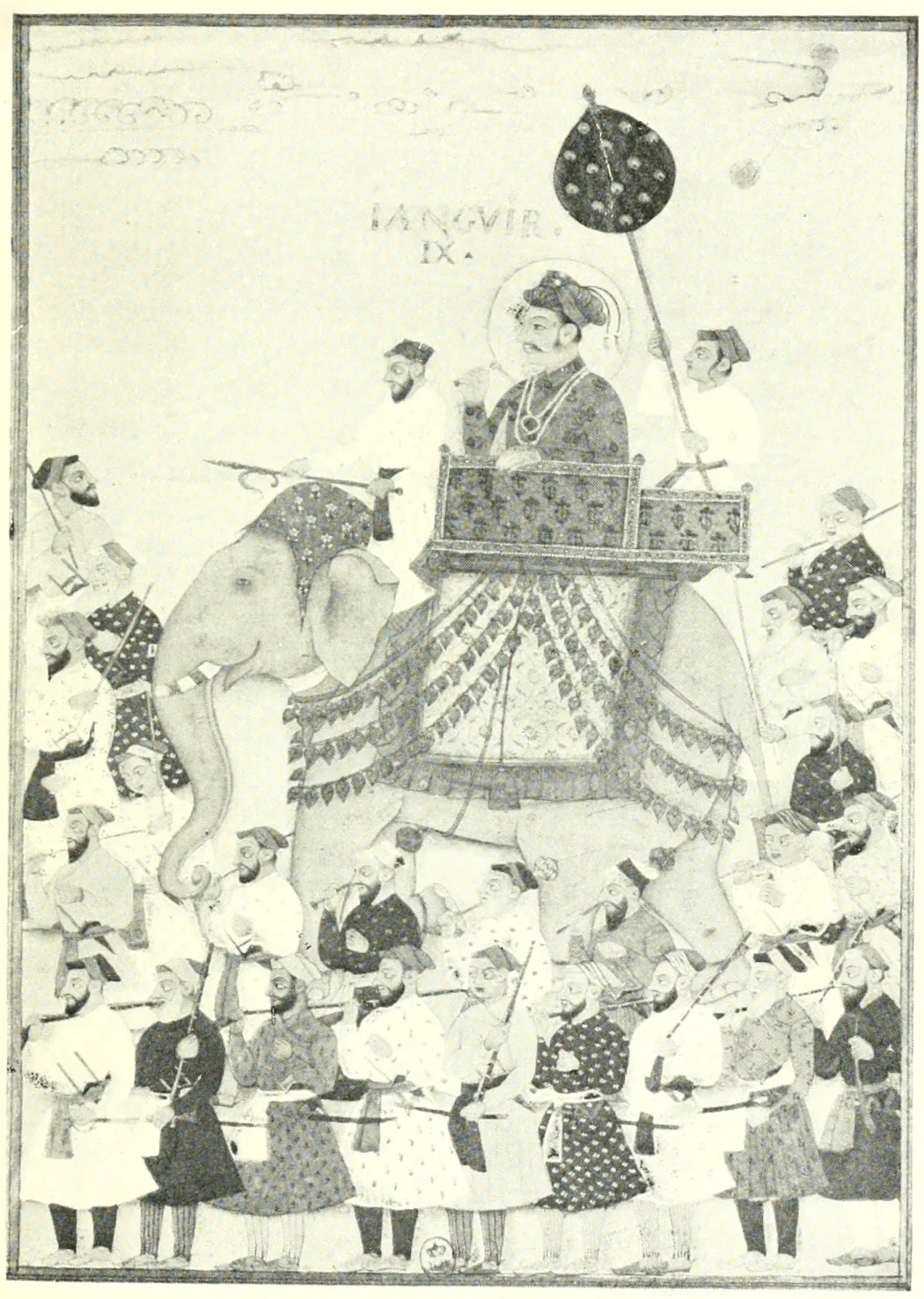
In the meane space, while the Jesuite was reading it, hee spake unto mee in the kindest manner that could bee, demanding of mee the contents of the letter, which I told him ; upon which notice presently granting and promising me by God that all what the King had there written he would grant and allow with all his heart, and more if His Majestie would require it. The Jesuite likewise told him the effect of the letter, but discommending the stile, saying it was basely penned, writing Vestra without Majestad.1 My answere was unto the King : And if it shall please Your Majestie, these people are our enemies ; how can this letter be ill written, when my king demandeth favour of Your Majestie ? He said it was true.
Perceiving I had the Turkish tongue, which himselfe well understood, hee commanded me to follow him unto his chamber of presence,2 being then risen from that place of open audience, desiring to have further conference with me ; in which place I stayed some two houres, till the King came forth from his women. Then calling mee unto him, the first thing that hee spake was that he understood that Mocrebchan had not dealt well with mee ; bidding mee bee of good cheere, for he would remedie all. It should seeme that Mocrebchans enemies had acquainted the King with all his proceedings, for indeed the King hath spies upon every nobleman. I answered most humbly that I was certaine all matters would goe well on my side so long as His Majestie protected me ; upon which speech he presently sent away a post for Suratt, with his command to Mocrebchan, writing unto him very earnestly in our behalfes, conjuring him to bee none of his friend if hee did not deale well with the English in that kind as their desire was. This being dispatched and sent, by the same messenger I sent my letter to William Finch, wishing him to goe with this command to Mocrebchan ; at the receit of which hee wondred that I came safe to Agra and was not murthered or poysoned by the way, of which speech William Finch advertised me afterward.
It grew late, and having had some small conference with the King at that time, he commanded that I should daily be brought into his presence, and gave a captaine named Houshaberchan1 charge that I should lodge at his house till a house were found convenient for me, and when I needed anything of the King, that he should bee my solicitor. According to command I resorted to the court, where I had daily conference with the King. Both night and day his delight was very much to talke with mee, both of the affaires of England and other countries, as also many demands of the West Indies, whereof hee had notice long before, being in doubt if there were any such place till he had spoken with me, who had beene in the countrey.
Many dayes and weekes being past and I now in great favour with the King, to the griefe of all mine enemies, espying my time, I demanded for his commandement or commission with capitulations for the establishing of our factory to be in mine owne power. His answere was whether I would remayne with him in his court. I replyed, till shipping came; then my desire was to goe home with the answere of His Majesties letter. Hee replyed againe that his meaning was a longer time, for he meant to send an embassador to the King of England at the comming of the next shipping, and that I should stay with him untill some other bee sent from my king to remayne in my place, saying this: Thy staying would be highly for the benefit of thy nation; and that he would give me good maintenance, and my being heere in his presence would bee the cause to right all wrongs that should be offered unto my nation; and further, what I should see beneficiall for them, upon my petition made, hee would grant; swearing by his fathers soule that, if I would remayne with him, he would grant me articles for our factorie to my hearts desire, and would never goe from his word. I replyed againe, that I would consider of it. Thus daily inticing me to stay with him, alleaging as is above written, and that I should doe service both to my naturall king and to him, and likewise he would allow me by the yeare three thousand and two hundred pounds sterling1 for my first, and so yeerely hee promised mee to augment my living till I came to a thousand horse. So my first should be foure hundred horse; for the nobilitie of India have their titles by the number of their horses, that is to say, from fortie to twelve thousand, which pay belongeth to princes and his sonnes. I trusting upon his promise, and seeing it was beneficiall both to my nation and my selfe, beeing dispossessed of that benefit which I should have reaped if I had gone to Bantam, and that after halfe a doozen yeeres, Your Worships would send another man of sort in my place, in the meane time I should feather my neast, and doe you service; and further perceiving great injuries offered us, by reason the King is so farre from the ports; for all which causes above specified, I did not thinke it amisse to yeeld unto his request. Then, because my name was something hard for his pronuntiation, hee called me by the name of English Chan, that is to say, English lord, but in Persia it [i. e. Khān] is the title for a Duke; and this went currant throughout the countrey.
Now your Worships shall understand that I being now in the highest of my favours, the Jesuites and Portugalls slept not, but by all meanes sought my overthrow; and, to say the truth, the principall Mahumetans neere the King envyed much that a Christian should bee so nigh unto him. The Jesuite Peniero being with Mocrebchan, and the Jesuites here, I thinke did little regard their masses and church matters for studying how to overthrow my affaires; advice being gone to Goa by the Jesuites here, I meane in Agra, and to Padre Peneiro at Surat or Cambaya, hee working with Mocrebchan to be the Portugals assistance, and the Vice-Roy sending him a great present, together with many toyes [i. e. curiosities] unto the King with his letter. These presents and many more promises wrought so much with Mocrebchan that he writeth his petition unto the King, sending it together with the present, advertising the King that the suffring of the English in his land would be the cause of the losse of his owne countries neere the sea-coasts, as Suratt, Cambaya, and such like, and that in any case he entertaine me not, for that his ancient friends the Portugalls murmured highly at it, and that the fame is spread amongst the Portugalls that I was generall of ten thousand horsemen, readie to give the assault upon Diu when our shipping came.1 The Vice-Royes letter likewise was in this kind. The Kings answere was that he had but one English-man in his court, and him they needed not to feare, for hee hath not pretended any such matter, for I would have given him living neere the sea parts but he refused it, taking it neere me heere. This was the Kings answere; upon which answere the Portugalls were like madde dogges, labouring to worke my passage out of the world. So I told the King what dangers I had passed, and the present danger wherein I was, my boy, Stephen Gravener, instantly departing this world, my man, Nicholas Ufflet,2 extreame sicke, and this was all my English company, my selfe beginning to fall downe too. The King presently called the Jesuites and told them that if I dyed by any extraordinary casualtie, that they should all rue for it. This past, the King was very earnest with me to take a white mayden out of his palace; who would give her all things necessary, with slaves, and he would promise mee shee should turne Christian, and by this meanes my meates and drinkes should be looked unto by them, and I should live without feare. In regard she was a Moore, I refused; but if so bee there could bee a Christian found, I would accept it. At which my speech I little thought a Christians daughter could bee found. So the King called to memorie one Mubarique Sha [Mubārak Shāh] his daughter, who was a Christian Armenian, and of the race of the most ancient Christians, who was a captaine and in great favour with Ekber Padasha [Hind. Pādshāh, Emperor], this kings father. This captaine dyed suddenly and without will, worth a masse of money, and all robbed by his brothers and kindred, and debts that cannot be recovered, leaving the child but only a few jewels. I, seeing shee was of so honest a descent, having passed my word to the King, could not withstand my fortunes; wherefore I tooke her and, for want of a minister, before Christian witnesses I marryed her.1 The priest was my man Nicholas [Ufflet], which I thought had beene lawfull, till I met with a preacher that came with Sir Henry Middleton and, hee shewing me the error, I was new marryed againe. So ever after I lived content and without feare, she being willing to goe where I went, and live as I lived.
After these matters ended, newes came hither that the Ascention was to come, by the men of her pinnasse, that was cast away neere Suratt; upon which newes I presently went to the King and told him, craving his licence, together with his commission for the setling of our trade; which the King was willing to doe, limiting me a time to returne and be with him againe. But the Kings chiefe Vizir, Abdal Hassan,2 a man envious to all Christians, told the King that my going would be the occasion of warre, and thus harme might happen unto a great man [i. e. Mukarrab Khān] who was sent for Goa to buy toyes for the King. Upon which speach the Kings pleasure was I should stay, and send away his commission to my chiefe factor at Surat; and presently gave order that it should be most effectually written. In fine, under his great seale with golden letters his commission was written, so firmely for our good and so free as heart can wish. This I obtained presently and sent it to William Finch. Before it came there, newes came that the Ascention was cast away and her men saved, but not suffered to come into the citie of Surat. Of that likewise I told the King, who seemed to be very much discontented with that great captaine Mocreb-chan, my enemy, and gave me another commandement for their good usage and meanes to be wrought to save the goods, if it were possible. These two commandements came almost together, to the great joy of William Finch and the rest, admiring much at these things.
And now continuing these great favours with the King, being continually in his sight, for the one halfe of foure and twentie houres serving him day and night, I wanted not the greater part of his nobles that were Mahumetans to be mine enemies, for it went against their hearts that a Christian should be so great and neere the King; and the more, because the King had promised to make his brothers children Christians, which two yeares after my coming he performed, commanding them to be made Christians.1 A while after came some of the Ascentions company unto me (whom I could have wished of better behaviour, a thing pryed into by the King). In all this time I could not get my debts of Mocrebchan, till at length he was sent for up to the King to answere for many faults and tyrannicall injustice which he did to all people in those parts, many a man being undone by him, who petitioned to the King for justice. Now this dogge to make his peace sent many bribes to the Kings sonnes and noblemen that were neere the King, who laboured in his behalfe. After newes came that Mocrebchan was approached neere, the King presently sent to attach all his goods, which were in that abundance that the King was two moneths in viewing of them, every day allotting a certaine quantitie to be brought before me [him?]; and what he thought fitting for his owne turne he kept, and the rest delivered againe to Mocrebchan. In the viewing of these goods there came those peeces and costlet and head-peece, with other presents that he tooke from me for the King of mine owne, not suffering mee to bring them my selfe; at the sight whereof I was so bold to tell the King what was mine. After the King had viewed these goods, a very great complaint was made by a Banian [Hindu trader], how that Mocrebchan had taken his daughter, saying she was for the King; which was his excuse, deflowring her himselfe, and afterwards gave her to a Brammen [Brahmin] belonging to Mocrebchan. The man who gave notice of this child protested her to passe all that ever he saw for beautie. The matter being examined, and the offence done by Mocrebchan found to be true, hee was committed to prison in the power of a great nobleman, and commandement was given that the Brammene his privy members should be cut off.1
Before this happened to Mocrebchan, I went to visite him divers times, who made me verie faire promises that he would deale very kindly with mee and be my friend, and that I should have my right. Now being in this disgrace, his friends daily solliciting for him, at length got him cleere, with commandement that he pay every man his right, and that no more complaints be made of him if he loved his life. So Mocrebchan by the Kings command paid every one his due excepting me, whom he would not pay but deliver me my cloath, whereof I was desirous and to make (if it were possible) by faire meanes an end with him; but he put me off the more, delaying time till his departure, which was shortly after. For the King had restored him his old place againe, and he was to goe for Goa about a faire ballace ruby2 and other rare things promised the King.
All my going and sending to Mocrebchan for my money or cloath was in vaine, I being abused so basely by him that I was forced to demaund justice of the King, who commanded that the money be brought before him; but for all the Kings commaund he did as he listed, and, doe what I could, he cut me off twelve thousand and five hundred mamadies. For the greatest man in this kingdome was his friend, and many others holding on his side, murmuring to the King the suffering of English to come into his countrey, for that we were a nation that, if we once set foot, we would take his countrey from him. The King called me to make answere to that they said. I answered His Majestie that, if any such matter were, I would answer it with my life, and that we were not so base a nation as these mine enemies reported; all this was because I demaunded my due and yet cannot get it. At this time those that were neere favourites and neerest unto the King, whom I daily visited and kept in withall, spake in my behalfe; and the King, holding on my side, commanded that no more such wrongs be offred me. So I thinking to use my best in the recovery of this, intreting the head Vizir that he would be meanes that I receive not so great a losse, he answered me in a threatning manner, that if I did open my mouth any more hee would make me to pay an hundred thousand mamadies, which the King had lost in his customes by entertaining mee, and no man durst adventure by reason of the Portugall. So by this meanes I was forced to hold my tongue, for I know this money was swallowed by both these dogges. Now Mocrebchan being commaunded in publicke that by such a day he be ready to depart for Guzerat, and so for Goa,1 and then come and take his leave, as the custome is : in this meane time three of the principallest merchants of Surat were sent for by the Kings commaundement and come to the court about affaires wherein the King or his Vizir had imployed them, being then present there when Mocrebchan was taking his leave, this being a plot laid both by the Portugals, Mocreb-chan, and the Vizir, for some six daies before a letter came unto the King from the Portugall Vice-roy, with a present of many rare things. The contents of this letter were, how highly the King of Portugall tooke in ill part the entertaining of the English, he being of an ancient amitie, with other complements ; and withall, how that a merchant was there arrived with a very faire ballace ruby, weighing three hundred and fiftie rotties,1 of which stone the pattern was sent. Upon this newes Mocreb-chan was to be hastened away; at whose comming to take his leave, together with Padre Pineiro that was to goe with him, the above named merchants of Surat being then there present, Mocrebchan began to make his speech to the King, saying that this and many other things he hoped to obtaine of the Portugall, so that the English were disanulled; saying more, that it would redound to great losse unto His Majestie and subjects if hee did further suffer the English to come into his parts. Upon which speech he called the merchants before the King to declare what losse it would be, for that they best knew. They affirmed that they were like to be all undone because of the English, nor hereafter any toy could come into this countrey, because the Portugal was so strong at sea and would not suffer them to goe in or out of their ports, and all their excuse was for suffering the English. These speeches now and formerly, and lucre of this stone, and promises by the Fathers of rare things were the causes the King overthrew my affaires, saying: Let the English come no more; presently giving Mocreb-chan his commandement to deliver the Viceroy to that effect, that he would never suffer the English to come any more into his ports.
I now saw that it booted me not to meddle upon a sudden, or to make any petition unto the King till a prety while after the departure of Mocreb-chan; and seeing my enemies were so many, although they had eaten of me many presents. When I saw my time, I made petition unto the King. In this space I found a toy to give, as the order is, for there is no man that commeth to make petition who commeth emptiehanded. Upon which petition made him, he presently graunted my request, commanding his Vizir to make me another commandement in as ample manner as my former, and commanded that no man should open his mouth to the contrary, for it was his pleasure that the English should come into his ports. So this time againe I was afloate. Of this alteration at that instant the Jesuite had notice; for there is no matter passeth in the Mogols court in secret, but it is knowne halfe an houre after, giving a small matter to the writer of that day, for there is nothing that passeth but it is written, and writers appointed by turnes, so that the Father nor I could passe any businesse, but when we would we had notice. So the Jesuite presently sent away the most speedy messenger that could be gotten, with his letter to Padre Pineiro and Mocreb-chan, advertising them of all that had passed. At the receit of which they consulted amongst themselves not to goe forward on their voyage for Goa till I were overthrown againe. Wherefore Mocreb-chan wrote his petition unto the King, and letters unto his friend the head Vizir, how it stood not with the Kings honour to send him, if he performed not what he promised the Portugal, and that his voyage would be overthrowne, if he did not call in the commandement he had given the Englishman. Upon the receiving and reading of this, the King went againe from his word, esteeming a few toyes which the Fathers had promised him more then his honour.
Now beeing desirous to see the full issue of this, I went to Hogio Jahan,1 Lord General of the Kings Palace (the second man in place in the kingdome), intreating him that he would stand my friend. He very kindly presently went unto the King, telling him that I was very heavy and discontent that Abdall Hassan would not deliver me my commandement, which His Majestie had graunted me. The King answered him (I being present and very neere him), saying, it was true that the commandement is sealed, and ready to be delivered him: but upon letters received from Mocreb-chan and better consideration by me had on these my affaires in my ports in Guzerat, I thought it fitting not to let him have it. Thus was I tossed and tumbled in the kind of a rich merchant adventuring all he had in one bottome, and by casualtie of stormes or pirates lost it all at once. So that on the other side, concerning my living, I was so crossed that many times this Abdall Hassan his answere would be unto me: I knowe wel enough you stand not in such need, for your master beareth your charges, and the King knew not what he did in giving to you, from whom he should receive.1 My answer was that it was the Kings pleasure and none of my request, and seeing it is His Majesties gift, I had no reason to loose it. So that from time to time he bad mee have patience and he would find out a good living for me. Thus was I dallied withall by this mine enemie, in so much that in all the time I served in court I could not get a living that would yeeld any thing, giving me my living still in places where out-lawes raigned. Only once at Lahor, by an especiall commandement from the King; but I was soon deprived of it, and all that I received from the beginning was not fully three hundred pounds, a great part whereof was spent upon charges of men sent to the lordships. When that I saw that the living which the King absolutely gave me was taken from me, I was then past all hopes; for before, at the newes of the arrivall of shipping, I had great hope that the King would performe former grants, in hope of rare things that should come from England. But when I made arse [see p. 56] or petition unto the King concerning my living, he turned me over to Abdal Hassan, who not onely denied me my living, but also gave order that I be suffered no more to enter within the red rayles, which is a place of honour where all my time I was placed very neere unto the King, in which place there were but five men in the kingdome before me.
Now perceiving that all my affaires were overthrowne, I determined with the councell of those that were neere me to resolve whereto to trust, either to be well in or well out. Upon this resolution I had my petition made ready, by which I made known unto the King how Abdall Hassan had dealt with me, having himselfe eaten what His Majestie gave me; and how that my charges of so long time (being by His Majestie desired to stay in his court, upon the faithfull promises he made me) were so much that it would be my utter overthrow; therefore I besought His Majestie that he would consider my cause, either to establish me as formerly, or give me leave to depart. His answere was that he gave me leave, commanding his safe conduct to bee made mee to passe freely without molestation throughout his kingdomes. When this commandement was made, as the custome is, I came to doe my obeysance and to take my leave, intreating for an answere of my kings letter. Abdall Hassan, comming unto me from the King, in a disdainfull manner utterly denyed me, saying that it was not the custome of so great a monarch to write in the kind of a letter unto a pettie prince or governour. I answered him that the King knew more of the mightinesse of the King of England then to be a petty governour. Well, this was mine answere, together with my leave taken.
I went home to my house, studying with all my endeavours to get all my goods and debts together, and to buy commodities with those monies that were remayning, using all the speed I could to cleere my selfe of the countrey, staying only for Nicholas Ufflet to come from Lahor with a remainder of indico that was in William Finches power, who determined to goe overland, being past all hopes for ever imbarking our selves at Surat; which course I also would willingly have taken, but that (as it is well knowne) for some causes I could not travell thorow Turkie, and especially with a woman; so I was forced to currie favour with the Jesuites to get mee a safe conduct or seguro from the Vice-Roy to goe for Goa, and so to Portugall, and from thence to England, thinking (as the opinion of others was) that, the Vice-Roy giving his secure1 royall, there would be no danger for me. But when my wifes mother and kindred saw that I was to carry her away, suspecting that they should never see her any more, they did so distaste me in these my travels that I was forced to yeeld unto them that my wife go no further then Goa, because it was India, and that they could goe and come and visit her, and that, if at any time I meant to goe for Portugall, or any other-where, that I leave her that portion that the custome of Portugall is to leave to their wives when they dye; unto which I was forced to yeeld, to give them content to prevent all mischiefes. But knowing that, if my wife would goe with me, all would bee of no effect, I effected with the Jesuite to send for two secures, the one concerning my quiet being and free libertie of conscience in Goa, and to bee as a Portugall in all tradings and commerce in Goa (this was to shew my wifes parents), the other was an absolute grant for free passage into Portugall, and so for England, with my wife and goods, without any disturbances of any of my wives friends : and what agreements I made with them to be void and of none effect, but I should stay or goe when I pleased, with free libertie of conscience for my selfe. This last securo I should receive at Cambaya, which at my departure for our shippes was not yet come, but was to come with the carravan of frigats. This and much more the Fathers would have done for me, only to rid me out of the country ; for being cleere of me, they should much more quietly sleepe. About this time I had notice of the comming of three English shipps, that were arrived at Mocha, and without faile their determination was to come for Surat at the time of the yeare ; having this advertisement by Nicholas Bangham from Bramport, who departed from me some six weekes before, both for the recovery of certaine debts, as also with my letter to our shipping (if it were possible to send it) advertising them of my proceedings.
In this time of my dispatching, newes came of Mocreb-chans returne from Goa with many gallant and rare things, which he brought for the King.1 But that ballace ruby was not for his turne, saying it was false, or at the least made his excuse, for feare that if he should give the Portugall his price and when it came into the Kings power it should bee valued much lesse (which overplus he should be forced to pay, as hee had done in former times for other things), hee left it behind him. And besides I understood that Mocrebchan had not his full content as he expected of the Portugalls. And likewise at this instant the Vizir, my enemy, was thrust out of his place for many complaints made of him by noblemen that were at great charges and in debt, and could not receive their livings in places that were good, but in barren and rebellious places, and that he made a benefit of the good places himselfe and robbed them all. For these complaints and others he had much ado to escape with life, being put out of his place and sent to the wars of Decan.1 Now one Gai hbeig,2 being the Kings chiefe treasurer (a man that in outward shew made much of me and was alwayes willing to pleasure me when I had occasion to use him), was made chiefe Vizir, and his daughter marryed with the King, being his chiefe queene or paramor. This Vizirs sonne and myselfe were great friends, he having beene often at my house, and was now exalted to high dignities by the King. Perceiving this alteration, and being certified of the comming of shipping by certaine advise sundry wayes, knowing the custome of these Moores that without gifts and bribes nothing would either goe forward or bee accomplished, I sent my broker to seeke out for jewels fitting for the Kings sister3 and new paramour, and likewise for this new Vizir and his sonne.
Now after they had my gifts, they beganne on all sides to solicite my cause; at which time newes came to Agra by Banians of Diu how that of Diu three English ships were seene, and three dayes after other newes came that they were at the barre of Surat. Upon which newes the Great Vizir asked me what toy I had for the King. I shewed him a ruby ring that I had gotten, at the sight of which he bade me make readie to goe with him at court time and he would make my petition to the King, and told me that the King was alreadie wonne. So once more comming before His Greatnesse, and my petition being read, he presently granted mee the establishing of our factorie, and that the English come and freely trade for Surat; willing the Vizir that with all expedition my commandement be made; upon which grant the Vizir made signe unto mee to make obeysance, which I did according to the custome. But now what followed? A great nobleman and neerest favourite of the King, being the dearest friend that Mocrebchan and likewise Abdall Hassan had, brought up together from their childhood, and pages together unto the King, began to make a speech unto the King, saying that the granting of this would be the utter overthrow of his sea coasts and people, as His Majestie had beene informed by petition from divers of his subjects : and besides, that it stood not with His Majesties honour to contradict that which he had granted to his ancient friends the Portugals, and whosoever laboured for the English knew not what he did ; if knowing, hee was not His Majesties friend. Upon the speech of this nobleman my businesse once againe was quite overthrowne, and all my time and presents lost ; the King answering that, for my nation, hee would not grant trade at the sea ports, for the inconvenience that divers times had beene scanned upon ; but, for my selfe, if I would remayne in his service, he would command that what he had allowed me should be given me to my content ; which I denyed, unlesse the English should come unto his ports according to promise, and, as for my particular maintenance, my King would not see me want. Then desiring againe answere of the Kings letter, he consulted awhile with his Vizirs and then sent me his denyall. So I tooke my leave, and departed from Agra the second of November, 1611, being of a thousand thoughts what course I were best to take ; for I still had a doubt of the Portugalls that for lucre of my goods they would poyson me. Againe, on the other side, it was dangerous by reason of the warres to travell thorow Decan unto Masulipatan. By land, by reason of the Turkes, I could not goe ; and to stay I would not amongst these faithlesse infidels.
I arrived at Cambaya the last of December, 1611,1 where I had certaine newes of the English ships that were at Surat. Immediately I sent a footman unto the ships with my letter, with certaine advice, affirmed for a truth by the Fathers of Cambaya unto me, that the Vice-Roy had in a readinesse prepared to depart from Goa foure great ships, with certaine gallies and frigats, for to come upon them, and treasons plotted against Sir Henry Middletons person ; of which newes I was wished by the Fathers to advise Sir Henry ; which I found afterward to bee but their policie to put him in feare, and so to depart ; and withall I wished them to be well advised. And as for me, my shifts were to goe home by the way of the Portugalls, for so I had promised my wife and her brother, who at that present was with me, and to delude him and the Fathers till I had notice for certaine that I might freely get aboord without feare, which I was assured to know at the returne of my letter. In the meane time I did all that I could to dispatch her brother away ; who within two dayes after departed for Agra, not suspecting that I had any intent for the ships. Nicholas Ufflet now departing from mee to survey the way, beeing two dayes journey on his way, met with Captaine William1 Sharpeigh, Master Fraine and Hugh Greete, sent by Sir Henry to Cambaya unto mee, which was no small joy unto mee. So understanding of the place (which was miraculously found out by Sir Henry Middleton, and never knowne to any of the countrey),2 I admired and gave God thankes : for if this place had not beene found, it had beene impossible for mee to have gotten aboord with my goods. Wherefore making all the haste that I could in dispatching my selfe away, I departed from Cambaya the eighteenth of January, 1611 [1612] and came unto the ships the six and twentieth of the said moneth, where I was most kindly received by Sir Henry Middleton.
From this place we departed the eleventh of February, 1611 [1612] and arrived at Dabul [Dābhol] the sixteenth of the same ; in which place we tooke a Portugall ship and frigat, out of which we tooke some quantitie of goods. And from thence we departed the fift of March, 1611 [1612] for the Red Sea, with an intent to revenge us of the wrongs offered us, both by Turkes and Mogols ; at which place wee arrived the third of Aprill, 1612. Here we found three English ships ; their Generall was Captaine John Saris.3 Having dispatched our businesse in the Red Sea, wee set sayle from thence the sixteenth of August, 1612, and arrived in Tecu [Tiku] in Sumatra the nineteenth of October, 1612. And having ended our businesse there, we departed in the night the twentieth of November, 1612, and came on ground the same night, three leagues off, upon a bed of corall in three fathome water, or thereabouts ; and by the great mercie of God we escaped, but were forced to returne backe againe to stop her leakes, the goods being taken out and some damage received. Now her leakes being somewhat stopped, and her goods in, not losing an houre of time, wee departed from thence the eight of December, 1612, and arrived at Bantam the one and twentieth of the same ; where Sir Henry Midleton, not finding the Trade sufficient to goe home that yeare, was forced to stay and carine her. Having ended account with him, as himselfe liked best, I tooke my goods and shipped them in the Salomon, which came for our Voyage, for saving of a greater freight ; but I could not be admitted to goe in her myselfe. Captaine Saris, I thanke him, accommodated me in the Thomas, and it was agreed that the Salomon and wee should keepe company together.
From thence we set sayle on the thirtieth of January, 1612 [1613], and arrived in Saldania Roade [Table Bay] the one and twentieth of Aprill, 1613 ; and comming neere some two hundred leagues from the Cape, we had much foule weather and contrary windes. Here we found foure sayle of Hollanders, that departed Bantam a moneth before us. There was great kindnesse betwixt us, especially to me, in regard that they had heard much of my great estate in India by an agent of theirs that was lieger [resident] at Masulipatan. Some eight dayes after, the Expedition1 came in, and brought mee a letter from Your Worships and delivered it unto me two dayes after their arrivall. The wind comming faire we departed from Saldania the one and twentieth of May, 1613.
A briefe discourse of the strength, wealth, and government with some customes of the Great Mogol, which I have both seene and gathered by his chiefe officers and over-seers of all his estate.
First, I begin with his princes, dukes, marquesses, earles, viscounts, barons, knights, esquires, gentlemen, and yeomen. As Christian princes use their degrees by titles, so they have their degrees and titles by their number of horses ; unlesse it bee those that the King most favoureth, whom he honoureth with the title of Chan and Immirza [Mīrza]. None have the title of Sultan but his sonnes. Chan in the Persian language is as much as a duke. Immirza is the title for the Kings brothers children. They that be of the fame of twelve thousand horsemen belong to the King, and his mother,1 and eldest sonne,2 and one more, who is of the bloud royall of Uzbeck, named Chan Azam.3 Dukes be nine thousand fame, marquesses five thousand fame, earles three thousand, viscounts two thousand, barons a thousand, knights foure hundred, esquires an hundred, gentlemen fifty, yeomen from twentie downwards.4 All they that have these numbers of horsemen are called mansibdars,5 or men of livings or lordships. Of these there be three thousand, that is to say ; foure be of twelve thousand horse a-piece, and they be the King, his mother, Sultan Pervis, Prince, and Chan Azam. Of nine thousand horsemen there bee three, that is to say, Sultan Chorem,6 the Kings third sonne, Chanchanna, and Kelich Chan [Kilīj Khān]. Of five thousand there bee eighteene, named Hasuff Chan, Chan Ichan, Abdula Chan, Raga Manging, Ray Durga, Raga Sursing, Ramadas Rechuva, Raga Bassu, Emirel Umera, Mahabet Chan, Chan Dowran, Sedris Chan, Hogio Bey Mirza, Mirza Cazi, Ettebar Chan, Abulfet Dekenny, Jelam Cully Chan, Sheik Ferid. Of three thousand there bee two and twentie, to wit, Chan Alem, Imirza Ereg, Imirza Darab, Hogio Jahan, Hogio Abdal Hassan, Mirza Gaysbey, Mirza Shemchadin, Mirza Chadulla, Seffer Chan, Kazmy Chan, Mirza Chin Kelich, Saif Chan, Lalla Bersingdia, Mirza Zeady, Mirza Ally Ecberchuly, Terbiat Chan, Mirza Laschary, Mirza Charucogly, Mirza Rustem, Ally Merdon Badur, Tasbey Chan, Abulbey.1 The rest bee from two thousand downwards till you come to twentie horses, two thousand nine hundred and fiftie. Of horsemen that receive pay monethly, from sixe horse to one, there be five thousand ; these bee called haddies [ahadi]. Of such officers and men as belong to the court and campe there bee thirtie sixe thousand, to say, porters, gunners, watermen, lackeyes, horse-keepers, elephant-keepers, small-shot, frasses [farrāsh] or tent men, cookes, light bearers, gardiners, keepers of all kind of beasts. All these be payd monethly out of the Kings treasurie ; whose wages be from ten to three rupias. All his captaines are to maintaine at a seven-nights warning from twelve thousand to twentie horse, all horsemen three leckes [lakhs], which is three hundred thousand horsemen, which of the incomes of their lordships allowed them they must maintayne.
The Kings yeerely income of his crowne land is fiftie crou [kror] of rupias.2 Every crou is an hundred leckes, and every leck is an hundred thousand rupiae.
The compasse of his countrey is two yeares travell with carravan, to say, from Candahar to Agra, from Soughtare1 in Bengala to Agra, from Cabul to Agra, from Decan to Agra, from Surat to Agra, from Tatta in Sinde to Agra. Agra is in a manner in the heart of all his kingdomes.
His empire is divided into five great kingdomes. The first named Pengab [Panjāb], whereof Lahor is the chiefe seate; the second is Bengala, the chiefe seate Sonargham [Sonārgaon]; the third is Malva [Mālwa], the chiefe seate is Ugam [Ujjain]; the fourth is Decan, the chiefe seate Bramport [Burhānpur]; the fifth is Guzerat, the chiefe seat is Amadavar [Ahmadābād]. The chiefe citie or seate royall of the Kings of India is called Delly, where hee is established king, and there all the rites touching his coronation are performed.
There are sixe especiall castles, to say, Agra, Guallier [Gwalior], Nerver, Ratamboore, Hassier, Roughtaz.2 In every one of these castles he hath his treasure kept.
In all his empire there are three arch-enemies or rebels, which with all his forces cannot be called in, to say, Amberry Chapu3 in Decan; in Guzerat the sonne of Muzafer that was king (his name is Bahador);4 of Malva, Raga Rahana.5 His sonnes be five, to say, Sultan Coussero, Sultan Pervis, Sultan Chorem, Sultan Shariar, and Sultan Bath.6 Hee hath two yong daughters,1 and three hundred wives, whereof foure be chiefe as queenes, to say, the first, named Padasha Banu,2 daughter to Kaime Chan; the second is called Noore Mahal, the daughter of Gais Beyge; the third is the daughter of Seinchan3; the fourth is the daughter of Hakim Hamaun, who was brother to his father, Ecber Padasha.4
His treasure is as followeth: the first is his severall coine of gold.5
Inprimis, of seraffins Ecberi,6 which be ten rupias a piece, there are sixtie leckes. Of another sort of coyne of a thousand rupias a piece,7 there are twentie thousand pieces. Of another sorte of halfe the value there are ten thousand pieces. Of another sort of gold of twenty toles8 a piece there are thirtie thousand pieces. Of another sort of tenne toles a piece there bee five and twenty thousand pieces. Of another sort of five toles, which is this kings stampe, of these there be fiftie thousand pieces.
Of silver, as followeth.
Inprimis, of rupias Ecbery, thirteene crou (every crou is an hundred leckes and every leck an hundred thousand rupias), is one thousand three hundred leckes. Of another sort of coine of Selim Sha,1 this king, of an hundred toles a piece, there are fiftie thousand pieces. Of fiftie toles a piece there is one leckc. Of thirtie toles a piece there are fortie thousand pieces. Of twentie toles a piece there are thirtie thousand pieces. Of ten toles a piece there are twentie thousand pieces. Of five toles a piece there are five and twentie thousand pieces. Of a certaine money that is called savoy,2 which is a tole ¼, of these there are two leckes. Of jagaries,3 whereof five make sixe toles, there is one lecke. More should have been coyned of this stampe, but the contrary was commanded.
Here followeth of his jewells of all sorts.
Inprimis, of diamantes 1½ battman ; these be rough, of all sorts and sizes, great and small, but no lesse then 2½ caratts. The battman 4 is fifty five pound waight, which maketh eightie two pounds ½ weight English.5 Of ballace rubies little and great, good and bad, there are single two thousand pieces. Of pearle of all sorts there are twelve battmans. Of rubies of all sorts there are two battmans. Of emeraudes of all sorts, five battmans. Of eshime,6 which stone commeth from Cathaia [China], one battman. Of stones of Emen,7 which is a red stone, there are five thousand pieces. Of all other sorts, as corall, topasses, etc., there is an infinite number.
Here followeth of the jewels wrought in gold.
Of swords of Almaine [German] blades, with the hilts and scabberds set with divers sorts of rich stones of the richest sort, there are two thousand and two hundred. Of two sorts of poniards there bee two thousand. Of saddle drummes, which they use in their hawking, of these there are very rich ones of gold set with stones, five hundred. Of brooches for their heads [i. e. the sarpesh], whereinto their feathers be put, these be very rich, and of them there are two thousand. Of saddles of gold and silver set with stones there are one thousand. Of teukes1 there be five and twentie; this is a great launce covered with gold and the fluke set with stones, and these, instead of their colours, are carryed when the King goeth to the warres; of these there are five and twentie. Of kittasoles [Port. quitasol, a sunshade] of state, for to shaddow him, there bee twentie. None in his empire dareth in any sort have any of these carryed for his shadow but himselfe; of these, I say, there are twentie. Of chaires of estate there bee five, to say, three of silver and two of gold; and of other sorts of chaires there bee an hundred of silver and gold; in all an hundred and five. Of rich glasses there bee two hundred. Of vases for wine very faire and rich, set with jewels, there are an hundred. Of drinking cuppes five hundred, but fiftie very rich, that is to say, made of one piece of ballace ruby, and also of emerods [emeralds], of eshim, of Turkish stone [turquoises], and of other sorts of stones. Of chaines of pearle, and chaines of all sorts of precious stones, and ringes with jewels of rich diamants, ballace rubies, rubies, and old emerods, there is an infinite number, which only the keeper thereof knoweth. Of all sorts of plate, as dishes, cups, basons, pots, beakers of silver wrought, there are two thousand battmans. Of gold wrought, there are one thousand battmans.
Here followeth of all sorts of beasts.
Of horses there are twelve thousand; whereof there bee of Persian horses foure thousand, of Turkie horses six thousand, and of Kismire [Kashmīr] two thousand ; all are twelve thousand. Of elephants there be twelve thousand, whereof five thousand bee teeth elephants and seven thousand of shee ones and yong ones ; which are twelve thousand. Of camels there be two thousand. Of oxen for the cart and all other services there bee tenne thousand. Of moyles [mules] there be one thousand. Of deere like buckes, for game and sport, there be three thousand. Of ounces [see p. 17] for game there be foure hundred. Of dogges for hunting, as grey-hounds and other, there be foure hundred. Of lions tame there are an hundred. Of buffalaes there be five hundred. Of all sorts of hawkes there bee foure thousand. Of pidgeons for sport of flying there bee ten thousand. Of all sorts of singing birds there be foure thousand. Of armour of all sorts, at an houres warning, in a readinesse to arme five and twentie thousand men.
His daily expences for his owne person, that is to say, for feeding of his cattell of all sorts, and amongst them some few elephants royall, and all other expences particularly, as apparell, victuals, and other petty expences for his house, amounts to fiftie thousand rupias a day. The expences daily for his women by the day is thirtie thousand rupias.1
All this written concerning his treasure, expences, and monethly pay is in his court or castle of Agra ; and every one of the castles above nominated have their severall treasure, especially Lahor, which was not mentioned.
The custome of this Mogoll Emperour is to take possession of his noblemens treasure when they dye, and to bestow on his [their] children what he pleaseth ; but commonly he dealeth well with them, possessing them with their fathers land, dividing it amongst them ; and unto the eldest sonne he hath a very great respect, who in time receiveth the full title of his father. There was in my time a great Indian lord or prince, a Gentile named Raga Gaginat,1 upon whose goods the Kings seizing after his death, he was found (besides jewels and other treasure) to have sixtie maunes [maunds] in gold, and every maune is five and fiftie pound waight. Also his custome is that of all sorts of treasure excepting coine, to say, of all sorts of beasts, and all other things of value, a small quantitie is daily brought before him. All things are severally divided into three hundred and sixtie parts ; so that hee daily seeth a certaine number, to say, of elephants, horses, camels, dromedaries, moyles, oxen, and all other ; as also a certaine quantitie of jewels, and so it continueth all the yeere long ; for what is brought him to day is not seene againe till that day twelve moneth.
He hath three hundred elephants royall, which are elephants whereon himselfe rideth ; and when they are brought before him they come with great jollitie, having some twentie or thirty men before them with small stremers. The elephants cloth or covering is very rich, eyther of cloth of gold or rich velvet ; hee hath following him his shee elephant, his whelpe or whelpes, and foure or five yong ones as pages, which will bee in number some sixe, some seven, and some eight or nine. These elephants and other cattell are dispersed among his nobles and men of sort to oversee them, the King allowing them for their expences a certaine quantitie ; but some of them will eate a great deale more then their allowance commeth unto. These elephants royall eate tenne rupias every day in sugar, butter, graine, and sugar canes. These elephants are the goodliest and fairest of all the rest, and tame withall, so managed that I saw with mine eyes when the King commanded one of his young sonnes named Shariar (a childe of seven yeeres of age) to goe to the elephant to bee taken up by him with his snout; who did so, delivering him to his keeper that commanded him with his hooke ; and having done this unto the Kings sonne, he afterwards did the like to many other children. When these elephants are shewed, if they who have the charge of them bring them leane, then are they checked and in disgrace, unlesse their excuse bee the better. And so it is with all things else in that kind, that every man striveth to bring his quantitie in good liking, although hee spend of his owne.
When hee rideth on progresse or hunting, the compasse of his tents may bee as much as the compasse of London and more ; and I may say that of all sorts of people that follow the campe there are two hundred thousand, for hee is provided as for a citie. This king is thought to be the greatest emperour of the East for wealth, land, and force of men, as also for horses, elephants, camels, and dromedaries. As for elephants of his owne and of his nobles, there are fortie thousand, of which the one halfe are trayned elephants for the warre ; and these elephants of all beasts are the most understanding. I thought good here to set downe this one thing, which was reported to me for a certainty, although it seemed very strange. An elephant having journyed very hard, being on his travell, was misused by his commander ; and one day finding the fellow asleepe by him, but out of his reach, having greene canes brought him to eate, split the end of one of them with his teeth, and taking the other end of the cane with his snowt, reached it toward the head of the fellow, who being fast asleepe and his turbant fallen from his head (the use of India being to wear their haire long like women) he tooke hold with the cane on his haire, wreathing it therein and withall haling him unto him untill he brought him within the compasse of his snowt ; he then presently killed him. Many other strange things are done by elephants.
He hath also infinite numbers of dromedaries, which are very swift, to come with great speed to give assault to any citie ; as this kings father did, so that the enemies thought he had beene in Agra when he was at Amadavar, and he came from Agra thither in nine daies upon these dromedaries with twelve thousand choyce men, Chan-channa being then his generall. The day being appointed for the battell, on a suddaine newes came of the Kings arrivall, which strucke such a present feare into the Guzerats that at that time they were overthrowne and conquered.1 This king hath diminished his chiefe captaines, which were Rasbootes [Rājputs] or Gentiles, and naturall Indians, and hath preferred the Mahumetans (weak spirited men, void of resolution) in such sort that what this mans father, called Ecber Padasha, got of the Decans, this king, Selim Sha, beginneth to loose. He hath a few good captaines yet remaining, whom his father highly esteemed, although they be out of favour with him, because that upon his rebellion against his father they would not assist him, considering his intent was naught, for he meant to have shortned his fathers daies and before his time to have come to the crowne. And to that purpose being in Attabase,1 the regall seate of a kingdome called Porub, hee arose with eighty thousand horse, intending to take Agra and to have possession of the treasury, his father being then at the warres of Decan; who, understanding of his sonnes pretence, left his conquering there and made hast to come home to save his owne. Before the Kings departure to the warres, hee gave order to his sonne to goe with his forces upon Aranna [see p. 100], that great rebell in Malva; who comming to parle with this rebell, he told the Prince that there was nothing to bee gotten by him but blowes, and it were better for him, now his father was at Decan, to goe upon Agra and possesse himselfe of his fathers treasure and make himselfe king, for there was no man able to resist him. The Prince followed his counsell and would have prosecuted it but his fathers hast before (upon notice given) prevented his purpose; at whose arrivall at Agra hee presently sent unto his sonne, that he make choyce either to come and fall at his feete and be at his mercy to doe with him as he pleased, or to fit himselfe for the battell and fight it out. He, well considering the valour of his father, thought it meetest to submit himselfe and stand to his fathers mercy; who, after affronts shewed him and imprisonment, was soone released and pardoned by reason of many friends, his mother, sisters, and others.2
This Selim Padasha being in his rebellion, his father dispossessed him and proclaimed heire apparant his eldest sonne Cossero,1 being eldest sonne to Selimsha; for his owne sonnes [Murād and Dāniyāl], younger brothers to Selim, were all dead in Decan and Guzerat. Yet shortly after his father dyed, who in his death-bed had mercy on Selim, possessing him againe. But Cossero, who was proclaimed heire apparant, stomached his father, and rose with great troopes, yet was not able to indure after the losse of many thousand men on both sides, but was taken and remaineth still in prison in the Kings pallace, yet blinde, as all men report, and was so commaunded to be blinded by his father.2 So since that time, being now eight yeares after, he had commanded to put all his sonnes confederates to death, with sundry kinds of death, some to bee hanged, some spitted, some to have their heads chopped off, and some to bee torne by elephants. Since which time hee hath raigned in quiet, but ill beloved of the greater part of his subjects, who stand greatly in feare of him. His custome is every yeare to be out two moneths on hunting, as is before specified. When he meaneth to begin his journey, if comming forth of his pallace hee get up on a horse, it is a signe that he goeth for the warres; but if he get up upon an elephant or palankine, it will bee but an hunting voyage.
My selfe, in the time that I was one of his courtiers, have seene many cruell deeds done by him. Five times a weeke he commaundeth his brave elephants to fight before him; and in the time of their fighting, either comming or going out, many times men are killed or dangerously hurt by these elephants. But if any be grievously hurt which might very well escape, yet neverthelesse that man is cast into the river, himselfe commaunding it, saying: dispatch him, for as long as he liveth he will doe nothing else but curse me, and therefore it is better that he dye presently. I have seene many in this kind. Againe, hee delighteth to see men executed himselfe and torne in peeces with elephants. He put to death in my time his secretary, onely upon suspicion that Chan-channa should write unto the Decan king; who, being sent for and examined about this matter, denied it; whereupon the King, not having patience, arose from his seate and with his sword gave him his deadly wound, and afterwards delivered him to bee torne by elephants.
Likewise it happened to one who was a great friend of mine (a chiefe man, having under his charge the Kings ward-robe and all woollen cloath, and all sorts of mercery, and his China dishes), that a faire China dish (which cost ninetie rupias or fortie five rials of eight) was broken in this my friends time by a mischance (when the King was in his progresse), being packed amongst other things on a cammell, which fell and broke all the whole parcell. This nobleman, knowing how deerely the King loved this dish above the rest, presently sent one of his trusty servants to China-machina [China] over land to seeke for another, hoping that, before he should remember that dish, he would returne with another like unto it ; but his evill lucke was contrarie, for the King two yeares after remembred this dish, and his man was not yet come. Now when the King heard that the dish was broken, he was in a great rage, commanding him to be brought before him and to be beaten by two men with two great whips made of cords ; and after that he had received one hundred and twenty of these lashes, he commanded his porters, who be appointed for that purpose, to beate him with their small cudgels, till a great many of them were broken ; at the least twenty men were beating of him, till the poore man was thought to bee dead, and then he was haled out by the heeles and commaunded to prison. The next day the King demaunded whether he was living ; answer was made that he was ; whereupon he commanded him to be carried unto perpetuall prison. But the Kings sonne, being his friend, freed him of that and obtained of his father that he might bee sent home to his owne house and there be cured. So after two moneths he was reasonably well recovered and came before the King, who presently commanded him to depart the court and never come againe before him untill he had found such a like dish, and that hee travell for China-machina to seeke it. The King allowed him five thousand rupias1 towards his charges, and besides returning one fourth part of his living that he had before, to maintaine him in his travell. He being departed and fourteene moneths on his travell, was not yet come home; but newes came of him that the King of Persia had the like dish and for pitties sake hath sent it him; who at my departure was on his way homeward.
Likewise in my time it happened that a Pattan, a man of good stature, came to one of the Kings sonnes, named Sultan Pervis, to intreat him to bestow somewhat on him, by petition delivered to one of the Princes chiefe men; at the delivery whereof the Prince caused him to come neere; and demanding of him whether hee would serve him, he answered no, for he thought that the Prince would not grant him so much as he would aske. The Prince, seeing him to be a pretty fellow and meanely apparelled, smiled, demanding what would content him. Hee told him plainly that hee would neither serve his father nor him under a thousand rupias a day, which is 100 pound sterling. The Prince asked what was in him that he demanded so much. He replyed: make tryall of me with all sorts of weapons, either on horsebacke or on foote; and for my sufficient command in the warres, if I do not performe as much as I speake, let mee dye for it. The houre being come for the Prince to go to his father, he gave over his talk, commanding the man to be forth comming. At night the Kings custome being to drinke, the Prince, perceiving his father to be merry, told him of this man. So the King commaunded him to be brought before him. Now while he was sent for, a wilde lyon was brought in, a very great one, strongly chained, and led by a dozen men and keepers; and while the King was viewing this lyon, the Pattan came in, at whose sight the Prince presently remembred his father. The King demanding of this Pattan whence he was, and of what parentage, and what valour was in him that he should demand so much wages, his answer was that the King should make tryal of him. That I will, saith the King; goe wrastle and buffet with this lyon. The Pattans answere was that this was a wild beast, and to goe barely upon him without weapon would be no triall of his manhood. The King, not regarding his speech, commanded him to buckle with the lion ; who did so, wrastling and buffeting with the lyon a pretty while ; and then the lyon, being loose from his keepers, but not from his chaines, got the poore man within his clawes and tore his body in many parts, and with his pawes tore the one halfe of his face so that this valiant man was killed by this wilde beast.1 The King, not yet contented, but desirous to see more sport, sent for ten men that were of his horse-men in pay, being that night on the watch ; for it is the custome of all those that receive pay or living from the King to watch once a weeke, none excepted, if they be well and in the citie. These men, one after another, were to buffet with the lyon ; who were all grievously wounded, and it cost three of them their lives. The King continued three moneths in this vaine when he was in his humors, for whose pleasure sake many men lost their lives and many were grievously wounded. So that ever after, untill my comming away, some fifteene young lyons were made tame and played one with another before the King, frisking betweene mens legs and no man hurt in a long time.
Likewise he cannot abide that any man should have any precious stone of value, for it is death if he know it not at that present time, and that he hath the refusall thereof. His jeweller, a Bannian, named Herranand [Hīra Nand], had bought a diamond of three mettegals,2 which cost one hundred thousand rupias ; which was not so closely done but newes came to the King. Herranand likewise was befriended, beeing presently acquainted therewith ; who, before the King sent for him, came unto him and challenged the King that he had often promised him that he would come to his house. The King answered that it was true. Herranand therefore replyed that now was the time, for that he had a faire present to bestow upon His Majestie, for that he had bought a stone of such a weight. The King smiled and said : thy lucke was good to prevent me. So preparation was made, and to the Bannians house he went. By this means the King hath ingrossed all faire stones, that no man can buy from five carats upwards without his leave1; for he hath the refusall of all, and giveth not by a third part so much as their value. There was a diamant cutter of my acquaintance that was sent for to cut a diamant of three mettegals and a halfe, who demanded a small foule diamant to make powder, wherewith to cut the other diamant. They brought him a chest, as he said, of three spannes long and a spanne and half broad, and a spanne and halfe deepe, full of diamants of all sizes and sorts; yet could he find never any one for his purpose, but one of five rotties, which was not very foule neither.
He is exceeding rich in diamants and all other precious stones, and usually weareth every day a faire diamant of great price; and that which he weareth this day, till his time be come about to weare it againe he weareth not the same; that is to say, all his faire jewels are divided into a certaine quantitie or proportion to weare every day. He also weareth a chaine of pearle, very faire and great, and another chaine of emeralds and ballace rubies. Hee hath another jewell that commeth round about his turbant, full of faire diamants and rubies. It is not much to bee wondered that he is so rich in jewels and in gold and silver, when he hath heaped together the treasure and jewels of so many kings as his forefathers have conquered, who likewise were a long time in gathering them together, and all came to his hands. Againe, all the money and jewels which his nobles heape together, when they die come all unto him, who giveth what he listeth to the noblemens wives and children; and this is done to all them that receive pay or living from the King. India is rich in silver, for all nations bring coyne and carry away commodities for the same; and this coyne is buried in India and goeth not out; so it is thought that once in twentie yeeres it commeth into the Kings power. All the lands in his monarchie are at his disposing, who giveth and taketh at his pleasure.2 If I have lands at Lahor, being sent unto the warres at Decan, another hath the lands, and I am to receive mine in Decan, or thereabouts, neere the place where I am, whether it be in the warres, or that I be sent about any other businesse for any other countrey. And men are to looke well unto their doings ; for if they be found tardie in never so little a matter, they are in danger of loosing their lands ; and if complaints of injustice which they doe be made unto the King, it is well if they escape with losse of their lands.
He is very severe in such causes, and with all severitie punisheth those captaines who suffer out-lawes to give assault unto their citie, without resisting. In my time there were some eight captaines who had their living upon the borders of Bengala, in a chiefe citie called Pattana [Patna], which was suffered to be taken by out-lawes, and they all fled ; but that citie was againe restored by a great captaine, who was commander of a countrey neere thereabouts, who tooke all those captaines that fled and sent them to the King to use punishment upon them at his pleasure. So they were brought before the King in chaines and were presently commanded to be shaven, both head and beard, and to weare womens apparell, riding upon asses with their faces backwards, and so carried about the citie. This being done, they were brought before the King againe and there whipped, and sent to perpetuall prison ; and this punishment was inflicted upon them in my sight.1 He is severe enough, but all helpeth not, for his poore riats [raīyat, a cultivator] or clownes complaine of injustice done them and cry for justice at the Kings hands. They come to a certaine place where a long rope is fastened unto two pillars, neere unto the place where the King sitteth in justice.2 This rope is hanged full of bels, plated with gold, so that the rope beeing shaken the bels are heard by the King ; who sendeth to know the cause and doth his justice accordingly. At his first comming to the crowne he was more severe than now he is ; which is the cause that the country is so full of outlawes and theeves that almost a man cannot stirre out of doores throughout all his dominions without great forces, for they are all become rebels.
There is one great Ragane [see p. 100] betwixt Agra and Amadavar, who commandeth as much land as a good kingdome, and all the forces the Mogol hath cannot bring him in, for his forces are upon the mountaines. He is twentie thousand strong in horse, and fiftie thousand strong in foote. And many of these rebels are in all his dominions; but this is one of the greatest. There are many risen at Candahar, Cabul, Moldun [Multān], and Sinde, and in the kingdome of Boloch [Balkh]: Bengala likewise, Decan, and Guzerat are full, so that a man can travell no way for out-lawes. Their government is in such a barbarous kind, and cruell exacting upon the clownes, which causeth them to be so headstrong. The fault is in the chiefe, for a man cannot continue halfe a yeere in his living but it is taken from him and given unto another; or else the King taketh it for himselfe (if it be rich ground and likely to yeeld much), making exchange for a worse place; or as he is befriended of the Vizir. By this meanes he racketh the poore to get from them what he can, who still thinketh every houre to be put out of his place. But there are many who continue a long time in one place, and if they remaine but sixe yeeres their wealth which they gaine is infinite, if it be a thing of any sort. The custome is, they are allowed so much living to maintaine that port which the King hath given them; that is to say, they are allowed twentie rupias of everie horse by the moneth, and two rupias by the moneth for every horse fame, for the maintenance of their table. As thus: a captaine that hath five thousand horse to maintaine in the warres hath likewise of fame other five thousand, which he is not to maintaine in the warres, but onely for his table, allowed upon every horse by the moneth two rupias, and the other five thousand, twenty rupias by the moneth; and this is the pay which the greater part of them are allowed.1
Now here I meane to speake a little of his manners and customes in the court. First, in the morning about the breake of day he is at his beades, with his face turned to the west-ward. The manner of his praying, when he is in Agra, is in a private faire roome, upon a goodly jet stone,1 having onely a Persian lamb-skinne under him ; having also some eight chaines of beads, every one of them containing foure hundred. The beads are of rich pearle, ballace rubyes, diamonds, rubyes, emeralds, lignum aloes, eshem, and corall. At the upper end of this jet stone the pictures of Our Lady and Christ are placed, graven in stone ; so he turneth over his beads, and saith three thousand two hundred words, according to the number of his beads, and then his prayer is ended. After he hath done, he sheweth himselfe to the people, receiving their salames2 or good morrowes ; unto whom multitudes resort every morning for this purpose. This done, hee sleepeth two houres more, and then dineth and passeth his time with his women, and at noone hee sheweth himselfe to the people againe, sitting till three of the clocke, viewing and seeing his pastimes and sports made by men, and fighting of many sorts of beasts, every day sundry kinds of pastimes. Then at three of the clocke, all the nobles in generall (that be in Agra and are well) resort unto the court, the King comming forth in open audience, sitting in his seat-royall, and every man standing in his degree before him, his chiefest sort of the nobles standing within a red rayle, and the rest without. They are all placed by his Lieutenant-Generall. This red rayle is three steppes higher then the place where the rest stand ; and within this red rayle I was placed, amongst the chiefest of all. The rest are placed by officers, and they likewise be within another very spacious place rayled ; and without that rayle stand all sorts of horsemen and souldiers that belong unto his captaines, and all other commers. At these rayles there are many doores kept by many porters, who have white rods to keepe men in order. In the middest of the place, right before the King, standeth one of his sheriffes, together with his master hang-man, who is accompanied with forty hangmen wearing on their heads a certaine quilted cap, different from all others, with an hatchet on their shoulders ; and others with all sorts of whips being there, readie to doe what the King commandeth.
The King heareth all causes in this place, and stayeth some two houres every day (these Kings of India sit daily in justice every day, and on the Tuesdayes doe their executions). Then he departeth towards his private place of prayer. His prayer beeing ended, foure or five sorts of very well dressed and roasted meats are brought him, of which, as hee pleaseth, he eateth a bit to stay his stomacke, drinking once of his strong drinke. Then hee commeth forth into a private roome, where none can come but such as himselfe nominateth (for two yeeres together I was one of his attendants here). In this place he drinketh other five cupfuls, which is the portion that the physicians alot him. This done, he eateth opium, and then he ariseth; and being in the height of his drinke he layeth him downe to sleepe, every man departing to his owne home. And after he hath slept two houres, they awake him and bring his supper to him; at which time he is not able to feed himselfe, but it is thrust into his mouth by others; and this is about one of the clocke, and then he sleepeth the rest of the night.
Now in the space of these five cups he doth many idle things; and whatsoever he doth, either without or within, drunken or sober, he hath writers who by turnes set downe everything in writing which he doth, so that there is nothing passeth in his lifetime which is not noted, no, not so much as his going to the necessary, and how often he lieth with his women, and with whom; and all this is done unto this end, that when he dieth these writings of al his actions and speeches which are worthy to be set downe might be recorded in the chronicles. At my being with him he made his brothers children Christians; the doing whereof was not for any zeale he had to Christianitie, as the Fathers and all Christians thought, but upon the prophecie of certain learned Gentiles, who told him that the sonnes of his body should be disinherited and the children of his brother should raigne; and therefore he did it to make these children hatefull to all Moores, as Christians are odious in their sight, and that they beeing once Christians, when any such matter should happen, they should find no subjects. But God is omnipotent and can turne the making of these Christians unto a good ende, if it be His pleasure.
This King amongst his children hath one called Sultan Shariar, of seven yeeres of age; and his father on a day, being to goe some whether to solace himselfe, demanded of him whether hee would goe with him. The child answered that if it pleased His Highnesse he would either goe or stay, as the pleasure of his father was. But because his answer was not that with all his heart he would waite upon His Majestie, he was very well buffeted by the King, and that in such sort that no child in the world but would have cryed, which this child did not. Wherefore his father demanded why he cryed not. He answered that his nurses told him that it was the greatest shame in the world for princes to cry when they were beaten; and ever since they nurtured me in this kind, saith he, I never cryed, and nothing shall make me cry to the death. Upon which speech his father, being more vexed, stroke him againe, and caused a bodkin to bee brought him, which he thrust through his cheeke; but all this would not make him cry, although he bled very much; which was admired of all that the father should doe this unto his child, and that he was so stout that hee would not crie. There is great hope of this child to exceed all the rest.
This emperour keepeth many feasts in the yeare, but two feasts especially may be nominated. The one called the Nourous [Nauroz], which is in honour of the New-Yeares day. This feast continueth eighteene daies, and the wealth and riches are wonderfull that are to be seene in the decking and setting forth of every mans roome or place where he lodgeth when it is his turne to watch; for every nobleman hath his place appointed him in the palace. In the middest of that spacious place I speake of, there is a rich tent pitched, but so rich that I thinke the like cannot bee found in the world. This tent is curiously wrought and hath many seminans [Hind. shamiyāna, an awning] joyning round about it of most curious wrought velvet, embroidered with gold, and many of them are of cloath of gold and silver. These seminans be shaddowes to keepe the sunne from the compasse of this tent. I may say it is at the least two acres of ground, but so richly spread with silke and gold carpets and hangings in the principall places, rich as rich velvet imbroydered with gold, pearle, and precious stones can make it. Within it five chaires of estate are placed, most rich to behold, where at his pleasure the King sitteth. There are likewise private roomes made for his Queenes, most rich, where they sit and see all, but are not seene. So round about this tent the compasse of all may bee some five acres of ground. Every principall nobleman maketh his roome and decketh it; likewise every man, according to his ability, striveth who may adorne his roome richest. The King, where he doth affect, commeth to his noble-mens rooms, and is most sumptuously feasted there, and at his departure is presented with the rarest jewels and toyes that they can find; but because he will not receive any thing at that time as a present, he commandeth his Treasurer to pay what his praysers valew them to bee worth; which are valewed at halfe the price. Every one and all of his nobles provide toyes and rare things to give him at this feast; so commonly at this feast every man his estate is augmented. Two daies of this feast the better sort of the women come to take the pleasure thereof; and this feast beginneth at the beginning of the moone of March. The other feast1 is some foure moneths after, which is called the feast of his birth-day. This day every man striveth who may be the richest in apparell and jewels. After many sports and pastimes performed in his palace, he goeth to his mothers house with all the better sort of his nobles, where every man presenteth a jewell unto his mother, according to his estate. After the bancket is ended, the King goeth into a very faire roome, where a ballance of beaten gold is hanged, with one scale emptie for him to sit in, the other scale being filled with divers things, that is to say, silver, gold, divers sorts of grains a little, and so of every kind of mettall a little, and with all sorts of precious stones some. In fine, he weigheth himselfe with these things, which the next day are given to the poore, and all may be valued to be worth ten thousand pounds. This day, before he goeth unto his mothers house, every man bringeth him his present, which is thought to be ten times more worth then that which he giveth to the poore. This done, every man departeth unto his home.
His custome is that when you petition him for any thing, you must not come empty handed, but give him some toy or other, whether you write or no. By the gift you give him he knoweth that you would demand some thing of him ; so after enquiry is made, if he seeth it convenient, he granteth it.
The custome of the Indians is to burne their dead, as you have read in other authors, and at their burning many of their wives will burne with them, because they will bee registred in their bookes for famous and most modest and loving wives, who, leaving all worldly affaires, content themselves to live no longer then their husbands. I have seene many proper women brought before the King, whom (by his commandment) none may burne without his leave and sight of them ; I meane those of Agra. When any of these commeth, hee doth perswade them with many promises of gifts and living if they will live, but in my time no perswasion could prevaile, but burne they would. The King, seeing that all would not serve, giveth his leave for her to be carried to the fire, where she burneth herselfe alive with her dead husband.
Likewise his custome is, when any great noble-man hath been absent from him two or three yeares, if they come in favour and have performed well, hee receiveth them in manner and forme following. First, the noble-man stayeth at the gate of the pallace till the Vizir and Lieutenant-Generall and Knight Martiall come to accompany him unto the King. Then he is brought to the gate of the outermost rayles, whereof I have spoken before, where hee standeth in the view of the King, in the middest betweene these two nobles. Then he toucheth the ground with his hand and also with his head, very gravely, and doth thus three times. This done, he kneeleth downe touching the ground with his fore-head ; which being once done, he is carried forward towards the King, and in the midway he is made to doe this reverence againe. Then he commeth to the doore of the red rayles, doing the like reverence the third time; and having thus done, he commeth within the red rayles and doth it once more upon the carpets. Then the King commandeth him to come up the staires or ladder of seaven steppes that he may embrace him; where the King most lovingly embraceth him before all the people, whereby they shall take notice that he is in the Kings favour. The King having done this, he then commeth downe, and is placed by the Lieutenant-Generall according to his degree. Now if he come in disgrace, through exclamations made against him, he hath none of these honours from the King, but is placed in his place till he come to his tryall. This King is very much adored of the heathen comminalty, insomuch that they will spread their bodies all upon the ground, rubbing the earth with their faces on both sides. They use many other fopperies and superstitions, which I omit, leaving them for other travellers which shall come from thence hereafter.
After I had written this, there came into my memory another feast, solemnized at his fathers funerall, which is kept at his sepulchre,1 where likewise himselfe, with all his posterity, meane to be buried. Upon this day there is great store of victuals dressed, and much money given to the poore. This sepulchre may be counted one of the rarest monuments of the world. It hath beene this foureteene yeares a building, and it is thought it will not be finished these seaven yeares more,2 in ending gates and walls and other needfull things for the beautifying and setting of it forth. The least that worke there daily are three thousand people; but thus much I will say, that one of our worke-men will dispatch more then three of them. The sepulchre is some three-quarters of a mile about, made square. It hath seaven heights built, every height narrower then the other, till you come to the top where his herse is. At the outermost gate before you come to the sepulchre there is a most stately palace building. The compasse of the wall joyning to this gate of the sepulchre and garding, being within, may be at the least three miles.1 This sepulchre is some foure miles distant from the citie of Agra.
Notes
- 1. For these, and the royal commission for the venture, see The First Letter Book, pp. 111, 114.
- 1. For these letters see The First Letter Book, pp. 105, 106. The one intended for the Great Mogul was addressed to the Emperor Akbar, in ignorance of the fact that he had been dead for some time.
- 2. Purchas prints two narratives of the voyage, by Keeling and Finch respectively. Sir Clements Markham, in his Voyages of Sir James Lancaster, &c., has summarized three manuscripts now in the India Office, one of which is an abstract of Keeling's journal ; and besides these the India Office possesses two fragments, one being the first leaf of Keeling's journal and the other a portion of a journal kept on board the Hector. The British Museum has two manuscripts, viz. an incomplete diary kept by Anthony Marlow (Titus, B viii, ff. 252–279) and what seems to be a copy (possibly holograph) of Hawkins's own journal as far as Surat (Egerton 2100). The latter has been printed in The Hawkins' Voyages.
- 1. Fragatas, i. e. small armed coasting vessels, fitted to sail or row. The Portuguese regularly sent a fleet (termed a kāfila or caravan) of such vessels from Goa to Cambay to sell and buy goods.
- 1. Details are given in The Journal of John Jourdain, where will also be found Jourdain’s account of his journey to court and much other information bearing on the present subject. Robert Covert’s True and Almost Incredible Report (1612) should also be consulted.
- 2. The Tūzuk-i-Jahāngīrī, vol. i, p. 167. It may be noted that there is no allusion to Hawkins or his embassy in this work.
- 1. Covert on quitting Agra gave the Emperor ‘ a small whistle of gold, weighing almost an ounce, set with sparks of rubies ; which hee tooke and whistleled therewith almost an houre. Also I gave him the picture of St. Johns head cut in amber and gold, which he also received very gratiously. The whistle hee gave to one of his great women, and the picture to Sultan Caroone, his yongest sonne ’.
- 1. His name appears to have been Mīrza Nūruddīn.
- 1. The Shāhbandar, who had control of all matters relating to the port, including the customs.
- 2. Khān-khānān, the highest military title. It was borne at this time by Mīrza Abdurrahīm, son of Bairām Khān, Akbar's celebrated general. He was in charge of the operations against the Deccan kings, with head-quarters at Burhānpur.
- 3. Mukarrab Khān (for whom see p 63).
- 1. This was in 1605, during an interloping voyage, for which Michelborne had obtained a licence from James I. His high-handed proceedings with the native vessels he met much alarmed the East India Company.
- 1. Priaman, a pepper port on the west coast of Sumatra. Bantam, on the north-east coast of Java.
- 1. ‘Our two barks taken by the Portugals, and thirtie men in them. This not fighting was upbrayded to our men by the Indians with much disgrace, since recovered with interest by our sea-fights with the Portugals.’ (Marginal note by Purchas.)
- 1. This was Father Manoel Pinheiro (see p. 55).
- 1. The Portuguese fleet of frigates trading between Goa and Cambay (see p. 63).
- 1. The rial of eight was worth about 4s. 6d.
- 2. Khwāja Hasan Ali, afterwards Shāhbandar of Surat.
- 3. ‘Vare’ is probably a misprint for ‘yard’. The mahmūdi was a small silver coin (equivalent to about 11d. or 12d. English), which was still the favourite currency in Gujarāt, side by side with the rupee.
- 1. This has been identified as the district round Karoli, four miles south-east of Sālher (for which see Finch's narrative).
- 2. Dhāita, on the Surpini River. The ‘province’ referred to is Bāglān, a mountainous district to the south of the Tāpti, which still maintained [p. 79] its independence. The chief’s headquarters were at Jaitāpur, near Mulher; and he levied tolls on travellers from Surat to Burhānpur, the road passing through his territories. See also Finch’s account.
- 1. Probably Father Xavier (see p. 55).
- 1. According to Du Jarric (vol. iii, p. 194), Hawkins had brought with him a Spanish version of the royal letter.
- 2. The Dīwān-i-khās. Hawkins had been received in the Dīwān-i-ām, or public audience chamber.
- 1. Probably Khūshkhabar Khān, the title given by Jahāngīr to the man who brought him the news of the defeat of his rebel son Khusrau (Tūzuk, vol. i, p. 63).
- 1. The Jesuit accounts give Hawkins’s stipend as 30,000 rupees, which would amount to about the sum here stated. Equal credit cannot be accorded to their statement that the Englishman gave the Emperor presents worth 25,000 gold pieces, four-fifths of which sum was represented by a single gem. (Du Jarric, vol. iii, p. 194.) The gold piece was doubtless the Venetian sequin (see p. 9).
- 1. Du Jarric (vol. iii, p. 196) repeats the allegation that Hawkins proposed to the Emperor the blockade by land of the Portuguese settlement at Diu, promising the help of fourteen ships to cut off relief from the sea.
- 2. Ufflet returned to England with Hawkins, and then came out again in Downton's fleet. In 1617 we find him in Java, and two years later he died on board one of the vessels of Sir Thomas Dale's fleet. An account he appears to have written of Agra and the chief routes thither is referred to on a later page.
- 1. According to Du Jarric, Hawkins applied to the Jesuit Father to perform the ceremony, but was told that this could only be done if he would acknowledge that the Pope was the head of the Church; whereupon he got his servant to officiate.
- 2. Khwāja Abūl Hasan. In the Tūzuk (vol. i, p. 202) his office is spoken of as the chief Diwanship; while Jourdain terms him the King's secretary.
- 1. See the account of this given by Finch.
- 1. According to the Tūzuk (vol. i, p. 172), the complaint was made by a widow woman, whose daughter had been done to death in Mukarrab’s Khān’s house at Cambay. On investigation it was found that the outrage had been perpetrated by one of Mukarrab Khān’s attendants, who was thereupon put to death and an allowance granted to the complainant; while Mukarrab Khān himself had his pay reduced by one half.
- 2. Really a rose-red spinel. ‘Balass’ is said to mean Badakhshi, from Badakhshān, their place of origin.
- 1. Mukarrab Khān had been dispatched on this mission as early as September 1607, but had halted at Cambay to await news of the arrival at Goa of the expected Viceroy, the Conde de Feyra. The death of the latter and the disputes over the admission of the English had further delayed matters, and nothing had been done at the time of Mukarrab Khān's return to court. (Du Jarric, vol. iii, pp. 192, &c.)
- 1. Rati, the seed of Abrus precatorius, used as a jeweller’s weight.
- 1. Khwāja Jahān, the title given to Dost Muhammad of Kābul, whose daughter Jahāngīr had married. He was much employed by the Emperor in superintending architectural work at Agra and Lahore.
- 1. According to Jourdain, Khwāja Abūl Hasan told Hawkins that, ‘beeinge a marchannt, he might plye his marchandizinge and not looke for any thinge att the Kings hands’.
- 1. Port. seguro (as just above), ‘assurance’.
- 1. See the Tūzuk, vol. i, p. 215. One of the curiosities he brought was a turkeycock, in which Jahāngīr was much interested.
- 1. There is nothing in the Tūzuk to support these accusations, and the fact that Abūl Hasan was put in charge of the province of the Deccan shows that the Emperor was not really displeased with him.
- 2. Ghiyās Beg, Itimāduddaula. His daughter, Nūr Mahal (better known by her later title of Nūr Jahān) was married to the Emperor in May 1611. Her brother shared in the family honours by receiving the title of Itikād Khān. He is familiar to readers of Sir Thomas Roe's journal by his later style of Āsaf Khān, bestowed upon him in March 1614.
- 3. Probably Shakarunnisa Begam, to whom Jahāngīr was much attached.
- 1. This date appears to be a little too late : see Jourdain, p. 188.
- 1. A mistake for Alexander.
- 2. This refers to the discovery of a safe anchorage in 'Swally Hole', for which see Jourdain's narrative, pp. xxxvi, 177, &c.
- 3. See The Voyage of John Saris, Hakluyt Society, 1900.
- 1. This was the Twelfth Voyage, under Christopher Newport. An account of it, written by Walter Peyton, will be found in Purchas His Pilgrimes (part i, bk. iv, chap. 9).
- 1. Maryam-zamāni. She was a daughter of Rāja Bihāri Mal.
- 2. As shown below, Hawkins means Sultān Parwīz, who was Jahāngīr's second son. Khusrau, the eldest, was at this time a prisoner, owing to his rebellion.
- 3. Azīz Koka, Khān Azam, a foster-brother of Akbar, in whose reign he had been a conspicuous figure. The allegation about his descent from a chief of the Uzbeg Tartars is not borne out by other evidence.
- 4. This comparison with English degrees is rather fanciful, and the enumeration of the various grades is incomplete.
- 5. Mansab, an office or rank ; -dār, the holder thereof.
- 6. Khurram, afterwards the Emperor Shāh Jahān.
- 1. Apart from misprints, these two lists appear to be both incomplete and incorrect. The persons named are probably : (i) Āsaf Khān (Jafar Beg), Khān Jahān Lodi, Abdullah Khān, Rāja Mān Singh of Jaipur, Rāy Dūrga, Rāja Sūrsing of Jodhpur, Rām Dās Kachhwāha, Rāja Bāso, the Amīrulumara (Sharīf Khān), Mahābat Khān, Khān Daurān, Idrīs Khān (?), Khwāja Beg Mīrza Safawi, Mīrza Kāsim (?), Itibār Khān, Abūlfath Dekhani, Jahāngīr Kuli Khān (?), Shaikh Farīd Bukhāri ; (ii) Khān Ālam, Mīrza Īraj (Shāhnawāz Khān), Mīrza Dārāb, Khwāja Jahān, Khwāja Abūl Hasan, Mīrza Ghiyās Beg, Mīrza Shamsuddīn, Mīrza Sadullah, Zafar Khān, Kāzmi Khān (?), Mīrza Chīn Kilīj, Saif Khān Bārha, Lāla Bīr Singh Deo of Orchha, Mīrza Zāhid (?), Mīrza Ali Akbar Kuli, Tarbiyat Khān, Mīrza Lashkari, Mīrza Shāhrukh Oglu (?), Mīrza Rustam, Ali Mardān Khān Bahādur, Tāsh Beg Khān, Abūlbi Uzbeg.
- 2. At 2s. 3d. the rupee, this would equal 56¼ millions of pounds sterling. Edward Thomas, in his Revenue Resources of the Mughal Empire (p. 23), [p. 100] accepts this statement as authoritative, with the reservation that Hawkins must have meant it to include receipts from all sources, not merely from land revenue. It should be noted, however, that Salbank, writing from Agra in 1617, declared that Hawkins had exaggerated the amount (Letters Received, vol. vi, p. 187). The impression likely to be made on the Englishmen of that day by such figures may be gauged by the fact that the public revenue in England was then only about £425,000 per annum.
- 1. Possibly meant for Kiyāra Sundar, near Sonārgaon. Roe mentions this place as the easternmost limit of the empire.
- 2. The last four are Narwar (now in Gwalior State), Ranthambhor (in Jaipur), Asīr (near Burhānpur), and Rohtās (in the Shāhābād district, Bihār).
- 3. Malik Ambar, for whom see p. 130. ‘Chapu’ is possibly a misreading of some form of ‘Habashi’ (Abyssinian).
- 4. Bahādur, son of Muzaffar Shāh III, the last king of Gujarāt.
- 5. The Rāja Rāna of Udaipur (Amar Singh).
- 6. Jahāngīr’s sons were Khusrau, Parwīz, Khurram, Shahryār, and Jahāndār. Terry calls the last named Takht, and possibly ‘Bath’ is [p. 101] a misprint for this. Similarly, Salbank in Letters Received, vol. vi, p. 189, speaks of ‘Sultan Take’.
- 1. Sultānunnisa and Bihār Bānu Begam.
- 2. Pādshāh Bānu Begam, daughter of Kāim Khān.
- 3. Zain Khān Koka, Akbar's foster-brother.
- 4. Nothing seems to be known of this consort of Jahāngīr. Hakīm Humām was a favourite officer of Akbar, but not his brother. Perhaps he is confused with Mīrza Muhammad Hakīm, governor of Kābul, who was a brother of that monarch.
- 5. Purchas, in his Pilgrimage (p. 522), says that Withington ‘received of the Jesuites which reside there this same story of the Mogols treasures’. Probably Hawkins obtained his information from the same source.
- 6. Mohurs of Akbar's coinage. ‘Xerafim’ was the Portuguese form of Ashrafi, which was frequently used for the gold mohur.
- 7. The Mughals coined pieces of 200, 100, and 50 mohurs, but they seem to have been used chiefly for presentation by or to the Emperor on ceremonial occasions. An account of them will be found in Lane Poole's Coins of the Moghul Emperors (p. lxxxvii). Manucci (Storia do Mogor, vol. i, p. 206) speaks of pieces of 100, 500, and 1,000 mohurs, adding ‘the king gave them as presents to his ladies. When I was attending as physician on one of these, she made me a present of one of these coins.’
- 8. ‘A tole is a rupia challany [chalani, current] of silver, and ten of these toles are the value of one of gold’ (marginal note). The tola was a goldsmith's weight, equivalent to 96 ratis. The rupee weighed about a tola.
- 1. Jahāngīr's birth-name was Salīm, after Shaikh Salīm, the hermit of Fatehpur Sīkri, who had prophesied his birth.
- 2. Rupees called sawāi, ‘an excess of one fourth.’
- 3. Jahāngīri rupees, five of which (as Ufflet confirms) were worth six ordinary rupees. Roe values them at 2s. 7d. each. This account of Jahāngīr's coins should be compared with that given in the Tūzuk, vol. i, p. 10.
- 4. The bātmān, a Turkish weight, is here used for the Indian maund (cf. p. 105). Finch employs the term in the same way (Letters Received, vol. i, p. 28).
- 5. For the total weight of the diamonds.
- 6. Jade (Persian yashm).
- 7. Cornelian (yamani).
- 1. Turkish toq or togh, a flag or standard. Blochmann gives an illustration of one in his translation of the Āīn-i-Akbari.
- 1. Jourdain says (p. 164) : ‘ The Kinge is at greate charge in expence of his howse and for his beasts, as horses, camells, dromedaries, coaches, and elaphannts. It was crediblie reported to Captaine Hawkins in my presence by the Kings purveyour for his beasts, that every daie in the yeare he spent in meate for them 70,000 ripeas, which is 35,000 rialls of eight. His wives, there slaves, and his concubines doe spend him an infinite deale of money, incredible to bee believed, and therefore I omitt itt.’
- 1. Rāja Jagannāth, son of Rāja Bihāri Mal.
- 1. This was in the autumn of 1573.
- 1. Ilahābās, the old name for Allahābād. ‘Porub’ (Hind. Purb, ‘the east’) was the country east and north of the Ganges, including Oudh and part of Bihār.
- 2. This account of Salīm's rebellion contains several inaccuracies.
- 1. Khusrau. The statement that Akbar recognized him as his heir is incorrect.
- 2. See Finch's account.
- 1. Jourdain, who tells the story with some variations, says 50,000 (p. 166). Terry has a brief reference to the anecdote (p. 338).
- 1. This anecdote is also told by Jourdain (p. 160).
- 2. Arabic mithkāl, a weight of about 73 grains.
- 1. Jourdain (p. 164) says the same, but adds that dealings took place secretly.
- 2. ‘Those lands which are let pay to the king two thirds of the profit; and of those which he giveth in fee, one third remaineth to the King. In all the world is not more fertile land then in some great parts of his dominions.’ (Marginal note.)
- 1. For this outbreak, and the punishment of the officials who failed in their duty, see the Tūzuk, vol. i, p. 173.
- 2. See Jahāngīr's own account of this chain in the Tūzuk, vol. i, p. 7.
- 1. Roe (Embassy, p. 110) gives the rate as £25 per annum per horse.
- 1. The famous black (slate) throne still to be seen at Agra on the terrace of the fort. An account of it is given in the Tūzuk, vol. i, p. 177.
- 2. Salutations (Arabic salām, ‘peace’).
- 1. Both festivals are fully described in Roe's journal (see the Embassy, pp. 252, 411). Jahāngīr kept both lunar and solar birthdays, the latter at the beginning of September.
- 1. Akbar's famous tomb at Sikandra, about six miles NW. of Agra (cf. Finch's account).
- 2. The mausoleum and south gate were finished A. H. 1021 (A. D. 1612– 13), but the remaining gates probably took some years to complete.
- 1. Hawkins is not very accurate in his statements. The base of the central building measures about 500 feet on each of the four sides. There are five stories, not seven. Each side of the garden is about 3½ furlongs, making 1⅔ miles in all. The ‘stately palace’ is presumably the principal gateway of the enclosure.