KHAMTI FEMALE.
The chief seat of the Khamtis, who are a branch of the Shan or Tai race, is in Bor Khamti, a Province of Burma, on the Upper Irrawady. Several colonies from thence have settled in Upper Assam on both banks of the Brahmaputra River, east of Sadiya. They are Buddhists in religion, and by far the most intelligent of the tribes of the North-Eastern Frontier.
This is a very typical representation of a young Khamti woman. The elevation of the hair on the crown of the head indicates that she is married, and the style is recommended as dignified and becoming. Unmarried girls wear it in a roll low down on the occiput. They are exceedingly industrious, spin, weave, dye, and embroider, and can themselves make up all that they wear. The jacket is ordinarily of cotton, dyed blue; the petticoat of the same material, and round the waist a coloured silk scarf as a sash. But the dress of the lady in the illustration is of richer material—black velvet bodice and silk skirt. The ear ornaments are of amber.
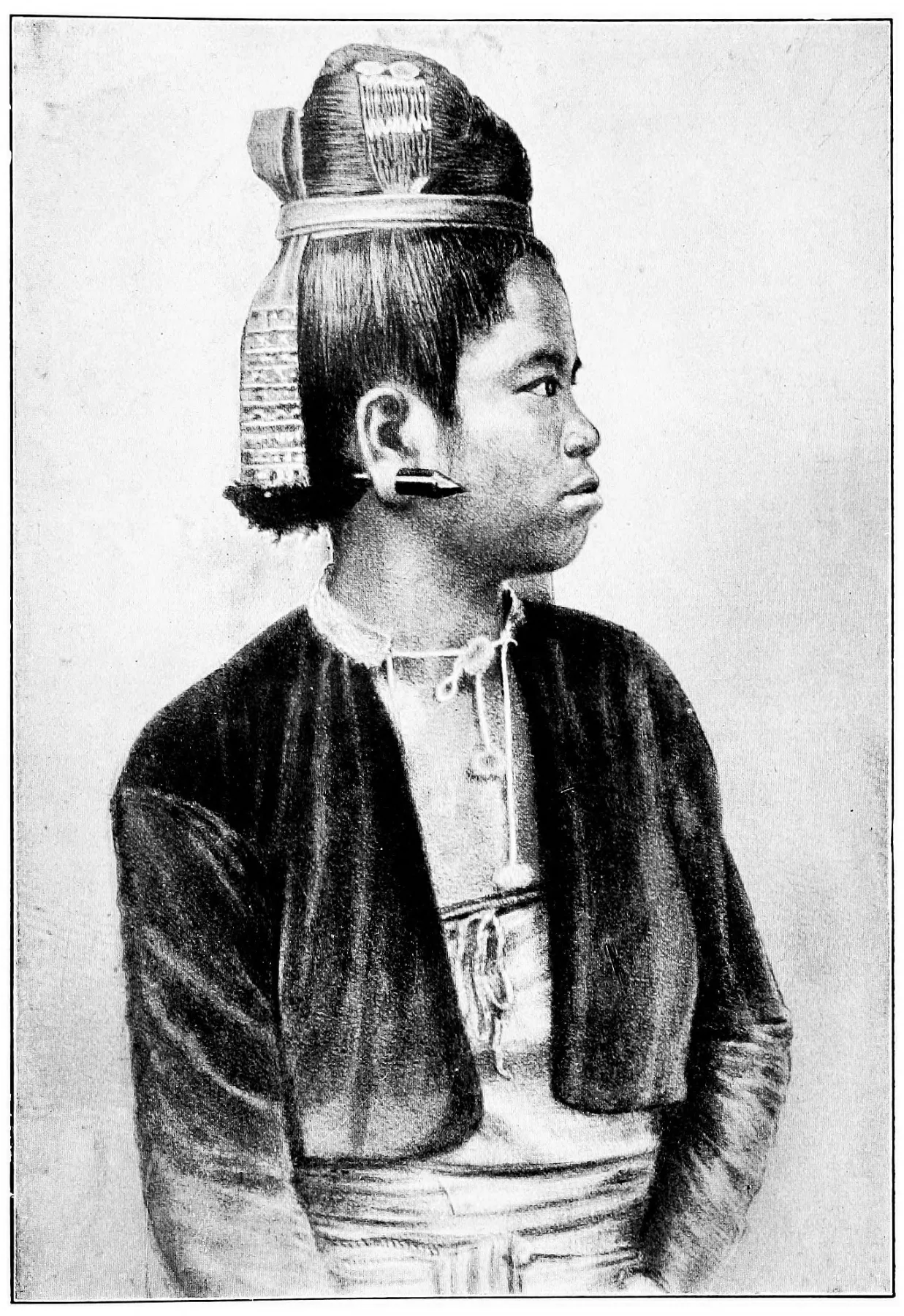
PLATE II.
From a Photograph by Dr. Simpson.
CHULIKATA WOMAN.
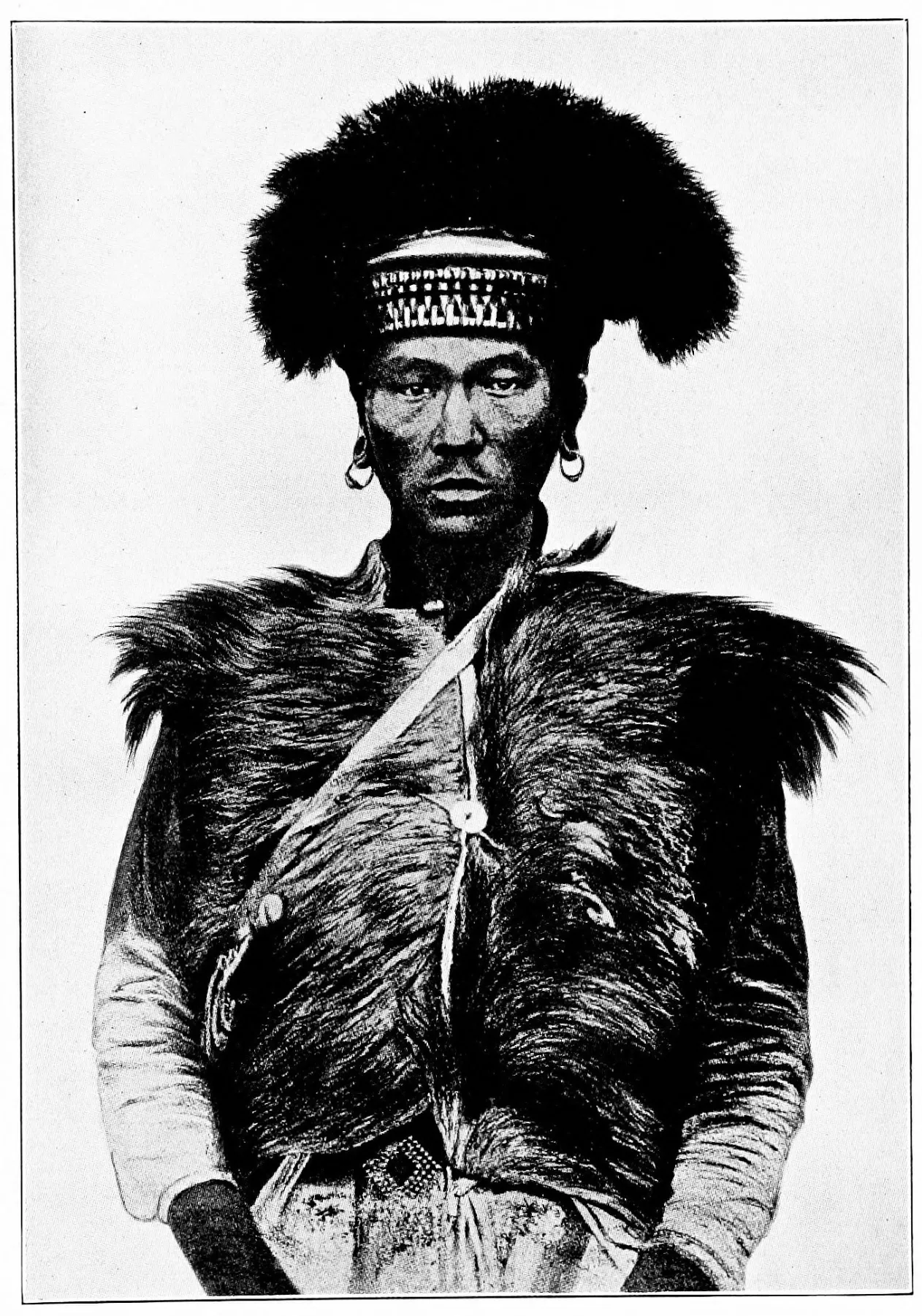
A typical, but not a favourable specimen of a Chulikata, or crop-haired, Mishmi woman. This tribe occupies the hills north of Sadiya, but their country is so difficult of access, that very little is known about it. They trade between Tibet and Assam, when at peace ; but they are considered the most treacherous and aggressive of all the North-Eastern tribes, though more skilled in arts and manufactures than their neighbours, the Abors to the East, and the Mishmis to the West. They are called Chulikata, or crop-haired, from their having originated the modern fashion of cutting the hair straight across the forehead. The men cut theirs to the level of the rims of their wicker helmets as far as the back of the ear ; both sexes wear it long behind.
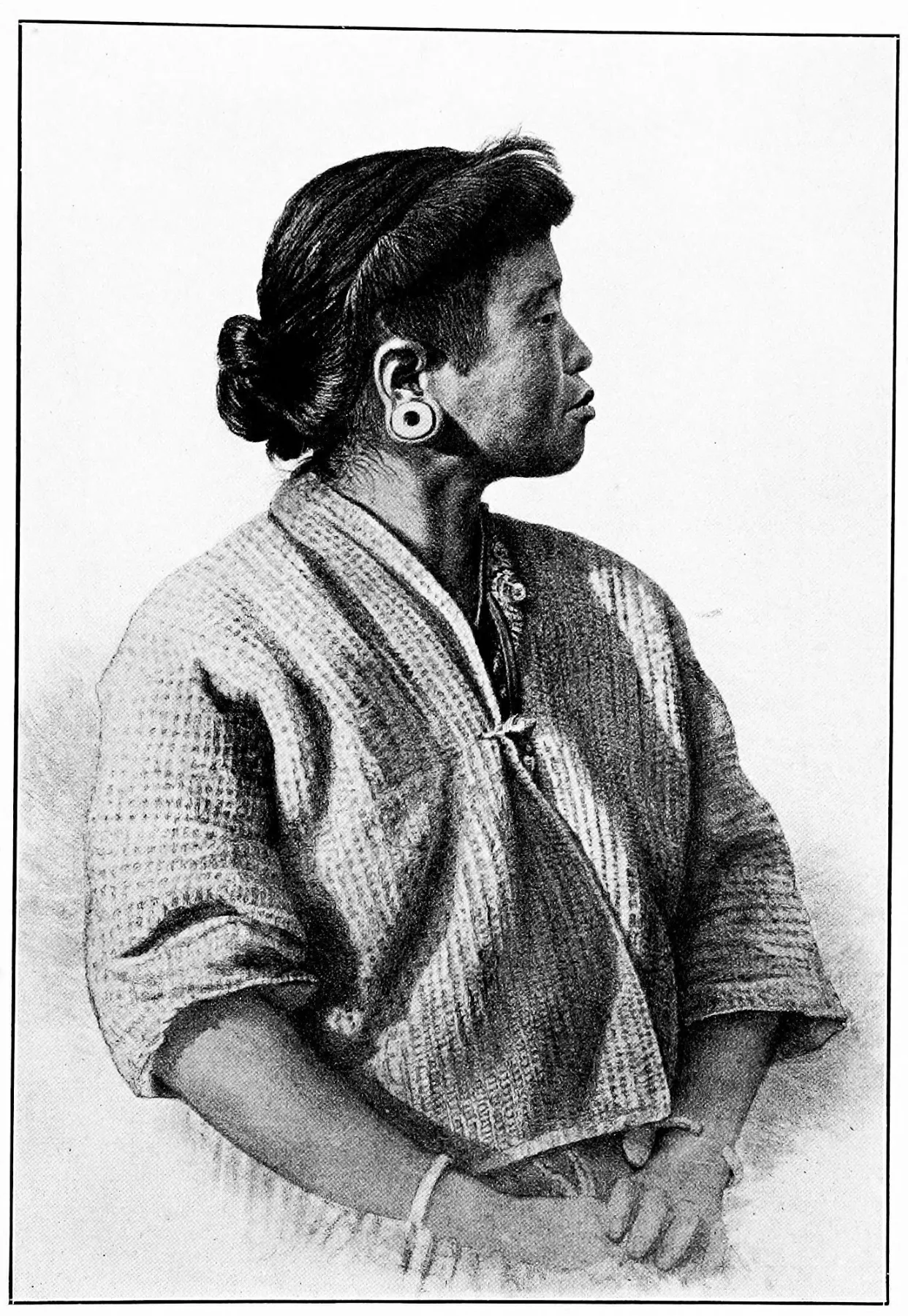
PLATES III & IV.
FROM PHOTOGRAPHS BY DR. SIMPSON.
MALE AND FEMALE OF THE TAIN OR DIGARU MISHMI TRIBE.
These are both good average specimens of the tribe. They are, as a rule, fairer and with softer features than the Abors, acquiring from their journeys across the snow a becoming ruddiness of complexion. The young women have generally pretty figures, which their costume shows to advantage. The frontlet, a thin plate of bright silver, is a picturesque and becoming ornament, worn on the forehead by all women who can afford it. They are a quiet, inoffensive people, occupying the hills and skirts of the hills between the Digaru and Dilli Rivers, two of the north hill-affluents of the Brahmaputra, and devoting themselves chiefly to trade.
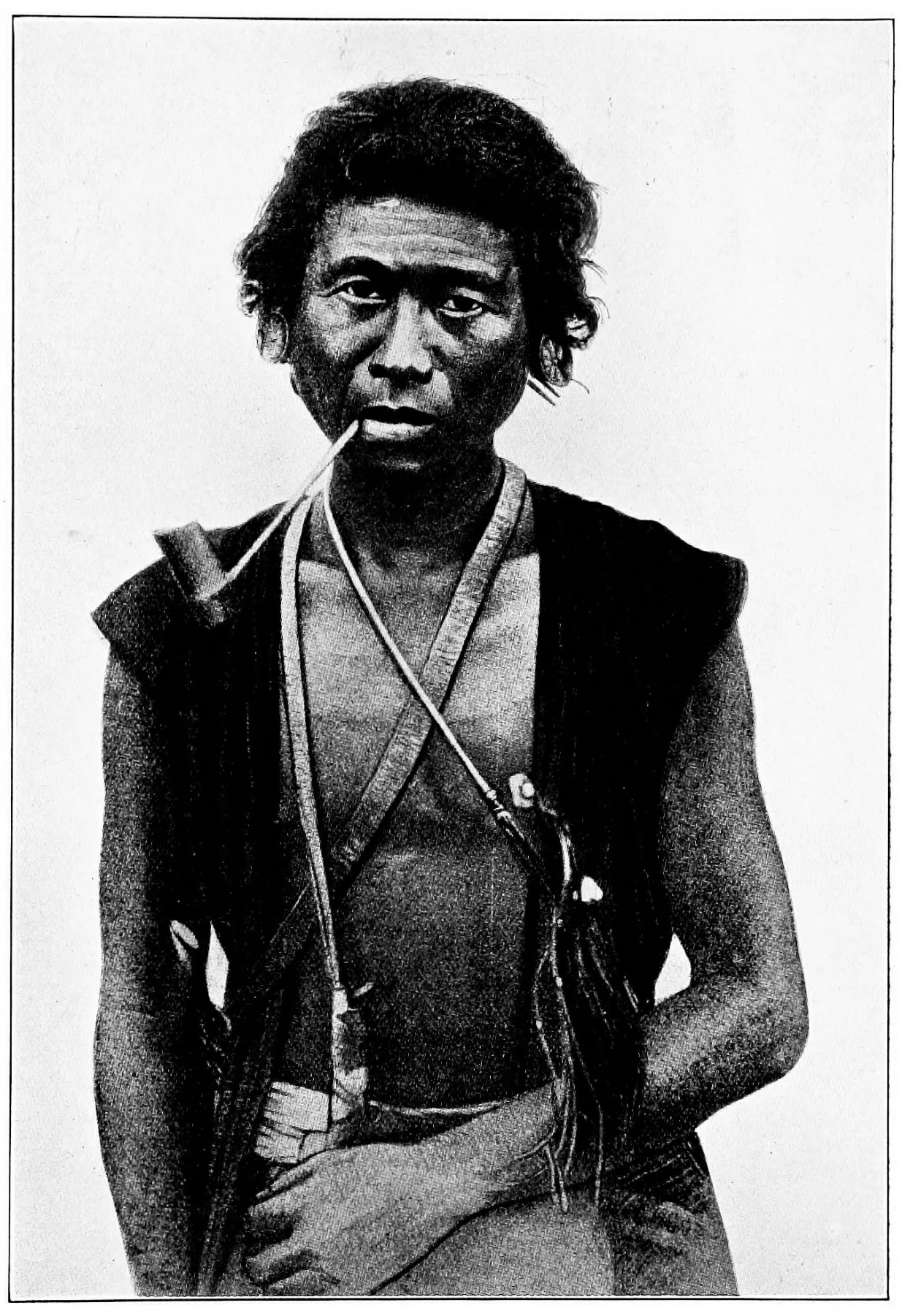
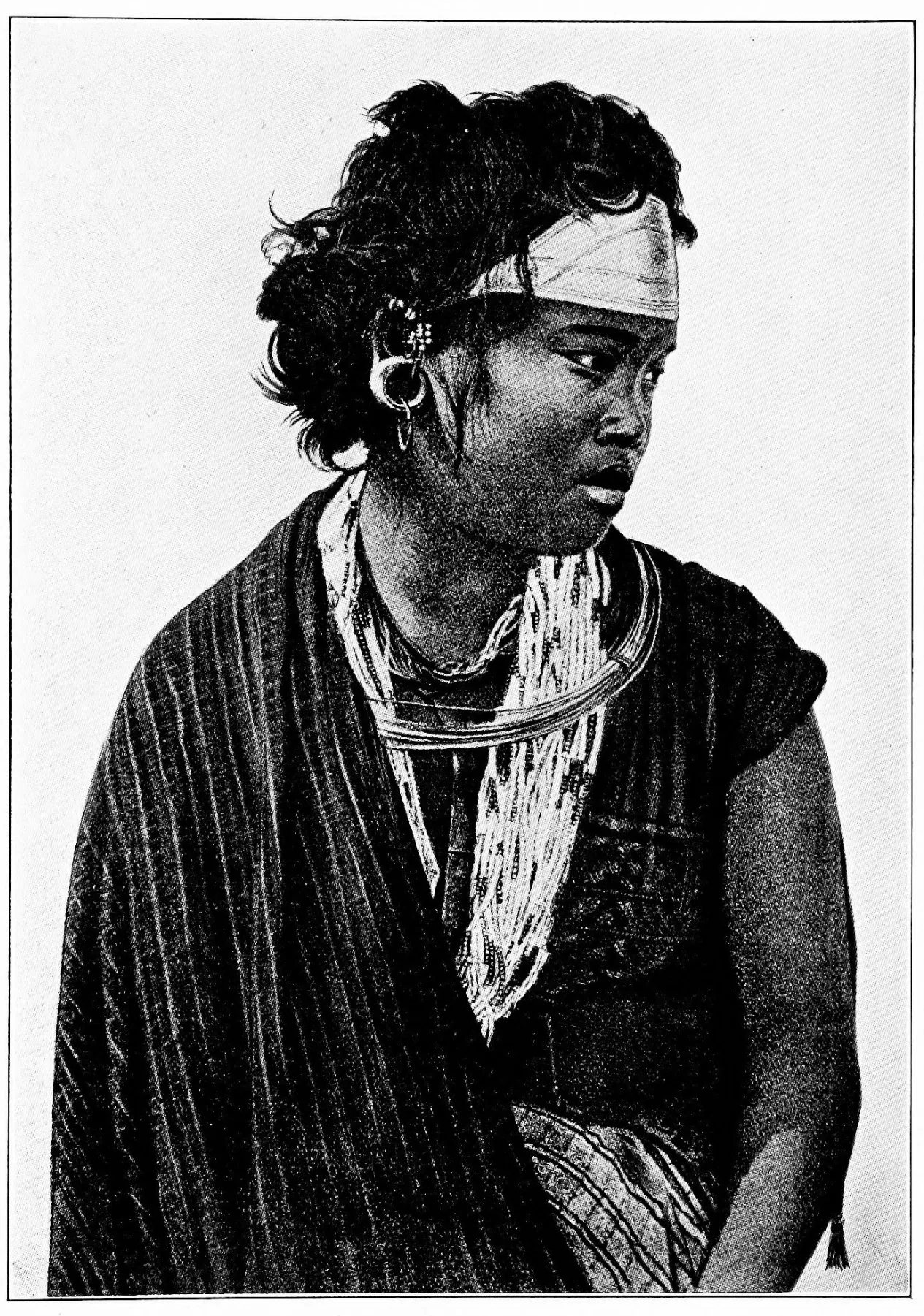
PLATE V.
From a Photograph by Dr. Simpson.
BOR ABOR GIRL.
A Bor Abor girl, belonging probably to some village near the great Dihong River in the Sub-Himalayan range. These ladies crop their hair all round as the least troublesome method of disposing of it. The illustration gives a capital representation of their strongly marked Mongolian features, and their coarse, good-tempered faces. This young girl’s costume and the ornaments are all apparently from the North ; the blue vitreous turquoise-like beads, which our glass manufacturers cannot imitate, and cornelian and agate pebbles.
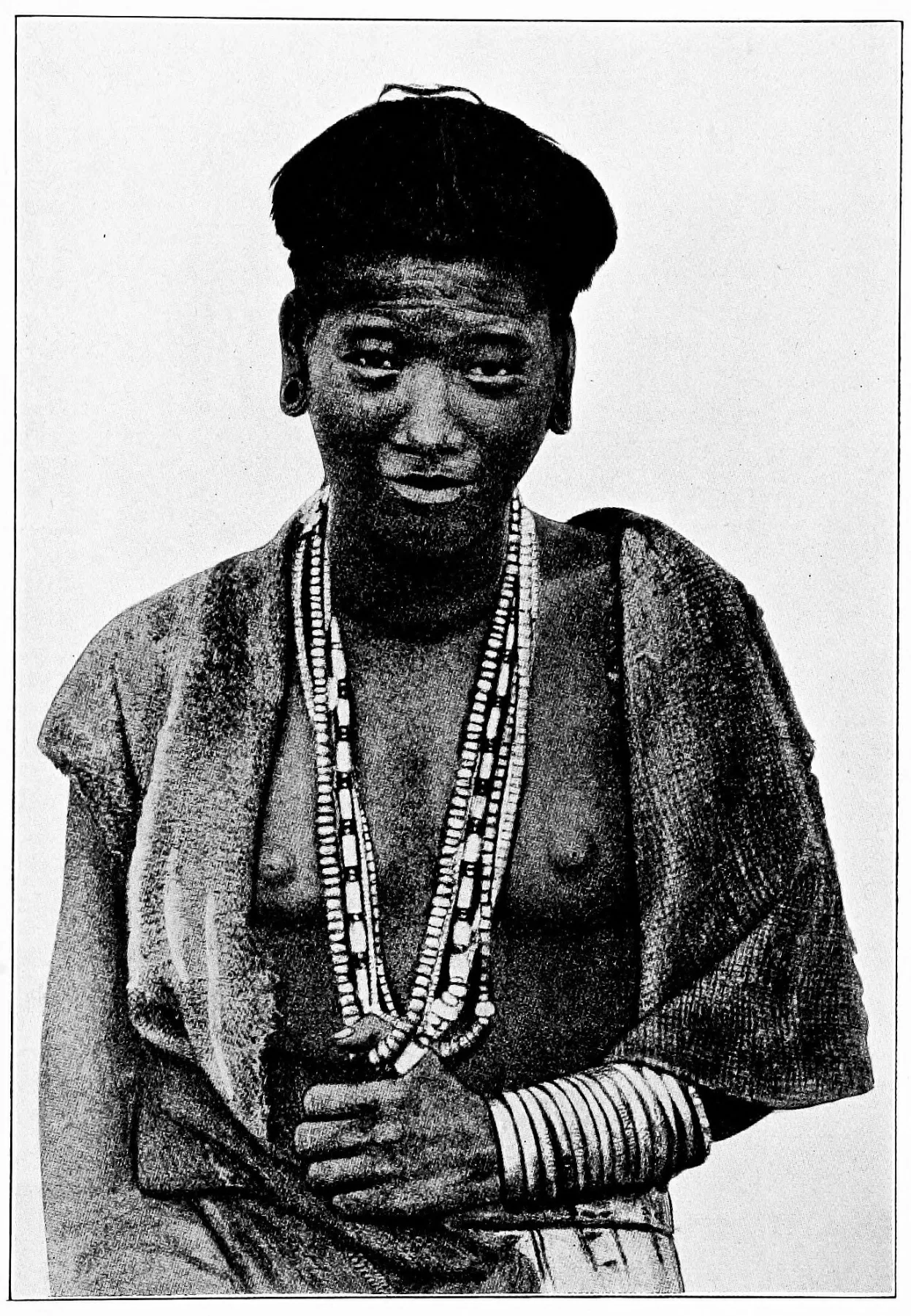
PLATE VI.
From a Photograph by Dr. Simpson.
A CHULIKATA MISHMI CHIEF IN FULL DRESS.
PLATES VII & VIII.
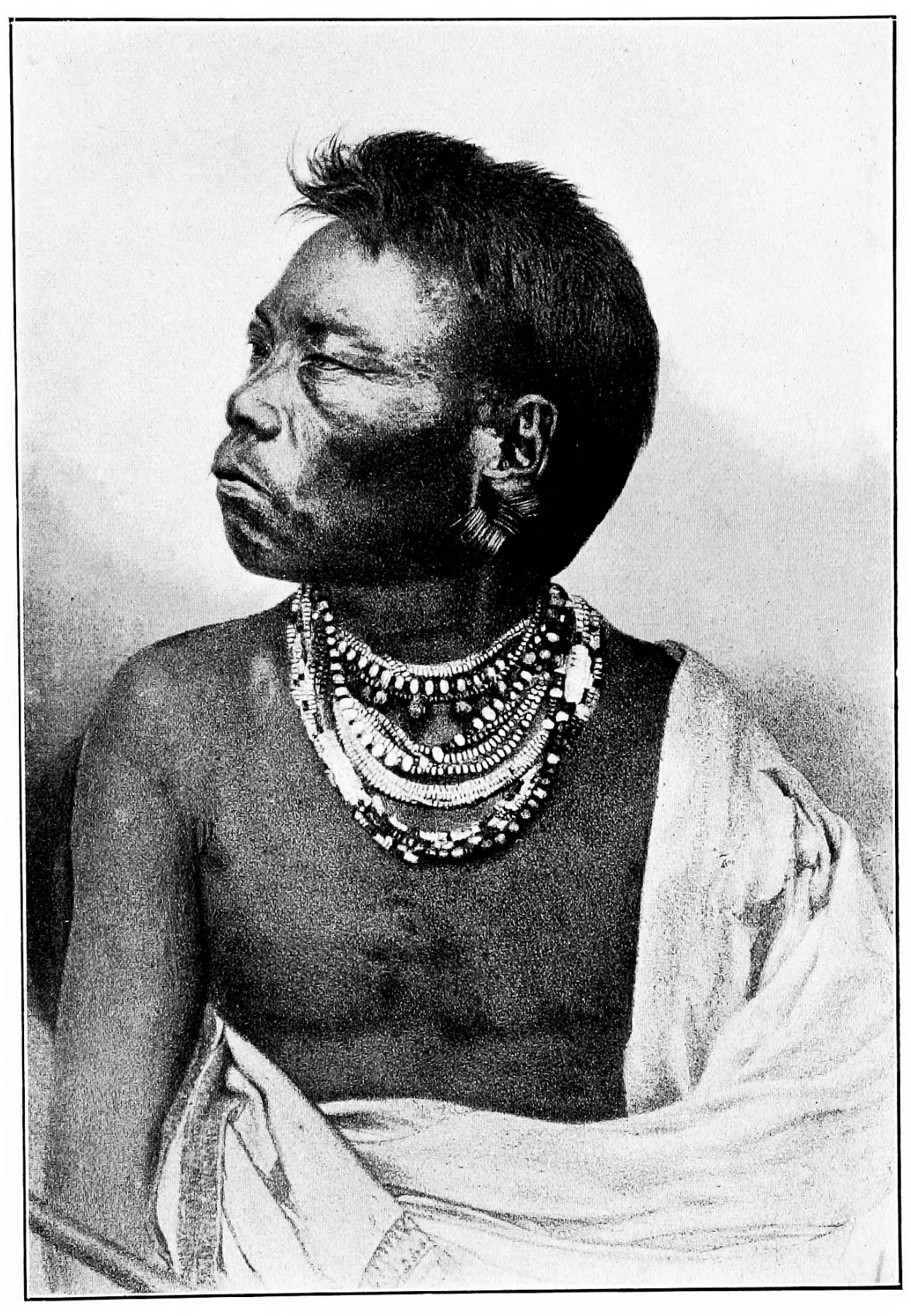
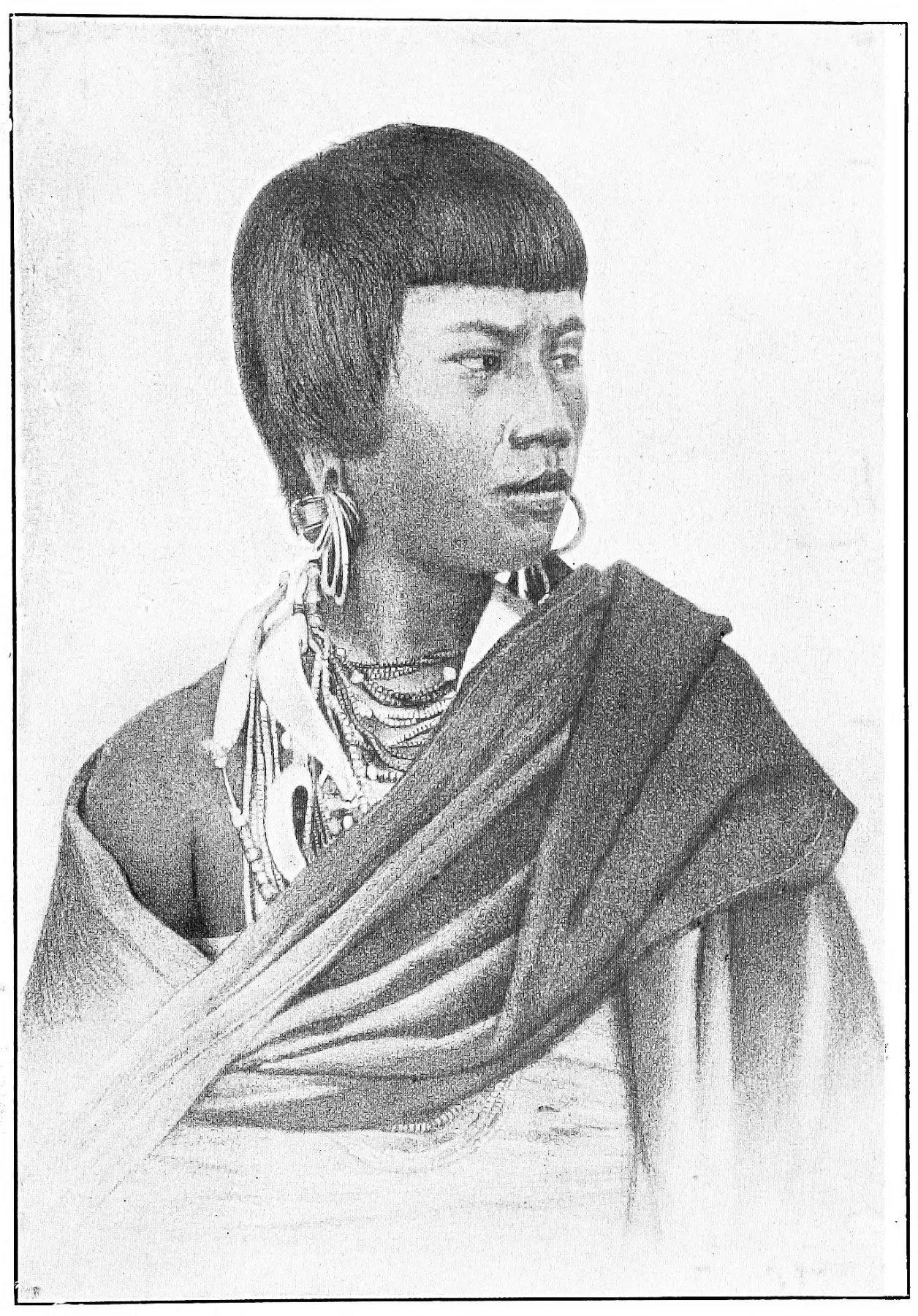
MALE AND FEMALE OF THE LOWER NAGA GROUP.
These are admirable illustrations of one of the Naga tribes, who are found in the hills south of the Nowgong district, between the Doyang and Kopili Rivers, in the Assam Province. There is nothing that I know of except the name to connect these clans with the tribes east of the Doyang. Their features are harsher, more decidedly Mongolian ; and their language, which is quite different, associates them with the Manipuri and Kuki tribes and their cognates.
PLATES IX & X.
From Photographs by Dr. Simpson.
LEPCHAS (SIKKIM).
The Lepchas are found in Western Bhutan, Eastern Nepal, and in the small State between both, called Sikkim. They are well known at Darjeeling.
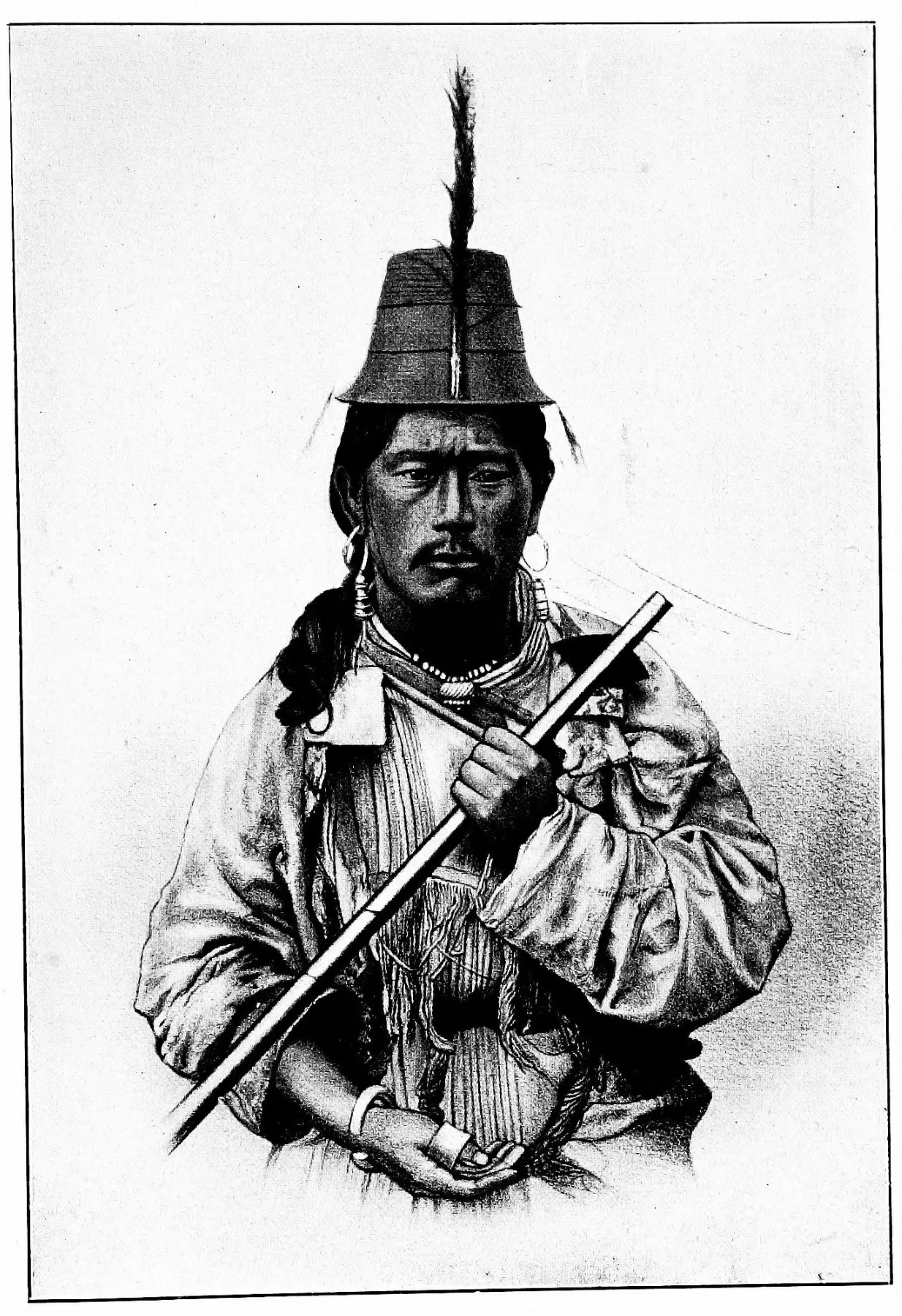
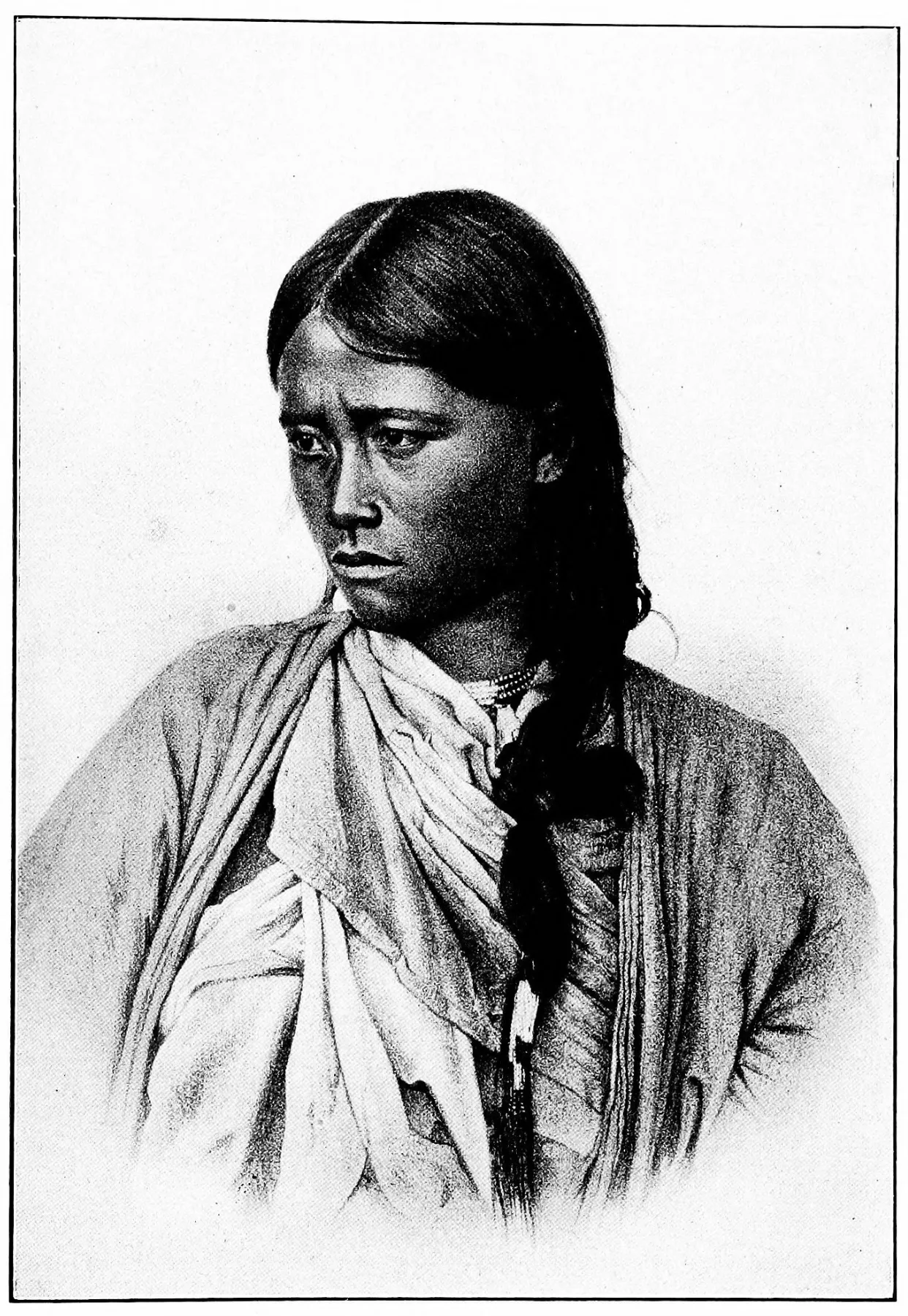
PLATES XI & XII.
Photographed by Dr. Simpson.
LIMBU, MALE AND FEMALE.
The very respectable-looking gentleman here represented and the richly bedizened old lady belong, I presume, to the upper class of Limbu society. The Limbus or Kirantis are represented by Mr. Hodgson and others as approximating in appearance to the darker Turanian race in colour and feature, but the old lady is apparently of light complexion, and has a very Mongolian type of face.
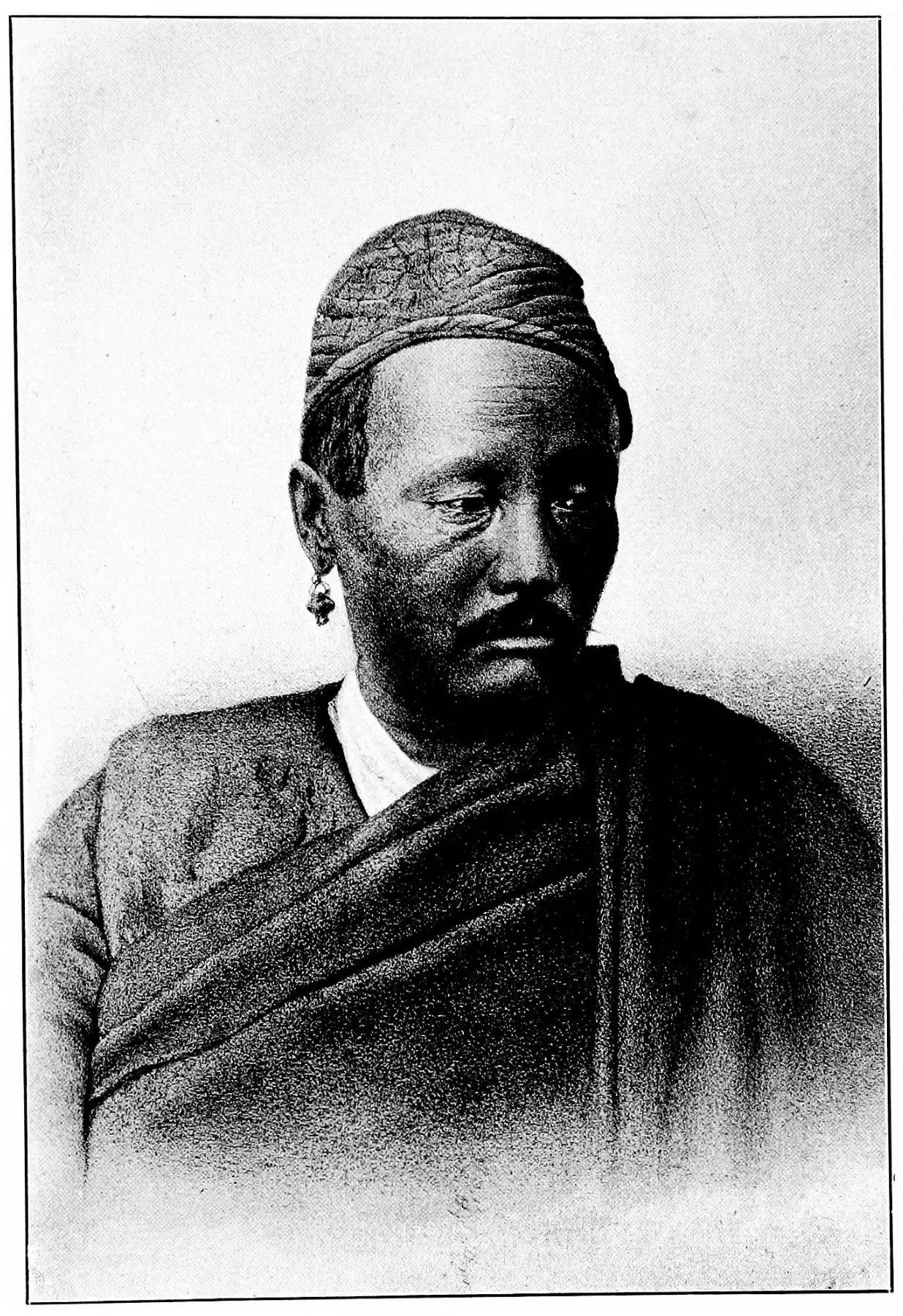
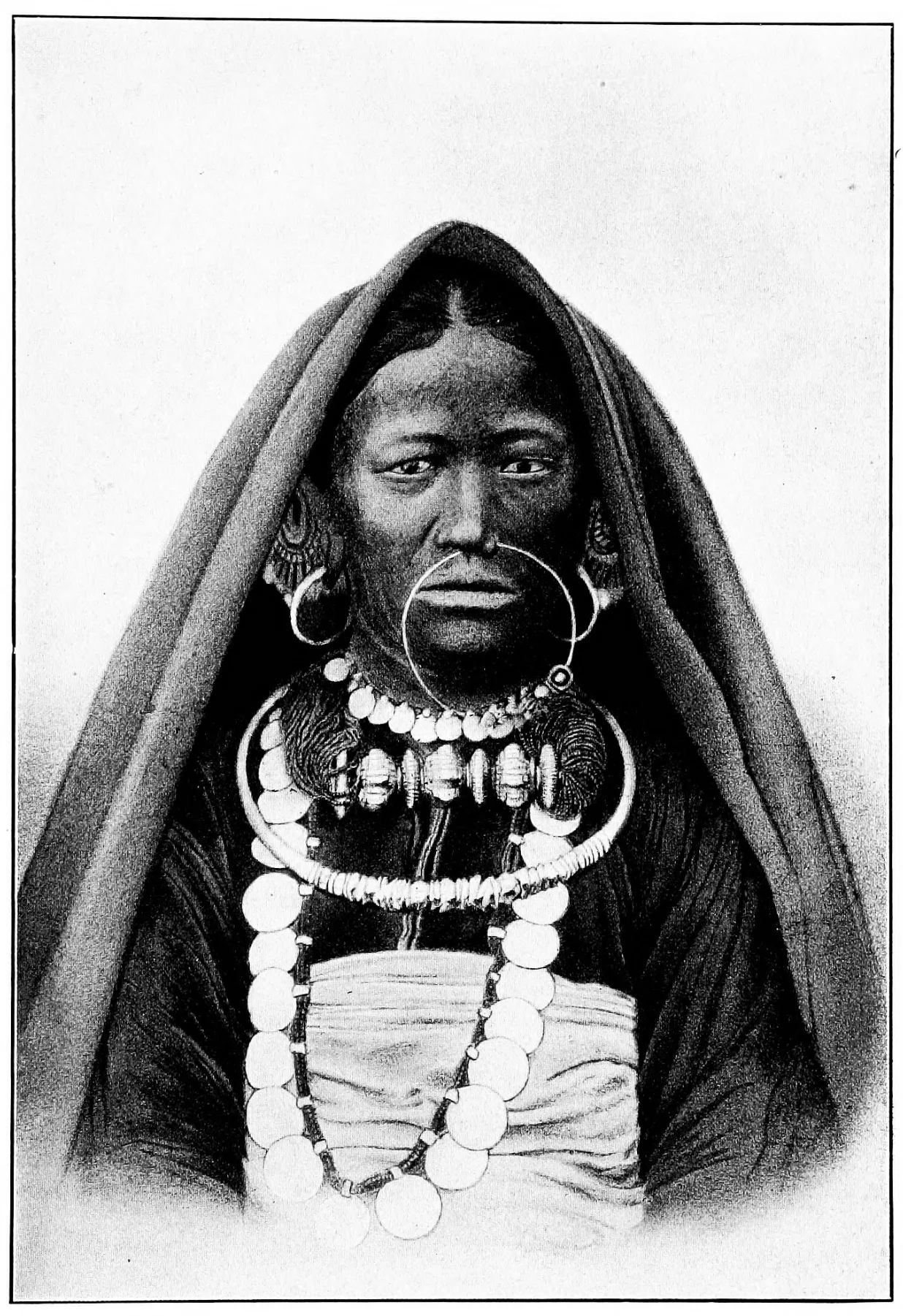
PLATE XIII.
From a Photograph by Dr. Simpson.
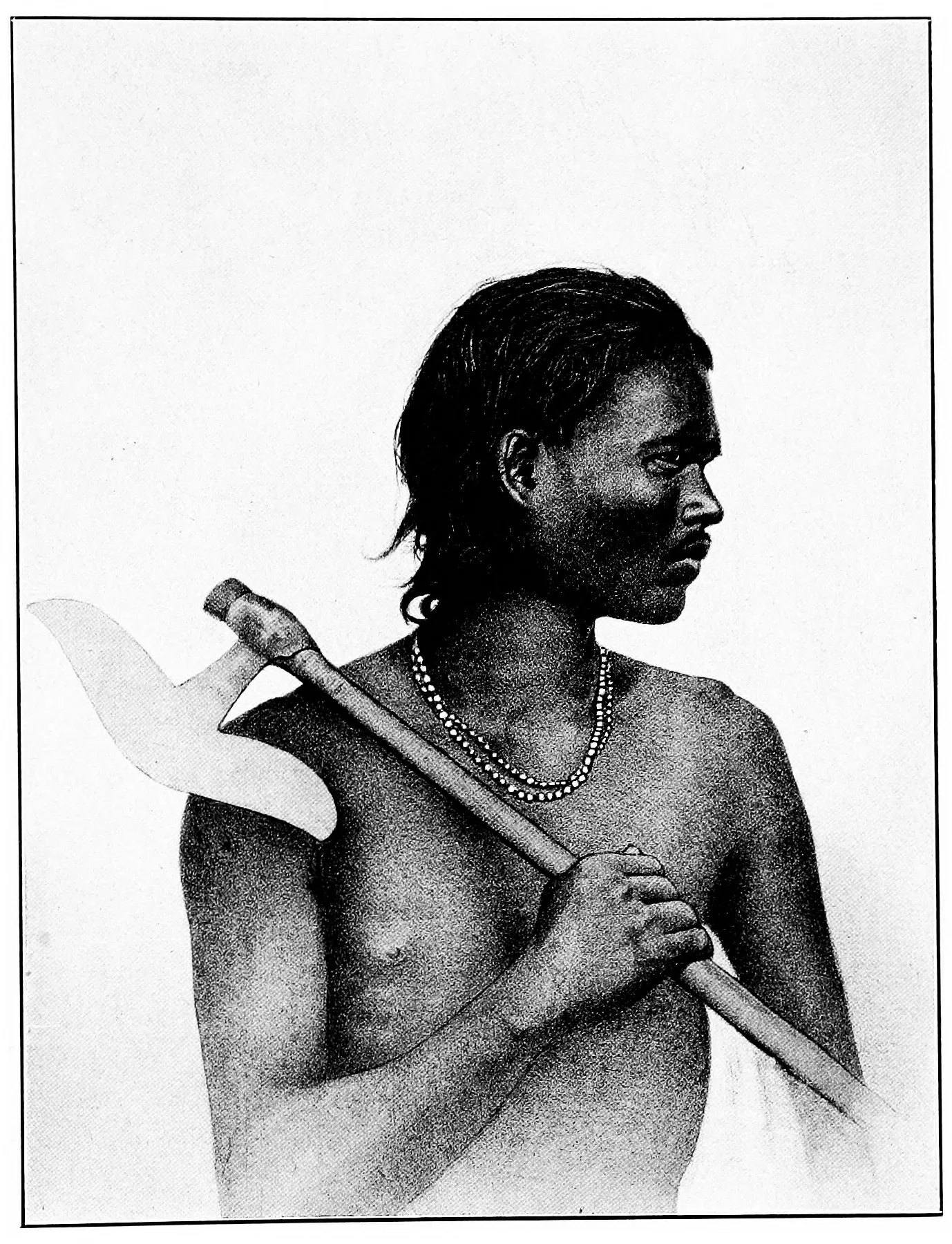
A ‘HO’ OR KOL OF SINGHBHUM.
This is a good typical representation of a young Singhbhum Ho or Kol of the clan, or Kili, Koadadah. In his right hand he grasps the national weapon called ‘tangi.’ This division of the Kols, called also the Larka, or warlike Kols, are found only in Singhbhum.
PLATES XIV & XV.
From Photographs by Dr. Simpson.
MUNDAS OF CHUTIA NAGPUR, MALE AND FEMALE.
The above are Mundas of villages close to Ranchi, the capital of the Province of Chutia Nagpur, who living with Oraons have adopted their style of decoration. They are good typical representatives of the race, though not handsome specimens. They show the breadth of face and obliquity of eye, which affirm the north-eastern origin ascribed to them.
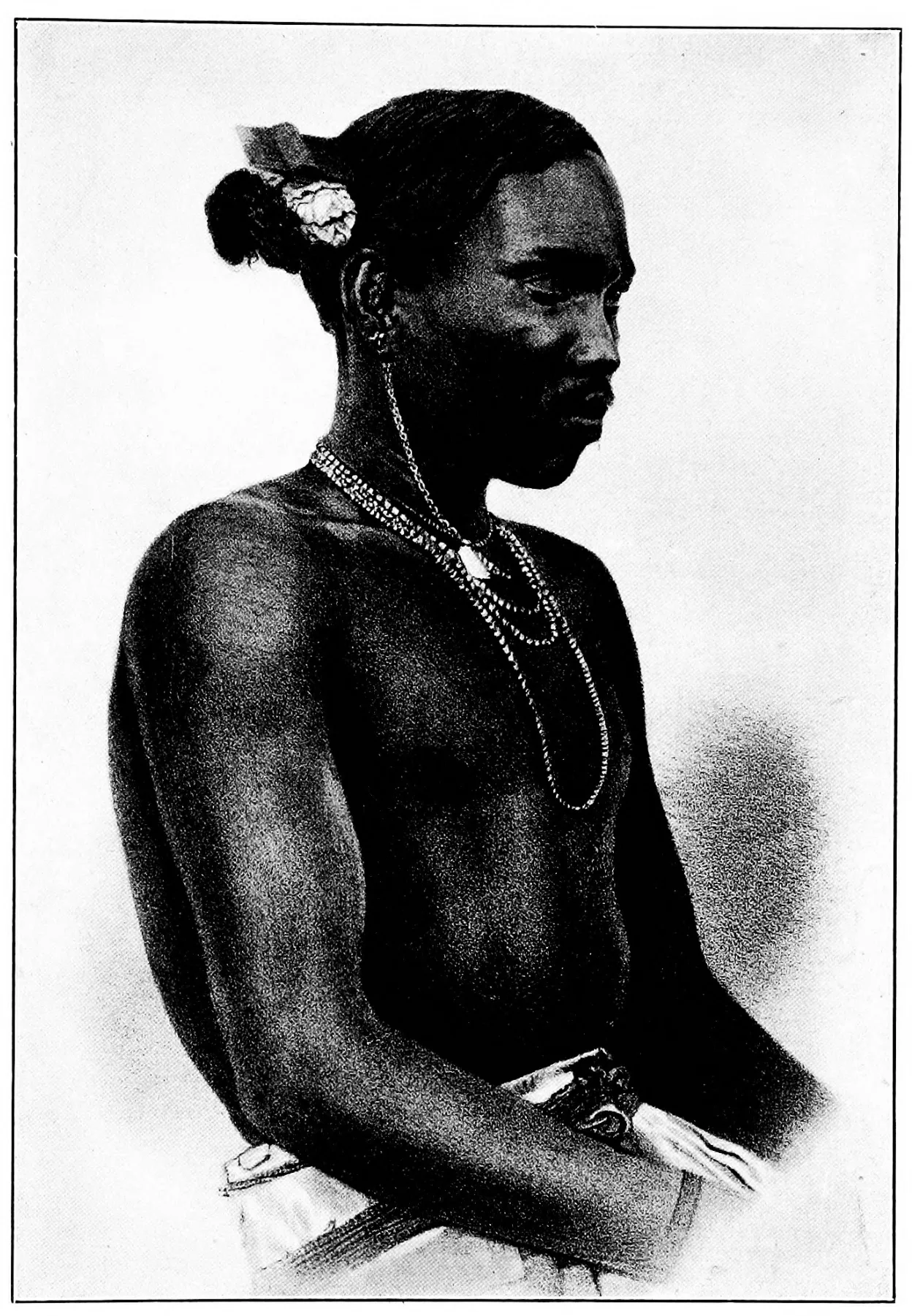
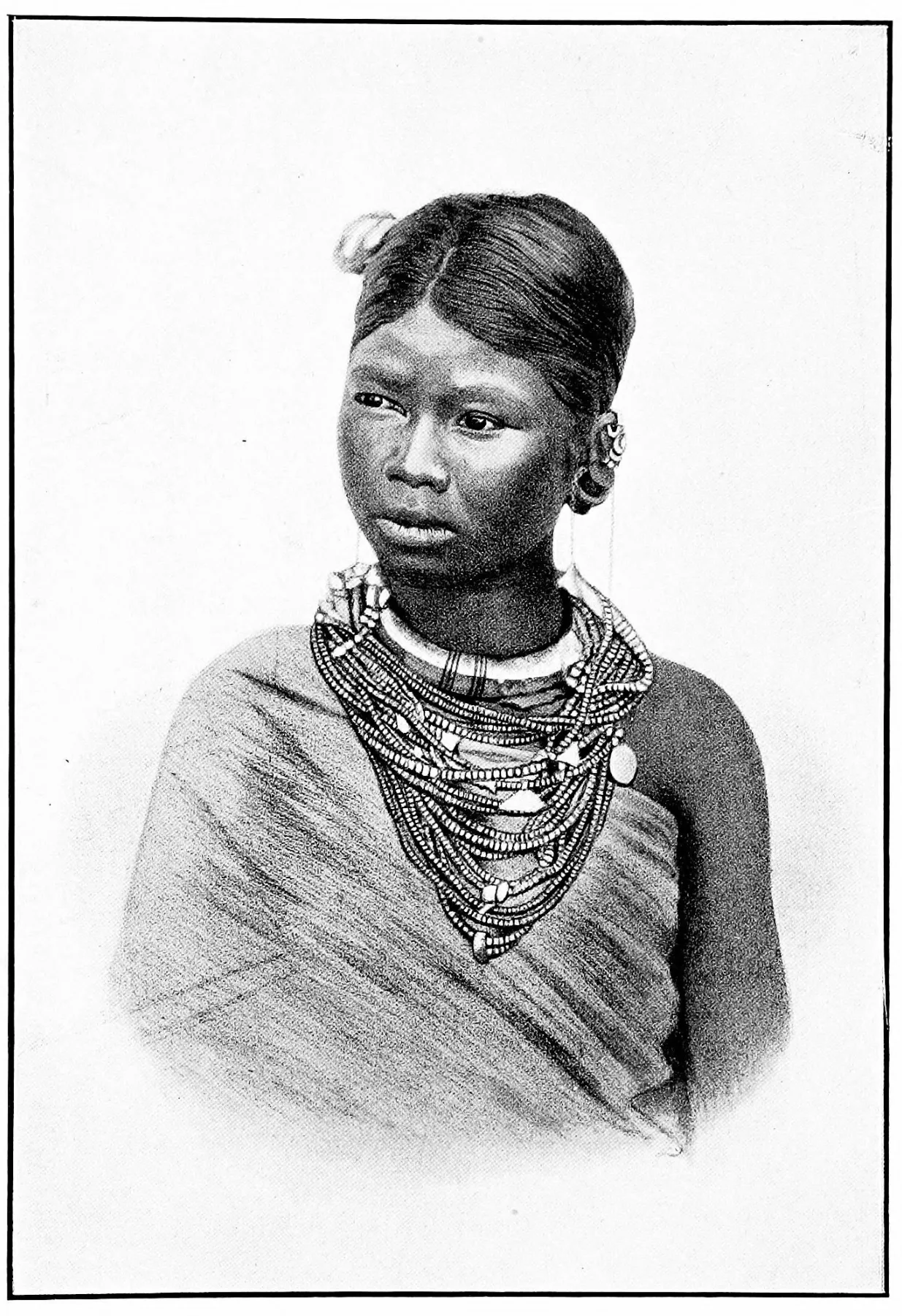
PLATE XVI.
From a Photograph by Dr. Simpson.
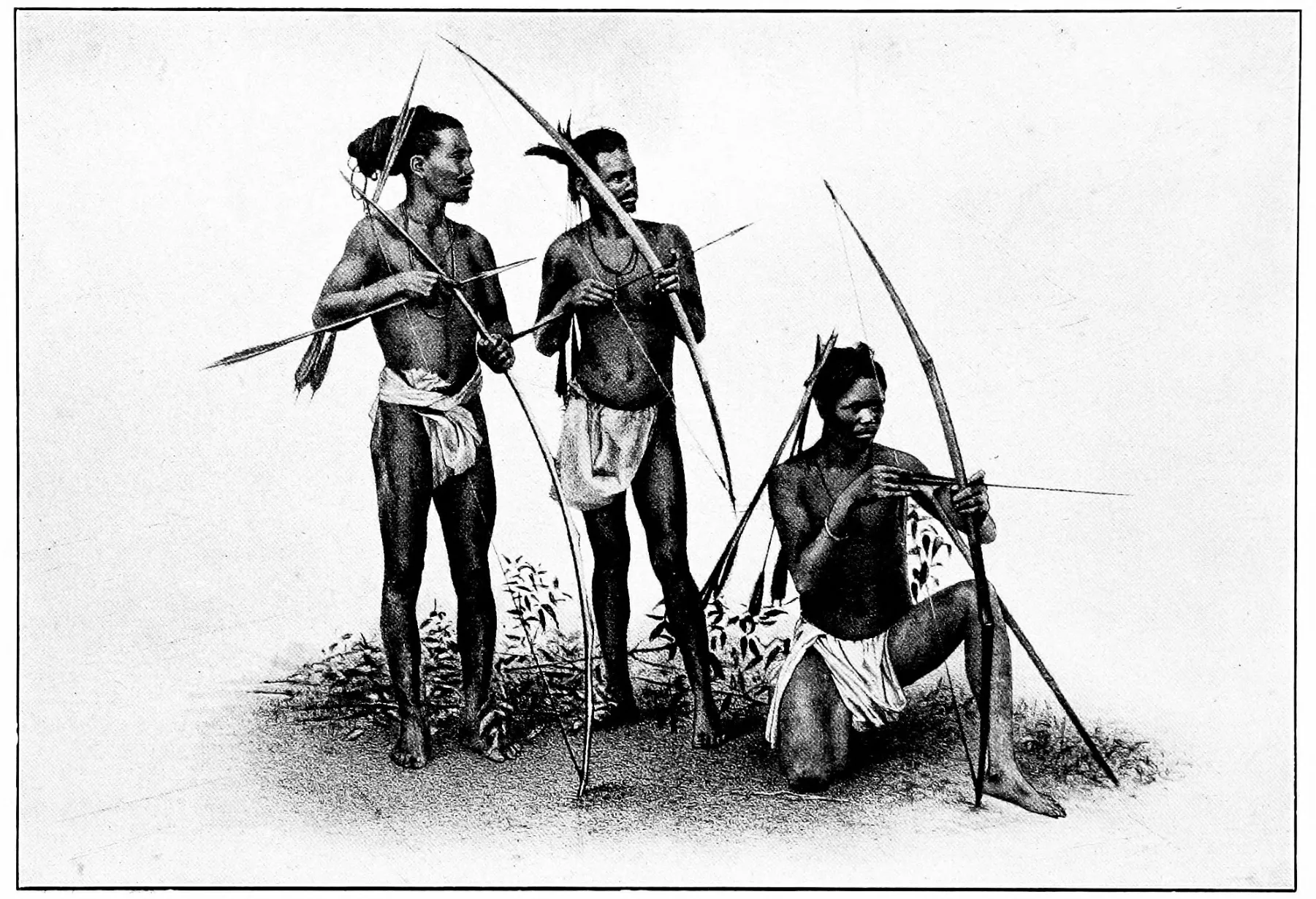
A GROUP OF KORWAS.
This is one of the wildest of the Kolarian tribes. They are found in the hills of the Sarguja and Jash-pur States in the Province of Chutia Nagpur.
PLATES XVII & XVIII.
From Photographs by Dr. Simpson.
ORAONS, MALE AND FEMALE.
These are very fair specimens of the great Oraon tribe who have been sometimes called the ‘navvies’ of India. The nucleus of the tribe is in Chutia Nagpur proper, from whence they have spread as settlers to all the surrounding districts, and as labourers to Assam, Kachar, Mauritius, the West Indies, and other British and French Colonies.
PLATES XIX & XX.
From Photographs by the late Mr. Tosco Peppé.
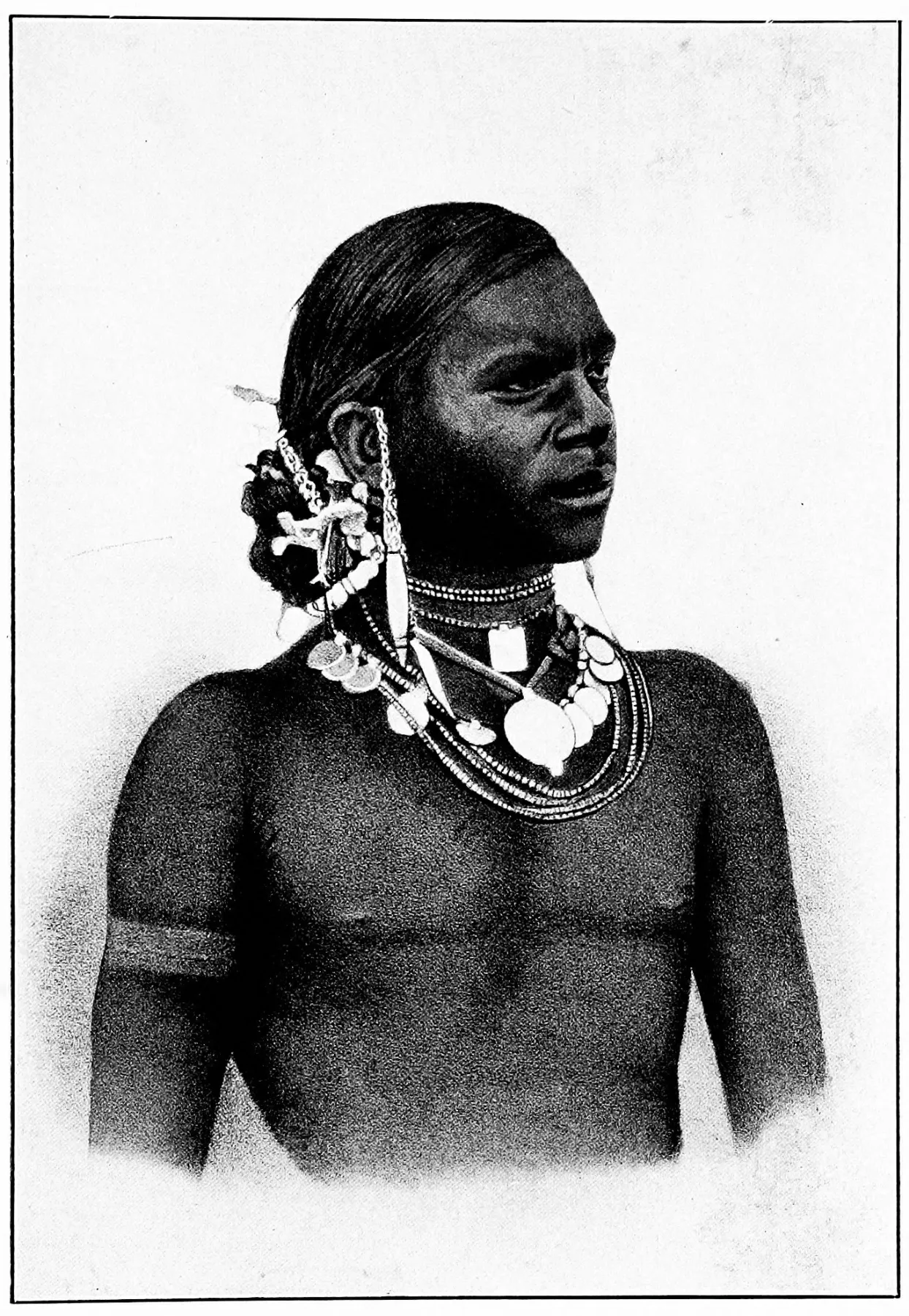
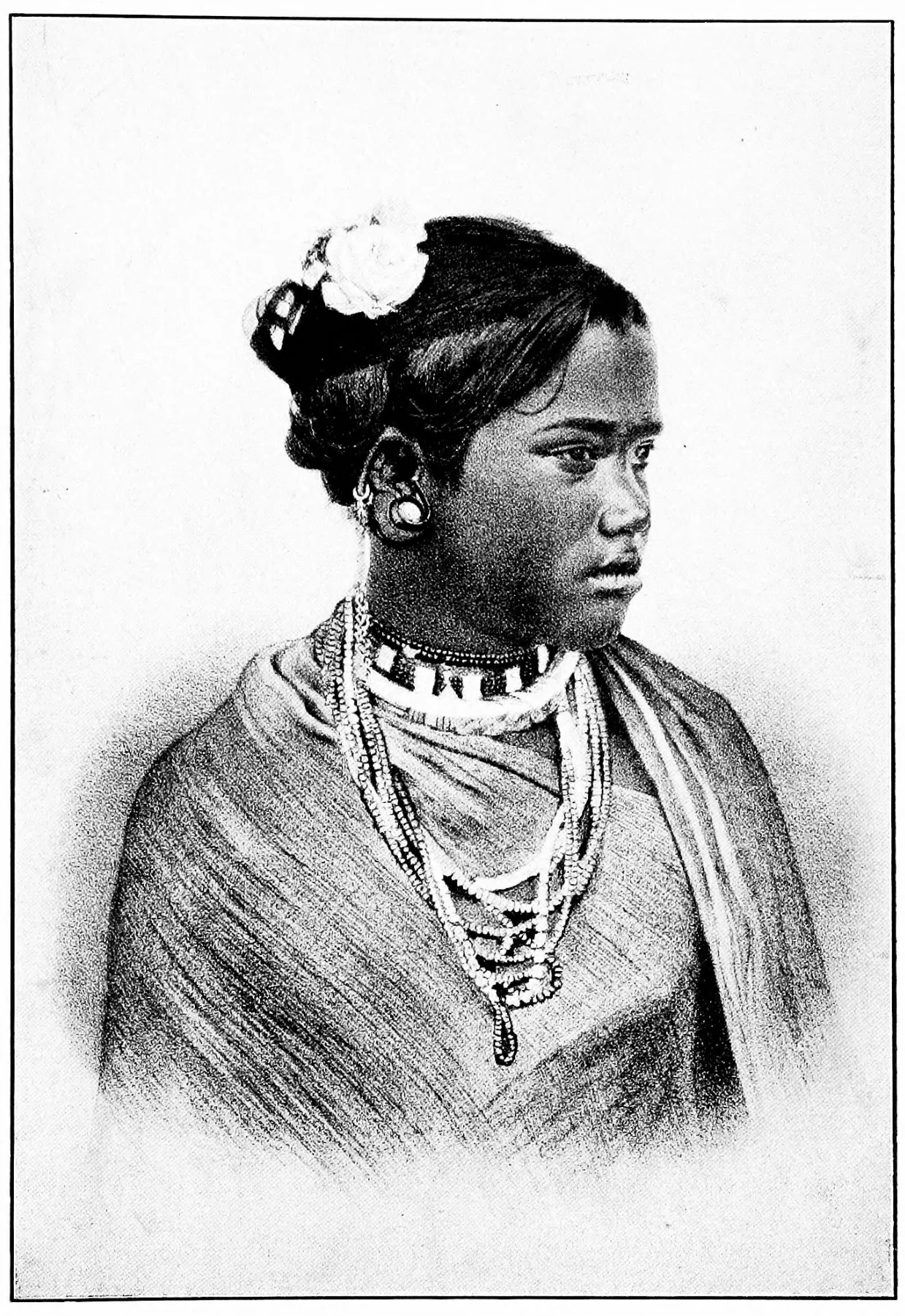
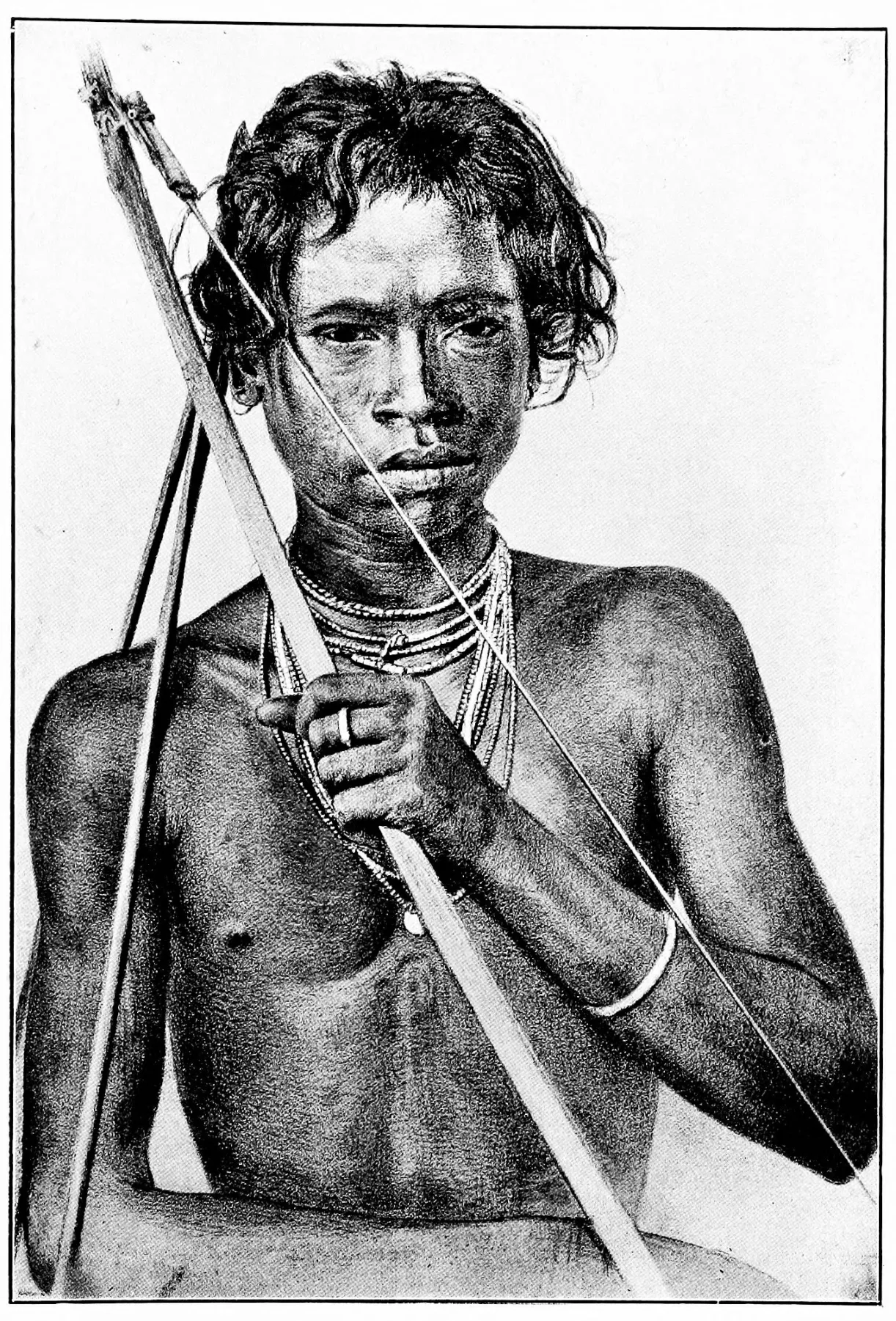
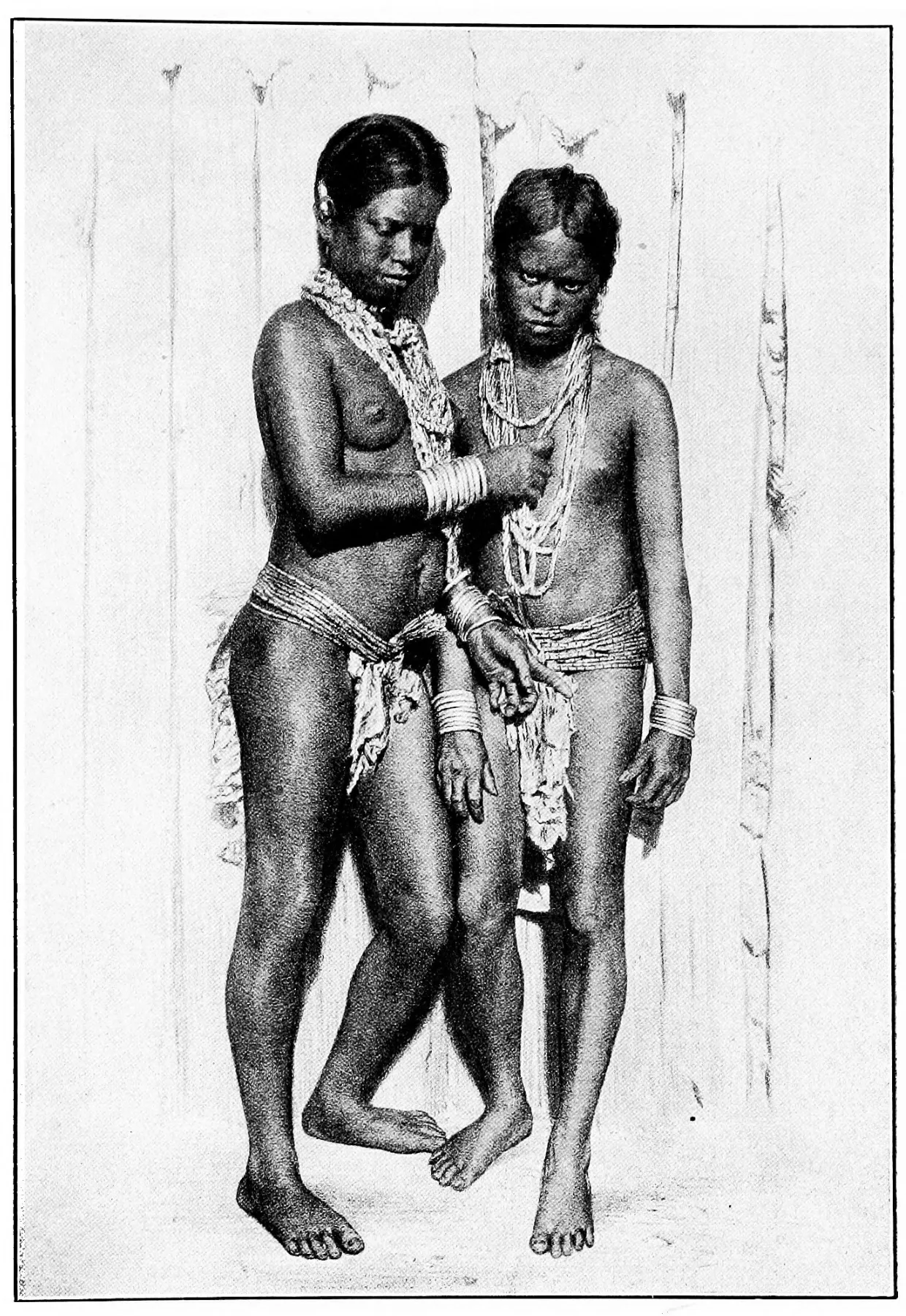
JUANG MAN AND GIRLS.
The photographs of the young Juang man and girls were taken by the late Mr. Tosco Peppé at Gonasika in Keonjhar, one of the Cuttack Tributary States, the legendary cradle of the race. The young man keeps his spare arrows hanging by the barbs from his matted black hair, as is also the custom of the Korwas. The beads or bugles forming the girdles worn by the girls are of fine earthenware made by themselves. The bracelets are of brass and the necklaces of glass beads or flowers. The rest of the attire is of leaves. Mr. Peppé had immense difficulty in inducing these wild timid creatures to pose before him, and it was not without many a tear that they resigned themselves to the ordeal. It is right to mention that they were brought in from the forest, where they had been searching for their daily bread, which chiefly consists of forest produce, and their leaves were not as neatly arranged as they would have been if the girls had had time to make a fresh toilette.
PLATES XXI & XXII.
From Photographs by the late Mr. Tosco Peppé.
MALE AND FEMALE OF THE BENDKAR TRIBE.
I have assigned to the Bendkars of Keonjhar a relationship with the Sauras or Savaras. They have only been met with in Keonjhar, and they are found there in small communities widely separated. The man holds the only implement that they use in tillage. It is the origin of the plough! The handle with the crook is all one piece of wood; in the illustration the crook is made to appear as if it was fitted on to the handle, but this is incorrect, there is no joint, and there should have been no shade at the junction. The only use they ever make of cattle is to offer them as sacrifice to the gods. Thus we have in the Bendkars a people who in their agriculture use neither iron nor cattle.
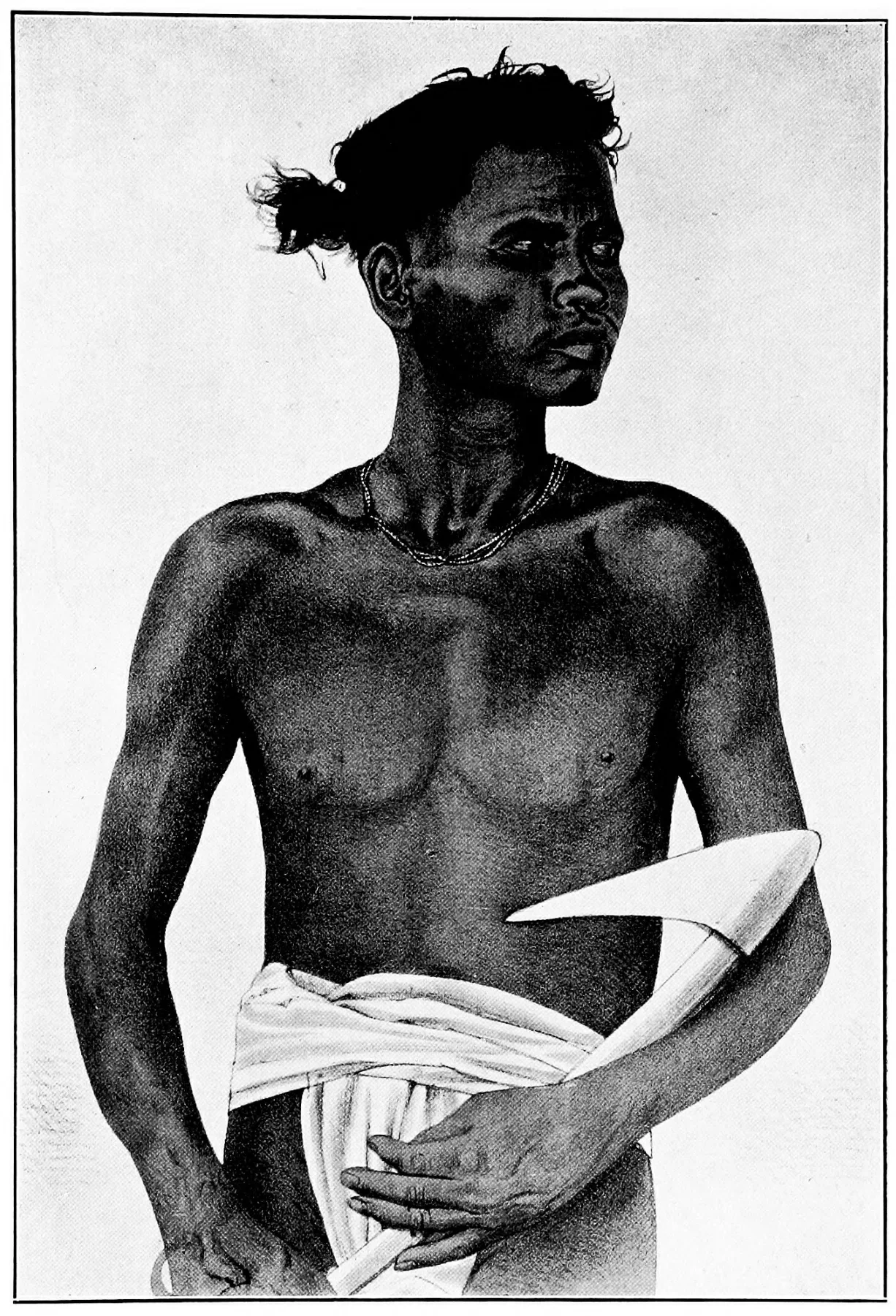
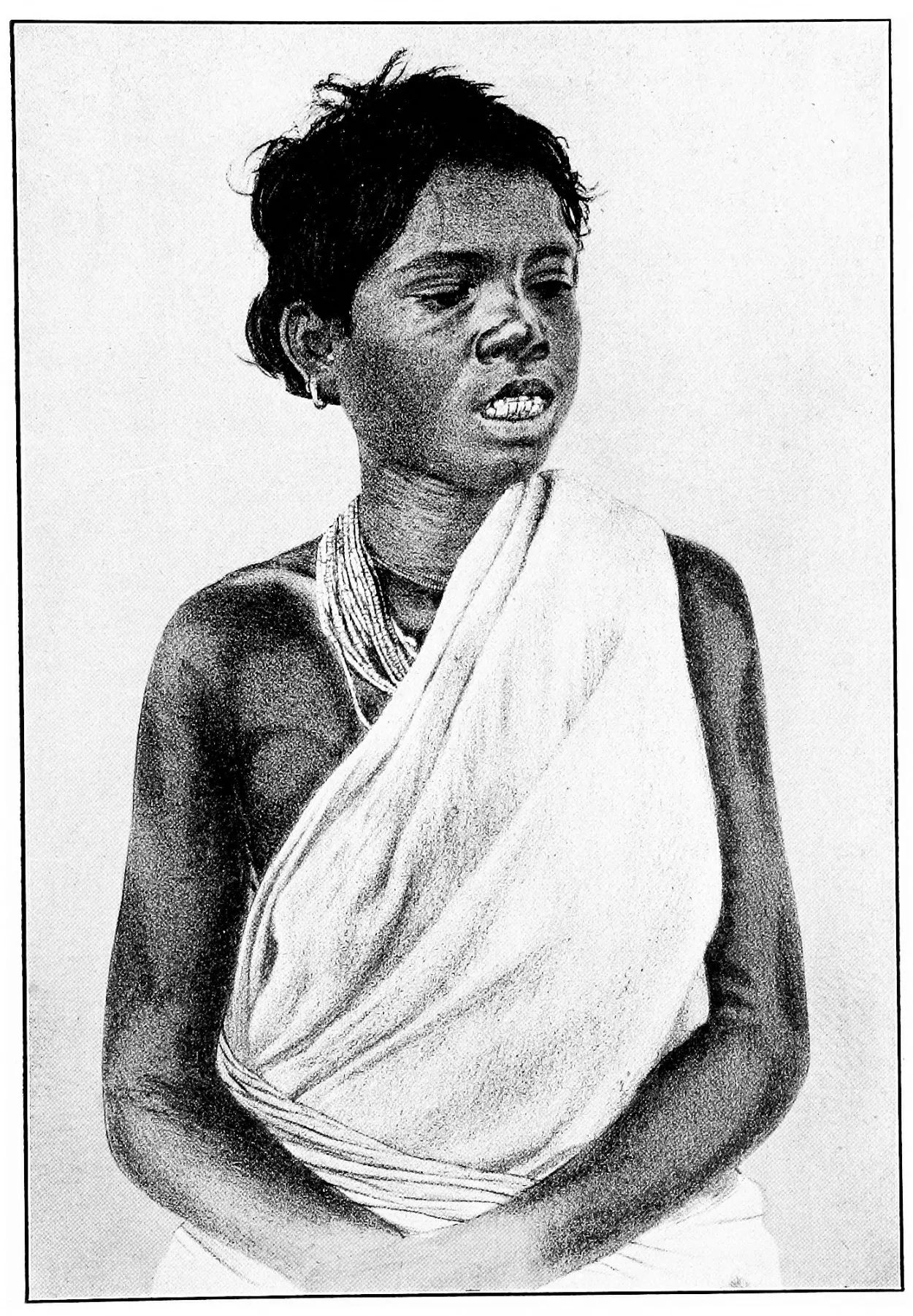
PLATE XXIII.
From a Photograph received from Mr. E. H. Mann.
A GROUP OF ANDAMANESE AT GOVERNMENT HOUSE, PORT BLAIR, ANDAMAN ISLANDS : NEGRITO TYPE.
The Andamanese represent a type found only in these islands, and have affinity with no other race on the Indian continent. They are probably a remnant of a Negrito people at one time inhabiting Burma or the Malay Peninsula. In ancient times the Andaman Islands seem to have been connected with the Malay Peninsula, and thus migration became possible. As regards physical characteristics, the Andamanese are short in stature, the skin when clean is black, and the hair so excessively woolly, that when separated from the head, it is almost unrecognisable as human hair. They are nomadic, having, generally speaking, no fixed dwelling-places. Their numbers have considerably decreased owing to infertility, high infant mortality, an increase in the death-rate among adults, the last due to change of environment under the influence of civilisation, and to imported diseases.
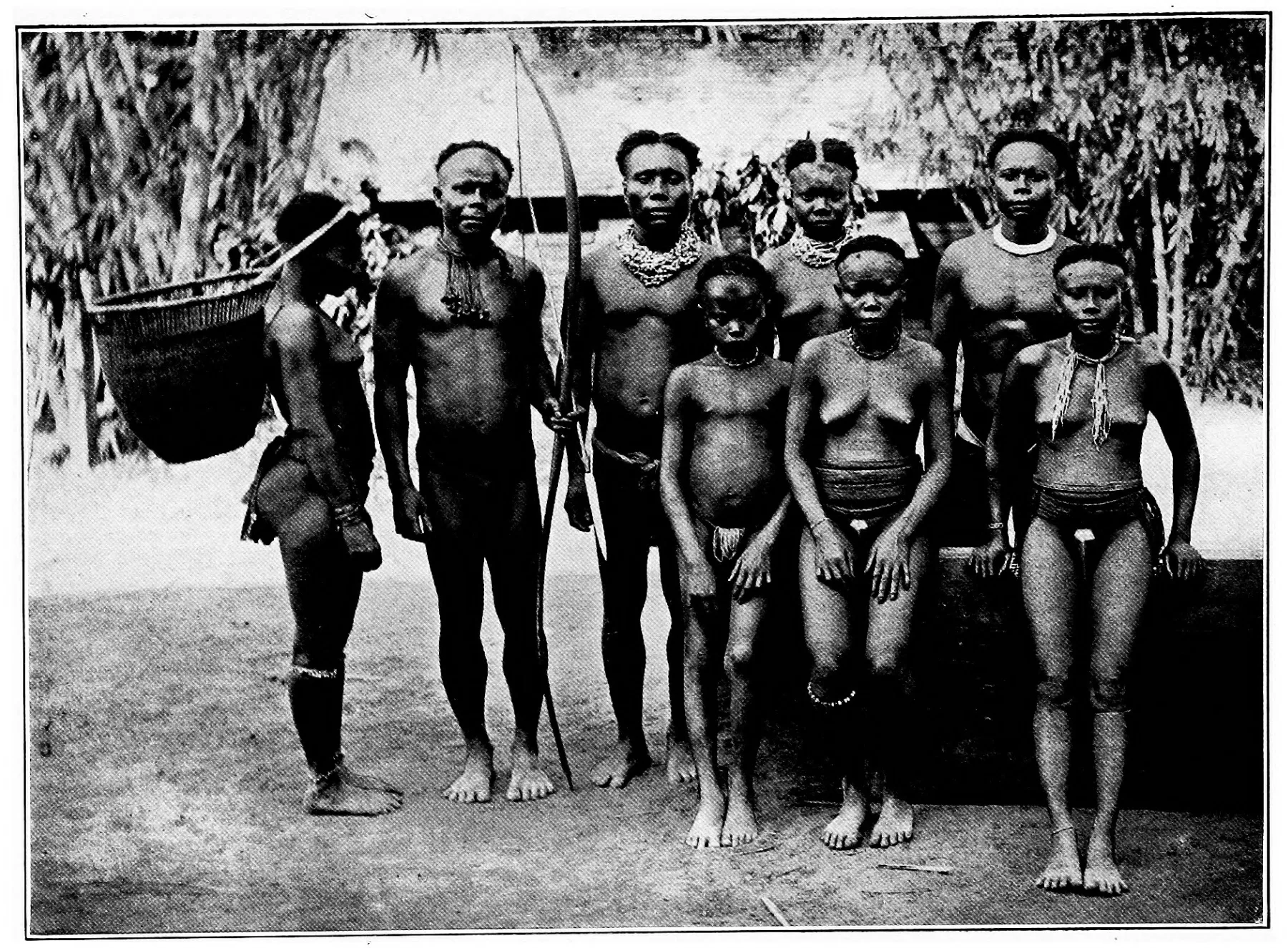
PLATE XXIV.
From a Photograph by Major Nicolas, Dera Ghazi Khan.
SŪBAHDĀR-MAJOR SHER BAHĀDUR KHĀN, KAISRĀNI BALOCH : TURKO-IRANIAN TYPE.
The Baloch are believed to have entered their present territory from the west in the 14th and 15th centuries A.D. They are a fine, manly race, expert horsemen, and fight well under officers whom they know and trust. The ordinary tribesman usually carries a sword, knife, and shield, and rides to combat, but fights on foot. In physical characteristics they present a contrast to their Afghan neighbours, being shorter in build, more spare and wiry. The hair is usually worn long, in oily curls, and cleanliness is considered a mark of effeminacy. They have a bold bearing, frank manner, and are fairly truthful. Courage is the highest virtue, and hospitality a sacred duty. Owing to their custom of admitting outsiders into their septs, they are heterogeneous in origin. Their adherence to Islam is little more than a veneer over their primitive Animism, but, unlike the Afghan, they are seldom fanatical.
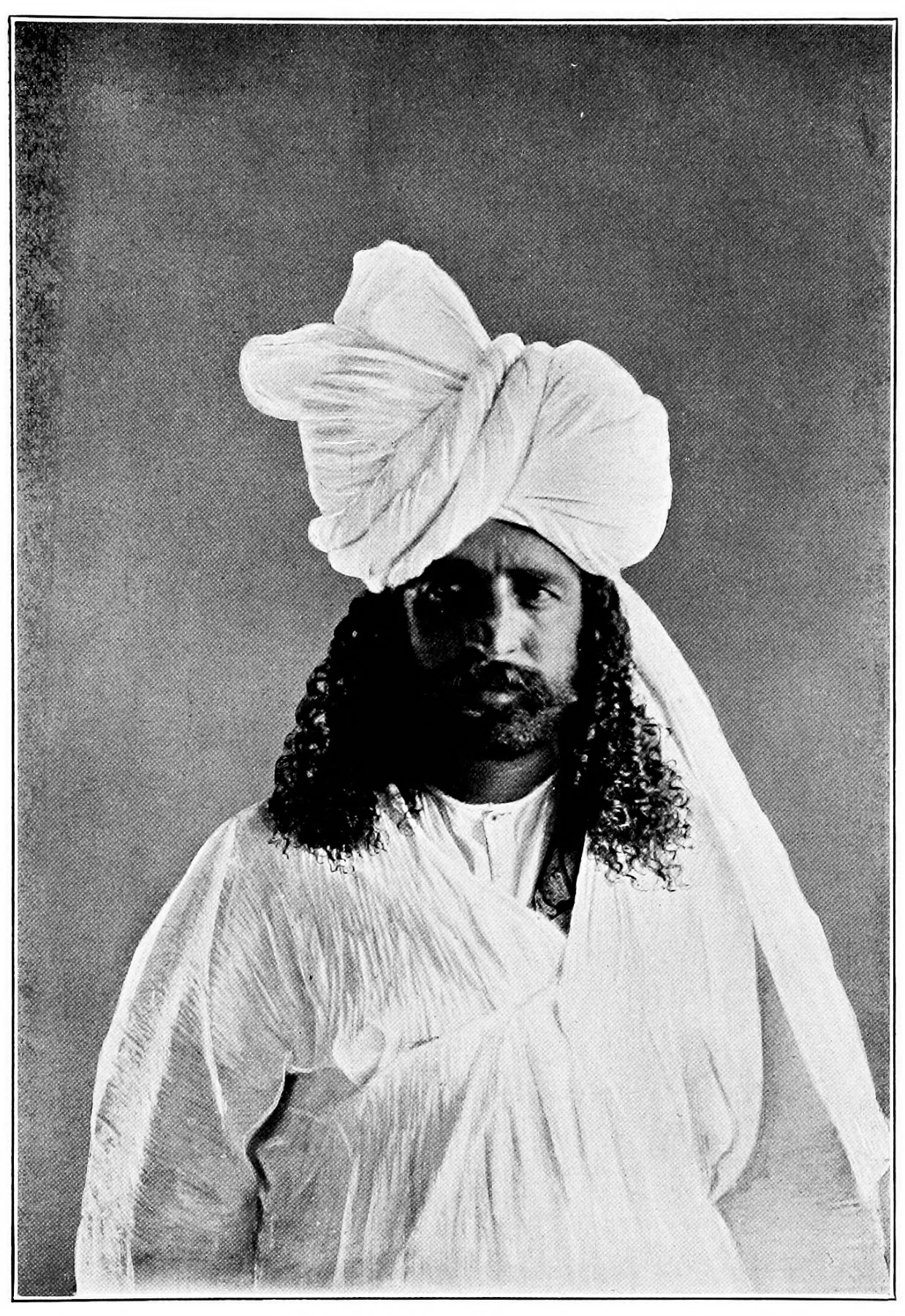
PLATE XXV.
Photograph by Pandit Giraj Kishor Dutt, Rai Bahadur.
PANDIT DULI CHAND, VIDYAPATI BRĀHMAN OF AGRA : INDO-ARYAN TYPE.
This is a fine picture of the old-fashioned, learned Brāhman of Northern India, whose life is devoted to the study of Sanskrit literature and the observance of an intricate form of ritual. He has been little influenced by Western culture. He wears wooden clogs, held between his toes by a brass peg, because the touch of leather is a source of ceremonial pollution. He carries a rosary, by the help of which he mutters prayers or holy texts, and recites the names of the Deity whom he worships. He is in many ways like the Nambutiri Brāhman of Malabar, the most primitive type of Brāhman. But the latter have preserved their isolation more successfully than their Northern brethren, who have lived for centuries under foreign Governments. His title Vidyāpati implies that he is a master of learning.
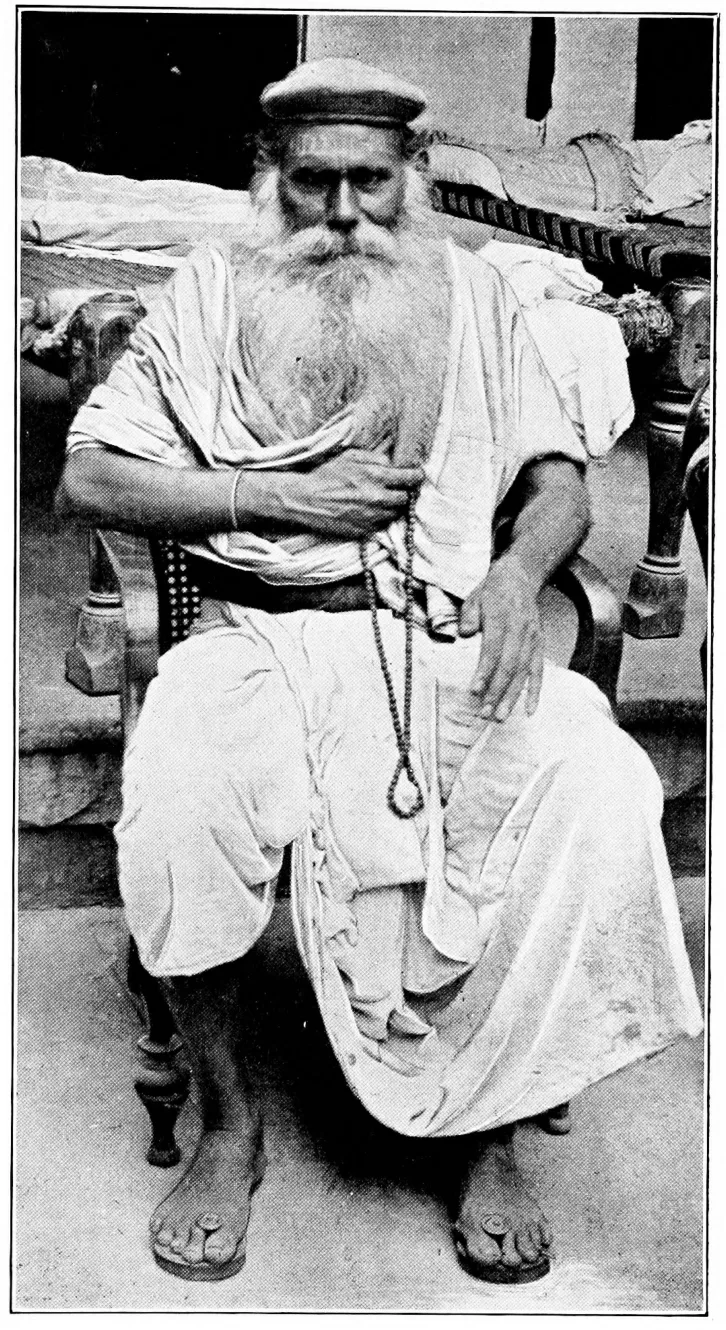
PLATE XXVI.
From a Photograph received from Rai Bahadur B. A. Gupte.
A GROUP OF SUTĀRS, CARPENTERS, BENGAL: MONGOLO-DRAVIDIAN TYPE.
The carpenters of Bengal, like other craftsmen, hold a low rank, and Brāhmans will not take water from their hands. Besides ordinary work in wood, they carve conch-shells into bracelets, make images of the gods, and paint religious pictures. They are probably recruited from the non-Aryan or indigenous races. Their chief object of worship is Visvakarma, the divine architect of the Universe, sometimes represented as a white man with three eyes and bearing a club ; but more usually he is symbolised by the tools used by the householder, which are set up and decorated with flowers ; offerings are presented to them, and the god is besought to favour his votaries in their profession during the coming year.
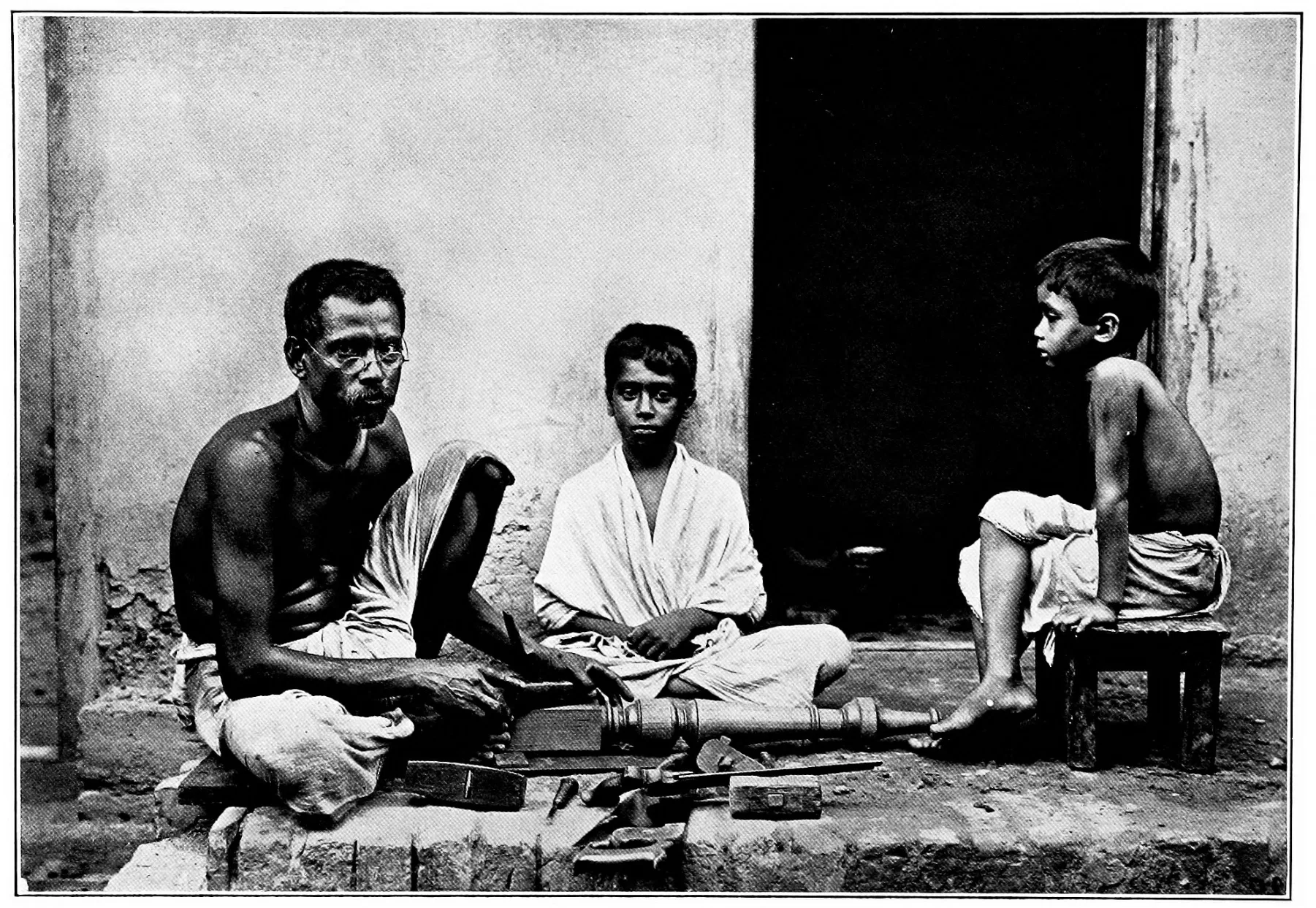
PLATE XXVII.
From a Photograph received from Rai Bahadur B. A. Gupte.
A GROUP OF MOCHIS, SHOEMAKERS, BENGAL: MONGOLO-DRAVIDIAN TYPE.
The Mochis or Muchis are a branch of the Chamār caste, whose business is tanning leather. Their association with this material renders them impure in the estimation of high-caste Hindus. The Mochis’ chief business is the making of the slipper-like shoes worn by their customers. They also, as in the illustration, manufacture drums. The covering is made of goat skins, while strips of cowhide are used for tightening the parchment. In all native drums, at one or both ends, black circles are inscribed with a paste of iron filings and rice in order to improve the pitch. Muchi women never act as midwives, like those of the Chamār caste.
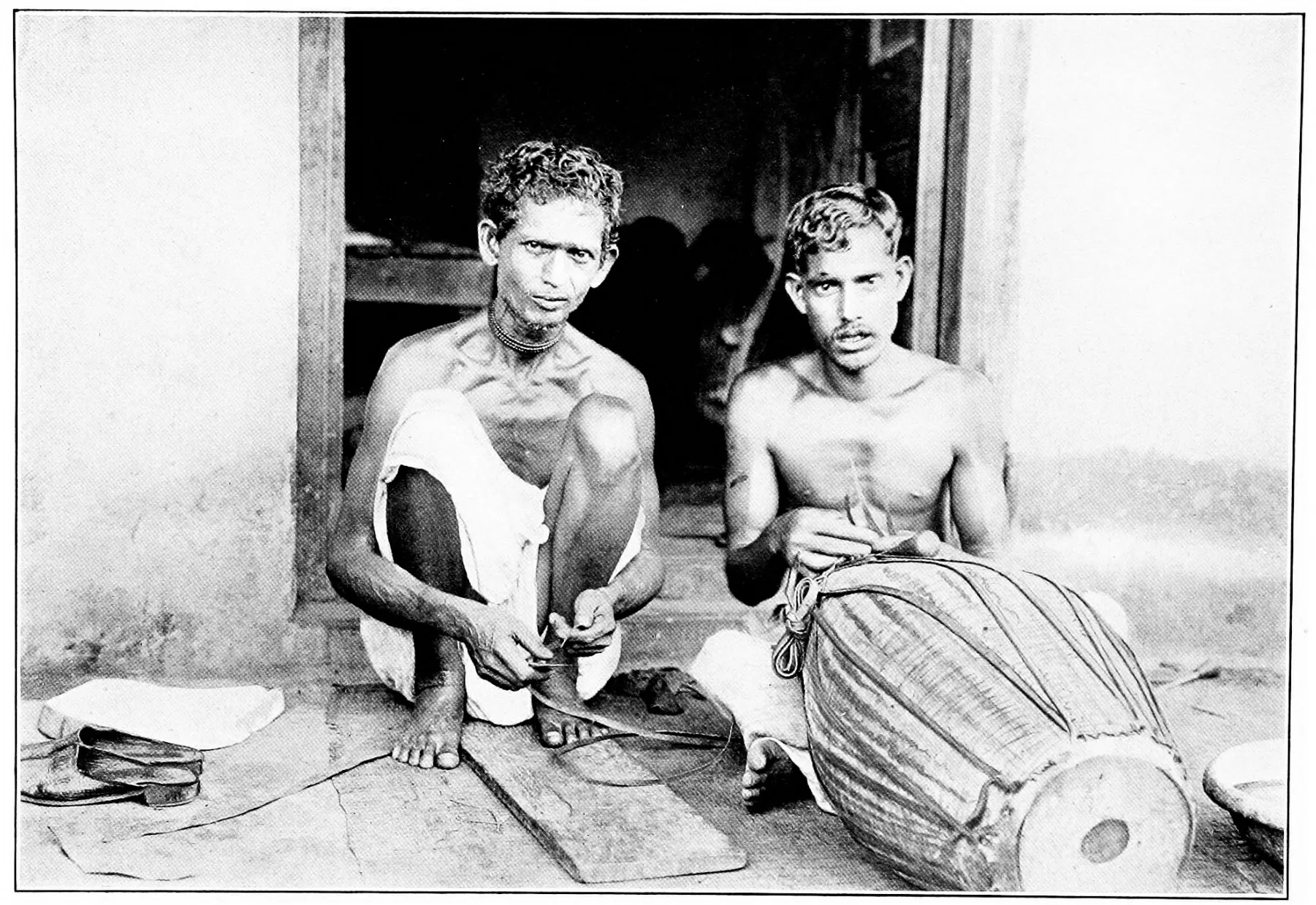
PLATE XXVIII.
From a Photograph received from Rai Bahadur B. A. Gupte.
A GROUP OF KĀMĀRS, BLACKSMITHS, BIHĀR: MONGOLO-DRAVIDIAN TYPE.
The Kāmārs of Bihār are distinguished from the Lohārs, the ordinary blacksmiths of Northern India, by not confining themselves to working in iron. They work in gold and silver also, and in Eastern Bengal make cooking vessels of brass and other similar alloys. Hence they hold a higher rank than the Lohārs, and Brāhmaṇs will take water from their hand. They pride themselves on not allowing their women to wear noserings. Like other artizan castes, they worship Visvakarma, the divine architect of the Universe, who is often represented by the hammer, anvil, and other tools used in their handicraft.
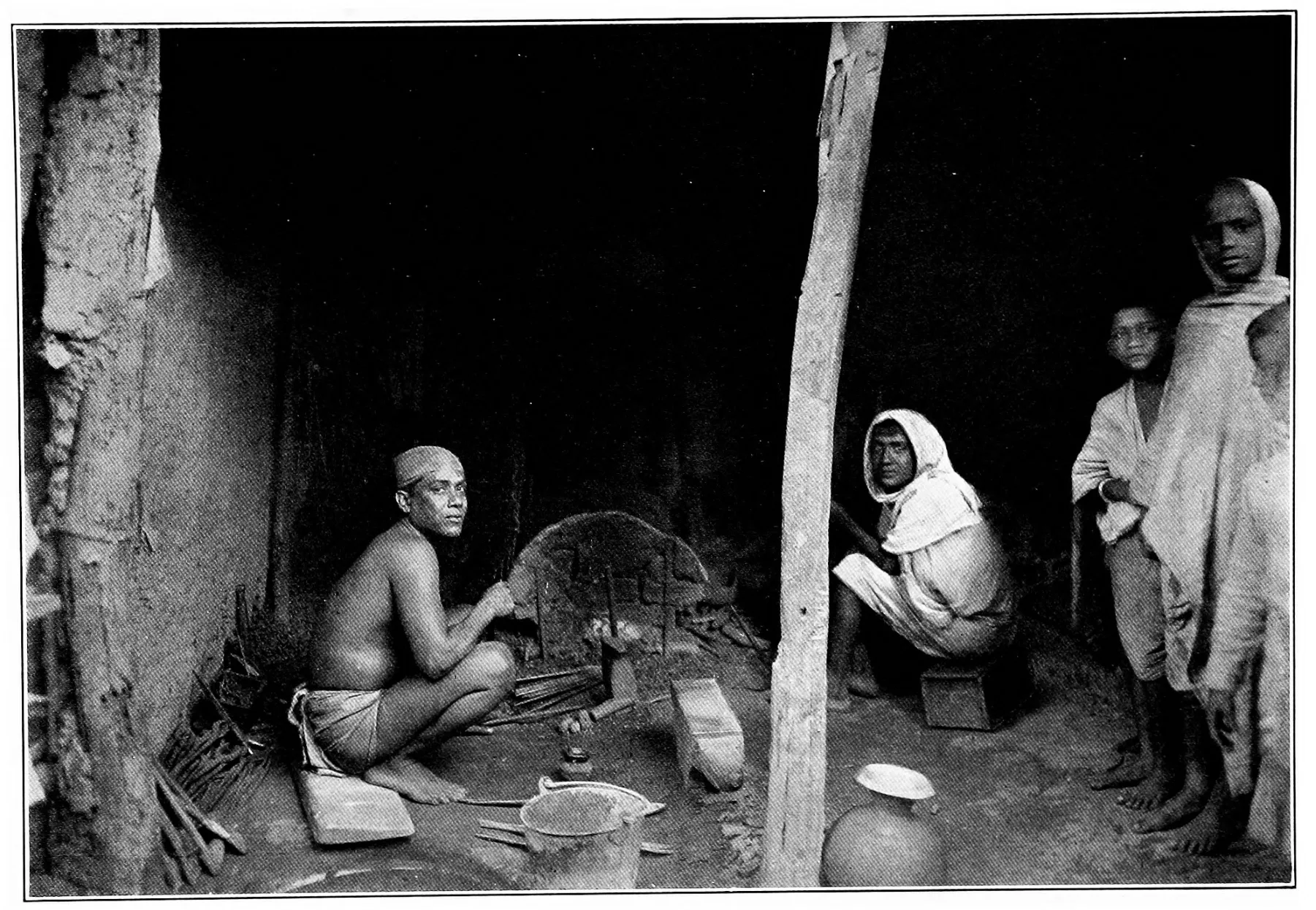
PLATE XXIX.
From a Photograph by Messrs. Johnston and Hoffmann, Calcutta.
A KUMBU FROM NEPAL: MONGOLOID TYPE.
The Kumbus are one of the Nepal tribes which supply recruits to our Gurkha regiments. Their religion is nominally Buddhism, but their real faith is a form of primitive Animism. Some of them bury their dead; others cremate the corpse on a hill top, and throw the ashes in the air. At a funeral a man of the tribe recites texts, supposed to lay at rest the spirit of the deceased, and to prevent it from annoying the survivors.
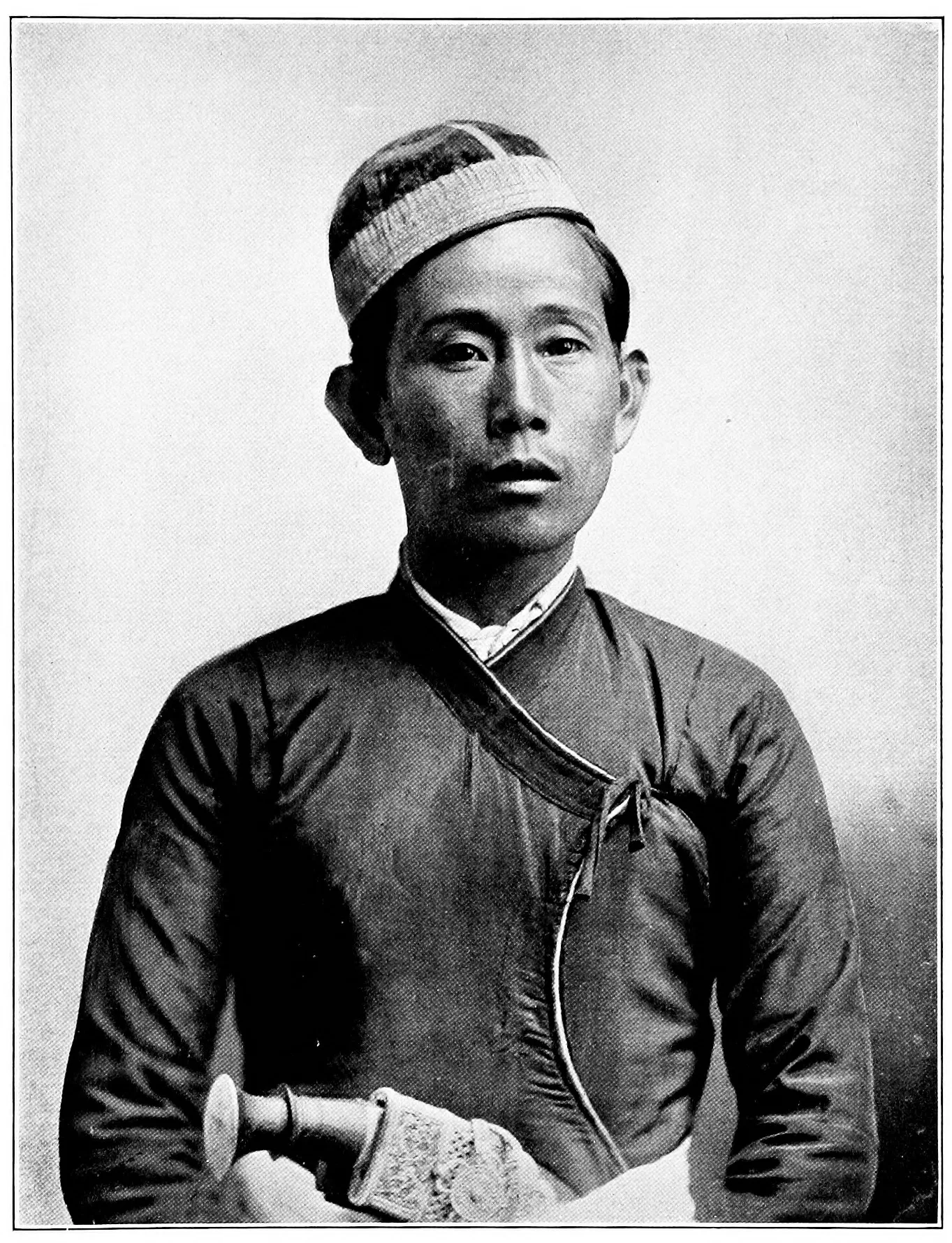
PLATE XXX.
From a Photograph by Messrs. Johnston and Hoffmann, Calcutta.
A LAMA WOMAN FROM THE TIBETAN FRONTIER: MONGOLOID TYPE.
Lāma or Lā-ma is a Tibetan word meaning “Superior One,” and was formerly restricted to the head of a monastery. It is now strictly applicable only to abbots and to the higher class of Buddhist monks, though out of courtesy it is given to almost all monks and priests, and on the British frontier it is extended to a sept of the Gurung tribe. In many families the first-born son is often dedicated to the profession of religion. As in the case of the lady in the illustration, to use the words of Lt.-Col. Waddell : “Their inveterate craving for material protection against malignant gods and demons has caused them to pin their faith on charms and amulets, which are to be seen everywhere dangling from the dress of every man, woman, and child.”
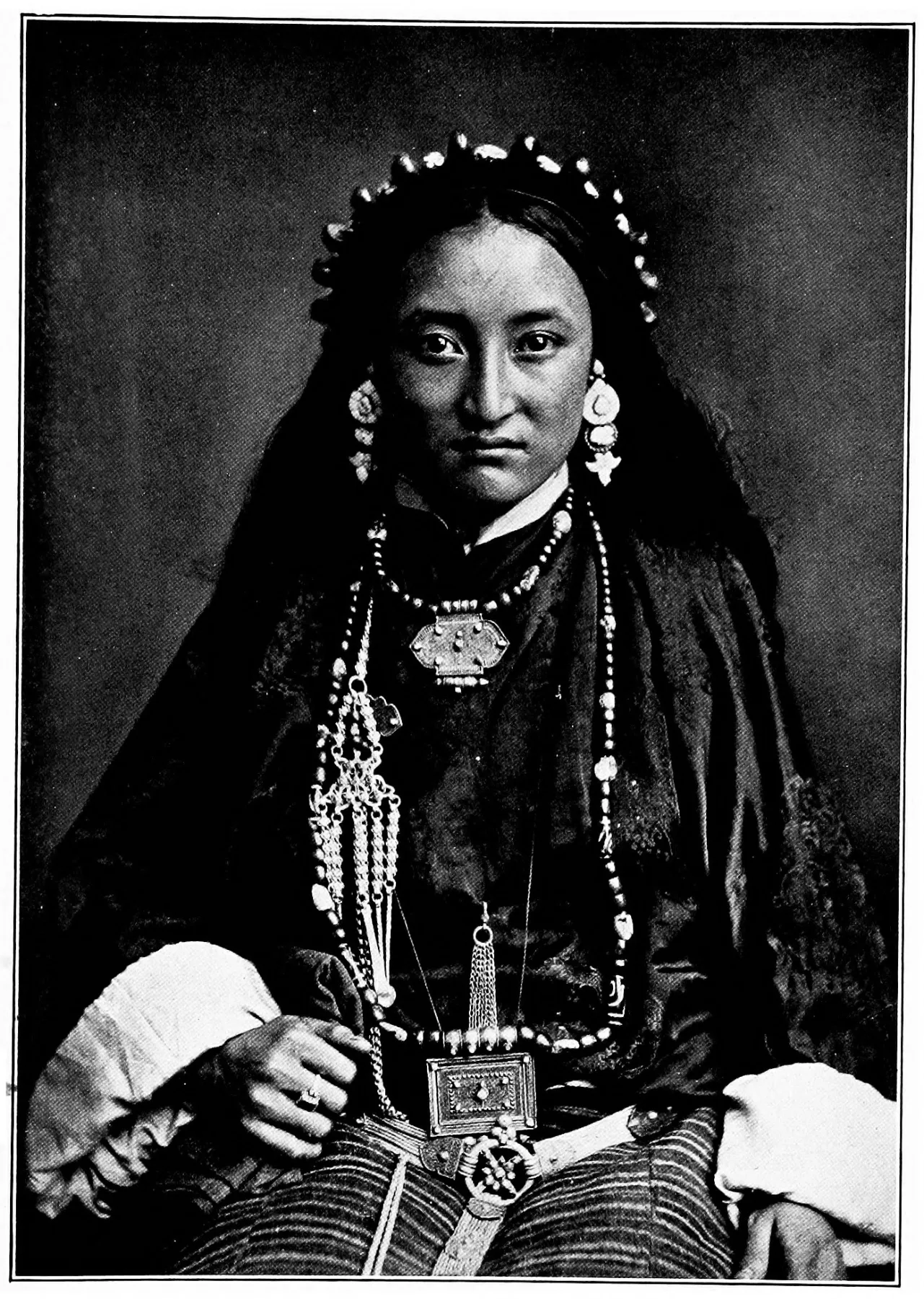
PLATE XXXI.
From a Photograph by Messrs. Johnston and Hoffmann, Calcutta.
A LEPCHA FROM SIKKIM: MONGOLOID TYPE.
The Lepchas are a Mongolian tribe, found in Sikkim, western Bhutan, eastern Nepal, and Darjiling. They are short in stature, of fair complexion, and their features are markedly Mongolian. The total absence of beard and the fashion of parting the hair along the crown of the head add to a somewhat feminine expression of countenance in the men, and the use of a jacket like a loose bed-gown, with wide sleeves, contributes still more to the difficulty of distinguishing the sexes, especially in middle age. Their dirty habits render them unpleasant inmates of a close dwelling, but in the rainy season, when they move about and are frequently wet, they become partially clean. They are remarkably honest, and seldom quarrel among themselves. When they are ill-treated, they escape to the jungle and live on yams and other innutritious vegetables. They are nominally Buddhists. They have no caste prejudices about food, but in Nepal they are obliged to conform to the law prohibiting the slaughter of cattle. Pork is their favourite dish, but they will eat carrion, the flesh of a dead elephant being specially prized.
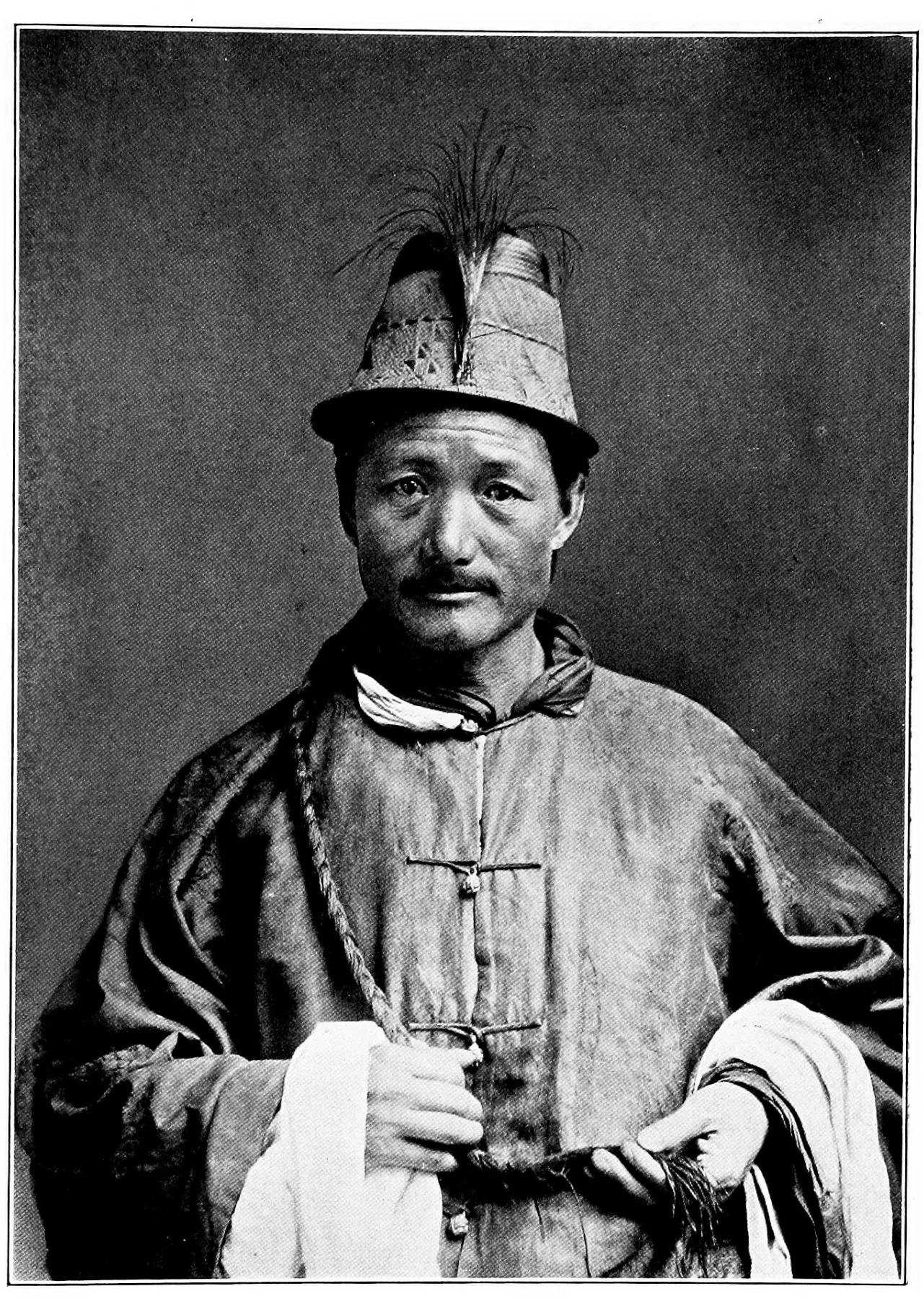
PLATE XXXII.
From a Photograph by Messrs. Johnston and Hoffmann, Calcutta.
THE MAHĀRĀNI OF NEPAL, WITH ATTENDANTS : MIXED INDO-ARYAN AND MONGOLOID TYPES.
The Gurkhas, the ruling race of Nepal, who defeated the indigenous Newārs and occupied the country in 1769 A.D., are the result of a mixture of fugitives of Rājputs and other high-caste people of the Plains, who escaped to the hills during the Muhammadan invasion of the 12th century, and on their arrival in Nepal formed alliances with the Newārs. The remarkable skirt worn by the Mahārāni in the illustration has been described in a lively fashion by Lady Dufferin : “The first view of her was that of a mass of light, gauze above and a pair of legs clothed in white trousers below. The thin pink and yellow striped material was not a petticoat, and I am quite at a loss to imagine how it was put on, or how many hundred yards were in it. It looked just as if a great piece had been unrolled, and unrolled, and then picked up and half wound round and half carried by the wearer. When she sat down it was in a great fluff, and when
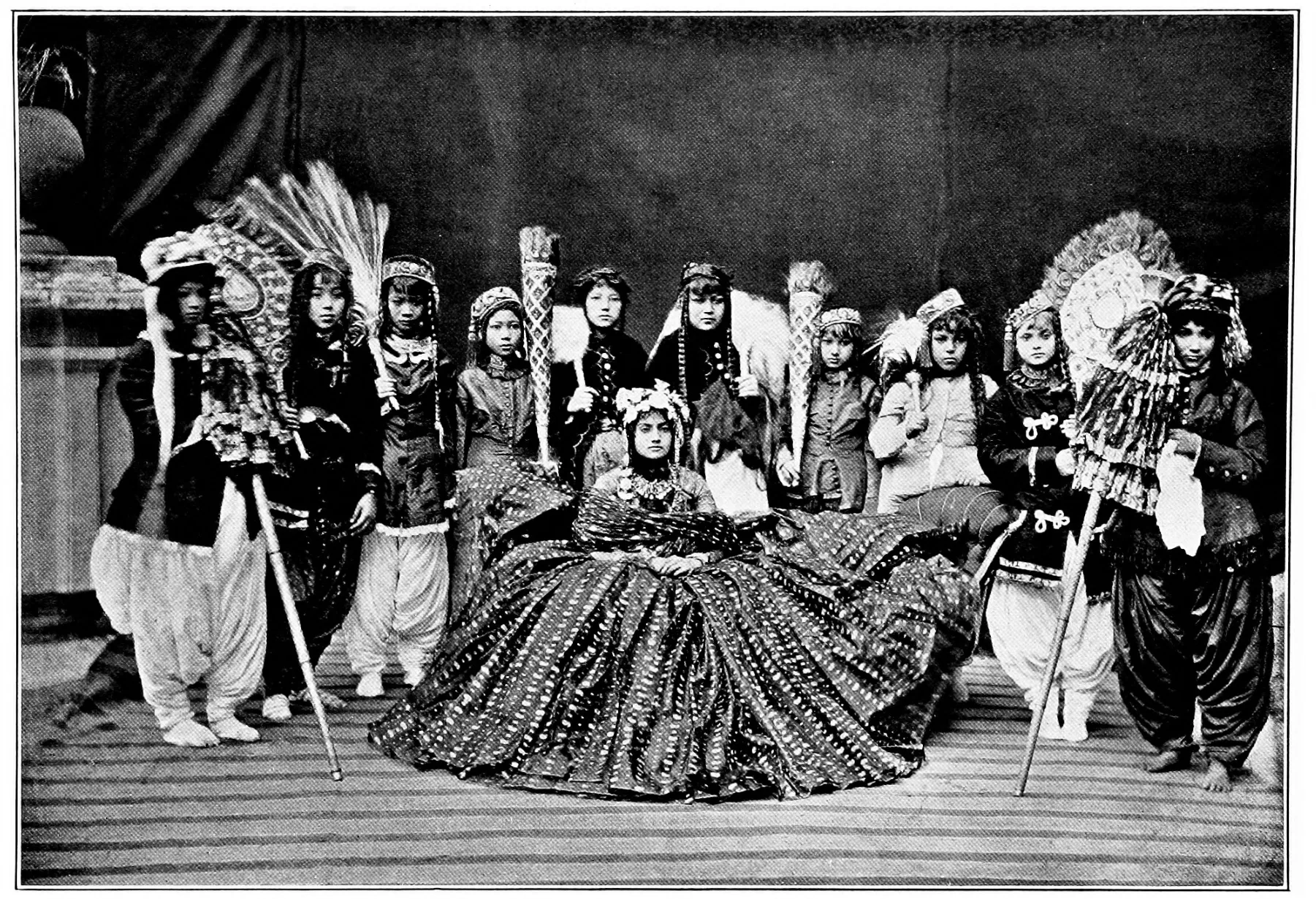
PLATE XXXIII.
Photograph received from Mr. E. Thurston, C.I.E.
A SHOLAGA FROM THE NĪLGIRI HILLS, MADRAS: PURE DRAVIDIAN TYPE.
The Sholagas are a jungle tribe inhabiting the British District of Coimbatore and the adjoining parts of the Mysore State. They live on millet paste and yams, supplemented by sundry jungle animals and birds, but they will not eat parroquets, which they say are their children. Their main occupation is the collection of various jungle fruits, roots, bark, and honey from cavities in the rocks. They bury their dead, and after the funeral erect in the burial-ground of the sept to which the dead man belonged a memorial stone to serve as an abode for the spirit. They are excellent trackers of game, and some of them have recently begun to do a little rude cultivation. Those of the better class have a simple form of marriage ceremony ; but the poorer members merely elope with their brides to a distant jungle, and return home only after a child has been born.
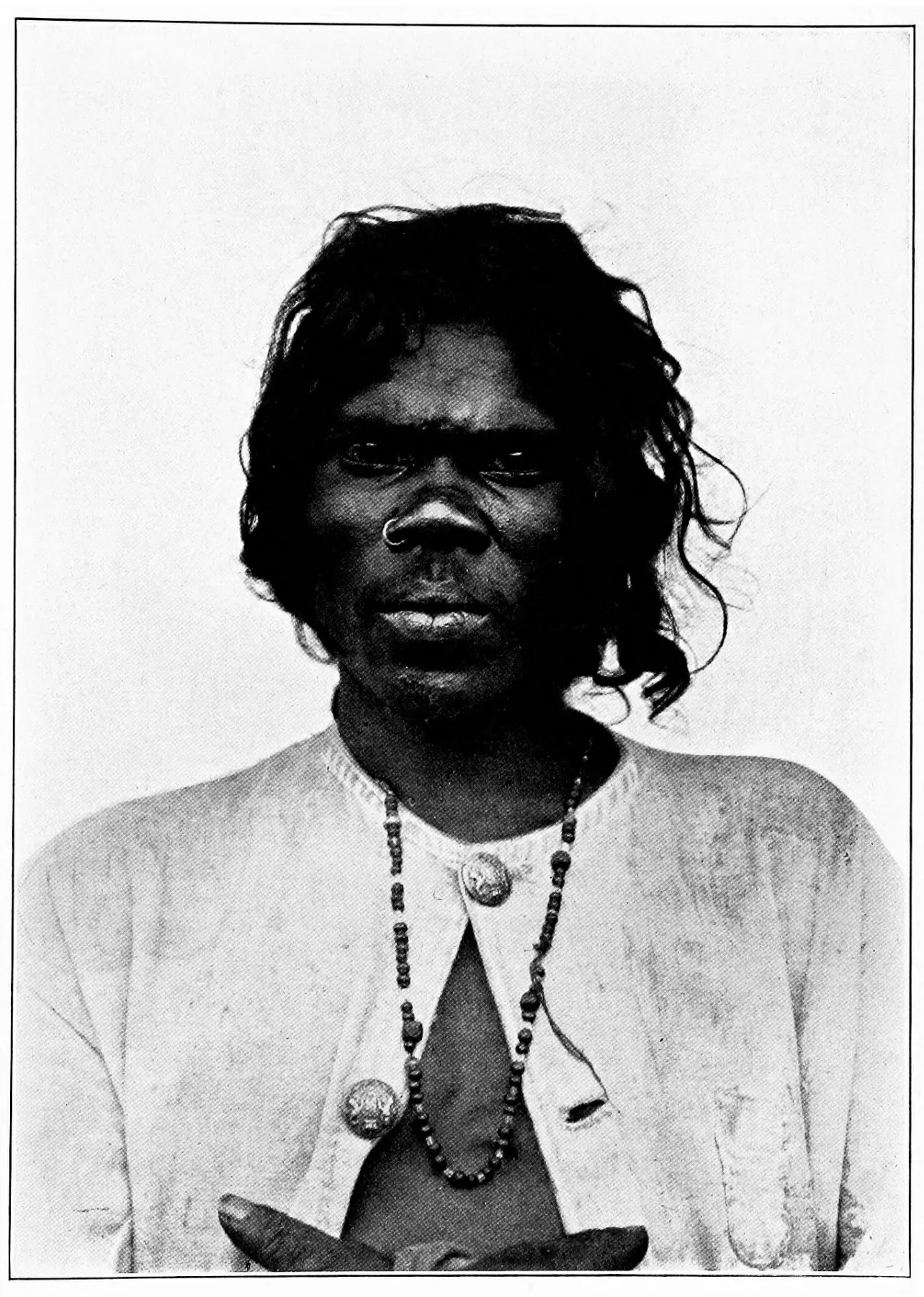
PLATE XXXIV.
Photograph received from Mr. E. Thurston, C.I.E.
A KĀDIR, WITH CHIPPED TEETH, FROM THE ĀNAIMALAI HILLS, MADRAS: PURE DRAVIDIAN TYPE.
The Kādirs are a jungle tribe found in the Ānaimalai or Elephant Hills of Madras and other ranges extending southwards into the State of Travancore. They are of short stature, with a dark skin and broad nose. They are a happy people, living on the produce of the forests where they reside. They are nomad in habit, building neat huts at places which they temporarily occupy ; good trackers and expert in the pursuit of game ; wonderfully clever in climbing high trees, their method of ascent closely resembling that of the Dayaks of Borneo. They have a horror of cattle, and will not touch the products of the cow. Their reticence in regard to the disposal of the dead has given rise to a legend that they eat the corpse. The remarkable custom of chipping the teeth curiously resembles that of the Jakuns of the Malay Peninsula. The Kādirs chip all or some of the upper and lower incisors into the form of a sharp-pointed, but not serrated, cone. This is done by means of a chisel, bill-hook, and file. Both sexes undergo the operation ; it is said that it makes an ugly man or woman handsome, and that a person who has not been improved in this way has teeth and eats like a cow.
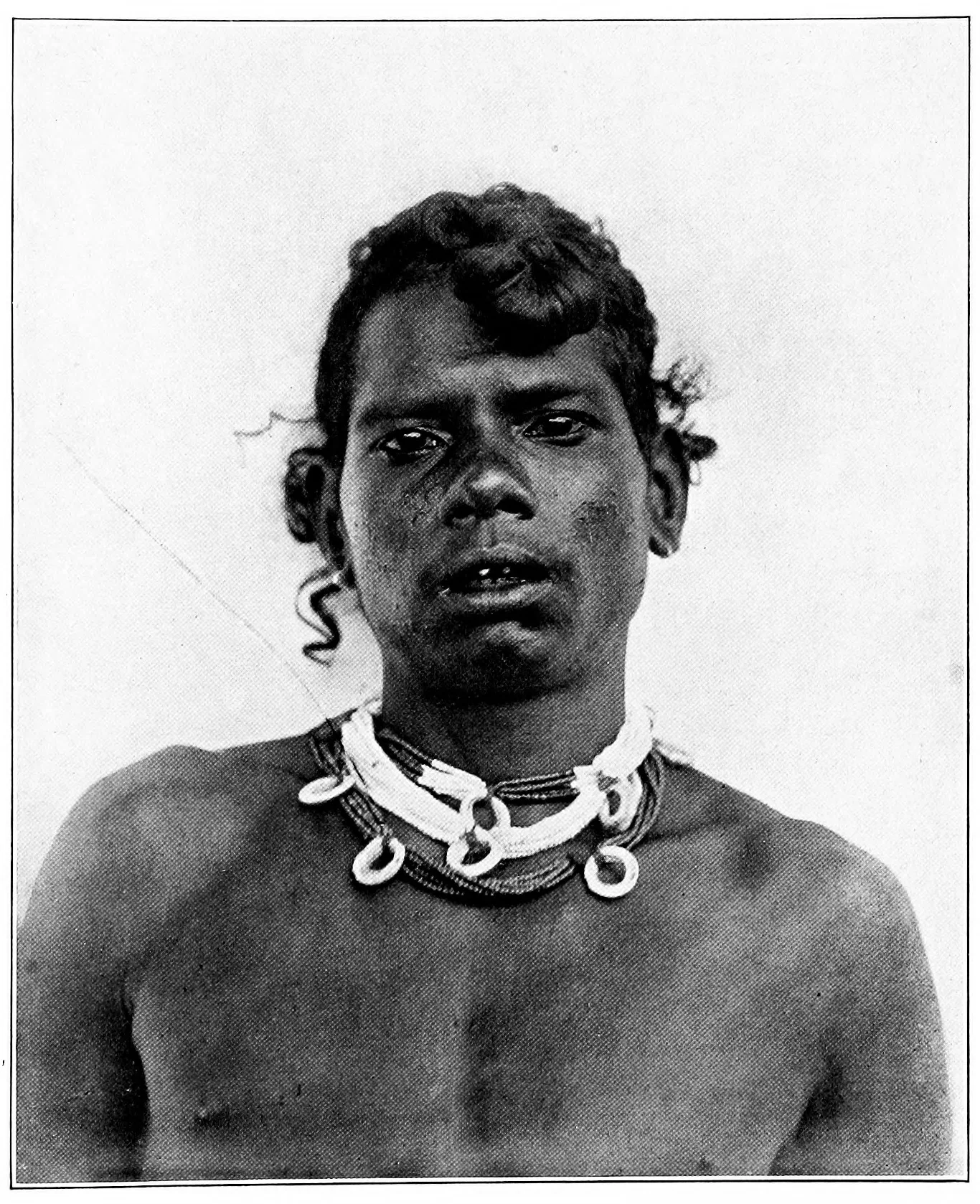
PLATE XXXV.
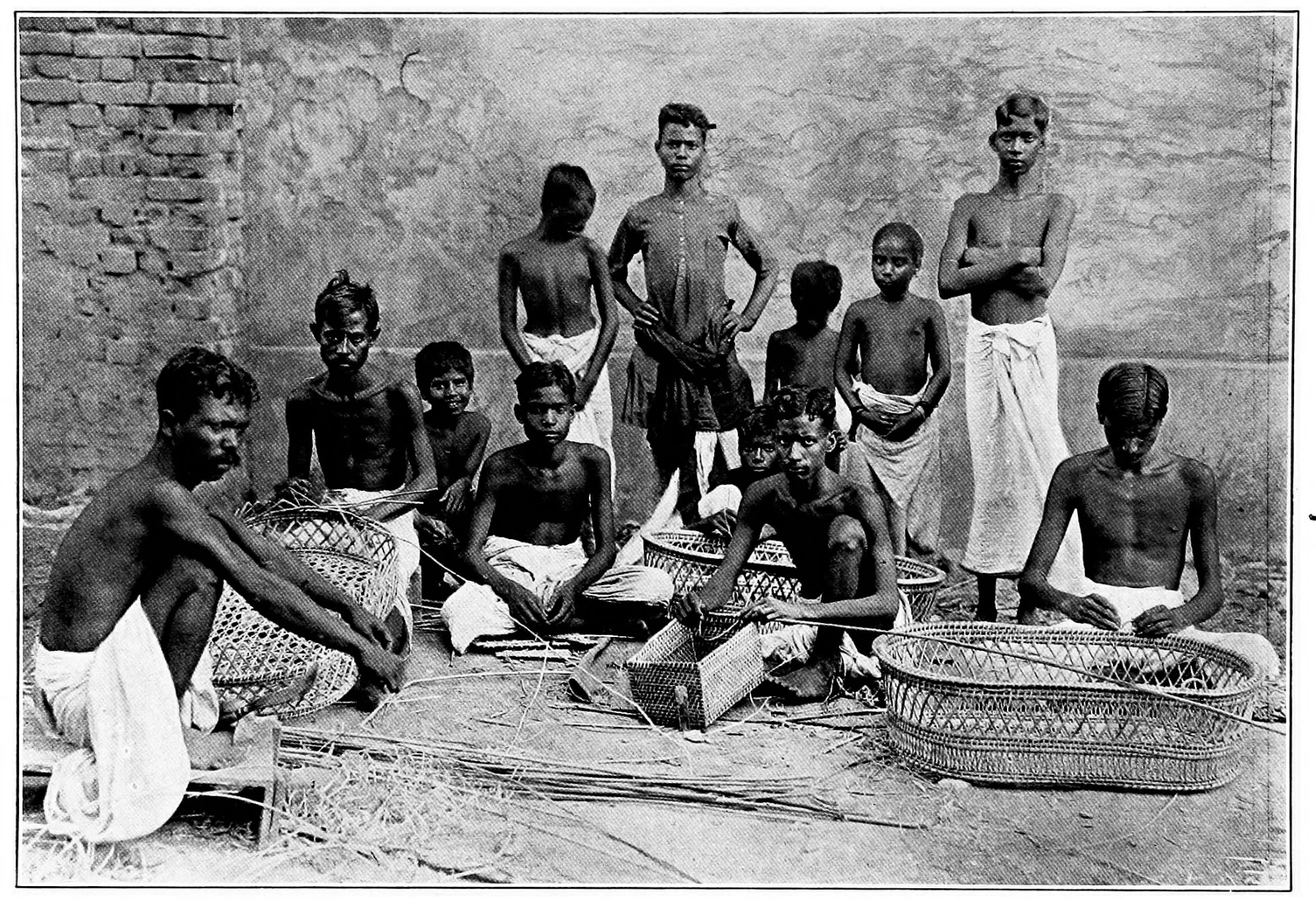
From a Photograph received from Rai Bahadur B. A. Gupte.
A GROUP OF DOM BASKET-MAKERS FROM BIHĀR: MIXED DRAVIDIAN TYPE.
The Doms are a semi-nomadic tribe found in Bihār and the adjoining districts of the United Provinces of Agra and Oudh. One group of them, known as Maghaiya, are habitual thieves and burglars. Other sections are more or less settled, and live mainly by making mats and baskets out of slips of bamboo. Their social status is very low, because they eat beef, pork, horse-flesh, field-rats, and even the flesh of animals which have died a natural death—all abominations to orthodox Hindus. They act as executioners, and at holy places lord it at the burningground, because they alone can supply fire to light the funeral pyre, and they must be heavily bribed before they will permit the corpse to be cremated.
Notes
- Note. Note.—The use of Kiranti as a synonym for Limbu is not strictly correct. The Limbu tribe is only one member of the Kiranti group, which includes also the Khambu (Rai or Rai Jimdār) and the Yākhā. The term Turanian is now obsolete as a race designation. H. H. R.
- Note. Note.—The Mundas are now generally classed as Dravidians and the theory of their ‘north-eastern origin’ has been abandoned. H. H. R.
- Note. Note.—The origin of Juang millinery is obscure. According to one legend the goddess of the Baitarni river caught a party of Juangs dancing naked, and ordained for the women, on pain of divine displeasure, the costume shown in the illustration. This consists of the young shoots of any tree with long soft leaves, stuck through the girdle in front and behind, and suitably draped. As long as the leaves are fresh they are comfortable enough ; when they get dry they are unpleasantly prickly. For the men the goddess prescribed a shred of bark from the Tumba tree, which has now given place to an exiguous strip of cloth. The Juang ladies, according to Colonel Dalton, repudiated this scandalous tale, and alleged that their attire expressed their genuine conviction that women's dress should be cheap and simple, and that fashions should never change. How much this was worth was seen a year or so later when a sympathetic Political Agent took the prevailing fashion in hand. An open air durbar, fitted out with a tent and a bonfire, was held in the Juang hills. One by one the women of the tribe filed into the tent and were robed by a female attendant in Manchester sāris provided at the Agent's expense. As they came out they cast their discarded Swadeshi attire into the bonfire. Thus ended a picturesque survival.
- Note. Note.—The typical form of the Bendkar plough is a straight piece of a branch of a tree with a shorter piece of another branch growing out of it. The long piece forms the handle, the short one the share. H. H. R.