The English Factories in India, 1622
[p. 1]
THE ENGLISH FACTORIES IN INDIA
1622–23
Henry Crosby’s1 Journal of the Cruise against the Portuguese, 1621–23 (Marine Records, vol. xxix. p. 17).
1621, October 8. The fleet left Batavia. November 12. Captain Bennet died. November 20 (?). Anchored at the Nassau Islands.2 December 5. Sailed again. The Dutch sent back to Batavia the Enkhuisen, ‘being of no force and did go badly; and the Morning Stare they had sent awaye before from the ilands at the wester end of Java, being ould and leake, and not able to performe the voidage.’
1622, February 6. General consultation. The Dutch resolved to send two of their ships (the Arms of Zealand3 and the North Holland) to the Red Sea, in spite of a protest from Capt. Fitzherbert. February 17. Death of Capt. Fitzherbert. February 18. He was buried at sea. Michael Green elected to succeed him. February 19. Green’s appointment being disputed by Goodall, the question was referred to the Dutch admiral, who decided for the former. February 27. Anchored at Mohilla, in the Comoro Islands, near the Queen’s town. ‘Her house is like a cloystar, and the othear houses of lyme and stoane biult like to the Porttinggayles biulding.’ February 28. Boats were sent ashore, but they could not trade, as the people demanded calicoes, of which their ship had none, the stock being on board the Exchange and Anne. These two vessels and the South Holland had failed to get into the bay, and so had been obliged to go for Mayotta. ‘At the Queens towne they wear content to take cloth or ryals, but not bells nor paper, but for palme wine or oringges or lymes they would pase; [p. 2] so our boates and the Exchanges barge did go to the Queens towne ... and ... did bring beefs aboard of us.' March 1. The anchor came home and the ship drifted out of the bay. March 3. They got into the road of Mohilla. March 10. The King came down and was presented with china plates and pots, spices, wine, rackapee, gunpowder, a sword, and some paper painted red on one side. 'The shreeve1 that was with him had some of the spice and the chinna trenchers. The King and the shreeve and the Kings two sonns stayed; and every daye he must have wine ashoare.' March 27. Letters sent on land for the King to deliver to any ship arriving from England. April 2. They sailed. April 14. Joined their consorts at Mayotta. June 5. The fleet sailed. June 12. A small ship chased into a harbour to the north of Mozambique, where she was captured and her goods shared. June 16. The Dutch ship Hart, having run ashore in the chase, and being very old and leaky, was stripped and burnt, as also the prize. June 18. They anchored at the entrance to Mozambique. June 23. Sailed southwards to look for some Portuguese carracks that were expected. July 13. 'We did spie the carricks, being three, and one ship.' July 14. 'We did fight with theam, and that night the vizamberall did rune in neare the shoare, and thear they did more by two ankers; and the next morning all thear masts wear overboard.' July 15. 'We did follow the othear two carricks and the ship; which the one carrick was the amberall and the othear the rare amberall, as we did judge; and in the afternoune we did fight with them and spoiled the rare amberall very much and the amberall likewise, tell they wear at the Ilands of Saint Jackes.2 The amberall did goe ashoare on the iner iland and the rare amberall on the point within.' July 16. 'We did gett up to the vice amberall to se what we could gett, and as some of the ships came neare the cavaleres had a boat readie with 40 chests of ryalls in, and so went awaye close by the shoare to Mozambeque, and left all the rest aboard the ship allmost sunk, ryding in 8 fatham water; and as soone as I came aboard I did gett a Duchman to me and did cut the cables and lett her drive aground, or else [p. 3] we had not saved the money that was saved. But the same daye we did se two sayle, the one being a carrick, the othear a ship ’; these, however, made for Madagascar and escaped. July 17. The Exchange was sent to the wreck of the Portuguese vice-admiral, ‘but thear was nothing to be seene of hir.’ July 23. ‘We saved som cloth and wine and oyle that was in the amberall.’ July 24. The fleet sailed for the Comoro Islands. July 27. Anchored at Mohilla. August 10. Captured an Arab junk laden with sandalwood. August 15. The fleet sailed to the NNE. September 15. Reached Chaul, having lost the company of the Fortune and the South Holland on the way. September 22. Started for Dābhol, look for the rest of the fleet, but were stopped by unfavourable winds. September 27. The Diamond captured a small junk laden with coco-nuts. October 2. They got some oxen, &c., near ‘Rogpoore’ [Rājpuri]. ‘It is some 4 or 5 leages to the southward of Choule. It hath a little round iland in the middle going in [Janjīrā], with a castell uppon it and some peeces of ordinance in it.’ October 3. The Diamond sent to Dābhol to look for the Dutch ships. October 12. On her reporting that they were not at that port, the fleet sailed for Surat. October 18. Off Bassein they met the Dutch squadron of three vessels (Fortune, South Holland, and Arms of Zealand) and a pinnace. They had been at Surat, but as they, as well as the English, were short of provisions, it was decided to make for that port. October 25. Anchored at Swally, where they found the Blessing, Discovery, and Reformation, newly arrived from England. November 22. Sailed again to the southwards. December 1. Arrived at the entrance to Goa. ‘On the south syde of the going into Goa the northear land is called Bardes, whearon is a fort alowe by the water syde, which the carricks do ryde under commaund of. It is bilt of some red earth or stoane doth make it sheaw red ; and to the southward of the cloyster theare is Ould Gooa trenteth up.’ December 3. Chased a ship ashore and sent men to plunder her. The Portuguese blew her up by means of a train of gunpowder, but only one man was hurt. December 4. Joined the rest of the fleet, who were waiting for a carrack that was riding under a strong fort. December 7. ‘The Viceroye that we had fougt with at Mozambeque, that was in the carricke we did fight with, came from Quchcheen [Cochin] to Gooa with gallies [p. 4] and galliots and friggets som 160 or 170 sayles.'1 December 19. The Discovery, Diamond, and Rose arrived from Surat, and brought letters from two Dutch ships that had recently come from Batavia. December 26. The Discovery sailed for Batavia. December 29. The Rose went to Surat to fetch provisions.
1623, January 3. The Diamond and North Holland went to a place six or seven leagues north of Goa, called Bandey, 'to the northwards of the [Vengurla?] rocks that ly some 9 leages to the northwards of Gooa,' but failed to get provisions owing to threats used by the Portuguese to the natives. The latter sent messengers offering, if the fleet would help them by sea, to attack Goa by land, and also promised to obtain the release of four Dutchmen imprisoned at Dābhol. February 2. A messenger arrived from Cannanore requesting passes for two vessels to go to Surat, and offering provisions, if the fleet would repair to their port. 'But the black sayde the Portingall had a castell with 40 peece of ordinaunce.' February 14. 'The caffealo [see previous volume, p. 31, note] of friggets came out of Camebaye to Gooa, which went awaye about the 12 of Jannuary and passed by Gooa and did goe to the southward.' March 9. 'We came awaye from Gooa. And while we did ryde theare we had boats come ofe for the clearing of the Portingalls we had in the fleet; but they had but 6 Dutch, which the amberall did offer 24 or 26 of the Portingalls for them. . . . They came no more ofe, for I did think they had hanged them up, as we did heare by the blacks.'2 At night reached an island called 'Deaw' [Anjidīv], sixteen leagues from Goa, in lat. 14° 45′. March 20. Left the island, after obtaining water there, and provisions from the mainland. At night were off 'Onnoore'.3 'The Portingalls have a smale fort uppon the mayne.' March 21. Passed 'Battacelley' [Bhatkal]. March 24. Anchored off 'Mountadillye' [Mount Delly or d'Ely]. 'Thear is a road that is good for junks and frigets to ryde in, and a great towne ashore.' March 25. Arrived at Cannanore, and obtained some provisions. March 27. 'We did se a fleet of frigets, and the [p. 5] North Holland and the Diamond did go to meet with theam, but could doe no good.' March 28. Sailed again. March 29. Anchored near Calicut. April 1. Went to 'Panneare' [Ponānī]. April 6. Passed Cape Comorin. April 10. Rounded Ceylon. May 27. 'We heard such a rumbling as though the ship had rubed hir biulge agaynst some corall banke, and presently was gon agayne'; as they could find no trace of ground, they concluded it to be the effects of an earthquake. May 31. Saw 'Anganya' [Engano, on the south-west side of Sumatra]. June 9. Reached Pulo Panjang, off Bantam, and were met by the Dutch Wezel. June 10. Reached Batavia. (27 pp. The rest of the journal is occupied with the homeward voyage of the Exchange, December, 1623–June, 1624.)
ANOTHER ACCOUNT OF THE SAME CRUISE1 (Marine Records, vol. xxxi).
1621, October 8. Sailed from Batavia. November 20. Anchored at the Nassau Islands, where they remained till December 5, and then sailed for 'Moroseses [Mauritius] or the Englands Forrest '.2
1622, February 22. Saw two ships, but could not fetch them up. February 27. Part of the fleet got into Mohilla, but the Exchange, the Anne, and the Holland failed to do so, and had to make for 'the Mayotes' [Mayotta], where they anchored two days later. June 5. Sailed for the mainland. June 11. Chased a ship but lost her. June 12. Found that the ship had run into a harbour, where the crew deserted her, leaving nine children on board. The fleet went in and took possession of her; in so doing the Hart ran ashore. The harbour was called 'Sama Juell ',3 and lies about eight leagues north of Mozambique. June 18. Saw Mozambique Castle. June 19. Anchored in the Roads. June 23. Sailed again. July 13.
[p. 6]
Met three carracks and a galleon, and fought with them from ‘daybrighte’ till dark. ‘Spoyled’ the Portuguese vice-admiral. ‘At midnight the rere-ambrall laid us abord, but did us not much hurt but killed us one man.’ July 14. Saw the vice-admiral at anchor near the shore, with all her masts overboard. Chased the other three into Mozambique and then stood to the southwards ‘to get the vise-admirall’. July 15. Anchored near the latter and found her a wreck, having received thirty shot below water. Some of the crew got ashore on rafts or in boats. At four in the afternoon saw a carrack and a galleon. Left the Diamond by the wreck and chased the newcomers, but lost them in the night. July 17. The bulk of the fleet went towards Mozambique. The Exchange visited the place where the vice-admiral was left, but found her sunk. July 19. Sailed for Mozambique, in company with the Diamond. July 20. At Mozambique found the two other carracks, one sunk on the eastern end of the island, the other ashore near the castle. In the whole of the fighting the English lost but five or six men. July 23. The fleet set sail. July 26. Anchored at Mohilla, finding there the Claw. August 10. Made prize of a small junk that came in, laden with sandalwood and slaves. The English took fifty-four of the latter, the Dutch the same, and the King the rest, with the junk. August 15. Sailed again. August 27. Saw the African coast. August 31. The Claw was abandoned, being too leaky to continue the voyage. The same night the Exchange lost the rest of the fleet, with the exception of the Anne. September 1. The Diamond joined them. September 15. Reached the coast of India near Chaul. September 18. A ‘Portingall’ came aboard and told them of the capture of Ormus. September 23. Overhauled a junk belonging to Socotra, but released her. October 3. The Diamond was sent to Dābhol. October 18. Met the Dutch off Bassein. October 21. The English sailed for Surat, the Dutch staying to send a pinnace to Batavia. October 24. Went over the bar at Swally, and found there ten English ships. November 19. Went to Surat Road. November 22. Anchored off Surat River. November 23. Set sail. November 24. Dogged by twenty Portuguese frigates from Damān. December 1. Arrived off Goa. December 3. Chased a Portuguese ship ashore, but her crew fired her. December 20. The Discovery, Diamond, and Rose arrived [p. 7] from Surat. December 23. The Hope and a pinnace joined. December 28. The Discovery sailed for Batavia. December 29. The Rose was dispatched to Surat for stores. 1623, February 25. The Rose returned with provisions, &c. February 28. The North Holland and Diamond went to ‘Vangerlee’ with letters to ‘the Kinge of the countrye’. March 2. They returned with a present from the Governor. March 7. The Portuguese dismantled their carrack and towed her in over the bar. March 9. The fleet sailed from Goa. March 10. Anchored at the island of ‘Dew’ [see p. 4]. March 18. Captured two boats, one laden with ‘paddie’. March 20. Sailed. March 25. Anchored at Cannanore. March 28. Departed. March 29. Anchored near Calicut, where they remained three days. May 27. A great earthquake felt at midnight. May 31. Saw Engano. June 10. Reached Batavia. (52 pp. In bad condition. The journal contains also the ship's outward and homeward voyages.)
Richard Swanley's1 Journal of the Voyage to Persia (Marine Records, vol. xxxiv. p. 31).
1621, November 7. The Jonas and Dolphin quitted Port Swally, and anchored outside. November 20. ‘Ther came by us the Portugall caffela, being bound for Cambaya, being to the number of 100 friggatts with other boatts. Soe the Lyon, Sampson, and Richard wayed and gave chase after them. So when they came within shott of them, the Duchman sent two boatts off from his shipp, making accounte to have taken some of them; but falling fowle of two or three which wer waiters to the fleett, [they?] tooke one of his boats with ten of his men, one of them being the marchant of his shipp.’2 November 21. The whole fleet anchored off the Bar of Surat. November 25. The President and other merchants were set ashore, and the fleet sailed. November 27. [p. 8] The Dutch Sampson departed for the southwards, and the Hart and Roebuck for England. December 1. Death of Mr. Jeffries aboard the Whale. December 14. Anchored in the Road of Jask. December 16. Sailed for Kuhistak. December 23. Anchored at that place.
1622, January 19. Set sail from Kuhistak, and anchored about four leagues from Ormus. January 22. Stood near the castle, and saw five great galleons there, with two small ships, some galliots, frigates and galleys. January 23. As the Portuguese made no signs of coming out, the fleet stood over to Kishm Castle and anchored. February 4. It was decided to send the Lion, Rose, and Richard to Surat. (6 pp.)
Edward Heynes and Robert Hutchinson at ‘NAWPEE’1 to the Surat Factory, January 2, 1622 (Factory Records, Surat, vol. cii. p. 69).
· Have sold two dubbas2 of coral to certain banians at Rs. 9½ the seer of 14 pice, ready money, and have nearly concluded a bargain for the rest at the same price; the matter has however been delayed by the sickness of ‘Emipaul Singur’ [Amīpāl Singar], the principal merchant concerned. Have also got rid of their stock of elephants’ teeth at Rs. 32 per maund of 43 seer. ‘Rampaxad’ [Ramprasād] promises to pay the amount due from his father, but claims to set off certain payments alleged to have been made in Agra; the matter has been left for Bangham to settle. After making over charge to the latter, on December 31 they started from Burhānpur for Surat, in company with Biddulph, who had arrived three days before, bringing news of the dispatch from Agra of a caravan of 194 camels under the charge of John Young. Thomas Hawkridge has been ordered to meet the latter. When the caravan arrives at Burhānpur, Young will be sent back to Agra, while Hawkridge and ‘Scander’3 will accompany the goods to Surat. Offers for their amber. Hope to be at Surat within fifteen days. (Copy. 1¾ pp. Received January 10.)
[p. 9]
William Martin, George Pike, and John Glanvill at Broach to the Same, January 2, 1622 (Ibid., p. 40).
Martin and the other factors deputed to Baroda found Rustam Khān still there, and so were able to deliver Is-hāq Beg’s letter to him. After viewing the present they had brought, he questioned them about the stay of their goods at Ahmadābād, and finally caused his ‘monsee’ [munshī] to write a parwāna [order] to Safī Khān to release them. This document the factors at once sent to Ahmadābād. Of the money brought by Robert Tottle, some of the mahmūdīs will not pass and are therefore returned; also the ‘abraims’ [see previous volume, p. 351] are deficient in weight by 2½ ‘gadians.’1 Have heard nothing yet about the indigo. To-day they delivered the Surat letter to the Governor and begged his permission to buy narrow baftas of the sorts he does not want (‘for that hee hath forbidden the buying of any untill his torne bee served’); but he would give no immediate answer. (Copy. 2 pp. Received January 3.)
Robert Hughes and John Parker at Agra to the Same, January 3, 1622 (Ibid., p. 63).
Particulars of goods and accounts forwarded. They send for information several samples of cloth usually bought by native merchants for the Persian market. Recovery of certain debts. ‘Mr. Yonge and his assistant is arrived in Samana [see previous volume, p. xxi] and adviseth off good hoopes for a sodaine dispatch in those this yeares insuinge investments, and for 10,000 rup[ees] more to bee remitted them. But wee cannot gett takers for soe manny; soe have remitted them 4,000 rup[ees] and advised them to charge us from thence, where by there owne reports they can take itt upp att as easie rates as wee can heare.’ As regards the camelmen who ran away when the English caravan under their charge was plundered near Māndū, they have already recovered 1,260 rupees from them, and hope shortly to receive a further sum, ‘haveinge gotten more off them into our prison and made them acknowledge there debt’. Have sold the best of the silk from Patna at 5¼ rupees the seer, which is 15 per cent more than it [p. 10] cost. Request a supply of broadcloth, &c. Enclosed. A list of cattle belonging to the Agra Factory and its dependencies, viz. five horses, one mare, and two teams of oxen for their two coaches. (Copy. 2¾ pp. Received January 21.)
JAMES BICKFORD, NATHANIEL HALSTEAD, WILLIAM HILL, AND JOHN CLARK AT AHMADĀBĀD TO THE SURAT FACTORY, JANUARY 4, 1622 (Factory Records, Surat, vol. cii. p. 46).
Wrote last on December 29, ‘sence haveinge receaved one from Mr. Martin from Brodera, togeather with Rustom Cauns1 perwanna to Saffy Caun for lycence to lade our goods. Wee perceave you ordered him to followe our infernall foe, the mischeefous Governor of this place, with a piskesh [Pers. pīsh-kash, a present to a great man] to that effect, the yssue whereof hath showed the cleane contrary; for after wee had vizitted him in his retorne hither betweenc Battaa and Conniz2, and followed them both (being togeather uppon one eliphant) into the towne, they both retired themselves to there privacy, soe that wee could not then speake with them; but this morninge delivered Saffy Caun the writtinge of this Governor, for pirwan wee cannot call it, beinge onely a complymentall letter, feigned in our favour but in conclusion therof reeferrs it wholy to the will and pleasure of our oppositt to doe as hee list, acknowledge[ing ?] it to be his busines, wherin hee himselfe knewe best what hee had to doe. This courteous favour of our Governor receaved itts wellcome with as slight regard as were the contents of value, and wee his peremtory answere that if wee brought him twenty such perwannore more wee should not expect to lade any of our goods hence or from Cambaia till hee were satisfied his larres [see previous volume, p. 227]. Thus you see whereunto wee are driven, and wee much feare our goods will hardly com tyme enough to bee dispeeded this yeare for England; which will cost our maisters more then 23,000 larrees will satisfy. Wee cannot writ you more then alreadie wee have done, Saffy Caun [p. 11] and this late retourned extortinge curr beinge al one.' They trust the Surat Council will take speedy measures for compounding with the Governor. P.S.—The late unexpected rains have not damaged their cotton cloths as much as was feared. They have been whited afresh and repacked. (Copy. 1¼ pp. Received January 7.)
The Same to the Same, January 5, 1622 (Ibid., p. 50).
Think that Safī Khān will insist on satisfaction. Rustam Khān sent for them and inquired why they did not pay the amount; they denied any knowledge of the matter, and again requested leave to lade their goods. His 'short and absolute answare was (to the noe little content of our adversary, Coja Nessan [Khwāja Nizām ?] there present) that wee should not expect to lade one fardle of our goods hence till that monny were satisfied.' This is the fruit of the present sent to him at Baroda. Request a supply of money; they are in debt and unable to send any to Lancaster. (Copy. 1 p. Received January 17.)
Robert Hughes and John Parker at Agra to the Surat Factory, January 5, 1622 (Ibid., p. 66).
'This morninge contrarye to expectacion came into our howse the Governor and the Califas1 officers of this place, who brought a mandate or perwanna from the Nabob Assaf Conn, writen in two coppyes, to the Governour of this place and his owne vekile [Arabic wakīl, 'agent'], the coppyes whereof wee send you here inclosed and importes as followeth, viz. to make seazure of whatsoever goods, redie monnyes, moveables, writings, &c., and to take them into there possesion; which mandate of Asuff Cons the Governor and officers of this place have most officiouslye executed, and farther have made seasure off our persons, which is as farr as the Nabobs perwanna importes, and is the ultimo of there and our owne expectacions. The reasons which moved the Kinge, or rather Asuf Con, hereto are (soe farr as wee cann perceave) the Sindiemens exclamacions against us for there losses sustaned by us; but the reports are later busines of exclamations lately made att court by sundry bannians off Cambaya, whoe pretendes that [p. 12] wee have this yeare robed them off noe lesse then fourscore lacks off rupp[ee]s; ROW_BREAK whereof ourselves are alltogeather ignorant, as not havinge hard from you since the first arrivall of the fleete. Yt should seem that this mandate rests not here with us only, but proceeds through all the partes off India; which causes us expressly to advise you hereof, that you may remeade both yourselves and us accordinglye, as not havinge any reamidie here att present; and the best and exquisite at present (as not havinge English att lesker 1) is in our opinions to put upp our petition unto Asuf Caun, importinge the hard measure delte us by him on noe groundes (as wee perceive and maye gather it), which tomorrow wee will put in practice; and if noe redrese thereby, wee must expect it from you, wee beinge att instant prizoned with our masters goods and knowe not justly from whence to seeke redresse unlesse from patience and sufferance, which according to our masters instructions wee shall bare. Howe these trobles wilbee pasified wee refer unto you to conjecture on, and the detraction in our future affairs, ourselves being resolved to stand it out to the utmost and will not com unto any agreement until order and approbation from you, ourselves and creditors being bound to suffer the utmost of there tyranny.' Have warned the factors at Samāna and Burhānpur. (Copy, in bad condition. 1½ pp. Received January 21.)
The Same to the Same, January 6, 1622 (Factory Records, Surat, vol. cii. p. 98).
Yesterday sent two expresses, by way of Burhānpur and Ahmadābād respectively, with the following letter [already given]. 'Wee have made meanes to the Governor of this place to grant our lycence to repayre to the lesker, their to be ready to answeare what alligacions maye trewly be layd to our charge, but we ar absolutely denied to goe for courte untill further order from thence; and these officers alreadye have advised thether how far they have proceeded with us, and abide further hackum [Hind. hukm, 'an order'], untill when they say wee must have patience. Otheir reportes [ ] have risen upp, and is that Melickamber should wright to the Prince in Brampore against us for taking his shipp this yeare, that the Prince should send advise to the Kinge theirof [p. 13] and for his approbacion for the banishinge us his countrye. How certayne this is we are ignorante, and if any such motione have passed att Brampore noe doubte but our frinds their and yourselves are beter acquented theirwith then us ; and if they should all prove but reportes, wee hould it not amisse that you procure testiment under the Governors and officers hands of Surratt, Cambaya, &c., for our better redresse att courte ; as also it behoves you to thinke on som course for the sattisfyeinge these clamyrouse Syndamen, for nowe they have wherwithall in their owne possesions to sattisfye themselves.’ P.S.—Have just heard by a . ‘gelopdare’ [Pers. jilaudār, ‘a servant who leads a horse’] that the caravan has safely arrived at ‘Surungee’ [Sironj]. (Copy. 2 pp. Received February 1.)
The Same to the Same, January 11, 1622 (Ibid., p. 100).
‘Now haveinge this otherr convayance proffered, wee may not omitt to write you, although wee have yet found noe alteracion in our disturbance ; only have procured (upon suertys) lybertye for our persons, our goods restinge in the same order as formerly. As determyned, wee have put upp our arzdasht [petition] to courte, the coppie wherof wee send you heerinclosed [not entered]. This barer is the Dutches expresse, who two dayes sence arryved heere from Surratt, and brought them newes (which they reporte to us) of your stopeinge the Princes shipp this yeare ; which, as it seemed from them, is agayne released.’ Hope to hear soon from them. (Copy. ½ p. Received February 4.)
Agreement between the English and the Khān of Shīrāz for the Capture of Ormus, January, 1622 (Factory Records, Java, vol. iii. pt. i. p. 301).1
‘The condition of this writinge is such as followeth, and dated [p. 14] the 8th of the month Rebel-awall, in the yeare of Mahomett 1031 1, agreed and concluded betwene our deputies and the English Company conserninge the affayres of Jeroone 2 and the ports, accordinge to the underwritten articles, which are on both sides to be dulie kept and performed without defaulte. First, that when by the power of God the cuntrie of Jeroone shalbe possessed by the subjects of His Majestie, whatsoever monyes, goods, ettc., shalbe taken in citty, castle, ships and howses, the one haulfe shalbe ours and the other halfe the English Companys; and on neither part shall thear be any thinge kept secrett; and if on ether part any suspition that ought be hiden or kept backe, theare shalbe an oath administred to each one accordinge to theare religion. And the proffitt of the customes and shippinge shall likewise be eaqually devided, provided that the English Company doe without defaulte ayde in takeinge of the castells and citties. 2. That if it please God that Jeroone be conquered, that a governour of ours and an other governour of the English remaine in the castle, and shall joyntly ayde and asist on the other in all accurranses and accidents, smale or great; and without consent on both sides ought nott [sic] to be performed. And unles I for the said Company sake doe make request unto His Majestie that the castle be delivered to the English; and if His Majestie grant my request and give them the castle, accordinge to His Hightnes command it shalbe delivered unto them; elce nott. 3. That whatt profitt shall arrise from the ships of the said Company, what soe ever appertayneth unto them our deputies shall nott demand any thinge, ether by pretence of customes or other duties; and what shipinge shalbe imployed of ours, what profitt shall arise to us shalbe our owne, and they by pretence of customes ettc. shall nott demand ought. And for other goods of marchants and traffikers, wheather in theare ships or ours, what profitt shall arrise theareby shalbe equally devided on both parts. And for other ships of the sea or of the ports of India,3 what shall proceed from them by proffitt or pillage, the same likewise as the former shalbe equallie devided betweene both.
[p. 15]
4. And conserninge the captives, for such as be Musslemen, wheather they be prisoners of that Company or our captives, the English shall nott meadle with them, butt deliver them to us; butt if Christians they shall accordinglie be theares. And conserning Captain Moore 1 and the Captain of Jeroone, it is agreed if the[y] happen to be the captives of the English, our deputies shall nott medle thearein, butt if they become our captives and in our pocession, advice of them shalbe given to His Majestie, and what he commands shalbe performed, and the English shall nott meddle about theare libertie. 5. Touchinge any the ports of India or the ports of Schaure 2 and Musscatt ettc., any that heareafter be taken betwene us and the Company of English shalbe equall partners thearein. And if the English shall goe with intention to take any port of India, and give notice theareof to our deputies, what the[y] desire (ayde off men and other helpe) the[y] shalbe assisted by Gods permission to accomplish theare victory. And when conquered, if the governour theareoff be a Christian and have a castle, accordinge to agreement aforsaid is to be equally devided; butt if theare be a castle in the suburbs or withoutt, apart the cittie, itt shalbe wholie to the deputies of theese parts and the said Company shall nott have to doe thearewith. Butt if the English conquor any place and nott acquainte our deputies thearewith according to agreement, the said place or cuntrie shalbe theare owne; butt if acquainted us thearewith and have ayde from hence, the same shalbe half in halfe betweene. And in what place which shalbe taken the prayers and cerimonyes of His Majestie of Persia shalbe celibrated, and his stampe uppon the coyne. 6. That soe longe as the English be imployed or excersized in the takinge of Jeroone, whatt soever shalbe theare expence, viz. of powder and shott, the charge shalbe equally devided betwene us and the English; butt after victorie the expence of theare ships shalbe wholly borne by themselves and nott conserne our deputies. And provitions of victualls for the said Company in the time of war shalbe borne on both parts, viz. of what is necessarie of beeves and sheep and hens [p. 16] and butter and meale ettc. ; which ended, each [such ?] perticoulur expences shalbe borne onely by themselves. 7. And after the victory of Jeroone soe many or such ships as shall remayne to secure the castle and the passages and mayntaine peace and good order in the sea, what shalbe the said ships expences shalbe borne equallie on both parts. 8. Thatt the Christians doe nott force nor wronge unto the Mahamettans ; and if the men slaves and weomen slaves shall goe to the English, they shall nott make them Christians, butt restore them to their ownors. And if Christians shall come or flie tow Mussellmen, they shall accordinglie restore them to the English. And in the frendlie assistance each of the other they shall nott faile.'1 (Copy. 2½ pp.)
[p. 17]
PRESIDENT FURSLAND AND COUNCIL AT BATAVIA TO THE COMPANY, JANUARY 11, 1622 (O.C. 1028).1
‘. . . The 14th of the laste mounthe arrived the Duches pynnace the Cleine Anchuisen from the Goa fleete, beinge such a lewarde bauble that shee could not keepe the seae. Shee lefte the fleete the 4th of December at the Islands of Nasau [see p. 1]; and by letters receaved from Captaine Fitzharbert wee perceave they have loste bothe theire monsone and voyage, and that throughe the wilfullnes (or unskillfullnes) of the Dutche Admirall, as appeares by Captaines Phitzharberts relatione. Yet the saide Admirall persistes in his oppinione to proceede uppon the voyadge, thoughe litle reasone can bee alleadged by hime for takeinge of such a course, and small hope there is of effectinge anie thinge accordinge to our purposes in followinge that course resolved uppon by him and his adherents. Captaine Fitzharbert opposed the resolutione, but the Admiralls double voice carried the stroke.2 And wee doe not wonder at theise proceedinges, for, havinge more shipps then they knowe howe to imploie, it is better for them to proceede then to retorne and lye heere in the roade ; for nowe they make accompte you shall paie parte of theire charges, which they will bee suer to make lardge enoughe. Wee wishe (since it is soe fallen out) that the fleete had retorned, for wee could have gevene our shippes better imployment, espetially the Whale and Tryall (soe longe expected) not beinge yet arrived ; which bringes us into an unlooked for stoppe in our proceedinges.’ Send copies of Fitzherbert’s letter and the consultation [missing], and deny the assertion of the Dutch that the delay in starting was due to them. ‘Watter Bennett, master of the Anne, is deceased, and fourteen men more out of our shippes since theire departure, and manie
beecome Christians, that they entertaine them not. And that if any English shall come unto us to become Mores, that wee shall returne them. For the love of freindshipp lett us performe these articles.’
For a later copy preserved at the Public Record Office see the Calendar of State Papers, E. Indies, 1622-4, p. 5. [p. 18] more fell downe sicke dailye. The Duche have not lost lesse men then wee; neither are the rest in better case then ours.’ . . . ‘By letters which the Duche have receaved from Masulapatnam they have advertisement that theire two shippes sent for the Red Seae had taken two riche shippes of Dabull; but theire people which were put aboarde beinge druncke, the Mores fell uppon them, cutt all theire throates, and soe escaped with theire shippes. The Englishe Sampsone1 was arrived at Surratte soe weakely manned that they could hardly bringe her in. The other shippe they tell us not what is become of her. By theise theire proceedinges those places where you nowe have free trade in will allsoe bee shutt againste us; which is theire purpose, as farre as wee can conjecture, strivinge to make us as odious to all the worlde as themselves are, which (wee haveinge the name of beinge conjoyned with them) maie easely bee effected. They are growne a moste cruell and bloudy people, and have lately in theise partes committed such unhumaine acts in murtheringe all they take, and takeinge all they meete abroade, as well freindes as foes, that it is abhominable before God and man; and wee hope Your Worships will seeke to cleare your selves from the conjunctione of such unhumaine people, for soe longe as you contynnue to goe alonge with them in theire bloudie exploites (allthoughe wee have noe hand in them) yet you cannot expect that your buissines should prosper. The Gennerall reportes that the London and the other shippes got not the Red Seae, but dispersed themselves uppon the coaste of India, where they tooke three prizes worthe 80,000 r[ial]s, and a Chaule shippe, which they offer to restore if they maie have satisfactione for your loste caphila. The two shippes for England departed from Surratte in November, and fower greate shippes and two pynnaces are arrived at Surratt from Englande. The Portugalls keepe sixe gallioones before Ormus to expect our shippes which goes for Jasques. Thus muche wee have by reporte from the Gennerall, which wee thought fitt to incerte. . . .’ (1½ pp. The rest of the letter deals with affairs at Batavia. Endorsed as received, by way of Holland, September 23, 1622.)
[p. 19]
James Bickford, Nathaniel Halstead, William Hill, and John Clark at Ahmadābād to the Surat Factory, January 12, 1622 (Factory Records, Surat, vol. cii. p. 53).
‘Yours of the 4th currant wee received the 10th att even, and yesterday your latter of the 8th att our retourne from Saffy Caun and Coja Nessan, where (to our greife) wee were compelled to give them two severall scripts from our broker for payment of 23,000 larrees for discharge of our goods, payable att 15 dayes, viz. to Saffy Caun 5,700 larres and to Coja Nessan 17,000 [sic]; and doe therfore intreat your speediest supply hither to discharge both that and other debts which necessitie will draw us into before wee cann dispeede our goods hence.’ Will send all the goods together as soon as transport can be got. As they will see from this, Rustam Khān’s parwāna was worthless. For details as to the indigo sent they refer to the invoice. It is likely to be very cheap this year, viz. about seven rupees a maund. Reflections on the conduct of the Dutch. Are glad Cambay has been supplied direct from Surat. There is another claim against them for 1,400 lārīs, which they will pay if necessary to secure the clearing of their goods. Would be glad to have instructions regarding these claims. (Copy. 2 pp. Received January 17.)
Joseph Salbank and Richard Lancaster at Cambay to the Same, January 12, 1622 (Ibid., p. 67).
Have received and disbursed the money sent by exchange. Particulars of goods purchased. The investment for Mokha amounts to 26,500 rupees. Have borrowed from Visondas [Vishnu Dās] and Gopaldas [Gopāl Dās], merchants, 6,000 ‘rup[ees] siccaus’ [see previous volume, p. 113], to be repaid (at the rate of 100 mahmūdīs for 42 rupees) to certain shroffs in Surat. Request payment accordingly. The Governor has given them leave to start when they like, and has offered his assistance. Request a suitable present to be given him by way of acknowledgement. (Copy. 1¼ pp. Received January 15.)
William Martin, George Pike, and John Glanvill at Broach to the Same, January 14, 1622 (Ibid., p. 52).
Have received their letter of the 6th. The Governor still forbids their buying narrow baftas, and has now prohibited the weavers and [p. 20] brokers from selling them any broad ones until he has had all he wants. Have examined samples of his indigo, and finding them satisfactory have bought the lot. Request a further supply of money. Details of cotton goods provided. They hear from Ahmadābād that Safī Khān has slighted Rustam Khān's parwāna, but now that the latter is there himself they hope the question will be settled satisfactorily. (Copy. 2 pp. Received January 15.)
Richard Barber and Justinian Offley at Baroda to the Surat Factory, January 18, 1622 (Factory Records, Surat, vol. cii. p. 55).
Have received theirs of the 2nd, enclosing Is-hāq Beg's letter on their behalf, which is likely to be very useful. The 2,000 mahmūdīs remitted by exchange have also been duly received. John George and another Englishman arrived yesterday to meet the Ahmadābād caravan. Request permission to use them to convoy their goods to Surat, as these are quite ready and the house is sore pestered with them. (Copy. ¾ p. Received January 20.)
William Martin, George Pike, and John Glanvill at Broach to the Surat Factory, January 20, 1622 (Ibid., p. 61).
The Governor's investment is nearly finished, and then they hope to be permitted to buy freely. He has given an acknowledgement of the money owing by him, with a small abatement. According to instructions, they have sent John George and Richard Brown to meet the Ahmadābād caravan. Tapī Dās, the broker at Baroda, has offered his assistance, and believes he can get permission from the Prince for the English to continue their trading there; or if this fails, he can supply them secretly with any goods they may want. Suggest that he should be written to from Surat. (Copy. 1 p. Received January 21.)
Robert Hughes and John Parker at Agra to the Surat Factory, January 22, 1622 (Ibid., p. 100).
Refer to previous letters. No change in the situation yet. Have received the Surat letter of December 24, forwarding one for Āsaf Khān, but an enclosure is missing. For want of access to their books they are unable to give Mr. Bangham the particulars [p. 21] he needs in connexion with the debt of 'Herpexad' [Hariprasād], the father of 'Rampexad', but they can be supplied from the accounts sent to Surat. The two bills for Rs. 21,700 given by the former are among their confiscated papers. Their broker 'Jado' and his kinsman appear to have received bribes in this matter to the value of Rs. 500, though 'Jado' strongly denies it. The model of 'the greate jewell' has been sent to them from Burhānpur, and they intend to dispatch it to court, together with the Surat letter to Āsaf Khān, under the charge of the broker. He is to call at 'Syomude1, which lyeth on the waye, where Mr. Younge and John Willowbye is resydent at present'. Have written to direct Willoughby to accompany Jādū to the court, with orders first to treat 'of our present troubles and the occatione which hath induced them; and haveinge gott our relesment by letter from the Nabob [Āsaf Khān] to his Governor heere (wherof wee doubt not, yf it consisted not of more then the Syndemens busynesse) then to make knowne unto him your letter and intentione in the plesuringe him with the sayd jewell, upon his writinge given for the securinge it from Brampore to courte. Otherwise, as before, in any case to conseale that busynis; and not to yeeld to any agrement, eyther with the Syndye merchants or elce, without your further order.' As regards the great jewel at Agra, refer them to Biddulph, who best knows its value. They advised the factors at Samāna of their treatment at Agra, and they, fearing the like usage, have removed 'from Semmyan to Symude (?), a place (as they say) of more securytie'. Have instructed them, after disbursing what money they have in hand, to return to Agra, for they have no more to send them, and do not expect a supply from below until 'these disturbances are overblowne'. They are keeping the camelmen still in prison till they procure satisfactory sureties for the payment of the amount claimed. Expect to hear from Surat 'howe you disgest this our disgrases', and advice as to their future proceedings. P.S. (by Hughes).—Since writing, they have been to the Governor to procure leave for Jādū to repair to court. He absolutely refused, and threatened, unless they waited quietly for further orders from thence, to put them in irons, as he had been told to do in the first instance. Suggests that orders should [p. 22] be sent from Surat to Samāna for some one to go to court from thence ‘to procurate the busynis their’. (Copy. 3½ pp. Received February 13.)
NATHANIEL HALSTEAD AND WILLIAM HILL AT AHMADĀBĀD TO THE SURAT FACTORY, JANUARY 22, 1622 (Factory Records, Surat, vol. cii. p. 73).
The caravan of goods for Surat is being dispatched. (Copy. ¾ p. Much damaged. Received January 27.)
WILLIAM MARTIN, GEORGE PIKE, AND JOHN GLANVILL AT BROACH TO THE SURAT FACTORY, JANUARY 23, 1622 (Ibid., p. 67).
Money brought by Robert Tottle yesterday. Some returned as not current. The Governor complains that the Surat factors have ignored his wishes and sent back his servant empty-handed. He has now placed an embargo on their goods and has forbidden their making any purchases. Beg earnestly that some present be dispatched to appease him. Request also a supply of gunny. (Copy. 1 p. Received January 24.)
THE SAME TO THE SAME, JANUARY 24, 1622 (Ibid., p. 71).
Money received, and some returned. They note the instructions to buy goods for the southwards, and will do their best, but fear they cannot procure any large quantity. The Governor has been pacified, and has given them leave to buy and to lade their goods at pleasure. He is now on his way to Surat, and they think it advisable that on his arrival he should be waited on with a present. P.S.—Supply of gunny wanted. They have presented the ‘Merga’ [see previous volume, p. 178] with a fair knife and a bottle of sack. (Copy. 1½ pp. Received January 25.)
WILLIAM BELL, HENRY DARRELL, JOHN PURIFIE, AND JOHN BENTHALL AT ‘KUHESTEK’1 TO THE SURAT FACTORY, JANUARY 24, 1622 (Ibid., p. 109).
In answer to their letter of November 20, 1621, received December 23 at Kuhistak. Urge a large supply of powdered sugar and sugar-candy; pepper they think might also be sold to profit. [p. 23] Baftas and shashes [turban-cloths] are likely to be in demand. It is unnecessary to wait for patterns, as information regarding the most suitable sorts can easily be got at Surat. ‘The round sorte of steele caled butt [see previous volume, p. 88] is indeed the sorte heere best requested.’ ‘Cowha [Arabic qahwa, ‘coffee’] in seeds is an exelent commodity in these parts, and is worth at present in Spahan 50 shahees [see previous volume, p. 83] the maunde shah’ [man-ī-shāhī, ‘royal maund’]. Regret that none was sent from Surat, owing to the late arrival of the Mokha junk. Of ‘gumlack in clods’ 200 maunds should be sent each year; it is worth at Ispahān 35, and at Ghilān 40 shāhīs the ‘maune shah’. Cottonwool is both useful for packing and readily vendible. Biāna indigo is most in favour, and is worth here 560–600 shāhīs the ‘kella’ [kūlah, ‘a man’s load’] of seven ‘mauns shah’, Sarkhej indigo being valued only at 480 shāhīs the ‘kella’. China roots and benjamin are the only drugs worth sending. Conserves and dry ginger will produce three for one; and logwood is worth 20 shāhīs the ‘maune shah’. Coral beads they return as unsaleable. Regard the prospects of trade as good, especially if the designs now in hand succeed. Disapprove of Monnox’s project of ‘newe wayes of driveinge the trade by the Casp[ian] Sea’, as likely only to alarm the Shāh. Complain of the non-supply of gunny, dutties, and ropes. Excuse the ill-packing of the last consignment of silk. As to want of weight, all silk coming from ‘Guylan’ [Ghilān] to Ispahān loses at least a maund in every load, owing to its being heavy with moisture when packed and drying on the road; but it is thought that the moisture will be regained during the sea passage to England. The brimstone forwarded was forced upon them by the Sultan of Lar, and they will take care to send no more. Will furnish some ‘ruhanas’ [rūnās, ‘Indian madder’] next year. Robbins’s jewels should be sold at Surat or sent to England. Morse teeth in good demand. Hope to send their accounts regularly. Mr. Jeffries, appointed Chief in Persia, ‘in his passage hether dyed1 . . . in whose place, by a generall councell held aboard the Jonas the 19th present in the Road of Kuhestek, I, William Bell, was elected Agent’ and John Purifie was appointed fourth in council. Will as directed ‘solicite the Kinge, buildinge our [p. 24] grounds [on] our Soveraignes letter’. Have received all the goods sent, except some sugar retained for use in the fleet. Have laden on the ships 772 bales of Ghilān silk, thirty carpets, and two bales of ‘chamlets’, besides certain commodities returned. The reasons moving the commanders to assist the Persians are given in a consultation of December 26. ‘Mr. Monox is retorninge to you now in these shipps, accordinge to the Companies order. Never did they doe themselves and us a more happie turne then to call him home. Mr. Strahand [see previous volume, p. 237] is longe sence dismissed the Companies service. Mr. Cardro [ibid., p. 144] was appointed home, but dyed in Kuhestek. His boye also is dead, and one of the coachmen, to witt Christopher Askwith; also Robert Gifford; whose accounts, inventoryes etc. wee doe now send for England. Wee have all of us been vizeted with sicknis in our passage downe.’ Refer to Monnox and the commanders of the fleet for further information. P.S.—‘Hadgenor’ [Hājī Nūr], a Persian, has embarked in the ships with a quantity of goods. On arrival he should be made to pay freight ‘as other merchants paye from Ormuze to India, which is 12 larres per camells load, and which hee offered to paye’. An extra bale of cloth taken on shore. Two ‘buckshawes’ [Pers. bukchak, ‘a bundle’] of silk wrongly marked. (Copy. 6 pp. Received February 28.)
Nicholas Bangham and John Leachland at Burhānpur to the Surat Factory, January 24, 1622 (Ibid., p. 79).
Have received of the Khānkhānān [see previous volume, p. 59] Rs. 4,000 in part-payment for tapestry sold to him long since. Have Rs. 10,000 in hand and would be glad of instructions for its disposal. The rate of exchange on Ahmadābād is 6¼ per cent, ‘to Agra monny for monny, and few that will write thether, in regard of the sicknes ther, people fl[y]inge out of the towne’. Are negotiating for the sale of their amber at Rs. 9½ the seer of 14 pice. Send a bill of exchange on Surat for Rs. 6,066¾. The caravan from Agra arrived on the 22nd, and left again the same night under the charge of Thomas Hawkridge and Scander. They are accompanied by an Englishman, named Francis Hyde, recently ‘come out of Decan’. To avoid any dispute as to tolls, they have procured a farmān from Rājā Partab Shāh [see previous volume, p. 74, note] [p. 25] for the quiet passage of their goods on payment of the customary charges. Money, &c., delivered to Hawkridge for expenses. Send a farmān from Partab Shāh ‘for your more quiatt transeporte of your rialls to Moulear [see previous volume, p. 91], if your occasion shall cause your neede thereof, with many faire and large promises of good usage there, promising at any tyme, if you would advise him when you would send, hee would meete your rialls and conduct them safely in and out of his territories. This wee thought of for your better supply for mamoodies in Surratt; which if it may stand in steed, wee shall thinke our tyme and a smale present given him well bestowed; or if not, soe much tyme and labor lost, hee seeminge very willing hereunto.’ ‘Jamser Beage [Jamshed Beg] is now very like to bee your Governor. Hee hath twice [ ] for it, and wee thincke had bine fully adopted ere this, had not the Princes sonne1 died some 2 dayes past [ ]. Isack Beage is sent for heather and accused of [ ] ruppes to have cousened the Prince of, which [ ] that you shall never see his sonne shine more.’ Jamshed Beg and Jam Qulī Beg have both been called to court. (Copy. Much damaged. 2½ pp. Received February 1.)
Thomas Rastell, Giles James, and Joseph Hopkinson at Surat to the President and Council at Batavia, January 24, 1622 (Factory Records, Java, vol. iii. pt. i. p. 292).
Wrote last on January 4, and have since received theirs of March 21 and April 8, 1621. Cannot encourage them to send more spices than mentioned in their last. No great demand in these parts for pepper, ‘wheareof from the Decan they are suffitiently furnished’. As for cloves, ‘though theare worth at present be 210 mamodies this maune, yett the Dutch have nott fownd any life in despatch of theires . . . allbeitt the[y] weare disperced soe far as Agra.’ Have no information as to the demand for such goods at Mokha. Their own fleet missed that place last year, and the Dutch are too false to be believed in such matters. They say, however, that their Sampson left a good stock of commodities there, and that the Weazof [Wesp] has brought away a good cargo for Holland. As regards Persia, the factors there [p. 26] are asking for pepper, ‘wheareof that cuntrie may anually vend 10,000 mands of this place, and is worth theare at present 29 shahees theare maund shaw, which beinge 12½ pound haberdepoze and 13 shahees makinge a riall of eight, yeelds about 27 mamodies this maund, charges of transport to Spahan included, which in our nearest computation may amount to 5 mamodies at least’. Fear, however, that the resources of the Batavia Factory will not permit of such a supply. Have already advised of last year’s success against the Portuguese at Jask, and also their reasons for detaining the London instead of sending her to Batavia as was intended. This year they have been specially instructed from home not to make any investments for the southwards, the Company apparently imagining that the Batavia Factory would have abundant means from the restitution made by the Dutch; but they understand, from a letter of October 8 just to hand, that these expectations have not been fulfilled. Hope, however, to send goods to Achin to the value of Rs. 6,000 or 8,000, which had been provided before the Company’s letter arrived. Know not whether any profit is to be expected there. As to certain charges in dispute between the two factories. Heard from the escaped surgeon of the cruelty exercised by the Portuguese towards the crew of the Unicorn [see previous volume, p. 266], and have consequently ordered their ships ‘to prosecute like measure against them till our captived countrimen be redeemed’. Thank them for their news. As regards the Dutch, ‘we pray God that theare mischevous practizes transfer not hither’. ‘The losse of our fleets monsone last yeare for Mocha gave fayre advantadge unto theares (then theare) to become masters of the pray for which our voyadge was projected; wheare haveinge landed belike some petty cargason of goods, and to secure theare trechiry given severall passes to the tradors, the Sampson, leavinge her consort in port, getts out to sea, whear, awaittinge opertunytie, she most perfidiouslie surpriced five of those junks who belived themselves proteckted, of whom one of Diue, another of Cannanore, a third of Kutcha, and other two of Dabull; which tow latter, with most of theare people and treasure, accompanied with 40 or 50 Dutch; weare on theare voyadge designed for Botavia; butt the justice of God prevented them, the Mores in the greater vessell redeemeinge themselves with the blood of 20 off theare gardians, [p. 27] and with onely four that survived retourned to Dabull in safety; her consort beinge alsoe left in distres, and by all conjecture could never recover her port.' It is suspicious that the Dutch have brought to Surat only a little money to clear their debts and some goods of small value which they could not sell elsewhere, 'most of theare former estate beinge shipt away on the Sampson and noe ships or penny supplie out of Holland,' in spite of the talk first of four and then of six vessels to be sent direct hither. They spend almost as much as the English, 'to maintaine a companie of spies, that in our judgments live cheefly for intelligence and two await coulorable pretence to bringe all things at onst to ruine; for in robbinge theese, tis we must suffer the pennalltie, our quiett and safetie dependinge mearely on theare ports securitie, which if onst overthrowne by the Dutch thear wilbe noe distinktion of nations, beinge heare estemed one companie.' The Dutch know this, but it only encourages them in courses which may at the same time enrich them and impoverish the English. They are much hated by the natives, but at the same time much feared, and therefore better treated. 'Theare Weazof (which you call Mullen) is nott heard of, which themselves impute to the lose of her monsone, butt by others conseved shee never ment to come hither.' The business in Persia is on a doubtful footing, for the Shāh abases the esteem of English goods and enhances the price of his own. With cost of transport to the waterside the silk will cost quite 9s. per lb.; yet the factors there have purchased a very large quantity. Hope to send to England two of the largest ships full of goods, and also an investment of 8,000l. to Mokha. Supply of stores to the Batavia Factory. Arrival of Weddell's fleet. The exploit of the Richard [see previous volume, p. 272, note]. Return of Blyth's squadron. Departure of the combined fleets for Persia. Monnox recalled, and Jeffries sent to be agent in his place. P.S.—This letter sent open for Capt. Fitzherbert's perusal. (Copy. 6½ pp.)
James Bickford, Nathaniel Halstead, William Hill, and John Clark at Ahmadābād to the Surat Factory, January 24, 1622 (Factory Records, Surat, vol. cii. p. 76).
Safī Khan desires a pass for his ship the Tavori [sec previous volume, p. 278], and so they have been constrained to give the [p. 28] bearer a note requesting the grant of one; but they hope the Surat factors will bear in mind the Governor’s ill behaviour. (Copy. p. Received January 31.)
The Same to the Same, January 25, 1622 (Ibid., p. 74).
Have received their letters with bills of exchange for Rs. 12,750. The goods of this season’s investment have been dispatched, and John Clark is about to start with ‘Muttredas’ [Mathurā Dās], the broker, to see them safe to Surat. The caravan consists of over 260 carts, and they have had the greatest trouble in procuring its dispatch. Invoices, &c., will follow. Request a supply of money. (Copy. 1 pp. Received January 29.)
James Bickford, Nathaniel Halstead, and William Hill at Ahmadābād to the Surat Factory, January 28, 1622 (Ibid., p. 79).
Forward letters received from Agra, and recapitulate previous advices. (Copy. In parts illegible. p. Received February 1.)
George Robinson at Achin to the Surat Factory, January 28, 1622 (Ibid., p. 147).
Introduces the bearer, who has been sent by the King of Achin to sell 140 bahars of tin and make returns in ‘candekins’ [see previous volume, p. 95], coarse baftas, &c. Begs they will assist him. (Copy. p. Received April 19.)
George Robinson and Richard Allen at Achin to the Surat Factory, January 28, 1622 (Ibid., p. 151).
In answer to theirs of April 4 and May 10, 1621. Cannot give fuller details of goods suitable for Achin, but they will gather from the enclosed list [missing] what are most saleable, and at what prices. They could have sold any quantity of blue cloth this year, as pepper was abundant and this cloth much in demand. Whites are not so saleable. Tyrannical behaviour of the King, who forced them to buy his pepper at his own price, while allowing the Gujarātīs to purchase theirs in the open market. The Globe arrived from Masulipatam on September 19, and departed with the Eagle on the 28th. Goods urgently needed from Surat, as pepper is plentiful. ‘Pray advise us how many duckys [Hind. dukrā] [p. 29] goeth in account for a m[ahmūdī].’ The Dutch have five ships before Malacca, and seven (with four English) off Goa. Ships coming hither should be careful not to allow natives on board till they have communicated with the factory, ‘for wee know not how longe wee shall staye heere if this Kinge contenewe his forbedinge of us trade,’ and treachery is always to be suspected. The King’s base behaviour to some Frenchmen. ‘One of our folke is nowe in the irons for killing [one of] the King’s horses by throweing a lance at him,’ but they hope soon to procure his release. (Copy. 2¾ pp. Received April 29.)
Thomas Hawkridge at [ ] to the Surat Factory, January [29?], 1622 (Ibid., p. 82).
Is now two days’ journey from ‘Netherbar’ [Nandurbār]. In crossing the river at Thālner two of the bundles of cloth from Patna got wet, but have been dried again. Hopes to receive money from them at Dhāita to pay the tolls, but can manage without it, if necessary. (Copy. Part illegible. 1 p. Received February 4.)
Richard Barber at Baroda to the Surat Factory, January 30, 1622 (Ibid., p. 75).
Sixty-one bundles of goods dispatched under the charge of Offley, in company with Salbank. John George has been sent to meet the caravan from Ahmadābād. (Copy. ½ p. Much damaged. Received January 31.)
The Same to the Same, February 1, 1622 (Ibid., p. 82).
The caravan from Ahmadābād arrived on January 30, and has started to-day for Broach, taking also twenty-three bundles of goods provided by this factory. He is now settling with the brokers, and hopes to follow the caravan to-morrow morning. (Copy. ½ p. Received February 4.)
James Bickford, Nathaniel Halstead, and William Hill at Ahmadābād to the Surat Factory, February 2, 1622 (Ibid., p. 85).
Thank them for bills received. Had previously drawn on them for Rs. 12,600. Progress of their investments. Complaints against the Dutch. (Copy. Largely illegible. 2 pp. Received February 6.)
[p. 30]
William Martin and George Pike at Broach to the Surat Factory, February 3, 1622 (Factory Records, Surat, vol. cii. p. 80).
Have received their letter enclosing Is-hāq Beg's parwāna 'for free passage of our goods at Uncleseir' [Ankleswar]. Are now dispatching the remaining bundles to Surat. Several have been damaged 'by a kinde of worme which had eaten the gunny duttie and to the cloath'. Are still in need of gunny. The Governor of Broach did not go to Surat as expected. (Copy. Much damaged. 2 pp. Received February 4.)
Richard Barber at Broach to the Surat Factory, February 4, 1622 (Ibid., p. 84).
The Ahmadābād caravan has arrived, and will be dispatched. Awaits their orders as to his own movements. (Copy. ½ p. Received February 6.)
John Clark at Broach to the Surat Factory, February 5, 1622 (Ibid., p. 83).
Arrived here yesterday with the goods from Ahmadābād. Hopes to have them 'customed' to-day, and to get them over the river in six days more. Begs that directions may be sent to him at 'Jangirpore' [Jahāngīrpur] for the better prosecution of his journey, as also regarding the discharge of his 'peanes' [peons], who number 300. (Copy. Part illegible. 1 p. Received February 6.)
Nicholas Bangham at Burhānpur to the Surat Factory, February 5, 1622 (Ibid., p. 88).
Damage to some cloth of gold. Cannot get any settlement yet of the tapestry, &c., 'in the Princes sercar,' 'in regard of the sodaine trobles that hath hapened by the death of Sultan Cosse[row], whereof here goeth many reportes, Corome being, and was then, abroad a hountinge some 10 corse off.' Sale of coral and amber. Supply of money. Regarding the recovery of Ramprasād's debt. Payments to Leachland, who has started for Surat. All the sheet lead sold at Rs. 9 per maund of 36 pices to the seer, and 42 seers to the maund. Bangham delivered [p. 31] the letters forwarded by the Surat factors. On presenting that written by Is-hāq Beg to his ‘vekell’ [see p. 11], the latter went with him to ‘Assuff Caun’1, who kept them waiting a quarter of the night and then merely said he would acquaint the Prince and receive his orders. ‘Isack Beages vekell, beinge a banyan, semethe to bee an honester man then his maister, and doth promise to goe to the lesker and follow that busines.’ Requests that these two ‘casseds’ [qāsid, ‘a letter-carrier’] may be sent on without delay to Ahmadābād, as they have bills of exchange to carry thither. News has just arrived that the Agra factors are at liberty, though their goods are detained. Papers also received from that place about Ramprasād’s debt. Illness of John Young. P.S.—Money lent to ‘Signor Frinces2, the Duche’. P.P.S. (6th).—John Young is better. Begs that some one may be sent up to assist in the factory. (Copy. In bad condition. 3½ pp. Received February 13.)
Richard Blyth, John Weddell, Edward Monnox, and Nicholas Woodcock, aboard the Jonas, in Gombroon Road, to the Surat Factory, February 7, 1622 (Ibid., p. 115).3
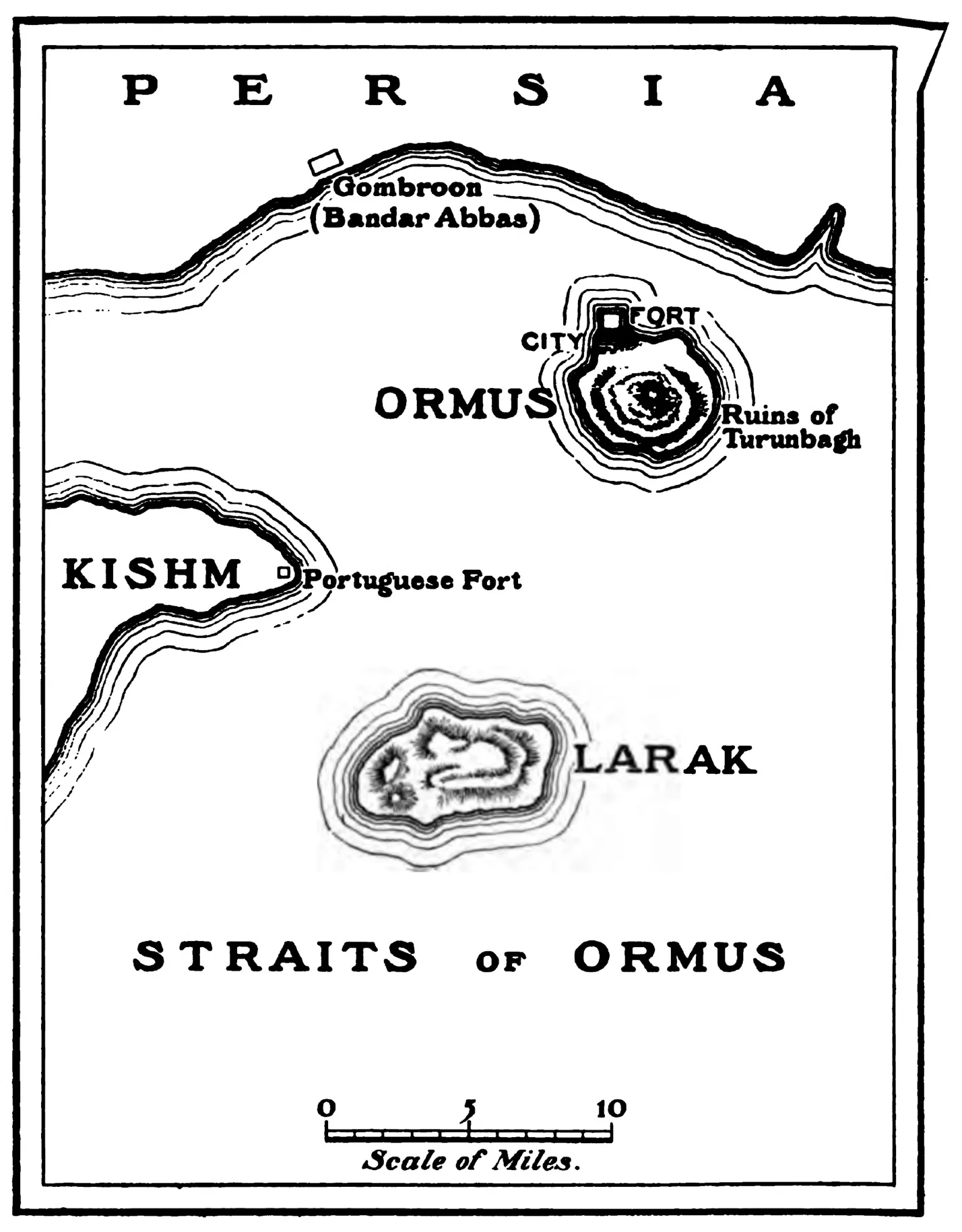
Have decided to send back to them the Lion, Rose, and Richard; therefore briefly relate the chief occurrences to date. Reached Jask on December 14, where John Purifie came on board with letters from the Agent, advising them to proceed to ‘Costake’, as the land journey from Jask was unsafe for caravans, both on account of the Portuguese and of the ‘rob[bers] of Mocroone’ [Makrān]. Moved therefore to Kuhistak, arriving on December 23; ‘wher haveinge roade not manye dayes, came aboard us one Samander Sultan4, a man greatly in favour with the Chan or Duke of Sheraze, from whom he was sente to congratulate our saufe arryvall, but cheifly to intreat the aide of our shipps against [p. 32] their and our enymies the Portugalls. Upon which motione wee proceeded to councell and perusall of our generall comission conserninge the premises; wherin fyndinge our selves sufetiently aucthorized both by our Soveraigne Lord the Kings Majestie of England, also by our honourable ymployers and your comissione from Surratt, wee oposed our selves against the wilfull oppositione and peremtorye refusall of so honourable an enterprize made by the unrulye multetude, whom in thende, not without greate labour, were soe fare pacefyed and also sattisfyed to proceed and to be ruled and obedyent unto their commanders and to doe whatsoever they would desyre them to doe. Wherupon it was resolved by councell to propound certayne artickles to the Duke, which if he would agree unto, then to undertake the service; the coppie of which artickles wee herewith send you [not entered]. The sayd artickles beinge translated into the Pertian, it was ordered that Edward Monox and William Bell should make their repayre to the Chan, who was then att Myna [Minau], and from himselfe to receave answeare theirunto; which in the space of three dayes they effected, accordinge to the Pertian coppie herwith sent you [not extant], which differeth very litle from our one demands. This busynis beinge concluded, we endevoured with all posseble speed to get on board our cavidall [i.e. capital] of silke and other goods, to thende that if it weare poseble we might save the Londons monsoone for England; which busynis, notwithestandinge our much dilligence, was not effected before the 19th of January, by reasone of the Pertians delayes to furnish us with cammells to bringe downe to the porte any of our goods before such tyme as they weare well assured we would undertake the service; which beinge don, the Chan commanded his owne camells to bringe downe our sayd goods; which for the more securitye beinge distributed aboard the severall shipps, the sayd 19th of January wee sett sayle from Costek. And the 23th [22nd] ditto wee ankored before Ormose within lesse then two leages of the castle, in expectacion that our daringe yet dasterdly enymie would have come forth to fight with us with his five gallyones and two smale shipps, besydes frigetts and boats a suffetient nomber to encounter with us, if they durst but be soe bould to have come forth; but they for their more securitye haled both gallyones, shipps, frigitts, [p. 33] and other vessells close aboard or under command of the castle, by which meanes wee could not com at them with our shipps ; which when wee perceaved, and understandinge our vowed eniemye Rufrero, who had taken the sacrament in Portugall to ruine both us and our trade in these parts, was himselfe in person in his new erected castle of Kishme, the daye followeinge, beinge the 23th of the same month of January, wee sett sayle directly for the castle of Kishme and aryved the same daye aboute none within lesse then a leage of the sayd castle ; and findinge suffetient water to bringe our shipps within faulkin shoote, it was resolved by consultacion to bringe our shipps soe neare as they might convenyently, and to invite our enymies to a banquit of fyer flyinge bullitts the ensueinge morninge ; which when they perceaved, they weived us with naked swords ; yet one, more wiser then the rest, hunge out a napkin or white cloth ; wherupone in Christianlike compassione Edward Monox was sent on shoare to parlie with them. And comeinge to the castle, two Portingalls were ready prepared to come on board our shipps ; to whom the sayd Monox acquainted hee had order from the comanders to talke with Rufrero, if he would be pleased to admit him audyance ; which was presently graunted him, and Rufrero with a good guard of souldyers came forth to mett him. And beinge sett togeather in the courte of guard, the sayd Rufrero began with a longe storye of the antient love and amytie betwene the two nations, English and Portugalls, and the noble acts that the English had done in asistinge the Portugalls to expulse the Moores out of their countrye ; to which the sayd Monox replyed hee came not to treate of busynisses of such antequitye, but hee came to treate of sattisfaxione and revenge for the warrs begun and attempted by himselfe, the their present Rufrero, against our last years fleete in the roade of Jasques, to the losse of a very worthy commander and our Kings sworne servante, besydes other of His Majestis subjects, and likewise to the losse of our monsoone for that yeare to the greate hindrance and damadge of our ymployers ; wherunto he replyed hee was no[t to be] condemened, for he had done nothinge but by his Kinge his masters command and com-m[ission]. And after much otheir ference to the like efecte, which would be over tedyouse in this place to relate, the sayd Monox replyed, notwithstandinge hee deserved smale favour at our [p. 34] hands, yet oute of a Christyen feelinge of their present estate, we weare willinge [to] shewe them mercye and to free them from the hands of the Pertians and Moores; which hee seemed willinge to accept, but withall demaunded the like quarter fore the Moores which had served him in his warres as for the Portugalls themselves; wherunto was answered the Moores weare for the moste parte the Kinge of Pertia his subjects and wee could not take upon us to protect them, but of necessity most leave them to the mercye of the Chan. Then sayd Rufrero: "Rather then wee will doe that, wee will ende our lives togeather"; which answer of his seemed to be utered with such vehemencie as if he resolved to doe as hee spake; which Monox perseaveinge, tould him hee would goe unto the Pertian generall, named Emoumelybeage [Imām Qulī Beg], and solicite him in there behalfe; with whom hee soe fare prevayled that he was content to promise them both life and pardone for their offence; only he desyred to take notice of their names and to have it soe provided that they should not goe to Ormose to the further strenghtinge of the enymie there, which request seemed reasonable; but Mr. Monox retorninge to the castle to acquent Rufrero with what he had don, he absolutly refused any such agrement. Wherupon worde was sent us aboarde, and wee supposeinge hee used but delayes onely to practice his owne escape, wherfore wee presently resolved to trie the strength of his castle with our ordynance; which was performed by the whole fleete with neere upon 1,000 shoote, in which fight wee killed him above 30 men, with some breaches made in his castle walls, yet not soe much as wee intended. Wher[upon] wee gave it over and resolved upon the landinge of five peeces of our ordynances, to batter him nearer at hand; which was in two or three dayes soe well followed that wee dismounted three or four peeces of his ordenances and soe shooke the wales of his bulwarke that in the [end?] hee was content to listen to a second parley, wherin wee for the gayninge of [the castle?] were content to suffer them to departe souldyerlike with bagge and baggage, his maymed and sicke people for Ormose, the rest of his Portugalls souldyers for Muscatt or Swar [see p. 15] and not to retorne agayne for Ormose within the terme of six weekes, and Rufrero himselfe, with some tenn or twelve more of his princepall captaines and commanders remayne aboard our shipps to [p. 35] our further disposure of them in Indya; and the Mores, by the greate opertunitye [importunity] of the Pertian generall, for the most parte weare delivered unto him. And soe the first of February, haveinge dispeeded both Portugalls and Mores, to the nomber of six or seven hundred men, weomen, and childrin, wherof 300 were Portugalls, the Pertian generall and wee hand in hand tooke possessione of the castle, where the culours of both nations weare at one instant sett upp, where they stand, and wee hope shalbe ther be [sic] maynetayned, to the honour of our natione and perpetuall disgrase to our proud enymies. In which enterprize, both at sea and on shoare, wee lost onely three men, and two other maimed and hurt. One of them is Mr. Abraham the Dutchman, who is in daunger to loose one of his armes, beinge shoote with a greate shoote from the castle on shoare; but the man whom wee shall finde the greatist misse of is Mr. Baffin, that was kiled outright with a muskit on shoare, plyinge a peece of great ordenance against the castle.’ As regards other occurrences, Mr. Jeffries died within seven days of their leaving Surat, and Mr. Bell has been appointed Agent in his place. Mr. Monnox desired to go in the first ship for Surat, but his services are so necessary that they have prevailed upon him to remain with the fleet. ‘This enterprize, though it may verie properlye be caled ours, for the efectinge [of] our owne designes, yet are wee therin aided by the Pertian as partaker of our shipps charges to the amount of 600 tom[ans]1 per month for his parte, besydes the moitye of all the powder and shotte shalbe spent in the prosecution therof,’ with other conditions shown in the enclosed articles. ‘The aforesaid busynes beinge ended at Kishme, and four English appoynted to keepe our possessione in the castle, the 4th of February wee sett sayle with our whole fleet for Gombroone, ther to confer with the Duke upon our further attemps; by whom wee weare the nixt day invited on shoare to a very princly feast and banquet; the which beinge ended, and wee ready to take our leaves of His Exelencie, hee demanded of us what shipps we purposed to send awaye and which should remayne here for the prosecution of his and our further designes and atempts for the gayninge of [p. 36] Ormose; to which his propositione wee answered him directly that such and such shipps wee purposed to dispeed away, and the rest should remayne upon the intended service; wherwith he seemed well content, and soe we departed.' Have notwithstanding sent the Lion in addition to the other ships mentioned, in order that the Mokha factory may be supplied; but if it be thought at Surat too dangerous to venture a single ship to the Red Sea, the Lion should be at once sent back to them with a suitable cargo. Sugar and conserves would be particularly profitable; and indeed all India commodities are in demand now, 'by reasone of the present restraint of trade with Ormose.' Moreover, broadcloth would probably sell quite as well in Persia as at Mokha. Would be glad to have the Primrose dispatched to them from Surat with provisions and stores for the fleet. 'Wee send you herewith for a present Capt. Rufrero, with six more of his princepall captaynes and gentlemen, which we refer to your disposure, wherin we knowe you wilbe carefull of our poore afflicted countriemen who suffer messerable bondage under their ensultinge enymies to the sothwards [cf. p. 26]. Our opynions are that unlesse the Companies shipps to the sothwards have beter ymployment there then wee can imadgin, it weare very fittinge you gave order for som of them to com for the succour and reliefe of this place, for it is very certayne the nixt yeare, if not before, wee shall have all the force of Indya upon our necks; and if wee can but hould it oute and give them the repulse but once more, wee shall not need to feare ourselves to be the absolute masters and comanders of these seas, wherby for the future our honourable ymployers may negotiate their affayres in these parts with their single shipps and not with whole fleets in this maner, the charge wherof devoreth the proffitt (if not more), wherby the Company are only traders but litle gayners. The late victorye which God hath gave us and the conquest made upon the castle of Kishme hath in a maner brought us to as good a possession of these seas and the traffique therof as our enymies, that have benn plantinge themselves this 120 yeares, for wheras they have the succour of their castle of Ormose for defence of ther navie, so lickwise we have the same succour for our navie under the castle of Kishme, where wee have 6 fathom water within muskitt shott of the castle, and we have the country of [p. 37] Pertia to our frinds and they their mortall enymies, which is noe smale advantage on our parts, and none of the least inducements to incite us to the prosecutione of our intendments against Ormose, wherin our cheife ayme and prime endevours shalbe by Gods assistance [to] ruine there armado; which will not be effected but by some stratigem of fyer, they keepe themselves soe close under the protixione and defence of their castle; but wee doubt not before longe to make that place to hott for them. The castle of Kishme will necessarily require some beter fortificatione for defence of itselfe and our shippinge; wherin wee desyre you to advize us your opynions whether wee shall doe anythinge therin or noe. It will also require a greater nomber of ordynance then now it hath, beinge only 15 peeces, greate and smale, and one base; and by all meanes wee desyre you omitt not to cause some quantetye of demie cullverine shott and saker shott to be made against the nixt yeare, and send us by the first soe many as you can in soe shorte tyme procure to be made.’ (Copy. 4¾ pp. Received February 28.)
Francis Pinder at Gombroon to the President at Surat, February 7, 1622 (Factory Records, Surat, vol. cii. p. 107).
The fleet reached Jask on December 14, but found that no silk was to be had unless the English consented to help the Shāh to take Kishm, Ormus, &c., ‘hee haveinge so ben promysed 6 monthes before our theire aryvall.’ A consultation was held on the 26th ‘for the followinge these designes, groundinge their warent on your consultacion1 granted to this efect; if by me not misunderstood, you athorised to seeke the distruxion of the Portugalls, even in their owne portes, soe it wear without daunger or prejudice to the Company.’ Pinder advised that the silk should first be taken on board, in case the Persians proved faithless, and this course was adopted. ‘Soe, the silke taken in, wee went for Kishme, where the 23 January aryved, beseiginge it by sea, the Pertian by land, wee landinge ordynance, with men to manage them, the 24th, haveinge made some shotte from the shipps, with the losse of two men, being more hardy then provident. Betwene the 23 and 29th weare many parlyes betwene the Portugalls and our Cheifs for the surender [p. 38] of the castle, which the 29th was concluded. Mr. Bafine slayne on shoare at conclutione of the surender. Condicion I truelye know not, but spoken they weare to departe with bage and baggage, all the Portugalls and Moores, Rufrero and some few otheir excepted, which weare detayned to redeme our natione. The Portugalls and Moores haveinge yelded under our protixione, some daye after the Mores were sent on shoare to the Pertsan, who formerly had promysed them mercie, but falsly murthered them most unhumanly.' Commendations to friends at Surat. Addendum.— A note of the questions put at the general consultation by the company of the London. 'First, wheather tolerable by our Prince to joyne with a heathen against the Portingalls, and not to be caled in question. Secondly, if allowed by our imployers; and in case of losse of shipp or shipps, whear our reward for tyme spent should be lookt for. Therdly, if any lost life or lymes, how he or his should be rewarded. The answeare: your authoritye was suffetient warrent for proceedinge, but the reward rests in the Companies pleasures.' (Copy. 1¼ pp. Received February 28.)
John Weddell and Nicholas Woodcock, aboard the JONAS in Gombroon Road, to the President at Surat, February 8, 1622 (Factory Records, Surat, vol. cii. p. 109).
Certifying that the bearer, 'Rufrero', 'was promysed to be sett on shoore within six weaks att Surratt or Damon, but leaveinge him to your owne discretions.' P.S.—'His desyre is not to goe ashoare at Surratt att all, for feare that they will take him from you and keepe him prisoner.' (Copy. ½ p. Received February 28.)
William Martin and George Pike at Broach to the Surat Factory, February [9?], 1622 (Ibid., p. 87).
Progress of their investments. Gunny wanted; also packers, if available. (Copy. Mostly illegible. 1½ pp. Received February 10.)
Nicholas Bangham at Burhānpur to the Surat Factory, February 10, 1622 (Ibid., p. 105).
The merchants refuse to give more than Rs. 9 per seer for the amber, on the ground that it is too small. Hopes to agree for the tapestry in the Prince's 'sercar' [see previous volume, p. 160]; also for the picture of Diana, which he understands cost 700 mahmūdīs.
[p. 39]
But ‘in this devilish sercarr noe man can be master of their owne goods.’ ‘The Prince is retorned from huntinge, and Assuff Can [Afzal Khān : see p. 31] now fallen seick and keepeth howse. Soe that here is litle hope of speedy procuringe a fermaune of Assuff Cane for our frinds fredome in Agra ; but I shall use my best diligence when tyme will permitt. Jamcolybeage [Jam Qulī Beg] is dispeeded hence towards you. Jemsearbeage is to stay till Isake Beage com upp, and then, as reportes yett, hee shalbe your Governor. The Narose1 I hope wilbe keept here, which wilbe a meanes to put of some of all sortes of our commodities ; in which I will not sleepe.’ Urges dispatch of some one to assist him. P.S.—‘Your picture is in the Princes sercare.’ (Copy. ½ p. Received February 20.)
John Clark at Jahāngīrpur to the Surat Factory, February 13, 1622 (Ibid., p. 92).
Requesting Rs. 200 by the bearer for payment of the peons ; also instructions as to the number to be retained to look to the goods.
(Copy. 1/2 p. Received February 13.)
WILLIAM MARTIN AND GEORGE PIKE AT BROACH TO THE SURAT FACTORY, FEBRUARY 14, 1622 (Ibid., p. 92).
Gunny, &c., received. Will make purchases sparingly, according to order. The four packers have arrived and have been set to work. They have usually paid only three-quarters of a mahmūdī per bundle, but will pay these at the rate ordered. (Copy. Part illegible. 1 p. Received February 16.)
CONSULTATION OF THE COMMANDERS OF THE ENGLISH SECTION OF THE FLEET CRUISING AGAINST THE PORTUGUESE, FEBRUARY 17, 16222 (O.C. 1032 A).
As Michael Green has been chosen to succeed the late Capt. Fitzherbert, Bartholomew Goodall is transferred from the Diamond to the Anne, Mr. Philpot from the Exchange to the Diamond, and Richard Swanley, master's mate, is promoted to be master of the Exchange. (Copy. 1/4 p.)
[p. 40]
James Bickford, Nathaniel Halstead, and William Hill at Ahmadābād to the Surat Factory, February 19, 1622 (Factory Records, Surat, vol. cii. p. 103).
Note what has been done regarding the pass for Safī Khān's vessel. Are glad the caravan has got as far as Jahāngīrpur in safety. 'Ours of the 25th past, togeither with a later breife and the inclosed from our frinds at Agra, wee perseave you have receaved, and understand what you have done for their releife. God graunte Isack Beages letter to his master be of more vertue then his masters firmaunes have bynn in Surratt in our behalfe; but that tyme will shewe. In the meantyme wee conseave it would not be amisse to learne (yf wee might) what those doggs of Cambaya are that are the complaynants, which beinge knowne, hapely some redresse might be procured nerer home, but heerof wee doubt not but you have heedfull thought.' Explanation as to the rate of exchange. Bickford thinks of going to Surat shortly. 'It hath pleased God latelye to vizet him with a sudayne sicknis, wherin in two dayes and one night hee thrice fell dead, but through Gods mercie he is now reasonable well.' Have set in hand the provision of broad 'duttyes Dowlka' [see previous volume, pp. 28, 62] and broad 'seryas, both playne and stripte, for napkins'; have also ordered the buying 'in the bezar' of narrow baftas from Rs. 1¼ to 2½ apiece. Have received from Burhānpur bills of exchange for Rs. 9,500. The rate from Ahmadābād to Burhānpur is Rs. 93 per cent, while at the latter place Bangham paid Rs. 6¾ per cent for the exchange; this, though dear, is not exorbitant. 'The washers that lost our lynens wee have had before the Cazie [Qāsī, judge] (whose busynis it is), and after a very formall hereinge of the mater, the fellow that lost our 16 baftas stolne oute of his howse, but cannot shewe any reason howe, hee is adjudged to sattisfie us; but hee that lost our 50 dutys, theire beinge proffe apparent that both the pore and his howse [were?] robd by force of theeves, wee weare adjudged to stand to the lose of them ourselves, it beinge the costome of this country; onely wee have his screit [see previous volume, p. 4] that if hereafter wee com to the knowlidge that he lost not soe manye, he is lyable to sattisfaxione for the whole; and so beinge throughly informed that whatsoever in this countrye is taken by theeves perforce [p. 41] is to be borne by the owner, in whose custodye soever.’ (Copy. 1¾ pp. Received February 27.)
Robert Hughes at Agra to the Surat Factory, February 23, 1622 (Ibid., p. 134).
Having been appointed chief of this factory, he solicits the continuation to himself of the yearly allowance of 20l. made to his predecessor towards apparel, and doubts not they will grant it, ‘apprehendinge the rest of my meanes to be poore and not suffetient to maynetayne a computent porte in this imployment.’ (Copy. ½ p. Received March 25.)
Nicholas Bangham at Burhānpur to the Surat Factory, February 23, 1622 (Ibid., p. 106).
As directed, will remit all available funds to Ahmadābād. Has just sold all the coral, the money to be paid half at once and half in seventy-five days, with a discount of one per cent on the latter payment if made at once. Hopes also to conclude with the Prince about the tapestry. ‘I have had a great deale of attendance upon Assuff Con [Afzal Khān: see p. 31] sence his health, for a firmaune to our frinds at Agra; who for two or three dayes gave me some hopes, but sence newes of the death of Etteman Doulat1 and the imprisonement of Assuff Cane, or (as most reporte) his beinge put to death, aboute this late murther, I cannot gett him to heare me speeke in that kinde; wherupon I have advised our frinds at Agra not to rely on such unsertayne hopes as heare are for their releife, the tymes beinge soe full of troubles as at present. Auzuff Cane [Afzal Khān], as reporte sayeth, is postinge to Vizapoore [Bijāpur]. Other sayeth the Kinge hath sent for him and Hackam Alamandine and Bickermazete aboute the death of his sonne Cossoro.2 Many unsertayne reportes goeth, this Prince not beinge dismayd in the worlds eye. The Kinge hath, as all men reports here, retyred himselfe towards Agra, and ther will keepe his Narosse’ [see p. 39]. Is much grieved at their order that he is to carry the jewels to Agra, ‘wherin it semeth you will now in my ould dayes make me more [p. 42] inferyor then ever, and therby to bringe my head under the subjectione of younger men. . . . Besydes, Mr. Hughes acquaintance in that courte cannot but most [sic] produce beter frinds for the sale theirof then I can, beinge but a straunger.' Further, he is now in suit with Soares [see previous volume, p. 89], and hopes to prove him a villain, for it is notorious that he received back from Sprage the bulk of his goods. It is important that he should see the case through; trusts therefore that they will rescind their order. The sale of the jewels is also unlikely, 'for that Assuffe Cane is in disgrace, if not dead; besydes that those comodities are not every mans monye.' He would rather agree to return to England, 'or be a boye [i. e. servant] in Surratt,' than quit Burhānpur at present. P.S.—Many rumours prevalent, but nothing certain. (Copy. 2 pp. Received February 28.)
Robert Hughes and John Parker at Agra to the Surat Factory, February 23, 1622 (Factory Records, Surat, vol. cii. p. 134).
When last heard of, their caravan was nearly at Surat; trust it has now arrived. Will do their best to sell speedily the goods about to be sent up to them, but fear they cannot dispose of them in time to invest the proceeds and make return this season. As to 'Ramperxad's' account, they cannot answer precisely, for want of their books. The payments said to have been made to the brokers are denied by 'Jado' and they cannot disprove him; 'yet understand of some lolledge1 they have taken, but to what some hee will not acknowlidge.' The two bills of 'Shaw Daud Canue' [Shāh Dāūd Khān] will be sent to Burhānpur when recovered. The Italian who brought the letter from Surat has gone to Patna to make his investment there for Persia, but is expected back shortly, and any letters for him to carry should be sent at once. 'The Dutch reporte the good successe of their caphilo past Brampore. And wheras you desyre further to partake of their proceedings, wee insist that although they have more lybertye, yett it appeares they have lesse to doe then ourselves, their princepall impedyment wante of meanes, wherof they ar altogether destetute, as haveinge longe [p. 43] before our comeinge heather sould all their cloves att (or aboute) 220 ruppees the maunde of this place. From hence wee conceave their indico now sente cheifly to proceede, and nowe they have nothinge lefte save a litle benjamen and camphore, commodities as litle esteemed heere as sought after, and therfore lyes by them. They devouldge not anythinge of their faithelesse proceedings with us at the southwards [Java, &c.], but contrary to [sic] a fleete of shipps departed thence in October last for these coasts, consisting of seven Dutch and fower English, which by ther one reportes brings them quantetyes of southrine commodities, with a further intentione to curbe the Guzeratts &c. in their trade and full resolucion to depresse any obstickle that maye affronte them. Our frinds in Sammana, hereinge of our molestacion here in Agra, lefte their former resydence and repayred to Synnode [see p. 21]; where, after consultacion taken (though contrarye eyther to order, advice or expectacion from us), Mr. Younge with upwards of 5,000 rupp[ees] in ready spetia, besydes goods, departed for Lahore, with an intente (as themselves wright) to have invested that monye in indico and soe to have gone overland for Pertia, leaveinge Willowby behinde for the recoverye of 2,600 and odd rupp[ees] wee had litle before remitted them hence; who was to have followed, but Mr. Younge arryveinge in Lahore, hee was emedyatly taken upp into the custodye of Agga Abram [Āghā Ibrāhīm], Assuffe Chons veskele [see p. 11] their, who, as it should seeme, detayned both him and his goods; yet upon the receipt of sundry letters received from hence hee replies us hee is determyned to retorne agayne for Sammana yf (which his assistance [assistant?] now in Synnde [sic] questyoned) hee can gett leave. Wee sent them a coppie of your liste and have advized them the best wee can how they should goe forward for the accomplishinge of what you expected from them and the seazon lymitted; but the tyme alreadye lost, wherin they have done just nothinge, breed suspetione whether they can contenewe the provissione of the quantety and qualytie of calicos inordered in that factorye; wherof wee are yet altogeather destetute, as haveinge founde noe releife towards the releasement of our goods still under the possesione of these currs, who will not be brought to anythinge but approbacion from courte, from whence first sprong their authorytie; [p. 44] where wee this month have had a pititione attendinge, and as yet hath founde noe accesse or audyence, by resone of the late death of Etemaddoulet, which in that familye hath occationed late troubles in Burania, espetially in Assuff Chonn his sonne. And upon the news thereof Mr. Banggam speeded your letters which came to the recepte of your Governours testymonyall letters to the Prince, and him her was to solicite a nishane [nishān, order], and so from thence to Assuff Chon in our behalfe, but findinge it soe difficultye at that instant of troubles, and through the Princes then absence in [sic] pursute and the late murther of Sultan Casserowe, which hath bred much hubbub as well then as here in Agra, and is likely every day to increase, which at present is in Congera,1 but Mr. Younge with the Wazeer [or part of it] is kept in Lahore. Soe that wee cannot yet feare we shall a longe tyme be quitt of these troubles untill express comittance comes from lesker, whether the Lapoora botto (if granted) must goe, and answere retorne before which will require tyme, all loste to us, and then hapely not granted untill satisfaxtione made these Syndamen, who beinge at lesker and wee in Agra, wee shall fynde it deficulte to come to agreement or cleare their demaunds, which what they are or howe farr we are not justly posest, but whence [once?] again in questione, haveinge nowe your full approbacion for an absolute resolutione to be made therof by giveinge them satisfaction, we shall endevour it the best we maye for our owne advauntage. Our frinds in Amadavad writes us of some sattisfaction made Cambaia merchants for sundry goods Mr. Kerridge apprized. Wee by that convayance intreated testymonyeall letters from those Governours, which questionlese would have benn much avaylable unto us heere, espetially Agga Salyes [Āghā Sālih], Governor of Cambaya, who is for Assuff Chon, and the only man (as wee conceave) which was the occatione of our attachment heere, by wrightinge his masters most untrewethes, the recalinge wherof under his owne hand could not but be worth the solicetinge.’ That accounts were not sent in duplicate, owing to want of time for copying them. ‘Have advised Mr. Younge &c. to reforme [p. 45] theire plurality of cavyilluryoo.’1 Jādū makes little profit from his brokerage here and is discontented at being detained. The Māndū camelmen have been cleared on paying Rs. 2,000 and giving an undertaking to pay Rs. 1,900 more. Refer to their letter of January 22. Are still keeping back the Surat letter for Āsaf Khān pending the receipt of further instructions. Little hope of dispatching any goods before the rains. (Copy. 3½ pp. Received March 25.)
William Methwold, Matthew Duke, and Francis Futter at Masulipatam to the Surat Factory, February 26, 1622 (Factory Records, Surat, vol. cii. p. 130).
In answer to theirs of January 9, received on February 10. Condole with them in their late sufferings. ‘Wee have your judgment of gumlack and are theirby confirmed in our former opynions; yet resolve not to proceed further untill receipt of that sente give further lybertye then any yet received. All that comes heather is of that sorte you call rustack,2 but some cleaner then other and fewer stickes; of which soe long as the trade of Pegue conteneweth (which of late yeares hath somewhat declyned) there may be procured some quantetye, but noe haste to be dealinge without some assurence of proffitt. Wee are glad wee are acquit of further search after Beng[ala] silke, wherunto we weare somewhat ingaged, for beinge [m]isleed through a vayne promyse of an unable merchante to write of some large hopes of good quantetyes procurable in these parts, which after soe longe expectacion vanisheth into smoke, for here seldome comes anye eyther in itts quantety or condicion worth the surveigh; of which nature in one boate from Bengala (which is all arryved this yeare) here is brought some fewe maunes, for which the owner dare aske 30 pag[odas] per maune; indeed at this tyme all silke is both deare and scarce. As for correll wee have, wee finde enough of this one chest to condeme this sorte as uncapable of more. Whilst the dyamond myne drewe recourse of banyans in[to] these partes, wee might some tymes shewe it and were once reasonable well offered, but hung of because wee are injoyned to hould it to a good price or [p. 46] seeke meanes to sende [it] unto you; but sence the myne is imbargued [see previous volume, p. 265] wee have not once benn asked after it; soe that this smale proofe maye with litle prejudice assure our masters that this poore place affords noe vente for soe importante a commoditie both in its qualety and value. Your readynis to have transported good parte of your greate quantety if we had given incoradgment wee have great reasone to comend and thanke, but trewly this is noe place for such a purpose, nor hardly our howse capable of receipt, soe extreamly we contenew pestered with everlastinge hepes of course and fine pursleene [porcelain] of all sortes, which vend both slowlye and at cheape rates. The order and maner of its [i.e. the coral's] workeinge we understand not noe further then by inquirye, which wee partecipate; and [as?] hear in soe longe tyme wee finde not merchants for one chest, we se litle incoradgment to enquier further into the course of that merchandize. The monopoly erected here upon gould and silver [see previous volume, p. 205] quickly vanished, and cheifly by the Dutch and our oppositione. This goverment is farmed at a racke rente, and he best welcome to the princepall undertaker that can devise a newe course of raysinge newe revenewes, among the which this was propounded, and farmed for 3,000 pag[odas], but contenewed not above three monthes, and duringe that tyme litle beneficiall to the undertaker, for each man whom necessity did not inforce would not soe much countenance this inforcement as to bringe his quoine to this singuler serasse [Arabic sarrāf, 'a moneychanger'], for under that title was erected this new office, which not long after fell of itselfe; wheras your goverment, subject to a Prince proude enough of himselfe, without the flaterye of his followers, ambitious and in his rise, hath his will for his lawe, and like a Mahomytane pursues that thorough whatsoever prejudice of people or comon wealth; soe that your sufference is like to be more lastinge, and, for the reasons you give, maynely inconvenient to the comon of your trade, which wee here admire to heere soe farr extended as to have in readynis soe large a cargazone that with Persian helpe maye freight two great shippes for England, besydes soe lardge a compatencie for Jacatra and the Reed Sea. Our masters affayres to the southwards will maynely wante your helpe; which, as it seemeth by letters from thence, comes soe fare shorte of [p. 47] necessarye and expected meanes that manye of their newe setled factoryes must paye their proportion of charges and learne the course of that trade by lookeinge upon the Dutch, who more plentifuly then ever exporte masses of ryalls to supplye all places. It was an easye compositione; wee thought to enter into their conquests without disbursments of any former charges, but their senister proceedings in ther falce and disemuled promyses, with ther insolente comportements in the places of comaund, doe daylie teach us that our masters had beter have bought further lyberty with more expence; a touch wherof Pollicatt hath nowe lately afforded us. You have longe sence understood the agrement for that trade, that, contractinge togeather to the full extent of the least capitall, who had further meanes might proceed further, but in receipt of goods the joynt contracte was to have the preference, and beinge received to devide equalye per lott or judgment. The Goulden Lyone, which arryved in December, departed hence in January and from Pollicott aboute the begineinge of this month; upon whom because they would send a cargazon of goods to be at markitt before us, they commanded in all the cloth which could be made readye and, not once acquentinge our factores, apropriated all to ther use, and by this meanes embarqued at that tyme 138 fardles; which beinge by ours perseaved, they complayned of the injury and demanded reasone for the actione, and weare answered ther busynis then required it and that hee [sic] their did by their Governors order in Muselapatnam, and if they had incroched upon the mutuall contracte upon this occatione, wee should receave the nixt cloth was readye; which was indeed performed, but because they were not intresed [interested] they would not affoard us their judgment in the oversight, but lefte ours to their owne unexperyenced knowlidge to make choyce as they could best understand, and this in our opynione was a most insolent proceedinge, most repugnant to equitye and ther owne agreement; wherunto occurr daylie more agrevances, though of lesse consequence. They make us paye our parte of ammunition of the Holland price and buye it themselves at the Indyen; they charge the Forte with unnecessary souldiers to man out (?) their friggatts upon occatione, yet denye to participeate with us in ther reprisalls; they permitt us not to build, nor will affoard our people more then ther lenghth square to lodge in. In [p. 48] all which I have sought reformacion, but they have their evation ; somthinge is done without their knowlidge ; others they perswayde us wee understand not aright ; indeed nothinge they meane to remydy, but as yf it weare one most necessary poynte of their flate trade cheifly recomended to their practice, they doe whatsoever they maye to weary us. Elce what needed their delusive and abusive temporizinge with our masters, promysinge assistance of shipps as to Surratt, restitucion of shipps taken att Bantam, with the value of goods accordinge to agrement, whilst they fayle as much themselves in Holland, and wee feare gives such order to ther servants that should effect the rest. Somthinge is performed ; they finde here in Indya newe damadges not formerly advised, which unlesse wee will make good they will attend further order out of Europe ; so that our imployers, deluded with their promyses in expectacion of their performance, scants their supplye of moneys, whilst ther busynis stands still, hardly stronge enough to disburse the necessitye of garrissons and defensive fleete. And all this wee are of opynione they have purposely comploted to discoradge or weary oute our employers, and to graspe this trade in their onely manadginge ; which may once [i.e. at some future time] hapen, for what the common opynione of this trade is as it consernes England hath been discovered in The Trades Increase1 and like busye intermedler, and is glanced att in the late newes from Spayne. What they [i.e. the Dutch] intend aganest the Guzeratts, they keepe that place soe bare, you ga[ve] good reasone to misdoubt, for where they cannot hurte us per ther power wee ha[ve] more reasone to feare ther polecye. Wee are too well grounded in these partes, both [in] meanes and men experyenced, to be indamaged by any of ther inlade machinac[ions], who can easely deserne that their rumours devulged of dyamonds was only to terryfy others from buyinge, the beter to vend what they have formerly bought, wheras (as you trewly apprehend) quantetise most produce cheapnes; they are even in this place rysen to doble their former prise and fewe or none extent. If it weare not policie in them it wear palpable ignorance (for who can saye but they may be mallitiously ignorante); the price and quantety compared with [p. 49] those of Jaecadanna1 might be the grounds, wheare the sight of stone must be purchesed with guifte and the stone itselfe with stoare of ryalls three tymes the value they have ben bought in this place. Why they weare heere soe cheape this Kings covetiousnis must give account, that sett noe lymett to the myner; and for their dearnis at present his feare hath to answere, who hath of late laded whom [i.e. home] chargable embassidours with uncreadable presents for sattisfaxione to their unreasonable demands, and dar[es] nowe hardly be knowne to have a myne in his countrye, least it should undermyne his kingdome. The fleete disigned for the coast of Mallabar is most certayne speeded, and wee had longe sence hoped to have heard of their arryvall, and some happie ef[fects] of their intendments wee doubt not but you have before this tyme, for the commandour of the fleete, one of the Councell of Indya and of good account in Holland (Signor Dedell by name), is, as wee are creadably informed, authorized to supplant Vanderbrook and to resyde cheife of all those factoryes. Wee have heard that you are plentifully stored with good horses; we the contrary (of any worth their meate). It weare a thriftye service to the Company, and to us both acceptable and necessary, if you could fynde meanes to send us one, for here they are very scarce and deare. Wee made of late yeares the same motione to Mr. Kerridge, who seemed well inclyned therunto, but then insued the warres in Decanye, which are nowe agayne removed; soe that if convenyencie admitt wee intreate your remembrence; otherwise wee should feare to trouble you.’ (Copy. 4 pp. Received March 28.)
Richard Swanley’s Journal of his Voyage from Persia to Surat (Marine Records, vol. xxxiv. p. 37).
1622, February 5. Swanley transferred to the Lion. February 7. They sailed from Gombroon. February 14. Lost sight of the Rose and Richard. February 24. Saw the coast of India. February 25. Saw the Rose ahead, and the following day overtook her. ‘Shee had taken three Mallabars juncks bound for Gogo.’ February 27. Arrived at Surat. (3½ pp.)
[p. 50]
Robert Davis, Master of the Richard, at Swally to the President at Surat, February 26, 16221 (Factory Records, Surat, vol. cii. p. 289).
Has brought as prisoners Ruy Freire and ten more of the principal Portuguese captains, taken at Kishm and now sent to be ‘att Your Worships disposinge’. They left Gombroon on the 8th, being three ships, the Lion, Rose, and Royal Richard; but the third day after their departure the two former lost company with them. The bearer will explain the state of their ship. (Copy. ½ p. Received February 28.)
John Johnson, Master of the Rose, at Swally to the President at Surat, March 2, 1622 (Ibid., p. 120).
Sends a note of stores required, and requests a list of any that may be dispatched to him. (Copy. ½ p. Received same day.)
James Beversham, Master of the Lion, [at Swally] to the President at Surat, March 2, 1622 (Ibid., p. 120).
The President’s order for the release of the Malabars and their goods was sent on receipt to Johnson, who refused to take notice of it because it was addressed to Beversham. Hearing that Johnson’s men had taken some goods from the Malabars since the President’s departure, he has thought it best to do nothing until further instructions are received. (Copy. ½ p. Received same day.)
William Martin and George Pike at Broach to the Surat Factory, March 2, 1622 (Ibid., p. 120).
The 100 mahmūdīs mentioned in the letter from Surat were not (according to his tale) delivered to the bearer. Request they may be paid instead to the packers, who have now returned to Surat. Have dispatched, under the charge of Thomas Aldworth and some peons, the remainder of the goods they had provided, viz. 47 fardles for the Red Sea, 52 for the southwards, and one for England; the invoices are sent herewith. Have also forwarded 8 fardles of Ahmadābād goods, ‘which are whited heere’. The Governor, ‘Hamitt Chan’ [Himmat Khān], has not yet returned, and so they have not been able to show him the broadcloth, for [p. 51] which they intend to ask 35 mahmūdīs the covado [see previous volume, p. 21]. (Copy. 1 p. Received March 3.)
John Johnson [at Swally] to the President at Surat, March 3, 1622 (Ibid., p. 121).
Intended to release the Malabar junks this day, but, finding that the commanders and pursers had gone to Surat, he desisted until they could be informed. Requests that this may be done. (Copy. ½ p. Received same day.)
James Beversham at Swally to the President at Surat, March 4, 1622 (Ibid., p. 121).
The release of the Malabar junks has been deferred until the masters, &c. are present, in order that they may give receipts for everything that is handed over. The Persian goods have been landed. Will assist Mr. Johnson as much as possible to get his vessel ready ; she has been careened and sufficiently repaired. Requests a receipt for the gold belonging to Mr. Jeffries, and orders for the disposal of his papers. Has sent ashore his Arabs, but Mr. Johnson is retaining his until he has spoken to the President. Would be glad to see him at Swally. Has two barrels of biscuits for Mr. Salbank. Should any of his men come to Surat without written permission, they should be sent back. (Copy. ½ p. Received same day.)
The Same to the Same, March 4, 1622 (Ibid., p. 122).
The Moors have been set on shore, according to orders , fearing they may carry letters from ‘Rufrero ’, he has sent two men with them to search them. Requests that six or eight ‘ Guzeratts ’ may be hired to guard goods on shore. The Persian has received all his belongings, and has promised to hand over to the President any letters he may receive from ‘ Rufrero ’. (Copy. ½ p. Received March 5.)
John Johnson1 at Tanjūr to Thomas Brockedon2, March 4, 1622 (O. C. 1036).
‘Loving and kind frind Mr. Thomas Brokidon, The case of my [p. 52] wrighting to yow at this time is conserning two of the Companies men that is by chance litted one this place, where at this time I doe ly residente, sore against my will, but I hope the Lord will in His good time free me heareof, for I doe abide heare in paune, for the Captaine of our house is gone home and the Great Naige [Nāyak] deseired to have [one ?] to abide in the towne of Tangore by him, whear, having lost my shipp one Sealone, [I] was made choyse of. And conserning our voyage it is to long for me to wright thereof at this time, but the bearer heereof cann give yow a little lite therof. And as for these twoe men, I desier yow to thinke one the myseries that thay have indured to come into the Companies servies againe, for when thay came to me [it] made the watter roune doune my checks to looke one them, soe misserable ware thay bourned with the sonne, and hade noe more then there shirts, and being robbed of that little the King of Cochine had given them1; and for myselfe my meanes is but small, yet for any honest men that goes in true afayres shall not want soe long as I have to helpe them, as I hope the bearer heareof cann report noe otherwise of me. And as for the persone that doth tarrie beehind by meanes of his sicknes, I thinke it not fitting for hime to take mony of the Naige, by reason that when yow doe send meanes, that then hee maye at his pleasure take his jornie, which otherwise hee maye staye hime att his pleaser. The Great Naige demands of me what the reason is that the English doth not deseier to trade in his land as well as the Portingall, saying thay shall have pepper and anything the land doth afford, and likewise buye those commodeties that thay doe bring with them, as tine, leade, iron, and redd cloth is well sould. Littell doth our nation knowe howe thay are excepted all this land; therefor the Danes doth trade under the name of the English and are marvilous well eused, hath given them a towne2 and place to build a castell, which is finneshed, and hath thertie sixe peeces of ordinance mounted therin.’ (Copy. 1 p.)
[p. 53]
JOHN JOHNSON AT SWALLY TO THE PRESIDENT AT SURAT, MARCH 5, 1622 (Factory Records, Surat, vol. cii. p. 122).
His purser has been four days at Surat but has sent no provisions, and the crew begin to 'muter and complayne'. Begs that this may be remedied. The Malabar junks have been released. Requests that one of his carpenters may be sent down at once. Would be glad, if permitted, to make a step up to Surat himself. (Copy. ½ p. Received same day.)
NICHOLAS BANGHAM, ROBERT HUTCHINSON, JUSTINIAN OFFLEY, AND THOMAS HAWKRIDGE AT BURHĀNPUR TO THE SURAT FACTORY, MARCH 6, 1622 (Ibid., p. 124).
Hutchinson arrived here on March 2. A consultation was held, at which it was decided that, for the reasons stated in Bangham's letter of February 23, it would be inexpedient for him to leave Burhānpur at present, and Hutchinson and Hawkridge were appointed to proceed with the jewels to Agra in his place. Had they felt at liberty to sell the jewels here, they might have found a customer in 'Abdela Chan [Abdala Khān], who hath benn wondroslye importunate with us for any such thinge nowe against this Narrose [see p. 39] and hath offered to send home 30 or 40 thousand ruppees to buy any such jewell'. As, however, their orders were strict, 'besydes the feare wee have that it should come to this Princes eares, and therby to worke us a greater mischeife, wee utterly denyed any such thinge.' Hutchinson and Hawkridge will start on March 7 for Agra; 'the wayes thether, soe far as we can learne, are quiett, and as yet noe kind of disturbance to be heard of in this state, the King haveinge (as reporte sayeth) altered his determyned jornye for Cabull and is retorned for Agra and from thence for Ashmere' [Ajmer]. (Copy. 1 p. Received March 14.)
NICHOLAS BANGHAM AND JUSTINIAN OFFLEY AT BURHĀNPUR TO THE SURAT FACTORY, MARCH 6, 1622 (Ibid., p. 125).
'Sence my last unto you of the 23th past I have dayly followed the busynis of courte to procure an ende with those 17 peeces of tapistry taken into that sercare, but have been and am daylie [p. 54] put of with faire words untill the tyme of the Narosse be passed; some of the best of them beinge sent to the Kinge as a present from the Prince, as I doe understand. The picture of Dyanna alsoe is sent as a present and (as the officers in courte affirmeth) that picture was given to this Prince by Jemserbeage as a presente; which hee dnieth and sayeth hee will see it shalbe paid for, but as yet nothinge done, nore have I any hope of an ende with that or the tappistrye untill this tyme of feastinge be past. Sence my last also the Prince sent to the howse for all the velvetts which he formerly refused; wherupon I chose out seven of the worst of them and carryed to him, whoe founde greate faulte with them but neverthelesse bad his officers take them, as indeed they did at what price they listed, urginge me, perforce as it weare, to sell them at 8¾ ruppees per coved; which I measured and delivered and made account for them at the price mentioned, wherof there is 9 per cent to be abated. Thuse you may perseave the extreame dealinge of this dooge and all his officers, with whome I desyre of God that I might never have to doe withall. Asuff Chann [Afzal Khān: see p. 31] is gon to Vezapoore on embassage, and heere is nowe in this place but Hackam Allamondon, to whom a man weare as good speake to a devill as to him aboute the busynis of our frinds in Agra; besydes the reports that goeth heere are such conserninge Assuff Chon as all men suppose him deade.' Enclose a copy of a letter received from Agra two days since. Have had trouble over the sale of their amber, but hope to settle the matter satisfactorily, and will forward the proceeds to Ahmadābād. The exchange is at present 6¼ per cent, but they fear it will rise when they seek to remit. Send an inventory of John Young's things, but most of his effects are at Agra. 'All the rest of the tapstrie be yet upon our hands. Wee hoped to have sould some of them against the Narrosse; but monye is very scante with such men, and loath they are to laye out soe much monye upon a comodity that serveth them but once a yeare. All the sattins and cloth of gould in howse; but all our ylcondicionened [sic] velvetts are sould, save one peece ylcolloured.' (Copy. 1¼ pp. Received March 14.)
[p. 55]
President Fursland and Council at Batavia to the Company, March 6, 1622 (O. C. 1039).1
... ‘By letters receaved from Pallicatt wee understande of the Duches indirect proceedings with the factores there, as in all other places, which theire injurious dealings are insufferable, if wee any waye could helpe ourselves. The Duche in thatt place, as formerly in Amboyna, etc., pretende debts standinge out for 60,000 pago[da]s, and by this tricke appropriatte unto themselves the whole benefitte of thatt investment, and will not suffer us to have any share therein. They denie to make us acquainted with whatt sortes of clothe they buie, and if wee knowe any thinge of our owne experience wee must make them acquainted with itt, and they will share therein if they lyke itt. For accommodacion with howse roome, ware howse and counting howses, insted thereof they torne your factores into a cottadge, and thatt muste bee theire patterne to builde by, which is cleane contrary to whatt theire masters promised you. But wee have soe throughly by our formers acquainted Your Worships with theire proceedings in this kinde thatt wee shall not neede nowe further to inlardge heerin. But not onely in this they abuse you (which might for a tyme bee indured), but allsoe in the maine, your trade, which gives life to all our proceedinges, they extreamely wronge us. As nowe, theire shippe the Lyon arrivinge there, they caused all the clothe which was redye to bee brought in, and althoughe our monneies bee given out for parte thereof, which wee ought to receave, yet they take itt all themselves to serve theire present tornes, and heereby serve the markett in all places, whilste our goods must come in att leisure and theire pleasuers, and soe bee sent hither unto us a daye after the fayer, which is a manifest jurye, and noe small losse redounds unto you thereby. And when wee demaunde right heerein, wee are answeared with triviall excuses, and thatt they accounte sufficient satisfactione for us, not regardinge the Accorde, neyther equitye or justice, as wee have often formerly advized Your Worships. The coppies of the letters receaved from Pallicatt wee sende heerewith in the booke of coppies; wherein Your Worships maye more att lardge understande theire proceedings; to which wee referre you. Whereas [p. 56] Mr. Mills writes hee hathe sent a breefe of the halfe yeares chardges, wee fynde noe such thinge, and therefore cannot advize whatt thatt chardge may amount to; but by guesse your parte cannot come to less then 6,000 r[ial]s per annum; which will fall heavie this yeare, when wee shall not bee able to supplye thatt factorye with a cappitall sufficient to provide any quantetye of clothe answeareable to the Hollanders investements. But soe large a quantetye as they nowe provide wee cannot yett perceave where they may vend them; but tyme will learne us, and wee shall accordingly make use of thatt factorye by providinge soe many sorts of clothe as may bee there procured fittinge for theise marketts, and give order for the lesse quantytye from Musulapatnam, if they may bee had better and cheaper in Pallicatt.’ At the latter place the English factors had twenty bales of goods ready, but the Dutch refused to receive them into their ship. In other places they refuse even to carry English letters. (1½ pp. The rest of the letter deals with non-Indian affairs. Endorsed as received by the ‘Star’ about September 26, 1622.)
Thomas Rastell, Giles James, and Joseph Hopkinson at Surat to [the Ahmadābād Factory], March 8, 1622 (Brit. Mus. Egerton MS. 2086, f. 83).
(First part missing.) Reprove them for not forwarding their accounts. They should keep in touch with the Burhānpur factors, who will remit them money as it becomes available. Cannot yet give them a definite list of goods to be provided this season; but will certainly need 10,000 pieces of the broader serijas, 10,000 of dutties, and 20,000 narrow baftas, at about 22, 25, and 30 rupees the corge [score; Hind. korī] respectively, or Rs. 53,500 in all. Rs. 9,000 recently remitted by exchange. News from Persia. The ships ‘are prosecutinge their ayreye enterprize in th[e Persian?] service against the castle of Ormoose’, of which Monnox is probably the instigator. Fear the result will only be to damage their masters’ estate. (Copy. 2 pp.)
James Beversham at Swally to the President at Surat, March 8, 1622 (Factory Records, Surat, vol. cii. p. 123).
Explanations as to Mr. Jeffries’ gold and papers. Sailors exceeding their time limit should be sent down. The ship is now ready to take in goods. Rejoices to hear that ‘Father Sa[lbank]’ is to go [p. 57] with them to Mokha. Some of the Portuguese prisoners are sickly; requests permission to put them on shore. Expects some boats from Surat with wood, and to help in lading the goods. Wishes his purser were aboard and attending to his business. (Copy. ¾ p. Received same day.)
Robert Hughes and John Parker at Agra to the Surat Factory, March 8, 1622 (Ibid., p. 141).
The Burhānpur factors have advised their inability to procure ‘the Princes letter to Assuffe Chon and this Governour for our inlargument’, and have left them ‘to procure redresse from courte ourselves or to persiste in your resolucion, which what it is wee apprehend not, unlesse to patience, which already in some good measure observe, by induringe the insufferable wronges and disgrace of these our oppresors, still hopeinge for some releife, eyther from you or your courte; which not arryveinge hath urged the sendinge you this expresse, chiefly to advertice you Assuff Chons answere to our petition longe sence put upp, which for your beter understandinge and sattisfaxione a coppie theirof wee send you here inclosed [not entered], which wee intreat you well to peruse, wherby you will perceave how much hee is incensed against us, whether justlye or not yourselves are best acquented and wee wholy ignorante eyther of his informacion or intentione, yet hee threatned us shrodly and will not affoard us lybertye, eyther of our persons or goods, untill such tyme hee be trewly asertayned from the governours and merchants of Guzeratt that wee have made full restetucion of the people and goods hee supposeth us to have taken. Soe that now you maye perceave our onely remydie to rely in you, who (as wee formerly have intreated) are to procure under som generall writinge which may cleare us of these imputacions the affirmacion of the Governeurs of Surratt, Cambaya, Amadavad, &c., as also most of the princepalist merchants their abydinge to put ther hands therto. Without some such writinge wee have noe hopes to be sett at lybertye, and therfore if you purpose our releife wee hope you will endeuour it and that suddaynely; for as wee are willinge to indeuour [endure] restraints and bad usadge for the good of our masters proceedings, yet on the contrarye wee should be unwillinge to be further ingaged theirin then with the sauftye of our [p. 58] persons wee might be assured, and therfore in such case what your proceedings maye be wee (as yet asertaynd to us) besydes [sic] your advice etc. and that to be tymely ; the wante therof hath alreadye brought us farther intangled then otherwise might have ben prevented. The barer our servante that brought us this answere from courte reportes the Nabob to have given order for the restoreinge the Syndamens 8,000 and odd rupp[ees] oute of this our cash in their posessione, whose performence therof wee shortly expect, though cannot withstand. Mr. Younge is retorned from Lahore to Symmana, where he and Mr. Willowbye are disbursinge their monye lefte ; which done, Mr. Younge purposeth to retorne for Agra, wee not haveinge abylytie or meanes to supplye him with anye more monyes untill this our troubles are come to some peryod ; which when may be is most incertayne. The Kinge and his lesker is gon directly for Cabull and by this tyme maye be their arryved, beinge lefte by our servante 40 course [see previous volume, p. 82] beyond Lahore. Yf wee maye yet gett lycence and Jado to goe, we purpose to send Mr. Willowby and him to courte, although wee conceave it bootlesse untill you send us such certeficate as you may be confedent can releave us, unlesse it maye be that they may be redye their to receave them ’. Bangham writes that John Young is dead in Burhānpur. Send list of his effects at Agra. (Copy. 1½ pp. Received March 28.)
Nathaniel Halstead and William Hill at Ahmadābād to the Surat Factory, March 9, 1622 (Factory Records, Surat, vol. cii. p. 138).
Their bills received and the money obtained. Send an inventory of all goods &c. remaining at the time of Mr. Bickford’s departure. Have forwarded by William Layton (who accompanies Mr. Bickford) a specimen dutty of Dholka of special size ; request orders concerning it, and also as to the quantity of striped and unstriped serijas wanted. Would also like their opinion regarding the advisability of selling off all their lead and tin. ‘ Wee perseave the Dutches Wezopps [Wesp’s] arryvall, with her fortunate robeinge ; as also the happie successe our frinds have had over their enymies about Ormose.’ Inquire whether any ships are to be sent to England this year. (Copy. ¾ p. Received March 26.)
[p. 59]
Nicholas Bangham and Justinian Offley at BurhĀnpur to the Surat Factory, March 10, 1622 (Ibid., p. 128).
The enclosed letter has just arrived, with one to themselves, ‘wherin our frinds at Agra exprese ther still contenuence in their trouble; which is noe litle greife unto us, we not knowinge at this tyme to whom to seeke for releife, Assuffe Chon [see p. 31] beinge gon into Decan on embassadge and not as yet retorned, and here noe man in his place for us to solicite, the Prince beinge now in the hight of his Narosse and not any such busynis to be put upp unto him; besydes, the common reporte of the death of Assuff Chon, or at least his imprisonement, causes a kinde of discontent in this courte, as in our last to them wee advised, desiring [ ] seeke some helpe by themselves, for that heere were litle hopes to assist them in theire [ ].’ Have sold their amber and will remit the proceeds to Ahmadābād. P.S.—‘Jamserbeage’ has offered to have Rs. 2,500 paid in Ahmadābād against a like sum paid to him here. To this they have agreed. (Copy. 1⁄2 p. Received March 18.)
William [Methwold], Matthew Duke, and Francis Futter at Masulipatam to the Surat Factory, March 10, 1622 (Brit. Mus. Egerton MS. 2123, f. 113).
As to letters sent. P.S.—‘[The] newest newes here is that Sultan Caroone hath slayne [his eldest ?] brother, but after what maner wee know as little as of what [ ].’ (Copy. Fragment only. 1⁄4 p. Received May [ ].)
Henry Wheatley, Purser of the Lion, at Swally to the President, March 11, 1622 (Factory Records, Surat, vol. cii. p. 123).
Requests that the 2,000 ‘coveds’ of duties for sails may be brought aboard at once. Has shipped most of the stores. Robert Breedstreet, the purser of the Rose, is at Surat, and might be directed to look after the provision of stores for his ship. The matter is pressing, if the Rose is to accompany the Lion. (Copy. 1⁄4 p. Received same day.)
[p. 60]
James Beversham at Swally to the President at Surat, undated (Factory Records, Surat, vol. cii. p. 124).
Has just heard that he intends to bring some friends aboard the ships. Regrets he had not longer notice, for they are short of provisions and their ship is sore pestered, as the hold is being cleaned; however, he will do the best he can. Mr. Garrett might have warned him that strangers were coming. (Copy. ½ p.)
Richard Swanley’s Journal of his Voyage from Surat to the Red Sea and back (Marine Records, vol. xxxiv. p. 41).1
1622, March 14. Commenced to lade goods. March 16. ‘This day night, the skiffe being by the shipps side, the master commanded the boatswaine to more the skiffe astarne. So through the boatswaines forgettfullnes it was neglected. So about midnight Capt. Ryfrera with two Portugalls more and a neger, watching their opertunity, the watch being asleepe, gott into the skiff and went ashoare. So half an hower after, the skiff was missed. Then wee made after them ashoare, but could not heare of them, for they made presently for the river of Surratt, and so gott over. The one of them was drowned; the other gott to Deman, which afterward we heard by leters which Ryfrera sent to the Presedent of Surratt.’ March 24. The Lion came out of Swally Port. ‘This day the Duch shippe set saile with a smale pinace, the shipp bound for Bantom, and the pinace for the [Red ?] Sea.’ March 25. The Rose and the Richard came over the bar. March 26. The President and merchants were set ashore at Surat bar, and the ships sailed. March 29. The Richard being in distress was relieved of part of her cargo. April 18. A dispute between the boatswain’s men and the carpenter’s assistants having led to blows, the chief offender was ducked three times from the yard’s arm. May 3. Socotra sighted. May 4. Anchored near Tamrida. May 5. Three of the merchants went on shore, and carried a present to the King, who gave them in return some sheep, goats, and dates. Water brought aboard. May 6. After obtaining some more provisions, the voyage [p. 61] was resumed. May 8. Lost sight of the Rose. May 17. Saw the coast of Abyssinia. May 22. Saw the coast of Arabia, to the eastward of Aden. May 25. Mr. Heynes went ashore to find out where they were, but could not speak with any of the natives. June 6. Sighted the African coast, about 23 leagues from the Straits. June 7. Saw 'a very faire towne . . . with three churches or steeples in it' [Zeila?]. June 7. Met the Richard again. 'In the tyme of her being from us, shee keeping on the Arrab side tooke a gyllboate [jalba, an Arab boat] neere Aden, by report of their owne men worth 14,000 [sic] ryalls of eight.' June 8. 'In the evening wee went through the Babb.'1 June 9. Anchored off Mokha. June 10. The merchants went ashore and were kindly received by the Governor. At their return 'they brought newes that there was a matter of 20 or 30 Duchmen prisoners ashoare, which wer taken for the abuses and wrongs that the Sampson and hir consort did to the juncke the yeare before; which by reporte they being in Mocha Road gave passes to the juncks, and when they came without the Babb they tooke five of them and killed and hove overbord many of the people. So theis two shipps coming from Bantom, making account to have traded there, after they had landed their goods they tooke there master and men, being ashoare, prisoners, making them slaves.2 In the meane tyme there shipps went over to Assab, for to fitt themselves with water'. July 6. Set sail from Mokha. July 10. The Richard and the Lion's long boat went to an island near Asab to cut wood. July 15. A letter received from the King of Asab apologising for the theft of some linen. July 16. Returned to their anchorage at Mokha. August 13. The merchants came aboard, 'with at least 50 or 60 [p. 62] Turckes that wer passengers to goe for Surratt with us.’ In the evening they set sail. August 14. Passed through the Straits, in company with ‘ the juncke of Meslepotan and the juncke of Surratt, with four small juncks more’. August 15. The Lion grounded, but was got off again. August 24. Agreed by consultation not to make the coast of India till September 20, for fear of foul weather. September 14. Saw the mainland of India, near Bassein. September 16. Passed two Dutch ships, the Wapen and North Holland. September 18. Met a junk bound from Surat to Achin. Heard from them that Ormus was taken and that the English at Surat were well. September 19. Anchored off Swally. September 23. Two Dutch ships, the Fortune and South Holland, belonging to the Fleet of Defence, anchored near them. September 24. They all went into Swally harbour. ‘In the afternoone our fleett came from Ormous with victory. Praised be God.’ October 2. Sighted the fleet from England, which next day came into the harbour. October 25. The Exchange, Anne and Diamond, of the Fleet of Defence, came into the road. November 19. The Exchange, Anne, Blessing, Reformation, and Dolphin went out of the port. November 23. The Fleet of Defence sailed, leaving the Diamond to lade provisions and meet them off Goa. December 6. The Blessing, Whale, Dolphin, and Reformation set sail for Jask. December 7. Two Dutch ships arrived from the southwards, one Lemon commander. December 13. The Discovery and the Rose sailed for Batavia. December 16. One of the Dutch ships and a Dutch pinnace sailed. December 27. The other Dutch ship departed.1 (20 pp.)
JOHN JOHNSON AT SWALLY TO THE PRESIDENT AT SURAT, MARCH 15, 1622 (Factory Records, Surat, vol. cii. p. 126).
A boat or two needed to help in lading the ships, as his own boat is worm-eaten and leaky. Requests also an order for a supply of wine from Mr. Beversham. Is most anxious to know whither his ship is to be sent. (Copy. ¼ p. Received same day.)
[p. 63]
EDWARD HEYNES [AT SWALLY] TO THE PRESIDENT AT SURAT, MARCH 16, 1622 (Ibid., p. 127).
The carters, having been kept waiting two days for their unlading, have at last thrown down their goods and departed. Begs the dispatch of thirty or forty porters to carry the bales aboard; also orders to the ships to assist. Johnson is anxious to know the destination of his vessel, which is now ready to take in goods. (Copy. ½ p. Received same day.)
JOHN CLARK AT JAHĀNGĠRPUR TO THE PRESIDENT AT SURAT, MARCH 16, 1622 (Ibid., p. 127).
The 'addowaye' [see previous volume, p. 129] has provided 15 carts, which are now being laden. Requests a supply of chaff to place under the bundles when they are stored on arrival. (Copy. ½ p. Received same day.)
PRESIDENT FURLAND AND COUNCIL AT BATAVIA TO THE COMPANY, MARCH 16, 1622 (O. C. 1041).
. . . 'Haveinge veiwed the musters sent us from Pallecatt, wee find thatt as good sortes maie bee provided at Pettepooly and other places with lesse charge and more freedome. Soe thatt in all places where wee are under the Hollanders you purchasse noethinge but excessive charges and a slavishe subjectione to theire insolent wills; which you maie please to consider of, whether to bee free from them and in other places may not bee more beneficiall for your trade then to live under theire subjectione and take theire leaveinges'. (Copy. ½ p. The rest of the letter deals with affairs at Batavia, &c.)
THOMAS RASTELL AT SURAT TO JAMES BEVERSHAM AT SWALLY, MARCH 16, 1622 (Brit. Mus. Egerton MS. 2086, f. 85).
Requests him to provide Mr. Johnson with a country boat, as his own is useless. He is also asking for wine. How much does he want? And can Beversham spare him any? 'Ruy Freire will bee a troublesome guest in the voyadge, if hee bee not fittly accomodated.' He and his companions should be lodged in the poop, an awning [p. 64] for which is being provided. As for clothing and linen, Rastell will gladly provide him on learning his wants. No time should be lost in taking in the cargo. P.S.—‘Lett noe powder bee wasted, I pray you.’ (Copy. ½ p.)
The Same to John Johnson at Swally, March 16, 1622 (Brit. Mus. Egerton MS. 2086, f. 85).
As to the provision of a country boat. Has also written to Mr. Beversham about the wine. It has been decided that his vessel is to accompany the Lion, but for the present this is to be kept a profound secret. (Copy. ½ p.)
The Same to Ruy Freire in Swally Road, March 16, 1622 (Ibid., f. 85).
Has received his letter by Signor Alfonso. Regrets he cannot entirely meet his wishes, but if he will inform him of what he stands in need he will do his best to supply him. (Italian.1 Copy. Damaged. ½ p.)
Thomas Rastell, Giles James, and Joseph Hopkinson at Surat to the President and Council at Batavia, March 17, 1622 (Ibid., f. 84).2
Forward copy of a letter of January 24, 1622 [see p. 25], sent in the Sampson under the charge of Signor Gooree. Since then her consort, the Weasopp, has arrived (February 23), having spent some time on the coast of Arabia, where she ‘hath proved hirselfe as notorious a theefe as hir fellow, by the roberrie of two other juncks of Chaule and Diew, the latter yeeldinge only certaine Sindie toyes, horses, &c., of small vallew, but the other inricht with gould and silver to good worth, which proceeded from goods were sould in Mocha’. According to report these amounted to not less than 30,000l. sterling. Only a small proportion landed in India. Fear the English will be damaged by their proceedings. Arrival on February 27 of the Lion, Rose, and Richard from Persia, ‘where [p. 65] contrary to all order, and to the greate dishonour of our nation amongst Christians, the rest of the fleete have contracted themselves to the Persian service and are prosecutinge his ends (not ours) in warr against the Portingall. Their first victorie (as they call it) was takinge of a late erected castle sated on an iland some three leagues distant from Ormoos, and callde by the name of Kishmee; where, except for benifitt of the porte, which they affirme to yeeld 6 fadam water within muskett shott of the castle, noe proffitt at all will accrew to our masters therebye, unles it bee found in the advancinge of an English flag, attended by only four of our people, who with the others collours are guarded by five or six hundred of theirs; yett ours doe vainely call it their fortresse, and demand munition by the next for its better strengthninge; whilst in the interim they will trye their vallours on Ormoos, but still in asistance of the Persian designes; for which they have agreed for 2,000 li. pay by the month, and (after the castles surprizall) have the promise and firme of a subject to warrant performance of contract; and all this contrived by Monax to the confusion and distracting of all our bussines.' The silk is still on board the fighting ships, while the Lion, &c., came to Surat empty, bringing only Ruy Freire and eight other captains taken at Kishm, 'whome wee resolve to deteyne in our shippes till a mandate from Goa, [signed] by the Vice Roye and sealed with the armes of Portingall, bee brought us for redeeminge of those English prizoners to southwards.' Hope the fleet will succeed in destroying the Portuguese galleons at Ormus; if they do, 'their stay will bee the better excused.' In the meantime the opportunity of the 'execution of our designes on these people' has been lost. Moreover, it has become necessary to send the Lion, Rose, and Richard to Mokha, and therefore they will not be able to supply Sumatra and Batavia this year. The only chance is that these vessels may meet the fleet at 'the Baub' [see p. 61], in which case the Rose will proceed on her voyage 'towards you'. 'To all these crosses unexpected may well bee added the doubtfull events and revolts which maye succeed in this countrie by the death of the Kings eldest sonn, whoe in absence of the Kinge, remote in his progresse, was strangled in Brampore by Corum his brother.' P.S.—No news of the Fleet of Defence. (Copy. 2¼ pp.)
[p. 66]
Edward Heynes at Jahāngīrpur to the President at Surat, March 17, 1622 (Factory Records, Surat, vol. cii. p. 127).
Martin and Barber had stowed many of the bundles before his arrival. Some must of necessity lie abroad till carts can be procured to take them to Ranele.1 Is off to Swally, to send up the carts there. (Copy. ¼ p. Received same day.)
Joseph Salbank and Edward Heynes at Swally to the President at Surat, March 18, 1622 (Ibid., p. 127).
French has brought down the native porters. He wishes to return to Surat, but this they will prevent. The porters are not now required, as they have obtained 'coolyes [see p. 153 note] of this place at a lesse charge'; still, they will utilize as many as possible. The goods intended for Mokha seem to be too many to be got into the Lion; recommend that the Rose be sent as well. Would be glad if the President could come down to Swally. P.S.—The Surat porters have left, refusing to work for less than a mahmūdī per bundle. Any money paid in advance to them should be recovered. (Copy. ¾ p. Received same day.)
James Beversham at Swally to the President at Surat, March 18, 1622 (Ibid., p. 129).
Repudiates charges of negligence, and explains the difficulty of stowing the goods. (Copy. ½ p. Received same day.)
Nicholas Bangham and Justinian Offley at Burhānpur to the Surat Factory, March 18, 1622 (Ibid., p. 140).
After setting out on their journey to Agra, Hutchinson and Hawkridge were obliged to return owing to the latter's illness; but he is now better, and they will make a fresh start. The country is quiet, and the King by all accounts is on his way to Kābul, intending to winter there. Request a supply of goods for sale before the rains. The amber beads have all been sold, and Rs. 3,000 received on account, 'with allowance of 75 dayes for inkist.'2 Rs. 12,500 [p. 67] remitted to Ahmadābād. More shall be sent as the outstanding debts are realized. Can get no satisfaction regarding the tapestry in the Prince's sarkār. The success at Ormus will raise the reputation of the English. 'Jem[sir] Beage hath acquented this Prince with that newes, who s[eem]ed [to] be glad theirof.' The business of 'Rampaxad' cannot be settled until his bills arrive from Agra. 'Hee hath not as yet recovered any monye on his bratts [barāt, 'an assignment on the revenue'] nor cannot untill the nixt harvest, when he promyseth to see [us] first sattisfyed.' (Copy. 1 p. Received March 28.)
Thomas Rastell at Surat to James Beversham at Swally, March 18, 1622 (Brit. Mus. Egerton MS. 2086, f. 86).
Hearing that the work of lading the ship was proceeding but slowly, he yesterday sent forty porters and two large boats to help. There will now be no excuse for delay. As for getting all the goods into the ship, he feels sure this can be done, and will not believe any assertion to the contrary. (Copy. ½ p.)
Thomas Rastell at Surat to Joseph Salbank at Swally, March 18, 1622 (Ibid., f. 86).
Is as much vexed as Salbank over the delay in lading the Lion. Has now dispatched boats and porters to assist. As for the ship not holding the goods, 'I vow that not a bale of private goods (without favour unto any) shall bee hindrance thereunto.' If any of the Company's goods are left behind for the sake of taking in private trade, he will seize the latter to the Company's use. Sends 100 mahmūdīs by the bearer. (Copy. ½ p.)
John Clark at Rānder to the President at Surat, March 19, 1622 (Factory Records, Surat, vol. cii. p. 129).
The indigo has been stored and nearly fills five houses. Requests sanction for hiring another house at 22 mahmūdīs a month to store the cotton goods. A dozen locks wanted. (Copy. ½ p. Received same day.)
Richard Lancaster at Rānder to the Same, March 19, 1622 (Ibid., p. 129).
Difficulties in carting the goods. (Copy. ¼ p. Received same day.)
[p. 68]
Richard Barber at Jahāngīrpur to the President at Surat, March 20, 1622 (Factory Records, Surat, vol. cii. p. 134).
As requested, is sending down the goods intended for the southwards under the charge of John George. After checking and housing the Baroda goods destined for England, will himself repair to Surat. (Copy. ½ p. Received same day.)
Nathaniel Halstead and William Hill at Ahmadābād to the Surat Factory, March 21, 1622 (Ibid., p. 138).
Have received theirs of the 8th, ‘with the inclosed contract betwixt our frinds at Ormose and the Pertians, wherunto wee have not to saye more then that wee are hartely sorrye that soe unwarrentable and tedyouse an enterprize is soe unadvisedly undertaken, and pray God give soe happie an issue therto as our masters be not damenefyed theirby.’ As regards their ‘lynen investments’, have provided 1,400 pieces of long narrow baftas ‘of this place’, and about 300 of ‘the shorte, called Tuckeryes’ [cf. previous volume, p. 197 note]. The prices of the former range from Rs. 1¼ to Rs. 3 per piece, and of the latter from Rs. 1¼ to [ ]. They could buy 200 pieces a day, but are careful to reject all of inferior quality. Are expecting a large quantity of striped serijas from Dholka. As for dutties, they request details of the size and price before putting them in hand. ‘The difference nowe betwixt takeinge upp and deliverye of monye by exchange for Surratt . . . is todaye 9⁄16 and ½ rupp[ee] per hundred m[ahmūdīs].’ Yesterday acquainted the Burhānpur factors of the rates of exchange for bills on that city, ‘which was the takers upp shall receave 91½ and the deleverers to pay 92¾ rupp[ees] seccawes [see p. 19], to pay or receave 100 Brampore rupp[ees].’ ‘The other day wee weare called before Mammood Tukey [Mahmūd Taqī], the Princes Deuwan [Dīwān], to the [sic] answer to the demands of certayne Voras1 (wherof Taja Chan [Tāj Khān] is cheife), who demanded but restetucion of 10,000 ryalls of eight which wee had robed oute of a juncke of Choule; which wee wondred to heare, but presently perceaved it to be that our frinds the Dutch have robed, and soe tould them they should goe aske what they had lost of the Hollanders, another [p. 69] nation; wherunto they answered that wee weare joyned as one and that all wee tooke or stoole wee shared, and wished us give better sattisfaxione then words, or elce we could not be beleived but that wee weare one; withall crabedly tellinge us they would give us 15 dayes rispite to write for better assurence, but after that tyme wee should heere more of them; which wee leave to your consyderacions, and pray you thinke upon some course to make these dogges beleve treweth and that our negociacions be not hindred.' P.S.— 'The exchange for Surratt: to take up, att rupp[ees] 42¼ and 42–3 raines; to deliver, att rupp[ees] 42¾.' (Copy. 1¾ pp. Received March 27.)
Nicholas Bangham and Justinian Offley at Burhānpur to the Surat Factory, March 24, 1622 (Ibid., p. 143).
'In ours of the 18th present wee advised of all then need[full]; sence when Robert Hutchinsone and Thomas Hawkridge are once agayne departed on their jornye towards Agra with all such jewells as by you soe inordered. Wee have also receaved, perused and speeded your letters for Agra, and with them receaved two letters of Isacke Beages to Assuff Chon [Afzal Khān: see p. 31], and the other to his vekill. [That] to his vekill wee have delivered, but that to Assuff Chon wee cannot till his [retorne] from Vezapoore; by whose absence (as formerly advised) we are altogeather [frust]rated of our hopes in procureinge a firmaune to Agra, and now less the[n ever?] that this Prince is postinge hence with all speed towards Mando and from [thence], as reporte sayeth, to Asmeere; his tents are this daye gon forth, and all m[en] affirmeth that upon the 20th [sic] present hee himself wilbe gone. Heere [is] great preparacion for his jornye, and like to be trewe. Noe man here knoweth [the] reasone of his suddayne departure.' Have done their best to procure payment for the tapestry, but the Prince's officers are in no hurry to settle the matter. 'They themselves are both merchants and chapmen, and hath never asked us what wee will take for them, but have offered us 16 rupp[ees] per coved, and more wee shall not gett, nether be masters of our owne goods agayne.' Fear that if they accept this offer the Khānkhānān will insist on a similar reduction in the price of those he has taken. As, however, it is very desirable to conclude the business before the Prince starts, [p. 70] and in any case they do not want the tapestry thrown back on their hands, they have decided to agree to his terms if they cannot get an advance. Lead is worth Rs. 9½ and 10 the great maund. Any goods intended for this place should be sent early, in order that sales may be effected before the rains. The money due for coral will be remitted to Ahmadābād. ‘Rampashad's’ business is at a standstill for want of the papers from Agra. P.S.—‘Chunderouse [maize: Arabic khandarūs] is worth from 15 to 35 rupp[ees] per great maune in this place, and (as informed) a good quantetye will vende.’ (Copy. 1½ pp. Received April 2.)
[THE FACTORS AT MASULIPATAM] TO THE SURAT FACTORY, [MARCH 29, 1622] (Factory Records, Surat, vol. cii. p. 151).
Have little news. ‘Our resydence is placed in so obseque [obscure?] a corner, soe meanly stocked and soe little valued by our masters and their ministers that if in twelve months wee may but see an English shippe wee accounte our indevours infinitly countenanced.’ Their chief intelligence comes from the Hollanders, ‘who with their stoore of shippinge are heere and everywhere upon this coast, discoveringe newe trades and supprizinge sometymes fatt boottyes: [and?] although wee can better affoard them then their proper owners [yet?] wee could wish wee had also meanes to share with them, sence [we are?] equall in their greatist charge.’ The Schiedam and another Dutch ship sent towards Ceylon in [December?] to intercept the Portuguese shipping from Malacca, caught sight of the enemy on January 1 and attacked them. A Portuguese frigate was captured, the crew of which jumped overboard, ‘trustinge more to the mercy of the sea then the inraged Hollanders.’ Of the whole crew only thirteen survived, all wounded and now prisoners at Pulicat. ‘Amongst those that perished in their furye their fell one Englishman named Henry Batchelor, one of the Unycornes company, sent with his fellow, one Thomas Robinsone, from Macca [Macao] to be further captived in Goa.’ (Copy. Unfinished. 1½ pp.)
PULICAT FACTORY ACCOUNTS, APRIL 1 TO JUNE 26, 1622 (Factory Records, Miscellaneous, vol. xxiv. p. 29).
Journalized entries of goods bought or issued. (3 pp.)
[p. 71]
William Martin, George Pike, and John Glanvill at Broach to the Surat Factory, April 3, 1622 (Factory Records, Surat, vol. cii. p. 144).
Martin and the rest arrived here safely yesterday with the money, viz. 18,000 mahmūdīs. Return ten mahmūdīs by Robert Tottle, and beg that they may be exchanged for better ones. (Copy. ½ p. Received April 4.)
Nathaniel Halstead and William Hill at Ahmadābād to the Surat Factory, April 7, 1622 (Ibid., p. 145).
‘Your last of the prime present we yest[erday] receaved, with the inclosed in our behalves from Isacke Beage to Mah[mūd] Tuckie ; and not doubtinge any such rigorouse dealinge as it seemes you feared or suspected, wee went this morninge to deliver ; which Tuckie have[ing] read, answered us that Merza Isacke Beage had write very favourably [in our] behalfes, but till hee had replye from your Governour of an expresse [sent] him aboute this busynis hee would saye noe more to eyther partye. [We] hope, as our greatist feare is past, soe is our trouble for a tyme, exce[pt en] corradgment come from the Prince or your Governour &c. ; for, as wee are [told ?] by two greate ones in this towne, Saffie Chan and Merza Myna [Mīrzā Mainā ?], R[ustam ?] Chon (six dayes sence came in from robbinge the countrye), upon manye complaints against us at dabarr [darbār], in publicke sayd wee and the Hollanders weare not one people, and as it playnely appeared traded aparte ; but what trust their is to any of these greate ones sayeings or doeinge wee pray God wee never experyence, and promyse you, when we certaynely here and are perswayded we shalbe layd hould on to sattisfaxione [of ?] the Dutches robberyes, wele use our utmost endevours soe to order or remitt all our monyes in cash as it may be at yours or other our fellowe servants disposure that wee heare are least disturbed. Itts much wondred at heere (wee clere of the facte) wee should be called in question, and the archtheeves Hollanders suffered to domyneer in every place without molestacion, espetially in Surratt, breeds suspetion in many that your Governour is a sharer in their ill begotten goods. The complaints heere not soe much for justice as formerly, but have [p. 72] framed their generall petition to the Prince [for?] revenge upon the wronges sustayned by the English and Dutch and desyre of justice, wherin that the Prince may adjudge the robers to restetucion. We leave to your discretions to cause him [to?] be informed wee are nether faltie nor partners in honist trade or robberyes with them.' Have received bills from Burhānpur for Rs. 12,500, all of which were accepted, save one of Rs. 2,500 drawn by 'Jemseir Beage' on 'Merza Myna', who will give no certain answer. It is much better to remit money in the ordinary way than to deal with 'dishonist greate ones, whose meanes and creaditts are not worth a strawe longer then they are in their Princes favour, and [how] instable that is daylye experyence shewes.' Have instructed the Dholka brokers not to buy any more striped serijas, but all plain; they are also to provide dutties of given sizes. Note the orders about baftas. (Copy. 1½ pp. Received April 14.)
William Martin, George Pike, and John Glanvill at Broach to the Surat Factory, April 12, 1622 (Factory Records, Surat, vol. cii. p. 144).
'Our markitts doth contenewe in the same frame, without augmentacion of quantetys. For narrowe baftas the Dutch doth buye dayly as much as wee buy; which wee cannot prevent, for wee intend not to rayse the price of any thinge wee buye, commodities beinge now at reasonable rates. Wee must attend for quicker markitts, which wee hope wilbe within a month or two.' Disapprove of the proposal to send cotton cloth from Ahmadābād to Broach to be bleached, as after the rains their washers will be fully employed; besides, the double packing gives trouble. (Copy. ¾ p. Received April 13.)
Nathaniel Halstead and William Hill at Ahmadābād to the Surat Factory, April 16, 1622 (Ibid., p. 147).
'Our last to you was of the 7th present, in answere to yours of the prime, wherin [told?] you that wee hoped our troubles weare past for a while; which proved much lesse then we imagined, for the fourth daye after, Mr. Hill with our broker goeinge to Merza Myna, to receave mony or his answere aboute his depte per exchange from Br[ampore], was mett by Mussuff Chons [Mausūf [p. 73] Khān's] men comeinge on purpose to call us, and so ca[rried] before him, who demanded restetucion of to the value of 10,000 rupp[ees]1 or theraboutes wee had taken of his in the Choule juncke &c.; which noe way being acknowlidged, they were kept prisoners in his howse four dayes and four nights, [a?] Jewe and I laboringe to cleere them by makeinge frinds and tellinge our tale [to great ?] ones. The second eveninge came before our hellhound Governowr, who stopeinge [his ears ?] against all our and our frinds reasons sayd wee were ransadoes2 and one with the [Dutch ?], and comanded the Cottwall3 to keepe us saufe till nixt morninge, and that then hee [would] call us and the complaynents (Voras [see p. 68] currs) and doe justice; which accordingly [he did ?]. And in assembly of all the greate ones in the cittye hee tould the Voras that hee kn[ewe] that the Hollanders and wee were not one, and he sayd he would comand the Holl[anders] hether to here their answeres herein, and in the intrim bed the Cottwall let me free upon giveinge suertie for my person to appeare when caled for per Rustem Chon ; [which was ?] given to content, yet nothinge could be well till the Cottwall had somethinge to eate betle4; soe wee agreed with him for 25 rupp[ees], besydes somthinge that his followers had, which I could noe wayes shunne, it beinge a custome that all which come in the comon prisone must paye or have their clothes torne from their backs. God keepe us a second tyme out of their cloches. Mr. Hill was cleared, Gurdas [Gurdās] beinge suerty for his personall appearence. Wee are informed by the complaynants that yesterday the Governowr dispeeded his letters to call the Dutch from Barroch, and to day will doe the like to call some from Surratt. Besydes, the Cambaya Governowr (who is present heere and our great enymie) hath sayd hee layd [will lay ?] hould of those Hollanders in his towne when hee knoweth they have in their hands soe much as this yeare they meane their to disburse. Soe that its playne wee shall not be undisturbed till the one or other of us have given some kind of sattisfaxione. The Governowr (whose [p. 74] word the Devell hath noe reasone to beleve) sayd who is found in falte shall onely give sattisfaxione; wherfore wee intreate you use your best endevours to procure your Governors, officers and merchants acknowledgments that wee and the Hollanders are not one, and that they and not wee have robed theise juncks, and that it was their 40 [sic] men and not ours that was slayne in the Dabull junke1 (for our enymies say all was done by the English), and such other prouffes as your discretions shall thinke will best demonstrate our inocencie and their knavery; and dispeed them, wee pray, by this expresse or oth[er with] what expedicion posseble, and afforde us your directions how [wee] shall proceed in this troublsome busynis, and that whether you thinke it w[ould] be better for us (if worst come to worst) to buye justice with some res[onable] bribe then be adjudged to pay all, halfe, or any parte, for wee con[seave] these currs (Voras &c.) thinketh the Dutch have not suffetient in this kingdom to sattisfye their demaunds, and therfore endevour to drawe us in as also culpable; which if a bribe may prevent, wee thinke it will no[t] be [ill bestowed?] neyther would some small presents, if wee had them, wh[erof if] you have to spare, wee pray you remember us.' Are arranging to put out all their ready money, and request orders whether they shall sell off their lead and tin. 'Att Suffi Chans requests (our extreordynery frind) and Merza Mynas, and in regard of our troubles, wee have not yet [claimed?] the rupp[ees] 2,500, but as today by both very seryously promysed it.' (Copy. 1¾ pp. Received April 20.)
Robert Young [at Agra] to the Surat Factory, April [ ], 1622 (Brit. Mus. Egerton MS. 2123, f. 113).
Wrote on April 3, announcing his arrival in Agra with a quantity of cloth equivalent to the full value of the money sent him. Willoughby set out for the royal camp on March 14. With regard to the excess expenditure on coach and horses, the fault is not his but the Agra factors'. He was only given one galledback horse (since dead), and his request for the loan of one of their two coaches, with a second horse, was refused. Thinks there is much waste in household expenses and unnecessary [p. 75] peons. Begs to be allowed to return to England as soon as possible. Considers that the factory might well be dissolved, for Agra yields nothing of itself, and indigo, the chief article of merchandise, is now too dear to give much profit. Recommends Tatta, in Sind, as a good place for trade. (Copy. Damaged. 1 p. Received May [ ].)
Robert [Young] at Agra to the Surat Factory, April 26, 1622 (Ibid., f. 115).
The Company is put to much needless expense by Mr. Hughes. ‘Hee keepes 25 peones ; [ ] of them are gillopdares [see p. 13], not horskeepers but fellowes which [most of?] them are ould men past labour and fitt for nothinge but ease. [I urged him?] to put away those two ould men at the newe moone, being [ ] as likewise some others as haveinge [ ] but hee [answered me?] in such disdaynfull maner as if I we[re unw]orthy to spe[ak with him, abusing?] me in such scurvie language as I neth[er ] nor will [ ] to doe, to speake or medle with his busines.’ Again requests permission to quit the factory and repair to Surat. ‘Hee hath likewise put the Company to 50 rupp[ees] charge for a table, onely to play at g[aming?] and nowe wants nothinge but lyberty and company to ecercise that sporte. Hee keepes a horse of his own, bought of John Willowby, which horse was given John Willowby by Grewe [Guru], our ould depter, but the Company hath paid well for him and still runs upon their charge 10 or 12 rupp[ees] per month and noe use for him, for wee have a horse of the Companies and two coaches, and litle use for any of them. Hee likewise lefte a debt of 300 and odd rupp[ees] in Pattana, with a mare of 80 rupp[ees] to sell, and two or three peones to receave the debt and keepe the mare, but yett is noe retorne of men, monye, nor mare. Ten or twelve rupp[ees] a month is eaten upp theire ; seven or eight monthes ar past alreadye, and still good mony is throwne after bad. Seventy five rupp[ees] spent on a feast, besydes the apurtenances which lyes by the wales for the wormes to eate. Eighteen rupp[ees] at once given in pane1 to certayne [p. 76] banyans at the feast of Wholy.1 Whollie in Indiston [Hindustān] is sastilye,2 but methinks it was a litle to hastely given. Twenty three rupp[ees] in a shash [i. e., a turban-cloth] to Jado broker; with many other needlesse things to increase the plewerallytie of expence, which I forbare at present to reherse. . . . Had not this gallente gallupt upp an downe towne from [ ] like an umra 3 he had had still the libertye of [ ] Companye of a double charge.’ Purchases by the Dutch. Reiterates his desire to quit Agra. (Copy. Damaged. 1 p. Received May 22.)
Edward Monnox, Richard Blyth, and John Weddell at Ormus to the Surat Factory, APRIL 27, 1622 (Factory Records, Persia, vol. i. p. 42).
‘The 10th of February last past the Persians, by means of our convey, had safe arrivall upon this island of Ormus, to the number of 3,000 souldiers and piners 4 or thereabouts; and beinge landed about two myles from the cytty marched directly theither and without any manner of resistance worth the writinge tooke the same, beinge wholly abandoned by the Portugalls, who had betaken themselves to the castle, and with them the most part of the inhabitants of the cytty, as well Moores as Christians, especially the wealthier sorte, with all theire substance that was portable. But the cytty beinge in the Persians and ours possessione, ordinance was landed from the shipps and siege laid to the castle; wherein the Persian used such dilligence by trenches and mynes that the 17th of March followinge was blowen up a part of his castle wall, but the breach proved somewhat difficulte and bad to enter; yet the Persian gave a very resolute assault thereunto, but it was soe well defended by the Portugalls that the Persians were forced for that tyme to retire. Our endeavors, both from the shore with our ordinance and other stratagems of fire, hath beene cheefely to bring destruction to his armado, which one after another (blessed be God) wee have [p. 77] effected in such sorte that wee have seene the ruyne of five galliounes, one galley, and soe many fryggotts that wee left them destitute wholly of those helpes, eyther for their escape or other. In briefe, such hath beene the dilligence of us and our associates, and Gods blessinge thereunto, that wee brought the besieged unto such necessitie that the 22th present, beinge Easter Mundaye,1 they surrendred themselves and castell into our hands; and such hath beene the Christianlike care of them [that] wee have not laboured only with the Persians to spare their lives but wee have alsoe fitted them with shippinge and other meanes to carry them away. Such a courtesie as this hath seldome or never beane shewed on their parts unto any of our nation, but such charitie cannot wante his reward from heaven, howbeyt they are slenderly thankfull for yt. Such was the Portugalls care to save the brasse ordinance that was in theire galliounes that they landed them all before ther shipps were ruyned, which ordynance, with those in the castle, by report beinge upwards of 200 peeces, the most of them beinge cannon, demy-cannon, whole culveringe and demy-culveringe, which will amount to a good some of monny. The certayne vallew, eyther of them or other purchase, wee cannot wright you. The cytty yealded us very little, by estimation about 12,000l. [sic] sterling. What the castle will yeald is yet unknowne, but our hopes are the voyage will prove benefitiall to our ymployers, not soe much for the present as the future, the castle and cytty beinge halfe ours and now in our possession and at our dispose. Wherefore it will necessarily require that you by your next letters doe appoint in what manner the buisines shalbe ordered and by whom; first, to send or nominate who shall remayne for cheife directour and whom to be officers and collectors of the custome house duties; and for the better advancement of the benefitt thereof, you shall doe well in our opinions to solicite the merchants of Indya and Sinde to continewe theire former trade, with promise of kinder usage from us then ever they had from the Portugall. And for the particuler benefitt of our masters wee cannot omitt to advise you to streyne yourselves to supplie [p. 78] this place with all sorts of commodities heere vendible, and for quantitie as much as you can eyther with your present meanes or creditt procure, wherein wee for our parts will not be wantinge to bringe you meanes in contador1 for satisfaction.’ This will be better than investing in silk at so dear a rate. As trade has been at a standstill for two years there is a great want of commodities, and the first comer will find a good market. Besides the benefit from the Company’s own trade (custom-free), much profit will ensue from the freight of merchants’ goods and the share of the duties thereon. ‘And as God hath blessed our endeavors in procuringe you this fayre waye, soe wee hope the same God will blesse you and your endeavors, that you may safely walke therein, to the advancement of His glory and to the accomplishment of our masters longe wished for designes in theire most hopefull trade of Persia, which by noe other way nor meanes could ever have beene brought to any perfection.’ Have decided to send the London and another of Weddell’s ships to Surat, to be there by about the middle or 20th of September, in order to take in cargoes for England. Their men are mostly in good health. Some were killed and wounded in the operations, ‘and Mr. Stevenson, master of the Doulphin, dyed his naturall death aboord his shipp shortly after our arrivall to this place.’ (Copy. 2½ pp.)
Robert Hughes [at Agra] to the Surat Factory [ABOUT APRIL 27] 1622 (Brit. Mus. Egerton MS. 2123, f. 116).
Has already advised that by order of Āsaf Khān Rs. 10,200 have been taken from them to satisfy ‘the Syndemen’, and they themselves carried prisoners to the castle. Hutchinson and Hawkridge, with the jewels, have reached Gwalior. Have advised them to obey their instructions from Surat, and in present circumstances to return to Burhānpur. Had those instructions been less positive, they would have encouraged them to come on to Agra, as the ways are dangerous between this place and Burhānpur, ‘occationed through the [ depar]ture thence of Coroome, whose behaviour in those parts hath sett all in con[fusion] ; as also that wee hope our troubles heere cannot longe contenewe.’ ‘Though wee be under tuitione, [p. 79] yet Mr. Younge hath lyberty, both of himselfe and disposure of our howse withoute controlement or further inquisitione; and some particuler encomends of our owne have been sent us from Robert Hutchinson, which is saufly arryved without interruptione.’ The Company’s goods are still under the seals of this Governor’s officers. They are trying hard to procure permission to return to their house and have promised bribes to this end; but their main reliance is on testimony to be procured at Surat, Cambay, &c. P.S.—The messenger from Surat was 34 days on the road. (Copy. Damaged. 1 p. Received [ ].)
[Nicholas Bangham and Justinian Offley] at Burhānpur to the Surat Factory, May 6, 1622 (Ibid., f. 113).
Have heard from Ahmadābād that the money remitted has been duly received, except part of ‘Jemseir [Beage’s]’. Have now received an order from the latter for the balance due, as also for the price of some tapestry purchased by him. (Copy. Damaged. ½ p. Received May 16.)
[Nicholas Bangham and Justinian Offley] at Burhānpur to the Surat Factory, May 9, 1622 (Ibid., f. 112).
‘Sultan Cossero is taken oute of his grave [and carried to?] Dillye [Delhi], beinge so ordered by the Kinge, who take[s ]. This Prince is in Mando, and their will re[main].’ (Copy. Fragment only. ½ p. Received May 14.)
President Rastell and Council at Surat to the Masulipatam Factory, May 11, 1622 (O. C. 1047).1
In answer to theirs of February 26 and March 29. Refer to their former accounts of the ‘many excessive wronges’ they have suffered. ‘Such is the increased height of presente insolencie and our miserable thraldome per a trebled estate in the cuntry as that besides the inforced restitution of 23,000 lares that weare lawfully taken out of a Portinggall vessell, and 10,200 rupes in satisfaction of certaine surprised provisiones else, whose worth could not amount to 1,000 att the most, they have now full five months time detaned our [p. 80] merchants prisoners in Agra, first in ther owne howse but now in the common castle, have imbarqued ther whole estate, and now latly have donn no lesse to our ferinds [sic] att Amedevares, merely and wholie for the Duches roberie, which in remote places are imputed to the Englishe, and neare porte for that both are supposed on [i. e. one] company; of whome because they are not ignorante of the others beggerie and our plentie they lay ther clames on us as best able to pay them and most fearfull to offend them, whilest on the contrarie the other, not having much to losse heare, even awes them with his threats if in the least they should mollest him; which indeed they neither have nor dare to doe, but wright both to Prince and Governor in ther behalfes, though they devulge themselves and boast ther thevery, which if any of these question, tis suffitiente answere they have order from ther Generall. Leet us in the meane time use all possible indeavour per petissions, complants, bribes and daylie soliciting for certificats to be granted from this Governor in our favours, yett nothing prevailles more then plausible words and promises unperformed; soe that wee suffer not a generall disturbance and stope of trad alone, but remaine on most perrilous tearmes, even to the hazard of all our masters affaires and estate in India, unlesse the remembrance of ther owne abroad in Arabia doe a litle restraine them. And that to only concernes the marchants only, whose interest in the eares of greate men, who are the parties bribed, and the complanants will hardly be regarded soe long as they may share of what they flece from us. Theise on would thinke weare miseries enow of themselves to outweare all patience and further sufference, yett this is not all. If the Duch receive but the least affronte from these people (as how can they possible long indure them, how [i. e. who] are the undoers of the world and spight of there teeth wilbe braving guests to those whome they have most offended), I say if once they picke but the least pretence, the next of ther mischeefe lights on this porte, a thing most manifest and purposly plotted, not soe much to there owne enriching as our masters damage per unavoydable losse of ther estate and trad both att once in this place whensoever that sceane comes to acting. Now wee had esily prevented by begining first ourselves, not as theves but as justiceres of wrongs and henderances sustaned, if our castle takers att Ormus had followed comission per retur[n]ing in time to [p. 81] have lessened our greate estate in the contry ; which nevertheless, if they from thence or the fleete from England may soe happily arive as to be here some few dayes before ther junks from Judda, that wee geet our goods downe to Swally, twill yett be in our powers to be doing, unless the Duch interceipte them before us ; which to prevent wee have sent the Lion, Rosse, and Richard to Mocha, for more conveniencie to be first possessores themselves ; which they have express order to attempte so soone as the junke is out of porte, but not suffer or offer the least violence or wrong in any kind, only to hould them in safe custodie for our securites here on shore, till conducted to this porte, when notwithstanding, if neither fle[et] be arived, then wee conceive not good to land a pice untell all our provided goods be delevered us, and then alsoe if of necessitie wee must prosecute our other demaunds (as for the reason alledged it cannot longer be delaied) our cases, as yourselfe have soundly apprehended, is still the same, and worse if wee continew still a residency, in soe much as wee cannot possible discerne how a dissolution for a season should be any way avoyded, nor how with savety the trad restablished without assurance contracted with the Duch att home not to doe spoyle on these people but on such competent warning or conditiones with our masters that they be not damnified. In the meane time you may perceive that in all liklihood that with the monie out of England disigned hether, and that which ther juncks must afford in satisfaction of just pretences and estate which of force must be leaft ashore, if all things sorte as projected wee shalbe soundly stored with meanes suffitient for southern supplie (whose want is soe much complaned of) and yett have a spare proportion for you, besides goods out of England, from whose proceed and our monies haelpe you may be stockt to purpose in every degree to equall with the Duch, who it semes in the Mullucos this yeare have far outstripte our masters in ther trad for want of meanes to follow it.’
This is largely the fault of the Company at home, who, thinking there would be plenty of money available from restitutions made by the Dutch, countermanded the supply of goods from Surat to Batavia. Commodities to the value of Rs. 25,594 have been provided for Sumatra, but owing to the detention of the fleet in Persia are still unshipped. ‘The fleete designed for the coast of Mallabar have doubtless per accidente or [p. 80] merch... the ... latly and put... on ... of ... be th th in ... ... [p. 83] out, and yett some afferme that that alsoe is surrendered. That which most discreditts us hath benn the reccles neigligence of the master and people of the Lion, who notwithstanding our often and exp[ress] charge, as well per wrighting as per word of mouth, to continue a st[rong] gard on Ruy Freres person and constantly to releave the same by turnes to prevent whatsoever his intents, eyther escape or otherwise, they suffered both him and three more of his company with a skife in the night to worke ther owne libertie ; 1 which, besides the disgrace, hath prevented us the meanes of our pore peoples redemtion from out that barberous ussage wherof your letters make mention. And for the rest whome they call captaines, being men of small reconing, and forasmuch as wee wanted conveighance to send them to the southwards, and that Ruy Frere per letters sence his departure hath pawned his honnor uppon the releace to procure and send us ther Vize Royes mandate for all our peoples inlargmente, wee have given them also ther liberties to oblidge them the more to performance.’ Their intentions as to coercing the natives should be kept secret, especially from the Dutch. Hope to dispatch a ship and a pinnace to the southwards in September or October. (Copy. 3½ pp.)
President Fursland and Council at Batavia to the Pulicat Factory, May 12, 1622 (O. C. 1048).2
Wrote last on April 25 [not extant] by a Dutch frigate. ‘Sence which time their Generall here hath given us for answere concerning the division of the cloth that they will make no other division then proportionally according to the capitall which each shall invest ; or wee may take our choice and invest ours soe well as [we] can without making them acquanted. With this ther answere wee must rest satisfied untell wee may heare from you what prejudice wee have suffered by this course, for if your capitall be all invested it is att present no henderance to us, but if you [p. 84] came short and that you are not fully furnished, or in this next investmente should be disapoynted and cannot gett in such sorts as you desire, then you must protest against them for all cost and dammages which may be sustaned by these ther indirecte dealings, for it is contrarie to reason that wee should pay the halfe of the charge and cannot have one quarter the parte of trad ; and wee, when you have enformed us of the inconveniencies which may accrew by such division, will accordinglie proceed against the Generall by protest, and it may be wholie removing from thence. But ther reffering it to our choice for the investing of our monies soe well as wee can without making them acquanted, wee conceive it not good for us yett to pute the same in practize, least in ther mallicious humores they by one cuning trick or other doe us a mischeefe unexpected in raysing the price of cloth or making the sorts worse then theres, and many the like tricks which they may use ; but if you find that you may pass your businesse currantly without making them acquanted as now you doe, uppon your answere wee will give you order to proceed in your affares accordingly. For building of a howse the Generall tells us hee will give order that you shall have a place appointed to build a warehowse and lodging rome suffitiente for your accommodation such as yourselfe in reason shall find fitting. And for the deniing of us to shipp those balles which you had readie, hee answeres us with the same fruvolous excuse that they answered you withall ther ; that wee demaunded no such thing of him heare, and hereafter if wee desire it here of him he will accomodate us in any of ther shipps soe far as conveniently they may. Thus are wee allwayes answered with fare words when wee desire anything which may pleasure us, but when it comes to performance they wilbe sure by on tricke or other to prevente us. In the building of your howse wee make accompte you will doe nothing untell you have better supplie of meanes from us ; but in the meane time you may see what place they will appointe you now uppon the Generalls advice and promise, and writte whether it will be suffitiente and conveniente for you or not. It shall [may ?] be you shall find [them ?] as frindly now againe as they weare att your first entertainmente, for wee suppose the Generalls spleene is now quallified ; but if you find no alteration then you must resolve to beare all [p. 85] with patience. Wee have now made readie this shipp, the Unetie, to send her unto you, and have laden abord on her five chests of monie, containing 20,000 rialls of eight which wee have consigned unto you. To furnish you with this capitall wee left ourselves soe bare of monie that if supplie come not speedily out of England wee shall be put to an exigente for the defraing our charge. For Muslupatam wee have not sent any mony att all; soe that excepte they have made sale of those commodities which they had remaning wee can expecte nothing to be donn for our next yeares supplie of goods from thence.' The money sent should be employed in accordance with previous instructions. Will furnish a further supply towards the end of the year if possible. The Unity should be sent on to Masulipatam without delay. 'Mr. Methwold comes away uppon this shipp, and wee have appointed Mr. Duke to be our Agente in his place, with whome you are to keepe like respondence as you have with his predisseccor. Mr. Dod, whome wee have sent marchant uppon this shipp, is to be imployed att Muslapatam according as wee have advised them concerning him. If in the shorte tyme of this shipps stay ther with you you can provide 10 or 15 man slaves, wee would have you to buy soe many and send them unto us uppon this shipp; but if soe many cannot be procured in soe shorte time then soe manie as you can. Lett them be from the age of 16, 20, or 22 yeares oulde, and of able bodies fitt to doe labour.' Have sent them a runlet of sack, but are themselves so short of provisions that they could only spare the Unity three hogsheads of meat. Methwold has been authorized to draw upon the Pulicat factory for money to clear his cargo, but they hope this will not be necessary. (Copy. 2 pp.)
William Martin, George Pike, and John Glanvill at Broach to the Surat Factory, May 14, 1622 (Brit. Mus. Egerton MS. 2123, f. 113).
Acknowledge receipt of money forwarded. Unless the Governor will give way and allow rupees to pass current at the same rate as in Surat, there will be a general stoppage of trade. Shortage in gunny sent. Request a list of goods to be provided at this place. (Copy. ½ p. Received May 16.)
[p. 86]
[Nicholas Bangham, Justinian Offley, and John Clark] at Burhānpur to the Surat Factory, May 15, 1622 (Brit. Mus. Egerton MS. 2123, f. 115).
Leachland and Clark arrived on the 11th. Are sending to Surat by the former all their remaining goods. Hope shortly to make an end of ‘those falce demands of Swares . . . without hazerdinge ether bodye or goods, though with some expence of charges’. Perceive that the factors at Agra are ‘in mecerye and litle hope (as you write) for their libertye. God send them and all us free out of this basse countrye, where is soe litle justice in the Kinge and Prince’. Send by the bearers bills for 16,000 mahmūdīs; will themselves bring down the rest as soon as possible. Rs. 150 given to Leachland for expenses. The feathers they wrote for were sold to the Khānkhānān. (Copy. Damaged. ¾ p. Received May 22.)
Nathaniel Halstead and William Hill at Ahmadābād to the Surat Factory, May 16, 1622 (Ibid., f. 114).
Forward bills of exchange for Rs. 5,985, equivalent to 14,000 mahmūdīs. They are trying to sell their lead in one batch. English tin is priced at Rs. 12 per maund, and Achin tin at Rs. 15; but no demand at present. One of them will go to Dholka shortly to procure and dispatch some serijas. Their own ‘lynens’ come back but slowly from the washers. P.S.—Request instructions whether they shall visit the new Governor who they hear is coming. (Copy. ½ p. Received May 20.)
Nicholas Bangham, John Leachland, Justinian Offley, John Clark, and Thomas Hawkridge at Burhānpur to the Surat Factory, May 17, 1622 (Ibid., f. 116).
Return of Hutchinson and Hawkridge. The former was too weak to continue his journey to Surat: so Leachland, Clark, Offley, and Hawkridge will take down the jewels, &c., Bangham and Hutchinson following as soon as they can wind up affairs. P.S.—Heard last night that ‘our frinds in Agra have procured their owne howse for their persones, and are their kept with a good guard over them; and a new Governour comeinge called Etewar [p. 87] Canne’.1 Have paid Rs. 104 p[ice] 43 to Offley, and Rs. 182 to Hawkridge, on account of their salaries for the present year; and have repaid to Clark Rs. 64 p[ice] 34 expended on the way. (Copy. Damaged. ¾ p. Received May 23.)
William Martin, George Pike, and John Glanvill at Broach to the Surat Factory, May [21?], 1622 (Ibid., f. 114).
Have received the list of goods to be provided here, and trust to procure them without difficulty, except perhaps the fine narrow baftas, of which there are but few about. Detail the steps they have taken. Send a note of what the Dutch have already bought. The latter are still buying narrow baftas; and some of the brokers are also purchasing on behalf of Surat merchants for Achin and the Red Sea; all these ‘are lets to us’. The question of the rupees passing here at the same rate as at Surat is still unsettled, for the Governor is with the Rājā;2 the trouble is caused by the Governor’s officials refusing to take rupees except at a discount. Beg in the meantime that any mahmūdīs available at Surat may be sent to them. In any case they need a supply of cash, and also of gunny. ‘[We] perceave you have vizeted the Ra[ja? who is] to be Governowr of Amada[vad] and have g[iven him a] present of good worth; who [hath] given you good words and pleasinge pro[mises]. . . . Wee are glad Rostom Chon, that ould curr so falce [to his] promise, is excluded from that place and goverment.’ (Copy. Damaged. 1½ pp.)
Nicholas Bangham and Robert Hutchinson at Burhānpur to the Surat Factory, May 23, 1622 (Ibid., f. 117).
On May 20 Leachland and the rest departed for Surat with the jewels and all the goods remaining in the factory. The jewels they carry on their persons, ‘for that a man may better escape the hands of knaves then laden cartes.’ Hope to hear of their safe arrival, and also of the payment of the bills of exchange previously [p. 88] sent. There is ‘this daye flyeinge newes of the Princes retorne to this place.’ (Copy. Damaged. ½ p. Received May 31.)
William Martin, George Pike, and John Glanvill [at Broach] to the Surat Factory, May 29, 1622 (Brit. Mus. Egerton MS. 2123, f. 117).
Acknowledge receipt of 25,400 mahmūdīs. Return some to be exchanged. Progress of their investments. The Governor has gone to Ahmadābād with the Rājā; so nothing can be done yet about the rupees. (Copy. Damaged. ¾ p. Received May 30.)
Nathaniel Halstead and William Hill at Ahmadābād to the Surat Factory, June 5, 1622 (Ibid., f. 117).
‘Wickarmagiit is become sencible of our wrongfull [ ]. Hee arryved heere the 24th ultimo about 3 cloke in the [afternoon].’ They visited him on the 26th with a small present. Agga Salie [see p. 44] departed the day following the receipt of the Surat letter, and they had no opportunity of asking him for a favourable letter to his master; but 'hees our great [enem]ie (as wee thinke), conseveinge wee have or will spoyle the trade [of Cam]baya by spoylinge and fearinge the Portugalls and others, and consecque[ntly] deminish the meanes and other proffitts of him and his master; and hath with many banyans of his cittie in five or six dayes of their beinge heere severall tymes complayned to the Raja of us; who, as wee here, gave them alwayse eyther slight or crabed answere; soe they retorned without expected justice upon us (lyinge, slanderouse rogues) as they came. Two or three dayes after the receipt of yours mentioned, wee the second tyme visated the Raja, desyringe his lycence to transporte (notwithstandinge Mussuff Cons command to the contrary) our goods from hence and Dowlka; that the screits1 might be retorned, and so the suertyes for our personall apperence cleared; that hee would give us the aradash [see p. 13] promysed you to his master in our behalves, and lastly that hee would write Agga Salie that hee hath don us greate wronge in fatheringe the Dutches roberyes upon us, therefore that hee should doe well to give his master beter information and cause our b[eter] usage in Agra; in all which hee [p. 89] hath promised us our desyres, haveinge al[ready ordered we] may lade and carrye what goods hence wee please, and wee dayly and ho[urly expect from] him a perwanna to the Governour of Dowlka to procure the same licen[ce there]'. He has, however, deferred writing to Āghā Sālih. They had previously applied to 'Mussuf Can' for leave to transport their goods and also for the return of the 'scripte', as he was about to depart for his 'prigonie' [see previous volume, p. 170]. He refused both requests, whereupon, as already mentioned, they appealed to the Rājā, who granted the desired permission, while as for the 'scripte' he forced 'Mussuf Can' to leave it behind him ('to his much vexacion') and they hope for its early delivery. They have not yet attempted to recover the 23,000 'larres', but trust to obtain justice from the Rājā. Have now dispatched a quantity of goods in carts to Broach for Surat. Yesterday sold 570 maunds of lead at Rs. 3¾ per maund (payable in two months), and hope to dispose of the rest very shortly. In three or four days all the 'lynens' will have been received, and no time shall be lost in forwarding them. They have a thousand pieces still in the hands of the washers, who are delayed by the fact that the 'wells and tanks are most drye'. The goods from Dholka will be sent immediately the licence is received. P.S.—In spite of his promises the Rājā has refused the licence for Dholka. After waiting all the forenoon they were allowed to speak to him, when he at once demanded a present. They replied that they had none in the kingdom and should not have until the next fleet arrived ; whereupon he said that until a 'toffa' [tuhfa, 'a present'] came he would dispatch no business. They know not what to think of this sudden change. Have written to the brokers at Dholka to send or bring the goods hither if they can get permission to do so. (Copy. Damaged. 2½ pp. Received June 11.)
Robert [Hughes] at Agra to the Surat Factory, JUNE 5, 1622 (Ibid., f. 121).
Young departed for Surat on May 14. Forwards a letter from Willoughby, announcing his arrival at the royal camp on April 23, relating his negotiations with Āsaf Khān, 'and in conclutione, howe hee had procured both us and the Companies goods releace, by vertue of three severall perwannas given him by the Nabob, [p. 90] to the Governour and his Callifa [see p. 11] heere in Agra; upon deleverye wherof wee weare incontenently freed, and all our goods and monyes, save the 10,200 rupp[ees] alloted the Syndemen, the which Assuff Chon, as you may perceave by the copie of his perwanna to Callifa, doth avere to be justice.’ This money has long since been paid to the claimants, except Rs. 2,200, retained until the receipt of further proof from ‘Synda’. As soon as they were released (which was May 26), they commenced their preparations for dissolving the factory, in obedience to the orders received from Surat. They decided to send away the goods provided this year by Young in and about Samāna, the remains of last year’s indigo, and such jewels as were unsold. Carts were hired to take them to Burhānpur, at Rs. 3 per maund (which is one rupee higher than the usual rate); and it was settled that Mr. Parker should go in charge of the caravan. ‘Yesterday he made his first muzell [stage: see previous volume, p. 74], in company of 60 carts more and the lesker [see p. 12] of Chon Azums soone[s?] mahalle,1 now goeinge for Brampore, whose company hee hath attended these four dayes for the better securytie of the wayes betwene this place and Guallia [Gwalior], where the two Princes, Coroome and Sheriars, people are att varyence about Doulpore [Dholpur] jaggerie [jāgīr: see previous volume, p. 90], and causeth people to travill with the more securytie, for feare of the gaurds, who have committed [ ] outrage aboute those parts.’ The goods fill eleven carts. The carters have been advanced the amount due to them, less Rs. 55 to be paid on their arrival at Burhānpur. ‘[There] goeth with the carts 27 Jutts,2 etc. for their safer passadge.’ Parker has received Rs. 300 for expenses on the way. He is also taking to Burhānpur the bill for Rs. 2,000 ‘appertayneinge to Herpershade’. Will endeavour to dispose of the ivory remaining, though buyers are hard to find for so large a quantity. Will not invest any money pending further instructions. His own opinion is ‘that you persist in your intents to breake up trade for this yeare’ and that no [p. 91] investments be made at Agra this season, for the goods could not arrive at Surat till December, and ‘your resolucion takeing effect at the Barr of Surratt at September or October maye hazard the losse, or at least the surprisall of such goods’. Requests instructions on this point by the bearer ; ‘as also what course Mr. Willowby shall take ; untill when I have writen him to keepe att the lesker to hould Assuff Chon in expectacion of our comeinge to him with the jewells, wherof you will perceave Mr. Willowby hath given him good hopes, but was not suffetient to anymate us to the keepinge of the 1,000l. jewell here, in respecte of your expresse order to send it downe to Surratt by the first saufe oppertunytie.’ Has also sent him all the bills of the debts outstanding at court, in order that, while waiting, he may collect as many as possible. ‘The lesker is still at Cashmeire, and their doth stay till after the raynes. Yf Mr. Willowbys resydent be thought so remote as not with securytie to repayre for Surratt before your project against these people take effect, you maye order him (yf you please) to secure himselfe by way of Pertia, which is nearer now to his aboad.’ Sends copies of Āsaf Khān’s orders, and of ‘the cubez taken under the Cazes Chope1 for the monyes Assuff Chon ordered these Governours to pay the Synde merchants out of our cash then under their tuitione’ ; also lists of goods sent by Mr. Parker, &c. The certificates lately asked for in order to effect their release will not now be needed. P.S.—Has failed to procure the copy of Āsaf Khān’s [orders ?]. (Copy. Damaged. 2¾ pp. Received June 30.)
William Martin, George Pike, and John Glanvill at Broach to the Surat Factory, June 10, 1622 (Brit. Mus. Egerton MS. 2123, f. 112).
Some tin is coming from Ahmadābād ; will send it on immediately it arrives. (Copy. Fragment only. ¼ p. Received June 11.)
John Parker at NarwĀr to the Surat Factory, June 12, 1622 (Ibid., f. 123).
No doubt they have heard of the release of Hughes and himself and of his dispatch with a quantity of goods. Has got thus far on [p. 92] his journey in safety. Yesterday met two ‘pattamars’ [foot-posts] bringing letters from Surat, which he opened and read, and then sent on to Agra. Also learnt by a private letter from Young that the factors at Burhānpur were shortly to quit that place. Fears that this will hinder his procuring carts and men there, and possibly he may be obliged to remain until the rains are over. Begs they will send him instructions. Unless he can recover some of the debts at Burhānpur, he will probably have to draw upon them for money to defray his expenses. (Copy. 1 p. Received July 7.)
William Martin and George Pike at Broach to the Surat Factory, June [12], 1622 (Brit. Mus. Egerton MS. 2123, ff. 112, 119).
The tin has arrived, and they are now endeavouring to procure carts to take it on to Surat. The rains, however, have made the ways impassable; so they send the bearer to learn what is to be done. (Copy. ¼ p.)
William Martin and George Pike at Broach to the Surat Factory, June [13?], 1622 (Ibid., f. 118).
Progress of their business. Forward a letter received from Baroda, offering a parcel of baftas in payment of a debt. The goods [from Ahmadābād ?] cannot be sent on, because the roads are impassable owing to the rains. Request instructions. (Copy. Much damaged. 1¼ pp. Received June [ ].)
William Martin, George Pike, and John Glanvill at Broach to the Surat Factory, June 14, 1622 (Ibid., ff. 119, 112).
Have received the 31,000 mahmūdīs and credited them to Surat. Return some to be exchanged. Progress of their investments. The tin was dispatched yesterday. (Copy. Much damaged. ¾ p. Received June 15.)
Nathaniel Halstead and William Hill at Ahmadābād to the Surat Factory, June 18, 1622 (Ibid., f. 120).
‘The 10th present we vizeted the Raja and acquented him [ ] that Isack Beage refused to make good to you his debt; where[upon he] gave order that wee should be presently [p. 93] paid, abatinge, accordinge to [cus]tome, 10 per cent and three p[aisas] per rupp[ee] for differrence betwixt your rupp[ee] and ours. This he spacke with his owne mouth ; soe wee thought best take mony, which wee had withoute delaye payd us, giveing his officers about rupp[ees] 2.’ The rest of the lead has been sold. Goods have been received from Dholka and will be dispatched to-morrow. (Copy. Damaged. 3/4 p. Received June 25.)
William Martin, George Pike, and John Glanvill at Broach to the Surat Factory, June 19, 1622 (Ibid., f. 120).
A parcel of baftas received from Baroda; the quality proves satisfactory, and they recommend a further purchase. The markets have been slack for the last three or four days, ‘by reason of the Mores Ede’.1 Only 9 corge yet received of ‘Daboyes2 cloth’; the brokers are slow in procuring it, and the supply is likely to prove deficient. As requested, have sent down five ship carpenters ; the chief is to be paid one mahmūdī a day, and the rest three-quarters of a mahmūdī each. Have advanced them 25 mahmūdīs. ‘Cangee Park [Kānojī Pārakh] promysed us three others, but the Cotwall would not suffer them to departe. Their is wante of such men here, beinge but a fewe of them. They serve as well for howse buildinge as for shippinge.’ Send a statement of account. The piece of red broadcloth is not included, as the Governor has refused it. Request instructions for its disposal. (Copy. Damaged. 1 p. Received June 20.)
Robert Hughes at Agra to the Surat Factory, June 20, 1622 (Ibid., f. 124).
Forwards copy of a letter from Willoughby. Has received theirs of May 2, enclosing the desired certificate, for which he thanks them. Regrets that they have misconstrued his previous letters. Has sent the certificate on to the royal camp to show Āsaf Khān their innocence. Answers their criticisms on his action in regard to the goods under Young’s charge. The doings of their fleet [p. 94] at Ormus are current talk here, ‘butt howe the Kinge disgests itt I knowe nott.’ ‘Most sencable unto this Kinge hath itt alreadey bine of the Persians invadinge Candahar. Intelligence itt [sic] is devolged thatt the Jehangers people hath lost a feelde ; and now the Kinge hath made Sultan Sherriare 30,000 horse, hath furnished him with a crower [Hind. kror, ‘a hundred lakhs’] of silver, whereof 50 lackes is alreadey gonn and att presentt 50 lacks more dispeedinge hence, besides 70 lackes in gowld, to mantayne thatt moheeme [Hind. muhimm, ‘an enterprise’] and appoynted him a selested [selected ?] armey ; to accomplish which the better he hath recaled all his umrawes [see p. 76] and servants with Corome, purposinge himselfe to sallye out of Cashiemere for Lahore the 25th of the next monnth Rammazan. Hee hath cut of the munsab 1 of both our Governor[s ?] heere in Agra a thousand horce eache, for nott aydinge Sultan Sherryears people against Corrome in their differance about Doulpoore jeggier. [And ?] this daye is heere aryved Sultan [Khus]roues taboots 2 from Brampore, [which to-] morrowe is to bee dispeeded to H[elobass ? 3] there to bee intered by his mother [ ].’ Cannot find customers for his ivory and other goods. ‘The Dutch doe nothinge [in] investments neither, nor have had ought to sell all this yeare, save a little rotten sandall, bengamin [benzoin] and camphier, which they have putt of att such base rates as will little encourage there future bringinge up the licke comodities.’ A mistake in last year’s accounts. Recovery of a debt. Amount due from Mr. Biddulph. Answers Young’s accusations. The latter charges him with employing 25 peons at Rs. 4 per month ; the truth is that the whole staff, including washers, washerman, and ‘hallolcore’ [Hind. halālkhor, ‘a sweeper’], costs only Rs. 54 3⁄4 the month. As for ‘makinge a table for the houses use’, he is wrong both as to its quality and cost, as Mr. Parker can testify. Keeps one horse, and one only. As for the coach, one of the oxen died and the other went lame and had to be sold ; ‘which [p. 95] is all the proceede of his caveluriree’ [see p. 45]. It is true a man was left at Patna to recover a debt and sell a mare, and that owing to the mare falling lame it could not be sold for some months; but in the end it was got rid of at cost price and the debt was duly recovered. As for the 75 rupees spent on a feast, 57 would have been more correct, and that is not so much as his predecessors have spent on a like occasion, which was ‘in feastinge the Cristians att Cristmas’. The shash presented to the broker was in accordance with orders from Surat ‘to give him dellassa’ [Hind. dilāsā, ‘encouragement’] and was cheaper than presenting him with a hundred rupees. Animadverts in turn upon Young’s ‘base and envious dispositionn’; considers, however, ‘the truth a suffitientt buck[ler] to defend his boults,’ and is confident they will judge him fairly. Believes his household expenditure will turn out to be twenty per cent less than that of former years. (Copy. 5½ pp. Received July 15.)
NICHOLAS BANGHAM AT BURHĀNPUR TO THE SURAT FACTORY, JUNE 23, 1622 (Brit. Mus. Egerton MS. 2123, f. 121).
Forwards a letter received yesterday from Agra, from which it appears that the factors are now at liberty; also that Parker is on his way from that place with eleven cartloads of goods. Has therefore postponed his own departure, and will endeavour to arrange for housing the goods till the rains are over, as transport cannot be obtained here. Young arrived on June 1 and intends to start for Surat on the 25th, ‘if the weather will give him leave.’ P.S.—Parker will bring a bill of ‘Rampashad’ for Rs. 2,000, which cannot, however, be realized till after the rains or the next harvest. Requests instructions. ‘Hee will give us a bratte [see p. 67] upon some aldeas [see previous volume, p. 86] for the monye yf you thinke good to accept it soe.’ (Copy. ½ p. Received June 30.)
JOHN PARKER AT ‘VENTERA’1 TO THE SURAT FACTORY, JUNE 24, 1622 (Ibid., f. 127).
Having an opportunity of sending by ‘the Hollenders casside’ [see p. 31], he thinks it well to advise them of his progress. The [p. 96] rains have so swollen the rivers that in some cases the carts could not pass, and he has been forced to await their subsidence. Yesterday he had to lie in the woods, and the ways are so bad that he is afraid he will hardly reach his resting place to-day. ' I purposed to have come Handia1 waye; butt here I understand thatt of late the Ragia of the cuntry, whereas formerly hee only tooke custom, now robeth marchantts and passengers of whatt hee findeth with them. Within these eight dayes a marchantt was robed of eight cammells laden with goods, himself and three men killed. Soe thatt, exceptt I can have better assurance of the waye then yett I have, I intend to goe by waye of Madoe [Māndū?], though itt bee six dayes aboutt.' (Copy. 1 p.)
Nathaniel Halstead and William Hill at Ahmadābād to the Surat Factory, June 25, 1622 (Brit. Mus. Egerton MS. 2123, f. 122).
The dispatch of their goods has been prevented by the defection of the carters, who ‘took them to their heeles and runn awaye (beinge of Barrega2 and Dowlka)’. They were fetched back, but still refuse to undertake the job, affirming that the rain has made the ways utterly impassable for vehicles. Are forced therefore to await instructions. Oxen or camel transport will not do, as the goods would get damaged by wet; and, besides the trouble of repacking, ‘cartage upon oxen now is more dearer (as wee are informed) then uppon carts.’ Have received their instructions to remit to Surat the money realized by the sale of their lead, but find it difficult to procure the necessary bills. The merchants object to being obliged to pay in mahmūdīs at Surat, and in future will only consent ‘to satisfye you in current monye of the bazar’. The Governor of Cambay has ‘caused our brokers their to write heather that now he understands wee [are] blamlesse and the Dutch in the faulte, hee hath advised his master as much; and if wele come; and doe busynes as formerly, his cittye is ours, with other like complements’. In answer they expressed their [p. 97] satisfaction that he now knew the truth, but added that they had been completely exonerated by a certificate from the Surat authorities. He replied that if they would send him the certificate, ‘hele be readye to chope [see p. 91] it also, and send us the letter of favour to his master which wee desyre.’ They intend to adopt this course, though ‘whether hee writeth sencerly or like a knave God knoweth’. Hope the report is true that their friends in Agra have been set at liberty. As soon as a fit opportunity occurs they will endeavour to obtain justice from the Rājā about the 23,000 lārīs, and their other demands. A merchant of this city came yesterday to the Rājā to complain of the English factors at Surat, who, after accepting an offer from his servant for a parcel of vermilion and taking the money, changed their minds, refused to deliver the goods, and repaid the money. Two of their native friends prevented this man from making his application to the Rājā, at the same time telling the English broker to inform his employers and get the matter put right. Beg them to avoid all cause for complaint to the authorities. P.S.—Enclose bills for Rs. 6,000, at Rs. 42 5⁄8 per hundred mahmūdīs. (Copy. 2 pp. Received June 30.)
William Martin, George Pike, and John Glanvill at Broach to the Surat Factory, June 29, 1622 (Ibid., f. 120).
Have received their bills of exchange for 8,000 mahmūdīs, and will now pay for the baftas received from Baroda. Progress of their investments. Only two carpenters went after all. Cannot get more, as they are not permitted to leave. (Copy. Damaged. ½ p. Received June 30.)
William Methwold, Matthew Duke, and Francis Futter at Masulipatam to the Surat Factory, June 30, 1622 (Ibid., f. 127).
On June 22 received theirs of May 22, to which they now reply. Have, however, little to add to what they wrote on June 17. Are glad to hear of their better treatment by the native officials. ‘Concerning Signor Vishneitt,1 whose intended employmentt wee [p. 98] the rather advised you to conferme [the] reporte of a treatey of our masters with the Dutch to enter [?] jointlye in the ample prosecution of that Persiann trade; yf hee bee otherwise designed, and thatt all such theire substances [ ] shewes of procedinge accordinge to agreementt bee dilv[ ] are nott further endamaged then in wry[ting] over the reporte; nor can yett bee per[swaded] thatt hee himselfe, nor those which sentt [him] hence, knowes any otherwise then wee [ ]. The certainty of the surpryse of Ormose, espetially the castell, workes some admyratione in such as have seene thatt place and would seeme to knowe itts strength.' 'The yett defered vengance for Sultan Cosheroees unnaturall fratricide shall undoubtedly fall heavey uppon the bloody abettres, whoe may conceale itt from thatt vicekinge Mogall, per the distance of place and connivency of freinds, butt there is an omnesientt power, the Kinge of Kinges, thatt never leaves unpunnished the unnaturall and treacherous effusion of inocentt blud.' (Copy. 1½ pp.)
William Martin, George Pike, and John Glanvill at Broach to the Surat Factory, July 6, 1622 (Brit. Mus. Egerton MS. 2123, f. 124).
Bills of exchange received and accepted. According to instructions they have sent 2,000 mahmūdīs to Baroda, for investment in baftas, promising more money if it can be employed. The cost of the remittance was ¾ mahmūdī per hundred. Progress of their investments. They are rather hindered in their purchases by the number of buyers, including the Dutch and some brokers who are purchasing cotton goods for Achin. Were forced to pay half customs on the 14 chests of tin 'that past this waye', as 'it came not within the tyme of ther order sett for goods to passe free that before paid costome'. The expense of this, and of cartage, &c., to Surat, was 51 m[ahmūdīs] 2 [pice?] 9 'docres' [see p. 28], for which credit should be given them in the Surat books. (Copy. ¾ p. Received July 7.)
[p. 99]
George Pike at Broach to the Surat Factory, July 7, 1622 (Ibid., f. 128).
Requests permission to go to England for the purpose of recovering a legacy. His term of service is not yet expired; but if the Company require it, he will return to India and complete the period. (Copy. 1 p.)
Nicholas Bangham and Robert Hutchinson at Burhānpur to the Surat Factory, July 7, 1622 (Ibid., f. 129).
No news yet of Mr. Parker. Fear he is detained on the way by the rains. ‘Heere is fresh newes thatt Cann[canna] is to goe for Mandoe speedely, and the Prince to pro[ceed] towards his father after the raynes; soe thatt this p[lace] is like to bee left very poorly furnyshed. The diff[erences] betw[e]ne the two brothers Crome and Shadyare [sic] h[ave] cost much bludshed on both parteyes, Corome havinge sentt a fresh supply of men to procecute the sivell discord. The Kinge of Persia, as reportt [say]eth, hath made an inrode into the Mogolls terytory on [?] this side Candahar, and hath sentt another army to take Tatta in Sindee; which yf so, itt will be[gin a] greate dell of disturbance in this cunt[ry of] all sorts of people, this Kinge havinge called from hence all his cheefe souldiers to supploye those places.’ (Copy. ¾ p.)
President Fursland and Council at Batavia to Thomas Mills at Pulicat, July 10, 1622 (O. C. 1058).1
The Trial [from England] has been wrecked with the loss of nearly 100 lives; and with this, and the delay of the fleet from Surat, they are in a miserable case. The Dutch have also lost the Eendracht near Amboyna. Mills must not expect any further supply this year. (Copy. 1 p.)
The Same to the Masulipatam Factory, July 10, 1622 (O. C. 1059).
[Portion missing.] The ‘Matram’2 has sacked Sukadana, and both English and Dutch have lost heavily. Ships recently arrived [p. 100] from Holland bring news of an English fleet about to start for Batavia. They are to keep within their means and not borrow, and the Pulicat Factory should be instructed to do likewise. State of trade in the factories to the eastwards. The goods from Pulicat yield less profit than those of the same kind brought from other places. (qy. 1½ pp.)
Nathaniel Halstead and William Hill at Ahmadābād to the Surat Factory, July 11, 1622 (Brit. Mus. Egerton MS. 2123, f. 129).
In obedience to their instructions, they have solicited from the Governor of Cambaya 'his letter to his master in our behalfes and his scriptt for our quiatt trade there'; their letters, however, have failed to draw any satisfactory response, and so Halstead intends to go there himself as soon as the roads are passable. Delivered to the Rājā the letter from the Governor of Surat; he promised to write to the Prince as they desired, but intimated that he expected 'store of toffa' [see p. 89] when the ships arrived. He also promised a parwāna to the Governor of Cambaya, but they cannot get it from him. Intend to send down by the caravan the remainder of their English goods. (Copy. 1¾ pp.)
The Same to the Same, July 15, 1622 (Ibid., f. 130).
Theirs of the 5th received. Cotton goods are being prepared accordingly. The Rājā has at last given them a parwāna to Cambaya ('with continuall remembrance of toffa') and Halstead proceeds thither to-morrow. The Rājā's letter to the Prince is not yet forthcoming. (Copy. ½ p.)
William Martin, George Pike, and John Glanvill at Broach to the Surat Factory, July 16, 1622 (Ibid., f. 130).
Baftas received from their broker at Baroda. Are also daily expecting cotton cloth from 'Duboyes' [see p. 93]. Would be glad of a further remittance of money. (Copy. ¾ p. Received July 17.)
[p. 101]
GEORGE PIKE AT SURAT [Ibid., f. 129).
1622 (Ibid., f. 128) value of 31,000 mahmūdīs. Requests permission 1/2 p.)
ing a legacy. His term Company may be his debtor period. (Copy. 1/2 p.)
NICHOLAS BANGHAM AND Council of Surat, July 26, [Factory Records, Surat, vol. i. p. 35).
Nicholas Bangham and another at Burhānpur to the Surat Council (Ibid., p. 36).
No news yet of the deer; cannot solicit the Nabob's agent for satisfaction of the rains. There is no news of the Agra caravan by his men1 being for Mandlespur, pretending that they will not accept the prime cost and after the rains according to promise. Compensation for the losses of private men, forty-eight. The remainder of the goods in the junk seized by the English and and Shahpur [is being sold?]. The money amounting to Rs. 3,000 shall be divided by the Commodore having sent assistance?]. Until all claimants are satisfied shall go discord. The Governor of this place says that it is to be insisted upon as a prior inrode into the king's country or else all is lost] and should if possible be procured sent and has received answers from the Khan-khānā, both 'to prevent all subtill delayes be[gin to] grow into [and to secure goods from being plundered] by cartasses2 for their shipps at sea, of people. The Khan-khānān [and to detain the] money for disposure therof before the soldiers are on ships go for Persia, that the Guzeratt juncks shall come to actinge'.
[EDWARD HEYWARD AT CAMBAY3 TO THE SURAT FACTORY, July 26, 1622] (Brit. Mus. Egerton MS. 2123, f. 131).
Had an audience with the Governor, but with the Governor, but without much success. Money cannot be sent; they were told that without a large 'peskesh [see p. 10] from the Prince no progress can be made. The Governor cannot contradict what he has already decreed, and he will do nothing unless he is expecting to hear shortly from the Prince in their business. No news yet of the Prince in favour of the English. 'In the mean tyme he seems very friendly, to come or goe and doe what wee please.' Halālkhors to Ahmadābād to-morrow. 'To assure our goods at Cambay from being plundered, they (as the tymes is, 2 or 2 1/2 per cent) in our owne names, to send them by boats? But itt will bee difficuld, except they could bee readey by the middle of August, so as to depart in September, before any Portugalls or Mallebars looke abroad to seize them or other-outts.' (Copy. 1 p. Received July 28.)
[p. 102]
LICAT TO THE Factory
see p. 83]. our nvestments. have not only have given credit particularly proceedings of the that the Holthey the authoritye which tyme the Dutch for the ducats. would have agreement on better to allow the Fort shall more concerning the worst were and so we that the is and the in the [p. 103] the vendor; this makes the latter very careful. Some of the colours are dark, but that is set down to the brackish nature of the water here. The packing has been done with great care, and in accordance with the advice of the natives. Note that, in response to their statement that 50,000 rials could be invested here yearly, the Batavia factory reply that they would not know what to do with all the cloth thus procured, seeing that the Dutch have two-thirds of the trade in the Moluccas and pay their soldiers in cotton cloth. By Methwold's instructions they have bought some 'moores1', but they are not so long as desired, being only 15½ and 16 'covetts'; think that probably they could be procured more cheaply at Masulipatam. The Dutch purchased 4,000 pieces last year, 'most partt uncurd, but ours are all cured.' 'They are very deere, for they stands us in above 1¾ rials per peece, being from 14½ to 15½ covetts long; and noe better for other sorts of Muslapatam, as bethills2 and sallampours,3 heere not to be procured.' Have used up the gold thread sent from Masulipatam. In future 2,000 papers will meet all their needs. As regards providing themselves with better accommodation, they will 'make a vertue of necesitie' and remain content until the money can be better spared. Consider the price given by the Dutch for pepper on this coast to be excessive. In answer to their remonstrances regarding the division of cloth, the Hollanders always appeal to the last article in the agreement;4 think it very desirable this clause should be altered. Note the instructions to conceal from the Dutch their intentions as regards future investments, but find this would only harm themselves by raising prices; hope to find some method of agreement instead. The booty (39,000 rials) with which the Manilla fleet has returned to Japan seems a poor result, considering the heavy charges. Hear that the fleet sent to the Malabar coast is proceeding to Mozambique. Having now answered all points in the Batavia letters, they proceed to narrate what has occurred at this place. The Unity reached [p. 105] they were obliged to remain within the limits of Pulicat, for fear of the enemy. Some of the native merchants express astonishment at the English quitting Petapoli to come and live at Pulicat at much greater expense, affirming that the cloth made at the former place is far better and cheaper than that of the latter; 'the only differance in the sorts of each fardell not their performed [as ?] heer, neyther the borders and richcos1 so neatly and clearly wrought,' though perhaps the provision of patterns might induce them to remedy this. Certainly the colours are better at Petapoli; and perhaps other kinds of paintings might be introduced. Many weavers and painters have voluntarily offered to follow the English wherever they choose to go; but they dare not encourage such a plan without sanction from Batavia. Explain the method by which the gold thread used in the cloths has been calculated in the invoice. Urge the supply of patterns of the varieties of cloth most in demand. 'Concerning your required provision of 14 or 15 slaves from the age of 16 to 20 yeares fitt for labor and to be sent along in the shipp, which att present wee can by no meanes performe, parte in regard of this short warning, besides the tymes much altered in that qualitye, the Duch haveing bought all that came to hand since our abidding, and now by a late advice brougt by our shipp are heer ordered to buy as manye as possible can be procured, to the nomber of four or five thousand of men, woomen and chilldren, and, rather then faile, to leave ther other affaires and follow that designe;2 for which cause they have layd the countrey all over, standing uppon no price; for whearas uppon our first seating one might have bought a slave of the age afore prescribed for four or five pag[odas], now you cannot gett the lyke under 12 or 14, and not to be procured as in thos tymes. Thus [this ?] their proceeding is much distasted heer amongst all, and if not in tyme remydied and by them forborne will caus much alteracion; for most of thos slaves brought them to sell are stollen uppon the highwayes and [p. 104] the c local on 1 or 1: at : com de< to ac< 01 I' 1 } 1 [p. 107] have imployment in our afaires, that will peradventure cause them forsake the placce, which is common in theise sorte of people to exacte.’ They can provide twenty bahars of gunpowder yearly, but will do nothing until instructions are received. That now sent is better than any brought out of the ship, and should be reserved for special occasions. Deficiency of 104 rials in one chest; fear there has been some villainy. At least 400 of the rials were ‘mild’ [milled?], and these will not pass here except at a loss. The Dutch manage things much better. Price of rials at present very low. The pagoda is here worth 1½ rials, or a quarter less than the pagoda at Masulipatam. The last Dutch ship from Holland brought a quantity of gold in small bars, which has proved very profitable. ‘Thus in every quallitye they goe beyound us.’ Have contracted, according to instructions, for 1,000 pieces of sail-cloth, ‘which is not heere made but att Tragnuputam [Tegnapatam or Cuddalore], whence comes also the blachues [see previous volume, p. 24] and rumbatteenes.’1 Have also bought 480 pieces of sail-cloth, which are better than those of Masulipatam, and also longer and larger. Thank them for their present of wine. ‘Wee may not forgett the Duches curtesys in the lyke and many other qualities, who out of ther bounties have not sparred to furnish us in a plentifull manner; and find them forward and free in all exteriour curtisyes, and so live frindly together in these kinds; and they aleadg, if any thing by us distasted in the way of our trade, that wee appeale to the principalls; and withall tell us they proceed but as authorised, which they are oblidgd to follow, and wee to addvise if wronged, and wher the authoritie sitts ther to procure the remydie.’ The Unity is in bad condition and carelessly looked after; fear the goods will be damaged by rain. Our skippers should copy the Dutch in this respect. Accounts, &c., sent to Masulipatam to be examined and then forwarded to Batavia.2 (Copy. 15 pp.)
[p. 108]
William Martin, George Pike, and John Glanvill at Broach to the Surat Factory, July 27, 1622 (Brit. Mus. Egerton MS. 2123, f. 131).
Have made a further remittance to Baroda to provide baftas. Some good ‘Daboyes cloth’ received and more expected. Progress of their investments. The Dutch are buying busily, and have sent their broker, Trickandas [Trikam Dās], to Agra with bills for 5,000 mahmūdīs to invest there. Other brokers are purchasing cotton goods for Achin and the Red Sea. (Copy. 2 pp. Received July 28.)
Robert Hughes at Agra to the Surat Factory, August 1, 1622 (Ibid., f. 132).
Thinks it useless in present circumstances to ‘revive the Sindie busines’, but Willoughby has instructions to press the matter on Āsaf Khān when presenting the certificate from Surat. Willoughby has also been furnished with money, and left to take his choice of means ‘for his best securmentt’. The ivory has been sold at Rs. 45 ‘the m[aun]d ackberye’ [Akbarī, i.e. of Akbar]; a low price, but it was in bad condition and there was little demand. Rs. 12,000 remitted to Burhānpur. Nobody in Agra will give bills on Surat at any price. Hopes shortly to close the factory (leaving a few remains with the broker) and join them. Has bought some spikenard, which will be sent to them as soon as the rains are over. ‘Candahar is reported to bee taken by the Persian, and some saye the Kinge is one his waye from Cashiemer to Lahore.’ (Copy. 2 pp. Received August 30.)
William Martin, George Pike, and John Glanvill at Broach to the Surat Factory, August 1, 1622 (Ibid., f. 133).
Goods are coming in daily. Shortage in the gunny sent them. Have paid the balance due to the ‘puccalls’1 who brought it. The ship carpenters sent to Surat from this place desire to return, alleging that they are not paid the terms agreed upon. (Copy. ¾ p. Received August 2.)
[p. 109]
Henry Darrell, John Benthall, John Hayward, Thomas Tomson, and Christopher Rosons at Ispahān to the Surat Factory, August 3, 1622 (Factory Records, Persia, vol. i. p. 159).
In April last the commanders of the fleet wrote advising them to purchase silk on credit to the value of ten or twelve thousand pounds, to be paid for from the spoils of Ormus. Since then they hear that these spoils have been sold at less than their value by upwards of twenty per cent, and that the proceeds are to be taken to Surat in ready money. As, acting upon the previous advices, they have already procured 200 bales of silk on credit, they hope that the Surat factory will upon receipt remit the money to them. A good quantity of silk and other merchandise will be ready at Gombroon before the end of October. Results of the sale of Indian and English commodities. Spices are scarce. P.S.—They request some cloth for packing silk. (Copy. 3¾ pp.)
Nathaniel Halstead and William Hill at Ahmadābād to the Surat Factory, August 6, 1622 (Brit. Mus. Egerton MS. 2123, f. 134).
Bills for Rs. 8,475 received; but the list is missing, and should be sent by the bearer of this. ‘Our lynens come in dayly’, and will all be received within 15 days. Sugar is very dear, being Rs. 5 per maund; conserves, Rs. 4 or 4½ per maund; indigo, Rs. 8 or 9. They repudiate the charge of negligence. (Copy. ¾ p. Received August 9.)
The Same to the Same, August 10, 1622 (Ibid., f. 134).
Have been endeavouring to procure the goods required, ‘butt all this tyme itt hath beene soe extreame raynes thatt neather beater cann beate, washer can give cangee [starch: Tamil kanji], nor wee looke uppon nill’ [indigo]. Request a remittance of money. Details of the goods expected. Indigo has risen on a rumour that they intend to buy for three or four lacs of rupees. Sugar, however, has fallen, a caravan having arrived with a supply. It is a bad commodity to buy in the rains, as it is [p. 110] then dear and weighs much heavier. Have bought ‘conserves of myrabilons’ and arranged for a supply of ginger. Will send the goods on camels, buffaloes, and oxen. Skins of buffaloes and oxen are needed for packing, ‘for since the Rajaes ary[val] hee hath suffered none to bee killed.’1 Cost of the goods already provided. (Copy. 2 pp. Received August 13.)
William Martin, George Pike, and John Glanvill at Broach to the Surat Factory, August 15, 1622 (Brit. Mus. Egerton MS. 2123, f. 135).
The bills from Surat for 10,000 mahmūdīs were received, and duly accepted by the ‘shraffes’ [see p. 46] on whom they were drawn. ‘Surgee Ingedas’, however, has refused to pay the 3,500 mahmūdīs due from him unless they will allow him fifteen days more; so they return the bills for that amount, in order that recovery may be made in Surat. Have not received their cotton cloth from Baroda and Dabhoi, as the rains have made the ways impassable. Give particulars of their investments, including broad and narrow baftas, ‘neccanes,’ ‘poppele,’ ‘chokree,’ ‘cappere,’ ‘hussane,’ ‘buckar,’ ‘gingams,’ ‘duttyes,’ ‘trickandes,’ and ‘seales’. Of the 28,138 pieces of coarse narrow baftas, 23,000 are for England, while the rest (together with the fine narrows and the various stuffs) are for the southwards. Hope to dispatch these goods shortly, and request that arrangements may be made with Is-hāq Beg for passing them free at Ankleswar, as was done last year. The Dutch are still buying baftas, but not to any great extent, and they declare themselves that their investment is nearly finished. (Copy. 2½ pp. Received August 17.)
John Parker at Burhānpur to the Surat Factory, August 17, 1622 (Ibid., f. 136).
‘Fifteen dayes since I aryved heere, and left the cartes one this side the Ryver Nervada [Narbadā] aboutt 40 cources [kos] offe. Myselfe beinge then somewhatt ill disposed to health came before with the jeweIs, which with Rampaxads bills I have delyvered to Mr. Bangam. Since my cominge I returned to [p. 111] the cartes, and yesterdaye left them, with the goods in good conditionn, att Caralee [Khīrala, near Borgāon], 12 courses from Brampore, where they must attend two or three dayes of fayre weather, the wayes beinge soe deepe that cartes cannott travell.’ Expenses and troubles of the journey. ‘Neare Mandoe both cartes and goods weare seased one by the Princes officers for there masters use; where I was three or four dayes pusled to cleare them, and after expence of neere 40 rup[ees] in brybes att last was forced to goe to the Prynce myselfe, whoe through meanes of Mahmud Tucke [Mahmūd Taqī] gave mee a pirwana for there release.’ Mr. Bangham and Signor Robert [i.e. Hutchinson] intend shortly to go to Māndū to recover a debt in the Prince’s camp; then they will go straight to Surat. He himself remains at Burhānpur to dispatch his caravan of goods, but fears he will be unable to do this until the middle of next month. The jewels are also left in his care. Requests instructions what to do if he cannot get his goods away in time to be at Surat by September 20. Shall he come on with the jewels and leave the goods in the custody of ‘Burra,1 a Jett [Jat] whome some tymes you have [app]roved off for trusty’, or shall he wait and bring both jewels and goods together? P.S.—Has just heard that the carts have reached Gur[ ],2 three kos from this place, and will arrive to-morrow. Will at once house them, and then seek for means to convey them to Surat. (Copy. 1½ pp. Received August 26.)
Nicholas Bangham and Robert Hutchinson at Burhānpur to the Surat Factory, August 17, 1622 (Ibid., f. 137).
Mr. Parker arrived on the first with the jewels, leaving his goods about twelve kos behind. Their own departure has been delayed by the difficulty of obtaining the necessary papers in the case of Soares [see the preceding volume, p. 89]; but they hope to start shortly for Māndū and thence proceed to Surat ‘by the wayes of Awas’ [ibid., p. 210 note], leaving Parker to look after his goods. The latter brought ‘Rampaxad’s’ bills, but they [p. 112] cannot now find that individual. 'Cann Channa [the Khānkhānān] hath withdrawne from him his barratts [see p. 67] for the mony thatt hee should have paid him, which maketh him playe least in sight.' He is said to have gone with the Khānkhānān to Māndū. The matter is left in Parker's hands pending orders from Surat. 'Heere is newes thatt the Princes journey to Agemere is stayd by order from the K[ing], and reporte sayeth hee will returne for [Burhānpur?] and thatt hee will send his sonn, a childe [ ] yeares of age, in the conductt of Drabb1 and divers others of his one sarvantts to the quantetye of five thousand horse to guarde Tutta and to take with them in the waye Biker Mageets [Vikramājīt], the Raja in Amadavaz, and the Raja Janne [Rājā Jahān?], Chann Channa beinge gonn to Mandoe to consulte uppon this busines; wheare itt may bee doubted thatt our names will bee questioned for assisting the Persian, and (as some heere sayeth) for givinge him transportt of men and munision in our shippes to Tutta;2 which wee should bee unwillinge to heare of. Yf soe, wee must pleade innosence, and abide the bruntt of an unseasonable conditioned man.' (Copy. 1½ pp. Received August 26.)
President Fursland and Council at Batavia to the Surat Factory, August 18, 1622 (Factory Records, Surat, vol. cii. p. 197).
Wrote last on May 12 [not extant]. On May 21 received their letter of January 24, with additions dated March 7. 'The riches taken by the Weson [Wesp] falls much shorte of thatt which you write. Reportt there affermeth the Dutch heere have receaved butt 27,000 rials in vallue, butt itt maye verey well bee thatt the purchace taken was worth a greate deale more, for the saylers att there aryvall heere had good store of gould, which since they have dispercedd in the tavarnes and whorehouses, which commonly is the end of such gotten goods. Wee should much wonder att the unadvised proceedinge of the commaunder of the fleetes sentt to Persia contrary to order, yf our selves [p. 113] weare nott accostomed to the licke proceedinges by the masters imployed in the Companys shipps in this places, whoe are noe sooner outt of this roade butt they doe whatt they list, whatt commission soeever wee give them, presuminge uppon the slight authoretye which our masters gives us for the punnishinge of them; yett we never found any to transgresse in soe high a degree as those under your command have nowe donne, whose rash proceedinges will cause such intollorable losse unto our imployers thatt, yf they weare nott compelled thereunto by the Kinge for the safetye of the trade, they deserve to bee punished with the greatest severetye of justice, thatt other maye take exsample and take heede howe they transgres commission in soe waighty matters. As wee are sorry to heare of the confusion and distruction which those proceedinges have caused in your affayres, soe wee cannott butt lamentt the greate losse which our masters are lickely to sustayne by your diverting of the Sumatra cargasonn for the Red Sea, and wee wish thatt the Lyonn and the small pinnace allone might have supplyed thatt busines; for although the Hollanders are insolentt enough, yett wee are perswaded thatt they dare nott bee soe bould as to overthrough our masters affayres in those places of Surratt &c. by surprysinge the junckes of thatt place. By meanes of this unlicked [unlooked for?] accident wee shall loose this whole yeares trade in Achine.’
Cannot themselves send a ship thither, and the want of a supply from thence will prevent them from dispatching one home this year. Loss of the Trial coming from England. Two factors killed at Sukadana. Fear that the factory there has been sacked by the natives. News of ships homeward and outward bound. Spices expected from the eastwards. Will shortly send fresh instructions to the Fleet of Defence. ‘Thus farr is coppye of our last sentt you per waye Messulapatam. Since which tyme wee have had divers conferences with the Dutch aboutt the Goga [Goa] fleete, and after seryoues consideracionns itt is found requisite thatt the whole fleete shall remaine uppon the cost of Goa and Mallabar untell the last of March, or soe longe as the monsoone will permitt, to keepe in the carracke from returninge to Portinggall, according to our former commissionn given them. And seeinge this exploytte is begonne by us, yf itt should nowe be given over [p. 114] consent ...... intend to see our things that we cannot otherwise mean to serve trade to have seen the men of all our masters afayres both att Mocha and Surratt toarynge the Generall and his Counsell to take notice thatt wee had declared soe much unto them, thatt wee heare after they may nott pleade ignorance yf any disastur comes by there occasionn. The disposinge any shippes for the Red Sea wee have wholy defferred unto you and your Counsell, as maye appeare by your letters sentt by Captain [p. 115] Fitcharbartt.’ Are greatly in need both of money and victuals. Trust that they will send a ship to Achin and thence to Batavia. Piece-goods suitable. Intended dispatch of the Lesser James for England. Butter and meal should be forwarded yearly to Batavia. The former must be put into casks, not sent in ‘dubbers’ [see p. 8]. P.S.—Have sent some goods for sale. (Copy. 7 pp. Received December 4.)
William Martin, George Pike, and John Glanvill at Broach to the Surat Factory, August 21, 1622 (Brit. Mus.· Egerton MS. 2123, f. 138).
They are keeping ‘Surge Ingedas’ prisoner in their house till they hear that satisfaction has been received at Surat for the bills he accepted and then refused to pay. Details of receipts of cotton cloth. The Dutch are buying little, and the purchasers for Achin have almost finished their investment; so prices are now reasonable. Request a supply of money. (Copy. 1 p. Received August 23.)
Nicholas Bangham and Robert Hutchinson at Burhānpur to the Surat Factory, August 23, 1622 (Ibid., f. 138).
Parker’s carts have arrived and the goods have been housed; but ‘cartage is hard to bee procured, by reasonn of many greate mens occasionn for cartes and cammells to travaile towards Mandoe and soe for the Kinges laskar, the Kinge havinge called from hence all his one sarvantts, leavinge this cuntry wholy to his sonns proteccionn.’ On the 18th received letters from Hughes at Agra, forwarding bills for Rs. 12,000; have exchanged these for bills on Surat, which they now send, having turned the rupees into ‘mamothes’ at the rate of Rs. 452 or 453 per thousand mahmūdīs. As Bangham is still awaiting his discharge in the case of Soares, it has been decided to send Hutchinson alone to Māndū to see what he can do in the recovery of that money in the Prince’s sarkār [see p. 38]. The Prince knows all about the business of Soares, having been informed by the Khānkhānān and ‘Abotta Canne’ [Ābid Khān]. Bangham will await Hutchinson’s return, and hopes that by that time the weather will permit them to make a start for Surat. (Copy. 1½ pp. Received August 30.)
[p. 116]
William Martin, George Pike, and John Glanvill at Broach to the Surat Factory, August 24, 1622 (Brit. Mus. Egerton MS. 2123, f. 139).
Were glad to hear that satisfaction had been received at Surat for the bills which the shroff refused to pay. They kept him prisoner a day and a night longer, in hopes of forcing him to make some amends; but finding him resolute, have now released him on the understanding that if called upon by the President he is to pay 35 mahmūdīs, which will be one per cent on the amount of the bills. Have taken up 4,000 mahmūdīs from ‘Roopegee Surgee’ [Rūpjī Sūrjī] and given him a bill on Surat, payable to ‘Cawarge Herydas’ [Kuvarjī Hari Dās]. This cost one-half per cent commission. As ordered, will continue to buy baftas, to be sent ‘browne’, as time will not permit their being ‘whited’. Narrow baftas are easily obtainable; but for broad, ‘wee must give outt our mony beforehand, and receave the proceedes of itt att the weavers and brokers pleasuer.’ So, unless otherwise instructed, they will merely buy those that come into the market, and not order any specially. (Copy. 1½ pp. Received August 25.)
The Same to the Same, August 27, 1622 (Ibid., f. 139).
Have received the bills for 3,000 mahmūdīs; also a further sum of 10,000 mahmūdīs ‘in mamothes and rupes’, brought by Thomas Hawkridge. Return some as not passable except at a loss, and request that they may be exchanged. ‘Callyange’ [Kalyānji] who has been furnishing them with goods from Baroda, is said to have been put in prison for doing so. Nothing yet received from Dabhoi. (Copy. 1 p. Received August 28.)
President Fursland and Council at Batavia to the Company, August 27, 1622 (O.C. 1076).1
Money sent to Pulicat in the Unity. At that place ‘the Duch doe us all the wrong they can’, insisting that the cloth received should be divided strictly in accordance with the proportions of the two Companies’ investments, though they make the English pay their full share of the expenses. It is a pity that they ever had anything to do with [p. 117] the Dutch, there or elsewhere. Little expected from Masulipatam this year. ‘For the Goa Fleete, haveinge a little hope that it may in some measure bee contynnued to proceede the next yeare, wee have thought itt better to make faier promises unto the Duch to perfourme, then utterly to dissable ourselves and soe give them full advauntage to protest against you for not joyninge with them accordinge to the contract. Therefore after soundry meetings and much dispute with the Duch about the buissines, wee in fine have resolved and concluded to send order unto the fleete to staye uppon that coaste of Goa untill the laste of March next, or soe longe as the mounsoune will permitt them, thereby to keepe the carrackes from retourninge for Europe that yeare; and after the said tyme is expired wee have promised unto the Duch to doe our beste indeavoure to furnishe two or three stowte shippes to joyne with soe many of theirs and to proceede uppon an newe exploite to keepe the carrackes and galliones from retourninge the next yeare for Portugall, and to surprize and doe them all dammadge they can, accordinge to our firste instructiones sent with the fleete.’ Have written to explain matters to Captain Fitzherbert; also to the Surat Factory to furnish sufficient ships, but are sceptical as to the result . . . . Letters received from Masulipatam and Pulicat. The state of affairs at the latter place will be seen from Mills’ letter enclosed. In India the factors have been imprisoned on account of the robberies committed last year by the Dutch, but are now released. ‘If theire purpose faile not, they intende this yeare to have reformacions and full satisfactione for all wronges which hathe beene indured, by keepinge the jouncks expected from Judda in theire possession’; but no matter what agreement they make with the natives, the English will always be in peril until the Dutch agree to cease their depredations on Indian shipping. Both the city and fort of Ormus have been taken, in spite of a valiant defence. ‘By coppye of a letter written from an Englisheman which serves the Danes wee are informed the greate Naige demaunds why the Englishe desyer not to trade with him as well as the Portugalls, sayinge they shall have pepper and any thinge the lande dothe affoarde and hee will buy those commoditteies which they bring, as tynne, leade, iron, and red cloathe, which is well sould. The Daines trade under the names of the Englishe and [p. 118] are marvalously well used. [He] hathe given them a towne and place to builde a castell, which is fynnished and hathe 36 peeces of ordinaunce mounted therein.’ . . . ‘To conclude, if you maye have possessione of Ormus and will send meanes to mainteyne itt, Your Worships may reckone thatt you have gotten the keye of all India, which will bee a brydell to our faithlesse neighbours the Duch, and keepe all Moores in awe of us.’ (These are extracts only. The rest of the letter deals with affairs at Batavia, &c.)
William Martin, George Pike, and John Glanvill at Broach to the Surat Factory, September 1, 1622 (Brit. Mus. Egerton MS. 2123, f. 140).
Cloth now arrived from Dabhoi; also about 100 pieces of bafta from Baroda, which they have put out to be bleached and dyed. The Governor, ‘Hamett Chann,’ has been summoned to court. They suggest that the President should pay him a visit before his departure, as such a courtesy would much help to secure their good usage. Remind them to see after a pass for the goods at Ankleswar. (Copy. 1 p. Received September 2.)
Matthew Duke at Masulipatam to the Company, September 7, 16221 (Abstract only. Factory Records, Miscellaneous, vol. i. p. 131).
‘The Unitie arrived at Pellicatt 1 July, and brought 20,000 rials to that factory, and carryed from thence 200 fardels of cloath for Jaquatra, amounting to 24,774 rials. She came to Musilpatan the 12 July, and brought to that factorie goodes for but 6,740 rials, a poore supplie.’ News from Batavia and Achin. ‘The Dutch do change their Governor at Musilpatan.2 William Methwold hath charged your accompt with 200 pa[godas] lost in diamonds bought at the myne. You may perceave part of his intent concerning his privat trade by the coppy of his letter which he wrot to me, which I herewith send you, and will send you the originall by the way of Jaquatra, concerning the wrong done by him [see the previous volume, p. 217]. William Methwolds private trade in some perticulers. He is to retourne to Jaquatra in this ship Unitie; whome [p. 119] I do succed in this factory. My desire is to retourne for my countrie. I am wearie of India for the intollerable vices of the English. Your servantes are vearie wicked. Five English nowe in the factorie of Musilpatan. I will endevour to suppresse all private trade. Som small triffles I knowe Your Worships wilbe content to connyve at. I wilbe industrious for your best good.’ (½ p.)
Thomas Mills at Pulicat to the President and Council at Batavia, September 9, 1622 (Factory Records, Java, vol. iii. pt. i. p. 373).
Received theirs of July 10 [see p. 99] by the New Zealand, which arrived here August 25. Regrets the loss of the Trial. Requests a supply of money, as otherwise he will be unable to pay the English share of the Fort charges after January. Progress of the investment. ‘Now you may please to understand of the arrivall heer of the two Governors, Sr. Surny and Van Vsle [sic],1 which was the 24 of August in theire Beare; who were heere receaved with all the pompe and state Pullicate afforded, which they shinge [shininge?] in their glory conceat to be no more then deserving their quallitye, they abounding in all bravery in their chargable suits of cloth of silver with ther chaines of gould, hatbands all sett round with faire diamonds, most richly to behold; the inhabitants, our marchants, and cheeife men receaveing them in all their chaines of gold, with all the musicke and shew of worth Pulicatte could make. Notwithstanding their greattnes hath pleased to request my company, and are seemingly frindly in all exterious curtises hitherto, which I make use of according to the tymes, and esteeme and account them as patternes from all others of their kind.’ Has since had a conference with them regarding the grievances of the English. To the complaint that the Dutch had taken all the cloth that was ready at the arrival of the Golden Lion, it was answered that this was a small matter, and that the English had had equivalent concessions at other times. Mills confesses that there is no reason to urge the point further. Next they considered the English claim to be allowed to provide locally [p. 120] their share of the powder used in the Fort, instead of being forced to pay for it in ready money at the rates laid down for the Moluccas. This proposal ‘young Coen Van Usley’1 declared to be unreasonable, and withal objected to the English exporting powder from Pulicat. Mills maintained his right to do as he pleased in this respect, and in regard to the other matter declared that he would only pay in powder until orders came from Batavia. ‘I find Surny a man more adicted to reason then [the] other, who in his pride thinks perhapps to rule all things by will.’ ‘Van Usley demanded our parte payment for the whole yeare past for the commander of the Forte; and I demanding who the same was, they replyed Sr. Martin Isbrand,2 who is heere cheefe marchant; wherto I answered that I had noe such order for payment of him’; and so the matter is referred to Batavia. Mills then raised the question of his being consulted in the engagement and disposal of the garrison; but as before the Dutch refused to admit the justice of the claim. Had hoped they would agree to a joint investment, as was done last year; but they have fastened on the fact that the English have this year made their investment without acquainting them beforehand, and although Mills has now given them full particulars they insist on each nation acting independently. At the same time they declare their readiness to assist the English in getting in their goods. Mills hopes that a return to the old system can be arranged at Batavia. The Dutch have refused to permit the English to build within the Fort, ‘butt have taken notice of our small cottagge as not answerable to our qualytie [and ?] promised forthwith to build us a howse which should aford us content, but in the intrem the gunor of the Forte for an outrage committed and hath bin imprisoned this six months but now freed and sent for Jaccatra with his wife; and haveing heere built a reasonable faire howse, only one store howse heigh, which (as he tould mee long since) cost him but 200 rials of eight, which howse they [have ?] taken into ther owne possesion for the Company; which howse I long since intended to buy, but [being ?] now in their custodies [they ?] made profere of the same, if to our likinge; [continuation begins here] [p. 121] which I have excepted of and att present am instablied therin. Butt itt afords noe place of conveyniency to contayne us all, but only [a?] chamber for myself, a fair place for our looking and packing of cloth, with another small rome where wee eate, a small butterye and cooke roome. Therfore our people must remayne in their ould habitacions, being two chambers, wherof Mr. Millward (though not worthy) hath one, and the rest thother, which are sufeciente in all respects. And for the inlaying of our goods have promised our continuance as formerly in their goodowne’ [warehouse: Malay gadong]. The Dutch demand a yearly rent, but Mills has put them off until the coming of Mr. Methwold; and should he be unable to visit them before his departure, the matter shall be referred to Batavia. ‘The Dutch in their glorie laugh in their sleves att our present miseries, and much disparaged the sufeciency of Mr. Duke, which is table talke amongst them, and of our small meanes att present in Maslapatam, as also in this place; which is very true, and not in a tenth degree comparable to theirs; which is much noted amoungst theis people. God send us better means to imploye ourselves or a sho[r]te warning to call us home; for in this cause [case?] wee now are in is neyther benificial to our maisters, creditt to our nacion, nor content to ourselves.’ Encloses copies of letters from Masulipatam and Surat, a note of the Fort charges, and other papers. Could not have further conference with the Dutch chiefs ‘in regard of their many buisneses, as their dayly setting in counsell and punnishing of offenders, which they have performed on many since their ary[v]all. One saylor they have hanged, for being a cheeife acctor in a compacte made to runn away with their frigatte; others next him have receaved the stropado;1 the meaner sorte three tymes ceehald [keelhauled]. Heere likewise cam newes [sic] orders from Batavia in the New Zeland from Generall Coen, which weere heere proclaimed with all solemnyty and attencion, to effecte that no marchant, souldier, or elio [else?] whatsoever should keepe a wench, but should presentlie marie her or cast her of; and if found with her hereafter, and not married, should pay for his first fault [p. 122] a hundred rials; if taken the second tyme 200 rials;1 and the third tyme a worse blowe, to the losse of his head; or any man taken (maried or elce) in adultery with another mans wife shall both undergoe the lyke pennaulty without any parcialitie or respect to the person, be itt in a free man or any other Christians that are come over from the Portingalls, wherof heere are a greatt many. Since the proclimacion being also sett up att the gate of the Forte for every one to take notice therof, which hath caused such a feare in generall that since the publishing therof heer are 30 coupells that have joyned in marrage, and two Sundayes past in their publicke calling uppon after service; a good policie to gaine men perpetually to their service. All theis 30 coupells, being part Duch, the rest Misticos [Port. mestiço, ‘a half-caste’], are to be married the next Sunday. Ther wilbe a goo[d]ly solemnizacion of their nuptialls. Thus you may see how powerfull they are in anothers countrey; which is doubted will not last long in this kind’. He made a show of buying some slaves, but the Dutch chief desired him to desist, as otherwise the price would be raised, and promised on the arrival of an English ship to furnish him with the number required. As they were shipping in the Bear about two hundred, he made a second application, but they desired his forbearance until the return of the New Zealand from Tegnapatam, whither she is going for the like purpose. She is expected back within ten days, by which time the Unity should arrive from Masulipatam. The Maagd van Dort is expected daily, ‘wherein goes Sr. Surny, bound directly for Holland.’ Heard some time since from the Danes at ‘Trengumbar’ [Tranquebar] by a Portuguese who came that way from Goa, that Ormus had surrendered to the English and Persians ‘uppon the payment of 80,000 crusados’. The letter from Surat says much to that effect. Their good friend ‘Mullay’ [Malaya] suggests that the next ship coming to Pulicat should call on its way at ‘Tragnapatam’ [see p. 107] to take in sailcloth and other goods made there, as the Dutch do. There is also better ‘refreshing’ to be had there than here. They should inquire for the brother of ‘Mullay’; he will be in readiness and will not detain them more than three days. The ship should be here [p. 123] by the middle of April if possible, or by the end at the latest. (Copy. 7½ pp.)
Enclosed: Statement of powder and match expended from January 25 to July 13, 1622. (Copy. 1 p.)
Robert Davis, ABOARD THE RICHARD, TO THE PRESIDENT AT SURAT, SEPTEMBER 11, 1622 (Brit. Mus. Egerton MS. 2123, f. 141).
The Lion and Richard reached Mokha in safety, having lost sight of the Rose on May 8. After selling their goods, they left again on August 13, in company with the Surat junk. On the way back they got separated from the junk, and two days ago lost the Lion also. Yesterday they saw the junk again; so made haste to get in before her, and now await instructions 'whether wee shall keepe them under command when shee is aryved'. The junk stayed all last year at Mokha. She is expected at the bar this evening. (Copy. ½ p.)
Nathaniel Halstead, Richard Lancaster, and William Hill at Ahmadābād to the Sūrat Factory, September 12, 1622 (Ibid., f. 141).
Have drawn on Surat for Rs. 5,000. Sent off most of the caravan on the 5th, but were forced to house the goods at 'Normallpore' [Nūrmahalpur?], owing to the rains. Started them again on the 8th. There are 217 oxen, with 433 bales of goods, under the charge of John Leachland and John Clark. Will send an invoice when the rest of the goods are gone, and when Halstead is better; at present he is unable to sit up to write. The remaining goods will be dispatched in three or four days. Have come to a conclusion about the 'sugar candee', and hope to buy over a hundred fardles of indigo. (Copy. 1 p. Received September 16.)
Robert Davis at Surat Bar to the President at Surat, September 12, 1622 (Ibid., f. 141).
In accordance with his orders, has refrained from molesting the junk. Does not expect the Lion till the 15th; so for safety against attack he intends to anchor on the edge of the sands until she comes. (Copy. ½ p.)
[p. 124]
William Martin, George Pike, and John Glanvill at Broach to the Surat Factory, September 14, 1622 (Brit. Mus. Egerton MS. 2123, f. 141).
Progress of their purchases. Are glad to know that the Richard has arrived, and that the Lion is expected. Note that it is intended to send shortly to Achin. Can forward goods immediately; but as the roads are impassable to carts, they desire instructions whether they should dispatch them by water or on oxen or buffaloes. Will let them know when they want money. Rupees will not pass here except at a loss. ‘There is nott a weaver thatt will take a[ny]. Mamothes are still currentt with them.’ The Governor, upon receipt of a letter from the Prince, has abandoned his intended journey to the King. (Copy. 1¼ pp. Received September 16.)
Robert Davis at Surat Bar to the President at Surat, September 14, 1622 (Ibid., f. 142).
Has been halfway to Damān without seeing the Lion. Finding his proposed anchorage unsafe, he is now at the bar; but in the morning, if the Lion does not come in, he will go into Swally. (Copy. ½ p.)
Richard Lancaster and William Hill at Ahmadābād to the Surat Factory, September 20,1 1622 (Ibid., f. 143).
Mr. Halstead died last evening, ‘his sicknes a bluddy fluxe, and [his] suddayne departure very strainge to us, beinge [as was?] supposed prittye well the morninge before.’ Their business here is nearly finished, and the goods are on the point of departure, waiting for the ‘adowayes’ [see p. 63] to bring the oxen. They themselves hope to follow before long. ‘The last eveninge late, the Cuttwall sentt dyvers of his men to our house, whoe suddainely rushed uppon us, nott knowinge there intentts, butt af[ter] our demaunds certeffyed us there master had newes of an Englishmans death and therefore they weare sentt to overvew our house and goods; which they did, and keptt chuckey [guard: Hind. chaukī] [p. 125] heer all night. Itt is a busines nott formerly accostomed with us ; wherefore wee are asendinge Gurdas [see p. 73] to the Raja to knowe the intentt therein.’ Have bought 136 fardles of indigo additional, and they are now in carts ready to be sent with the other goods. (Copy. 1 p. Received September 25.)
The Same to the Same, September 20, 1622 (Ibid., f. 142).
Wrote yesterday [sic] to inform them ‘ of our newe begonn troubles, which since hath increased by the Cuttwalls cominge to our house with his troope of men and hath seased [sealed ?] up all our monyes, goods and clothes, begininge with the deceased, and soe proceeded with us all, nott leavinge one ragge to shift us, nor bedd or coate [cot] to lye one. Havinge choptt [see p. 91] up all our bookes of accompts, wrytinge, and chambers, and taken possession of all, they could nott bee contented with that, butt disgracefully beate us and would have carryed us bound to the bassar [bāzār] and there inflickted further punnishmentt uppon us, butt by meanes of a brybe wee stopptt there furey. The boddy of our freind they keptt soe longe above ground thatt hee begann to bee noysome ; and when wee buryed him we had noe other clothes then our shirts and [breeches ?] to accompany him to his grave.’ Their broker complained, but could get no remedy ; and it was intimated to him that all their goods and money would be seized owing to the death of the chief. He declared in reply that Halstead was not the real chief, but Rastell ; and pointed out that two-thirds of the goods were as yet unpaid for, and the funds for this purpose must be obtained from Surat. No notice, however, was taken of his arguments. Several native friends went to the darbār to speak with the Rājā on behalf of the English ; but unfortunately he did not appear, and so ‘ they lost there labour, and wee still as affore prysonors, and a greatte guard over us’. (Copy. 1 p. Received September 25.)
Thomas Hawkridge at Swally to the President at Surat, September 20, 1622 (Ibid., f. 143).
Has arranged with the ‘moccadam’ [mukaddam, ‘a head-man’] to provide fifty or sixty carts to carry the goods to the ships as soon as the roads are a little drier. Last night saw an English [p. 126] ship arrive, which is probably the Lion. Intends to go aboard to-day. (Copy. ½ p. Received same day.)
Richard Lancaster and William Hill at Ahmadābād to the Surat Factory, September 23, 1622 (Brit. Mus. Egerton MS. 2123, f. 143).
Their broker has pleaded their cause with the Rājā, ‘butt hee replyed, althoughe hee tooke us for Englishmen, yett nott all of one Company, nor will give creditt to our relaccionns untill hee hathe good surtifficatte from your Governour, Isacke Beage, to that effectt.’ Beg, therefore, that a letter may be procured ‘for the conformacion of his jelous mynde, whoe hath promysed uppon itts receiptt to cleare our personns and goods and give us lycence for the sendinge downe’. Are now better used, and allowed their beds and linen; but they still have a guard over them and their papers are detained. (Copy. 1 p. Received September 29.)
Thomas Mills and John Milward at Pulicat to the Masulipatam Factory, September 24, 1622 (Factory Records, Masulipatam, vol. ix. p. 8).
Received their letter by the Dordrecht on the 21st. Hope soon to see the Unity and Mr. Methwold in her. The bearer is a servant of one of their principal merchants; they beg that 200 pagodas may be paid him if that amount can be spared. Will need a supply of money in about four months time to pay the Fort charges, as their own resources are low. Complain of the charges of the Dutch. Have got into their new habitation, but have referred to Batavia the amount of rent to be paid, as they considered the demand excessive. Offered to buy the house at what it cost the Dutch, but this was refused, as also liberty to buy or build any other house within the Fort. ‘Signor Surres’ is much more reasonable than this new Governor. Both are outwardly very friendly, but they are dissembling Hollanders and not to be trusted. The former expects to depart in about seven days, and has agreed to give a passage to Thomas Grove, who will take home their letters to the Company. Remind them to send packing materials, if possible by the New Zealand, which returns to this port in December. (Copy. 1¼ pp.)
[p. 127]
THE SAME TO THE COMPANY [ABOUT SEPTEMBER 29, 16221]
(Abstract only. Factory Records, Miscellaneous, vol. i. p. 130). ‘You are at unreasonable charge in Pellicatt upon small trade. The last yeres paiment was 4,321½ rials, whereas our cavidall [capital] was but 20,000 rials. The Dutch made investmentes the last yere for 120,000 rials, and do receave great supplyes. The Dutch doe stampe quoines at their pleasures to their proffitts. We carry the name but the Dutch have the gaines. The Dutch tooke two Portugale frigotts laden with cloves, &c. The Dutch do flatlie forbid us to build anie howse within their forte (cleane contrary to that which was agreed upon betwen both our Presidents); therefore wee are faine to lodge in three severall howses in the fort. The Dutch keepe no touch. The Dutch do entertein and dispose of all the souldiours at their pleasures without our knowledge, &c. They saie it is inough for us to take the account they give us. They imploy the souldiours in their frigotts and otherwise upon their own occasions, never acquainting us with the same. They make newe buildings and fortificacions in their fort and make us to pay the half of the charges thereof. We paie 549½ rials per moneth. The Dutch never acquaint us with their interteining of anie great men, and do not invite us. They had the sole authoritie of the command and goverment of the towne of Pellicat for three yeres, nowe expired.2 The Dutch tell us it were best for their masters proffitt that we remove from Pellicat. They nor we dare go three miles out of the fort. The country is full of troubles and dangers. The Dutch do defende the towne of Pellicatt. They buy up all the slaves they can gett, but [both?] men, women and children; some whereof were by the brokers stollen away from the parents. They sent a great ship from Jaquatra to Pellicatt to carry away slaves and had 800 persons shipt in hir. They have order from Jaquatra to buy and ship 30,000 (I say thirty thousand) slaves to furnish the Iles of Banda, &c. In outward semblances the Dutch are vearie kinde, but we suspect them, &c. The Dutch will not nowe suffer us to contract for our investments in anie proporcion with them, as we were wonte to be. We wilbe dilligent, but their overruling power may peradventure hinder us. We feare [p. 128] no badd debts that we have yet made. This countrie people do affect us well and will deale kindly with us so far as they dare. We buy all of five or six men, who carry the wholl trade betwen the weavers and us, and unto theis do we debours our monies aforehand. Petapoly will furnish you with comodities sufficient, though you gave over Pellicat. The Unity arived here 3[30] Juni and dispatcht with 182 bales cloth and some gunpowder the 7 July; which carga cost 24,774 rials. The losse of the Triall advised from Jaquatra, wherby Jaquatra will want provizions. This Dutch ship, the Dortdricht,1 of 700 tonns, hir cargo from Pellicat 1,341 bales corse callicoe (long 35 y[ards]), 200 tonns pepper, 40 ton salt peeter. The Dutch ys insolent, and feare not to breake all contracts. We thinck their masters at home do allowe them so to do. The towne and castle of Ormus surprized. Upon the request of Thomas Grove we have given him leave to retourne (with commendacions of him). The Unitie is ready to sett saile from Musilpatan with a good carga. Musilpatan is left bare of meanes. William Methwold retorneth to Jaquatra in the Unity.’ (1 p. Noted as received in London, May 6, 1623.)
Thomas Mills and John Milward at Pulicat to Matthew Duke, Francis Futter, and John Dod at Masulipatam, October 2, 1622 (Factory Records, Masulipatam, vol. ix. p. 7).
Beg that three thousand rials may be sent them without fail by the New Zealand, as otherwise they will be at the mercy of the Dutch. If necessary, the money should be taken up at interest. The Dutch sloop returned to this place on September 27, and brought news of the detention of the Unity at Masulipatam, owing to heavy rains. They trust she has by this time departed. The Maagd van Dort sailed hence on September 29, in which went Thomas Grove with their letters to the Company. Hope to receive the packing materials by the New Zealand. (Copy. 1 p.)
Matthew Duke at Masulipatam to the President at Batavia, October 8, 1622 (Factory Records, Java, vol. iii. pt. i. p. 170).
Forwards his accounts, and regrets they are so imperfect. Will send ‘others better conditioned’ later, if possible by the Dutch ship [p. 129] now in the road, which is expected to depart within four or five days. Has delivered to Mr. Methwold an inventory of everything. Will do his best to invest the small capital he has, and hopes more will be sent. Presents him with ‘a painted gingam’ as a token of his love. P.S.—The paper supplied is bad. Forwards a box of letters and accounts. (Copy. ½ p.)
Thomas Mills and John Milward at Pulicat to the Masulipatam Factory, October 10, 1622 (Factory Records, Masulipatam, vol. ix. p. 3).
Acknowledge the receipt of their letters, which came to hand on the 8th present, announcing their intention to dispatch the Unity within four or five days from the time of writing. Refer to former letters of September 24 and October 2, sent in two ‘champans’ [sampans, or small boats]. Expect this year’s charges to amount to 6,000 rials, and as they cannot now hope for any remittance from Batavia they beg that 3,000 rials may be sent them as soon as possible, even if recourse be had to borrowing for this purpose. The President’s first advice, grounded upon the hope of the speedy arrival of the Trial, led them to reduce their balance to 2,000 rials; and of this one-fifth has since gone in Fort charges. If the English fail to pay their share of the joint expenses, the Dutch will put not a few tricks upon them. Hear that the Tartolle [Tortel?] has arrived [at Masulipatam] from Achin, bringing ‘Caranbrode’, lately the Dutch chief there, but do not know why the Hollanders have quitted that place. Hope to hear from them on this point, as also regarding the proceedings of the English ships in the Red Sea, and what they have effected of their designs. ‘Pallicatt, as barren of all goodnesse, affords noe novelltie to writte of. Onelie we are liklie to have a drie time of it, for here hath fallen noe raine this two monthes, neyther doth the present muster or make shewe of any likliehood or apperance; wherefore rice is nowe upon the risinge hand, and if noe raine fall within this present month all the graine in the earth in theese parts will utterlie drie up and come to nothinge. Then rice shortlie will be extreame deare.’ (Copy. 1¼ pp. Received November 2.)
[p. 130]
Captain Bartholomew Goodall, aboard the ROYAL ANNE, to the President at Batavia, October 19, 1622 (Factory Records, Java, vol. iii. pt. i. p. 161).
The Fleet of Defence sailed on December 5, 1621, to intercept the Goa carracks homewards bound; but, owing to sickness and bad weather, found it necessary to abandon the enterprise and make for the Comoros. The Dutch sent away two of their ships, in opposition to the wishes of the English, who recorded a protest. On February 18 Capt. Fitzherbert died, having been ill about fifteen days; and Green was chosen commander in his place. Lost sight of the Claw in a storm on January 3. Reached the Comoros on March 2, and obtained some good refreshing. Then a fever broke out, and ninety Englishmen died in three weeks. Sailed on June 5 for Mozambique. On July 13 at night met three Portuguese carracks and a galleon, 'and as soone as itt was day we went to worke, beinge but five shipps English and Dutch . . . but wee never looked who should shoot the first shote, for we began in the mornynge before the sun arose and never left off untill the sun was sett. The viceadmiralls rudder was shote away, and the other three very much torne and spoyled, and our owne shippes also received many a shott, for I dare say there were never so many bulls tossed in India in one daye before.' Leaving the vice-admiral in a helpless state, they chased the other two carracks as far as Mozambique, where they ran ashore. 'The admirall of the carracks ran aground upon an iland and sett himselfe one fire; the other carrack ran ashore against a steepe place and overturned, the water beinge fallen from hir. So beinge so nere the castle we could not save nothinge out of hir; and I am sure the Portingalls could save little or nothing.' The galleon managed to escape into the harbour. They then returned to the vice-admiral and took out of her some 66,000 rials before she sank, drowning three or four hundred people and one Englishman. Had the two other Dutch ships been there, the whole of the Portuguese fleet would have been taken, and the English would have been 100,000l. the richer. After spending ten or twelve days at Mohilla, where they met with the Claw again, on August 24 they sailed for India. The Claw foundered on the way, but her men were saved. On [p. 131] September 15 they arrived upon the coast of India, where they found very foul weather. It is evidently difficult to intercept the carracks near Goa at that time of the year, for the weather is bad then and the Portuguese are never later than September 10. If another fleet be sent from Batavia for this purpose, they must double Cape Comorin before the middle of November, or they will not be able to get up to Goa; and if they stay on the coast till the end of March they cannot reach the Comoros except by going round Madagascar. Hears there are nine English ships at Surat, six of them from Persia, where they have captured Ormus and sunk five Portuguese galleons. Appended: A protest against the Dutch admiral for sending away the two ships, dated February 10, 1622. (Copies. In all 10 pp.)
Captain Michael Green, aboard the Royal Exchange off Bassein, to the President at Batavia, October 20, 1622 (Ibid., p. 155).
Recounts the events of their cruise. After leaving Batavia the admiral steered for an island called ‘Brandean’,1 in lat. 17° S., there to lie in wait for the Spanish [Portuguese] fleet homewards bound; but when they had sailed three-fourths of the way, he determined to make for the ‘Chaugos’ [Chagos Islands]. They spent some fourteen days waiting for the enemy, and then went for ‘the ilands of the Maiotes’ [Comoros] to intercept the Spanish fleet outwards bound. The Dutch sent away the Wapen and North Holland to the Red Sea, whereupon Fitzherbert entered a formal protest. Death of Captains Bennett, Batten, and Fitzherbert, and appointment of Green to succeed the last-named. On reaching the Comoros their men, ‘beinge sicke and weake, when they came to fresh victualls died (as a man may terme itt) like rotten sheep.’ Between Batavia and that place the English alone lost 150 men. On June 5 they sailed for Mozambique.
[p. 132]
Eight days later they chased a small ship into a creek, where she was plundered and burnt. The Dutch Hart was cast away there, but her men and goods were saved. On July 12 [sic] they saw three carracks and a galleon, who about midnight fired upon the Exchange. At six next morning the battle began and lasted till night The Portuguese vice-admiral was so damaged that she steered to the shore and there sank. The Exchange was attacked by the rear-admiral and sustained some loss, without the Dutch attempting to help her. The following day was spent in chasing the Portuguese into Mozambique. But for the Dutch admiral, the two carracks (with the Portuguese viceroy) would have been taken, as they both went aground in the harbour. The Portuguese admiral stuck fast there ; the rear-admiral got off and went under the guns of the castle, where she sank. The English and Dutch saved about 100 men out of the vice-admiral, and took from her 68,553 rials of eight. Chased another carrack and a galleon, but they escaped. All the Portuguese would have been captured had not the Dutch sent away the Wapen and the North Holland. Returned to Mozambique, where the Portuguese on seeing them fired their admiral. They took a few provisions out of her, and then sailed for the Comoros. While there, a small junk laden with sandalwood was captured. On August 15 they sailed from Mohilla for Socotra, to meet the Wapen and North Holland; but found bad weather near the island and decided to go for Chaul. The pinnace Claw was abandoned in a storm on August 31, but all her men were saved. ‘That nyght, wee carryinge the lighte, the Dutch (as wee suppose) lost us willinglye.’ Reached Chaul on September 1, waited till the 12th, and then went to Dābhol. Not finding the Dutch there, they plied to and again on the coast till October 14, when they departed for Surat. The absence of the Dutch was the only reason why the Portuguese fleet was not intercepted. Met them off Bassein, coming from Surat, and heard from them that the English had captured Ormus, and that the spoil amounted to six millions [sic], half of which went to the King of Persia. Thinks a fleet should be sent again to Mozambique to intercept the four carracks expected this year. This would be better than awaiting them at Goa, where the weather is uncertain and dangerous. At present they intend to refit at Surat and then [p. 133] to make for Goa in accordance with their orders. P.S.—Commends the bearer to the President. Forwards certain papers. (Copy. 5 pp.)
Alexander Ball [in the Fleet of Defence] to the President at Batavia, [October 20, 1622] (Factory Records, Fava, vol. iii. pt. i. p. 160).
Has no time to write at length, owing to the Dutch having given such short notice of their ship’s departure; so refers to the Captain’s letter and the bearer’s relation for particulars. Is well in health. (Copy. ½ p.)
Thomas Mills and John Milward at Pulicat to the Masulipatam Factory, October 20, 1622 (Factory Records, Masulipatam, vol. ix. p. 5).
Again urge that 3,000 rials and their packing materials may be sent them by the New Zealand. The money may be entrusted to Pieter Derekszoon. That ship is shortly to come here to embark slaves, of whom four or five hundred are in readiness, and then to proceed to ‘Polasera’1 to take in the like quantity there, after which she will depart for Batavia. Regret that Mr. Methwold will not be able to visit them, owing to the Unity being so long delayed at Masulipatam that she must go straight to Batavia. ‘Our old friend Chemenique [see p. 139], as we understand, hath adjoyned his forces and is sett forward with two or three thousand men towards theese partes; the brute of whose cominge hath strocken such a feare in theese countrey people hereaboute that makes them flie to Pallicatt with bag and baggage, and within theise seven dayes here are retired above two thousand people. What will ensue hereupon we are yet ignorant, but must leave it to the triall of time. Here hath fallen within this eight dayes great store of raine; insomuch that we remaine incirculed with water, wich is a suffitient defence against the enemie and hath brought no small content to the inhabitants of Pallicatt.’ P.S.—Would be glad of three or four maunds of wax to make cere-cloth for their ‘paintings’. [p. 134] Charge for China roots. Mills desires a piece of stammell or bastard scarlet cloth for a waistcoat. (Copy. 1½ pp. Received November 2.)
THOMAS MILLS TO THE SAME, OCTOBER 21, 1622 (Factory Records, Masulipatam, vol. ix. p. 4).
They trust that the 3,000 rials asked for will be sent to them. The Dutch have for ten days been expecting the New Zealand, but fear now that she has been compelled to pass the port, owing to bad weather. Much rain has fallen and more is anticipated, ' by the demonstrance of the heathenes.' ' The cowardlie enimie is com on forward with a small force, but durst not visitt in Pallicatt, he begininge his pranckes as he did the last yeare, and yesterday sett upon an emptie village within three miles of Pallicatt and sett it on fire, the inhabitants beinge two dayes before fled hether. They have but a cold time of itt, all the countrey beinge all over with water; wherefore I suppose sett those poore houses on fire to warme themselves.' Hopes to receive packing materials by the first conveyance. Supposes the new Dutch chief at Masulipatam will not prevent the English sending 'any small matter' by the Dutch ships. Would be glad to hear any intelligence that may arrive from Surat. (Copy. 1 p.)
MATTHEW DUKE, FRANCIS FUTTER, AND JOHN DOD AT MASULIPATAM TO THE SURAT FACTORY, OCTOBER 26, 1622 (Factory Records, Surat, vol. cii. p. 170).
Wrote on July 24 and September 10, but have heard nothing in reply. Mr. Methwold sailed on October 9. Enclose a list of the goods in his ship; also a letter from Achin stating their need of money. Trust that Surat will supply that and other factories as far as possible. The Dutch had letters from Surat some fifteen days past, but the messenger had been forbidden to carry any for the English. Have been more courteous in this respect, for they have notified the Dutch of the dispatch of the present pattamar, and have given them leave to send by him any letters they pleased. Coral sold to good profit. Suggest that on the arrival of the next fleet a small ship be dispatched to this port with money and goods. [p. 135] If this be not approved, some money might be remitted by exchange, either through native channels or by arrangement with the Dutch, who are here well supplied with funds, owing to the arrival of two ships, one from Batavia with spices, the other from Achin with money. Request the early return of the bearer. (Copy. 1½ pp. Received November 16.
Matthew Duke at Masulipatam to the President at Batavia, October 29, 1622 (Factory Records, Java, vol. iii. pt. i. p. 171).
Wrote last by the Unity, which sailed on October 8. Now sends his journal, ledger, &c., by some Dutch ships. Complains that his enemy, Mr. Methwold, publicly accused him of charging twice over for house rent; this is true, but it was an unintentional error, which has now been put right. Begs that his accounts may be sent home. Mr. Futter is angry because Mr. Dod is appointed accountant, and declares he will not accept the charge of the warehouse; hopes, however, that he will be more reasonable. They have delivered out on contract 3,000 pagodas, and the rest (1,000) will shortly be given out to ‘the cometes 1 of Doolapoole’ [Dhoolipaulla, in Kistna district, about 70 miles W.N.W. of Masulipatam]. ‘Tintenagall’ [tutenague] not yet paid for. The Dutch have received letters from Surat, but the messenger was not permitted to bring any for the English. Hears that the Zealand and the North Holland reached that place about two months since, and the rest of the Fleet of Defence is expected. Ormus is besieged by the English and Persians, and ten galleons have gone to its aid; whereupon Mr. Salbank, with the two ships intended for the Red Sea, has gone to seek the Fleet of Defence and induce them to rescue the English ships thus threatened.2 The English house at this place is in a very bad state and must be repaired; but he will spend as little as possible, ‘consideringe our stocke is small and [p. 136] buildinge a theeſe, veryfied by the old proverbe.' Has sold a small quantity of China roots and benzoin, but the Hollanders have a larger and much superior stock of everything. Wrote to Surat on the 26th. Has now heard from the Dutch that the Zealand and North Holland have reached the Red Sea, not Surat. Deficiency in vermilion. Mr. Methwold has given out that he is shortly to return to Masulipatam as agent. Would be glad to be relieved and sent home, as he is weary of India, but thinks Mr. Brockedon would make a better chief than Methwold, who is too remiss in attention to business, witness the delay in dispatching the Unity. In any case Duke hopes he will not be disgraced, but be allowed to hold the command until he embarks. Begs for inks, paper, and quills. Hears a rumour that the Unity was going to Pulicat after leaving Masulipatam, but thinks this both unnecessary and dangerous. (Copy. 5 pp.)
Francis Futter at Masulipatam to the President at Batavia, October 29, 1622 (Factory Records, Java, vol. iii. pt. i. p. 176).
Wrote last on June 25, begging that he might be recalled. The Unity sailed on October 9th, carrying goods to the value of 20,924 pagodas. Since her departure Mr. Duke has treated him very badly. He first refused him the place of accountant, 'which all seconds in this factorye since my arryvall hath done,' and told him off instead to 'keepe the godownes, sell the goods, bringe him the money'. Then he took from him the King's picture, presented to him by Mr. Methwold, saying that it was not Methwold's to give. Further, he has repeatedly threatened to put him in the stocks, though surely he has no authority 'to stock men of my callinge.' Begs they will interpose to prevent such proceedings, for 'better itt were to dye then to be stocked' and he will resist such treatment to the utmost. The goods brought by the New Zealand were excellent, and were sold, the maces at 12 pagodas per maund, cloves 13 pagodas per maund, nutmegs 75 and 80 pagodas per 'candie', and alum 22 pagodas per 'candye'. For the sandal the Dutch ask 110 pagodas, and have been offered 90. Suggests the dispatch of an English ship with the like commodities, to be here at the end of January or early in February. Goods are [p. 137] carried hence chiefly to Bījāpur, Burhānpur, and Agra. If a ship stays till June or July it is too late, for goods are scarce and dear. Reiterates his desire to be recalled. Explains the shortage in the vermilion. (Copy. 2½ pp.)
JOHN LEACHLAND AT ‘RANNELL’ TO THE PRESIDENT AT SURAT, NOVEMBER 1, 1622 (Factory Records, Surat, vol. cii. p. 155).
Requests that the bearer may be rewarded, and sent back again shortly; also that 600 mahmūdīs may be paid to ‘Surge Nacke’ [Sūrjī Nāik] on account of goods from Ahmadābād and Broach. (Copy. ½ p. Received same day.)
THOMAS HAWKRIDGE AND RICHARD GARRETT AT SWALLY TO THE PRESIDENT AT SURAT, NOVEMBER 2, 1622 (Ibid., p. 156).
Goods received from ‘Rannell’. Some of the cloth from
Ahmadābād is rotten. The lead shall be landed and kept, as ordered. The pepper is now being put on board. Captain Blyth wishes to know what is to be done with the Red Sea goods in the London. The hundred mahmūdīs received will not be sufficient. (Copy. ¾ p. Received same day.)
Robert Hutchinson at Burhānpur to the Surat Factory, November 4, 16221 (Ibid., p. 157).
Bangham and his goods brought back to Burhānpur. After spending many days in trying to obtain their release from ‘Abet Chan [see p. 115] and his consortes’, on the 22nd of last month, Bangham was suddenly ordered by the authorities to proceed to Māndū. No doubt he will there be cleared ; and meanwhile the goods remain here in the sarāī. Those seized at Handiā were taken to Māndū, where the Prince regranted them to the English upon the application of their good friend, Mīrzā Jamshed Beg. Has written to the latter to hand them over to Bangham. Is better in health, and hopes soon to start for Surat. Has drawn upon them for Rs. 250, in addition to Rs. 300 previously [p. 138] taken up by Bangham. There is a rumour that ‘Croome’ [Prince Khurram] is coming shortly. (Copy. 1¼ pp.)
JAMES SLADE, ABOARD THE DISCOVERY AT SWALLY, TO THE PRESIDENT AT SURAT, NOVEMBER 4, 1622 (Factory Records, Surat, vol. cii. p. 156).
Requests that orders may be given for landing their lead and other goods. P.S.—Sends him a ‘barrecoe’ [Port. barrica, ‘a barrel’] of beer and desires a supply of provisions. (Copy. ½ p.)
REPORT BY THOMAS REED AND OTHER CARPENTERS ON DEFECTS IN THE DISCOVERY, NOVEMBER 5, 1622 (O. C. 1085).
Description of various defects, several of which are due to faults of construction. (Copy. 1 p.)
CAPTAIN GREEN, ABOARD THE EXCHANGE AT SWALLY, TO THE PRESIDENT AT SURAT, NOVEMBER 5, 1622 (Factory Records, Surat, vol. cii. p. 156).
Thanks him for sending a quarter of an antelope, and invites him to help eat it. His presence is urgently required to hasten their provisioning, which goes on so slowly that he fears the Dutch will get the start. ‘Onely the shadowe of trewe freindship remaynes,’ and they are watching their opportunity ‘to put a tricke uppon us’. Complains of the remissness of the pursers at Surat, and begs they may be reprimanded. (Copy. ¾ p.)
THOMAS MILLS AND JOHN MILWARD AT PULICAT TO THE BATAVIA FACTORY, NOVEMBER 6, 1622 (Factory Records, Java, vol. iii. pt. i. p. 182).
Wrote last by the Dutch Bear, which departed September 10. Understand that the Unity left Masulipatam on October 9. She was expected to call here, as the Dutch had promised to furnish them with fourteen or fifteen slaves, but did not come. Little news, except of ‘the approach of our last yeres enymye, who the 20th of October entered a small village neare borderinge, and within sight of Pallecatt sett the same one fire, and burnynge all to the ground their raysed a forte of mud and other combustable [sic] mixed togeather, which they finished in two dayes and two nights, [p. 139] bringing with them coules [coolies] for the purpose. But Iteraja, who is lord of theise partes, havinge notice thereof, presently assembled his forces, beinge to the number of four or five thousand persons, and the 28th ditto beseiged the said forte, the enymye beinge within noe more then 300 persons, which notwithstandinge held out a day or two, till the Dutch were faine to send hym, the said Iteraja, two peeces of ordnance out of the forte, with two or three gunners to his assistance; which the enymye perceivinge, fearinge the worst, demaunded caule 1 and they would deliver up the forte and retire themselves; which was performed, and the ordnance brought againe into the forte the 30th ditto; whereupon there was a great man interposed himselfe beetweene them both in the waye, as supposed by a frendly disposition, to make a league of frindshipe and accord; and standing both to his sensure, assigned eash [each] his quarter or portion of land which formerly they held, which was devided by a river which parted the same. And conditions beinge drawne and writtings past beetwene them, the said Iteraja, as void of any further suspition, began to remove his forces, and came even att the towne of Pallicatte, mindinge to retorne to his whome, left the fort without any person therin, only one parte of theise tender walles have rayssed to the ground in the meane tyme. And the day followinge the aforesaid enymie, as false as politicke, whose hed hath name Cemenique,2 in the nyght retorned with 2,000 persons and raysed againe the said forte and made itt somethinge larger, and hath put therin 500 persons, and soe remaines himselfe neare in company with 10,000, this beinge within three myles of Pallicate. This Iteraja on the contrary understandinge of this false afore pretended dishonest dealinge, avowed by all their fidelities and pagodas to be truly kept one both sides, which now beinge so trecherouslye broken, the said Iteraja, with much rage and discontente, requiringe assistance of his brothers and other his frinds, hath againe taken the feild and lies now within a mile ½ of his enymye with four thousand, and [p. 140] dayly attends a further supply.1 He is a man by all reported of a stoute corrage; his onlye want is money to supply his occasions att present, whereof the other is well stored and therfore is of more forse. They both strive for that they have noe right unto, but patronize as their owne untill the Kinge be established, which is yett yonge; besides he is held in small esteeme as yett. What will follow by theise chains of troubles, the conclusion will make appearance; but in the meane time we greatly feare, yea verily beeleeve, our negotiations wilbe greatly hindered, if not in our expectation wholy frustrated; for this Cemeniqua, whose drifte and ayme is for Pallecat, to bringe itt in subjection under his government, that he might have the sacken of the inhabitants, who is possest they enjoye an infinitt of meanes, and therfore would faine be plucking of their feathers; which havinge soe subjected, would lett them rest till they were growne out againe and fully ripe. This fort which he the enymye injust in the high waye from Pallicate into the country, wherby you may perceive the danger that depends theron. Pallicate of itt selfe affordeth noe manner of commoditye for our imployment, only most parte of the persons imployed therein; and for our best paintings, they are most parte salure and mayer,2 by reason of the water att other places abrod in the country, a Jentesh [see p. 104] league from hence; whereby you may partly imagin what incorradgment theise people can have to sett themselves aworke in theise troblesome tymes, when on all sides their is burnynge and spoyllinge where they come'. The Dutch Governor on his arrival, finding the English in a small cottage, gave them a better one to their content, being the house of the gunner, who had been sent to Batavia for some offence. They offered to buy the same of him, but this was refused. The Dutch want them to pay a rent which they consider excessive, and so the question is referred to Batavia. 'The comodiytve wee receive more by this house then the former only hath [p. 141] two large roomes, indefferently fittinge our imployment, as by overseeinge our cloth, refoldinge and packinge, but noe more chambers then for myselfe ; Mr. Millward and our rest keepe their former dignities as two souldiers chambers, but made reasonable hansome and neat, fittinge any honest man.’ The Dutch have raised the wages of their soldiers and their ‘dominie’ [Dutch domine, a preacher], and bring to account all such payments, whether made in the country or not ; consequently the English share of the expenses is (as they think) unfairly increased. ‘This new Governour, as unreasonable as overcome with new greatnes, maid question of our buyinge of powder,’ wishing them to pay in money at the rates set down for the Moluccas and other places ; and he also requires them to pay their share for powder used in salutes on the arrival and departure of Dutch ships—a most unreasonable demand. They have neither ‘giney [gunny], dongere [Hind. dungrī, a coarse kind of cloth] or cord for our packinge’, in spite of repeated applications to Batavia, and they are surprised they cannot be supplied as well as the Dutch, who never have to write twice for anything that is necessary. Have formerly advised that the ship assigned to this port should touch first at ‘Teagnapatam’, about 45 leagues to the southwards, to take in ‘all our sayle cloth, blaches, rumbattens [see p. 107], and others’. It would not be necessary to stay more than three days. They should inquire for the brother of ‘Mallaja, our principall marchante’. Are getting very short of money, relying on a supply by the Trial. Have asked Masulipatam for help, but no answer has been received. Unless some arrives soon, they will hardly be able to pay their share of the Fort charges after January. The Maagd van Dort sailed on September 29, and in her the late Governor, ‘Ser Serrn,’ departed for Holland. They took the opportunity to write to the Company, and now enclose a copy of their letter [see p. 127]. This was sent in the charge of Thomas Grove, who begged leave to return to England to recover some money left him by his father. To conceal this dispatch they have delivered a parcel of blank letters to the Dutch for delivery in London. Request a piece of good English velvet for a merchant here. ‘This shipp, the New Zeland, hath taken in here to the number of 470 slaves, women, men and chilldren, and from hence are to goe for Teagna...... [p. 142] humane ...... to the ...... about ...... which died ...... received from ...... all other ......
... TO THE ...... Surat.
...... Red Sea are ...... frigates ...... soldiers, but they hope ...... All but one of the ...... It is reported that the ...... without payment. They allege ...... of the English. Gunny is ...... and if as is counted, the ...... will be deare still. ...... 1 p.
...... AND JOHN ... AT ...... FACTORY, NOVEMBER 7, 1622
...... October 26. The Dutch have ...... but the pattamar brought nothing, ...... alleging that at his departure all the ...... Have heard from the Dutch of the ...... of the Fleet of Defence. Re- ...... apply to relieve their wants. Enclose ...... at Pulicat. (Copy. 3/4 p. Received
...... THE MASULIPATAM FACTORY, November 14, 1622 (Factory Records, Masulipatam, vol. ix. p. 10).
Laments to hear that no money can be spared for this factory. If not supplied by January they will be forced to pay the Dutch in [p. 143] goods instead of money. Begs that 1,500 or at least 1,000 rials may be sent them. The Dutch have heard from Masulipatam that the Fleet of Defence has reached Surat, after burning three carracks and taking 60,000 rials from them ; also that four English ships have arrived there from Persia. The New Zealand sailed hence on the 9th for Tegnapatam. A sloop was sent after with the news from Surat, which was saluted with three guns. Has written to the President at Surat, and hopes he will be induced to send a ship this way with goods suitable for sale at Masulipatam, such as coral, which is not allowed to be sold at Surat. Recommends the dispatch of frequent messengers to that place. Last night a letter came from Masulipatam in great haste ‘ per a cattamar [catamaran] or jengatha [see previous volume, p. 266 n.] from Petapoly ’, at a cost of six pagodas, but he has not heard what its contents were. Mr. Milward is recovering, but desires to be moved from this place for the sake of his health. Mills is quite willing, but requires another factor in his place, as the staff numbers only three in all. Would be glad to have Mr. Dod. The enemy has retired, but maintains possession of his fort. The merchants are confident of performing their contracts. P.S.—Requests that a copy of this letter may be sent to him, as he was unable, owing to want of time, to make one before dispatching it. (Copy. 2 pp. Received November 4.)
Joseph Hopkinson at Surat to President Rastell at Swally, November 12, 1622 (Factory Records, Surat, vol. cii. p. 166).
Is arranging for the supply of the mats required. Troubles in getting their goods through the customhouse for dispatch to Swally. Had to promise the Rājā’s deputy to give him Rastell’s parrot or a far greater thing. Khwāja Nāzir at last let them through after taking ‘ cuttbawe ’ [Marāthī katbā, ‘ a penalty bond ’] from the broker that the bales had not been repacked in Surat. Two boats have been procured and will be at Swally to-morrow. The meal is ready but waits for casks and coopers. Will purchase the pepper required. John Bangham has gone to Jahāngīrpur to clear the goods there. Forwards letters received from Cambay and from Mr. Willoughby. All men here declare that Salbank is wrong [p. 144] regarding the cheapness of goods at Cambay, for ‘the Kinge hath sentt two lackes of rupes to bee invested there and to be given awaye to the poore att Mecka’, and so all Cambay goods have risen 25 per cent. Hopes to send down 200 mats within three days. The pattamar from court says that Hutchinson is on his way to Surat from Burhānpur. ‘Heere is a newe govorner one the waye for this place, his servantts, some of them, beinge alreadey aryved; his name is Hackhim Abdella [Hākim Abdullah]. Reporte also saieth the Prince intends to come err longe to Amadavaz.’ Cotton wool purchased. Has written to Hawkridge to send up bags for the pepper. ‘Mr. Clarke departed this life yesterdaye (beinge the 11th) in the morninge, and was bueryed the fore noone. Mr. Beane, pursers matte of the Jonus, lyeth alsoe at the merces of God, expectinge His good tyme.’ P.S.—The gunner of the Lion is ready to pay over the money belonging to the late George Browne. (Copy. 2½ pp. Received same day.)
The Same to the Same, November 13, 1622 (Factory Records, Surat, vol. cii. p. 169).
The bearer comes, on behalf of his fellow packers lately employed on the ships, to represent that they have been unable to obtain certificates of the number of bales packed and consequently cannot draw their money. This should be put right, as otherwise their work here will suffer. The general pardon to ‘all stragglinge libertyes and discontented toddey pott companyons’ seems to have drawn them all aboard, as desired. The Customer has promised to go to Jahāngīrpur to-morrow to clear the Dutch goods, but puts off the English for four or five days more. Has been forced to give the carters half a mahmūdī per fardle to take the goods to Swally. Nicholas Bangham has just arrived from Māndū ‘by the waye of Awas’ [see previous volume, p. 210 note]. He was well treated at court, and has cleared all the goods and sent them to Burhānpur, where Hutchinson will take charge of them. (Copy. 1 p. Received same day.)
Thomas Mills at Pulicat to the President at Batavia, November 13, 1622 (Factory Records, Java, vol. iii. pt. i. p. 189).
Letters just received from Masulipatam give the intelligence that the Dutch portion of the Fleet of Defence has arrived at Surat.
[p. 145]
The English vessels remained behind near Socotra to assist the Dragon’s Claw, which was like to sink. The fleet had had a great fight with four Portuguese carracks and a galleon near Mozambique, in which three of the galleons were driven on shore and burnt. The booty obtained on joint account is 60,000 rials, besides private pillage. ‘One of the carrocks, with a gallion, saved hir selfe under the castle, wherein was the Admirall; which carrocke is safelye arryved with the other gallowne att Goa. The London with the rest of hir fleet ar retorned to Surratt, beinge by the Dutches reporte thrust out of all by the Persians, who hath full possession of all. Our men reported to have gotten greate store of pillage. The Dutch have likkewise two shippes ther admirall1 from the Red Sea, whose commaunder[s?] goinge ashore weare seased upon and layd up in prison with the rest of the last yeare, for whose release they challenge greate sommes of money, for the last yeares wronges their traders received by them [see p. 61].’ The Dutch accuse the English of cowardice at Mozambique, alleging that had they supported them properly all the Portuguese ships would have been taken. Thinks it strange the English factors at Surat have not written. (Copy. 1½ pp.)
Thomas Mills and John Milward at Pulicat to the President at Surat, November 14, 1622 (Factory Records, Surat, vol. cii. p. 272).
Desire to reciprocate his former courtesy by sending such news as this place affords. Have heard through the Dutch of the success of the Fleet of Defence at Mozambique, and the arrival of the Dutch portion at Surat. The Hollanders attribute the victory entirely to their own efforts, and report ‘thatt our shippes would nott fight, neither com up to performe any service, which neglectt proved the losse of the other which escaped; otherwise they had possessed all’. The news of the arrival of their two ships from the Red Sea, ‘with whatt hath succeeded,’ gives the Dutch little joy; ‘only their present furye pretends full revenge without any consideracionn.’ Heard also that the English fleet has returned from Persia, having been ‘by the Persians turnd outt of all, and they left [p. 146] solly possessors'. Trust to receive a more favourable version from the English at Surat. 'And now for Pallicatt, which is as barran of newes as of all other goodnes, and the livinge heere in this kinde is base and beggerly ; base in reguard of our beeinge seated under the cinbinge [sic] authorytie of borish unbred ubstartts, whoe abound in all pryde and insolenceey ; our presentt beggerly, in respectt of the greatt charge our masters must undergoe by this undertakinge uppon soe small a cappitall asigned us for imploymentt, and theres soe farr exceedinge ours, as this last yeare was noe lesse then 13,000 [sic] rials brought and 20,000 rials, whereof 4,321½ rials awaye paid in charges for garrisonn and fortificacion. This yeare is licke to proove more chargeable, by reason of there begunn busines in reparinge and forteifiinge the walles of the fourtt, longe since decayed, which wee suppose may least [sic was left ?] for our assistance ; all which unknowne our masters weare cunengly drawne unto withoutt any consideracionn or certaine groundes att all, for wee are barred the knowledge of all there proceedinges ; they sett, lett, dispose, imploye, intertayne all souldiers att there pleasuer withoutt acquaintinge us in the least kinde, onely att the months end or paye daye bringe us there bookes to take a coppy, and thatt hould sufficientt for our satisfaccionn ; which unjust proceedinges of theres wee have often questioned, butt cann have noe remedye. They propound as a deregaeion to there comaund for us to proceede further, and thatt for aunswer wee have sufficienttly advised thereof att Jaccatra ; and the Presidentt, havinge largely disputed, cann procure noe remedye, butt our patience must attend, though with hartes greefe suffering, till thatt and all other injuryes by greatte power and authoretye may bee cured and amended ; which wee have longe hoped for, and yf nott nowe come, wee [nor ?] within the compasse of a small tyme aryve nott, I will expectt noe other alteracionn [in ?] the tyme of my future residence in India.' Mr. Methwold spared them nearly 7,000 rials, but these were spent in providing goods for the Eastern factories. From Batavia they have received only 20,000 rials for this year, and of these 4,000 went immediately in paying their debts. Relying, however, on a further supply they invested all the remainder, except 2,000 reserved to meet Fort charges. Now they learn that no more can be expected ; and, as they have already disbursed 1,000 rials on [p. 147] account of the expenses of the Fort, they are obliged to apply to Surat for assistance. They only need 4,000 rials, and suggest that these might be left by some ship on her way either to Masulipatam or to Achin. Mr. Robinson lately wrote from the latter place, saying that he had a good store of pepper but was greatly in debt, and begging a supply of cloth, which they had no means either of providing or of sending. Arrival and departure of the Unity from Masulipatam. As desired, they had provided fourteen or fifteen slaves for transport to Batavia, but the ship failed to call at this port. The Maagd van Dort sailed for Holland on September 29, with the late chief of Masulipatam. Sent letters in her to the Company. The New Zealand departed November 9, with about 460 slaves on board, and is to call at Tegnapatam for 650 more. She brought orders from ‘Kinge Coen’ forbidding the keeping of native women. As a result thirty-eight persons were married in one day, the new Governor giving them a wedding feast at which 200 persons were present. ‘All those thatt soe marry heere to blackes are bound and tyde to everlastinge service in India and cannot returne to there cuntrye. Such is there pollicie in that kinde, which hath taken effect; and to speake truly most parte of this base nacion desyer nott to see moore there owne cuntrye; yea, there carryadge and manners of lyvinge is more heathenlicke then the people of the cuntry themselves, whoe take much notice thereof; to which brutishnes we leave them.’ The Dutch report that ‘our Surratt merchantts weare lately growen rich by butter’ [sic]; thus they traduce the English, but some day their fall will be great, though ‘they are nowe aloft and soare in pride’. (Copy. 5 pp. Received February 6, 1623.)
Joseph Salbank and Nicholas Crispe at Cambay to the Surat Factory, November 14, 1622 (Factory Records, Surat, vol. cii. p. 172).
Request that payment be made to ‘Narran Booder [Nārain Bahādur], a banyan of Surratt’, of 4,819¼ mahmūdīs or 2,141⅝ current rupees, for money taken up here. Have advised separately another transaction of the same kind. (Copy. ½ p. Received November 18.)
[p. 149]
given and have received in exchange the Governor’s order ‘for our peasable proceedinges in our affayres heere’. Have delivered the letter sent from Surat for ‘Jeremshawe’ [Jī Rām Shāh], but they learn that he is really their enemy and did his best to persuade the Governor to refuse them permission to trade. Request presents for the latter and for ‘Cogee Sindall’. Have taken up Rs. 2,000 here, for which payment should be made in Surat to ‘Clovegee Donegee’ [Kuvarjī Dhanjī] and the receipt sent at once to Cambay. Would be glad of a further supply of money. (Copy. 2½ pp.)
Edward Heynes, John Parker, George Pike, and William Hill at Baroda to the Surat Factory, November 14, 1622 (Ibid., p. 176).
Arrived here the 11th, and have since been engaged in viewing the goods to be furnished in this place for Mokha to the value of 25,000 mahmūdīs, in accordance with the arrangement. These were found to be of good quality, and although, with the 12 per cent added, they may perhaps be 20 per cent dearer than their cost ‘yf tyme and the lycence of this place would permitt us’, yet on the whole the bargain is an advantageous one. Of the goods, they are to receive to the value of 5,000 mahmūdīs from ‘the Princes sercarr’ [see p. 38], and to the value of 18,000 mahmūdīs from the ‘sercor’ of Is-hāq Beg; so that apparently the total will be 23,000, not 25,000 mahmūdīs. The remainder might be procured in Surat, Cambay, or Ahmadābād. Goods to the value of 20,597½ mahmūdīs are ready to be packed, and they have taken ‘scritts’ for the supply of the rest. Start this morning for Cambay, and hope to be there within three days. (Copy. 1 p.)
George Pike at Baroda to the Surat Factory, November 15, 1622 (Ibid., p. 173).
After Heynes’ departure, he tried to take a house, but found it necessary to get leave from the Governor first. The latter had previously shown some courtesy to them by sending a parwāna to the Governor of ‘Churunda’ [Choranda, on the road from Broach to Baroda], who had sought to wrong them by exactions as they passed; they accordingly waited on him, and presented [p. 150] him with a knife. He accepted it, but said he must have orders from the Rājā before they should have any goods out of the town. In the meantime ‘Tappidas’ [Tapī Dās] has given them houseroom, and has promised that their business shall go forward. Is-hāq Beg is being addressed on the matter, and they hope the President will use his influence to prevent further trouble. (Copy. ½ p.)
JOSEPH SALBANK, EDWARD HEYNES, JOHN PARKER, WILLIAM HILL, AND NICHOLAS CRISPE AT CAMBAY TO THE SURAT FACTORY, NOVEMBER 16, 1622 (Factory Records, Surat, vol. cii. p. 177).
Heynes and his party arrived early this morning, and, after conferring with the factors here, delivered Khidr Khān’s letter to the servant of Jī Rām Shāh, who was absent, having gone to Ahmadābād with the Governor. He seemed surprised by the contents, but said he would write to his master on the subject. He added that it would be impossible to supply the goods under a month ; to which they replied that they expected them by the contract time of twenty days. Suggest that a letter be procured from Khidr Khān and Is-hāq Beg to Jī Rām Shāh to urge the fulfilment of their undertaking, especially as no further investment can be made until the ‘duftars’ [Arabic daftar, ‘a register or list’] of the goods to be supplied under the arrangement have been received. Have delivered to Messrs. Salbank and Crispe 2,800 pieces of gold ; the residue, being 1,488 pieces, will be taken on to Ahmadābād. Request an invoice of charges, copy of the general list for Mokha, and directions for the purchase of indigo at Dholka. (Copy. 1¼ pp. Received November 19.)
EDWARD HEYNES AT CAMBAY TO PRESIDENT RASTELL AT SURAT, NOVEMBER 16, 1622 (Ibid., p. 178).
Refers to the general letter. Is afraid they will be detained here longer than they expected. Has acquainted Mr. Crispe with ‘the busines you knowe of’, and finds him very willing to undertake it. Is obliged to ‘wryte in parrables’, but hopes his meaning is plain. (Copy. ¾ p.)
[p. 151]
Matthew Duke, Francis Futter, and John Dod at Masulipatam to the Batavia Factory, November 17, 1622 (Factory Records, Java, vol. iii. pt. i. p. 178).
Wrote last by the Dutch New Zealand, which sailed at the end of October. Have now invested 6,735 pagodas in various kinds of cloths. Mr. Mills has written from Pulicat to request 3,000 rials, but they have not been able to send him any. Goods sold to the value of 166½ pagodas, besides some quicksilver. The tutenague is not yet paid for, though they much need the money. The vermilion is short in weight, owing to a mistake. The Dutch report that the Fleet of Defence has arrived at Surat; that eight galleons have gone to the relief of Ormus, which still holds out; and that three carracks have been sunk near Mozambique, but the English left the Dutch to fight two of them, while they followed one that was already vanquished, in hopes of pillage. Only 68,000 rials were taken on joint account, though the men got some plunder. Two other Portuguese ships were sighted, but escaped; the Viceroy is said to have been in one of them. According to later news Ormus is taken, but is kept by the Persians, who have deceived the English. Six English ships have returned from Persia, leaving only five Englishmen in the fort near Ormus; two more are back from the Red Sea, and three, viz. the Blessing, Reformation, and Discovery, have arrived from England; so now there are nine English and seven Dutch vessels at Surat. The Dragon’s Claw sank at sea. The other English ships of the Fleet of Defence, detained by this accident, lost company with the Dutch, and had not reached Surat at the date when the letters were sent off. Wrote to that place on October 26. It is strange the President there makes no remittance in response to their requests, for the Dutch chief at Masulipatam avers that he has written to Van den Broeck intimating his willingness to accept bills up to 20,000 rials for such a purpose. They understand, however, that the Dutch and English at Surat are not on good terms, though ‘they doe some tyme kyndly vizett one the other’; and this may be the reason. Meanwhile, the Company’s business languishes for want of money, and they, ‘the pore servants,’ receive ‘many flowts’. (Copy. 3½ pp.)
[p. 152]
The Same to the Surat Factory, November 17, 1622 (Factory Records, Surat, vol. cii. p. 223).
Have heard from the Dutch of the arrival of English ships at Surat; also that Fitzherbert was dead before the encounter with the carracks, and that the booty taken amounted only to 68,000 rials. To-day the Dutch dispatched a small ship, the Masulipatam, to Batavia, by which Duke and the rest have sent on the news to the factors there. The Dutch Governor has told them that the English at Surat might easily have remitted money, had they chosen, through the Dutch, as he wrote to Van den Broeck offering to accept bills up to 20,000 rials. (Copy. ¾ p. Received December 18.)
Henry Wheatley, aboard the Lion at Swally, to the President at Surat, November 18, 1622 (Ibid., p. 171).
Nothing heard of the butter he bought at Broach; requests that inquiry may be made. They are very busy lading their ship. (Copy. ¼ p. Received same day.)
George Pike at Baroda to the Surat Factory, November 19, 1622 (Ibid., p. 179).
Is-hāq Beg's broker declares that he cannot fulfill his engagement to supply the 24,000 mahmūdīs' worth of baftas and 'buckar', but will do his best to make up any deficiency with other kinds of piece-goods. Fears that not more than 20,000 mahmūdīs' worth will be obtained here, and requests instructions whether he is to accept this reduced quantity. (Copy. ¾ p. Received November 23.)
John Leachland at Rānder to President Rastell [at Swally], November 22, 1622 (Ibid., p. 179).
All the goods from Broach have been sent down, and also the 'serryaes' for sails. Is now busy with the Ahmadābād consignment. Requests the invoice and the assistance of 'Somegee' [Somaji]. Sends down some stragglers from the Anne, with a request that they may be pardoned. Mr. Glanvill accompanies them, as he wishes to visit some particular friends of his. (Copy. ½ p. Received same day.)
[p. 153]
Robert Young at Broach to President Rastell, November 22, 1622 (Ibid., p. 180).
Bills of exchange for 6,600 mahmūdīs received, and the money is now being invested in goods for the Red Sea. If any broad baftas are required, a further remittance must be sent. The brokers will take ‘rupes’ as readily as ‘mamothes’. Suggests that Mr. Offley should bring a supply, as there is plenty of work for him here. Cotton yarn fit for England can be procured in large quantities at from 7 to 20 pice the seer. Has dispatched 300 maunds of butter in sixty-nine jars. The cartage to Jahāngīrpur is at the rate of seven maunds to the mahmūdī. Thirty more jars will be sent shortly. Forwards the invoice of the goods bought at Samāna. P.S.—A bill of exchange just received for 7,000 mahmūdīs. (Copy. 1 p. Received November 24.)
Joseph Salbank and Nicholas Crispe at Cambay to the Surat Factory, November 22, 1622 (Ibid., p. 182).
Will furnish themselves with gunny here. It has not risen in price, and they hope it will not do so. Mr. Heynes and his companions arrived on the 15th [sic], bringing the President’s instructions and 2,800 pieces of gold. The money was very welcome, as they find it difficult to take up any by bills on Surat. Cannot do anything about the goods until the return of ‘Jeramshawe’, who is ‘with the Raja 40 course beyond Amadavaz, gon to suppres the forces of the rebellious Coulles,1 whoe have donne greate spoyles to travalers thatt hath passed through thos partes, and have, as wee understand, cutt of many of them’. Mr. Heynes departed for Ahmadābād on the 17th. On the 20th they received a letter from ‘Jeramshawe’, promising fulfilment of the contract. They believe he has nothing like the quantity of goods ready, and his servants are busily buying. Since the news got abroad prices have risen considerably. Sold 1,199 pieces of gold2 at rates varying from Rs. 3¼ to Rs. 3¾. They should have [p. 154] weighed in all 699½ ‘gads’ [see p. 9] and one ‘vall’,1 but were short by ‘10¾ gads 1 vall’. Send 48 strings (24 corge) of beads suitable for barter in Madagascar, costing half a rupee per corge. Will procure a further supply if these are approved. P.S.—Have detained the letter two days in the hope of Jī Rām Shāh’s arrival, but he has not come. Think a letter should be procured from Khidr Khān to impress upon him to lose no time. Hear that Surat has refused to accept one of the bills drawn by them, and has paid only part of another. The terms on which they gave the bills were the best they could get, and the refusal to accept them will make it difficult to procure money in future. (Copy. 3 pp. Received November 27.)
THOMAS MILLS AND JOHN MILWARD AT PULICAT TO THE MASULIPATAM FACTORY, NOVEMBER 23, 1622 (Factory Records, Masulipatam, vol. ix. p. 13).
Have received theirs of November 7. Regret they were unable to pay the 200 pagodas. Apprehend great injury to the Company’s interests if money be not forthcoming by January. Would not have invested so large a proportion of their capital had they not counted so confidently upon a further supply. Had already heard the Surat news from the Dutch. The latter sent ‘one of their toneyes’ [Tamil tōni, a small vessel] to overtake the New Zealand with the intelligence, and Mills sent a brief note to the President by that conveyance. Although the Masulipatam factors have declined to accept any bills from them, they beg that the bearer may be paid 150 pagodas. He is one of their chief merchants, and requires the money to complete the lading of his ship at ‘Gingele’;2 he dares not take so much overland, and besides the gold of these parts will not pass there. Last year he gave the English credit for a thousand rials till the arrival of their ship, and now promises a still greater service. If they will not make the payment from the Company’s treasury, Mills begs that they will borrow it on his account, and he will remit the [p. 155] money by the first conveyance. Packing materials wanted shortly. P.S.—The merchant's name is 'Uttumamonda'. A receipt should be taken and forwarded to Pulicat. (Copy. 1¾ pp.)
Edward Grant, Purser of the Diamond, [at Swally] to the Company, November 24, 1622 (O. C. 1089).
List of deceased men, with their wills, sent by the Jonas. 'I have forbooren for to wright any long descorse of our long and tedious voyeg sence the 8 of October, 1621, but that wee have fout with three carrick and one gallion which came out of Portinegall. Our fitt wase the 13 and 14 day of July, 1622, and sunck and spoyled the three carricks but not the galione. Of the welth which was tacken out of them then I cannot serttaynely wright unto [you] of, by resson et was carrid aboord of the Exchang. Had not the Duch sent away two of thear best ships for the Red Sea wee had tacken all of them without dowt. I macken noe dowt but that Captayn Greene hath serttified you with all his proceding, and lickwise with the deth of thous commanders which hath died in the voyeg, as Captayne Harbortt and the rest. Wee allso toock one small ship of 120 tonnes which came from Saynt Larenc with whith sanders wood and som provicion for the reſſreching of the carricks when thay showld com. The 17 of August wee mett with a junck which came from Saynt Laren[ce], wee riding at the Iland of Molala, and wee fownd that shee had Portengalls goods. We had out of her som more wood and som stoor of negers, which was devided bytwick the Duch and the English; and allso wee have in the fleet for the English som 100 Portengalls which wee intend for to carrie for Jackatra, which wee had out of the viceadmerall carrick. Wee kelled diver of thear men, as they report 300 and 150 drownd, and 100 prisners and two of thear wooman, which remayne aboord of the Exchang.1 Wee came one the cost of India the 12 day of September, but ded not com up to Swally untell et was the 25 of October, 1622; and hear wee have tacken in watter, rice and other grayn, and reſſreched our [p. 154] weighed in all 699½ ... short by · 10¾ gads ... suitable for barter in Will procure a further detained the letter to but he has not com Khidr Khān to im Surat has refused · has paid only part bills were the best will make it diffi Received November
Thomas M:
MasulipataM
Masulipatam.
Have recei to pay the 25 interests if · have invest not count heard the their ton Zealand · Presiden have de bearer mercha ship : beside he go of the not t that
[p. 157]
Captains Blyth and Weddell, aboard the WHALE, to [President Rastell, November] 27, 1622 (Ibid., p. 182).
The instructions in his letter shall be carried out. Think that the London and Jonas might wait for the Lion till December 15, but no longer. Will do their best to help her to get ready by that date. (Copy. ½ p. Received same day.)
Captain John Hall at Swally to President Rastell, [November 27, 1622] (Ibid., p. 186).
Intends to fall down to the bar to-morrow morning. Will comply with his instructions regarding the chests of rials. P.S.— Requests that Mr. Barber be directed to go aboard and see the chest for the Whale. Inquires whether certain money is to go to Persia or not. (Copy. ½ p. Received same day.)
Captain John Weddell, aboard the JONAS [at Swally], to President Rastell, November 28, 1622 (Ibid., p. 185).
Transfer of goods to the Whale and the Lion. (Copy. ¾ p. Received same day.)
Robert Young and Justinian Offley at Broach to the Surat Factory, November 28, 1622 (Ibid., p. 190).
Mr. Offley arrived yesterday with their letter of the 25th, the directions in which shall be duly observed. As money is not available, they are forced to stop buying narrow baftas, and to confine their investment to goods for the Red Sea. Request packing instructions. As regards cotton yarn, the brokers tell them that in six or eight months they can buy 2,000 maunds, ‘right wound fitt for England, of pryces from 7 to 20 pyces the seare.’ The middle prices (12–18 pice) are most suitable for fustians. Yesterday dispatched the rest of the butter to Jahāngīrpur. Money much needed. P.S.—Any money will pass here (including rials) at as good rates as in Surat. (Copy. 1 p. Received November 30.)
[p. 158]
Joseph Salbank and Nicholas Crispe at Cambay to the Surat Factory, November 28, 1622 (Factory Records, Surat, vol. cii. p. 191).
Jī Rām Shāh arrived yesterday. They at once waited on him, but were put off till to-day on the plea that he was tired by his journey and that it was not a good day. They would have detained the bearer until after the promised interview, but feared to delay him, as he had letters from Ahmadābād for Surat. (Copy. 1 p.)
Edward Heynes, John Parker, and William Hill at Ahmadābād to the Surat Factory, November 29, 1622 (Ibid., p. 194).
As to the investments at Baroda and Cambay. Endeavoured to speak with Jī Rām Shāh before he left Ahmadābād for the latter place, but he excused himself on the ground of sickness. He started two days ago, and they hope that on arrival he will set to work to fulfil the contract. Full directions left with Messrs. Salbank and Crispe. Are now arranging for the purchase of piece-goods, and Heynes goes to Dholka on Monday to see about the indigo. They are offered Sarkhej indigo at from eight to nine rupees the maund, but are holding out for lower rates. They arrived here on the 19th, and three days later visited the Rājā, who promised them ‘all contentt and lybertye in our affayres and residence, butt was exceedinge earnest for toffa’ [see p. 89]. Presented him with some velvet and satin and a picture jewel. As he is called to the court they do not propose to show him any more of the jewels, but merely to take leave of him and solicit his recommendation to his brother, who succeeds him. Subject to the concurrence of the President and Council, they have agreed to sell to three merchants here all the quicksilver received by the present fleet, at Rs. 85 per maund, to be paid for at four months after delivery, or abate one per cent. The bargain is to be confirmed within fourteen days. Have not yet sold their gold pieces; at present they are worth 3¾ rupees 3¼ pice each, but it is hoped that a higher rate will be obtainable shortly. Their jewels await a suitable purchaser; it is not safe to show them to the Rājā, ‘hee standinge by reporte one tearmes of dainger.’ (Copy. 2¾ pp. Received December 3.)
[p. 159]
James Slade, aboard the Discovery at Swally, to President Rastell at Surat, November 30, 1622 (Ibid., p. 188).
Two hundred bales received into the ship. Can hardly stow any more. They have now to take in their water and provisions. Would be glad to receive the latter early. (Copy. ½ p.)
George Pike and Richard Garrett at Baroda to the Surat Factory, [November 301], 1622 (Ibid., p. 196).
Have received from one broker piece-goods to the value of 15,101 mahmūdīs 11 [pice], and from another to the value of 5,307 mahmūdīs : 3 : 15½. These have been packed in forty-nine bales, as shown by the accompanying invoice. They are lying in the broker's house, awaiting the Governor's permission for their dispatch. Pike, according to instructions, starts this day for Broach, leaving Garrett and the broker to bring down the goods. The accounts of Broach are sent herewith. (Copy. 1 p.)
Richard Garrett at Baroda to the Surat Factory, [November 302], 1622 (Ibid., p. 187).
Mr. Pike departed to-day for Surat, having finished his business. The goods are ready for dispatch, and wait only the Governor's licence. Garrett is to bring them down when this is procured. Sends an account of the money given him for expenses. (Copy. ½ p.)
Robert Young and Justinian Offley at Broach to the Surat Factory, December 1, 1622 (Ibid., p. 192).
Acknowledge receipt of 7,000 mahmūdīs, which were at once distributed. Their cloth is coming in daily. The Dutch arrived three days ago and are buying, while the English, for want of money, are forced to sitt still. They could change 2,000 rials into mahmūdīs here at as good a rate as in Surat; 'your shraffes [see p. 46] there dayly sends royalls heather to chainge, the royall [p. 160] worth at present 4 m[ahmūdīs] 23½ pices the ould royall, the newe 4 m[ahmūdīs] 21 pyces, yf they bee waight.’ (Copy. ½ p. Received December 2.)
Thomas Hawkridge at Swally to the Surat Factory, December 1, 1622 (Factory Records, Surat, vol. cii. p. 193).
The lead has been dispatched this day for Surat. The amber beads are not yet landed. Sugar and sugar candy shipped, and also the sailcloth. Is suffering from fever and would be glad of assistance. (Copy. ¾ p. Received December 2.)
Richard Garrett at Baroda to the President at Surat, December 2, 1622 (Ibid., p. 204).
Mr. Pike on his way down received the letter from Surat of November 26, and sent it on to him. Solicited the Governor for licence to dispatch the goods, but was told that this could not be permitted without an order from the Rājā. Probably the Governor hopes to be bribed into compliance. ‘Pereboora’ [Pīr Bhora] can make up the 3,000 mahmūdīs wanting, if he is allowed to supply red ‘scales’ instead of the sorts set down. Has written to Ahmadābād, asking the factors to procure an order from the Rājā for the release of the goods. (Copy. 1 p. Received December 6.)
The Same to the Surat Factory, December 51, 1622 (Ibid., p. 209).
The Rājā arrived to-day. ‘Beeinge unfitt to vissett soe greatte a personage as hee’, and not having a linguist, Garrett has not been able to approach him. Urged the brokers to procure the necessary permit, and threatened that otherwise he would depart, leaving the goods behind; to which they replied that they were simply brokers for the Prince and Is-hāq Beg, and their business was ended when they made delivery. (Copy. 1 p. Received December 9.)
Robert Young and Justinian Offley at Broach to the Surat Factory, December 7, 1622 (Ibid., p. 209).
Two days ago arrived Nicholas Woolley, purser’s mate of the London, to buy peas. They cashed the bill he brought for 1,000 mahmūdīs, but as no peas were to be had they have taken back [p. 161] the money. They have received a like sum from John Morton and given him a bill on Surat. ‘Hamett Chann’ went yesterday to Baroda to meet the Rājā, who is on his way to the Prince. They requested him to intercede with the Rājā for the release of the goods there, and for permission for future purchases. Request packing instructions, &c.; also a supply of money. (Copy. ¾ p. Received December 9.)
Joseph Salbank at Cambay to the Surat Factory, December 7, 1622 (Ibid., p. 210).
Jī Rām Shāh has at last delivered to them 400 ‘bustaes’ or 1,000 corge of ‘mussaphes’, and has promised to supply within three days a further quantity of other piece-goods, making a total of Rs. 21,649. Disputes with him concerning the prices. As Khidr Khān seems to be incredulous regarding their statement that the goods are not ready, they have caused their broker, ‘Choutte’, to write the enclosed testimony to that effect. They expect that Jī Rām Shāh will provide sufficient goods to make up the contract amount; and although the rates may be high, yet the prices to be obtained at Mokha will make the bargain a good one, especially as their lead is taken in part payment. ‘Wee perceave by your fyrst letter thatt there goeth twoe greatte shippes from thence for the Red Sea; and according to your order wee heare advise you thatt from hence goeth two small shippes bound for Hodeedar [Hodeida], which is a poorte neere Mocha, further in the Gulph; and is frayted by Tappidas Gangagee [Tapī Dās Gangāji], a banyan, and a small quantetye of good[s] for Mer Joffer, our Governor. As wee understand, they intend to requier a skreette from us, for which wee desyer your order.’ Sent the ‘read cuttane [cotton] bagge’, supposing that that was intended. Sold the rest of their gold at the same rate as before; the price has fallen of late, ‘by reasonn of caphiloes bringinge much money heather.’ Forward fifty-two strings of beads, as desired. Statement of account, and notice of bills drawn on Surat. P.S.—‘Choutt’ is anxious that his letter should not be shown to Khidr Khān, ‘by reason that hee feareth impryssonementt or some such other violence.’ A present for the Governor should not be forgotten. (Copy. 4 pp. Received December 20.)
[p. 162]
Edward Heynes, John Parker, and William Hill at Ahmadābād to the Surat Factory, December 7, 1622 (Factory Records, Surat, vol. cii. p. 214).
Have returned from Dholka. There they found the Governor absent, and his servants entirely ignorant of any idea on his part of selling his indigo to the English. Moreover, they were told that it was at present held as security for Rs. 50,000, part of one and a half lakhs of rupees extorted from him by the Rājā on behalf of the Prince. Think therefore that it would not be safe to meddle with it; but would be glad of instructions, as they will probably see the Governor at Ahmadābād shortly. Good progress made in the purchase of piece-goods. Have already advised an offer for their quicksilver. Since then that commodity has risen as high as Rs. 98 per maund. Are now bargaining for 2,500 maunds of Sarkhej indigo at from Rs. 8 to Rs. 8¾ per maund, and expect to conclude to-day. There is plenty to be had. The Dutch are hardly likely to purchase while the claims against them remain unsatisfied. Have sold 1,488 pieces of gold at 3½ rupees 4 pices each. Will shortly draw on Surat for Rs. 10,000. ‘Nowe the Rajae is departed, and nott any man of worth thatt safely wee may venture the sale of the greate juell, we desyer further instructionns therein, seeinge your former is voyde. The Rajaes absence all men rejoyseth att his goinge, and hopes never to see his returne. Wee presume you have heard of his dealinge with the Mocha merchantt aboutt his faire rubee and other juells. Hee havinge possessionn of them would never by them nor delyver them, butt hath carryed the merchantt with him to the Prince, to whome hee is refferred for his rubie. Many other complayntts of his falce and cruell dealinge, which would bee admonitionn suffitientt to us in our dealinge with him yf hee had stayed. His brother setts in his place with meane respectt, whoe is licke to bee putt outt of Amadavaz very shortly by Chon Haceam and younge Cussorowe1, whoe makes heatherwards with a greate lasker [army: see p. 12], uppon whome this governor [government?] is conferred, yf the generall reportte of this cittye be true.’ Will try to dispose of the chains and small jewels. Received a letter from Garrett at Baroda, but could not [p. 163] help him, as the Rājā had already departed; so advised him to write to Surat. Fear the ships appointed for the Red Sea will return late from Persia and lose the monsoon. The current exchange from this place is 41⅝ rupees 1 pice per hundred mahmūdīs. P.S.—Request a copy of the invoice showing the prices of the jewels, &c. (Copy. 3 pp. Received December 11.)
Joseph Salbank and Nicholas Crispe at Cambay to the Surat Factory, December 9, 1622 (Ibid., p. 217).
Have continually urged Jī Rām Shāh to make good his promises, but he now declares that he must have eight days longer in which to deliver the goods he has already undertaken to supply, amounting to Rs. 21,649, and then within a further period of fifteen or eighteen days he will inform them what others he will be in a position to offer. He also says that he will probably be unable to supply any kinds but ‘mussaphes or Cambaya perragrees’, of which (as he knows) they already have all they want. His broker promised them some ‘Sudjantrie1 duttyes’, but the Governor has since forbidden the dealers to sell dutties or ‘allejanes’ to anybody except himself. They now doubt whether Jī Rām Shāh will supply them with more than the Rs. 21,649 worth already contracted for; and that the promise of goods to the value of 75,000 mahmūdīs is a mere trick on his part or Khidr Khān’s. Request early instructions as to what course they shall take. All goods are now both scarce and dear. P.S.—Mr. Heynes wants the invoice of the gold and jewels. They might get leave from the Governor to buy ‘allejanes’ and dutties if they had a present to offer him. (Copy. 1½ pp. Received December 12.)
The Same to the Same, December 10, 1622 (Ibid., p. 218).
Yesterday afternoon they asked Jī Rām Shāh for a written pledge that he would carry out his promises, but this he refused to give. He told them, moreover, that he had now received instructions from Khidr Khān to supply only to the value of 67,000 mahmūdīs, and that the remaining 8,000 mahmūdīs worth would [p. 164] be furnished by a broker named 'Heras' [Hīrā]. The latter acknowledges that he has been directed to supply goods to that value, but only if he has them by him. They suspect that Jī Rām Shāh does not intend to furnish any more than he has already supplied, which are of the value of Rs. 15,623. Request speedy advice whether they shall purchase from others to make up the total desired. If so, money must be sent. Wish also detailed instructions as to the kinds to be bought. (Copy. 1½ pp.)
THOMAS RASTELL, WILLIAM BIDDULPH, GILES JAMES, AND NICHOLAS BANGHAM AT SURAT TO THE PRESIDENT AND COUNCIL AT BATAVIA, DECEMBER 10, 1622 (Factory Records, Java, vol. iii. pt. i. p. 228).
In answer to their letters of April 25, May 13, and July 10. Deficiencies in bales sent to Achin and Batavia. Will send smaller bales in future. The Unity did not leave the Coast of Coromandel till October 9, owing to the unusual violence and extraordinarily late fall of rains. The same cause prevented Surat from dispatching a ship to Sumatra, as intended, at the beginning of October; and they have now decided, on the advice of the seamen, to send her direct to Batavia, whence she may proceed to Achin if this be thought advisable. This course has the advantage of avoiding the risk of a single ship visiting that port at present, in view of the threats of the Dutch to remove their men and goods and take strong measures to revenge the treatment they have received; in which case the natives might not discriminate between the two nations. A letter from the English at Achin arrived a few days ago, stating that the Dutch had removed all their goods, merely leaving a couple of factors to recover certain debts, and that they themselves were sorely in want of money. Deny that any of the goods sent to Mokha were originally intended for Sumatra, and explain that the Rose would not have been of sufficient burden 'for transporte of one halfe of our lynnens from hence or one third of their provided peper from Acheene.' In any case they were justified in sending her with the other ships to Mokha 'to confront and prevent the Dutches first seasure of the junckes.' Had every reason to suspect the 'sinister intentions' of the Hollanders, and still anticipate trouble from their proceedings. Received Mr. Man's [p. 165] account of his ‘navigations one the coast of Sumatra’. Dispute with the Dutch General regarding his punishing a pilot they had lent to him. As requested, send two barbers and two washers ‘for the servize of your house’. They are to be paid three rials of eight per month each, and are not to be retained for more than a year. Could also have furnished thirty-five or forty slaves, ‘very stout and servisable fellowes,’ but thought it best to let the Fleet of Defence have them instead. Have supplied the ships with men, munition, victuals and stores ‘to their owne contentment’. They arrived October 25. A sum of 6,500 mahmūdīs disbursed in provisions for them, and charged against the Batavia factory. Doubt not that they have already heard a full account of the voyage. Dissensions between the two sections, and charges of cowardice and purloining. Fear that the losses already incurred by the Company will be not a little augmented ‘if the exployt in Ormus prove not warrantable or bee [not ?] connived att by the Kinge and State in England. The issue of our peoples rashnes [in these ?] undertakings hath made the actions both frutles to our imployers and dishonorable to the nation; both towne and castle beinge surprised, the one with small resistance but the other after eight weekes seidge and losse of 1,000 soules to the Persian, with 20 mens lives to the English, who for land servize only plyed the greate ordinance and ordered the powder mynes, which workinge to effecte and the castle ill furnished with provitions, the defendants, after a valiant resistance, surrendred both the castle and themselves into the hands of our English; who were soone forbedden any residence therein, and by the Portingales anteconveyuance, with the Persians power and falshood, were defeated of their partes of that inestimable wealth supposed there remayninge, except to the valew of 18 thowsand pownds starlinge and 10 brasse ordinance now in our shipps; with which, havinge left the Persian in possession of the castle, and provided for the conditioned safetye of above 3,000 men, woomen, and chilldren of the Portingalls, they are heather retorned; and of them the London, Jonas, and Lyon now richlye laden with clothing, silke, and indicoe, with above 8,000 mauns of pepper (cost about 6d. per pownd) shott into hould amongst the churlges [churls of indigo], and now about the 15th or 20th present att [furthest] shall with Gods permition sett sayle togeather for [England].’
[p. 166]
These, with the Hart and Roebuck dispatched last year and the ships sent home from Batavia, will be ‘a comfortable revivinge to the Companies decayed proceedings’. Hope to lade for England in next November at least the Dolphin and the Whale, provided that the Persian King, ‘for his further designed enterprises on Muscatt,’ does not lay an embargo on the 600 bales of silk now awaiting shipment in that country. Expect to provide at least 1,500 bales of indigo, at the same rates as were paid for the last consignment, viz. from Rs. 8 to Rs. 9 ‘this mann, which formerly cost sixteene’. ‘The fleete out of England this yeare, who arryved not here till the 4th of October, is the Blessinge, of 700 tonns, Emanuell Butta master: the Discoverye, of 500 tonns, James Slade master: the Reformacion, 300 tonns, Richard Wedmor master: all under commaund of Captaine John Hall; who with his Blessinge and Reformation, togeather with the Whale and Dolphin and a pinnace, we dispeeded hence in companye for Persia the 5th present; and of them (if noe opposition there by the Portingall) the Whale and Dolphin ordayned instantlye to retorne for the savinge their monsone for Mocha, and the rest to attend the takinge in their silke; which if long delayed, whereby they should not be able possiblely to attaine this place in tyme for one of them to follow to winter with the silke att Mocha, then (and not els) have they order to proceed immediatlye from thence unto Mocha.’ In that case it is doubtful whether any ships can be sent to Batavia beyond the present two (the Discovery and the Rose). Have laden in these vessels six chests of rials out of the sixteen sent to Surat from England. No supply received for Persia, ‘from whence wee must withdrawe all estate till better conditions be granted us.’ Any discrepancies that may be discovered between the invoices enclosed and the goods themselves should be imputed to the general disturbance of trade by the Dutch robberies. Have sent (as requested) a supply of meal and butter; also a quantity of wheat, by the Company’s order. They were told to supply ‘garravances’ [see previous volume, p. 121] as well, but the ships here ‘have for the presente disfurnisht all former store thereof in the country’. Defects in the construction of the Discovery seem to require her speedy return to England. The letters from Batavia of August 18 have been duly received, and they will act in conformity. Arrangements [p. 167] for next season's contribution of ships to the Fleet of Defence. ‘As yourselves doe accknowledge yt beyonde your power to dispose or apointe of any shipp which are under our authority, the like doe wee apply unto you for such shipps as belonge unto your direction, neither of us not knowinge how the other affaires may require them.’ Inquire therefore their opinion on the following points: (1) whether ships originally sent from Batavia for the Fleet of Defence, but afterwards replaced by others from Surat, may thereupon be disposed of by the latter presidency; and (2) whether, if any captain who is under the control of the Surat Presidency should be appointed to command the Fleet of Defence, he may upon removal be ‘under our owne orderinge without sendinge of him first unto you to give account of the exploite or whatsoever may be objected against him therein’. ‘For disposinge of the Red Sea designe tis high tyme to bee doinge somethinge therein, and but for our greate estate in the country itt had taken effecte this yeare. Our resolution still houlds; and the opertunytie, with our owne preparednes thereunto, doth promise us happie succese.’ Will endeavour to supply the goods desired. P.S.—The Exchange and Anne, with the Dutch ships of the Fleet of Defence, sailed on November 23 towards Goa, leaving the Diamond to finish their business and get aboard stragglers. Have ordered the Discovery to accompany that ship to the fleet, and to receive from the latter the 33,000 rials they have on board, which will be useful at Batavia. The Rose they have upon reconsideration ordered to attend the Fleet of Defence, to bring back to Surat intelligence of what is decided concerning the Exchange. Send a list of stores, &c. aboard the Discovery on October 20. Camphor received; will try to sell it and advise the result. (Copy. 8 pp.)
Richard Garrett at Baroda to the Surat Factory, December 11, 1622 (Factory Records, Surat, vol. cii. p. 220).
Has twice visited Himmat Khān, the Governor of Broach, and urged him to intercede for permission to transport their goods and for a licence for trade in the future. Himmat Khān treated him with courtesy, and told him that ‘the towne was free for us to trade in and thatt this Governor much desyreth itt, withall tellinge [p. 168] mee thatt hee would wrytte a letter to you to establish a factory in this place, and as in Barroch soe the licke in this place, provided the same dutyes which was paid to the former Governor bee paid to this. The Governor of this place cominge in bracke of my farther intreate, of whome I required lycence for the goods bought of the Prynce &c., tellinge him as formerly I had donn thatt I onely tarryed in the towne to have his lycence; when hee demaunded howe much I had of the Prynces and howe much of Isacke Beagges, to which I made replye thatt [we] were to have outt of the Princes sercarr for m[ahmūdi]s 5,000 and outt of Isacke Beages m[ahmūdi]s 15,000, tellinge him alsoe thatt those goods outt of Isacke Beages was to make up a bargaine which [we] made with the Prynce for one lacke m[ahmūdi]s, and therefore intreated him thatt hee would make noe stoppage of the Princes goods; to which hee made mee replye thatt for those goods which came outt of the Princes sercarr, they weare his masters and therefore hee would not staye them, butt I had leave to departe with them when I would. For those of Isacke Beagges sercarr, hee knewe noe other wales butt thatt they weare his, which yf they weare hee would have as much as Mr. [ ] paid to the other Governor when hee bought goods in the towne, and would have mee to paye itt and cause itt to bee deducted outt of the pryces agreed for; and soe wished mee to give you informacionn with all expedicionn. Nottwithstandinge theire absolute aunswer, I urged them as farr as civillitye and manners would lycence mee, for my good departure; to which hee made mee aunswer thatt I knowe there minde.' Awalte instructions. (Copy. 1½ pp. Received December 14.)
THE SAME TO THE SAME, DECEMBER 14, 1622 (Factory Records, Surat, vol. cii. p. 222).
The Governor has departed to Broach with Himmat Khān. Has therefore written to Mr. Young to procure the release of the kāfila. He regrets his own want of success, but the bearer, 'Peerebora' [Pitāmborā] (who is Is-hāq Beg's brother), can testify that he has done his utmost. 'Peerebora' and 'Tappidas' [Tapī Dās], who have dealt very fairly, are both desirous that the English should keep a warehouse here, 'soe thatt they maye have a hand in itt'; and the former's object in visiting Surat is [p. 169] chiefly to speak with the President and Council about the matter. (Copy. ¾ p. Received December 17.)
James Beversham, aboard the Lion, to President Rastell at Surat, December 14, 1622 (Ibid., p. 222).
Requests further instructions as to the lading of his ship. Is doing his best to be ready to sail. Captains Weddell and Blyth send their loves. 'I spake unto them in the behalfe of our mens sharres of the sixth parte1, butt cannott procure above one monnt[h]s paye for them, which they have grannted and promysed shalbee paid.' (Copy. ½ p. Received same day.)
Robert Young and Justinian Offley at Broach to the Surat Factory, December 17, 1622 (Ibid., p. 224).
Have received the bills of exchange sent; also their instructions, which shall be diligently observed. The Governor of Baroda arrived last night, and is to remain ten or twelve days. Suggest that he should be written to. (Copy. ½ p. Received December 18.)
Joseph Salbank and Nicholas Crispe at Cambay to the Surat Factory, December 18, 1622 (Ibid., p. 224).
Refer to their previous letters, which remain unanswered. 'In our letter of the 9th wee advised you of our Governors buyinge of goods; which course hee still contineweth and hath seven dayes past hath putt another projectt one footte for his gaine, which is extorting from the brokers of this towne one of theire twoe in the hundred brockeridge for whatt goods [bought?] by them; to which end hath commaunded to all brokers to give a dayly accomptt of whatt they buye and to all the merchantts for the lycke accomptt of whatt they sell, and thatt none may bee sould butt in the bazar; which unaccostomed extorsion doth cause the merchantts ever since nott to sell and the brokers refuse to buy. And with many other outtrages doth hee tore [sic]; even licke a whaile with a scoule of small fishes, soe doth hee these poore people. And by reason of course to [the?] poore weavers cannott worke, beinge they cannott vend whatt they make. Four dayes [p. 170] since they hopinge to have redresse by complayninge to the Governor, insteed of justice which hee should give, unjustly whiptt and imprysoned since [some?] and the rest runne awaye, with which divers merchantts and brokers are lickewise fled; for [soe?] ever since the towne hath bine in an uprower and hendreth us from our proceedinges. Wee hope this tempest would nott last longe butt that itt would bee passefyed with some brybe from these people, or thatt the Governor would [seeing?] this his dishonest projectt would nott take effectt would therefore the consist [desist?] from this terronous proseedinge; butt as yett neather side will give waye, but contineweth stoutley in contencion a both sides. Whatt issue thereoff will bee wee knowe nott, cannott judge nor conceave. Wee seeinge these contraverceyes will hinder our busines and noe lickelyhood of any alteracionn, yesterdaye wentt to the Governor, complayninge of the merchantts refusall to sell us any goods, and was as they saye by his meanes they durst nott nor could nott, hee givinge them order nott to sell butt in the bazar, contrarye [to?] there and our accostomed manner; which yf itt weare soe, itt is contrary to the skreete hee gave us, wherein hee gave us lycence to buye accordinge to our accostomed manner. To which hee aunswred thatt hee forbadd none to sell us any goods, and desyred one to bee produce[d] thatt made thatt refusall, usinge threatinge wordes whatt hee would doe unto him; to which wee aunswered, nott one butt all; whearefore wee desyred him to use some meanes thatt wee maye have some goods for our mony, for as yett wee have butt fewe goods, by reasonn of Jerramshawes dealinge [with?] us, and nowe the meanes of his projectt causeth our hinderance. Hee seemed to bee displeased with Jerramshawes usinge of us, and replyinge thatt itt was dishonestley donn of him, butt for his owne parte hee would assist us in whatt in him laye; to which ende hee gave Vissendas [Vishnu Dās] a warrantt under his chopp to showe to all merchaunts thatt wee had lycence to buy affter our costomed manner, with this proviso thatt the merchantts bringeth him the true accomptt thereof and the broker to give him halfe his brokredge; and yf any refueseth to sell us any goods uppon those tearmes, uppon your [sic] notice given to him thereof hee would punish him seavereley; makinge many fayre promyses thatt hee would use [p. 171] a meanes thatt our busines should bee dispatched in shortte tyme. Soe when wee weare departingee hee desyred a courtasse [see p. 101] from us for his shippe bound to Hoderdoo [Hodeida] in the Read Sea, as formerly advised. Hopinge thatt wee should have some furtherance, [we?] granted his desyer ; the coppy wheareof wee heere inclosed have sentt you. Wee have indeavored to buy goods, hopinge thatt his warrantt had power to further us therein, butt wee finde itt very weacke in effectt, the merchantts aunsweringe thatt they will never sell goods to any uppon those tearmes, lett the Governor doe whatt hee cann. Soe thatt yf wee should againe complayne wee cannott remedey ourselves, butt it maye bee procure the poore people to bee tordered ; and would bee meanes to possesse the people with an oppinionn thatt wee have much goodes to buy, and they knowinge is fuewe goods in the towne to bee gotten, soe thatt heireafter, when agreement is made, they will make us paye more dearer for whatt we shall buy. Whearefore wee attend with patience the good hower of there agreementt, butt with much care and sorrowe to us thatt wee cannott as yett affect our desyers in performinge thatt which is required by you.’ Jī Rām Shāh has now delivered a few more goods, excusing his non-compliance on the ground of the dispute between the Governor and the merchants. He declares that within ten days he will make up the full amount of 67,000 mahmūdīs. Suggest that Khidr Khān be urged to arrange for the remaining 8,000 mahmūdīs, according to contract ; for ‘Heras’ says that he has had no further instructions. On the 5th they drew two bills on the Surat Factory, to be paid at six days after sight ; but the shroffs complain that these have not been accepted, and that ‘Mydas1 threatens thatt hee will crosse the payment of any bill charged from us, beinge thatt hee hath noe brokredge nor profitt by itt, which yf monyes were remitted from thence itt bringeth him some profitt by itt’. Enclosed they send the shroffs’ written testimony to that effect. Have assured the latter that they need not doubt the payment of the bills at the due time. Trust that Mahī Dās will be reprimanded. ‘Yesterdaye heere aryved a marchantt of the Kinges, whoe hath (as reportt goeth) order to invest two lackes rupes to bee sentt for Indaha [Mecca ? see p. 144], there to bee [p. 172] given to the poore for almes; which yf true will bee a meanes to raise the pryce of goods.' Request instructions on a point of accounts; also whether their house should be taken for another year. (Copy. 3¾ pp. Received December 22.)
Edward Heynes, John Parker, and William Hill at Ahmadābād to the Surat Factory, December 26, 1622 (Factory Records, Surat, vol. cii. p. 205).
The Surat letter addressed to the Rājā arrived after his departure; so they will keep it till his return, which is expected shortly. Duly received the bills of exchange for Rs. 15,000. Have drawn on Surat for Rs. 10,000 at Rs. 41⅝ per hundred mahmūdīs, 'payable by yourselves att four double dayes accostomed.' Explain their letter from Baroda. Delays at Cambay; the factors there hope, however, to be finished by the middle of next month. Purchase of indigo and dutties at Dholka. Progress of their investment here. Have told the merchants who offered for the quicksilver that it has been already sold at Surat. No hope of selling any of the jewels at this place, as the Rājā has gone to court. 'Conscerninge the sendinge up to courte the greate juell or to carry itt aboarde with you when you intend to deale with the junckes you requier our oppinions. Wee conceave nott howe in six mont[h]s tyme you can send itt up to courte (itt beinge att Lahore, yf nott farthar) thatt the proceede by salle thereof may bee eather invested or exchainged to your handes tymely by the returne of the shippes from Mocha, which is the seazon to putt in executionn your projectt against the junckes; besides the adventure when by the insurrection of the Prynce, which is generall[y] suspected and in divers partes alreadey commenced, must consequently make all waies and passages unsafe and daingerous; the Prince and his umbrawes [see p. 76] subjectt dayly to alteracionns yf hee continew differentt with his father; therefore the courte cannott [be] fitt for itts sale. Therefore, in our judgmentt, yf you hould your resolucion to surpryse the junckes, the Kinges court continuinge soe farr remote, and the adventure soe apparrantt, itt is better to reserve itt by you and carry itt aboarde with you then expose itt againe to soe many daungers as must concequently followe by transportinge of itt up to Lahore, which would doubtfollie arive by the Narrose [see p. 39] [p. 173] the best and most lickest tyme to vend itt yf itt passe thether with safetye. This is our oppinionns.’ Had weighed 600 maunds of the indigo bought at Sarkhej, when the Governor of Dholka arrived and induced ‘Mahomett Tucke, the Princes Duan [dīwān], to forbid all the merchants of Serques boeth to sell other or to waye thatt which formerly they had sould’, his object being to force the English to buy his indigo. This stopped them for five or six days; ‘but after by a generall complayntt of the Serques marchantts unto the Governor thatt prohibision was soone inlarged, and by his firme [i. e. signature] lyberty granted them to sell and waigh att pleasuer.’ Trust now in a few days to finish the embaling of 4,000 maunds, and in about 20 days to dispatch a first caravan with all the Mokha goods. Request orders whether ‘to pase itt to Surratt by addowia [see p. 63] or by ourselves’. The Governor of Dholka is very anxious that they should buy his indigo, but they were not willing to accept his terms; and as the Surat Factory is not desirous of an increased supply they do not propose to go any further in the matter. (Copy. 3½ pp.)
Michael Green and Alexander Ball, aboard the Exchange off Goa, to the President at Batavia, December 27, 1622 (Factory Records, Java, vol. iii. pt. i. p. 236).
In answer to his of December 20. On the arrival of the two Dutch ships, a general consultation was held. The English (though almost destitute of provisions, while the Dutch had plenty) proposed to winter either at Mozambique or in the Gulf of Persia. The first course was thought impossible at this season, and to the second the Dutch would not agree. It was therefore decided that the whole fleet should return to Batavia. Enclose a copy of the consultation. ‘Since our arryvall here att Goa wee have intercepted a new shipp of the Portugalls, of burthen 200 tons, which we burnt, not savinge any thinge out of her.1 The enymies forces in theise partes, so farr as wee can understand, are resident att Goa, there beinge of them one carrocke, five gallons [sic], 300 friggatts; who as yett have nott attempted any thinge, neither doe I think they have any mynd to come out to us, wee beinge nine stout shipps [p. 174] and one pinnace.' Regret to hear of the loss of the Trial. The Surat President has sent home three ships richly laden, and intends to dispatch another by the end of February. Four ships and a pinnace have gone to Persia. Send by the Discovery 30,000 rials of eight, 3,150 pieces of sandalwood, and 22 blacks. The money is nothing compared to what they might have taken, had it not been for the perverseness of the Dutch. (Copy. 1¼ pp.)
Bartholomew Goodall, ABOARD THE ROYAL ANNE [OFF GOA?], TO THE PRESIDENT AT SURAT, DECEMBER 27, 1622 (Factory Records, Surat, vol. cii. p. 254).
The fleet arrived off Goa on the 1st of September [December], and found a carrack lading for Portugal. Hope to prevent her from starting. The Dutch being unwilling to go to Mozambique, it has been decided that in the middle of April they shall all depart for Batavia. (Copy. ½ p. Received January 21.)
James Slade, [ABOARD THE DISCOVERY] AT THE BAR OF GOA, TO THE PRESIDENT AT SURAT, DECEMBER 27, 1622 (Ibid., p. 258).
Arrived here the 22nd, and received from Captain Green 30,000 rials, 25 blacks and 3,100 ends of white sandalwood. Has since been waiting for his letters for Batavia. Provisions transferred to the Rose; but some retained for feeding the blacks. Captain Green has promised to give her a butt of wine. (Copy. 1 p. Received January 21.)
Captain Michael Green, ABOARD THE ROYAL EXCHANGE BEFORE GOA, TO THE PRESIDENT AT SURAT, DECEMBER 28, 1622 (Ibid., p. 258).
‘Since our departure from Surratt there hath happened noe greate busines of importance. Wee aryved att Goa the fyrst of December, 1622, wheare there is remayninge one carracke, five gallyons and neere uppon 300 frigatts, who have nott once mollested nor troubled us since our aryvall, neither doth intend for ought wee cann perceave. There came of to us two or three boates desyringe release of there men; the licke did wee, butt as yett nothing is effected. The third December wee in the [p. 175] Exchange descryed a sale att sea; wheareuppon wee wayed ancor and stood of with her, which shee perceavinge made in for the shoare and our shipp after her to 4½ faddom, where wee fyered her. Shee was of burthen 200 tonns and deepe laden with goods for the carricke. Shee burned two dayes and two nights untill shee was quitte consumed, wee nott savinge anythinge out of her. Since which tyme wee have donne little or nothinge.’ It has been decided that the whole fleet shall return to Batavia, as the former plan of proceeding to Mozambique has been found impracticable if they are to remain before Goa till the end of March, as ordered. ‘I did purpose to goe for the Gulph of Persia, there to winter, and soe returne to Goa, butt the Ambrall and his Counsell would in noe kinde agree thereunto; which hath fallen outt well for us, consideringe there supplye for victualls with other provisionns and our wannts.’ Has sent his purser in the Rose to buy some provisions; also some water casks to be filled and a carpenter to procure a quantity of timber. Suggests that the Rose, the Diamond, and one of the Dutch ships should go to Cape Comorin and there wait for the fleet. ‘The Discovery departed from hence the 27th of this present, per whome I have sentt to the Presidentt of Jaccatra [Batavia] 30,000 rials of eight, 3,150 pieces of sandall wood and 22 negros, with advise of our proceedinges and intencionns.’ Requests the early dispatch of the Rose. (Copy. 1¼ pp. Received January 2.)
Consultations of the Commanders of the English Section of the Fleet cruising against the Portuguese, September–December, 1622 (O.C. 1032 i).
September 3. Having seen nothing of the Dutch since Aug. 31, although they have steered a course advised by the latter, it is concluded that ‘the said Duch fleete did volentarie leave our companie, uppon some premeditated projecte’. Same day. It is decided to steer E. and by N. as far as 18° N. latitude, and from thence to Chaul, the appointed rendezvous. September 7. Having reached 16° N. and about 100 leagues from shore, they determine to remain there until the 12th, ‘to meete with the Spanish shippinge, and likewise to meete with our consorts the Dutch fleete.’ September 15. There being no sign of the Dutch at the rendezvous agreed upon, [p. 176] it is decided to wait for them till the 24th. September 24. They determine to wait further until the end of the month ; then to proceed to Dābhol, and, if the Dutch are not there, to go on to Surat. October 1. No news of the Dutch. They will therefore make for Dābhol. October 14. Having now waited for a month on the coast of India without being joined by the Dutch, ‘wheareby the interceptinge of the Portugall shippinge which came from Lisbourne this yeare was negleckted,’ they resolve to proceed to Surat. December 21. The Royal Exchange surveyed and pronounced unfit for a second voyage to Mozambique. December 22. The Royal Anne surveyed and declared fit, when repaired, to proceed on a second voyage. (Copies. 4 pp.)
Robert Young and Justinian Offley at Broach to the Surat Factory, December 29, 1622 (Factory Records, Surat, vol. cii. p. 228).
Money received and delivered to the brokers. A further remittance necessary ; also a list of the goods to be provided. ‘As yett wee have nott gotten a barratt [see p. 67] of the Governor for our monyes, butt are in hope to have itt to morrowe. Hee goes for Mando within two or three dayes, and leaves his brother in his place. The Governor this daye receaved letters from the Princes courte, the contents as followeth : the Raja of Amadavaz is made 5,000 horse, and sentt to Agra to keepe itt for the Prince ; Rustamchon 5,000 horse ; and soe the rest of his sarvantts all are intrested and many desperced towards Agra and Agemeere to keepe the wayes. Hee hath lickewaies desposed [deposed] Pelwansaffeed1 and taken his masters jaggeere from him, and all other thatt [is ?] belonginge to the Kinge or any nobellman of this contrary [country] of Guzeratt. Whatt the issue of this busines will come unto God knowes. To prevent the worst itt weare good to free ourselves of as much estate as maye possible bee invested [on ?] returne of the fyrst shipp.’ Request an invoice for the goods sent to them. (Copy. ¾ p. Received December 31.)
[p. 177]
Joseph Salbank and Nicholas Crispe at Cambay to the Surat Factory, December 30, 1622 (Ibid., p. 229).
Refer to previous correspondence. The prices of goods received from Jī Rām Shāh are net, as he refused to deal on any other condition. It is useless to appeal to the Governor against him, ‘they goinge in hand and hand in all there villanyes, and Jeramshawe the cheeffe plotter of them all.’ They must seek to Khidr Khān for redress. Note their instructions, and in future will give a longer time for their bills. Will also observe their directions as to packing and making the bales. Thank them for a further remittance. ‘Six dayes since the Governor gave lysence for the marchaunts and brokers of this place to buy and sell accordinge to there accustomed order, withoutt any unusuall duties to bee paid him, dareing nott to persist any further in his dishonest projectt, fearinge hee should incur the displeasuer of the Kinges merchantt aryved heere, as formerly advised in our last, doubtinge his advisinge his master, which would worke the Governor a greater inconvenency then the taxacion hee layd uppon the brokers would beniffitt him, which yf hee persisted in his tyraninge might have bine to the endangeringe of his life, or att the least to the loosinge of his jageere yf the Kinge should have had notice thereof (which threats this merchantt used). Soe thatt now this tyrannous tigar pursueth noe further after his praye butt is returned to his denn in peace.’ Yesterday the time fixed by Jī Rām Shāh expired, but he has only delivered a few more goods, ‘hee still feedinge us with shabash1, according to the base and wicked custome of this cuntrye.’ He now demands higher rates for future deliveries, on the ground that prices have risen; but they stand on their contract and demand either the goods or a money equivalent. He still promises satisfaction, but they doubt his performance. Last night a broker told them that he had orders from Surat to deliver them goods to the value of 8,000 mahmūdīs. He promises delivery within fifteen days, but they know not whether he is to be trusted. Having received the cloth and satin sent from Surat as a present to the Governor, they sought [p. 178] an interview and offered the parcel to him. He refused, however, to take anything until their business were ended. They related to him their grievances against Jī Rām Shāh, and he promised to urge the latter to give them satisfaction. On the question of raising the prices, he sided with him, urging that his demand was reasonable. They beg that a limit may be fixed for their stay here, and that answers may be sent to the inquiries in their last letter. (Copy. 5 pp. Received January 2.)
The Same to the Same, December 30, 1622 (Factory Records, Surat, vol. cii. p. 234).
Advise having drawn upon them for Rs. 4,926⅓. Refer to their general letter for other particulars. (Copy. ½ p. Received January 5.)
Matthew Duke, Francis Futter, and John Dod at Masulipatam to the Surat Factory, December 31, 1622 (Ibid., p. 268).
Not having received any reply to their letters, they are afraid that ‘yours and ours are both cutt of’. Recapitulate therefore the chief contents of theirs of October 26 [see p. 134]. Sailing of Dutch ships. Are now expecting the Schiedam, ‘with purchace from the coast of Bengala.’ She is to be laden for Holland. P.S.—Agreed with the pattamar for 3½ pagodas, of which he has received 2¼. (Copy. 1¼ pp. Received February 1.)
Jewels sold on account of Morris Abbot, 1622–25 (O.C. 1092).
Five emeralds received by Weddell’s fleet. Two sold for 2,910 rupees, of which 5,396 mahmūdīs 30 pice have been paid into the Company’s cash, to be delivered to Mr. Abbot at the rate of 6s. the rial of eight. The latter now bears a constant price of five mahmūdīs, less 2¾ pice for the old stamp and 4¾ pice for the new. (Letter from Surat dated December 22, 1622.)
Note on interest to be charged. One per cent per month is the usual ‘bezar’ rate. (Ditto, January 9, 1624.)
The 1,000l. jewel sold for 5,280 rupees; and a pair of pendant pearls for 2,300 rupees. The jewel of balass rubies was finally disposed of for 12,000 rupees. Three emeralds realized 3,000 rupees gross; deducting four per cent ‘desturi’ [see the preceding volume, [p. 179] p. 193 n.] and one per cent brokerage, the net sum is 2,850 rupees, which should be paid to Mr. Abbot at 6s. the ‘dollour’. (Ditto, February 14 and 15, 1625.)
The English Factories in India, 1623
ROBERT YOUNG AND JUSTINIAN OFFLEY AT BROACH TO THE SURAT FACTORY, JANUARY 1, 1623 (Factory Records, Surat, vol. cii. p. 229).
Press for a further supply of money, and some gunny for packing; also for a list of goods to be provided and an invoice of those sent to them. Have heard nothing from Garrett. Eight days ago they forwarded him the Governor’s parwāna for clearing his goods and advised him to come away. The Governor of this town is asking for the gauntlet which was promised him at Surat. (Copy. ½ p. Received January 2.)
THOMAS MILLS AND JOHN MILWARD AT PULICAT TO THE MASULIPATAM FACTORY, JANUARY 3, 1623 (Factory Records, Masulipatam, vol. ix. p. 15).
Refer to their last, requesting the payment of 250 [sic] pagodas to one of their merchants. Hope the packing materials are being sent in the Tartowle [see p. 130], which is expected here every day. The Dutch have 100 bales ready to embark in her. The English have allowed them to take all the cloth ‘of the first makinge’, as they themselves have no means of packing goods, and moreover they think those now in hand will be better than the first lot. Would be glad to hear any news from Surat and England. (Copy. ½ p.)
ROBERT YOUNG AND JUSTINIAN OFFLEY AT BROACH TO THE SURAT FACTORY, JANUARY 5, 1623 (Factory Records, Surat, vol. cii. p. 235).
Money received. Note their instructions as to cotton yarn. Garrett arrived with his goods from Baroda on January 2, and was dispatched towards Surat two days later. He has been stopped at Ankleswar by a demand for a toll, but they have sent ‘Scander’ [see p. 8] to clear the goods, and Garrett will probably reach Jahāngīrpur to-morrow. The Governor set out yesterday for Māndū. It is understood that the Governor of Baroda is also [p. 180] going to the Prince; and as he owes the Company over 1,000 mahmūdīs, they have sent Glanvill and Hawkridge to Baroda to get either the money or an order for its payment. Progress of their business. (Copy. 3/4 p. Received January 6.)
Henry Darrell, Thomas Barker, John Benthall, and Christopher Rosons, aboard the Whale in Gombroon Road, to the Surat Factory, January 8, 1623 (Factory Records, Surat, vol. cii. p. 262).
Received their letter of December 2 by the Blessing, which arrived with the rest of that fleet on the 30th. Will reply in detail by Captain Hall's squadron. They note the injunction not to land more goods than will pay their debts and meet needful charges, and they perceive from the Company's letters overland 'there resolucionn fully bentt to withdrawe this trade from this place, induced thereunto by the small benifitt thereby accurringe [accruing?], with the extreame charges, difficulties and inconvenyences in the procecucion thereof.'1 But the commanders of the last fleet misled them by announcing their intention of sending them part of the spoils of Ormus, and then changing their minds. For the silk ordered in anticipation of this supply they are indebted to the King's merchant at Ispahān about 4,000 tūmāns. To meet this liability they have landed the eleven chests of 'larrees' [see previous volume, p. 227], equivalent to about 3,550 tūmāns [see p. 35 n.]; and for the balance, as rials could only be passed at a loss, have taken on shore such Indian commodities (sugar, sugar candy, 'caffa-seede' [coffee], and conserves) as they found in the fleet. These are all in great demand, the wars having much interfered with trade with India both by sea and land. Value of sample goods sent. Have ready for lading 820 bales of silk, forty-two bags of 'ruhannaes' [see p. 23], and twenty-one and a half pieces of camlets. Have sent the second of these commodities in the Whale, in order that it may have the benefit of the first market, 'there beinge many merchaunts here expectinge passage in our shippes with great store.' Cannot spare any factors, as they are but few and all more or less sick 'through [p. 181] the unholsomnes of this clymeatt’; but hope to send some back by the next ships. ‘The Persian this winter hath sentt downe greate forces to these marine partts under comand of Emaucly Beg [Imām Qulī Beg], generall of the last yeares warrs, to the nomber of 15 or 20,000 souldiers, and fortified the castell of Ormus in more stronge manner than ever itt was undere the Portingall, and redefied the castell of Kishme. Whatt there projectts are wee cannott yett conjecture; with them [whether?] they are determyned to goe uppon Muskatt, which soe longe as itt is in the Portingall tuition they esteeme themselves in noe small securitye [insecuritye?]. To the ef[fec]ting thereof they by there one reportte have in prepreacion fifteen frigatts and 400 boatts nott far distance from this place, thirty whereof came heather the same daye our shippes aryved; the rest to accompany the Chann of Shiraz, whoe uppon intelligence of our shippes cominge is reparinge heather and dayly expected.’ As the Persians will not dare to attempt such an enterprise without the aid of the English, they fear they will be involved, and are therefore hurrying as many goods as possible aboard the fleet. If forced to assist, they will take care to have better assurance of performance than they found in the case of Ormus. Will not omit to dispatch the ships by the time appointed. Send transcripts of letters, including one to the Company. (Copy. 3½ pp. Received January 31.)
Edward Heynes, John Parker, and William Hill at Ahmadābād to the Surat Factory, January 9, 1623 (Ibid., p. 236).
Have bought about 7,000 maunds of indigo at Sarkhej and 1,000 more at Ahmadābād. Hope to dispatch some of their goods within ten days, and the rest shortly after. Request an early remittance, ‘this place affordinge nott mony to supply us, by reasonn the Prince hath commanded his cassanna [Hind. khazāna, ‘treasure’] to bee transported to Mando by the shraffes of this place, which hath this many dayes caused a greatte scarsitye of mony’. If bills can be cashed at a reasonable rate, they will draw on Surat for at least Rs. 10,000; but they are hindered by the fact that previous bills were not punctually paid. Have sold the gold chains. (Copy. 1½ pp. Received January 14.)
[p. 182]
Thomas Mills at Pulicat to the Masulipatam Factory, January 9, 1623 (Factory Records, Masulipatam, vol. ix. p. 16).
Packing materials received per the Tortola on the 5th, with their letter of December 28. Perceives that the new Dutch Governor has demanded from the Masulipatam factors the payment of half the value of gifts presented to certain great men on their visiting the Fort here; this is unreasonable and should be resisted. Is surprised to hear that an agreement has been made concerning the English house at Pulicat, as the matter had been referred to Batavia. Has found a friend who will assist them to two months' payment. As yet the Hollanders have received all the cloth and the English none; but the latter are confident of being provided as soon as is necessary. Wonders that nothing has been heard from Surat. (Copy. 1 p.)
Thomas Rastell, Giles James, and Nicholas Bangham at Surat to the Masulipatam Factory, January 9, 1623 (Ibid., p. 18).
Acknowledge receipt of their letters of October 26 and November 7 and 18, and explain why they did not reply earlier. Have sent to Batavia goods to the amount of 97,615 mahmūdīs 23⅝, besides six chests of rials and 83,525 mahmūdīs 27¼ in other goods fitting for Sumatra. The ship sailed on December 12, and goes first to Batavia, and possibly afterwards to Achin. Wonder the Dutch do not buy pepper at Surat. Recently procured 9,000 maunds at 16½ mahmūdīs and under, and are now bargaining for 3,000 maunds more. May possibly send them some coral as desired, but as their present stock 'will shortlie be all the estate we shall have restinge in India', to export any after having paid the customs 'will but ad more jealousie to our allreadie suspected intentions'. Cannot supply them with money, owing to the smallness of the amount received from England this year. Had it not been for some 45,000 rials returned from Mokha, and some 17,000l. in spoils from Ormus, they could have done little more than pay the debts in Persia. They have now to provide a venture of 10,000l. to Mokha, discharge their debts, revictual the fleets, and prepare returns for England. Cannot therefore [p. 183] send any money or accept any bills drawn on them from Masulipatam. Van den Broeck has received at least 30,000l. in money and goods from Batavia; and had they any cash to spare, he is not likely to be willing to give bills on Masulipatam as suggested. Indignantly deny the assertions of the Dutch regarding the cowardly behaviour of the English at Mozambique; the want of complete success was largely due to the action of the former in sending away two of their ships to the Red Sea, and they themselves applaud the ‘verie valiant stout performance’ of Mr. Goodall in the Anne. The Fleet of Defence sailed from hence on November 23, and is ordered to remain before Goa till March or April and then to be reinforced and to proceed again to Mozambique, this time under the command of an Englishman, to be appointed by the President and Council of Surat. Success of the English at Ormus; but the Persians ‘not onelie defeted them of there shares in the spoiles but of residence allsoe in the castell; yet soe as with hopes dependinge on answeare and approbation from the Kinge’, whose decision they expect to learn on the return of the fleet. The greatest part of the wealth was conveyed away in frigates before the town was surprised, and part was reserved by the Persians after the surrender of the castle, though the latter success was mainly due to the English. Only twenty English lives lost, but a thousand Persians. ‘The Company have in a manner dissolved that Persian trade, forbidinge all further supplie thereunto till better conditions be grannted.’ The enclosed abstract [not extant] will show what returns are intended for England this year. (Copy. 2 pp.)
Robert Young and Justinian Offley at Broach to the Surat Factory, January 11, 1623 (Factory Records, Surat, vol. cii. p. 235).
Samples of cotton yarn sent. The merchants will not bring the yarn to their house, and so they are forced to purchase in the bāzār. Beg that the coach belonging to this factory may be returned. Glanvill and Hawkridge have returned from Baroda, bringing the Governor’s ‘barratt’ [see p. 67] for his debt. Are promised early payment of the money due from Himmat Khān. Will buy no more narrow baftas until further order. (Copy. ¾ p. Received January 13.)
[p. 184]
Joseph Salbank and Nicholas Crispe at Cambay to the Surat Factory, January 13, 1623 (Factory Records, Surat, vol. cii. p. 238).
Have received their instructions to lose no more time in waiting for Jī Rām Shāh's performance of his promises, but to make up the required quantities by purchase in the market, and to dispatch the goods in time to be at Surat by the end of February. Will do their best, but fear they will not be able to get all they want. If there is any chance of procuring these later, Crispe will stay behind for that purpose. They see no likelihood of the Governor detaining them, as he appears to be very friendly. The total value of the piece-goods delivered by Jī Rām Shāh is under Rs. 20,000. ‘Herra’ [Hīrā] has supplied part of his contract, and they hope to receive the rest shortly. Bills received and cashed, except one, for which speedy payment is promised. ‘Accordinge to your order wee will continewe possession of our house for the nextt yeare to preventt the Dutch the posse[ss]inge ytt’. (Copy. 1¼ pp. Received January 15.)
The Same to the Same, January 13, 1623 (Ibid., p. 239).
Explain an apparent excess in the amount of money spent. Will have little left when everything is paid for, but if desired will remit the remainder by exchange to Surat. (Copy. ¾ pp. Received January 15.)
Matthew Duke, Francis Futter, and John Dod at Masulipatam to the Pulicat Factory, January 15, 1623 (Factory Records, Masulipatam, vol. ix. p. 15).
Think the 250 pagodas mentioned in theirs of the 3rd must be a mistake for 150; if not, and the Pulicat factors have drawn upon them a second time, they will refuse to pay. They have already disbursed the 150 pagodas, and have promised to satisfy the Fort and garrison charges; more than this they will not undertake. Dispatched the packing materials by the Tartoll, which sailed December 31. No further news from Surat. Wrote thither on January 1. Are bare of money and means, but trust a supply will arrive soon. (Copy. ½ p.)
[p. 185]
Robert Young and Justinian Offley at Broach to the Surat Factory, January 19, 1623 (Factory Records, Surat, vol. cii. p. 253).
Gunny received. Piece-goods are coming in fast. Have about twelve packs of cotton yarn already, but the price tends to rise, and they think it would be well to buy more in Surat and neighbourhood. ‘This place affourds us ten or twelve maunds a daye, which quantety wee thincke you maye have all the yeare longe.’ Purchase of broad and narrow baftas. Hope by the end of this month to have all the goods for the Red Sea ready, if not everything packed, to accompany the Cambay goods when they come down. Recovery of money due from the Governors of Baroda and Broach. (Copy. 1 p. Received January 21.)
Edward Heynes and John Parker at Ahmadābād to the Surat Factory, January 22, 1623 (Ibid., p. 259).
Bills received and accepted. Explain an omission in their former letter. Have closed their investments at Dholka. Yesterday dispatched their first caravan, consisting of 671 bales of indigo and piece-goods. The rest will follow in fifteen days. The indigo sent weighs 4,784 maunds, and they hope to make this up to 8,000. Will need at least Rs. 35,500 more. ‘Mamootte Tuckey’ [Mahmūd Taqī] has importuned them to buy the Dholka indigo, and on their refusal has begged them to refer the question to Surat. The Dutch have bought 500 churls and are now bargaining for 1,000 more. Mr. Heynes will return to Surat after the dispatch of the second caravan. (Copy. 1¾ pp. Received January 25.)
Matthew Duke, Francis Futter, and John Dod at Masulipatam to the Surat Factory, January 24, 1623 (Ibid., p. 286).
Enclose a transcript of their last letter. A ship from Pegu brought certain merchants belonging to Surat, to whom they have given bills of exchange on that factory for 350 rials of eight, in satisfaction of 210 pagodas paid here. Beg that the bills may be paid and charged to the Batavia factory. The Dutch ship [p. 186] expected from Bengal has arrived and is now to be laden for Holland. Hope for a reply by the bearer. (Copy. ½ p. Received February 20.)
Thomas Barker and John Benthall at Gombroon to the Surat Factory, January 24, 1623 (Factory Records, Surat, vol. cii. p. 298).
Have now laden on the Blessing and Reformation the remainder of their silk (570 bales), and received from them broadcloth, powdered sugar and sugar candy, besides ‘larrees and abashees’ [the Persian abbāsī, worth about 16d.] to the value of 320,703½ lārīs. The silk has been packed with greater care than the last consignment. Will also in future be diligent in checking the money received. Request a supply of dutties, cotton, &c., for packing purposes. Repudiate charges of disorderliness. The freight on passengers’ goods from Surat came to 3,321 lārīs and 868 rials of eight. Some merchants have embarked on these ships with rūnās and similar commodities, from whom they have received 5,217 lārīs for freight. Will answer the Company’s letter after their arrival at Ispahān or after the delivery to the Shāh of the royal letter received by Captain Hall’s fleet. Request that they will forward to the Company the Agent’s letter, the note of articles desired by the Shāh, and ‘the previledges and grantts wee have procured’, copies of which are sent herewith, together with the Shāh’s reply1 to the previous letter from King James, and certain other papers. Mr. Suffield, purser of the Blessing, has received 2,300 lārīs for ships’ provisions. ‘Emancoly Cane [Imām Qulī Khān] the 11th of this month made his entrance into Comroone with a greatte lasker.’ He and the other Persian leaders have treated the English very well, though they expressed surprise at the sudden departure of the Whale and Dolphin. They have urged that the ships now here should accompany the Khān to Muskat; but the factors have excused themselves on the ground of want of sufficient authority. The Persians seem discontented at this. The English on their part have not been sparing in pointing out the bad faith shown to them last year and the small benefit they received for [p. 187] the services then rendered, and have hinted that the Persians have only themselves to blame if overtures for further enterprises are coldly received. The two Englishmen, by name Thomas Ely and Peter Tyler, left by Captain Blyth in Kishm Castle, are still there; request instructions as to their withdrawal. Henry Darrell has died since the departure of the last ships. Have not had time to examine his accounts. Request that any property of his in the ships or at Surat may be looked after. (Copy. 3 pp. Received March 23.)
John Wing [aboard the Rose at Swally] to the President at Surat [January 25?] 1623 (Ibid., p. 261).
Received no letters from the fleet other than Mr. Slade’s and that of the Dutch. Capt. Green delivered his to his purser. Has nearly thirty tuns of empty cask to be newly trimmed. P.S.—Thanks him for the refreshments sent. (Copy. ½ p. Received January 26.)
Robert Young and Justinian Offley at Broach to the Surat Factory, January 25, 1623 (Ibid., p. 261).
Money urgently needed. Could now buy two packs of cotton yarn a day. Have forwarded the ‘barratt’ to their broker at Baroda, but have not heard from him since. Request that Garrett or some other be sent to assist them, as they are very busy. (Copy. ½ p. Received January 27.)
Edward Heynes, John Parker, and William Hill at Ahmadābād to the Surat Factory, January 26, 1623 (Ibid., p. 266).
Forward an invoice for the goods sent in their first caravan. Have duly advised the factors at Broach. Would be glad to have instructions about the Dholka indigo. The price is reasonable, and they think the bargain would be a good one, especially if they made the Governor take coral in part payment. The Dutch have finished their investment (having bought 450 churls), and he is not likely to find any other customer. Their second caravan is nearly ready, ‘butt the adowias detracteth tyme with us untill the Princes goodes for Mocha bee speeded.’ ‘The newes is heere [p. 188] thatt the Princes cassanna is returned againe to Amadavaz : thatt order is given for the speedey sendinge of warlicke munition to the Princes court : thatt Mamoott Hussen [Mahmūd Husain], in behalfe of the Prynce, is sentt Governor to Cambaya : a generall insurrection is to bee [be]gonne against the Kinge in dyvers places : and thatt the Prince will nott bee longe hence.' Request an early remittance. The exchange is at present a little under Rs. 41 per hundred mahmūdīs. (Copy. 1½ pp. Received January 31.)
JOHN WING [ABOARD THE ROSE AT SWALLY] TO THE PRESIDENT AT SURAT, JANUARY 27, 1623 (Factory Records, Surat, vol. cii. p. 240).
Requests instructions for taking in provisions, &c. One of his men hurt by another in a brawl ashore. Thinks the purser should not let the sailors have money without his consent. Is taking in water, but the casks are in very bad condition. Dutties wanted for topsails and bonnets. (Copy. ¾ p. Received January 28.)
THE SAME TO THE SAME, JANUARY 30, 1623 (Ibid., p. 262).
The ship will be ready in two or three days. Has punished some of the men for straggling, and the rest are behaving better. The man who was hurt is recovering, and has been reconciled to his antagonist. As to the supply of water, and of dutties for sails. Has sent up his gunner; and when he returns will let his mate, Luke Browne, repair to Surat. (Copy. ½ p. Received same day.)
NICHOLAS WOODCOCK [ABOARD THE WHALE] IN SURAT ROAD TO THE PRESIDENT AT SURAT, JANUARY 30, 1623 (Ibid., p. 262).
Arrived this morning, in company with the Dolphin. They reached Gombroon on December 30, and remained there till January 9. Took on board the Whale 150 bales of silk; the Dolphin has 100, and another 100 were put into the Blessing. The factors expect to dispatch 800 bales in all this year. Refers to their letters for news. Urges that his Red Sea lading may be sent down as soon as possible. The Persians are ready with an [p. 189] army and an ‘armado of frygatts’ to attempt Muskat. Thinks they will expect English aid; but the Persian General said nothing of this to him. Both the General and the merchants are disappointed with the small quantity brought by the English. Would be glad to know whether he is to take in goods at Swally or the Bar of Surat. Has a present for him from Mr. Darrell. (Copy. ¾ p. Received January 31.)
Robert Young and Justinian Offley at Broach to the Surat Factory, February 3, 1623 (Ibid., p. 269).
The authorities at Ankleswar will take no notice of the parwāna of the Governor of Surat, but demand a toll of five mahmūdīs on each cart. Return it herewith and request ‘one of more force, or order to give them there demands.’ Complain that they should be thus abused, ‘where the Dutch passeth withoutt payinge any dutye.’ Salbank arrived on the first with the goods from Cambay, and the caravan from Ahmadābād came next day, in company with the Prince’s goods. The great quantity of the latter retards the clearing of their own commodities, for ‘the Prince will bee fyrst sarved’. Will send their invoice shortly, and hope to dispeed the piece-goods provided by them within five or six days; in the meantime they have forwarded 78 packs by Thomas Aldworth, who is now at Ankleswar, awaiting their second parwāna. Have received from Ahmadābād nine fardles of ‘serryaes’ and dutties to be bleached here. (Copy. ¾ p. Received February 4.)
Edward Heynes at Ahmadābād to the Surat Factory, February 3, 1623 (Ibid., p. 278).
Bills cashed, and others accepted. Their second caravan will start in two days, carrying 450 bales of indigo, guarded by fifty-five peons. Mr. Parker’s ‘dangerous sicknes’ prevents him from accompanying it; and Heynes thinks it inadvisable to leave while his colleague is in such a state. He will, however, start for Surat as soon as possible, leaving Mr. Parker chief, and Mr. Hill second. Invoices, &c., will be sent shortly. Requests a reply regarding Mahmūd Taqī’s indigo. (Copy. ¾ p. Received February 7.)
[p. 190]
Nicholas Woodcock at Swally to the President at Surat, February 4, 1623 (Factory Records, Surat, vol. cii. p. 271).
Has sent up the wine, and landed the 'ruenas' [see p. 23], but nobody has yet come to receive it or to rebale the silk. Requests instructions as to his lading. Suggests the transfer of some tar to the Rose for the Fleet of Defence. (Copy. ¼ p. Received February 5.)
The Same to the Same, February 5, 1623 (Ibid., p. 270).
Forwards some books from Persia. Reiterates his request for instructions. (Copy. ½ p. Received same day.)
Edward Heynes, John Parker, and William Hill at Ahmadābād to the Surat Factory, February 5, 1623 (Ibid., p. 270).
Refer to previous letters. Will delay the business about the Dholka indigo, as desired. 'Yf Mellicke Ambers performance with you depend one the freindshipp and coule [see p. 139 n.] of the Dutch, then may wee thincke the finishing of thatt busines is assuredly doubtfull, for soe farr as wee may collect by conference with them they have noe resolucionn to bee at peace with any, yf voylence and theevinge may produce them profitt.' The Dutch indigo was stopped at the moment of departure, because they had failed to pay ready money for it; but after much wrangling, and on their giving better security, it was allowed to proceed with the English caravan. There is no chance of selling the jewels at this place, 'the tymes beinge daingerous, and most men att there witts end howe to preserve themselves in favor with the Kinge and Prince in there presentt differences, which makes there estattes howerlye uncertaine.' Propose therefore that Mr. Heynes shall bring them down to Surat in time for them to be sent to court (if this be determined upon). He will await their decision; but they should 'consider of the daunger one the wayes att present, which increaseth dayly; difficultt to passe withoutt violence by theeves and rebbells.' Will send an invoice of the second caravan, which has been dispatched to 'Battuwaye' [see p. 10]. P.S.—Return a letter intended for Mr. Salbank, who quitted Cambay some time ago. (Copy. 1¾ pp. Received February 9.)
[p. 191]
Robert Young and Justinian Offley at Broach to the Surat Factory, February 5, 1623 (Ibid., p. 277).
The Prince's goods have passed the river, but theirs are still waiting for the dispute as to the customs to be settled. Send their invoice, and request instructions for the dispatch of their cotton yarn. Will keep the broad baftas for the present. A further remittance should be sent at once. The customs on their goods and those from Ahmadābād, &c., will exceed 2,000 mahmūdīs, and the Customer refuses to deduct that amount from the Governor's debt. (Copy. ½ p. Received February 7.)
Robert Hutchinson, aboard the WHALE, to the President at Surat, February 7, 1623 (Ibid., p. 277).
The silk has been got out of the hold, ready for the packers, and the ‘roannas’ has been landed. Neither the packers nor the gunny yet arrived. Requests a tent; only an old sail at present available. The master also desires a couple of country boats to assist him. (Copy. ½ p. Received same day.)
John Wing [at Swally] to the Same, February 7, 1623 (Ibid., p. 279).
Has taken in the provisions of the Dutch, as ordered, but cannot find room for the three oxen. Mr. Cartwright has a large quantity of provisions to come on board. Denies the accusations of waste. The potatoes were very small and poor. (Copy. ½ p. Received same day.)
Nicholas Woodcock at Swally to the Same, February 7, 1623 (Ibid., p. 279).
Will be ready to take in goods for England as soon as they are sent down. Requires mats for the pepper. Mr. Hutchinson has arrived, but not the packers. Requests orders as to the goods on board intended for Mokha, &c. Does his best to prevent the men from straggling. Requests one or two country boats to help in lading, as the surf grows dangerous with a westerly wind, and their own boats are ‘very pretious’. Also needs a tent and a horse. (Copy. ½ p. Received same day.)
[p. 192]
Ralph Cartwright at Swally to the Same, February 8, 1623 (Factory Records, Surat, vol. cii. p. 279).
According to order has procured the necessary provisions for the Fleet of Defence. Suggests that a country boat be obtained to help to transport them to Goa. Imagines the Dutch would pay half the expense. (Copy. ½ p. Received February 9.)
Edward Heynes, John Parker, and William Hill at Ahmadābād to the Surat Factory, February 8, 1623 (Ibid., p. 281).
Their second caravan was dispatched on the 5th. An invoice of the goods is enclosed, and a statement of charges will appear in their accounts. A letter to the Broach factors was delivered to the ‘adowiaes’ in charge of the caravan. Will draw upon Surat shortly for Rs. 10,000, but would be glad of a further remittance in the meantime, as their creditors at Sarkhej are importunate for payment. Have already realized the bills for Rs. 10,000 last sent. (Copy. 1 p. Received February 12.)
Thomas Mills and John Milward at Pulicat to the Masulipatam Factory, February 8, 1623 (Factory Records, Masulipatam, vol. ix. p. 19).
Received theirs of January 27 on February 1. Regret to learn that they have yielded to the Dutch demand for the payment of a moiety of their gifts to natives. Think this should not have been done without referring to Pulicat. The articles of agreement refer plainly to gifts made with the consent of both nations, which was not the case in this instance ; and it was on that ground that they previously refused to pay. Van Uffelen’s threats should have been disregarded. The rent for the house is not unreasonable, but they had referred the question to Batavia, and moreover have spent nearly a year’s rent on it.1 Wish Van Uffelen would carry out his threat to seize their cloth, as this would bring matters to a head. They could do much better if they removed from Pulicat.
[p. 193]
‘Wee have had sundry letters to those purposes from the greateste man in this quarter, who so kindlie invittes us to seat our selves within his authorytie, with his firman that wee shall live uppon what conditions wee shall desire and to our harts contente, and wee weell knowe the place will afford all manner of our desired investment and divers othere sorts which wee ar here furnished.’ Have written to the President on the subject. Nothing should be said about it to the Dutch. Progress of the investment. Send as requested a copy of the articles of agreement. Inquire for news from Surat. (Copy. 1¼ pp.)
President Fursland and Council at Batavia to the Company, February 9, 1623 (O.C. 1099).
Troubles with the Dutch. Accounts of the subordinate factories. A chest of silver sent to Pulicat in the Unity was found to be short by 104 rials; these must have been stolen, but they have failed to discover the thief. Two doubtful items in Methwold’s accounts from Masulipatam. The one—a deficiency in some brassware— appears to be due to an error in bookkeeping. The other relates to 200 pagodas left by Methwold in the hands of a native at the time of his visit to the diamond mines. This money was stolen from the native as he was returning, and was never recovered. Duke now avers that the amount was really Methwold’s private venture, and that the Company is wrongly charged with its loss. They give no credence to the story, which they set down to Duke’s malice, but think it right to inform the Company and leave them to decide the matter. ‘All other particulars in his accompts wee find perfect, and find himself to be a man of such sufficiencie for imploiement in your affaires that wee hartily wish your displeasure were not the cause of his not returne; whose absence from the charge that hee was imploied in will cause your prejudice in thatt affaire, besides other inconveniences which may happen for want of such an understanding and experienced marchant.’ Goods laden for England in the Palsgrave, and passengers sent in her. ‘Mr. William Methwold having been an earnest suiter unto us that hee maie go for England to answeare unto the informations which have been given Your Worshipps against him, and to cleere himself of all imputations, his request being reasonable, and our perswasions [p. 194] not prevailable to stay him, wee have granted his returne in this shipp.’ Account of others sent home at the same time. Affairs in Japan. Proceedings of the Fleet of Defence sent to the Malabar Coast. Death of Fitzherbert and 150 of his men. Destruction of a Portuguese squadron at Mozambique. They recovered 68,553 rials and some provisions from the Portuguese vice-admiral. Had the Dutch kept their fleet intact, all the enemy’s ships would have been taken. The fleet is now before Goa, but will return to this place after the end of March. The Discovery has brought from Surat a good quantity of piece-goods for Achin and Batavia, with six chests of rials from Surat and 30,000 rials from the Goa fleet. Regret that she did not go to Achin on her way hither. The Discovery is very badly built and cannot last long. The capture and sacking of Ormus proves less profitable than was expected. When the Discovery left Surat (December 10), the London, Jonas, and Lion were ready to sail for England. Affairs in Siam, Patani, and other factories. ‘At Pallicatt the factors complaine (like as in all other places where wee are under the Dutches authority) how in what they can they exact there also uppon us, but there they can nott in anie great matter worke uppon us as they doe in other places. The last yeeres charge for your part amounts to 4,321½ rials, which raises the cloth at least 30 per 100 in that small capitall which wee have imploied; and much more it wilbe this yeare, not having above one third part of the capitall wee had last yeere. If before the sending of a shipp for that place there come not further order from Your Worshipps for the continuance of that busines, wee intend to ease you of that charge by dissolving that factory; for so long as wee discontinue the trade in Molluccos, etc., we shall have little need of those sorts of clothing which that place affords.’ Need of provisions and stores. Present employment of various ships. Further conferences with the Dutch about Bantam. Factors wanted. The seamen disorderly. Orders required as to victualling. (Copy. 15¾ pp.)
James Slade, Master of the Discovery, at Batavia to the Company, February 10, 1623 (O.C. 1100 i).
Wrote from Surat by the London and Jonas. Sailed from that port on December 14, with goods and treasure for Batavia. Arrived [p. 195] off Goa on December 22, and received from Captain Green 30,000 rials of eight, 22 slaves, and some sandalwood. With these he sailed again on December 28, passed Cape ‘Commeryne’ on January 9 and Ceylon four days later, and reached his destination on February 4. News from Batavia. Unsatisfactory condition of his ship. (Holograph. 2 pp.)
Robert Hutchinson at Swally to the Surat Factory, February 10, 1623 (Factory Records, Surat, vol. cii. p. 280).
The packers arrived on the 8th; also the carts, with the gunny and ropes. They are now busy at work. The tent is very useful. The ‘Decan horse’ appointed for Captain Woodcock has not yet come. Will observe the instructions to prevent the shipping of private men’s goods, but fears there will be some squabbling. Bales taken out of the Rose. Advises that the pursers be ordered to keep aboard while the ships are lading and send others to buy their provisions. (Copy. ¾ p. Received same day.)
JOSEPH SALBANK AT JAHĀNGĪRPUR TO THE PRESIDENT AT SURAT, FEBRUARY 10, 1623 (Ibid., p. 281).
Has reached this place with the goods from Cambay, and must now wait till they arrange for their clearance; then he will take them down to Swally. Begs that Mr. Crispe may be sent with money to pay the carters and peons. Has a bad foot, and would be glad if the surgeon would send some salve. (Copy. ½ p. Received February 11.)
JOHN WILLOUGHBY [AT AGRA] TO THE SURAT FACTORY [ABOUT FEBRUARY 10, 16231] (Ibid., p. 290).
Has received their letter, by which he finds that they intend to put on him the sole responsibility for the bill for Rs. 4,300 he gave to ‘Mamood Mafuse’ [Mahmūd Mahfūz]. ‘Yf I had knowne you to bee in this cuntry the dogge should have as soone had my lyfe as my bill.’ However, he will give them reason for [p. 196] his proceedings. He understands from the messenger that they sent a bill of exchange for Rs. 1,500 to Jādū1, though they do not mention this in their letter. Jādū has made none of it over to him, though he was forced to come back from Samāna to Agra for want of money to proceed another way. Doubtless Jādū thought he had gone overland, and that, Mr. Hughes being dead, the money would remain in his own hands. ‘This falce dogge’ has got hold of ‘Coja Ameas’ [Khwāja Amīr’s] bill, and has also extracted money from the ‘Bloches’ [Balūchīs] on behalf of the English. As soon as proper authority comes from Surat, Willoughby will call him to account for the goods and papers committed to his charge by Mr. Hughes. He at present avoids Willoughby, fearing that the latter will make him prisoner for the remainder due from ‘Greewe’ [Guru]. Notes their order that he is to come to Surat; but since they are so straitlaced about the bill, he intends to remain here until he receives an answer to the present letter. As the debt ‘belongeth wholy to Jadowe’, Willoughby hopes to receive an order under their hand and seal ‘as well in English as Mosselemana2’, and then he will ‘teach him howe to goe to plowe with dogges’. Requests that full particulars of debts, &c., should be forwarded for this purpose; also the agreement for their house. If they send any Englishmen hither (as he hears they intend) to deal with this business, Willoughby protests he will have nothing to do with them or with Jādū. Has only Rs. 30 at present, and begs therefore that they will remit him money for his expenses and for the bill of Mahmūd Mahfūz. ‘The busines of Jadowe’ may be worth Rs. 10,000 or Rs. 12,000, and besides ‘there resteth in the hands of Calfa [the Khalīfa: see p. 11] 2,200 rup[ees] of the busines of Sendeman’ [the Sindi-men: ibid.]. Further, as his period of service has now expired, he purposes to go home this year. In spite of the pains he has taken, he has never obtained promotion. ‘Alwayes boyes have bine preferred before mee, homarea comboch [Hind. hamārā kambakht, ‘our ill-luck’]. You for your partts loose nothinge, butt our masters have payd soundly for there learninge. Att present the newes heere is badd. The Prince is come to Fittapoore [Fatehpur Sīkri], and have sentt his [p. 197] forces to Agra, 16,000 horse, and heere they have made a greatte spoyle; soe thatt daye and nightt here is wattch and ward, and nott a man dare stur fourth of his house.1 The Kinge sertainly will come for Agra, and Asuffchan is committed prisnor into the handes of Lollo Bronssinge2.' As the ways are consequently dangerous, no goods should yet be ventured to this place. The bearers have agreed to go and return within twenty-eight days; so they should not be delayed at Surat. Would be glad of news from England and of any letters that may have come for him. Two Dutchmen were brought prisoners from Cambay to this place 'for the debt of Asuffchan for 13,000 rup[ees], butt the Captaine heere is bound for them; soe thatt att presentt [they are] att liberty.'3 Jādū has bought a house for Rs. 1,200. Awaits their orders. (Copy. 2 pp. Received March 1.)
Nicholas Woodcock at Swally to the President at Surat, February 11, 1623 (Factory Records, Surat, vol. cii. p. 281).
Will take care that no private man's goods be taken in to the injury of the Company. Has sent a cooper, but cannot find an instrument-mender in either of the ships. P.S.—Would be glad of some cotton. (Copy. ½ p.)
Matthew Duke at Masulipatam to President Rastell at Surat, February 12, 1623 (Ibid., p. 293).
Has received his letter of January 9, and was glad to hear of the prosperous state of affairs at Surat. Repeats the advice of bills drawn on that factory for 350 rials of eight, and trusts they will be duly honoured. (Copy. ¼ p. Received March 6.)
[p. 198]
Captain John Hall, aboard the Blessing [at Swally], to the President at Surat, February 12, 1623 (Factory Records, Surat, vol. cii. p. 282).
Announces his arrival with the Blessing and Reformation. The Primrose was sold in Persia for 400 tūmāns.1 Set sail from Gombroon on January 26. Mr. Darrell is dead. Requests orders for fitting his ship. P.S.—All their silk is in the Blessing. They have made 40,000 ‘larrees’ by freight, besides 600 more paid at Gombroon. (Copy. ½ p. Received February 13.)
Captain Matthew Wills at Swally to the President at Surat, February 12, 1623 (Ibid., p. 283).
All the goods at Swally have now been taken on board. Some were in bad condition, ‘as did appeare where the surplis was toren.’ Has also received the goods from the Whale, and now awaits the rest from Jahāngīrpur. Sent him a ‘barecoe’ of beer by Mr. Hutchinson. The bearer is the instrument-mender he requires. P.S.— The Blessing and Reformation arrived this last night. (Copy. ½ p.)
Robert Young and Justinian Offley at Broach to the Surat Factory, February 13, 1623 (Ibid., p. 283).
As Surat cannot supply more money, they have been obliged to cease buying cotton yarn; are now baling what they have already bought, and are getting in their broad baftas. The Customer is daily pressing them for payment of their debt for customs, but they are putting him off until they receive what is due from the Governor. To-day they will dispeed eight bales of duties to Jahāngīrpur, being the last of their goods for Mokha. Their broker at Baroda writes that he has small hope of recovering the money due there without the aid of an Englishman; but they have now sent him the Mīrzā’s2 letter to the Deputy-Governor urging the payment of the debt. Their goods will be ready within six days. Shall they send them to Jahāngīrpur? The Dutch arrived yesterday with money [to purchase goods]. (Copy. ½ p. Received February 14.)
[p. 199]
John Leachland at Rānder to the President at Surat, February 16, 1623 (Ibid., p. 284).
All the goods for Mokha have been dispatched, and only those for England remain here. Details of the packages. P.S.—Has written to Mr. Hutchinson. (Copy. ½ p. Received same day.)
Edward Heynes and William Hill at Ahmadābād to the Surat Factory, February 16, 1623 (Ibid., p. 287).
Received their bills for Rs. 12,000. Have drawn on them for Rs. 10,000 at Rs. 41¼ per hundred mahmūdīs. Will not need any further remittance, as they can draw for any small amount now likely to be wanted. ‘Antony1’ the Dutchman got slightly better terms for his bills, but had to pay Rs. 80 to a broker to insure the payment at Surat before he could clear his goods. Mahmūd Taqī was much disappointed at the decision not to buy his indigo, and desired them to give him the preference in any future dealings. As to the coral, he did not absolutely refuse, but was evidently not very favourably inclined towards the proposal. Probably he will make inquiries at Surat as to its quality, &c., before doing anything more. Mr. Parker, who has long lain ill of a languishing disease for which he can find no remedy here, has importuned to be allowed to repair to Surat, and they have consented. Trust that this will be approved. He started this day ‘with a pallinkeene and attendance’, defraying his own expenses. Mr. Heynes awaits their order as to the jewels and his departure for Surat. P.S. by Heynes.— Suggests that a surgeon be sent to meet Mr. Parker. ‘Yf God mend him nott in his jurney, you shall finde him a nothemaie [i. e. an ‘anatomy’ or skeleton] of a man, butt harte whole.’ Consideration should be had of the need of supplying some assistance here, for Mr. Hill is sickly. (Copy. 1¾ pp.)
Captain John Hall, aboard the Blessing, to the President at Surat, February 17, 1623 (Ibid., p. 285).
Perceives his resolution for their early dispatch. Cannot possibly sail at the date mentioned, but will do his utmost to be ready within [p. 200] seven days. As to the transfer of the silk. Begs to know to what place they are to be employed. Suggests the four ships should go together to the Red Sea for the better protection of their valuable cargoes. (Copy. ½ p. Received same day.)
JOHN LEACHLAND AT JAHĀNGĠRPUR TO THE SAME, FEBRUARY 17, 1623 (Factory Records, Surat, vol. cii. p. 285).
Has dispatched the goods intended for England. Will see to the cotton yarn and piece-goods. (Copy. ¼ p. Received same day.)
NICHOLAS WOODCOCK AT SWALLY TO THE PRESIDENT AT SURAT, FEBRUARY 18, 1623 (Ibid., p. 286).
Has prepared his ship for taking in more goods, and would be glad to have some soon to stiffen her. P.S.—Requests that he will take some measures for clearing the ship of ‘the Romans1 goods, for they lye and pester us much’. (Copy. ½ p. Received same day.)
CONSULTATION HELD IN SURAT BY PRESIDENT RASTELL AND MESSRS. JAMES, BANGHAM, YOUNG, AND HOARE, FEBRUARY 18, 1623 (Factory Records, Surat, vol. i. p. 36).
It is resolved to send the Blessing and Reformation to Chaul and Dābhol to seize any junks there preparing for the Red Sea, and to bring them to Surat, ‘for satisfaction for the lost caphila.’ Robert Hutchinson and Thomas Thomson to go on these ships as merchants. Robert Young to be stationed at Swally to hasten the lading of the Whale and Dolphin, and to prevent private goods being put into them. (Copy. 1 p.)
THOMAS RASTELL, GILES JAMES, AND NICHOLAS BANGHAM AT SURAT TO THE MASULIPATAM FACTORY, FEBRUARY 18, 1623 (Factory Records, Masulipatam, vol. ix. p. 20).
Received theirs of December 31 on February 5. The Rose brought back letters from the Fleet of Defence before Goa, dated December 28; nothing of importance had occurred, but they had [p. 201] burnt a small vessel from Cochin. One carrack could be seen in the harbour, but according to report there were five galleons further in. They intend to remain until the end of the monsoon, and then go to Batavia, as the season is too late to carry out the proposed voyage to Mozambique. The Discovery was to receive 30,000 rials from the Exchange to take to Batavia, besides the six chests (and goods) already on board; and this supply should enable the President and Council at that place to relieve the needs of Masulipatam and Pulicat. In any case Surat cannot at present spare money for this purpose, though possibly they may be able to do so if they carry out their project of seizing ‘this countrey joncke, wich as yett standes doubtfull, in respect of a daylie expected restitution of the Companies losse caphila, accordinge to conditions contracted here with the agent of Mellike Amber, whose performance therein limitted to the time of our shippes departure for Mocho is the cause that houlds our one resolusion till then in suspence.’ Request that this answer may be communicated to Pulicat; will write to that factory shortly. ‘Our fleet from Persia are (blessed be God) returned in saftie with this yeares full cavidall of silke, consistinge of 804 far[dles], great and small, wich by the lattnesse of the seasonne and our want of goods to make it up two shippes ladinge (the silke in one bottom beinge too great an adventure) we are inforced to despeed upon the Whale and Doulphine, nowe bound for Mocho, from whence ere they returne we shall be able to furnish out the rest of there ladinge, havinge procured allreadie towards its accomplishinge above 100 bales of indicoe (now parte att shippes and parte on the way) to winter with the silke att Mocho. In Persia noe newe thinge hath hapned by any assistance of the English, though importuned much by the Persians for prosecucation [sic] of there conquest on Muscatt, where the Portingalles with 7,000 men, a gallion, and many friggottes are awaytinge there assault, wich they intend neverthelesse to attempt by the helpe of many friggattes and boates of there owne, noe doubt to a bade successe. They seeme to make good there promise by proffer of the one halfe customes to the factours there residinge, and by the Shawe his letters to His Majestie do sollicitt somewhat cover[t]lie the performance on our parte concerninge Ormoz, wich is nowe fare better fortefied then before.’ (Copy. 1½ pp.)
[p. 202]
Captain John Hall, aboard the Blessing, to the President at Surat, February 19, 1623 (Factory Records, Surat, vol. cii. p. 286).
They are now ready to set sail on a 15–20 days' voyage. They have still some silk to discharge, but can get rid of it in three hours. Proposes to leave one of his purser's mates behind to look after certain business. Requests his acceptance of a case of rosewater. P.S.—Begs him to send down any of the crew that may be at Surat; also to save them some bread. (Copy. ½ p.)
President Fursland at Batavia to Gabriel Towerson [at Amboyna], February 20, 1623 (Factory Records, Miscellaneous, vol. viii. p. 569).
The Discovery brought news that the taking of Ormus had not proved so profitable as was hoped. The town was easily captured, but the castle held out for eight weeks, and cost the lives of a thousand Persians and twenty Englishmen. The booty obtained by the latter amounted only to about 18,000l. sterling and ten brass guns, with which the fleet has returned to Surat, leaving the Persians in possession. (Extract only. 2 pp.)
Robert Hutchinson, aboard the Whale, to the Surat Factory, February 21, 1623 (Factory Records, Surat, vol. cii. p. 289).
Sent a message by Mr. Salbank yesterday that the Dolphin was fully laden. The Ahmadābād, &c., goods remain on shore until further orders. As to the Whale, although his instructions were not to put any indigo into her until the pepper arrived, he has ventured to ship some of the former at the master's request. Will make over charge to Mr. Young, and await their commission and dispeed with the Blessing and Reformation. P.S.—Captain Woodcock is anxious to know what he is to do with ‘the Roman gentleman his goods’. (Copy. ½ p. Received same day.)
Instructions from the President and Council at Surat to Captain John Hall for his Voyage to Dābhol, February 22, 1623 (Factory Records, Surat, vol. i. p. 37).
As it is understood that certain junks are being prepared for the Red Sea in the ports of Dābhol and Chaul, and it is deemed [p. 203] advisable to seize them in satisfaction of the losses sustained from ‘ the Decan nation’, he is to sail in the Blessing, with Richard Wedmore in the Reformation (and two merchants to assist them), to Chaul, where the latter vessel is to be left to search the port, while the former goes on to Dābhol. All junks seized should be brought to Swally, and handed over intact to the Council. The crews may be set on shore. Care is to be taken to put a sufficient crew into each prize. He is to return before the time of the Whale’s departure for Mokha. Any Indian junks met with that are not provided with an English pass should also be seized. (Copy. 2 pp.)
Christopher Rosons at Swally to the President at Surat, February 28, 1623 (Factory Records, Surat, vol. cii. p. 289).
Has sent all the pepper bags available ; the rest have been used to lay under the pepper on the Whale, for want of mats, of which a supply should be forwarded. Gunny and ropes received. (Copy. ¼ p. Received same day.)
Christopher Rosons, aboard the WHALE, to the President at Surat, March 2, 1623 (Ibid., p. 292).
As to the shipment of goods. The Dolphin is already full and can take no more. They are now lading the Whale. (Copy. ¼ p. Received same day.)
Nicholas Woodcock in Swally Road to the President at Surat, March 3, 1623 (Ibid., p. 293).
Is sorry to hear of his friend’s illness. Has sent up their surgeon with a bottle of their best wine. Is lading goods with all possible speed, and hopes to sail at the same time as the Dolphin. P.S.— Requests that some mats may be forwarded. (Copy. ½ p. Received same day.)
William Hill at Ahmadābād to the Surat Factory, March 3, 1623 (Ibid., p. 293).
Hopes Mr. Heynes has reached Surat in safety with his charge. Last night Safī Khān and Mahmūd Taqī sent for him and the [p. 204] broker, ‘where when wee came, they tould us thatt the Kinges shipp was toe goe for Mocha, and thatt the shipp and goods onely belonged to the Kinge, the Normall [Nūrmahal], Assafcon, Suffichan, and other greatte men, and thatt they had received intelligence, both from Surratt and Cambaya, thatt the English had given outt speeches thatt they would sease one her; wherefore they demaunded a screet for her peaseable passage, and forced mee to promyse them to dispeede presantly an expresse, thatt soe they might receave answer there with all speede possible; usinge many good woords, with fayre promyses of frindshipp.’ Begs an early reply to their demand. Sends copies of his accounts. (Copy. ½ p. Received March 7.)
Consultation held in Surat by President Rastell and Messrs. James, Salbank, Bangham, Heynes, Young, Hopkinson, and Hoare, March 3, 1623 (Factory Records, Surat, vol. i. p. 39).
Reference is made to previous consultations of February 13 and October 23, 1622, at both of which the idea of seizing the junks of this country was approved; and, as the Dutch continue their resolution of surprising ships from the Deccan ports, it is propounded whether the project shall be put in execution this year at the return of the ships now bound for the Red Sea. It is urged that they have no other means of obtaining redress for their losses and wrongs, and that the present opportunity is a favourable one, as the Company’s estate in India is very small, while that of the natives now abroad or about to be sent is unusually large. The chief objections are that there would be a risk of the trade being totally lost, and that the merchants on shore at the time would be liable to rigorous treatment; to which it is answered that they have the authority of the Company for risking the trade, and that they are one and all prepared to endure any hardships that may result from their action. It is therefore decided unanimously that the project shall be ‘put in action by the most convenient and certaynest meanes they could devise’. ‘The manner how and the place where the said seazure might with most conveniencie and securitie bee effected’ is left to the decision of the council appointed [p. 205] for the voyage, with the limitations that no vessel shall be seized outward bound for Mokha, ‘nor homward to the norward of Aden;’ that the fleet shall not return with its captures earlier than the end of October; and that no prize crews shall be put on board the junks. In lieu thereof the principal persons of each vessel are to be taken on board the English ships, and well treated. To assist in guarding the prizes, ‘as also to secure the greate estate alreadie laden uppon the Whale and Doulphin for England,’ it is decided that on his return from Dābhol Captain Hall shall be ordered to accompany them with the two ships under his command. For the decision of all matters of importance, a council of six is appointed, consisting of Captain Hall, the four merchants, and Master Woodcock. The masters of the other ships are to be admitted ‘for advice’, but are not to have votes; while all purely mercantile questions are to be settled by the four merchants only. In the case of the death of a member, the survivors will elect to the vacancy. The merchants appointed for the voyage are Messrs.
Salbank, Heynes, Hoare, and Crispe, with Richard Garrett as assistant. The Whale and Dolphin are to sail in company, and the former may leave behind her the goods not yet shipped, which she is to take to England. The Blessing will bring on these. No goods provided for England are to be sold at Mokha, as there will be no chance of investing the proceeds there. After the seizures have been made, the Reformation (if present) should be sent in advance to apprise the factors at Surat, arriving, if possible, by the middle of September. If, however, Captain Hall's ships should return from Dābhol too late to get to Mokha this monsoon, they will be instructed to winter at 'Cape Russalgate' [Ras-al-hadd] or some other suitable place, and await the junks and the other two ships at Diu Head. Messrs. Bangham, Leachland, and Lancaster are appointed to proceed to Ahmadābād to procure indigo for the return cargo of the Dolphin, and three chests of money are to be landed from the Blessing for that purpose. Every effort is to be made to get this indigo down before the rains, with a view to its being ready for lading before the news of the seizure of the junks arrives. The Prince's officers have proposed to buy the whole of the coral, paying one lakh of mahmūdīs down, one lakh in a month's time, and the rest in September and October; it [p. 206] is decided to accept this offer, as the quantity is sufficient for three years' consumption, and it is better to run the risk of the last payments being withheld rather than to leave the coral to be embezzled or spoiled. Nicholas Crispe is to be paid 20l. on account of wages, 'in regard of his paines taken in the Companies service,' and subject to allowance at home. Rs. 300 to be remitted to John Willoughby to defray his expenses in coming down to Surat, but the Council for the present accepts no liability in regard to the Rs. 4,300 for which he has been forced to give a bill. (Copy. 4½ pp.)
Christopher Rosons at Swally to the President at Surat, March 4, 1623 (Factory Records, Surat, vol. cii. p. 292).
Shipping details. Robert Tottle has arrived to help in getting the goods aboard. (Copy. ¾ p. Received same day.)
Nicholas Woodcock in Swally Road to the President at Surat, March 7, 1623 (Ibid., p. 294).
Acknowledges receipt of certain goods, which shall be carefully stowed. Is hastening the dispatch of the ship as much as possible. (Copy. ¼ p. Received same day.)
Christopher Rosons at Swally Sands to John Bangham at Surat, March 8, 1623 (O.C. 1104).
Requests him to make the investment mentioned in a previous letter sent by Mr. Lancaster, and to dispatch the goods as soon as possible. (Holograph. ½ p. Seal.)
William Hoare at Surat Custom House to Christopher Rosons at Swally, March 9, 1623 (O.C. 1105).
Asks him to notify Mr. Woodcock of the arrival of 'the six bales sent by this bearer, which belong to him and me'. Some trunks of his, brought down by John George, if not already aboard the Dolphin, should be put into the Whale, in which ship Hoare is to go with Mr. Heynes. Rosons is to remain at Surat. (Holograph. ½ p.)
[p. 207]
Joseph Hopkinson at Surat to Christopher Rosons or Thomas Hawkeridge at Swally, March 10, 1623 (O.C. 1106).
Entreats him to see the accompanying five bales put on board the Whale. (Holograph. ½ p. Received same day.)
Instructions from the President and Council at Surat to Captain John Hall and his Council for the Voyage to Mokha, March 15, 1623 (Factory Records, Surat, vol. i. p. 43).
Should the Blessing and Reformation return at the expected time from Dābhol, all four ships are to set sail in company, but if not, then the Whale and Dolphin are to proceed alone and the others will follow. Captain Hall is to have supreme command; until his arrival Nicholas Woodcock will take charge. No junks are to be interfered with on the voyage outward. On arrival at Mokha only the Blessing is to remain there, the other three going over to Asab, both because the air is more wholesome and because by this means no trouble will be caused by the disorderliness of the sailors. On the return voyage, after clearing the Straits and making sure that there is no risk of their action being prematurely discovered at Surat, they are to seize all Indian junks returning from Jiddah and Mokha. No Englishmen should be allowed to go on board, but the junks are to be kept under command ‘only by the awfull power of your ordinance and houldinge in custodie the principall offecers, merchants, and cheefe passengers aboard of your shipp’; there will then be no risk of pilfering and no opening for accusations on that score. Any pillager should be punished with death. After the capture of the junks, the Reformation should be sent ahead to notify the Surat factors, in order that they may get down as many of their goods as possible and repair aboard ‘to avoide the furey and insolency of these people’. If the Blessing and Reformation be unable to get to Mokha, they will await the junks and the other two ships at Diu Head (‘the ordinare landfall of these India traders’); and on the arrival of the latter the Reformation should come over to Surat, while the others and their prizes cruise about in that latitude so as not to arrive before October 20 at the earliest. A special stock of water should be [p. 208] provided in order that some may be given to the junks if necessary, in addition to a stock for the homeward voyage of the Whale and Dolphin, should they be unable to procure a further supply here. Besides the junks of Gujarāt, any belonging to Chaul, Dābhol, the Portuguese or Malabar ports should be taken. In these cases, 'wee will not abridge you your shares,' though a strict account must be kept of the goods, jewels, treasure, &c., captured; but nothing of the kind must be attempted with the Gujarātī junks, as they are to be restored intact should the factors' demands be granted. A council established, as laid down in the consultation of March 3. P.S. (March 17).—'Gods aflictinge hand havinge prevented us in a contrary disposure of som the above nominated persons of counsell by the Whales unhapie shippwrack,' Matthew Wills, Richard Lancaster, and Thomas Pory are to take the places of Salbank, Woodcock, and Crispe. In the absence of Captain Hall, Heynes is to command, and is to have a casting vote. In the event of his death he is to be succeeded by Hoare. (Copy. 6 pp.)
INSTRUCTIONS TO THE MERCHANTS FOR THE VOYAGE TO MOKHA, MARCH 15, 1623 (Factory Records, Surat, vol. i. p. 50).
Refer to the general instructions already given. The goods on board destined for England are not to be meddled with, as it is not likely that they can be replaced on the ships' return from Mokha, when all trade will probably be stopped, owing to 'our expected differance with these people'. On arriving at Mokha, before landing their goods regard must be had to the intentions of the Dutch, who in revenge for the bad usage of their people last year may be planning some assault upon the town. The narrow baftas should not be sold except at a better price than last year, for more profit can be made of them in England. The rest of their commodities may be got rid of at any price. In the complimentary letters to the Governor herewith delivered, he has been asked to obtain the release of the Rose's thirteen men detained at Aden; they are to do their best to effect this. In consideration of the former services of 'Shavan the Jew' at Mokha, they have licensed the transport of certain bales of goods for him in the Whale; for the freight of these he is to pay at the current rates. Their returns for Surat should be in gold or rials (or both), as they find most convenient. [p. 209] Any drugs fit for England may, however, be bought; and three or four tons of aloes may be procured if they touch at Socotra. They should do their best to get exact information as to the trade of the Dutch at Mokha. (Copy. 2¾ pp.)
Edward Heynes and William Hoare, aboard the Dolphin, to the Surat Factory, March 16, 16231 (Factory Records, Surat, vol. cii. p. 295).
‘I must bee unto you as one of Jobes messengers, to wryte you of the misserablest disaster thatt ever beefall our masters or ourselves in these parts. . . . The Whalle, in the mide waye betwixt Surratt Barr and Damon is cast awaye, herselfe and goodes lost (as farr as att present wee may conceave) unrecoverable; most of her men saved, yett whome, or whome lost, wee cannot yett wryte you.’ They suggest the dispatch of boats from Surat to endeavour to save her goods; also request copies of the invoices, &c., delivered to Mr. Salbank, for they fear ‘the ould man’ is lost with all his papers. They are detaining the Dolphin until further instructions. Cannot write details, for ‘greefe abondeth in us soe exceedingly’, but refer them to the bearer. P.S.—‘Mr. Salbancke, Mr. Chrispe, Richard Garratt, and many others lost, butt Mr. Woodcocke saved.’ (Copy. ½ p. Received same night.)
Matthew Wills, William Hoare, Richard Lancaster, and Thomas Pory, aboard the Dolphin, to the Surat Factory, March 19, 1623 (Ibid., p. 295).
Most of the country boats sent down have arrived. Note also the measures taken to watch the coast for any goods that may float ashore. ‘The conditionn of the wracke is such thatt it is the generall oppinion little or none of her goods wilbee saved, and thatt the attendance of your boatts will be more chargeable then benefitiall to our masters.’ Will, however, retain them until they hear further. According to order they have examined the master and principal officers concerning the disaster, and send their depositions herewith. ‘Wee that weare spectatours of soe sudaine an accidentt in the tyme of darkenes and trouble to free ourselves from the daunger of fallinge one her gave cause thatt nott any [p. 210] observacion by us could be apprehended.' Are sending up the survivors, except twenty-eight who volunteered to serve in the present voyage. Captain Woodcock and sixty-eight more are proceeding to Surat in his barge and the Dolphin's long boat. Give this notice in order that steps may be taken to prevent disorder or desertion to the Portuguese. Return an invoice. Are ready to set sail within three hours. (Copy. 1 p. Received March 20.)
PRESIDENT FURLAND AT BATAVIA TO GEORGE ROBINSON [AT ACHIN], MARCH 19, 1623 (Factory Records, Miscellaneous, vol. viii. p. 571).
The fight of the Anglo-Dutch squadron with a Portuguese fleet off Mozambique. From the wreck of the vice-admiral they took 680,000 [sic] pieces of eight, but 'an infinite wealth' and 400 Portuguese perished in the sea. The squadron is now blockading Goa. Two Dutch ships fought with a carrack near the Cape, and believe that they sunk her.1 These two vessels lost 5302 men by sickness between the Cape and Bantam. The Dutch repulsed at Macao, with the loss of 300 men. They have now settled at the Pescadores. (Modern extract only. 2 pp.)
NICHOLAS WOODCOCK AT SWALLY TO THE PRESIDENT AT SURAT, MARCH 22, 1623 (Factory Records, Surat, vol. cii. p. 297).
Some of his men have gone to Surat without leave, including one Daniel Peel, who has reported that he intends to serve the Mogul, and has enticed others to go with him. Requests that he may be stopped and punished. Inquires for news from Captain Hall. (Copy. ¼ p. Received same day.)
THE SAME TO THE SAME, MARCH 22, 1623 (Ibid., p. 297).
Thanks him for his 'loving remembrance'. Repeats his request for the detention of Peel and his companions. The Blessing is now at anchor within sight of Old Swally. (Copy. ¼ p. Received same day.)
[p. 211]
Robert Tottle at ‘Dandeboere’1 to the President at Surat, March 22, 1623 (Ibid., p. 296).
On arrival at Noesorre [Nosārī] they went to the Governor and showed him the letter from the Governor of Surat. He sent them to the Kotwāl in order that the latter might accompany them to the waterside, as he had been present at the recovery of certain of the goods already. ‘Att our cominge to his house wee found him a makinge a saddell with a pare of cloth breetches of Mr. Brutons and dryinge of English papers.’ He explained that he found these at the waterside, but it is reported that he has other things in his house and he confesses to have taken two knives. There is nothing of the Company’s here, except a bale of tobacco. Of private men’s chests there are thirty-four, but they have all been opened by the natives and the Kotwāl, who will not admit the receipt of more than a small quantity of piece-goods. As nothing more is to be had here, they are proceeding to Gandevī, having heard that a boat from that place has been here and probably carried off some things. Yesterday news came from Balsār that Stephen French had there borrowed a horse and some peons from ‘Gopall Das’ [Gopāl Dās], saying that the President had sent him to Damān. They have found two pipes of ‘racke’ [arrack] and have intelligence of two more casks, but know not what is in them, and cannot get at them because of the water. ‘Scander’ [see p. 8] has written the enclosed letters to the Governor and ‘John Collebecke’ [Jam Qulī Beg, Captain of Surat Castle], to be delivered if the President thinks fit. Here are twenty-seven bales of tobacco belonging to private men. P.S.—Requests orders as to the tobacco. It is so much damaged by the water that it is not worth the expense of cartage and storage. The chests are all staved in. If they are wanted, a boat should be sent to fetch them to Swally. (Copy. 1 p.)
Instructions from the President and Council at Surat to the Merchants proceeding to Ahmadābād, March 25, 1623 (Factory Records, Surat, vol. i. p. 53).
To endeavour to procure as much indigo as it is possible, to send down before the rains. It is understood that Mahmūd Taqī, [p. 212] Diwan of Ahmadābād, has 1,300 or 1,400 churls which he is anxious to sell on favourable terms. They are to bear in mind the Company's injunctions to buy the better quality only. The best way would be to purchase loose indigo at Sarkhej, but as time is short they will probably find it necessary to take that which is already fardled. Detailed accounts to be kept. At first not more than a thousand small churls should be bought; and if possible, agreement should be made with Mahmūd Taqī to pay him at Surat. Directions for the sale of amber. They are to be frugal in their housekeeping, and not imitate others who ‘by a vaine retenew of superfluous servants putt the Company to a prodigall expence’. They should all return together instead of making up several caravans. Nicholas Bangham is to be ‘prime or cape marchant’ and to take charge of the cash; John Leachland (who is to look after the general accounts) is to be second; William Hill to be third; and Thomas Hawkridge (who is to disburse the house expenses and charges of merchandise) to be fourth. (Copy. 2½ pp.)
Justinian Offley at Broach to the President at Surat, March 25, 1623 (Factory Records, Surat, vol. cii. p. 301).
This morning Messrs. Bangham, Leachland and Glanvill departed for Ahmadābād, and Mr. Young for Baroda to get in the money due. Glanvill was taken in the place of Hawkridge, who remains here very sick. Mr. Young has left 2,000 mahmūdīs for Rastell; the money awaits his orders for its disposal. (Copy. ½ p. Received March 26.)
Robert Tottle at Gandevī to the President at Surat, March 26, 1623 (Ibid., p. 301).
On arrival went to ‘Gopallvesy’ [Gopāl Vaisya] and showed him the Governor's letter. He at once told off a peon to take them to all the waterside villages and to provide them with boats. They failed, however, to find any goods, and could hear of none having come ashore. So they went by boat to a town called ‘Mender’1, [p. 213] belonging to Nosārī. Finding some scattered tobacco, they made further search and discovered a chest hidden under a hedge. The ‘pottell’1 of the place denied all knowledge of the matter, alleging that he had been absent of late; so they took him to ‘Gopallvesy’, who was very angry with him and gave him strict orders to have the place watched. In all their journey they have only seen of the Company’s goods two butts of arrack and one bundle of tobacco. They think, therefore, that the hold is not opened, and that more will come in later. If furnished with twenty or thirty peons they could have the coast watched for a distance of three or four kos. They are now proceeding to Balsār. The natives tell them that when a country ship is cast away the goods do not float in before a month or two. (Copy. ¾ p. Received March 27.)
Captain John Hall [at Swally] to the President at Surat, [March 29 ?], 1623 (Ibid., p. 294).
Has received his orders of the 27th to put ashore their lead, but this cannot possibly be done before their return. His leaving the Reformation was generally approved. They have now got all their goods aboard and most of their provisions. Marvels that money is not sent down for the ship’s needs. Hopes to sail on Saturday. P.S.—He is welcome to the lead which was used for wrapping the broadcloth. (Copy. ½ p.)
Justinian Offley at Broach to the President at Surat, March 29, 1623 (Ibid., p. 302).
According to instructions he has taken into the Company’s cash the 2,000 mahmūdīs and has remitted them to Ahmadābād by bills of exchange. The shroffs were very unwilling to deal, as the disturbed state of the country makes the conveyance of money difficult. Hawkridge, who is now better, has paid in 400 mahmūdīs and requests that they may be credited to him at Surat. He also desires to know whether he is to follow Mr. Bangham to Ahmadābād on recovery, as the latter directed. (Copy. ½ p. Received March 31.)
[p. 214]
INSTRUCTIONS FROM THE PRESIDENT AND COUNCIL AT SURAT TO CAPTAIN HALL, PROCEEDING TO MOKHA, MARCH 31, 1623 (Factory Records, Surat, vol. i. p. 49).
In the event of the Reformation losing the monsoon for Mokha and being thus forced to winter at 'Cape Rasselgatt' by herself, she is to return direct to Surat, without staying at Diu Head; and, should the Blessing meet her, the master should be instructed accordingly, in case she should be unable to get into Swally. If nothing be seen of her, the Blessing must take her place and come for Swally as arranged. (Copy. 1/2 p.)
CAPTAIN JOHN HALL [AT SEA ?] TO THE PRESIDENT AT SURAT, MARCH [31 ?]1, 1623 (Factory Records, Surat, vol. cii. p. 305).
Has met the Reformation and sent her to Swally, where she should arrive to-morrow. Has placed in her Jeremy Sugar, formerly purser of the Primrose. Recommends him to the President's favour. (Copy. 1/4 p. Received April 5.)
CAPTAIN MICHAEL GREEN [OFF GOA] TO PRESIDENT RASTELL AT SURAT [MARCH, 1623] (Ibid., p. 303).
Nothing has happened since the departure of the Rose. They are all in good health. 'Since our rydinge heere wee have had divers letters brought from Abraham Abdelaw [Ibrāhīm Ādil Shāh] Kinge of Visepoore [Bījāpur] by a sarvantt of his, wherein hee desyreth with all vehemency a perpetuall amitye to bee concluded betwixtt us and him, to this onely instantt [intent?] that wee joyninge with him may dispose and exclud the Portinggalls from such places (meaninge Goa and the places neere adjoyninge) which they soe longe tyme have unjustly detayned, wherein with much con[s]tancy hee perswages us to persever in the attemptt begun (meaninge the bees[e]ginge of Goa with our forces by sea), and thatt yf itt shall bee thought fitt by us to send a man of discreetion to goe through with the league begun betwixt him and us, hee for his partt will [p. 215] undertake to bringe them to such a scarcety of victualls by his forces apposed against them by land thatt in the least tyme then wee cann conseave wee shall be masters of the cittye of Goa; to which his demaunds wee have divers tymes retourned the messenger with faire speeches accordinge as the tyme fitted, to continewe the newe begun amity untill wee shall bee of more possibillitye to performe our desyers and his request, which cannot bee donne att present, the tyme of yeare beinge altogeather spentt. As conscerninge there forces att Goa, they have ten shippes, greate and small in the ryver, besides gallyones and frygatts, and the carricke, which nowe lyeth alltogeather unrigged, havinge (to the greefe of many unmarryed Lisborne wenches) given over there voyadge for this yeare.’ The junk carrying this letter belongs to Safī Khān, Governor of Cambay, and was captured coming out of Goa, to which place she had carried corn, butter, and other provisions. She had a Portuguese pass, and also one from ‘Vanderbroocke’ [Van den Broeck, Dutch chief at Surat]; but the only thing that saved her from confiscation was the fear that the English factors in Gujarāt might suffer in consequence. ‘The principall thinge in her is a tree currall sett in gould by artt, made to distill watter from the topp unseene, rounde aboutt the branches. Itt is contayned in five chestes, and beinge by us vallued itt was thought to bee worth 2,000l., itt beinge procured by the Governor of Cambaya to bee made in Goa against the beirthdaye of the Greatte Mogull and to him to bee presented, for which intentt this juncke was purposely sentt.’ ‘Rufrero is captain of the castell att the enterance of the ryver of Goa, where the carricke rydeth, with whome the Viceroy recydeth, to attend our further attemptts. Wee have had divers letters brought by the Portingalls aboutt the redemtionn of there prysnors, butt concluded nothinge as yett; only wee attend an aunswer of the last, wherein itt was proffered by the Dutch 24 parsonns (whereof the women [see p. 155 n.] are to bee ttwo) for six of the Dutch which they hould prysnors, which weare belonginge to the Samsonn and surprysed att Surratt.’ The prisoners are suffering from scurvy, and he fears they will infect his men. The fleet is not likely to remain longer than March 10, by which time they hope the Rose will have returned. (Copy. 1¾ pp. Received April 2.)
[p. 216]
Richard Wedmore [Master of the Reformation] to the President at Surat, [April 1?] 1623 (Factory Records, Surat, vol. cii. p. 304).
Announces his arrival. Is now ready to follow any instructions he may receive. Trusts he will not be limited to any one port, but that if he misses the Red Sea he may winter in the Persian Gulf. Understands that the money in the ship is to be landed; so he will get it ready. Has anchored this night off the river mouth, and hopes to see the President to-morrow. Did his best to bring in the frigate left in his charge by Captain Hall, but she sank on March 20 to the southwards of Chaul. About March 1 [sic] he met with a junk of Goghā, coming from Goa, but did not Interfere with her, as she had passes both from the Dutch and from Captain Green's fleet. Received two letters from her, addressed to Van den Broeck and the President [see p. 214], and has sent them herewith. Requests the delivery of money for the purchase of fresh provisions, as he has been ill ever since he quitted Dābhol, and the crew have had a hard time. (Copy. 1 p. Received April 2.)
Robert Tottle at ‘Dandeboore’ to the President at Surat, April 2, 1623 (Ibid., p. 302).
Has received his letter ordering the chests to be sent to Surat. Suggests that a boat or two be dispatched to fetch these, and some other lumber which has floated ashore here at ‘Dandebora, a towne belonginge to Nōnsoree [Nosārī] which is right with the place where the shipp was cast awaye’. A chest full of things came ashore while they were at Gandevī. In their absence the natives stole a hogshead of arrack, but their peons followed them and took them to the Governor of Nosārī. On examination they confessed to have taken some chests and other things, and were therefore committed to prison. Last night a boat came in and carried away eleven pipes, two of which were full of arrack. Have been at Balsār, but could hear of nothing but nine bundles of tobacco. Left four peons to watch there. Complains of the small support received from the Nosārī officials. Requests 25 more [p. 217] peons. A boat sent to the wreck reports that her mainmast has come out; so they think she will break up shortly. (Copy. ¾ p. Received same day.)
Nicholas Bangham, John Leachland, William Hill, and John Glanvill at Ahmadābād to the Surat Factory, April 3, 1623 (Ibid., p. 306).
Bills drawn on them by the Broach Factory for Rs. 835. Are awaiting a remittance from Surat, without which they can do little. 'Heere is newes thatt Assufchan and Normall are both in disgrace, and there jaggres [see p. 90] taken from them. As conscerninge the Prynce, heere goeth soe many severall reportts of his proceedinges that wee cannott tell whatt to wrytte you.' Hear that Captain Hall has arrived, having lost twenty men in an attack upon Dābhol; request details. The indigo of Mahmũd Taqī has been brought here and all dealers have been warned not to sell till it has been disposed of. He has not spoken to them on the subject. (Copy. ½ p. Received April 9.)
Directions from the President and Council at Surat to Richard Wedmore, Master of the REFORMATION, for his Voyage to Mokha, April 4, 1623 (Factory Records, Surat, vol. i. p. 57).
He is referred for general instructions to the commission given to Captain Hall, whom he is to join as speedily as possible. Should he fail in doing this, he is to proceed to Cape 'Rassellgatte' and winter there or in some port adjacent. However, if he gets as far as Aden, and finds it safe to stop there instead, he may do so. In that case he is to communicate with the Mokha factors, and inquire how the thirteen English captives have been used; this example will guide him in his dealings with the natives. On the outward voyage, or while at Aden, no prizes are to be taken, for fear of imperilling the English at Mokha; but when homeward bound he is to seize all the Indian junks he can find, provided that he does nothing to hinder his return to Surat by September 20 at the latest. Any pepper, gum-lac, cotton wool or turmeric seized is to be reserved for shipment to England; the remaining goods may be sold. (Copy. 1¾ pp.)
[p. 216]
Richard Wedmore the President and Surat, vol. cii. p. 37...
Announces his arrival he may receive. but that if he might Gulf. Understands so he will get a mouth, and hopes to bring in the first sank on March 28 he met with Mr. interfere with the Captain Green to Van den Broeck them herewith of fresh provisions and the crew April 2.)
Robert Surat, A
Has received Suggests other letters towne to place which came at natives and to confession therefore carried been tobacco support [p. 219] progress of the Broach investment. Will look after the debts. Must shortly draw on them for a supply of money. (Copy. ½ p. Received April 7.)
Nicholas Bangham, John Leachland, William Hill, and John Glanvill at Ahmadābād to the Surat Factory, April 7, 1623 (Ibid., p. 308).
The news in their previous letter has been confirmed. They received the letter from Surat with instructions, and at once opened negotiations with Mahmūd Taqī. He is willing to sell his own indigo (371 bales) and promises to do the same with the rest (which belongs to the Prince) ‘when tymes are more quiett’; but he requires payment here and not in Surat. He asks Rs. 40 per bale, which they consider too dear, and now refer the question to Surat for decision and for the remittance of the necessary money. There is plenty of old indigo available, but the merchants are loth to deal because of the prohibition. If they buy any from the latter, they will endeavour to agree for payment at Surat. This must be done at the rate of exchange, which is at present Rs. 41 for 100 mahmū- dis paid there. New indigo may be had at Rs. 7½ and Rs. 8 per maund, but much of it is coarse and not well made. There is little hope of selling their ambergris, for trade is at a standstill. Request a speedy answer. (Copy. 1½ pp. Received April 11.)
Robert Young and Justinian Offley at Broach to the Surat Factory, April 8, 1623 (Ibid., p. 306).
Forward letters received from Broach. George Turner has arrived. P.S.—Will draw on them for 1,000 mahmūdīs in a day or two. (Copy. ½ p.)
Robert Tottle at Nosārī to the President at Surat, April 11, 1623 (Ibid., p. 309).
According to instructions they are sending up such things as have already been recovered, and for this purpose have hired a boat at one mahmūdī per candy. The Governor of this town has punished the natives who stole the butts of arrack. Under pressure they admitted having received two quilts, but denied all knowledge of the chests. Thereupon ‘wee had them whiped tell [p. 218] Ni John Apri Le pers toge side his wa per hin lyv hi so g tl r t ! [p. 221] have requested leave to return to England, their covenanted period of service having expired, it is decided to permit them to do so, and to order Thomas Mills to take the place of the former as chief factor or agent at Masulipatam, with John Dod for second, and John Milward for third. A supply of 30,000 rials in Japan silver, with other suitable goods, is to be sent to that place, to be invested in certain specified kinds of cloth. (Copy. 1½ pp.)
Matthew Duke, Francis Futter, and John Dod at Masulipatam to the Surat Factory, April 14, 1623 (Factory Records, Surat, vol. cii. p. 316).
Wrote on March 20, but having now an opportunity, ‘by the returne of the Dutches pattamar,’ send a few further lines. Are daily expecting a ship from Batavia. The Dutch Schiedam is on the point of departure for Holland. The frigates formerly mentioned have gone again to sea, except one which is refitting at Narsapur. ‘Itt is reported thatt the Dutch will take upp att intrest 10,000 pa[godas], with another tanto alreadey in cash, [on?] purpose to imploye in dymonds, and for better accomodacion have framed a mill in there house att Bander1, and builded a house att the dymond mines, besides one other house builtt by Adulphe Thomas2 at ditto mines for his one turne. Soe thatt nowe the trade of dymonds is mainely and principallest followed by them. Whatt pryce dyamonds are att the minds [sic] wee cannott informe you; butt itt is lickley good cheape, by the proceedinges as afforesayd; butt wee see nor heare of any com heather to Mussulapatam; yett itt is most certaine thatt the mindes are open and stoore of stoones gotten.’ (Copy. ½ p. Received May 16.)
John Willoughby at Agra to the Surat Factory, April 15, 1623 (Ibid., p. 313).
Has received their letter directing him to proceed to Surat, but sending him not a penny for his expenses. Has, however, found a friend here to lend him money, and has this day quitted Agra [p. 222] on his way towards them. The roads are very dangerous, ‘for heere is nothinge butt killinge every daye in these parttes.’ Has been forced to hire six Balūchīs at Rs. 5 per month, besides four or five other servants; also two camels, one for himself, and the other for the two mariners, William Norton and Roger Browne. For these he must pay Rs. 13 for the journey to Burhānpur. If he dies, his papers will be found in a little English box. ‘I have left in Agra two poorters... and have putt all such loggadge thatt is the Companies goods in one roome and locktt all the doores and putt my seale and gave the kees to the two portters in reguarde of the repayre, for thatt the goodes would bee spoyled. I have paid them two months beforehand, after the ratte of four rup[ees] per month. The present newes heere is: by reportt the Kinge will goe to Agemeere to see a peare1 thatt [there?], and whatt the peere shall dyrectt him against his sonne Corom, thatt hee will doe. Att presentt noe fight; butt the father and the sonne are somethinge neare one to the other. The Kinge is nowe att Fittapoore [Fatehpur Sīkrī] and Shawguñ [Shāh Jahān] is att Hendon [Hindaun], 25 course of. Sufficann2 is in prysonne, butt in the custodey of the Nurmall.’ Has received of ‘Walter Hutton’3 Rs. 600, half of which he has remitted by exchange to Burhānpur. (Copy. 1 p. Received May 5.)
Robert Tottle at ‘Daudebotte’4 to the President at Surat, April 16, 1623 (Factory Records, Surat, vol. cii. p. 283).
They have sent away the boat with such things as were here. The peons are on the point of desertion, since there is no money to pay them, and ‘this is such a place that heere is nothinge to bee gott’. Money should be sent at once; at present they are forced to borrow of the ‘pottell’ [see p. 213]. At their departure for ‘Bulsar’ they left four peons to watch for anything that might come ashore. The Governor approved of this, and ‘tooke a screete from the townesmen thatt yf they keptt anythinge thatt belonged to the English they should bee punished’. During Tottle’s absence [p. 223] a bale of tobacco and two chests (one of them empty) drifted in ; whereupon the Governor whipped the peons on the supposition that they had emptied one of the chests ; and on their denying his authority he committed them to prison. He has appropriated the chests and three bales of tobacco ; and it is reported that he has sold the latter ‘ and sayeth whatt soe ever comes there is his’. Intends to see him to-morrow, and demand a reason for his action. (Copy. ¾ p.)
President Fursland and Council at Batavia to the Surat Factory, April 17, 1623 (Ibid., p. 347).
Received their letter of December 10, 1622 [see p. 164] on February 4 by the Discovery. The Unity arrived here with Mr. Methwold on December 4. They wish that Mr. Slade had been allowed to use his discretion as to the Discovery calling at Achin, for he declares that he could easily have touched there. Forward a copy of his journal. On March 20 they dispatched the Elizabeth to Achin and the Unity to the coast of Sumatra. Explain their previous remarks as to the sending of the Lion to the Red Sea. ‘Wee knowe of noe shipps sente this yeare by the Dutch Company from hence for the Redd Sea, but certaine freemen of this place [it] is supposed are gone theather with three small phinises, the comander whereof is on Brustons, sometimes Bailive of this place. These wee make account will make noe scruple to take all they meate and can master, be they Guzeratts or others.’ Wish them all success in their projects for taming ‘the pride and injustice of those Guzeratts’. The barbers and washers duly arrived. Thank them for the slaves and provisions supplied to the Fleet of Defence. Regret Fitzherbert’s death, and approve his protest against the Dutch admiral. Share their apprehensions regarding the effect at home of the taking of Ormus, ‘for if the Company have ever beine so wary in medlinge with the Portingalls that they would never give any absolute commission for their surprisall, but still with caveats and doubtfull reservations, wee may justly feare this busines, so nerely conserninge the honor and estate of the Kinge of Spaine in all these Indies, will cause much troble at home. The Hollenders smile att it, and well they may, for howsoever it bee taken att [p. 224] home, they are sure their mortall enimies is much weakned by these proceedings of our people.’ Dispatched for England the Lesser James on August 28, and the Palsgrave on February 11, with cargoes amounting to 200,000 rials of eight. Hope to lade the Moon and the Elisabeth this year. Are surprised to hear so little from England; their letters of three years back are not yet answered. The money, &c., brought from Surat and that received by the Manilla fleet have quickened their declining affairs. Errors found in the invoice of the Discovery. As regards supplies, one-third of the quantity of wheat last sent will suffice in future. They would be glad of half a dozen mills for grinding it. The meal was much heated in the ship, but they could have wished for more, both of that and of the butter. ‘Gravances’ [see p. 166] are not required, as they are at once better and cheaper at Batavia. The defects in the Discovery are being remedied, and she will then be quite serviceable. Mr. Slade sends his commendations. At the instigation of the Dutch, the Fleet of Defence has abandoned its intention of proceeding to Mozambique. ‘Wee are glad it hapneth so well for us as to come of with creditt.’ They quite agree that any ships withdrawn from the Fleet of Defence and replaced by others from Surat should be at the disposal of the latter presidency, but request that the ships supplied in their place may be valued by the Council of the Fleet of Defence. As regards the further question, they think that any commander of the said Fleet nominated from Surat ought not to be appointed to another employment without his first repairing to Batavia to answer any charges that may be made against him. Moreover, under the agreement with the Dutch, no such commander can be appointed without the approval of the Council of Defence at Batavia. Note the receipt of the box of camphor sent on the Advice; can furnish a large quantity if desired. Present state of their affairs. Have been obliged to order the dissolution of all factories in the Moluccas, Amboyna, and Banda, owing to want of supply from England. ‘And wheras our masters for these two years have paid a great charge att Pallacatt and have received no benniffitt at all from that place, by reason the clothing made there vends cheefly in the Mollucas at those factores, as wee find experince, for all the goods wee have received from Pallacatt lies upon our hands, wee [p. 225] have therfore allso resoulved to disolve that factory untill further order from our imployers; and for that purpose wee have now sent the shippe Ruby thether to take in all the Companies goods and factors in that place, and after to proceed for Musalapatnam.' Cargo sent in her. The situation at Jambi and Achin. In consequence of the abandonment of the eastern factories, they will not need all the goods they have asked for from Surat, and they therefore forward an amended list. Have hopes of re-establishing relations with Bantam, but are at present awaiting orders from England regarding that business. The Bull is to be sent to Japan to withdraw the factory there. The Manilla fleet has returned with a booty amounting to 159,000 'tayes' [taels] ('every taye be 5s. sterling') for each of the two nations, Dutch and English. The Dutch attacked Macao last June, but were repulsed with the loss of half their men. They thereupon seized the 'Pecadores' [the Pescadores Islands, between Formosa and China], and there remain, hoping to force the Chinese to trade with them. The Mauritius and Rotterdam, which arrived from Holland last September, reported that at the Cape they attacked a Portuguese carrack returning from Goa. While she was parleying for surrender, a storm separated them, and from some wreckage afterwards seen it was concluded that the carrack had foundered [see p. 210]. These two ships lost 350 men between the Cape and Batavia—an unprecedented mortality. They saw at the Cape four ships in chase of a fifth; these are thought to have been the English Star and Eagle, with two Dutch ships, pursuing a consort of the carrack. The losses sustained by the Portuguese seem likely to 'shake their India trade, so as it may make them wearey, espetially if the Dutch and we should follow the defence as we have begune'. (Copy. 8½ pp. Received August 5.)
President Fursland and Council at Batavia to Thomas Mills, &c. [at Pulicat], April 17, 1623 (Factory Records, Miscellaneous, vol. viii. p. 577).
All their new Eastern factories dissolved for want of money. Have also decided to close the establishment at Pulicat, on account of the heavy charges and want of profit. The Dutch have lost 300 [p. 226] men at Macao, and have now fortified at the Pescadores. The Chinese deluded them, and they have little prospect of establishing a trade there. (Extracts only. 1½ pp.)
Nicholas Bangham, John Leachland, William Hill, and John Glanvill at Ahmadābād to the Surat Factory, April 17, 1623 (Factory Records, Surat, vol. cii. p. 310).
Have now bought all Mahmūd Taqi's indigo at Rs. 36 per bale, but must delay matters till they can receive the Rs. 15,000 from Surat to pay for it. For what else they buy they will arrange to have payment made in Surat. Find their credit here impaired, partly by the prevalent uncertainty, which renders men unwilling to part with money, and partly owing to some difficulties made at Surat over the payment of Mr. Heynes's last bills. Have now received theirs of the 12th, and were disappointed that no arrangements had been made to supply them with money. Urge a speedy remittance. Are bargaining for a further parcel of indigo. Many conflicting rumours. There is 'dayly expectacionn of the downefall of thatt villonous Prynce, whoe is gott into the montains and there resteth himselfe with a small company of soulders and accompaned onely with Conne Canna [the Khānkhānān] and Mozoffe Cann, Abdala Cann [and] Droabe Cann [see p. 112] beinge both slayne in a combatt with sertaine Rasboots [Rājpūts]1, wherein were dyvers men lost. Abdela Cann had revoulted to the Prynce, whereuppon hee had given him the govermentt of Guzarratt, whoe forthwith dispeeded heather a sarvantt of his2 to take possetionn, whoe is heere aryved with 200 horse and nott suffered to come into the cittye, because newes of his masters deth is come heather since his departure from him. This Raja3 is alsoe a-preparinge to bee gonn, and will resigne his govermentt to Merza Mena and Mamood Tuckey.' Find they cannot get their piece-goods bleached here, and so must send them as they are. Mahmūd Taqī has just sent for his money; fear they may have to borrow it at interest, but will avoid doing so if possible. (Copy. 2 pp.)
[p. 227]
Robert Young and Justinian Offley at Broach to the Surat Factory, April 29, 1623 (Ibid., p. 312).
Inquire whether they shall buy some cotton yarn which has been offered them. The broad baftas come in but slowly. 'Jaccobbeage' [Yāqūb Beg, Deputy Governor of Broach] has not yet returned, but when he does they will press him to pay what he owes. The broker at Baroda writes that he has small hope of recovering the money due there without the help of an Englishman. (Copy. ½ p. Received April 30.)
Thomas Rastell, Giles James, William Martin, and Joseph Hopkinson at Surat to the Pulicat Factory, April 29, 1623 (Factory Records, Masulipatam, vol. ix, p. 25).
Excuse this tardy reply to the Pulicat letter of November 14, 1622, which was not received till February 6. It is true that the Dutch have accused the English of not backing them up in the fight with the carracks; this probably proceeds from jealousy, for Captain Green and his company appear to have got more pillage than the Hollanders. As to the Ormus affair, it must be confessed that the action was 'noe les vainly undertooke at first then frutlesslie succeed [sic] at last, besides the dishonour of supplanting a Christian to establesh a heathen, and God knowes what infinite domage by imbargoes in the Spanish dominions, with other inconveniences unthought on if the mach with Spaine take effecte'. They expect to hear soon how it is viewed in England. If the Company approve, the Persian factors have hopes that the natives will be obliged by lack of trade to perform the conditions, especially as the castle is not worth maintaining without English or Dutch support. As regards the troubles with the Hollanders at Pulicat, patience is the only remedy. Regret their inability to send a supply of money, for although their 'projects on the junckes frome Mocha is confirmed', they will want themselves all they can get, and besides have no ship to spare for conveyance. Have already explained to Mr. Methwold the delay in supplying Achin. Although the Unity missed Pulicat and could not therefore carry to Batavia the slaves provided, they are glad to say they have been able to furnish [p. 228] some from Surat, having dispatched twenty-two on the Discovery, besides some sent on the Fleet of Defence. Repudiate indignantly the imputation of the Dutch ‘touching any private mens improvement by bootie’ [sic]. Now come to ‘the saddest messadg that ever of [sic] our handes put pen to. The Whale having, with hir ladinge of 476 bales of silke with 1,087 indicoe and other goods for England, receaved her dispatch on the 16th last month to accomepanie the Doulphin for Mocha, betwen 7 and 8 in the eveninge, when as yet she had not fullie bine five howers at most [?] under saile, at an instant become most miraculously shipwracke[d] in about 10 fadame water, to the utter losse both of shippe and goods, with 37 of hir people; which heavie accident, by examinacion of the cheefest that servive, they impute to some soddaine leake by the springing of a butt head.’ Two days later the Dolphin proceeded on her voyage alone, and she has been followed by the Blessing and Reformation. These two ships had previously been sent to Chaul and Dābhol. At the latter place they fetched away two frigates of value about 500l. or 600l., but were rash enough to land, ‘with a vaine expectation of sacking the house of Aga Raza [Āghā Razā],’ and were beaten back with a loss of twenty of their number. (Copy. 1¾ pp.)
Francis Futter at Masulipatam to President Rastell at Surat, April 29, 1623 (Factory Records, Surat, vol. cii. p. 449).
Thanks him for his letters, and sends such news as this place affords. The two junks intended for Mokha and Achin have lost their voyage, being found too leaky to start. ‘In the begininge of March here arived three frigatts under the comand of Signor Brusell [cf. p. 223], a freeman, who tooke near Tannasaree [Tenasserim] a Portingall frigatt of St. Thomay, worth by their owne reporte 50,000 ryalls of eight, and sente the goods for Battavia.’ Their commander has been forced to trim his vessels here, and, having taken no prize since, is obliged to sell his gold chain to buy provisions, &c. Their voyage is declared to be for the Red Sea and the coast of Malabar, but the truth is not known. It is eight months since they left Batavia. ‘They have done ther country butt little creditt in cominge heather.’ Only one small junk has [p. 229] arrived from Tenasserim this year, and she was fifty days on her passage. She reports that two others started before her, but nothing has been heard of them. 'Cojah Nassann' [Khwāja Nizām] is expected this year for [from?] Pegu, but no ships have yet arrived from thence and the monsoon is nearly over. Two days ago Mr. Mills advised 'the arivall of Adames1 shipp at Tringambar', and that he had sent a 'pattamar' express for news. The Schiedam left this place for Holland twelve days ago, laden chiefly with saltpetre, pepper, indigo, and longcloth. The Europe news to the disadvantage of the Dutch is declared by them to be false. Their warehouse at Sambas2 was burnt in February, 1622, and it is reported that goods to the value of 80,000 rials were destroyed. They have taken away all their people from that place, and it is expected that they will make war on any junks from thence. 'The diamond mines is open, but as yett little seane, for in this place there cometh fewe, and them very small and deare and also fowle. The Hollanders here gives out great woards for great somes of mony that they mean to invest in them; and sente ten dayes past two Dutchmen, one a marchante, the other a lappadariea [i. e. a lapidary], to the mine to by what they cann meete with. Tis thought that makes them deare, as is the reason that so fewe comes heather.'3 The Schiedam landed at Pulicat 60 bahars of pepper, which they sold to little profit. 'Our people there adviseth us that 2,000 ryalls is the most they have in Pallicatt, and here not above a chest of money. This last yeare they [i. e. the Dutch] sente in three of their shipps for Battavia 2,000 slaves at the least. Wee looke out daly for a shipp for [from?] Battavia to relive our wants. Wee are so poore that wee shame to thinke of yt; this yeare no comodities in howse vendable. Our means is most in purslain, and in regard of the warrs betwene the Mogoll and the Prince is cause of such bade sale. It is reported for certaine that our people hath burnt Dabull and taken in the harbour two juncks, on bound for Damon, the other [for] Ormus; the occasion of abuse proferred by our people which came theather to buy [p. 230] provitions and spicked upp their ordinance, for which they killed them [some?] of our people. This hapned about the 18 of February. There is a juncke of this place bond for Ormus.’ P.S.—The bearer desired a letter of recommendation. He should be used as Rastell sees fit. (Copy. 1½ pp. Received November 18.)
Nicholas Bangham, John Leachland, William Hill, and John Glanvill at Ahmadābād to the Surat Factory, May 2, 1623 (Factory Records, Surat, vol. cii. p. 314).
Have received theirs of April 24. ‘Your needlese rebukes therein wee omitt to annser, being more fitter for boyes then men.’ Have also received the bill for Rs. 4,200 and paid the money to Mahmūd Taqī on account of his indigo; for the remainder due one of them must remain as hostage until a further remittance arrives. After much trouble they arranged that their caravan should start on the 5th; but now ‘all the adwayes [see p. 63] are taken and are in prysonn, where they are by the power of this newe governor keptt untill they furnish a certaine quantety of carttes for the Princes lasker or paye a some of mony towards the accomplyshinge of the same.’ When the matter is settled, all the merchants except Bangham will accompany the caravan. Await a further remittance from Surat. Cannot get any acceptable offer for the amber. The indigo merchants are still prohibited from dealing, and Mahmūd Taqī will not permit the sale of any or dispose of the Prince’s at present. P.S.—‘Heere is newes of the Kinges nere approch to Agmeere, and the Prynce beeinge in Mando.’ (Copy. 1¼ pp. Received May 6.)
Robert Young and Justinian Offley at Broach to the Surat Factory, May 8, 1623 (Ibid., p. 315).
Request a reply to theirs of April 29. Mr. Martin should either send his accounts or come himself to clear them. Would be glad also of a priced invoice of the goods supplied to them. The debts are still unpaid. (Copy. ½ p. Received May 10.)
[p. 231]
Thomas Mills and John Hunter at Pulicat to the Masulipatam Factory, May 8, 1623 (Factory Records, Masulipatam, vol. ix. p. 22).
With grief of heart they announce the death of Mr. Milward, which occurred on the 6th after a brief illness. A Brahman undertook to cure him and commenced by giving him ‘Pau de China1’, which made him feel so much better that he was very angry when Mr. Mills suggested he should make his will. By the next morning, however, he had lost the power of speech, and in about an hour and a half he passed away amidst the prayers of his colleagues. They imagine that his disease was ‘the malfrances2’, but he was very reticent on the subject. They send an inventory of his effects and a note of his debts; his accounts they find to be in a very backward state. As soon as the ship comes his clothes, &c., shall be sold aboard, according to custom. He was interred with some pomp, ‘for he was caried by 8 gentlemen of the campa, all in blacke, with a band of souldiers befor, marching with ther coulers trayled after and pickes, and at his putting into the grave 3 volles of smale shotte and betwene each volley a pees of ordinance.’ This loss has made the two remaining factors very busy. Appended: The aforesaid inventory of clothes, books, and other articles, with a list of debts. (Copy. In all 3 pp.)
Nicholas Bangham, John Leachland, William Hill, and John Glanvill at Ahmadābād to the Surat Factory, May 13, 1623 (Factory Records, Surat, vol. cii. p. 317).
Bills received and accepted. Were obliged to borrow in order to pay Mahmūd Taqī. Recount their troubles in regard to the cartage of their goods. Ten of their carts were forcibly taken from them and their bales thrown on the highway; but they have since procured others and have got the caravan outside the city, where it awaits the carts from Sarkhej. The carters will go no further than Baroda, and others must be procured there, ‘all our adowiaes save [p. 232] one beeinge still in prysonn and have received noe little punishmentt to furnish the Prynces sercar with cartts for the transpoortte of the tauckett [see p. 218] and Rajae to the Prynce wheresoever his unconstantt aboade shalbee, which is nowe readey to departt for Mando or Brampoortt; the newe Governor of Abdala Canns displaced, and the Raja in his former govermentt againe, and every greatte man heere is a governor, Suffecann beinge departed hence, noe man cann tell dyrectly wheather, whoe hath voyolently carryed with him our adowia Serjenacke [see p. 137] for nott speedely findinge him carrts to serve his sudaine wantt.’ Trust the caravan will be finally dispatched to-morrow, and that they will all meet at Surat before the rains. (Copy. 1 p. Received May 17.)
Robert Young and Justinian Offley at Broach to the Surat Factory, May 14, 1623 (Factory Records, Surat, vol. cii. p. 316).
Have now completed the bargain for cotton yarn. The bulk of their goods have been dispatched this day under the charge of Thomas Aldworth. The Governor has partly discharged his debt. As regards that at Baroda, the Deputy-Governor promises payment ‘uppon the retourne of his fowsdar [Pers. faujdār, ‘a military commander’; here, the Governor] from his townes’. Martin's accounts. P.S.—Have returned the green velvet. The prices of the goods have not been received. (Copy. ¾ p. Received May 15.)
The Same to the Same, May 15, 1623 (Ibid., p. 317).
Their goods were stopped at Ankleswar for customs, the officers demanding 1,700 mahmūdīs for those previously passed. Request either an order from the Governor of Surat to pass the goods or directions to pay the amount demanded. They applied to the Customer of Surat, but he upheld the local officials. In the end they got these goods through on payment of 30 mahmūdīs to be left in the hands of the Customer pending a decision. Trust that an order will be obtained for the repayment of this sum. P.S.—An answer must be sent within six days or the money will be forfeited. (Copy. ½ p. Received May 17.)
[p. 233]
Matthew Duke at Masulipatam to President Rastell at Surat, May 22, 1623 (Ibid., p. 435).
‘The Shabander [Shāhbandar, ‘ruler of the port’] of this place, named Coge Mahamad Cashim [Khwāja Muhammad Kāsim], who hath continued in this office (by reporte) 32 yeares, and now in the vacance of the Governor rules as Governor, and hath att all times bene a very good freind to the English’, has asked Duke to write in favour of a friend of his, named ‘Molla Mahamad Alee’ [Mullā Muhammad Alī], who is now in Surat and desires to proceed to Ormus. Expresses surprise at not hearing from Surat. They expect daily a ship from Batavia. The Dutch report that Mr. Milward is dead at Pulicat. ‘Wee remaine poore and idle for wante of imployment.’ (Copy. ½ p. Received November 6.)
Nicholas Bangham at Ahmadābād to the Surat Factory, May 23, 1623 (Ibid., p. 323).
Since his last letter, ‘Seffeecaun hath impresned all the Princes servants, espetially Mohamot Tuckee, and robbed his house of all that was in it, the indico of the Princes sould by armefulls, and happie hee that could carrey away most; Cambaia, Pettelan [Patan?], Doulke, and all such places beinge also searched [seized?] on for the Kinge; and when all at litle more quiett here, Surratt and Barroch wilbe next; all men here planning well content that the Kinge is ther kinge; the Raja fl[y]inge and leaveth his goods behinde him; the cajana [see p. 181] beinge sente for backe.’ Advises having drawn bills on Surat. Hopes soon to receive a remittance from them. P.S.—Trusts that their caravan is near Broach by this time, having left ‘Battaway’ [see p. 10] on the 16th. Mr. Leachland will deliver the invoice. (Copy. ¾ p. Received May 27.)
John Leachland at Baroda to Robert Young at Broach, May 24, 1623 (Ibid., p. 321).
They arrived here with their ‘caffilo’ [caravan] on the 21st, and were refused leave to pass on, because the Prince has instituted a toll at this place. Leachland, however, went to the Rājā (who happened to be in the town) and obtained permission to depart [p. 234] without payment. Next he applied to the Governor for the money owing to the English; whereupon ‘first hee put mee into the hands of horsemen who robbd mee of all that I had about mee, to say, my shash [turban], my girdle, my rings, my sword, tore my coate from my backe, drue their daggrs at mee, drue blood of mee (but how great the wound is, as yett I know not). After they delivered mee, with Choute [Chhotā] and Mutterdas [Mathura Dās] into the hands of the Topagee [Hind. topchī, ‘an artillery officer’], [who?] th[reat]earned to throw me to his eliphants, brought roppes to hange mee up by the heels, with often shewing us the chawbucke [Hind. chābuk, ‘a whip’], demandinge on lacke of rupp[ee]s for the paiment of his soalders with many reprochfull words, beate mee with their fists and hilts of their swords that at present I am not myselfe, thertned to robb our caphilo: all which I indured with paticence [sic], and (by means used) had now and then answere from him conser[n]inge agreement and taken up of this busines. So fallinge from one lacke to 50,000, and so lower and lower, which I still refused to pay a pice, till such time the people of the towne tould mee it was paid by all that pased that way, being latly ordered by the Prince, and hath not beine but within these 20 dayes; soe att last I was faine to agree with him for 500 m[ahmūdīs], which hee seemed as yett discontent withall. Wee are now alooking after money, which is here hard to be gotten, having charged Amadavaz with 200 rupp[ee]s to cleare our goods one the way, as wassett att chouckees1.’ Spent all their money on the road and have been forced to borrow of ‘bannyan weomen that comes alonst with us’. Hope to make a fresh start to-day. ‘Here is like to arise great troubles, the Kings lasker beinge within 20 course of this place with foure thousand horse, and Bobcaun hath incompassed Fully beagree2, who hath shutt himselfe up in Deboys [Dabhoi] castle; soe this cannott hould out longe ere all comes into the Kings hands, and then I hope after a great [deal?] of trouble wee shall injoye some ease.’ As the ways are so dangerous they have engaged some more peons. P.S.—Requests that Mr. Rastell [p. 235] may be informed, or this letter forwarded to him. Will write to him presently, as they are forced to draw on Surat for money. (Copy. 1½ pp. Received May 25.)
Giles James at Surat to [President Rastell at Swally], May 24, 1623 (Factory Records, Surat, vol. cii. p. 322).
Forwards two letters, one from Mr. Duke and the other from the Persian ambassador at Golconda. These were brought by a German who has arrived from Masulipatam. ‘The currant newes in this towne is that 6,000 horse (parte of the great army spoaken of before your departure) is come into Amadavaz and that both the Governors there placed by Abdilacaun and the Governor of Cambaia, &c., are in irons. The Governor of this towne is so bused that wee cannot have admitance to speake with him, and itts gennerall[y] thought that within 3 or 4 dayes hee will take his journy towards Croad1.’ Will endeavour to obtain the money due from him before his departure. ‘Vanmallidas [Vanmālī Dās] is come to towne and hath brought withim on of the English youths longe since taken by the Grassceeas [Grāsiās: see previous volume, p. 299] of Raj people [Rājpipla]. I have spocken with on of the Turkes which is come from Share [Shehr, on the coast of Arabia], who telleth mee that before his cominge thence hee received a letter from Adenn which advised him of sertine English shipps which had surprised juncks, wherof on belonging to Dabull in the porte of Mocha, the merchants all beinge gone on shore, but where the other two were taken or to what place they Helonge hee saith hee was not advised. It was two months since the Dabull juncke was taken, which sheweth directlie that they could not be but the English, unlesse some of the Fleete of Defence. Hee saith that the pretence wherefore the foresaid juncke was taken was conser[n]inge certaine English which were the yeare before kept prisonours in Adenn, and that they offered to surrender her againe conditionally that the people might bee delivered unto them. Hee likewise affermith that the Dutch in Mocha are againe in prison, and that 12,000 were come within Mocha to defend the towne.’ P.S.—Has just received the enclosed from Mr. Bangham. (Copy. 1 p. Received May 25.)
[p. 236]
NICHOLAS BANGHAM AT AHMADĀBĀD TO THE SURAT FACTORY, May 25, 1623 (Factory Records, Surat, vol. cii. p. 329).
Refers to previous letters received and sent. Returns a bill of exchange which has not been accepted. Hopes the caravan has reached Broach by this time. Will have the contents of the house appraised, and will bring a list with him. Can get no one to take charge of the premises; so will lock everything in one room and leave two peons in charge, at the same time asking the shroffs to help the peons in case of any troubles. ‘Yesternight came to Suffecann two fermaunds, one from the Kinge, the other from Sultann Blockee, Cossoras sonne, who is upon the way heather with a greatt leskar, accompanied with Cann Assame, Mocrobockcanne [Muqarrab Khān] and 22 omrowst [see p. 76 n.] of the best rancke, which are to atende the younge Prince; which newes is sertaine, for the preperations here are such as if the Kinge himselfe were cominge, and lookinge out allredy for houses to entertaine that laskar. Here wilbe a great courte and this cuntry in flurishinge estate againe, all people much rejoysinge at this newes. Sultan Perwes with 80,000 horse followeth Corome so fast that hee is within 20 course of Mando; the King in Ajemer.’ P.S.—Will draw upon them at his departure for any money necessary for the payment of debts here. (Copy. 1 p. Received June 1.)
JOHN LEACHLAND, WILLIAM HILL, AND JOHN GLANVILL AT ‘SALLADE’1 TO THE SURAT FACTORY, May 27, 1623 (Ibid., p. 323).
Recount the ill-treatment they suffered at Baroda. After the payment of the 500 mahmūdīs, the Governor forced from them 570 more. Next day ‘Beleleconn2’ arrived with 500 horse, and took possession of the town. Upon their complaint he promised to see their money restored in a few days. They have visited him twice since without getting it, but he has promised to have it paid to their broker. He has also given them his parwāna and a guard to Broach.
[p. 237]
Have drawn on Surat for 1,286 mahmūdīs. 'The formerly Governor with all his cheifest men are in irons, and kept with a great watch over them, now tasting of the same sauce they gave us. Here is newse of Lalabazines 1 sonns approch nere unto Amadavaz (if not arived) with 27 thousand horse to furnish all places of Guzeratt withall. The Governor of Brothera which now is hath sente for 4,000 horse from Amadavaz, which Saphe Cann hath promised to send forthwith, for the takinge in of Barroch and Surrat, which cannott well yett arive this six dayes.' Suggest that the factors should get all their goods away from Surat and 'lye without'. Have just reached this place. (Copy. 3 pp. Received May 28.)
Giles James at Surat to President Rastell [at Broach], May 28, 1623 (Ibid., p. 327).
Regrets to learn that the caravan has been detained at Baroda, but hopes it has since been released. 'These fellowes are growne ripe; I hope wee shall have the shakinge of them. On Tusday last wee had newes here of the Rajaes coming to Barroch and of the Merzas resolution to maintaine the towne against the Kinges offecers; which doubtlesse will prove the ruine both of him and his brother. Itt seemeth hee doth thinke they are so farr allredy ingaged that now over shooes, over boots, as the ould proverb is.' Fears the money due from them will be lost. Two bills of exchange from Mr. Bangham have been presented and accepted. Requests that Mr. Hopkinson may be sent back to Surat to help in arranging for their payment. Forwards second bills for the last remittance to Ahmadābād. Two bills to be recovered from a native banker now at Broach. Since writing last he has not seen the German who brought the letters [from Masulipatam], and probably he is lodging with the Dutch; but when he comes he shall have the best entertainment the house affords. Yesterday the Governor of Surat took his journey towards Ankleswar to meet the Rājā, and to-day Mr. Hutchinson has gone after him to get 'his choppe [see p. 91] to the burratt [see p. 67] for Mr. Darrill his mony'. Is doing his [p. 238] best to recover what is due from the Governor to the Company. Will endeavour to obtain further news about the English ships at Mokha. (Copy. 1¼ pp. Received same day.)
The Same to the Same, May 29, 1623 (Factory Records, Surat, vol. cii. p. 326).
Is sorry to hear of their friends' trouble with the caravan. As the rains seem imminent, he suggests that the goods be housed at Broach. The Governor of Surat is expected back to-day, and James will then apply to him for warehouse room at 'Rannell'; if this be denied, they must manage at Surat. Sends some wine, arrack, and 'ananasses' (Guj. annanās, 'a pine-apple'). (Copy. 1 p. Received May 30.)
[Thomas Mills] at Pulicat to Matthew Duke at Masulipatam, [Early in June], 1623 (Factory Records, Masulipatam, vol. ix. p. 27).
Acknowledges the receipt of his letter of May 9. Had doubted the accuracy of the report of the loss of the Whale, but a few days since 'Signor Martine' [see p. 120] received letters from Masulipatam with a full account of the disaster. As regards the investment, up to the present they have received 907 bales of goods from the native merchants. As, however, the latter owed them 3,000 pagodas (besides at least 7,000 to the Dutch) they recently seized their persons and kept them prisoners for sixty hours, until their friends guaranteed the satisfaction of the debts within twenty days. Mills had expected to better the quality of the goods this year, but finds it just the opposite; wherefore his hopes of Pulicat are declining, and he heartily wishes the Company were freed from 'theis unspeakable charges'. Has been obliged to ask the forbearance of the Dutch for this month's charges, amounting to 403 rials, as he had no funds and was unable to borrow in the town. 'Mallayo' has already lent 1,200 pagodas. Requests therefore an early supply of money. Disposal of Milward's effects. Yesterday the Dutch executed two native Christians, the one a soldier's wife, and the other 'a Gentishe youth', accused of 'coupelinge'. The authorities were urged to defer punishment, but refused. This was the effect of Coen's new law. (Copy. Imperfect. 2 pp. Received June 14.)
[p. 239]
Nicholas Bangham at Ahmadābād to the Surat Factory, JUNE 12, 1623 (Factory Records, Surat, vol. cii. p. 332).
His departure has been prevented by ‘the unexpected aproch of Abdela Caun with 4,000 horse, accompanied with Hemote and some fewe others, who are now incamped at Mamadabaud [Mehmadābād, 17 miles south of Ahmadābād]; and Suffe Caun with all his company salled out of this cittye some five dayes since, and have incamped themselves some four course of from this place; who have joyned togeather 20,000 horse and many footemen, purposing to give Abdela Caun battell when he doth intend to march towards this cittye; who as yett lyeth still, beinge somewhat dismayed at the great army these people have gott togeather. The arivall of the lasker of Abdela Cauns hath strock such a feare amonst these people that everyone seeketh how to shift for himselfe, the citty gates are now shutt upp, and no man suffred to passe in or out one horsebacke; and the wayes are so full of robbers that no man can passe; the one halfe of Cambaia beinge come heather for refuge, and all the country nere ad[j]oyninge. What the event wilbe, God only knoweth, Suffe Caun fermly protesting that if the Prince Corome himselfe do come, hee shalbe resisted untill the cominge of Caun Asame and that lasker, which is daly expected. Both the lesker of Suffe Caun [and] Abdala Caun are within five course of each other; and those of Abdela Cauns parte seekes meanes how to secure themselves, and would faine fall into the King’s service if fairly the[y] could.’ Confusion in Ahmadābād. The King’s army is said to number 30,000 horse, and reinforcements are expected from Māndū shortly. ‘Corome wanteth ayde to helpe himselfe, Sultan Perwes with 50,000 horse foll[ow]inge him one that side; so that now his time, I hope, will not bee longe.’ Scarcity of money here. Their shroff entreats that Rs. 1,000 may be made over from Surat in payment of what is due to him. P.S.—Hears that a caravel has arrived at Goa from Portugal with news ‘that the marridge of Spayne and England is efected, and many good conditions of peace concluded, with liberty for our shipps to goe for Goa or any other porte of [the] Kinge of Spaines in India. This and more here is certanly here reported to me by a merchante of Goa, who [p. 238] best to recover wh... Will endeavour to ... Mokha. (Copy. ...
The Same to
Surat, vol. cii. p.
Is sorry to he the rains seem Broach. The James will th if this be don arrack, and . Received Ma
[THOMAS LIPATAM, [ vol. ix. p.
Acknow the accur since 'Si with a f to the [ mercha (beside perso guara had . it ju: and spe the ha ha of e c ` [p. 241] one his face; of which the whole citty rejoiced. So that all the captains that Abdela Caun brought with him ar slane and taken alive, himselfe sore wonded and fleed with the fragment of his company no man knoweth wheather; he having lost in this bloudy conflict nere upon 3,000 of his best soulders. This lasker hath lost 7 or 800 men and divers hurte, but no man of note slaine. Both the cheife captains, Suffe Caun and Nahar Caun, received some hurtte in their faces. The heads of Himott Caune and Sale Beage, with some 200 heads of the cheifest, are brought into the cittye, and a pillar shalbe erected and filled full of them in the cheife markett place. This battell beinge ended and the enimy fleed, this lasker hath retired into the citty, entringe in with great pompe, bringinge all their prisoners with them, all the cheefe streetes being hanged with velvett and other good things to entertayne these victours, and the bannyans everyone presenting them with somewhat, giving them many applawses and shouts, as if they had delivered them from bondage; and to say the truth myselfe in hart rejoyced with them for the delivery from soe tiranicall a crue; which is thought as yett nott to bee ended, for report saith that Jado Raja [Jādū Rājā] with 4,000 horse of supply is come from Mando and arived in Brothera, whether Abdela Caun is supposed to bee fleed, either to retourne with those forces heather or to march towards Broch and there to fortife themselves, or elce to spoyle and robbe all the country that way, seeinge little hopes hee hath here, and so to retourne to their distresed master . . . These two captains will salley out againe, who entred now to refresh themselves and people, having layne this five dayes abroad in the rayns, not beinge prepared for such wether. The spoyle of this overthrown armey laye open to all men, for horses, elephant, camells, chists, tents or whatsoever was given to them that could first lay hould therof, which was not allitle. Since the writing of this it is reported that Abdela Caun is dead in his flight, beinge sore wounded with a lance. Upon the 19 presente will enter the cittye 7,000 horse of the Kings lasker, it beinge the daye of the new moone, conducted by Caun Asomes sonne and Merza Sadalee [see p. 244], the young Prince coming after so fast as the weather will give him leave. Then I hope all will be quiett, for as yett no man travelleth that way.' (Copy. 1½ pp. Received June 28.)
[p. 242]
William Martin at Broach to President Rastell at Surat, June 17, 1623 (Factory Records, Surat, vol. cii. p. 330).
Wrote last on the 13th [not extant], ‘since which time here hath bene and is great alteration of that which was before. Abdela Caun, with such smale force as he had of the Princes, not fearinge the great power of the Kings at Amadavaz, approched neer to it about Serques, where Abdela babb [Caun ?]1 with some 15,000 horse incountred him and soone gave him the overthrough. In this fight Hamett Caun, Surge Caun [Sharzeh Khān?] and Salley Beage were slayne. And Mussiffe Caun intendinge to goe to searve the Kinge, as reporte was given to Abdela Caun, hee sente 500 of his soulders to his tente in the night [and ?] there made away with him. Aucob Beage [Yāqūb Beg] was hurte, and Merga Mahamoodiery [Mīrzā Muhammad Yār] lost his horse under him and wente to save himselfe in the feilds, where beinge seene by some of his company lente him a horse; who came into the towne yesterday with Abdela Caun, and with them about 2,000 horse. He lieth at Cojanasans, [Khwāja Nizām’s] and his soulders and horses where they cann gett place. He intendeth to goe to Hamett Cauns house, so soone as their mourning is a littel overpast. These peopel here are in great feare least they should bee robbed of what they have by him to pay his soulders, who are come very poore, having lost their cassanna [see p. 181], and came away in hast to save their lives. It should seeme they weare not longe in cominge, for that I received a letter this instant from Mr. Banggam, dated the 12th, who adviseth nothing of this fight; but Caun Assane was expected to come with 30,000 horse. What will follow, a little more time will shewe it; but wee thinke that the greates[t] heate is past for ought the Prince cann doe now, for wante of meanes, having had great losses by the taking of his cassanna. If the Kings people should not follow after Abdela Caun and that hee should remaine here these raynes it would not bee amisse to give him some presente, that wee might not be troubled with him nor his. The Dutch, as wee lerne, hath bene with him and given him a presente. Wee intend to vissitt him and the Meza [Mīrzā].’ Suggests that [p. 243] one his inc: r...... to pay what he captains for...... p. Received alive, himself......
company...... conflict:...... bid., p. 330).
; or for......heard that 'Mossoff the rhefe......ul is now at Ahmadhurne in......ris still 'full of greeife with......e unto Suffy Caun that and a...... receve whom hee would markett...... towne, and that hee and this laste......uld have done this sooner. bringing......ell. Wee here the Kings hanged......towne and some for another, victorie......d but that the raynes letteth, what, gi......dera [Baroda] and this towne. deliverd...... [Ankleswar] and the Merga hart enjoy...... not.' No business can be done which it thoug...... (Copy. 1 p. Received June 23.)
William Hill at Broach to the Company, June 20, 1623 (Ibid., p. 334).
Jado Ray......ondence. 'Mierga Mahamood' quitted March ast......fter reclaiming the silver plate he had to be fot......og; and has gone to Surat, where he is toward Bro......ing for the money owing. 'Luke Beage' and rotie......mpanies him, promises also to discharge his feet, ad...... has been received on account of what is two capt......Caun'; so application should be made to the themelve......uld at Surat. 'Wheras wee advised you of rayn or d......usuf Beg] coming to keepe this towne, he came mertheum......nge to the watter side from Uncleseire with his Chou......horses; but the inhabitance would not suffer him head that......aused all the boattes to staye on this side, and they It is report......cept the towne for the Kinge; who caused good now at Bro......ward to be keept till they here from Amadavaz, where of it pr......written to Suffe Caun &c. Abdela Caun wee here is [p. 244] come from thence with 4,000 horse. Part hee hath sente to Brothera; himselfe with the rest is gone to his country aboute Dabois. When hee hath settled his busines there, it is thought hee will come to this towne. Reporte goeth that Caun Assum and Sultan Curserods sonne is come to Amadavaz with 25,000 horse... Here is no busines att all done this troubelsome time.’ P.S.—Offley and Glanvill arrived here last evening. (Copy. 1 p. Received June 27.)
Nicholas Bangham at Ahmadābād to the Surat Factory, July 3, 1623 (Factory Records, Surat, vol. cii. p. 340).
‘This presente morninge entred this cittie Sultan Blockee, of 15 years of age, accompanied with his father in lawe, Cann Asame and his owne sonne1, with Merza Abedala2, newly adopted of 5,000 horse for his vallare in slayinge the Rajae in a combatt neare Agra, which you have formerly heard of. These be all the men of noate that are com as yett; who brought with them a poore lasker, at the most five thousand horse, meanly accootromented and in very small pompe, and so farr as I perceave but a smalle cajana [see p. 181] with them to sustaine any present warrs. These men are to have their jageares in this province, but how they are disposed of as yett I cannott learne. Some say that Surratt and Barroch are both Caun Asomes when conqured. After a fewe daies of settlement all wilbe knowne, and forces disperced to all parts, wherby the wayes may be fitt to travell, for as yett no man goeth out of this cittye that way; which will cause mee to stay a little longer, wherby I may with safety take my passage towards you.’ Begs a few lines by the bearer to say how matters stand at Surat. Thinks the jewels should not be sent to this place, as there is no one here to buy such things. ‘The sending of the young Prince and ould gentlleman so slightly from the Kinge is by some conjectured to bee a ploott of that vealinous strompitt Nahar Malle [Nūr Mahal], whose continuall present in the Kings view, togeather with the ould mans inestigatinges the King to persewe that Corome, did often cause the Kinge to call to mind the death of his murthered sonne; which gave him much distast, and shee receaving a touch therof [p. 245] Mr. Young should come away and rest content owes. Mr. Hill has recovered some money, as here June 18.) at Ajemer the Lord
The Same to the Same, June 23, 1623 (Factory
Refers to his previous letter. The Prince will be no Caun' was not killed in the fight ... them shortly ābād. Articles remain unsold ... Caun is in his and sorrow'. Two horses presented ... Asaf Khān came hath sett the gates of this town against the Prince. 'The broker send in the name of the Company. ... been very ill but his are ready at Mandu. (Copy. Extract only. 1 p.) (Ibid., p. 342).
if hee would have allowed provision of 'Sultan Blockee, lasker are dispersinge, one ... Baidmān] his sonne, and to place new Governors in the ... lefte the greatest parte they would not be longe for them charge of Rustom Caun Abdela Cam is yet att Tremmucke and Caun Izane [Khān is here, but for what time God knoweth 9,000 horse. What these until some settlement is settled Surratt is not yett certainly Caun and Nahar Caun shalbee
William Martin and Other Factors to the they have begone, and shall Surat Factory, June 28, 1623 (Factory we formerly entertayned. Some
Refers to previous letters ... the Prince nor Caun Asome as yet the town in the captain's ... To-day they sent for him, but entrusted to their keeping ... und of ill-health. Will give them to account with the factors ... ary. There is little chance of their [Lālā Beg] ... as they need their money for paying debt then. Setting ... p. 218] beinge allready puled in peeces due from Nasīr ... uld thereof served to pay those soulders Mīrzā to the town ... heard from Broach of the Mīrzā's sudden English bug ... hants there will hold out against any movethe out-houses ... dela Cauns destreesed estate stands wavoring, company's goods ... hath little refuge lefte in this country, either to compile their accounts ... P.S.—Has just received theirs of June 30, impossible to ... the first opportunity of joining them. (Copy. 15.)
[p. 246]
WILLIAM MARTIN AT BROACH TO THE SURAT FACTORY, JULY 7, 1623 (Factory Records, Surat, vol. cii. p. 339).
Debts of Himmat Khān and his brother. Have forwarded a horse, in obedience to their orders. 'Merga Mamoodia' [see p. 242] refused to pay for the goods he had, on the ground that they were a 'pishcash' [see p. 10]. Are glad to hear that they are now in cash again. 'This morning is come into the towne, sent from Suffe Caun, under the charge of on of his cheife soulders, Mellickbackee [Malik Bakhshī], 500 horse and 400 foote men; and 400 horse more are expected to come within these two dayes. Those soulders which were here before of Abdelababbes [cf. p. 242] had their pay of the townes men and are retourned to the place from whence they came. Chan Azam, Sultan Curseroos sonne and two others, noblemen of the Kinges, are come to Amadavaz with 12,000 horse, and more are expected to come there verey shortly. Abdela [sic] Chan and Suffe Caun are to come this way with 10,000 horse. They intend to sett forth of Amadavaz at the newe moune. From hence they intend to goe to Surratt. Att ther coming there wilbee a governor appointed for this towne, where wee hope althinges wilbe settled in peace.' Send a note of money expended in repairing their house, which should be deducted when paying the landlord his rent. (Copy. 1 p. Received same day.)
THOMAS MILLS AT MASULIPATAM TO THE SURAT FACTORY, JULY 7, 1623 (Ibid., p. 337).
Received their letter of April 29 on June 6. Condoles with them on the loss of the Whale, and the repulse at Dābhol. 'The shipp Rubie arrived att Pallacatt the 18th June, bringinge order for the desoulvinge of this factory [i. e. Pulicat], the reasons wherfore you shall understand by the Presidents letter more att large. From the said Pallacatt I speeded this shipp Rubie the prime July and raised that factory, and there imbayled 137 baylls cloth, being woven and paintings, which now suppose, as the case stands, will little advance our masters, in regard of the disoulving of all the factories in the Mollucas, beinge clothes most parte not vendable in other places, except Bantam when open (whereof there is some [p. 247] hope). The 4th July wee by Gods providence wee safly arived in this road of Musulapatnam. The cargazon this shipp hath brought, the inclosed copie of our invoyce will make mention; from which I have drawne, to pay debts, 5,000 rials, Mr. Duke for the like occasion att the least 12,000 rials; wherby you may neere calculate the poore capitall wee shall have remayninge. Mr. Duke and Mr. Futter are appointed to retourne upon this shipp, and myselfe yt hath pleased the Presedent and the Counsell to instabulate to succed, contrary to all imagination of myne, but seing they have ben pleased to putt yt upon mee, I will with Gods assistance endeavor and strive to performe my best service. Mr. Dodd appointed my secound, of whom there is a hopfull expectation, being a younge man [of?] farely carridg and of sevile goverment. Pray God blese us both, that wee may merritt our preferment.'
For other news refers to the President's letter. Encloses a note from Mr. Methwold, who has left Batavia for England in the Palsgrave. 'The Dutch Generall Coen is gone for Holland with five shipps in company. Hee shewed his royalty in partinge by his large donations, presenting our Presedent and the rest merchants, every one accordinge to his degree, with chaines of gould and diamonds, amounting to a great some of mony in that kinde given.' He also gave presents of less value to the commanders of ships, the captains of the soldiers, and the principal inhabitants of Batavia. The President has censured Mr. Duke for 'his humerous ussadge of Mr. Methwould, whom by all reports hee hath most intolerrabley injured, verified by those that have had ther shars in the like kinde. He is a man to mee unknowne not above three dayes, butt seeming in this small experience to be of an unconstant and pevish dispossition.' The Dutch are expecting a ship with money to pay their debts, 'having takinge upp at the least 12,000 pagothes at intrest to invest in diamonds, for which purpose they have kept a factor about 2½ months at the mines, where imployed not above 5,000 pagothes, and bought att verey deare rattes, themselves being the occasion therof. The mine is yett open, and thought hereafter they wilbe better cheape, in regarde the Dutch have no money. If supply come not for them within fewe dayes they must be faine to use more their creditts for the furnishing of Pallicatt for payment of their garrison, where I know they are worne threed bare. They [p. 248] have longe since expected a shipp to arrive from Holland, and remaine yett hopefull therof, but it is to be feared their hopes will prove frutles.’ The Ruby will probably be dispatched for Batavia by the middle of September, and will take any letters that may arrive from Surat for transmission to that factory. (Copy. 2½ pp. Received August 5.)
Matthew Duke, Francis Futter, and John Dod at Masulipatam to the Surat Factory, July 8, 1623 (Factory Records, Surat, vol. cii. p. 356).
Received theirs of April 29 on May 29, but have retained the messenger until now, hoping to be able to send news from Batavia. In the meantime they have allowed him three cash1 [per diem?]. Now forward a letter from the President and Council at Batavia addressed to Surat [see p. 223], which they have opened and copied, with the intention of sending the transcript by another messenger in two days time. Account of the stock received by the Ruby, consisting of benzoin, camphor, and porcelain from Japan, tutenague, nutmegs, sandalwood, and silver plate; total, 34,543 [rials]. Express their thanks for the payment of one of their bills of exchange, and ask that inquiry may be made regarding the other. Regret the loss of the Whale. Pulicat factory withdrawn. Messrs. Duke and Futter return with this ship to Batavia, and thence, they hope, to England by the first opportunity. Mr. Methwold has gone home in the Palsgrave. P.S.—The Ruby will sail not later than September 15. (Copy. 1 p. Received August 15.2)
William Martin and Justinian Offley at Broach to the Surat Factory, July 14, 1623 (Ibid., p. 341).
Have received the 20,000 mahmūdīs. Return a few to be exchanged for better. Will follow their instructions in the investment of this sum, but little can be done until a new Governor is appointed. Wages paid to Messrs. Hill, Offley, Aldworth, and Martin. (Copy. ½ p. Received July 20.)
[p. 249]
Nicholas Bangham at Ahmadābād to the Surat Factory, July 16, 1623 (Ibid., p. 344).
Has been ill, but is now recovering. ‘Newse here is none, save Agga Nohar [Āghā Nūr] yeasterday arived from courte, accompanyed with 400 horse ; who brought with him searpaus [Hind. sarāpā, ‘a dress of honour’] and horses for all these well deserving captains, most espetially for Nahar Caun, whose jager is Baroch, alotted him by the Kinge himselfe, as here reported ; who purposeth after the feast of this next new moone either to goe or send, some saye 5,000 horse ; [with] which company, [if] God giveth mee abillitye of body, I purpose to take my pasage. This younge Prince and Caun Asame as yett doe nothing, butt referr all matters of corratte 1 to Suffe Caun, who now is not of expeditions as formerly. Cambaya is Nohar Mahalls, and shee hath consigned the government thereof to Suffe Caun, who hath sente theather to take posetion in her behalfe.’ (Copy. ½ p. Received July 28.)
William Martin and Justinian Offley at Broach to the Surat Factory, July 26, 1623 (Ibid., p. 343).
Have given out to their brokers 4,800 mahmūdīs for ‘necanees’ [see previous volume, p. 51] and 7,200 for broad baftas. Intend also to provide narrow baftas, but as yet few are available. Request authority to accept an offer of Rs. 15,000, to be repaid in Surat. (Copy. ½ p. Received July 27.)
John Willoughby at Gandevī to the Surat Factory, July 28, 1623 (Ibid., p. 345).
Arrived here last night with his companions. This morning went to see ‘Gopollvosie’ [see p. 212] and gave him the present brought for that purpose. He received it very kindly, and promised any assistance in his power. Thereupon Willoughby inquired what news there was regarding the wrecked ship. His answer was that two masts had come ashore, as he had already informed the English President at Surat. Willoughby then asked whether anything else [p. 250] had been recovered. He replied that at a place called ‘Otta’ two chests had come ashore, with some silk and some beef; but these goods, which were all rotten, had been carried off by the ‘Mochadam’ [see p. 125], whose name was ‘Surgenate’ [Surgī Nāth]. Also a pipe of arrack and a bale of tobacco had been found at ‘Bullshar’ [Balsār], and these the Kotwāl of that place had taken. He declared on oath that he knew of no more goods recovered; so Willoughby contented himself with asking for one of his servants to go with him to Otta to assist him in his search. Intends to start to-morrow. Would be glad to know what should be done with the masts. (Copy. 1 p. Received same day.)
THE SAME TO PRESIDENT RASTELL AT SURAT, JULY 28, 1623 (Factory Records, Surat, vol. cii. p. 344).
Believes the President will do him no wrong, although he has been informed otherwise. Hopes his accounts will be well examined, for he protests he has not defrauded the Company of a single pice. Never heard before of a consultation being called to go through any one’s accounts, ‘but ytt semeth my account hath bene larger then any man’s elce, or rather the cause of the mans, elce beloved of all, but homarra comboct’ [see p. 196]. Has no doubt that if the President weighs the matter impartially, he will have a charitable opinion of him. Refers to his general letter for news. Requests permission to come to Surat, ‘in regard the shister [ships?] are now neere approching, and I alltogeather unprovided for my voyage; and againe my accounts are not perfect. Robert Tottell hath the langauge, and Mr. Billings is verey sufficiente.’ If he cannot be allowed to return, he begs that a bottle of good wine may be sent him, ‘for now the time requireth to rusncha [sic].’ P.S.—Sends such fruit as he could procure, namely, two ‘annacasses’ [annanasses? see p. 238]. His companions beg to be remembered to the President. (Copy. ¾ p. Received same day.)
JOHN WILLOUGHBY AT ‘OTTA’ TO THE SURAT FACTORY, JULY 30, 1623 (Ibid., p. 346).
Arrived here yesterday, and went to the ‘Coulla’1, who is accused of having received the goods which came ashore. He, however, [p. 251] stoutly denied the charge. Has this day been to ‘Boucha’, ‘just against our lost shipp,’ and found planks, yards, and other wreckage on the shore, but all the ironwork had been carried away. One of the masts is at ‘Sumarpore’ and the other at ‘Dandepoore’ [see p. 211], but he could not get at them because the water was so high. Has sent eight men to these and other places on the coast, and intends to-morrow to collect all the wreckage together. Believes this ‘Coulla’ knows all about the goods which have come ashore, but will not confess. ‘Thereof they say to the Guzz[er]ats Pilla latte and pecher botte.’1 Suggests that a parwāna be obtained from the Governor of Surat to the ‘Crowery’2 of Nosārī to send the said mukaddam to Surat. The parwāna should be forwarded to him at ‘Boucha’, and he will then see to its delivery. P.S.—Requests that someone may be sent to him who can write Persian, to help in corresponding with the native officials. (Copy. 1 p. Received same day.)
Edward Heynes and Richard Lancaster at Mokha to the Surat Factory, August 3, 1623 (Ibid., p. 375).
Write but briefly, as they hope shortly to follow and overtake the Blessing, which brings this letter. They arrived here in the Dolphin on May 9, and found many alterations. ‘The Dutch still in prison, their goods attached and taken for the Bashawe, and the Principall inforced by feare of death to give his writinge of 40,000 rials more to bee paid att the Bashawes pleasure; the ould Governor, Allia Agar (our ever trustie freind), executed publiquely upon contempt, or rather for freeing the Dutch captives the last yeare without commision by our mediation; a Dutch shipp not long before departed hence, without performance of any matter of note for the redemption of their factors, who live continualy under gard as prisoners, the secound in his owne house here att Mocha, the Cheife with the Kinge at Sinane3; our countrymen the English [p. 252] taken the last yeare att Aden carred up in irons to the Basshawe in Sinane, where with cruell and continuall labor they have ever since lived in shaverey.’ On finding matters in this state, they at first hesitated whether to trust themselves or their goods on shore (the Blessing not having then arrived); but after consultation, and the receipt of written assurance from the officials and principal merchants, they disembarked, took a house and landed about half their cargo. ‘In shorte time after wee received the Bashaws firmaund for good wellcome to his porte and confirmation of freedome and former liberties’; also letters from the English captives, imploring their assistance. Thereupon they wrote to the Pāshā, who in reply offered to release his prisoners on receipt of 1,000 rials and ‘a present of vallew’. ‘Their is of 13 persons left living 12; that dead was John Turnour, Mr. Banggams kinseman; two of them the Bashawe himselfe gave libertie; soe only 10 remayneth in daly travell and miserie.’ They decided to comply with the terms demanded, and sent an Englishman to deliver the present. The Pāshā, however, in spite of his undertaking, returned the messenger with a letter requiring the payment of 3,000 rials. After consultation, they paid this sum to the Mokha officials, on their promising the delivery of the captives within sixteen days, failing which the money was to be returned. They hope to receive the men in time to bring them back in the Dolphin, which is to stay fifteen days after the Blessing, for reasons which Captain Hall will explain. They see no reason to apprehend any difficulty in getting permission to depart, ‘notwithstandinge Davis his jellboat1 is now in question.’ But few of their goods have been sold, and those at little more than will cover their cost and charges. Are now relading the rest, and hope to finish in time to accompany the junks back to India. The latter, if they return [p. 253] this year, will return poor; most of their goods will be left here unsold until next year. ‘Such is the beggerlines and bad condition of this place at present. The Shahee, shee onlie retornscfrom Judda rich; to whome Capt. Hall is inordred to give his attendance; which God grante may be prospirous to theffectinge of our resolved designes, on which jonkes only it wholie dependeth.’ Further relation is left to the bearer, Richard Lancaster. P.S. (by Heynes).— The prize goods laden in the Blessing are returned in her, except the ‘termarcke’ [turmeric]; also 37 bales transferred from the Dolphin. (Copy. 2¾ pp. Received September 22.)
John Willoughby at Nosārī to the Surat Factory, August 5, 1623 (Factory Records, Surat, vol. cii. p. 358).
The two masts recovered are half spoiled, but he is doing his best to prevent further damage. Cannot discover who has stolen the ironwork and planks. Advises that the masts be towed up to Surat by boats; otherwise the Portuguese may carry them away. On receipt of their letter of August 2, he and Mr. Billings came to this place and delivered the Governor’s parwāna to the ‘Crowry’. His answer was that ‘now was the cheife time of their harvist, and that the Mocadam had not paid in his last years hassell [Hind. hāsil, the government share of the produce]; and for that intreated me to stay seven or eight dayes untill his sowing was something over’. Willoughby replied that he had no power to delay the matter by ‘one gree1 time’; and thereupon the Krorī promised to summon the Mukaddam and examine him; should he refuse to confess, he should be sent to Surat as ordered. ‘The second, aboute halfe the night, Mr. Billings, walking of his round, found three blaks deginge behind a hedge and had made a great pitt, and saw with them certaine poots [Hind. pāt, a board or plank]. And hee having no Indeston [Hindūstānī] to speake to them, hee returned presenly to me; and before I could get to them two of them were rune away with their loggs, but the other I tooke, which was the Mochadam, whom all the night I kept him close prisonour.’ Next day he took him to the Krorī of Nosārī, who threatened the [p. 254] Mukaddam very much, but he would confess to nothing but a little latten, which was probably part of the lining of the bread-room. The Krorī is afraid to beat these people, because they owe him money and would probably run away. Nothing has come ashore since Willoughby’s arrival, and he considers it unlikely that any further recovery will be made, ‘because I thinke her ould sides is buried in the sands, so that her goods wilbe rotted with her for company.’ Suggests therefore that they should return to Surat after the dispatch of the masts, as they will only be spending money to no purpose. On the 4th ten or eleven boats left Gandevī River and went close to the site of the wreck. One returned, but on seeing them she put to sea again and made for Damān. Probably they were Portuguese. ‘If ought from oure shipp, they wilbe sure wee shall have the least share.’ P.S. (6th).—The Mukaddam of Otta has been granted a few days grace by the Krorī to make inquiries regarding the missing goods. Probably ‘hee will father yt uppon some poore man that hee may be cleare’. At present the Krorī is detaining him for two or three days about his ‘hassell’. (Copy. 2 pp. Received same day.)
WILLIAM MARTIN AND JUSTINIAN OFFLEY AT BROACH TO THE SURAT FACTORY, AUGUST 7, 1623 (Factory Records, Surat, vol. cii. p. 359).
Progress of their investment. Money due from Mr. Offley. ‘Wee have procured a house for the baker, with all things fitting for him, and have given money for provition of 100 ma[unds] of mealle at 39 pice per ma[und]; and [to the?] workmen which wee have hyred to helpe him wee are to pay 11 pice per ma[und], but they are to provide watter and wood so much as hee shall need.’ According to instructions they have refused to take the money offered them, as previously advised. Have written to the Baroda broker for the amount due from him. ‘Five days since here came from Nere Chan some six or seven hundred horsmen under the charge of his kinsman, Abdela Kerim [Abdullah Karīm], to make provition to take Unclesere, Hansott, and other places on the other side of the river which are given to Near Chan. His sonne is on the waye from Amadavaz with 200 horse. Soe soone as hee cometh hee will set [p. 255] that business in action; of which Eesuph Beage hath notice, who will atend ther coming. Soe soone as Near Chans soulders come to the towne, these which were here before of Suffe Caun departed for Amadavaz.’ (Copy. 1 p. Received August 10.)
Nicholas Bangham at Ahmadābād to the Surat Factory, August 17, 1623 (Ibid., p. 363).
Being a little better, though still weak, he started on the 12th for Surat in company with the usual caravan for Cambay; but at the gate of the city he was turned back by order of Safī Khān, who then sent him a message charging him in the Prince’s name not to leave the city without permission. Cannot get any reason from him, but he ‘telleth mee of newes that the English have robbed Mocha, and that wee have 50 shipps upon the coast in readnes to asist or transporte Corome; to which hee will here no replye, but keepeth me in daly expectation of my licence to depart, with this caution that I goe no farther then Barroch untill Surrat be fore the Kinge; which I have promised to observe, but as yett cannott gett free; all which is, as most men conjecture, they doubt that we will keepe the Princes joncks for his use, which they would not have, and to that end are settinge out friggatts from Camb[a]ia with firmauns and letters to meete them and perswade them to come from [for?] Goga.’ Fears that if Surat holds out, all the English goods and men will be stopped at Broach until the Prince’s junks have been secured. Also hears that earnest inquiry is being made as to what estate the English have in Broach and Surat. ‘Be sure that this rave[n]ing woulfe Suffee Caun will not sticke to robb us all in the Kings name.’ Has at last obtained permission to go as far as Broach with ‘Nasur Caun’ [Nasīr Khān], who starts to-morrow. ‘It is allso reported that upon the 7th of this new moone the young Prince and Caun Asame, Suffe Caun, and all the lesker here will follow towards Surratt. These men have writt to the Governor and Jancoly Beage [see p. 39] to receive in the towne and castell and repaire heather, and they shall have double the paye that they had of Corome from the King.’ If he is detained further, he will try to slip away secretly. Sends his cash statement. Has given ‘Gourdas’ a bill for Rs. 1,000, and begs that it may be honoured. (Copy. 1½ pp. Received August 22.)
[p. 256]
John Willoughby at Nosārī to the Surat Factory, August 19, 1623 (Factory Records, Surat, vol. cii. p. 360).
Agrees with them ‘that their hath never come anything ashore of the goods of the losst shipp that ere came in good condition’. Thinks, however, that the Krorī and Kotwāl here received what there was, and that with pressure all would come to light. However, those likely to know are keeping out of the way and he cannot discover them. As for the Mukaddam of Otta, he is waiting to see whether the Krorī will carry out his promise. Arranged for 2 boats (at Rs. 16) and 12 men to take the masts, &c., to Surat, but was compelled to hire also about 115 men at three or four pice each to assist in getting them down to the water. Sent them off on the 15th. Considers it useless to expect any further recovery; and so he, with Richard Billings and Robert Tottle, are now about to start for Surat. They have left two peons to watch for twenty days in case anything else should come ashore. Some pieces of timber left as not worth carriage. Will bring a few small things with them. Has again urged the Krorī to send the Mukaddam to Surat, and he has promised to do so in two or three days. His peons have deserted him. (Copy. 2 pp. Received August 21.)
William Martin and Justinian Offley at Broach to the Surat Factory, August 19, 1623 (Ibid., p. 362).
Their cotton cloth is coming in daily. Request a supply of gunny for packing. The baker has used up the first 100 maunds of meal, and is now at work on a second batch. Can procure four or five hundred maunds of butter, if required, at 7½ mahmūdīs the maund. Send samples of rice. ‘Gravances’ cannot be got for two months yet. Request speedy instructions; also jars to put the butter into. Have spoken to the Dutch concerning the money, but they deny all knowledge of the matter. ‘Izack Beage tooke a good course to gett away from Uncleseir; for the next daye after his departure Nacec [Nasīr] Chans lasker, consisting of some 3,000 horse and foote, went from hence and tooke the towne without any resistance. The Deputy Governor of this place stayed but two dayes, left heare [theare?] and at Hansott about 400 souldiers, and returned with the rest of his company. Being arived here, had [p. 257] presently newes that Isace Beage was to retourne with a greater force then hee had before; wherupon they sent more strenth from hence of men and horse to Unclesire; soe that now they doe not fere of any thinge that either the Governor of Surrat or hee canne doe. The daye before this now Governor goinge to Unclesir, hee sente for ours and the Dutch brocker to come to him; of whome hee demanded that wee should lend him 2,000 m[ahmūdīs] to pay his soulders, which hee would repay againe in five or six dayes. But they made him answere that wee had not any money at this time; soe that, haveinge kept them at his house more then halfe the daye, at night lett them departe. Since wee have not heard any thinge from him. Reporte goeth that Near Chan [Nāhir Khān] is to sett forth of Amadavaz this newe moone to come hether, and Rustram [sic] Chan, Chan Jeans sonne [see p. 245], is to goe to Surratt, and Suffe Caun hath written to the Governor there to yelde up the towne to the Kinge without further trouble and himselfe to come into the Kings service. His answer is not yett knowne; neither doe we know whether this bee of truthe.’ (Copy. 1¾ pp. Received August 21.)
The Same to the Same, AUGUST 23, 1623 (Ibid., p. 365).
Presume that the hundred jars sent to them are intended to be filled with butter. Have therefore contracted for 200 maunds at 7⅛ mahmūdīs, to be delivered in one month. Can get more if necessary, but money must be supplied for the purpose. Three days ago they had a visit from the Deputy-Governor and others, to whom they presented knives, &c. Afterwards the party went to the Dutch house, where they were given spices and a looking-glass. Nāhir Khān is expected shortly. (Copy. ¾ p. Received August 24.)
The Same to the Same, AUGUST 31, 1623 (Ibid., p. 366).
Gunny and bills of exchange received. The baker is ‘still in acction, and doth take gret care for the preserving of the bread, it beinge putt in a close drye house and well fenced with dutty etc. to keepe itt from the wales or ground’. As soon as they get money they will arrange for filling the ‘dubbes’ [see p. 8] with butter. Mr. Bangham arrived yesterday from Ahmadābād. (Copy. ½ p. Received September 1.)
[p. 258]
Nicholas Bangham at Broach to the Surat Factory, August 31, 1623 (Factory Records, Surat, vol. cii. p. 366).
On the 23rd, having after no little trouble obtained leave from Safī Khān, he set out from Ahmadābād and travelled about three kos on his road. The next morning, however, he was fetched back by order from the Khān-i-Azam. ‘In my retorne mett the young Prince and him with all there lesker, cominge out to ther tents, some halfe a course from the cittye, who are preparing to come this way. So that I was carried to his tente, where himselfe came out and caused mee to sit doune. After I had presented him with my ringe of my finger for want of other, hee begann to aske me some such questions as the people often do, concerninge the differance of religon betwene the Portingalls and us, and some other such like. After some other speeches to other of his people, hee rose to goe into his tente, not once questeinge mee why I went away; butt following him with termes of licence to depart, made a stand and caused his dewan to give me leave to goe wheather I would; which to procure from him cost mee more vexation then from the Nabob himselfe, insomuch that by the force of a bribe in mony of 30 rupes to him and his infferior officers I was discharged and leave to departe, and my garde of horse and foote taken away. All which trouble came by the villany of a bannyan, that at the instante of my departure toulld the Nabob that I was depart[e]d by the licence of Suffe Caun and not had [sic] visseted him; wherupon the Cuttwall was sente to the house to seeke me, but not findinge, hee like a villan revenged himselfe upon the two poore peons that I had left to keepe the house with 100 correes [Hind. kore, pl. of korā, ‘a blow with a whip’] a peece, and sente for the porters of the cittye gattes and likewise whipped them for lettinge mee goe out without his chopp.’ Being thus set free he resumed his journey, and reached this place yesterday. Intends to rest here until they let him know whether he can proceed to Surat with safety. ‘This cominge of Bauder Caun [Bahādur Khān] in such perimtory maner may cause conjecture of some senister underhand delivery of Surratt.’ Heard nothing of it till he reached Baroda, where Bahādur Khān is Governor for the Khān-i-Azam.
[p. 259]
Nāhir Khān is on his way to this place with 3,000 horse, but probably he will not hurry. (Copy. 1½ pp. Received August 31.)
William Martin and Justinian Offley at Broach to the Surat Factory, September 7, 1623 (Ibid., p. 368).
Return a bill of exchange which has not been met. Nāhir Khān is detained at Baroda by the state of the roads ; and until he comes no one will contract for a further supply of butter. Money urgently needed. Bahādur Khān, Governor of Baroda under the Khān-i-Azam, marched from this place towards Surat on August 26 with 500 horse. (Copy. ¾ p. Received September 8.)
Matthew Duke and Thomas Mills at Masulipatam to the Surat Factory, September 8, 1623 (Ibid., p. 372).
Theirs of August 8 was received on September 4. ‘Aboute a month since, the Memlicke, a Dutch shipp, arrived on this coast out of Hollan,’ but she did not manage to get into port until two days ago. She brought little news, ‘althought shee were the only shipp was arrested in England1, but cleared upon the arrivall of some of the Staytes and East India Company. They only reporte of a hopefull aggreement betwene our masters and theirs, but not fully effected att ther settinge forth.’ Further information is given in the enclosed letters from Batavia, which were brought by the Dutch Tortel on the 5th. A Dutch frigate, the Masulipatam, has also arrived from Achin. She brought no letters from the English factors, but reports that she left the Elizabeth there, almost fully laden with pepper. ‘Their shipp the Memlick in her passage alongst this coast some fewe leages shorte of St. Thomas [St. Thomé] surprized a Portingall vessell, wherein was the Captain of St. Thomas with his wiffe and children, with divers others in like qualitie, and being for Goa imbarked his whole estate, which togeather with some others of his company valuing goods, moneyes, and jewells, to 35 or 40 thousand rials of eight; such is there overswelling fortuns that follow them. But they take this as parte requitall of ane afronte offered lattly by the Portingalls; who understandinge of our remove from Pallicatte, belevinge our league of frindshipp have bine brocken, begann to take harte, and [p. 260] some two daies after our departure thence sett forwards in their frigats, beinge only two, and cominge into the roade of Pallicatt as bould enterprise[r]s found only two Mores shipps, which longe before had discharged there goods, which was rice and such like provitions, which they yearly bringe to that place, beinge in most request; which shippes they sett both on fier, and stayed till they had seene an end of them, being performed att hight noone. On of those shipps belonged to the Kinge of Aracan, the other to merchants of Gingellee; which was som disparagment to the Dutch, which now by this shipp they have most fortunatly requited in the surprise of the aforesaid vessell, wher the Captain of St. Thomas lost his life, being burnte with his owne powder; his wife and daughters, with divers others weomen of note and two padrees [Port. padre, 'a priest'], kepte as prisoners within the forte of Pallicatt, for whose release, especally the Governors wiffe and daughters, greate sute hath bene made, butt all in vain; this Dutch Governor, without any remorse or petty, intends to send them for Jaccatra.1 I have bein solicited by letters from the Bishopp and others of St. Thomas to beg for them, wherein I have perswaded what may be for their freedom, butt cannott prevale.' Two small ships, the Abigail and Roebuck, have lately arrived at Batavia from England, and the Hart is daily expected, bringing the new agreement with the Dutch. The letters now sent will inform them of 'the lamentable death of soe many our good freinds in Amboyna, performed on them by the Dutches crultie.' 'Wee have received some allowance from our masters of the goodnes of these diamonds, with incoragment to proceed in byinge of more, if the mynes oppen and they continue in goodnes and prices accordinge; but our unity [sic only?] wante is moneyes to buy them.' The ship from Holland brought store of rials and gold in small bars; while the Tortel had a good cargo of spices, Japanese copper, and silver; 'wherby you may perceave how farr they goe beyond us in trade in all places where they are seated, Surratt only excepted.' Their own small stock of nutmegs they have sold at a good price; otherwise they would have been in difficulties, for they cannot get rid of their silver, partly because most of it is coarse, and partly because the monopoly of trade in silver has been farmed out to [p. 261] a native. Hope to dispatch the Ruby within ten days. It is understood that the Great James, Charles, and two other ships, under the command of John Bickley, are bound for Surat. Trust they will arrive in safety. (Copy. 2¾ pp. Received November 18.)
William Martin and Justinian Offley at Broach to the Surat Factory, September 9, 1623 (Factory Records, Surat, vol. cii. p. 369).
Non-payment of a bill of exchange. Cannot take up any money here; so request a speedy supply from Surat. For the present it is impossible to get any butter beyond that already ordered. Will inquire whether boats can be had to take their goods to Surat. (Copy. 1 p. Received September 10.)
Justinian Offley at Broach to the Surat Factory, September 17, 1623 (Ibid., p. 371).
Two thousand mahmūdīs received. They note that satisfaction for the protested bill is promised at Surat. Account of disbursements. The baker has made about 400 maunds of bread, and is still at work; he recommends that it should be packed in casks rather than in bags. Cannot get more than 160 maunds of butter; but they are making inquiries as to the possibility of buying some at Hānsot. Boats can be procured here to carry a thousand maunds of goods apiece, and the freight to Swally Road would be fifty mahmūdīs per boat; but whether the local authorities will permit any goods to leave the town is more than they can say. Nāhir Khān arrived on the 13th with 2,000 horse. On the next day they visited him and presented some red velvet and a piece of camlet; ‘hee gave us good words and promises us faire usage.’ The Dutch have visited him and given him some spices and a gold ring. He inquired of the English broker the date of the arrival of their ships from England and whether the English brought any slaves from Mokha; and also asked him why Safī Khān had ordered that no Englishman should leave Broach. The broker answered that he had heard nothing of the matter. They surmise that Safī Khān wishes to make the English ships convoy the junks coming from the Red Sea to Goghā. The Governor is not making any preparation to go to Surat before the arrival [p. 262] of Khān-i-Azam. It is said that the young Prince has been left at Ahmadābād, for want of a suitable place of entertainment here. ‘Wee are sorrey to here that Jamcolly Beage [see p. 39] and your quondam Governor doth such mischeife from the castell to your townes people. They will feele the smart of it ere it be long, if Bauder Caun may have his desire, which will soon be knowne after Caun Assams arivall ther.’ As requested, they have sent by Robert Tottle 18 seers of enamel. Must leave it to them to fix the amount of money to be supplied to this factory. (Copy. 2 pp. Received same day.)
Consultation held in Surat by President Rastell and Messrs. James, Bangham, Young, and Hopkinson, September 19, 1623 (Factory Records, Surat, vol. i. p. 58).
In June last the Ahmadābād goods were housed in Broach (to avoid the rains), with the intention of sending them thence by sea at the time of the arrival of the fleet. Considering, however, the danger from frigates and the good condition of the roads, it is decided to abandon that plan and bring them down by land instead. William Gibson, having been employed for four years without salary and being now about to return to England, is granted 400 mahmūdīs as a reward for his services. (Copy. ¾ p.)
William Martin and Justinian Offley at Broach to the Surat Factory, September 22, 1623 (Factory Records, Surat, vol. cii. p. 377).
Although the protested bill has not yet been paid at Surat, they have released the shroff on his giving security. Cannot procure any carts to carry their goods, owing to the recent heavy rains, but will forward them as soon as possible. The Customer promises that they shall not be unduly delayed at the river. The new Governor has claimed on behalf of the King all the goods which Himmat Khān and his brother had handed over to their creditors (including the English factors). ‘Wee have given attendance this three dayes to speake with him, but cannott. Hee is every day feasting and drinkinge; so that his busines is done now by his officers. This morninge he is come to Cojanazans house with his weomen to see the Dutch shipp sale uppe and downe the river and [p. 263] to shoote of gunnes which are said to be lente them and poulder from the towne.' As directed, they will make no further provision of bread or butter. 'Some three or four daies past wee hard that Sultan Blockey, Chan Assam, and Suffe Caun were come to Wasshett [see p. 234], but since cannott learne where [i. e. whether] they are come any nearer.' (Copy. 1½ pp. Received September 24.)
JOSEPH HOPKINSON [AT SURAT TO PRESIDENT RASTELL AT SWALLY], SEPTEMBER 25, 1623 (Ibid., p. 379).
Has sent to Broach copies of Rastell's letters of the 23rd and 24th, together with those from England for the factors there. Thanks him for English news and letters. 'Captain Browne1 his remembrances were thankfully received and quickly empted, his health not forgotten ; wherin if he please to make a fresh supply, his courtisie wilbe verey welcome.' Hutchinson is bringing down the box of emeralds, as desired. 'I have bine with Bauder Caun and (though att first a little demured on) have procured his order to the Coustomur for licenceing bakers, Parses, &c., to keepe a bazar on Swaly sands.' The Customer promises to pass the English goods without delay, and 'the people of the castell have allso, upon the mediation of Harrivesie [Hari Vaisya] and other bannians, licenced boats to passe over att the custom-house. They send [sent ?] Bawhadur Caun word [that ?] thought [though] they have for some reasons heitherto stood out, yett they are the Kings slaves ; and reporte saith this day Aganoor is come to [him ?] with an ambassador.' Hopkinson has released the imprisoned banyan at the instance of the Governor. 'Also cuttbaie [see p. 143] is taken of those lead theeving Parses, that yf that wee cane find them giulty they are the Kings gumagars [Hind. gunagār a criminal].' How to prove their guilt is the difficulty, as they stoutly deny it. There is no show of suspicion on the part of the natives. 'The Governor remembreth his dooa [see p. 245] unto you and intrateth to be remembred for some tofa [see p. 89] (if any) for his master.' The Customer begs to be furnished with a long lance. (Copy. 1¼ pp. Received September 26.)
[p. 264]
Edward Heynes and William Hoare, aboard the Dolphin near Damān, to President Rastell, September 27, 1623 (Factory Records, Surat, vol. cii. p. 388).
After many unexpected difficulties and the expenditure of nearly 4,000 rials of eight, they cleared themselves and their ‘captived freinds’, and embarked in the Dolphin on August 23. Although markets were bad they have made some profit, and are bringing back about 34,000 rials in money. Ten leagues south of Aden they surprised a small junk belonging to Cannanore, out of which they took some money, opium, and myrrh. The principal merchants were brought on board the Dolphin, and the junk was ordered to keep company; but on the English giving chase to two other vessels she slipped away in the darkness. They captured the two ships, which proved to belong to Surat, ‘the one called the Toklie [? Tawakkul Alī: ‘Trust in Ali’], nochadah [skipper: Pers. nākhuda] Muchsud Allia [Maqsūd Alī], whom wee retaind with his principall marchants [and?] the vickle [see p. 11] of Isack Beage abord us, and suppose shee may prove welthy. The other juncke is called the Tawrie [see previous volume, p. 278], nochadah Surgge Bannian1, who by information of divers in Mocha shee doth transport a great estate of the marchants of Dabull.’ In accordance with their instructions, they have not touched the cargo of either. On September 24 they met with Captain [Hall], who had under his guns the Prince’s junk from Goghā, a vessel of Diu, and a small junk belonging to ‘Pellwan Saffeet’ [see p. 176]. He had also taken a ship belonging to Chaul, but had allowed her to depart. The Blessing and Dolphin are now at anchor near Damān, ‘and have under our comand five junckes, a world of people to mayntaine with water and victualls.’ They are short of water, and unless a supply can be sent must come to the Bar of Surat or to Swally. Would be glad to put ashore most of the natives, but dare not do so without orders, especially as any discovery of their designs might endanger the liberty of the English at Surat. The Ganjāwar, belonging to Surat, was expected to leave Mokha shortly after the Dolphin, so they hope to add her, and possibly the Shāhī, to their other prizes. They have a number of men of quality among the [p. 265] prisoners, who, they hope, will be sufficient hostages for the English ashore, should any trouble arise. Would be glad to have speedy intelligence of the state of affairs. (Copy. 2 pp. Received October 1.)
JOHN LEACHLAND AT SURAT TO [PRESIDENT RASTELL AT SWALLY], SEPTEMBER 27, 1623 (Ibid., p. 385).
Sūrjī Nāik is starting for Broach with carts to bring down the goods. 'The castell has left gunninge, and Haikime Abdila [Hākim Abdullah] hath sente Agenore to Chan Assom to geett his cole [qaul: see p. 139] for his life and what elce his plesure will afforde him.' Sends some carpets and red cloth for the barge. Mr. Steward is sorry to hear that the President is displeased with him. Scarcely any provisions to be had in the town. P.S.—Two men have come from 'Dumbis'1 with news that two ships are in sight. The 'Padree' sends his commendations. Leachland will come to Swally to-morrow evening unless he hears to the contrary. (Copy. ¾ p. Received same day.)
JOSEPH HOPKINSON AT SURAT TO [PRESIDENT RASTELL AT SWALLY], SEPTEMBER 28, 1623 (Ibid., p. 383).
Could not get the goods through the custom-house until to-day, but has now sent them down the river in three boats under the charge of Robert Tottle. They consist of pepper, cotton yarn, and piece-goods, and are to be landed at 'Ragian'2, whence they will be carted to the ships. Has paid Rs. 150 to 'Surgee Nack', who leaves for Broach very shortly. Requests directions as to Mr. Woolley's goods. Rumours of the arrival of three ships either from the southwards or from Mokha. Suspicion has been aroused by the English passing down their bedding, and by their not bringing up their rials. The Governor is asking when he is to have the rest of his customs, but has been put off with excuses. The reason why the bakers, &c., have not come down is the behaviour of the 'screivas3 &c. in customhouse, who will not give them a chittee [Hind. chitthī, a pass] without som feeling' [feeing?]; [p. 266] but on his threatening to go again to the Governor the desired ‘screete’ [see p. 40] was granted. ‘So that I trust they wilbe att the cauware1 tomorrowe.’ Having an opportunity of writing to Masulipatam, he has sent a brief note to Mr. Mills. Begs that the commander may be put in mind to furnish them with some wine and beer. (Copy. 2 pp. Received same day.)
William Martin and Justinian Offley at Broach to the Same, September 28, 1623 (Factory Records, Surat, vol. cii. p. 385).
Rejoice to hear of the arrival of the William from England. Have done their best to get carts to carry down their goods, but can only procure enough for the Broach goods, and these will not start for five or six days. They are promised carts for the consignment from Ahmadābād in another fortnight. Request instructions as to the delivery of the butter and the bread. The Governor demands the surrender of the goods which were returned to them by Himmat Khān, declaring that all the latter’s possessions have been confiscated for the King. He has already had some enamel, china ware, &c., and requires a list of the rest. This they must give him. P.S.—Beg for some of the liquor received from England, ‘whether it bee of that made of grape or mault or both.’ (Copy. ¾ p.)
Joseph Hopkinson at Surat to [President Rastell at Swally], September 30, 1623 (Ibid., p. 386).
Has sent down the desired ‘burratts’ [see p. 67]. Is surprised to learn that he must not leave the house without acquainting George Turner. Explains that his going out with Mr. Towerson was first to endeavour to get him past the custom-house, and secondly to take the air, as he was not well. The Governor has expressed surprise that the President stays so long at Swally. Reply was made that he was in ill-health and wished to avoid a second journey on the arrival of the ships from Mokha. ‘Hee freely offrered [sic] and promiseth Izacke Beags house or any other howse in towne, and desired wee should write you to that [p. 267] efect, for hee said hee well sawe how ill wee were accomidated.’ Advises him not to return yet awhile. ‘No newes at present, but that Cojah Alldine [Khwāja Jalāluddīn], Aganor [Āghā Nūr], and Illmaund Hussain [? Imām Husain] are come out of the castell, the two last being sent to Caun Assum with an ambassage.’ (Copy. 1 p. Received same day.)
The Same to [the Same], September 30, 1623 (Ibid., p. 387).
Forwards a letter received from the factors at Broach. Has written in reply, informing them of the arrival of the Reformation and urging them to send down their goods as quickly as possible. The Governor here is pressing for the payment of the rest of the money due for customs ; he also asks for two or three ‘Bulgare hides’, if the ship has any. It is rumoured in the town that the Blessing is near Diu, lying in wait for the junks ; and the Dutch have made the same statement. He has denied any knowledge of this, adding that, if true, the intention is probably to take the junks to Goghā, as desired by Safī Khān. Supply of meal. The parson and Mr. Towerson are going down to Swally. (Copy. 1 p. Received same day.)
Captain John Hall and Edward Heynes, aboard the BLESSING near Damān, to the Surat Factory, October 1, 1623 (Ibid., p. 390).
Since writing, they have captured the Ganjāwar, and expect the Shāhī in a few days ; but unless they get an answer speedily to their former letter they will be forced to come to Swally. The Ganjāwar has at least a hundred merchants of quality, and is reported to be very rich. (Copy. ¾ p. Received October 2.)
Captain John Hall, aboard the BLESSING, to President Rastell, October 1, 1623 (Ibid., p. 391).
They have taken the Ganjāwar and hope to get the Shāhī, if she is returning this year, of which there is some doubt. Begs for an answer to his last. P.S.—The reply will find them to the northwards of Damān. This is brought by ‘Commander Pinder.’ (Copy. ¼ p. Received October 2.)
[p. 268]
William Martin and Justinian Offley at Broach to the Surat Factory, October 1, 1623 (Factory Records, Surat, vol. cii. p. 392).
Return thanks for the sack procured for them from Captain Brown. Measures taken for the dispatch of their goods. ‘Wheras you write us that this Governor is to remove and another to com in his place, it doth not appeare by his proceedings, for hee is now building of a new house and is daly giving out of money to farmers of the cuntry to sett them to work for tillage of there ground &c. Caun Assum and the young Prince are at Brodera, whom wee expect wilbe here within fewe dayes.’ They will then complain of the conduct of the Governor, unless he previously returns their goods. The other merchants who have suffered from his exactions intend to do the same. (Copy. 1 p. Received October 3.)
Joseph Hopkinson at Surat to [President Rastell at Swally], October 2, 1623 (Ibid., p. 391).
Was glad to hear that the goods had arrived in good condition, except some bags of pepper wetted by a shower. Sends some dutty by Tottle, in case fresh bags are needed. Messrs. Woolley and Gray have been dispatched to Swally. The President must not think that the rest are afraid of staying here. Provisions sent down for the William. The Governor has just asked him to request the President to guard the Surat junks, lest the Cambay frigates now at the Bar of Surat should endeavour to carry them to that port or to Goghā. ‘If the friggatts withstand or offer to fight, hee desireth you to sinke them, and Caun Assam shall save you harmles.’ Hopkinson represented that the Governor of Broach had stayed the English goods there in order to force them to carry the junks to Goghā, and begged that a letter might be written to that official ordering their release. Bahādur Khān immediately complied, and dispatched the letter by one of his own servants ; ‘soe I bad him be confedente you would not suffer them to be carried away to any other portte.’ Has written to Mr. Martin to hasten the dispatch of the goods from Broach. Forwards some letters received from that factory. P.S.—Bahādur Khān desires to have from the President a letter in Persian begging him to write to [p. 269] Nāhir Khān, and mentioning that the latter has stopped the English goods with intent to oblige them to bring the junks to Gōghā. This is for his own discharge. (Copy. 1¼ pp. Received October 3.)
The Same to [the Same], October 5, 1623 (Ibid., p. 393).
Has sent by Mr. Billings all the meal that can at present be obtained. ‘There are soe many soulders in towne that wee had greatt diffeculty in procuringe this little.’ P.S.—‘Wheras I said Mr. Billings did accompany this meale, Bawhador Caun will not give licence for any more then the lame man Mr. Shuker; so I have sent a broker to see it carted at Rajan [see p. 265]. The Governor, it seemes, hath received your letter, and chargth mee to come to him twice every day to tell him what newes and to write his minde to you; but, as the brokers say, is not well pleased with your answere, yet is very courteos in shewe to me when I come unto him, and intends to sende Mirza Saphed to you shortly, and saith you shall have all contentment you please. Cojah Jelaldine remembers his dooa [see p. 245] to you.’ (Copy. ½ p. Received October 6.)
The Same to [the Same], October 5, 1623 (Ibid., p. 394).
Intelligence received last night from Broach that their goods were passing the river, but were likely to be stopped at Ankleswar for want of money to pay the tolls. As Hopkinson had ‘not a penny in cash’, he induced Bahādur Khān to send by one of his own ‘jelabadars’ [see p. 13] a letter ordering the chief at Ankleswar to let the goods pass toll-free. ‘Being with Bawhador Caun yesternigh[t], tho he knew you had stopped their juncks, he used us with great curtesy, and hath writt unto you a large letter; so have also the cheife of the marchants of this towne, who, beinge all at Cojah Jelladines house, desired, when wee had done our busnes with the Governor, wee would come thether. Whether myselfe and Skander cominge, Scied Allee Cazie [Saiyid Alī Qāzī] and Merza Mamod [Mirzā Mahmūd] made a longe discourse that you had not done well to stope their juncks and keepe their people [p. 270] in ther shippes hould, and that they wondred why (living so freindly togeather this longe time) you did not mention to them your dīscountents if you had any, who would have used means you should have bene righted; and that this was now twise that wee had done force on them, but that the Dutch never did the like, and that you knew how read[i]ly they made a generall certificate in our behalſes to Asaph Caun. A greate long apologie they mayd in their one behalſs; to which I answerd according as I thought fitt, butt in generall told them that if such stoppadge &c. was made, you would ere longe give them suifficyent reson therfore, and if they pleased they could answere themselves in all particolours, our wrongs beinge publicke and well knowne to them all. It seemes our people do not keepe so strict wacth [sic] over them but they have received letters from some of their freinds in there juncks. The Dutch Sebaulte1 and Antony [see p. 199] have also bene with this Governor, and bene to forward with their tonges to our disparragment, as I am informed, but cannot certainly know in what perticular, but will use my best deligence to find it out by enquire of some nere about the Governor.' P.S.—'Bawhador Caun desireth his dooa may be remembred unt[o] you, and that his master Caun Assum as this day cometh to Barroch, who will doe you all the right you cane desier, and desireth you will remember that hee for his part hath bene allways forwards to do you any courtisey in his power. I replyed wee would alwayes give testimony in that kinde in his behalf, and that if you had stopped their juncks it was for former wrongs done us, wherof after you had given him the true reasones hee should plannly see wee were honest men and due no more then in our right wee were inforced unto. Skander remembereth his service unto you; who since receipt of your letter is somthing more ready to lend his assistance. Midas is sen[t] ambasador unto you, beinge for his good service to thes people rewarded with a serpaw [see p. 249] yesternight by the Governor; so were also Comuna Vora and two other muccadams [see p. 125] of Swaly.' Requests instructions for the delivery to 'Caun Shraff' [Khān Sarrāf] of the 'rohanas' [see p. 23] in the wine warehouse. (Copy. 1½ pp. Received October 6.)
[p. 271]
Consultation held on board the Blessing by President Rastell, Messrs. James, Bangham, Young, Heynes, and the Masters of the Ships, October 6, 1623 (Factory Records, Surat, vol. i. p. 69).
For the better regulation of their dealings with the junks the following orders are issued. 1. Proclamation is to be made that every one must ‘bring in and surrender his estate, to be reserved under his owne seale till farther disposure’, with an account which will be duly signed on both sides. Anything not so surrendered will be confiscated. 2. As the detention of so great a multitude, ‘being most pillgrims and very poore people,’ will cause both trouble and expense, all unnecessary persons are to be landed, being first searched to see that they do not smuggle anything on shore. Overseers appointed for this purpose, under the superintendence of William Hoare. The Shāhī, as being most crowded, is to be dealt with first. 3. Any beasts and birds brought for the King’s use are to be landed at once without hindrance. 4. The overseers are allowed at their discretion to return up to four rials of eight to any passenger from whom they take treasure, should he appear to need such relief. (Copy. 1¾ pp.)
William Martin and John Glanvill at Broach to President Rastell, October 6, 1623 (Factory Records, Surat, vol. cii. p. 396).
At the request of Safī Khān they write to beg that ‘the Kings shipp that went from Goga to Mocha may be sett free and not be staid att Surratt Barr, but to goe to Goga ... he beinge himself overseer of the shipp’. (Copy. ¾ p. Received October 9.)
William Martin at Broach to the President and Council at Surat, October 7, 1623 (Ibid., p. 396).
The goods are still lying on the other side of the river for want of carts, which cannot be got because the carters are afraid of being ‘taken upp for the Princes service’. Moreover there is no cash in hand. Mr. Offley left about 400 mahmūdīs to pay charges, but ‘since here is come our landlords brother (servant to this Prince), who hath order from his brother to put us out of our [p. 272] house, demandinge account for seven years rente, and unlese wee would give him presently 600 m[ahmūdīs] he would send officers to put us out of dores’. Martin begged in vain for time to obtain the money from Surat; but at last ‘the Princes sword bearer, by means of doe doory1, brought him to take the abovesaid [sum?] of 400 m[ahmūdīs] to make peace with him for this time.’ They are in debt all round and can get no credit; so must repeat their former request for a supply of money. Safī Khān wishes their broker to proceed to Surat to arrange for the King’s ship going to Goghā; and to relieve his mind Martin has given him a few lines to Rastell to that effect. ‘Hee saith hee is counseled by some chefe men about the Prince to make stopp of our goods, but yett hee will not doe that, but worse, for if the juncke bee not carried to Goga he will cut and slice the English and Duch into [as?] many peeces as hee hath heares upon his head—poore comfort for us which are heere. The Dutch att Cambaia we hear are put into irons, and I make account it wil not longe be ere we have the same sauce, were it but for our debts.’ If a remittance be not sent immediately, they must sell their butter. P.S.—Bills of exchange will be of no use; gold or rials should be sent. ‘The wayes are without danger. The lasker is goeing over the river every day. When the Prince &c. goeth, I know nott.’ (Copy. 1¼ pp. Received October 10.)
William Hill and John Glanvill at ‘Bauthaw’2 to President Rastell, October 7, 1623 (Factory Records, Surat, vol. cii. p. 398).
They are still waiting for carts, but fear they will get none till the Prince’s departure. He is expected to-day or to-morrow. (Copy. ½ p. Received October 10.)
Joseph Hopkinson at Surat to [President Rastell at Swally], October 8, 1623 (Ibid., p. 395).
Encloses a letter from Broach. Has also received Rastell’s note of yesterday, ‘with the publication of [the] Princes people’ and a supply of money, part of which shall be at once sent to [p. 273] Martin. ‘Cojah Nasceer is two dayes since come to towne, and remembers his bout dooa1 unto you, and hath sente some refreshinge to the Hackim2, with a letter which hee desiers may be delivered him; and desireth you will not be dilgear [Hind. dilgīr, ‘downhearted’]; all your wrongs shalbe righted and himselfe wilbe ready to doe you any service.’ As Mr. Martin is unwell, it would not be amiss to send him assistance. P.S.—Khwāja Nasīr reports that there are divers merchants at Burhānpur who desire to go in the English ships to Persia, and that on receiving Rastell’s ‘cowle’ [see p. 139] and promise of passage they will come down with their goods. An answer is awaited. (Copy. ½ p. Received October 9.)
Pieter van den Broeck at Surat to President Rastell, October 9/19, 1623 (Ibid., p. 397).
Requests the delivery to him of certain books and papers which the Dutch factors in Mokha have sent in the English ships. (Copy. ½ p. Received October 10.)
Joseph Hopkinson at Surat to the Same, October 9, 1623 (Ibid., p. 398).
Refers to his last letter. He acknowledges receipt of 1,800 rials, out of which he has remitted a thousand mahmūdīs to Mr. Martin in three bills payable at sight, and will send two or three thousand more as soon as he can procure further bills. He has given the Governor Rastell’s message and the Hakīm’s letters, and has also told him of Safī Khān’s threats. In reply the Governor begged him not to mention them to Rastell, and vowed ‘that if wee loose either our time or goods he will pay two for one (which is but [p. 274] Indian accostomed complements). Hee promiseth also to write in our behalfe to Caun Assum, which I urged by making him sensible that our losse would bee thend1, being we intended to be recompensed for all inguries, and the more in number would still increase their loss as well as ours.' Hopkinson is not afraid of any violence; 'only they passe our busnes with great trouble,' and the delays in the custom-house are as annoying as ever. (Copy. 1¼ pp. Received October 10.)
The Same to the Same, October 10, 1623 (Factory Records, Surat, vol. cii. p. 400).
A further sum of 1,000 mahmūdīs ('in rupeis') has been sent to Broach under the charge of John Goodwin and Nicholas Hayward, who will stay there to assist Mr. Martin. Hopkinson has visited the Governor and explained that Rastell has been prevented from answering him hitherto, owing partly to ill-health and partly to his being fully engaged in preventing embezzlement on board the junks. He seemed very well satisfied, and readily granted leave for the two men to go to Broach and for the pursers to buy provisions freely. His behaviour is in fact all that could be wished, and it is hoped that the custom-house officials (who are mostly new men) will in time follow his example. 'Aganoor, with the ould bannian peace maker, are retorned from Caun Assum, who was verey angry with them at first meetinge, teling them they did not well in not delivery of the castell to his servants, whom he accounts should have bene estemed as if himselfe had bene in person; yet it mattered not; hee intended to be in Surrat himselfe tomorow or nex[t] day, and then they shoulde knowe his minde further; but for the presente gave them little assurance of his love. The Governor hath made a great many of wooden laddors for scaling the wales of the castel, but nothing done more then a tomashaw [Persian tamāshā, 'an entertainment'] with their sightes among the comon people.' P.S.—The Governor understands that there are two mastiffs in the ships, and is very desirous of buying one or both. Hopkinson thinks it would be well 'to piscash [see p. 10] him with on of them'. (Copy. 1 p. Received October 11.)
[p. 275]
General Consultation held aboard the Blessing, October 10, 1623 (Factory Records, Surat, vol. i. p. 71).
As the time is approaching when ships must be laden for England, and the Dolphin, having been careened and surveyed, is pronounced fit for such service, it is ordered that to-morrow she go into Swally to undergo the necessary repairs. (Copy. ¾ p.)
Joseph Hopkinson at Surat to President Rastell, October [11], 1623 (Factory Records, Surat, vol. cii. p. 402).
Wrote yesterday, but his messenger could not get through the custom-house till to-day, as the officials were occupied in searching the passengers released from the junks and ‘passinge over Caun Assums lasker’. The broker for the English was seized and imprisoned, owing to their non-payment of the customs, but on his assuring the Governor that the President’s answer to his application might be expected to-day or to-morrow, he was released and the ‘merzaman’ [Mīr-sāmān, ‘head-steward’] was reproved for his officiousness. ‘This day Izhak Beage is come into towne, beinge mett by the Dutch comander and two or three more of his people; whom at three of clocke I with Scander vizzitted at his own house; where after exchang of mutuall complements or teetallee [thathōlī, ‘jesting’] wee craufed licence1, and wente after to vizite Cojah Nascera, whom I accquanted with your answere concer[n]inge the freinds passage on our shippes to Persia; with whome also wee had a long discorse about our present busines to littele purpose to relate’. He seemed particularly anxious (as was also Is-hāq Beg) that the dispute should be concluded with the Governor and no appeal made to a higher authority, alleging that ‘it was but a marchantes busines and a smale matter which the King would not regard’. Hopkinson thinks they are both ‘fearfull their names should be caled in question, and would gladly a sudaine end were made’. He perceives, however, by a letter brought by Mr. Towerson, that Rastell is wisely delaying the statement of his grievances as long as possible in hopes that the goods will arrive first, as otherwise they may be seized. Trusts that in the enumeration of their wrongs the injuries suffered at the hands of ‘the Companies arch [p. 276] enimy’ [Is-hāq Beg] in former times will not be omitted. He has already advised the dispatch of money to Broach. Protests that he has given Rastell no cause of offence, and is much astonished at being censured so severely. ‘This day Bawhadore Caune hath bene by water (accompanied with one or two) receved into the castelle, where the keyes thereof were delivered him, the Kings drumes beaten and coullors advanced, but the castell left still in there keeping who had it before and the dores all shutt; the Governor retorninge out after two grees [see p. 253] stay, and dispeeded suddenly a messenger to the Prince and Caun Assum with advise of his victory (tho poorly obtained), recevinge also the comon peoples generall mowarall1.’ Vīrjī Vōra has returned with Is-hāq Beg, and desires to be remembered to the President. Concerning the threats of Safī Khān, he merely thought it his duty to communicate them to Rastell, and did not do so out of fear. They fare very well at Surat, and want nothing. Robert Tottle will be set to copy out Rastell’s letters as soon as he has leisure. (Copy. 2 pp. Received October 13.)
PIETER VAN DEN BROECK AT SURAT TO PRESIDENT RASTELL, OCTOBER 12/22, 1623 (Factory Records, Surat, vol. cii. p. 401).
Thanks him for the books, &c., from Mokha, received last night by the hands of Mr. John Towerson. Would be glad to know whether any of the ships are going to Persia, and, if so, when; as he intends in that case to send the Dutch vessels in company with them. (Copy. ½ p. Received same day.)
THE SAME TO THE SAME, OCTOBER 12/22, 1623 (Ibid., p. 401).
‘Right Worshipfull and my very loving brother, this forenoone is come unto mee Cojah Jelalden and Merza Mamood, with three or foure of the principall merchants of this cittye, by the order of the sonn of Caunham [Khān-i-Azam], who is this day here arived; who hath intreated me for to desire you to send them their answere which you have promised unto Cojah Jelalden, and to lett them know the reason of your takinge and detayninge of their juncks. [p. 277] The[y] have intreated mee to helpe to mediate the difference betwine you and them; the which I have as much as possible I could excused, because I am unwilling to medle in bussnesies the which I know not unto what intent they bee done; notwithestandinge your [our?] Company have received a great hinderance in Bootcha [? Brotcha = Broach] and Cambaia, wher our goods and people be arested, which may chance to causse the losse of the benifitt of our monson. Therefore if it be possable the difference can by any means be decyded or moderated, I doubt not but all things through your wise and descrit resolution will be brought to a good end.’ Hopes he will be excused for interfering in this business, but he could not resist the importunity of the merchants, who, moreover, suspect him of having a hand in it, as they know letters have lately passed between him and Rastell. (Copy. ½ p. Received next day.)
Joseph Hopkinson at Surat to [President Rastell], October 13, 1623 (Ibid., p. 405).
The Governor has borrowed 4,000 mahmūdīs from Khwāja Jalāluddīn, who is to be paid by the English factory from the amount due for customs. Requests instructions whether he shall agree. (Copy. ¼ p. Received October 14.)
William Hill and John Glanvill at ‘Bottaw’1 to the Same, October 13, 1623 (Ibid., p. 406).
‘The Princes lasker tooke 25 of our cartts away. The Dutches goods came over the river yesterday and are most of them laden; and we have laine here this 13 dayes in expectation of cartts and cannott bee yett furnished.’ (Copy. ½ p. Received October 16.)
Edward Heynes [aboard the Reformation?] to the Same, October [14?], 1623 (Ibid., p. 404).
‘Our passengers of Persia’ are so importunate that he is forced to beg the President to come to some decision in the matter. He cannot himself attend him, as his sickness is worse rather than better. ‘Yf you will detaine their moneyes, yett at least lett them goe ashore, and give them meanes of there owne for expences; [p. 278] which to doe will give som apparance of favor in such unjust extremities, the like wherof was never performed by an[y] Christian nation.'1 P.S.—Sends him Is-hāq Beg's servant with a letter from his master. (Copy. ½ p. Received October 14.)
Joseph Hopkinson at Surat to President Rastell, October 14, 1623 (Factory Records, Surat, vol. cii. p. 404).
Encloses a letter from Agra. Thanks him for liquor sent by Nicholas Hayward. The 'two strangers' [see p. 292] also desire to thank him. The son of Khān-i-Azam arrived yesterday, and Hopkinson and Iskandar went to-day to visit him, for the purpose of procuring leave to send down their boats and other things needed for the Dolphin. 'Wee obtained it at his hands with a great deale of delassa [see p. 95] and good words. He also caused Harrivasi to write in his name unto you, whose letters are also herewith sente you, which (as most of his discourse with us also) doe import nothinge but to have an end of their busines, and [that?] you will give them your demands in wrytinge with all speede before the Nabobs arivall, now expected within three daies, with promise of all satisfaction wee can desier; which, by theire so farrward promise, they judge (it seemes) wilbe but some petty thinge.' He excused Rastell's delay by alleging that it was due to the care that was being taken to make exact inventories of all the property detained. While there, news was brought that a slave of Khwāja Arab, coming from the ships, had smuggled through the custom-house about 160 'ebrums' [see p. 9] and a parcel of pearls. At Hopkinson's suggestion these were seized. (Copy. 1 p. Received October 15.)
John Leachland at Swally to [PRESIDENT RASTELL], October [15?], 1623 (Ibid., p. 405).
Some of the bales sent ashore are undone; requests the supply of gunny, packthread, and a 'barbinder'2 to mend them. A 'courte of garde for the shore' should also be established. Clothes are [p. 279] being made for ‘your boyes’. Hears ‘from aloft’ that ‘Caun Assom and the Prince is arived at Janelpoore [Jahāngīrpur], where finding the Governors not spatious enough for their great lasker intends to-morrow to remove at [t]his side Batua.1 Hee likewise utterly refuseth to save any of there lives that are within the castell, but with rayling termes towards them sayeth not a dogg shall live that hath bene or shalbe found within yt, and begines to tarture the freinds of such as are now within the same; so that Jhon Culee Beage hath shutt the gattes against them and intends to end his dayes therin. Yt seemes further that they will not suffer us to bringe downe any thinge.’ It is needful, therefore, to be on their guard. P.S.—Forwards some letters just received from Surat. (Copy. ¾ p. Received October 15.)
General Consultation held aboard the BLESSING, October 16, 1623 (Factory Records, Surat, vol. i. p. 70).
It is debated whether they shall without further discussion carry away the junks and their contents, or whether they shall treat for their surrender on satisfaction being made for the losses of the English. As the Company have ordered the latter course, it is resolved to adopt it. Pending the receipt of a reply, the treasure is to be left aboard the junks. (Copy. ¾ p.)
Joseph Hopkinson at Surat to President Rastell, October 17, 1623 (Factory Records, Surat, vol. cii. p. 411).
‘Here is much alteration in all offices belonging to this Governor.’ Bahādur Khān has been accused to the Nawāb of having taken bribes from those in the castle, and also of remissness in allowing the principals of the English to go down with their goods to the ships. Two days ago these charges were made to his face by ‘a hott sperited felow, who is Dewan of this Merza Sadwan [see p. 244 note], sone to the Nabob Caun Assum’. In reply Bahādur Khān denied that he had given the English permission to carry down anything but provisions, and further said that their goods were yet in their warehouse and at Broach, and that there were still some English left in Surat to answer any demands. He [p. 280] moreover repudiated the charge of bribery; and, having written to Khān-i-Azam on the subject, has ‘received all dilassa that hee could desire and is now gone over to do his dutie to him’. He asked for the armour the English had, but on their going to deliver it they found him gone. Requests information as to the price at which it was invoiced; and the same for the coral beads, which some Agra merchants are willing to buy. The letter from the Dutch chief to Rastell was the result of a foolish device of the merchants, who hoped to get from the reply some information as to the President’s intentions, and also to discover whether the Dutch had a hand in the seizure of the junks. ‘This Mirza’ intercepted Rastell’s answer and sent for Hopkinson to translate it. Finding that the contents ‘might rather make for us then against us’, he complied; but at the same time he protested strongly against their action. This was excused on the ground of ‘ignorance of our customes’, and the letter was delivered to the Dutch. Hayward and Hopton are about to depart for Broach; passes for them could not be got until last night, when Hopkinson obtained them from ‘the Merza, who is now cheife here’. Any future messenger for Broach should be dispatched direct from Swally to avoid a like detention. The Mīrzā has sent Hari Vaisya and Khwāja Jalāluddīn again to Rastell; ‘but I make account their jorney will first be to the Nabob at Jehaungerepore, who (as reporte sayeth) sente some men of fation, haddees [ahadīs: see the previous volume, p. 111 note], &c., to knowe your demands, and yesterday received a letter from you in Persian, which gave him the Bien venuto and good content, with the relation of our services done for the Kings porte and no mugzcaw1 received therfore; wherin you have done exceeding well, and hee is soe well pleased that som say that hee will bring the Prince to Swaly. The Dutch Princ[i]pall sent Sebalt, Antoni, and two more merchants belonging to their shipps to doe his dooa [see p. 245] to the Prince and Nabob.’ They presented ‘a turkesse [i.e. turquoise] embrodred with pearle, valued by the comon people at a great valew’, and other articles; ‘but they had no more then ordinare respect and entertanment according to this peoples custom.’ They complain bitterly of the difficulties placed [p. 281] in their way in clearing their goods, and are inclined to blame the English for it. ‘The Comander sweareth hee will handle them in another maner then wee doe’; but Hopkinson in reply defended the moderation of his countrymen, declaring that their intention was ‘only to have our losses and injures in this contry made good, and after to deliver them the rest, with confirmation of all former loving comerces’. He approves Rastell’s policy in refusing to present his demands until the goods from Broach arrive at Swally, but he fears that they will not be allowed to pass until the dispute is settled. Requests an invoice of the goods. Suggests that it would be well to exaggerate their demands in the first instance, as this would give opportunities for seeming to make concessions for the sake of peace. According to instructions, he has told Khwāja Jalāluddīn that the money due for customs will be reckoned in part payment of their claim; ‘wherwith hee is contented.’ He is glad to hear that ‘the amount of the Decan merchants goods will helpe so well towards our caphilaes sattisfaction’; it will no doubt also assist towards making a speedier end. ‘The castle is still in their keeping in whose it was, Hackeem Abdella and others of his faction having Bawhadore Couns cowle, but Jan Culli Beag, who would not trust therto, yett yeelded his authority notwithstanding, is left (as people reporte) in the suddes.’1 Is-hāq Beg has gone over to see the Nawāb, who is said to be his great friend; but he has no respect among the chiefs here. The Dutch Commander inquired whether they intended to ‘bring his [Is-hāq Beg’s] name in question’; but Hopkinson declared that he did not know what Rastell meant to do in this respect. Hopes, however, that neither he nor any other of their former oppressors will be spared. ‘The broker Jadodas [Jādū Dās] in his letters mentioneth not the death of Walter Hooten, the Dutch Agent2, but the cossett [see p. 31] affeirmeth yt and the Dutch have advice also therof, the Comander beinge in doubtfull resolution whom to ordaine to suceed him, butt thinketh Francisco3 the fittest, if hee will stay; some times sainge he will goe himselfe, but saith hee hath greate [p. 282] discontent from Batavia this yeare by false reports of their people in the house and of the Fleete of Defence. Their feches [fetches, i.e. tricks] and subtilties are such that you knowe there is no beleife nor regard to be given to what th[ey] speake; and so to their owne follies I leave them. The reporte here is that the King hath given this goverment of Surratt to Mochreb Caun, and som of his people arived with their masters firmand granted him from the King; to whom Caun Assum gave answere that the King understood not himselfe, for had hee endangred and lost so many of his one peoples lives for recovry of this country and would the King give Surratt now to on that had done nothing? Hee would bestow it on som of his owne servants, and give the King a reason thereof; and at instant hath retorned Bawh[adore] Caun with a serpaw [see p. 249] and full authori[ty] over this jaguere; and (as people say) hath called away all other of his owne servants.’ Will write regularly all the news; should Rastell not hear for three or four days it will be a sign ‘that wee are not well used . . . not knowinge what may happen now our busines is come to ripnes’. P.S.—About a third of the cask of sack leaked out on the way. A native is coming down to inquire about some coral sent in the ships from Mokha. (Copy. 4½ pp. Received October 18.)
Edward Heynes, aboard the DOLPHIN, to President Rastell, October 18, 1623 (Factory Records, Surat, vol. cii. p. 411).
Understanding from Mr. Wills that the President desires to examine ‘Courte Mamoote’ [? Khurd Mahmūd] about the money and goods taken out of his ship, he sends him herewith, but thinks he will be found ignorant of any but his own business. Sends also a note of his former statement. Heynes is confident that the vessel was rich in rials, gold, jewels, &c.; for he heard at Mokha that three Chaul merchants embarked nearly 60,000 rials in her, besides an unknown sum in gold dispatched ‘by the slave of Mellicke Amber, called Abdell Mellich [Abdul Malik], who this three years had lived in Mocha in expectation of a fitt time to transport himselfe and his masters estate securely for India’. The matter should be thoroughly sifted, for no doubt hereafter ‘a saucy account’ of the cargo will be presented. Urges that a native of [p. 283] Surat should be set at liberty. Yesterday there were no less than eighty Englishmen 'straggling drunck in Swally, Dampkine1 and the like places'; suggests that this should be stopped. (Copy. ¾ p. Received same day.)
CONSULTATION HELD ABOARD THE BLESSING BY PRESIDENT RASTELL AND MESSRS. JAMES, BANGHAM, HEYNES, AND HOARE, OCTOBER 18, 1623 (Factory Records, Surat, vol. i. p. 61).
A statement having been drawn up of their claims for the losses, hindrances, and exactions suffered by the English, it was translated and delivered to the Hakīm and the other commissioners, 'with resolution not to abate ought therof.' The following is a copy:—
'The wronges, oppressions, losses, and hindrances sustaned by the English nation liveing under the protection and tiranous goverment of Sultan Ckoron and his officers are justlie and exactlie claimed and particularized, viz.:
For the remaine of thier pretence for the dispoyled caphilo robbd and surprized by the Decannye armye, which they doe lawfullye challenge at the hands of the Great Mogull and his subjects: first, in respect of the robberie donn within his owne dominions; next, that Prince Ckoron did protect and suborne the chiefe actours of that outrage, notwithstandinge complaint and justice demanded against them; thirdlie, that the goods and treasure of the aforesaid Decannyes have been ever since protected and transported uppon the shippinge of this countrie, thereby to defeate and prevent the English of the meanes to bee rightfully sattisfied of that losse; and lastlie, for that Melleck Amber himselfe, uppon whose letters of saftie the said caphilo was betrayed unto spoile of his armye, is becom a subject unto Jahangeer Paudshah, who is therefore in justice obliged to right and satisfie the first cost and charges, with the proffit that might have acrewed thereby; which (as an account apart shall demon- strate) doth amount unto the some of — M. 936,069 [ ]
For rup[ees] 9,686¼ wrongfullie enforced for [from?] thier factors in Amadavad by Suffee Chon, the 20th of Januarye anno 1621 [1622], which with rup[ees] 2,034 for 21 months interest of [p. 284] the same, and rupees 1,000 they paid in carters and peones extraordinarie whilst thier caphilo was stopt, is all rup[ees] 12,720¾, the exchange rated at rup[ees] 41½ per m[ahmūdīs] 100 (as it came from thence about the same time) is the som . . M. 30,650 [ ]
For rup[ees] 10,200 enforced from the factours in Agra the 15th of Aprill, anno 1621 [1622], by Muddufer Chan, Governor theare, through warrant of Asuff Con uppon falce pretences, besides rup[ees] 1,836 for 18 months interest of the [same?] at [12] per cento . . . . . . . . . . . . . [M. 27,081]
For rup[ees] 4,878¾ oweinge by Herperzad, a shraff of Agra, by exchange, which with rup[ees] 2,000 for 41 monthes interest since the time of its groweinge dew, is all rup[ees] 6,878¾ ; the parties that first received the money (as alsoe the son of Herpaxad) beinge yet liveinge and of good estate, yet no justice don for recoverie of the same ; the amount thereof at M. 2¼ being. . . M. 15,476 : 2
For the liefe of a man which was slaine by the people of Pelowan Saphed, which accordinge to the rate which wee paid in Surat for the like fact donn by one of our owne people, is M. 560¾ [sic] ; more M. 300 which was then taken away by the Cottwall his peones from some of thier people that were inocent; amounting together to the some of . . . . . . . . M. 860 : 24
For M. 2,388 : 2. Dommage by stopp of the Amadavad caphilo in Braudra is M. 1,068 ; extorted ther by Sardy Chon [Sardār Khān], Governor, under pretence of custome, M. 225 ; that was paid the carters over and above thier agreement for seven daies stay of thier carts there, M. 95 : 2 ; paid John Lechland in lew of apparell &c. was taken from him there by the ministers of the said Sardy Chon, and M. 1,000 for the wronge don unto the said John Lechland in beateinge him almost to death; is all the som of . . . . . . . . . . . . . . M. 2,388 : 2
For three pictures, viz. two pictures delivered the Prince by Janshead Beag [Jamshed Beg] and never paid for, and one other enforct awaie amonghst serteyne presents brought to the Kinge, all beinge valued at the some of . . . . . . . M. 3,000
For 179 m[au]ns of lead stollen the yeere past from the Mareene and no justice don to the mallefactours, which computated at M. 7⅝ per maun amounts to . . . . . . . . M. 1364 : 28
For 14 churles of Biana indigo taken away by force in anno [p. 285] 1618 out of the Agra caphilo brought downe by John Young in the gagere [jāgīr] of Shanawes Chon [Shāhnawāz Khān: see previous volume, p. 59], which at m[au]ns 4½ of 30 pice weight the seare per churle is m[au]ns 63; the same at rup[ees] 35 per maun is rup[ees] 2,205, which at M. 2¼ per peece amounts to the some of M. 4,961 : 8
For rup[ees] 30,000, dommage susteyned by thier factours imprisonment in Agra hindringe the sales and investments of goods and jewells to the amount of a leck of rup[ees], which alsoe by the not retorne of the proceede [ ] hath damnified them [ ] . . . . . . . . . . . [M. 67,500]
For stoppinge of thier goods the yeare past in Dulka and imprisoneinge thier merchants in Amadavad by Mussaheb [Musāhib] Chans unjustnes, wherebye with the wettinge and late cominge downe of thier goods they have bin damnified to the value of . . M. 10,000
For a bill of rup[ees] 4,300 wrongefullie enforced from John Willoughby by Mahmut Mafus [Mahmūd Mahfūz], is the som of M. 9,675
For rup[ees] 1,000 given by John Willoughby in anno present (but by compulsion) for recoverye of Chatta Pumma &c. thier debt in Lahore, amounts to the som of . . . . M. 2,250
For charges and expences extraordinarie expended in thier cleereinge of a caphilo stopt in Brampore by Chan Conna at a falce sute of Francisco Swares, hee beeinge convicted by the course and order of justice; amounts to the some of . . . . M. 12,000
For a bale of fine collord baftaes stollen by Pumma the littermann, who is now in the officers custodies of Surat; cost together the some of . . . . . . . . . . M. 3,525
For a rest oweinge by Surgee Chan to the Company, M. 1,294¾; and the rest to Robert Young; is all the som of . M. 2,01[9:17]
For rup[ees] 791 oweinge by Miermiram [Mīrmīrān], viz. 611 rup[ees] to the Company and rup[ees] 180 to Thomas Hawkredge, is . . . . . . . . . . M. 1,779 [: 24]
For debarringe of carts and prohibittinge of watter &c. provitions by Perwan Saphet at severall times . . . M. 40,000
For Isaack Beag his continuall prohibition of trade in Braudra, Nunceree, Gundevee, and Unk[l]eser for many yeeres together; [p. 286] his inveterate malice by continuall scandalizeinge reports to the Prince in disgrace of the nation; his outrageous asaultinge of thier house in the night, woundinge and maimeinge of thier merchants; his often beseegeinge and debarringe them of neseccarye sustenance for themselves and cattle for many daies together; his expellinge them out of thier house in contemptable maner into the fields, and exactinge his owne unresonable conditions, contrary to the previledges granted by the Kinges firmaune; his privye combindinge with one or some few merchants of the towne to ingrosse unto themselves thier comodities at thier owne rates, attained by prohibittinge all others to have recourse unto thier warehouse for thier better marketts; and this for many yeeres together with [ ] ........ [M. 200,000]
For 150 chests unpolished corrall which by the prohibition of Governours, inferior officers, and chiefe merchants of the towne, for three yeeres space together restraineinge and forbiddinge the lawfull recourse as well of merchants strangers as those of Suratt, brokers and others unto thier warehouse, whereby, as hitherunto soe for the future, there can bee little or noe expectation of sales in any reasonable time but with the losse or dommage even of the principall itselfe or the value thereof by soe unjust and longe enforced forbeareance; which to avoyd it is reason that they imburse themselves of its valew in mony, at no other rates then the merchants and brokers themselves have estimated the same in custome house, accordinge whereunto the whole will appeere to amount unto the some of ........ M. 688,000
For diverse bribes enforced from them by severall men within the compas of three yeeres to the valew of . mahmoodes 16,595 : 30
Som totall is ....... M. 2,075,197 : 10
(Copy. 4 pp.)
Joseph Hopkinson at Surat to President Rastell, October 19, 1623 (Factory Records, Surat, vol. cii. p. 412).
Has received his letter, from which he perceives that the amount of the English demands will be under 100,000l. sterling. He thinks this will be agreed to 'rather then they will breake frindshipp with us'. Some delay may be made, but they will yield when they learn that Rastell is determined 'rather to depart hence and carrey [p. 287] away all then to loose the seasonable time for Combroone [Gombroon]; which can hardly now be saved if you stand upon the Kings fermaun beforehand for restabishinge, who is now gone to Agra’. Has just heard from Messrs. Hill and Glanvill that they have sent on their linens to Jahāngīrpur in 27 carts. It is reported that the Dutch got hold of 35 carts intended for the English, and by paying 13 mahmūdīs per cart induced the drivers to take their goods down to ‘Bereaw’ [Variao] first. He intends to complain to Bahādur Khān ‘at his retorne from the Prince, to whom hee is gone with Hackeem Abdela and two more, Jan Culli Beage remaining in castle still’. Requests a list of the goods coming down, in order that he may get them entered at the custom-house. No one is at present in charge there, and so business is at a stand. Charges on account of the Arabian horses. An endeavour will be made to persuade the carters to take on the linens to Swally. The enclosed ‘barratt’ [see p. 67] belongs to Mr. Young, to whom it should be delivered. He is urging the factors at Ankleswar to pay extra, if necessary, in order to get the rest of their goods brought down. ‘The streetes are ordered to bee cleansed for the Prince his entertainment, who they say is comeing over.’ (Copy. 1¾ pp. Received October 20.)
William Hill and John Glanvill at ‘Battaw’ to President Rastell, October 19, 1623 (Ibid., p. 417).
They are still in difficulties for want of carts. Hayward arrived yesterday. The Ahmadābād linens and Broach goods were dispatched two days ago. They were forced to pay custom at Ankleswar, as Bahādur Khān’s parwāna merely ordered ‘the quiett passage of our goods by chuckes [see p. 125] and nothinge att all of Unclesere’. ‘Surgenack’ has deceived them about the provision of carts, but they hope to get twenty to-night from another source. (Copy. ¾ p. Received October 21.)
Nicholas Hayward1 to President Rastell, October 19, 1623 (Ibid., p. 414).
Gives an account of his proceedings. Met the carts from Broach near ‘Cussombaue’2. He is promised a further supply of carts, [p. 288] and hopes to bring all the goods speedily to ‘Vereawe’ [Variao], where he will await further instructions. (Copy. ¾ p. Received October 21.)
Joseph Hopkinson at Surat to President Rastell, October 21, 1623 (Factory Records, Surat, vol. cii. p. 415).
Bahādur Khān (‘who is now made absolute governor over all this towne and jaguere’) has ordered the officers at Ankleswar to refund the money exacted from the English, to pass their goods free of toll, and to assist them in procuring carts. ‘This morning a finnall peace is also made with Jan Culli Beage, wherto hee would not trust without the Governor &c. their othes on the mussawph 1 to performe truly with him; which beinge done, hee came out and embraced each other; and every man hath libertye to carrey away his one goods, the Prince his goods only falling to the King[s] sercare; which, if it be truly kept (as wee have already seene yt with our eyes) is juster dealinge then is ordinarily used or seene amonst Christians. I vizitted Jan Culli B[e]age (upon occasion of goeing to Bawh[adore] Caun, then one the castle greene), who, sitting without the castle gate with Isa[ck] Beage &c., was very glad to here of your good health, and that hee had hard what wee had done and knew well inough wherfore (repeating som of our abuses), but there was alwaies love betwixt him and us, and yourselfe he alwaies esteemed as his brother. I tould him also how glad you would be to here of his wellfare, which you allwayes tendred as your owne, and in case of extremity would have mediated for him, both by freind and mony, rather then our old freind should have bene putt to discrase or unjustly used; which hee credited, and said all these people tould him that for his sake we had stopped the juncks and that wee would easely release them after the castle was compounded withall and surrendred, which he wished me to advise you was effected, and that if yt had bene to a stranger hee could easely have kept yt, and so would, but they were all brothers and the difference was but betwixt the father and the sonne. This hee said in regard some of the Kings souldires were sitting with him, but in privat hee wished you to goe one with your busines begune with there juncks, in hope hee should be used as a compounder [p. 289] of the differences, beinge all the world taket[h] us to esteme him our espetiall freind; and so hee might make his mudgraw [see p. 280].' When Mīrzā Shādmān was here he granted leave for a boat to be sent to Swally, but the change of governors made it necessary to obtain a fresh permit. This having now been procured from Bahādur Khān, the boat has been sent down the river, carrying boards &c. for sheathing the Dolphin. The English are to land at 'Batta' [see p. 279], and the natives will take her on to Swally. Hopkinson has applied to Bahādur Khān to clear the English goods, but has received no answer. No one has yet been appointed to the customhouse, which has been shut up for many days. He sold yesterday about 300 corge [see p. 56] of 'coha' [coffee; see p. 23] cups at 5¾ mahmūdīs per corge, subject to the President's disallowance before Thursday night. P.S.—He forgot to advise earlier that 'Sowegee Deva, the Princes or Buckars broker, is run away, no man knoweth whether, with divers others of his fraternity, who (as tis prooved) have yearly eaten good rond somes of money by their knavery, which were never honestly gotten nor they could be able to give reason of this expence.' (Copy. 2¼ pp. Received October 22.)
JUSTINIAN OFFLEY AT BROACH TO PRESIDENT RASTELL, OCTOBER 22, 1623 (Ibid., p. 419).
Biscuits and butter sent down. All the indigo has been dispatched to-day, and he has furnished Messrs. Hill and Glanvill with 623 mahmūdīs for charges on the way. (Copy. ½ p. Received October 24.)
EDWARD HEYNES, ABOARD THE DOLPHIN, TO PRESIDENT RASTELL, OCTOBER 23, 1623 (Ibid., p. 418).
Reports from on shore are contradictory, but he thinks the natives intend 'to putt you to the extremest course before they part with their treasure. Reporte goes that the Hakhem and his company resolves to fight unto the last man and then to fire the juncke before you shall injoye her'. Thinks it unsafe to have a court of guard or many Englishmen on shore. (Copy. ½ p. Received same day.)
[p. 290]
... ... ... ... ... ... ... ... ... ... ... ... ... ... ... ... ... ... ... ... ... ... ... ... ... ... ... ... ... ... ... ... ... ... ... ... ... ... ... ... ... ... [p. 291] had gone about their project two daies sooner, they might easely have surprised all or most of the captains, merchants, and others of principall ranke in our shipps. What is passed maketh all our harts heavy here and our enimies rejoyce; and after so maney years experience of these peoples faulsities makes our owne simplisitie the more admirable’. Has just heard from Messrs. Hill and Offley, who he expects will be brought hither and detained with the rest. ‘Jan Culli Beage &c. are falsly dealt withall of these people, notwithstanding all their oathes, and to be sent to the King with a gard of 200 souldiers. All busines is plotted by Suffi Caun and Isaz Beage [Is-hāq Beg], and their good effects makes us ashamed. Scander is sente perforce by them unto you.’ (Copy. ¾ p. Received October 25.)
William Hill at Variao to President Rastell, October 26, 1623 (Ibid., p. 420).
The goods arrived here two days ago, but they are waiting for Hopkinson to tell them when to proceed. Mr. Offley is here also. (Copy. ½ p. Received same day.)
Nicholas Hayward at Variao to President Rastell, October 26, 1623 (Ibid., p. 421).
They are awaiting instructions. Mr. Hopkinson has advised them ‘of the troubles that our people are falen into, although not only by ther one meanes but cheifly by the projects of those two inverterat enimies Suffe Caun and Isa[k] Beage; the on of them at present being called to the Kinges courtte by several messengers, which is Suffi Caun’. Mr. Offley has finished his accounts, and intends to try whether he will be allowed to pass or not. (Copy. ½ p. Received October 27.)
Joseph Hopkinson at Surat to President Rastell, October 26, 1623 (Ibid., p. 421).
Nothing of importance has happened since Iskandar’s departure. The factors from Broach have reached Variao, where he has advised them to remain until ‘the maine busines’ is settled. He has remonstrated with Bahādur Khān and others about the delay, [p. 292] intimating that if the monsoon for England be lost their claims will be proportionately increased; and has also complained that the matter should be left in the hands of Safī Khān and Is-hāq Beg, ‘our principallest enimies in this country.’ In reply he was assured that all should be settled in four or five days. ‘Bowh[adore] Caun’ has bought all the fine goods in the warehouse at 35 per cent profit. The amount already agreed upon is over 29,000 mahmūdīs. On the 24th four more Englishmen were brought in as prisoners. Safī Khān and Is-hāq Beg sent just now for Hopkinson. On his going to them he was assured that ‘in fewe daies peace should be made’ and in the meantime he was bidden ‘not to be sad’. He replied that he had no cause to be sad, for the English had plenty of hostages aboard their ships; adding that the right way of making peace ‘was not by violent surprizinge and robbing of our poore people and bringing them hether in disgracefull manner, whereas contrariely you had licenced 1,000 such of thears to come upp’. He therefore requested the release of the prisoners, especially as there were four English merchants in Surat and four or five with their goods at Variao. On this a promise was given that the captives should be set free to-morrow. Bahādur Khān declares that he has spoken on their behalf to the Nawāb. Hopkinson forwards a letter from Thomas Aldworth. Safī Khān has twice asked for some ‘grap wine’; begs therefore a couple of ‘barreckes’ [see p. 138] ‘for ourselves here and att Verew and for him’. Suggests that Rastell should also send a bottle direct to Safī Khān. Has received by mistake a letter addressed by ‘Nasceerdin Mahmod [Nasruddīn Mahmūd] Nochada’ to a servant or friend, desiring the latter to come to him ‘on Jeemawratt1 next’; this he intends to keep in retaliation for the interception of his letter to Rastell. He hears that that letter was sent to the Dutch for perusal, but they deny it. ‘I thinke these people plow with the Dutche heffers.’ Bahādur Khān offers 30,000 mahmūdīs’ worth of goods fit for Achin; requests instructions. Has procured the release of ‘Chout’ [? Chhotā], ‘myselfe beinge his surty or zawman’ [? Arabic zāmin, ‘a surety’]. Is also promised that the guard shall be withdrawn from the English house when Iskandar returns. ‘The two strangers, [p. 293] Signors Stephano and Bastiano1, remember their loving salutes to yourselfe &c. English and to Sinor Gasparo; also wishinge themselves in your company, to whom wee are much beholdinge for theirs.’ Requests the return of his waste books; also instructions as to certain payments and receipts, and the price of ‘your pictures (or rather Mr. Steeles) in warehouse’. ‘These people reporte a greatt shipp (supposed to be their Begame) to be in sight, and say a small shipp of ours is gone out to encounter or meete her . . . God grant it be true.’ (Copy. 3¾ pp. Received October 28.)
JOHN SOUTHEIN, ABOARD THE WILLIAM, TO PRESIDENT RASTELL, OCTOBER 29, 1623 (Factory Records, Surat, vol. cii. p. 414).
Advises that in breaking up the Portuguese vessel the best of the wood and ironwork should be saved for future use. Requests the President’s warrant to this effect. (Copy. ¾ p.)
EDWARD HEYNES, ABOARD THE DOLPHIN, TO PRESIDENT RASTELL, OCTOBER 29, 1623 (Ibid., p. 426).
Would gladly wait on him, as requested, but his sickness has increased so much that he has been forced to get Mr. Harris to bleed him. Begs therefore that his attendance may be excused. His opinion is that it would be better to put up with a loss of 20,000l. sterling than to lose the benefit of the trade; but he will agree to what the rest of the Council determine. (Copy. ½ p. Received same day.)
JOSEPH HOPKINSON AT SURAT TO PRESIDENT RASTELL, OCTOBER 29, 1623 (Ibid., p. 426).
Has received his letters; also those for Messrs. Hill, Willoughby, and Tottle, which have been duly delivered. The prisoners (twenty-seven in number) have now been sent down under a guard to Swally, with orders to keep them there ‘till the Hackeem did send for them aboard’. ‘Upon newes of our proceedings below we are more curyously looked unto then heretofore; a guard of solders being depated [deputed?] both without and within our house, these within sitting about in our dineing roome and att our chamber [p. 294] dores, who will not suffer us so much as to depart out of their sight.’ ‘Our broker Pangue hath bene soundly chawbucked by Suffi Cauns order, for sending the English goods by sea from Barroch; which notwithstanding that both myselfe and hee averred nothinge to be sent that way except butter, bread, and other provitions, all would not salve him from punishment; which afronte, beinge offered at this time, in my judgment ought to be severly urged and an addition made therefore to your former demands, ore some of theirs used in like kinde.’ Asks that Iskandar may be sent back, as he has great need of his services. P.S.—‘The former newes of Abdela Cauns death is now contridicted.’ ‘The Kinge is seartanly in Agmear, but becausse of Assaph Cauns impresonment in Agra wilbe shortly driven hether [thether?] by Mormahall [Normahall?] his sister for his enlargment.’ Is anxious to hear what the three ships in sight are; probably they will prove to be Dutch. (Copy. 1 p. Received October 30.)
William Hill and John Glanvill at Variao to President Rastell, October 31, 1623 (Factory Records, Surat, vol. cii. p. 428).
Copies of their former letters are sent, as desired. They are engaged in covering their bales with gunny. P.S.—The mornings are very cold, and they have no drink but water. (Copy. ¼ p. Received November 1.)
Ed[ward] Hopton and John Fary [at ‘Izapoore1’] to President Rastell, November 1, 1623 (Ibid., p. 431).
They are very strictly guarded and (owing to the misdemeanours of some of them) badly used. Only one meal a day is provided, and they lie on the bare earth with nothing to cover them. In consequence three or four have fallen ill. Solomon Greenaway has disappeared, and they fear he has been murdered. They are told that the Dutch are instigating the natives to capture yet more English. Beg permission to spend some of the money they have belonging to the Company; also that leave may be obtained for them to return to Surat rather than to continue here under such bad conditions. (Copy. ¾ p.)
[p. 295]
Joseph Hopkinson at Surat to President Rastell, November 1, 1623 (Ibid., p. 427).
‘Att the request of Mirza Suffi Caun I am urged to adviz you that Pangue our broker, after the miserable tearinge of his flesh with not leasse then 100 curraes [see p. 258], is enlarged, and the same must be taken notice of as a great curtisy.’ Their guards have now been ordered to sit outside the house. P.S.—Safī Khān further desires the President to be informed that the English prisoners have been sent to Swally, ‘and that when you give licence to the Hackim &c. to depart out of our shipps, hee will give our people leave to come. Allso that our people may fetch watter at Swally for their usse as in former times.’ (Copy. ½ p. Received same day.)
The Same to the Same, November 1, 1623 (Ibid., p. 428).
An hour ago he wrote a few lines at the request of Safī Khān to announce the broker’s release, etc. Warns the President not to trust himself on shore, in spite of assurances of safety, ‘they having bene falce already to their one people in the castell, who are yesterday sente upp with a gard (as in formers I have advized) to the Kinge.’ The broker’s release was due to Bahādur Khān’s good offices with Khān-i-Azam, who has warned Safī Khān ‘to beware what hee did, for if any thing did not fall out well, hee would call him to account for the same. Caun Assum would have ordered Bawh[adore] Caun to come aboard and end the busines and bringe you upp unto him; butt hee refused the same, sainge if hee should give you delassa [see p. 95], and after hee and the rest not performe with you, hee shoulde be ashamed therof’. Hopkinson is now relieved of his guard, and has sold the tapestry to Bahādur Khān ‘att rupes 22½ per elahee covid [see previous volume, p. 192 n.]’. Requests a reply regarding the latter’s offer of goods for Achin. He intends to show the broker’s wounds to Bahādur Khān, who will probably tell the Nawāb. Hopkinson is promised an interview with the latter, when he trusts to convince him ‘that hee committs all our busines into the hands of our chefest enimyes’. The bearer has asked him to write in his favour. He belongs to Cambay, and both there and at Mokha he and his father were known to Mr. Salbank. [p. 296] He has some money aboard the Goghā ship, and wishes to have it saved from any levy resulting from the English demands. Signors Sebastian and Stephano, who know both him and his father, commend him to Rastell's favour. (Copy. 1½ pp. Received November 3.)
WILLIAM HILL AND JOHN GLANVILL AT VARIAO TO PRESIDENT RASTELL, NOVEMBER 2, 1623 (Factory Records, Surat, vol. cii. p. 428).
Send a dozen pigeons for his acceptance. Some peons left to watch the goods have deserted and gone to Swally; they should be punished accordingly. (Copy. ½ p. Received same day.)
CAPTAIN CHRISTOPHER BROWN [ABOARD THE WILLIAM] TO PRESIDENT RASTELL, NOVEMBER 4, 1623 (Ibid., p. 430).
The carpenters of the Blessing allege that the President has authorized them to take any of the timber they please for firewood; requests confirmation of this. He will supply Captain Hall with bricks and loam as soon as he can get any. (Copy. ½ p. Received same day.)
JOSEPH HOPKINSON AT SURAT TO PRESIDENT RASTELL, NOVEMBER 4, 1623 (Ibid., p. 431).
Since he last wrote, the soldiers set to guard them have locked him in his chamber, driven away the servants and threatened to keep him and the others without water or food until he paid them seventy rupees, i. e. ten rupees for each day they had been on guard. After holding out for a night, he was obliged, owing to Willoughby's indisposition, to compound with them for thirty rupees. Meanwhile they had ransacked the place, fetched down beds and cots to sleep on, and stolen a silver cup belonging to the Company which had been used at supper and left in the hall. He sent word of this ill-treatment to 'Mirza Mamood and Alleerazake' [Alī Razzaq], who interceded for them with Safī Khān, and promised to repay the thirty rupees and the value of the cup, should it not be found. 'Wee had a longe discorse with them concerninge our [p. 297] present busines, wherby I perceave they come four or five lacks of m[ahmūdīs] shorte of our demands, the difference being, as they say, about the price of our currall and Melleck Ambers debte, with other aversments.’ ‘Chowte’ the broker has now forsaken them and hidden himself. ‘The cheifs of the towne and castle are sett forwards towards the King, under the charge of Bawh[adore] Caun, Caun Assum (as is reported) having writt to the Kinge to conferme his cowle given them and to give them some other meanes or jaguers; which, if it be true, his cowle deserveth no skandall. On Satterday (at night) last a firmaun arived here from the King, checking Caun Assums carr[y]inge of the Prince to Surratt, and orderinge his present returne to Amadavaz (the place of his throne) and Caun Assums instant repaire to the Kinge at Agsmer. Yesterday their peshckonnacs1 are sent over the watter, and themselves this mor[n]inge gone after.’ He fears harsher treatment in consequence, as now Safī Khān and Is-hāq Beg will have matters entirely in their hands. A settlement made with Bahādur Khān for 29,463 mahmūdīs, of which his ‘screvan’ [Port. escrivão, ‘a writer’] is to be allowed 2½ per cent. The latter promised ‘to bringe his masters cubbs [see p. 91] to be paid out of custome house, the goods being for the Kings cercarr’; but he has not done so yet, and report says that Bahādur Khān is to depart with the Nawāb. ‘Caun Assum is much discontented with Suffi Caun (havinge stayed here all this while for our tofa [see p. 89]) and told him he was the cause that peace was not made with us; here [hee?] therefore charged him in the Kinge[s] name to make peace with the English, and if hee did not, hee knew the King would call him to account.’ The merchants to-day asked Hopkinson to come to the customhouse, but he could not do so without a permit from Safī Khān. The messenger said they had received an ‘erzdash’ [see p. 13] from the President to Khān-i-Azam. ‘Scied Allee Cassee’ [see p. 269] has been called to court, ‘having in his keepinge some estate of Meere Jaffers,’ for which he must give account. ‘The newes here att present is that Sultan Ckorum with the remander of his lasker hath taken the province of Gundown2, 100 course from Brampoore, having murdered [p. 298] the Raja therof, coming in freindshipp to meete him, and is now possecer of the countrye, which som say is spatious and populous. Hee is saluted by the usuall phrase or title Padshaw Salamutt1, and is at least 10,000 strong, daly incresing his strenght.’ ‘These viperous roagues’ have been bringing pressure to bear on the Dutch to fight the English, telling them that their imprisonment is caused by Rastell's action; ‘but the Comander very honestly and trulie answ[e]red that without order from their Prince &c. he durst not for his head attempt any such busines.’ This is partly the reason why so strict a guard has been kept on the Dutch house, though it may also be ‘that they shall not play the theeves att sea in secrett. as formerly’. ‘A servante of Mochreb Caun [Muqarrab Khān] is deputed over the customhouse, and another in place of Kuttwall [see p. 73]; butt whether any other of his servants or who elce shalbe Governor here, it is not knowne as yet. Suffi Caun is the cheife, stainge only to end our differences. Our 27 English sente downe from hence I here are staid att a towne called Batta [see p. 279], with a stronge guard upon them.’ In addition to what Hopkinson's guards forced from him, they were allowed ‘for pease sake’ two hens a day and rice. He expects worse treatment shortly, but has warned the merchants that any money thus extorted from them will be recovered later on. (Copy. 2¾ pp. Received November 5.)
General Consultation held aboard the BLESSING, November 5, 1623 (Factory Records, Surat, vol. i. p. 73).
The time for answering their demands having expired, it is decided to fall down to the Bar of Surat on the 7th, and five days later to sail for Jask, carrying the junks with them, unless some agreement be concluded in the meantime. The goods on shore belonging to ‘the Dabulliers upon Sovegee Banyans [see p. 264] jonck’ are to be taken on board the fleet; and the treasure in the several junks is to be removed to the English ships. A claim of Mr. James to 200 rials from the estate of the late Mr. Salbank is allowed. (Copy. ¾ p.)
[p. 299]
Captain Christopher Brown, aboard the William, to President Rastell, November 5, 1623 (Ibid., vol. cii. p. 434).
Has sent his carpenter to give his own version of the dispute with the carpenters of the Blessing. Rastell should have had a further supply of beer and wine, but Brown has been forced to use all his available bottles for storing the quicksilver, the casks of which are leaking badly. P.S.—Requests that his skiff may be sent to be trimmed. (Copy. ½ p. Received same day.)
Joseph Hopkinson at Surat to President Rastell, November [5?], 1623 (Ibid., p. 435).
Intercedes for the redelivery to the bearer of three swords and a gun taken from him ‘when the troables was belowe’. (Copy. ¼ p.)
Joseph Hopkinson, John Willoughby, William Hill, and John Glanvill at Surat to President Rastell, November 5, 1623 (Ibid., p. 435).
On receipt of Rastell’s letter of the 2nd, with his ‘earsdash’ to Khān-i-Azam, Hopkinson got leave to cross the river and deliver the latter. ‘But, whether hee was forestaled by Suffi Caun and Izhake Beage (who had before bene with him) or that yt proceeded from his owne discontent of mind and churlishe disposition, I could not be admitted to his presents; Mi[r]za Sadwan his sonne receving and op[n]inge the same and after the reading of three or four lines carried itt within to his father, who instantly with the Prince tooke horse and never gave answere, but (as I am tould since) hath refered the busines to Suffi Caun, himselfe indeed being, it semes, a foolish weak-braind old man, and at this time troubled that the King hath cauled him away and inordered the Prince to be left in Suffi Cauns charge in Amadavaz. Some also say that Abdella Caun is refurnished with new strength for a secound assault on Amadavaz, and that maketh them departe hence somewhat fearfull. Bawh[adore] Caun is departed hence (with the Nabob), who very honestly sent me cubbus [see p. 91] for what hee hath last [p. 300] bought, and Suffi Caun hath promised before our brokers &c. to see us satisfied out of the account of customs. The Governor of [the] castle and Hackeem Abdella &c. went hence three or four daies since, but their debts will proove good, having left their vajueles [wakīls: see p. 11] behind them and the cheiffs here bearing them affection.' Hopkinson also visited Safī Khān, who with the chief of the merchants desired him to take note of their final answer to the English demands. At night he was summoned to Mīrzā Mahmūd's house, where he found three or four of the chief merchants; and there he was 'weared with their frivolus desputes, arguments, reasons, &c., from twilight till after middnight'. Their detailed replies they have sent to Rastell in Persian, and Hopkinson now summarizes them as follows: 1. They agree that the English shall confiscate all the property of the 'Decannes'1 in the detained junks, and will bind themselves 'never to embarque any of theire goods or people on their shipps without our licence hereafter'. 2. They will repay the Rs. 9,686¼ forced from the Ahmadābād factors by Safī Khān and Khwājā Nizām, also the Rs. 1,000 paid to the carters and peons. They refuse, however, to pay anything for interest. 3. 'Harpaxad', with his wife, children, etc., shall be delivered into the hands of the English, and justice shall be done in the matter; but they will not undertake the payment of the debt, as this would be a bad precedent. 4. Compensation will be made to the extent of Rs. 100 for the man killed by Pahlawān Safīd's servants, and 300 mahmūdīs 'for inniconte peoples losses and injureis, wee justiff[y]ing the same befor the Connago2 of this place'. 5. They will pay nothing for wrongs suffered by the English at Baroda last year. 6. Nor will they pay for the three pictures taken out of the customhouse by Jamshed Beg. 7. As regards the indigo 'lost in the country of Shaw Nowes Ckaun', they will procure a royal farmān and assist in its enforcement, but will assume no liability in the matter. 8. The man who stole the lead shall be brought to justice, but they decline to pay its value. 9 ('which in order ought to have bene the third'). 'They will cause to be repayd the rupes 10,200 forced from our people in Agra by Muddufer Ckaun, the then Governor, and [p. 301] will make earze [see p. 307] for the intrest, which they doubt not but will be granted.' 10. For the loss caused by the imprisonment of the Agra factors they disclaim responsibility. 11. 'They will not make any contrebution for the stopping of the goods in Doulke nor their wetting, &c., in coming downe, merchants (as they say) beinge to take such misfortunes with patience in all the world, to whom all things cannot fall out just accordinge to their desires.' 12. They will undertake the calling in of John Willoughby's bill. 13. But the Rs. 1,000 given by him in presents they will not hear of paying, regarding the demand as unjust. 14–19. They refuse compensation for the losses caused by the stoppage of the English caravan at the suit of Soares. Justice shall be done in the case of the lighterman, but they recognize no liability for payment of the loss. 'Surgec Chans debt and Meer Myrans, so farr as we have barretts for, they will see satisfied. The amercments on Pelowan Saphed and Izake Beage they would have remitted, and say they shall fall att Mr. Rastells feete, and that they are so sencible of their names being called in question that themselves and the marchants also of this place will for ever hereafter take order that no such abuses be done us; but will not consent to the payment of a pice of their foresaid amercments, nor to the sending of the offenders aboard.' 20. They are willing to buy the coral at such prices as shall be agreed upon by the English with four native merchants and four brokers. 21. They regard as unjust the claim of 16,590 [sic] mahmūdīs in repayment of bribes given during the past three years, alleging that the English received benefits in return; 'yett they will undertake for the future that our busines shalbe done with more libertie and freedome, and if the contrary be offered by any the officers here they will see us righted. Furthermore, for all your 15 demands or conditions of trade, they will sine unto them to see their performance; but considring [concerning?] the 13 artickle they say the[y] must serch the duffers [see p. 150] of the alfandica [see p. 16 note] and enforme themselves by them what our customs have amounted unto for three of the last years, and after, upon conference with yourselfe and other merchants, conclude upon the som.' This is their answer, and they affirm positively that they will make no further concession; if Rastell will not accept these terms, he may carry away their ships, 'exchange their people [p. 302] for us, and so Allackee penaw1.' Hopkinson has told them that practically they have made no concession except the purchase of the coral (which is as good as money to them) and they must expect nothing but the departure of the English. 'This day I was sente for by Suffi Caun, who hath piched his tents since Caun Assums departure upon the iland in the midest of the river neare Izacke Beags house; from whom I had more then usuall curtises, as well in his sending of his owne horse for me as in other entertainments; where being arrived, I found all the cheefe merchants of this place, who itt seemed were also called thether to here Caun Assums answer to your request, and at meetinge told me they would againe take counsell about our busines; but after almost the whole dayes detantion, and often denialls of licence to departe, they only confirmed what they had overnight consented unto, and wished us, if not pleased with their now finiall answere, to take what course wee pleased. . . . At that instant entred upon the stage Achitophell Pinchgutt (Sied Alee Cassee, I mean), with your letters of the 4 current (and not inclosed), which had bene opned before and carried to the Dutch to read, as I am confidently perswaded,' though this was denied. Hopkinson read to them as much of the letter as he thought fit, and told them that want of water would force Rastell to depart (with all the ships) in three or four days. This, however, made no impression, and all the factors think that unless the President and Council decide to accept the terms offered, it would be well to exchange the prisoners for all the English on shore and depart, returning in January. If the natives refuse to make the exchange, and Willoughby (who is in a weak state) could be got on board, the rest of the factors are quite willing to be left behind ('for our masters good, if necesity so urge') until the ships return from Persia, provided that suitable hostages be kept on board. According to order, they have called Messrs. Hill and Glanvill from Variao, and have all deliberated 'how farr we thinke fitt (for peace sake) you ought to stoope to these people, to which if they would elevate themselves we hold tis better to re-establish then to make a dessolution'. These are their opinions. 1.2 As regards the [p. 303] plundered caravan, Willoughby thinks no claim should be made, inasmuch as the robbery was done ‘by another people, this Kings mortall enimies’ and the Governor of Māndū only allowed the goods to leave on condition that he was not held responsible. The other three factors hold that, as the people of Surat prevented the English from righting themselves, they may justly be required to pay the cost of the goods, but that the loss of profit should be charged to ‘the Decanines, our orignall offenders’. 2. As it is well known that Safī Khān and Khwāja Nizām actually lost the money, they all consider that no interest should be asked for, but only the principal and the Rs. 1,000 paid to the carters. 3. In the case of the money forced from the Agra factors, both principal and interest should be exacted, the more so that (according to Willoughby) Āsaf Khān’s wakīl in Agra has still in his hands Rs. 2,200. 4. The terms offered in the case of ‘Harpaxad’ are all that can justifiably be claimed. 5. To this the natives have agreed. 6. The claim for losses at Baroda should be maintained. 7. As the three pictures were acknowledged to be 'delivered into the Prince his sercare', it is just that their value should be demanded. 8. It will suffice if the parties guilty of the theft be brought to justice. 9. The offer should be accepted. 10. They think that the claim on account of the imprisonment of the Agra factors should be relinquished, especially as then 'wee had none or very little estate there to invest'. 11. They agree that compensation cannot reasonably be claimed for the damage to their goods in Dholka, etc. ; but for the imprisonment and robbery of Halstead and Hill ('and not suffringe Nathaniel Halstead[s] body to be buried till yt was offensive') 2,000 mahmūdīs may well be demanded. 12. This has been agreed to. 13. If it be just to claim Rs. 1,000 spent by Willoughby in recovering part of a debt, the expenses incurred by Biddulph on the same account should also be demanded. 14. They do not think the people of Surat are fairly liable for damages caused by the action of Soares; and after all no great harm was done. 15. If the lighterman who lost the bale of baftas be brought to justice, nothing more can reasonably be required. 16 and 17. These claims should be forgone, as they cannot expect the natives to be responsible for bad debts incurred outside Surat. 18 and 19. They think the demands against Pahlawān Safīd and Is-hāq Beg should be upheld, [p. 304] both on account of their past ill-behaviour and as an example to others. 20. The terms offered for the coral should be accepted ; and, if necessary, agreement should be made not to import any more for these two years. 21. The claim for repayment of bribes might well be remitted if the other demands are accepted. ' Yf the Dutch protest against us,1 wee will sweare against them that they have not car[ry]ed themselves so upright at this time towards us as they ought.' P.S.—Particulars of the piece-goods for Achin. They will also inquire about pepper. (Copy. 6¼ pp. Received November 6.)
Edward Heynes, aboard the Dolphin, to President RASTELL, November 6, 1623 (Factory Records, Surat, vol. cii. p. 442).
Forwards an abstract of the goods remaining. They are in great confusion and dispersed in the various ships; but it is impossible to repack them now. Mr. Wills desires assistance in getting the 'reonas' [see p. 23] aboard. Heynes thinks they might well be left on shore, and the natives held responsible. The 'coho seede' [see p. 23] will be divided between the Dolphin and the William. Water needed by the former. (Copy. ¾ p. Received same day.)
Joseph Hopkinson and John Willoughby at Surat to President Rastell, November 7, 1623 (Ibid., p. 442).
Upon receipt of Rastell's letters Safī Khān has sent some of the principal merchants of the town to make peace, Is-hāq Beg (upon his own prompting) accompanying them. It would be well to come to terms if possible, for the natives seem to care little for the threat of carrying away the junks, especially as they have nearly forty Englishmen in their hands as hostages. 'The 6th currentt all the rich and poore marchants of this towne were convocated and tooke their oathes on the mussawff [see p. 288] not to give us [more?]. Merza Izh[ak] Beage, Mamud, Jelaldine, Alleerazak, Harrivasi, with some others would not asente. Sied Allee Cassee was the cheife herine, with whome Sifficaun was and is much [p. 305] displeased, and would nott suffer him now to come downe, tho he was very importunate. You will now find Izh[ak] Beag very tractable.’ The opinions they sent were the best they could form, and they do not understand why they should be held contradictory. They said nothing about renting the customs, because it is obviously advantageous, and moreover these people are willing. As to the sum to be paid they can offer no opinion, as they are ignorant of the amounts paid in past years; but no doubt this will easily be arranged. ‘Our people are all brought backe to Surratt and are putt in possetion of Cojah Hassum Allee [Khwāja Hasan Alī] his howse, which wee shall have if peace be concluded. This day Suffi Caun sente them a memaunee [Hind. mihmānī, a banquet] of att least 30 greatt disshes of divers sorts of meate, and is very courtous and most forward to make peace.’ The pepper shall not be forgotten. P.S.—‘ Mirza Syfe Caun’1 was doubtful whether the President himself would come ashore to meet Is-hāq Beg, and has therefore stayed the latter and sent only the merchants. (Copy. ¾ p. Received November 8.)
Joseph Hopkinson at Surat to President Rastell, November 8, 1623 (Ibid., p. 443).
Mīrzā Mahmūd has asked him for a few lines of introduction; he therefore commends him to the President as worthy of special respect for his courteous and friendly treatment of the English. Saif Khān promises that ‘if these merchantes grow upon neare termes of peace’ and Rastell will send his ‘cowle’ for Is-hāq Beg, the latter shall come down. Hopkinson thinks this course should be followed. P.S.—Two Portuguese belonging to Damān have arrived here, and report that ‘four shipps arived this yeare out of Portingall, which bringe newes that the Prince of England was arrived att Madrell [i. e. Madrid] and the Princesse back [sic];2 which upon the newes of the losse of Ormus, the Prince promised, after he was brought backe to England, should be furnished with all nessecarys &c. for thir assistan[ce] in taking Ormus againe; and say also that the younge Queene of France is brought abeed [p. 306] of a sonne, and that for that and the marradge with our Prince there hath bene greate feaste &c. in all places of the Portingalls resident in India.’ (Copy. ½ p. Received same day.)
GENERAL CONSULTATION HELD ON BOARD THE BLESSING, NOVEMBER 10, 1623 (Factory Records, Surat, vol. i. p. 73).
Complaints having been made of money having been stolen from persons on the junks by certain of the sailors, the matter has been investigated, with the result that one theft has been confessed and the others substantiated. It is resolved to compensate the losers, leaving the Company to deduct the various sums from the wages due to the accused. (Copy. 1 p.)
THE AGREEMENTS CONCLUDED WITH THE SURAT AUTHORITIES.
A. THE SETTLEMENT OF THE ENGLISH CLAIMS (Ibid., p. 65).
‘A Remembrance of the English their demands, who for the effectinge whereof detaynd the juncks &c. and agreed and concluded on as appeareth by the particulars followinge. Dated accordinge to the Kings stile the day Maresfand, the 29th of the month Abaun Elahee1, in the 19th2 yeare of His Majesties raine, which is by common computation the 27th of the month Mahram [Muharram] in the yeare of Mahmad 1033.3
First, concerninge Melique Amber, from whom they demanded nine hundred thousand mahmoodies, it is agreed that whatsoever they have formerly taken in the juncks of Melique Amber &c. they shall enjoye, and take such moneys and goods out of the shippinge of this country as belonge to the portts of Chaule and Dabull, and posses the same without future claime of any heereafter. And for the some of seven thousand two hundred sixty and seven and a halfe rialls of eight, which two yeares since came in the juncke Shahee, which the English tooke out of her, but was afterward [p. 307] by Coromms [Khurram's] order taken from them by his substitutes in Suratt and delivered to the deputies of Agha Reza; wherefore the English have detained the said some now out of the estate of Coromm, that hereafter the Kings people may retoure [recover?] it from the vickeeles of Agha Reza. And tis further agreed that the merchants and inhabitants of the port Suratt shall make peticon to the King about the rest of this account, and the honourable Musseh Elzemaun [see p. 273 note] havinge made erze [a petition: Hind. arzī] to His Majestie, will procure his fermaune with an ahdy [see p. 280] to bee sente to Melique Amber in this beehaulfe, togeather with an English in company to [sic] and demand their due of him. And lastly, tis agreed that hencforth any goods [or ?] treasure belonginge to the Dabullers and Chaulemen shall nott bee laden on this country shippinge or fathered by theise people untill peace bee made with the English.
Next, for the currall tis concluded that all they have of the Companys the merchants dw[e]llinge in Suratt, and those abord the juncks and toweryes [Hind. tarī, a boat] late arived, and the bannyans of Suratt, Amadavad, and Cambaya, shall buy the said currall as itt was rated in the custom howse, devidinge the quantety proportionably amongst themselves, alowinge for yt as the waight shall hould out; and the merchants that are come in the English shipps shall likewise beare a share. And also tis conditioned that the English shall not bringe currall to Suratt this two yeares.
M. 688,000
Touchinge Noweub Sief Khaens [Nawāb Saif Khān's] takinge of money from the English in Ahamadabaud, it is agreed that by reason the said mony appertained to Nackoda Nezam they shall
| take it out of his estate abord the juncks, viz. | . | rupes | 9,686¼ |
| for expences of by detention of the caphila | . | . | 1,000 |
| Some, rupes | 10,686¼ |
Concerninge Mudduffer Kaune, who by order from Assaf Kaun tooke from the English in Agra ru[pees] 10,000, and beinge they that tooke the money are farr disstant from hence, the English have received the said some out of the tresure of the sercare abord the juncks, that hereafter the Kings people maie recover that some of the aforenamed.
[p. 308]
Concerninge the busines of exchange, which was for ryalls received from the English into Corroms sercar, in levy [i. e. lieu] wherof his officers gave them bills chargde uppon Herpaxad sherraffe, to be paid in Agra, but they were not paid, and now have received it out of thestate of Korrom, which is heerafter to bee recovered by the Kings people of the sherraffs. Rup[ees] 6,878
Concerninge murder, to witt, an English killd a man in Suratt, for which facte they paid M. 560 ; and because the people of Palwan Saphed in the jurisdiction of Urpall [Olpād] slewe an Englishman, in levy [lieu ?] therof they have taken the said price of bloud . M. 560
| Concerninge Surgee Kaune, who in Broadrea [Baroda] tooke from them by pretence of custome . | M. 1,163 |
| and oweth for goods sould him | M. 2,019 |
| all out of thestate of Ckorom | M. 3,182 |
For the price of pictures, which Jemshead Beag took out of the custome house in Suratt and sente to Corom, but not yett paid for ; wherfore they have received now out of thestate of Corom . M. 2,000
For Meermeerans debt due by his berratt [see p. 67], who bought goods of the English and hath not paid for them ; wherfore they have received out of the juncks treasure . M. 1,779
Concerninge lead which was stollen from the seaside and the English tooke the theeves, but Isa Beag, deputie to Hakiem Abdela, tooke them out of their hands, wherby they were defeated of their right ; now tis agreed that the theeves shalbee delivered to the English and none shall beare them out, that the English maie come by their goods.
Concerninge Byana indicoe which betweene Hindowa [Hindīā] and Naderabray was robd from the English, which country then was jaygeer of Shahnowaz Kaun ; for which it is agreed that the Kinges firmaune shalbe procured, with an addy to bee sente to the Governor of that place to helpe the English to there right.
Concerninge Mahmad Mahfooz, who forste a bill of debt from the English, it is agreed that the bill shalbe taken from him and delivered backe to the English.
[p. 309]
For the losse of a bayle [of] coulred baftaes out of a boat, and the boatman yett in the Cuttwalls prison; tis agreed that the boatman shalbe delivered to the English, wherby to recover their loste goods.
And for a debt of Himutt Ckauns, they have taken it out of his goods which was in the custodie of his vickeele.
Lastlie, tis by agreement concluded that to what is especified in these and their wrytings by their Articles and Demands, the Kings fermaune shalbe procured for confermation, that henceforth any person whatsoever shall not make claime or question touchinge the premises.’ (Copy. 3 pp.)
B. The Future Regulation of the Trade (O.C. 1179).1
‘For the better conservation of amitie, peace and free comerce of trade with the English, whoe have justlie complained of sundrie abuses and hindrances thereunto for the passed, it is agreed and granted unto Thomas Rastell, President, with his Councell, for and in the behalfe of that nation, that they shall freelie for ever hereafter enjoye the benefitt of these graunts and priviledges hereunder written.
1. They shall bee permitted free trade as well in the ports of Surratt, Cambaya, Goga, Sinda, and Bengala as in all other citties and places within the dominions of Jangere Paudshah, without prohibition of any comoditie to bee brought in or exported out of the kingdome, neither limitation confininge them either unto places, times, or quantities, where, when, or how much of any marchandize, gould, or rialls they shall so bringe in, carrie away or transporte from place within or without the aforesaid dominions. 2. There shall no governours, customers, or other officers, for or in the name of the Kinge or Prince engroce unto themselves in the way of marchandizeinge such comodities as the English doe usually bringe and sell in these parts, more then what shall bee properlie needfull for use of the Kinge or Prince theire circares. 3. The house of Cojah Hassen Allee in Surratt, with the garden, stable, and other conveniencies thereunto belonginge, shall bee lett them to lease for the tearme of seven yeares imediatelie followinge the date hereof, [p. 310] they payinge for the same the anuall rent of [blank] ; and after that time expired shall have theire lease renewed, or som other house of the like conveniencie given them for theire money. 4. They shall have free licence either for the buyinge or buildinge in Surratt, Barroch, or Gundivee of four friggatts a yeare, with libertie of theire ports, rivers, and dockes for the sheathinge or carreeninge of theire shipps, and that no matterialls or workmen for performance thereof bee denied them for theire money. 5. Neither cartes nor boates in a sufficient number shall att any time bee denied or prohibited for transporte of theire goods either to or from the shipps, or any water forbidden them upon pretence of any duties to bee paide to the present or future governours of Urpall [Olpād], whoe shall cease to demaund or exacte the same any more hereafter. 6. The actions of any other Christian nation whatsoever, whether damageable unto forraigne Musscellmen or the subjects of this kingdome, shall bee no way imputed to the English for them to bee liable. 7. The exacted radares1 or duties att Unckliseare, Daita, Bayara2, Kerka3, or any other places of the kingdome, shall forever hereafter bee remitted them. 8. There shall henceforwards noe violence bee practized by assaultinge of theire house, people, or servants ; and if in defence of themselves anie maime of [sic] manslaughter should in such case happen to any subject of this kingdom the English shall bee free of any punishment or fine whatsoever for the same. 9. There shall not any of theire caphilaes bee hindred in theire despatch or stopt in the way upon any pretence whatsoever; but the difference that might cause the same shall bee referrd for triall and accomodation twixt theire Cheefe and the Governour, &c., in Surratt. 10. They shall bee permitted to bee instant possessours and masters of theire owne goods and rarities whatsoever at the present landinge thereof, which no Governour, Customer, or any other officer shall deteine in custome house or inforce from them at theire owne rates, but suffer them quietlie and speedilie to house them into theire owne warehouses, where and nowhere elce shall bee the place of recourse for theire marketts. 11. They shall quietlie and freelie exercise theire [p. 311] owne religion, weare armes for theire defence, and execute justice on theire owne people, though the offence bee donn to a Mussellman. 12. Theire brokers shall have free libertie of speech before any Governour, to deliver the minde of the English, without threats, punishments, or interuption; whoe shall not bee abused or dailie find, amprizoned, or deteined by every inferiour officer upon slight and triviall occasions. 13. And for the avoidinge of all future delaies in custom house, the goods, rialls and other treasure, jewells, &c. of the English, as well that which they importe as whatsoever they shall exporte, either in or out of the aforesaid dominions, shall for ever hereafter bee free of the accustomed duties which hath bin usuallie paide by that nation in Surratt; with condition onlie that for customes that might arise from the date of these presents till the finishinge of this monzoone (which wee limitt to the 160[1st ?] Narouse) they shall pay unto the Kinges circare the full somm of 30,000 m[ahmūdīs], and from that time forwards shall give a constant rent of 40,000 m[ahmūdīs] per annum; provided that the first payment of the aforesaid 30,000 m[ahmūdīs] bee forborne them till the usuall time of theire next shipps arivall out of England, and for the followinge rent of the 40,000 m[ahmūdīs] aforesaid they bee also priviledged from that day twelve month imediatelie followinge for its payment, and so from yeare to yeare, to bee so constantlie paide in consideration of the duties of all such goods, jewells, treasure etc. as they shall yearelie bringe in or carrie forth as aforesaid, which shall not bee stopt, hindred nor delaied in custome hous or elcewhere, neither theire people searched upon any pretence whatsoever, but they shall despose of theire goods either too or from shipps with freedome both for time and convayance, either when or which way themselves shall thincke fitt. 14. In case of mortallitie hapninge either unto the Cheefe himselfe or any substitute of his, or whatsoever other degree of the English in generall, within the aforesaid territories, the estates, whether in goods, money, jewells or other, of the partie or parties so deceased shall remain to the survivinge Cheefe and the rest of his nation, without any ceasure or other impediment thereunto whatsoever; and in case of no English lefte livinge to demand and possess the estates of the deceased as aforesaid, then shall the Governour, Cazie, &c. of the towne or place where such goods are [p. 312] so remaininge, take them by account into theire owne safe custodies before witnes, and reserve the same to the use and behofe of such other English as shall hereafter com to challenge and possess the same. 15. Lastlie, the passed or present stoppage of the Kinge, Prince, or his subjects junckes shall not bee imputed to the English as a crime or offence, seinge that the want of justice upon sundrie abuses, outrages, prohibitions, and losses sustained hath justlie inforced them to that extremittie as not able longer to supporte them; wherefore they shall not bee liable to the surrender of any parte or parcell of whatsoever goods or treasure which hath bin either taken or delivered them out of any of the aforesaid junckes towards satisfaction of the domages, losses, and hindreances prementioned; neither shall the Cheefe or any other of the English nation bee hereafter calld in question for the same or any restreints or punishments inflicted on theire persons; with an absolute remittance of all thinges, never hereafter to bee questioned.' (Copy. 3 pp. Endorsed 'A copie of the articles of agreement betwixt the English and the Guzeratts upon the seisure of their junckes, anno 1623'.)
THOMAS MILLS AND JOHN DOD AT MASULIPATAM TO THE PRESIDENT AND COUNCIL AT SURAT, NOVEMBER 12, 1623 (Factory Records, Surat, vol. cii. p. 463).
The letters for themselves and Batavia mentioned in Mr. Hopkinson's note have not come to hand, and they fear the 'pattamares' have been robbed or murdered. They note that orders have been received by the William to dissolve the factory in Persia 'unles better conditions may bee procured and effectually confirmed'. Have heard from the Dutch that the English ships sent to Bantam have arrived. The Dutch Governor has also told them of the second agreement between the two Companies. 'The newes of our Princes departure or flight for Spaine in that disguise, unknowne to any of the Counsell, makes us not a litle admire what occassion should winne him thereunto.' 'Wee also perceave that action of Ormous hath bredd much disturbance amongst the Spaniards, who would have reve[n]ged parte on His Majesties Ambassadour, if not guarded by the Kinge of Spaine. Indeed (to speake truth) that enterprise was not well entertained on our partes, exept upon more [p. 313] ceartaine grounds and better conditions to have enjoyed the comaund thereof, and not to dispossess Christianitie (althought our enemies) to place in faithles Moores, which cannott but bee much displeasinge to Allmightye God.’ They further understand of the return of the ships from Mokha, where they found but bad markets for their commodities, though they were able to perform a good action by redeeming the captives, and in returning surprised a rich Portuguese vessel. Note also the embarkation of Mr. Rastell and others, and trust his plans for securing redress from the natives will prove successful. ‘Sultan Carroome entred the confines of this kingdome about the 12th of October, to whome this Kinge, by the advice of his Councell and other great men about him gave admittance to his proceedings (more, wee suppose, for feare hee would have forced throught then elce), pretending to take his course for Bengala, with promise not to staye above 15 or 20 daies in his contrie, and to pass quietlie without the least molestation or giving offence to any the inhabitants. Notwithstanding hee hath exceeded his proportioned time. Upon the 5th day of this present month hee approched Maslapatnam and pitched his tents about a mile and a half offe in a faire greene, invironed with much paddy1 and other graine in the ground fitt for his present occasion. But his coming hether hath brought him much out of the way, his journey being unto Bengalla; butt pretendeth was mooved thereunto to repose himselfe for four or five dayes where hee and his people might bee best accomodated with such provitions and necessaries as they wanted after so great a travile in those boysterous times of rayines and foule weather; sent on of his cheefe men before to all places where hee came to, to give notice to the inhabitants of his well meaninge, and that none of his people should use the least violence or force at all, which under his hand and seale hee confirmed. Notwithstanding, the inhabitance of Maslaptnam, as of all partes where hee past or came neere, not trusted [trusting?] over much unto his courtesie, flied in great nomber. More then the two parts of the people of this place are fled, espetially Moores and those of best quallitie and greatest substance knowne, carr[y]inge with them all theire goods of vallue. Ourselves would have taken the like course for the saftie of our maisters goods and our owne persons, [p. 314] but wee were prevented of all meanes to accomplish the same, this damned governour not permitting any boate or people to serve us for that purpose; which seeing wee must stand to it and take oure fortunes, wee entered [i. e. interred] all our moneys; which as yett remaine soe, but wee have not found the least abuse or wrong from them; therefore have no cause to complaine. Wee were daylie visited by many of them, and of the better sorte, onely for our liquor, as Spanish wine, for which wee were behouldinge to the English [Dutch?] to furnishe us. They have made a dearth and scarsitie of all things and more espetially the comodittie for the belleis, as rice, sugar, butter, wheat, henns, and all other such kind; given thrice the vallue of other times, they being all stored with money, both silver and gold; wherby many of these people, as cometteis [see p. 135] and such like, have gained well by them, but nombers of poore people, both of this place and scattered villages, are like to smarte for it, for all theire paddy and other graine is destroyed for 20 milles compas where they passed through; besides the elephantes hath destroyed many hundreds of coques and sura trees,1 a misery and most lammentable to behould. Upon notice of his aproch I rode forth about six or eight miles to meete him, accompanied with the Governour and other Moores, where wee gave him the salut according to the countrye manner and quallitie of his person. Hee takinge some notice of me, repeating theire [thrice?] over ‘Englese’, gave mee a peece of his favor by a wagg with his head; and so wee came alonge with his troope to his royal tentts, and with a second sombay2 lefte him to his repose. And the next day wee presented him with such goodness as the times afforded us, whereof hee tooke what hee liked and returned the rest. There were ceartaine great men about him that required his leave for the sackinge of Meslapotnam; which hee by no meanes would consent unto, in regard (as reported) of the many courtisies hee hath received from this Kinge, whoe presented him with 20 fare elephants and sent him 200,000 pag[oda]s in gold, all which hath stayed his rigor. His [army?] consists, as neere as I cann geather, about 4,500 horse, 500 elephants, 10 or 12,000 boyes [i. e. attendants] and camells, most parte for carreadge; so that hee is to the nomber of 16,000 persons, one and other, besides weomen of his one and [p. 315] other his great men about him. Hee dislodged his army from hence upon the 10th present and sett forwards, returning the way hee came, and at present understand is about 20 miles of; notwithstandinge some of his scattered troopes, as horsemen, are here and there behinde. Hee would have seazed on Cogenezans people, but they were all fledd before hee came; but caused his house to bee throughly searched, seasing upon things that were found therein of any valliue or worth. Thus you may conceave what a tempst was at hand like to have shaken Meslapotnam, our selves in most danger; but Hee who is the author of all goodnes hath better provided for us by rest[r]eaninge the furie therof before it brake out, and by His allmightie guiding sent it another way, to our no small joy and contentment.’ They have, however, escaped from one danger only to find themselves in another. The King has sent a farmān ordering them to make restitution for certain goods of his which were seized in a small vessell near Socotra. So far as they can discover the ship was taken by Captain Hall, who, on being acquainted that the goods belonged to the King of Golconda, is said to have promised that they should be kept at Surat and restored on a request being made through the Masulipatam factory. They enclose particulars and urgently request that satisfaction be made. ‘Here is such a confusion in Meslapotnam that the like was never knowne. They have seazed on the Dutch Governour at the bankshall1, myselfe being preisent, and dragd him through the streetes most inhumanly, and have carried him God knowes whether; they pretend to Goulcanda, but its no such matter, and they have fastened irons on both his leggs, not suffering any of his servants to com neere him; likwise have seazed on all the marchants whome they imploy in theire negotia and all servants belonging to theire house, and have with torture and burninge irons forced them to confess theire substance, which they for many yeares have bin agettinge, and nowe (poore men) muste parte from it. They demand of the Dutch Governour a great some of money, pretending [his seizing?] of Portugalls in the roade, and other abuses in theire shippinge. All this performed by this wicked Governour without any knowledge of the Kinge, being prevented of all meanes to aquaint him of anythinge that passeth here. Such is the miserie of the times, ourselves not knowing [p. 316] which way to shape our course. The Hollanders have a shipp in the roade, but theire master is seazed upon with many others of theire marchants; likwise have taken theire boate and staved her mast [most?] to peeces, whereby are deprived of all meanes for theire releife. There is some 18 or 20 persons that keepe theire house and stand upon theire guard.1 Ourselves, being but four persons, doe the like in best mannour wee may. All which considered wee hope you, as juditiall freinds and members of one body, will lend to your helpinge hand by the despeeding hether of a shipp so soone as may bee, to releeve us upon all occasions; in which [p. 317] shipp wee desire those goods pretended by the King of Goulganda may bee imbarqued and sent hether. The Dutch will assuredlie bee revenged, and not without just cause; and they attend dalye the cominge of a shippe and two friggatts from the coast of Bengala. There are juncks of this place at Pegu, Achin, and other places which will retorne very rich; wherefore, if wee have a shippe here, wee may bee as forward as the Dutch to right ourselves and gard our masters estate. Wee have disbursed 2 or 3,000 rials of eight abroad in the country upon contract of cloath for this coming yeares investments. Wee have as yett no great cause to complaine, only feare the trecherous dealing of this base Governoure, who lionlike prayes upon all men to gett money most unjustly. You havinge any goods that you cannott putte of [at?] Surratt, may bee sent heather in that shipp, if you meane to send us any; upon whose arivall happilie wee shall procure a more stable freindshippe and proceed to the accomplishinge of our intended affares. Litle doth our freindes at Jackatra know or have the least thought of these troubles, and therefore wee cannott expect no releife from them till the accustomed time, which is about June next.' Possibly the ship may on her way light upon some vessel worth the taking; for instance, good strong boats that can enter a river would be very useful. If, however, she captures any junk of this place, no injury should be done to the crew or cargo, but the vessel brought along and detained until the factory has been communicated with. Request a speedy answer by the bearer; also that a copy of this letter be forwarded to Batavia. The Ruby waited for the Surat letters till October 3 and then sailed for Batavia. P.S.—They understand that the merchant of the captured ship is now at Surat, waiting for this letter and an answer from the King, the bearer of which accompanies the present messenger. (Copy. 6 pp. Received December 7.)
JOHN LEACHLAND AND JOHN GOODWIN AT SURAT TO PRESIDENT RASTELL, NOVEMBER 13, 1623 (Factory Records, Surat, vol. cii. p. 446).
On arriving at the customhouse they were kept waiting for some time and then taken to Saiyid Alī Qāzī, who received them very courteously. He at first gave them licence to pass with their goods, [p. 318] but on reflection took them to Saif Khān. The latter seemed to be glad to hear that an agreement had been reached, and questioned them as to the terms. He then gave them his parwāna for free egress and regress for themselves and their goods. On going on to the English factory, they found Mr. Hopkinson and the rest in good health, but still guarded, and the house ‘like a wildernes, so full of wild rascoals and unsivell people’. However, Saif Khān told them that as soon as the agreement was signed he would withdraw the guard. P.S.—They will at once set about getting the provisions and packing materials required, and will send them down, ‘as likewise the pallinkeene for Mr. Bangham.’ (Copy. 1 p. Received November 14.)
Joseph Hopkinson and John Willoughby at Surat to President Rastell, November 13, 1623 (Factory Records, Surat, vol. cii. p. 444).
‘I have received yours of the 10 currentt, which brought us newes of the hapy agreement made with these people, whereof we are all very glad. I perceave also in matters of mainst concequence that these people have condescended to your owne desires and in some things beyond our expectitions here.’ It will be necessary, however, to scrutinize carefully the terms of any undertaking given by them. Upon hearing the news, Hopkinson and Willoughby visited the Nawāb Saif Khān, and (for want of a better present) gave him half the wine they lately received. This was courteously accepted, and they were promised that their guard should be removed. They next went to Is-hāq Beg, where they found the Dutch commander with two of his compatriots, ‘who, before hearing newes of the peace concluded betwixt us and these people, seemed somwhat dilgere [see p. 273] and I am perswaded and assured they would have rejoyced in the contrary.’ The commander rather grudgingly ‘wished we might finde all accordinge to our expectation’. After the departure of the Dutch, Hopkinson pleased Is-hāq Beg with assurances of the President’s friendship for him; to which he replied that ‘twas true the former Captain and he cold never agree, but betwixte yourselfe and him there was never any reall difference, but allwaies all love and freindshipp; and what was done in former time and in time of Rustum Caun was now ended, and hee desired [p. 319] no mention therof any more’. However, it is to be feared that the natives will not keep their agreement, for ‘they say their port is spoyled’, and moreover they allege that the English did not stand by their undertaking given to Is-hāq Beg two years ago (which was forced, and therefore of no validity). ‘These his servants that are our guardians have bene overheard to say (by some of us that understand their language) that their master would teetalle [see p. 275] with us till hee gott some cheiffs here one shoare and afterwards cary us all to the Kinge.’ ‘The newes of Corum is more and more daly confermed, and its reported in privat by some of our watchmen that the King is sweld in his body and in a manner without sence, and that the two Princes have mett together and Paves [i. e. Parwīz] contented that after his fathers death Corom shalbe Kinge, and have both taken their oathes on the mussawoff [see p. 288], the one to be principall (because he is a souldier) and the other to be his Visciere [Wazīr, chief minister], and that so longe as the Kinge liveth Parvese will give Corum newes of any danger beforhand. Corum is not les then 25,000 stronge (as these people say), having maryed the wiffe of the Raja dead or slaine by him before, and the Meeleeck Amber having forced him to take his daughter (tho black) to his wife, with promise of his asistance. If this newes be true1 and that hee should growe great againe, it would be very ill for us English here in this contry; and not amisse to be considered of whether not fittinge to send some private messenger with som smalle present and letters to His Excelency in way of appolligie for our present meppinge of his juncks and bringinge his name in question for tyranny and injustice done by himselfe and his substitutes.’ (Copy. 1¾ pp. Received November 14.)
Consultation held aboard the William by Captains Brown and Hall, Thomas Waller, Richard Allnatt, Emanuel Butta, Matthew Wills, Thomas Askew, and Thomas Byam, November 13, 1623 (Factory Records, Surat, vol. i. p. 75).
By order of the President and Council they have examined certain men about the loss of the Whale, but find that their accounts differ so much from those given at the examination on board the Dolphin, [p. 320] March 19, 1623, that no conclusion can be come to regarding the cause of the disaster. They therefore refer the matter to further investigation by the President and Council. (Copy. ½ p.)
Consultation held aboard the William by President Rastell and Messrs. James, Heynes, Young, and Hoare, November 14, 1623 (Factory Records, Surat, vol. i. p. 75).
The place of master of the Reformation being vacant owing to the death of Mr. Wedmore, it has been proposed to appoint Mr. Woodcock; but as the captains and others charged with the investigation of the loss of the Whale have come to no conclusion, it is resolved to pass him over and to give the post (on the recommendation of the said council of seamen) to Richard Allnatt, with Thomas Byam for ‘his prime mate’. The vacant purserships on the Dolphin and Reformation are bestowed upon Richard Billings and Robert Broadstreet, the former to take his choice. It is also decided that suitable presents shall be given to Safī Khān, Governor of Surat, the Hakīm, and the three merchants who were joined with them in settling the differences. (Copy. ½ p.)
Joseph Hopkinson at Surat to President Rastell, November 14, 1623 (Ibid., vol. cii. p. 446).
‘Beinge sent for to Siffi Caun[s] howse the agreement mad betwixt us was underwrytten and sealed by all the cheifs here and att last by the Nabob and Cazee [Qāzī], with three several coppies taken of the contract for us, for themselves, and Caun Assum, to whom they instantly dispeeded all writtings by a dawke chowkee1 messenger, and shewed us the coppy of what they desired him to wryt to you, which was very effectuall, and Mirza Mamud will allso shew you itts coppie. After we urged them to take their oathes on the mussawffe [see p. 288] to performe faithfully and truly this present agreement; which, after three or four times complementall excuses with continued answers of Kottor seemaw racke2, at last [p. 321] Siffe Caun and the other principalls were contented to take, provided that att your returne to this place you should do the like, and in the meane time that Mr. Younge and myselfe would take our oathes on our Evangell that the said agreement was krawree 1 ; and therunto wee asented, promisinge at your returne that you would confirme the same by your oath also, wherin I trust you will not be contra[di]ctory. Before our or their taking their oathes the Nabob seemed to desire that we should swere to be frinds to all their freinds and enimyes to all ther enimyes; which (after his hearing of our answere) I percevied was but mentioned to try our witts ; for upon our answer how great a matter that was, beinge a busines which concerned two great princes upon extraordinary occasions and not poor merchants, hee was well sattisfied and seemed only to propound it to experince our answer. After the concludinge of the aforementioned, hee gave order for recallinge of our watchmen and the watchmen of our people, and ordred Scied Allee Cassee to accompany us for the agreeinge on the rent of our howse ; who (to say truth) hath done for us (and partly by threatts and bad words, when hee found him obstinate) more then ever wee were able to have brought him unto by perswasions; insomuch as wee have agreed by this meanes for m[ahmūdīs] 1,400 per annum for the whole house, stables, yeards, courts, &c., as well the great part as that wherin his mother &c. howshold are, wheras all these people vow and sweare the Dutch offred m[ahmūdīs] 1,500 for the great house alone, excepteing his mawle [mahal: see p. 90] (as they call yt). Wee have caused interchangabl writtinges to be drawne and have agreed and incerted in our writtings the terme of seven yeares beeg[in]inge this day. Your chamber shalbe made ready, which is very faire and large, for which purpose I pray sende upp carppetts, beddinge, &c., befor your cominge.’ Advises that Rastell should accompany the Hakīm to Surat; it is quite safe to do so, now that the agreement has been solemnly confirmed. ‘The Nabob Siffe Caun is desirous to knowe a day before of your cominge, and intends to meete you att customhouse and make a greate feast for you.’ He is also anxious to procure from him some rarities, ‘the better to make his mudgraw [see p. 280] with the Kinge.’ Mīrzā Mahmūd’s assistance is worthy of recognition ; and [p. 322] it must also be admitted that Is-hāq Beg has shown himself of late very friendly. Signors Stephano and Bastiano intend to come down to the ships with Mr. Young; commends them to him. P.S.—Requests the return of the ‘barretts’ given by Bahādur Khān, as it is necessary to get them confirmed by Saif Khān. ‘Good store of beare and sacke’ should be brought up when the President comes. His demand for stuffs and workmen shall be satisfied. Nicholas Hayward has been placed in charge of the new house. Hopes shortly to send down some of the released sailors. (Copy. 2 pp. Received November 15.)
THE CONFIRMATION OF THE AGREEMENT BY PRINCE DĀWAR BAKHSH, NOVEMBER 15, 1623 (O.C. 1103).
‘The Command of Sultaun Dower Buckesh, Grandchilde to the Splendor of Mahomets Religion, the victorious Fahangeer Paudshawh.
‘Now it hathe pleased His Excellencie to graunt this mandatt: that the Worshipfull Thomas Rastell, Captain of the English, maie freely land with his people and reside in the port of Suratt, and contentively procecute their affaires; for whatsoever is agreed in wrighting and concluded by the honnorable Seif Ckaun and venerable Musseeh el Zemaun [see p. 273, note] and the marchants of Suratt, what they have agreed unto I doe rattefy as my owne deed; and henceforthe none shall make claime or question touching the said agreement, but ever hereafter the Englishe shalbee kindly accomodated, with good usage and furtherance in their busines.’ ‘Dated on Satterday the third of the month Azer [Āzar], in the eighteenth yeare of His Majesties raigne.’ (½ p. Endorsed ‘Translacion of the young Princes firmaun ratifying the articles and agreements made with Seif Caun, Musseh el Zemaun, and the merchants of Surat.’)
WILLIAM HILL AT VARIAO TO PRESIDENT RASTELL, NOVEMBER 19, 1623 (Factory Records, Surat, vol. cii. p. 450).
Has received by Mr. Lancaster a note from Mr. Hopkinson, with Rs. 100 and a ‘screitt’ from Saif Khān ‘for the adowayas [see p. 124] discharg in carr[y]inge of our goods to Swally Sands.’ This, however, must be ‘chopped by the Drew1 eare the cartes dare lade [p. 323] them’. The money has been given to the ‘adowaya’, with a promise of a final settlement on the arrival of the goods at Swally Sands. He is now busy hiring carts. (Copy. ½ p. Received same day.)
Robert Hutchinson and Justinian Offley, aboard the Blessing, to the President and Council [at Surat ?], November 19, 1623 (Ibid., p. 450).
They are busy packing up the money, but need for this purpose some boards to make chests, gunny, cords, &c. (Copy. ¾ p. Received November 20.)
Consultation held at Surat by President Rastell and Messrs. James, Heynes, Young, Hopkinson, and Hoare, November 19, 1623 (Factory Records, Surat, vol. i. p. 77).
The President states that some months past he received letters from the King to whom the port of ‘Batacala’ [Bhatkal] belongs, inviting and soliciting the English to visit that port, ‘with promise not onlie off future faire comerce but assuringe at present to furnish with 2,000 candees of pepper then in readinesse.’ It is thought, however, that although it would be to the advantage of the Company to open up such a trade, yet the nearness of the port to Goa would make it too dangerous for a single ship to go there; and as not more than one could be spared for such a purpose, it is decided to postpone the attempt until a fitter opportunity. The people of Surat having now concluded the desired agreement, it is resolved that the junks be released accordingly. As the present stock of ready money is largely in excess of their requirements in India, the Council decide to send the surplus to other settlements. The question being raised whether a ship should be dispatched at once with money only or whether it should be kept back till March in order to send part in goods, it is decided that the former would be the better plan. It is therefore resolved to dispatch the Reformation, with 80,000 rials and such of the Mokha remains as are suitable, to Achin and Bantam by the first of December. As it is likely that they will be able to lade two ships for England next March, and also for better defence against the Portuguese, the Council determine [p. 324] to send both the William and Blessing to Persia, to sail not later than December 1. Heynes and Lancaster are to go in these ships as merchants, as it is believed that the factors have already departed overland for Europe, in accordance with the permission given to them by the Company. ‘In respecte of the manye greate motyves to determine a residence at courte, as well to justifie and gyve reasonn of our past proceedings with these people as alsoe to obtayne the Kings firmaen to ratifie and confirme the contracts concluded on with Cosrooe the younge Prince1, the Kings deputies, Caun Assum and Sief Chan, with other cheifes of this place, and likewise to make sale of sundrye goods and jewells which that place onlie will vend to most benyfitt’, it is resolved to dispatch Robert Young, Justinian Offley, and John Goodwin thither. In order to set on foot the Ahmadābād investment for relading the ships for England, Robert Hutchinson, John Leachland, William Hill, Thomas Vincent, and John Towerson are ordered for that place, with twelve chests of rials and a guard of fourteen sailors under Richard Morton. Should any investment in Cambay be necessary, that business is to be entrusted to Leachland. As Mr. James's period of service is nearly up, he is permitted to close his books at the end of September and hand over the accounts to Joseph Hopkinson, who will then give up the charge of the warehouse to William Hoare. Willoughby is appointed to assist Mr. Martin at Broach in lieu of Mr. Offley, and Tottle is to succeed Goodwin as steward of the English house. It is decided to restore the goods taken out of a Cannanore junk at sea and then supposed to belong to subjects of the Zamorin, the owners having now satisfied the Council that this is not so; also to do the same with the goods found in ‘the juncke of Sovegee’ belonging to other than ‘Dabulleers’. (Copy. 3¾ pp.)
JOHN LEACHLAND AT RĀNDER TO PRESIDENT RASTELL AT SURAT, NOVEMBER 20, 1623 (Factory Records, Surat, vol. cii. p. 451).
Delivered his letter and was promised leave to dispatch the goods; but at present the Dutch have monopolized the carts. [p. 325] Reminds him of various matters in connexion with his intended journey. P.S.—Has delivered the velvet, &c., to Mr. Hayward. Apologizes for his writing, which is done ‘with Ind[u]stany wepons’. Begs some gunpowder. (Copy. ½ p. Received November 21.)
Richard Allnatt [Master of the Reformation] at Swally to President Rastell at Surat, November 20, 1623 (Ibid., p. 451).
Was about to sail for the Bar of Surat when he received his countermand. Is now busy filling the water-casks. Sends a note of stores wanted. P.S. (21st)—Has just received a verbal order from Mr. Young to go down to the Bar, and is about to sail accordingly. (Copy. ½ p. Received same day.)
Edward Heynes, aboard the Dolphin, to President Rastell at Surat, November 21, 1623 (Ibid., p. 452).
The bearer, Mr. Brewerton, desires to know how he is to be employed. Commends him for ‘a pretty seaman’. Last night the Blessing and William were ordered up to Swally, and the Reformation is now going down to the junks. No news of the chests from Surat. To-morrow he will send two chests of rials by Messrs. Hutchinson and ‘Billadge’ [Billings?]. P.S.—The packers have not arrived. (Copy. ½ p. Received November 22.)
Matthew Wills, aboard the Dolphin, to President Rastell at Surat, November 21, 1623 (Ibid., p. 453).
‘Yours received the 20th of present by Mr. Hopton, thereby perceavinge your courtious entertainment att the handes of the Gosseratts, as also a grant for the despeed of goods for the lading of the Dolphin.’ Will be ready to receive them at the ‘Marrine’. The money and convoy for Ahmadābād shall also be provided. Robert Broadstreet has taken over the post of purser from Thomas Pory. The junk with the Dābhol goods has been brought into the Road; he would be glad to know to whom he is to deliver her cargo. (Copy. ½ p. Received November 22.)
[p. 326]
Edward Heynes, aboard the DOLPHIN, to President Rastell at Surat, November 22, 1623 (Factory Records, Surat, vol. cii. p. 453).
Has now landed the twelve chests of rials for Ahmadābād. Richard Morton is captain of the convoy, and Mr. Lancaster is to accompany them to Variao, where Hutchinson will take charge. Has cleared with ‘Court Mamoot’, and has delivered to ‘the Mallabars’ their goods and money; it will, however, be necessary, ‘his cabemall1 beinge dead, to take ther accknowledgment before the Cassie, firmed by his chopp, that they have received from you all whatsoever was taken from them at sea by us.’ Lancaster is to take charge at the Marine, with West to assist him; and a court of guard has been established there. The natives are dilatory over their business. Mats, gunny, &c., wanted. P.S.—Has just received the orders for the delivery of rials and gold to the ‘Vicle’ [see p. 11] of Is-hāq Beg. Has delivered him ‘one suppetty [Hind. sampatī, a casket] with royalls’, and will see to the gold to-morrow. His letter about Brewerton received. (Copy. 1 p. Received November 23.)
The Same to the Same, November 22, 1623 (Ibid., p. 454).
Has delivered to the messengers the two ‘suppettas of plate’. They had not brought the keys to unlock them, and so he does not know their contents; but he thinks there could have been no rials and not much gold in them. A receipt has been taken. P.S.—He sends Mr. Martin’s recantation, which the Council has accepted. (Copy. ½ p.)
The Same to the Same, November 23, 1623 (Ibid., p. 455).
Explains why certain gold has not been delivered to the bearer, as directed. ‘Robert Younge hath some wormes in his pate that gives him littele content in this place.’ He has gone up without leave, and Heynes begs that he may be sent down again to perform the duties assigned him. (Copy. ½ p. Received November 24.)
[p. 327]
Richard Lancaster at Variao to President Rastell at Surat, November 23, 1623 (Ibid., p. 452).
The convoy with twelve chests of money has arrived, and the coaches are now returning. Requests money to pay for them. (Copy. ½ p. Received same day.)
John Leachland at Rānder to President Rastell at Surat, November 23, 1623 (Ibid., p. 455).
Wrote yesterday by a ‘masure’ [Hind. mazūr, a porter] but had no answer returned. He is promised carts this morning, and no time shall be lost in sending down the goods. P.S.—Mr. Gray desires to go home in the first ship, as his wife is dead and his estate left out of order. (Copy. ½ p. Received same day.)
William Hoare and Edward Heynes, aboard the Dolphin, to President Rastell at Surat, November 24, 1623 (Ibid., pp. 456, 459).
Silk, opium, and benzoin transferred to the Dolphin. The native merchants should be stirred up to finish their business, as time is short. As yet the Shahī has not yielded more than about 20,000 rials, although most of her chests have now been opened. Suggest that the lead on board Captain Hall’s ship be left there until his return. Delivery of money and gold. Mr. Wills entreats the dispatch of the pepper. P.S.—The decision as to the priority of the two admirals has greatly incensed Captain Hall’s company (though he himself shows no discontent). They take it much to heart that after so long service they should ‘be forced to conceale their flag in the cookroome (their owne word) for any whosoever in India, yourselſe only excepted, when aboard any other shipp.’ (Copy. 1 p. Received November 25.)
Richard Allnatt, aboard the Reformation at the Bar of Surat, to President Rastell, November 24, 1623 (Ibid., p. 459).
The ‘blacks’ have now discharged all their goods and are preparing to take their junks over the bar. Inquires therefore whether he may leave them and come up. (Copy. ¼ p. Received November 25.)
[p. 328]
The Same to the Same, November 24, 1623 (Factory Records, Surat, vol. cii. p. 460).
Has delivered Mr. Wedmore's goods to Mr. Hodges. Asks Mr. Rastell to write on his (Allnatt's) behalf to the President at Batavia to allow him to return to England by the first conveyance after his arrival. (Copy. ½ p.)
Captain John Hall at Swally to President Rastell at Surat, November 25, 1623 (Ibid., p. 456).
He has had a dispute with Captain Brown 'concerning our flaggs wearinge'. The Company made him the commander of a fleet and he intends to maintain his rights. It is true that he is at the President's disposal, but he trusts the latter will not suffer him 'to be an open disgrace to all men'. Requests his decision on the point. P.S.—Complains of the little respect given to him when he comes ashore. (Copy. ½ p. Received same day.)
Edward Heynes, aboard the Blessing, to President Rastell at Surat, November 26, 1623 (Ibid., p. 457).
Explains why he has not delivered to 'Mucksud Ally' [Maqsūd Alī] his 'suppetaes of money' pending further instructions. Packing of quicksilver. The merchants should be sent down to weigh their money. Destination of certain bales of goods. (Copy. ½ p. Received November 27.)
John Leachland at Ahmadābād to President Rastell at Surat, November 29, 1623 (Ibid., p. 471).
Arrived here yesterday. Went this morning to deliver to Khān-i-Azam the letters from Saif Khān and the Hakīm, but could not speak with him, as he was closeted with the Prince. He and Gurdās then inquired secretly for indigo, and heard of about 3,000 fardles, part here and part in Cambay. The broker, however, is 'a sutelle knave', and demands '50 rupes per fardle of 4 mands and 7 seares'; he told them, too, of the approach of the Dutch and of the intended dispatch of rials from Variao by the English for this place. There is a large quantity of loose indigo at Sarkhej, to be [p. 329] had at Rs. 8½ and 8¾ per maund, but he fears that his time is too short to permit of its purchase; and, moreover, the price is likely to rise, as the news of the conclusion of peace between the English and the natives has brought many buyers into the market. ‘This day arived a pattamar from Goa, which [brought ?] newes of two English [sic] shipps and seven gallioons arived at Goa and since departed for Ormus for the restablishing of them there, and verrified that Rufrra hath taken both townes [sic] and castle allreadie; likewise of pease made betweene us, and free licence for our shipps for trade in any there ports or wintring, if wee so bee pleased.’ ‘The Prince and Caun Azum is com within the cittie; and a great deale of grace is given to Sife Caun by the King, with a new nam [see p. 305] and a chopp of the Kings sending, wherein is written a pleasinge phrase. Mer Mosa [Mīr Mūsā] hath gained the juger [jāghīr] of Cambayett, and is on the way to take possession of it; who alwayes hath bin a freind to marchantes and a man that delights much in tophie [see p. 89], but as hard as flinte in his bargaine, but a good payemaster.’ P.S.—Sends Mr. Gibbs’ receipt, to be given to Mr. Offley. (Copy. 1½ pp. Received December 8.)
EDWARD HEYNES, ABOARD THE WILLIAM, TO PRESIDENT RASTELL AT SURAT, NOVEMBER 29, 1623 (Ibid., p. 457).
He has allowed Mr. Offley, at his urgent entreaty, to go to Surat, and has appointed Mr. Willoughby to take his place. They are waiting for the merchants to come down and count their money. Would be glad of John Glanvill’s assistance, if he can be spared. ‘Suffgee’, the nākhudā of the junk now discharged, is so untruthful that Heynes must leave Rastell to deal with him. The ‘Mallabars’ promised to visit the President; if they have not done so, they shall be sent up. Packing of quicksilver and delivery of goods. Captain Hall promises to obey the President’s orders regarding the flag, but considers that ‘hee shall loose his reputation and creditt by furlinge up his flagg in presence of a man soe inferior to himselfe in the eye of the world’. His crew are much aggrieved and may show their resentment at sea. Hears that the Dutch are sending a ship to Bantam (some say a month hence), but they are working very slowly. They seem to shun the English. (Copy. 1¼ pp.)
[p. 330]
RICHARD LANCASTER AND NATHANIEL WEST [AT SWALLY] TO PRESIDENT RASTELL AT SURAT, [NOVEMBER 30 ?] 1623 (Factory Records, Surat, vol. cii. p. 460).
Goods received and dispatched. Request an early supply of pepper ‘to shute with the indico’. P.S.—Mr. Glanvill should be sent back to finish his work. (Copy. ½ p.)
RICHARD LANCASTER AT SWALLY TO PRESIDENT RASTELL AT SURAT, DECEMBER 1, 1623 (Ibid., p. 461).
Has sent up a piece of branched camlet, as ordered. (Copy. ½ p. Received same day.)
MATTHEW WILLS, ABOARD THE DOLPHIN, TO PRESIDENT RASTELL AT SURAT, DECEMBER 1, 1623 (Ibid., p. 461).
More cotton required. Two hundred pepper bags sent by the bearer. (Copy. ½ p. Received same day.)
ROBERT HUTCHINSON AND WILLIAM HILL AT BARODA TO PRESIDENT RASTELL AT SURAT, DECEMBER 2, 1623 (Ibid., p. 461).
Have got thus far without payment of tolls. Presented Nāhir Khān’s letters at Broach, but they were ‘little respected, for that I went to deliver them emptie handed’; also that to Bahādur Khān at Baroda. From Broach they had only one horseman to guard them, and he did not appear till they were half-way to Baroda. At this place they are promised horse and foot, but how many and how far they will go is not yet known. The brokers say they have news of the arrival of Mr. Leachland and Gurdās at Ahmadābād. P.S.—Mr. Hopkinson’s boy Peter is here with Bahādur Khān and has ‘turned Moore’. His surrender was demanded but refused. (Copy. ½ p. Received December 5.)
JOHN LEACHLAND AT AHMADĀBĀD TO PRESIDENT RASTELL AT SURAT, DECEMBER 2, 1623 (Ibid., p. 469).
Wrote on November 29 to announce his arrival. Has now agreed for nearly 1,200 fardles [of indigo] and is in treaty for [p. 331] 2,500 more. He was promised samples from Sarkhej but they have not arrived, and he is afraid to go thither, 'for that none knowes otherwise butt that my busines is to Caun Azum, whoe (in regard of the Princes not being halfe currantt) hath not sett forth since my arivall.' The Dutch are at 'Nerriad' [Nariād], and have written to engage house room in 'Durgesera'; consequently prices are now rising. Hopes to get the indigo down by about the end of January, in time for the ships for England; if desired, that already bought may be sent in advance. P.S.—Gurdās sends his respects. (Copy. ¾ p. Received December 8.)
CONSULTATION HELD IN SURAT BY PRESIDENT RASTELL AND MESSRS. JAMES, BANGHAM, HEYNES, HOPKINSON, AND YOUNG, DECEMBER 3, 1623 (Factory Records, Surat, vol. i. p. 72).
Nicholas Bangham being in bad health and desirous of going home in the Dolphin, it is decided to permit him to do so and to allow him the accustomed sum of 200 mahmūdīs towards his provisions for sea. (Copy. ½ p.)
EDWARD HEYNES, ABOARD THE WILLIAM, TO PRESIDENT RASTELL AT SURAT, DECEMBER 6, 1623 (Factory Records, Surat, vol. cii. p. 462).
They are still handing over the money; but there appears to be much less than the owners reported, and perhaps it would be well to suspend further payments until they have ascertained the exact amount available. Though Saif Khān may threaten, he will not break with them as long as the ships are here. The captains complain of the pestering of their ships with passengers' goods, and beg that no more licences be granted. Ropes wanted for packing; also chests for the money. (Copy. ¾ p. Received same day.)
JOHN LEACHLAND AT AHMADĀBĀD TO PRESIDENT RASTELL AT SURAT, DECEMBER 7, 1623 (Ibid., p. 473).
Will follow his directions. Has now struck a bargain for 1,600 fardles more at Rs. 42¾ per fardle, this being the lowest price he could obtain. Mr. Hutchinson and his company arrived on the 5th. Neither he nor Leachland has yet been able to see the [p. 332] Nawāb. Is glad the indigo at Cambay has been bought. The Dutch here offered Rs. 43½ for it without success; and they have returned to-day from Sarkhej without doing anything. The price has risen to Rs. 10 and 10½ per maund. Intends to visit Cambay shortly. Has now got together nearly 3,000 fardles, delivery of which is expected to-morrow. (Copy. 1 p. Received December 12.)
Edward Heynes aboard the WILLIAM to President Rastell at Surat, December 8, 1623 (Factory Records, Surat, vol. cii. p. 469).
Has not yet received his letter about Saif Khān's money, but supposes it will arrive shortly. He is very glad to hear that the Hakīm shows himself so friendly disposed, as his influence is great; and his advancing 7,000 rials of his own to satisfy Saif Khān is a true testimony of his affection. Reiterates his advice to stop further payments until all the money has been counted. Mr. Willoughby is employed in packing goods aboard; but 'his peevish humor' makes him unfit for any service. A firm attitude should be maintained as regards the prize goods belonging to Malik Ambar, though some consideration might be shown in the case of private persons. 'By an unfortunate accident my old acquaintance Nicholas Hayward last night at Swaly was slane.' Detains Lancaster to help in his place. Would be glad to have West instead of Willoughby. Amber beads and other goods sent up to Surat. 'The seaven chests [of] rials by the convoy is returned last night, whose joyfull and safe arivall cost Nicholas Haywards life; whoe sitting on the chowtree1 of Swalley with the convoye, resting a time from theire dayes travell, a volley of shott being given, on unadvisedlye discharged his peece laden with a bullett, and tooke that poore soule from us to rest in heavne.' The chests will be laden in the Reformation. Orders have been given to send aspers2, bullion, and rials to Surat for Saif Khān to the amount of thirty or forty thousand rupees. The gold intended for Ahmadābād is being got ready. P.S.—Willoughby is now more tractable. Paper wanted for use in the voyage. (Copy. 1¾ pp. Received same day.)
[p. 333]
Captain Christopher Brown aboard the William to President Rastell, December 8, 1623 (Ibid., p. 473).
Requests that four runaways may be intercepted. Cannot spare any men to the Reformation, as he has only 160 (including the runaways) and many of these are sick. (Copy. ¼ p. Received same day.)
Robert Hutchinson at Ahmadābād to President Rastell at Surat, December 8, 1623 (Ibid., p. 474).
Arrived safely on the 5th. Nothing paid on the way for ‘either customes or radare’ [see p. 310]. He would have sent back the convoy at once, but no man is allowed to leave the city without permission. To-day he visited Khān-i-Azam, by whom he was courteously entertained, and after presentation of some knives and amber beads obtained a parwāna for the free coming and going of the English, with leave to buy some gunpowder ‘for theire use downewards’. The soldiers will therefore be sent off to-night. Requests detailed instructions for his guidance. Mr. Leachland’s letter will show what has been done as regards the purchase of indigo. P.S.—Particulars of the indigo bought. (Copy. 1¼ pp. Received December 13.)
Robert Hutchinson, John Leachland, and William Hill at Ahmadābād to President Rastell at Surat, December 9, 1623 (Ibid., p. 478).
These few lines sent by the returning convoy. A hundred rupees given to them for expenses on the way. Will write soon at length. (Copy. ¼ p. Received December 17.)
The Same to the Same, December 11, 1623 (Ibid., p. 476).
They note the bargain he has made with Saif Khān for indigo at Cambay. Mr. Leachland is about to go thither to receive it. The Dutch have done next to nothing, except ‘to hire our houses at Serques out of our hands at eight rupes per mounth’. The English brokers have already reached Cambay. During Mr. Leachland’s absence, Mr. Hill will take charge of the cash and accounts. Have gone through the fardles of indigo, and found only twenty bad, [p. 334] ‘which wee leave for the Dutch.’ Trust that shortly they will procure enough to fill the Blessing and the William. Suggest that it should be sent down in two ‘caphiloes’ [see p. 4], owing to the difficulty of procuring carts. P.S.—Send particulars of the indigo already provided. P.P.S.—Advise an offer for all the quicksilver at Surat, and request a speedy decision; also one for 2,000 maunds of lead at Rs. 3¾ per maund. Gurdās sends his ‘sallam’1. (Copy. 1¾ pp. Received December 16.)
John Leachland at Ahmadābād to President Rastell at Surat, December 11, 1623 (Factory Records, Surat, vol. cii. p. 476).
Thinks it will be best to send down the indigo in two caravans. To-morrow he starts for Cambay. The Dutch are likely to return as light as they came, for they have been several times to Sarkhej without getting any indigo, and are now at a loss what to do. Two of their merchants have gone to Cambay, and the rest are ‘a hireing of houses and repairing of warehouses, and at last fill them with wine, for there noses are slitt for this yeares doinge any thinge that good cann bee’. (Copy. ¾ p. Received December 16.)
Edward Heynes in Swally Road to President Rastell at Surat, December 12, 1623 (Ibid., p. 473).
Delivery of goods. The sugar they cannot take, for the ships are already so pestered that ‘it wilbe fearfull to goe to sea in them, espetially our danger of enemies being to bee expected’. P.S.— More gunny wanted. (Copy. ½ p. Received same day.)
President Brockedon and Council at Batavia to the Company, December 14, 1623 (O.C. 1130).2
The Coaster arrived on October 2. About 500 leagues short of the Cape she met a Portuguese vessel of about 150 tons, which had left Lisbon in company with three carracks, three galleons, and one ship of her own burden, ‘sett forth principallie for the regayning of Ormuz, having store of people but small cavidale’ [see [p. 335] p. 32]. After a fight lasting twelve hours, the Portuguese vessel was captured and carried to the Cape, where she was released after some victuals had been taken out of her. . . . The sending of a ship to the Red Sea from Masulipatam (as suggested by the Company) cannot be effected as speedily as is supposed ; for even if that place affords a sufficient quantity of suitable goods (which they doubt) it would require six or eight months to procure them. The ship must set out in February, and therefore no arrangements can be made this year ; but they have written to the factors at Masulipatam on the subject, with a view to future action should an occasion present itself. . . . They note the Company’s remarks concerning ‘ the diamonds of the Coast ’ sent home in the James and Charles, ‘ wherein yow saie yow finde no cause to discourage your factors from proceeding in that commoditie,’ but seem to hint that there has been some unfaithful dealing in the buying of them ; with regard to this, they assure the Company that the diamonds were sent just as they were received from Masulipatam. Those who bought them have now returned and can satisfy the Company in the matter ; but certainly the diamonds referred to were better than some which have since come from the same place. A copy of the Company’s remarks and instructions for the purchase of greater quantities has now been forwarded to the Masulipatam factors. . . . They blame the Dutch for the ill-success of the late voyage to the Malabar Coast, and have recorded a formal protest against Dedel for separating his fleet. ‘ For those just reasons therein contayned, uppon their late demand that wee should furnish shippes with them to send uppon a second exploite for Goa, wee have utterlie refused to joyne with them herein, or in anie other like exploits of those remote defensive, or rather offensive, warres in places whereas wee have no trade nor residence, untill first your losses received by the Admirall Dedells proceedings maie be repaired, and secondlie our freedomes restored according to the articles of agreement or untill further prescriptions maie be brought from you our emploiers.’ A similar answer was given to a second demand. The complaints against Dedel have been referred to Europe. . . . ‘ If the Danish shipp which arrived att Plymouth had gone from this place wee should have advized you of it. By copies of letters received from Pallicatt which wee sent yow it [p. 336] appeared shee went from that coast, and was but half laden. For that pepper shee had they left divers of their people and thirtie-six peeces of ordnance in pawne untill they maie receive meanes from Denmark to paie for it’.... They will make further inquiry concerning the gum-lac from Masulipatam sent home in the Charles.... ‘The great quantities of long callicos sent home yeerlie by the Dutch from Musulpatam gave us incouragement to provide good quantities of the like, which wee have sent home per the Palsgrave; and also of a finer sort of cloth made there. But finding its vent not answearable to our expectations, wee will forbeare anie further investments in those commodities untill further incouragement from yow or that wee find overplus of cavidall that maie be well spared from more needfull emploiements. Those of Musulpatam wilbe hardlie brought to make closer cloth then their accustomed.... There are no dutties made at the Coast of Choromandell’; those sent home in the Charles had come from Surat. Mr. Mills was mistaken in his advice of the goodness and quantities of gunpowder procurable at Pulicat. The Dutch make use of some for current needs, but they rely upon Holland powder for store, ‘because the other will not keepe, for being ill-corned it growes all into clodds.’ Moreover, if they could get good powder at Pulicat, they would not lade home such quantities of saltpetre as they yearly do from thence.... Orders have been given for procuring a good parcel of diamonds from the Coast, which will no doubt be effected if the mine be open; ‘last yeare, when the mine was shutt, they were at four times the price of those formerlie sent yow, and few or noone good to be procured at anie rate....’ They note that the charges of the fort at Pulicat began June 13, 1620, but in the absence of particulars they cannot say whether any of the items has been paid already; send therefore a statement of their payments on this account for comparison with the Dutch particulars. Refer to other documents for ‘the reasons moving us to depart from Pallicatt’. They consider that the Dutch have much wronged the Company in making them pay their share of the expenses at Pulicat before the arrival of the English factors there.... ‘The Goa fleett arrived in this road, the Roiall Ann the 28th Maie, the Exchange and Diamond the 10th June, having in a manner made a lost voiage through the perfidious dealing of the Dutch Admirall Dedell, [p. 337] cheeflie by sending awaie two of his best shippes for the Red Sea.’ But for this the whole Portuguese squadron would have been captured. The value taken from the sunk carrack and certain frigates was 36,591 rials. Both in this and the Manilla voyage there has been much pilfering by the commanders and sailors. Captain Michael Green came short in account 8,453 rials, besides having been exceedingly lavish in provisions, &c. As he could give no satisfactory reasons for this, they have decided to send him home by the first ship for examination and punishment. Others will be questioned at the earliest opportunity.... Account of the estate of the late President Fursland. He brought a good stock out of England, and invested it in goods at Surat which more than doubled it at Achin; afterwards he speculated in diamonds at the Coast, and thus increased his estate to its present dimensions....
‘The Danes have laden this yeere at the Coast about 400 tonnes of pepper, which with some callicos make upp the cargazon of one of their shippes for Denmark. The prince of Tajour [Tanjūr] or Naick of those parts hath often invited us to live in his countrie, promising us great priviledges and favours; and now by the Ruby1 there is come an Englishman, named Johnson, who came out master of one of the first Danish shippes, who hath lien about 18 months at the Naicks court as a pawne for the pepper first sent home by the Danes; who reports the Naick, having heard the English to be a peaceable nation that seek not to incroach on other mens territories, was earnest with him to moove unto us the favourable opinion hee had of our nation and great desire that wee should trade in his dominions; wherefore, understanding that better cloth of all sorts is made there then at Pallicatt or Musulpatam, and pepper likewise to be gotten in reasonable quantities, wee have resolved to send a shipp thither within these three months to make triall what good maie be done in those parts. The Portugalls have lived long in his countrie, but without fortification, hee taking their protection uppon him, and offers the like to us or to fortifie as the Danes have done. The Dutch have been earnest suitors to the Naick to fortifie in his countrie, and had begunna fort at Tinegapatan [Tegnepatam]; but the Naick refuseth to have them live in [p. 338] his countrie and hath demolished what they had begunn, saying hee hath heard how they incroched uppon other princes dominions and countries, and therfore should not live in his.' As regards sending a ship to the Red Sea from Masulipatam, they wrote both to that place and to Surat for advice. The factors at the former sent merely a list of goods suitable for the purpose, with an intimation that they could not be provided under six months. They propose to do nothing until an answer comes from Surat; but as they are to send a ship to Tanjūr, they will arrange that, in the event of non-success there, she shall go on to Masulipatam and be ready to proceed to the Red Sea. It is, however, the general report that the goods obtained in the Mogul's dominions are much more suitable for that quarter than any to be had in Masulipatam; and, were it otherwise, the Moors of the latter place would not be so backward in sending thither as they now are. Gum-lac is most uncertain in price at Masulipatam, rising or falling in accordance with the quantities brought from Pegu and 'Tanassary'; at present there is plenty available at a reduced price. About twenty chests of rough coral may be sold yearly at the same place; the polished is in no demand. Lead also will sell, and about ten stammet broadcloths. 'The Dutch have a great advantage of us in the Coast trade, by reason of the great quantities of cloves, nuts, and mace by them sold there at verie great proffitt, and brings them in gold, which is there much preferred to rialls or other silver.' Sent a quantity of Japan silver last year to Masulipatam, but a difficulty was found in putting it off, and consequently the returns of cloth, diamonds, &c., came short of expectations. The factors hope, however, to get rid of the silver after the Dutch have made all their investments. . . . Matthew Duke, employed at Masulipatam, has handed in his accounts duly balanced, and has been granted permission to return to England. . . . Pulicat was abandoned chiefly because 'the trade therof depends wholie uppon the sales of Molluccos, Amboyna, and Banda', the English factories in which have now been withdrawn. Even if those factories should at some future date be re-established, it would not be advisable to resume operations at Pulicat, for better cotton cloth can be obtained at other places on the Coast without contributing to the charges of a costly garrison. 'The goods made in the Naicks countrie [p. 339] formerlie mentioned farr exceeds Pallicatt in coulours, goodnesse, and cheapnesse, as is reported.' . . . William Methwold stands debtor in their books for the 200 pagodas lost at the mines. . . . (About 4½ pp.)
Consultation held aboard the Blessing by President Rastell and Messrs. James, Bangham, Heynes, and Hoare, December 15, 1623 (Factory Records, Surat, vol. i. p. 76).
As it is feared that the natives may violate their agreement, and it is therefore inadvisable to land more money than is absolutely necessary, it is determined to put 32,000 rials of eight on board the Blessing and William, now bound for Persia, with orders that the money should be brought back to Surat intact. The Dolphin being too weak to be left in port alone, it is decided to keep back the Reformation until she be laden for England. In recognition of Captain Hall's great care and diligence in the business of the seizure of the junks, it is ordered that on his return from Persia a chain of gold to the value of one hundred marks be presented to him on behalf of the Company. (Copy. 1 p.)
Captain John Hall, aboard the Blessing [at Swally], to the Company, December 16, 1623 (O.C. 1134).
Set sail for ‘Combron’ [Gombroon] on December 6 [1622] with the Blessing, Whale, Dolphin, and Reformation, and arrived at that port on the 29th. Dispatched the Whale and Dolphin for Surat on January 8, and by the 18th the remaining ships had got on board all the goods available, viz., 800 bales of silk. When these had been embarked, ‘the Persian solicited us with many complements and faire words, and sente his cheefe noble hee had to see wheather they could worke with mee to goe for Muskatt; wheruppon I gave him faire words and tould them that I had noe such order from the Kinge of England, my lord and master.’ Sailed from Ormus on January 26. The day before he sold the small ship to the Khān, who was very desirous to have her. She had proved ‘a verey bauble’, and was nearly abandoned on the way out as unseaworthy. The price was ‘400 demaunds’ [i.e. tūmāns: see p. 35], equivalent to 1,330l. sterling, which is 1,000l. more than she was worth. He reached Swally on February 11, and there received orders to take [p. 340] in provisions and water as secretly as possible and then repair to Dābhol in the Blessing, to be followed by the Reformation, which was to visit Chaul on the way. He sailed accordingly on the 23rd, and four days later anchored in Dābhol Road. Having driven off three Malabar pirate boats, ‘the people did like marvelous well of our nation, and sente us beefe and other refreshinge what wee could desyer;’ and Robert Hutchinson, ‘our merchante,’ went ashore every day for five or six days together. The Reformation not appearing, a consultation was called, at which it was decided to attempt the seizure of two frigates lying in front of the customhouse, which were supposed to be bound for Mokha and to be ‘verey rich’. At this moment the Reformation came in sight; whereupon Hall went out to her, and told her officers what had been determined. Remaining on board, he took her straight into the port and anchored ‘close abord the towne’. A boat was sent from shore to learn the intentions of the English. ‘I made answere that yt was nott unknowne unto them wherfore wee came in, for they knewe well in whate manner they had robbed us and tooke our goods from us, and that our comming was for satisfaction.’ The messenger promised to acquaint the Governor with Hall’s demands; ‘butt as soone as hee came ashore they wente to gettinge out of the frigatts the goods, and wee in the shipp to gett them of from shore; and so I caused the boatswaine to lay mee a hawser uppon the biggest of them and to cutt all there faest1 upon the shore and to clapp a rope upon thother (which laye both by one another); so that in lesse tyme then halfe an ouer we had them both of. Butt in the intreme they lett fly there smale shott and arrowes so thicke as wee could hardly walke upon the decke. . . . I made the gunner to give fyer to doe them all the spoyle wee could possible, and after wee had begunn there was no lookinge for nothinge butt blowes. All this while the tyde would nott serve to have the Blessinge come in to sucker us; butt soe soone as shee came in wee lett fly into the towne, and att the castell, almost 1,000 greatt shott, all that night and all the next day battringe the towne. And I myselfe and Richard Weodmore wente ashore; and like a company of bad-minded men, as soone as they sawe a man or to [p. 341] [two] hurte they all runn into the watter to take boate.’ Wedmore fled with them, but as he is now dead, Hall will speak no evil of him ; and indeed ‘hee was as proper a younge man as I would desyer to have in company’. ‘Wee lost ashore in that buisnes, drowned and slaine, betweene both shipps 20 men, which greeved mee to the harte.’ On March 5 the Reformation went aground, but after being lightened she was got off and came safely out of the harbour with the two frigates. Swally was reached on March 23, and on the last day of that month Hall sailed for Mokha. Arriving there on May 24, he found the Dolphin in the road. On June 12 the Blessing went over to Asab for wood and water. Sailed for Surat on August 7, leaving the Dolphin still at Mokha. In obedience to his commission he seized all the Indian junks. The first belonged to Chaul and had in her about 40,000 rials in money, besides goods ; next the Shāhī, then the Ganjāwar, and then one belonging to Gōghā. On October 1 he met at night off Damān two Dutch ships and fired at them, thinking them to be Portuguese. Reached Swally on the 5th, with eight junks in all, and found there the William. ‘Shee had tooke of the Presidente and Counsell before, and att my cominge in over the barr they all came abord of mee; and then wee gave them to understand of our demands, which to most of them wee brought them to. The merchants which had the corrall would have lost by yt, yf our merchants would take yt, 1,500l. sterlinge. So the 17th of November wee had made all thinges perfitt and landed the President and Counsell againe. Our merchants are now better used then ever they were, but how longe yt will last I know not.’ The Blessing and William are bound for Gombroon, and the Reformation for the southwards. The two former on their return will lade for England, but if they cannot get cleared before the end of March it will be necessary to winter somewhere on this coast. (4 pp.)
Emanuel Butta, Master of the Blessing, at Swally to the Company, December 16, 1623 (O.C. 1135).
Account of his voyage from England, in company with the Discovery and Reformation. Lost sight of the Lizard on April 3, 1622. Reached Table Bay June 27, and rode there till July 8. On [p. 342] August 20 anchored at ‘Malale’ [Mohilla, one of the Comoro Islands]; there obtained water and provisions, and sailed again on the 27th. Reached Swally Road on October 3, 1622, where they found the London, Jonas, Whale, Dolphin, Lion, and Rose, besides four Dutch ships. On the 24th arrived the Exchange, Anne, and Diamond; the two former sailed again for Goa, with the four Dutch vessels, on November 22. Started on December 6 for Persia, in company with the Whale, Dolphin, Reformation, and Primrose, leaving behind the London, Jonas, and Lion, bound for England, the Discovery, bound for Batavia, the Diamond and Rose intended for the Fleet of Defence, and two Flemings that had arrived the day before from Batavia. Gombroon was reached on December 30, where four merchants came aboard, viz. Messrs. Darrell (who died during the ships’ stay), Barker, Benthall, and Thompson, while Mr. Rawson stayed on shore. On January 9, 1623, the Whale and Dolphin were sent away for Surat (the coast being clear of the Portuguese), the former with 150 and the latter with 100 bales of silk. The Blessing then took in 420 bales and the Reformation 150. The Primrose was sold to ‘the Cawne’ for 400 ‘tamaunes’, value 3l. 6s. 4d. each. Sailed on January 25 and arrived on February 11 at Swally, where they found the Whale, Dolphin, and Rose. Eight days later the Rose sailed to join the Fleet of Defence. The silk on board the Blessing transferred to the Whale and the Dolphin. On February 23 the Blessing and the Reformation started for Dābhol to capture the junks there bound for the Red Sea. The next day the Reformation went into Chaul, and on the 28th the Blessing anchored off Dābhol. The barge went ashore and returned with provisions and news that the two great junks reported at Surat were really two frigates. Five Malabar junks were taken, but subsequently released, four of them having passes from the Fleet of Defence and the fifth one from the English factors at Mokha. On March 3 a consultation was held at which it was agreed to take the ship into the port to fetch out the frigates. This was about to be attempted when the Reformation hove in sight, whereupon Captain Hall boarded her and took her into the harbour, followed by the Blessing. By means of their boats the English fetched the frigates from the customhouse. ‘Then the Reformation shott at the towne and the towne at them againe; [p. 343] then we shott at them and they at us; so we continued most part of the night. And the 4th day in the morninge we beate downe there barracathoes [Port. barricada, a barricade] and dismounted them four peeces of ordnanc that plaide on us all night and all the rest that did offende us. And then our captaine came from the Reformation and woulde needes goe ashore with 90 men from both shipps to take the town, nothwithstandinge all the perswasions I coulde doo and other men to the contrary; so he went with 80 or 90 men on lande, but was gladd to runne to the boates againe so fast as they coulde, loosing 19 men outright, some slaine and some drowned for hast to gett into the boates.' That night they weighed, with the two frigates, to get out of shot of the town. The Reformation ran aground, but was got off; and on the 6th they sailed for Surat. On the 12th the Reformation took the goods out of one of the frigates and burnt her as unserviceable; whereupon the crew of the Blessing refused to weigh anchor until the cargo of the other frigate was transferred to their ship. This mutiny was quelled by the captain, and on the 15th the Blessing went on ahead, leaving the frigate with the Reformation. On the 19th they met a junk, built by Portuguese but manned by Gujarātīs, on which account they dismissed her. Next day they encountered the Dolphin and heard of the loss of the Whale. They anchored near the wreck and recovered two topmasts and two great yards; and on the 24th they reached Swally. Sailed for Mokha. On March 31 met the Reformation, which had burnt the second frigate. Reached Socotra on April 25,1 and Mokha on May 24. The Dolphin had arrived there on the 9th. From June 13 to July 1 the Blessing was absent, watering at Asab. On August 7 she sailed from Mokha, and got out of the Straits two days later. Chased a junk on the 12th, but lost her. A week later they captured one which was found to be 'Court Mamotes of Chaule'; her goods and moneys were taken out and she was dismissed on September 5. On the 15th near Diu Head they saw the William from England and a Fleming from Holland. Took a small junk of Surat on the 16th, and next day the William and [p. 344] the Fleming went on to Swally. Some days later captured a Goghā junk and a Portuguese ship of Diu. The Dolphin joined on the 23rd, and then both vessels sailed for Damān. On the 30th took the Ganjāwar of Surat. Met the Reformation and the Portuguese prize on October 3, and heard of Mr. Wedmore's death in Persia. Next day anchored off Swally, and captured the Shāhī from Jiddah. 'The 12th of November our President and the Governoure firmed to the artickles of pease betweene us, and the 17th day they went all ashore.' Now bound for Persia. (4½ pp. Endorsed as received July 31, 1624.)
Arthur Suffield, Purser of the BLESSING, at Surat Bar to the Company, December 16 [1623] (O.C. 1171).
Wrote last on November 29, 1622 [not extant]. Seven days later the fleet sailed for Persia. The Primrose almost lost on the way. Arrived at 'Combroone' on December 30, and took in a quantity of silk. The Khān of Shīrāz tried to induce Captain Hall to join in attacking Muskat. He also bought the Primrose for 400 'tomanes'; she was valued, with her ordnance and fittings, at 700l. The fleet returned to Swally on February 12. The Blessing and Reformation sailed on February 23 for Dābhol. The Reformation went into Chaul to capture a junk, but could not, as the latter was under the guns of the castle. She then came on to Dābhol, arriving just as Captain Hall had decided to take the Blessing over the bar. The two now entered the port and surprised two frigates, though the natives had managed to take great part of the goods out of them. Next morning Hall and Wedmore landed with 70 or 80 men, but in the eighth part of an hour were forced to fly for their lives, losing thirteen men from the Blessing and seven from the Reformation, including Thomas Thompson, a merchant from Persia. The ships sailed with their prizes on March 7. One of the frigates, being leaky, was burnt; the other was left to be towed by the Reformation, while the Blessing, fearing to lose the monsoon for Mokha, went on ahead to Swally. Soon after, the second frigate had to be abandoned. The Blessing reached Swally on March 24, took in stores, &c., and sailed for Mokha on the 30th, carrying the provisions, &c., intended for the Reformation, [p. 345] which had not yet arrived. She was met five or six leagues from the Road and the stores transferred; but, being in want of fresh water, was forced after all to go into Swally. The Blessing arrived at Mokha on May 24, and found the Dolphin, which had been there about a fortnight. Kept on their guard, remembering the cruel treatment of the crew of the Rose by the Turks. Sailed on August 7, and lay in wait for the junks. Captured one on the 19th, and found her to be a frigate bound for Chaul. Her treasure, &c., was taken out and she released on September 5. Diu Head was reached on the 16th, and the William and a Dutch ship were met with. Three junks were there captured; also a Portuguese vessel from Mokha, ‘fraighted with baneanes’, who fled ashore. Two of the junks belonged to Gujarāt; the third was a Malabar, laden with coco-nuts, and sank the same night owing to a leak. The Dolphin, with a Dābhol prize, was met on the 25th. Three days later they stood over to ‘St. Johns’. Captured the junks they were waiting for, and on October 3 anchored at Surat Bar with seven prizes. From one of these 600l. was stolen by some of the men. The merchants will relate the subsequent occurrences. Sends copies of the wills, &c., of 32 dead men: the inventory of the Primrose: records of five consultations: a list of the crew: an account of the goods in the two Dābhol frigates, amounting to 30,060 mahmūdīs, and of the treasure in the Chaul frigate, 38,444½ rials of eight. The ship is now ready to sail for Persia, being partly freighted with Moors’ goods. (3 pp.)
John Beamont, aboard the ROYAL EXCHANGE1, to Henry Sill at Amboyna, December 17, 1623 (O.C. 1136).
. . . ‘Wee have ill tidings that [the] Whalle, a great ship laden with a rich cargazon from Pe[r]cia and Suratt, beinge sett saylle from the Roade of Suratt, soncke right downe in the sea, 10 leages of the Roade, 36 men drowned and nothinge saved of hir goods, by reason of a plancke that spronge in hir. As yet noe ships com from Suratt, but this newes came overland to Meslepotan.’ . . . (¾ p.)
[p. 346]
Robert Hutchinson at Ahmadābād to President Rastell at Surat, December 19, 1623 (Factory Records, Surat, vol. cii. p. 480).
‘Our friend Leon Tinto’ desires him to look into John George’s estate, with a view to his being satisfied for a venture of about Rs. 50 entrusted to the deceased. (Copy. ½ p. Received December 23.)
The Same to the Same, December 19, 1623 (Ibid., p. 480)
Mr. Leachland left on the 12th for Cambay. Requests an early answer to their previous letter. All the indigo is in their hands; and they would be glad of a copy of the Company’s instructions for packing it. They have prevented the Dutch from getting the English house at Sarkhej (‘yett not seene in the busines ourselves’) and will do their best to disappoint them in other matters. Rastell’s letter, ordering 300 churls of indigo to be bought at Cambay for the Dolphin, missed Mr. Leachland but has now been forwarded to him. (Copy. 1 p. Received December 23.)
Robert Young, Justinian Offley, and John Goodwin at Broach to the President and Council at Surat, December 20, 1623 (Ibid., p. 479).
Arrived here safely with their goods, and visited ‘Nahore Caun’. He demanded the payment of customs, but this they refused, ‘standing upon our articles and agreement with Sife Caun;’ whereupon the question was deferred until the arrival of the latter. He crossed the river last night, and this morning they visited him and the Hakīm. Saif Khān, on hearing of the dispute, wrote an order, of which they enclose a copy; ‘the contents are that wee are not to pay custome for any goods which passeth from Surratt, nether these goods which come thether from Amadavaz, Cambayett, Brodera, or any bought in this cittie, except we shipp them from hence.’ The Hakīm has bought a small vessel at Gandevī, and, fearing the Malabars, wishes her to be escorted to Surat River by two English boats. He has written to the President, but has also asked them to second his request, which they gladly do. Request the invoices of their goods, with full instructions, and any [p. 347] documents belonging to the court and Agra. The ‘barratts’ given by Bahādur Khān, if not already confirmed by Saif Khān, should also be sent, as the former accompanies Saif Khān to Baroda. The ‘lesker’ starts to-morrow. P.S.—‘Sife Caun remembers his 7,000 rials.’ (Copy. 1 p. Received December 21.)
Justinian Offley and John Goodwin at Baroda to President Rastell at Surat, December 25, 1623 (Ibid., p. 481).
Arrived here yesterday, and leave again to-morrow. It is said that Bahādur Khān has been called up by Khān-i-Azam, who is very angry with him for ‘his lavish expenses among his souldiers’. The ‘barratts’, if not confirmed by Saif Khān, should be forwarded to them to get them allowed by Khān-i-Azam. Repeat their request for invoices, &c. Hope to be at Ahmadābād in four or five days, as Saif Khān has been ordered by the Prince to come with all speed. Baftas are plentiful here at low prices. P.S. (by Robert Young)—Has just received a letter from Mr. Leachland about the bargain for Saif Khān’s indigo at Cambay. Has seen the latter and adjusted the matter satisfactorily. Saif Khān is always reminding him about the non-payment of his money aboard the ships, saying that others have been satisfied but he has been forgotten. (Copy. 1¼ pp. Received December 28.)
William Hoare, aboard the DOLPHIN, to President Rastell at Surat, December 29, 1623 (Ibid., p. 482).
Search will be made for the missing bales of broadcloth. The money will be packed and sent on board the Reformation, as desired. The ‘Cambaya caphilae’ is now departed, but the Portuguese is still on board; advises his release. Mr. Martin’s invoice of gold will be sent to-morrow. (Copy. ½ p. Received same day.)
INDEX
[p. 349]
INDEX
Ābān ilāhī, 306; term explained, 306 n.
Abbās. See Persia, Shāh of.
Abbāsī, value of, 186.
Abbot, Morris, 178; jewels sold on his account, 178; amounts due to him, 179.
Abdul, Malik, 282.
Abdul Rahīm, Mirzā. See Khānkhānān, the.
Abdullah, Hākim, 308; becomes Governor of Surat, 144; and the stoppage of
goods at Ankleswar, 232; recovery of
debt from, 235, 238, 300; goes towards
Ankleswar, 235, 237; returns to Surat,
238; ordered to deliver up Surat to
Jahāngīr, 255, 257; but holds the castle
against him, xxviii, 262; tenders his submission, 265, 281; visits Dāwar Bakhsh,
287; sent to Jahāngīr under escort, 291,
295, 297, 300.
Abdullah Karīm, 254.
Abdullah (or Abdala) Khān, xxviii, 240,
242, 245; wishes to buy jewels, 53;
reasons for not supplying, 53; commands
troops for Jahāngīr, xxvii, 218; deserts
to Shāh Jahān, xxvii, 218 n.; made Governor of Gujarāt by him, xxvii, 226; appoints his servant Vafādar (q.v.) Governor
of Ahmadābād, 226; rumoured death in
battle, 226; advances on Dholka and
Cambay with Shāh Jahān's army, 240;
and on Ahmadābād, xxviii, 239 (4), 242;
disaffection among his troops, 239; defeated by Safī Khān, xxviii (2), 240 (2),
241, 242; wounded and put to flight,
xxviii, 240, 241 (2); his death reported,
241; report contradicted, 294; retires to
Broach, 242, 243; to Ankleswar, 243;
and to Surat, xxviii; rejoins Shāh Jahān
at Burhānpur, xxviii; rumoured to be
preparing for a second attack on Ahmadābād, 299.
Ābid Khān, 115; detains English caravan
at Burhānpur, 137.
Abigail, the, arrives at Batavia from England,
260.
Abraham — (Dutchman), 35.
‘Abraims.’ See Ibrāhīmīs.
Abūl Fazl, 237 n.
Abūl Hasan, Khwāja, a jāgīr taken from
him by Shāh Jahān, 176.
Abyssinia, 61.
Accord, Articles of, govern the furnishing
of ships for the Fleet of Defence, 114.
Achin (Sumatra), 98, 113, 118, 129, 147,
164 (2), 194, 223, 225, 228, 337, 348;
letters from, 28 (2); letter to, 210;
Indian native trade with, 62, 87, 115,
317; English trade at, xxxvii, 113, 259;
goods saleable at, 28; supplies from
Surat for, xxxiv, 26, 65, 81, 115, 124,
134, 164 (2), 182, 194, 227, 292, 304,
323; English ships at, 28, 259; dispatch
of ships from Batavia for, 223; and from
Swally for, 164; debts at, 147; tin from,
86; pepper from, 28, 147, 164, 259;
factors at, see Allen and Robinson,
George; Dutch chief at, 129; Dutch
trade at, 108, 259; their troubles with
the natives, 164; they threaten to take
revenge for ill-treatment, 164; and
abandon their factory, 129, 164; King of,
28; his tyrannical behaviour, 28; suspected treachery of, 29; he imprisons an
Englishman, 29; his ‘base behaviour to
some Frenchmen,’ 29; trades with Surat,
28.
Aden, xxii, 205, 217, 235, 252 n., 264; ship
of, plundered by the Richard, 61, 252 n.;
English sailors imprisoned at, xxix, 208,
217, 235, 252, 345; ransom demanded,
252; their release, 252, 264.
Adowya, 63, 124, 173, 187, 192, 230, 231,
232, 290, 322, 323.
Adriaenszoon, Hendrick, imprisoned at
Cambay, 197, 197 n.; taken to Agra,
197; released, 197, 197 n.
Advice, the, 224.
Afzal Khān (Dīwān of Shāh Jahān), xxvi,
31; illness of, 39; and the Agra troubles,
39, 41, 69; goes to Bījāpur, 41, 54, 59,
69; letter from Is-hāq Beg to, 69.
Āghā Ibrāhīm. See Ibrāhīm, Āghā.
Āghā Nūr. See Nūr, Āghā.
Āghā Razā. See Razā, Āghā.
Āghā, Sālih. See Sālih, Āghā.
Agra, xxv, 8, 28, 54 (2), 58, 66, 70, 108,
115, 137, 196, 197, 221, 278, 280, 284,
303, 308, 347; letters from, 9, 11, 12, 13,
20, 41, 42, 57, 74, 75, 78, 89, 93, 108,
195, 221; broker at (see also Jādū Dās), [p. 350] 108; Governor of, see Itibar Khān and
Muzaffar Khān; Khalīfa at, 11, 90 (2),
196; degraded, 94; debts at, 9; list of
factory cattle, 10; report of ‘sickness’
at, 24; rate of exchange between Burhānpur and, 24; allowance to chief at,
41; household expenses of the factory,
94; complaints of factors’ extravagance,
74, 75, 94; their reply, 94, 95; fort at,
xvii, 87 n.; treasury at, 87 n.; caravans
from, xviii, 8, 24, 42, 90, 95, 99, 110,
111, 115; difficulties of journey of, 96;
robbery of, by Deccan troops, see Malik
Ambar; claim for robbery of indigo
from, 285, 308; natives promise to assist
in obtaining restitution for, xxxiii, 300,
308; jewels for sale at, 21, 41, 42, 53,
69, 78, 86, 87, 91, 285; Jahāngīr goes
to, 41, 53, 287, 294; troubles at, caused
by the claims (for 10,000 rupees) of Diul-Sind (q.v.) merchants, xvi, xvii, 11, 13,
21, 40, 41, 43, 44, 54, 58, 59, 69, 78, 79,
90, 91, 108, 196; factors’ petition to Āsaf
Khān (q.v.), 12, 57; seizure of money to
satisfy the claims, xvii, xviii, 58, 78, 79,
90, 91, 108, 196; English claim for repayment, 284, 303, 307; settlement of
claim, xxxiii, 300; troubles at, caused
by the claims of Cambay banyans, xvii,
11, 40, 41, 43, 54, 57, 59, 69, 88; detention of Company’s goods, &c., at, xvii,
xviii, 21, 31, 70, 79, 80, 89; imprisonment of factors at, xvii, 11, 39, 57, 78,
79, 80, 86 (2); their release, xvii, 31, 89,
90, 91, 95, 97; claim for hindrance of
trade due to their imprisonment, xxxi,
285; natives refuse to admit the claim,
301; proposed abandonment of claim,
303; Āghā Sālih responsible for troubles
at, 44, 88 (see also Afzal Khān, Āsaf
Khān, Hakim Alīmuddīn, Shāh Jahān,
and Surat, Governor of); indigo the
chief article of merchandize at, 75;
state of trade at, 75; dissolution
of factory at, xviii (2), xxiii, 75,
90, 108; factors at, see Hughes and
Parker; Dutch at, xl, 13, 42, 195; their
Agent (‘Captain’) at, see Heuten and
Pelsart; Dutch trade at, 25, 42, 76, 94,
108; and caravan from, 42; Dutch
brought prisoners from Cambay (q. v.)
to, 197; Jahāngīr’s treasure at, xxvi;
Shāh Jahān’s forces advance on, xxvi,
176, 197; they capture the city, xxvi,
197 n.; but fail in their attack on the castle,
xxvi, 197 n.; and are defeated at Bilūchpur, xxvii, 218, 244; Jahāngīr advances
towards, xxvii, 197, 218; steps to safeguard Company's goods at, 222.
Ahadīs, 280, 307, 308.
Ahmadābād, letters from, and references to,
passim; letter to, 56; English broker at
(see also Gurdās), 72, 97; Governor of,
see Rājā Vikramājīt, Rustam Khān, and
Vafādār; Dīwān of, see Mahmūd Taqī;
Della Valle at, xxv; indigo from, 19,
109, 123, 125, 181, 185, 189, 199, 205,
211, 217, 218, 219, 226 (2), 230, 328,
330, 331, 333, 334, 346; rate of exchange
between Burhānpur and, 24, 40, 54, 68;
and between Surat and, 68, 69, 219;
currency of rupees at, 93; comparative
value of rupees and mahmūdīs at, 163,
188, 199; caravans from, xviii, 20 (2),
22, 28, 29 (2), 30 (2), 40, 68, 123, 173,
185, 187, 189 (2), 190 (2), 191, 192,
230, 231, 232, 233 (2), 234, 236 (2),
237, 238, 255, 262; difficulties of journey
of, 92, 96, 190, 231, 238; English claim
for stoppage of caravan from, at Baroda,
&c., 284, 300, 303; calicoes stolen from
washers at, 40; washing of cotton goods
from, at Broach, 50, 72, 189; list of goods
to be provided at, 56; factors repudiate
charge of negligence, 109; jewels for sale
at, 158, 162, 163, 172, 190, 199, 244,
245; troubles at, caused by claims by
Safī Khān (q.v.), Khwāja Nizām (q.v.),
&c., xv, 9, 10, 11, 19, 20, 44, 79, 89,
97; English goods detained at, xv, 9,
10, 20; factors compelled to satisfy
claims, xv, 19; English claim for money
extorted from them, xxxi, 283, 284, 303,
307; settlement of claim, xxxiii, 300;
troubles at, caused by seizure of a Chaul
junk, xvi, 68, 71, 72, 73, 80, 88, 89; imprisonment of factors, xvi, 73, 80; seizure
of goods and ill-treatment of factors on
Halstead's death, xviii, 124, 125, 126;
English claim compensation for, xxxi,
285, 303; (in connexion with the
troubles, see also Āghā Sālih, Is-hāq
Beg, Mausūf Khān, Vikramājīt, Rustam
Khān, and Shāh Jahān); dissolution of
factory at, xviii, xxiii, 123, 124; factors
at, see Bickford, Clark, Halstead, Hill,
and Lancaster; Shāh Jahān’s reported
journey to, 144; investment for Mokha
at, xx, 152, 172, 173, 181, 185, 187, 190,
192, 199; merchants sent to carry out
the investments, see Heynes, Hill, and
Parker; investment in indigo at, 211,
219; merchants for, see Bangham, Glanvill, Hill, and Leachland; instructions
to, 205, 211, 212; Shāh Jahān’s treasure
removed from, xxvii, 181; consequent
scarcity of money at, 181; the treasure
returned to, 187; Jahāngīr’s designs on
the treasure, 218; the takht at, xxvii,
218, 232; Jahāngīr's army under Dāwar
[p. 351]
Bakhsh, &c., marches on, 162, 236, 241, 242; Safī Khān, meanwhile, raises an army there, xxviii, 239; steps for safe-guarding the Company’s goods at, 236; Shāh Jahān’s forces under Abdullah Khān advance on, xxviii, 239, 242; and are defeated by Safī Khān, xxviii, 240, 241, 242; pillar of heads to be erected at, 241; the army under Dāwar Baksh arrives at, xxviii, 244 (2), 245, 246; the English accused of assisting Shāh Jahān, 255; Bangham detained by Safī Khān at, 255, 258; Abdullah Khān rumoured to be preparing for a second attack on, 299; investment for England at, xxxii, 324, 328, 330, 331; merchants for, see Hill, Hutchinson, Leachland, Towerson, and Vincent; Dāwar Bakhsh at, 328, 329, 347; Dutch at, 19, 29, 142, 334; they are summoned before the Governor to answer for robbery of Chaul junk, 73; Dutch trade at, 162, 185, 187, 190, 328.
Ajmer, Jahāngīr’s progress to, 53; Shāh Jahān journeys towards, 69; but is stopped by Jahāngīr, 112; Shāh Jahān’s forces advance on, 176; Jahāngīr goes towards, 222, 230; arrives at, 236; leaves for Māndū, 245; returns, xxix, 294, 297.
Akbar, xl, 273 n., 306 n.
Albuquerque. See De Albuquerque.
Aldea, 95.
Aldworth, Thomas, 248, 292; with caravan from Broach, 50, 189, 232; at Ankleswar, 189; at Broach, 290; letter from, 290.
Alfandega, 16 n., 301; term explained, 16 n.
Alfonso, Signor, 64.
Alī Āghā, Governor of Mokha, executed by Fazlī Pāshā (q. v.), 251, 252 n.
Alimuddīn, Hakīm, and Khusrū’s death, 41; and the Agra troubles, 54.
Alī Razzaq, 304; intercedes for the English, with Safī Khān, 296.
Allahābād, 94 n.; Khusrū’s body removed to, xxv (2), 94; his tomb there, xxvi, 94 n.
Allāh kī panāh, 302; term explained, 302 n.
Alleja (‘allejanes’), 156, 163 (2).
Allen, Richard, at Achin, 28; letter from, 28.
Allnatt, Richard, 319, 328; appointed master of the Reformation, 320; letters from, 325, 327, 328.
Aloes, from Sokotra, purchase of, 209.
Alum, price of, 136.
Amber, sale of, 8, 24, 30, 38, 54, 59, 212, 230; price of, 24, 38.
Amber beads, 160, 332, 333; sale of, 66.
Ambergris, sale of, 219.
Ambika river, 212 n.
Amboyna, English at, 202; letter to Towerson at, 202; letter to Sill at, 345; withdrawal of English trade from, xxxvi, 220, 224, 338; Fort charges at, xxxv, xxxvi; Dutch at, 55; Dutch ship wrecked near, 99; massacre of the English at, xxxvi, 260.
Amīpāl Singar, 8.
Amīr (pl. umarā), 76, 94, 172, 236; term explained, 76 n.
Amīr, Khwāja, 196.
Anjidīv, Fleet of Defence visits, 4, 7.
Ankleswar, 189, 237, 243 (2), 254, 257, 285; Governor of, 290; Customer of, 290; caravan tolls at, 30, 110, 118, 179, 189, 232, 269 (2), 287 (2); refund of tolls ordered by Bahādur Khān, 288; his authority is denied, 290; the Dutch exempt from payment of tolls, 189; the English also exempted, 310; taken by Jahāngīr’s troops, xxviii, 256, 257.
Annanās, 238, 253; term explained, 238.
Anne, the, 17, 176; master of, see Bennett and Goodall; letters from, 130, 174; arrives at Batavia from England, 348; with Fleet of Defence, 1, 5, 6, 39, 130, 131, 156, 167, 174, 183, 336; at Swally, 62 (2), 167, 342; absentees from, 152; returns to Batavia, 336.
‘Antony.’ See Vischer.
Arab boat captured by the Richard, 61, 252 n.; junk captured by Fleet of Defence, 3, 6.
Arab, Khwāja, 278.
Arabia, 61, 64; horses from, 287.
Arajān, 265; position of, 265 n.
Arakan, King of, his ship at Pulicat, 260; its destruction by the Portuguese, 260.
Areca nut, 73 n.
Arms of Zealand, the. See Wapen van Zeeland.
Arrack, 2, 211, 213, 216 (2), 219, 238, 250.
Arrasador, 73; term explained, 73 n.
Arz-dāsht, 13, 88, 297, 299.
Arzī, 301, 307; term explained, 307.
Asab, 61, 207, 341, 343; King of, 61.
Āsaf Khān (the Nawāb), xxvi, 31 n., 44, 204, 270; son of the Itimād-uddaula, xvii, 41 n., 44; brother of Nūr Mahal, 294; his daughters married to Shāh Jahān and Safī Khān, xxviii n.; his wakīl (see also Ibrāhīm Āghā), 303; letters from Surat for, 20, 21, 45, 108; letter to Governor of Agra from, 21; reported imprisonment and death, 41, 42, 54, 59; orders arrest of Robert Young at Lahore, xvii, 43; and the Agra troubles, xvi, xvii, 44, 57, 91 (2), 93; detains the Company’s goods, xvii, 11, 79; orders compensation for Diul-Sind merchants, [p. 352] xvii, xviii, 58, 78, 79, 90, 91, 108, 196; imprisons Agra factors, xvii, 78; Agra factors’ petition to, 12, 57; their release, xviii, 89; English claim for restitution from, 284, 303, 307; settlement of claim, xxxiii, 300; wishes to purchase jewels, 91; imprisons the Dutch for piracy, 197; rumoured to have incurred Jahāngīr’s displeasure, 217; and to be imprisoned at Agra, 197, 197 n., 222, 294.
Asīr, xxv n.
Askew, Thomas, 319.
Askwith, Christopher, death of, 24.
Aspers, 332; term explained, 332 n.
Avania, 16 n.; term explained, 16 n.
Avaus (or Awas), Mountains of, 111, 144.
Āzar, 322.
Bābū Khān, commands troops for Jahāngīr at Dabhoi, 234; at Ahmadābād, 240.
Bābu-l-Mandab, 61 (2), 65.
Baffin, William, master of the London, x; killed at Kishm, x, 35.
Baftas, from Baroda, 92, 118, 152, 347; from Broach, 153, 157, 183, 185, 191, 198, 227, 249; purchase of, 9, 19, 20, 40, 68, 72 (2), 87, 93, 97, 98, 100, 108, 110, 116, 152, 157, 183, 185, 198, 249; price of, 48, 56, 68; sale of, 28, 208; in demand in Persia, 23; stolen at Ahmadābād, 40; Dutch buy, 110; English claim against Pumma (a lighterman), for theft of, 285, 301, 303, 309.
Bāglān. See Mulher.
Bahādur Khān, 269, 287, 288, 289 (2), 291, 322, 330, 347; and Shāh Jahān’s insurrection, 263, 281; arrives at Baroda with Jahāngīr’s troops, 236; grants the English a parwāna, 236, 287; imprisons the Governor of Baroda, 237; succeeds him under Khān-i-Azam, xxviii, 237, 258; prepares to take Broach and Surat, 237; marches on Surat, xxviii, 259; Governor of Surat, xxviii, 263, 265, 266, 267, 269, 270 (2), 275 (2), 277, 288; and the capture of Surat castle, xxx, 262, 274; the castle delivered up conditionally to him, xxviii, 276; its final surrender, xxviii, 288; and the detention of English goods at Broach, 268, 269, 270; letter to Nāhir Khān from, 268; and the payment of caravan tolls by the English at Ankleswar, 287; orders refund of tolls exacted, 288; his orders not carried out, 290; and the seizure of native shipping by the English, xxx, 269; promises settlement of their claims, 270, 273, 274, 292; intercedes with Khān-i-Azam on their behalf, 292, 295; wishes to buy a mastiff, 274; accused of receiving bribes and of assisting the English, 279; superseded by Mīrzā Shādmān, xxviii, xxx, 280; goes to Khān-i-Azam, 280; who reinstates him as Governor of Surat, xxviii, 282, 288, 289; trades with the English, 292 (2), 295, 297, 299; goes to Court, 297 (2), 299; incurs Khān-i-Azam’s displeasure, 347.
Bahar, 28, 107, 229.
Bakhshī, 218.
‘Balass rubies.’ See Rubies.
Ball, Alexander, letters from, 133, 173.
Balsār, 211, 213, 216, 220 (2), 222, 250, 251 (2).
Balūchis, 196, 222.
Banda Islands, the, slaves for, 127; Fort charges in, xxxv, xxxvi; withdrawal of English trade from, xxxvi, 220, 224, 338.
Bandar. See Machlibandar.
‘Bandey,’ position of, 4.
Bangham, John, goes to Jahāngīrpur, 143; at Surat, 206; letter to, 206.
Bangham, Nicholas, 40, 58, 86, 137, 138, 230, 235, 237, 242, 252, 318; letters from, 24, 30, 38, 41, 53 (2), 59, 66, 69, 79 (2), 86 (2), 87, 95, 99, 111, 115, 164, 182, 200, 217, 218, 219, 226, 230, 231, 233, 236, 239, 240 (2), 244, 245, 249, 255, 258; and Hariprasād’s debt, 8, 20, 95, 110; and the Agra troubles, 44; to take jewels to Agra, 41; at Burhānpur, 53, 115, 137; and Soares’ suit against the Company, 111, 115; goes to Shāh Jahān at Māndū, xix, 111 (2), 137; leaves Māndū, 144; arrives at Swally, 144; success of his mission to Shāh Jahān, 144; at Surat, 164, 182, 200, 204; goes to Ahmadābād as chief merchant, 205, 212, 213; at Ahmadābād, 230, 231, 233, 239, 240 (2), 249, 255; illness of, 249, 255, 331; detained at Ahmadābād by Safī Khān, 255; allowed to proceed to Broach, 255, 258; at Broach, 257, 258; at Surat, 262, 331; aboard the Blessing, 271, 283, 339; his return to England, 331.
‘Bankshall,’ 315; term explained, 315 n.
Bantam, 60, 61, 210; pepper from, xxxvi; restitution by the Dutch for English ships seized at, xxxvi, 26, 48, 194, 348; conferences with the Dutch concerning, xxxvi, 194; Dutch at war with, xxxvi; Dutch trade at, 329; prospects of re-establishment of English trade at, 225, 246; English ships at, 312; supplies from Surat for, xxxiv, 323.
Banyans, passim.
Barā, 111 n.; term explained, 111 n.
Barāt, 67, 95, 112, 176, 183, 187, 237, 266, [p. 353] 287, 301, 308, 322, 347 (2); term explained, 67.
Bār-band, 278; term explained, 278 n.
Barber, Richard, letters from, 20, 29 (2), 30, 68; leaves Baroda for Broach, 29; at Jahāngīrpur, 66; goes to Mokha, 60 n.; at Swally, 157.
Bardez, fort at, 3; position of, 3.
Bāreja, 96; position of, 96 n.
Barker, Thomas, 342; letters from, 180, 186.
Baroda, 10, 68, 93, 97, 98, 100, 108, 116, 149, 161, 162, 172, 231, 233, 236 n., 237, 240, 243, 244, 258, 259, 285, 330 (2), 346, 347; letters from, 20, 29 (2), 149 (2), 152, 159 (2), 160 (2), 167, 168, 330, 347; Governor of, see Bahādur Khān and Sardār Khān; Deputy Governor of, 232; letter from Muhammad Yār to the Deputy Governor of, 198; caravan from, 29; baftas from, 92, 118, 152, 347; other cotton goods from, 110, 159; investment for Mokha at, 148, 149, 152, 157, 158, 159; merchants for, see Heynes, Hill, Parker, and Pike; housing of factors at, 149, 150; factors at, see Barber, Garrett, and Offley; brokers at (see also Tapī Dās), 159, 187, 198, 227, 236, 254, 330; they decline to help the factors, 160; Himmat Khān and the English trade at, 167, 168; suggested establishment of a factory at, 168 (2), 169; customs duties at, 168, 233, 234, 236, 284, 308; investment for Mokha concluded, 179; Garrett advised to leave, 179; he goes to Broach, 179; extortions by Shāh Jahān's officers at, 234, 236; Jahāngīr's forces advance on, 234; and take possession of, 236; claims for ill-treatment of, and extortions from, the English at, see Sardār Khān; Dāwar Bakhsh at, 268.
Barrica, 138, 198, 292; term explained, 138.
Barricada, 343; term explained, 343.
Bassein, Fleet of Defence off, 3, 6, 62, 131.
Basta, 156, 161; term explained, 156.
Batavia (or Jakatra) references to, passim; letters from, 17, 55, 63, 83, 99 (2), 112, 116, 193, 202, 210, 223, 225, 334, 348; letters to, 25, 64, 102, 119, 128, 130, 131, 133, 135, 136, 138, 144, 151, 164, 173; Presidents at: Richard Fursland (q. v.), xxxvi, 146, 154, 193, 201, 220, 246, 247 (4), 248; Thomas Brockedon (q. v.), 334; consultation at, 220; Council of Defence at, 224; Fleet of Defence at, xiv, 1, 5 (2), 7, 43, 103, 130, 131, 336; control of English ships and officers in the Fleet to rest with, 167, 224; cost of supplies for the Fleet charged against, 165; conferences with the Dutch concerning the Fleet, 113; resolution against a further joint cruise from, 335; Manilla Fleet at, 224, 225; English ships at, 194, 195, 202, 223, 334, 337; arrival of ships from England at, 260, 348; dispatch of ships for England from, 166, 193, 224, 247, 248, 345 n.; insubordination of ships' masters at, xl, 113, 194; restitution by the Dutch for seizure of English ships, xxxvi, 26, 48, 194, 348; conferences with the Dutch, xxxvi, 194; supplies from England for, diverted to Surat, 81; depression of trade and shortage of supplies at, xxxv, xxxvi, 85, 99, 106, 115, 128, 129, 194, 348; supplies from Surat for, 27, 81, 115, 164, 166, 167, 182, 194 (2), 201, 224, 348; slaves for, 85, 105, 147, 174 (2), 175, 195, 227, 228; servants sent from Surat to, 165, 223; factors required at, 194; complaints of Company's delay in answering letters from, 224; resolution to dissolve Pulicat factory, xxxviii, 220, 224, 225; and the dissolution of the Eastern factories, xxxvi, 194, 220, 224, 225, 246, 338; proposed removal of factory from, xxxvii; Dutch at, 282; Dutch Governor-General at (see also Coen), xxxi, 18 (2), 80, 83, 84 (4), 114, 120; English dispute his right to punish a pilot, 165; Dutch at, and the slave trade, 122, 127, 133, 141, 142, 147, 229; English disputes with the Dutch, xxxvi, 193; letter from Libenaer to, 316; Dutch ships at, 100, 225.
Batchelor, Henry (of the Unicorn), 70.
'Batta.' See Bhatha.
'Battaa' ('Battaw' or 'Battuwaye'). See Watuwa.
Batten, Captain, death of, 131.
'Bauthaw.' See Borbhātha.
'Bayara.' See Viāra.
Bāzār, 125, 169, 170, 178, 183, 263.
Beads, 161; saleable in Madagascar, 154; price of, 154. See also Amber and Coral.
Beane, —, purser's mate on the Jonas, 144.
Bear, the (Dutch ship), at Pulicat, 119, 122, 138; English goods shipped on, 104.
Beatilha, 103; term explained, 103 n.
Beaumont, John, letter from, 345.
Becker, Albert (Dutch factor), imprisoned at Mokha, 61 n.; sails for Swally, 61 n.; his second voyage to Mokha, 251 n.; his efforts to free the factors imprisoned there, 251 n.; leaves Mokha, 252 n.; at Aden, 252 n.; sails for Gombroon, 252 n.
Begum Shāhī, the, seizure of money from, see Shāh Jahān; from Jiddah, 253, 344; intended seizure of, 253, 264, 267 (2), [p. 354] 293; captured by the English, 271, 341, 344; value of her cargo, 327.
Bell, William, letter from, 22; appointed Agent in Persia, vii, 23, 35; arranges terms with Persians, 32.
Bells, not wanted at the Comoro Islands, 1.
Bengal, silk from, price of, 45; shipping from, 45, 178, 186, 317; Dutch trade in, 178, 186, 317; English granted freedom of trade in, xxxiii, 309; Shāh Jahān marches towards, xl, 313 (2), 316 n.
Benjamin. See Benzoin.
Bennett, Captain Walter (of the Anne), death of, 1, 17, 131.
Benthall, John, 342; letters from, 22, 109, 180, 186; at Ispahān, 109.
Benzoin, 327; sale of, 136; in demand in Persia, 23; not in demand at Agra, 43; Dutch trade in, 94; from Japan, 248.
Betel, 73, 75 n., 102.
‘Bethilla,’ from Masulipatam, 103; term explained, 103 n.
Beversham, James, master of the Lion, 62, 63, 64; letters to, 63, 67; letters from, 50, 51 (2), 56, 60, 66, 169; and the escape of the Portuguese prisoners, 66, 83 n.
Bhatha, 279, 289, 297; position of, 279 n.
Bhatkal, 4; offered to the English as a trading centre, 323.
Biāna indigo, 284, 308; value of, in Persia, 23.
Bickford, James, letters from, 10, 11, 19, 27, 28 (2), 29, 40; illness of, 40; returns to Surat from Ahmadābād, 58.
Bickley, John, xvi, 261.
Biddulph, William, 21, 94, 303; leaves Agra for Surat, 8; at Surat, 164; letter from, 164.
Bījāpur, 137; Afzal Khān goes to, 41, 54, 59, 69; Ibrāhīm Ādil Shāh, King of, 7; offers to assist in an attack on Goa, 4, 214.
Billings, Richard, 269 (2), 320, 325; and the recovery of salvage from the Whale, 250, 253, 256; at Nosārī, 253.
Bilūchpur, battle at, xxvii (2); position of, xxvii.
Bīr Singh Deo Bundelā of Orchhā. See Lālā Bīr Singh.
‘Blachues.’ See Cotton goods.
Black Lion, the, 18 n.
Blessing, the, 198, 205 (2), 207 (2), 210, 214 (2), 252, 267, 296, 299, 334; Captain of, see Butta; letters from, 156, 157, 198, 199, 202, 267 (2), 323, 328, 339, 341, 344; arrives at Swally from England, xix, 3, 151, 166; account of the voyage, 341–4; at Swally, 62, 156, 157, 198 (2), 199, 202, 325, 339, 341, 344; sails for Persia, xx, 62, 166, 339, 342, 344; at Gombroon, xx, 180, 186 (2), 188, 342; leaves Gombroon, xx, 198, 342; arrives at Swally, xx, 198 (2), 339, 342, 344; to carry out designs on native shipping, xxi, 200, 203, 207, 342; to proceed to Chaul and Dābhol, xxi, 200, 203, 207, 340, 342, 344; instructions for her subsequent proceedings, 207 (2); operations of, at Chaul and Dābhol, xxi (2), 228, 340, 342, 343 (2), 344 (3); designed for Mokha, xxii, 214; instructions for the voyage, 214; sails for Mokha, xxii, xxix, 228, 343, 344; at Mokha, xxix, 251, 252, 341, 343, 345; leaves for Swally, xxix, 251, 253, 341, 343, 345; capture of native vessels by, xxix, 264, 267, 341, 343, 345; off Damān, 264, 267, 341; returns to Swally, xxix, 341; President Rastell and Surat factors aboard, 271, 341; consultations on, 271, 275, 279, 283, 298, 306, 339; designed for Persia, xxxiv, 324, 339, 341, 344, 345; and for England, 341.
‘Blockee,’ Sultān. See Dāwar Bakhsh.
Blyth, Captain Richard, vii, viii, 137, 169, 187; letters from, 31, 76, 156, 157; his squadron fails to reach Mokha, 18; captures native vessels, xxi, 18; at Swally, 27; proceedings of his squadron with Weddell’s fleet, see the London; returns to England, xx.
Bohrā, 68, 73, 74; term explained, 68 n.
Borbhātha, position of, 272 n.; letter from, 272, 277.
Borgāon, 111.
Borneo, diamond trade in, 49 n.; Dutch in, see Sambas.
Boy (servant), 24, 42, 279, 314, 330.
Brandaon, 131.
Bread-making. See Broach.
Breedstreet, Robert. See Broadstreet.
Brewerton, —, 325, 326.
Brimstone, 23.
Broach, letters from and references to, passim; letters to, 233, 237, 238; Governor of (see also Himmat Khān and Nāhir Khān), 9, 20, 22, 30, 85, 87, 93, 179, 248, 257; and the English trade at, 19, 20, 22, 167, 168, 176; Deputy Governor of (see also Yāqūb Beg), 256, 257; Customer of, 262; English broker at (see also ‘Pangue’), 257, 261 (2), 272, 290; factors at, see Glanvill, Martin, Offley, and Pike; housing of factors at, 272; English house at, 246; payment of packers at, 39, 50; non-receipt of money dispatched for, 50; currency of rupees at, 85, 87, 88, 124, 153; and of mahmūdīs, 124; indigo from, 20, 289; baftas [p. 355] from, 153, 157, 183, 185, 191, 198, 227, 249; other cotton goods from, 20, 185, 189, 256; washing of cotton goods at, 50, 72, 118, 189; state of trade at, 72, 85, 98, 159, 185, 243, 244, 248; list of goods provided at, 110; caravans from, 50, 152, 189, 191, 232, 287 (2), 289, 291 (2); difficulties in transporting goods from, 92, 124, 271; cost of cartage from, 153; and of freight, 261; customs duties at, 98, 168, 191 (2), 198, 262, 346; investment for Mokha at, 152, 153, 157, 159, 176, 185, 187, 191; butter from, 152, 153, 157, 256, 257 (2), 259, 261 (2), 263, 266, 272, 289, 290, 294; debts at, 219, 227, 230, 237, 272 (2), (see also Sūrjī Ingedas); bread-making at, 254, 256, 257, 261, 289, 290; intended seizure of for Shāh Jahān, 241; his army from Ahmadābād retires to, 242, 243; Yūsuf Beg attempts to seize the town, xxviii, 243; but is resisted by the inhabitants, xxviii, 243; the English forbidden to leave, 261; occupied by Jahāngīr's troops under Nāhir Khān (q. v.), xxviii, 261; English goods detained at, 268, 269, 272, 279, 281; English factors at, and the seizure of native shipping, 272; Safī Khān threatens the factors, 272, 273, 276; English and Dutch factories closed by the Governor, 290; regulations governing shipbuilding at, 310; Willoughby succeeds Offley at, 324; Dutch at, 72, 73, 242, 257, 261, 272; Dutch trade at, 87, 98, 108, 110, 115, 159, 198; their broker at (see also Trikam Dās), 257; they entertain Nāhir Khān at, 262; Dutch goods detained and factors arrested at, 277.
Broadcloth, 177, 186, 347; required for Agra, 10; saleable in Persia, 36; price of, 50, 51; lead used for wrapping, 213; red, 93, 265; in demand at Tanjūr, 52, 117; stammell (stammet or bastard scarlet), 134, 338.
Broadstreet, Robert, 59, 320, 348.
Brockedon, Thomas, letter from, 348; letter to, 51; at Batavia, 51 n., 348; proposed as English chief at Masulipatam, 136; becomes President at Batavia, 334.
Brown, Captain Christopher (of the William), xxx, 263, 268, 319; letters from, 290, 296, 299, 333; his dispute with Captain Hall as to precedence, 327, 328, 329.
Brown, Richard, 20.
Browne, George, 144.
Browne, Luke, mate of the Rose, 188.
Browne, Roger, 222.
Brusell (Brustons), —, bailiff at Batavia, 223; leads an expedition to the Red Sea, &c., 223, 228; proceedings of his fleet, 228; at Masulipatam, 228.
Bruton, —, 211.
‘Buckar,’ 289.
Buckar. See Cotton goods.
Buckingham, Duke of, claims a share in the spoil from Ormus, &c., xiii (2); detains the Company's ships, xiii; the Company compelled to satisfy him, xiv.
Buckingham, Duchess of, xiii.
Buffaloes, used for transporting goods, 110, 124.
Bukchah, 24; term explained, 24.
Bulāqī, Sultān. See Dāwar Bakhsh.
Bulgar hides, 267.
Bull, the, sent to Japan from Batavia, 225.
Burhā, 111 n.; term explained, 111 n.
Burhānpur, xvii, xxv, 12 (2), 13, 21, 31, 42, 44, 56, 58, 59, 72 (2), 78, 90 (2), 94, 94 n., 108, 111, 137, 144, 222 (2), 232, 273, 297, 310 n.; letters from, 24, 30, 38, 41, 53 (2), 59, 66, 69, 79 (2), 86 (2), 87, 95, 99, 110, 111, 115, 137; rate of exchange between Ahmadābād and, 24, 40, 54, 68; and between Agra and, 24; Shāh Jahān at, 39, 78, 88; factors and the Agra troubles, 44, 57; death of Khusrū at, xxv, 65; debts at, 67, 92; Leachland and Clark arrive at, 86; Robert Young arrives at, 95; dissolution of factory at, xviii, xix, xxiii, 92; factors at, see Bangham, Hawkridge, Hutchinson, Leachland, and Offley; factors leave, 86; difficulties in transporting goods from, 95; Hutchinson leaves for Surat, 144; caravan detained by the Khānkhānān, &c., at, xix, 137, 285; English claim compensation for, 285; compensation refused, 301; Shāh Jahān's head quarters at, xxviii; Jahāngīr's forces occupy, xxvii.
‘Burra’ (a Jat), 111.
But-duā, 273; term explained, 273 n.
‘Butt’ (botā) steel, in demand in Persia, 23.
Butta, Emanuel, Captain of the Blessing, 166, 214, 306, 319; letter from, 341.
Butter from Broach, 152, 153, 157, 256, 257 (2), 259, 261 (2), 263, 266, 272, 289, 290, 294; exported to Batavia from Surat, 115, 166, 224, 348; price of, 256, 257.
Byam, Thomas, 319, 320.
‘Cabemall.’ See Qābū-wālā.
Cabul. See Kābul.
‘Caffa seede.’ See Coffee.
‘Cainegoulons.’ See Cotton goods.
[p. 356]
... at, 197 n.; Dutch
... and goods detained at,
... Portuguese trade at, 4, 56,
...; Portuguese ships at, 142;
... on the English trade at,
...; for transporting goods
...; to ... 330.
...
... silk of 167; from Batavia,
... but not in demand at
... trade in, 94.
... 230, 249, 323.
... at, 159 n.; Annekins', 25.
... See Khan.
... See Lac.
... Fleet of Defence at,
... seized by the Dutch, 26;
... captures a junk of, 26;
... restoration of goods
from, 320–327.
... of Good Hope, 212, 225, 314,
...
... 4, 7, 18, 42, 142,
... 233, 234, 281, 285,
... 307, 310, 334, 341.
... term explained, 157.
... term explained, 148.
... on private goods.
... Dutch chief at Achin, 2.
...
... Rev. Matthew, recalled from Po-
... death of his 'boy', 24.
... (native), 95, 97, 108.
... from Persia, 24.
... cost of, 157.
... term explained, 101.
... (Rājā of the Pearl), at Su-
... letter from, 192.
... wife of, 248 n.
... 33.
... See Khurram.
... See Qāzī.
... Captain of the Pearl, 5 n.
... 143.
... See A'zam.
... term explained, 4.
... 32, 127, 201, 254, 256;
explained, 32.
... See Qalīch.
Cem... a Nāyak, deputy of, 139;
invades Pulicat country, xxxix, 133,
138, 139, 140, 143; burns a village,
his designs on the town of Pulicat, 143;
French assist Imrījī against, 139, 140.
Cere-cloth, 133.
Ceylon, 5, 195; ship wrecked on, 51; 195;
near, 70.
Chābuk, 234, 294; term explained, 234.
Chagos Islands, 131.
...
...
...
...
...
...
...
...
...
... at Surat: native trade at, 181;
flight from, 172; rate of brokerage at,
169; oppression of brokers by the Governor of, 169, 170, 171, 172; consequent
stagnation of trade, 169, 170, 171, 172;
factors at, see Saltash, Crispe, and Lankaster; English house at, 184; Saltash
leaves, 169; dissolution of the factory at,
xx, ...; seized by Jahāngīr, 257; Safī
Khān's troops advance on, 240; English
granted freedom of trade in, 309; investments in indigo for England at, 332,
335, 346, 347; Leachland goes to, 346;
Dutch at, 73, 184, 334; Governor of,
threatens to imprison them, 72; they
blame the English for the troubles at,
142; Dutch factors leave, 141; Dutch
imprisoned for piracy at, 197, 197 n.;
they are taken to Agra, 197; and released,
197, 197 n.; settlement of claims against
[p. 357]
Charles, the, 261; designed for England,
348; returns to England, 335, 336 (2).
Charles, Prince, 306, 312; at Madrid, xiii,
305; and the capture of Ormus, 305.
‘Chatta,’ 285.
Chaukī, 124, 125, 234, 287; term explained,
125, 234 n.
Chaul, xxi (2), 3, 132, 175, 216, 306, 307,
342, 344; merchants of, 282; castle at,
344; Fleet of Defence at, 3, 6, 132;
seizure of a junk of, by the Wesp, 64;
for which restitution is demanded from
the English, xvi, 68, 73, 74; capture of
a junk by the English, in retaliation for
robbery of a caravan by Malik Ambar,
xxi, 18; agreement for its restoration,
xxi, 101; intended further seizure of junks
from, xxxii, 200, 202, 203, 208, 228, 340;
Captain Hall captures a junk of, xxix,
264, 341, 343, 345.
Chennapa Nāyak (see also Cemenique),
139 n.
Chhāp, 91, 97, 125, 148, 170, 237, 258,
322, 326, 329; term explained, 91 n.
Chhotā (Choutte), English broker at Cambay, 161 (2), 234; at Surat, 292; deserts
the factors, 297.
China, 225; slave trade in, 105 n.; Dutch
attempt to trade in, 225, 226.
China ware. See Porcelain.
China roots (paō da China), 104, 134, 231;
in demand in Persia, 23; sale of, 136;
description of, 231 n.; uses of, 231 n.
Chingleput, 103 n.
Chitthī, 265; term explained, 265.
‘Chokree.’ See Cotton goods.
Choranda, position of, 149; Governor of,
149; his exactions from the English
factors, 149; Sardār Khān sends a parwāna to him, 149.
Choultry, 332; term explained, 332 n.
‘Choutte.’ See Chhotā.
Chunderouse (maize), term explained, 70;
price of, 70.
Chungam (junkan), 104; term explained,
104 n.
Churl, 165, 185, 187, 212 (2), 284, 346.
Clark, John, 87; letters from, 10, 11, 19,
27, 28, 30, 39, 63, 67, 86 (2); with the
Ahmadābād caravan, 28, 30, 123; arrives
at Burhānpur, 86; returns to Surat, 86;
death of, 144.
Claw, the. See Dragon’s Claw.
Cloves, price of, 25, 43, 136; Dutch trade
in, 25, 136, 338; Dutch capture Portuguese ship laden with, 127.
Coaster, the, fights with a Portuguese vessel
near the Cape, 334; arrives at Batavia,
334.
Cochin, xv, 3, 300; King of, 52; invites
English to trade in his country, 82; his
alliance with the Portuguese, 82.
Coco palms, 314.
Coen, Jan Pieterszoon, Dutch Governor-General of Batavia (q.v.), 120; marriage
regulations issued by, xxxix, 121, 122,
147; their effect, xxxix, 122, 147; penalties for infringement, 122; punishment of
offenders against the regulations, 238; his
instructions as to slave-dealing, 105 n.;
leaves Batavia for Holland, 247.
Coffee (qahwa or ‘coha’), 23, 304; price
of, 23; in demand in Persia, 23; cups,
289; price of, 289.
Coins, minting of, by the Dutch, xxxix,
102, 127.
Coja Nessan. See Nizām, Khwāja.
‘Cometes.’ See Kōmatis.
Comorin, Cape, 5, 131, 175, 195.
Comoro Islands (include Mayotta and
Mohilla), 131, 132, 342; Fleet of Defence
visits, xiv, xv, 1, 3, 5, 6, 130 (3), 131,
155; Queen of Mohilla, 1; presents given
to King of Mohilla, 2; commodities in
demand at, 1.
Comuna Bohrā, 270.
Conniz. See Kanīj.
Conserves, in demand in Persia, 23, 36,
180; price of, 109; of myrobalans, purchase of, 110.
‘Contador.’ See Dinheiro de contado.
‘Coolie,’ 66, 139, 153; derivation of term,
153 n.
Copper from Japan, 260.
Coral, 182, 215, 282, 297; price of, 8; sale
of, 8, 30, 41, 70, 134, 187, 199, 205, 206,
341; trade in, at Masulipatam, 45, 46,
143, 338; working of, 46; sale of, forbidden at Surat, xxxi, 143, 286; natives
agree to purchase outstanding stock,
xxxii, xxxiii, 301, 302, 304, 307; restrictions on import of, at Surat, xxxii,
304, 307.
Coral beads, not in demand in Persia, 23;
sale of, 280.
Corge, 56, 93, 142, 154 (2), 156 (3), 161,
289 (2); term explained, 56.
‘Coria chander.’ See Cotton goods.
Coromandel Coast, xxxv, xxxviii, 164, 336;
Dutch chief of factories on, see Thomassoon; Dutch trade successfully on, 70,
338; pepper from, 82, 117, 337 (2);
slave trade on, 105 n.; cotton cloth
from, xxxvi, xxxviii (2), 220, 338; calicoes
from, 337; Danes trade on, 336; Danish
ship sails for Europe from, 335. See
also Pulicat, Tanjūr, Tegnapatam, &c.
Cot, 125.
Cotton goods (see also Baftas, Calicoes,
Dutties, and Seryas), references to, passim;
[p. 358]
‘blachues,’ 107, 141; ‘buckar,’ 110; 152; ‘cainegoulons,’ 104; ‘coria chander,’ 156; ‘cappere,’ 110; ‘chokree,’ 110; ginghams, 110, 129; ‘hussanes,’ 110; ‘mentasses,’ 156; ‘mussaphes,’ 156, 161, 163; ‘neccanes,’ 110, 249; ‘perragrees,’ 156, 163; ‘poppele,’ 110; ‘rumbatteenes,’ 107, 141; ‘seales,’ 110, 160; ‘tappies’ (‘chinds,’ ‘grandes,’ and ‘quechills’), 104; ‘trickandes,’ 110; from Baroda, 110, 159; from Broach, 20, 185, 189, 256; from the Coromandel Coast, xxxvi, xxxviii (2), 220, 338; from Dabhoi, 93, 100, 108, 110, 118; from Masulipatam, 56, 151, 317, 336, 337, 338; from Patna, 29; from Petapoli, 105; from Pulicat, 56, 102, 128, 182, 220, 224, 246, 337; from Tanjūr, 338; from Tegnapatam, 107, 141; purchase of, 20, 56, 158, 159, 162, 184, 185, 189, 249, 256; washing of, at Broach, 50, 72, 118, 189; and at Pulicat, 103, 104, 140; method of testing dyes, 102; natives complain of lack of profit in, 104.
Cotton wool, 217; purchase of, 144; in demand in Persia, 23.
Cotton yarn, 179, 191, 200, 265; purchase of, 153, 157, 183, 185, 187, 198, 227, 232; price of, 153, 157.
‘Coule.’ See Qaul.
‘Coulla.’ See Kala.
Council of Defence. See Defence, Council of.
‘Course’ (or ‘corse’). See Kos.
Covado (‘covetts’), 51, 54, 59, 69, 103 (2); ilāhī, 295.
‘Cowha.’ See Coffee.
‘Cowle.’ See Qaul.
Crispe, Nicholas, 150 (2), 206; letters from, 142, 147, 148, 150, 153, 156, 158, 163 (2), 169, 177, 178, 184 (2); at Surat, 195; to go to Mokha, 60 n., 205; drowned in the wreck of the Whale, xxii, 208, 209.
‘Crore.’ See Kror.
Crosby, Henry, identity of, 1 n.; his journal of the cruise of the Fleet of Defence, 1, 39 n., 173 n.
Crusado, 122.
‘Cubez.’ See Qabz.
Cuddalore. See Tegnapatam.
Curka (or Corka). See ‘Kerka’.
‘Curraes.’ See Korā.
Customs duties, at Baroda, 168, 233, 234, 236, 284, 308; at Broach, 98, 168, 191 (2), 198, 262, 346; in Persia, ix, 78; at Surat, 265, 267, 275, 277, 281, 301; payment of a fixed sum for, at Surat, xxxiii, 305, 311.
‘Cuttane,’ 161.
Da Gama, Dom Francisco, Conde de la Vidigueyra, Viceroy of Goa, xiii, 3, 215; in ships attacked by Fleet of Defence, xiv, 145, 151; escapes into Mozambique, xv, 145, 151; censured by King of Spain, xv.
Dabbak, 8, 115, 257; term explained, 8.
Dabhoi, 116, 244; position of, 93 n.; cotton cloth from, 93, 100, 108, 110, 118; siege of castle at, 238.
Dābhol (‘Dabull’), xxi (2), xxii, 3 (2), 6, 176 (2), 205, 216, 264, 306, 307, 324, 325, 344; Governor of, 340; four Dutchmen imprisoned at, 4; Dutch seize junks of, 18, 26, 27, 74; intended seizure by the English of native shipping from, xxi, xxxii, 200, 202, 203, 205, 207, 208, 342, 348; Captain Hall's attack on, xxi, 217, 228, 229, 246, 340, 342, 343, 344; Portuguese factor reported to have led the natives at, xxi n.; junks of, seized by Hall, xxi, xxix, 228, 229, 340, 344, 345; goods from, removed to English ships, 298; junk of, said to have been seized at Mokha by the English, 235.
Daftar, 150, 301; term explained, 150.
Dāk chaukī, 320; term explained, 320 n.
Damān, xxii, xxxv, 6, 38, 60, 124, 209, 211, 220, 229, 254, 264 (2), 267 (2), 341, 343; Portuguese at, 305.
Damka, 283; position of, 283 n.
Danda Rājpurī, 3.
Dāndīpur (‘Dandeboere’), 216, 220, 251; letters from, 211, 216, 222; position of, 211 n.
Danes, trade as English, 52, 117; trade in pepper, 336, 337; Englishmen in their service, 51 n., 117, 337. See also Coromandel Coast, Masulipatam, and Tranquebar.
Dāniyāl, Prince, sons of, put to death by Shāh Jahān, xxv.
Dārāb Khān, son of the Khānkhānān, xxvii, 112, 112 n.; with Shāh Jahān in his rebellion against Jahāngīr, xxvii (2), 226; rumoured death in battle, 226.
Darbār, xvi, 71, 125.
Dāroghā, 322; term explained, 322 n.
Darrell, Henry, 189, 342; letters from, 22, 109, 180; at Ispahān, 109; death of, 187, 198, 342; disposal of his effects, 187, 237.
Dastūrī, 178.
Dāūd Khān, Shāh, 42.
Davis, Robert, master of the Richard, 252, 252 n.; letters from, 50, 123 (2), 124.
Dāwar Bakhsh, Shāhzāda (Sultān Bulāqī), 244, 271, 272 (2), 276, 280, 287, 309 (2), 331; son of Prince Khusrū, 162, 236; advances with Jahāngīr's army on Ahmadābād, 162, 236, 241, 242; appointed
[p. 359]
Governor (Sūbadār) of Gujarāt, xxvii,
162; occupies Ahmadābād, xxviii, 244
(2), 245 (2), 246; at Ahmadābād, 249,
255, 262; his army advances on Surat,
xxx, 255, 258, 262, 263, 272 (2), 275,
277, 280; at Baroda, 268; at Jahāngīrpur,
xxx, 279; his swordbearer, 272; ordered
by Jahāngīr to return to Ahmadābād,
xxix, xxxii, 297, 299; leaves Surat, xxix,
299; confirms the agreement for regulating the English trade, xxxiv, 322, 324;
returns to Ahmadābād, 328, 329, 347.
De Albuquerque, Affonso, xi.
De Albuquerque, Fernão, Governor (Acting
Viceroy) of Goa, 65, 83.
De Andrade, Ruy Freire, vii, viii, 15, 60,
83, 329; his vow to ruin the English, vii,
33; at Kishm, ix, 33; negotiations between Monnox and, x, 33, 34; refuses
terms of surrender, x (2), 34; surrenders
Kishm, x, 37, 38; taken prisoner, x, 34;
sent to Surat, x, 36; detention of, 38;
letter from Surat to, 64; on the Richard,
50; on the Lion, 63, 65; precautions
taken for stopping his correspondence,
51; escapes from the Lion, xi n., 60,
83; in command of castle at Goa, 215;
his attempts to recapture Ormus, xiii.
De Mello, Simão, Captain of Ormus, 15 n.
De Milde, Willem, 252 n.
De Sousa, Francisco, Captain of Ormus,
15 n.
Deaw (Dew). See Anjidīv.
Deccan, the, xxi, xxiv, xxvi, 24, 59, 203,
204; pepper from, 25; wars in, xxiv (2),
49; horse from, 195; robbery of Agra
caravan by troops in, see Malik Ambar.
Dedel, Jacob, mentioned as Van den
Broeck's successor, 49. See also Defence,
Fleet of.
Defence, Council of, 224.
Defence, Fleet of, 135 (2), 190, 216, 224,
235, 282, 342 (3); letters to Batavia:
from Alexander Ball, 133; from the
Royal Anne, 130; and from the Royal
Exchange, 131, 138, 173; letters to
Surat: from the Royal Anne, 174; and
from the Royal Exchange, 174, 214;
letter to the East India Company from
the Diamond, 155; conferences with
the Dutch concerning, 113; Articles of
Accord govern the furnishing of ships for,
114; composition of, 114, 117; English
ships for, xxxvi (2), 114, 117, 167 (2),
224; to be controlled from Batavia, 167,
224; English fail to furnish sufficient
ships for, xxxvi; supplies from Surat for,
191, 192, 223; cost of supplies for,
charged to Batavia, 165; cruises against
the Portuguese, xiv, xxxv, 1-7, 81, 82, 130-2, 155, 175, 194, 348; Dutch admiral (Jacob Dedel) in command of, xiv,
1, 17 (3), 49, 61 n., 82, 175, 223, 335
(3), 336; leaves Batavia, xiv, 1, 5, 43,
103, 130, 131; sails for Malabar Coast,
xiv, 49; at the Nassau Islands, xiv, 1,
5, 17; Dutch detach two ships for Mokha
from, 1, 61 n., 114 (2), 130, 131, 136,
156, 183, 194, 335, 337; this given as
reason for the escape of Portuguese ships
at Mozambique, 155, 183, 194, 336, 337;
protest by English commanders, 1, 114,
130, 131, 223; and by the Batavia factors,
335; death of English commanders in
(see also Fitzherbert), 155; consequent
promotions in, 1, 39; at the Comoro
Islands, xiv, xv, 1, 3, 5, 6, 130 (3), 131
(2), 155; captures Portuguese ships, 2, 3,
5, 6, 155 (2); sickness in the fleet, xiv,
17, 130, 131; sails for Mozambique, xiv,
103, 130, 131; captures a small ship at
'Sama Juell,' 2, 5, 132; at Mozambique,
xiv, 2, 5, 6 (4), 130, 132; attacks a
Portuguese fleet near Mozambique, xiv,
2, 6, 130, 132, 143, 145 (2), 151, 152,
155, 183, 194, 210, 227; English in,
blamed for the escape of Portuguese ships,
145 (2), 151, 155, 183, 227; value of
booty obtained in fight with galleons, xv,
132, 143, 145, 151, 152, 194, 210, 227,
337; booty shipped on the Royal Exchange, 155; and sent to Batavia, 174
(2), 175, 194, 195, 201; Portuguese
prisoners in, 155, 174, 215; consultation
of English commanders in, 39, 175;
English portion of: at Socotra, 145, 151;
sails for Chaul, 175; at Chaul, 3, 6, 132;
sails for Dābhol, 175; at Dābhol, 3, 6,
132; sails for Swally, 175; meets with
Dutch portion off Bassein, 3, 6, 62, 131;
Dutch portion at Swally, 144, 145, 151;
unfriendly attitude of the Dutch in, 138;
at Swally, xv, 3, 6, 62, 132, 143, 144,
145, 151, 155, 165, 167, 183, 342; failure
to intercept Portuguese fleet from Lisbon,
132, 175, 335; Dutch accused of responsibility for failure of the cruise, 132,
176, 335; sails for Goa, 62, 156, 342;
general consultations in, 1, 173 (2);
blockade of Goa by, xv, xx, 3, 6, 29,
113, 114, 117, 130, 131, 156, 167, 173,
174 (2), 175 (2), 183, 192, 194, 200, 210,
214, 215; King of Bījāpur offers to assist
in an attack on Goa, 4, 214; junk belonging to the Governor of Cambay captured off Goa by, 215; Portuguese ships
captured and destroyed by, 3, 6, 173,
175; to winter at Batavia, 173, 174, 175,
201; returns to Batavia, 4, 7; arrives
there, 5, 336; Englishman to be appointed to the command of, from Surat,
183; slaves for, 165, 223; slaves sent to
Batavia from, 174 (2), 175, 195, 228;
Batavia factors' resolution against further
cruise of, 335; pilfering by commanders
and sailors in, 337. [p. 360]
Defence, Treaty of, xxxv, xxxvi (3).
Delagoa Bay, 210.
Delhi, xxvi; Khusrū's body removed to,
xxv, 79; Jahāngīr at, xxvii.
Della Valle, Pietro, 202; sails from Gombroon on the Whale, xxxiv, 200; at Surat,
xxxiv, 200; his adopted daughter, xxxv;
he goes to Cambay and Ahmadābād, xxxv;
and to Goa, xxxv; his account of the
state maintained by the English and
Dutch chiefs at Surat, xxxv.
Delly (or d'Ely), Mount, 4.
Denmark, 336, 337.
Derekszoon, Pieter, 133.
Dhāita, caravan tolls at, 24, 29; English
exempted from payment of tolls, 310.
Dholka, 88, 89 (3), 93, 96, 185; duties
from, 40, 58, 72, 172; seryas from, 68, 72,
86; indigo from, 150, 158, 162, 172, 173,
185, 187, 190; seized for Jahāngīr, 233;
Shāh Jahān's troops advance on, 240;
Governor of, 89, 162, 173; and the
indigo trade, 173 (2), 187; he goes to
Ahmadābād, 162; and is taken prisoner
by Jahāngīr's troops, 240; claim for detention of English goods at, 285, 301, 303.
Dholpur, dispute between Shāh Jahān and
Shāhriyār regarding the jāgīr of, xxvi,
90, 94, 99.
Dhoolipaulla, Kōmatis of, 135; position of,
135.
Diamond, the, 1 n., 175; master of, see
Goodall and Philpot; with Fleet of Defence, 3, 4 (2), 5, 6 (5), 7, 39, 155, 336;
captures a junk, 3; letter from, 155; at
Swally, 62 (2), 155, 156, 167, 342 (2).
Diamonds, 337; English trade in, 45, 46,
260, 335, 336, 338; rise in price of, 48;
from Sukadana, 49; Dutch trade in, 48,
221, 229, 247; King of Golconda and
the trade in, 49, 229 n.; Methwold's
charges for losses on, 118, 193, 339;
mine in Golconda, see Kollūr.
Digby, Lord, English Ambassador at
Madrid, xiii.
Dilāsā, 95, 278, 295; term explained, 95.
Dilgīr, 273, 318; term explained, 273.
Dinheiro de contado, term explained, 78 n.
Discovery, the, 167, 223, 224; master of,
see Slade; arrives at Swally from England,
xix, 3, 151, 166; account of voyage, 341–
344; letters from, 138, 159, 174, 194;
defects in the construction of, 138, 166,
194, 195, 224; report on, 138; necessity for her return to England, 166; at Swally,
138, 159, 342; sails for Goa and Batavia,
xx, 4, 7, 62, 166, 167, 194 (2), 201, 228;
off Goa, 4, 6, 174, 195; leaves Goa, 174,
175; at Batavia, 194 (2), 195, 202, 223.
Diu, 142, 205, 207, 214, 267, 343, 345;
the Dutch capture a junk of, 26, 64;
Captain Hall captures a Portuguese
vessel from, xxix, 264, 344.
Diul-Sind, claim of merchants of (for
10,000 rupees), xvii, 11, 13, 21, 40, 41,
43, 44, 54, 58, 59, 69, 78, 79, 90, 91,
108, 196; grounds for the claim, xvi;
money seized at Agra (q.v.) in satisfaction of their demands, xvii, xviii, 58,
78, 79, 90, 91, 108, 196.
Dīwān, xxvi, xxviii, 31 n., 68, 173, 212,
258, 279.
'Docres.' See Dukrā.
Dod, John, 143, 221; his character, 247;
letters from, 134, 142, 151, 152, 178,
184, 185, 221, 248, 312; letter to, 128;
arrives at Pulicat, 102, 104; to go to
Masulipatam, 85; made accountant there,
135; and promoted to be second, 246.
Dodarū, 272; term explained, 272 n.
Dollar, value of (sterling), 179. See also
Rial of eight.
Dolphin, the, xxii (2), 203, 205 (2), 208,
209, 210, 279, 289, 304, 319, 320, 325,
327, 342, 343, 344, 345; master of, see
Stevenson; letters from, 209 (2), 264,
289, 293, 304, 325 (2), 326 (3), 327, 330,
347; sails from Swally for Persia with
Weddell's fleet, 7, 27; arrives at Jask,
vii, 8, 31, 37; sails for Kuhistak, vii, 8,
31; for Ormus, ix, 8, 32; for Kishm, ix,
8, 33, 37; and thence for Gombroon, x,
35; returns to Ormus, xi, 76; arrives at
Swally, xix, 62, 145, 165; at Swally,
156, 342; sails again for Persia, xx, 62,
166, 339, 342; at Gombroon, xx, 188,
342; leaves for Swally, xx, 186, 339,
342; arrives there, xx, 188, 339, 342;
to go to Mokha, 166, 205, 228; and then
to England, xxii, 166, 228, 275, 331,
339, 346; lades at Swally, xxii, 200, 202,
203, 206; sails for Mokha, xxix, 201,
207, 228 (2); at Mokha, xxix, 251, 252,
253, 264, 341 (2), 343, 345; at Aden,
264; captures a junk of Cannanore, 264;
captures two vessels of Surat, xxix, 264;
meets the Blessing, 264; off Damān,
264; further designs on native shipping,
264.
Domine, term explained, 141.
Dordrecht, the. See Maagd van Dort.
Dragon's Claw, the, 130 (2), 145; at the
Comoro Islands, 6; loss of, 6, 130, 132,
151.
[p. 361]
Drugs, saleable in Persia, 23; from Mokha, purchase of, 209.
Duā, 245, 263, 269, 270, 273; term explained, 245 n., 273 n.
‘Dubba.’ See Dabbah.
Duke, Matthew, 121, 136, 152, 233, 235, 246; letters from, 45, 59, 97, 118, 128, 134, 135, 142, 151, 178, 184, 185, 197, 221, 233, 238, 248, 259; letter to, 128; appointed Chief at Masulipatam, xxxix, 85, 119; his charges against Methwold, xxxix, 118, 136, 193; Methwold’s accusations against, 135; Futter’s complaint against, 135, 136; censured by the President at Batavia, 247; his return to Batavia, 247, 248; character of, 247; his return to England, xxxix, 220, 338.
Dukrā, 28, 98.
Dumas (‘Dumbis’), position of, 265 n.
Dungrī, 141; term explained, 141.
‘Durgasera,’ 331.
Dutch, the, relations with the English in the far East, xxxv, xxxvi; their unpopularity, 27; suggestion that the East India Company should dissociate itself from, 18; and the Gujarātīs, 43, 48; grant passes to native vessels, 26, 61, 215, 216; acts of piracy by, 18, 26, 28, 58, 61, 61 n., 64, 68, 71, 73, 74, 112, 117, 145, 166, 197 n.; English held responsible for acts of piracy by, xvi, 68, 71, 73, 74, 80, 88, 117; but are exonerated from blame, xvi, 71, 73; effect on English trade of piracies by, 166; their proceedings imperil the English, 27, 81, 113, 114, 164, 270; suspected of designs on native shipping, 81, 113, 164, 190; marriage regulations, see Coen; trade: in diamonds, 48, 221, 229, 247; in indigo, 185, 187, 190, 229, 332, 334 (2); in pepper, 103, 229 (2); in spices, 25, 135, 136, 260, 338; trade ‘to the southwards’, 47; slave trade, xxxviii, 122, 133, 141, 142, 147, 229; method of obtaining slaves, 105, 106, 127; exempted from payment of caravan tolls, 189; minting of coins by, xxxix, 102, 127; carefulness of their ships’ masters, 107; payment of soldiers in cotton cloth by, xxxvi, 103; capture a Portuguese ship near Ceylon, 70, 82; capture two Portuguese frigates, 127; further depredations on Portuguese shipping, xl, 102, 259, 315, 316 n.; fight with a Portuguese ship off the Cape, 210, 225; Portuguese prisoners in the hands of, 70, 260; prisoners in the hands of the Portuguese, 4, 215; exchange prisoners with Portuguese, 215; carry letters for the English, 95, 151, 152, 221; English goods, &c., shipped by, 134, 135 (2); reported agreement with the East India Company, 98, 259, 260, 312; complaints against, xxxvi, xxxvii, 25, 26, 29, 47, 48, 55, 56, 63, 80, 83, 84, 102, 106, 116, 117, 119–121, 126, 127, 128, 141, 146, 147, 182, 192, 194, 227, 287, 336; refuse to ship English goods, 56, 84; refuse to carry English letters, 134, 135; ship detained in England, 259. See also Achin, Agra, Ahmadābād, Amboyna, Bantam, Batavia, Bengal, Broach, Cambay, China, Coromandel Coast, Dābhol, Jahāngīrpur, Macao, Malacca, Masulipatam, Mokha, Moluccas, Persia, Pescadores, Pulicat, Rānder, Red Sea, Sambas, Sarkhej, Sukadana, Surat, Swally, Tegnapatam, Fleet of Defence, and Manilla Fleet.
Duties, 23, 163 (2), 186, 189, 257, 268; price of, 56; purchase of, 56, 68, 110, 172, 198; stolen at Ahmadābād, 40; for ships’ sails, 59, 188 (2); from Dholka, 40, 58, 72, 172; from Sojitra, 163; not made on the Coromandel Coast, 336; gunny, 30.
Dyes, testing of, 102, 103.
Eagle, the, 225; at Achin, 28.
Earthquake, mention of supposed, 5, 7.
‘Earze’ (or ‘erze’). See Arzī.
East India Company, letters to, 17, 55, 63, 116, 118, 127, 155, 193, 194, 334, 339, 341, 344; letter from Pulicat for, 141; disapproves of warlike operations by its servants, viii; the Mogul guarantees possession of the estates of its servants dying in India, xviii; instructions to Surat as to investments for the southwards, 26; Soares’ suit against, 42, 86, 111, 115 (2), 285, 301, 303; its business hindered by private trade, 67; hazardous state of its affairs in India, 80; diverts Batavia supplies to Surat, 81; bound by Articles of Accord to furnish ships for Fleet of Defence, 114; proceedings of fleet at Ormus, &c., imperil the Company, 165; extortions from, by King James and Buckingham, xiii, xiv; Buckingham detains their ships, xiii; reported agreement with the Dutch, 98, 259, 260, 312; and the dissolution of factories in India, 204; instructions for the indigo trade, 212, 346; complaints of delay in correspondence with Batavia, 224; and the detention of a Dutch ship in England, 259; allowance to factors leaving India for England, 331; instructions for the diamond trade, 335.
‘Echama Naique’ (see also Cemenique), 139 n.
Eendracht, the, wreck of, 99.
[p. 362]
Elephants' teeth (ivory), sale of, 8, 90,
108; price of, 8, 108; no demand at
Agra for, 94.
Elizabeth, the, 224; goes to Achin, 223;
at Achin, 259.
Ely, Thomas, at Kishm, 187.
Emeralds, 263; sale of, 178 (2); price of,
178 (2).
Enamel, 262, 266.
Engano, 5, 7.
England, arrival of ships from: at Batavia,
260, 348; at Swally, xix, xxx, 3, 18, 62,
151, 166, 263 n., 266, 342; dispatch of
ships for: from Batavia, 166, 193, 224,
247, 248, 345 n.; from Swally, xx, 8,
18, 62 n., 165, 166, 174, 194, 228.
England's Forest. See Réunion.
Enkhuizen, the, with Fleet of Defence, 1,
17; sent back to Batavia, 1, 17.
Escrivão, 265, 297; term explained, 265 n.,
297.
Eunuch, 148, 226.
Exchange, the, 1 n., 5 n., 132 (2), 167, 175;
master of, see Swanley and Philpot;
letters from, 131, 138, 173, 174, 214,
345; with Fleet of Defence, 1, 2, 3, 5,
6 (2), 39, 131-3, 155, 156, 167, 173,
174, 201, 214; at Swally, 62 (2), 138,
167, 342; booty taken at Mozambique
shipped on, 155; Portuguese prisoners
and women on, 155, 215; unseaworthy
condition of, 176; journal of outward
and homeward voyages, 5, 7; arrives at
Batavia, 336; sails for England, 345 n.
Exchange, rate of, 24, 40, 54, 68, 69, 219.
Fanams, 104; value of, xxxviii n., 248 n.
Farmān, passim.
Fary, John, letter from, 294; at Ichhapur,
294; complains of ill-treatment by
natives, 294.
Fateh Beg, partisan of Shāh Jahān, 234 n.;
besieged in Dabhoi castle, 234.
Fatehpur Sīkrī, Shāh Jahān at, xxvi, 196;
Jahāngīr at, xxvii, 222.
Faujdār, 232; term explained, 232.
Fazlī Pāshā, imprisons Dutch for piracy at
Mokha, 251, 252 n.; his extortions from
them, 251, 252 n.; executes Alī Āghā for
releasing them, 251, 252 n.; imprisons
English sailors at Aden (q.v.), 252; removes them to Sana, xxix; demands a
ransom, 252 (2); amount of ransom
paid, xxix; and the English trade at
Mokha, xxix, 252.
Feathers, sold to the Khānkhānān, 86.
Fiorino, Sebastiano, 278, 293, 296, 322;
identity of, 293 n.
Fireships, employed against Portuguese
fleet at Ormus, xi, 37.
‘Firme,’ 173.
Fitzherbert, Captain Humphrey, with Fleet
of Defence, xiv, 1, 17 (3), 27, 115; protests against the detaching of Dutch ships
from the fleet, 1, 131, 223; instructions
sent to, 117; death of, xiv, 1, 130, 131,
152, 155, 194, 223; consequent promotions in the fleet, 1, 39.
Formosa, 225.
Fortune, the (English ship), 348.
Fortune, the (Dutch ship), with Fleet of
Defence, 3 (2); at Swally, 62.
France, Queen of, 305.
Frederickszoon, Maerten, imprisoned at
Cambay, 197, 197 n.; taken to Agra, 197;
released, 197, 197 n.
French, ‘base behaviour’ of King of Achin
to the, 29.
French, Stephen, 66, 211.
‘Frinces, Signor.’ See Pelsart.
Fursland, Richard, President at Batavia
(q.v.), death of, 337; disposal of his
effects, 337; his private trade, 337.
Fustians, 157.
Futter, Francis, letters from, 45, 49, 97,
134, 136, 142, 151, 152, 178, 184, 185,
221, 228, 248; letter to, 128; appointed
warehousekeeper at Masulipatam, 135,
136; his complaints against Duke, 135,
136; returns to Batavia, 247, 248; and
thence to England, 220.
Gadiānun, 9, 154; term explained, 9 n.;
weight of, 154 n.
Gadong. See Godown.
Gandevī, 211, 216, 220 (2), 254, 285, 346;
letter from, 212; regulations governing
ship-building at, 310.
Ganjāwar, the, at Mokha, 264; intended
seizure of, 264; capture of, 267 (2), 341,
342.
Garrett, Richard, 162, 179, 187; letters
from, 137, 159 (2), 160 (2), 167, 168;
at Surat, 60; leaves Baroda for Broach,
179; leaves for Surat, 179; to go to
Mokha, 205; drowned in the wreck of
the Whale, 209.
Gasparo, Signor, 293.
‘Gelopdare.’ See Jilaudār.
Gentoo (‘Jentish’), 238; leagues, 104, 140;
miles, 106 n.
George, John, 206, 346; arrives at Baroda,
20; with Ahmadābād caravan, 29, 68;
death of, 346.
German, a, at Masulipatam, 235, 237.
Gharī, 253, 276; term explained, 253 n.
Ghee, 8 n.
Ghiāsuddīn Muhammad, Mīrzā. See Itimād-uddaula.
Ghilān, 23; silk from, 23, 24.
[p. 363]
Gibbs, —, 329.
Gibson, William, 262.
Gifford, Robert, death of, 24.
‘Gillopdares.’ See Jilaudār.
Gingatha. See ‘Jengatha’.
‘Gingele’ (Gingelly Coast), lading of ships
at, 154; position of, 154 n.; Portuguese
destroy a ship from, 260.
Ginger, value in Persia, 23; purchase of,
110.
Ginghams. See Cotton goods.
Glanvill, John, 329, 330; letters from, 9,
19, 20, 22 (2), 71, 72, 85, 87, 88, 91, 92,
93, 97, 98, 100, 101, 108 (2), 110, 115,
116 (2), 118, 124, 217, 218, 219, 226,
230, 231, 236, 271, 272, 277, 287, 294,
295, 299; visits Swally, 152; and the
recovery of debt from the Governor of
Baroda, 180, 183; goes to Ahmadābād,
212; at Ahmadābād, 217, 218, 219, 226,
230, 231; with Ahmadābād caravan, 236;
at Broach, 244; at Borbhātha, 272, 277;
with caravan from Broach, 287 (2), 289;
at Variao, 294, 296; at Surat, 299, 302.
Globe, the, 51; arrives at Achin, 28; leaves
again with the Eagle, 28.
Goa, xi, xiii, xiv, xv (2), xxxv, 4 (5), 70,
122, 131, 132, 133, 142, 195, 215, 216,
225, 239 (2), 240, 240 n., 259, 323, 329,
335, 336; Viceroy of, see Fernão de
Albuquerque and Da Gama; Portuguese
ships arrive at, 145, 239, 329; caphila,
pass demanded by Mīr Jafar for, 148;
Portuguese fleet at, 173, 174, 201, 215;
Fleet of Defence sails for, 62, 156, 342;
blockade of, xv, xx, 3, 6, 29, 113, 114,
117, 130, 131, 156, 167, 173, 174 (2),
175 (2), 183, 192, 194, 200, 210, 214,
215; letters from the Fleet of Defence
off, 173, 174 (2), 214; letter from the
Discovery off, 174; De Andrade said to
be in command of the castle at, 215;
capture of a Portuguese ship by the Fleet
of Defence off, 3, 6, 173, 175; and of a
junk belonging to the Governor of Cambay, 215; King of Bījāpur offers to assist
in an attack on, 4, 214; Fleet of Defence
leaves, 4, 7.
Goa Fleet. See Defence, Fleet of.
Godāvarī Delta, 154 n.
‘Godown’ (gadong), 121, 136; term explained, 121.
Goghā, 49, 255, 261, 267, 268 (2), 269,
271, 272 (2); junks of, 216, 264, 296;
voyage of Jahāngīr’s junk to Mokha
from, xxiii, 204; pass demanded for,
xxiii, xxx n., 204; Captain Hall captures
the junk, xxix, 341, 344; its release
demanded, 271, 272; English granted
freedom of trade at, 309.
Golconda, 316 n. (2); diamond mine in,
see Kollūr; Persian ambassador to, 235;
Shāh Jahān in, xxvii, 313, 314;
Methwold’s ‘Relations of the Kingdome
of Golchonda’, xxxviii n.; King of,
xxvii, 313, 314, 315; and the diamond
trade, 49, 229 n.; Dutch embassy to,
316 n.; restoration of his goods seized
in a vessel near Socotra, xl, 315, 317 (2).
Gold, monopoly of, at Masulipatam, xxxix,
46; imported by the Dutch: at Pulicat,
107; and at Masulipatam, 260; chains,
sale of, 162, 181; cloth of, 30, 54;
pieces of, 150, 163, 163; sale of, 153,
158, 161, 163; value of, in rupees, 153,
158, 162.
Gold thread, 103, 105.
Golden Lion, the. See Goude Leeuw.
Gombroon, vii, xxxiv, 109, 198, 252 n.,
278 n., 287; letters from, 31, 37, 38,
180, 186; English ships sail for, x, 35,
339, 341, 344; English ships at, xx (2),
31, 38, 180, 186, 188, 342; English
ships leave, xx, 49, 50, 186, 198, 339,
342; conference with Persians at, 35;
Persian army enters, 186.
Gondwānā, Shāh Jahān rumoured to have
seized the province of, 297; to have
slain the Rājā, 298; and to have married
his widow, 319.
Goodall, Captain Bartholomew, master of
the Diamond, 39; disputes Green’s succession to Captain Fitzherbert, 1; transferred to the Anne, 39; letters from,
130, 174; his gallant behaviour in the
fight near Mozambique, 183.
Good Hope, Cape of. See Cape of Good
Hope.
Goodwin, John, goes to Broach, 274; letter
from, 317, 346, 347; at Surat, 317, 324;
to go to Court, 324; at Broach, 346; at
Baroda, 347.
Gopāl Dās, 19, 211.
Gopāl Vaisya, 212, 213, 249.
Gorie, Signor, 64.
Goude Leeuw, the, 55, 119; leaves Pulicat, 47.
Grant, Edward, letter from, 155.
Grāsiās, 235.
Gravances, 166, 224, 256.
Gray, —, 268, 327.
Great James, the. See Royal James.
‘Gree.’ See Gharī.
Green, Captain Michael, 155, 174, 187,
195, 216, 227; letters from, 131, 138,
173, 174, 214; succeeds Captain Fitzherbert, xiv, 1, 39, 130, 131; his treatment of Portuguese women taken at
Mozambique, 155 n.; complaints of
peculation against, 337; sent home for
examination and punishment, 337.
[p. 364]
Greenaway, Solomon, 294.
Grove, Thomas, 126, 128 (2), 141.
‘Gudjanas.’ See Gadhiana.
Gujarāt, xvii, xxiii, xxvi, 153 n., 215, 223;
Governor of, see Dāwar Bakhsh and Shāh
Jahān; Bakhshī of, see Mīrzā Makīm;
currency of rupees in, xl; merchants of,
312, 325; their claim against the English,
see Cambay; allowed preference in trade
at Achin, 28; the Dutch and their trade,
28; seizure of junks of, 208 (2), 345;
Shāh Jahān usurps Jahāngīr’s authority
in, xxvi, 176, 198; Abdullah Khān appointed Governor of, for Shāh Jahān,
xxvii, 226; Jahāngīr’s forces in, xxvii,
237. See also Ahmadābād, Cambay, &c.
Gum-lac. See Lac.
Gunagar, 263; term explained, 263.
Gunny, 22 (2), 23, 38, 39, 85, 87, 108, 141,
153, 179, 185, 191, 195, 203, 256, 257,
278, 294, 323, 326, 336; price of, 142;
duties, 30.
Gunpowder, native, provision of at Pulicat,
xl, 120, 141; export of, 104, 107, 120,
128; quality of, compared with that from
Europe, 336; purchase of, 333.
Gurdās, English broker at Ahmadābād, 73,
125 (2), 126, 245, 255, 328, 330, 331,
334.
Guru, 75, 196.
Gwalior, 78, 90.
‘Gyllboate.’ See Jalba.
Haji Nur. See Nur, Haji.
Hakim, term explained, 41 n., 273 n.
Hakim Alimuddin. See Alimuddin, Hakim.
Hakim Sadra. See Sadra, Hakim.
Hakim Abdullah. See Abdullah, Hakim.
Halalkhor, 94; term explained, 94.
Hall, Captain John, xxii, 180, 205,
210, 216, 217, 296, 315, 319, 327,
344; letters from, 156, 157, 198, 199,
202, 213, 214, 267 (2), 327, 339; in
command of fleet from England, xix,
166; sails for Persia, xx, 166, 339;
at Gombroon, xx, 186, 339; returns to
Swally, xx, 198, 199, 213, 339; instructions for voyage to Dābhol, xxi, 202, 205,
207, 340; and for his subsequent proceedings, 205; attack on Dābhol by, xxi,
217, 228, 229, 246, 340, 342, 343, 344;
captures frigates there, xxi, 228, 229,
340, 344, 345; in command of fleet for
Mokha, xxii, xxix, 205, 207, 208, 341;
instructions for voyage, xxiii, 205, 207,
214; at Mokha, xxix, 252, 341; and the
designs on native shipping, xxi, xxix,
263, 267, 341; captures Shāh Jahān’s
junk and other vessels, xxix, xl, 264,
341; returns to Swally with captured junks, xxx, 327, 341, 343, 344, 345;
dispute with Captain Brown as to precedence, 327, 328, 329; rewarded for his
services, 339; account of his voyages to
Dābhol, Persia, &c., 339-41.
Halstead, Nathaniel, xix; letters from, 10,
11, 19, 22, 27, 28 (2), 29, 40, 58, 68, 71,
72, 86, 88, 92, 96, 100 (2), 101, 109 (2),
123; imprisoned at Ahmadābād, xvi, 73,
303; goes to Cambay, 102 (2); failure
of his negotiations, 101; returns to Ahmadābād, 101; illness of, xviii, 123;
death of, xviii, 124, 125, 303.
Hamira kambakht, 196, 250; term explained, 196.
Handia, 96, 308; position of, 96 n.; robbery
of caravans at, 96; seizure of English
caravan at, xix, 137.
Hansot, 254, 256, 261.
Hariprasād (see also Ramprasād), debt of,
21, 30, 31, 42, 67, 70, 95, 300, 303;
amount of claim against, 284, 308;
papers relating to the debt confiscated at
Agra, 21, 70; but recovered and returned
to Burhānpur, 90, 95, 110, 111.
Hari Vaisya, 263, 278, 280, 304.
Harris, —, 293.
Hart, the (English ship), 166, 260; sails
for England, 8.
Hart, the (Dutch ship), destruction of, 2,
5, 132.
Hasan Alī, Khwāja, xxiii, 305, 309.
Hasil, term explained, 253, 254.
Hastfield (or Hatfield), Richard, at Tanjūr,
52 n.; at Cochin, 82.
Hawkridge, Thomas, 87, 144, 212, 285;
letters from, 29, 53, 86, 125, 137, 160,
207; with Agra caravan, 8, 24, 25;
journeys to Agra with jewels, 53 (2);
illness of, 66, 160, 212, 213; journey to
Agra postponed, 66; starts again for
Agra, 69; reaches Gwalior, 78; advised
to return to Burhānpur, 78; returns to
that city, 86; and thence to Surat, 86;
at Broach, 116; and the recovery of
debt from the Governor of Baroda, 180,
183.
Hayward, John, letter from, 109; at Ispahān, 109.
Hayward, Nicholas, 278, 325; letters from,
287, 291; goes to Broach, 274, 280; at
Variao, 291; at Surat, 322; death of,
332.
‘Helobass.’ See Allahābād.
Heusden, the, 251 n.
Heuten, Wouter, Dutch Agent at Agra,
197 n., 222, 222 n.; death of, 281.
Heynes, Edward, xxii, 148, 163, 190, 199,
226, 253, 278 n., 282, 304; letters from,
8, 63, 66 (2), 149, 150 (2), 158, 162, [p. 365] 172, 181, 185, 187, 189, 190, 192, 199, 209, 251, 264, 267, 277, 282, 289, 293, 304, 325, 326 (3), 327, 328, 329, 331, 332, 334; at Navī, 8; at Jahāngīrpur, 66; at Swally, 66; voyage to Mokha, 60 n., 61; at Baroda, xx, 149; leaves for Cambay, 149 (2); at Cambay, xx, 150, 153; leaves for Ahmadābād, 153; at Ahmadābād, xx, 158; goes to Dholka, 158; returns to Ahmadābād, 162; leaves for Surat, 185, 303; at Surat, 204, 323, 331; goes again to Mokha, xviii, 205, 206, 208; on the Dolphin, 209, 282, 289, 293, 304, 325, 326 (3), 327; at Mokha, 251; aboard the Blessing, 271, 283, 328; aboard the Reformation, 277; illness of, 277, 293; to go to Persia, xxxiv, 324; on the William, 320, 329, 331, 332, 339.
Hides. See Bulgar.
Hill, William, 189, 248, 291, 333; letters from, 10, 11, 19, 22, 27, 28 (2), 29, 40, 58, 68, 71, 72, 86, 88, 92, 96, 100 (2), 109 (2), 123, 124, 125, 126, 149, 150, 158, 162, 172, 181, 187, 190, 192, 199, 203, 217, 218, 219, 226, 230, 231, 236, 243, 272, 277, 287, 291, 293, 294, 295, 299, 322, 330, 333 (2); imprisonment of, 72, 73, 303; his release, 73; at Baroda, xx, 149; leaves for Cambay, 142 (2); at Cambay, xx, 150, 153; leaves for Ahmadābād, 153; at Ahmadābād, xx, 158; goes to Dholka, 158; returns to Ahmadābād, 162; illness of, 199, 243; to go again to Ahmadābād, 213; arrives there, 217; with Ahmadābād caravan, 236; at Broach, 243; at Borbhātha, 272, 277; with Broach caravan, 287 (2), 289, 291; at Variao, 291, 294, 296, 322; at Surat, 299, 302; goes a third time to Ahmadābād, 324; at Baroda, 330; arrives at Ahmadābād, 331.
Himmat Khān, Governor of Broach (q.v.), 50, 167, 168, 237, 242; goes to Surat, 22; and to Ahmadābād, 88; summoned to Court, 118; postpones his journey, 124; letter from Shāh Jahān to, 124; goes to Baroda, 161; and the English trade there, 167, 168; recovery of debt from, 183, 185, 191, 198, 232, 237, 243, 246, 262, 266, 309; joins Shāh Jahān at Māndū, 176, 179; with his forces near Ahmadābād, 239; killed in battle, xxviii, 240 (2), 241, 242; his belongings confiscated by Jahāngīr, 262, 266 (see also Nāhir Khān); his brother, Muhammad Yār (q.v.), acts as his deputy at Broach, 176.
Hindaun, Shāh Jahān at, 222.
Hindūstānī, 76, 253.
Hirā, 171, 184; broker at Cambay, 164.
Hirado. See Japan.
Hoare, William, 206, 208, 277, 324; letters from, 206, 209 (2), 264, 327, 347; voyage to Mokha, 60 n.; at Surat, 200, 204, 323; to go again to Mokha, 205, 206; on the Dolphin, 209 (2), 327, 347; his private trade, 206; on the Blessing, 283, 339; and on the William, 320; appointed warehousekeeper at Surat, xxxiv, 324.
Hodeida, Indian trade at, 161, 171.
Hodges, —, 328.
Holi festival, 76.
Holland, 122, 248, 336, 343; ships arrive from: at Batavia, 100, 225; at Masulipatam, 259, 260; ships dispatched for: from Masulipatam, 178, 221, 229; from other ports, 147, 247.
Honāwar, 4 n.
Hope, the, with Fleet of Defence, 7.
Hopkinson, Joseph, xxxiii, 204, 237, 262, 291 (2), 306 n., 312, 322, 323, 331; letters from, 25, 56, 64, 143, 144, 207, 227, 263, 265, 266, 267, 268, 269 (2), 272, 273, 274, 275, 277, 278, 279, 286, 288, 290, 291, 293, 295 (2), 296, 299 (2), 304, 305, 318, 320; letters to, 290 (2); negotiates for settlement of English claims at Surat, xxx, xxxiv, 292, 318; visits Mīrzā Shādmān, 278, 280, 281 (2); imprisoned at the factory and ill-treated by Safī Khān, 296–8, 318; takes Rastell’s petition to Khān-i-Azam, 299; visits Safī Khān, 300, 318; and receives statement of restitution offered by natives, 300; his opinion of terms offered, 302; threatens the abandonment of the factory, 302 (2); appointed accountant at Surat, xxxiv, 324.
Hopton, Edward, 325; letter from, 294; goes to Broach, 280; at Ichhapur, 294; complains of ill-treatment by natives, 294.
Horses, Deccan, 195; Arabian, 287.
Hughes, Robert, xvii (2), 42, 115, 196; letters from, 9, 11, 12, 13, 20, 41, 42, 57, 78, 89, 93, 108; appointed chief at Agra, 41; applies for allowance, 41; complaint of extravagance against, 75, 94; his reply, 94, 95; imprisonment of, see Agra; death of, xviii, 196.
Hukm, 12; term explained, 12.
Hunter, John, letter from, 231.
‘Hussane’. See Cotton goods.
Hutchinson, Robert, xix, 79, 86, 144, 198, 199, 200, 237, 263, 325, 326, 340; letters from, 8, 53, 87, 99, 111, 115, 137, 191, 195, 202, 323, 330, 333 (3), 346 (2); at Navī, 8; arrives at Burhānpur, 53; journeys to Agra with jewels, 53 (2); journey postponed, 66; starts again for
[p. 366]
Agra, 69; reaches Gwalior, 78; advised
to return to Burhānpur, 78; returns to
that city, 86; illness of, 86, 137; goes
to Shāh Jahān at Māndū, 111 (2), 115;
leaves Burhānpur for Surat, 144; at
Swally, 191, 195; on the Whale, 191,
202; on the Blessing, 323; to go to
Ahmadābād, xxxiv, 324; at Baroda, 330;
at Ahmadābād, 331, 333 (3), 346 (2).
Hyde, Francis, 24.
Ibrāhīm Ādil Shāh. See Bijāpur, King of.
Ibrāhīm, Āghā (Āsaf Khān's wakīl), arrests
Robert Young at Lahore, xvii, 43.
Ibrāhīmīs, 9, 153 n., 278.
Ichhapur, position of, 294 n.; letter from,
294; Englishmen ill-treated by natives at,
294.
Id, 93; term explained, 93 n.
Ilāhī, 295, 306; term explained, 306 n.
Imām Husain, goes on embassy from Surat
to Khān-i-Azam, 267; returns to Surat,
274.
Imām Qulī Beg (or Khān), the, x, 35 (2);
besieges Kishm, 34, 37; and the prisoners
from Kishm, x (2), 35, 38; at siege of
Ormus, xi; in command of the Persian
army, xx, 181, 186, 189; enters Gombroon, xx, 186.
Indaha, 171.
Indigo, 165, 201, 202, 228, 229, 233, 330;
termed 'nill', 109; from Ahmadābād,
19, 109, 123, 125, 181, 185, 189, 199, 205,
211, 217, 218, 219, 226 (2), 230, 328, 330,
331, 333, 334, 346; from Biāna, 284,
308; from Broach, 20, 289; from Cambay, 332, 346, 347; from Dholka, 150,
158, 162, 172, 173, 185, 187, 190; from
Sarkhej, 23, 158, 162, 173, 181, 212,
328, 331, 334; quantity stored at Rānder, 67; price of, 19, 109, 158, 162, 166,
219 (2), 226, 328, 329, 331, 332; that
from Biāna most in demand in Persia,
23; chief article of merchandize at Agra,
75; Dutch trade in, 185, 187, 190, 229,
332, 334 (2); English claims for theft
of, see Agra.
'Indiston.' See Hindūstānī.
'Inkist' (inchest), term explained, 66.
Insurance of goods in transport, xl, 101.
Interest, bāzār rate of, 178.
Iron in demand at Tanjūr, 52, 117.
Isbrandszoon, Maarten, Dutch Commander
of Fort at Pulicat, 120, 238.
Is-hāq Beg (Governor of Surat), xxxiii, 110,
276, 291, 292, 321; brother of, see Pīr
Bhorā; brokers of, 152, 160; his wakīl,
31, 264, 326; letters from: to Rustam
Khān, 9, 20; to Shāh Jahān, 40; to
Afzal Khān, 69 and to Mahmūd Taqi, 71; recalled from Surat by Shāh Jahān,
25, 39; accusation against, 25; grants
the English a parwāna, 30; suspected
of complicity with the Dutch, 71; and
the Ahmadābād troubles, xix, 71, 126;
his debt to the factors at Surat, 92; and
the English trade at Cambay, 150; trades
with the English, 149, 150, 152, 168;
and Shāh Jahān's insurrection, 256, 257;
his house at Surat, 266, 302; at Surat,
275, 288, 291; and the English claims
at Surat, 275, 297, 299, 304 (2), 305;
writes to President Rastell, 278; intention of the factors to claim for injuries
suffered at the hands of, 275, 276, 281;
their claims against him, xxxi, 285, 286,
303, 308; compensation refused, 301;
protest against his dealing with the
English claims, 292; to visit Rastell,
305 (2); Surat factors' interview with,
318 (2); rumoured intended treachery of,
xxxiii, 319.
Iskandar, 179, 269, 270, 275, 278, 290,
291 (2), 292, 294; interpreter and broker
at Surat, 8 n.; with Agra caravan, 8,
24; writes to the Governor of Surat and
Jam Qulī Beg, 211.
Ispahān, 23 (2), 186; letter from, 109;
Shāh's merchant at, 180; factors at, see
Benthall, Darrell, Hayward, Rosons,
and Tomson.
Italian, an, 42.
Itibar Khān, appointed Governor of Agra,
86, 87; degraded by Jahāngīr, 94.
Itimād-uddaula, the (Mirzā Ghiāsuddīn
Muhammad), death of, xvii, 41, 44;
son of, see Asaf Khān; daughter of, see
Nūr Mahal.
Itirājā, 106; identity of, 106 n.; his operations against Cemenique, 139; Dutch assist, 139, 140 n.; arrives at Pulicat, 140 n.
Ivory. See Elephants' teeth.
Jādū Dās (English broker at Agra), 21,
45, 58, 76, 281; receipt of bribes by, 21,
42; and Ramprasād's debt, 42; embezzles money sent for Willoughby,
196; removed from position as broker,
196 n.; his extortions in the name of
the English, 196; amount to be recovered from, 196; buys a house at
Agra, 197.
Jādū Rājā, commands troops for Shāh
Jahān, 241; arrives at Baroda, 241.
Jagannāth, 154 n.
Jaga Rājā, 106 n., 139 n.
Jāgīr, xxvi, xxvi n., 90, 94, 176, 177, 217,
244, 249, 282, 285, 288, 308.
Jahāngīr, references to, passim; goes to
Agra, 41; at Kāngra, 44; his progress [p. 367] towards Kābul, 58, 66; journey abandoned, 53; he returns towards Agra and
Ajmer, 53; in Kashmīr, 91, 94; leaves
for Lahore, 94, 108; at war with the
Persians, 94; and the Anglo-Persian
alliance against Ormus, 94; orders Shāh
Jahān to proceed against the Persians,
xxvi; he delays to do so, xxvi; and
Shāhriyār is appointed to the command,
xxvi, 94; Jahāngīr makes preparations
to resist the Persians, 99, 115; his troops
suffer a reverse near Kandahār, 94; stops
Shāh Jahān's journey to Ajmer, 112; his
investment at Cambay on behalf of the
poor of Mecca, xx, 144, 171; his merchant at Cambay, 177; and the seizure
of native shipping (see also Gōghā), 204;
present from the Governor of Cambay
for, 215; his responsibility for Malik
Ambar's robbery, xxxi, 283, 303; at
Lahore, 172 (2); Shāh Jahān rebels
against, xxiii, 172, 188, 190, 229; and
usurps his authority in Gujarāt, xxvi,
176, 188; his treasure at Agra, xxvi;
his troops repulse the rebels at Agra,
xxvi, 197 n.; and defeat Shāh Jahān's
troops at Bilūchpur, xxvii, 218, 244; he
advances on Agra, xxvii, 197, 218; at
Fatehpur Sīkri, xxvii, 222; his intended
journey to Ajmer, 222, 230; his designs
on Shāh Jahān's treasure, 218; and on his
junks, 255; arrives at Ajmer, 236; his
forces in Gujarāt, xxvii, 237; his army
under Dāwar Bakhsh marches on Ahmadābād, 162, 236, 241, 242; Safī
Khān, meanwhile, raises an army for
him there, xxviii, 239; and defeats the
rebels under Abdullah Khān, xxviii, 240,
241, 242; strength of his army at Ahmadābād, 235, 239; intended seizure of
Broach, Surat, &c., for, 237, 254, 255,
257, 258, 261; the army under Dāwar
Bakhsh arrives at Ahmadābād, xxviii,
244 (2), 245, 246; his forces near
Baroda, 234; Cambay, Patan, and
Dholka seized for, 233; his forces take
possession of Baroda, 236; takes steps
to reinstate his officers in Gujarāt, 243,
249; rewards his adherents, 218 n., 249,
305, 329; his forces occupy Broach,
xxviii, 261; and take Ankleswar, xxviii,
256, 257; his troops under Bahādur
Khān advance on Surat, xxviii, 259;
Surat townspeople offer allegiance to,
xxviii, 263; Surat castle is held against,
xxviii, 262, 274; its surrender, xxviii,
288; leaves Ajmer for Māndū, 245; his
army under Dāwar Bakhsh advances on
Surat, xxx, 255, 258, 262 (2), 263, 268,
272, 275, 277, 279, 280; appoints
Muqarrab Khān Governor of Surat, 282;
to which Khān-i-Azam objects, 282; and
ratifies Bahādur Khān's appointment as
Governor, 282; confiscates Shāh Jahān's
property at Surat, 288; recalls Khān-i-Azam and Dāwar Bakhsh from Surat,
xxix, xxxii, 297, 299; his forces occupy
Burhānpur, xxvii; his journey to Agra,
287, 294; at Ajmer, xxix, 294, 297; the
English granted freedom of trade in
his dominions, xxxiii, 309; reported illness of, 319; and the agreement for
regulating the English trade, xxxiv, 324.
Jahāngīrpur, 30, 40, 153, 157, 179, 198 (3),
279, 287; letters from, 39, 63, 66, 68,
195, 200; clearing of goods at, 143,
144; Dutch at, 144; Dāwar Bakhsh
and Khān-i-Azam at, xxx, 279, 280;
caravan tolls at, 290; Governor of, 279.
Jahāngīr Quli Khan (Shamsī), son of
Khān-i-Azam, 90 n.
Jahān Rājā, 112.
Jakatra. See Batavia.
Jalāluddīn, Khwāja, 267, 269 (2), 272 (2),
277, 280, 281, 304.
Jalba, 61, 252; term explained, 61.
Jambi, 225; English trade in, xxxvii.
James I, viii; letters to the Shāh of Persia
from, xix, 24, 186 (2); original letter,
xix n.; letter from the Shāh of Persia
to, 186, 201; and the Persian expedition, xii n., 165; demands a share in the
spoils from Ormus, xiii, xiv; letter from
the King of Socotra to, 343 n.
James, the. See Lesser James and Royal
James.
James, Giles, letters from, 25, 56, 64, 164,
182, 200, 227, 235, 237, 238; at Surat,
200, 204, 238, 262, 323, 331; aboard
the Blessing, 271, 283, 339; his claim
against Salbank's estate, 298; on the
William, 320; succeeded by Hopkinson
as accountant at Surat, xxxiv, 324.
Jam Qulī Beg (Captain of Surat Castle),
called to court, 25; returns to Surat,
39; letter from Iskandar to, 211; ordered to deliver up Surat Castle to
Jahāngīr's troops, xxviii, 255; but holds
out against them, xxviii, 262, 279, 281,
287; surrenders the castle, xxviii, 288;
wishes to act as mediator between the
natives and the English, 288; Safī Khān's
treatment of, 291, 295; sent under escort
to Jahāngīr, 291, 295, 297, 300; his
debts to the English, 300.
Jamshed Beg, Mīrzā, 54, 67, 284, 300, 308;
called to court, 25; to be Governor of
Surat, 25; replaces Is-hāq Beg at Surat,
39; gives bill of exchange on Ahmadābād, 59, 79; bill of exchange not met, [p. 368] 72, 74; sale of tapestry to, 79; assists English factors, 137.
Janjīrā, 3.
Japan, Manilla fleet at Hirado, 103; English trade in, 194; withdrawal of English trade from, xxxvii, 225; silver from, 221, 260, 338; benzoin, camphor, and porcelain from, 248; copper from, 260.
Japara, English trade in, xxxvii.
Jarūn (see also Ormus), 14, 15, 16.
Jask, 298; Weddell's fleet at, vii, 8, 31, 37; success against the Portuguese at, 26; English ships sail for, vii, 62.
Jats, 111; as caravan guards, 90.
Java (see also Bantam, Batavia, and Mataram), viii, 99 n., 348.
Jeffries, Robert, appointed Chief in Persia, vii, 23, 27; death of, vii, 8, 23, 25; disposal of effects, 51, 56.
'Jellboat.' See Jalba.
'Jengatha,' 143.
'Jentish.' See Gentoo.
Jew, a, assists the Ahmadābād factors, 73; at Mokha, 208.
'Jewel, the great,' at Burhānpur, 21; at Agra, 21; to be sent to court, 21; to be returned to Surat, 91; at Ahmadābād, 162, 172; sold on account of Morris Abbot, 178; price of, 178.
Jewels (see also Diamonds, Emeralds, Pearls, Rubies, and Turquoises), xxxiv, 282; for sale at Agra, 41, 42, 53, 69, 78, 86, 87, 285; Abdala Khān wishes to buy, 53; Āsaf Khān wishes to buy, 91; those unsold at Agra removed by Parker to Burhānpur, 90, 110, 111 (2); and taken from thence to Ahmadābād for sale, 158, 162, 163, 172, 190, 199, 244, 245; sale of, 162, 324; prices of, 163; sold on account of Morris Abbot, 178; duty on, 311.
'Jhirree,' 111; position of, 111 n.
Jiddah, Indian junks from, 81, 207, 344; plan to seize junks, 117, 207, 253.
Jilaudār, 13, 75, 269; term explained, 13.
Jī Rām Shāh, 154, 158; letter from Khidr Khān to, 149, 150; and the English trade at Cambay, 149; English dealings with, 150, 153, 156 (2), 158, 161 (2), 163 (2), 164, 170, 171, 177 (2), 184; his dishonest behaviour, 170, 177 (2), 178, 184; goes to Ahmadābād, 150; accompanies the Rājā in the operations against the Kolīs, 153; returns to Cambay, 158; his broker, 163.
Johnson, John (master of the Rose), 50 (2), 51 (2), 63 (2); letters from, 50, 51, 53, 62; letter from, 64; agrees to release Malabar junks, 51.
Johnson, John, in the Danes' service, 51 n., 117, 337; letter from, 51; shipwrecked on Ceylon, 52; at Tanjūr, 51, 52; at Batavia, 337.
Jonas, the, 5 n., 7 n., 144, 155, 194; master of, see Swanley; letters from, 31, 38, 157; journal of her voyage to Persia, 7, 8; sails from Swally for Persia with Weddell's fleet, 7, 27; arrives at Jask, vii, 8, 31, 37; sails for Kuhistak, vii, 8, 31; consultation on, 23; sails for Ormus, ix, 8, 32; for Kishm, ix, 8, 33, 37; and thence to Gombroon, x, 35; at Gombroon, 31, 38; returns to Ormus, xi, 76; arrives at Swally, xix, 62, 145, 165; at Swally, 157 (2), 165, 194, 342; designed for England, 165, 194, 342; sails for England, xx, 62 n.
Juma-rāt, 292; term explained, 292 n.
'Junkan.' See Chungam.
Kābul, Jahāngīr's progress towards, 58, 66; journey abandoned, 53.
Kala, 250, 251; term explained, 250 n.
Kalyānji, 116.
Kandahār, besieged by the Persians, xxv, 94, 99; captured by them, 108.
Kāngra (Nagarkot), captured by Shāh Jahān's troops, 44 n.; Jahāngīr at, 44.
Kanij, 10 n.
Kanji, 109; term explained, 109.
Kānojī Pārakh, 93.
Kānūngū, 300; term explained, 300 n.
Karod, 235; position of, 235 n.
Kashmir, Jahāngīr in, 91, 94, 108.
Katbā, 143, 263; term explained, 143.
Kathodara, position of, 290 n.
Kella. See Kūlah.
Kerridge, Thomas, 44, 49, 318.
'Kerka,' position of, 310 n.; exemption of the English from payment of caravan tolls at, 310.
Khalīfa, 11, 90 (2), 196.
Khandarūs. See 'Chunderouse.'
Khān Hasan, son of Rustam Khān Qandahārī, commands troops for Jahāngīr, 245.
Khān-i-Azam (the Nawāb), 259, 268, 276, 278, 279, 280, 281, 295, 331, 332, 347; his sons, xxviii, xxx, 90, 244, 245, 276, 278, 279, 299; commands troops for Jahāngīr, xxvii, 162; advances on Ahmadābād with Dāwar Bakhsh, 162, 236, 239, 241, 242; at Ahmadābād, xxviii, 244 (2), 245 (3), 246, 249, 329; and Bangham's detention there, 258 (3); his advance on Surat, xxx, 255, 262 (2), 263, 275; at Baroda, 268; at Jahāngīrpur, xxx, 279, 280; negotiations with, for the surrender of Surat Castle, xxviii, 265, 267, 279; his attitude towards the rebels there, [p. 369] xxviii, 274, 279 ; causes them to hold out
against him, 279 ; and the seizure of
native shipping by the English, 270,
274 ; objects to the appointment by
Jahāngīr of Muqarrab Khān as Governor
of Surat, 282; and ratifies Bahādur Khān's
appointment, 282 ; interferes with Safī
Khān in his ill-treatment of the English,
295 ; and the settlement of the English
claims, xxxii, 292, 295, 302, 347 ; intercedes with Jahāngīr for the Surat rebels,
297 ; ordered to return to court from
Surat, xxix, xxxii, 297, 299 ; blames
Safī Khān for non-settlement of the
English claims, xxxii, 297 ; fails to obtain
the assistance of the Dutch against the
English, xxxii ; Rastell's petition to, 297,
299 ; the petition referred to Safī Khān,
299 ; leaves Surat, xxix, 299 (2), 302 ;
character of, 299 ; and the agreement for
regulating the English trade, xxxiv, 320,
324 ; letters from Safī Khān and Sadrā
to, 328 ; grants a parwāna to the English,
333.
Khān Jahān, 245 n., 257 ; his son, see
Rustam Khān Qandahārī.
Khānkhānān, the (Mīrzā Abdul Rahīm),
112, 115 ; his son, see Dārāb Khān ; sale
of tapestry to, 24, 69 ; sale of feathers to,
86 ; and Khusrū's death, xxv n. ; goes to
Māndū, 99, 112 ; with Shāh Jahān against
Jahāngīr, xxvi, 226 ; deserts to Jahāngīr,
xxvii ; detains a caravan at Burhānpur,
xix, 137, 285 ; the English claim compensation from, 285, 303; compensation
refused, 301.
Khān Sarrāf, 270.
Kharāj, 249 ; term explained, 249 n.
Khazāna, 181, 187, 233, 242 (2), 244 ; term
explained, 181.
Khidr (or Khizr) Khān, 154, 161, 177 ;
English dealings with, 148, 161, 163 (2),
171 ; and the English trade at Cambay,
150 ; letter to Jī Rām Shāh from, 149,
150.
Khirala, 111.
Khurd Mahmūd, 282, 326, 343.
Khurram, Prince. See Shāh Jahān.
Khusrū, Prince, his mother, xxv, 94 ; his
son, see Dāwar Bakhsh ; his sight restored
after being partially blinded by Jahāngīr's
orders, 273 n. ; and the succession to the
throne, xxiii, xxiv ; a state prisoner, xxiii,
xxiv; in the hands of Shāh Jahān, xxiv;
attempted murder of, xxv ; death of, xxv,
xxvi, 30, 41 (2), 41 n., 44, 59, 65, 98,
244 ; buried at Burhānpur, xxv, 94 n. ;
his body removed to Delhi, xxv, 79 ; to
Agra, xxv, 94 ; and to Allahābād, xxv,
94 ; his tomb there, xxvi, 94 n.
Khwāja Abūl Hasan. See Abūl Hasan,
Khwāja.
Khwāja Amīr. See Amīr, Khwāja.
Khwāja Arab. See Arab, Khwāja.
Khwāja Hasan Alī. See Hasan Alī,
Khwāja.
Khwāja Jalāluddīn. See Jalāluddīn,
Khwāja.
Khwāja, Muhammad Kāsim. See Muhammad Kāsim, Khwāja.
Khwāja Nāzir. See Nāzir, Khwāja.
Khwāja Nizām. See Nizām, Khwāja.
Khwāja Sandal. See Sandal, Khwāja.
Kifayat Khān. See Mukīm, Mīrza.
Kishm Castle (see also De Andrade), Portuguese at, 33 ; strength of the garrison,
35 ; Persian operations against, vii, viii,
ix ; importance to the English of the
possession of, 36 ; Weddell's fleet sails
for, ix, 37 ; its arrival there, ix, 33 ; attack
on, and capture of, x, 8, 33, 34, 35, 37,
65 ; casualties at, x ; disposal of wounded
Portuguese from, x, 34 ; Portuguese
prisoners from, x, 50, 65 ; fate of native
prisoners, x, 35, 38 ; joint occupation of,
by the English and Persians, x, 35, 187 ;
withdrawal of the English from, 187 ;
Persians fortify, 181.
Kisima-Julu Harbour, 5.
Kitāb sī moāf rakhiye, 320 ; term explained,
320 n.
Kiwār, 266 ; term explained, 266 n.
Kleine Anchuisen, the. See Enkhuisen.
Kolīs, the, 153 n. ; Rājā Vikramājīt's expedition against, 153.
Kollūr, diamond mine at, xl, 45, 49, 118,
193, 221, 260, 336, 339 ; mine closed
down, 46, 336 ; re-opened, 229, 247 ; to
be worked for the King of Golconda,
229 n. ; Dutch at, 221, 247.
Kōmatis, 135, 314 ; term explained, 135 n.
Korā (pl. kore), 258, 295 ; term explained,
258.
Korī. See 'Corge'.
Kos, 8 n., 30, 58, 95 n., 110, 111 (3), 153,
213, 220 (2), 222, 234, 236, 239 (2), 240,
258 (2), 297, 310 n.
Kosamba, 287 ; position of, 287 n.
Kotwāl, 73 (3), 93, 124, 125, 211 (2), 250,
256, 258, 284, 298, 309 ; term explained,
73 n.
Kror, 94; term explained, 94.
Krorī, 251, 253 (3), 254 (3), 256 (3) ;
term explained, 251 n.
Kuhistak, 8, 24 ; position of, 22 n. ; letter
from, 22 ; Weddell's fleet arrives at, 31.
Kūlah, 23 (2) ; term explained, 23.
Kutch junk seized by the Dutch, 26.
Kuvarjī Dhanjī, 149.
Kuvarjī Hari Dās, 116.
[p. 370]
Lac (‘cannalacke’), price of, 218; purchase
of, 218; (gum-lac), 217, 336; ‘in clods,’
23; price in Persia, 23; purchase of, 45;
from Pegu, 338; from Tenasserim, 338;
(ras-lac), purchase of, 45; from Pegu,
45; term explained, 45 n.
Lahore, xvii, 44, 58; Robert Young detained at, xvii, 43; he leaves, xvii, 58;
Jahāngīr’s reported journey to, 94, 108;
his court at, 172 (2); debts at, 285.
Lakh of mahmūdīs, 148, 297; of rupees,
xx, xxviii, 144, 171, 218, 234 (2), 285.
Lālā Bīr Singh, 197; his son commands
troops for Jahāngīr, 237.
Lālach, term explained, 42 n.
Lancaster, Richard, 11, 206, 253, 322,
326 (2); letters from, 19, 67, 123, 124,
125, 126, 209, 251, 327, 330 (2); to go
to Ahmadābād, 205; and to Mokha,
208; on the Dolphin, 209; at Mokha,
251; to go to Persia, xxxiv, 324; at
Variao, 327; at Swally, 330 (2), 332.
Lar, Sultan of, 23.
Lāribandar. See Diul-Sind.
Lārīs, 10, 19 (3), 24, 79, 89, 180, 186 (5),
198.
Lashkar, 12, 90, 162, 186, 236 (2), 239 (3),
240 (2), 244, 245, 255, 256, 258, 272,
275, 277, 279, 347; term explained,
12 n., 162; Jahāngīr’s, 12, 44 (2), 58, 91,
115, 218, 234, 241 (3), 243; Shāh Jahān’s,
31, 230.
Latten, 254.
Layton, William, 58.
Leachland, John, 86, 233 (2), 265, 306,
324, 331, 333, 346, 347; letters from,
24, 86, 137, 152, 199, 200, 217, 218,
219, 226, 230, 231, 233, 236, 265, 278,
317, 324, 327, 328, 330, 331, 333 (2),
334; leaves Burhānpur for Surat, 30;
arrives at Burhānpur, 86; returns to
Surat, 86, 87; with Ahmadābād caravan,
123; at Rānder, 137, 152, 199; at Jahāngīrpur, 200; goes to Ahmadābād, 205,
212 (2); arrives there, 217; leaves there
with the caravan, 233, 236; at Baroda,
233; ill-treated by Shāh Jahān’s officers
there, 234, 236, 284; claims against
Sardār Khān on account of the ill-treatment, 284; at Surat, 265, 317; at Swally,
290; to go again to Ahmadābād, 324;
at Rānder, 324, 327; arrives at Ahmadābād, 328, 330; to go to Cambay,
333 (2), 334; leaves Ahmadābād for
Cambay, 345.
Lead, 137, 138, 160, 213, 327; sale of, 30,
58, 74, 86, 93, 96, 161, 337; price of,
30, 70, 89, 334; in demand at Masulipatam, 338; and at Tanjūr, 52, 117;
used for wrapping broadcloth, 213;
English claim for theft by natives of,
284, 308; culprits to be punished, 300,
308.
Lemon, —, Dutch commander, 62.
Lesser James, the, 348; arrives at Batavia
from England, 348; designed for England, 115; sails from Batavia for England,
224.
Libenaer, Jan, at Masulipatam, 316 n.;
letter to Batavia from, 316 n.; his accusation against Mills, 316 n.; attempts
to rescue Van Uffelen from natives, 316 n.;
his negotiations with Shāh Jahān, 316 n.
(2).
Lion, the, 7, 62, 64, 65, 66, 113, 123 (2),
124 (3), 144, 157 (2), 223; master of,
see Beversham; letters from, 50, 51 (2),
56, 59, 60, 66, 152, 169; letters to, 63,
67; sails from Swally with Weddell’s
fleet, 7, 27; arrives at Jask, vii, 8, 31,
37; sails for Kuhistak, vii, 8, 31; for
Ormus, ix, 8, 32; for Kishm, ix, 8, 33,
37; and thence to Gombroon, x, 35;
sent back from Persia to Swally, x, 8,
31; leaves Gombroon, 36, 49, 50;
Swanley transferred to, 49; journal of
the voyage, 49; at Swally, 49, 50, 59,
60, 62, 64, 66, 67, 342; Portuguese
prisoners on, 65; their escape, xi n., 60,
83; leaves Swally for Mokha, 60; voyage
to Mokha, xviii, 81, 123; journal of the
voyage, 60–2; arrives at Mokha, 61;
sails from there, 62; and the seizure of
the Surat junk, xviii, 123; returns to
Swally, 152, 169; designed for England,
165, 194, 342; prize-money for crew,
169; sails for England, xx, 62 n.
Lion, the (Dutch ship). See Goude Leeuw.
Lisbon, 176, 334. See also Portugal.
Lizard, the, 341.
‘Lollo Bronssinge.’ See Lālā Bīr Singh.
Logwood, 23.
‘Lolledge’ (lālach), 42.
London, the, x, xii n., 18, 26, 137, 160,
194; letter from, 156; sails from Swally
with Weddell’s fleet, 7, 27; arrives at
Jask, vii, 8, 31, 37; sails for Kuhistak,
vii, 8, 31; consultation on, 38; sails for
Ormus, ix, 8, 32; and for Kishm, ix, 8,
33, 37; and thence to Gombroon, x, 35;
sails again to Ormus, xi, 76; returns to
Swally, xix, 62, 78, 145, 165; at Swally,
156, 157, 342; designed for England, 32,
78, 165, 194, 342; sails for England, xx,
62 n.
Longcloth, 229, 336.
Lopo Soares, Island of, 131.
Lūkā Beg, 243.
Maagd van Dort (or Dordrecht), the, 122; [p. 371] arrives at Pulicat from Masulipatam, 126; sails from Pulicat, 128, 141; Souri sails for Holland in, 147.
Macao, 70, 82; Dutch attack on, 210, 225, 226.
Macassar, English trade in, xxxvii.
Maces, 338; price of, 136.
Machli-bandar, 221, 221 n.
Madagascar (St. Lawrence), 3, 131, 154; slave trade in, 105 n.; Portuguese ships from, 155 (2).
Madder, Indian. See Rūnās.
Madrid, viii, xii, xiii (2), 305.
Mahābat Khān, directs the campaign, for Jahāngīr, against Shāh Jahān, xxvii (2).
Mahal, 90, 321; term explained, 90 n.
Mahī Dās, English broker at Surat, 171 (2), 270.
Mahī River, 234 n.
Mahmūdīs, references to, passim; faulty, 9, 71, 88, 92, 116, 248; equivalent of: in rupees, 86, 97, 115, 147, 163, 188, 199; and in rials, 160, 178; the chief currency at Broach, 124; coinage of, at Mulher, xl, 25.
Mahmūd Husain, appointed Governor of Cambay by Shāh Jahān, 188; imprisoned by Jahāngīr, 235.
Mahmūd Mahfūz, Willoughby's debt to, 195, 196 (2), 206; English claim for repayment of money paid to, 285, 308; repayment agreed to, 301.
Mahmūd, Mīrzā, 269, 276, 300, 304, 320, 321; intercedes with Safī Khān for the English at Surat, 296, 305.
Mahmūd Taqī (Shāh Jahān's Dīwān at Ahmadābād), 111, 173, 212, 218, 226; and the Ahmadābād troubles, 68, 71; letter from Is-hāq Beg to, 71; and the indigo trade, 173, 185, 189, 238; the English trade in indigo with, 189, 199, 211, 212, 218, 226 (2), 230, 231; and the seizure of native shipping, 203; imprisoned by Safī Khān, xxviii, 233.
Mainā, Mīrzā, 71, 72, 74, 226.
Maize. See ‘Chunderouse’.
Makrān, robbers of, 31.
Malabar Coast, the, 103, 194, 228, 335; Fleet of Defence sails for, xiv, 49, 348; Fleet of Defence off, 113.
Malabar Fleet. See Defence, Fleet of.
Malabar junks, captured by the Rose, 49; their release ordered, 50; orders disregarded, 50; goods removed from, 50; their release, 51 (3), 53; intended further seizure of, 208; captured by Captain Hall, 342, 345; and released, 342.
Malabar pirates, 101, 340, 346.
Malacca, 70; Dutch ships off, 29.
Malaya, 141; assists the English, 122, 238; his brother at Tegnapatam, 122, 141.
Mal Frances, 231; term explained, 231 n.
Malik Ambar, robbery of Agra caravan by his troops, xx, 9, 101, 281, 283, 303; embassy to, xxi, 307; seizure of Chaul junk in retaliation for robbery, xxi, 18; his complaint against the English, 12, 13; the factors agree to restore the junk, xxi, 101; English demand for restitution from, xx, xxxi, 101, 283, 297, 306, 332; amount of claim, xxi, 283, 306; proposed abandonment of claim, 303; plans for further seizure of his shipping, xxi, 190, 200, 201, 203, 204; shipment of his goods from Mokha, 282; Jahāngīr's responsibility for robbery of caravan by him, xxxi, 283, 303; natives agree to the detention of the captured junks in part satisfaction of English claims, xxxii, 300, 306; and promise to assist in recovery of full amount, xxxii, 307; Shāh Jahān marries a daughter of, 319.
Malik Bakhshī, 246.
Mālwā, xxvii.
Man, Eustace, his navigations on the coast of Sumatra, 164, 165.
Māndū, xxvii, 69, 96, 115, 144, 232, 239, 240, 241, 245; Agra caravan plundered near (see also Malik Ambar), 9; imprisonment of camelmen, 21; restitution made by them, 45; Shāh Jahān at, xxvi, 79, 111, 115, 180, 230, 236; he stops a caravan there, 111; factors go to Shāh Jahān at, xix, 111 (2), 115, 137; the Khānkhānān goes to, 99, 112; English goods detained at, xix, 137; their release, xix, 137, 144; Governor of Broach goes to, 176, 179; Governor of Baroda goes to, 180; Shāh Jahān's treasure to be taken to, xxvii, 181; its return to Ahmadābād, 187; Governor of, 303.
Manilla fleet, returns to Japan, 103; at Batavia, 224, 225; value of booty taken by, 225; pilfering by commanders and sailors in, 337.
Man-i-shāhī, term explained, 23; weight of, in Persia, 26.
Mansab, 94; term explained, 94 n.
Manzil (muzell), 90.
Maqsūd Alī, 264, 328.
Mārasfand, 306; term explained, 306 n.
Martaban, jars of (‘murtabannes’), 104.
Martin, William, 10, 248, 273 (2), 326, 347; letters from, 9, 19, 20, 22 (2), 30, 38, 39, 50, 71, 72, 85, 87, 88, 91, 92 (3), 93, 97, 98, 100, 101, 108 (2), 110, 115, 116 (2), 118, 124, 227, 242, 243 (2), 246, 248, 249, 254, 256, 257 (2), 258, 261, 262, 266, 268, 271 (2); at Jahāngīrpur, [p. 372] 71 ; arrives at Broach, 71 ; his accounts
at Broach, 230, 232 ; at Surat, 227 ;
returns to Broach, 242 ; at Broach, 268,
272 (2), 274, 324 ; illness of, 273.
Māsa, 220.
Masarrat, 280, 289, 321 ; term explained,
280 n.
Masīh al-Zamān. See Sadrā.
Mastiffs, 274.
Masulipatam, the (Dutch ship), 152 ; arrives from Achin at Masulipatam, 259.
Masulipatam, references to, passim ; letters
from, 45, 59, 70, 118, 128, 134, 135, 136,
142, 151, 152, 178, 184, 185, 197, 221, 228,
233, 246, 248, 259, 312 ; letters to, 79,
99, 126, 128, 129, 133, 134, 142, 154,
179, 182 (2), 192, 202, 231, 238 ; Shāhbandar at, see Khwāja Muhammad Kāsim ;
Governor of, xxxix, 233, 314 (2), 317 ;
customhouse at, 315, 316 n. (2) ; trade
at : in lac, 45, 338 ; in silk, 45 ; in
coral, 45, 46, 143, 338 ; in cotton cloth,
56, 151, 317, 336, 337, 338 ; in spices,
136 ; and in diamonds, 335, 338 ; diamond
mine near, see Kollūr ; sale of porcelain
at, 46, 229 ; state of trade at, xxxvii, 85,
117, 229 ; farming of the government at,
xxxix, 46 ; monopoly of gold and silver
at, xxxix, 46, 260 ; junks of, 62, 228,
230, 317 ; native trade to Mokha from,
228, 338 ; and to Achin, 228 ; English
establishment at, 119 ; factors at, see
Dod, Duke, Futter, Methwold, and
Mills ; Duke appointed Agent at, xxxix,
85, 119 ; Methwold leaves, xxxix, 85,
118, 128 ; Dod goes to, 85 ; Duke and
Futter leave, xxxix, 220, 247, 248 ; Mills
appointed Chief at, xxxix, 221, 247 ;
housing of factors at, 135 ; factors complain of being neglected, 70, 151, 152 ;
quarrels amongst the factors at, 135, 136 ;
poverty of factory at, xxxix, 121, 128,
151, 184, 229, 233, 247 ; want of supplies at, xxxix, 118, 142, 184, 317 ; supplies from Surat for, 143, 151, 152 ;
factory accounts, 193 ; dispatched to
Batavia on Dutch ships, 135 ; picture of
the King at, 136 ; the Unity at, 118,
122, 128, 129, 133, 135, 136, 138, 147,
164 ; the Ruby at, xxxix, 247, 248 (2),
261 ; proposed investment for Mokha
at, 335, 338 ; Dutch Chief at, see Souri
and Van Uffelen ; Dutch at, 46, 135,
142 ; their trade, 136, 179, 247, 260,
336 ; they import gold, 260 ; Dutch
ships at, 129, 135, 136, 151, 178, 184,
221, 229, 259, 260, 316 ; Shāh Jahān at,
xxvii, xxxix, 313, 316 n. ; the inhabitants flee from, 313, 316 n. ; factors prevented from leaving, 314 ; steps to safeguard English goods at, 314, 316 ; Shāh
Jahān's treatment of the English factors,
xxxix, 314, 316 n. ; Dutch desired to
help in the defence of the town against
Shāh Jahān, 316 n. ; they are ill-treated
by the Governor for depredations on
native shipping, xl, 315, 316 n. ; imprisonment of Van Uffelen (q.v.), xl,
315, 316 n. ; and of native merchants,
315, 316 n. ; ransom demanded, 316 n. ;
Mills accused of conspiring against the
Dutch, 316 n. ; Shāh Jahān negotiates
for the assistance of the Dutch, 316 n. ;
Shāh Jahān leaves, xxxix, 316 n. ; the
Dutch seize a native ship as a hostage,
316 n. ; Danes at, 316 n.
Mataram, the Sultan of, 99 n. ; sacks Sukadana, 99, 113.
Mathurā Dās, 28, 234.
Maund, weight of, 30, 285 ; Akbarī, 108.
Mauritius, the, arrives at Batavia from
Holland, 225.
Mauritius, xiv, 5.
Mausūf Khān demands restitution for robbery from Chaul junk, 72, 73 ; imprisons
English factors at Ahmadābād, 73 ; his
orders over-ruled by Rājā Vikramājīt,
88, 89 ; leaves Ahmadābād for his pargana, 89 ; with Shāh Jahān against
Jahāngīr, 226 ; attempts to desert from
Shāh Jahān's army, 240, 242 ; taken
prisoner by Jahāngīr's troops, 240 ; at
Ahmadābād, 243, 245.
Mayer, 140 ; position of, 140 n.
Mayotta. See Comoro Islands.
Mazūr, 327 ; term explained, 327.
Meal, 143, 256, 267, 269 (2) ; price of,
254 ; sent from Surat to Batavia, 115,
166, 224, 348.
Mecca, 273 n. ; Jahāngīr's gift to poor of,
xx, 144, 171.
Medhar (Mender), 212 ; position of, 212 n.
Medur (see also Mayer), 140 n.
Mehmadābād, position of, 239.
Memlicke, the (Dutch ship), detained in
England, 259 ; captures a Portuguese
vessel, 259 ; arrives at Masulipatam
from Holland, 259.
‘Mentasses.’ See Cotton goods.
Mestiço, 122 ; term explained, 122.
Methwold, William, 103, 121, 126, 129,
135, 136 (3), 146, 227, 247 ; letters from,
45, 59, 97 ; leaves Masulipatam, xxxix,
85, 118, 128, 133, 134 ; his private trade,
118, 193 ; his charges for losses on diamonds, 118, 193, 339 ; Duke's charges
against, xxxix, 118, 136, 193 ; his accusations against Duke, 135 ; value of his
services, 193 ; incurs the Company's displeasure, 193 ; at Batavia, 193, 223 ; [p. 373] leaves for England, xxxix, 193, 194, 247, 248; his ‘Relations of the Kingdome of Golchonda’, xxxviii n.
Mihmānī, 305; term explained, 305.
Mills, Thomas, xxxvii (2), 56, 104, 117, 143, 151, 154 (2), 229, 231, 238, 266, 336; letters from, 102, 119, 126, 127, 128, 129, 133, 134, 138, 142, 144, 145, 154, 179, 182, 192, 231, 238, 246, 259, 312; letters to, 99, 225; appointed Chief at Masulipatam, xxxix, 221, 247; accused of conspiring against the Dutch, 316 n.; and the defence of Masulipatam against Shāh Jahān, 316 n.; goes to meet Shāh Jahān, xxxix, 314; and is ill-treated by his officers, 316 n.
Milward, John, 121; letters from, xxxvii, 102, 126, 127, 128, 129, 133, 138, 141, 143, 145, 154, 179, 192; desires to leave Pulicat, 143; to go to Masulipatam, 221; illness and death of, 231, 233; disposal of his effects, 231, 238.
Minau, 32.
Ministers (see also Cardro and Padres), 265, 267.
Mīr Jafar, Governor of Cambay, 148, 161, 297; and the English trade, 148; demands passes for Portuguese and native vessels, 148; promises to assist factors, 170, 178; pass for his ship for Red Sea, 171.
Mīrmīnrān, his debts to the East India Company, &c., 285, 301, 308.
Mī Mūsa, appointed to the jāgī of Cambay, 329; character of, 329.
Mī-sāmān, 275; term explained, 275.
Mīza Mahmū. See Mahmū, Mīza.
Mīza Mainā. See Mainā, Mīza.
Mīza Mukī. See Mukī, Mīza.
Mīza Sadullah. See Sadullah, Mīza.
Mīza Safī. See Safī, Mīza.
Mīza Shādmā. See Shādmā, Mīza.
Mohilla. See Comoro Islands.
Mokha (see also Red Sea), references to, passim; letters from, 251; custom-house at, 252 n.; Governor of (see also Alī Āghā), 61, 208; Swanley’s journey of his voyage to, 60; dispatch of ships from Swally for, xviii, xxi, xxii, xxix, 66, 81, 161, 166, 188, 191, 200, 201 (3), 203, 204, 205, 207, 208, 223, 228, 341, 343, 344; instructions for voyage to, xxiii, 205, 207, 208, 214, 217; English ships at, xxix (2), 61, 62, 123, 129, 238, 251, 252, 253, 261, 264, 313, 341, 343, 345; investment for, xx, 148, 149, 153, 157, 161, 173, 182, 185, 187, 198, 199; amount of the investment, 182; merchants for, xviii, 62 n., 205; prospects of trade at, 161; state of trade at, 253; Indian junks at, xxiii, 261, 264, 271; seizure of junks from, xviii, xix, xxii, xxix, 123 (2), 167, 207, 217, 227, 235, 252, 264, 341; Indian native trade with, 87, 228, 338; Fazlī Pāshā and the English trade at, xxix, 252; Dutch trade at, 25, 108, 209; Dutch ships detached from Fleet of Defence for, 1, 61 n., 114 (2), 130, 131, 136, 155, 183, 194, 335, 337; Dutch ships at, 25, 26, 61 n., 136, 145 (2), 251; Dutch imprisoned for piracy at, xxix, 61, 145, 208, 235, 251 (see also Fazlī Pāshā); ransom demanded, 145; expected retaliation for, 208; natives prepare to defend the town, 235; Dutch factory re-established at, 61 n.; Dutch proceedings imperil the English trade at, 104; Dutch books, &c., sent to Surat on English ships from, 273, 276.
‘Molala,’ Island of. See Comoro Islands.
Moluccas, the, 102, 120, 141, 348 (2); English trade in, 103; Fort charges at, xxxv, xxxvi; withdrawal of the English from, xxxvi, xxxviii, 194, 220, 224, 246, 333; Dutch trade in, 81, 103; slaves for Dutch settlements in, 105 n.
Monnox, Edward, Chief in Persia, vii, xi n. (2); letters from, 31, 76; his project for trade by way of the Caspian Sea, 23; recalled from Persia, vii, 24, 27; replaced by Jeffries, vii, 27; and the Anglo-Persian expedition against Ormus, &c., vii, ix, 33, 56, 65; arranges terms of the alliance, 32; parleys with De Andrade at Kishm, x (3), 33, 34; value of his services in Persia, 35.
Moon, the, 224.
Moories, description of, 103 n.; purchase of, 103; price of, 103.
‘Morerowell,’ 220.
Morgenster, the, 1.
Morse teeth, in demand in Persia, 1.
Morton, John, 161.
Morton, Richard, 324, 326.
Mouleat. See Mulher.
Mountadillye. See Delly, Mount.
Mozambique, 132, 155 n., 176, 183, 210 n.; castle at, 5; Fleet of Defence (q.v.) sails for, xiv, 103, 130, 131; small ship captured near, 2, 5, 132; fight with Portuguese ships near, xiv, 2, 6, 130, 132, 143, 145 (2), 151, 152, 155, 183, 194, 210, 227; Fleet of Defence at, xiv, 2, 6, 130, 132; proposal to winter at, 173; intention abandoned, 174, 175, 201, 224.
Mubārak, 276; term explained, 276 n.
Muhammad Kāsim, Khwāja, Shāhbandar at Masulipatam, 233; befriends the English, 233.
Muhammad Yār, Mīza, 22, 198, 242, 243; [p. 374] brother of Himmat Khān, 198 n.; acts
as his brother's deputy at Broach, 176;
letter to Deputy-Governor of Baroda
from, 198; holds Broach for Shāh Jahān,
237; with Shāh Jahān's army near Ahmadābād, 242; his flight to Broach,
242; recovery of debt from, 243 (2), 246,
262; at Broach, 243; leaves for Surat,
243, 245; and Himmat Khān's debt,
243; offers his services to Jahāngīr, 243;
his belongings seized by Nāhir Khān,
262.
Muharram, 306.
Muhimm, 94; term explained, 94.
Mukaddam, 125, 250, 251, 253 (3), 254 (2),
256 (2), 270; term explained, 125.
Mukīm, Mirzā, Bakhshī of Gujarāt, 218;
and Shāh Jahān's insurrection, 218;
given title of Kifayat Khān by Jahāngīr,
218 n.
Mulher, transport of rials to, 25; coinage
of mahmūdīs at, xl, 25.
Mullā Muhammad Alī, 233.
Mullen, the. See Wesp.
Munshī, 9.
Muqarrab Khān, 236, 298; appointed
Governor of Surat (q.v.) by Jahāngīr,
282.
‘Murtabannes.’ See Martaban and Pegu.
Musāhib Khān, 285.
Mushaf, 288, 304, 319, 320; term explained, 288 n.
Muskat, 15, 16 n.; Portuguese from Kishm
at, x, 34; and from Ormus, xi; Shāh of
Persia's designs on, xii, xx, 166, 181,
186, 189, 201, 339; he prepares a fleet
for, 181, 189, 201; he desires the English to assist him, xii, xx, 181, 186, 189,
201, 339, 344; but they endeavour to
avoid this, xii, xx, 181, 186, 339; Portuguese fleet at, 201.
Muslin, 103 n.
‘Mussaphes.’ See Cotton goods.
Musulmana, 196; term explained, 196 n.
Muzaffar Khān (Governor of Agra), and
the claim of the Diul-Sind merchants, 11,
57, 90, 91; letter from Āsaf Khān to,
21; English claim for extortions by,
284, 303, 307; settlement of claim,
xxxiii, 300.
Muzell. See Manzil.
‘Muzzraw.’ See Masarrat.
Myrobalans. See Conserves.
Myrrh, 264.
Nabob, the. See Nawāb.
‘Naderabray,’ 308.
Nāhir Khān (Governor of Broach), 254,
257, 259, 290, 330; commands troops
for Jahāngīr, 240; with Safī Khān's army, xxviii, 240, 240 n., 245, 246;
wounded in battle, 241; allotted jāgīr
of Broach, 249, 254; his son, 254; leaves
Ahmadābād, 257; at Baroda, 259; arrives
at Broach, xxviii, 261; at Broach, 261,
330, 346; confiscates Himmat Khān's
goods, 262, 266; and claims those made
over to the English by him, 262, 266;
entertained by the Dutch, 262; English
factors complain of exactions by him,
268; builds a house at Broach, 268;
detains English goods, 268, 269; letter
from Bahādur Khān to, 268; closes the
English and Dutch factories, 290; in
authority at Ankleswar, 290.
Nākhudā, 264 (2), 292, 329; term explained, 264.
Nandurbār, 29.
Nārain Bahādur, 147.
Narbadā River, 110, 235 n.
Nariād, 331.
Narsāpur, 221.
Narwār, letter from, 91; John Parker at,
91.
Nasīr Khān, leaves Ahmadābād, 255; at
Broach, 256; takes Ankleswar for Jahāngīr, 256.
Nasruddīn Mahmūd, 292.
Nassau Islands, Fleet of Defence at, xiv,
1, 5, 17.
Nau-rōz, the, 39, 41, 44, 53, 54 (2), 59,
172, 311; term explained, 39 n.
Navāpur, 310 n.
Navi, letter from, 8; position of, 8 n.
Nawāb, the. See Āsaf Khān and Khān-i-Azam.
Nawpee. See Navī.
Nāyak, xxxviii n., xxxix. See also Cemenique, Pulicat, and Tanjūr.
Nāzir, Khwāja, 273; Rājā Vikramājīt's
deputy at Surat, 143; delays removal of
goods from Surat, 143; letter to Sadrā
from, 273 (2); promises to assist the
English, 273; and the English claims at
Surat, 275.
‘Neccanes.’ See Cotton goods.
Negapatam, 107 n.
Nellore, 103 n.
Nieuw Zeeland, the, 121, 122, 126, 128 (2),
133, 134, 154; at Masulipatam, 136;
leaves Masulipatam, 151; at Pulicat,
141; slaves embarked on, 141, 147;
leaves Pulicat, 143, 147; goes to Tegnapatam, 143.
‘Nill.’ See Indigo.
Nishān, 44; term explained, 44.
Nizām, Khwāja, 315; his claim against
Ahmadābād factors for part of 23,000
lārīs taken from a Portuguese prize, xv,
10, 11, 19, 79, 89, 97, 303; factors compelled to satisfy claim, xv, 19; English
claim for restitution of money paid, 303,
307; settlement promised, 300; at Pegu,
229; his house at Broach, 242, 262. [p. 375]
‘Nochadah.’ See Nākhudā.
Noord Holland, the, 62, 132, 135; with
Fleet of Defence, 4, 5, 7; sails for
Mokha, 1, 131, 132; at Mokha, 136;
crew imprisoned there, 61 n. See also
Mokha.
Norton, William, 222.
Nosārī (‘Nunceree’), 211, 213, 216 (2),
251, 253; letters from, 219, 253, 256;
theft of salvage from the Whale by
natives of, 253, 256; Governor of, 211,
216, 219, 222, 223; letter from Governor
of Surat to, 211; he claims salvage recovered from the Whale, 223.
‘Nunceree.’ See Nosārī.
Nūr, Aghā, 263; arrives at Ahmadābād
with Jahāngīr’s troops, 249; goes on
embassy from Surat to Khān-i-Azam,
265, 267; returns to Surat, 274.
Nūr, Hājī, 24.
Nūr Mahal (or Jahān), xxvi, 204, 222,
249; her father, 41 n.; rumoured to
have incurred Jahāngīr’s displeasure,
217; her intrigues for the succession to
the throne, xxiv (3), 244, 245; and the
imprisonment of her brother, Āsaf Khān
(q.v.), at Agra, 294.
Nūrmahalpur, 123.
Nutmegs, 248, 338; price of, 136; sale of,
136, 260.
Offley, Justinian, 87, 153, 248, 254, 271,
291, 324, 329; letters from, 20, 53 (2),
59, 66, 69, 79 (2), 86 (2), 157, 159, 160,
169, 176, 179 (2), 183, 185, 187, 189,
191, 198, 212, 213, 218, 219, 227, 230,
232 (2), 248, 249, 254, 256, 257 (2),
258, 261 (2), 262, 266, 268, 289, 323,
346, 347; with Baroda caravan, 29;
returns to Surat, 86; arrives at Broach,
157; at Variao, 291 (2); on the Blessing,
323; to go to court, 324; goes to Surat,
329; at Broach, 346; at Baroda, 347.
Ōlai (‘ola’), 104; term explained, 104.
Olpād, 308; position of, 176 n.; Governor
of (see also Pahlawān Safīd), 310.
‘Onnoore.’ See Honāwar.
Opium, 264, 327.
Orchhā, 237 n.
Orissa, xxvii.
Ormus (see also Jarūn), viii, ix, x (2),
xii n., 16, 58, 62, 156, 181, 229, 230,
233, 339; rate of freight to India from,
24; importance to Portuguese of the
possession of, xii, 36; Persian designs
against, vii; Weddell’s fleet at, ix, xi, 8, 32; letter from, 76; Anglo-Persian
agreement for the capture of, ix, 32, 37,
201, 227; terms arranged, ix, 13–16,
16 n., 32; original document sent to
England, 13 n.; Persian copy of the
agreement, 32; Persian contributions to
English expenses, ix, ix n., xii, 32, 65;
reasons for the alliance, 24; criticisms of
the alliance, 56, 65, 68, 80, 81, 82, 227;
Jahāngīr and the alliance, 94; operations
against, xi, 34, 36, 37, 56, 65, 76, 82, 83,
94, 135, 165; Portuguese fleet at, vii,
ix, xi, 8, 18; fireships employed in the
attack on, xi, 37; Portuguese fleet
destroyed, xi, 76, 131; reported attempt
to relieve, 151; capture of, xi, xii, xiv,
6, 62, 76, 98, 117, 122, 128, 131, 132,
142, 151, 165, 183, 194, 202, 223, 305;
casualties at, xi, 165, 183, 202; rumoured
payment for the surrender of, 122; spoil
from, xii, xii n., xiii, 180, 183; value of
spoil, xii, 77, 109, 132, 145, 165, 182,
194, 202; Portuguese prisoners from,
xi, 165; English left in occupation at,
151; Persians in possession of, 202;
Persian breach of agreement, xii, 145 (2),
151, 165, 183, 186; fortification of, 181,
201; value of the success at, 67, 118;
described as the ‘keye of all India’,
118; criticism of the expedition against,
112, 113, 165, 223, 227, 313; King
James I and Buckingham and the capture
of, xiii, xiv; the King of Spain and the
expedition against, xii, 223, 227, 312;
Portuguese attempts to recapture, xiii,
329, 334.
‘Otta,’ 250, 254, 256; letter from, 250.
Oxen used for transporting goods, 96, 110,
123, 124.
Packers, rate of payment of, 39; troubles
at Swally with, 164.
Paddy (see also Rice), 7, 313, 314.
Padre, 260, 265.
Padshāh salāmat, 298; term explained,
298 n.
Pagoda (idol), 139; (coin), passim; value
of, 107, 248; equivalent in rupees, 104.
Pahile lāthī, pīchhe bolte, translation of
proverb, 251 n.
Pahlawān Safīd, Governor of Olpād, 176 n.;
deposed by Shāh Jahān, 176; his junk
captured by Captain Hall, 264; English
claim against, for murder of a man by
his servants, xxxi, 284, 302, 308; settlement of claim promised, 300; further
claims against, 285, 303; claim not
admitted, 301.
Pakhālī, 108; term explained, 108 n.
Palankeen, 199, 319.
[p. 376]
Palm wine, 1.
Palsgrave, the, sails from Batavia for England, 193, 224, 247, 248, 336.
‘Pangue,’ English broker at Broach (q.v.),
290; ill-treated by Safī Khān, xxxii,
294, 295 (3).
Panjang, Pulo, 5.
Pan-supārī (‘pane’), 75; term explained,
75 n.
Pāo da China. See China roots.
Paper, not wanted at Comoro Islands, 1;
native, 2.
Pargana, 89.
Parker, John, 90, 91, 94, 112; letters from,
9, 11, 12, 13, 20, 42, 57, 91, 95, 110,
149, 150, 158, 162, 172, 181, 185, 187,
189, 190, 192; imprisonment and release
of, see Agra; with Agra caravan, xviii,
90 (2), 95, 99, 110, 111, 115; at Narwār,
91; at Burhānpur, 110; at Baroda, xx,
149; leaves for Cambay, 149 (2); at
Cambay, xx, 150, 153; leaves for Ahmadābād, 153; at Ahmadābād, xx, 158;
goes to Dholka, 158; returns to Ahmadābād, 162; to be Chief there, 189;
illness of, 189, 199 (2); leaves for Surat,
199.
Pārnera, position of, 220.
Parrot, 143.
Parsīs, 263 (2).
Parsolī, position of, 220.
Partab Shāh, Rājā (see also Dhāita), 24, 25.
Parwāna, passim.
Parwīz, Sultān (or Shāh), 319 (2); character
of, xxiii; and the succession to the throne,
xxiii, xxiv; in command of forces for
Jahāngīr against Shāh Jahān, xxvii, 236;
pursues Shāh Jahān, 239.
Pāshā (‘Bashaw’), the. See Fazlī Pāshā.
Passes for native vessels, 4, 101, 148 (2),
161, 203, 342; granted by the English,
xxix n., 216, 342; by the Dutch, 26, 61,
215, 216; and by the Portuguese, xvi,
215; for Safī Khān's ship, 27, 28, 40;
for Jahāngīr's ship, 204; and for the
Governor of Cambay's ship, 171.
Pāt, 253; term explained, 253.
Patan (Pettelan) seized for Jahāngīr, 233.
Patani, English trade at, 194; dissolution
of factory at, xxxvii.
Patel, 213, 222; term explained, 213 n.
Patna, 42; silk from, 9; cotton cloth from,
29; debts at, 75, 95.
‘Pattamars,’ 92, 134, 142, 144, 178, 221,
229, 312, 329; term explained, 92.
Pearl, the, at Réunion, 5 n.
Pearls, 278, 280; sale of, 178; price of,
178.
Peel, Daniel, 210 (2).
Pegu, 229, 317; lac from, 45, 338; decline of trade in, 45; jars of (‘murtabannes’),
104; native merchants from Surat in,
185.
Pelsart, Francisco (‘Signor Princes’), 31,
281; becomes Dutch Agent at Agra,
281 n.
Peons, 30, 39, 50, 75 (2), 94, 189, 195,
211, 212, 213, 216 (2), 217, 220, 222 (2),
223, 234, 236 (2), 256 (2), 258, 284 (2),
296, 300.
Pepper, xxii n., 137, 144, 191, 202, 203,
217, 229, 265, 268, 304, 305, 323, 327,
330 (2); price of, 26, 165, 182; purchase
of, 143, 182; Achin, 28, 147, 164, 259;
Bantam, xxxvi; Coromandel, 82, 117,
337 (2); Deccan, 25; Pulicat, 128;
Tanjūr, 52; in demand in Persia, 22,
25; but not at Surat, 25; Dutch trade
in, 103, 229 (2); Danes trade in, 336.
‘Perragrees.’ See Cotton goods.
Persia, xvi, xvii, xix, xxxiv, xxxvi, 143, 157,
276, 324, 339 (2), 344 (2), 345 (2);
journal of voyages to and from, 7, 49;
commodities saleable in, 22, 23, 25, 36,
180, 186; silk from, vii, viii (2), ix,
xx (2), xxii, 23, 24, 27, 32, 37, 65, 109,
165, 166 (2), 180 (2), 186 (2), 188, 190,
191, 198, 200, 201 (3), 202, 228, 339,
342 (2), 344; books from, 190; prospects
of trade in, 23; state of trade in, viii, 27,
78, 109; effect on trade of the wars with
Jahāngīr, 180; nomination of chief in,
77; reported Anglo-Dutch agreement
for joint trade in, 98; withdrawal of
English trade from, xix, 166, 180, 180 n.,
183, 312; factors in, see Barker, Bell,
Benthall, Darrell, Hayward, Jeffries,
Monnox, Purifie, Rosons, Tomson, &c.;
factors leave, 324; currency of rials in,
180; debts in, 182; dispatch of ships
from Swally for, vii, xx, 7, 27, 62, 166,
174, 339, 342, 344; delay in their return,
163; Portuguese and the English trade
in, vii, xix, 31, 166, 342; Indian merchants desire passages in English ships
for, 273, 275; native goods carried from
Surat to, 331; detention of merchants
from, in the Reformation, 277, 278,
278 n.; proposed transfer of Surat factory
to, see Surat; Dutch trade in, 97, 97 n.
See also Ghilān, Gombroon, Ispahān,
Jask, Kishm, Kuhistak, Ormus, &c.
Persia, Abbās, Shāh of, viii, x, 14, 15, 16 n.,
23, 27, 37, 132, 252 n.; letters from
James I to, xix, 24, 186 (2); original
letter to, xix n.; letters to James I from,
186, 201; besieges Kandahār, xxvi, 94,
99, 108; invades Sind, 99; defeats
Jahāngīr's forces, 94; reported transport
of his troops by the English ships, 112;
[p. 377]
Imām Qulī Beg (q.v.) in command of his
army, xx, 181, 186, 189 (2); at war with
the Portuguese (see also Kishm, Muskat,
Ormus, and Khān of Shīrāz), vii; and
the occupation of Ormus, ix, 183; and
the English trade, 166; his merchant at
Ispahān assists the English, 180; grants
privileges to the English, 186; statement
of privileges, &c., sent to England, 186;
sale of the Primrose to, xx, 198, 339,
342, 344; his ambassador to Golconda,
235.
Persian Gulf, ix, xxix, 173, 175, 216; Portuguese fleet cruising in, vii.
Pescadores Islands, position of, 225; Dutch
settle at, 210, 225; and fortify, 226.
Petapoli, 63, 143; English factors leave for
Pulicat, 105; natives offer to follow them,
105; advantages over Pulicat, 105, 128;
superiority of cotton goods at, 105;
suggested re-establishment of the factory
at, 128.
Peter, Hopkinson's servant, 330.
Pettelan. See Patan.
Philpot, —, transferred to the Diamond,
39.
Pice (weight), 30, 285; (coin), passim.
Pictures, 293; sold to Shāh Jahān, 38, 39,
54; English claim on account of, 284,
303, 308; natives refuse to meet claim,
300; of the King at Masulipatam, 136.
Piece goods. See Cotton goods.
Pike, George, letters from, 9, 19, 20, 22 (2),
30, 38, 39, 50, 71, 72, 85, 87, 88, 91, 92
(3), 93, 97, 98, 99, 100, 101, 108 (2),
110, 115, 116 (2), 118, 124, 149 (2), 152,
159; requests permission to go to England,
99; arrives at Baroda, 149; leaves for
Broach, 159; and Surat, 159, 160.
Pinder, Francis, xi n., 267; letter from, 37.
Pīr, 222 (2); term explained, 222 n.
Pīr Bhorā, 160; brother of Is-hāq Beg,
168; assists Baroda factors, 168; visits
Surat, 168.
Pīshkash, 10, 101, 246, 274; term explained, 10.
Pīsh-khāna, 297; term explained, 297 n.
Plymouth, 335.
‘Polasera.’ See Pondicherri.
Ponānī, 5.
Pondicherri (‘Polasera’), slave trade at,
133.
‘Poppele.’ See Cotton goods.
Porcelain, 2, 266; sale of, at Masulipatam,
46, 229; from Japan, 248.
Porto Novo, 107 n.
Portugal, xi, xii n., xiv; ships from, xiv,
239, 305. See also Lisbon.
Portuguese, the, Anglo-Dutch cruise against,
see Defence, Fleet of; state of their trade in India, 166; at war with the Shāh of
Persia, vii; and with the English in the
East, viii; rumour of peace concluded
with the English, 329; and the English
trade in Persia, ix, xix, 31, 166; ships
captured by the English, 313, 335, 344,
345; frigates chased by English and
Dutch ships, 7; frigates captured by the
Dutch, 127; ship captured by the Dutch
near Ceylon, 70, 82; ship attacked by
the Dutch near the Cape, 210, 225; shipping, further depredations by the Dutch
on, xl, 102, 259, 315, 316 n.; boat at
Swally, xxxv; ship seized by the English,
restitution demanded by Safī Khān for
money taken from, 10, 11, 19, 79, 89, 97;
prisoners in the hands of the English, x,
xi, 7, 34, 36, 38, 50, 51, 57, 63, 65, 155,
165, 174, 215, 347; their escape, xi n.,
60, 83; prisoners in the hands of the
Dutch, 70, 260; women taken in fight
near Mozambique, 155, 215; Captain
Green accused of unduly detaining them,
155 n.; English prisoners in the hands of,
26, 65, 70, 82; Dutch prisoners in the
hands of, 4, 215; exchange of prisoners
with the English and Dutch, 65, 83, 215;
cruelty to prisoners of, 26; retaliation
for, 26; grant passes to native vessels,
xvi, 215; ships captured by Brusell's
fleet, 228. See also Cambay, Dābhol,
Damān, Diu, Goa, Jask, Kishm, Macao,
Mozambique, Muskat, Ormus, Persia,
Pulicat, San Thomé, Spain, Suhār, and
Tanjūr; also Da Gama, De Albuquerque,
De Andrade and Soares.
Pory, Thomas, 325; letter from, 209; to
go to Mokha, 208; in the Dolphin, 209.
‘Prigonie.’ See Pargana.
Primrose, the, 36, 214, 345; sails from
Swally to Persia, xx, 342, 344; sold to
the Shāh of Persia, xx, 198, 339, 342,
344; price obtained for, 198, 339, 342,
344.
Prins, Harmen, 316 n.
Prize money, 169, 208.
‘Puccalls’ (pakhālī), 108.
Pulcharī. See Pondicherri.
Pulicat, 7 n., 55, 100, 104 (2), 117, 136,
142, 151, 155, 192, 201, 227, 233, 247;
letters to, 83, 99, 184, 225, 227; letters
from, 102, 119, 126, 127, 129, 133, 134,
138, 142, 144, 145, 154, 179, 182, 192,
231, 238; Factory accounts, 70; Journal,
107; amount of English capital at, xxxvii,
127; factors assisted by native merchants,
102; chief merchant at, see ‘Uttumamonda’; advantage of dealing with
weavers, &c., through merchants, 104,
128; factory staff at, 143; factors at, see
[p. 378]
Hunter, Mills, and Milward; the Unity
at, 85, 103, 104, 116, 118, 128, 193;
state of trade at, xxxvii, 100, 127, 140;
debts at, 238; drought at, 129; shortage
of rice at, 129, want of supplies at, 106,
146; no supplies available at Batavia for,
99, 146; delay in supply of requirements
for, 141; supplies from Surat for, 147,
201, 227; want of money at, xxxvii, 154,
229, 238; suspected theft of rials sent
from Batavia to, 107, 193: milling reduces value of rials at, 107; cotton goods
from, 56, 102, 128, 182, 220, 224, 246,
337; calico from, 128; saltpetre from,
xl, 128, 336; washing of cotton goods at,
103, 104, 140; cotton goods from, compared with those from Petapoli, &c., 105,
338; export of native gunpowder from,
104, 107, 120, 128; slave trade at, xxxviii,
85, 105, 122, 127, 133, 138, 141, 142, 147
(2), 227; price of slaves at, 105; flight
of natives from, 106; complaints against
the Dutch at, xxxvii, 47, 55, 56, 63, 83,
84, 102, 106, 116, 119-21, 126, 127, 128,
141, 146, 147, 182, 192, 194, 227, 336;
housing of English factors at, xxxvii, 47,
55, 84, 103, 120, 121, 126, 127, 140, 141,
182, 192 n.; amount of house-rent at,
192 n.; Fort charges at, xxxv, xxxvii,
xxxviii, 47, 56, 106, 119, 121, 123, 126,
127 (2), 129, 141 (2), 142, 146 (2), 147,
184, 194, 220, 238, 336, 338; commander
of fort at, see Isbrandszoon; repairs to
the fort at, 146; provision of native gunpowder at, xl, 120, 141, 336; Dutch
refuse to ship English goods, &c., at, 56,
84; disputes with the Dutch at, referred
to Batavia, xxxvii, 120, 182, 192; Portuguese prisoners in the hands of the Dutch
at, 70, 260; Dutch trade at, 47, 102, 103,
127, 182, 229; Dutch ships at, 47, 104,
119, 122, 126, 128 (2), 138, 141, 143,
147, 182, 229; Dutch lease at, 102, 106,
127; a Nāyak to be Governor of, 106;
probable effect of change of government,
106, 107; agreement with the Dutch
for, 103, 192, 193, 220; English attitude
towards the Dutch at, 103; Dutch transgress the agreement, xxxvii, 127; Dutch
mint coins at, xxxix, 102, 127; Dutch
import gold at, 107; Dutch imprison the
gunner at, 120; English factors kindly
treated by the Dutch, xxxvii, 107; Van
Uffelen visits, xxxvii, 119, 128, 140; complaints against him, 182, 192; administration of justice by the Dutch at, 121,
238; Cemenique's invasion of the country,
xxxix, 133, 134, 138, 139, 140, 143;
consequent unsettled condition of country
near, 105, 127; interruption of native business, 105; refugees flee to, 133;
Itirājā arrives at, 140 n.; Dutch assist
him against Cemenique, 139, 140 n.;
disadvantages of, as a factory, xxxviii,
105; proposed removal to a neighbouring
port (Petapoli), xxxviii, 128, 193; suggested dissolution of factory at, 127, 128,
192, 193, 194; resolution to dissolve the
factory at, xxxviii, 220, 224, 225; factory
dissolved, xxxvii, xxxviii, xxxix, 246, 248,
259, 336, 338; the Ruby sails from
Batavia for, xxxviii, 225; arrives there,
xxxviii, 246; and sails for Masulipatam
from, xxxviii, 246; Portuguese raid on
shipping at, 260. See also Coromandel
Coast.
'Pumma' (a lighterman), debt of, 285;
baftas stolen by, 285, 301, 303, 309.
Purifie, John, letter from, 22; in Persia, 23,
31.
Purna river, 211 n.
Puthushēri. See Pondicherri.
Qābū-wālā, 326; term explained, 326 n.
Qabs ('cubez'), 91, 297, 299; term explained, 91 n.
Qāfila. See Caphila.
Qahwa. See Coffee.
Qarārī, 321; term explained, 321 n.
Qāsid, 31, 95; term explained, 31.
Qaul, 139, 190, 265, 273, 281, 297 (2),
305; term explained, 139 n.
Qāzī, 40, 91, 91 n., 311, 320, 326; term
explained, 40.
Quicksilver, 299, 328, 329; sale of, 151,
158, 172, 334; price, 158, 162.
Qurān, xxxiv, 288 n.
'Rackapee.' See Arrack.
Rāhdārī, 310, 333; term explained, 310 n.
'Raines,' 69.
Rajab, 343 n.
'Raja (Razā or Reza) Bandor,' xxv n.
Rājpīpla, 235.
Rājpuri. See Danda Rājpuri.
Rājpūts, 226.
Ralegh, Sir Walter, viii.
'Rambutan' tree, 107.
Ramprasād, 111; son of Hariprasād (q.v.),
21; promises to pay his father's debt, 8;
goes to Māndū, 112; amount of claim
against, 284.
Rānder, 66, 137, 238; letters from, 67 (2),
137, 152, 199, 324, 327; position of,
66 n.; storage of indigo and cotton
goods at, 67; difficulty in carting goods
from, 67; Dutch at, 324.
Ranga IV, King, 139 n.
'Rannell' (Ranel). See Rānder.
'Ransadoes.' See Arrasador.
[p. 379]
Ras-al-hadd, Cape, xxii, 205, 214, 217.
Rastell, Thomas, President at Surat (q.v.), letters to and from, and references to, passim; an Italian scholar, xxxiv, 64 n.; Della Valle's opinion of, xxxv; at Broach, 237, 238; aboard the Blessing, 271, 283, 339, 341; letter from Van den Broeck to, 273, 276 (2); the letter a device of the Surat merchants, 280; his answer intercepted, 280; advised not to trust himself to Safī Khān, &c., 295; sends a petition to Khān-i-Azam, 297, 299; which is referred to Safī Khān, 299; reply to the English demands sent to, 300, 302; deputation of native merchants to, 304, 305; aboard the William, xxix, 320, 339, 341; his return to Surat, xxxiv, 321, 322; his precedence, as President, over the Admiral of the English fleet in India, xl, 327.
Rawson. See Rosons.
Razā, Aghā, 228, 307; his wakīls, 307.
Rebel-awall, 14 n.
Red Sea, xx, xxiii, xxix, 36, 46, 216, 228, 335, 338 (2), 342; Dutch piracies in, 18, 26, 64; Surat to control shipping for, 114. See also Hodeida, Jiddah, and Mokha.
Reed, Thomas, his report on the Discovery, 138.
Reformation, the, 205, 207 (2), 213, 214, 320, 332, 333, 340, 341, 343, 344 (2), 347; letters from, 216, 277, 325, 327, 328; master of, see Wedmore; arrives at Swally from England, xix, 3, 151, 166; account of voyage, 341–4; at Swally, 62, 156, 202, 216, 325 (2), 339, 344; sails for Persia, xx, 62, 166, 339, 342; at Gombroon, xx, 186, 342; leaves for Swally, xx, 198, 339, 342; arrives at Swally, xx, 198 (2), 339, 342; to carry out designs on native shipping, xxi, 200, 203, 207, 342; to proceed to Chaul and Dābhol, xxi, 200, 203, 207, 340, 342, 344; instructions for subsequent proceedings, 207 (2); proceedings at Chaul and Dābhol, xxi, 228, 340, 342 (2), 343 (4), 344 (3); designed for Mokha, xxii, 214; voyage to Mokha, xxii, 216, 217, 228; instructions for voyage, 214, 217; non-arrival at Mokha, xxix; returns to Swally, xxix, 267; Persian merchants detained on, 277, 278, 278 n.; Allnatt appointed master of, 320; to go to Achin and Bantam, xxxiv, 323, 341.
Réunion, 5.
Rials of eight, current at Comoro Islands, 1; milling reduces value at Pulicat, 107; value of, in sterling, 178; in mahmūdīs, 160, 178; currency in Persia of, 180; packed in chests of 4,000 each, 85.
Rice, xxxviii n., 256, 260; shortage of, at Pulicat, 129. See also Paddy.
Richard, the, 7, 49, 61; master of, see Davis; letters from, 50, 123 (2), 124; capture of Portuguese ship by, 27; sails from Swally with Weddell's fleet, 7, 27; arrives at Jask, vii, 8, 31, 37; sails for Kuhistak, vii, 8, 31; for Ormus, ix, 8, 32; for Kishm, ix, 8, 33, 37; and thence to Gombroon, x, 35; sent back to Swally from Persia, x, 8, 31; sails from Gombroon, 36, 49, 50; at Swally, 50, 64; Portuguese prisoners in, 50; voyage to Mokha, xviii, 60, 65, 81, 123, 252 n.; captures an Arab boat, 61, 252 n.; to assist in capture of Surat junk, xviii, xix, 123; returns to Swally, xix, 123 (2), 124.
Risca ('richcos'), 105; term explained, 105 n.
Robbins, William, 23.
Robinson, George, 142, 147; letters from, 28 (2); letter to, 210.
Robinson, Thomas, prisoner on Portuguese ship captured by Dutch off Ceylon, 70.
Roe, Sir Thomas, his offer of a fixed payment for customs at Surat, xxxiii n.
Roebuck, the, 166; sails for England, 8; arrives at Batavia from England, 260.
'Rogpoore.' See Danda Rājpurī.
Rose, the, 4 (2), 6, 7, 61, 66, 174, 175 (3), 190, 200, 214, 215; master of, see Johnson and Wing; letters from, 50, 62, 187, 188 (2), 191, 192; sails from Swally with Weddell's fleet, 7, 27; arrives at Jask, vii, 8, 31, 37; sails for Kuhistak, vii, 8, 31; for Ormus, ix, 8, 32; for Kishm, ix, 8, 33, 37; and thence to Gombroon, x, 35; sent back to Swally from Persia, x, 8, 31; sails from Gombroon, 36, 49, 50; captures three Malabar junks, 49; at Swally, 49, 50, 59, 60, 62, 64, 66, 342 (3); repairs to, 51; voyage to Mokha, xviii, 60, 81, 164; and the plans for seizure of Surat junks, xviii, 123; her destination kept secret, 62, 63, 64, 65; non-arrival at Mokha, 123; crew imprisoned at Aden, xxix, 208, 217, 235, 252, 252 n., 345; unsuitable for voyage to Achin, 164; designed for Batavia, 62, 166; sails for Goa, xx, 62, 167, 342; returns to Swally, 187, 188 (2), 191, 192, 195.
Rosewater, 202.
Rosons, Christopher, 342; letters from, 109, 180, 203 (2), 206 (2); letters to, 206, 207; at Ispahān, 109; at Swally, [p. 380] 203, 206 (2); in the Whale, 180, 203; to remain at Surat, 206.
Rotterdam, the, arrives at Batavia from Holland, 225.
Royal Anne, the. See Anne.
Royal Exchange, the. See Exchange.
Royal James, the, 13 n., 261; returns to England, 335.
Royal Richard, the. See Richard.
Rubies, 162 (2); 'balass': price of, 178; sale of, 178.
Ruby, the, sent from Batavia to Pulicat, xxxviii, 225; and to Masulipatam, 225; at Pulicat, xxxviii, 246; leaves for Masulipatam, xxxviii, 246; at Masulipatam, 247, 248 (3), 261; sails for Batavia, xxxix, 317; arrives at Batavia, 337.
Ruhanas. See Rūnās.
'Rumbatteenes.' See Cotton goods.
Rūnās (Indian madder), from Persia, 23, 180, 186, 190, 191, 270, 304.
Rupees, currency of: at Ahmadābād, 93; at Broach, 85, 87, 88, 124, 153; in Gujarāt, xl; value of: in mahmūdīs, 86, 93, 97, 115, 147, 163, 188, 199; in pagodas, 104; sikkā, 19, 68.
Rūpjī Sūrjī, 116.
'Ruslack.' See Lac.
Rustam Khān (Governor of Ahmadābād), 20, 73 (2), 87 n., 318; identity of, 10 n.; character of, 87; and the Ahmadābād troubles, xvi, 9, 10, 11, 19, 20, 71; at Baroda, 9; letter from Is-hāq Beg to, 9, 20; parwāna received from, 9, 10, 19, 20; imprisons the Ahmadābād factors, xvi, 73; succeeded by Rājā Vikramājīt, xvi, 87, 87 n.; commands troops for Shāh Jahān, xxvi, 176, 197 n.; his son killed in battle near Agra, 218; deserts to Jahāngīr, xxvii.
Rustam Khān Qandahārī, son of Khān Jahān, 245 n., commands troops for Jahāngīr, 245; his son, see Khān Hasan; goes to Surat, 257.
Ruy Freire. See De Andrade.
Saccadanna. See Sukadana.
Sadrā, Hakīm (Masīh-al-Zamān), 295, 307, 320, 321, 322; identity of, 273 n.; letter from Khwāja Nāzir to, 273 (2); held a prisoner in the captured junk off Swally, 273 n.; statement of English claims given to, 283; determines to resist the English, 289; and the English prisoners at Surat, 293: writes to Khān-i-Azam, 328; assists the English, 332; at Broach, 346; asks for an English convoy for his ship, 346.
Sadullah, Mīrzā, commands troops for
Jahāngīr, 241, 244; advances on Ahmadābād, 241; at Ahmadābād, 244, 245.
Safī Khān (afterwards Nawāb Saif Khān Jahāngīr Shāhī), 71, 74, 236, 240 n., 243 (2), 245, 249, 255, 291, 299, 322, 331; marries Āsaf Khān's daughter, xxviii n.; demands passes for native vessels, 27, 40, 203, 204; his claims against the Ahmadābād factors for 23,000 lārīs seized in a Portuguese prize, 10, 11, 79, 89, 97; detains English goods at Ahmadābād, xv, 9, 10, 11, 20, 80; and at Cambay, xv; parwāna from Rustam Khān to, 9, 10, 19, 20; factors compelled to satisfy his claim, xv, 19; English claim against him for his extortions, xxxi, 283, 284, 303, 307; settlement of claim promised, 300; adheres to Jahāngīr in Shāh Jahān's rebellion, 218; leaves Ahmadābād, 232, 246; imprisons Shāh Jahān's officers there, xxviii, 233; raises an army for Jahāngīr there, xxviii, 239; strength of the army, 235, 239; takes steps for securing Broach and Surat, 237, 246; advances against Shāh Jahān's troops under Abdullah Khān, xxviii, 239 (3), 242; and defeats them, xxviii, 240, 241, 242; wounded in battle, 241; breaks up the takht at Ahmadābād 218 n., 245; leaves Ahmadābād for Broach and Surat, 246; made Governor of Cambay by Nūr Mahal, 249; detains Bangham at Ahmadābād, 255; permits him to depart, 255, 258; prepares to go to Surat, 255; at Vasād, 263; demands the surrender of Surat to Jahāngīr, 257; desires English convoy for native ships bound for Gokhā, 261, 267; forbids the English factors to leave Broach, 261; demands the release of Jahāngīr's ship, 271, 272; threatens the factors at Broach, 272, 273, 276; at Surat, xxx, 290, 291, 300 (2), 302, 304, 305, 320, 321, 322; summoned to court, 291; protest against his dealing with the English claims at Surat, 292, 295; suggested present for, 292; ill-treats the English broker, 294, 295; treats with the English for an exchange of prisoners, &c., 295; Khān-i-Azam interferes with him in his ill-treatment of the English, 295; places a guard over the English factory at Surat, xxxii, 296; left in charge at Surat, xxix, 297, 298; blamed for non-settlement of the English claims, xxxii, 297; fails to obtain the assistance of the Dutch against the English, xxxi, 298; and places them under restraint, xxxi, 298; Rastell's petition to Khān-i-Azam referred to, 299; his efforts to make peace, 304, 305; sends a deputation to Rastell, 304, 305; rewarded by Jahāngīr, xxix, 305 n., 329; grants the English a parwāna, 318; promises to remove the guard from the factory, 318 (2); the guard removed, xxxii, 321; and the agreement regulating the English trade, xxxiv, 320, 321, 322, 324; he writes to Khān-i-Azam, 328; English debt to, 332 (2), 347 (2); trades with the English, 333, 347; at Broach, 346, 347; exempts the English from payment of customs duties, 346; goes to Baroda, 347 (2); summoned to Ahmadābād by Dāwar Bakhsh, 347. [p. 381]
Safīd, Mīrzā, 269.
Sailcloth, purchase of, 107 (2); from Tegnapatam, 107, 122, 141.
St. John, the (Portuguese ship), 210 n.; fight with Dutch, 210; wrecked in Delagoa Bay, 210 n.
‘St. Johns.’ See Sanjān.
St. Lawrence. See Madagascar.
Saiyid Alī Qāzī, 269, 297, 302, 304, 317, 321.
Saiyid Hāji, 240.
Salām, 334; term explained, 334 n.
Salampores, from Masulipatam, 103; explanation and derivation of term, 103 n.
Salbank, Joseph, 51, 135, 150, 158, 202, 295; letters from, 19, 66, 142, 147, 148, 150, 153, 156, 158, 161, 163 (2), 169, 177, 178, 184 (2), 195; letter to, 67; at Cambay, 19; with Baroda caravan, 29; at Swally, 66; goes to Mokha, xviii, 56, 60 n.; returns to Cambay, 142; and the trade at Cambay, 143, 144; leaves for Surat, 184, 190; arrives at Broach, 189; at Jahāngīrpur, 195; at Surat, 204; to go again to Mokha, 205; drowned in the wreck of the Whale, xxii, 208, 209 (2); claim against his estate, 298.
Sālepura, 103 n.
Sālih, Aghā, Governor of Cambay, 19, 88, 188; and the Agra troubles, 44, 88; and the Ahmadābād troubles, 73, 88, 89, 96, 100; complains to Rājā Vikramājīt against the English, 88; and the English trade, 88, 96, 100 (2), 101; letter to Rājā Vikramājīt from, 100; complains of Dutch piracies, 197 n.; threatens to imprison the Dutch, 73; removed from Governorship by Shāh Jahān, 188.
Sālih Beg (possibly the same as the foregoing), xxviii, 240 (2), 241, 242.
‘Sallade,’ letter from, 236; position of, 236 n.
Saltpetre, from Pulicat, xl, 128, 336; Dutch trade in, 229, 336.
‘Salure’ (‘Salves’), 104, 140; position of, 140 n.
Salūrpet (see also ‘Salure’), 140 n.
‘Sama Juell.’ See Kisima Julu Harbour.
Samāna, xviii n., 12, 22, 153, 196; factors at, see Willoughby and Robert Young; calicoes from, 43; factors arrive at, xvii, 9; their flight to Sirhind, xvii, 21, 43; their return, xvii, 58; goods removed to Burhānpur from, 90.
Samander Sultān. See Sandūk Sultān.
Sambah, 314; term explained, 314 n.
Sambas, junks from, 229; position of, 229 n.; Dutch factory at, 229; its destruction by fire, 229; the Dutch leave, 229.
Sampans, 129; term explained, 129.
Sampatī, 326 (2), 328; term explained, 326.
Sampson, the (Dutch ship), 7, 8, 64; at Mokha, 25; acts of piracy by, 26, 61, 61 n., 64; arrives at Swally, 18; at Swally, 27; sailors of, prisoners in the hands of the Portuguese, 215.
San Jago, 2.
San Pedro, the, xi.
San Thomé, Portuguese at, 102; their ships from, 228, 259; Governor of, 259; he embarks for Goa, 259; but is killed in fight with Dutch ship, 259; his party and belongings captured, 260; Bishop of, 260.
Sana, xxix, 251, 252; Pāshā of, see Fazlī Pāshā.
Sandal, Khwāja, Governor of Cambay's eunuch, 148, 149, 156; assists English factors, 148.
Sandal-wood, 3, 6, 94, 132, 155, 174 (2), 175, 195, 248; price of, 136.
Sandūk Sultān, 31.
Sanjān, 345.
Sarāī, 137.
Sarāpā, 249, 270, 282; term explained, 249.
Sardār Khān, Governor of Baroda, 149; and the English trade, 167, 168; detains an English caravan, 159 (2), 160, 161, 167, 168 (2), 179; gives a parwāna for their release, 179; sends a parwāna to the Governor of Choranda, 149; his exactions from the English, 168, 236; goes to Broach, 168, 169; joins Shāh Jahān at Māndū, 180; recovery of debt from, 180, 183, 185, 198 (2), 212, 218, 227, 232, 234; imprisoned by Bahādur Khān, 237; English claim against him for detention of the caravan, 284, 303; refusal to meet claim, 300; claim on behalf of John Leachland, 284, 303; and for the money exacted as customs duties, 284, 303; settlement of claims, xxxiii, 308.
[p. 382]
Sarkhej, xxvii, 231, 242, 332; English
house at, 346; English trade at, 192;
Dutch at, 333, 334, 346; indigo from,
23, 158, 162, 173, 181, 212, 328, 331,
334; complaint against Governor of
Dholka by merchants of, 173.
Sarrāf (‘shroff’), xxxix, 19, 110, 116,
146, 159, 171 (2), 181, 213, 236, 239,
245, 262, 284, 308 (2); term explained,
146.
‘Sastilye,’ 76.
Satin, 54, 158, 177.
Savendak Sultān. See Sandūk Sultān.
‘Scander.’ See Iskandar.
‘Schaure.’ See Suhār.
Schiedam, the (Dutch ship), captures a
Portuguese ship, 70; at Masulipatam,
221, 229; at Pulicat, 229; designed for
Holland, 178; sails for Holland, 229.
Screet, 40, 88, 89, 100, 148 (4), 149, 161,
170, 204, 222, 266, 322.
‘Screiva.’ See Escrivāo.
‘Seales.’ See Cotton goods.
Seer, passim; weight of, 24, 30.
Seryas, 58, 189; purchase of, 40; price of,
56; from Dholka, 68, 72, 86; for ships’
sails, 152.
Shābash (Shādbāsh), 177; term explained,
177 n.
Shab-i-barāt, 93 n.
Shādmān, Mīrzā, 280, 299; at Ahmadābād,
244; son of Khān-i-Āzam, 245; and the
English claims at Surat, 276, 278; his
dīwān’s accusations against Bahādur
Khān, 279; acts as Governor at Surat,
xxviii, xxx, 280, 289; intercepts Rastell’s letter to Van den Broeck, 280.
Shāhbandar, 233; term explained, 233.
Shāhī, the. See Begum Shāhī.
Shāhī (coin), 23; value of, 26.
Shāh Jahān (Khurram), Prince, references
to, passim; character of, xxiv, 46; marries Āsaf Khān’s daughter, xxviii n.; his
Dīwān, see Afzal Khān and Mahmūd
Taqī; his deputy at Ahmadābād, see
Rustam Khān and Rājā Vikramājīt; his
brokers (see also Sivajī Deva), 148, 160,
289; captures Kāngra, 44 n.; becomes
Governor of Gujarāt, xxiv; seizure of
money from his junk (the Begum Shāhī)
by the English at Surat, xv, xxi, 13; for
which they are expelled from the factory,
xv; and forced to make restitution, xv;
English claim for the money extorted
from them, xxxii, 283; settlement of the
claim, xxxii, 307; death of his son, 25;
holds Khusrū a prisoner, xxiv; at Burhānpur, 12, 39; and Khusrū’s death,
xxiv, xxv (2), xxvi, 30, 41, 41 n., 59;
leaves Burhānpur, 78; returns there, 88; and the Agra troubles, 44, 57; and the
Ahmadābād troubles, 71, 100 (2); natives’
petition to, 72; and Soares’ suit against
the East India Company, 115; English
trade with, 148, 149, 168, 187, 205, 219;
picture sold to, 38, 39, 54; tapestry
sold to, 30, 38, 41, 53, 54, 67, 69, 70;
velvets sold to, 54; English claim for
pictures sold to, 284, 303; natives refuse
to meet claim, 300; settlement of claim,
308; his journey towards Ajmer, 69;
stopped by Jahāngīr, 112; at Māndū,
79, 111, 115, 180; ordered to command
Jahāngīr’s army against the Persians,
xxvi; he delays to do so and is superseded, xxvi, 94; his dispute with Shahriyār, xxvi, 90, 94, 99; summoned to
court, 99; stops Agra caravan at Māndū,
111; the caravan released, 137; his expedition to Tatta, 112; left in sole
charge at Burhānpur, 115; letter to
Himmat Khān from, 124; reported
journey to Ahmadābād, 144; rebels
against Jahāngīr, xxiii, 172, 188, 190,
229; and usurps his authority in Gujarāt, xxvi, 176, 188; Rājā Vikramājīt’s
extortions on his behalf, 162; his treasure, 233; to be removed to Māndū,
xxvii, 181; it is returned to Ahmadābād,
187, 218; and lost in fight near that
city, xxviii, 242; his preparations for
war, 188, 230; strength of his following,
xxvi, 197, 319; at Fatehpur Sīkri, xxvi,
196; his forces advance on Agra and
Ajmer, xxvi, 176, 197; they capture the
city of Agra, xxvi, 197 n.; but fail in
their attack on the castle, xxvi, 197 n.;
they suffer defeat at Bilūchpur, xxvii,
218, 244; he retires to Mālwā, xxvii; to
Hindaun, 222; and to Māndū, xxvi,
230, 236; appoints Abdullah Khān
Governor of Gujarāt, xxvii, 226; his
officers imprisoned by Safī Khān, xxviii,
233; extortions by his officers at Baroda,
234, 236; his troops advance on Dholka
and Cambay, 240; his army near Ahmadābād, xxviii, 239, 242; disaffection
amongst his troops, 239; they are defeated by Safī Khān, xxviii, 240, 241,
242; intended seizure of Broach for, 241;
his army retires on Broach, 242, 243;
which is, however, surrendered to Jahāngīr by the inhabitants, xxviii, 243, 261;
his headquarters at Burhānpur, xxviii;
hopelessness of his cause, xxvii, 242;
the English accused of giving assistance
to, 255; Jahāngīr’s designs on his junks,
255 (2); his junk captured by Captain
Hall, 264, 344; English factors complain of oppression by his officers, 283-6; [p. 383] confiscation of his property at Surat,
288; rumoured to have seized Gondwānā, 297; to have slain the Rājā, 298;
and to have married his widow, 319;
marches on Bengal, xl, 313 (2), 316 n.;
in Golconda, xxvii, 313, 314; at Masulipatam, xxvii, xxxix, 313, 316 n.; his
treatment of the English factors there,
xxxix, 314, 316 n.; strength of his army in
Golconda, 314, 316 n.; his negotiations
to obtain Dutch assistance, 316 n.; leaves
Masulipatam, xxxix, 316 n.; marries
Malik Ambar's daughter, 319; proposal
that the English factors should propitiate
him, 319; puts Shahriyār and other kinsmen to death, xxv.
Shāhnawāz Khān, 285, 300, 308.
Shahriyār, Sultan, and the succession to
the throne, xxiv; marries Nūr Mahal's
daughter, xxiv; appointed to command
Jahāngīr's army, xxvi, 94; his dispute
with Shāh Jahān, xxvi, 90, 94, 99; put
to death by Shāh Jahān's orders, xxv.
Shamsī. See Jahāngīr Qulī Khān.
Sharīf, 2; term explained, 2 n.
Sharzeh Khān, 242.
Shashes (turban-cloths), 76, 95, 234; in
demand in Persia, 23.
‘Shavan the Jew,’ at Mokha, 208; assists
the English, 208; shipment of his goods
on the Whale, 208.
Shehr, position of, 235.
Shilling, Andrew, death of, 33.
Ship-building in India, regulations governing, xxxiii, 310.
Ships, want of, at Batavia, 17; control of:
from Surat, 114; from Batavia, 167,
224.
Shīrāz, Khān of, 344; in charge of Persian
operations against the Portuguese, viii;
desires aid of English, viii, 31, 344;
Monnox and Bell arrange terms of alliance with, 31; agreement with the
English against the Portuguese, ix (2),
13; entertains the English at a banquet,
35; and the Persian expedition against
Muskat, xx, 181.
Shot, manufacture of, in India, 37.
‘Shraffes’ (or ‘Shroffs’). See Sarrāf.
‘Shreeve.’ See Sharīf.
Shuker, Jeremy, 214, 269.
Shuklatīrth, 235 n.
Siam, English trade in, 194; dissolution of
factory in, xxxvii.
Sikkā rupees, 19, 68; value of, 19.
Silk, 327; from Bengal, price of, 45; from
Patna, price of, 9; scarcity of, at Masulipatam, 45; from Persia, vii, viii (2), ix,
xx (2), xxii, 23, 24, 27, 32, 37, 65, 109,
165, 166 (2), 180 (2), 186 (2), 188, 190, 191, 198, 200, 201 (3), 202, 228, 250,
339, 342 (2), 344; purchase of, 37, 109,
186 (2), 188; price of, 27; loss of
weight in transit, 23.
Sill, Henry, at Amboyna, 345; letter to,
345.
Silver, monopoly of, at Masulipatam, xxxix,
46, 260; from Japan, 221, 260, 338;
plate, 248; sale of, 260, 338.
Sind, xvi, 64, 77; Persian invasion of,
99; English granted freedom of trade
in, 309. See also Diul-Sind.
‘Sindiemen.’ See Diul-Sind.
Sircar, 30, 38, 39, 53, 67, 115, 149 (2), 168
(3), 232, 288, 297, 303, 307, 308, 309, 311.
Sirhind, 21; flight of Samāna factors to,
xvii, 21, 43.
Sironj, 13, 95 n.
Sivajī Deva, 289.
Sivajī Vāniya, 264, 298, 324, 329.
Skins used for packing, 110.
Slade, James, master of the Discovery,
166, 187, 223, 224; letters from, 138,
159, 174, 194.
Slaves, 261, 278; captured from a Portuguese junk at the Comoro Islands, 6,
155; for the Fleet of Defence, 165, 223;
sent from the Fleet to Batavia, 174 (2),
175, 195, 228; trade in: on Coromandel
Coast, 105 n.; in China, 105 n.; in
Madagascar, 105 n.; at Pondicherri,
133; at Pulicat, xxxviii, 85, 105, 122,
127, 133, 138, 141, 142, 147 (2), 227; at
Surat, 165, 228; at Tegnapatam, xxxviii,
122, 141, 142, 147; in Vijayanagar,
xxxviii n.; price of, xxxviii n., 105;
Dutch trade in, xxxviii, 122, 133, 141,
142, 147; 229; their methods of obtaining, 105, 106, 127; supply of, for Dutch
settlements, xxxviii, 105 n., 127.
Soares, Francisco, his suit against the
East India Company, 42, 86, 111, 115 (2),
285, 301, 303.
Socotra, xl, 132, 315; junk of, 6; English
ships at, 60, 145, 151, 343; purchase of
aloes at, 209; King of: present given to,
60; letter to James I from, 343 n.
Sojitra (‘Sozintra,’ ‘Sudjantrie’), position
of, 163 n.; duties from, 163.
Somajī, 153.
Souri, Andries, Dutch Governor at Masulipatam, 119; succeeded by Van Uffelen,
xxxvii, 118 n.; visits Pulicat with his
successor, xxxvii, 119, 126; leaves for
Holland, 122, 126, 147; character of,
120.
Southein, John, letter from, 293; aboard
the William, 293.
South Holland, the. See Zuid Holland.
Sovegee Banyan. See Sivajī Vāniya.
[p. 384]
‘Sozintra.’ See Sojitra.
Spain, xiii, 48; rumoured match between
Prince Charles and the Infanta, xiii,
227, 239, 240 n., 305, 306, 312; King
Philip of, 239, 312; and the expedition
against Ormus, xii, 223, 227, 312; and
the blockade of Goa, xv.
Spices, 113, 257, 261, 348; not in demand
at Surat, 25; scarcity of, in Persia, 109;
Dutch trade in, 135, 260, 338. See also
Cloves, Maces, Nutmegs.
Spikenard, purchase of, 108.
Sprage, Thomas, 42.
Stammell (or Stammet). See Broadcloth.
Star, the (English ship), 56, 225.
Steel, ‘butt,’ 23.
Steel, Richard, 293.
‘Stephano, Signor,’ 278, 293, 296, 322.
Stevenson, Isaac, master of the Dolphin,
death of, 78.
Steward, —, 265.
Strachan, George, surgeon, dismissed the
service, 24.
Stropado (strappada), 121; term explained,
121 n.
Sūbadār, xxvii.
Sūbah, 87 n.
‘Sudjantrie.’ See Sojitra.
Suffield, Arthur, 186; letter from, 344.
Sugar, Jeremy. See Shuker.
Sugar, 109, 334; price of, 109; in demand
in Persia, 36, 180; powdered, in demand
in Persia, 22, 186; candy, 186; in demand in Persia, 22, 180; purchase of,
123.
Suhār, 15; position of, 15 n.; Portuguese
at: from Kishm, x, 34; and from Ormus, xi.
Sukadana, diamonds from, 49; sacked by
the Sultan of Mataram, 99, 113; Dutch
and English casualties at, 99, 113. See
also Borneo.
‘Sumarpore,’ 251.
Sumatra, viii, 5, 113; Man’s account of
his navigations on the coast of, 165;
English ship sails from Batavia for, 223.
See also Achin, Engano, and Jambi.
‘Sura’ trees. See Toddy palms.
Surat, letters to and from, and references
to, passim; shipping at the port of, see
Swally; Governor of (see also Bahādur
Khān, Hākim Abdullah, Is-hāq Beg and
Jamshed Beg), 71 (2), 80; and the Agra
troubles, 44; grants a parwāna, 189,
253; and the recovery of salvage from
the Whale, 211, 212, 220, 251, 253;
letters from: to Āsaf Khān, 20, 21, 45,
108; to Rājā Vikramājīt, 100, 172; to
the Governor of Nosārī, 211; to Iskandar,
211; and to Gopāl Vaisya, 212; English
President at, see Rastell; factors at,
see Hopkinson and James; housing of
factors at, xxxiii, 267, 305, 309, 321,
322; amount of house-rent at, xxxiv,
321; promotions and appointments at,
xxxiv, 324; padre at, 265; English
broker at (see also Iskandar, Mahī Dās,
and Pangue), 269, 275, 295 (4); Rājā
Vikramājīt’s deputy at, see Nāzir, Khwāja;
captain of the castle at, see Jam Qulī
Beg; seizure of money by the factors
from Shāh Jahān’s junk at, xv, xxi, 13;
for which they are expelled from the
factory, xv; and forced to make restitution, xv; their claim for the money
extorted from them, xxxii, 283; settlement of claim, xxxii, 307; investments
for the southwards, 26, 81; the King of
Achin trades with, 28; junks of, 62,
123, 268; captured by Captain Hall,
xxix, 264, 343; factors and the Anglo-Persian alliance, ix, 65; rate of exchange
between Ahmadābād and, 68, 69, 219;
supplies from England for Batavia diverted to, 81; supplies from: for Achin,
xxxiv, 26, 65, 81, 115, 124, 134, 164 (2),
182, 194, 227, 292, 304, 323; for
Bantam, xxxiv, 323; for Batavia, 27,
81, 115, 164, 166, 167, 182, 194 (2), 201,
224, 348; for Masulipatam, 143, 151,
152; and for Pulicat, 147, 201, 227;
servants sent to Batavia from, 165, 223;
to furnish ships for Fleet of Defence, 114,
117, 167 (2); supplies from, for the Fleet,
191, 192, 223; an Englishman to be
appointed to the command of the Fleet
from, 183; Red Sea shipping to be controlled from, 114; sale of coral forbidden
at, xxxi, 143, 286; factors demand that
natives should purchase the outstanding
stock of coral, xxxi, 286; they agree to
do so, xxxii, xxxiii, 301, 302, 304, 307;
but restrict future imports, xxxii, 304,
307; investment for Mokha at, 148, 182;
amount of the investment, 182; instructions for merchants proceeding to
Ahmadābād, 205, 211; and to Mokha,
208, 214, 217; factors refuse to meet
bills drawn at Cambay on, 154, 171;
and the slave trade, 165, 228; state of
English trade at, 166; debts at, 182;
native merchants from, at Pegu, 185;
Della Valle at, xxxiv, 200; his account of
the state maintained by the English and
Dutch chiefs at, xxxv; wine warehouse
at, 270; custom-house at, xxxi, 143, 206,
263, 265 (2), 266, 274 (2), 275, 278, 287,
289, 298, 307, 308, 317, 321; Customer of,
144, 232 (2), 263 (2); customs duties at,
265, 267, 275, 277, 281, 301; payment [p. 385] of a fixed sum for, xxxiii, 305, 311;
unjust treatment of the English at, xv,
79; fears for the safety of the factory,
80, 81; complaint against the factors,
97; plans to obtain reparation by the
seizure of native shipping, xv, xviii, xix,
xxi, xxii, xxix, 81, 83, 91, 101, 117,
123 (2), 164, 167, 172 (2), 200, 201, 202,
203, 204 (2), 205, 207, 208, 217, 227,
228, 252, 264; consultations at, xxxiv,
101, 200, 204, 262, 323, 331; dispatch
of ships to Chaul and Dābhol to seize
junks, 200, 205, 207, 208; instructions
to Captain Hall (q. v.), xxiii, 202, 205,
207, 214, 340; pass demanded for
Jahāngīr's ship by Safī Khān, &c., 204;
factors and Shāh Jahān's insurrection,
245, 255 (3); proposal to abandon the
factory, 237; and to transfer the trade
to Persia, 287; the surrender of the
town to Jahāngīr demanded, 255, 257;
intended seizure of, for Jahāngīr, 237,
257, 258, 261; his army under Dāwar
Bakhsh advances on, xxx, 255, 258, 262,
263, 272, 277, 279; its arrival there,
275, 280; Bahādur Khān marches on,
xxviii, 259; the townspeople offer
allegiance to Jahāngīr, xxviii, 263; but
the castle is held against him, xxviii,
262, 274; preparations for its capture,
xxx, 274; it is delivered up conditionally
to Bahādur Khān, xxviii, 276; but the defence is renewed owing to Khān-i-Azam's
threats, 279, 281; final surrender of the
castle, xxviii, 288; confiscation of Shāh
Jahān's property at, 288; treatment of
the surrendered rebels, 291, 295; they
are sent under escort to Jahāngīr, 291,
295, 297, 300; junks captured by Hall,
detained off Damān, 264, 306; the
natives suspect the English designs,
xxiii, 265, 266; steps taken for the removal of the factory goods to the ships,
265, 266, 289; hostages held on the
ships for the safety of the factors, xxx,
265, 302; the Dutch and the seizure of
shipping by the English, xxx, xxxi, 267,
270, 277, 280, 281; Bahādur Khān and
the merchants protest against the seizure
of the junks, 269; settlement of the
English claims promised, 270, 273, 274,
292, 307; Rastell and factors embark
on the English ships, xxx (2), 271, 341;
steps taken by the factors in regard to
the captured junks, 271, 279, 298; release
of passengers from the junks, 275;
factors' determination to claim for all
losses and extortions, 274, 298; natives
demand the reason for seizure of junks,
276; Persian merchants detained in the
Reformation, 277, 278, 278 n.; natives
anxious to settle the claims, 278; seizure
of goods smuggled from the junks, 278;
letters to, and from, Rastell intercepted,
280, 290; Hopkinson detains letters in
retaliation, 292; inquiry into the removal
of goods from the junks, 282; statement
of English claims, xxx, 283–6; amount
of the claim, xxx, 286; to be increased
if settlement delayed, 292; further claims
suggested, 294; natives object to various
items, 297; Jam Qulī Beg wishes to act
as mediator in the dispute, 288; the
Dutch and the English claims, 302, 304;
they are accused of conspiring against
the English, 290, 292, 294; native
authorities endeavour to obtain their
assistance against the English, xxxi,
xxxii, 298; they refuse to help, xxxi,
298; and are placed under restraint,
xxxi, 298; English sailors imprisoned,
xxxii, 292, 293; they are sent to Swally,
293, 295; kept at Ichhapur, 294; and
ill-treated there, 294; they are removed
to Bhatha, 298; sent back to Surat, 305;
and released, 322; factory placed under
native guard, xxxii, 296; ill-treatment
of the factors and robbery by the soldiers,
296; Safī Khān promises to remove the
guard, 318 (2); its withdrawal, xxxii,
321; Safī Khān blamed for non-settlement of English claims, xxxii, 297;
factors threaten to abandon the factory,
xxx, xxxii, 302; preparations for its
transfer to Persia, xxx, xxxii, 298;
captured junks to be taken there, xxxii,
298; their cargoes removed to the
English ships, 298, 304; complaints of
theft against the English sailors, 306;
natives' reply to English demands, xxxii,
300; statement of the restitution they
agree to make, 300, 304; which
Hopkinson declares to be inadequate,
302; opinions as to acceptance of the
terms, 302, 304; suggested temporary
withdrawal of the English trade, 302;
Safī Khān's efforts to come to terms,
304; determination of the natives to
abide by the terms offered, 304; agreement for the settlement of the English
claims, xxxii, 306–9, 318, 319; and for
the future regulation of their trade,
xxxiii, 301, 309–12, 320, 323, 344;
agreement confirmed by Dāwar Bakhsh,
xxxiv, 322; regulation governing ship-building at, xxxiii, 310; rumours of intended treachery by Is-hāq Beg, 319:
factors fear that the natives may violate
the agreement, xxxiv, 339; proposal to
propitiate Shāh Jahān, 319; Rastell [p. 386] returns to, xxxiv, 321, 322; release of the captured junks, 323; Dutch chief at, see Van den Broeck; Dutch factors at, xxxv, xl, 155 n., 197 n., 199 n., 237, 270; their house at, 298; Dutch trade at, 27, 182, 183, 260; their proceedings imperil the English, 27, 81, 113, 114, 164, 270; reported breach between the English and Dutch at, 151.
Surgeons, 26, 199; at Surat, 195; of the Whale, 203. See also Strachan.
Sūrjī Ingedas, refuses to meet bills drawn on him, 110; imprisoned for debt by the Broach factors, 115; released, 116.
Sūrjī Khān, debts to the Company, &c., 285, 301, 308.
Sūrjī Nāik, 232, 265, 287; payment to, 137, 265.
Sūrjī Nath, 250.
Sūr Singh, Rājā, 218.
Swally, port of Surat, references to, and letters to and from, passim; English ships at, passim; arrival of ships from England at, xix, xxx, 3, 18, 62, 151, 166, 263 n., 266, 342; dispatch of ships for England from, xx, 8, 18, 62 n., 165, 166, 174, 194, 228; dispatch of ships for Persia from, vii, xx, 7, 27, 62, 166, 174, 339, 342, 344; arrival of ships from Persia at, xix, xx, 49, 62, 64, 143, 145 (2), 151, 152, 165, 188, 190, 198 (2), 201, 202, 339, 342, 344; dispatch of ships for Mokha from, xviii, xxi, xxii, xxix, 66, 81, 161, 166, 188, 191, 200, 201 (3), 203, 204, 205, 207, 208, 223, 228, 341, 343, 344; arrival of ships from Mokha at, xix, xxix, 62, 123, 151, 152, 267, 341, 344; dispatch of ships for Batavia from, xx, 4, 7, 62, 166, 167, 194 (2), 228; and for Achin, 164; Fleet of Defence at, xv, 3, 6, 62, 132, 143, 144, 145, 151, 155, 165, 167, 183, 342; trouble in lading ships at, 63, 67, 144; Dutch ships at, xxxi, 4, 18, 27, 58, 60, 61 n., 62, 144, 145 (2), 151, 342, 343; Portuguese boat at, xxxv.
Swally, Old, 210.
Swally Sands, bāzār at, 263.
Swanley, Richard, master of the Royal Exchange, 5 n., 39; journal of, 5.
Swanley, Richard, master of the Jonas, 5 n., 60 n., 62 n.; identity of, 7 n.; journal of the voyage to Persia, 7; of the return voyage to Swally, 49; and of the voyage to Mokha and back, 60; transferred to the Lion, 49.
‘Swar.’ See Suhār.
‘Syndamen.’ See Diul-Sind.
Table Bay, 341.
Tābūt, 94; term explained, 94 n.
Tael, value of (sterling), 255.
Tāj Khān, 68.
Takht, Shāh Jahān’s, description of, 218 n.; at Ahmadābād, xxvii, 218, 232; broken up by Safī Khān, xxviii, 218 n., 245.
Tamrida, 60.
Tanjūr, letter from, 51; goods in demand at, 52, 117; cotton goods from, 338; two Englishmen stranded at, 52; Portuguese trade at, 52, 117, 337; the Great Nāyak of, 52; grants Tranquebar (q. v.) to the Danes, 52, 118; wishes the English to trade in his country, xxxix, 51, 117, 337; English intention to do so, 337, 338; refuses to permit the Dutch to settle at Tegnapatam, 337.
Tapestry, 54 (2); sale of, 24, 69, 79, 295; sold to Shāh Jahān, 30, 38, 41, 53, 54, 67, 69, 70; price of, 295.
Tapī Dās, English broker at Baroda, 20, 168; assists Baroda factors, 150.
Tapī Dās Gangājī, 161.
‘Tappies’ (piece-goods). See Cotton goods.
Tarī, term explained, 307.
‘Tartelle’ (‘Tartoll’ or ‘Tartowle’), the. See Tortel.
Tatta, suggested as a trading centre, 75; Shāh of Persia attempts to capture, 99; Shāh Jahān’s expedition to, 112; the English reported to have transported Persian troops, &c., to, 112.
Tavori (Taurie, Tavery), the, Safī Khān’s ship, 27; captured by the Dolphin, 264.
Tawakkul Alī, the, captured by the Dolphin, 264.
Tegnapatam (Cuddalore), 143; slave trade at, xxxviii, 122, 141, 142, 147; sail-cloth from, 107, 122, 141; cotton goods from, 107, 141; Dutch trade at, 122, 143; Dutch not allowed to settle at, 337.
Tenasserim, 228; junks from, at Masulipatam, 229, 316 n.; lac from, 338.
Thālner, 29.
Thathōli, 275, 319; term explained, 275.
Thomassoon, Adolf, 221; chief of Dutch factories on the Coromandel Coast, 221 n.
Thomson (or Thompson). See Tomson.
Tin, 91, 92 (2), 98; purchase of, 29; sale of, 58, 74, 86; price of, 86; from Achin, 86; in demand at Tanjūr, 52, 117.
Tinto, Leon, 346.
Tobacco, 211 (3), 213 (2), 216, 223 (2), 250.
Toddy, 144; palms, 314.
‘Toffa.’ See Tuhfa.
Tolā, 154 n.
Tomāshā, 274; term explained, 274.
Tomson, Thomas, 200, 342; letter from, 109; at Ispahān, 109; killed at Dābhol, 344.
[p. 387]
turns to Batavia, 118, 128; Methwold
goes to Batavia in, 118; at Batavia, 223;
goes to Sumatra, 223.
Tōni, 154; term explained, 154.
Topchī, 234; term explained, 234.
Tortel, the (Dutch ship), 179, 182; arrives
at Masulipatam from Achin, 129; at
Masulipatam, 184, 259, 260; at Pulicat,
182.
Uttumamonda, chief merchant at Pulicat,
154, 155; provides factors with money,
154; his ship, 154; payment to, 154, 179,
184.
Tottle, Robert, 222, 250, 268, 276, 293,
324; letters from, 211, 212, 216, 219,
222; brings money to Broach, 9, 22;
returns to Surat, 71; at Swally, 206;
and the recovery of salvage from the
Whale, 211, 211 n., 212, 216, 219, 222,
256; at Dāndipur, 211, 216, 222; at
Gandevī, 212; at Nosārī, 219; at Broach,
262; at Surat, 265.
Vafādar, Abdullah Khān's eunuch, 226;
sent by him to Ahmadābād as Governor,
226; displaced from the Governorship,
232; reported imprisonment of, 235.
‘Vakeel.’ See Wakīl.
‘Vall’ (valla or vāla), 154; weight of,
154 n.
Towerson, Gabriel, letter to, 202.
Van den Broeck, Pieter, Dutch chief at
Surat (q.v.), xxii n., xxiii, xxix n., xxx,
xxxiii n., xxxv, 49, 151, 152, 183, 215, 216,
275, 280, 281 (2), 306; letter to President Rastell from, 273, 276 (2); the letter
a device of the Surat native merchants,
28; the answer intercepted, 280; and the
English claims against the natives, xxx,
xxxi (2), 281, 298; and the agreement
for regulating the English trade, 318.
Towerson, John, at Surat, 266, 267, 275,
276; to go to Ahmadābād, 324.
Trade, private, xxii n., xxxiii n., 193, 195,
197, 200, 206, 211, 337; instructions as
to, 67; hindrance of Company's business
by, 67; abuse of, 118; suppression of,
119.
‘Trades Increase, The,’ 48.
Tranquebar, granted to the Danes, xl, 52,
118; fortification of, 118; Danes at,
122; Danish ship at, 229.
Van der Burch, Johan, 7 n. (2).
Vanmālī Dās, 235.
Treaty of Defence. See Defence, Treaty
of.
Van Uffelen, Abraham, 105 n., 192 n.,
229 n., 260, 312; character of, 120,
120 n.; Dutch chief at Masulipatam,
xxxvii, 105 n., 118, 134, 141, 147, 151,
152; visits Pulicat, xxxvii, 119, 126,
140; letter to Batavia from, 140 n.; his
exactions from the English, 182, 192; he
threatens to seize their goods, 192 (2);
ill-treated and imprisoned by the native
Governor of Masulipatam, xl, 315, 316 n.;
who demands a ransom, 315, 316 n.;
sent a prisoner to the King of Golconda,
315, 316 n.; his death, xl.
Trial, the, 17, 141; wreck of, 99, 113,
119, 128, 129, 174.
‘Trickandes.’ See Cotton goods.
Trikam Dās, Dutch broker, 108; goes to
Agra, 108.
Tuckrees, price of, 68.
Tuhfa, 89, 102 (2), 158, 263, 297, 329;
term explained, 89.
Tūmān, ix n. (2), 35, 180 (2), 198, 339,
342, 344; value of, ix n., 35 n., 339,
342.
Variao, 287, 288, 291, 292 (2), 302, 326,
328; letter from, 291 (2), 294, 296, 322,
327.
Turks, at Surat, 235.
Turmeric, 217, 253.
Turner, George, 266; at Broach, 219.
Vāsad, 234, 263; position of, 234 n.
Turnour, John, death of, 252.
Turquoises, 280.
Velvets, 141, 158, 232, 241, 261, 325;
sale of, 54; price of, 54.
Tutenague, 248; sale of, 135, 151.
Tyler, Peter, at Kishm, 187.
Vengurla, 7; Governor of, 7.
Vengurla rocks, 4.
Umarā. See Amīr.
Venkata I, King, 106 n.
Ventera, letter from, 95; position of, 95 n.
Ummīd Bakhsh, infant son of Shāh Jahān,
25 n.; death of, 25.
Vermilion, 151; sale of, 97; shortage at
Masulipatam, 136, 137.
Unicorn, the, two of the crew in the hands
of the Portuguese, 70; they are ill-treated, 26; surgeon of, 26.
Viāra, position of, 310 n.; the English
exempted from payment of caravan tolls
at, 310.
Unity, the, 85, 107, 126, 128, 227; at
Pulicat, 85, 103, 104, 116, 118, 128 (2),
193; at Masulipatam, 118, 122, 128, 129,
133; detained on the Coromandel Coast,
136, 147, 164; leaves Masulipatam, 135,
136, 138, 147; value of cargo, 136; re-
Vijayanagar, disputes for the succession to
the crown of, xxxviii n.; civil war in,
xxxviii n.; slave trade in, xxxviii n.;
King of, xxxviii n., 140.
Vikramājīt, Rājā, 87, 88, 92, 97, 112, 158; [p. 388] his deputy at Surat, see Nāzir, Khwāja; and Khusrū's death, 41; appointed Shāh Jahān's deputy at Ahmadābād, xvi, 86, 87; arrives at Ahmadābād, xvi, 88; and the Ahmadābād troubles, xvi, 88, 89, 97, 100, 126; befriends the factors, xvi, 88; demands a present, 89; complaints by, and against, the factors to, 97; grants a parwāna, 100 (2); forbids slaughter of oxen, 110; imprisons factors at Ahmadābād, xix, 126; letter to, from the Governor of Cambay, 100; and from the Governor of Surat, 100, 172; and the Dutch trade, 142; his expedition against the Kolis, 153; and the detention of the English goods at Baroda, 160, 161; promises to assist the factors, 158; goes to Baroda, 160; called to court, 158; his oppression of Mokha merchants, 162; unpopularity of, 162; leaves Ahmadābād, 162, 163; succeeded by his brother there, xxvii, 158, 162, 218, 232; his extortions on behalf of Shāh Jahān, 162; joins Shāh Jahān against Jahāngīr, 161, 172; advances on Agra with Shāh Jahān's troops, xxvi, xxvii, 176, 197 n.; killed in battle, xxvii (2), 218, 224; his brother: leaves Ahmadābād, 226, 232, 233; at Baroda, 233; goes towards Broach, 237 (2).
Vincent, Thomas, 324.
Vīrjī Vora, 276.
Vischer, Antonie Claeszoon, 199, 280; Dutch factor at Surat, 199 n., 270.
Vishnu Dās, 170; money borrowed from, 19.
Visnicht, Hubert, 97; his embassy to Persia, 97 n., 252 n.
'Voras.' See Bohrā.
Wakīl, xvii, 11, 31, 43, 69, 264, 300, 303, 307, 309, 326; term explained, 11.
Waller, Thomas, 319.
Wapen van Rotterdam, the, destroys a Portuguese vessel, 316 n.; at Masulipatam, 316 n.
Wapen van Zeeland, the, 62, 132 (2), 135; with Fleet of Defence, 3; detached for Mokha, 1, 131; at Mokha, 136; crew imprisoned there, 61 n.
Washers, calicoes, &c., stolen from, 40.
Watuwa, 10 n., 190, 233; letter from, 287.
Wax, for cere-cloth, 133.
Wazīr, 319; term explained, 319.
Weazof, the. See Wesp.
Weddell, Captain John, viii, xx, 13 n., 169, 178; his fleet, see Dolphin, Jonas, Lion, Richard, Rose, and Whale; letters from, 31, 38, 76, 157 (2); his fleet: arrives at Swally, 27; leaves for Persia, vii, 7, 27, 78; arrives at Jask, vii, 8, 31, 37; sails for Kuhistak, vii, 8, 31; for Ormus, ix, 8, 32; for Kishm, ix, 8, 33, 37; and thence to Gombroon, x, 35; the Lion, the Rose, and the Richard sent back to Swally, 8, 31; the remaining ships return to Ormus, xi, 76; and to Swally, xix, 62, 145, 165; intended voyage to the southwards, viii; his return to England, xx.
Wedmore, Richard, master of the Reformation, 166, 203, 340, 344; letter from, 216; illness of, 216; instructions for his voyage to Mokha, 217; his death, 320, 341, 343; disposal of his effects, 328.
Wesp (Weson, Weazopp, Weasof, &c.) the, 27; at Mokha, 25, 26; captures junks from the Red Sea, 58; arrives at Swally, 58; acts of piracy by, 61, 64, 112, 197 n.
West, Nathaniel, at Swally, 326, 330, 332; letter from, 330.
Wezel, the, 5.
Whale, the, xxxiv, 8, 17, 157, 198, 200 n., 342; master of, see Woodcock; letters from, 157, 180, 188, 190 (2), 191 (2), 197, 200, 202, 203 (3), 206; sails for Persia with Weddell's fleet, 7, 27; arrives at Jask, vii, 8, 31, 37; sails for Kuhistak, vii, 8, 31; for Ormus, ix, 8, 32; for Kishm, ix, 8, 33, 37; and thence to Gombroon, x, 35; returns to Ormus, xi, 76; sails for Swally, xix, 62, 145, 165; at Swally, 62, 157 (2), 342; sails again for Persia, xx, 62, 166, 339, 342; at Gombroon, xx, 180, 188, 339, 342; sails from Persia, xx, 180, 186, 339, 342; arrives at Swally, xx, 188, 342; and lades there, 190, 191 (2), 197, 200, 202, 203 (3), 206, 207; designed for Mokha, 166, 188, 201, 203, 205, 207, 228; and for England, xxii, 166, 191, 205 (2), 208, 228; sails from Swally, xxii, 228; goods shipped on, contrary to orders, 202; shipment of goods on, for private trade, xxii n., 206; shipment of goods on, for 'Shavan the Jew', 208; wreck of, xxii, 208, 209 (2), 211, 228, 238, 246, 248, 343, 345; value of cargo, xxii; inquiry into the loss of, xxii n., 209, 228, 319, 320; cause of the wreck, xxii, 345; recovery of salvage from, xxii, 211, 211 n., 212, 216, 219, 220, 222, 249, 250, 251, 253, 254, 256; theft of salvage from, 211, 213, 216, 219, 220, 253; punishment of natives for robbery, 216, 219; Governor of Nosārī claims salvage recovered from, 223.
Wheat, sent from Surat to Batavia, 167, 224.
Wheatley, Henry, letter from, 59, 152.
[p. 389]
William, the, 312, 334, 343 (2), 345; master of, see Brown, Christopher; arrives at Swally from England, xxx, 263 n., 266; at Swally, 268, 290, 304, 325; letters from, 290, 296, 299, 329, 331, 332, 333; consultation on, 319, 320; designed for Persia, xxxiv, 324, 339, 341; and for England, 341; Rastell and the Surat factors aboard, xxx, 320, 339, 341.
Willoughby, John, xxxiii, 21, 75, 93, 143, 197, 293, 332 (3); letters from, 195, 221, 249, 250 (2), 253, 256, 299, 304, 305, 318; arrives at Samāna, xvii, 58; and the Agra troubles, xvii, 89; his flight to Sirhind, xvii, 43; returns to Samāna, xvii, 58; goes to court, xvii, 21, 58, 74, 89, 91, 108; orders for his future movements, xvii, 91; at Agra, 195, 221; escapes from court, 195, 221; and the debt to Mahmūd Mahfūz, 195, 196 (2), 206; holds Jādū responsible for the debt, 196; money sent for him, embezzled by Jādū, 196; English claim for repayment of the amount paid to Mahmūd Mahfūz, 285, 303; the natives agree to make repayment, 301; his complaint as to promotion, &c., 196; remittance of money to, 206; at Gandevī, 249, 250; and the recovery of salvage from the Whale, 249, 250, 251, 253, 254, 256; at ‘Otta’, 250; inquiry into his accounts, 250; at Nosārī, 253, 256; claim for return of money extorted from him at Lahore, 285, 303; natives refuse to meet claim, 301; his opinion of terms offered in settlement of the English claims, 303 (2); at Surat, 296, 318; illness of, 296, 302; succeeds Offley at Broach, 324; at Swally, 329.
Wills, Matthew, 282, 304, 319, 327; letter from, 198, 209, 325, 330; to go to Mokha, 208; aboard the Dolphin, 209, 325, 330.
Wilson, T., xi n.
Wing, John (master of the Rose), letters from, 187, 188 (2), 191.
Woodcock, Nicholas, master of the Whale, xxii, xxxiv, 195, 202, 205, 208, 209, 320; letters from, 188, 190 (2), 191, 197, 202, 206, 210 (2); his private trade, 206; at Swally, 210 (2); second in command of fleet for Mokha, 207; saved from the wreck of the Whale, xxii, 209; returns to Surat, 210; accusations against, xii n. (2).
Woolley, Nicholas, 160, 265, 268.
Wouderaer, Sebald, Dutch factor at Surat, 270, 280; and the detention of junks by the English, 290.
Yāqūb Beg, Deputy Governor of Broach, 227; recovery of debt from, 227; with Shāh Jahān against Jahāngīr, 242; wounded in battle near Ahmadābād, 242.
Young, John, in charge of caravan from Agra, xxxiii, 8, 285; illness of, 31 (2); death of, 58; his effects, 54, 58.
Young, Robert, 21, 44, 79, 90, 92, 93, 212, 285, 287, 325; letters from, 74, 75, 153, 157, 159, 160, 169, 176, 179 (2), 183, 185, 187, 189, 191, 198, 218, 219, 227, 230, 232 (2), 346; letter to, 233; arrives at Samāna, xvii, 9; flight to Sirhind, xvii, 43; starts for Persia, xvii, 43; detained at Lahore by Āsaf Khān, xvii, 43; returns to Samāna, xvii, 58; complaint of his extravagance at Samāna, 9; his denial, 74; to go to Agra, 58; accuses Hughes of extravagance, 75, 94; arrives at Agra, xvii, 74; suggests the dissolution of the factory there, 75; suggests Tatta as a trading centre, 75; leaves Agra, xvii, 89; goes to Burhānpur, 95; and to Surat, xviii n., 95; and the detention of the English goods at Baroda, 168; goes to Broach, 153; and to Surat, 200, 244; to go to Swally, 200; at Swally, 202; goes to recover a debt from the Governor of Baroda, 212, 218; returns to Broach, 218; and the recovery of a debt from Muhammad Yār, 243 (2); at Surat, 243, 262, 321, 322, 323, 331; aboard the Blessing, 271; aboard the William, 320; to go to court with jewels, xxxiv, 324; complaint against, 326; goes again to Broach, 346, 347.
Yusuf Beg, 243, 254.
Zāmīn, 292; term explained, 292.
Zamorin. See Calicut.
Zeila, 61.
Zuid Holland, the, with Fleet of Defence, 1, 3 (2), 5; at Swally, 62.
[p. 390]
Also published:—
THE ENGLISH FACTORIES IN INDIA, 1618–1621. By W. Foster. 8vo. 12s. 6d. net.
COURT MINUTES OF THE EAST INDIA COMPANY, 1635 –1639. By E. B. Sainsbury. Introduction by W. Foster. 8vo. 12s. 6d. net.
[p. 391]
oxford
printed at the clarendon press
by horace hart, m.a.
printer to the university