Originally published: 1912 · Oxford: Clarendon Press
Akshara Digital Library · Community Edition · Public Domain (CC0 1.0)
Frontmatter
[p. 1]
[p. 6]
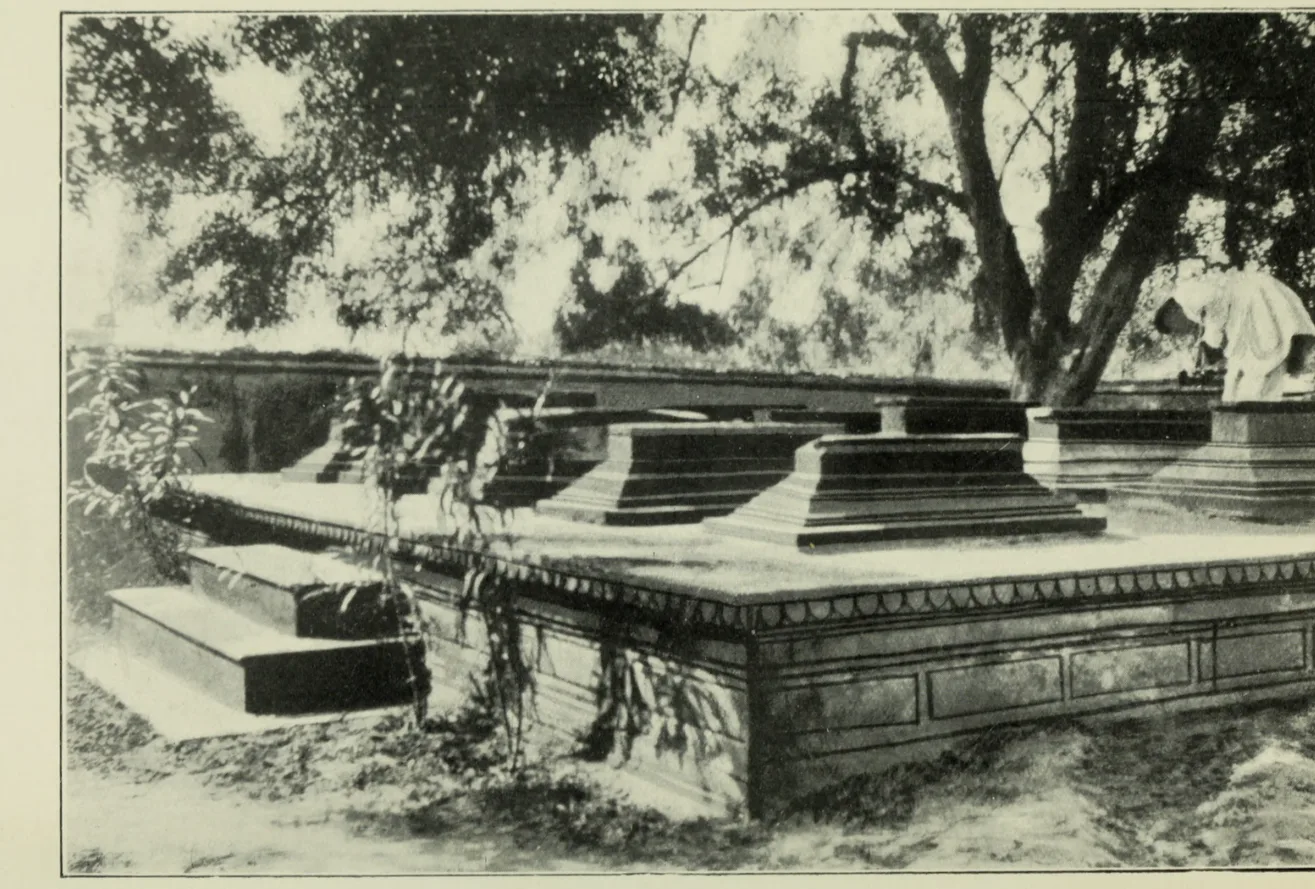
THE TOMB OF JOHN DRAKE AT AGRA.
[p. i]
1637–1641
A Calendar of Documents in the India Office, British Museum, and Public Record Office
By
WILLIAM FOSTER
Editor of ‘Letters Received by the East India Company, 1615–17’ ‘The Embassy of Sir Thomas Roe to the Great Mogul,’ etc.
Published under the Patronage of His Majesty’s Secretary of State for India in Council
OXFORD
AT THE CLARENDON PRESS
1912
[p. ii]
HENRY FROWDE
Publisher to the University of Oxford
LONDON, EDINBURGH, NEW YORK
TORONTO AND MELBOURNE
PREFACE
[p. iii]
PREFACE
Though the present instalment covers a longer period than usual, viz. five years, it contains much less than the average number of documents; but this is accounted for by the fact that many of them are of unusual length. They total 185, of which 175 belong to the India Office collections, while the Public Record Office contributes three and the British Museum seven. No Indian Record Office possesses any document relating to these years.
In the light of subsequent developments, the most noteworthy event of the period may be said to be the building of a fort at Madraspatam, and the transfer of the head-quarters of the Coast Agency from Masulipatam to the new settlement. To some extent the interest of the present volume in this respect has been anticipated by the publication of my Founding of Fort St. George (1902); but here the picture has at least the advantage of its proper setting by the information given regarding concurrent events at the other stations of the Company's factors. Nor were those events by any means devoid of interest in themselves. A new trade was opened up from Surat by the dispatch of shipping to Basrā, at the head of the Persian Gulf; while at the same time increased attention was paid to the development of commerce with Sind on the one hand and with the Malabar seaboard on the other. Of more general interest are the gradual strengthening of the Anglo-Portuguese entente and the rivalry of Courteen's factors with the servants of the older body.
As explained on page viii, the frontispiece depicts a group [p. iv] of old Dutch and English monuments still to be seen at Agra, and among them the tombstone of John Drake, whose death from a wound received in a skirmish with some villagers is narrated in the present volume.
In the preparation of the footnotes much assistance has been received from Professor Blumhardt, Mr. J. J. Cotton, I.C.S., Mr. Edgar Thurston, C.I.E., and other friends; while Mr. H. G. Bull, of the India Office, has again helped largely in the correction of proofs and the compilation of the index.
INTRODUCTION
[p. v]
INTRODUCTION
In striking contrast to the year preceding, the documents available for 1637 are few and meagre; and but for the fact that some of those of the following twelvemonth are retrospective, it would be difficult to piece together a satisfactory account of what was happening in India (so far as the English were concerned) during that period. Even with this assistance we are entirely in the dark concerning the doings of President Methwold and his associates during the four months (May to September) which they spent away from Surat.
Before commencing our usual chronicle of events at the Company's settlements, it will be convenient to glance at the proceedings of the fleet which Captain Weddell had brought out to India in 1636 on behalf of the newly founded body commonly known as 'Courteen's Association'1. Weddell and his associates arrived at Goa in October with five out of their six ships—one (the Discovery) having been lost on the way out (Hague Transcripts, series i. vol. x. nos. 342, 345). They found there a new Viceroy, Pero da Silva, who by no means approved of the policy adopted by his predecessor of admitting the English to the ports under his command, and was therefore disinclined, in spite of King Charles's letters and presents, to facilitate the newcomers' schemes for opening up trade at Macao and elsewhere. Moreover, the Viceroy's own position was one of the gravest embarrassment and difficulty. A Dutch fleet arrived soon after the English and commenced a rigorous blockade; an attack was feared from the forces of the King of Bījāpur, with whom the Hollanders were busily (though, as it proved, vainly) intriguing: Macao, Malacca, [p. vi] and other settlements were clamouring for assistance: while the military and financial resources of the Portuguese were at a low ebb. No wonder that Da Silva grew 'peevish, harsh, and unpleasing to all' (p. 11); or that both Weddell on the one hand, and Bornford (who had been sent from Surat to demand the payment of an amount due to the old Company) on the other, found the Portuguese authorities obstructive rather than helpful.
After remaining until January 17, 1637, during which time the English were spectators of an indecisive engagement between the Portuguese and the Dutch, Weddell quitted Goa and, passing through the blockading fleet, turned away southwards. The Mogul's dominions were looked upon as closed for the time to English trade, owing to the depredations of the Roebuck (Rawlinson MS. A. 299, f. 211); and the only hope of securing cargoes lay in trading for pepper on the Malabar Coast (cf. Weddell's letter at p. 304 of the 1630-33 volume), or in continuing their voyage to China and possibly to Japan. Accordingly, after calling at Honāwar, Weddell put into Bhatkal, a port on the Malabar seaboard in about 14° N. latitude. The prospects of trade appearing hopeful, on February 21 two of his merchants, Robinson and Mundy, started on a mission to Ikkeri, which was the head-quarters of the Rājā of the district. He received them very cordially, granted them a piece of ground at the port on which to erect a fortified building, and promised them the exclusive right of exporting pepper from his territories. A factory was accordingly established at Bhatkal and placed under the charge of Anthony Vernworthy; and on March 19 the fleet put again to sea. One of the vessels—the Planter—was sent back to England with a cargo of pepper, while with the rest Weddell departed for Achin. There he established a second factory, and sailed for Malacca and Macao (May 2, 1637).
The first event of importance at Surat in 1637 was the arrival of the Mary from Persia on January 27. She was filled with freight goods and dispatched again to Gombroon (together with the Francis) three weeks later; and on February 22 the William reached Swally from the same place. At the end of the month came the news that an English caravan had been attacked and plundered by Rājpūts between Baroda and Broach, and that two of the Englishmen accompanying it had been killed (p. 2). Notwithstanding [p. vii] this loss, sufficient cargo was procured to lade the William, and at the end of March she departed on her homeward voyage. The general letter she carried from the President and Council has unfortunately perished, and we have only a private note from Methwold to the Company's Secretary (p. 15). The tone of this is decidedly sanguine. In India the prospect is declared to be very hopeful; and the writer refuses to believe that the trade will be abandoned at home, in spite of the discouragement caused by the depredations of the Roebuck and the competition of Courteen's Association. The 'list of packet' of the William included, we may note, five Persian and Arabic MSS., doubtless intended for presentation to King Charles, who had asked, three years earlier, to be provided with specimens (see the preceding volume, pp. 74, 97).
The mission of Bornford to Goa in the latter part of 1636 has already been mentioned. He was sent to recover a sum of money due from the Portuguese authorities; but in this he failed, for the claims of the Diu merchants against the English for losses sustained by the piracies of Ayres were still under consideration in the law courts, and until the case was decided the Viceroy would pay nothing. Bornford quitted Goa on February 14, and on his way back called at Rājāpur and Dābhol, at each of which ports the Company had now a small establishment. We hear also of pinnaces being dispatched from Surat to Lārībandar, the port town of Tatta, in Sind, the trade with which had become well established. After the return of Fremlen and his companions from thence in March, 1637, English interests seem to have been left in the hands of a native broker; but later in the year we find two factors sent to make investments there.
We have already noted that in February, 1637, two of the Company's servants lost their lives in defending their masters' goods. Only a few days later, not far from Agra, the same fate befell John Drake, whose irksome wanderings with the royal army and arrival at the capital were narrated in the last volume. Having collected a quantity of indigo, he set forward at the end of February for Surat, disregarding, in his eagerness to be once more among his fellow countrymen, the warnings of the other Europeans at Agra that it was dangerous to travel at the time of the Holī festival, which was then in full swing. Dhanjī, the Indian broker who [p. viii] looked after English interests in Agra, had agreed to accompany the caravan for a short distance, and it is to his pen that we owe the vivid account of the disaster given on p. 13. Taking the Gwalior road, they crossed the Chambal at Dholpur, and had reached the little village of Pachokra when the trouble began. It was due to that constant source of friction, the demand of a local toll on all merchandise passing through the district. This was resisted on the plea of a recent farmān from the Emperor; but the villagers were not to be convinced, and an attempt was made to detain the two carts that were last in the file. Dhanjī's offer to pay the amount in dispute came too late, for the peons guarding the caravan had drawn their swords and had further exasperated the villagers by taunts and abuse. Drake, who was ahead, turned back to see what was the matter; but, finding himself surrounded by an infuriated mob, he put spurs to his horse and rejoined the caravan. A skirmish now commenced, during which Drake was shot in the back with an arrow, and thereupon the peons fled, leaving him and the goods to the mercy of the assailants, who, however, made no attempt to interfere with either. Dhanjī picked up the wounded man and had him conveyed to the next station. The Jesuit Fathers at Agra, apprised of the occurrence, sent a surgeon to do what he could, but the case was beyond his skill. After a fortnight of suffering, Drake begged to be taken back to Agra. He got only as far as Dholpur, and there, after dictating his last wishes to the faithful broker, he passed away on March 17. His body was carried to Agra, and the Dutch interred it in their garden, where in 1647 a certain E. K. (doubtless Edward Knipe) caused a stone, with a short inscription, to be placed over the remains. Within recent times the monuments in the Dutch garden were removed to what is now known as the Old Protestant Cemetery. There Drake's tombstone may still be seen; and an illustration of it, from a photograph by Mr. A. De Cosson, forms the frontispiece to the present volume. It is the one at the edge of the picture, in the second row.1
Towards the end of April, 1637, the Mary, returning from Gombroon with passengers and freight goods, anchored at the mouth of [p. ix] the Tāptī river; but finding that the weather was too tempestuous to permit the landing operations to be completed, after a fortnight's delay she proceeded along the coast, intending to make her way to Dābhol and, if possible, to Masulipatam before the monsoon changed She was, however, obliged to put into Bombay for shelter; and, once there, it was decided to remain until the rains were over. Accordingly it was the middle of September before the vessel put to sea and proceeded to Dābhol, where she landed a quantity of her freight goods and some of her passengers, most of whom, however, had already quitted her. A fresh start was then made for Masulipatam.
Meanwhile the Swan and the pinnace Michael had been dispatched from Swally to Mokha, partly to protect the Indian junks against piratical depredations. After experiencing a violent storm which wrecked the Indian junk Shāhī, so often mentioned in the previous volumes, they managed to reach Aden on June 2; there they sold most of their lading at a good profit, and got back to Swally before the end of September. The news of this venture drew upon the factors the censure of the Company, who not only considered the Red Sea trade unworthy of attention, but were also displeased at the postponement of the intended return of the Swan to England (p. 59).
At the beginning of May, Methwold, in pursuance of a plan alluded to in the preceding volume, closed the factory at Surat and proceeded to Ahmadābād, where he and the other merchants spent the rainy season, returning to the port in the following September (p. 38). On October 5 the pinnace Eagle arrived from England, and on the 18th her consort, the Jonas, under Humphrey Pynn, put in her appearance. The Company was in such low water that these two vessels brought only about 30,000l. in goods and money (p. 62). Soon after, news came from Persia that the Agent (Gibson) was dead, leaving the Company's affairs in a very distracted state. It was thereupon proposed to depute Fremlen to that country to put matters in order; but he was anxious to go home, and it was only upon his being formally elected to succeed Methwold as President (whenever the latter should depart) that he consented to accept this mission. He sailed accordingly in the Swan on November 24 and reached Gombroon at the end of the year. The ship [p. x] started on her return voyage on January 10, 1638, leaving Fremlen behind. After drawing up some regulations for the Persia trade, and sending Thomas Merry to Ispahān as Agent, he sailed in the middle of February on board the Blessing, which had arrived from Surat a month earlier.1
The pinnace Michael was sent to Lārībandar and Gombroon towards the end of 1637; and at the former place she was requisitioned by Mīrzā Sharīf, an ambassador whom Shāh Jahān was sending to the Turkish Sultan to urge a joint attack on Persia. His first intention was to proceed to Basrā; but later came a change of plan—possibly owing to fear of interference on the part of the Portuguese at Muskat —and he decided to go by way of the Red Sea. In consequence of this interruption of the Michael's voyage, the Francis was dispatched to Lārībandar to take her place and carry on certain goods to Gombroon. She, however, tarried too long in the mouth of the river, and found herself forced to spend the rainy season at Lārībandar. Consequently she did not leave for Gombroon until the end of September, 1638.
The large sum of money under detention at Goa was still a cause of anxiety to the President and Council at Surat, and two factors named Thurston and Aldington were sent thither in the pinnace Eagle to make a fresh attempt to recover it. After calling at Dābhol, they reached Goa on December 19, 1637, and found the city again blockaded by a powerful Dutch fleet. Six days later an engagement took place, in which the Portuguese lost one ship and the Dutch three; but this slight success did not avail the Viceroy much, and, although there was some talk of making another attempt to drive off the Hollanders, nothing was done. The factors failed in their efforts to secure the payment of the money, though before leaving they heard that judgement had at last been given in favour of the English. This seems, however, to have been premature, and the matter was not finally settled until Methwold himself visited Goa on his homeward voyage in January, 1639.
The Swan, it appears, made a second voyage to Gombroon early in 1638, arriving there on March 30. Most of her cargo was sold [p. xi] at a good profit; and after embarking a quantity of silk and some freight goods, she departed on her return voyage early in April. She had on board an interesting passenger in the person of a young German named Johann Albert von Mandelslo, to whose pen we owe a valuable account of the state of India and Persia at this period.1 As the reader is probably aware, Mandelslo had gone to the East with the ambassadors whom Duke Frederick of Holstein had sent to Persia in 1635 to treat for an overland trade in silk by way of Russia. After a long and tedious journey, Ispahān was reached in August, 1637, and there the embassy remained until the close of the year. Mandelslo had long ago tired of his companions, and probably was not eager to take with them the long journey back through Russia; besides, he was desirous of seeing as much of the East as was possible. At first he proposed to return to Europe by the Euphrates valley and Aleppo; but, hearing that the Turks were besieging Bagdad, he determined (probably at the suggestion of his friends the English factors at Ispahān) to go by way of Gombroon to Surat in the hope of getting a passage to England. He reached the former port towards the end of February, 1638, and, as already mentioned, embarked in the Swan, which brought him to Swally towards the end of April. Arrived at Surat, he was warmly welcomed by Methwold, who insisted upon his taking up his abode at the Company’s factory. Mandelslo agreed, although he understood no English and could only talk to the President, who was a good Dutch scholar; and a guest of the Company he remained until he landed in England at the close of the following year. In spite of linguistic disadvantages, he was a general favourite, if we may judge by the glowing testimonial given him on p. 118.
Mandelslo tells us much of interest about the daily life of the [p. xii] Company’s factors at Surat. Divine service was held twice each weekday and thrice on Sundays. At the midday dinner every one appeared; but Methwold and Fremlen commonly absented themselves (for reasons of health) from the evening meal. The latter was followed by a more select assembly (to which Mandelslo was always admitted) to take the air in an open gallery. Every Friday evening the President and certain other married members of the factory met to toast their distant wives in sack or punch. Tea was in common use in the factory. Each member of the staff had his allotted duties, at which he was expected to labour with diligence for the appointed hours. Sport, however, was not forgotten. The English garden outside the city was a favourite resort. Parties were made up for archery contests, and Mandelslo tells us that he often gained a hundred mahmūdīs in a week by his skill in this pastime. When tired of this they bathed in the tank, which, by the way, was a little later the scene of a tragedy described on p. 132.
Later in the year Mandelslo made a tour up country, starting at the end of September with an English caravan bound for Ahmadābād. In that city he was the guest of the English factory, and Benjamin Robinson, the chief, took him twice to visit the Governor, Āzim Khān. After staying some days and making an excursion to Cambay, Mandelslo joined a caravan for Agra and reached that city in safety. Thence he proceeded to Lahore, and back by way of Agra to Ahmadābād and Surat.
We must now return to our chronicle. The arrival of the Mary from the Coromandel Coast (March 5, 1638) made it necessary for Methwold and his colleagues to decide as to her next employment. It had been proposed to send her back to England; but apparently the Company had ordered the immediate return of the Jonas, and that vessel had started accordingly on February 10, 1638. There was not sufficient cargo to fill a second vessel; and so the Mary was dispatched, together with the Blessing, to winter in the Red Sea. The pinnace Eagle sailed for Bantam at the close of April; while on May 3 the Swan, which (as already noted) had just returned from Gombroon, departed for Masulipatam.
Some alleged pilfering of passengers’ goods on board the Swan during her return voyage from Persia led to considerable friction [p. xiii] between the English and Masīh-uz-Zamān1, the Governor of Surat. The latter had for some time nursed a grievance against the factors for having failed to make him a specially handsome present in recognition of the protection he had afforded them against the demands of the Diu merchants. This disappointment had much embittered him; and when, on the arrival of the Blessing from Gombroon in March, 1638, certain passengers complained that they had been robbed, he immediately ordered the President to make satisfaction. Luckily, Fremlen was able to produce statements signed by the claimants declaring that their bales contained no valuable commodities, such as they now alleged to have been stolen; and on his agreeing to swear that, so far as he knew, no robbery had taken place while the goods were on board the ship, the matter was allowed to drop. Shortly after, however, fresh complaints were made by passengers who had arrived in the Swan; whereupon the Governor decided that the English must pay any claim that was supported by the oath of the complainant; and this, under protest, they did to the extent of over 500l.
Meanwhile the Mary and the Blessing had lost company on their way to the Red Sea, and only the former vessel had succeeded in reaching Mokha (May 14, 1638). A month later the Michael came in with the Mogul ambassador, who induced her master to carry him still farther up the Red Sea. On the way he landed, promising to meet the Michael at Jiddah; but when after much trouble she reached that port, neither he nor the money he owed for freight was forthcoming. The disgusted English returned to Mokha, where a lading was taken in and the Michael sailed for Lārībandar at the end of July. The Mary, which had found the market at Mokha overcrowded with sellers, followed on August 20. Three days later she found the Blessing at Aden, but, as the latter was not ready to start, the Mary proceeded without her.2 On September 21 the Discovery from England was overtaken, and on the 24th both vessels anchored in Swally Road. The Governor of Surat at first refused [p. xiv] to permit Methwold to go down to Swally, but, on learning that the passengers and goods in the Mary would be detained until he did so, he gave way.
The Discovery, commanded by William Minors, had left England in the previous March, and brought out 20,000l. in rials of eight and a small stock of goods, together with a long and interesting letter from the Company (p. 56). On the way out she met the Sun, of Weddell’s fleet, returning to England. Richard Swanley, her captain, demanded supplies from the Discovery; but Minors refused to assist him in this manner, though he lent him carpenters to repair his ship.
A letter of November, 1638, from the factory founded by Courteen’s Association at Bhatkal, announced a sad disaster. A small ship named the Comfort, which had been dispatched from Bantam to Surat with a cargo of spices, was assaulted on the 16th of that month, while working up the coast of India, by a squadron of Malabar pirates. An animated description of the fight is given by the captain on p. 138. Taking advantage of the vessel being becalmed, the Malabars attacked her with great fury. She had only fifty-two persons on board, of whom little more than half were Europeans; but these, knowing the probable fate in store for them should they surrender, resisted with desperation. The pirates gained possession of the upper deck, which was thereupon blown up with great loss of life to the assailants. Gradually, however, the survivors of the crew were driven to the gundeck, where they had only two pieces of ordnance and their own weapons to defend them. Finding matters hopeless, the commander, Walter Clark, fired the remaining stock of powder, while he and his men threw themselves into the water, where they were picked up by the Malabars and carried on shore. The ship burnt to the water’s edge, and all that the pirates had to show for their victory, which had cost them hundreds of lives, was some twenty-three prisoners. After enduring many hardships, the latter contrived to get a piteous note, appealing for assistance, conveyed to Cannanore, whence it was forwarded to Bhatkal. Weddell, who was there at the time, acted with great humanity, for he at once took steps to relieve them, and after some negotiations effected their release by payment of a ransom. Later, when Methwold called at Cannanore on his way home, he arranged [p. xv] for the repayment of this money and the dispatch of the survivors to Surat.
The fact that Tavernier (Les Six Voyages, 1676, vol. ii. p. 111) describes (though somewhat incorrectly) the capture of the Comfort, and adds that when the news came he was breakfasting with President Fremlen, and later on saw the released captives arrive, some in health and others shaking with fever, might lead us to suppose that the traveller was at Surat during the early part of 1639 and that we were consequently able to fill up an acknowledged gap in his itinerary. But a careful comparison of dates shows that this could not have been the case, for he did not leave Aleppo until the Christmas of 1638 and then journeyed slowly by Basrā to Ispahān, where M. Joret supposes him to have arrived in April or May, 1639; and we must therefore conclude that we have here another of Tavernier’s many lapses from accuracy.
The Discovery sailed for Persia a little before Christmas, carrying the news that the Swan from Masulipatam had been compelled to abandon her voyage to Gombroon and to put into Swally instead. At the same time the Francis arrived at the latter port from Persia with a lading of madder and raw silk; and as a result it was decided that the Swan should be sent to England as well as the Mary. In the latter vessel Methwold had determined to embark, leaving Fremlen to rule in his stead. Mandelslo was to go home with him; and among other passengers we may note the name of George Oxenden, then quite young, but destined to be famous in the list of English Presidents of Surat. Methwold also took with him a tiger cub, probably intended for a present to King Charles; but it proved so vicious on the voyage that it had to be destroyed.
Of the ceremony of the change of Presidents Mandelslo gives an interesting account. It seems to have taken place on December 27, 1638, in the presence of an assembly of over thirty of the Company’s servants. Methwold made a speech, thanking them all for the assistance they had given him and exhorting them to serve his successor with the like diligence and goodwill. He then handed to Fremlen the copy of the royal letters-patent from whence the judicial powers of the President were derived (see the 1624–29 volume, p. 65). The new chief having been duly congratulated, the Company adjourned to the English garden, where Methwold [p. xvi] entertained them at a princely farewell banquet, followed by a nautch.
The new President, though he had twelve years’ service to his credit, was only about thirty years of age, and was therefore young for so responsible a position. Perhaps it was his consciousness of this that made his attitude towards his employers humble to the point of obsequiousness, in strong contrast with Methwold’s fearless independence. Nor, again, had he anything of the latter’s power of graphic portrayal of incident and of witty and incisive comment. However, if his letters were dull, his conduct of affairs during the five years of his administration was wise and prudent, earning for him the gratitude of the Company on his return. Besides a wide experience of the various factories under his control, he had a good command of Persian and Hindūstānī; and this accomplishment proved of considerable service during his term of office.
The change of English chiefs coincided almost exactly with the arrival of a new Governor at Surat. Mīr Mūsā (Muizz-ul-Mulk), who had occupied that post from 1629 to 1635, had long been intriguing to secure his re-appointment; but the immediate cause of the dismissal of Masīh-uz-Zamān seems to have been the general complaints made to the court of his cruel and extortionate behaviour, particularly his imprisonment of a rich Hindu merchant, Vīrjī Vōra, whose name has frequently occurred in our pages. This led to his replacement by Mīr Mūsā, who had offered to farm the post at a sum exceeding that paid by his predecessor by three lakhs of mahmūdīs (about 15,000l.).1 The new Governor made his entry into Surat on December 28, attended by President Fremlen and the principal English merchants. Mandelslo describes the stately procession that escorted him to his house, amid the congratulations of the inhabitants.
Methwold paid the Governor a farewell visit on the first day of the new year, and then took boat and went on board the Mary, which sailed on January 5, 1639. It had been arranged that the ex-President should call at Goa, to secure the payment of the sum [p. xvii] due from the Portuguese; and Cogan and Wylde, two members of the Surat Council, accompanied him in the pinnace Michael for the purpose of bringing back the money. With these two ships went also the Blessing, which it was hoped to sell at Goa, as she was now old and crazy and the English had not sufficient sailors to man both her and their numerous pinnaces.
Methwold was cordially received at Goa, and satisfactory arrangements were concluded about the money that had lain so long in the hands of the Portuguese. After calling at Cannanore, where he found Captain Weddell and settled with him for the repayment of the money he had advanced for the release of the survivors of the Comfort, he sailed for England on January 27. For the details of the homeward voyage the reader may be referred to the log given on p. 120 and to Mandelslo's narrative. Table Bay was reached early in May; but on resuming the voyage the Mary encountered such bad weather that she was forced to put back to St. Augustine's Bay (Madagascar). There she found the London, which the Company had dispatched to India a few months earlier; and soon they were joined by two—the William and the Talbot— out of three ships sent out that year by Courteen's Association. The Mary sailed again on August 21, and got home safely at the close of the year. The Swan, it may be noted, which sailed from Swally about ten days after the Mary, got round the Cape without difficulty, and reached England in July, 1639.
The first matter of importance that claimed the attention of the new President was the arrival of a Portuguese deputation to negotiate with the Governor of Surat concerning Damān. Since the accession of Shāh Jahān the Mogul frontier had been carried far to the southward of its former line. Ahmadnagar had been finally subdued in 1633; and within the next three years the Kings of Bījāpur and Golconda had been forced to acknowledge the Mogul suzerainty. The youthful Prince Aurangzīb was installed at Daulatābād as Viceroy of the Deccan province, and under his nominal leadership the absorption of the neighbouring territories went steadily forward. Early in 1638 the little principality of Bāglān was overrun and conquered; and later in the year the same fate befell the Rājā who governed the district round Damān. The imperial forces then proceeded to beleaguer that city; but they [p. xviii] were unable to make any impression upon its fortifications, and they could not starve out the Portuguese while the sea remained open to their vessels; so negotiations were opened with the Dutch at Surat for the assistance of a fleet to blockade it on that side. The Hollanders, however, were not eager to interfere; and meanwhile the revenues of Gujarāt were suffering owing to the suspension of trade, and the Portuguese were refusing to issue the usual passports to Mogul ships. Mīr Mūsā was anxious, therefore, to accommodate matters, and he willingly undertook to mediate with the Prince. The dispute was settled some months later by the Portuguese agreeing to pay to the Mogul the same rent for Damān as they had paid to the previous ruler. By the part he played in the negotiations Fremlen gained much credit, not only with the Portuguese, but also with the merchants of Surat, whose interests had been jeopardized by the course events had taken.
Cogan and Wylde, the two merchants who had accompanied Methwold to Goa, got back to Surat in February, 1639. They had found the Viceroy much concerned at the danger in which Malacca was placed by the arrival of a strong Dutch fleet there to co-operate with a force expected from Achin to make a further assault upon that city. As the Portuguese had no means of sending relief, it was suggested that an English ship (or possibly two) should be freighted for the purpose of carrying thither provisions and munitions of war, it being supposed that the Hollanders would respect the English flag and offer no opposition. The ship was then to be allowed to go on to Macao for trading purposes, before returning to Goa and Surat. An agreement to this effect was concluded by Cogan and his companions; but on their return to Surat they found that there was no vessel available for the purpose, and so the project was abandoned. This was quite as well, for it is unlikely that the Dutch would have suffered Malacca to be relieved in such a fashion under cover of a neutral flag, and a dangerous situation might easily have been created.
A fresh employment was quickly found for Cogan. In sending him out (in the Discovery) the Company had designated him for enrolment in the Surat Council; but it was added that, in the event of a vacancy, he would be a suitable person to depute to Masulipatam as Agent for the Coast. The latter appointment was really [p. xix] in the gift of the President and Council at Bantam, to whom those factories were subordinate; but this clause in the Company's letter was regarded at Surat as overriding any claim the Bantam Council might have, and, since proofs were continually occurring of mismanagement or worse in the English settlements there, it was decided to dispatch Cogan to put matters to rights. It was also settled that he should go by way of Goa and then overland to Golconda and Masulipatam. He accordingly quitted Surat on May 4, 1639, accompanied by three other Englishmen, and a week later reached Goa, where his business, which included the recovery of a large sum which had been left there for the purpose of the projected voyage to Malacca and China, detained him until June 3. His subsequent experiences will be narrated when we come to deal with the Coast factories.
The Discovery returned from Persia in the middle of February, 1639; and on March 14 she sailed for Mokha with a cargo of calicoes and freight goods. Her merchandise, however, proved to be in no demand, and most of it was brought back unsold. She started on her return voyage on August 19 and reached Swally a month later. In the middle of April, 1639, the pinnace Michael followed the Discovery. Her instructions were to lie in wait at the mouth of the Red Sea for the returning Malabar junks and to revenge upon them the damage sustained by the attack on the Comfort. She failed to reach her destination, being driven by a storm to seek refuge on the Arabian coast, where, however, she sold to profit some goods she had on board, and then proceeded to Gombroon.
The rainy season was of course a period of quiet at Surat; but with the approach of cold weather the mercantile community woke again into activity. On September 16 the London arrived at Swally from England under Captain Wills. Although we have no copy of the letters she brought from the Company, it appears that these contained orders for the immediate return of as many ships as possible. The Discovery was accordingly dispatched to England, with a lading made up largely of Persian silk, on December 13; while the London, after a visit to Gombroon, from which she returned a week before Christmas, was directed to be repaired with a view to her following within a few weeks.
[p. xx]
Early in November, 1639, Bornford arrived at Surat from Agra, having come by way of Sind. Of his proceedings at court we have very little information, and we do not even know at what date he first went there. Probably, however, he was sent to Agra from Ahmadābād at the end of the rainy season of 1637. He is said to have convinced the Emperor of the innocence of the Company's factors in the matter of the Roebuck's piracies, and to have obtained from him a promise of protection against any further claims resulting therefrom. A further instance of Bornford's activity seems to be afforded by the fact that about this time a farmān was obtained from Shāh Jahān for the furtherance of English trade in Bengal. No reference is made to the matter in the present volume, but in the Bengal Consultations for February 19, 1704, we find a list of documents then extant, which includes ‘copie of Cha Chehan's phirmaund from Agra to Bengall in the 11th year of his reign’; and as that year commenced on September 11, 1637, it is reasonably certain that the farmān was procured by Bornford. What it contained, and why it was applied for, we have no means of ascertaining.1
Apparently Bornford remained at Agra during the whole of 1638 and part of 1639. Early in the latter year the President and Council of Surat, mindful of the suggestions made that the Indus would prove a cheap way of transporting their goods from Agra, directed him to return by way of Jaisalmir to Tatta, in order to examine the possibilities of that route. Bornford, however, decided to go by way of Lahore and Multan instead. The result was a report (p. 134) which, although too brief, is exceedingly interesting. It seems to have satisfied the Surat Council that direct land transport from Agra was on the whole preferable to the Indus route; and later inquiries as to the possibilities of the alternative route by way of Jaisalmir led to a similar conclusion (p. 275). Bornford was not allowed to remain at Surat for more than two or three weeks. It was decided to make a fresh investment at Agra, and for this purpose he was again dispatched thither with a stock of goods and borrowed money.
Of the proceedings of Weddell and his associates during 1637 [p. xxi] and 1638 something will be said later on. The only ship sent out from England by their employers during the latter year seems to have been the Planter, which reached Bhatkal towards the end of the year. In the spring of 1639 three new vessels—the William (under Edward Hall), the Talbot, and the Thomasine—were dispatched by Courteen's Association to the East; and, as already noted, the first two of these were met by Methwold at St. Augustine's Bay. The Association's factory at Bhatkal had been abandoned, owing, it would seem, to the unfriendly attitude of the Ikkeri Rājā, influenced by the resentment of the Portuguese at his permitting the English to participate in a trade which they looked upon as their preserve; but a new establishment was now formed at Rājāpur.1 Here a disaster overtook the new arrivals; the Talbot caught fire and was totally destroyed. The William then proceeded to Kārwār, where another factory had been established, apparently upon the desertion of Bhatkal; and there she found the missing Thomasine from England. Leonard Woodman, the chief merchant, travelled up to Bījāpur, where, by giving costly presents to the King, he secured permission to trade freely throughout his dominions. By the following January the William was back again at Rājāpur, and, after taking in a quantity of pepper brought by the Planter from Achin (pp. 228, 237), in March she sailed for England. The Planter and Thomasine are heard of at Achin in the autumn (Dagh-Register, 1640–41, p. 3); and the former vessel, having secured a lading of pepper, departed on her homeward voyage on November 6, 1640 (Ibid., p. 208). The Thomasine, which was merely a pinnace, had been lost in the interim while bringing firewood from a neighbouring island (Ibid., p. 60). Apparently the only vessel sent out from England during 1640 by the Association was the Hester (150 tons), which reached the Malabar Coast towards the close of the year (Dagh-Register, 1640–41, p. 220).
Reverting to the affairs of the old Company's factors, we find the London dispatched from Swally for England at the end of January, 1640. She carried as passengers several Portuguese, one of whom had been deputed by the city of Goa to lay before the Spanish King the almost desperate state of affairs in all parts of Portuguese India (p. 230). Such representations they might well make, for to [p. xxii] the sympathetic eyes of our countrymen the prospect seemed to be one of 'utter ruine', unless aid from Europe should speedily arrive. For the fourth season in succession Goa was under a strict blockade by a Dutch fleet, which had already (September, 1639) burnt three galleons that were found in the harbour. Another squadron was lying before Malacca; while Macao, cut off from these other ports, had further difficulties of its own over the trade with Japan. In Ceylon a terrible defeat sustained at the hands of the natives near Kandy in the spring of 1638 had been followed by the loss of Baticola, which was surrendered to the Dutch in May of that year. Twelve months later Trincomali capitulated to Caen's fleet; and now the remaining garrisons in Ceylon were threatened by a strong Dutch force under Philip Lukaszoon. One gleam of triumph relieved the gloom about this time, when, as the result of an attack on some Portuguese pinnaces, the commander of the fleet blockading Goa was killed and one of the finest of his ships ran ashore and was totally lost (p. 230). But this success, though gratifying to Portuguese pride, was trifling and of no real service to their cause. Evidently the apparent indifference of the authorities at Madrid and Lisbon to the perils of the situation in Portuguese Asia had aroused bitter feelings at Goa, for Fremlen declared to his employers (p. 235) that letters from that city foreshadowed an offer of the Portuguese settlements to the English King, 'provided hee bee pleased to protect them against the Dutch and graunt them liberty of conscience and freedome in matters of religion.' That the Surat factors were still hankering after a fortified port on that side of India—Bombay for preference—is shown on p. 228; and it is to be noted that among the propositions drawn up at home in June, 1641, for the consideration of the Portuguese ambassador was one for the cession of 'a habitable and defensible magazine in some port or place of the Portuguese dominions' in India (Court Minutes of the East India Company, 1640–43, p. 173).
The President and Council at Surat had now in their service quite a fleet of small country-built vessels with which to carry on the port-to-port trade, supply the various coast factories, and collect goods from them to be transported to England in the ships that came yearly from home, thus enabling the latter to return within a few months of their arrival. This meant a considerable saving to [p. xxiii] the Company as compared with the previous practice of employing the larger vessels in the coasting trade for a year or longer before dispatching them homewards; while the freight earned by carrying native passengers and their goods seems to have been sufficient to defray all the resultant expenses (pp. 209, 227, 241). No doubt, as the Company shrewdly suspected, the factors made use of these vessels to promote their own ventures; but had they been debarred from putting private goods on board the Company's ships, they would have used native vessels instead.
One drawback to the use of small craft was the danger they ran of being attacked by the Malabar pirates, who at this time were particularly enterprising and active. Even so large a vessel as the Mary was attempted while proceeding down the coast in January, 1639. Early in 1640 the Hope, soon after leaving Swally, was captured and ransacked (p. 243); and the Diamond was only saved from a similar fate by the timely appearance of another English vessel (p. 244). At the end of the year the Surat factors averred that there were more than thirty Malabar vessels ‘twixt Bacaine and Cambaiett’ (p. 289). A brush between the Swan and a number of ‘Mallabar frigatts’ in 1641 is narrated on p. 310; and in the same year the Francis encountered nine of these pests with credit to herself and the nation whose flag she bore (O.C. 1787).
It would only tend to confusion for us to follow in detail the voyages of the various pinnaces; but there are two of special interest which cannot be passed over so lightly, namely, the expedition of the Francis to Madagascar and that of the Michael to Basrā. The former venture resulted from an offer made by the Portuguese Captain of Damān to hire one of the English vessels for a trading voyage to Mozambique, it being impossible for him to send a Portuguese ship except at the risk of having her snapped up by the watchful Dutch. It was therefore agreed that the Francis, which was of about 100 tons burden, should be employed in this service; and, as it was not advisable that she should lie for weeks at Mozambique while her return cargo was being prepared, she was ordered to spend the interim in visiting the northern coast of Madagascar, partly to explore those parts and partly to purchase as many slaves as she could meet with. She sailed on February 20, 1640, and reached Mozambique in May. Two months were spent [p. xxiv] at Madagascar, during which time a number of slaves were secured, though many died on the way back. It was the 8th November when she returned to Swally (p. 295).
The venture of the Michael to Basrā was an event of some importance, as it led to the foundation of a regular trade with the Turkish territories lying at the head of the Persian Gulf. As the reader will remember, the same vessel had been dispatched on a similar errand four years earlier, but had failed to reach her destination. Apparently it had been intended to renew the attempt in 1638, for we hear of goods being collected at Tatta for that purpose; but nothing came of it. The present venture was more successful. Two letters from Thurston and Pearce, the merchants in charge, give an interesting account of their experiences (pp. 243, 251). They sailed on March 9, 1640, and, after some delay at Kung, reached their destination at the end of May. They were favourably received by Alī Bāshā, who had made himself practically independent of his Turkish master; and for a time they were very hopeful of success. Further experience, however, modified their views both as to the generosity of the authorities and the prospects of remunerative trade; while the inopportune arrival of a number of Portuguese vessels from Muskat lowered considerably the prices of Indian merchandise. However, they sold most of their goods, though at poor rates; and the President and Council at Surat, deeming the result sufficiently encouraging, resolved to send two vessels—the Seahorse and the Francis—the following season and to establish a regular factory at Basrā (p. 294).
The Crispiana from England anchored at Swally on October 7, 1640, six days after the arrival at the same port of the Thomas from Bantam. At the end of the year the former vessel was sent back to England with a cargo of nearly 60,000l. worth of goods and a long and interesting letter (p. 270), which, however, need not now detain us, as its principal points are mentioned elsewhere. One amusing item may be quoted. The factors say that Shāh Jahān, who had previously been so orthodox as to discourage the wearing of scarlet cloth in favour of green (p. 208), had now begun ‘to turne good fellow, for about three or four moneths since he wryt unto this Governor (yet privately) to provide him of grape wine (for so theire language renders it), eyther from us or the Portugalls; so [p. xxv] that we then sent him two large cases filled with Canary wine and Allegant, which (with 20 horsemen to attend them) were on mens shouders sent towards him to Kishmire. We shortly expect to heare how he likes them, and accordingly to be troubled with his further comands’ (p. 289).
For the whole of the year 1641 we have no more than seven documents, only three of which were written in India itself; but we have fortunately the help of a long letter from Surat (O.C. 1787), written in January, 1642 (and itself falling, therefore, into the next volume), which gives us many additional particulars. The Expedition, which had lately arrived from Bantam, was dispatched towards the close of January in company with the Diamond, both bound for Gombroon, though the latter was to call at Lārībandar on the way. The former returned to Surat in April, and was then dispeeded for Bantam; the latter went direct from Persia to the Coromandel Coast. The Seahorse and Francis, with the same merchants as before, left Swally early in March and, after calling at Gombroon, reached Basrā on May 20. The Francis left again in August and got back to Swally late in the following month. The Seahorse remained until the middle of October, when she too departed, and arrived at Swally two days before Christmas. The factors, who remained behind in the hope of further sales, wrote that they had found but a poor market for their goods, owing to the disturbed state of the country and the consequent stoppage of the regular caravans.
Meanwhile the Supply had voyaged at the beginning of the year to Gombroon and thence to the mouth of the Red Sea, where she spent some time in overhauling native vessels in the hope of capturing ‘Malabars’. In this she was unsuccessful; and in May she sailed for Masulipatam. Bad weather, however, forced her to make for Persia instead, and thence she passed on to Swally, where she arrived in company with the ships from England.
In March, 1641, the Company dispatched two ships to Surat, viz. the Discovery, under John Allison, and the London, under John Proud. On their arrival (late in September) they found the President and Council in some distress for money, owing to the large remittances which had been made to the Coromandel Coast. The cash they brought served only to satisfy the most pressing of [p. xxvi] their creditors, and fresh borrowings were found necessary for the provision of a cargo for the London to take back to England. The Discovery was sent to Gombroon in the middle of November, with an appeal for financial assistance, if necessary by raising a loan on the security of a cargo about to follow in the Supply; while in the meantime the London sailed on a coasting voyage to Goa, Calicut, and Ponnāni to fetch pepper. She returned on December 27 with a small cargo, and was then prepared for her homeward voyage, on which she started towards the end of January, 1642.
The Swan arrived from Bantam in the middle of November, 1641, with what Fremlen and his colleagues considered a very disappointing cargo. Relations between the two Presidencies at this time were rather strained, partly owing to disputes over the Coast factories and the apportionment of their expenses between Surat and Bantam.
Courteen's Association dispatched to India in 1641 two vessels, viz. the Paradox and the William. They arrived in July and August respectively (O.C. 1787), and at the close of the year the latter was sent back to England with a lading of pepper (Dagh-Register, 1641-42, pp. 217, 225, 232, 238, 249). The Hester had sailed from Cannanore in March and reached Plymouth in December. Woodman, who was still in charge of the Association's affairs on the Malabar Coast, and had lately been dignified by the title of Agent, under a royal commission (O.C. 1787), died in the spring of 1642 (see the Dagh-Register, 1641-42, p. 251, where he is called 'Houtmans').
The year 1641 was signalized by an important change in the government of Surat. From the letter of January, 1642, already mentioned (O.C. 1787), it appears that the amount for which Mīr Mūsā (Muizz-ul-Mulk) had farmed 'this adjacent country, mint, and custome house' was seventy-two lakhs of mahmūdīs per annum; but evidently he had overestimated the produce of the port, for by the autumn of 1641 he had come short of the covenanted sum by thirty-one lakhs. Thereupon he was summoned to court to explain matters; and the Emperor decided to abandon the system of farming the post and appoint salaried officials to receive the revenue and pay it into the royal treasury. Jām Qulī Beg, who had been Captain of Surat Castle many years before, was accordingly made [p. xxvii] Governor of Surat, assisted by a Dīwān and another official who was to attend specially to customhouse affairs. The change took place early in October, and was gratefully received by the whole mercantile community, who had suffered much from Mīr Mūsā's desperate efforts to make up his deficiency by the exaction of heavier duties. That official, by the way, was left in control of Cambay and Broach, and at once tried to attract traders to the former port, in preference to Surat, by offering to remit half the custom dues; while in addition he required all goods made in Cambay to be shipped in lieu of being removed by land—a striking instance of the arbitrary way in which trade was hampered by the Mogul governors when it suited their interests.
In November of the same year died Āsaf Khān, whose name has been prominent in the English records from the time of Roe onwards. As brother of Nūr Jahān (the favourite wife of Jahāngīr) and father of Mumtāz Mahal (Shāh Jahān's much-loved consort), and by virtue of his own cleverness, he occupied a leading position in the court of each monarch in turn. Of the opportunities thus afforded for amassing money he made full use, and thus accumulated a large fortune, which upon his death was immediately seized by his son-in-law, the Emperor. The Surat factors heard that he had left seventeen krores of rupees, in addition to his jewels, houses, horses, &c. (O.C. 1787). A Dutch account (Dagh-Register, 1641–42, p. 203) increases this sum to nineteen krores, but apparently includes in the total all his effects, for it goes on to say that the Emperor thus became possessed of many rich jewels and, not caring for such things, forced Sāntidās, from whom most of them had been bought, to take back the stones and refund the money he had received for them. In any case the amount is enormously exaggerated; the Bādshāhnāma gives 2½ krores as the total sum he left in money and jewels (Elliot and Dowson's History of India, vol. vii. p. 68), and this figure, equivalent to about 2,800,000l. sterling, is the largest we can accept.
The year 1641 brought the Portuguese a crowning misfortune in the loss of Malacca. It had been besieged for months by the Dutch and Achinese; and at the beginning of January a vigorous assault made by the former placed them in possession of the city, which was second only in importance to Goa itself. In Ceylon the [p. xxviii] prospects of the Portuguese had somewhat improved. Although the Dutch had captured Galle in March, 1640, they had made no progress since—partly owing to dissensions with their Cingalese allies—and they had lost their recent conquest, Negombo, which capitulated to the Portuguese at the end of October, 1640. The pressure on Goa was as severe as ever. A Dutch fleet under Dominicus Bouwens remained off the port during all the cold weather of 1640–41; and another under Matijs Henricus Quast arrived in August, 1641, to resume the blockade. Doubtless, therefore, it was with much relief that the Viceroy and his associates learnt at the end of the same month that Portugal had proclaimed its independence of Spain (December, 1640), and that negotiations were being opened with Holland.1 The new monarch was at once proclaimed, and the commander of the Dutch fleet was asked to agree to a suspension of hostilities pending the result of the negotiations in Europe. To this request, however, he would not listen, on the plea that he had no authority to agree to anything of the kind; and when on September 12 a carrack arrived from Lisbon she was attacked and captured. Her commander, Sancho de Faria da Silva, was killed in the fight; while Quast himself was wounded, and died a fortnight later (Hague Transcripts, series i. vol. xii. no. 384; Lisbon Transcripts, Doc. Remett., book 48, f. 90). In point of fact, the expectation that peace would soon be made only stirred the Dutch to fresh exertions, in order that they might secure as much as possible before they were stopped (Hague Transcripts, series i. vol. xii. nos. 380, 381, 383). The treaty, which provided for a suspension of hostilities for the space of ten years, was signed at the Hague on June 2, 1641 (O.S.); but there was a delay of five months over the ratification, and then further disputes occurred, with the result that it was not until September 27, 1642, that the truce was proclaimed at Batavia.
During the period covered by the present volume, another European nation—the French—was beginning to display an active interest in the East, and several ships—some for peaceful trade, others more or less avowedly intended to prey on Eastern traders— [p. xxix] made their appearance in the Indian Ocean. How much the English merchants, both at home and abroad, were disturbed by these operations may be seen from pp. 59, 60.
In the summer of 1638 the Dutch Moon found a ship of Dieppe at Mauritius (Hague Transcripts, vol. xi. no. 358); and two years later Captain Goubert (also from Dieppe) arrived there for the purpose of taking possession of the island on behalf of the French King. In this, however, he was forestalled by the Dutch,1 who had also anticipated the annexation and colonization intended by the Earl of Southampton (see pp. 205, 254, 282). The disappointed Frenchmen proceeded to Madagascar, where they made a small settlement on the south-eastern side.
In August, 1639, the English ship Discovery, returning from the Red Sea, encountered a Dieppe ship, commanded by Gilles Régimont, and after enticing the French captain on board and detaining him, attempted to capture his vessel also, but without success. Régimont was taken to England and there ultimately released (p. 211). In November of the following year we hear a fresh alarm of French pirates, for the Supply was chased for six hours by two European vessels, which afterwards plundered a country ship (p. 293). In May, 1641, the Reformation found at St. Augustine's Bay, Madagascar, a Dieppe vessel under a Captain Digart, with a pinnace which had been put together at that island. The two sailed to the Red Sea, but were separated by a storm. Apparently Digart's ship got back to Madagascar, while the pinnace was overtaken by the London and Discovery in great distress off Damān. Relief being refused unless the crew would abandon their vessel, they found themselves forced to adopt this course and take refuge in the London. The master then purchased the derelict and brought her into Swally, where, not long after, she was bilged while being careened. The Frenchmen were enlisted as sailors on the two English ships (O.C. 1787).
We must now turn our attention to what was happening during these years on the eastern side of the Indian peninsula. At the commencement of 1637 the Agent in charge of the Coast factories was Gerald Pinson, whose head-quarters were of course at Masulipatam; [p. xxx] while under him Francis Day was responsible for Armagon, Aaron Baker for Vīravāsaram, John Milward for Petapoli, and John Yard for the two settlements in 'the Bay', viz. Balasore and Hariharpur. Besides these, Thomas Rogers was stationed at Golconda, chiefly for the purpose of watching English interests at court.
Of what occurred in those parts during the first half of the year we have but scanty information. The Expedition was dispatched to Bantam, probably in January; while the Thomas and Marigold came back from Bengal in January and February respectively, with cargoes that were disappointingly small. In June the Blessing arrived at Masulipatam, returning from her unsuccessful search for the piratical Roebuck.
The non-appearance of the Mary, which (as already mentioned) was wintering at Bombay, led the Masulipatam factors to propose to send the Blessing to Persia in her place with freight goods; but the seamen declared that she was not fit to undertake the voyage, and so this idea had perforce to be abandoned. In July came a letter from Rogers at Golconda, saying that the merchants who had embarked at Gombroon in the Mary for Masulipatam had made their way overland from her wintering-place, and were loudly complaining that many of their bales had been cut open and the contents stolen by the English sailors on the voyage; these accusations, and the failure of the factors to provide the King with horses (though he knew that nine had been brought from Persia and sold in Surat), had created much prejudice against the English at court and had deterred many of the Golconda merchants from sending or carrying down goods to Masulipatam for embarkation. Those who persevered had the mortification of finding, on arrival at the port, that no English ship was available for the voyage that season; and their indignation was only partially allayed by a promise to give them passages in the Blessing to Surat, where they would probably find a ship in which to continue the voyage.
In August two pinnaces—the Coaster from Bantam, and the Advice from England—anchored in Masulipatam Roads. They found the factors involved in fresh troubles. Baker and his associates at Vīravāsaram had been blockaded in their factory for a month and a half, owing to their having (it was alleged) beaten a Brahman; and Clark and Peniston, who were dispatched to their [p. xxxi] relief, were ill-treated and imprisoned. The dispute was settled upon payment of a fine and an agreement to replace Baker by another merchant; but the attendant losses were considerable. Complaints to the King of these and other wrongs had produced a farmān for the redress of their grievances; but from this little good was expected. To add to their troubles the factors were heavily in debt; and although they had sent a considerable sum to their colleagues in Bengal the returns had been inconsiderable. Nevertheless, they managed to scrape together enough cargo (in addition to the freight goods) to fill the Blessing, and she was dispatched to Surat towards the end of September, 1637. Early in November came the news that the long-expected Mary was approaching; but she had a long struggle against contrary winds, and it was not until December 14 that she managed to reach Armagon. As there seemed to be no hope of getting her any further to the northwards, the Agent had to be content to send down a certain quantity of lading from Masulipatam by some pinnaces, and on January 3, 1638, she sailed again for Surat.
The Thomas, which had been sent into the Bay in September under the charge of Baker and Peniston, returned two months later, but with a cargo that fell far short of expectations. She was then dispeeded for Gombroon with freight goods. The Providence came in from Bantam on December 12; and three days after Christmas the Expedition arrived from the same place with a stock of cloves and a summons to Pinson to return to Bantam to take up the post of President. He accordingly embarked in her early in February, 1638, leaving Thomas Clark as Agent, with Richard Hudson to assist him as accountant. These two promptly drew bills on Surat for 12,000 pagodas, excusing themselves on the ground of their indebtedness, the failure of the Bengal factors to make the returns expected, and the difficulty of disposing of the cloves brought by the Expedition, owing to the competition of the Dutch and the Danes.
Before departing, Pinson had addressed representations to the King of Golconda concerning the grievances of the English. To these no reply was vouchsafed, and Clark therefore instructed Rogers to quit the capital and repair to Masulipatam, where the factors intended to use the vessels at their disposal to blockade the [p. xxxii] port and thus secure redress. Rogers, however, could neither obtain permission to leave the city nor gather in the money due from the officials and merchants there. In April mention is made of a farmān promised at Golconda for the redress of the grievances of the English, but the latter were sceptical about its efficacy.
The Coaster and a small pinnace named the Unity sailed for Balasore towards the end of February, 1638, carrying a stock of cloves, with orders to bring back a cargo of sugar and gumlac by the end of October. In May the Masulipatam factors wrote to their Bengal colleagues, reprehending them for their continued neglect to send either goods or advices, and for their extravagance in giving the Nawāb a liberal present when they were so scantily supplied with funds (p. 77). Meanwhile the Company at home were angrily complaining of the want of returns from the Coast. Writing in March, 1638, they declared that in the last five or six years the factors had received nearly 100,000l. direct from England, besides supplies from Bantam and Surat, and yet the goods returned by them had cost not much more than 9,000l. (p. 59).
A letter sent from Masulipatam to Surat in May, 1638, gave the startling news that Weddell and Mountney with the Dragon and Katherine had anchored in that road. Weddell's adventures in China—where he succeeded in reaching Canton and in forcing the Chinese to trade with him—are outside the limit of the present volume, though several references to the subject will be found in some of the letters (e.g. p. 112). One of his pinnaces—the Anne—had been sold at Macao, and the Sun had gone home from Achin in March, 1638. Weddell himself had paid a visit to Bhatkal and re-established the factory there; after which, despite the understanding that Courteen's Association would not interfere with the trade of the East India Company at any of their existing settlements, he decided to proceed to Masulipatam to trim his ships and purchase piece-goods for the return voyage to England. As we know, the Company had ordered its servants to refrain from assisting its rivals in any way; but Clark and Hudson paid no attention to these injunctions and gave the newcomers a cordial welcome. Not only were the latter entertained at the Company's factory, but two of the Company's servants were sent up country to assist in the selection of calicoes. In return the 'Curtenians', as they are often styled in [p. xxxiii] later letters, lent the factors 4,000 rials of eight to supply their necessities. The next move was to claim that the exemption from customs duties which was secured to the Company's servants by the ‘Golden Farmān’ extended also to Weddell and his associates. The local authorities, who were well aware from the Dutch that the newcomers had no connexion with the Company, demurred to this and insisted that the duties should be paid. In the middle of July, Weddell, fearing to be arrested, made his way secretly on board his ship, whereupon further communication with the shore was denied to him and his men. In retaliation, three boats went up the river and fired into the city—an indefensible action which did not improve the position of the Company's factors on shore. Rogers, for instance, was imprisoned at Golconda for about fifty days in consequence (p. 115). A little while after the Governor succeeded in capturing a number of Weddell's men, though a few of them managed to make their escape. Some vessels bound for Bengal were now seized, and this seems to have led to negotiations which, by the mediation of the Danish President, resulted in an agreement. Weddell released the junks and paid the customs demanded; while in return his men were restored and the goods were put on board. On September 21 he departed, and two months later we hear of him at Bhatkal, where also the Planter had arrived with supplies from England. Weddell and Mountney, with the Dragon and Katherine, sailed for home in the spring of 1639, but were never heard of again; possibly both vessels went down during the storms that in May and June almost overwhelmed the Mary, in which Methwold was returning to England. Thus ended the career of one of the most notable of the early sea-captains of the East India Company.
Meanwhile the Swan had arrived at Masulipatam from Surat on June 4, 1638, and had departed again for Gombroon on July 6, carrying a cargo of calicoes and cloves. She could procure no freight, largely owing to complaints from the merchants who had embarked in the Thomas, which had lost her voyage and was spending the rainy season at Tuticorin. The Swan likewise failed to reach her destination, owing to contrary winds, and was forced to put into Swally instead. Towards the end of July the Providence was sent back to Bantam; and on September 26 the Comfort, [p. xxxiv] bound from Bantam to Surat but driven out of her course by contrary winds, anchored in Masulipatam Roads.
We know little of what was happening on the Coast during the second half of 1638 and the first half of 1639, but all the evidence points to the prevalence of disorder and mismanagement, first by Clark, and then by Hudson, who at some date unascertained took advantage of the former's incapacitation by illness to seize the reins of government. This state of affairs provoked interference both from Surat and from Bantam. From the latter place Thomas Ivy was dispatched in the Eagle on June 16, 1639, to take over the Agency; while, as we have already seen, Cogan had left Surat for the same purpose early in the preceding month. The latter's adventurous journey from Goa across the peninsula first claims our attention. He started early in June, and on the last day of that month reached Bījāpur, after toilsome and dangerous travel through a country much disturbed by war. The large quantity of gold he was carrying, hidden in his palanquin, was a source of continual anxiety to him, but luckily its presence was not suspected by the parties of soldiers he met. After a week's rest the journey was resumed, and on July 22 Cogan was safe within the walls of Golconda, where he found Rogers awaiting him. It was his intention to procure, if possible, a renewal of the English privileges, besides special orders to the various provincial governors to aid the factors in recovering outstanding debts. In this he found an unexpected friend in the Sar-i-Khail, Mīr Mahmūd Saiyid, by whose instrumentality he was admitted to an interview with the King of upwards of an hour's duration. Cogan was frankly told that his countrymen by their abuse of the royal favour had forfeited the privileges conferred upon them in 1634; but nevertheless he was accorded a fresh grant, authorizing the English to trade freely throughout the kingdom without payment of customs or dues of any kind. He was also furnished with the special farmāns he desired, addressed to various governors; and the King at parting assured him that any further assistance he might need would be readily granted. Having thus succeeded far beyond his expectations, Cogan quitted Golconda on August 11, and six days later reached Masulipatam, where he found that Ivy had already arrived and had assumed the post of Agent.
[p. xxxv]
The situation was a delicate one, for the Agency was undoubtedly in the gift of the President and Council of Bantam, who, though aware of the Company’s intentions, had appointed Ivy to be Agent and Cogan (should he arrive) to be Second only. As the former intimated his intention of insisting on his rights, Cogan contented himself for the time being with a formal protest. At the beginning of September, however, he changed his mind, and addressed to the merchants forming the Council a letter, in which he referred his claims to their decision. A meeting was accordingly held, at which it was resolved to recognize Cogan as Agent; and Ivy, who was then lying ill with fever, could do nothing but complain to Bantam. On September 14, however, the dispute was settled by the receipt of a letter from Bantam, in which the President and Council, having heard from Surat of Cogan’s dispatch to the Coast, appointed him Agent in supersession of Ivy.
It is unnecessary to notice in detail the steps taken by Cogan and his colleagues to put matters straight at Masulipatam. They were much hampered by the absence of any proper accounts; and after listening to the mutual recriminations of the factors they had found on the Coast, they decided to send Clark and Hudson to Bantam, in the Thomas, which sailed at the end of October. With them went Ivy, who had refused an offer to proceed to Bengal to take charge of the factories there.1 The letters written to the Company [p. xxxvi] and to the Bantam President depict the situation as gloomy in the extreme. At Masulipatam the factors were in debt to the amount of over 20,000 pagodas, their credit was entirely gone, and they hardly knew where to turn to get money to buy food. In Bengal the debt exceeded 8,000 rupees, and the merchants had been ordered to confine themselves to one factory (it is not stated which) until funds were available. Winter had been sent to Ellore to recover some money due there, but as yet he had been unsuccessful. A postscript added on October 28 to the letter for Bantam announced the receipt of a copy of a dispatch from the Company, in which the Coast Agency was removed from the jurisdiction of Bantam and placed under the direction of the President and Council at Surat.
Writing on December 14, 1639, to the factors in Persia, Cogan and his colleagues describe a visit recently paid to Masulipatam by the King of Golconda. ‘His coming was purposely for presentes,’ and it was said that he expected to receive in all 600,000 pagodas from his subjects and the foreign merchants. The factories of the latter were visited in turn and their goods inspected by the King and his harem, the foreigners having been meanwhile sent out of the city. The Dutch were able to give His Majesty a handsome present, and they promised to furnish a still better one as soon as their ships arrived; whereupon their privileges were renewed, though they were still required to pay 3,000 pagodas annually in lieu of customs. The Danes and English had nothing to offer the King, who expressed his amazement at the poverty of the latter, having always understood that they ‘drove a trade for many milliones of pagodas’. However, the royal officials were not to be put off in this fashion; and as the Danes had agreed to pay 2,000 pagodas whenever supplies reached them, the English were in like manner forced to promise a present of the value of 3,000 pagodas when their ships came in.
By far the most noteworthy event of this time, however, was one which we must now proceed to notice, namely, the grant procured by Francis Day of the site on which Fort St. George was erected in the following year. In effect, this was but the continuation of the policy by which a fort had been built (in 1626) at Armagon in Hindu territory to overawe (by the asylum thus offered) ‘those imperious Moores that governe the kingdome of Golcondah’ and to obtain calicoes at a cheaper rate; but the subsequent history of [p. xxxvii] the city which grew up under the shelter of Day's fort makes the particulars here given of peculiar interest.
Though little light is available from the English records, it is evident that the story commences two years or more before the actual grant. We know that Armagon had signally failed to fulfil the hopes its founding had excited. The road was shallow and exposed: no cloth was there manufactured, and the merchants had been impoverished by the exactions of the Nāyak; while the fort itself, in spite of all that had been done to it, was so dilapidated that a large expenditure upon it was unavoidable (p. 184). Evidently Francis Day, who had been in charge since 1634, had despaired of the place, and had for some time been looking out for a better position to which the settlement might be transferred. A Dutch letter from Pulicat tells us that at the end of January, 1637, Day passed that port on his way to Pondicherri, with the intention of negotiating for the establishment of a factory there1—a project the Hollanders were doing their best to defeat (Dagh-Register, 1637, pp. 94, 242); while later in the same year we hear that the Portuguese had been alarmed by rumours of an intended English settlement at Covelong (pp. 32, 72). Nothing came of these schemes; and indeed the desperate state of affairs on the Coast, and the total lack of money, may well have induced Day to relax his efforts until the arrival of a new Agent. This did not, however, prevent offers being made to him—repeatedly, it would seem—by the Nāyak of a neighbouring district, with a coast-line extending from Pulicat to San Thomé. The name of this Nāyak appears to have been Damarla Venkatadra or Damarla Venkatappa. The Dutch records use the latter form, which seems the more correct; and they add that he was lord of from twelve to fifteen thousand soldiers; his chief abode, they say, was at ‘Wandawas’ (i.e. Wandiwash, about sixty miles south-west of Madras), but he spent most of his time at court, leaving his brother, Ayappa Nāyak, who resided at Poonamallee (thirteen miles west of Madras), to administer his territories for him.2 We infer that [p. xxxviii] Damarla Venkatappa was the chief supporter of the then Rājā of Chandragīrī, who, as the representative of the ancient dynasty of Vijayanagar, claimed dominion over all the Nāyaks of the south; and this inference is borne out by an entry in a list compiled at Fort St. George in 1750 of the old Madras farmāns and grants, including those no longer extant. Among the missing papers is noted the grant obtained by Day, which is stated to have been given by ‘Damarla Moodu Venkalapa (sic) Naiek, son of Damarla Chenama Naiek, the Grand Visier of the foresaid sovereign [i.e. the Chandragīrī Rājā] and Lord General of Carnatica’ (Treaties, vol. vi). The punctuation leaves it doubtful whether the father or the son is meant as holding these offices; but in any case it is clear that Damarla Venkatappa was a person of great influence, whom neither the Dutch nor the Portuguese could hope to intimidate, and whose support would be of great value to the proposed English settlement.
It was obviously of little use for Day to take any steps as long as Clark and Hudson were mismanaging affairs on the Coast. When, however, in July, 1639, Ivy arrived at Armagon as Agent, Day brought the matter forward and obtained permission to visit the Nāyak’s country and ascertain what prospects of trade it afforded. Embarking in one of the small country-built vessels with which the English had provided themselves, he voyaged thither, and on July 27 landed at Madraspatam, a village about twenty-five miles south of the Dutch settlement of Pulicat. His first duty was to visit the Nāyak1, whom he found eager to encourage commerce, in the hope of seeing his country ‘flurrish and grow rich’; and then he proceeded to make a careful examination of the district and its products. The results were eminently satisfactory. The merchants showed him piece-goods of excellent quality at prices far cheaper than he had been in the habit of giving at Armagon. The little village of Madraspatam—consisting, according to the Dutch (Dagh-Register, 1640–41, p. 185) of some fifteen to twenty fishermen’s huts—appeared to the sanguine Day (unless the Masulipatam factors [p. xxxix] misrepresented him) a ‘towne . . . at present worth about 2,000 pagodas [i.e. 1,000l.] per annum’ (p. 184); while a little to the south of this he found what seemed an ideal spot for the proposed fort, on a tongue of land protected by the sea on the east, and by the little river Cooum and another small stream on the south and west.
The next step was to obtain a formal grant of the privileges Day conceived to be necessary; and here, of course, he encountered no difficulty. By this document (p. 156), which seems to have been dated August 22, 1639, the Nāyak undertook to bear the cost of erecting the desired fort, on condition that the English repaid him the outlay on their taking possession; the entire control of Madraspatam was to be handed over to them for a period of two years, after which its revenues were to be equally divided between the Nāyak and the English; the goods of the latter were to be for ever duty free at Madraspatam, while as regards inland tolls they were only to pay half the usual levy; the privilege of mintage was conceded to them; the Nāyak undertook to be responsible for the fulfilment of all contracts made by the weavers, &c., of his district, provided he was consulted beforehand as to their trustworthiness; no duty was to be levied upon provisions bought by the English for their ships or fort; and should any vessel of theirs be wrecked on the Nāyak’s coast he promised to restore to them all goods found therein.
On his return to Armagon, Day resolved to go in person to Masulipatam to lay the grant before the Agent and Council and to urge the desirability of accepting the Nāyak’s offer. He arrived at the end of August, in time to take part in the deposition of Ivy and the installation of Cogan as Agent. The latter, we may note, had already (p. 90) expressed himself strongly in favour of a fortified settlement in India, and the wholeheartedness with which he entered into Day’s plans entitles him to a share in the credit of their success. On September 5 a consultation was held, at which the matter was debated. The chief difficulty was that, while the Nāyak required a positive answer within forty days, strict orders had been received from Bantam not to start a new factory without special permission from the President and Council. It was resolved, therefore, to send Day back to Madraspatam with some horses and other merchandise to ‘keepe a faire correspondence with that place’ and delay matters [p. xl] until sanction could arrive from Bantam1; further, as the creditors at Armagon were clamouring for money, it was decided to borrow 2,000 pagodas for Day to take to that place on his way. However, difficulties arose as to the provision of the money, and Day, in consequence of a quarrel between him and Ivy, sought permission to return to England. The reply was that he could not ‘bee spared from the imployment of Madraspatam’; but, as nothing further was done, on September 13 he addressed a remonstrance to the Agent and Council, stating his readiness to proceed to that port, provided he was given an assistant and the necessary funds, ‘that when wee arrive thither wee may as well act as discourse, and fix a firme beleif in the minds of those countray people of our intentions to settle a trade there as soone as our shipps come with meanes’ (p. 169). To show that he was not actuated by any private motives, he offered to pay, if required, the interest until Christmas on any loan contracted for this purpose. After a delay of another fortnight the Unity was told off to take Day to Armagon on his way to Madraspatam; and we may suppose that he arrived at the latter place in the early part of October. At the end of that month the Masulipatam factors wrote to Bantam and to the Company, detailing what had been done in the matter and speaking in very favourable terms of the projected settlement. The piece-goods of the district, they declared, were excellent and much cheaper than anywhere else. The town of Madraspatam would in itself produce a considerable yearly return; and the privileges offered were of considerable value. Armagon was useless—‘better left then keept’—and the need of a secure place for the chief factory on the Coast was urgent. They mentioned also that the Portuguese of San Thomé, alarmed at the prospect of a rival establishment so close to them, had offered to accommodate the English in that city; but for this idea the latter had no liking.
Before a reply could arrive from Bantam an intimation was received from Surat (October 27, 1639) that the Coast factories had been transferred to the latter Presidency. Cogan and his colleagues thereupon wrote thither (November 8), detailing the steps they had taken and asking whether they might proceed. On the 18th of the [p. xli] same month, ‘after the receipt of severalls from Mr. Day which importunes us to goe for Maddaraspatan’, they wrote again; and on December 14 they followed this up with a third letter, stating that now was an excellent time for getting away from Armagon without loss (O.C. 1792). The reply, dated January 8, 1640, was ambiguous—perhaps intentionally so. The project ‘of fortifyinge at Madraspatam’, wrote the Surat Council, ‘wee conceave will be so farr advanced that our directions will come too late to improve the accion’; if so, they hoped the factors had taken all necessary precautions and had weighed all the objections that might be made to such a course. They agreed ‘that some such place is very necessary for provition of paintings’, and concluded by ‘wishing you good successe to your undertakinges’. They further suggested that Tranquebar should be acquired from the Danes, ‘if theire povertie shoulde induce them to part with yt.’1
This letter, received on February 6, 1640, was interpreted as giving the desired permission; and on the 20th of that month Cogan and Day2 arrived at Madraspatam in the Eagle3 and Unity (p. 266), after dismantling the fort at Armagon. As, in the charges against Cogan, the cost of the fortification is reckoned from March 1, we may assume that that was practically the date when building commenced.4 Unfortunately we have little information regarding the factors’ proceedings at this time; but we know that the Nāyak failed to fulfil his engagement to defray the cost of the work, pleading that he had been misunderstood and that ‘hee never had an intent or did ever promise to build other then with tody trees and earth’ (p. 259). Thereupon Day offered to pay out of his [p. xlii] own pocket, if required, the interest on any sum it might be necessary to borrow to carry on the work; and on these terms the building went slowly forward. The arrival of the Expedition from Bantam and of the Hopewell from London provided the factors with a supply of money; and in October, 1640, the Dutch Governor of Pulicat informed the authorities at Batavia that the English had been hard at work upon their new fort, though they had since slackened their efforts (Dagh-Register, 1640-41, p. 89). In another letter of January, 1641, he wrote that the settlement at Madraspatam had increased to seventy or eighty houses: that the ground marked out for the fort was of a considerable size: and that one point on the sea-coast looking towards San Thomé (i. e. the south-eastern bastion), built of ironstone laid in clay and faced with chunam, had been finished sufficiently to permit of eight guns being mounted upon it. The English were giving out that the fort, when completed, would be provided with seven times that number; but for the present they were making small progress, owing to want of means (Ibid., p. 185).
From other sources we learn that the new settlement which was growing up near the fort was, at the Nāyak's desire, given the name of Chennappapatam after his father.1 This name was seldom used by the English; but it is still current among the natives of Madras. Further, in order to attract settlers, the prospect of freedom from taxes for thirty years was held out. In a letter written in May, 1661, we are told that ‘At the Companies first beginning to build a fort, there was here but only the French padres and about six fishermens houses; soe, to intice inhabitants to people the place, proclamation was made in the Companies name that for the terme of thirty years noe custome of things to be eaten, dranke, or worne should be taken of any of the towne dwellers. Now 21 yeares of this time is expired’ (Factory Records, Fort St. George, vol. xiv). Protection, employment, and freedom from petty imposts were powerful attractions; and it is no wonder that weavers and others flocked to Chennappapatam and Madraspatam.
Letters written from Masulipatam to Surat in September and October, 1640 (pp. 253, 254), refer to the scarcity of money and [p. xliii] to the small success that had attended their efforts to collect the debts due from native merchants and others. The Hopewell had arrived from England and the Expedition from Bantam; the latter was now sent on to Surat, while the former was to proceed to Bantam. As regards the settlement at Madraspatam, they estimated the cost of the fort at 4,000 pagodas1 (about 2,000l.); while admitting that garrison charges would be expensive, they declared their confident belief that in a few years it would be ‘not only able to deffray itselfe but the charge of the whole Coast’; and they concluded with an earnest appeal for money wherewith to employ the inhabitants of the new settlement, amounting to ‘neere 400 families, who daily increase’ (p. 257). With this letter, which was carried by the Expedition, went Francis Day, who was anxious to proceed from Surat to England, and meanwhile wished to appeal to the Surat Council to relieve him of his liability for the interest on the money expended on the new fort, and of certain other charges imposed upon him from Bantam. In this, it seems, he was successful (O.C. 1751). Some six weeks later Cogan and his colleagues wrote again to Surat (p. 261), reiterating their appeal for ‘moneys to imploy our inhabytants att Madraspatam (without which we feare theil leave us, to the shame and dishonour of our nation)’, and arguing that, unless this were done, the expenditure incurred in building the fort would be utterly lost.
These letters were passed on to the Company from Surat at the end of the year, with a review of the whole story (p. 284). Fremlen and his colleagues were evidently anxious to disclaim responsibility for the erection of the fort; and they left it to Day to justify his own and his colleagues’ proceedings in the matter. At the same time they declared that a fortified settlement on the Coast was very desirable, and that Madraspatam ‘is become a place of great hopes’.
During the greater part of 1641 we hear little or nothing of what was happening at the new settlement. We know that Cogan went thither in February and returned to Masulipatam in April, and that by the early summer the north-eastern bastion was rising steadily (Dagh-Register, 1640–41, pp. 218, 390, 421). By the end [p. xliv] of the year the second bastion had been completed and the two had been furnished with twelve guns each: steady progress was being made with the connecting walls: and there was a garrison of thirty-five Englishmen and about the same number of natives (Ibid., 1641–42, p. 266). In June the Reformation arrived from England, on her way to Masulipatam and Bantam (Ibid., pp. 458, 478); while in the preceding month the Diamond had reached the Coast from Persia with a number of horses, most of which were sent as a present to the King of Golconda (O.C. 1787). The former continued her voyage to Bantam at the beginning of September, while the latter was sent to the Bay.
A valuable narrative of events on the Coast (p. 314), commencing in September, 1641, enables us to fix the date when the English head-quarters were transferred to Fort St. George. Having settled affairs in Masulipatam and left Peniston there as chief, Cogan embarked on September 15, and reached Madraspatam on the 24th. A few days later a native woman was murdered; and the culprits having been discovered under dramatic circumstances (p. 315), they were hanged with the express consent of the Nāyak, this being the first example of capital punishment in the new territory. In December the ‘great Naique’, i.e. Damarla Venkatappa, paid a visit to the district, went on board an English ship, and ‘added to our privilidges the custome free of all his country’ (p. 316). His departure, in the following month, was hailed with relief, as he and his numerous following had proved ‘not only a burthen to us but to the whole country’.
We must not omit to notice that in October, 1641, the President and Council of Surat, growing tired of wrangling with the Coast factors over their accounts and finding themselves embarrassed by the necessity of supplying them with funds, availed themselves of the permission given by the Company in the preceding spring, and ‘willed them to account with Bantam, and in all other matters to demeaning themselves towards us’ (O.C. 1787). These directions appear to have reached Fort St. George on November 18 (O.C. 1792).
Information as to the progress of matters in Bengal at this period is extremely scanty. In October, 1640, the Masulipatam factors refer to orders sent to Yard to buy or freight a small vessel and come away as speedily as possible; but evidently no permanent [p. xlv] abandonment of the factory there was contemplated, for they expressly add that they intend to use their ‘best rethorick’ to persuade him to return thither (p. 255). In the following month, however, Cogan and his colleagues say that they do not now expect the Bengal factors to arrive till the following year ; mention is also made of goods and money sent to the Bay shortly before in two Danish vessels, and we are told that part of the consignment safely reached the English factory at Hariharpur (p. 263). During 1641 the only reference to Bengal occurring in the text is on p. 316, where we are told that the Diamond returned to Masulipatam from the Bay on December 18 with a poor lading and a few freight goods. A letter from the Coast dated August 31, 1641—now missing, but referred to in Home Miscellaneous, vol. 29, f. 33—stated that the factors had been ordered to pay their debts and come away, but that Yard had wasted the money upon a ship instead. From another letter noted in the same place we learn that the ship was called the Endeavour, and that Yard spent over 12,000 rupees in purchasing and repairing her.
Throughout the volume we have abundant evidence of the predominant position occupied by the Dutch; and this not only in respect of naval and military power but also in ordinary commerce. Despite the vast sums spent in waging war against the Portuguese and garrisoning their many fortresses, they could still find money enough to outdistance their English rivals, even in India and Persia ; and in this they were greatly helped by the facilities they possessed for bringing spices from the Moluccas, silver from Japan, and silk from China. Naturally, this competition was very unpalatable to the English factors, whose patriotic pride was also wounded by the growth of Dutch power, both in Europe and the East; and a proof of this is afforded by the scornful account given on p. 283 of the rejoicings of the Dutch merchants at Surat on receiving the news of Tromp’s victory over the Spanish fleet in the Downs. We have also several references to the trading operations in the Bay of Bengal of another European nation—the Danes—though these were on a very minor scale.
From pp. 56, 57 we learn that in 1638 calicoes were finding little favour in England, owing to their dearness and poor quality (ascribed on p. 196 to the effects of the late famine in India), and [p. xlvi] that they were consequently being displaced to a great extent by foreign linens. This was still largely true three and a half years later (p. 311). On the other hand, there was an increased demand at home for cotton yarn, the use of which was extending (p. 312). In another important branch of the Company’s trade, namely, the importation of Persian raw silk, there was also considerable depression; and the profit was found to be so slight, owing to the enhancement of the cost in Persia, that both the Dutch and the English were inclined to suspend their purchases (pp. 272, 305, 310). Of other commercial topics we may note the development of the trade in Deccan pepper (p. 93); the complaints made of the adulteration of the Gujarāt indigo (p. 274); the praise of Indian sugar (p. 270); and the allusion made on p. 290 to the dearness of native paper as compared with English. With some surprise we find that the lascars employed in the Company’s vessels were reckoned to be more expensive than English sailors (pp. 186, 187, 257, 280). Other interesting references are those to the charges made at the Surat mint (p. 84); to the insurance of money carried overland (p. 262); to the cost of living at Masulipatam (pp. 180, 190); and to the completeness of the Surat records in 1640 (p. 282). It is much to be regretted that Fremlen’s successors were not equally careful in preserving the Company’s dispatches for the information of posterity.
The English Factories in India, 1637
[p. xlvii]
THE ENGLISH FACTORIES IN INDIA
1637—1641
[p. 1]
THE ENGLISH FACTORIES IN INDIA
1637-41
President Methwold's Diary, January 10—March 1, 16371 (Factory Records, Surat, vol. i. p. 526).
January 10. The Francis arrived. She left Gombroon on November 20, and 'fell with Bumbay' on December 23. She brought letters from the Company, dated May 25, 1636, and sent overland; also letters from the Agent in Persia and six horses. January 12. A caravan from Ahmadābād, &c., arrived at Rānder, where the goods were stored pending the coming of the William. The usual warehouse being full, one next door was hired at four rupees per month. January 18. Richard Warburton, one of the Swan's carpenters left here 'to build up the Bacaine, which wee now call the Convoy', fell overboard and was drowned. January 27. The Mary came in. She left Gombroon on January 7, and on the same day the William arrived there from Masulipatam. The long-expected caravan from Agra reached Surat. The Portuguese 'caphila'2 from Goa for Cambay anchored at the mouth of the river, bringing with them from Chaul the Governor's junk which was sent to Basrā last March. The merchants complained of bad markets at that place, having lost on the average 20 per cent. of their capital; so after all it was fortunate that the Michael was disappointed of her voyage thither. With the 'caphila' returned the Kit from Goa, laden with 1,100 corge of 'chavenes' [see previous volume, p. 275], taken in payment in freight of 'that sorte of goodes' brought by the London from China. January 28. The President and Council went to Swally to see to the supply of provisions for the William. January 29. The Convoy ('which wee [p. 2] now have made a handsome pinnace’) sailed for ‘Sinda1’. February 2. The Francis and Kit went down the river with goods to be shipped on the Mary. February 3. Two Surat junks arrived from Gombroon. February 8. Methwold repaired to Swally to superintend the lading of freight goods on the Mary. At the request of the merchants the Francis was filled as well, the two together realizing about 36,000 mahmūdīs for freight and passagemoney. They were both ready to sail on the 18th, when Methwold returned to Surat. February 19. Two English deserters from the Mary presented themselves at the factory, and were put in irons. February 20. William Farr died. He had come out as surgeon of the Mary, and had been left on shore to recover his health. February 22. News came of the arrival of the William. She had left Gombroon on January 30, on which day the Michael reached that port from ‘Sinda’. The William brought some rūnās [Indian madder] and money, but not the promised silk. The King’s junk returned from Mokha, having seen nothing of the pirates. ‘I am heartely joyfull thereof, for upon the safety of this junke depended all the hopes wee had of liberty in India.’ February 27. Two Dutch ships returned from Gombroon, having departed thence on the 3rd. The Michael was to sail two or three days later; but there was no news from the Agent of silk or anything else. ‘God amend the trade or acquitt us fairely of it, for those great charges and no retournes are insupportable.’ February 28. A letter from ‘Tulcidas’ [Tulsī Dās], the broker at Broach, advised that the preceding day the English caravan was attacked and plundered by 500 Rājpūts, and Abel Druce and Walter Kidlie were killed. March 1. A letter from John Turner gave the following account of the disaster: ‘Wee departed from Brodera [Baroda] the 26th present, not much after midnight, and made our manzeele [halt: Arabic manzil] the day followeinge at Carwann [Kārvān]. The next day very earely wee departinge thence arrived very well at Herondale aboute ten of the clocke next morninge, where making little stay wee proceeded, intending to have made our manzeele at Serran.2 But so it happned that the caphila, beinge putt in very good order, cart after carte, and [p. 3] 120 paeons [men on foot] or theareabouts attending it, was, not above a mile and a halfe from the same place, most furiously sett upon (as it is gennerally reported) by 400 Rashpootes, horse and foote, which makeing to the further end of the caphila,1 leaveing me to guard the van (which we thought was likewise in daunger), and their the shouldiers (according to their generall costome in any eminent perrill) for the most part forsaking them, left both of them to confront the enimie and to spend their last breath, which was there expired through multiplicity of mortall wounds received. The caphila in the meane time I lead forward with all convenient hast, but could not with all meanes used perswade the souldiers that were with me to bring up the reare; but they with divers of the carters and oxen forsooke the caphila, who fledd leaveinge att Sarra[n?] 61 or 62 carrts of goodes (of what sorte wee yet knowe not) to the mercy of the inymy, who hath taken a great part thereof away, leaveing diverse cartes of goodes without oxen [ ]; which hath made mee, not without much trouble and charge, to hire [ ] souldiers at Samblott,2 where wee now are, to goe with oxen and ca[rts to] fetch away what possibly may bee saved. This night they have promised [to set out?] but I much doubt of their performance, because they are very feare- [full].’ Will do his best to recover the goods and documents, but begs that some one of more experience may be sent to see to the payment of customs at Broach. ‘Mr. Druce and Mr. Kidlye by two of our house peons are brought hether and interred as the present time would affoard.’ (Signed copy. 3 pp.)
Note by Ralph Cartwright3of Papers delivered to the Agent at Masulipatam, January 13, 1637 (O.C. 1585).
Three journals and ledgers of Bay of Bengal accounts, April 6, 1633, to December 17, 1635. Four journals and ledgers for ‘Harrarpore’, June 12, 1633, to December 17, 1635. One journal and ledger for Balasore, August 15, 1633, to May 31, 1634; Thomas Clark is to account from the latter date to December 17, [p. 4] 1635. A book of wills and inventories kept in the Bay. One journal and ledger continued on December 17, 1635, 'and concluded the same day.' Papers, &c., belonging to the estates of Thomas Colley, Jonathan Mountney, John Powell, and Robert Littler. PS.—Also delivered to the Agent on January 16 duplicates of the said accounts and two books of expenses. (1 p.)
The Voyage of Captain Weddell's Fleet1 (Public Record Office: Dom. Chas. I, vol. cccli. no. 30).
1637, January 11. Early in the morning the six Portuguese galleons stood out to the Dutch, and got so near before they were discovered that the Dutch rear-admiral had to slip his cable to escape. 'They continued a slight buckering for the space of five houres in sight of the road, and then by a warninge piece from the castle were called in.' The Dutch ships were not much injured and their casualties were only six; the galleons were more damaged and they had eleven men slain and ten wounded. 'All those who were spectators constantlie affirme that there were but three shipps on either side that performed anie thing to purpose, and yet even the best of those also not meriting much comendacion.'2January 15. After much dispute with the Vedor [see the previous volume, p. 90], Weddell received what he would allow for the cordage, &c., sold to him, and next day took leave. January 17. The fleet sailed. Exchanged visits with the Dutch, to whom they showed King Charles's letter. January 19. It was decided to range the coast to the southwards. January 24. Anchored at 'Batacalla'.3 The Shāhbandar and the King's Merchant came on board and assured them of a welcome, offering to provide pepper enough to lade one of the smaller vessels. January 27. An agreement was made with them to barter lead for pepper. A letter and a present were sent up country to the King, who replied promising all reasonable concessions. February 10. Having decided to dispatch [p. 5] the Planter to England, they began to land their lead. Found that pepper came down very slowly, partly because recent disputes with the Portuguese had diverted the trade into other channels. No stock is ever kept at the port, as the latter has no defences to secure goods from the Malabars and others. It was determined to send an embassy to court to treat for a settled residence ; also to give the King a piece of ordnance. February 21. Robinson and Mundy, with two English attendants, started on this mission. From the account given by them on their return, it appears that they reached ‘Icary1’ on the 24th and were welcomed by the Master of the King’s Horse, who provided them with supper and lodging. The King was in mourning for the death of his nurse, who was buried that day, and so he could not receive them. Next morning they moved to a house appointed for them, and the King sent a supply of provisions. After dinner they went to the palace, ‘where was an extraordinary shewe purposely prepared for our enterteynement, with a tragicall representacion of some antient historys of those parts, as also sundrie dances both of men and women.’ They were then presented to the King, and kissed his hand. He ‘satt in very great state with most of his nobilitie about him in a most grave and reverent manner, farr beyond the ordinary port of these heathen princes’. The present of cloth, &c., was next laid before him, together with a drawing of the piece of ordnance. He was much pleased, promised to grant all their demands, and vested the factors with robes of honour. On the 27th they were summoned to court and entertained in a private chamber by the King, he himself ‘with a longe wand in his hand reachinge from dishe to dish and envitinge us to tast [p. 6] thereof. After supper he firmed his grant to our demands and sent it to the Governour of Baticalla by ourselves.' In this 'he granted us by his pattent a large plott of ground,1 lyinge very comodiouslie by the river side, to build us a house, the ruynd parts whereof will aford us squared stone enuffe for that purpose; and moreover in the same patent he hath given us timber (of which there is no want) and all materialls, we paying onlie for laborers hire, which in these parts is very cheape'. He promised to bring weavers, &c., into his country to provide cloth for trade. As regards pepper, he assured them that they could procure from 1,500 to 2,000 'candills' yearly, each 'candill'2 being about four Portuguese quintals; and he undertook to give them the exclusive right to export that commodity, either by sea or land. He promised to protect them, and offered no objection to their fortifying their factory. He desired them to procure him rarities from England, China, &c., but especially horses from Persia and Arabia.3March 2. The embassy returned to Bhatkal. March 3. It was decided by a consultation to leave a factory at that place. Anthony Vernworthy was appointed chief, with John Fortune, George Wye, and Peter Vandam as assistants; also an apothecary, a joiner, and a smith. March 6. The three first named went up to court, and returned on the 15th with a supplementary agreement. March 19. The ships sailed, standing along the coast to pick up the Sun and the Anne, which had been sent to 'Mount Dilley' to refresh the sick men4 and look for pepper. March 24. Anchored at that [p. 7] place, but found from letters that the two vessels had gone on to Cannanore. A quantity of pepper was bought from the Malabars. March 26. Anchored two leagues off Cannanore and sent Robinson thither with letters to the Captain. He procured some provisions and a quantity of cinnamon. March 28. Sailed for Malacca. At Cochin heard that the King of Achin and his son had both been murdered.1 (6¼ pp.)
John Weddell off Honāwar to Dom Filippe Mascarenhas2 [AT GOA], JANUARY 23, 1637 (O.C. 1587).
‘ The 17th setting saile from your fort of the Aquida3, wee stood off to the Dutch, by reason wee well knewe that they would chase us, and soe report that feare made us runne away from them, as they doe by your gallions. Before my comming to them wee sent our barge, with Mr. Robinson and Captain Moulton, with the King of Englands letter directed to the Governor of Batavia and likewise to the commander of aney fleete; which when they sawe they received with great reverence and respect, and were very unwilling to open it; but by the perswasion of those that carried it hee sent for all his Councell and in publique opened it, Mr. Robinson interpreting into Latin and theire Domine [preacher] into Dutch; and their Admirall4 signed the acknowledgement thereof and returned the letter againe with its coppy in Dutch. These affaires lasted till night, and then their Admirall came on board to see mee, and theare was not any word of discontentment used amongst us, the Admirall striking his flagge when wee came within shott, in honor of the Kings coulours. All this night wee anchored off the Ilands, and the next day wee had diverse of their captains aboard us; when [p. 8] I demaunded of them howe many men they had loste, and they swore very deeply but five men slaine in the whole fleete and one hurt, and that in all that tyme they rode theare they lost but one man, and hee was the Admiralls brother; all their men beeing in very good health, but for the most part they are youths. Their shippes are not of the force I tooke them to bee, nor their ordinance very great; some fewe brasse peeces they have very good. The Admiralls masts were shott, and the Vice Admiralls and Reare Admiralls foremasts; but the fitches1 they tooke in the timber prize supplyed their wants. They have a great project upon the citty of Goa by an army which is provided to bee in readynes to beleager Goa the next yeare or two yeares hence without all faile, whether from the Mogull or neighbour people, but I feare from the Moores which are about Goa. They are resolved to stay without soe long as weather will give them leave; and yf the gallions doe not come forth to them in that tyme, then, when they perceave them to unrigge the gallions, then they will come in directly upon them into the road and clappe the Admirall on board with one of their old shippes which hath a cutt nose and very old sailes, and to fire them both together yf they can; for backe they dare not goe without doeing somethinge. They toold mee that they had order from their employers in Europe to lye before Goa these three yeares; and the next yeare doe purpose to have 16 shippes to lye before it. More, Gasper Gomes2 hath (as they say) given them notice of 40,000 shott and cordage of all sorts which wee broaght you; which much discontented them. However, they tould mee that had wee beene laden with Portugalls goods that they had no commission to medle with us. They have lying before Malacca eight saile of shippes; on the coast of China four saile; before the Ilands of the Moluccaes four saile. Their losse of anchors and cables was but one, and that from the Reare Admirall, with 12 pipes. They have diverse tymes beene under your Admiralls sterne in seven fathomes, and have heard the tingling of your bells; and intend to woorke some stratageme upon her, yf not prevented by some of your friggotts.' (Copy. 2 pp.)
[p. 9]
Andrew Swan, Purser of theCrispiana, to the Company, January 24, 1637 (O.C. 1586).
The ship left Masulipatam on December 3, 1636; called at Petapoli for 72 bales of piece-goods; and off Pulicat took in more goods from the boat John, which had been sent after her from Masulipatam.1 Met the London, homeward bound, in the Straits of Sunda on January 18. They are now within three leagues of Bantam. Richard Fitch, late purser of the Crispiana, has been detained on the coast of Coromandel by the Agent; he has left his accounts very imperfect. This letter is sent by the Jewel. (Damaged. Seal. Received December 20. 2¾ pp.)
President Coulson and Thomas Ivy at Bantam to the Company, January 24, 1637 (O.C. 1588).
Dispatch of the London and Jewel to England. The Crispiana arrived on the 22nd from the Coast with a cargo invoiced at 35,224 rials of eight. She brought news that Weddell had reached Goa and had sent the King's letter to the President at Surat. The Dutch Zutphen took off at the Cape four survivors of the Mary's boat which was wrecked there [see the previous volume, p. 305]. Lee, the commander of the Crispiana, is dead, and William Bradbent has been appointed in his place. 'So that of all your shipping in India there is scarce one comander hath seene forty yeares; and the most of them scarse thirty yeares (Master White, master of the Blessing, excepted).' The Pearl must be laid up for want of goods and men. Disposal of the cargo of the Crispiana. (Received December 20. 1¾ pp.)
William Slade2at Swally to the Company [February] 5, 1637 (O.C. 1589).
The Mary left the Downs on April 14, 1636; lost sight of England on the 18th; passed the Canaries on the 27th; and a [p. 10] month later crossed the Line. Their captain, James Slade, died on June 2, and was succeeded by William Bayley, who has now been confirmed in the post by the President and Council. On July 12 they anchored in Table Bay. The loss of their boat described. Sailed on July 14, and on August 6 reached St. Augustine’s Bay, where they obtained plenty of provisions on giving presents to the native chiefs. Went next to Johanna, where they found letters left by the Blessing. On August 28 Captain Weddell came in with the Dragon, Sun, and Planter. The Mary sailed on the 30th, sighted the coast of India on September 27, and anchored at Swally on October [2]. Twenty men died during the voyage, and since then they have lost three more, including Abraham Bryer, who was hanged for an infamous crime. On November 29 the Mary sailed for Gombroon with thirty-three passengers and freight goods (producing 8,032⅜ mahmūdīs), besides a consignment on account of the Company. They arrived on December 27; and on [January] 6, ‘haveing unlivered [i.e. unloaded] our shipp and dispatched our busines’, they sailed again for Surat, which was reached on the 27th. They carried ten passengers and their goods, producing for freight 1,320 lārīs, equivalent to 1,137²⁷⁄₂₉ mahmūdīs. Are now bound again for Persia with a far larger freight. Report on their provisions. (Holograph. Damaged. Seal. Received December 30. 2½ pp.)
WILLIAM BAYLEY’S ACCOUNT OF THE SECOND VOYAGE OF THE MARY TO GOMBROON AND BACK1 (Marine Records, vol. lxii. p. 38).
1637, February 14. Left Swally Hole. February 18. Sailed. February 19. Anchored near Damān, and took in arrack brought by the Kit. Sailed again. March 7. Caught sight of the Francis, which had sailed from Damān a little before the Mary. March 21. Reached Gombroon and commenced landing passengers. March 28. The Agent, William Gibson, arrived from Ispahān, ‘being very royally welcomed [by the] Sultan and all the cheife merchants of the towne.’ April 1. The Francis was speeded for Surat.
[p. 11]
April 11. The Mary followed her. April 26. Anchored off the mouth of Surat River. May 9. The weather preventing all further communication with the shore, it was determined to resume the voyage.1 (8¾ pp.)
PADRE PAULO REIMÃO AT GOA TO PRESIDENT METHWOLD AT SURAT, FEBRUARY 14/24, 1637 (O. C. 1590).
Has delivered to Bornford a quantity of benzoin to be sent to England, and the proceeds returned in gold or silver brocade. Begs that, should anything happen to Bornford, Methwold will take charge of the goods. (Dutch. 1 p.)
HENRY BORNFORD AT RĀJĀPUR TO THE PRESIDENT AND COUNCIL AT SURAT, FEBRUARY 21, 1637 (O.C. 1591).
Could not get away from Goa until the 14th, unless he left the proceeds of the copper behind. He did his best to obtain 'the deliverie of the former moneys'; but the Viceroy had referred the Diu claims to 'the Judge of the Civill Law', and would pay nothing till the case should be decided. Was urged to enter an answer on behalf of the Company, but declined to do so, 'sinc it seemed not good to you to proceed that way'; however, he left behind a memorandum on the subject, with copies of Cobb's commission and other documents. Is much annoyed to find himself deceived, for the Vedor and others were profuse in promises of payment, and at his departure they assured him that the Company should suffer no loss. The Viceroy is really the obstacle. 'Did any other man sett at healme, he would stere some other course; but he that now guids, as he is beloved of none, so intends to vexe all. The Secretarie of State one some small distast he hath displaced; growne peevish, harsh, and unpleasing to all.' The Vedor and the rest, though they complain of him privately, are mute in his presence and give but faint support to the English. It would have been improper to frame a protest against the Viceroy for detaining the money, since he had used no violence; besides, no man there durst draw one. Some other accounts have [p. 12] been cleared with the Vedor. ‘The first of February the galleouns and carracke with 27 saile [of] frigotts went forth to encounter the Dutch. It proveing calme, they mett not till an hower before night, and fought a little till the darknesse shadowed them. In the night the Dutch plied it ofe to sea to the northward, and in the morning were not to be seene, the Portugalls verily thinking (as who could thinke lesse?) that they had bin gone; but with the afternoone breaze they returned, the Portugalls being some four leagues to the sowthward of the road. At two a clock they began, and fought till night, and to our thinking would have ended the quarrell; but they parted with litle hurt on either side, the Portugalls but ten, the Dutch but seaven men killed and few hurt.1 The galleouns, whether for that it blew hard and they could not recover the roade (being to the sowthward) or for that they purposly staid, returned not in five days. Nor after the second day did they fight any more, both being wel contented to be quiett; the one loosing repute in managing this action so cooldly, the other gaining none, for that they still remaine before their port; whose being here hath bin no small impediment to what I came for, the Vicroy being continually at the Aquada, that for these 40 days and more there hath bin neither counsell nor dispatch in any businesse.’ Deficiencies in the copper. Has procured some anchors, cables, and two brass guns for the pinnaces. Reached Rājāpur on the 20th, and is now finishing the weighing of the pepper. At present the place does not seem more promising than Dābhol. ‘This peper comes from Raybage,2 which is no nerer to this place then to that and questionlesse might as well bin procured thether.’ ‘The Governor much desireth trade, promising all freedome and courtisie, and will undertake to furnish 3,000 candys [of] peper yearely and buy good quantities of English commodities. The worst of this place will be the distanc from the ships, it being 7 or 8 leagues up the river.’ Is now writing to Pitt to have his goods ready for embarkation directly the ship arrives. Hopes therefore to be under sail by the 23rd and to reach Surat early in March. (3 pp.)
The news was first heard from the Dutch ‘commodore’, and was afterwards confirmed by letters from the Rector of the Jesuits in Agra (who sealed up his papers), from Jeronimo Veronio, an Italian jeweller, and from Dhanjī, the English broker there. These mentioned that Drake was warned in vain of the danger of sending off the indigo, ‘in respect of the Gentils feast, which they call Hooly [Holī], a madde time for two or three dayes continuance, much like the carneval time amongst the Romish Cristians’; and that the skirmish was provoked by the bad language of Drake’s peons. The following is Dhanjī’s account: ‘I and my sonne Morardas [Morār Dās] accompanied Mr. Drake 20 corse [kos] from Agra, theare to accompt with the carters and paeons and to dispeede the caphola; wheare, having past the river called Chamar [Chambal] and being com to a villag called Paechuchra2, four corse beyond Dolpor [Dholpur] in the gouvērnment [of] Chane Jehan [Khān Jahān Bārhā] and the quarter of Chemini Rahja, the inhabitants or rustickes of the place, called theare Gowars3, demanded rahdares4 or, as wee say, toll; wheareunto I answered that the King had lately commanded that theare should none bee taken throughout his whole kingdome and that I had the coppy of his firmain. Wheareuppon they lett passe the cafila, detayning only the two aftermost carts, which were accompanyed with four of our paeons, from whome they would have taken theire bowes and arrowes and other armes; which our paeons resisting, the Gowars made a hoobub, at the hearing wheareof theare came in 300 more to their assistance, armed with gunnes, drawne swoords, bowes and arroes and lances; at which time I said unto them: “What needes all this trouble? Yf you will not obey the Kings firmain, but will take toll, I will give it.” Howsoever, our paeons seing the Gowars to come fowrth thus armed, they allso drewe theire swoords; from whence ensued the appearance of a skirmish, insomuch that, seing them so many and so obstinate, and our people so few and thearefore in [p. 14] daunger to bee all of them slaughtered, I alighted from my horse and put myselfe into the Gowers hands, requiring their obedience to the Kinge and offering them whatsoever they demanded. But they seamed not to heede mee ; howesoever I heard them admonnish one another that they should doe no mischefe. And now 50 of them carried mee away to theire village, frightinge mee with their drawne swoords yf I should have maid any resistance. John Drake and Morrardas beeing beefore with the cafila and hearing of this trouble, they returned ; and whilst they enquired concerning the diffirence, they weare preasenly encompassed by the Gowars ; when John Drake, putting spurres to his horse, brake thorouh and escaped from amongst them and went farther of, leaving Morardas, whome they pulled from his horse, threatning to kill him ; but God was pleased that hee also escaped out of their hands and retired to Mr. Drake, who beeing with the cafila about 200 Gowars made towards them, and thear beganne a scirmish betwixt them and our paeons, wheare Mr. Drake was shott with an arrowe, which entring at his backe perced into and through his belly, whearewith hee fell to the ground ; wheareat our paeons weare so much dismayed that they left the carts to theire mercy, which notwithstanding the Gowars medled not withall ; only they riffled the paeons clothes which weare uppon the carts and returned to the village, telling mee that, becaues I was come into theire towne, for my sake they had releaced the cafila. Mr. Drake in the meane time lying wounded halfe a corse from the towne sent three or four messingers with tiddings that hee was wounded unto the death ; which the Gowars seemmed not to beelieve untill they had sent one of theire owne people, who brought asurance that it was so indeede ; at which time they restored all which they had taken, and togeather with mee went to Mr. Drake, whome I found weltring in his bloud ; from whence I caused him to bee carried uppon a cott unto Quarryfera1, two corse nearer unto Agra, whether wee came the same evening and applyed such meanes and medicines as the place aforded. This happened the 12 of the mounth Shauall [Shawāl], which according to the English accompt is the first of March. From hence I wrott [p. 15] to Cushroo Beague [Khusrū Beg: see the previous volume, p. 271], Buckshee [Bakhshī] to Asaph Chaune, desiring him to advise his master of the acsedent. I wrott also to the Padr[ee], who sent a surgion, which applyed many medicines, but to littell purpose. Mr. Drake desiring to returne to Agra, the 16th I caused a cott to bee fittingly accomodated; and about midday came to Dolpore, wheare hee was drest againe. About midnight hee became verie ill and, calling mee to him, hee said his life was at an eand and thearefore hee desirred mee to wright doune what hee should say; which I did in the Indistan languadge; wheareunto hee signed, and two grees1 after departed. So wee carried his boddy to Agra in a palamkene which the Padree had sent; and advising the Hollonders they buried him in theire garden about nine of the clock the same night.2 Thus eanded this good man, whome God was pleased thus to take away; which seamed to bee his faite wretten in his forehead that hee should thus dey by an arrowe at distance, whilst I and my sonne, who weare under their swoords, escaped.' The Rector, Joseph de Castro, wrote to the same effect, adding that he had spoken to Āsaf Khān, who promised justice, 'but withall hee disalloweth of Mr. Drakes setting forth at such a time, being then Huly and the King sicke, having not set forth in six dayes, wheareby the people inclyned the rather to disorder.' (Extract. 3 pp.)
President Methwold at Surat to Edward Sherborne3, Secretary to the Company, March 19, 1637 (Public Record Office: C.O. 77, vol. vi. no. 36).
Hopes that the Discovery arrived in time to let the Company know the position of affairs before the dispatch of their fleet. Understands by the resolution to dissolve and desert the trade how discouraged the adventurers feel. But if the present Company drops it, he doubts not that others will take up the trade and, procuring more privileges and favours from the King, prosper therein, 'for never since it was a trade were theare so maney [p. 16] conveniencyes conducing theareunto as at present thorough our peace or truce with the Portugalls.' In that case he does not think that the form of government will be altered (for that cannot be bettered), but merely a new stock will be started by some of the old adventurers joining with those connected with ‘Sir William Courtiines voyadgs’ (His Majesty excepted). Should this come about, Methwold supposes that Mr. Mountney will be appointed to succeed him, his time being expired and he resolved to return home in the Mary. Cannot conceive that the King will let fall a trade which supports commerce so largely and increases his customs, though he has ruined this present stock by ‘letting Cobbe loose into the Redde Sea by commission under his privy signett, and countenancing Captain Weddall by his more publique letters patents’. If the Company be undone the King has been the cause, for, though doubtless ignorant of Cobb’s intentions, he was of course aware that he was infringing its privileges. Methwold has had to bear the brunt, and therefore has the greatest cause of complaint, ‘and nowe I knowe no trouble or misery (except sickenesse) which I have not mett withall in this my short employment in India.’ Thanks Sherborne for his letters, viz. one of the 29th of March and 1st of April [1636], sent by the Mary, the other of the 3rd of December [1635] by the Swan. Has read Mr. Smithwick’s calumnies, which would have broken his heart (the Company seeming to adhere unto some of the particulars) had not Sherborne’s letter reassured him; so now, having such constant friends, he can slight both Mr. Smithwick and his malicious adherents. Sends his answers to the said calumnies, which Sherborne may either communicate or suppress as he thinks best; for, as he is resolved to return home at the expiration of his term, Mr. Smithwick will not have long to abuse him. Has overcome all personal difficulties, but the honour of the nation and the Company’s estate still suffer. Expects much by the Blessing. If she succeeds he will take care of the Company’s indemnity; but then Mr. Porter will be indignant. If so, Methwold trusts the Company will support him. Finds his difficulties almost insupportable, and therefore rejoices in the prospect of going home next January. Is glad Sherborne has outlived his ‘everlasting praedecessor’ and is admitted to his office1; [p. 17] but would regret it if it means that he must give up his post with the East India Company. Hopes also that it does not necessitate Sherborne leaving St. Helen's for the Tower, for Methwold has already directed his wife to secure a house in the former locality, so as to be Sherborne's neighbour. Protests that he has done his duty. The Company might have seen 'the golden age renewed' but for the King giving countenance to interlopers, but now their estate is desperate if His Majesty does not help them. The youth Edward Kinnersly is well placed with William Slade. Has opened Sherborne's letters addressed to Captain Wills and Mr. Thimbleby. Hopes to bring home some small remembrances for his friends. Salutes his 'shee coussin, my little valentine, and your coussin Mary'. PS.—Begs Sherborne to help his wife in clearing some private goods he has sent her, and also in the matter of the house in St. Helen's. (2 pp.)
Enclosure in the foregoing (Ibid., no. 37).
No man is obliged to submit in silence to the injury of false accusation; therefore Methwold answers Mr. Smithwick thus. He acknowledges that his actions are not always above reproof, yet denies the greatest part of what Mr. Smithwick's malice has asserted. He has never pretended unto any excellency, but ascribes his successes unto God and any miscarriages to his own imbecility. Sets forth his services to the Company since his first entertainment in 1615. Denies any wrong dealing with regard to the estate of Henry Patteson, whose executor he was; but admits that at his return to England he was fined 150l. sterling, defalked from almost eight years' salary, the cause best known to the Company, to whom he submitted with all respect. Justifies himself concerning private trade found aboard the Charles, half of which belonged to Mr. Biddulph. Denies the accusation brought against him of ill carriage during the nine years that he lived in and about London; also Mr. Smithwick's insinuations that his accounts were sent only for the Auditors' perusal. He sent them to the Company, lamenting that Hopkinson and Giffard had left them so imperfect. Mr. Mountney had rectified them and could best explain them. Methwold understood merchants' accounts long before Mr. Smithwick was a broker; [p. 18] but he does not pretend to have mastered these, since they were committed to Mr. Mountney, the charge of government and correspondence taking up all his own time, and Mr. Mountney has shown more ability therein than his traducers can equal. Conceived it his duty at his arrival to advise the Company of their great debt of 100,000l., but denies charging Mr. Wylde with leaving the Company so indebted, having only said that the custom of engaging so deeply began with him and was continued by him beyond the Company's liking. Hopes that he did no injury by insisting on his opinion that the Charles and Jonas had been better sent to Bantam than returned to England. States that the vast expenses which devoured the stock preceded his arrival in India, and that they were increased by the unheard-of famine and the abundance of shipping then there, and that for this Mr. Smithwick's discontent will be no remedy. Concerning the freight of the four ships he has already replied in his letter to the Company. (Endorsed: ‘Answer to Mr. Smithwicke.’ 2 pp.)
Memorandum of Certain Private Trade Goods, March 30, 1637 (O.C. 1593).
Particulars of three bales of silk, &c., entrusted to the President and Council at Surat by Francisco de Souza de Castro1, the proceeds to be returned in scarlet cloth or money. (Portuguese. 1 p.)
List of Englishmen in the Mogul's Dominions [March, 1637] (O.C. 1594).
At Surat: William Methwold (President); Francis Breton (Accountant) and Henry Bornford, Members of Council; Theodore Holditch, preacher; Edward Pearce, writer in the office; John Turner, Thomas Ditchfield, John Jeffries, George Winnif2, John Perkins2, William Fursman2, and George Oxenden. ‘In Sinda’: William Fremlen, John Spiller, and Richard Moyle3. At Ahmadābād: Benjamin Robinson, Samuel Pauncefote, and Edward Abbot. On board the ‘Swan’: John Wylde. On board the ‘Blessing’: [p. 19] George Peirson and Abraham Aldington. At Agra: John Drake. At Dābhol: William Pitt and Joseph Downham. (1 p.)
List of Papers, etc., sent to England from Surat on theWilliam, [March] 1637 (O.C. 1628).
Including: Surat letters received and sent; consultations; correspondence with Weddell, &c.; accounts of freight money; a list of Englishmen in the Mogul's dominions; correspondence, &c. regarding the proceedings at Goa on account of the Diu junks; Surat accounts for 1635, 1636; Persia accounts for 1632, 1633; accounts from Ahmadābād, Tatta, &c.; wills or inventories of Robert Wilson, William Bolitho, Isaac Herne, Ralph Potts, Thomas Thimbleby, William Collard, and John Bean; books, &c., belonging to William Price; account of money taken from Cobb; a letter from the Dutch chief to the Company in Amsterdam; five Persian and Arabic books1; the President's journal; a bag containing Capt. Morton's jewels and others taken from Cobb; invoice and bill of lading of the William. (2 pp.)
Pero da Silva, Viceroy of Goa, to King Charles, April13/23, 1637 (O.C. 1597).
Sent by Capt. Weddell a letter2 in reply to that with which His Majesty honoured him. Now writes again by the ship sent hither from Surat on its way to England, as he finds himself compelled to complain of the conduct of Weddell and his associates. In spite of all the courtesy shown to them here, they have intruded into the country of the King of Kanara, with whom the Portuguese have had an agreement for many years, by which they purchased at a fixed price all the pepper produced in his dominions. Disregarding this, Weddell has bought a quantity of pepper from the said King at a much higher price than that named in the contract; and further, he has endeavoured to obtain permission to come [p. 20] every year to make similar purchases. Points out that such proceedings must endanger the friendship of the two nations. Begs that those responsible may be punished and that orders may be issued prohibiting other vessels from touching on the same coast in future. Otherwise the Portuguese will be unable to maintain the good relations which His Majesty, according to his letters, desires. (Copy. Portuguese. 1 p.)
Pero da Silva, Viceroy of Goa, to President Methwold at Surat, May4/14, 1637 (O.C. 1598).
Thanks him for ordering the William to touch at Goa. Wrote by her to the English King, and also to the Spanish Ambassador in London. Acknowledges Methwold's congratulations on the result of the skirmish with the Dutch fleet. Is willing to purchase yearly at least 500 quintals of copper. With regard to the English money under embargo at Goa, he points out that the matter of the robbery of the Diu merchants is still unsettled. The English sailors who have been here have confessed that 9,000l. has been recovered from the pirates and has been applied to compensating the merchants of Surat; it is clear therefore that those of Diu should be similarly satisfied. Refers to previous correspondence on this subject, and to the time he waited before taking action, in the hope that the President would afford the promised satisfaction. The copy of the pirate's commission which has been sent from Surat plainly shows that he exceeded his authority, inasmuch as he was forbidden therein to attack the vassals of friendly sovereigns. The case is still pending in the chief court under the Chancellor Gonçalo Pinto da Fonseca, whose justice has been praised in the President's letters; and it would be well if the English would send representatives to conduct their cause. Recounts the ill return made by Weddell for all the favours shown to him at Goa. Has complained of this to the King of Great Britain in the annexed letter [see p. 19]. If these abuses be continued, he will be obliged to restrict himself to the letter of his King's instructions, though at the same time he will do nothing to infringe the peace. (Portuguese. 2¼ pp.)
[p. 21]
The Same to the Same, May4⁄14, 1637 (O.C. 1629).
Thanks him for the goodwill he has always manifested towards this State. Even without the gift of horses with which the President has favoured him, and for which he sends his best thanks, he would not have doubted his friendship. Being too old himself to ride, he has made over the horses to the Vedor da Fazenda, who will send a fitting present in return; and this, he hopes, will be accepted as a token of his own gratitude as well. (Portuguese. ½ p.)
William Bayley's Account of the Voyage of theMARYfrom Surat to Armagon (Marine Records, vol. lxii. p. 47).
1637, May 11. Sailed. May 18. The weather being bad, they put into Bombay harbour, and anchored near ‘the forte or greate howse’. May 18. Went up a little above Trombay.1May 24. Sent letters to Surat by way of Bassein. June 13. At the invitation of the Captain of Bassein, Bayley and the purser went thither ‘to the feast of St. John’. June 16. Returned to the ship. July 19. Attended the Feast of St. Ignatius at Tanna. August 28. Having repaired and watered the ship, they dropped down to below Trombay. August 31. The Francis brought them a supply of provisions and stores. September 1. Went down to Bombay. September 4. The Francis was dispatched to Surat with the Mary's silk. September 11. Went outside the harbour.2September 13. Sailed September 16. Anchored at Dābhol. September 17–19. Landed passengers and goods. Sailed. October 21. Off ‘Seven Pagothes’. October 31. Having made little or no progress, owing to currents and N.E. winds, they anchored and sent a boat to S. Thomé with letters for Masulipatam and Armagon. November 4. The boat returned with provisions, ‘the Portingalls using our people verie courteouslie, but are verie cautious and would not admitt of the [p. 22] buying of one peece of stuff or [a] paire of sheetes, by reason Capt. Weddall hath broken the articles of peace in landing of menn at Battacalla to the Portugalls greate hindrance.’1November 7. Wrote to the Governor of Pulicat, enclosing letters for Masulipatam and for Mr. Day at Armagon. November 11. Two ‘kattamaranns’ came aboard with an Englishman, bringing a letter from Mr. Day, announcing the deaths of Messrs. Coulson and White, and the arrival of the Coaster and Advice at Masulipatam. November 13. The Englishman was put on shore with a letter for Mr. Day. November 14. Letters received from Mr. Day and from the Vice-Governor of S. Thomé. November 15. Reply sent ashore for Armagon. November 16. The Englishman came aboard again, and was given packets for Masulipatam and Armagon. November 28. Sailed once more. November 29. Received letters from Armagon. December 1. Anchored off S. Thomé. December 4. Weighed. December 5. Passed Pulicat. December 8. Anchored in sight of Armagon, and next morning sent a boat ashore. December 14. Got to an anchorage off the fort. December 20. A Danish ship, the St. Jacob, bound for Tranquebar and Bantam, came in, but sailed the same evening. December 21. The pinnace Unity arrived, laden with Petapoli piece-goods and turtle shells. December 22. The pinnace Providence came from Masulipatam with cloves for the Mary. During the next few days her goods and those of the Unity were taken into the Mary, and the latter’s passengers and their goods transferred to the pinnaces. December 29. The Coaster brought more goods from Masulipatam. December 30. The Providence sailed for Masulipatam. (27½ pp.)
The Agent2and Factors in Persia to the Company, July 18, 1637 (O.C. 1602).
. . . The Company have doubtless been fully informed of the proceedings of Weddell and his associates; ‘nevertheles we will touch upon it, findeinge our freinds from Dabull to have inlardged thereon. For theire better entertainment they brought the King of [p. 23] Englands letter to the Vice Roye, which they delivered with a presente of gold, with medailes of the Kinge and Queene; which was accepted, and they for presente freindly entertayned. But the Vice Roye, as in another clause is expressed, seemed very jelous [i.e. suspicious] of theire arrivall there, they comeing with a distincte commission devided from the governement of the first East India Company; which we conclude with theire owne words: “and therefore (saith the author) he doth attend our letters.” Howsoever, he granted them leave to land theire goods and to take a house to reside in; but he would not longer admitt of their residence then that mansoone did permitt, saying when that ends they must departe; and this did so perplex Mr. Mountney that he was exceedingly discontented in findeing things so much contrary to expectacion. From Dabull the 16 February, 1636 [1637], is advised that theire fleete departed from Goa the 17 Januarye past for the southwards, but to what place left doubtfull. The same letter adviseth of ten Hollonders arrived before Goa. . . . They mencion also that three weeks before six gallions of the Portugalls sett forth out of Goa very late in the night against the Hollonders, and tooke them so unawares that they were forced to cutt theire cables and putt to sea, where the Portugalls gallions followed them and fought a whole daye with them; in which fight the Hollonders had the worst, they haveinge lost 150 men and their anckors they rode withall. The Portugalls lost onely ten men, amongst which dyed a fryer, haveing lost his head by a great shott. Further they advise that in Januarye past there arrived in Dabull a Dutch ambassidor (one Seignor Von Twiste1), whose comeing thither was partely to procure tradeing there, but cheifly to goe up to the Kinge of Dicann with an ambassadge from the Generall of the ten ships. What his buissines was they leave doubtfull; yet they saye reporte goeth he was to proffer the Dutch assistance unto the Kinge against Goa; which if the King will accept, and will the next yeare beseidge it with an armye by land, they will promise to assist by sea with 30 ships, which they intend then to have [p. 24] before Goa. This we thincke to be but braggs. They resolve that free tradeing is alreadye granted them, but not els what is effected.’ . . . (1 p. The rest of the letter deals with affairs in Persia.)
President Methwold at Ahmadābād to the Viceroy of Goa, July 25, 1637 (Lisbon Transcripts: Doc. Remett., book 40, f. 321).
Received His Excellency’s letter on May 14, and was glad to learn that he was in good health. Admits that the piracies of Cobb and the proceedings of Weddell are as discreditable to the English nation as they are detrimental to the East India Company; but points out that, although a great service was done to the late Viceroy by the dispatch of the London to Macao, the English have hitherto had a very poor return. Not only was the ship nearly lost in the Straits of ‘Singapura’ by the fault of the Portuguese pilot, but since her return the money due on that account has been detained at Goa, besides another sum due to the English. Acknowledges that the Company’s vessels have been well treated by the Portuguese; in return for which he has done all he could to assist them. For instance, he refused to carry merchants and their goods from Tatta to Gombroon under conditions which would have been prejudicial to the customs of Muskat. This has drawn upon Methwold the anger of Āsaf Khān without, it seems, earning the gratitude of the Viceroy. Similarly, he has declined invitations to trade on the Malabar coast for pepper, lest the Portuguese should object; and on this account he thinks that the English ought to receive at least a portion of that promised them by the late Viceroy. For Weddell’s proceedings at Bhatkal Methwold cannot be held in any way responsible. As regards the claims of the Diu merchants, he trusts confidently in the justice of the Portuguese, and he doubts not that the documents already forwarded will exonerate the Company’s servants. Regrets that the commander of the Swan did not seize the Roebuck and bring her with him to India; but he is young, and the sight of the royal commission daunted him. Expresses some surprise that the Viceroy allowed Weddell to leave without questioning him about this matter, considering that the latter has approved Cobb’s proceedings, while Endymion Porter, who wrote to the Viceroy on Weddell’s behalf, [p. 25] was the chief shareholder and principal promoter of Cobb’s voyage. The money recovered by the Swan from the pirates was expressly stated to have been taken from a Surat vessel, and it was right therefore to use it in compensating the merchants of that city; but as a matter of fact the English had already been forced to pay 107,000 rupees on this account, whereas the money received from Proud did not exceed 80,000 rupees. Leaves the matter in the hands of His Excellency, feeling sure that the innocent will not suffer. Fruitless intrigues of the Diu merchants at court and at Ahmadābād. Expects a happy result from the voyage of the Blessing. Will do his best to serve the Viceroy as regards the copper he requires. News from Bantam concerning the plans of the Dutch. Regrets that His Excellency is disposed to prohibit English commerce in Portuguese ports. If this be determined upon, their vessels will of course cease to visit those ports; but he trusts that the English will not be prevented from fetching from Damān certain provisions which they have already ordered for next year. The ports of Arabia, Persia, and India will in any case remain open to them; they hope also that the Viceroy will be able to spare them some pepper and cinnamon. Methwold thinks it would be an advantage to the Portuguese to use English ships for a further voyage to China; but that is for the Viceroy to decide. Molestation by the Dutch is not to be feared, as they have orders not to interfere with English ships. (Copy in Portuguese. 9¾ pp.)
Ralph Cartwright at Masulipatam to the President and Council at Bantam, August 28, 1637 (Brit. Mus. Egerton MS. 2086, f. 134).
Sent by the Expedition two letters to President Willoughby, complaining of having been detained here by the Agent all last year, to his great hindrance. Thirteen years is too long a time to be absent from one’s country and friends. It was never his desire to go into the Bay, and when he went he intended to stay only one monsoon; but, having got him out of the way while another took Norris’s place as Agent, they obliged him to remain nearly three years, without giving him any encouragement but on the contrary reviling and taunting him. He owes the Company [p. 26] nothing but his duty and service. The deficit on his Bengal accounts (nearly 100l.) and the gold lost in Petapoli (130 double riders) make together at the most 240l., for which he has offered to transfer to the Agent certain debts due to him which, with the sum standing to his credit in the Bay accounts, would fully cover his liability; yet he is still refused permission to proceed to Bantam to take ship there for England. Moreover, his goods lie rotting and spoiling; 'nor have I had this eight moneths tyme either cott to ly uppon, quilt or sheete to cover me, or clothes to put uppon my back, but what I borrow and friends give me.' Declares that he never kept in his own hands the estates of dead men, but put them all into the Company's cash. Explains why his accounts show a deficit. Over 300l. must be due to him on his wages. Fears that the factors' intents 'are verie evill to me wards', but leaves himself to the consideration of his correspondents. (1 p. Endorsed as copy of a letter intended to be sent by the Advice.)
Certificate regarding Mr. Winter's1Business, Masulipatam, September 3, 1637 (Factory Records, Masulipatam, vol. v. p. 47).
Whereas in Mr. Wyche's accounts Thomas Winter1 is found to have double credit for two months' expenses, viz. November and December, 1635, amounting to 395 pagodas, which sum Winter denies having received, the undersigned certify that the Banyan who is alleged to have paid the money has been examined and has declared that he never paid the said Winter more than 56 pagodas the whole time that Wyche was here. It is evident therefore that a mistake has been made. (Copy. ½ p. The original was signed by Messrs. Hudson, Milward, Baker, and Peniston.)
[p. 27]
AGENT PINSON AND THOMAS CLARK, ABOARD THE BLESSING [AT MASULIPATAM], TO PRESIDENT METHWOLD AND COUNCIL AT SURAT, SEPTEMBER 26, 1637 (O.C. 1603).
Wrote last on June 30, by the Dutch. The Mary not arriving, they decided to send the Blessing in her place to Persia, especially as a large caravan of freight goods for that purpose was expected from Golconda; but Mr. White and his officers declared that the ship was not fit to undertake the voyage, and so the plan had to be given up. On July 20 ‘Mr. Rogers advised that the merchants of Gulcondah, distasting the Maries uremediable ill successe towards this porte, had conveighed their goods overland for Surratt, giving out such base and scandalous reports of their ill usage at Gombroone and on board our shipps that the name of English is odious, not onlie amongst those of meaner quallitie but alsoe the greate ones, even to the Kinge himselfe, whoe hath byn informed that nine horses were this yeere shipt off from Persia for our Companies accompt and all sould in Surratt, without any reguard to those condicions wee had made with His Majestie; whereunto with a discontented countenance he replied that if nothing more then our particuler benifitts had made us forgettfull of his favours, those horses might have founde a better markett in Gulcondah then where they were sould. And since that tyme, although our presents amounte to farr more then his expected horses, yett will not hee soe much as inquire after them, which is noe smale disparagement unto us; nor can we expecte more then his displeasure untill we are better able to complie with his desires. Our longe expected fraight being thus diverted, within few dayes after we settled our resolutions in the Blessings dispeede for Surratt with all such goods as we had then provided for England and Persia, excusing ourselves to those merchants that were alreadie come downe, and attended passage upon her for Gombroone, in the best manner wee could. But some of them were soe eagre after the voyage that nothing would content them till we had promised transporte for their persons and goods by way of Surratt. Others there were that would not bee soe passified, but vented their mallice in all places of this Kings dominions where it might most disturbe us; which hath wrought soe powrefullie upon the base condicions of these greedie governors [p. 28] that they dare attempte their owne plesures, both to the losse of our goods and lives, as if all justice (more then lieth in our owne might) were excluded from us; of which we are trulie sensible by what hath latelie befalne us in Virasheroone1, where our people walking about one mile forth the towne to recreate themselves by a tancke side, they encountered a crew of souldiers belonging to a great Bramon, the governour of that jagree [district: from jāgīr], sent purposelie to surprise our howse. Being demaunded from whence they came and what their busines was in that place, they replied [that], haveing wearied themselves with hunting and farr from their howses, they intended to rest in Virasheroone that night. But Mr. Baker, perceaving their nomber to increase, gave little credditt to their speeches and repaired homeward; from whence they pursued him soe fast, with smale shott and arrowes, that had not his horse made the greater speede he had there ended his dayes and our masters howse and goods layne open to the violence of those villaines. This was only an accident in the enterance to their employte, wherein one of our peons were slayne and diverse mortallie wounded. The next daye the greate Bramon their master sent a second companie of roagues to assist the former, whome [sic] together with the helpe of the Moore Governor of Virasheroone, they soe besett our howse that nothing could come in or goe out that mist their hands. And thus they continued, pillaginge our washers and servants abroade, and keeping the rest within, the space of one moneth, 15 dayes; whereby our factours were constrained to feede only uppon rice and brackish water; nor could we contrive the way to releive them (our nomber of English were so smale) but by complaints to those at court and others heere that should (had equitie rained among them) have done us justice; which course little availed us. At length, having nothing more to ceaze upon without, and our howse soe well fitted that they durst not breake into it, for their further advantage they vouchsafed us a treacherous answere to some of our former letters, promising faire quarter, both to those in Virasheroone or any others we should send thither, upon condicion that some man of quallitie might accompanie them in a peaceable manner to deside these controversies and make satisfaccion for the abuses offored by Mr. [p. 29] Baker &c. Considering the greate quantitie of goods we had in that factorie, whereof a large proportion was readie for shipboard and could by noe other meanes be withdrawne from thence, we imbraced theise proposicions ; and, advising the Bramons thereof, the next day dispeeded toward them Mr. Thomas Clarke and Thomas Penistone ; whome [sic] at the very enterance of Verasheroone Towne were entertayned with bowes and lances against their brests, their servants cutt and mangled before their faces, and themselves, stripte to the bare skinn, carried prisoners to the greate Bramons howse some twelve miles farther. The like was threatned to us in Mesulapatam, and certaynelie, had not the Blessing bynn then in the roade, we had tasted the same sawce.’ Of all this Mr. Rogers has no doubt informed the President, who will, they hope, take care that the Persians who go in the Blessing find no cause for complaint. On August 17 the Coaster arrived from Bantam, and also the pinnace Advice from England ; ‘ the countenance of which two shipps (more then anything elce they brought for our releife) we conseave did somewhat avayle us and hasten the treacherous Bramons in the release of Mr. Clarke, &c. For eight dayes after, coming to a parlie, they forced five hundred pagothes from our factors ; and, to collour their villanyes, Mr. Baker, whoe was meerelie innocent of what they accused him, must leave that factorie ; whereunto our people, to procure their freedome, were forced to subscribe ; and thus the seig of roagues broake up. Pray God defend us from their second beleaguering after our ships departure, for we cannot expect better till the 10,000 pagothes formerlie demaunded be satisfied, or new articles made with this King for our future quiett ; unlesse by sea we make them sensible of theise their abuses ; which latter course may not with safetie bee undertaken till we have cleered this shore of our masters estate, that lies dispersed in severall parts of this Kings dominions. The losse we have sustained by these Bramons, by unrecoverable debtors fledd to their protection, monyes exacted from ourselves and servants, and cloath violentlie taken from our washers, will amounte to little lesse then foure thousand pagothes. And all the remedie our often sollicitings at courte and elcewhere hath procured is a firmaune latelie come downe from His Majestie, wherein the cheife kindlers of all theise injuries are appoynted [p. 30] judges of our cause; the event thereof may easilie bee conjectured.' These troubles have much hindered them in their business; but the Blessing is now ready to start for Surat with a cargo of piece-goods, sugar, ⌈gum-lac, redwood, tobacco, saltpetre, and arrack. Orders have also been given to Milward at Petapoli to put some more cloth on board if the ship passes that place in the daytime. Besides the goods intended for Bantam, they have in hand nearly 400 bales of 'browne [i.e. unbleached] cloath', and they expect a large return in sugar and gum-lac from the Bay, besides indigo and saltpetre from Armagon. All these they propose to send to Surat in the Mary (or, in the event of her non-arrival, the Thomas), provided that the President and Council will supply them with funds to pay off their debt of 12,000 pagodas, which they borrowed at two per cent. [per month] in anticipation of supply from England. Otherwise, they must apply to this purpose the expected goods from Bengal, 'where they have had neerest 6,000l. a full yeere beforehand to provide them.' To supply their necessities, they have taken on shore a quantity of tortoise shells consigned to Surat from Bantam, but will credit the factory with the value. Request payment of the enclosed bill of exchange for 900 rials of eight, on account of money borrowed here for present expenses. Since the Blessing arrived, John White, George Peirson, 'and others her cheife officers' have died. A number of 'countrie mariners' have been put on board to make up her crew; these should return by the next ship. Some sugar belonging to 'the Kings Surkeile1' is to pass freight free to Gombroon, where it is to be sold and the money retained until further orders. Suggest that part of the gum-lac, which is 'clodded' and therefore not so fit for England, should be sent to Persia instead. 'The Dutch yeerelie provide greate quantities of redd wood on this coast, the most parte whereof they vend in China, and some quantities upon the coaste of India'; have therefore sent a consignment for trial, suggesting Goa or Sind as suitable places. Some brown narrow baftas forwarded, to be bleached at Surat and compared with what is bought there; would be glad to have a piece or two returned, with another of the same price bought in Broach or elsewhere. Sale of part of Mr. Spurstow's [p. 31] coral [see the previous volume, p. 211] at Armagon; the rest is returned herewith as unvendible. Edward Elcock, appointed surgeon for Surat, was last year, owing to the accident to Captain Matthew Wills [see the previous volume, p. 277], sent from Masulipatam to Bantam in the London; he has now returned, and sails in the Blessing to take up his appointed post. (5¼ pp.)
Pero da Silva, Viceroy of Goa, to President Methwold at Surat, November 11/21, 1637 (O.C. 1605).1
Thanks him for his letter, with the news from England; also for his intelligence regarding the Dutch, who are at present outside the bar with eleven vessels, large and small. Has prepared six galleons, including a new one of seventy guns, in addition to the two ships from Europe; and with this fleet it is intended to give battle. Received his letter from Ahmadābād of July 25, but hitherto has been unable to find time to reply. Is convinced of Methwold's freedom from complicity in the robbery of the Diu ships; nevertheless a certain responsibility must rest upon him as head of the English. Moreover, the satisfaction given to the Surat merchants strengthens the claim of those of Diu to be treated in the same way. Here the law must take its course; but if it be found that the claimants have already been compensated by the servants of the Mogul, the money under embargo will at once be released. Intends to maintain the truce in all sincerity, but he cannot permit any further commerce on account of the bad return the English have made for the courtesies they have received. For instance, Weddell has defamed the Portuguese both to the Dutch and to Vīra Bhadra Nāyak, from whom he has obtained permission to build a factory at Bhatkal. That Nāyak declares that he only admitted the English under the impression that they were the friends of the Portuguese, and that he will expel them if the Viceroy desires it. Weddell has also leagued himself with a corsair named Babia,2 who infests the coast of Kanara and robs the small vessels of the Portuguese. Again, intelligence has arrived from the [p. 32] coast of Coromandel that the English are endeavouring to settle a factory at ‘Covalao1’, not far from San Thomé, and are disturbing the good relations that have long subsisted between the Portuguese and the kings of those parts. Finally, they have supplied the renegade of Mombasa2 with powder and two pieces of artillery, with the result that he has been able once more to take the field. Doubtless, these things are done without Methwold's knowledge or approval; but he will recognize that they give just cause for resentment, and that the Portuguese cannot be expected to continue the commerce unless these wrongs be righted. (Portuguese. 3 pp.)
Commission from President Methwold and Council3at Swally to William Fremlen, deputed to Persia, November 20, 1637 (O.C. 1606).
He is entrusted with full power and authority to examine into and put straight the Company's affairs in Persia, which are much distracted by Gibson's death and the disputes of the surviving factors. For this purpose he is to embark in the Swan (of which he is given full command) and to proceed in her direct to Gombroon, where he is to associate with himself John Willoughby and (temporarily) Thomas Stevens, the master of the Swan. Steps to be taken to settle the disputes among the factors and appoint an Agent. Reduction of the factory expenses. Disposal of the merchandise and cash. Any Indian commodities sent for sale in Persia should be disposed of at Gombroon (which is the practice of the Dutch) and the proceeds returned to India. The Swan should be sent back so as to reach Surat in January, when she will be dispatched to England, provided that it be ascertained that the Mary has procured a full cargo at Masulipatam. If, however, the goods available for England will only suffice to lade the Mary, the Swan will be employed in a further voyage to Gombroon and thence to [p. 33] Masulipatam. The Blessing, from the latter port, is expected at Surat before the end of the present month, and will then be hastened away for England; while the Jonas, which is now awaiting her arrival, will proceed to Gombroon. Fremlen is to return in her, and should arrange to be at Swally not later than March 10, as they hope to have the Mary ready for the homeward voyage by that time and she cannot sail without a supply of 'men and other provisions' from the Jonas. Rosewater and fruit to be provided for use at Surat. Advice to be sent overland to the Company. The Michael is now intended for 'Sinda', whence she will go on to Gombroon with butter, oil, and rice; the proceeds should be returned to Spiller in 'rohannas' [see p. 2] or else in abbāsīs. 'Yf the Moguls embassadore1 may be avoided, which yet (you heare by Mr. Bornefords last letter) attends our transportation from Tutta to Bassora, then shall the Michaell lade butter, oile, &c., a second time to Gombroone, and then attend the cloth, as was formerly proposed; but if there be no remedy but we must carry him, then hath Mr. Spiller order to invest some money in all sorts of Bassora goods, that we also may try the markets there.' The Francis, on her return from Goa and Rājāpur, will probably be sent to Gombroon, whence she should be speeded to 'Bunder Larree2, there to attend the lading abord of the Tuttah investment'. Carpets wanted for the Vedor da Fazenda at Goa. Inquiry to be made into the disposal of certain goods consigned to Thomas Griffith and Henry Chapman. (Copy. 4½ pp.)
John Fortune3at Bhatkal to [the English at Goa], November 25, 1637 (O.C. 1607).
Having heard that two English ships have reached Goa, presumably from Surat, he writes to inquire whether any vessels have arrived from England this year, and whether they have brought letters for the factory here. Would be glad of any news. (½ p.)
The English Factories in India, 1638
[p. 34]
William Thurston1and Abraham Aldington at Goa to [President Methwold and Council at Surat], January 2, 1638 (O.C. 1610).
Apologize for their silence hitherto. Sailed [from Swally?] on December 10, and three days later anchored at Chaul, where they delivered the present sent to the Captain, and obtained from him a letter of recommendation to the Portuguese factor at Dābhol. He also gave them a letter to the Viceroy, ‘expressing thanckfullnesse to Your Worships for giving passadge to the Portugall captives.’ Reached Dābhol December 15 at night, and landed next morning. Found that Pitt was ‘above in the cuntry’,2 but expected to be at Rājāpur within ten days with 500 bags of pepper for the Francis to embark; Downham had in addition 240 bags at Dābhol. It was difficult to decide how best to dispose of the pinnace Eagle on her arrival at Goa; so Downham was asked to write to Pitt at ‘Rabagg’, desiring him to send them instructions at Goa. Quitting Dābhol on December 17, they soon after met the Christopher3 and the ‘taurime’ [see p. 42], and learned that the Francis had left Rājāpur for Surat, and that these two vessels were bound for Dābhol to take in pepper, &c., for the same place. Have therefore decided to send the Eagle from Goa to Rājāpur to embark any goods Pitt may bring thither, unless the latter orders otherwise, or the Viceroy agrees to lade her for Surat on account of the 67,865 xerafins [see previous volume, p. 160], ‘of which wee much doubt.’ On arriving off Goa on December 19 they found twelve Dutch men-of-war at anchor there.4 Mr. Carter and the purser went on board, and delivered letters from Methwold and from the Dutch chief at Surat; ‘and so soone as they had read them, they sent for the butt of beere.’ Then the Eagle stood in for Goa harbour, where they found two carracks and six galleons, the latter being ready to put to sea and encounter the Hollanders. The same night [p. 35] a number of frigates from Cochin brought a strong reinforcement of soldiers for the same purpose, besides a lading of silk, cinnamon, &c. Hearing that the Viceroy was 'theire belowe in the castle' and the Vedor 'above in the citty of Goa', they landed and delivered their letters to the former, who gave them leave to go up to the city and unlade the pinnace. They accordingly proceeded thither; and on the day following their arrival they visited the Vedor. He, however, was obliged to go down to 'Bardas' [Bardes] to see the Viceroy and was absent for ten days, thus preventing the unlading of the Eagle. Meanwhile they hired a house in a convenient position. Weddell has settled a factory at Bhatkal, leaving there fifteen persons, of whom only seven survive. 'What is become of theare shipps wee cannot heare certaynely. Capt. Weddall dyed at Achyne1 and his fleete (as the Portugalls report) is gone for the coast of Chyna.' The wheat and the three bales of goods have been landed from the Eagle and are now in the customhouse. 'The 25th, beeing our Christmas Day, early in the morning the Portugalls went oute to the Hollanders only with theare six galleoons against theare twelve shippes.2 The fight continued aboute seven howres, and was performed on both sydes with as much vallour as could bee expected. At last it so fortuned that the smallest of the Portugalls galleoons fyred, the which caused the firing of the vice-amerall of the Hollanders, with another of theare greatest shippes; besydes which the Portugalls suncke one of the smallest of the Hollanders vessells; soe that the Hollanders lost three shippes for theare one. Besydes, the amerall of the Hollanders was most pittifully toorne by the admirall of the Portugalls. But the Portugalls lost all theire men in their galleoon but 30, and those the Hollanders tooke upp; the Hollanders lost but very fewe men. The Generall of the Portugalls did confesse at his comming in that, had not two of the Hollanders (the vice-amerall and another) fyred, hee did beleeve they would scarce have lett him come in againe that night; or if hee did, it would have bine with much losse. The Vizroy, the Generall, and Veedor de [p. 36] Fazenda, with the rest of the Councell, hath bine below at Bardas sitting in councell till the 30th of December concerning their goeing forth to the Hollanders to fight againe; but for what wee can heare they intend it not; in respect they gott the victory by this fight, they resolve to keepe it this yeare.' On December 31 the Vedor returned to Goa; whereupon they inquired of him what the Viceroy had decided concerning the Company's money deposited in his hands. He replied that the President had written to the Viceroy about this, and he himself had spoken to the latter on the subject, but had been unable to obtain a reply. ‘Our oppinion is (by what wee heare) hee dares not bee seene to speake in our behalfe; or, yf hee dares, hee will not.' Then they asked whether the Viceroy would lade the Eagle with pepper ‘uppon the afforesaid money imbarged in his hands’; to which reply was made that they had not pepper enough for their own turns. Their next inquiry was whether a vessel should be sent from Surat to the Malabar coast to fetch pepper on the same account; but he answered that this would be useless, as the Portuguese had not had enough pepper from those settlements these two years to lade their own carracks. Being questioned whether the Viceroy intended to pay the debt or not, he said they had better go down and ask him themselves. Have heard nothing of the lawsuit, but will inquire; in any case they will abstain from meddling therein without orders. Wheat sold to the wife of the Captain of Damān. Have now (January 1) interviewed the Viceroy, who gave the same replies as the Vedor about the pepper; with regard to the debt, he said that he could do nothing, because the money was dispersed in the hands of several men and must be recovered ‘by course of lawe’. He promised to write to the President by the Eagle. About five weeks ago a letter arrived from Bhatkal [see p. 33], inquiring for news from England. Nothing has been heard from Pitt at Rājāpur or from Downham at Dābhol. Intend to lade the Eagle with a certain amount of freight for Surat, and then dispatch her to Rājāpur to fill up with pepper. Enclose a list of prices at Goa. Have just heard that the result of the lawsuit was that ‘there was a judgement past in Court of Justice against the Bannians that they had noe right nor interest in the saide debt, but did belong absolutely to the proprietors the English’. Will procure a copy of [p. 37] this decree and send it by the Eagle. Should the Mary put in here on her way from Masulipatam, they will not fail to solicit the Viceroy and the Vedor for the discharge of the debt. Will hasten the sale of their wheat, as a consignment is expected from up country. Vernworthy, one of Courteen's factors, is dead [see p. 6]. Hope to dispatch the Eagle within four days. (Copy. 4½ pp. Received January 25.)
William Bayley's Account of the Voyage of theMaryfrom Armagon to Surat (Marine Records, vol. lxii. p. 74).
1638, January 3. Sailed.1January 14. Sighted Ceylon. January 25. Robert Aldridge punished for insubordination.2January 30. Saw the coast near Calicut. February 3. Passed Mangalore. February 13. Saw the Dutch fleet blockading Goa. February 19. Anchored at Dābhol. February 25. Sailed. March 1. Passed Bombay. March 5. Anchored in Swally Hole, where the Blessing and five Dutch ships were riding. (11 pp. Damaged.)
William Fremlen, John Willoughby, and Henry Chapman at 'Bunder Abassee' [Gombroon] to [President Methwold and Council at Surat], January 10, 1638 (O.C. 1613).
Fremlen reached this place on December 31, and found in the road two Dutch ships and two Surat junks. . . . Broadcloth sent to Surat in the Swan. . . . Also fruit, rosewater, &c. . . . Disposal of the cinnamon belonging to the Vedor. . . . Rūnās and freight goods put aboard the ship. The enclosed list of prices will show how plentiful provisions are. The false abbāsīs brought in the Swan have been exchanged for good ones. The Dutch on their way attacked a Portuguese galliot, but their boats were beaten off and the skipper of the Maestricht was killed. 'Signor Speering coming afterwards into this roade tooke upon him the command of the shipps, but Signor Nicholas3 beat better manneres into him; so that now he submits and Nicholas is commander.' Two more [p. 38] Dutch ships expected from Surat. Price paid by the Hollanders for their silk. ‘Yesterday a collaatt [Hind. khilat, a dress of honour] or vest arrived hether from the King for Nicholas’; its reception described. ‘Theire expence of all sorts are infinite, and indeed (as sometime our people have writ of them) beseeming rather theire prince then merchants, or rather servants of merchants.’ Arrival of the rest of the Dutch silk. ‘Never in one yeare was so much silke bought by them, halfe so much dreamt of by us, nor ever any so extreamely dearely paid for.’ Six horses sent in a native junk, with two ‘murderers’ and six Englishmen to defend her against the Malabars. Money and pearls forwarded by the Swan. (Copy. 6½ pp. Received February 14. The omitted portions relate solely to Persian affairs.1)
William Fremlen at Gombroon to the Company, January 13, 1638 (O.C. 1614).
Events in India since the dispatch of the William. John Drake slain near Dholpur. The Francis reached Surat from Persia on April 16, 1637, bringing 1,000 tūmāns, three horses, and some freight goods. Ten days later the Mary, also from Gombroon, anchored at the river’s mouth, laden with passengers and freight goods, besides three horses, 373 bales of silk, and 1,000 tūmāns in abbāsīs on account of the Company. The passengers and 276 bales of silk were landed; the rest had to be left on board, owing to bad weather. ‘The second of May, time of shipping being past, your President, William Methwold, myselfe, with divers others your servants, departed Surrat, intended for Ahmudabad, accompan[y]ing your caphila, consisting of all that years quicksilver, elephants teeth, and 110,000 rupees, resolved to settle and visit the factories of Buroach and Burrowda; of whose Governour accompt and satisfaction for your lost goods and servants lives [see p. 2] was required, yet little received other then promises of restauration of the former and revenge of the latter in kinde. Thence wee proceeded to Ahmudabad, and remayned there till the 28th August, and arived againe to Surratt the 8th September. But not long after our coming to Ahmudabad newes allso came of the Shaheis[p. 39] losse upon Danda Rajapore, a port of the Decanees; who being late dispeeded from Surratt for Mocha, yet favoured some few daies with faire winds, was (when shee had well nigh atteyned her port) incountred with so violent a storme that, being forced to beare up before it, fell with and on the forementioned place and was there wrackt; the people in generall saved, but little or no goods; so that 1,100,000 rupees are computated and reported to bee lost with her.’ On May 10 [1637] the Mary, after riding out such bad weather that the boats could not get near her with provisions, set sail again; but, the monsoon continuing violent, she was forced to winter at ‘Bombaien’. Letters were received from Masulipatam and Bantam on June 29, announcing the death of President Willoughby, the dispatch of the London and Jewel from Bantam to England with cargoes worth 180,000 rials of eight, the total wreck of the Dutch Prins Willem, and the narrow escape of the Zutphen; and one on July 17 from Abraham Aldington, who had been left by the Blessing at Mozambique and had thence proceeded in a Portuguese vessel to Goa. He wrote that the Blessing reached Mohilla on December 21, 1636, and, learning that Cobb was at Johanna, endeavoured next day to make that island, but was retarded by contrary winds and currents. Cobb, on sighting the Blessing, put to sea in a hurry and came within a league, ‘yet allwaies kept the winde of her,’ and at last sailed away. The Blessing, finding it impossible to overtake him, proceeded to Mozambique to refit. She arrived there on January 9 [1637] and stayed till March 1, in which time no less than fourteen of her crew died, leaving only about fifty sound men aboard. The Portuguese would not permit them to buy any slaves, but at Mohilla (which was reached on April 7) they procured eighteen from a Portuguese skipper in exchange for three of Cobb’s guns which the Blessing had recovered. They next went to Johanna, whence they sailed on May 6 and reached Masulipatam on June 12. A junk which arrived at Cambay from Mokha on August 30 brought intelligence of good markets there; also that the Swan and Michael were safe at Aden, but could get no further. On September 3 letters arrived from John Wylde and his companions at Aden, relating that they had been surprised by the storm in which the Shāhī was lost, but had managed to reach Aden on June 2; they were at first kindly used [p. 40] and invited on shore, but were then detained till all their goods were landed. They sold these (except the gum-lac and indigo) at a profit of from 60 to 100 per cent., and got back to Swally on September 27. On the 9th of that month the Francis returned from Bombay, whither she had been sent on August 25 with provisions for the Mary; she brought the rest of that vessel's silk. The Mary departed on September 12 for Dābhol, to land freight goods and passengers and then to proceed to Masulipatam to fetch 400 bales of piece-goods, &c., for transmission to England. On October 5 the pinnace Eagle arrived at Swally, having on her way touched only at Johanna, where she waited for the Jonas1 from August 22 to September 4. She brought word that the Supply, in doubling the Cape, had crossed a small vessel supposed to be the Roebuck making for England, and had also met the Planter at St. Augustine's Bay. News came on October 8 that a carrack2 which had sailed from Lisbon in company with another carrack and a 'pataxo' [Port. patacho, a pinnace] reached Goa on September 19. Letters received from Masulipatam on October 15 announced the arrival of four Dutch ships, two of which were to go into the Bay to surprise Portuguese vessels, or at least to hinder them from visiting Hūglī and Pipplī, 'ports frequented by them on that coast': that the Dutch had made peace with Macassar: that eight great ships had reached Batavia from Holland, and four more were expected: that the commander of the fleet which had besieged Goa the previous year 'was publiquely disgraced for performing no better against the Portugalls': and that orders had been received that no ships were to be sent to Holland except from Batavia. The Agent at Masulipatam also wrote that the Blessing would be dispatched to Surat within five days, carrying calicoes, saltpetre, sappan wood, and some freight goods for transmission to Persia: that the pinnace Advice arrived [from England] on August 8, and the Coaster from Bantam on the [17]th: that they had in hand 400 bales of calico, which would be sent to Surat by the Mary, if she came, and if not, by the Thomas: that President Coulson had died at Bantam in August: that John White, George Peirson, and Edward Falconer [p. 41] were dead [at Masulipatam]: and that ‘Jacob Cottanceaw’, chief mate, had taken charge of the Blessing. On October 18 the Jonas arrived at Swally under Captain Pynn, with her crew in good health. Her master, John Shilling, had died a few days before, and by his special request the body was buried on the shore at Swally; he contracted his illness by lying ashore at Mohilla. The Persian, ‘Allee Ballee1’, buried one of his company on the voyage, but he himself arrived in good health. A vessel belonging to the Governor of Surat brought news of the death of Agent Gibson, leaving affairs in Persia in a distracted state. A consultation was held at Surat, in which Fremlen was elected to succeed as President when Methwold should depart; this post Fremlen accepted, though he was desirous of returning home, and had received but ‘meane incouragements’ from the Company. Thereupon he was deputed to Persia in the Swan to settle affairs in that country. On November 14 [Willem Jacobszoon] Koster arrived at Swally with two Dutch ships and three ‘pramms2’, having seventeen days before left eleven vessels in Goa Road, where they are to remain all the monsoon, to prevent the sailing of the carracks, and, if possible, to make an attack on the city in conjunction with the King of Bījāpur. This, however, is improbable, for the King is not likely to leave his dominions while the Mogul's son with a powerful army remains at Daulatābād. The Dutch landed 28 chests of rials and four of gold, besides spices, chinaware, and other goods. On November 19 they dispeeded their vice-admiral and one 'pramm'3 for Persia, and five days later the Swan sailed for the same destination, carrying rice, tobacco, and sundry other commodities, besides freight goods bringing in 11,424 mahmūdīs. At Damān she [p. 42] met the Blessing, which had left Masulipatam on September 27. The President intended to repair her on arrival and then dispatch her [to England]. The Francis was sent to Damān to transport to Goa the family of the Captain. It is hoped that she will bring back the money there detained at the suit of the Diu merchants. With her sailed a ‘towryn1 or ship of this country built, bought this last yeare, of burthen 80 tonns’, laden with rūnās and freight goods for Rājāpur, whence she is to bring pepper for the Blessing. The Francis is next to be sent to Persia with freight goods, and on her return voyage to call at Lārībandar to bring away the factors and their goods. When the Swan left Swally, John Spiller and John Stamford were about to sail for Lārībandar in the Michael, carrying 10,000 rupees and two chests of rials, to pay for what the broker had already bought and to commence the new investment. From that port the Michael is to proceed to Persia with butter and oil. ‘Being thither come, shee againe returnes for Scinda to lade freight goods provided for Bussora by the Mogols embassador to the Great Turke, who allso accompanieth them, not daring to goe by land for feare of the Persian. This imployment proceeds from Asaph Ckauns intimation and intreaty. Somewhat of each severall sort of vendible comodities at Bacora are enordered to bee provided in (and laden from) Tuttha, that so a seasonable and hoped for proffitable trade might by this meanes bee discovered.’ After the Blessing is prepared [for England], the Jonas is to be sent to Gombroon, carrying ‘Allee Ballee’ and freight goods. She will remain there until Fremlen is ready to return in her to Surat, which will be about the end of February. The Swan was much hindered by contrary winds, and did not reach Gombroon until December 31. . . . The ill-success of trade between this place and the Coromandel coast is entirely the fault of the factors, for Persian merchants, who pay in freight and customs at least 15 per cent. more, ‘thrive and throng yearly twixt Gombroone and Messulapatam.’ The trade with Sind ought to be equally profitable; while, as for European commodities, the industrious Hollanders yearly land and sell great quantities. . . . The Swan sailed for Surat on January 10, accompanied by a junk of that place. . . . Two Dutch ships reached [p. 43] Gombroon on December 7. Their boats attacked a Portuguese galliot near 'Goadell' [Gwādar], but were repulsed with loss. . . . (7½ pp. The omitted portions relate to Persia only. Received overland, July 19, 1638.)
Thomas Clark and Richard Hudson at Masulipatam to the President and Council at Surat, January 24, 1638 (Factory Records, Masulipatam, vol. v. p. 37).
Are sensible that the Company disapprove the dispatch of ships from this port to Persia, but fear that, if they do not fulfil their promises in that respect, the immunities they now enjoy will be withdrawn. Beg that the Jonas may be sent hither, and hope by her to give better tidings of success in these parts. Of the horses that came in the Mary, the best died on the way; the other two will be sent to the court. Complain of the unfriendliness of the Portuguese. The Mary left Armagon on the 3rd current; refer to the enclosed invoices for particulars of her lading. Having so small a stock to invest up in the country, they have not been much interfered with of late; but they will be cautious, though at the same time they will lose no opportunity of requiting the wrongs received from 'these rogues'. Have drawn upon Surat for 12,000 pagodas, 'confessing we have beene somwhat too bould in the totall.' Excuse their taking some of the turtle-shells brought from Bantam by the Coaster; these were sold at Petapoli for 10 pagodas per maund. The rest are now forwarded in the Mary. Withdraw their former request for the detention of certain property belonging to Mīr Mahmūd Saiyid. The reason why so little sugar and gum-lac have been sent is that the Bengal factors failed to keep their promises; indeed, 'unless we had despeeded Mr. Aron Baker and Mr. Thomas Penniston into that Bay in September last, we might have gleaned after the reaper and gone without that what we now possesse'. The unjust claims made by Moorish passengers should encourage the English to maintain their own rights. The reason why the Mary was not instructed to call at Goa or any other place on the coast was that the season was so far advanced. The Thomas arrived from the Bay on November 11 [sic], bringing a cargo which fell far short of their expectations. The Expedition from Bantam came in on December 28, [p. 44] with 918 suckles of cloves. This commodity is much debased in price, for the Dutch and the Danes had both large stocks and were underselling one another. 'Tis true, necessitie injoynes them therunto ; for the former are not debtor less then threescore thousand pagodas, which runnes at interest, and hath not less then six months space, at 2, 2½, and 3 pagodas per cent. ; the latter is indebted thirtie thousand, at the medium price. We wish they may never be less, but there trouble more. For the Danes1 part, his ingenuitie hath appeard in that service which he hath done for his masters, but God hath not given a good effect to his endeavours ; for the last yeare sending three vessells to the Bay [of] Bangalla, no more then one is returned, and that with a poore cargazoon of rice and suger ; the other two are not yet arrived, nor are not like, by reason of the monsoones contraritie at this present. The Dutch also have three small sloops in the same Bay, which are not yet com. We heare their intendments are to seiz upon those jalliahes [see the previous volume, p. 43] which come to Piplie. May their designe be as good to them as their harts are to us, for we never found them courteous in the least kinde but in words, wherof thay are most prodigall. The Dane hath sent his vessell which came from Bangalla to Trickambarr2, and hath laden on her from this port 80 bales [of] goods purposly for Macasser. What they take in there we know not ; only we conceive 40 bales wilbe the most he can procure from thence. She went away the 8th December ; and so much for that perticuler. Hee hath of late made a journey to the dyamond mynes, where he hath bought a great quantitie rough and procurd a man to cleanse them in this place. His intencion we know not certainlie, but conceive that they are intended for Atcheene. His project may be good, but the product thereof the future must make manifest. The detencion of his vessells in the Bay [of] Bangalla hath caused him to buy a juncke which cam latly from Zaeloone [Ceylon] in the name of Portugalls ; for which he paid 1,500 pagodas. They expect her in this road too morow.' PS.—The Providence and the Expedition, in coming through the Straits of [p. 45] Malacca, were both in turn stopped by the Dutch and forced to show their commissions. The Dutch daily expect supplies; at present all their estate is in chinaware, 'which is as britle as their harts to us are fickle.' 'Laskars' hired for the Mary, &c. Five men lent to Malik Mahmūd's junk, which sailed for Persia on January 4. The Thomas has also departed for Gombroon. PPS.—The Agent [Pinson] is still at Petapoli. (Copy. 4½ pp.)
Thomas Clark, Richard Hudson, and Thomas Winter at Masulipatam to Gilbert Gardner [at Narsapur], February 12, 1638 (Factory Records, Masulipatam, vol. v. p. 7).
Were glad to learn that he had got into the river. Desire him to hasten the trimming of his vessel. Last night a Pegu ship belonging to Bengal arrived here, with news that others would follow within this month. The Governor there may be given a small present. Warn him to keep on his guard and to do his best to preserve his crew in health. Country carpenters will be sent from here if necessary. To-morrow the boats Unity and the Prosperous will be dispatched to him, the former to have a deck fitted, and the latter to be trimmed. Leonard Couch, an Englishman, goes in the Prosperous. Departure of Pinson and other friends. (Copy. 1 p.)
Thomas Clark and Richard Hudson at Masulipatam to Thomas Grove [at Petapoli], February 12, 1638 (Ibid., p. 11).
As he is in need of money, they send him 50 pagodas; also a horse, which cost 100 pagodas. Will forward Milward's books of account as soon as possible. Grove being the only Englishman at Petapoli, he cannot be allowed more servants than one porter, one cook, one horsekeeper, two gardeners, two soldiers, and his peon, besides the washer and his family that live in the Company's house, and the 'two scrivanes1, Naga and Perre'. Regret that they cannot spare him an assistant; but they send him a case of arrack, 'a cup whereof sometymes may fitt very well to be your [p. 46] companion'. The cloth sent for bleaching should be packed as soon as possible. Have taken steps to satisfy their creditors round Petapoli. Commend the Shāhbandar to his friendship. (Copy. 1¼ pp.)
William Fremlen, aboard the Blessing at Gombroon, to the Company, February 13, 1638 (O.C. 1622).
The Blessing arrived on January 18, with intelligence that the Jonas was being prepared at Surat for dispatch to England. She also reported the death1 of 'one Nicolas Willford, a limner by profession and servant unto our Kings Majestie, imploied espetially to attend the Persian King and to inquire for and acquire for him [i. e. King Charles] antient statuaes of brasse or stone, with other the like rarities, as allso to designe the structures, state, meanes, manners, and manufactures of this kingdome', as appears from the royal letters and instructions. Another letter from King Charles to the Persian monarch was brought by Wilford, 'proposing certaine conditions for bartering cloath, tynn, and spices for silke . . . whereby Your Worshipps may perceave His Majesties willingnes to enter upon this trade, whereof you are justly weary.' Thinks, however, that this proposal was suggested by 'Allee Ba[l]i' and that the idea 'will as suddenly vanish as contrived'. The Shāh is not likely to agree to exclude the Dutch; and, if he did, his officers would ignore the agreement unless heavily bribed. At all events Wilford's death puts an end for a time to any such negotiation. Disposal of his effects. The Agent will present the King's letters and endeavour to provide the statues, &c., required. Fremlen is now proceeding to Surat in the Blessing. She brought hither some Golconda piece-goods, cassia lignum, and red-wood, all of which have been sold at good rates. 'Here the markets are constantly very certaine, and so the Dutch finde them, who of all sorts of comodities vend infinite quanteties.' Agent Merry started for Ispahān yesterday. Neither the Michael nor the Francis has yet arrived. The freight goods brought by the Blessing paid over 29,200 mahmūdīs. The Dutch sailed on the 11th current; and, as [p. 47] their rates are 25 per cent. less than the English, they took off most of the freight goods ready for embarkation, leaving the Blessing little to carry. Freight paid by ‘Allee Ballee’. Lading of the Dutch ships. Guy Bath and Robert Manley1 sent to Surat. News from Ispahān. (3 pp.)
Thomas Clark and Richard Hudson at Masulipatam to [the President and Council at Bantam], February 14, 1638 (Factory Records, Masulipatam, vol. v. p. 1).
On the 8th current Mr. Pinson embarked in the Expedition, which sailed the following day. He carried with him an account of the Company’s estate on this coast. The large promises received from the Company by the Mary and Swan induced the factors to borrow here and at Petapoli 12,000 pagodas and upwards; and, these promises remaining unfulfilled, it has been necessary to draw bills upon Surat to satisfy their debts ‘and give way to the wheele, which we meane to set agoinge’. The cloves received by the Expedition will help somewhat; but, owing to the competition of the Dutch and the Danes, they cannot get more than six pagodas per maund for them. The pinnace Providence, being very leaky, has been sent to be trimmed at a place 15 leagues to the eastward, called ‘Musapoore2’; she is expected back in a month. The Coaster will also be repaired on arrival. Urge that a sufficient supply should be sent for next year. Intend to exact satisfaction for ‘the indignitie these Moores have offerd us’. Forward a list of the goods sent to Persia in the Thomas, which also carried 30 or 40 passengers, with a freight producing upwards of 1,300 pagodas. PS. (May 5)3—Have nothing to add, save that they are in much need of ready money, as there is still no demand for their goods. Enclose copies of two letters received from Surat. These were sent to Armagon in the hope that they might overtake Pinson; but news has since arrived that he left that port twenty days ago. (Copy. 2 pp.)
[p. 48]
Thomas Clark and Richard Hudson at Masulipatam to Thomas Rogers [at Golconda], February 14, 1638 (Factory Records, Masulipatam, vol. v. p. 3).
Answer his last letter, which he had carelessly left undated. Wish they were less troubled by the friends of ‘Elis beage’ [Elchi Beg: see the last volume, p. 46], one of whom has just been here to induce them to accept his bill for what is due. Should Rogers receive the 3,000 pagodas mentioned in his last, he is to pass bills of exchange to Surat in his own name, ‘advising the President to excuse the inlargment of our bills of exchange towards you.’ Reiterate former orders to him to repair to this port. (Copy. 1 p.)
Thomas Clark, Richard Hudson, and Thomas Winter at Masulipatam to Thomas Grove [at Petapoli], February 18, 1638 (Ibid., p. 5).
Answer his letter of the 16th. Cannot allow him more than two servants, viz. ‘Aterchere’ and ‘Barredore’.1 ‘You bring the Dutch in for exsample, saying they keepe two rundelleres2, three torcheres, and 60 peownes, with two horsses and one pallankeene. It may very well be that, if we had soe much imployment for you in that place as they have for their people, we might allow as much prodigallitie to ours that should remane there as Cheife. If soe be [p. 49] you want a compradore1, you have a servant of your owne may very well supply that place, and not put the Company to soe much unne[ce]ssary charge, when they [have] soe small a stok to imploy. As for those gardeners which Mr. Milward formerly made a contrackt with and paid them two yeares rent, you need not trouble yourselfe with them, in regard they have had soe much paid them before hand.’ The narrow baftas, when bleached, are to be packed (120 pieces in each bale) and marked as per margin. Instructions will then be sent for their disposal. Forward herewith one maund of sugar and two of wheat. (Copy. 1 p.)
The Same to Thomas Rogers [AT GOLCONDA], FEBRUARY 20, 1638 (Ibid., p. 9).
Thomas Winter and ‘the peevish Dutchman’ arrived here last night with the goods. Reprove him for sending no proper advice of the latter, but merely a bare note of the total. Regret to learn the base way in which he has been treated by the ‘Sherkelle’, Mīr Mahmūd Saiyid. It is now forty-five days since Pinson complained to Golconda of the injuries received here, but no reply has been sent, and it seems as if force will be the only remedy. He is desired to wind up his business as far as possible, as his stay there will not be long; if he is forcibly detained, they will see him righted. Recovery of a sum of money from a Moor who has left this place for Golconda. Should the 3,000 pagodas be paid by Mahmūd Saiyid, Rogers should at once forward the money to Masulipatam, where it is much wanted. (Copy. 1 p.)
Thomas Clark and Richard Hudson at Masulipatam to Gilbert Gardner [AT NARSAPUR], FEBRUARY 20, 1638 (Ibid., p. 27).
Send him the boat Prosperous to help his occasions. He may make use of any timber belonging to the Danes. (Copy. ½ p.)
[p. 50]
Instructions from Thomas Clark and Richard Hudson at Masulipatam to Thomas Godfrey, Master of theCoaster, February 22, 1638 (Factory Records, Masulipatam, vol. v. p. 31).
To proceed to Balasore to refit his ship. Have delivered to the purser 2,000 rupees, 600 abbāsīs, and 200 rials of eight. Warn him to be frugal in his expenditure and not to acquaint the merchants with his stock unless necessity compels. He is to return as soon as his ship is finished, calling at ‘Harsapoore [Harispur] Roade’, if required, to take in goods. (Copy. 1½ pp.)
Thomas Clark and Richard Hudson at Masulipatam to Francis Day [At Armagon], February 24, 1638 (Ibid., p. 13).
Mr. Pinson is doubtless with him by this time, and will instruct him what to do regarding the Nāyak, ‘which is exspected soe nere your place’. Warn him to be vigilant. They are sorry for the weak state of the factory; but they cannot send help, as they have even been forced to hire ‘these country people at extreordinary great wages to sayle in our ships’, for want of Englishmen. They are also as badly off for money as he is. Advise him to endeavour to obtain a thousand pagodas from the Dutch at Pulicat, giving bills on them at Masulipatam. (Copy. ¾ p.)
The Same to John Yard [At Balasore], February 24, 1638 (Ibid., p. 23).
Have received by the Thomas (November 16) goods invoiced at 20,707 rupees; and by the Darling and Unity 386 bags of sugar without an invoice. All these will not amount to more than 6,141 pagodas 13 fanams, which is far short of what they expected, considering the former remains and the large supply sent in the Thomas and Expedition the preceding year. Evidently some one is to blame for this, though they are loth to accuse any person in particular without further information. The amount of stock remaining there makes it the less necessary to send a fresh supply; but the present ship (the Coaster) brings 50 suckles of cloves, which should be sold as speedily as possible. Here they will not fetch [p. 51] more than six pagodas per maund, the price having been reduced by the quantity brought by the Danes and the Dutch. As soon as she arrives, the Coaster is to be brought over ‘the barr of Ballasura’ and placed in a convenient dock for trimming, the care of which is committed to the master, the factors supplying him with all he may require. The crew must be provided with good lodging and diet meanwhile. In company with the Coaster goes the Unity, under the charge of Robert Seaton, manned by 15 ‘blacks’. Seaton should be employed to provide timber; and, if possible, a large mast should be sent by the Coaster. When the latter is finished, Godfrey is to build a deck on the Unity. Trust that the Coaster will be ready by the beginning or middle of October, and that the factors will then have their goods in readiness to lade upon her. Should it be necessary for her to call at ‘Harsapoore’, care should be taken that the goods are waiting there for her, in order that she may not be detained longer than 48 hours. Hope that both ship and boat will be here by the end of October; in any case they must not be delayed longer than November 5. As rice is now very cheap here, they should invest only in sugar and gum-lac. The ‘Nabob’ will doubtless expect a present; but they have nothing to send him, and so Yard must ‘give him satisfaction with dillassa and subba’1, and he must content himself with hopes of the future. Have written him a short letter, a copy of which is enclosed. Return three pattamars by this ship. They have received daily ‘batta’ [bhatta, subsistence money], but this need not be deducted from their wages; on the contrary, they should be encouraged by ‘some small tashereefe [tashrīf, a present], therby to animate their back returne to this place with all expedicion’, bringing a full account of the state of business. Some trusty servant should be sent to ‘Piplie’ to advise what the Dutch and Danes are doing there. The President of the latter here resident has demanded the estate of ‘Ispian Johnson, the quandam Dane who was kild in Piplie by the Portingalls or their neagars’; it is said to amount to 480 rupees and to be in the hands of Yard, together with Johnson’s ‘slave wench’. Desire to be informed of its disposal. Pinson departed on February 9 in the Expedition (which had arrived here on December 29); her lading consisted of 300 bales of cloth, 40 chests of [p. 52] saltpetre, and 30 bales of cotton yarn, all amounting to 30,000 pagodas. With him went John Milward, Aaron Baker, Edward Marshall, and other good friends. The Mary reached Armagon, weakly manned, on December [ ], and sailed on January 3 for Surat with a cargo of 500 bales of cloth, 20 of saltpetre, 70 of gum-lac, 40 of indigo, 450 of sugar, and 20 of cotton yarn. Owing to adverse winds, the factors’ letters and certain provisions from Masulipatam failed to arrive until after she had sailed. Fifty bales of goods were also left behind, and are now going to Bantam for transport to England. (Copy. 3 pp.)
Thomas Clark and Richard Hudson at Masulipatam to Thomas Rogers [at Golconda], March 6, 1638 (Factory Records, Masulipatam, vol. v. p. 17).
Understand from an endorsement given by him to ‘Chirat Choan’ [Khairāt Khān] that the latter has paid him 1,440 pagodas on account of cloves. Mahmūd Qulī Beg declares that he too has paid at Golconda the amount due from him. If so, Rogers’s omission to notify this is very regrettable, ‘for these people are soe captious upon such occasions that it makes them so much the more cautious in dealing with us.’ Enclose a bill given by a merchant named Khwāja Mahmūd Hasan; the money, when received, is to be remitted to Masulipatam, as also the 3,000 pagodas due from Mīr Mahmūd Saiyid. Send copy of a letter written to Khairāt Khān, excusing themselves for having presented him with a jewel which turned out to be false; hope that Rogers will be able to mitigate his resentment on this score, for they may soon have occasion to use his help about the injuries they have received in these parts. On the strength of Khairāt Khān’s promises, they allowed Malik Mahmūd’s junk to sail for Persia; but, if no redress be afforded shortly, they must remedy their wrongs themselves, for otherwise the King will never hear of them. Their principal grievances are: (1) their treatment at Vīravāsaram by ‘Surrena’, who not only surprised their persons and extorted a ransom for their release, but also robbed the weavers and merchants to whom they had made advances, with the result that the money has been lost; (2) Mahmūd Saiyid’s unjust dealing with them about the town of [p. 53] ‘Molloule1’; (3) the imprisonment of Rogers at Golconda. Request him to send down his accounts. Have been inclined to blame him for disregarding their orders for his repair hither; ‘but since perceave it is not your fault, for latly have receaved a letter from the Sheake2, whereby we understand it is the Kings pleasure not to lett you depart till another English comes in your place; which, if soe be we had one to send (as we have not), he should not goe, for wee are soe resolute in our intendments for the future that noe residence shall be keept in that place, but meane to seeke some other course.’
PS.—Have just received his letter of February 26. Commend his unwillingness to leave Golconda, in regard of the Company’s estate there, but urge him notwithstanding to come down with all expedition; when he arrives, ‘we will find sufficient debtors for what you leave behind you.’ Much resent the charges of robbery made by the merchants that came in the Mary. Are confident the claims are unjust, though doubtless Thomas Wilbraham will be forced to satisfy them. Instance the case of one man who complains of the loss of some pearls; he made the same assertion when he opened his ‘sappeta’ [sampatī, box] in the ‘banksale’ [customhouse], but Clark, who was present, pointed out that the seal had not been broken. Have received the money he sent by Winter, and have discharged most of their debts with it. Have written the enclosed letter to the ‘Mullavey’ [see the previous volume, p. 325]; Rogers must be very cautious in discourse with him, not to give any excuse for his further detention. Complain of the behaviour of ‘those people of Ellcha Beague’; would have taken strong measures with them but for the remembrance of their indebtedness to him. If Khairāt Khān offers to return the jewel and the greyhound, Rogers should not hesitate to receive them. (Copy. 4 pp.)
[p. 54]
William Bayley’s Account of the Voyage of theMARYfrom Surat to Mokha1 (Marine Records, vol. lxii. p. 85).
1638, March 6. It was decided by a general consultation that the Mary should winter in the Red Sea, instead of proceeding to England. March 25. Went over the bar. March 26. Sailed, accompanied by the Blessing, which was also bound for Mokha. April 12. Lost sight of the Blessing. May 1. Sighted Socotra. May 3. Saw Abdulkūrī. May 8. Sighted the African coast. May 13. Passed through the Straits. May 14. Anchored at Mokha, where they found 34 or 36 junks from India.2 The Governor sent a present aboard, and the Shāhbandar came to invite the merchants on shore. May 15. They landed and were escorted to a house provided by the Shāhbandar. May 17. ‘Begann to unliver’ [see p. 10]. June 11. News came that the Blessing was off ‘Siverah’, halfway between Aden and the Bab. A boat was sent to her with letters from the Governor, Mr. Wylde, &c., to enable her to obtain supplies. June 14. Heard that the Blessing was at Aden. June 16. The Michael arrived. July 4. William S[lade], purser of the Mary, died. July 31. The Michael departed ‘for Zo[ar], on the coast of Arabia, and Sinda’, with passengers and freight goods, the freight amounting to 1,100 rials of eight. August 10. The junks began to leave for India. August 19. The merchants came on board. August 20. The ship sailed. August 22. Passed through the Straits. August 23. Anchored off Aden, where they found the Blessing. August 26. Sailed, leaving the Blessing to finish her business. September 18. Saw land near Diu Head. September 21. Overtook the Discovery, from England. September 24. Both ships anchored in Swally Hole. The Second and Third in Council came down, the President being detained at Surat by the Governor. October 2. The President arrived, ‘Tapidas and Choute remaining in Surratt pledges for his retorne thither.’ October 13. The Dutch Buss3 arrived from Batavia. October 14. The Swan anchored in Swally Hole.
[p. 55]
November 7. The Swan departed for Da[mān] and Bassein, and the Diamond for Gombroon. November 25. The Swan returned. December 12. The Blessing came into the Hole. December 14. The Michael arrived from 'Sinda'. December 21. The Francis came in from the same place; also the Kit from Damān. The Discovery left for Gombroon. December 26. The Mary went over the bar, in readiness for her voyage to England. December 28. She anchored near the mouth of the river. 1639, January 2. The Michael sailed for Damān. January 3. The Blessing departed for Bassein. (21½ pp. Damaged.)
Thomas Clark, Richard Hudson, and Thomas Winter at Masulipatam to [the President and Council at Bantam], March 8, 1638 (Factory Records, Masulipatam, vol. v. p. 21).
The Coaster sailed on February 27. Clark then went to Narsapur, where he found that the Providence was already more than half trimmed. She will be finished in another month; and also a deck built upon the Darling. Commend Gardner's diligence in these matters. Send copies of letters to Bengal and Golconda, and also of one they have received from the latter place. As regards the complaints of the passengers by the Mary, they intend to write to the President at Surat, in order that some course may be taken 'to stop the mouths of such liing raskalls'. Lament that they cannot raise means by sale of their goods to make an investment this year, especially now that cloth is so cheap, 'being at least a sixt penny fallen in its former price.' The Dutch are taking up money daily at extraordinary rates in order to benefit by it. None of their Batavia vessels has arrived; but two of their Bengal fleet have come in, one eight days ago, the other this morning. The rest are in 'Venjaroone Road' [see the 1624-9 volume, p. 136], with two or three Portuguese prizes. The Danish Caritas is near the same spot; and a small vessel of theirs came in about fifteen days since with 250 bales of sugar. (Copy. 1½ pp.)
Thomas Clark and Richard Hudson at Masulipatam to Gilbert Gardner [at Narsapur], March 10, 1638 (Ibid., p. 15).
Will supply him with iron. Any of Malik Mahmūd's trees may be used for a bowsprit, if necessary; but he should remember the [p. 56] old proverb, ‘ not to ride a free horse to death,’ and they think he should be content to fish his present bowsprit. A deck should be built on the Darling. Couch’s boat is to be returned, if not wanted there. (Copy. ½ p.)
Thomas Clark at Masulipatam to Thomas Grove [at Petapoli], March 12, 1638 (Factory Records, Masulipatam, vol. v. p. 33).
Hopes to see him shortly and therefore a brief reply will suffice. As regards the merchants who have made the offers he reports, he is to ‘ feede them awhiles with dellassa and reape1’, and accept their goods, but make no terms with them for the present. (Copy. ½ p.)
The Company to the President and Council at Surat, March 16, 1638 (Letter Books, vol. i. p. 142).
Have received their letter of November 21, 1636, brought by the Dutch Emilia, and that of March 31, 1637,2 by the William, which arrived on December 10. The London and Jewel have also got home from Bantam. The latter sailed on January 24, 1637, and when departing met the Crispiana entering theroad from Masulipatam with a cargo valued at 35,224 rials of eight. Of the goods received in the William, the Persia silk was both deficient in weight and coarse in quality; the factors should be informed accordingly. Many of the China stuffs were found to be ‘ rotten and damnified ’; and, as they were not advised as defective goods, some trickery is suspected. The white twisted China silk produced little profit, and no more is desired. ‘ Callicoes in generall (howsoever by severall names distinguished) were in tymes paste a maine support of that India trade, and were here in good use and well requested and bin sold to som proffitt while their makeing was answerable to their first cost; but, since they have declyned in goodnes from their former manufacture and increased so much in their prizes, they are nowe become here att a stand in their use, and other countrie cloathing, beeing better made and cheaper, succeeds in callicoes roome.’ Those bought at Surat were well made; and, though the prices were high, a greater quantity would have been welcome; cannot [p. 57] understand why so small a proportion of the investment was made there. Complain of the 'multiplicity of sorts' sent home, which 'makes the commodity like a pedlers packe, not fitt for a merchants forren exporte but for a towne retayle trade'; in future the buyers should confine themselves to fewer sorts, and those of the cheaper rates, not exceeding 100 mahmūdīs the corge, charges included. 'All sorts of callicoes are of late very much disesteemed here; and would be more, were they not principally used in this place for dyeing into colloures.' Directions for the better packing of piece-goods. The calico bought at Agra was better, and on the whole cheaper, than that obtained in Gujarāt. Of the three sorts the 'Merculees or broad baftes' were the best made but were not well 'bleaked' [i. e. bleached]; of the other two the 'Derebauds' were preferred to the 'Kerebauds' [see the previous volume, p. 146], which are rather too broad. The calicoes from Baroda were very poor, and were evidently bought by unskilled persons; while their packing was exceedingly bad. The Guinea stuffs have been sold to the Guinea Company, though not to great profit; the same quantity as ordered by the Jonas may be sent. The Sinda factorie, for ought wee yet perceive, hath most cause to be cherished and persued then anie of your other callico factories, for the goods received from thence this shipping are the flower of the whole parcell and are preferred here before all others for their makeing and prizes. . . . Wee shall therefore desire that you doe not neglect that place (if a factorie may there bee permitted to bee established), but see the same stocked sufficiently for the tymely procureing of callicoes and indico.' Of the former, the 'joorees [see the previous volume, p. 133] Nursapoore' are preferred. The sample bale of Sind indigo sent by the Discovery could not be found. The calicoes from Ahmadābād were exceedingly dear. Those from Broach, though high in price, were good and well conditioned; would be glad of a larger supply from that factory. Any cotton yarn sent home should be of good quality, as it will then sell readily; and besides both coarse and fine pay the same customs duties. Malabar pepper is in demand here; and it would be well to send some vessels along the coast to collect a quantity, following the example of Weddell, who has laden home the Planter with 150,000 lb. of pepper, 17,453 lb. of benzoin, 7,349 lb. of cinnamon, [p. 58] and 3,166 lb. of myrrh, besides gum-lac, cassia fistula, and some samples of calicoes. He has also made a contract with the King of ‘Balligatte’ [see note on p. 5] for pepper, and has settled a factory at Bhatkal. The Planter is preparing for a new voyage thither with a cargo of lead, coral, &c. It is said, however, that Mr. Courteen disapproves of the new factory and will order its dissolution. Deficiency in the weight of the pepper. Saltpetre is expensive to buy and troublesome to bring home, as it infects and spoils other goods; therefore preference should be given to sugar (white and dry), preserved ginger, cinnamon, &c. Two bales of the flat indigo were found to contain nothing but black earth; and it is feared that more will be discovered when the rest of the bales are examined; Benjamin Robinson and the other buyers must give satisfaction for their negligence. A good supply of this sort of indigo should be sent home, with a third of the like quantity in Biāna indigo, as the dyers find that a pound of the latter sort is as good as a pound and a half of the former. The gum-lac was poor and not in accordance with the instructions sent, being nothing but lumps and clods. Double the quantity would vend if the quality were good. Fifty-eight pieces of calico are wanting in the bales already opened. The missing bale of Tatta indigo was invoiced at 70 rupees the maund; but some of the officers of the Discovery declare that they brought from thence a consignment for the Surat factors which had cost only 43 rupees the maund, and so it is suspected that this was afterwards put upon the Company at the higher rate. A bale of calico samples is also missing. The news received from Persia shows that the Company has been much wronged by the late Agent Gibson, especially in lending money to the Dutch. Hope that a trustworthy man has been dispatched from Surat to take up that post and investigate past transactions. Now reply to the letter of November 21, 1636. Note the arrival of the Mary, and the fruitless search of the Blessing for Cobb, who arrived near Falmouth at the beginning of May last. Have complained of the damage he has caused, but see little prospect of satisfaction. Had the Swan carried the pirates along with her to India, much trouble might have been saved. Grieved to hear of the sufferings of the factors at Surat, but can suggest no remedy but patience. Approve their care and industry in the disposal of [p. 59] the ships. Censure the Agent at Masulipatam for taking so much money out of the Crispiana. Agent Joyce and his successor promised plentiful returns from that coast for England; but the goods hitherto received (apart from some lost in the Palsgrave) cannot amount to much above 9,000l., although (besides the supplies from Surat and Bantam) the factors have had nearly 100,000l. direct from England in the five or six preceding years. They are still craving for more, alleging that forty or fifty thousand pounds may yearly be invested there for England; but no more money will be sent till some return is made. The Masulipatam factors might have afforded some help to those at Surat, since there will be no need for them to make so large an investment as usual to provide cloves at Macassar, 'for that commodity is here so debased by the Hollanders that they are nowe worth scarce 4s. the pound monie, and therefore that trade is not worth the following.' Note that, although it was intended that the Swan should return from Surat to Masulipatam and there lade for England, the President and Council sent her instead to Mokha, to seek trade there and protect the Indian junks against pirates. Have never yet found trade in the Red Sea worth the employment of a ship to those parts; and can see no reason why the English should defend native shipping without reward. If there be any rovers in those seas, they are probably 'the French pirates whoe have followed the stepps of Regemont1, the man of warr of Deipe'; and surely the English would not be held responsible for their depredations. One thing is certain—that the diversion of this ship has endangered the goods for England being left behind at the Coast. 'You cannot be ignorant of our desires and howe often wee have written you that all freighting viages and other desig[n]ments of our shipps to anie newe trades or by-imployment should cease and that all should give place to the seasonable and tymely makeing home of our retournes for Europe. This hath bin allwaies our requiryes, and wee doe still remayne of the same minds and commend the same unto your performaunces.' As it is evident that there is some ill feeling between the Presidencies of Surat and Bantam, they suspect that the former has thus disposed of the Swan to spite the latter; but, if so, the loss will fall upon the [p. 60] Company. Trust that the Surat factors have been able to send home the Blessing at the beginning of last December and that the Mary will follow her speedily. Note the want of money at Surat ; but it seems strange that the factors should send so much gold to Goa to be changed and should leave it there so long ; the result is seen in the action brought there by the merchants of Diu, which may entail the loss of the whole sum. Can see no way of recovering the losses caused by Cobb's piracies and by Weddell's proceedings on the Malabar coast. Cannot learn anything of the latter's subsequent movements, but no doubt they are known at Surat. Condemn the ingratitude of Weddell and his associates, and approve the President's attitude towards them. Nevertheless, should Weddell and the rest have more cash than they can use, the factors may accept it and give bills on the Company in exchange, reckoning the rial of eight at 5s. or 5s. 6d. ; and they may also buy their commodities from them at a reasonable rate in exchange for bills on London. Advised in former letters that there had been French pirates in the parts about the Red Sea, one of whom returned to Dieppe last April with booty to the value of 30,000l.;1 now perceive that the factors were informed by the Dutch of such a rover, who had exhibited to them a commission from the King of France.2 ‘You knowe out of your owne experience that the French nation hath nothinge to doe in those seas by waie of trade, and therefore their intentions must be to robb, whatsoever they otherwise make shew of.’ Trust that they have warned the Moors and others of this, for it ‘is neither equity nor conscience’ that the English should be held responsible for any losses caused by pirates of other nations. Detention of the William at Masulipatam ; such delays should be avoided in future. Care must also be taken to guard against the embezzlement of freight goods and consequent claims against the factors ; ‘as those Moores of Coromondell did unto Thomas Rogers, our factour in Gulcundah, they complaining against Thomas Wilbram, late purser of the William, that he should have purloined some of the Moores goods.’ Have examined the master, &c., but can discover nothing of moment. Freighters should be warned that the Company accept no liability. ‘But this [p. 61] same freighting trade is an excellent cover and a cleanly conveighance for that which hath bin called heretofore private trade; for under the name of Banians goods anie thing may passe without controle or the least suspect, unto whomsoever it doth apperteyne. For nowe there is noe more newes of private trade; the words and thing are both out of date, for custome hath taken awaie that denomination and made it soe publique that it needeth noe vizard to cover the abuse thereof. Wee heare of it daylie, howesoever the cheife actours will take no notice therof.’ The result is seen in damage to the Company’s goods thus transported from place to place. If this abuse be not remedied, they must take drastic steps at home against those responsible. The ships’ officers cannot be relied upon, for they are the chief agents in this private trading, and naturally shield those who employ them in this way. Complain that the accounts sent home by the William were brought down only to September, 1636; in future they must be completed to near the time of the ship’s departure. A passage was given in that ship to a Portuguese Don named Simaon de Tavor, a kinsman of Father Paulo. He was well treated on board; yet he gave much trouble on the way, threatening to stab the master and ‘giveing evill and disdainefull language’, and since his arrival he has spoken ill of the English nation and has departed for Portugal without a word of thanks for his entertainment. In future such favours should be sparingly granted. The letters from ‘Edwarte Fernando Corren’ [Correa], ‘your Portugall scribe’, have been transmitted to Venice, as the enclosed answer will show; and the parcel of tokens will be sent thither by the first ship. Trust that compensation has been obtained for the goods lost when the caravan was robbed by the Rājpūts, for as the Company has been forced to make good the robberies of the Roebuck, it is only fair that the Indians should in like manner pay for the losses sustained at the hands of their fellow-countrymen. Find from the accounts that at the departure of the William they had at Dābhol 51,340 mahmūdīs, at Goa 176,190 mahmūdīs, and at Surat 264,663 mahmūdīs, making a total of 492,193 mahmūdīs, besides certain goods and the money received for freight. Against this must be set 200,000 mahmūdīs borrowed at Ahmadābād, and 25,000 borrowed at Agra; but the balance should be sufficient to lade home the Blessing and Mary[p. 62] without incurring fresh indebtedness. Last year the Jonas and Eagle carried out goods and money to the value of 30,719l. 6s. 8d. Have now sent them in the Discovery 20,000l. in rials, and a cargo of broadcloth, lead, quicksilver, &c., to the value of 1,847l. 18s. 10d.; besides certain goods for Francisco de Castro and Father Paulo. This is the only supply to be expected this year; for until they find greater encouragement they will ‘pause a litle (and yet not totally declyne the trade).’ For factors, the following have been sent: (1) Andrew Cogan, engaged for five years at 200l. per annum. He has served under the Bantam Presidency for eight or ten years, and is now to be a member of the council at Surat, should there be a vacancy; if not, he is to be sent to the coast of Coromandel as Agent, should that post be unoccupied. (2) William Taylor, who is apprenticed to Cogan until November 4, 1639, when he is to be employed by the Company at 30l. per annum, with an increase of 10l. yearly for five years. (3) Thomas Wheeler, engaged at the same rate. (4) Thomas Morley, at 40l. for the first year, and 10l. increment for seven years. (5) Daniel Elder, at 30l. the first year, and 10l. increment for five years. (6) William Janson, a youth who has been in Spain and Barbary and knows Spanish, engaged at 20l. the first year, and 5l. increment for seven years. The burden of the Discovery is about 500 tons, and her return cargo should include 600 churls of indigo at about 14l. each, 300 bales of calico at 30l. each, and 400 bales of cotton yarn at 5l. each; the rest should be Malabar pepper, gum-lac, sugar, and other ‘groff’ [coarse] commodities. But she is not to be sent home if this would necessitate the borrowing of money for the purpose, for they ‘knowe nott howe to send meanes to discharge the same presently, as things nowe stand here with us, by reason of those pirates and other distractions here att home’. In such case the Discovery may be dispatched to Persia and then, after her return, to the coast and Bantam, proceeding thence to England with a cargo gathered at these various places. Accounts should be sent home regularly of the estates of men dying in the small vessels engaged in the port to port trade; these are needed to satisfy the friends of the deceased. Goods sold on behalf of Don Francisco de Souza de Castro, Captain of Damān [see p. 18], and scarlet cloth returned in satisfaction. Father Reimão’s benzoin [see[p. 63] p. 11] has been sold, and some cloth of silver is sent in part payment; the balance must be paid in India. Remarks regarding the sum claimed by the Governor of Surat as owing since 1623.1 (Copy. 33½ pp.)
Boatswain’s Store Book for theDiscovery, March, 1638, to May, 1640 (Marine Records, Miscellaneous, vol. viii).
An account of all issues of canvas, ropes, tar, &c., during the voyage. Signed by William Minors as commander. (13½ pp.)
Thomas Clark, Richard Hudson, and Thomas Winter at Petapoli to [the President and Council at Bantam], March 18, 1638 (Factory Records, Masulipatam, vol. v. p. 4).
Arrived here yesterday. Understanding from a private letter received by Grove from Milward that there were certain ‘paintings’ here belonging to Pinson, a search was made for them, with the result that the ‘committer2’ was found in a mat basket and the other was discovered to be still in the painter’s hands; neither was any more forward than at Milward’s departure. They cannot be ready for another month. (Copy. ¾ p.)
The Same at Masulipatam to Thomas Rogers [at Golconda], March 21, 1638 (Ibid., p. 8).
Complain of his silence, which appears to have given offence at Surat also. Will shortly send him their reply to the President, together with a transcript of the latter’s remarks, to which Rogers may answer, so far as he is concerned. (Copy. ¾ p.)
The Same at Masulipatam to Francis Day [at Armagon], March 22, 1638 (Ibid., p. 6).
Have received his of the 8th and 18th, ‘whereby wee understand of the Nages [Nāyak’s] curtisie in not receaveing the 250 pagodas which you sent him for a present; wishing hee may alwayes continue in the same minde’. Have tried to borrow from the Dutch the 1,000 pagodas they promised him, but in vain; however, if he will send the pinnace John hither, they will furnish him with what they [p. 64] can spare. Request transcripts of the Armagon accounts kept by Greenhill, as those already received were delivered to Baker. For news refer him to the enclosed copy of a letter from Surat. (Copy. 3/4p.)
Thomas Clark and [Richard Hudson] at Masulipatam to the President and Council at Surat, March 26, 1638 (Factory Records, Masulipatam, vol. v. p. 33).
The Coaster arrived here from Armagon on February 21, and five days later sailed for the Bay to refit. In accordance with their permission, have drawn on Surat by bills of exchange, and with the funds thus obtained have discharged most of their debts. Had due payment been made in Golconda, it would have saved them in interest; however, they mean shortly to exact satisfaction. The pinnace Providence, which has nearly finished trimming at Narsapur, is expected shortly in this port, and then the necessary instructions will be given to her master. Two vessels from Tenasserim are likely to be here soon; ‘we hope they will bee the first we shall curteouslie entertaine.’ It is now a month since they wrote to the King at Golconda, complaining of the abuses they have suffered; ‘but hitherto it doth not penetrat into their base dispositions, whereby wee are now more hardned in heart towards them.’ Proceed to answer the Surat letter of February 25, received on the 21st current by a Dutch ‘cassett’ [qāsid, ‘a letter-carrier’]. Acknowledge their remissness in regard to previous advices. Explain the circumstances in which Rogers drew a bill on Surat in his own name; and entreat them not to refuse payment, for this would ruin the Company’s credit here. As regards the money taken out of the Crispiana, they can but refer to their predecessors’ answers. Trust that the Mary will make an expeditious voyage to Surat, and that the Swan will be here before long; she shall be dispeeded again by the beginning or middle of July. Are still oppressed with the large quantity of cloves brought by the Expedition, in spite of their having sent 200 suckles to Persia in the Thomas. Thank them for the news of the fight between the Dutch and Portuguese off Goa. The former are very insolent on the strength of that and another victory which they declare they have gained in the Straits of Malacca, though the truth of this is doubtful, as also their story of [p. 65] Weddell's death. Three small Dutch vessels, which were sent into the Bay last August, returned hither twenty days past, having captured two Portuguese boats laden with salt, bound for Dacca. These three vessels, the largest of which is not 100 tons, have now departed for Pulicat. Wish they themselves ‘were happie to injoy soe good forse’. The Danish chief is borrowing at high rates of interest, in hopes of receiving supplies speedily. The vessel he bought is still in this road, but is to depart within seven days for Macassar. He has laden on her 80 bales of goods and part of his dearly bought diamonds. ‘Its pittie his businesse hath prospered no better, in regard his integeretie hath bene so much, for his people in the Bay Bengalla, thorow their much tardansie, hath beene the cause that his vessell called the Charitie hath lost her voyage this yeare to this port.’ No Dutch ships have yet arrived from Batavia, though a small yacht of theirs came in 25 days ago from Pegu. PS.—Omitted to advise the dispatch by the Blessing of two bales belonging to the late ‘Padrie’ Hall, the proceeds of which should be credited to his estate. Refer to the enclosed copy of a letter to Rogers for the ‘base dealing’ of the Moors who came in the Mary. Fifty rupees to be paid to Gopāljī at Surat, for which his brother has made satisfaction here. (Copy. 4½ pp.)
Thomas Clark and Richard Hudson at Masulipatam to [the President and Council at Bantam], March 31, 1638 (Ibid., p. 10).
Two days ago a couple of Moorish vessels arrived, one from Tenasserim, the other from Pegu. ‘It was our bad hap the Providence was not in readinesse to give them entertainement.’ However, she is now on her way hither, and it is hoped that other Moorish vessels will come in. Rogers continues his silence; and no answer has been received from court. There is a rumour that Rogers had attempted to leave Golconda, but had been detained by the ‘Mullaveey’ [see p. 53]. Enclose copies of a letter sent to Surat six days ago. (Copy. ¾ p.)
The Same to John Yard [at Balasore], [March, 1638?] (Ibid., p. 29).
Wrote last by the Coaster; trust she has arrived. Freight goods [p. 66] belonging to Mīrzā Taqī to be brought back in her. PS.—Enclose copy of the instructions given to Godfrey. (Copy. ¾ p.)
Thomas Clark, Richard Hudson, and Thomas Winter at Masulipatam to the Factors at Armagon, April 5, 1638 (Factory Records, Masulipatam, vol. v. p. 42).
A ship has arrived from Arakan with seven elephants. Are heartily sorry the Providence is not here ‘to entertaine them’, but expect her hourly and trust she will be in time for the rest that are coming. The vessel which the Danes bought at Petapoli still remains in this road, owing to the non-arrival of the Caritas, which is wind-bound at Vizagapatam. The former is being laden for Macassar and, as the Danish President was short of sailors, two Portuguese were engaged to assist; these men, however, have been detected in a plot ‘to sacrifice the master and other Dannes to the eternall Diety’ and, having been examined before the ‘black Paddrie’, are to be sent to St. Thomé for punishment. Will be careful in future in entertaining similar ‘runnagathaes’. (Copy. 1 p.)
Thomas Clark and Richard Hudson at Masulipatam to the Company, [April, 1638?] (Ibid., p. 43).
Departure of Mr. Pinson. Arrival of the Advice on August 12, 1637, of the Coaster (from Bantam) on August 15, and of the Providence (from the same place) on December 12. The result of the Mary’s voyage has almost discouraged them from asking the President at Surat to send hither any more ships for freight voyages; but they ‘are bound therunto, so farr forth as His Majestie shall make good his fermane unto us’. Of late they have found ‘those imunities soe curbd by the insolencie of these great ones which reside here that without bribes or forcible meanes (which may be used at sea) we verilie beleive we shall not enjoy that quiet which we hartilie wish might be, for Your Worshipps benifitt’. Send a copy of a consultation on this and other subjects held before Mr. Pinson’s departure. Embarked in the Mary 652 bales of goods, amounting to 39,119 rials of eight. Much regret that she did not actually reach this port, as then they might have stopped the mouths of the ‘clamorous rascalls which came upon her (we [p. 67] meane Persians)’. The cloves brought by the Expedition are in small demand, owing to the stock held by the Dutch and the Danes. The latter owe 35,000 pagodas at least, and the former 70,000 or more. The Dutch received so small a supply from Batavia last year that they are unable to make their accustomed investments up country, ‘being in three particular factories, namely, Pollecul1, Pettipolee, and Dasharame2.’ The accounts which have been sent home will show various debts outstanding in the subordinate factories; these are due to ‘the base dealing of the governours in those places’, who have forced from the weavers the money advanced to them by the factors. Complaints have been made, but without result; on the contrary new abuses have been ‘broached’. Detail the ill-treatment received at Vīravāsaram last August, when the factors were imprisoned on a false charge of having beaten a Brahman, and Messrs. Clark and Peniston (sent to accommodate matters) were likewise seized and forced to pay 600 pagodas for their release. Complaints to Golconda having produced no redress, they have decided that the Providence (when sheathed) and another boat shall be told off ‘to intercept all such vessells that arrive here which appertaine to the subjects of this King or those of Aracan; for the latter of which we long since received your order, but till this present have had no meanes to prosecut the same’. This course will doubtless bring about a good conclusion to their troubles. Trust that the Company will send them a supply of money this year, as otherwise their necessity will be great. (Copy. 3¾ pp.)
The Same to Gilbert Gardner [at Narsapur], April 11, 1638 (Ibid., p. 48).
Were sorry to learn that he had been unable to get over the bar, for here are arrived two Arakan vessels, bringing twelve elephants, [p. 68] which ‘might have fallen to our share’, had he been here; however, some others are hourly expected. (Copy.1/2p.)
Thomas Clark, Richard Hudson, and Thomas Winter at Masulipatam to Thomas Rogers at Golconda, April 13, 1638 (Factory Records, Masulipatam, vol. v. p. 49).
In answer to his of the 5th they send a bill, the amount of which is to be recovered there. Cannot approve of the course he has taken in regard to Mahmūd Saiyid’s debt. Note Khairāt Khān’s promise of a farmān for the redress of their grievances, but expect to find it ‘only filld with faire promises’. Having so often requested in vain Rogers’s repair to this port, they have now sent a peremptory order, which he is to show to the chief officials. Have also written to ‘Hunnukey Beage’ [? Hingan Beg] about the claim for pearls alleged to have been stolen. ‘Wooly Beage’ [Walī Beg] deals most injuriously with them; the account formerly sent is both just and true, while his demands are false. The coach he gave to Mr. Pinson as a present is still in the factory here ‘and beares the name of its donner’. Answer also the demands for satisfaction for certain chests of fruit, rosewater, and raisins. Beg him to send down the 1,365 pagodas he has received, as they are much in want of money and are loth to borrow. Reiterate their demand for his accounts. (Copy. 3 pp.)
Thomas Clark at Masulipatam to Thomas Rogers at Golconda, April 26, 1638 (Ibid., p. 52).
Four days ago Khairāt Khān wrote that the King would not permit Rogers to leave until another Englishman arrived to fill his place; they see no remedy for this but patience. Earnestly entreat him to send down his accounts, which are two years behind. Also request an answer to their last letter, a transcript of which is enclosed. (Copy.3/4p.)
The Demands of the English from the King of Golconda [April, 1638?] (Ibid., p. 52).
They require satisfaction for, first, the debts owing to them at Vīravāsaram and Ellore from certain ‘commotees1’ and weavers, [p. 69] amounting to 4,000 pagodas and upwards, which have been outstanding for more than three years, owing to the action of the local officials; they also demand interest on the same. ‘Secondly, the great Governour Surrena and Bompa Raga [? Bomma Razu] for these fowre yeares have inforct from our English in Verasharoone, under the name of Jargo (when we had our customes free from His Majestie), the some of 2,000 pagodas, besides interest according to the tyme they have detayned it. Thirdly, their most unjust dealing with us about the towne of Moloule [see p. 53], forcibly taking it from us, contrary to their agreement; morover, detayning all debitours in the said place, being comppors [Tel. kambāri, a subtenant] and weavers who oweth us by their screets to this present 500 pagodas and upwards, besides its loane since the tyme it was due unto us. They have also abused our servants, both of this country and an Englishman who we apointed to reside there, without any cause; morover, the unreasonable accounts they made us come to in this banksale about the rendring up thereof, giveing us no other satisfacion then they pleased themselves for our expences disbursed theron, which was but reasonable, as per account appeares. Fourthly, in August last Surrena, the great Governour of Verasharoone, most unjustly beseeiged the Companies house with 500 souldiers, not suffring such English or others as weare therein to depart out of it, or any suffred to come to them for a whole moneths space, by reason whereof they weare forct to feed upon dry rice and brackish watter, which God knowes with much labore they obteyned with digging for it. We, at present being altogether unable to give them succour, held it fitting rather to make peace at that tyme then our countrymen should suffer such abusses any longer; whereupon Thomas Clarke and Thomas Penniston weare dispeeded thither to know the cause of those affronts; when, approaching neare the towne aforesaid, haveing not above tenn servants with them, the aforesaid souldiers sallied forth and seized upon their persons, most unhumanly striping them of all they had about them except natures ornaments; besids seized upon all such moneys, c[l]oaths, and other necesaries which they carried with them for their accomadacion. Neither was this sufficient for theise roagues to glory in; but, after many dry blowes given them, accompanied with some wounds, they carried them in the night at least 15 English mile to a place where [p. 70] the aforesaid Surrena abode; where arriveing, he caused their repaire to a cowhouse in the towne, in which after they had remained five dayes, continually solicitinge their release (haveing ofred them no ofence), it would not be graunted without the payment of 600 rials of eight, which was doene accordingly.’ Fifthly, ‘concerning Gulcondah business,’ they leave Rogers to detail the wrongs he has received and the loss caused by the non-payment of amounts due. ‘We have beene so basely slighted by those great ones that now we beleive the next reports they will heare off us will give them small content.’ (Copy. 2 pp.)
Agent Merry, Francis Honywood, and Thomas Adler at Ispahān to [the President and Council at Surat], April 26, 1638 (O. C. 1634).
Henry Chapman and William Hall have written from Gombroon, advising that they had given to the Dutch bills on Ispahān for 2,000 tūmāns, in exchange for Dutch bills on Surat for an equivalent amount. For authority a letter from Surat is quoted, but no sufficient warrant is found therein, and it has therefore been decided by consultation to protest the bills on presentation. Reasons for this course. Wish the Jonas a safe return to England, though her dispatch was so long retarded by waiting for pepper from the Deccan. Trust also that the Francis will reach Gombroon in good season. . . . Note the broadcloth returned to that port in the Swan. . . . Are sorry for their burden of indebtedness at Surat, but hope that the proceeds of the voyages to Gombroon and Mokha, with the money from Goa and later on fresh supplies from England, will give them relief. Trust that the rumour of the Mary's arrival to windward of Masulipatam will prove true. Presumably Chapman has noticed that the Swan will reach Gombroon ‘in the heats’, but in his letter he says that he will be leaving that place at the end of March. In future no ships should be sent thither at such a season, as it may result in ‘the destruction of our people’, and moreover it has been expressly forbidden by the Company. Cannot get any silk down to the port ‘this four monthes’; and if the Swan is to be laden with rūnās, as desired, this must be bought there with the proceeds of her cargo. Hope that Fremlen, who sailed in [p. 71] the Blessing on February 13, has safely reached Surat. . . . (Copy. 5¾ pp. The rest of the letter relates to affairs in Persia.)
Thomas Clark, Richard Hudson, Thomas Peniston, and Thomas Winter at Masulipatam to the President and Council at Surat, May 17, 1638 (Factory Records, Masulipatam, vol. v. pp. 54, 63).
Since writing on March 26 they have received the Surat letters of March 30 and April 7, to which they now reply. The cloves taken out of the Providence were sent to Persia in the Thomas for the Company's benefit, hoping that she would arrive there before any ship from Surat. Agree as to the advisability of freighting a vessel in the manner proposed. Some Golconda goods might be sent therein, if they could have means beforehand; ‘which this last yeare was wanting, and that we may bouldly say [was] occasioned by Mr. Rogers his neglect or follie, in trusting the Companies meanes in such mens hands that (for ought we can either see or heare off) intend never to pay; for the last of May, 1637, there was standing out in suchlike debts upwards of 9,000 pagodas, wherof 3,000 of that ignoble noble Elchy Beagues.’ Since then they have sent Rogers goods worth over 2,000 pagodas, but as yet have heard nothing, either of their sale or of the former bad debts. As neither fair nor harsh letters move him, they are forced to seek another mode of redress. Cannot justify their sending Mīr Mahmūd Saiyid's sugar freight-free; but, as he owes the Company 1,900 pagodas, the proceeds will clear accounts. Cannot tell what freight will be available for the Swan, ‘for theise Moores will not resolve till they see a ship in the roade redy to transport them’; however, if there be no freight to be had, they will put on board what cloth they have in hand and dispeed her by the date appointed. ‘We cannot conceive who should be so forward to advize the Dutch that we pretend 15,000 pagodas for damadge since the procuracion of our imunitis. . . . The bad debts which stand out in the subordinate factories is the most of our prejudice, puting aside the indignities which hath bene offerd us.’ ‘The Portugalls in these parts to our knowledge have never deserved more then [the] names of runagathaes; and of latter daies there hath a great consort of them, mustezaies [Port. mestiço, a half-caste], and negroes made resort to [p. 72] this bunder [bandar, a port].' The Danes here engaged some of them to sail in their ship (which departed for Bantam three days ago); these 'villianous rogues' secretly agreed to seize the vessel at sea, but one of them revealed the plot to the Danish President. As regards the complaints to the Viceroy 'about our intendments to take Coulas [see p. 32], it was unknowne to any of us heere whether such a matter might prove prejudiciall to the peace; neither indeed was it otherwise then words which passed betwixt that Governor and our people. Tis true faire proffers were made unto us; but for mater of expence upon that place, it was not so much wherby Mr. Day should be debillitated of means, for that his particuler answer therto goes herewith. Wheras you say that alongst this coast from Zealoon to the Bay is setled newfound factories, believe us at this present we have none other then Armagon and Bengalla, and for inland factories Muslapatam, Pettipollee, and Virasheroon; the latter being so necessarie a place to be kept (had we meanes to suply it) that in all the cuntry (except Pollecull [see p. 67], the Dutchs owne towne) is not its equall.' Wish heartily that they had never taken anything out of the Crispiana, since it has caused so much displeasure; enclose a note showing how the amount was dealt with. They agree to make good the overplus which they have drawn from Surat by exchange 'more then your free will graunted us'. The promise made last year was only broken because of the neglect of the Bengal factors. If they fail again this year, an appeal will be made to Bantam for orders how to deal with them. The Thomas was sent thither on June 23 [sic], 1636, carrying 20,000 rupees in rials of eight and gold; and on July 20 the Expedition followed with five chests of rials. The latter returned on December 5 [sic], bringing only 454 pagodas 'in bare provisions'; the former on January 11 [1637], with a cargo amounting to 1,928 pagodas 5 fanams 2 cash; the pinnace Marigold in February, with 326 pagodas in goods and provisions; total, 2,808 [2,708?] pagodas. The following year 'we verily expected double the some they sent us, but ... they did neglect us, for which they must give answer'. Confess that their taking on shore the turtle-shells proved prejudicial, but they did it for the best. When they have means they will make a far larger investment in the saltpetre 'which you say proved so good'. Will [p. 73] buy no more indigo at Armagon, unless they can get some of better quality. To corroborate their statements about the returns from Bengal, they enclose the invoices received from thence. Explain why they were not able to send by the Mary the cloth promised. Acknowledge that they are still in debt to Surat; but this is partly due to the demands from Bantam. Admit their error in not advising the Company. Contend that they were justified in not ordering the Mary to touch at Goa. The cloves brought by the Expedition are still on hand, and the price is likely to fall, as the Danes hourly expect a further consignment. A Dutch vessel of about 500 tons has arrived from Batavia, bringing according to report 150 [sic] rials of eight in China gold, spices, tin, elephants’ teeth, &c. The Hollanders have not yet discharged more than five or six thousand pagodas of their old debts. The Danes are living in expectation of a supply from Europe. ‘Concerning Fort Armagon, it is the place at present upon all occasions we must make use of for our securitie, for which respect wee have valued it so much; but if so be you please to confide on our judgments (not forgeting our freinds in Bantam), beleive the place deserves no more then the name of indifferencey, however perforce we are bound to maintaine it for the Companies good; and if so be the future may produce a better place for situation upon this coast we shall according to order guide ourselves. As concerning the expences of Captain Altham about the fortt, part of us know it to bee done without order from this place in Agent Joyces tyme; for which he received a checke.’ Cannot tell why the goods sent thence to Surat were charged with seven per cent. for customs; but Mr. Day will send an explanation of this. Thank them for their news, and in return acquaint them with what these parts afford. ‘The Dutch, we are certainly informed, have now four great ships and three small yaughts at Zealoon, rideing before Matta Cally1, the Portugalls cheife fortificacion upon that iland (it being by report of itselfe seperated from that maine), and that they have already raised two batteries against it and are about the third. Tis conseived they will gaine it, for 700 of their men are joyned with the [p. 74] forces of the Kinge of Candy, who is by report the Portugalls utter enemie, occasioned by some affronts done him by them formerly.’ Four days ago a small Dutch vessel arrived here from Surat. On her way she found Weddell with the Dragon and a small vessel riding at Negapatam, bound for Narsapur to trim. The two Mountneys were well. Mr. Day has been ordered to provide the redwood desired. Were glad to hear that the Masulipatam junk had arrived in Persia, and hope to see her back here, when they intend to seize her, ‘wherby we may come to account with these cuntry people, both for the moneys they owe us and restitution for wrongs suffered.’ The news that cloves and sugar are at a good price in Gombroon makes them wish for the Thomas's timely arrival there. Have no copy of the instructions given to the merchants sent therein. Are counting upon her return cargo to provide them with means for an investment for Europe or Bantam; ‘and then hope we shall seeme no more for the future a burthen unto you, as you accompt us.’ PS.1—‘At the very instant that this our pakett was ready for to dispeede towards you, we sett sight of two sayle coming into this road; which caused the detencion of the pattamars tell we knew whoe they weare to advize you; which by sending a cattomaron2 off we understood it was the Dragon and Katherine appertaining to Captain Weddalls fleete, wherein he is come with Mr. Mountney and the rest of their crew in very good health. The next day they came ashoare, whome according to the contry custome we entertained, and ever seince they have remained in the Companies house, from whome we have gathered as much of their proceedings as we shall impart to you in the following lynes. They have beene in China, at a place called Cantam, where they have made such a voyadge that we conceive never English men weare ever richlyer laden then they are now with goods; and yett they flow with gold and silver in abundant manner. They will not sell any China marchandize in this place at any hand, but disburse for all manner of charges their ready coyne. They are very well manned, and complaine of no wants. They have desired us to give them leave to invest their moneys in such [p. 75] Coast goods as may be procured by the fine of August, when they intend to depart this coast and steere for England; and have produced unto us the Kings comission, which injoynes his subjects in such a strict manner to assist and ayde them in all respects that we could not doe other but graunt to their requests. And seeing the Companies busnises requires so litle helpe abroad in the country, we have consented to assist them with a couple of English to adgitate their businesse; who have the preority therein, therby to prevent that their small judgments in knowledge of cloth might not prove noxtious to our masters in their deere buyinge of it. Had we but meanes of the Companies to maintaine an investment of ourselves, we should then (as in duty wee are bound by the Companies order) have hindred their proceedings to the utmost of our indeavours; but you know our want therof. Their proceedings in China was extraordinarye troublesom to them, as it seemes by their owne relacion'; but to tell the story in full would take too long. (Copy. 7 pp.)
Thomas Clark and Richard Hudson at Masulipatam to Thomas Rogers [at Golconda], May 18, 1638 (Factory Records, Masulipatam, vol. v. p. 60).
Enclose a reply to Mīr Mahmūd Saiyid's letter. Rogers can no doubt give full information about their demands 'to those ingenious gentlemen at court'; but if they desire more they should be referred to the Agent. Recovery of the amount due from Khwāja Muhammad Kāsim.1 Rogers's action in lending part of Methwold's money to Elchi Beg, to be repaid in December, will be awkward for the President, seeing that he is to go home in November.2 Deny that they authorized Rogers to sell goods on trust to Elchi Beg. Cannot believe that their letters written to 'the Sheak, Mullavez, and Seirkeile' [see pp. 30, 53] have been delivered to the King, for if so satisfaction would surely have been received by this time. 'Tis no other then tetalle [pretence: see the 1624–29 volume, p. 239], with which they thinke to blinde [p. 76] our eyes (but they are mistaken); Meir Mahm[u]d Syde his letter anc[e]ring no other in our judgment, waighing the base dealings of his when he was Governour of this bunder with us.' It is quite true that they intend to seize Malik Mahmūd's junk on its return; but this should be kept secret. Mahmūd Saiyid need not 'thinke to skeare us with his great words in saying if we intend to depart this cuntry we may goe. Lett him know that, when his and all his childrens bodyes are sacrificed to Mahomett, weill advance our heads higher in this bunder then now we can doe, and in spitt of the Dutches great promises.' Reply as to the claim of Mīr Hasan. (Copy. 1½ pp.)
Thomas Clark and Richard Hudson at Masulipatam to Gilbert Gardner [in the Road], May 22, 1638 (Factory Records, Masulipatam, vol. v. p. 62).
His letter of yesterday arrived too late to be answered then. Have borrowed ten Englishmen (one a master's mate) for him from Captain Weddell; commend them to his kind entertainment. 'Your wearing the flagg in the mainetop when the Kings flyes in the roade [cf. the 1630–33 volume, p. 181], its in a nature presumption; and therfore we require you to lore it at the sight hereof tell you have further order.' The boat Prosperous is placed under his orders, and is not to be allowed to repair ashore unless they send word or vessels appear towards the south; in the latter case he is at once to advise them. (Copy. 1 p.)
The Same to John Yard and other Factors in Bengal, May 28, 1638 (Ibid., p. 70).
Have not heard from them for six months 'to any purpose', for their letters of January 13 and March 21 'did onlie fill paper and gave us noe satisfaccion in the Companies businesse'. Sent them the Coaster and Unity four months ago, but have not heard from them whether these vessels have arrived. 'You writt unto us that the Dutch have beene with the Nabob, whom they have liberally pishcasht [from Pers. pīshkash, a present]. Doe you thinke the returnes which you have made us can animate us to be soe liberall as them? No.' Private advices state that the Unity has reached its destination; wonder that the factors should be so 'dormative' [p. 77] as not to have sent them word. Are as destitute of money as they, ‘for to speake the truth wee have not present in house, nor knowe where to procure, 100 pagodas ready mony to defray our monthlie expenses.’ This poverty is caused by the neglect of the Bengal factors. What has become of the money sent to them is a mystery. ‘If theise your endeavours seeme well to yourselves, glory in their worth; but know wee are of a contrary opinion, and advize you in faire termes to recollect yourselves, which being done, wee doubt not but you will see your error.’ Commend the bearer to their courteous treatment; he has been given a pass valid for eight months, and may be allowed to ship goods in the Coaster on payment of the customary freight. ‘You advise us in yours of the 13th Januarie that you had beene with the Nabob and that, in regard the Dutch had beene soe free to him, you must for your honour be soe liberall as to give him 500 rupees and more; but that more wee know not what it amounts to. . . . The Nabobs request unto you for to supplie him with a pilott and two or three English more to helpe navigate a juncke of his to Persia, wee beleeve you proceeded too farr in your promise to furnish him with the same, knowing that our necessity was such that [we] are at present forct to entertaine theise cuntry blacks to saile in our ships and boates. Now judge, yea, what reason we have to furnish Moores, whose affeccions towards us contynues noe longer then tell their owne turnes are searved. Wee desire you therfore to content the Nabob with delassa and reapa [see p. 56], for you cannot helpe him at this tyme.’ No Englishmen are to be taken out of the Coaster for this purpose. Robert Shrimpton, ‘which you wright is entertained into the Companies service at 10 rupees per month,’ is to be sent hither by the next opportunity. Should ‘an Europe ship’ arrive this year, ‘you may then expect to hear further from us; alsoe the Nabob shall perticipate of such tophaies1 as the Company shall please to send out unto us.’ Possibly they will in that case be able to furnish the Nabob with the sailors he wants; should he ask again, this excuse may be made. Weddell arrived here with two ships nine days ago, and intends to remain till the monsoons change in October or November. (Copy. 3 pp.)
[p. 78]
Bond signed at Masulipatam by Thomas Clark and Richard Hudson, May 31, 1638 (Factory Records, Masulipatam, vol. v. p. 12).
Necessity having forced the factors to borrow 4,000 rials of eight from Capt. Weddell and Nathaniel Mountney, it is agreed that if this money be not repaid them by the time of their departure, they shall be given bills of exchange on the Company in London. (Copy. ½ p.)
Thomas Clark and Richard Hudson at Masulipatam to Captain Weddell, July 13, 1638 (O.C. 1601).
His sudden departure caused them no small disturbance, and may entail upon them some trouble, though they are resolved to maintain that his proceedings in this place were ‘reasonable and honest’. The Governor has stationed sixty men at the bar with guns, bows, and arrows, to surprise Weddell if he comes ashore. If, however, he is attacked they will be ready to help him in the maintenance of the English privileges. Would be glad to supply him with anything he lacks. (Copy. 1 p.)
The Same to Thomas Rogers [at Golconda], July 25, 1638 (Factory Records, Masulipatam, vol. v. p. 64).
Complain that he has not answered theirs of June 26 and 30; and remind him of the many times he has been invited to quit Golconda. ‘Thinke you it is a small matter for one man to spend and give away in one yeare 5,000 pagodas nere upon, when all the goods you procured in that time amounted not to above the fifth part of the mony, and that so deere bought it could find no markett to gaine its prime penny?’ He will have to answer for this and for the desperate debts he has made. ‘We formerly wrote you concerning the proceedings of Captain Weddell and our friends. This Governour, by order from M[īr] M[a]hmud Syed, doth every day proceede in his villiancy, workeing by all menes that possible he may against them, wherby to bring them to a contract for the custome of such goods which they bring on shoare and translade on board; which hetherto hath bene but litle, that if so be they [p. 79] had made present satisfaccion for the same would not amount to upwards of 15 or 20 pagodas. The deniall they make for the non paiment of custome is priviledge in our charter, as English and our gratious soveragines imediate servants, alleadgeing that, if the subject be free, His Majestie is not liable ; and it hath bred them no small perturbance. They are repared aboard (with all their provisions and necessaries which they brought ashoare for theire accomodacion) now six daies since, intending to adgitate somwhate they may prove themselves honest men and no pirats, as it pleased you and M[īr] M[a]hm[ū]d Syed to report of them. This report, combinde with the bad intendments of these devilish Moores, hath caused a distraction betweene our foresaid freinds and this Governour, for they are denide the free accesse of the shoare and all that it affoards, as servants, coolies, watter, wood, and victualls, &c. M[ī]r M[a]hm[ū]d Syed hath beene the cheife factor in this buisinesse, as wee are informed.' (Copy. 1 p.)
The Same to the President and Council at Surat, July 26, 1638 (Ibid., p. 65).
Answer their letters received by the Swan on the 4th current.1 Regret to hear of the lack of money at Surat ; they ' groane under the like loade '. Apologize for neglecting to send advice with their bill of exchange. As yet there is no demand for freight in the Swan ; but for themselves they heartily wish that no merchants would embark in their vessels any more, ' for the continuall clamour of these base villianes up at court and thence to us hath so troubled our cogitacions that we can scarse ruminate of other busines for writeing in answer to their falce crimes.' Intend to put all their remaining calico (about 50 bales) aboard the Swan. The two Hollanders who came in her were landed at Armagon for Pulicat. Will inquire from Bantam about ' that unluckie chance which hapned in the time of [the] Eagles boat being aboard the Swan '. Will send a further supply of the baftas mentioned. Grieve to relate that the Thomas has been forced in between India and Ceylon, and is now anchored at ' Totorene ' [Tuticorin]. Learning that the master has behaved badly both to the English and to the [p. 80] Persian passengers (‘who have made such complaints by their letters overland that we know not how to excuse ourselves from their just censures ’), they have dispatched Gardner thither in the John to supersede him and take the ship on to Gombroon. Will lade on the Swan 200 suckles of cloves to replace those taken out of the Providence. The error in the bill of exchange given to certain Javanese has been rectified; and the cloves received from them were a present from the King of Bantam. Complain of the bitter tone of the Surat letter. Have acquainted Steevens with the losses pretended by the Moors that came in his ship to Surat; he declares that the claims are false, except as regards certain goods discovered by a general search of the vessel as she came into this road. Weddell’s fleet, after leaving Goa, founded factories at Bhatkal and Achin, and then proceeded to Macao. Being badly received, they went into the river of Canton. Account of Weddell’s proceedings there. The foregoing was sent off to Surat on the 16th of last month by two pattamars, but one died on the road, and the other brought the letters back again. Consequently they now resume their narrative. The Swan departed on the 6th current with 232 bales of cloth and cloves. Could not send so much of the former as they had hoped, owing to the washers being hindered by lack of water; the rest will be dispatched to Bantam in the Providence. No freight was forthcoming for the Swan. This was due partly to the complaints of the passengers by the Thomas, and partly to the action of Mīr Mahmūd Saiyid, who is himself building a junk of about 800 tons at Narsapur, and intends to dispatch her to Persia or Mokha next monsoon. Thomas Johnson, steward of the Swan, and Robert White, one of her quartermasters, were left behind here by their own faults. They went up country secretly, and bought a quantity of indigo, but it was seized by the Governor when about to be put aboard; it has now been reclaimed from him and will be sent (with its owners) to Bantam in the Providence, which is to sail within ten days. Regret to hear of the troubles narrated in the Surat letter of June 1. ‘Captain Weddall &c. freinds hath found no small preturbance in this place since their ariveall, what by meanes of the Governors and the Dutchs furtherance of him by their freindly reports and informacion up at court against him; insomuch that 15 daies since they had warning [p. 81] to repaire on board, for no sufferance of trade should be admitted them in this place; whereupon they did so accordingly, but suddainly after they sent on shore three cuntry boats well fitted with men and munition, and coming up the river bestowed 20 or 25 shot into the towne, which killd three or four Moores and made most part of the remainder to fly away. This was seven daies since effectd, but they are like to come to a faire 'conclusion; the effect wherof the future will produce. All this done without our knowledg.' (Copy. 4¼ pp.)
Captain Richard Swanley and Peter Mundy, aboard the Sun [at St. Augustine's], to Captain Minors and his Council, aboard the Discovery there, July 27, 1638 (Brit. Mus. Egerton MS. 2086, f. 135).
Desire them, 'in the behalfe of His Majestie and the rest of our honorable imployers,' to furnish certain specified provisions and stores. (1 p.)
Captain Swanley, Peter Mundy, and William Gorle to Captain Minors and Council, July 28, 1638 (Ibid., f. 137).
Protesting against them for all damages caused by their refusal to supply stores, &c. (1 p.)
Captain William Minors, aboard the Discovery at St. Augustine's, to the Company, July 28, 1638 (Ibid., ff. 143, 145).
Lost sight of the Lizard on April 1; saw the Canaries on the 12th; refreshed at Cape Verd and left on the 25th; crossed the Line on May 13, and passed the Cape on July 1. Had a long passage to this place, but arrived on the 23rd, having lost only James Corderoy, surgeon's mate, who came sick out of England. Having filled their casks at Cape Verd, 'wee had beveridge at the maste all the voyadge, and alsoe all our bear spent at the maste, giveing each mess in the morninge a pottle, at noon and night the licke'; by this course the usual embezzling of drink was prevented. Found here Richard Swanley in the Sun, who demanded provisions and stores, but the Company's instructions [p. 82] and their own and their consorts’ necessities would not permit them to supply him. Their provisions have proved good, and he has a lusty company of men. Writes sparingly, as he doubts the delivery of this letter; but will enlarge in his next. PS.—Swanley came aboard this night and delivered the enclosed protest. Refers to Cogan’s letter, sent herewith. (1 p. In duplicate, one bearing a seal. Received per the Sun, December 21, 1638.)
Captain William Minors, aboard the Discovery at St. Augustine’s, to [ ]1, July 29, 1638 (Brit. Mus. Egerton MS. 2086, f. 144).
Makes bold to enclose to him a letter for the Company, hoping that by this means it may come safely to their hands. (½ p. Received per the Sun.)
Andrew Cogan, aboard the Discovery at St. Augustine’s, to the Company, July 29, 1638 (Ibid., f. 139).
Wrote last from Cape Verd. On May 16, near the coast of Brazil, they sighted the Planter, but she avoided them. Passed the Cape on July 1 and reached this place six days ago, where they found in the road the Sun, commanded by Swanley, who gave them the following news. President Coulson is dead at Bantam and has been succeeded by [William] Johnson. The Dutch are said to have established a factory at Macassar, and Weddell has settled one at Achin. At Goa Weddell had only slight entertainment, and worse at Macao; his proceedings there and at Canton. Returning, he was stopped in the Straits of ‘Cinkeapore’ by the Dutch, who demanded the surrender of his Portuguese passengers and their goods. Weddell refused; but, finding that his men would not fight, he produced a royal warrant authorizing him to retaliate upon the Portuguese for any losses they might cause to the voyage; and he pretended to the Dutch that under this power he had already seized the passengers and their goods on account of injuries received at Goa and elsewhere. The Portuguese thus escaped; but afterwards Weddell had much trouble with his crew, who objected [p. 83] to the goods being surrendered to their owners. Swanley's demand for supplies. No answer has been made to his protest, though it might have been pointed out that his wants are partly caused by his selling his provisions at high rates to the Portuguese, without reserving enough to carry him home. His refusing to go to Johanna, to meet the Planter and obtain stores from her, makes them think that he is not so destitute as he pretends. He has declared that he will seize some of the natives and force them to ransom themselves. The Sun is not fit for the voyage, 'being a thin leake shipp, but single sheathed in England, and never trimd since she came from thence'; her head was damaged and her gallery beaten in at the Cape, and she has but one old suit of sails. PS.—Her cargo is 250 tons of sugar, 40 of pepper, 20 of cloves, 5 of green ginger, 2,000 pieces of silk, a chest of musk, and 30 tubs of China ware. (2¼ pp. Seal. Received per the Sun on December 21, 1638.)
Thomas Wheeler, aboard theDiscoveryat St. Augustine's, to the Same, July 29, 1638 (Ibid., f. 141).
Wrote last from Cape Verd on April 23. Supplies demanded by Swanley, though he had plenty of rice 'and such Indian provisions'. He vowed that, had his ordnance been mounted, he would have taken what he wanted from them by force; and he threatens to compel the natives to supply him. 'We us'd him with all curtesie that we well might, sending our carpenters every day to helpe him in the repairing and trimming his shipp, which was both weake and leaky.' (1 p. Seal. Received per the Sun.)
Thomas Clark and Richard Hudson at Masulipatam to John Peacock in Arakan, July 29, 16381 (Factory Records Masulipatam, vol. v. p. 69).
Wrote last year, but no reply has been received. Every effort has been made to secure his release, but as yet without result. Assure him that, if he manages to escape hither, no punishment will be inflicted upon him for his past faults. (Copy. ¾ p.)
[p. 84]
Henry Chapman at Ispahān to the Company, July 30, 1638 (O.C. 1641).
He was sent by the Agent to Gombroon, and on arrival found that John Willoughby had died about eight days before. Took over the effects, but the Shāhbandar had profited by the opportunity ‘to practize his shameles thefts’ in the customhouse, to the prejudice of the English share in the dues. The caravan of silk arrived on March 21. Nine days later the Swan came in, under the command of Thomas Steevens, bringing goods invoiced at 57,000 mahmūdīs. Most of these were sold for ready money at a profit of 50 per cent., and 213,085 shāhīs were returned in her to Surat, together with the silk and freight goods. She sailed on April 7 for that port, from which she was to go to Masulipatam and thence again to Gombroon, where she is expected by the end of September. She is then to lade silk or rūnās and proceed to Surat, so as to accompany the Mary to England. The ‘tawrin’ [see p. 42] anchored at Gombroon on the same day as the Swan, bringing some rice for the Company’s account and timber on behalf of a Banyan merchant, who paid about 200l. for the freight. She was dispatched on April 14, with 120 bales of rūnās and five horses. Defends the action taken by himself and Hall in accepting from the Dutch bills of exchange on Surat and giving them in return bills on the factors at Ispahān. This was based upon the letter from Surat, which advised that the factors there were in debt at Surat, Ahmadābād, and Agra to the extent of about 150,000 rupees, and were counting on relief by the money expected from Ispahān; that ‘by speciall command from the King the mint of Suratt is made equall to that of Amadavad, and so the charge is encreased 7 per mille’1; that consequently it would be desirable in remitting from Persia to avoid sending coin; and that therefore, if the Dutch would take the money in Persia and give bills on their factory at Surat, this course should be adopted. Proceedings about the customs at Gombroon. (2½ pp.)
[p. 85]
John Mountney, John Smart, and Jeremiah Hemingway at Bhatkal to President Methwold and Council at Surat, November 27, 1638 (O.C. 1651).1
Received yesterday their letter of July 20, advising that Weddell was at Masulipatam with the Dragon and Katharine. He is now with those two ships in this port, intending to depart for England the present year. The Planter has also arrived from home. Complain of the action of Minors in refusing assistance to the Sun; and further of the detention (as they suppose) at Surat of letters addressed to this factory. Had expected to be thanked for their ‘supportation of your honourable emploiers factory and factors at M[asulipatam]’, as no doubt they will be when the truth is known. Nathaniel Mountney and many others are at the court of ‘the King of Molinar’ [see p. 5]. Hope to see Methwold either on his way back or in England. PS.2—Enclose a letter received by some of their men at Cannanore. Have written to ‘Bardaratt’, who dwells near Calicut, to ransom the captives if this can be done for five or six hundred rials of eight; if not, they will themselves endeavour it, as they are going thither within a fortnight. Will leave word at Cannanore of the result. ‘There are 20 saile of frigats, men of warre and robbers, that are abroad, and went out with a full resolution not to come in without they brought with them either English, Duch, or Portugalls. They came up with their white colours as friends and, being full of men, presently entred and overpressed such as they met withall; which was the overthrow of this ship.’ Others coming this way must take heed accordingly. PPS.—Weddell, Carter, and Padre Hatch are in good health. Enclosure: Walter Clark (commander), Ed[ward] Harrison (purser), Henry Tirell and Francis Elmer (master’s mates), William Lovell (gunner), and William Brown (boatswain) at ‘Martangee3’ to [the English at Cannanore], November 20, 1638. ‘We are Englishmen. Wee came from Bantam in ship Comfort, bound for Suratt, and [being] assaulted the 16th in the [p. 86] morning of this present with 9 saile of Malabars, which boarding us did so [overpresse] us with men that, after we had blowne up the upper deck and spoiled many of them, yet still they persisted untill our gundeck was blowne up, which fired all our ship in a short time.1 Wee are here [16] Englishmen, distressed and naked, and the best of our hopes is to be cleared by ransome; for, after three days miserable lodging and fare, the Governor sent to us either to send for our ransomes or he would p[ut] us all to death. . . . What ransome he will put upon us we know not; but they tould us wee had spoiled them to the value of 40,000 fanams, which moneys [we] will engage our bodies and wages due to us from the Honorable Company. Wherefore, deere friends and cuntrymen, if you can by any means possible, help us by sending to Captain Weddell or Surat, that we may be delivered out of this miserable slavery.’ Are suffering much from want of food, bad lodging, and their untended wounds. Were comforted to receive their letter, though unable to satisfy the messenger. (Copies. In all 1½ pp. Damaged.)
President Fremlen and Council2, Aboard theDiscoveryat Swally, to the Agent and Factors in Persia, December 20, 1638 (O.C. 1652).
Wrote fully by the Diamond, which sailed on November 8, but their letter of April 25 [26?], since received, renders a further communication necessary. Have already advised them overland that their action in refusing to accept the bill drawn on them by Chapman is disapproved. Now avow that he correctly interpreted the intentions of the President and Council, and that what he did was in accordance with the injunctions of the Company, who have repeatedly desired the withdrawal of their estate from Persia. Answer their arguments in detail. Factory expenses at Ispahān. Approve Chapman’s appointment to Gombroon. Have already ordered Honywood to come hither, and shall expect him by this ship or (if not arrived in time) by the Michael or Francis, one of which will be dispatched to Gombroon next month. William Hall, [p. 87] now sent in the Discovery, will remain there to look after the customhouse business, if necessary. As already stated, the Dutch have paid the amount of their bill of exchange, viz. 63,000 rupees; the Ispahān factors must therefore make good to them the equivalent amount, together with all damages incurred owing to the delay. These damages will be charged to the accounts of those who subscribed the consultation refusing to accept Chapman's bill. Estate of Agent Gibson. Broadcloth detained at Surat. Advised by the Diamond what had been received from Mokha, and that the business at Goa remained in statu quo prius, though they have lately received fair promises that, when Methwold passes by that city on his way to England, ‘the Vice Roy intendeth to gratefie our many services with the tender of our owne to us.’ Have also forwarded particulars of the goods received from England by the Discovery, and their disposal. No more ships are likely to be sent to Gombroon ‘in times of heate’. The wonted trade from Masulipatam thither has failed through want of stock and money and the backwardness of the Indian and Persian merchants to freight their goods ‘since they pretended to have beene robbed by the Williams company’; and now the Swan has lost her voyage owing to contrary winds. Order the provision of rūnās and silk. Hall recommended for the post of accountant. Thomas Wheeler also sent. Division of duties among the factors. Intend to dispatch a merchant each season to Gombroon to see to the sale of goods consigned from India. Edward Abbot has been chosen for the duty this year. Think a surgeon unnecessary at Ispahān, as fevers and fluxes, both in India and Persia, ‘are most familiarly cured by the natives of each or ether, to whome nor meanes nor skill is wanting’; will, however, supply from their own stores any physic, unguents, or plasters that may be desired. Instructions on certain matters of account, &c. The cargo of the Discovery consists of 41 bales of Ahmadābād cloth, besides freight goods which have paid 21,611 mahmūdīs. The Convoy brings 40 bales of ‘motooto1’, 259 bags of turmeric, and some more freight goods. A few days after the Diamond sailed, letters were received from Masulipatam announcing the safe arrival at Bantam of the Eagle, with William Pearce on board; also that the Expedition reached the same place from the [p. 88] Coromandel Coast on July 1, bringing Gerald Pinson to succeed ‘in that Presidencie’. The Blessing, after waiting until August 28 at Aden for her purser and two other Englishmen, who were detained ashore by the Governor, departed for Rājāpur, where she anchored on October 14. She took on board pepper, ‘mootooto’, cardamoms, turmeric, and sugar, to the value of 159,745 lārīs, and sailed on November 26, reaching Swally the 11th current. She is to go with the Mary to Goa, where they hope to sell her to the Portuguese; their reasons for so doing are her age and weakness, and the want of men, cordage, &c., to sail her. While she was at Rājāpur, the Thomas came in, having wintered at ‘Tutty Coryom’ [Tuticorin]; after refreshing, she departed for ‘Bundur Abassee’ [Gombroon] 29 days before the Blessing sailed. The Comfort, dispeeded from Bantam for Surat with a lading of pepper, sugar, and tortoise shells, was forced to bear up for Masulipatam, where she anchored on September 26, and was to depart in October. Should she arrive during next month, she will be sent on to Gombroon. The Masulipatam letters also advised the dispatch [from Bantam] to England of the Crispiana on December 4 [1637] and of the Hopewell on January 1. On September 24 the Portuguese carrack St. Oliveira left Goa for Lisbon; and about the same date Courteen’s ship, the Planter, passed Goa on her way to Bhatkal. Weddell, with the Dragon and Katharine1, sailed from Masulipatam for the same place on September 26. A galleon and a small ship from Portugal got into Goa on October 26 unmolested by the Dutch, who were at ‘Whingerlo’2. These vessels are said to have brought 20 chests of rials, store of munitions, and 1,500 soldiers; ‘which hath so animated the Portugall that then they resolved to fight with the Duch one their Christmas Day. Our Suratt Governour is outed of his place by Mier Moza, who three yeares since left it to him. His servants are allreadie come, and himself on the way, expected within a few dayes.’ The Michael arrived on the 14th current from Lārībandar, after a difficult voyage of 18 days; she had 4½ feet of water in her hold, much damaging her cargo of calico and indigo. She is to attend the Mary as far as Goa in order to bring back Cogan and Wylde, who will accompany Methwold thus [p. 89] far to receive the money promised by the Viceroy. The Mary is nearly full and is expected to sail on the 26th or 27th current; 'on her the Worshipful William Methwold goes commander; Thomas Dichfeild, Robert Manley, John Jefferes, Abraham Aldingto[n], merchants; Edward Elcock, chirurgeon; and the Germaine that cam from Persia on the Swan, John Albert von Mansloe.' The Discovery is not to remain at Gombroon more than twelve days. Her goods are to be sold by Abbot; but some knives and three cases of strong waters are consigned to the Persia factors. Copies of the Company's letters now forwarded. PS. (December 21)—The Francis has just arrived from Persia, bringing letters from which it is learnt that Chapman's bill has not yet been paid. Enjoin them to satisfy the Dutch at once. Note also the 'mad conditions' made with the Shāh and his ministers; but cannot enlarge, as the ship is ready to sail. (Copy. 16¼ pp.)
Andrew Cogan at Surat to [one of the Committees1?], December 24, 1638 (O.C. 1654).
Left the Downs [in the Discovery] on March 27 last; bought some provisions at the Cape Verd Islands, and sailed again on April 25. Recommends that the Company's ships should make a practice of calling there for supplies, as then they would not need to touch at the Cape or to start from England 'soe mightyly pestred that, were there any occation, they could not well use any (or but very few) of theire ordinance'. On May 12 they overtook the Planter, which had sailed from the Downs seven days before them. Passing the Cape on July 1, they arrived at St. Augustine's on the 23rd, finding there the Sun. She was bound for England, but had been beaten back by foul weather, during which Thomas Robinson was struck on the breast by a piece of wood, and so injured that he died shortly after. Swanley's protest against them for not supplying him with stores. After obtaining provisions, the Discovery sailed on July 30 and reached Johanna eight days later; there further supplies were obtained and they departed on August 17. Swally was reached on September 23, only two men having died during the whole voyage. Good beef was procured and salted both at St. Augustine's and Johanna, though the sailors were at first [p. 90] prejudiced against it. For some days the President was not allowed to come down to the ship, but by detaining the passengers and goods brought in the Mary from Mokha a satisfactory termination to the dispute was forced. Commercially the position is very encouraging, for the country has recovered from the famine and goods are to be had in abundance, while the Company's expenses are much lessened, especially by the agreement with the Portuguese. Thinks that there should only be one President in the Indies, for it cannot be expected that Surat and Bantam will always act in harmony 'and supply each other for the good of the Company'. Moreover, there would be less tendency for the Presidents (as recently at Bantam) to 'comport themselves like pettie kings, which gives occation to theire subordinate factoryes to live at that hight of expence as lately they have done att Maccassar and Mesulapatnam, which (yf reports be true) is beyond all modestie. Then, secondly, the Company must give order for the makeinge good a place for the securitie of there estate in India; which how much prejudiz the want hath ben is very visible, for are wee not continually subject, and have not your estates made good all demaunds from tyme to tyme, be it right or wronge? And, lastly, are wee sertayne of continuall peace with the Portugalls and Dutch? Noe; for the peace wee injoy by them is but for theire owne ends. All which beinge duely considred, 'twer very requisitt that the makeinge good a place were first put in practiz; from which will arrise these benifitts: you shalbe ever secur'd of the most part of your estate, and yf any affront offer'd be enabled to doe [y]ourselves right.'1 Were there but one President, every ship going home from Surat might be provided with sufficient pepper to discharge all the expenses of the voyage. It would also be possible then to send yearly a member of the Council to visit all the factories and check expenses. The Masulipatam factors live profusely, because they are under Bantam 'and cannot from thence be soe well remided as from hence; for, were that factory subordinate to Surratt, an accompt would (as from others) be requir'd monthly of the howse expenc[es] and of the cash; that soe extraordinaris may not be made a continuall yearly custom'. Indeed, in any case it would [p. 91] be well to place Masulipatam under Surat, for first, letters of advice may pass monthly or oftener, and secondly, as Bengal is under the rule of the Mogul, complaints relating to the settlements there can better be made from Surat than from Masulipatam, which is under another king. (4 pp.)
Benjamin Robinson at Surat to [the Company], December 26, 1638 (O.C. 1655).
Regrets the censure they have passed upon his administration at Ahmadābād. Answers their criticisms on the indigo and calicoes bought by him. The investment in the latter is commonly begun so late that the factors have little choice, though even then they reject as defective more than one-half of what is brought to them. If they could begin in the spring, the cloth would be cheaper and more abundant. Further, the goods from Ahmadābād are made to appear dearer than they really are, because in the invoices the rupee is valued at 2½ mahmūdīs, whereas it should be 2¼. As regards gum-lac, it is impossible to procure any here in the state described by the Company, as the lac gets caked by being carried so far in the heats; but he does not believe that this injures its value for dyeing. The President and Council will reply to the complaint regarding the bales of dirt sent home as indigo. By their orders the investment in that commodity was entrusted to a Banyan called ‘Defgee Saw’ [Devajī Sāh], who bought it in his own name. They will doubtless obtain satisfaction from him for the two bundles now returned, but it is doubtful whether, in the absence of similar proof, any recovery can be made on account of the rest. Conjectures that the substitution took place at the time of the robbery of the caravan [see p. 2], when many bundles of indigo were left lying unattended on the ground for a day and a night. ‘This merchant of ours is a man of very great qualitie and reputed one of the honestest amongst the Banyans; and commonly when they are solely entrusted with such a busines they are not unfaithfull.’ In any case none of the factors has profited by the fraud. Took great pains over the Surat accounts for 1634, but Mountney got the credit. [Part missing.] The price of indigo was forced up by the competition of the Dutch, while the orders from Surat to secure the full quantity required necessitated the purchase of some of poorer quality than usual. [p. 92] Indigo this year is both good and plentiful. The best is now under 20 rupees the maund, and 'generall report speaks of 40,000 maens to be expected from the proceed of the lease'. (2½ pp.)
The English Factories in India, 1639
Consultation held aboard theMARYby President Fremlen and Council and William Bayley, Thomas Steevens, and Thomas Tomplins (Purser), January 3, 1639 (Marine Records, Miscellaneous, vol. iv. no. 16).
James Bycraft, boatswain, is charged with mutinous behaviour and is sentenced to lose his wages from the date of his offence, to be ducked three times from the yardarm, and to be kept in irons during the homeward voyage. Meredith Jones and Robert Jelly, his associates, are pardoned on promise not to repeat the offence. PS.—The ship being about to depart and Bycraft being brought out to be ducked, the President and Council are pleased to remit this part of his punishment, at the request of Bayley and Methwold and 'for a good oman to the voyage that it may begin rather with mercie then inflictinge of castigacion'. They also allow him his wages till the date of his being put in irons. (Copy. 1 p.)
President Fremlen and Council1, aboard theMARYat the mouth of the Surat River, to the Company, January 4, 1639 (O.C. 1656).
Enclose a transcript of their letter of February 9, 1638 [missing], sent by the Jonas, which sailed the following day; also copies of correspondence with the other factories. Received the Company's advices of March 16 last by the Discovery, which arrived September 23. Narrative of her voyage. The complaints about the silk concern the Persia factors, to whom the Company's letters have been communicated by the Diamond, which sailed on November 7. Express regret that they failed to advise that the China stuffs were defective, but refer to the letters, &c. from Goa for proof that they were not guilty of dishonesty in the matter. Some of the China twisted silk missing at the time was found and sent home in the William. They do their best as regards the quality and price of calicoes, but cannot help fluctuations in cost or some variations in quality, due to the factors at other stations [p. 93] accepting cloth inferior to the approved samples. In future will disregard small differences in price when making up the parcels. The directions about calicoes have been communicated to the factories concerned. As to Agra cloth, ‘it is litle worne in these partes, although for divers yeares past great quantityes have bine brought hither and exported. The Deriabauds and Keriabauds come allwaies cured from thence, but not soe well as if they were done in Guzeratt; but they are brought soe to Agra and cannot bee had browne. The Mercoolyes on the other side they are browne and cannot bee whited theare as they should bee.’ A parcel of these was bought at Agra last summer, but first the rains and then the want of transport (owing to the King’s progress to Lahore) prevented its dispatch until October 4, and so it will come too late for England this season. Send some ‘Keriabauds’ which failed to sell at Mokha. These are bought and sold at Agra so many to a ‘rupia’. Explain their reasons for employing Druce at Baroda; Samuel Pauncefote is now in charge there, and they trust that his care in the choice of cloth will give satisfaction. Rejoice to find the ‘Sinda’ goods approved. ‘Wee should have continued a factory theare, if Cobbes depradations had not disgraced us from thence. When that businesse was overblowne, wee resetled againe.’ On Fremlen’s diversion to Gombroon, John Spiller and John Stanford were moved from Broach to ‘Sinda’, whence they are expected shortly to return with a good cargo. Cotton yarn to be sent in the Mary and the Swan. Have often asked their friends at Bantam to supply them annually with pepper, but hitherto their requests have been ignored, and so they are forced to buy pepper in the Deccan at high rates. ‘The coast of Mallabarre undoubtedly produceth great quantityes, but the principall growth is about Onor [Honawār], Barcelor, and Battecale neare Goa, and Cochine and Coulaon [Quilon] further to the southwards; all which places are subject to the Portugalls or obliged by contract to deliver theire pepper at a certaine price; and if the Planter procured a small quantity, it was by way of insinuation, as praetending peace with the Portugalls; for the Hollanders, that have allready two yeares together blockt upp Goa and domineered alongst the whole coast, could procure no pepper from thence, insomuch that they also buy in Decan as wee have done this last yeare.’ It sells to good profit [p. 94] in Persia and India, being worth at Ahmadābād nearly 30 mahmūdīs the maund. So long as the Surat junks traded freely with Achin and brought thence quantities of pepper, it was sold here at 14–16 mahmūdīs the maund; but now that the trade with that place has failed, the supply depends entirely upon the Deccan, and the cost of land transport has raised the price here to 25 mahmūdīs. Vīrjī Vōra consequently finds himself unable to fulfil his contract with them; ‘that, with some other praetences as unreasonable, having cooperated with the late Governor of Suratt his most barbarous tyranny to accumulate troubles uppon that miserable man, intended to his subversion if the Kings justice releive him not, now when with much difficulty it is arrived unto his knowledge.’ As regards the Planter’s cargo, they hear that the Viceroy complains of the English having given double the contract price for pepper; the benzoin seems to be a larger quantity than the Company have imported from the beginning of their trade, and so it will not readily be got rid of; while the cinnamon is probably of the poorer kind called ‘cinamon de mato1’. The remaining commodities are slight, ‘and soe is theire new factory’. Cannot understand the deficiency in the weight of the pepper sent home [in the William], unless it be that their computation of 27 lb. for each Deccan maund is too high. Saltpetre is certainly ‘a badd neighbour to better goods’, and since receiving the Company’s letter they have refrained from adding to their stock; but the commanders of the ships affirm that if pepper be shot among the saltpetre ‘it praeventeth all praejudice’, and as they have had an offer of some saltpetre from ‘Sinda’ which is both good and cheap, they will probably send home a further quantity. As explained by Robinson [see p. 91], the indigo complained of was bought through a Banyan, because at that time the factors dare not be seen to be in possession of such a quantity, lest the merchants robbed by Ayres should seize it. The two bales of earth have been sent to Ahmadābād, where Robinson will endeavour to obtain satisfaction. Note the quantities of indigo required in future. The gum-lac which the Company describe is probably ‘that which is found at Pegu and [p. 95] Tannasery, which noe part of the woorld besides can aequall. William Methwould remembreth to have sent you such from Mesulapatam, when the way to make use of the tincture was hardly knowne in England. That which this country affoordeth is of a farre different sort, and yet it is used for dying all the woorld over.' Will acquaint the subordinate factories with the Company's remarks, for this commodity is seldom bought at Surat. It is impossible to prevent the pilfering of calicoes, as the packers, carters, boatmen, and even the English sailors and soldiers, will steal them as opportunity occurs. Cannot, however, understand the deficiency in the bales from 'Sinda', for those were all packed in the presence of the Shāhbandar and sealed with his seal. The missing sample bales were duly signed for by Bradshaw, the purser of the Discovery, who (they hear) on his arrival in England 'returned to his former debauchure'. He was one of 'eight or tenne attendants which Captayne Weddall tooke money of to conduct and praefferre in India'; and while serving here was both well-behaved and useful. Have advised by the Jonas the mission of Fremlen to Persia. The dispatch of the Swan to the Red Sea could not be avoided, for the Indians will not believe their story of French pirates; 'all wee can say can hardly sattisfy them that there is such a nation as Frenchmen; in reguard that none of that name have ever yet traded amongst them, they thinke (and some of them doe not sticke to say soe) that it is a devise of ours, or rather a tricke put uppon them, that wee may robbe with the more impunety.' Hence the offer of convoy to Mōkha, as 'if they refuse or miscarry wee are fairely acquitted'. In regard to trade there, the Arabs, having expelled the Turks, are very desirous of commerce with all nations, as is shown by their fair entertainment of the English and affirmed in letters from the 'Emaume' [Imām] of Mokha; while no place is better or more profitable for a ship to winter in. It is true that for two years their trade has not been successful; but in the first of these the vessel failed to reach her port, and in the second the markets were overcrowded. Still, even this was better than sending the vessels round Madagascar, or allowing them to winter at 'Bombaya'. Besides, had the Swan gone to Masulipatam she would not have found sufficient cargo to lade her for England. Do not deny that they have felt aggrieved at the way in which the [p. 96] Presidents of Bantam have preferred their local interests to the general welfare; on which account in former letters 'wee were bold to declare our opinions that your affaires (like to those of other nations which are farr greater) would bee best mannadged if they were submitted under one government, which you might place at your pleasure either at Bantam or heere'. Acknowledge Willoughby's ability and zeal; but he showed himself always averse to anything proposed from Surat, and was a rigid censurer of their proceedings. Repudiate, however, the idea that such differences are allowed to prejudice the Company's interests; and instance in proof their supplies to Masulipatam. Could not foresee the unhappy accident which led to their gold being placed under sequestration at Goa; expect a favourable termination to the suit very shortly. Will narrate Weddell's proceedings later. Cannot refuse to carry freight goods, as this course adds to the revenues of the port, and the Governor of Surat, 'who hath little lesse then regall power over your estates and our persons,' would trouble them by all means in his power; but they have announced that they will not be responsible for any goods not declared when put aboard, 'nor for such neither yf the owners doe not except against them before they are out of our possession.' It should not be forgotten that the Company has benefited by the freight money to the extent of many thousands of pounds in the past five years. As regards this practice being used as a cloak for private trade, they cannot deny that 'in some particulars you have mett with the corruption of the times'; but such transgressions are either so small or so well concealed that they cannot accuse any man of exorbitancy deserving severe censure. There are, however, some distinctions to be made as regards private trade. For a factor to use the Company's stock for his own profit, or to take for his own benefit the pick of the investment, is of course most dishonest. To spoil the markets by selling in competition with the Company, or to pester their ships with private goods without payment, is prejudicial, but less dishonest. The dispatch of commodities to England is an interference with the Company's monopoly, and should be sternly suppressed, as also any similar trade to the southwards; but they can see no harm in an Englishman's goods being sent in the Company's ships to Mokha or Gombroon (freight being duly paid), [p. 97] both being ‘common marts of these Easterne partes’. However, so far from defending private trade, ‘wee are confident to affirme that wee have suppressed it.’ Deny any confederacy with the ships’ officers in this respect ; and affirm that all goods taken on board by their warrant pay freight duly, though this is not the case with the seamen’s goods. The difficulty is to detect the offenders, for even the most abject here refuses to give evidence. In England an informer may be found, because he can be protected ; but here he is deterred by the fact that he must perforce for the rest of the voyage be at the mercy of the principal delinquents. Of course the ships’ officers, were they faithful, could easily prevent the taking aboard of any goods not consigned by the factors ; but it is difficult to find any means of forcing them to do this. Did their best to get the former accounts perfected ; now send a journal completed to the time of the departure of the Mary, and a balance to the time of the arrival of the Discovery. Regret to learn the ungrateful behaviour of Simon de Tavor, the brother-in-law of Father Reimão. Correa has long since left the factory and relinquished his monthly allowance, but he remains in Surat and lends assistance when required ; he thanks the Company for the delivery of his letters. Advised in their last what had been recovered from the plundered caravan ; no more is to be expected, in spite of the King’s farmān to the Governor of Baroda, in whose jurisdiction the robbery occurred. ‘It is true that those Rashpootes live like outlawes. They are auncient inhabitants of the country, which are not easily reduced to give unto Caesar that which is Caesars ; and therfore, inhabiting inaccessible places, they buy theire liberty with a constant poverty, sometimes living at peace with theire neigbore Governors, uppon condicions agreed uppon, sometimes overmasterd and overawed by the Governors vigilancy and power ; as it was in the time of Mirza Darab [Mīrzā Dārāb], who was then newly remooved that Meere Shumus [Mīr Shams] might succeede ; at which time your goods and servants most unhappily past that way and miscarried.’ No doubt such losses ought in fairness to be made good by the Mogul’s officers, ‘but equity in these parts is measured out unto us by theire will and conveniency,’ and it is considered to be sufficient answer that these Rājpūts are rebels. Wish they could say the same of their own countrymen, [p. 98] but it appears that those delinquents have the royal authority behind them—a fact which the Dutch have gladly communicated to the Governor and others, and which has tended to the discredit of His Majesty, who in his letters sent last year1 promised justice and satisfaction. As regards the computation of the capital in this country, allowance must be made for the money detained at Goa and for that remitted to Masulipatam; it will then be found that they depended wholly on the cargo of the Jonas, from which also they sent a stock to Bantam. Acknowledge the receipt of the cargo of the Discovery. The broadcloth, which is well-conditioned, has been taken by the Governor at 10 and 12½ rupees [per coved ?], a better price than formerly obtained. Part of the lead was sold to the Governor at 7½ mahmūdīs the maund; could not get more, because the Dutch sell at that price. The rest is reserved for sale to the Portuguese or at ‘Sinda’. Deficiency in the quicksilver, and the purser’s explanation. Knives, strong waters, paper, &c., received. Defects in the surgeon’s chests. Trust that the rich cargoes returned in the Jonas, Mary, and Swan will encourage the adventurers to pursue the trade, which (if not interrupted by their own countrymen) would be as profitable as at any previous period. Cogan is well known to some of them as having served the Company from 1615; he has now been admitted to the Council, and his colleagues heartily wish there were more such men in India. On the Coromandel Coast there is not one able servant left, unless it be Francis Day. Cogan would make a very suitable Agent there; but the factors have been so lavish in expense that they have neither stock nor credit left, and ‘theare needes litle helpe to doe no businesse’. Besides, as Masulipatam is under Bantam, the factors may refuse to accept an Agent from Surat. However, they will risk the latter as soon as the former difficulty is removed, and will send Cogan thither unless a more important duty be found for him. Wheeler is being dispatched to Persia, and Morley is to go to Bantam; Elder and Janson will remain at Surat; while Taylor will follow his master. Note the instructions concerning the return cargo of the Discovery, and detail the steps they are taking to obtain the goods required. If the money at Goa be recovered, they will have no difficulty in providing the cargo. The accounts [p. 99] of the pinnaces were sent home in the Jonas, and others will follow. Francisco de Souza de Castro has left Damān for Goa, his three years of office having expired; he is now employed as ambassador to Achin, besides other well-deserved preferments. They keep up correspondence with his successor, but are not on such cordial terms with him as they were with Don Francisco. Father Reimão, who is rector of a petty college at Bandora1, has been summoned to Goa to attend a provincial council of his Order. Will probably send the goods of both to that city. Were much afflicted to find themselves accused by the Company of dishonesty in regard to the debt claimed by Masīh-uz-Zamān; if this is meant in earnest, they wonder that they are not all recalled as unworthy of trust. Explain that when the junks were seized in 1623, the Hakīm, in order to recover more easily the money then taken from him, pretended that it belonged to Saif Khān; and the latter, in the following year, forced the English to give bills of exchange on Agra for the amount. However, on payment being tendered, the Hakīm refused to take it, owing to scruples of conscience. ‘It may well seeme very straunge that it should bee enforced from you 12 yeares and 5 monthes after; yet this is not more straunge then true. That hee receaved it not long before proceeded undoubtedly from scruple of conscience when hee was newly returned from Mocha, sanctified by the addition of Hadgee [Hājjī], attayned by holy pilgrimage to Mahometts shrine; which having now laid aside in the execution of accustomed juryes and oppressions proper to all Governors, hee challenged this money.’ The immediate cause of his so doing was the William landing her passengers at Dābhol instead of at Swally,2 which exceedingly incensed him and caused him to vow that he would keep the factors in prison until the amount was paid. They satisfied his claim, not in order to obtain their freedom (for that the Company would not value at a quarter of the sum: ‘servants so much suspected are not woorth your redemption’), but because the demand appeared to be justified and because it was advisable to content him in view of the claims expected on account of the Diu junks. They must acknowledge that in this respect the [p. 100] Governor showed them abundant favour. As the Company most unjustly suspect them in this matter, they solemnly declare that none of them derived any personal profit from the transaction. That the Governor did not demand interest on the money was due to such action being forbidden by his religion, and 'this man, having bine twice at Mocha [should be Mecca], praetendeth to have somewhat of the saint in him'; yet his scruples did not prevent his insisting upon 215¼ rupees per 100 rials, with four per cent. allowance for 'vatawe1'. 'Hee is just now outed of his goverment by Mezer Mulcke2, whom hee also wrought out and succeeded by farming Surratt at a greater rent; and now wee are resolved to complaine against him, wee feare without redresse, because wee have seldome seene any thing of this kind recovered. You have the certaine way3 in your owne power, and wee have offerd ourselves to bee ingaged in the execution, notwithstanding the knowne troubles which ensued to some of our praedecessors in the like case.' As regards the jeweller 'Sentidas4', their former letters advised the satisfaction of his demands, by which they freed themselves from a great deal of annoyance which his influence at court might have brought upon them. They have heard nothing more of the claim of Saif Khān, and think that he was merely fathering the jeweller's demand. Trust that all the troubles occasioned by the Roebuck are now ended, though they have been pursued on this account by 'a perverse Turke'. The difference between an amount mentioned in their letter and that shown in the accounts was due to a clerical error in the former. As the Company refuse to send scarlet or violet broadcloth for presents, they must use other things, for it is impossible to negotiate without making gifts. Further explanations regarding the defects in the indigo. Reply to the claim of Nathaniel Wyche. Thomas Reynolds was not detained on shore against his will by them, but by Death. In this Presidency they have of late lost only one man, viz. John Cape, who died in Ahmadābād on May 16. Having now answered the letter brought by the Discovery, they proceed to deal with that of October 13 [1637], of [p. 101] which a copy was received at the same time as the former, and the original came afterwards to hand from Masulipatam. It gives a long account of the proceedings of the Dieppe man-of-war [see p. 60]; and this they have repeated to the Moors, whose incredulity has been reported already. The narrative may, however, assist them to recover the money at Goa. Regret the ill-success of the Blessing, but trust the Company have approved their action. The Persia factors complain without reason; the correspondence will show that no 'misbeseeming languadge' was used. Now proceed to narrate the disposure of the ships since the departure of the Jonas. As already advised, the Michael had been sent to 'Sinda, where Myre Sheriffe [see p. 33], the Mogulls embassadour to the Grand Signior, seized her for his transportation to Mocha'; whereupon the Francis was dispatched to the same port on February 18 [1638] to transport certain oil and butter lying there to Gombroon. Two days later the Swan left for Persia with a cargo of Deccan goods on account of the Company, besides freight to the value of 6,888 mahmūdīs. The Blessing reached Swally from Gombroon on March 3, and in her returned William Fremlen. Two days after the Mary came in from Armagon, having left that port on January 2. On March 9 the Eagle departed for Rājāpur. She is incapable of carrying any large quantity of goods, 'and therfore wee propose unto you rather the imployment of prammes [see p. 41] uppon these coasting voyadges, from which sort of vessells the Hollanders find good service.' On March 26 the Mary and Blessing sailed for Mokha. The former carried thither the goods she brought from Masulipatam, to which had been added Indian commodities to the value of 154,248 mahmūdīs 31¾ [pice], besides freight goods producing 4,372 mahmūdīs 20 pice; the cargo was entrusted to John Wylde and Edward Pearce. Except for a small quantity of cotton wool, the Blessing was entirely laden with freight goods, and yet the amount produced was only 24,768 mahmūdīs, 'notwithstanding that a corge deria1 which payeth but 8 m[ahmūdīs] to Gombroone paieth 5 rup[ees] to Mocha.' They taxed the ship's officers with having private trade on board, but this was denied. The Eagle returned from Rājāpur on April 17 with a freight of coco-nuts, and was then dispatched to Bantam on the 28th. Two days before the
[p. 102]
Swan had anchored at the river's mouth1; she put ashore her passengers and 253 bales of silk and sailed for Masulipatam on May 3. At the request of the Dutch Director two of his factors were allowed to take passage in her. On May 2 'the taurim' [see p. 42] Damān returned from Goa [should be Gombroon: see p. 84], bringing six Persian horses and 120 bales of rūnās. Navigation then ceased on this coast till towards the end of August or beginning of September. Refer to the instructions and letters to factors for their designs in these voyages. Unscrupulous behaviour of the Mogul's ambassador. 'Having (paid and promised) a fraught of 4,000 rupees, the Michaell sett saile the 13th of February and arrived before Mocha the 16th of June; wheare the boates belonging to the towne being manned out brought in his Indian vessell which accompanied him (laden with a great part of his goods which the Michaell was not capable to receave), whilest hee (contrary to his promise and without the assistance of a pilott) enforced the Michaell forward in that unfraequented coorse unto Gidda; wheare by the way landing himself and the greatest part of her goods at a place called Ganipgahuras, hee promised to meete the shippe at Gidda; and, seeming to procure cammells to that purpose, hee cozened the port of its customes and posted to Mecha to performe his devotions for soe good successe; whilest the Michaell, endeavouring to meete him at Gidda according to his directions, passed some seene and many unknowne dangers with the losse of a cable and anchor; and yet beeing arrived, shee attended him fruitlesly, for hee came not, and soe avoided the payment of a remaynor of fraught agreed uppon to Mocha, an addition of fraught from Mocha to Gidda, the value of the cable and anchor lost in his service, and the gratuity which hee had promised to Mr. Proud for his care and trouble.' The vessel then returned to Mokha, where she obtained a freight to 'Zoar2 and Sinda', reaching 'Bandar Laree' on August 28. She sailed again on November 27 and arrived at Swally on the 15th current. The Francis did not get to 'Bandar Laree' until March 14; and, by the time she was laden, the winds were so strong that she could not get over the bar, and she was consequently obliged to winter there. She sailed for Gombroon on September 29, with [p. 103] a cargo costing 20,355¾ rupees. The Mary reached Mokha on May 14, and found forty vessels in the road and the markets oppressed with abundance of goods and paucity of buyers, a great vessel from Suez having been wrecked on her way thither. Indian commodities were therefore exceedingly cheap; and the factors were obliged to bring back a considerable proportion of their piece-goods. Some of these are now sent to England; the rest must make a second voyage to the Red Sea. The sales at Mokha amounted to 47,379 rials of eight, 'which beeing returned in specie came properly to supply our urgent occations.' Great part of this money was derived from the sale of cloves, of which they were heartily glad to be rid, even at a low price; for on garbling one of the bales landed at Surat they found a large admixture of sticks and dust, 'besides the fassees1.' Failing to sell the cloves here, they sent them to Ahmadābād, whence part was dispatched to Agra. The factors at Mokha were only required to pay three per cent. for customs, were well treated on shore, and were presented with a horse at departure. The Mary sailed thence on August 22 and reached Swally, together with the Discovery, on September 23. The Blessing, under Jacob Cottenshaw, on her outward voyage did not get to Aden till May 25; she then endeavoured to 'ply it upp' to Mokha, but with such ill success that her passengers all consented to her returning to Aden. An agreement was made to pay five per cent. in composition of all customs, presents, and bribes; and Richard Fitch, the purser, then landed with some cotton wool belonging to the Company, in lieu of which he sent on board a quantity of 'sagy2, which is a kind of salt especially used in this place in the making of soape'. He was, however, himself detained on shore, with three or four other Englishmen, for what reason is not known; and the Blessing, after waiting till August 26, set sail for India without them. Further particulars cannot be obtained until the ship returns from Rājāpur, where she arrived in safety on October 14. The Eagle reached Bantam on June 9. The Swan got to Armagon on May 29, whence, after landing her Dutch passengers, she proceeded to Masulipatam, arriving there June 4. She could, however, procure no freight or passengers, and [p. 104] left again for Gombroon on July 6 with some piece-goods and cloves only ; but, being delayed by contrary winds and fearing that she would not be able to return by the time desired, she put into Swally instead, arriving October 17. Refer to the book of consultations for the reasons why the Mary was not sent home last March.
‘ In the next place wee conceave it not improper to lett you see the causelesse troubles which have bine accumulated uppon us by a corrupt Governor, who, having favored us in the businesse of Dio (because hee foresawe the contrary would have bine our ruine of his port), expected that wee should have paid for his protection after the rate which wee knew some of our praedecessors contributed to Saiffe Ckawne ; and soe much hee made no scruple to communicate unto us ; whilest we, that stood supported by our innocence, alleadged that to bee a farr different case, for then (uppon just grounds) that which was seized remayned in our possession ; now wee have taken nothing, yet had bine most unjustly enforced to make restitution heere at Suratt and continued still to bee molested by the merchants of Amadavad and Cambaia ; whearin wee
acknowledged hee had done us an especiall favor that hee had done us justice, or rather protected us against injustice; which wee conceaved wee had sufficiently gratified by the large and unaccustomed praesents which had bine given him for two or three years; together with the pardawe [parda, a curtain] which sometimes covered Mahometts shrine,1 sent to the King by him at our charge. Besides, wee let him see how, the English Agent resident at Agra having intimated unto the King our innocency and consented unto the transportation of his embassadour for Turky, hee was pleased to pardon and protect us against all mens praetences (for soe much Mr. Borneford advised proceeded in publique from his owne mouth). But as the hunger of gold, like to that of meat, [p. 105] is not sattisfied with woords, soe our Governor, who had now disposed himself to enforce money from all sortes of men (hee cared not uppon what conditions), sought that in our praejudice which hee could not attayne unto whilest hee did us curtesyes. It is the custome of this country, for all sommes recovered by the Governors assistance, to allow unto him a fourth part. If it happen by virtue of the Kings firmaen, the King hath it, or soe much more as the praetenders make offer unto him; as appeared in those of Dio, who first gave the King a third, then the halfe, of what should bee enforced from us. From this custome it is not improbable that our Governor expected from us a fourth at least of that which the firmaen enordered to bee paid; which hee thought wee should pay for his protection that interposed himself in our favor against the positive command of the King [see the previous volume, p. 313]; and therfore, failing in his first projects, hee resolved per fas aut nefas hee would one way or other make sure of his share.’ An opportunity was afforded by the arrival of the Blessing from Persia, when certain of her passengers complained that they had been robbed of ‘zerbaffes’ [zarbāf, cloth of gold] and other valuable commodities. ‘Wee were convented before him, who beganne with badd languadge and, before hee would heare what wee could say, hee commanded us to make sattisfaccion.’ Fremlen, however, was able to produce tickets signed at Gombroon by the claimants, acknowledging that their bales contained only rosewater, fruit, &c. The merchants admitted that they had described their goods falsely, but said that this was done in order to save customs and freight; to which it was retorted that the English received no part of the customs on exports, and charged freight by bulk, not by value. Then the complainants offered to swear that their goods were stolen aboard the ship; whereupon the Governor said that reparation must be made by the English, unless they would make oath to the contrary. Accordingly Fremlen solemnly swore upon the Evangelists that the goods were not, so far as he knew, purloined on board the ship; ‘and this served the turne at that time, after they had added many particular reproaches to the generall scandall which they imposed uppon our nation.’ Neither side was disposed to give anything to the Governor, who was therefore forced to wait for another opportunity. The Swan was the next ship to arrive from [p. 106] Gombroon, and two Armenians who came in her lodged complaints; one had lost his ‘buckshaw’ [bukchah, a bundle], containing articles valued at 146 mahmūdīs, while the other had had his ‘sapetto’ [see p. 53] cut open and some amber beads stolen. There being no time to search the ship, the Armenians were reimbursed and the ship’s company ordered to make good the loss. Some days after the departure of the Swan, complaints were lodged by other passengers and the factors were again summoned before the Governor, who loaded them with reproaches. They produced the freight list, showing that no valuable goods, such as were claimed, had been shipped; and they suggested that the missing articles might have been stolen either by the camelmen in Persia or by the boatmen who carried them to and from the ships. Further, they pointed out that the bales had been lying for some days in the customhouse, which was known to have been broken open and some things carried off. As before, the claimants offered to swear that the thefts had been committed by the English; ‘from whence ensued the positive doome of our corrupt Governor, which was that the Muselmans oath must bee taken, and wee must pay the money. And when wee offerd to depose the contrary, in such manner as had bine formerly done, hee reviled us bitterly in having exceeded the rules of our religion, which (saith hee) in the expresse woords of Christ in the Gospell forbiddeth a Christian to sweare at all, which before was permitted by Moses to the Jewes. And thus hee preacheth to his auditory, who magnify his great reading and knowledge of all religions; whearunto when wee replied that which displeased him, hee fell uppon us with the Roebucks depredations, and what hee had done for us; and then hee produced the Kings firmaens, which enordered the seizure of that which was praetended to bee taken from the shippes of Dio, relating his interposition; and now againe his parasites magnify his abundant favors, and revile us that had praesented no more thankfullness.’ On the English protesting their innocence, ‘hee affirmed that the Roebucke returned for England, and that the King had taken into his possession that which shee had acquired in her piraticall proceedings,’ adding that he had been told this by ‘Allee Ballee’, the Persian ambassador. He then gave judgement that, upon the merchants taking their oaths before the ‘Cazy’ [Qāzī, judge], the English must make [p. 107] good the amounts claimed. ‘Soe wee departed, resolved to have opposed him even to imprisonment’; but they changed their minds when they considered that in such case ‘it would bee divulged that the English nation were immpresonnid for theft’, that they were quite at the Governor’s mercy, and that some of the goods at least were known to have been stolen on board. However, ‘wee resolved to stand the shocke of theire clamors untill it came to vyolence; wherunto they suddenly brought it, for the Governor, conventing us, told us plainely that wee must pay or bee impprisonned; whearunto when wee seemed to submitt and found him to bee in good earnest, wee protested against the injustice and (with that reluctancy which the cause required) wee seemed to bee induced by the mediation of the merchants of the towne; and soe accompanying our adversaryes to the Cazy, wee lookt on whilest the Moores tooke theire oathes uppon the Alcoran [al-Qurān]; and then theare was no remedy but to pay downe the money in the same place; when wee could not avoide the losse of 11,585 m[ahmūdīs]. The Armenians tooke theire oathes uppon the Testament in the hands of our minister, Mr. Theodore Holditch.’ Wrote overland to have the Swan searched for the stolen goods on her arrival at Masulipatam; but her master, Thomas Steevens, had already done this on the way, and had found some of the goods in the possession of Thomas Gattaker, who had been punished before for other delinquencies. Nothing more was discovered; ‘soe that undoubtedly wee have bine grossely abused.’ Debated whether they would not refuse to take goods on freight in future; but found this impossible without submitting to greater inconveniences at the hands of the Governors of Surat and Gombroon. However, they have decided only to embark such goods at the latter place after a declaration of their nature has been signed by the owner, who will also be required to examine his goods before they leave the ship, after which no complaints will be entertained. Advised in their previous letters of the trouble caused by a Turk who pretended that he had been robbed by the English, and brought a letter from ‘an eminent nobleman residing at court’ requesting the Governor to procure him satisfaction. That was easily answered, as the Governor was then in expectation of a large gratuity from the English. The Turk, however, returned to Agra [p. 108] and procured the King’s farmān, ‘which peremptorily commanded hee should bee sattisfied from the English to the value of 30,000 rupees, and rebuked the Governor as too much inclining to our favor; and yet hee leaves it to his judgment whither or noe the Turkes demaunds bee just, or the English lyable to pay.’ Their correspondence with Agra and other places will show what troubles this caused for a period of five months, and that in spite of the Governor they remained firm in their resolution not to part with any money. ‘Wee rather offered ourselves to appeare before the King in person, and soe in conclusion wee became obliged by a writing under our hands; whilest, Mr. Bornford having negotiated a counter firmaund, that businesse is taken upp for the time. Yet wee feare it is not soe ended, for the Turke is indefatigably clamorous and resolved to renue his suite; to which purpose hee is againe departed towards the court.’ Refer to their correspondence with other factories for ‘particular passadges of your whole affaires’, which are omitted now for fear of making the letter too long.
‘Amongst other thinges you will find fraequent complaints of our Governors most impetuous proceedings against all sortes of people subsisting under his command, and how farre his rapine had bine extended against Virgee Vorah and allmost all that had any thing to loose; in which nomber our brokers and moody [modī, steward] most unjustly suffered because they were our servants, and wee because wee had not sufficiently gratified him for protecting us against our adversaryes of Dio.’ ‘In this praedicament wee continued untill the arrivall of the Discovery, when, your President taking leave to repaire to Swally and soe aboord according to custome, the Governor would not consent, producing the Kings firmaen, which, amongst other thraldomes that hee had inserted and procured to bee firmed, prohibeteth the principalls of the English and Dutch nations to moove out of Suratt untill released by theire successors they shall returne to theire native country. The same firmaen enjoyneth that 12 laackes of rup[ee]s should bee allwaies deposited in his kingdome, that the shippes should allwayes ride in Swally Hole, and that no friggatts should bee built in India: all soe unreasonable that wee publiquely profest wee could not submitt unto such unaequall conditions, and therfore about three yeares since, when the firmaen was first published, wee declared [p. 109] ourselves opposers; soe that from that tyme to this present it was sometimes spoken of but never urged to our observance. To conclude, after wee had mooved him diverse times by ourselves and freinds and found him inexorable, wee tooke leave that William Fremlen &c. might repaire aboord; which beeing permitted, and the Mary from Mocha arrived at the same time with the Discovery, wee resolved to make a businesse of it, and then enordered that the passengers and theire treasure which came uppon her should bee detayned on boord with respective usadge untill wee had negotiated our former liberty which by agreement was graunted unto us when the trade was first setled and since that time confirmed by a treaty with Saiffe Ckawne, braunched foorth into divers articles, one whearof permitted the Presidents repaire aboord at his pleasure, having first acquainted the Governor for the time beeing and taking his leave in testimony of respect [see the 1624–29 volume, p. 29]. It would appeare impertinently troublesome to insert in this place the diversified conference which ensued uppon this occation. The Governor continued obstinate in receding nothing from his intendments; wee on the other side would not consent to captive our nation and annihilate our agreements; whilest the passengers that were on boord and the merchants that were interressed in the treasure interposed themselves to accomodate a faire conclusion, which after 10 dayes time ended the difference. The Governor gave us a writing, which the principall merchants of the towne ingaged themselves to see accomplished; and then, having first released the Maryes passengers, that the Governor might have the honor of the day, our silke was licenced to bee sent aboord, and William Methwold had leave to goe downe to Swally. Soe that all ended in a seeming calme; yet wee forbare to land our goods and monyes untill our former treaty should bee confirmed; whearin wee praevalied, and then proceeded as before without any interruption. And heere ... wee put a period to this businesse and Hackymes government. For the cry of the oppressed generallity arriving to the Kings knowledg by the Duuans [Dīwān's] advises, who differing with the Governor disapproved his cruell coorses, Mier Moza or, as hee was last named, Mezer Mulcke, is againe admitted to the government, Virgee Vorah sent for to court to answer in person, and by the Kings owne nomination a qualified [p. 110] person companyes Mezer Mulcke to Suratt to take information of all mens aggreivances that they may bee redressed; whilest in the meane time the assignes of Mezer Mulcke officiate all places of government; for which (as it is reported) hee giveth two laacks of rupias [but see p. 123] more then his praedecessor.' Having ordered an investment of Malabar pepper and other Deccan goods, and Vīrjī Vōra being unable (owing to his imprisonment by the Governor) to fulfil his engagement in connexion therewith, they had no option but to send a vessel to Rājāpur to fetch away the goods. The Kit sailed for this purpose on September 26 and reached her post, after some skirmishes with Malabar frigates, on October 4; on the return voyage she called at Damān for some arrack, and got back to Surat on December 22. The 'taurim' [see p. 41] bought of the Captain of Damān was during the rains made into a handsome vessel, and is now called the Diamond; she was dispatched to Gombroon on November 7 with a cargo of cloves, tobacco, and sandal-wood. The Discovery sailed for the same destination on December 22, carrying goods on the Company's account valued at 41,777 mahmūdīs, together with freight goods producing 20,611 mahmūdīs. With her went the Convoy, laden with the turmeric and 'moretotoo' [see p. 87] received from Rājāpur. She has instructions to remain at Gombroon until the end of the monsoon, to assist in lading and unlading the various ships, in lieu of the country boats, which are expensive and 'extreamly theevish'. The only vessels now at Swally are the Mary, Blessing, Swan, and Michael. Want of weight in the sugar brought from Masulipatam and Bantam. The silk received from the Swan sustained some damage during the rains. The calicoes bought here are good, but somewhat dear on account of the number of competing buyers. The aloes Socotrina is sent because it is both good and cheap. On the advice of Captain Minors it has been taken out of the skins and put into casks. Return Sir Francis Crane's tapestry depicting the story of Vulcan and Venus, for which they cannot find a customer. At Agra Āsaf Khān offered a price so far short of its owner's valuation that Bornford refused to accept it. As regards the Rājā's debt [see the previous volume, p. 54], Bornford writes that, notwithstanding the King's farmān for its payment, he is of opinion that it will not be recovered unless a good part of it be allowed 'to [p. 111] a powerfull undertaker’. The Ahmadābād indigo is poorer than usual and dearer than any before sent home; but this is due to the competition of the Dutch, who bought 2,800 bales and thus forced up the price. The Governor of Ahmadābād obliged both the English and the Dutch to buy a small quantity belonging to his wife. The cotton yarn is mostly a remainder left over from the Jonas. Could not get more sugar in time, and therefore bought dry ginger, sugar candy, and ‘noshadar’ [see p. 134], instead. Have also sent some gum-lac provided in Agra. In lading the Mary the Malabar pepper has been laid at the bottom of the hold, and ‘takes only that place which must have bine otherwise supplied with stones’; this will help to countervail its dearness. She is to call at Goa in order that Methwold may solicit the restitution of the money there laid under embargo. The Swan will wait until January 10 for the arrival of the Comfort and, failing her appearance, will then embark the goods at Swally and endeavour to overtake the Mary at the Cape; if not, the two are to wait for each other at St. Helena until May 10. A great loss has been sustained owing to most of the Michael’s lading being spoiled by the water which had leaked into her. On December 22 the Francis arrived from Gombroon with 243 bales of silk and 241 of rūnās. Part of the silk was put into the Mary, and the rest reserved for the Swan. Send copies of the letters received from Persia. Heard from Masulipatam that the Comfort, which was dispatched from Bantam to Surat at the end of last July with a cargo of pepper, sugar, &c., had been driven to the northwards and forced into Masulipatam, which was reached on September 26. As soon as her wants were supplied she was to sail for this port. If she fails to arrive before the departure of the Swan, she must go on to Gombroon, where her goods will sell to considerable profit and ‘releive in some measure our dejected condition’. The few factors left at Masulipatam have neither means nor credit. They dispatched the Thomas towards Gombroon in February [1638] with cloves and sugar, besides freight goods and passengers; but she failed to attain her port and was obliged to winter at ‘a place of the Portugalls called Tutacurrin’ [Tuticorin]. She sailed thence on September 15, and plying up the Malabar Coast found the Blessing at Rājāpur. ‘By the Jonah wee advised as much [p. 112] as was made knowne to us from the Portugalls and Hollanders concerning Captaine Weddalls proceedings; but both were mistaken in theire reports of his death. It is true hee proceeded to Macaw, having first setled a factory at Acheene, wheare Edward Knipe was cheife merchant. Arrived at Macaw and desiring commerce, the Portugalls denied it for want of the Viceroyes warrant; from which resolution when they could not bee remooved, Captaine Weddall found meanes to get pilates to conduct him into the River of Canton. And theare having treated with some Chyneses concerning trade, Nathaniell Mountney, his brother, and some others, together with an important part of theire cargazoone, were landed in some place allotted unto them. And theire they commenced a trade which produced in a short time about 60 or 70 tonnes of goods, which were presently sent on boord; whilest the Chyneses, that now thought them confident, praepared fire shippes with a purpose to ruine them; but they were discovered and praevented. And now beganne publique acts of hostility; for Captaine Weddall, understanding of certaine junckes which roade therabouts, hee made meanes to fire them; and withall hee tooke from the Chyneses a small fortification, whilest his merchants with the remaynor of theire stocke wer kept prisonners in Canton. In fine, when no other remedy could bee found, hee applied himself to the Portugalls; and, making use of theire moderation, hee recovered his merchants after more then three monthes imprisonment. And receaving for the money which was amongst them such goods as they were pleased to deliver, hee sould his Anne at Macao, and with the Dragon, Sunne, and Katharine, having receaved on boord the Dragon Portugalls and theire goods to bee landed at Cochyne, hee past the Straights of Malacca, wheare hee found the Dutch, which seemed to oppose him, but they were better advised; soe that after some bravadoes they parted freinds.1 And then Captaine Weddall, dispeeding the Katharyne to Battecala,2 wheare hee hoped to have fullfilled her lading with pepper, the Dragon and Sunne repaired to Acheene, from whence the Sunne sett saile [p. 113] for England some time in March and the Dragon proceeded to Cochyne; wheare having landed his charge and receaved his fraught, his Katharine came to him frustrated of that shee went to seeke, for theare was neither pepper, money, nor men at Battecala.1 Soe that now they were put uppon new resolutions. The Katharine could not goe home for want of lading, nor could either of [sic] both winter uppon that coast with safety; insomuch that Mesulapatam is now made the rendevouze, and thether they sayled (having attempted trade at Negapatnam, but in vaine), and they arrived the 29th [19th?] of May. Your Agent, Thomas Clarke, having notice of his old acquaintance newly arrived, found meanes to gett aboord, and theare (for want of witt, spirritt, or fidelity) they contrive together how Captaine Weddall may bee supplied with lading to his most advantage; to which purpose least hee should pay custome, both inwards and outwards, they resolve to affirme themselves to bee all one Company; and, that it may appeare to bee soe, Clarke hee furnisheth of his factors to bee joyned with those of Captaine Weddall in following the investments at Petepoley, Ve[r]acheroane, &c. And now they conceave they dance in a nett safe enough from the Governors discovery. But the Dutch (who were no strangers to Captaine Weddalls proceedings), beeing vexed with such new competitors, concealed nothing which they knew; insomuch that the Governor required custome; which the new English resolutely opposed, and thus some time was spent whilest the Kings pleasure was attended from above, unto whom the Governor praetended to advise the point in difference; whearin hee dealt soe effectually for himself that Captaine Weddall was commanded to pay custome or depart the port. And then it was agreed that hee should pay 2½ per cent., afterwards 3½, and then 4; uppon which alterations theare ensued [p. 114] so much discontent that, Captaine Weddall imbarquing his merchants and goods and to that purpose making use of one of the country boates, hee placed certaine ordenance uppon her and, soe entring the river as high as the towne, hee made divers shott, which slew one man and hurt more. But when hee understood that the Governor went about to hinder his going by sinking a vessell at the rivers mouth, hee hastened aboord and remayned at distance, whilest the Governor fortefies at the rivers mouth and sinkes all the towne boates, least the English should make use of them, theire owne not beeing serviceable to plant ordenance uppon. Yet after all this there was a seeming reconciliation; but it continued not long, untill the Governor, finding divers of his [Weddell’s] men at the barre mending theire sailes, hee seizeth and carrieth them a few miles into the country. Others that were at the house, amongst which was Mr. Hatch and Mr. John Carter, hee caused theare to bee detayned; but under soe negligent a guard that they made an escape and, foording the river, came to the seaside; wheare making a signe to the shippes, they were fetcht aboord and gayned theire liberty. But after all this, peace was soe necessary to both parties that, by the mediation of the President for the Danes, all thinges were salved; the Governor had his desires in receaving his demands of customes; certaine vessells bound for Bengala were released; the English had theire men and as many goods aboord as amounted to 5,000 pagodes; and soe Captaine Weddall with his Dragon and Katharine set saile from his troublesome port of Mesulapatam the 21th of September, intending his coorse for Batacola, wheare wee conceave hee expecteth to meete supply out of England.’ While at Masulipatam he sent a messenger to Surat to fetch any letters that might have arrived for him. In reply the letter which came in the Jonas was forwarded. Another (conceived to be of the same tenor), which had been entrusted privately to Mr. Shilling and was found after his death, was dispatched thither as soon as news came of Weddell’s arrival there; ‘at which time wee wrott besides that which wee thought fitting concerning theire intrusion into the places of your trade; but they would never vouchsafe an answer; nor indeed your Agent theare, at least to any purpose; insomuch that the most which wee have heere inserted wee have receaved from the Dutch. And now you may bee well assured that, if Captaine [p. 115] Weddall hath aggreived them in any thing for which they have not receaved full sattisfaction, your servants and estates will suffer for it ; for soe Thomas Rogers, in a letter of his dated the 19th November, answereth our demaunds of newes concerning Captaine Weddalls proceedings in these woords : " How Captaine Weddall proceedes I am ignorant alltogether, for I have had noe advise therof; yet I can tell you that I was in fast hold about 50 odd dayes for his accions, eeven untill hee departed off this coast."' The Planter was seen before Goa in October, and proceeded thence to Bhatkal, where (according to the Portuguese) she found 'but Lenten entertainment ; for the King, understanding the Viceroyes dislike, refused to admitt them entrance'.1 It is said that the Planter thereupon sailed to seek Weddell on the Coast of Coromandel. Probably further intelligence will be obtained by the Mary when she calls at Goa. 'The Portugalls story wee concluded the last yeare with the relation of theire successe in theire fight with the Hollanders ; after which time they were content to sitt still, notwithstanding that the Dutch continued before theire barre untill the halfe of Aprill ; wheare they enjoyed the content of seeing two of theire enemyes shippes burnt through misfortune, negligence, or treachery. The first whearof was a carrack2, which from a candle tooke fire and consumed past any remedy that could bee used ; the other a galleoon, called the Madre de Deos, whose captaine with some of his most respected freinds beeing that night landed, to the number of 15 persons, about midnight the shipp blew upp ;3 wheare more then 300 soules 'perished at once, no man knowing by what accident the powder should take fire. The other carrack4 (the same which arrived last) sett saile from Goa the 26th of September, laden for Lisbon and speeded soe early least the Hollanders should have arrived and interrupted her. The [ ] of October two galleons arrived at Goa,5 the Hollanders [p. 116] fleete, consisting of 11 saile, beeing then at Vingerla (some of them in sight, but could not hinder theire safe arrivall). Soe that now the Portugalls beeing reinforct with a new galleon finished lately at Goa and these two new arrived, the greater wherof carrieth 60 peices of brasse ordenance, they give out that they will give the Hollanders battaile, and Christmas Day is designed to bee the time. What concerneth our businesse depending theare, William Thurston (imployed thearin) returned nothing but good woords, and withall faire hopes and promises that when William Methwould shall come to demaund it, it shall certainly bee delivered unto him, that soe hee may depart in peace. Wee have the same renued by letters now lately receaved. God grant it may proove true; for then it will bee woorth soe much deviation. The Hollanders, that for some yeares last past carried the whole trade before them in these partes of India and Persia, have soe overacted theire severall partes (that wee might bee ingaged in the like inconveniencies) that necessity at this time makes them quiett enough, if our like praedicament would permitt us to make good use of theire necessity.' The Dutch have received such a quantity of Persian silk at Batavia that they have sent 500 bales to Japan for sale; and they have a large stock of indigo here, part of which is to be taken to Persia to procure funds to pay off their immense debt in India. The Bredam was to have carried this indigo and other goods to Batavia last year, but she was detained at Gombroon by a dispute over a Portuguese vessel which she had captured laden with goods belonging to Indian merchants of Tatta, and so she was unable to call at Surat. The 'sHertogenbosch was thereupon sent from Batavia on July 20, 1638, to fetch the said goods; but she did not reach this place until October 14, and it being then too late to return by the date fixed, she was dispatched to Gombroon instead, sailing on December 21, with freight goods producing about 50,000 mahmūdīs. Details of the commodities she brought hither, with the prices demanded and offered; most of them will be sent to Agra and Ahmadābād, as prices are low here. The Dutch are reported to be indebted in India to the extent of eight lakhs of rupees, for which they are paying interest at 1¼ and [p. 117] 1½ per cent. per month; but they expect shortly two vessels from China bringing goods to clear this liability. Their fleet designed for Goa1 sailed some days before the 'sHertogenbosch, but was delayed in the same manner by calms and contrary winds, and lost 130 men in the voyage, besides nearly 400 sick at the time of their arrival in October. They refreshed at Dābhol and are now blockading Goa. ‘Two smaller shippes of theires (such as they call jachts), intended to Xeloan [Ceylon] to theire late conquest Matecalo [see p. 73], beeing driven to leeward and soe enforced to Pallecat, found theare such tempestuous weather the 6th of October last that they were driven on shoare, wheare the shippes, goods, and maney of the persons perished.’ Adverting now to their own situation, they forward papers showing the number of factors employed here, and the stock available. In lading the Discovery they will carefully follow the directions of the Company. Arrival of the Francis. She left Gombroon on November 1 with 243 bales of silk and 241 of rūnās, and reached Swally December 22, after a very tedious passage. Some of the silk has been damaged by wet. Remarks on the new contract made by the Persia factors with the Shāh, their complaints that ‘wee deale too roughly with them’, and their proceedings regarding a bill of exchange [see pp. 84, 86]. ‘There is such a fatalety in that Persian monarchy as transports all of our nation as soone as they are transplanted.’ Even the present Agent, who left Gombroon with a determination to ‘practize the comportment of a merchant’, has now taken up a different attitude. Methwold has availed himself of the permission given in the letters received by the Jonas to resign his position, and now goes home in the Mary. Robert Manly returns in the same ship; also Thomas Ditchfield, who came out with Methwold as an attendant. He has served some years at 20l. per annum, and hopes for further employment. Edward Elcock, ‘having expired his covenants,’ and been relieved by Richard Vincent, takes passage in the Mary; ‘he is a very able man in his quality.’ ‘George Oxinden, though yet a youth, hath served you six yeares in India and hath attayned to perfection in the Indestan languadge. Wee found him heere, [p. 118] brought on shoare by Mr. Arthur Hatch1, minister, and heere hee hath continued untill now, imployed for the most part in Amadavad, wheare hee hath bine serviceable uppon all occations. Hee is of good parentage, whom in duty hee desires to visitt; but wee beleive his greatest discouragement is that his wages is but 10s. per month; which although wee see cause enough to increase, yet because wee are sollicited by him that hee may returne, wee present him to your better esteeme; for besides that hee hath languadge to deserve it, wee professe hee is free from all vice as farr as ever wee have seene or heard. Theare is a young gentleman named John Albrecht Van Manslo, who accompanied the Duke of Holstanes embassador by the Caspian Sea to the King of Persia. When the embassadour returned, this gentleman, whither out of curiosity or discontent, made choice to come for India. And arriving heere with the Swanne about the end of Aprill, hee hath lived ever since amongst us, the civillest, modestest, and fairest behaved that wee have ever knowne of his age and education. Hee declareth that it was his purpose to seeke a passadge by sea, which hee hoped to have found at his first arrivall. Wee made litle difficulty to grant it him; but withall wee declared ourselves to bee servants, and therfore left him accomptable to you for the dyett and passadge of himselfe and servant; whearunto hee willingly submitted.2 Hee praetendeth to have some neare relation to the Duke of Holsteine, as having bine sometimes his page, as hee had bine to Count Walleisteine, Duke of Freedland.3 You may please to approve of this our accomodation of him, since in truth wee conceave hee doth well deserve it.’ The Blessing, being unable to ‘subsist’ for want of men, sails, and cordage, will either be sold at Goa or laid up. Her ordnance has been distributed already among the other ships. The Michael will go with her and the Mary to Goa, in order to bring back the crew of the Blessing and also [p. 119] Andrew Cogan and John Wylde, who are sent to assist in the recovery of the money and the disposal of the ship. They will further, 'if it shall bee soe required,' treat with the Portuguese regarding the trade of China. On her return the Michael will lade for Mokha. The Swan is waiting for the pepper expected in the Comfort; she will then depart about the middle of January, and go by way of the channel between Madagascar and the mainland. About the same time the Francis will sail for Gombroon. The Diamond, which left here on November 7, is expected back in time to be dispeeded again before the end of January. She will possibly be instructed to 'take Tatha in her way'; at least if news shall come of the arrival there of Philip Wylde, 'who was sent from Agra to Lahore to discover the conveniency of the river of Indus unto the port of Bandar Laree.' On her return she must winter in the river of Surat. The Discovery, which sailed on December 21, will, it is hoped, be back before the end of February; and then, 'if better businesse from Goa doth not divert,' they intend to dispatch her to Mokha with freight goods. 'Theare have bine lately recomended unto us from Agra two disstressed Christian travellers who, deluded with hopes of India, found meanes to travell thither overland; but, frustrate of theire expectation, they know no other way home then that which in charity wee now affoord them. One is an Italian of Turin, named Joseph Teigee, who praetends to have had good correspondence with some English merchants residing in Marcellis and Aleppo and to have performed good offices for them uppon occation. Hee hath by himself and freinds importuned to bee admitted in forma pauperis, which wee have graunted for Gods sake, because wee cannot forgett ourselves also to bee strangers in a forraigne land. The other, named Arnold Bresson, is a Frenchman, whom at your charge wee thus redeeme from the misery which might befall him in beeing distrest amongst a perverse generation of Mahumetans and heathens.' (56½ pp. Received December 17, 1639.)
Enclosure: Invoice of the goods laden on the Mary and Swan, consisting of Persian silk; Coast and Bengal goods (calicoes, sugar, indigo, and saltpetre); indigo and saltpetre from Agra; piece-goods from Broach, Baroda, and Ahmadābād; saltpetre, cotton yarn, indigo, and ginger from Ahmadābād; cotton wool; sugar (from [p. 120] Bantam); gum-lac; aloes Socotrina; pepper (from the Deccan); and some beads for barter on the way home. Total, 2,788 bales, costing 1,375,231 mahmūdīs 5 pice. Also one bale of Crane's tapestry returned, invoiced at 30,000 mahmūdīs. The charges are set out in great detail. The rupee is reckoned at 2½ mahmūdīs; the Masulipatam pagoda at 10, and the Armagon pagoda at 8, mahmūdīs; 3⅕ shāhīs go to the mahmūdī; and 16 lārīs are taken as equivalent to 13 mahmūdīs. (17 pp.)
Bill of Lading of theMARY, January 4, 1639 (Marine Records, Miscellaneous, vol. iv. no. 17).
Specifying the number of bales of the various commodities. (Copy. 1 p.)
William Bayley's Account of the Homeward Voyage of theMARY1 (Marine Records, vol. lxii. p. 107).
1639, January 5. Sailed. Met the Michael, which departed the same evening for Rājāpur. January 7. Anchored at Bassein, where they found the Blessing. January 8. Both ships departed. January 10. Anchored off Goa. January 11. ‘This morning came aboard us the Genirall and the Vize-Admirall of the fleete, with divers other gentlemen from the fleete and cittie. About ten aclock the President &c. went ashore with the Genirall, and soe to the cittie of Goa, where they were kindlie entertayned.’ January 22. Sailed for Cannanore, ‘to releeve those English captives as were of the Comfort, taken by the Mallabarrs.’ January 25. Anchored at Cannanore, where they found Captain Weddell with the Dragon, Katherine, and Planter. January 26. Repaid Weddell 2,200 rials of eight, which he had spent in redeeming the master and fourteen men of the Comfort from the Malabars. January 27. Sailed. January 30. Seventeen Malabar frigates attacked the Mary, but were repulsed. February 4. Passed Cape Comorin. March 21. Fire in the steward's room. March 25. Tried their two stills, and found that in 24 hours they could distill 44 or 46 gallons of fresh water, ‘drinckable if necessity should inforce’. March 27. Thomas Lucas put into irons.2 At a general consultation it was [p. 121] decided to make for Mauritius to wood and water. March 28. Sighted Rodriguez. Another consultation held, at which it was unanimously decided to go direct to the Cape of Good Hope. April 5. Passed Cape Sebastian, on Madagascar. April 28. Saw the African coast. May 1. Cape Falso sighted. May 5. Got into Table Bay. May 6. Found letters left by the Reformation (which had departed for Bantam on April 14), the Swan (from Surat), and the Advice (from Bantam); the two latter had sailed for England on April 5. May 11. Their boat carried twenty natives to Penguin Island, 'there to resyde.' May 12. Sailed. May 30. Having had extremely bad weather, in which the ship had suffered severely and had been beaten back from the Cape, it was determined to bear up for Madagascar.1June 3. The wind changing, they stood for the Cape once more.2June 10. After enduring another storm, and finding the vessel very leaky, it was resolved to make for Madagascar again.3June 24. Abraham Aldington fell overboard, but was saved. June 28. Overtook the William, belonging to Courteen's Association and commanded by Edward Hall4; she was bound for India, and had lost company with her two consorts (a ship and a pinnace). July 3. Anchored in St. Augustine's Bay, and found there the London, under Captain Wills, bound for Surat.5 The William came in the same evening. July 9. The Talbot, vice-admiral of the William's fleet, came in. July 16. Those two vessels departed for Johanna. July 17. The London followed them. August 21. The Mary sailed for England. September 14. They estimated that they had doubled the Cape. October 9. Thought they saw St. Helena, but, finding that they had shot past the island, they resumed the voyage.6October 19. Crossed the Line.
[p. 122]
November 7. Joseph1, an Italian passenger, was put in irons for wounding Emanuel Fonseca, a Portuguese. November 12. The ‘coatch’ over the quarter deck was dismantled.2November 26. The Italian was released, on giving sureties. November 29. Sighted some of the Azores. December 11. Saw Scilly. December 14. Passed the Start. December 16. Anchored in the Downs. December 21. Methwold ‘went away for London’. December 26, 27. A severe storm. December 29. Sailed. December 30. Anchored in the Gore. 1640, January 11. Reached Erith. January 13. Paid off some of their sailors. (Damaged. 81 pp.)
President Fremlen and Messrs. Breton and Robinson, ABOARD THE SWAN AT SWALLY, TO THE COMPANY, JANUARY 15, 1639 (O.C. 1658).
Refer to their previous letter by the Mary, which sailed on the 4th. Since then they have been busy lading the Swan. Her cargo consists of the goods left over from the Mary, with some sugar candy, gum-lac, and sal-ammoniac added. The loss sustained by leakage in the Michael proves to be less than was expected. William Gibson’s notebook has been found and is now forwarded. Guy Bath is sent home to be dealt with by the Company. John Wilson, purser of the Swan, having died during her voyage from Masulipatam, John Jeffreys, their steward at Surat, has been promoted to that office. Jacob Cottenshaw, who from being mate in the Mary was made master of the Blessing, is blamed for his failure to reach the Red Sea, which has caused great discontent among the Surat merchants; he is therefore detained a year ‘to confront any theire publique allegations or more private charges’. He will be sent with the first vessel available to Mokha, calling on the way at Aden to pick up the English there and any other passengers; this, they hope, will give satisfaction. Enclose a petition from John Leachland’s wife,3 and recommend it to the [p. 123] favourable consideration of the Company. Robert Amberson is sent home in this ship. He came out with Mr. Wilford, and on the death of the latter laid claim to his estate; but this was refused, partly because of his incapability and partly because no warrant could be found for his claim in Wilford's papers. He came back to Surat in the Blessing, and has since spent his time mostly in Ahmadābād and Cambay. The question what he shall pay for his diet on shore and on board, as also for his passage, is referred to the Company. A poor Walloon, named Glauda Godfrey, who came from Persia in the Francis, has been granted a passage in the Swan for charity's sake; also a Frenchman from Agra, who was recommended by the Jesuit Rector and by Mr. Bornford. Commendations of Thomas Steevens [master of the Swan]. Error in the invoice of the Mary. Stowage of the ginger. Room cannot be found for all the cotton yarn. Have already mentioned 'our new come Governor, Mier Moza, alias Mazel Mulck, who continues unto us all curteous and respective usage. Since the Presidents coming upp to Suratt, even the day after, arrived from Don Bras de Castro, Capt. Mor da Norte, together with the Capt[ain] and inhabitants of Damaon (where the caphila bound to Cambaiett hath bine deteyned about a months space, because of this Princes forces, which ruines and ransackes the townes belonging to the Portugalls) two qualified persons of that nation, sent to congratulate Mier Mozaes entrance to his government, to deliver severall letters from the Viceroy, the Capt. Mor, and townesmen of Damaon, and to treat of and reconcile, if may bee, those differences and troubles; untill the effecting wherof those letters and themselves declared the caphila [fleet: see p. 1] should not proceede to Cambaia, nor would they grant passes as accustomed to any shipp or shipps trading from any this Kings ports. This newes was most unwellcome to Mier Moza, who having ingaged himself to make good unto this King annually 200,000 m[ahmūdī]s [cf. p. 110] more then Messiah Zamon paid for this and Baroach customes, it imported him to indeavor the Portugalls sattisfaction by the best meanes hee could. And therfore [he] first entertaines these Portugalls respectively, promising mountaines (nor indeed can hee promise more then it [p. 124] imports him to performe) and, sending for the President, intreats him, as well to assist him in this treaty as to make those Portugall letters speake Persian, that soe hee might the more punctually reply to them. This businesse was controverted three or four dayes; wherat hee would allwaies have your President present, the better to perswade the Portugalls to promise the dispeede of the cafila, and passes to all such as were desirous of them. Mier Moza on his part ingaged himself by most serious protestations to travayle himself in person to the Prince and there to negotiate and conclude a peace betwixt the Prince and [the] inhabitants of Damaon, soe as that they should not bee inforced to pay more to him then formerly they had bine accustomed to make good to the Rajah of Ramnuggur, or Rei da Sarceta1, as the Portugalls entitle him. Thus farr they had proceeded when by Messiah Zamon his procuration (having heard of Mier Mozaes coming and his owne remoovall from the government of Suratt) arrived the Princes letter writt to the Dutch Generall at Battavia, which Messiah Zamon, accompanied by the Dutch heere resident, with a great deale of ceremony went foorth of towne to receave; and which Mier Moza, after the Dutches bringing it home to theire house, sent for; when your President, beeing present, retired with Mier Moza into a withdrawing roome and heard the contents therof, which summarily is thus expressed: that in reguard the Prince (speaking of himself) had resided in and about Dowlettabaud neare three yeares, and that the Portugalls had not in all that time visitted him (which is to say, presented him with somewhat of vallue) hee had sent his servant Mier Moraad [Mīr Murād], attended with 5,000 horse and as many foote, to chastiz them. But having since understood that, although hee tooke theire country and citty of Damaon from them, yet themselves and theire goods might by sea escape his seizure; and having also beene informed that the Generall used anually to send 10 or 12 great and small shippes to Goa, hee now desired him to order the ensuing yeare such a nomber of shipps and friggotts to ride before Damon during the navigable monzoone that soe his owne people by land and the Dutch by sea might doe theire uttermost not only to reduce [p. 125] them under his government but to captivate and seize theire persons and goods; for which service hee would gratify the Dutch with 200,000 rup[ee]s in ready money, the quarter part of the provenue of the whole country, and customes of all the goods they should land theare and export thence.1 This discourse was as unwellcome as unpleasing not onely to Mier Moza but to the merchants of Suratt, who are now busily imploying their witts to divert this Princes intentions and to procure peace between him and the Portugalls; which doth soe much import them as that they will leave no meanes unattempted that but in appearance conduceth to its procurement. Nor will the Prince (considering the citties strength, conveniency of scituation, and unpassablenesse of the barr) soe easily and suddenly reduce it under his subjeccion as imagined. And yet, if by theire joynt endeavors it should soe come to passe, and that the Prince complies as fully as hee fairely promiseth the Dutch, nothing more advantagious on this coast could ever befall them; for theare and thence, as well as to and from Suratt, may they land and dispeed theire goods to theire inland factoryes, and no lesse comodiously imbarque and dispatch whatever they intend by sea to Battavia or elsewheare. Suratt [and] Cambayett will most suffer therby; whilest the trading vessells belonging to those portes will at all assaies bee subject to the assaults of the justly greived Portugalls. Litle advantage or praejudice will redound unto Your Worships affaires therby. Wee may chance to bee better used, least in our leaving Suratt the cheifest part of trade should with us cease to bee theare continued; as doubtlesse that conveniency which they have by our carrying theire goods for fraught occationeth, especially when theire enmity with the Portugall shall (as allready it doth) terrify them from exporting theire goods on these country vessells. They find allready to theire cares and costs the praejudice. The stopping of that land passage by Candahar having brought the merchants with theire goods to seeke passage by sea, heere also they find this without much hazard unpassable but by ours and the Dutch meanes, which neither is not procurable since your Discovery and theire Busses ['sHertogenbosch's] departure for Persia; insomuch that never to any mans remembrance were soe many merchants and goods present at any [p. 126] one time in Suratt, all awayting transportation by yours or the Dutches shipping.' The Diamond has just arrived. She reached Gombroon on December 4 and, after a fortnight's stay, sailed again with 1,025 tūmāns in abbāsīs, five horses, and 154 bales of rūnās, besides freight goods. Of the goods carried thither by the Francis, the butter and oil (which were in bad condition) produced little or no profit, the tobacco was sold for 9 lārīs1 per maund, and the cloth yielded a gain of about 30 or 40 per cent. The cloves sent in the Diamond were sold for 101 lārīs per maund, which is a higher price than they would have fetched here. Three days before that vessel left Gombroon, the Thomas arrived there after a tedious voyage. She was expected to sail for Surat with freight goods early in the present month; and they propose then to send her once more to Persia, either direct or by way of Masulipatam. The pinnace Francis is about to be dispatched to Gombroon with freight goods and passengers and a cargo of cardamoms, sugar, indigo, &c., on the Company's account. Edward Abbot and George Tash are sent to sell the goods and bring back the proceeds. Enclose a copy of the receipt given by Masīh-uz-Zamān for the 3,450 rials of eight repaid to him. PS.—Some private trade goods of John Wilson are on the Swan. The Frenchman to whom a passage was granted has not yet embarked, though the ship is ready to sail. (11 pp.)
List of Packet of theSWAN, January 15, 1639 (O.C. 1657).
Letters, invoices, bill of lading, inventory of the estate of John Cape, and 'two petitions from Manna Lichland [see p. 122], to the Honorable Company, &c.' (1 p.)
[William Methwold and others], aboard theMARYat [Cannanore], to [Captain Weddell there], January 25, 1639 (O.C. 1659).
Reached Goa on January 10; and, whilst negotiating their business at that place, heard of the loss of the Comfort and the captivity of her crew. Thereupon they obtained letters of credit, directed to the Portuguese authorities at Cannanore, and have [p. 127] now come hither to arrange for steps to ,be taken to ransom the prisoners. Intend to sail for England immediately; and would be glad to take charge of any letters to be conveyed thither. (Copy. ½ p.)
[William Methwold and others, at Cannanore] to [Walter] Clark, &c., January 25, 1639 (Ibid.).
Heard at Goa that an English ship had been taken or burnt by the Malabars, and her crew imprisoned; and a few days later a Portuguese brought news which confirmed them in their fears that it was the Comfort that had suffered this disaster. Their informant computed the number of captives to be 18 or 20, including the master and purser; and he reported that the Malabars lost more than a thousand of their number before they could overpower the English. Having ascertained that Cannanore was the best place from which to negotiate the ransom of the prisoners, they procured letters to the authorities of this place, desiring their assistance and empowering them to spend the necessary money, which will be repaid at Goa. These letters Methwold and the rest are now sending ashore, together with the present note, and are about to proceed on their voyage, the time of the year and other considerations making it impossible for the ship to stay longer on this coast. Recommend them to wait in patience till the Portuguese can negotiate their release, after which they should proceed to Goa and thence to Surat. (Copy. 1½ pp.)
[The Same] to [Captain Weddell, at Cannanore], January 25, 1639 (Ibid.).
Have now understood from Mr. Clark and his purser of Weddell's ‘noble favours’ in redeeming the captives. Offer full satisfaction, either here (from moneys to be obtained on the letters of credit they have brought) or by bills of exchange on Goa, Surat, or elsewhere, as Weddell may please. Beg that he will permit the released men to proceed in the Planter to Bhatkal, and then ‘they will take care of the rest’. (Copy. ½ p. Received, with the two preceding documents, from the Discovery, July 1, 1640.)
[p. 128]
William Minors, aboard the Discovery in Gombroon Road, to the Company, January 26, 1639 (O.C. 1660).
Wrote from Surat by the Mary and Swan, giving an account of their voyage. They reached Cape De Verd on April 21, Cape ‘Bone Speranza’ on July 1, St. Augustine’s Bay on July 23, Johanna on August 6, and Surat on September 23. The Governor would not allow the President to repair on board; so Messrs. Fremlen and Breton came instead. Complains of having been forced to supply stores to other ships to the ‘disfurnishinge’ of his own. While at Swally he assisted to careen and repair various vessels. Left on December 22 with a freight amounting to 20,611½ mahmūdīs, and reached this port on January 14. The Convoy started with them, but lost company on the way and did not arrive till eight days after they did. Two days later came in a great Dutch ship, the ’sHertogenbosch, which had left Swally a day before the Discovery. Found here the Thomas, which had been eleven months on her voyage from Masulipatam. She was in great want, and they have spared her some stores, of which he sends a list. Three factors came from Surat in the Discovery: Edward Abbot, to dispose of the cargo, William Hall, to attend to customhouse affairs, and Thomas Wheeler, to assist generally. Has orders to take back to Surat Francis Honywood, who was formerly in charge here, but is now superseded by Hall. Thinks the change will be detrimental to the Company’s interests, for Honywood is much and deservedly respected by the Persians. Two days ago a couple of Dutch ships arrived from Batavia with spices; these ‘come well for them, to helpe satisfie their great ingagements, which heere and at Suratt is reported to amount unto two hundred thousand pounds starling’. His orders are not to stay more than twelve days, but the weather at present prevents his departure. He has a freight for Surat which will produce 700l. or 800l. Part of this has been transferred from the Thomas, which is now under orders to carry a Persian ambassador to Masulipatam. (2½ pp. Received February 22, 1640.)
[p. 129]
Captain Weddell and John Mountney, aboard the Dragon [at Cannanore], to [William Methwold], January 26, 1639 (O.C. 1661).
Have received his letter by Mr. Clark. The amount paid as ransom was 2,200 rials of eight, and they would be glad to receive in satisfaction two bills on the East India Company, one for 400l., payable to William Courteen and Company, and the other for 480l., payable to John Weddell, Nathaniel Mountney, and Company,1 the rial of eight being calculated at 8s. For the further sums spent in the relief of the captives, Mr. Clark and the purser will give their private bills. Will be ready to give passages to any of the Company's servants to Kārwār or Bhatkal, on receiving a list of their names. Complain that a sailor of their fleet, named John Wolvin, is on board the Mary, though the boatswain of the latter denies this; request his surrender. (Copy. 1 p.)
The Same to [the Same], January 26, 1639 (Ibid.).
John Mountney has heard that Methwold has sent ashore to ask the Portuguese to provide the 2,200 rials of eight, but that the latter, though willing, are unable to raise the money. Desire therefore that Methwold would think of some other method of repayment. (Copy. ½ p.)
Captain Weddell, Nathaniel Mountney, and John Mountney, aboard the Dragon [at Cannanore], to [William Methwold], January 27, 1639 (Ibid.).
Express surprise at his change of attitude regarding the payment of the ransom. Bills on Surat or Goa would be useless to them; but they are willing to accept an undertaking that the money shall be paid at Kārwār or Bhatkal by March 15 next, with a proviso that in case of failure Methwold or the Company shall be responsible. If these terms be refused, they must carry the redeemed captives home, to obtain satisfaction there. If Methwold will not surrender the sailor he detains, he must take the responsibility. (Copy. 1 p. Received, with the two preceding documents, by the Discovery, July 1, 1640.)
[p. 130]
Captain Weddell, aboard the Dragon off Cannanore, to [President Fremlen at Surat], January 29, 16391 (O.C. 1662).
Remembering the many favours received from him some years past, he sends by the bearer, Walter Clark, the account of their voyage asked for by his correspondent in a letter from Surat addressed to Mountney at Masulipatam. They left the Downs on April 14, 1636, a few hours after Captain Slade had set sail in the Mary. Narrative of the voyage. At Johanna heard from the Mary the death of 'your uncle, my good frend'.2 Regrets much that the two ships 'came not together' earlier in the voyage. Reached Goa on October 6, and delivered His Majesty's letters and presents to the Viceroy. They were promised a ship's lading of pepper; but on the arrival of the 'caphilo' from Ceylon and the Malabar coast (January 12), they were told that it had been a dry year and there was no pepper to be had, 'which were nothinge but lies.' So they hastened to get in their money, and on January 17 departed and went to Bhatkal. There they obtained a concession from the King of 'Molinar' [see p. 5], and laded the Planter with pepper. It was hoped she would have got home that year; 'but they never putt for it, but went to St. Lawrence to feed on fresh beefes.' Next Weddell proceeded to Achin, where he was favourably received by the King and a factory was established. Reached Malacca on May 25, and Macao towards the end of June. Events there. Failure of their attempt to open up trade at Canton. Left Macao again on December 29. They were stopped by the Dutch in the Straits of Malacca, but an amicable agreement was reached, and the Hollanders showed them 'a way through the newe streights, which is three miles broad the narrowest place'. Anchored at Malacca on January 16 [1638], and departed three days later for Achin, where they arrived February 3. Left there the Sun to be laden for England. Weddell sailed on February 13 for India, and reached Cochin on March 9, having passed the Jonas on the way.
[p. 131]
Six Dutch ships belonging to the fleet blockading Goa came in on April 20, and their commander wanted to search the English vessels for Portuguese and their goods. ‘I told him, if he would breake open the Kinges house, he might; but that old foole, the Comaunder, tooke egges for his money,1 and soe wee parted.’ Want of the ground tackle lost in China forced them to search for supplies at Masulipatam. ‘But our invitement thither was for their owne ends, and wee lent the Agent, Clarke, 1000 pounds starling in rials of eight and were glad to take cloves for the same at one dollar per lb., or elce wee should have had nothinge. What people the Companie hath there, I shame to speake of; but if the place were well manadged, it might produce the Companie proffitt enough.’ With much ado they got off their men and goods and departed. Touched at Armagon on September 22, left again on October 1, and next day met with a storm that endangered both their ships. Fears for the safety of the Providence, under Mr. Gardner, as her ground tackle was bad. Reached Bhatkal on November 15, and found there the Planter from England. Came to this place on November 26. (10½ pp. Received at Surat March 27, 1639, and in London July 1, 1640.)
Contract between the Vedor da Fazenda2at Goa and Messrs. Andrew Cogan and John Wylde, February 12/22, 1639 (O.C. 1620).
The English factors undertake to provide one great ship and, if possible, a smaller one; failing the latter, they will furnish mariners to man such a vessel. Rates of freight for gunpowder and shot. The English are to provide rice and lead, to be sold at Malacca at fixed rates, and to be paid for by bills on Macao. Ordnance, &c., to be brought from thence. The English may employ 3,000 rials at Macao for their own account, paying the customs of Malacca for the same. At Goa customs will only be required on goods landed there. Only the merchants will be allowed on shore at Macao. No passengers to be carried save those appointed. Payment for [p. 132] freight goods will be made within fifteen days of their being landed. (Copy. 1 3/4pp.)
THOMAS MERRY AND THOMAS ADLER [AT ISPAHĀN] TO THE PRESIDENT AND COUNCIL AT SURAT, FEBRUARY 28, 1639 (O.C. 1665).
Wrote last on December 26 ; now answer the Surat letter of the 20th idem. Complain of being addressed therein in terms of contempt and derision ; without disputing the supremacy of the President, 'wee howld the ordring of the affaires of this kingdom belonges unto us,' at all events until the Company send positive directions to the contrary. Assert that they have already put an end to former disorders. As regards Chapman's action in charging them from Gombroon with 2,000 tūmāns, they still maintain that it was unadvised and without authority, and that they were justified in refusing to accept this liability. Here they have not the means to pay, nor do they intend to meddle at all in the matter ; so the President and Council must themselves return to the Dutch with interest the money they received on this account. Controvert the interpretation put upon the Company's instructions regarding a new contract with the Shāh, &c. ; and answer in detail accusations of tautology and forgetfulness in their former letter. Deny that their tin could have been sold for money or bartered for silk at a reasonable rate. They trust that their proceedings will be approved at home, even although they cause displeasure at Surat. (Copy. 7 pp.)
THE TRIAL OF JOHN PERKINS, MARCH 12, 16391 (O.C. 1667).
The Court, composed of the President and Council of Surat, together with Captain Minors, being duly assembled, the prisoner was brought to the bar and charged with having caused the death of James Congden. He entered a plea of not guilty, whereupon a jury of twelve was empannelled. Thomas Cogan gave evidence that he and Perkins went on February 21 to the English garden, carrying with them a gun and a half-pint bottle of arrack. Cogan fired twice at some birds and then returned the gun to Perkins, who loaded it again. 'After which they stript themselves to go wash ; [p. 133] and, as they were ready to go into the tank1, James Congden came to them. So they washed themselves all three together about the space of halfe an hower; and while they were in the water drank up the forementioned arrack between them. Then they went together out of the water, and this deponent and John Perkins presently clothed themselves, whilest James Congden sate still and made no hast to put on his clothes. So they being first ready went to walke in the garden. And John Perkins having his birding peece in his hands espied a bird and bent the cock of his peece, but whether quite up or but halfe way the deponent is not certaine; but the bird flying away before the peece was presented, the said John Perkins shott not off, but kept the peece still in his hands with the cock still bent. And at that instant meeting John Perkins his servant with the bottle, which they sent him to fill the second time with arrack, they both went back with him towards the tanck, where James Congden was sitting dressing of himselfe. And being come within 10 or 12 paces of him, the said John Perkins, holding his peece with the muzle of it towards James Congden, without setting it towards his shoulder or seeming to take any aime through the sight, called out in these words: "Beware, James"; at which James Congden looking up, the peece went of and shott him upon the chinn and into the throat; wherupon he fell downe and died immediately.' Next, the prisoner, being asked what he could say for himself, gave a similar account of the incident. The jury retired, but, after debating some time, returned and examined two more witnesses, who deposed that they knew of no ill-feeling or malice between the prisoner and the deceased. After further deliberation, the jury acquitted Perkins both of murder and manslaughter, 'finding it to be but chance medly.' The gun was examined in court and found to be so constructed that the cock would go down when only half bent. On hearing the verdict, the President declared the prisoner acquitted, and ordered him to be released.2 (3¾ pp.)
[p. 134]
HENRY BORNFORD'S ACCOUNT OF HIS JOURNEY FROM AGRA TO TATTA [? MARCH, 1639] (O.C. 1669).
'From Agra to Lahoare are counted 300 course1, 22 mounzells [see p. 2] or ordinary dayes journies. Places of noate bettweene them are divers. First Dillie [Delhi], some 80 course from Agra, formerly the seate and title of these kings, now less famous, and little frequented unless by Armenian and Persian merchants; the comodity that invites them thither being only chints, which are heere made in good quantities, well cullored, in appearance little inferiour to those of Mesulapatam; different sorts and goodnes, and soe diversly prized. Thence to Paniputt [Pānīpat] are 42 course: an indifferent large towne, in which is made much white cloth of the lengthes and breadths of those of Semiano2, 11 covetts greate in length and 3/4 in breadth; sent from hence to Seiound [Sirhind] and Lahoare for sale. Thirtie course from this is Tanesa or Taneceere [Thānesar], which affoards store of conserves, as mangoes, hurly3, [and] ginger; which latter was then to be bought at 5 1/4 seere pucke [see the 1618–21 volume, p. 74] per rupie. This is likewise the place of making nossadur4, whose price was nowe 6 1/4 ru[pees] per greate maen, and seldome or never that it passeth 7 rupies. The third munzell from hence is Seroun or Senound [Sirhind], greatlie frequented by the abovenamed merchants for chints, redd sealaes, comodities of that place; sugar and sugar candied, the former made at Serwerperpore5, 40 course wide of Seroun, and heere prized at 5 1/4 ru[pees] per maen; not equalling that of Agra, there being butt little soe well coulered. The later is brought from Muhum [Maham, in Rohtak District], standing wide bettweene Dillie and this place 50 course, and was prized heere at 12 ru[pees] per maen. Hither from Semiano, 25 course [p. 135] distant, is brought much of the clothing. All which comodities are by the Persian and Armenian transported to Spahan and other parts thereabouts, by the way of Candahar. From this towne is 7 munzells to Lahoare, the prime citty of traffick in India; all comodities of the adjacent places being brought hither, and are bought by the Wousbecks [Uzbegs] or Tartarrs, and soe transported by Cabull into those parts, and by those of Casmeere, as alsoe by the abovenamed merchants. The prizes of sugar and other comodities at present being there were as followeth, vizt. sugar, the best (being white and full graine, not much less in goodnes then that at Agra) was at 7 rup[ees] per maen packa, and the second sort at 5¾ and 6; sugar-candy, 11 rup[ees], which is made in this place in greate quantities; these are usually transported by the Tuttah merchants downe the river and thence exported to Muscatt, Congo, Bursora, &c.; nosshader, 10 rup[ees]; all sorts of clothing, as suffocannes1, cantars2, chints, salooes, according to theire goodnes; the former from above 40 to 60 rup[ee]s per cor[ge]; cantaurs at 30 ru[pees] per cor[ge]; chints from 30 to 36 and 37 per cor[ge]; salloos at 32 per cor[ge]. Hither is likewise brought the greater quantity of the Goria3 indicoe, heere well esteemed and worth 80 ru[pees] the greate maen. Freight or cartage of goods from the severall places to Lahoare &c. is as followes, vizt. from Agra (if the lascar4 be not that way) usually not above 2 rup[ee]s per maen; to Lahoare from Serwerpore (whence the greatest part [of] the sugarr comes to ditto place) 1 rup[ee] for a maen; from thence to Maltan, 2½ ru[pees]; from Seround to Lahoare is ¾ ru[pee] per maen; thence to Multan, 1½ and 1¾; from Lahoare to Multan 46 s[ee]re per rup[ee]; from Agra to Multan 2½ ru[pees] per maen [and] 35 dayes passage. From Lahoare to Tutta the usuall transport of goods is downe the river in flatt bottom boates of a thousand and 2,000 maens; first by Multan, 150 course; 11 dayes jorney by land, and in soe much tyme we accomplished it by water. Heere is paid custome of all goods that either goe for Candahar or else downe the river to Sinda, at 2½ per [p. 136] cent., besides some other charges at the Gaut [ghāt] or passage, which will amount [to] ¼ per cent. more. Freight from hence to Tuttah is ¾ rup[ee] per maen; but the best way is to buy a boate, which heere are cheape in respect of Lahoare, one at 2,000 maens burthen not costing more then 250 ru[pees] or thereabouts; which may likewise be sold in Tuttah, if not to proffitt, yett to the price it cost. The roderiee [rāhdārī: see p. 13] of the waye for all boates above 500 maens to 2,000 will not fall much under 1000 rup[ees], besides payment of marriners and soldiers for its guard, which cannot be less then 10 or 12 of the former and 20 of the latter. The goods for payment [of] customes in this place are vallued according to the bazar rate, though for 1000 ru[pees] of goods sold together noe mann will give soe much by 40 per cent. The valew of Byana indicoe was at 85 ru[pees] the great maen; sugar candy, 15 ru[pees] per maen; sugar, 10 ru[pees]; and other comodities of cloth according to theire different sorts, the rates continually varying. In Multan are made chints course, and white cloth; the former in some quantity, the latter not much. Hither is likewise sometimes brought course sugar and sugarcandy, sold to the Tuttah merchants. From Multan the next place of noate is Durbelah1, where is made of those narrowe joories [see the last volume, p. 133] or baftaes, of lengths of those in Narsrapore [Nasarpur: see the last volume, p. 128], 16 and 17 greate covets, but not soe broad, are heere at 17 and 18 ru[pees] per cor[ge]. From hence is Bucker [Bukkur], 200 course from Multan. Heere is large quantitie of oyle and butter sold at 7½ s[ee]r per rup[ee], and is passed downe the river to Tuttah. Betweene Bucker and Sewan [Sehwān: see the last volume, p. 129] is 150 course; where is made quantities of narrowe baftaes bearing the name of Sewan joories; bought heere for ¾ to 1¼ rup[ees] per peece, of finer making then those of Nasrapoor [and] 2 covetts shorter in length. Neare this towne, in Bubecka2 and Sun3, is made the indicoe transported for sale to Tuttah; the quantitye by nearest inquirie was not more then 1000 greate maens, and there will cost newe and wett 21 and 22 rup[ee]s per [p. 137] maen of 42 pice per sear. Charges of custome: to the Governor is 4 ru[pees] per maen; to the towne 1 rup[ee]; and freight to Tuttah ½ a rup[ee]. Indico, not good in appearance, indifferentlie esteemed, and is by the Tuttah merchants transported to Barsora [Basrā], where it readily vends to good proffitt; the quantity noe doubt may be increased, if the quallity cannot be bettered. Bettweene Swean [sic] and Sur [? Sun] till Halicandy1 (40 course) is alwayes some daunger; but was not nowe passable without a strong guard, the Samidas2 (whose country lieth alongst the other side [of] the river) being at variance with that Governor. In the midway from hence to Tuttah is Nasrapore, a place which hath formerly yeilded greater quantities of those narrow baftaes when the Portingalls trade flourished, being by them bought. Now if a settled residence be continued in that place, and likewise monies bee imprested unto those weavors, in a short tyme it will produce double the quantitie and cheaper; those being bought for 18 and 19 ru[pees] per cor[ge] in Nasrapore which in Tuttah are sold at 20 and 23. The charges are not greate in soe small a distance.’ Tatta and the places adjoining are already well known, owing to Fremlen’s residence there. ‘Comodities wants not in all the premencioned places to the producing a large trade. For transport of goods from Lahoare &c. downe the river, the best tyme is to part thence in March, soe if possible to arrive before the raynes enter, when, the winds being violent, a laden boate cannot without much danger continue the voyage, and so it comes to be a months more expence of tyme in wayting opportunities of weather; but the soonest that in the best tyme a laden boate cann pass is three months, being extraordinaryly tarded in payment of the severall choukies [toll-stations: chaukī] on the way. Whether it be the better transport for Agra goods, the sevirall charges calculated, will soone be decided. Nowe is the better way to it, in reguard Asaph Caun hath remitted neere the halfe of those extraordinary customs in Bandar Larree. From Multan the river is navigable at all times; but from Lahoare in the begining [of] March till the coole tyme enter in October. The way by Jessamoore [Jaisalmer] is much nearer, being not above 35 daies [p. 138] or 40 at the best time, and only [difficult ?] of its passing presently after the raynes. Customes there are none of any consequence but in Jessameere; and there the goods are vallued and pay (according as by informacion) 12 per cent.; but this perhapps may be remitted and quallified by fore agreement with the Rajah. The portage being on cammells, the hire of each wilbe 22 ru[pees] or thereabouts. The sevirall comodities of each place in this passage that are to be bought is summarily declared. For the vend of ought that comes from any forraigne clymate, as the country wants little, so gives noe price for them in any quantitie, unless in the Kings laskar, that part of this countries commerce continually attending him.' (Copy. 2¾ pp.)
Captain Weddell to Antonio de Moura de Brito, Captain of Cochin [? March, 1639] (O.C. 1663).1
Regrets that he is prevented by indisposition from waiting on the Captain in person. Desires to warn him about the two East India Company's ships at Goa, as he understands that there is some idea of freighting them for China. The larger of the two, called the Blessing, arrived from England five years ago, and is now considered too old for the voyage back to that country. Knowing well the weather conditions of the China seas, Weddell is convinced that such a vessel would be unfit for the venture; and moreover, she is not of sufficient force to secure her lading against seizure by the Dutch, who did not hesitate to stop Weddell's ships, though they were new and well manned. Feels bound to give this warning, lest the King of England should be held responsible for any loss that may accrue. (Portuguese. ¾ p.)
Walter Clark at Surat to the President and Council at Bantam, April 1, 1639 (O.C. 1671).
They left Masulipatam on October 26, and made the best of their way towards Swally. By November 16 they had reached the latitude of 11° 20′, where they were chased from early morning by nine frigates. By eight o'clock the Malabars were within range, [p. 139] and then for some time they kept their distance; but finding at noon that there was a flat calm, ‘insomuch they perceived our shippe could not worke any way with her sayles, they handed theyr sayles and immediatly rew all together on board us and lashed fast, notwithstanding wee placed every shott into them and spoyled many of theyr people. Being lashed on board, they entred theyr men in abundance, the which wee used all meanes possible to cleare; but finding them so resolutly bent, and still encreasing so abundantly, I resolved to blow up our upper deck, and effected it with the losse of not one of our people, yet some hurt, and divers of theyrs (namely, the Mallabarrs) slayne and maimed. This seemed little or nothing to diminish or quell theyr courage; but wee still continued to defend [i.e. repel] the opposing enemy by murthering and wounding each other, they being so resolut that they would not step aside from the muzzell of our ordnance when wee fired uppon them but immediately, being fired, heave in whole bucketts of water; insomuch that in the conclusion wee were forced to betake ourselves unto the gundeck, uppon which wee had but two pieces of ordnance. They then cutting with axes the deck over our heads, and hearing the hideous noyse and cry of such a multitude, [we] thought how to contrive a way to send them all to theyr greate adorer, Belzebub, which was by firing all our powder at one blast, as many of us as were left alive leaping into the sea, yet intercepted (some) by those divelish helhou[nds]. Wee were at that present English 23 (being all wound[ed], foure excepted), blacks 4, and Javaes 4: slayne, English 5, Jav[aes] 3, and blacks 13. All which were then living they tooke into theyr friggotts and carried us on shoare about 20 houres af[ter]; where wee, the English, wanted all things whatsoever, irons, hunger, and cold only excepted. . . . During all this time of our encounter, which was from eight [in] the morning untill four in the afternoone, there was not mo[re] then three leagues distance from us a Dutch shippe, which cou[ld] not by any meanes assist us, in regard of its being calm; yet at six or seven in the evening in our lee came fayre by the shippe burning; and so she continued, the enemy not gaining ought that belonged to the Honourable Company, but was enforced to leave her, with the losse of more then 1,400 men.’ After two days’ imprisonment they received a letter from Weddell’s factors at Cannanore, inquiring [p. 140] whether they were English or Dutch; ‘after which information they releived us with what wee desired, sending every six daies an English man unto us, named Henry Weygive, who formerly was fugitive from the Company and turned Moore.’ About five days after their imprisonment, the Governor told them that, unless they could speedily procure a ransom, they would be put to death; whereupon Clark wrote to the Cannanore factors, begging them to convey a letter from him to Surat, by way of Bhatkal, where Weddell was then riding. The latter at once sent to Surat, and himself wrote that he would be at Cannanore within twenty days and would then do his best to effect their release. At first the Governor demanded 3,500 rials of eight, but he was persuaded by some Portuguese prisoners to agree to accept 2,200; and when the appointed time was expired and there was no sign of Weddell, he put them aboard three of his frigates (being all he could now man) and sent them to Bhatkal. There, on January 4, they were made over to Weddell on payment of the amount agreed upon. On the arrival of Methwold at Cannanore, he used means to free them from Weddell, who would otherwise have taken them to Europe; and on February 13 they reached Goa, where they found the Blessing and Michael with Andrew Cogan and John Wylde. Clark and Wylde departed at once for Surat ‘uppon an almadia’ [country boat: see the 1630–33 volume, p. 101]. There they found the Discovery lading for Mokha. Clark has now been appointed master of the Michael. (Copy. 3½ pp.)
George Muschamp1, aboard theREFORMATIONnear Table Bay, to the Company, April 8, 1639 (O.C. 1672).
Has just met the Swan (from Surat) and the Advice (from Bantam) leaving Table Bay. . . . Understands from those on board that there is a want of ships in the East. Has also heard of scandalous abuses, which he will do his best to [rectify. Urges the Company to send out a supply of honest and able men. The want of such, especially on the Coromandel Coast, has not only exhausted a large part of the Company’s estate, but has also led to a loss of reputation and the hazarding of their dearly bought privileges, owing to the [p. 141] action of the factors in endeavouring to save Weddell from paying customs. Hopes that Cogan will reduce them to a better conformity; and promises his own assistance to that end. Thinks that a small ship should be sent direct to Masulipatam, to be there in May, 1640, and then proceed to Bantam. . . . (3/4p. Seal.)
Andrew Cogan at Goa to the Agent and Council at Masulipatam, May 20, 1639 (O.C. 1674).
Left Surat on May 4, and reached this place a week later. Found here 'a Portugall nam'd John Pinto, sent hither by the Danes to make tender of their shipping for the releife of Malaca; which is entertained by the V[ice] R[oy], but on what condicions as yett [I] know not'.1 This man promised to carry letters from Cogan to Masulipatam, but went away secretly without giving him notice, 'feareing I might advize of the contract.' Wrote them, however, on February 15 by another Portuguese, giving all the news, including the contract he had made with the Viceroy for sending two ships to China; 'which occasioned mee to leave heere 12,000 rials of eight to buy rice to be transported to Mallaca on the Companies account; but because twas late er wee began to treate (wherein the Viz King is to be blamed), the Discovery was laden for Mocha and reddy to sett saile er newes came to Surrat of what I had done, and (haveing noe shippe to receive her goods) she proceeded on her voiage; which the Portugalls haveing timely notiz of from the President at Surrat, fitted themselves time enough with four small vessells for the premencioned imployment, and in their way to China to land 600 candies of rice at Mallaca. Soe that it behooves us as soone as was possible to gett into our hands againe the aforesaid 12,000 rials of eight; which (and only it) occasion[ed] of takeing Goa in my way towards you. Had the Diamond arived or the Francis bine fitt for navigacion, I had come on one of them; on whome should have beene laden a cargazoon of cloth for Bantam, which is provided and redy at Surrat [but] now for want of shiping must there continue till August'; for the Diamond is believed to be wintering at 'Sinda' and the Francis must be trimmed ere she can put to sea. Grieves [p. 142] to learn the lamentable state of affairs at Masulipatam, but hopes the Company will send them supplies shortly. The money already mentioned is to be paid to him on the 23rd instant. The Thomas left this port for Masulipatam on April 29; on her arrival she should be at once trimmed, in preparation for a voyage which he dares not mention now, for fear this letter should miscarry. Cogan hopes to start by the 25th, and will be accompanied by three factors, including Greenhill. On his way he will visit Golconda, where he would be glad to find a letter from Masulipatam. Proposes to bring Rogers with him from thence, unless there is good reason to the contrary. PS. (May 24)—Has been unable hitherto to send off a pattamar, owing to bad weather; and his business is now again put off for three days longer. On the 21st arrived from Surat a vessel of about 60 tons, called the Prosperous. In her were William Pitt and George Tash, with a cargo of rūnās for Rājāpur. By the unskilfulness of her master she was put by her port; but she is to sail thither with the first fair wind, and meanwhile Pitt starts overland for that place to-day. She left at Surat two Dutch ships from Persia, who were lading for Batavia. Their commander was named ‘Van Der Brooke1’. (Signed copy. 2½ pp.)
Richard Hudson and Thomas Peniston at Masulipatam to Andrew Cogan [at Golconda], June 11, 1639 (O.C. 1681).
The Thomas arrived on May 28, and will shortly be sent to Narsapur for repair. Have been unable to get any accounts from Rogers. They formerly thought that his stay in Golconda was voluntary, but it appears otherwise, and that he is not suffered to go out of the city without a guard. He can inform Cogan fully of their grievances. ‘If that hellhound the Serkale should bring you before His Majestie, we presume your complaints will never bee heard; therefore could wish rather that you would plead your cause at sea, for on land wee shall reape nothing but faire words.’ ‘As the newes goes heere, you may sudenly expect the Dutch with a very large present; therefore (if possible) could wish your departure er they arrive, for their large guifts and our emptie hands [p. 143] shall procure the former respect and us disgrace; for, say what they will, there is noe Moore a freind longer then what will you give mee.' (Copy. 1 p.)
Richard Hudson at Masulipatam to Andrew Cogan [at Golconda], July 16, 1639 (O.C. 1681).
The Thomas was unable to get over the bar at Narsapur; she is now trying to get into the river, but, if she cannot do so by the 22nd, she will return to this place. The Dutch embassy to Golconda has been delayed by the death of a great elephant and two Persian horses; 'soe that I hope that they are staied for this yeare, which willbe litle for their ease, seing they have promised a vizett anie time these two yeares.' Forwards a letter received from Surat on the 13th. (Copy. ¾ p.)
Andrew Cogan at Golconda to the Factors at Masulipatam, July 22, 1639 (O.C. 1682).1
After much difficulty he arrived on the 19th about five kos from Golconda, where Rogers met him and delivered the letter from Masulipatam of June 11. Would gladly have avoided entering the city and visiting the King, for he feared that this would only entail a great outlay for presents, without adequate return, and his journey had already been very chargeable. However, Rogers assured him that it would not be safe, or at least would be very prejudicial to their affairs, if he passed by the city without acquainting the 'Serkaile', as his approach was already known to the King. As for the grievances to be brought to the notice of the latter, he referred him to the paper lately received from Masulipatam. A present must, Rogers said, be given, for none had been offered for three years, and the last one had been refused as too small. After considering these matters, and finding that he could not otherwise get 'pulankeene men' for his journey, on the 20th Cogan came within two miles of the city and wrote a few lines to the 'Sirkaile', who replied that the King desired to see him, at the same time assuring him that 'wherin hee could, would be my servant in the behalfe of the Company'. Does [p. 144] not credit these assurances, for he perceives by the Masulipatam letters that the Sar-i-Khail ‘hath beine our great enemy’; but evidently he cannot avoid visiting him and the King, ‘who will expect great presents, conformable to what hath bein formerly given, but their expectations wilbe frustrate, although something must be done.’ For details of his journey he refers to the bearer, but declares that the delay has been due to no fault of his. Notes the arrangements for repairing the Thomas. As the season is far spent and his arrival is uncertain (though he trusts it will not be later than August 10), he now acquaints them with his intentions in regard to her. In order to obtain the money already mentioned, he was in a manner forced to promise the Portuguese that she should be sent to Malacca with 1,000 candies of rice, for which they are to pay seven rials of eight per candy. Thinks that this should prove a very beneficial voyage, as the rice can be bought in the Bay; and moreover he knows of no better employment for the ship, which may then either take in freight for Goa or proceed to Pegu and there invest the money in copper and tin for the Coast. They should confer with the master about all this, but should warn him to keep the matter secret, lest the Dutch should hinder the voyage. Dispatches Henry Greenhill, ‘a discreet understanding man,’ to their assistance with 3,000 ‘St. Amees1’ for early investment for Europe. Has now with him 9,000 rials of eight in San Thomés; in addition to which he intends to draw on the Vedor at Goa for 3,000 more, and on Surat for 7,000 pagodas. This money, with what may be expected from England or Bantam, ought to clear the Coast from debt and provide a large cargo of goods. Will do his best to collect the debts outstanding here, and also to bring away Rogers. While at Goa he received from Alvaro de Souza de Castro 2,000 rials of eight, which he promised to convey to Achin for delivery to Francisco de Souza de Castro, ‘our espetiall good freind, who was sent imbassador from Goa and there by that treacherous King kept prizoner.’ Begs that if they hear of any junk bound for that port, they will send therein an Englishman on some plausible excuse to deliver this money; or perhaps the Thomas might call there on her way from Malacca. Rejoices to hear that they have lessened the Company’s expenses [p. 145] by discharging a number of unnecessary servants; but he thinks they might also reduce their stable, for he cannot see how they can want ten or more horses for that factory. PS.—Begs for an account of what is due from ‘the Deber Meizatuck1’, that he may recover the amount. (Copy. 5 pp. Received July 31.)
Andrew Cogan at Golconda to the Factors at Masulipatam, July 30, 1639 (O.C. 1683).
Trusts that Greenhill has long ere this brought the news of his arrival at Golconda, where he has dispatched all his business as well as could be wished; ‘for the Kinge after a faire reception the 28th instant granted all I could desire. Twilbe needless to repeate the particulars, because am promisd the 14th this moone to have my dispatch, after which tyme hope within few dayes to be with you. In the meane time I bless God for the safe arrivall of our ship with you. The newes was told mee last eveninge by the Serkayle, my most loving freinde, of whome I shall say more hearafter, for surely, when I peruse your letters ettc., I cannot but even admire of his change; and because you shall not thinke what hee hath done for mee was in hopes of gaine, the present that I sent him (which was not much inferiour to the Kings) hee retorn’d mee againe (only reservd a piece of ambergreese which might weigh about a sare) with the proffession of more love and freindship then indeed I am able to express. From other of the nobillity I have receavd good respect and promise wherin they may theyle be my freind. Elche Begg yesterday came into the citty and was received by the Kinge with a greate deale of love. To him as yett I have not spoke conserninge what hee owes the Company, but intend to-morrow to send or write to him conserninge it.’ Inquires the name of the ship just arrived,2 with particulars of her cargo &c., for communication to Surat. (Signed copy. ½ p.)
[p. 146]
Thomas Ivy and Thomas Morris [at Masulipatam] to Andrew Cogan at Golconda, August 1, 1639 (O.C. 1684).
Wrote last on July 29; and yesterday received his of the 22nd. Rejoice at the news of his arrival, and trust he will be able to recover the debts outstanding, including that of ‘Meire Mahmud Side’ of 1,900 pagodas, ‘trusted him by Mr. Joyce.’ ‘Likwise wee would desire you to procure of the Kinge, though it cost the Company some moneye (which wee leave to your discression), a firman for the procureing of what debts are oweing in these parts under his goverment, and that wee may have free leve to take or ceaze upon any mans goods that standeth ingadged unto our honnorable imployers; or else wee are like to have but bad justice for 10,000 pagodas that is oweing here and at Verasharoone and other places. Since our here arivall wee have found very good quarter and are not debarred of any priviledge formerly granted to Mr. Joyce, with many promises of our seemeing freind the Governour that wee shall have more freedome then ever wee had.’ ‘Your intended voyag concerning shipp Thomas for Mallacca and Goa is not further to be thought of, though questionless by you intended for the good of the Company; nether will our President of Bantam, to whom wee are subordinat, aprove of any such projecte to send the Companyes shipps into the lyons clawes, wee meeane with [sic] our competitours the Dutch, who hath with the Kinge of Acheen beeseiged Mallacca by land and sea, soe that there cannot a boate escape them; and they would desire noe better purchase [i. e. prize] then to meet with any of our shipps laden with provisions for the releife of their proclaimed enemyes, which they may by the law of nations make priz of. And what will not these insolent people atempt to the disparagment of our nation, that will not lett any one our shipps pass in the South Seas but will comand them to strick and will not lett them pass untill they have seene whether they have any Portugall goods aboard.’ Instance their interference with the Providence, Eagle, and Expedition. Moreover, the Thomas is urgently needed at Bantam, whither they intend to dispatch her as soon as she is trimmed. Greenhill has arrived with the 3,000 San Thomés. The 26,000 rials of eight which Cogan promises to bring will serve to discharge part of their debts, which, as the interest is [p. 147] three per cent. per month, must be cleared off before any further investment can be thought of. As regards the 2,000 rials of eight to be transmitted to Achin, they propose to ask the President at Bantam to make the remittance by way of Jambi. Enclose the account of ‘Debere Meiza Tuck’. Yesterday Peniston and Winter1 were sent to Narsapur and Vīravāsaram. (Copy. 3¼ pp.)
Andrew Cogan, near Golconda, to Thomas Ivy and other Factors at Masulipatam, August 9, 1639 (O.C. 1686).
Has received theirs of July 20 and August 1. Notes the arrival of the Eagle from Bantam, but censures their omission to inform him what cargo she brought. ‘Secondly, you tell me what power the President of Bantam hath conferr’d upon the Agent, by vertue of which (never remembring that clause in your comission which tells you [you] must subscribe to the Companies order) you lay one me your perimitorie comaunds; which Ile obey as is fitting, but good manners wold have taught you more modestie, knowing my imployment from the Company is noe way inferriour to any yours.’ Had already determined to dissolve this unprofitable factory and carry Rogers with him to account ‘in Bundar2’. ‘To that end a three daies since have freed the howse and removed myselfe &c. to a garden a mile without the towne; where I awaite my firmands from the King; the contents of which firmands are to recover all such monies as is due and hath bine wrongfully taken from the Company.’ Next, they ‘will and comaund’ him to send all his money forthwith to them to defray their necessary charges. Had they wanted it to pay their debts or to buy goods he might have complied; but he fears they would only spend it in unnecessary charges, and so it is better where it is. Besides, they surely have not already got rid of all they brought from Bantam. Lastly, they desire him not to detain the messenger more than two days, forgetting that they have often kept a ‘cassett’ [courier: qāsid] four or five months; however, ‘had I not bine promised my firmane today, your cassett had departed away yesterday.’ Advised them [p. 148] in his last letter that ‘the King had graunted all my petticion and at takeing leave asked mee if I remembred ought elce. For the debt of Meir Mahmud, the Serkale, my speciall good freind, I forbeare to demaund till am enformed how it grew; and then from Bunder shall write him of it, being confident, if it bee a due debt, it wilbe paid on demaund. I am heartily glad your usage in Mesulapatam is soe good and that you injoy such priveledges as were graunted Mr. Joice. Tis not your kind useage of them hath occasioned it, for since my being heere severall complaints have bine made, insoemuch that I have bine tould you have made forffett the Kings firmand graunted Mr. Joice; for in that firmand wee are injoyned not to father any strangers goods, and yett very lately a horse which was brought upon the Thomas, belonging to an Armenian, must be taken into the Companies howse as the Companies. But this, and what past concerning Captain Weddall, the King hath freely forgiven; for, in confidence of a better goverment hereafter, he was pleased to swear by his Prophett that former injuries done him and his subjetts should bee remembred noe more.’ Agrees that, for the reasons they give, it would be dangerous for the Thomas to go to Malacca; but he commands them not to send her to Bantam until he arrives. Will not be able to bring them the 26,000 rials of eight expected, for he has received letters from Surat desiring him to abstain from drawing upon them for any money until the arrival of ships from England or from Mokha, as they are out of funds owing to the scarcity of rupees and the repayment to the Dutch of the 2,000 tūmāns which should have been paid in Persia. Cannot approve of the proposed remittance to Achin by way of Jambi, as secrecy is essential; so, unless it can be sent in the way he suggested, the money had better be kept for the present. Has not presented the account to Mīrzā Taqī, as he has asked him to recover 500 pagodas due to the Company from ‘our landlord’ and to take it as part of his debt. The enclosure will show the Company’s pleasure concerning Cogan, though he protests he is in no way ambitious of the post of Agent and would willingly serve elsewhere. Trusts that they will persevere in rectifying what they find amiss in Masulipatam and the subordinate factories. (Signed copy. 3 pp.)
‘God is merciefull and great. Yahamud Yale.2 Firman or our letter of credence to all the subjects of my dominions. Soe far as the sunne exceeds all smaller lights, soe glorious am I above other Kings; to whome all Kings are united in freindshipp; a King not subject to fortune; from the begininge greate and hitherto continnewed. To all Govermours, Substitutes, Officers, Freeholders, or else whome it may concerne in these our roiallties and dominions. Know you that the glory of a King consists in the welfaire of his subjects, and their wellfare and benifitt imediatly (under God) accrews by comerse; to which purpose wee in our roiall favor have granted to all nations free egresse and regresse to our ports and dominions, that they may pray for the life of our Roiall Majestie. But in especiall the thrice vallient and worthy English captain, Andrew Cogan, repaireing to Our Highnes court and made peticion that, if it should seeme expedient in our gratious favor, to [sic] confirme the auncient priveledges confered on that nacion; which upon his peticion and our royall goodnesse wee have graunted, intreating him with all love and respect, [and] have given him leave to depart my royall court, with free leave and full power to negotiate his designes (?); what money, treasure, goods, or what elce he shall deliver to weavers, pai[nters], or any other, that his worke bee puntually performed and debts cleered; and further the Governours, or by what other name call’d, they shall not only suffer [him in] quiett, but alsoe doe their best to asist him, suffering neither goods nor mony to bee remaines without his espetiall leave; and that neither goods, persons, or servants be detained upon any pretence, but in all passages you rather helpe them; for of our gracious goodnes wee have freed them of all imposts, customes, duties, or by what other name you may call them. By all meanes molest them not, but intreate them kindly, as you tender my high displeasure, and that they may enjoy quiettnesse and pray for our [p. 150] prosperitie. Given at our courte of Gulcandah, the month Rabesan1, san2 1049, and is the month August, 1639.’ (Damaged. 1 p. Endorsed ‘The King of Gulcandah (?) his generall fermand’.)
B.
‘God is mercifull and greate. Yahamud Yalee. Firmane or our letter of credence to all the subjects of my dominions. Soe farr as sunn exceeds all smaller lights, soe glorious am I above other Kings; to whome all Kings are united in freindshipp; a King not subject to fortune; from the begininge greate, and hitherto continewed. To all Governors, Substitutes, Officers, or else whom it may concerne in our royallties of Ellore, Mahamudshanagar (allias Rajemahandre)3. The thrise worthy English captain, Andrew Cogan, haveing repaired to our royall courte and desired a free trade and comerce according as in former times, [wee] have graunted, and by this doe graunt him and his nation subjected to him or his comaund, all former priveledges. Wherefore wee will and comand you and every of you, upon paine of our royall indignacion, that, whatsoever title or name their goods be of, you pretend noe junckans [tolls: Tamil chungam], imposts, customes, or duties, neither to them, servants, nor goods; but rather intreate them freindly. In all there [or othere] services disturbe them not, but suffer them without any further disturbance to enjoye my roiall graunt; nay, not only soe, but you shall to the best of your endeavours ayde and asist them. Given at our courte of Golcandah, the month of Rabesan, san 1049, that is, in the month August, 1639.’ (½ p. Endorsed ‘Kinge of Gulquondah: fermond to particular places’.4)
President Muschamp and Messrs. Pinson, Hunter, and Baker at Bantam to the President and Council at Surat, August 16, 1639 (O.C. 1689).
Forward a copy of their last, dispatched by the pinnace Eagle to the Coromandel Coast on June 16. Have since received the Surat [p. 151] letters of April 9 and May 10, to which they now reply. Regret the loss of the Comfort, but are not thereby discouraged ‘in the continuance of that correspondency wee are bound and resolved to hold with your Presidency’, though they are obliged to look to the latter to provide the ships. Piece-goods most suitable for Bantam. Promise returns ‘best fitting your occations’. ‘Ere wee understoode of your determinations in sending Mr. Andrew Cogham for Cormondell, wee dispeeded the Eagle thither, and upon her sent Mr. Thomas Ivie to take charge of our masters estate and set in order there most distracted bussines in those parts. But since the receipt of those afforesaide advises wee have revoaked what then wee imposed upon Mr. Ivie and by conveighance of the Daines sent absolute commission for seatinge Mr. Coghan in that Agency.’ Desire that supplies may be sent him from Surat, and promise to make repayment from Bantam. Explain the apparent deficiencies in the cloves laden in the Mary and the Swan. The King of Bantam requests that the four surviving Javanese may be supplied with what they need and provided with passages to Mokha or Bantam. Will send such ‘artilerie and other necessaries’ as they can spare ‘for the prosecutione of your well resolved intentions against those trecherous villains the Mallabars’. The Reformation arrived here on July 9, bringing George Muschamp as President; also goods and money amounting to 21,600l., half of which they hope to send to the Coast next October. Movements of various ships. Expect the William in October. The Dutch forbid the English to trade with Banjarmassin for pepper, alleging an exclusive contract with that King; and they further declare their intention of searching all English ships and seizing any Portuguese goods found therein. Money due from Walter Clark. Send an invoice of the cargo of the Comfort and request credit for the amount. (Copy. 3 pp. Received by the London, January 9, 1641.)
Attestation by Richard Davis and Edward Winter1, [ARMAGON], AUGUST 16, 16392 (O.C. 1690).
Yesterday they were sent on board two Dutch ships in the road [p. 152] to announce that the Portuguese ship there riding had been bought, together with her cargo, by the English chief for the Company, and to warn them therefore not to meddle with her. They also informed the Dutch commander that, if he pleased to come ashore, their Chief would certify him further. The commander replied that he would do nothing of the kind: that he was sent to take the Portuguese ship, and that he intended to board her immediately : if therefore the English had any men aboard, he advised that they should be at once withdrawn, as otherwise they must take the consequences. (Copy. ¾ p.)
Andrew Cogan at Masulipatam to Thomas Ivy and the other Factors there, August 19, 16391 (O.C. 1692).
As he does not desire that the Company’s affairs shall suffer in the present dispute, he has put his claims in writing, thereby to avoid words and misunderstanding. Cites the Company’s letter of March 16, 1638, regarding his employment on the Coast; and also a private letter written by them to the President at Surat, dated a day later, to the same effect. These instructions are plain enough, and it is to be hoped that they will be obeyed; but if not, ‘I will not make anie commotion, for I soe litle valew my owne content that for the good of the Company Ile bee a second Curtious.’ Does not wish to dwell upon the fact that he has given up his post at Surat and made a dangerous and troublesome journey to this place; ‘but I may not omitt to lett you know that at Gulcandah the King received mee as a man sent imediately from the Company to manage their affaires in these parts; who uppon my petticion graunted mee (and in name 2) his roiall firmane for the better and quieter negotiating their bussines; when which King shall understand you refuse to obey the Companies comaund, tis likely hee may withdraw what soe lately hath cost the Company a round some of mony (and for which the Dutch would give thowsands); for hee will conceive you to bee reffractorie people or mee an imposter; but hee is (and shalbe) soe well possest of the truth of both that without all peradventure [i. e. beyond doubt] heele beleeve himselfe to bee abused; which pray take into your consideraccion, [p. 153] for Kings must not bee dallied withall. Perchance some may saie (as I have alreadi heard) “ Lett the King doe what hee dare ; weele right ourselves by sea ”; which how prejudiciall it may bee to the Company, when if wee will wee may trade or traffique all his kingdome over, paying no customes or other duties, I leave to the judgements of our betters.’ Were he of ‘turbulent spirit’, all of them combined should not keep him from his right ; but, as he has already said, he does not intend to make a commotion. If, however, they refuse to accept him as Agent, he protests against them for all the losses that may be caused to the Company or himself by their action. (Copy. 2 pp.)
Thomas Ivy at Masulipatam to Andrew Cogan, August 19, 16391 (O.C. 1693).
Does not consider that the Company’s letters cited by Cogan warrant the supersession of an Agent sent specially from Bantam to this place. In letters written at the same time to Bantam the Company desired Pinson to remain on the Coast : ‘ergo, Mr. Andrew Cogan was never intended their Agent, but to supplie this Agencie as a prime man in any of their [‘the’ in O.C. 1694] subordinate factories.’ Moreover, in later letters sent to Bantam by the Jewel they still spoke of Pinson as Agent here and made no mention of Cogan. The President and Council at Bantam were aware of all the circumstances ; and, as they have notwithstanding appointed Ivy as Agent, he intends to maintain his rights. What Cogan has done at Golconda was only the duty of a good servant, and for that he will doubtless be worthily rewarded. Requires all concerned to refrain from disturbances and to leave the dispute to be settled at Bantam, to which place advice shall be sent by a ship of the Danes which is to depart within three days. (Copy. 2½ pp.)
Francis Day at Armagon to [Agent Ivy and Council at Masulipatam], August 27, 16392 (O.C. 1690).
‘Yours of the 19th July, left at your departure, I have with sorrow perusd.’ As the expected money has not arrived, and the [p. 154] Bantam factors are in the same predicament, he must ‘make a vertue of necessitye’. Acknowledges the receipt of the 1,905 rials mentioned in their letter; this, however, is far short of what is required to clear former engagements, and he knows not how to defray house and garrison expenses. He has used his own means and has borrowed small sums which have not appeared in the Company’s books, because he was ashamed to bring such petty borrowings to account, though they have cost him nearly 30 pagodas for interest. Greater amounts are not available, ‘the poverty of the place being such that at present I know not where to take upp 10 pagodas.’ Further borrowings have now been forbidden, as contrary to the Company’s order; yet they have not left him means to pay off the liabilities and defray the expenses of the house and fort for one month. However, he will do his best, ‘haveing an intended removeall from this unproffitable place,’ as he will narrate later. Will provide the desired piece-goods as soon as he has the necessary means. Powder is not procurable in the time specified, even if money were available. Sends 38 bales and fardles of goods (specified in the invoice) by the pinnace John, and requests credit for the same. ‘Att your being here I accquainted you with many kind invitations and larg priviledges by the Nague of [sic] Vincatadra, whose teritories lyes betweene Pullacatt and Santomee, the only place for paintings, soe much desired at southwards, and likewise great store of long cloath and morrees which is there procurable. Muster of the later now accompanyes these. I had your consent to make a voyag to the Nague, and therefore sett sayle for those parts the 23th Jully, and arived the 27th; where I was entertayned with much honnour by the Nague himselfe etc. merchants, painters, and weavers. Affter some parlay with the Nague, I had free leve to viz[i]t his townes and soe discourse with the merchants, painters, and weavers, whoe brought mee musters of all their sorts of cloath. I was not furnisht to buy, but only to inquire of their prizes; which with sorrow I heard. Haveing compared boath sorts and prizes with ours at Armagon, beleve mee, I lament our masters great losses and cannot blame our freinds at southwards for their offten complaints. The Duch may well undersell us, when wee overby them 20, 30, and in some sorts 40 per cent. It is a misserie to know a grevance, if possabillityes [p. 155] for remedies bee wanting. You must pardon mee if I say it hath been usuall in such kinds to make to many doubts when faire opertunityes for our masters beniffitt offerd itselfe. I neede not tell you that Armagon is only chargable. The place affords nothing of itselfe ; not soe much as a peece of whit cloath but comes from other places. As for merchants, how misserable poore they are, by the Nagues continuall forceings, there complying with us and the cloath sent to the southwards speakes loude in confirmation of the misserey of the place, with their backward perfformances. The common arbitrator, Time, hath now made a benificiall discovery. Iff you shall please to imbrace such large and secure offers, which the incloased coppie of the firman granted by the Nague will demonstrat, it may give incouragment sufficent ; and Francis Day, whoe accompanyes these, wilbe readie to give you a verball relation of the hoped benifit that will attend if a residence were there once settled. Oppertunity of time is to bee followed when such occasions for our masters benifite offers itselfe. Changes of time are tickle and, if you suffer this oppertunitye to pass over, you shall perhaps in vaine afterwards persue the same when it is fledd and gone. Our envighous neighbours, the Dutch, I dout not but wil beestirr themselves to their power in hindering of us what lyes in them ; yett lett not that discourage you, for all their Machivillian pollicyes will not prevaile. If it should, the Company can bee noe loaser, for they runn noe hazard. If you will not follow this course, you quite forgoe the way which promiseth asurance, leaveing firme securitye mearely to chance and hazard. And that you may more evidently perceive noe private respects of my owne hath drawne mee to advise you as abovesaid, but only a reall well-wishing to my masters will joyne with a dutious earnest desire to procecut what may bee conceived best for their advantage, [I] doe promise, iff the goods there provided shall not apeare at the southwards 15 per cent. cheaper then those formerly bought at Armagon, not to lay clayme to any one peney of what shall bee due to mee for all my service from my honnorable imployers ; which, did I not tender their proffitt farr before my owne, I would never soe willingly hazard. But why doe I say hazard, being confident I run none, haveing soe good asurance off performance ? I forbeare to ad any more, being I am to deliver these with my owne hands. Some [p. 156] few dayes since, there happned a disaster to a Portugall shipp, richly laden, lyeing in this road, by the insolency of the dareing Dutch, whoe with two shipps from Pullacatt came to take the said shipp. I was then absent; but Mr. Browne sent of to the Duch, adviseing them that the goods were bought by the Cheife there (as apeares by acceptation accompaniing those) for the use of our honourable masters. Their reply is likewise incerted in the said acceptation. In fine, after four or five great shott from the Portugalls, shee fired, they not gaineing any thinge of hirs. Some quantitie of goods was first landed, for which the Captain desires to bee prevailent with you to have a shipp of our masters to transport the remaines to Negapatan, hee paying any reasonable fraight that shall bee required.1 Iff you afford him not this favour, they are lik to suffer in the sale of their goods, most of them not being vendable here. I have formerly advized of the seazeing of a junck of Molleyes2 for many injuaryes offerred us, and did then accquaint you some particuler affronts.' Enumerates the goods taken ashore, part of which he now sends. (Copy. 3¾ pp.)
‘Firman granted by Domela Vintatedro Nague4 unto Mr. Frances Day, Cheife for the English in Armagon, in behalfe of the Honorable Company, for their tradeing and fortifieing at5 Medraspatam, to this effect as followeth: Whereas Mr. Francis Day, Captain of the English at Armagon, upon great hopes by reason of our [p. 157] promises offten made unto him, hath repaired to our port of Medraspatam and had personall conference with us in behalfe of the Company of that nation, concerning their trading in our territories and freindly comerce with our subjects, wee, out of our spetiall love and favour to the English, doe grant unto the said Captain, or whomsoever shall bee deputed to idgitate the affaires of that Company by vertue of their 1 firman, power to direct and order the building of a fort and castle in or about Medraspatam, as they shall thinke most convenient ; the charges whereof, untill fully and wholly finished, to bee defrayed by us, but then to bee repaied when the said English shall first make their enterance to take possession thereof. And to make more full expression of our effection to the English nation, [wee] doe confirme unto the said Mr. Francis Day, or whatsoever other subjects 2 or agents for that Company, full power and authority to governe and dispose of the goverment of Madraspatam for the terme and space of two yeares next insueing affter they shall be seated 3 there and posesest of the said fortifications ; and for the future by an equall division to receive halfe the custom and revenewes of that port. Moreover, whatsoever goods or mercha[n]dize the English Company shall either import or export, for as much as concernes the dutyes and customes of Medraspatam, [they] shall, not only for the prementioned two yeares in which they injoy the goverment but for ever after, be custom free. Yett if they shall transport or bring any comm[oditi]es up into or through my countray, then shall they pay halfe the dutyes that other merchants pay, whether they buy or sell the said commo[ditie]s either in my dominions or in those of any other Nague whatsoever. Also that the said English company shall perpetually injoy the priviledges of mintag, without paying any dewes or dutyes whatsoever, more then the ordinary wages or hire unto those that shall quoyne the moneyes. Iff the English first accquaint us before they deliver out any money to the merchants, painters, weavers, &c., which are or shall hereafter reside in our prementioned port or teritories, and take our word [p. 158] for their sufficcency and honest dealeing, then doe wee promise, in case those people faile in their performances, to make good [to] the English all such sumes of money as shall remaine upon their acco[unts], or else deliver them their persons, if they shalbe found in any part of my teritories. That whatsoever provision the English shall buy in my countrey, either for their fort or ships, they shall not be liable to pay any custom or dutyes for the same. And if any shipp or vessell belonging to the English (or to any other countray whatsoever which tradeth1 at that port) shall by misadventure suffer shippwrack and bee driven upon any part of my teritories, they shall have restitution upon demand of whatsoever can bee found remaining of the said wrack.’ (Copy. 2 pp.)
Andrew Cogan to the Council2at Masulipatam, September 2, 1639 (O.C. 1694).
Has received no reply to his letter of August 19, except one from Mr. Ivy, refusing to yield the post of Agent. If the Council agree to support the latter, Cogan will remain quiet until answer comes from Bantam; but he requires their declaration on this point. (Copy. ¾ p.)
Thomas Ivy at Masulipatam to Andrew Cogan, September 2, 16393 (O.C. 1694).
Perceives that Cogan is still seeking to deprive him of the Agency. The Company’s affairs in this place have recently suffered infinitely from one man striving to displace another; hopes that Cogan will take this into consideration. ‘If so bee you have ought elce to shew for the displacing of mee then what you have done, produce it under foure of the Councels hands, and accordingly I shall proceed.’ Begs a speedy answer, as he is writing to Bantam by the ship of the Danes, which sails to-morrow. Has been ill for nine days with a violent fever, and would have been glad to be spared these troubles. (Copy. ¾ p.)
[p. 159]
The Same to [the President and Council at Bantam], September 2, 1639 (O.C. 1700).
Theirs of June 16 last was received at Armagon on July 16, from which place the factors proceeded to Masulipatam, arriving on the 22nd. Credit given to Bantam for certain goods. An error in packing explained. On May 28 the Thomas arrived from Persia, bringing no return for the cargo sent thither in her (to the value of 12,900 pagodas) to provide means for the repayment of the debts here. On July 24 a messenger was dispatched to Surat with the letters from Bantam, &c. Forwards copies of advices from Surat. On arrival, Ivy took over the Company's estate from Hudson, and audited Clark's accounts, wherein were found many notable errors. In defence it is alleged that Pinson carried all the registers and writings to Bantam, promising to send back copies, which he failed to do. Confusion in the accounts. Will transcribe the books of the various factories and send them by the Thomas next October, together with Hudson and Clark ‘to answere for all their wilfull and unsufferable errors’. Goods intended to be laden in that ship, which is now being trimmed (together with the Eagle) at Narsapur. Payment made to the Dutch Chief for supplies received of the Governor of Pulicat. Cogan arrived overland on August 17; but, in lieu of bringing 30,000 rials of eight (as he advised), he brought only 6,000. His expenses are estimated at not less than 1,000l. sterling. This amount might have been saved, had he come by the Thomas, which left Goa only ten days before his departure.1 The Danes' junk from Bantam arrived on August 21, and brought news that Muschamp had reached that place. ‘Thus farr I passed upon a gennerall letter, as I thought; and, howsoever, it shall goe as it is’; but now by ‘a combinenation of delinquents’ he has been ousted from the Agency and replaced by Cogan. To avoid disturbances, and on account of his own sickness, he will for the present do nothing; but he beseeches their serious consideration of the enclosed documents. If they allow their commission to be thus slighted, they may expect no more government in the Company's service. Intends himself to take his passage to Bantam [p. 160] in the Thomas, and will on arrival give full particulars of the state of affairs here. (Copy. 4½ pp.)
The Factors1at Masulipatam to Thomas Ivy, September 3, 1639 (O.C. 1694).
Having examined the points at issue, they deliver their opinion as follows. They admit that Ivy holds a commission from Bantam, but 'it hath a refference of submission to any order from Europe'; and, 'finding what powerfull right Mr. Cogan hath, as by immediate order from the Honourable Company,' they 'thinke and shall so take him to bee the man to whom you must submit unto'. The salary allotted to him by the Company was never, or very seldom, granted to a subordinate in these parts; and further, the grants made to him at Golconda are likely to be withdrawn if he be denied the post he claims. They have decided, therefore, to acknowledge him as Agent, and they require Ivy to do the same, on pain of being held liable for all losses occasioned to the Company by a contrary course of conduct. (Copy. 1 p. Received [at Bantam?] October 22.)
Thomas Morris's reasons for remaining neutral in the dispute concerning the Agency, September 3, 1639 (O.C. 1690).2
First, when Cogan claimed the Agency, and Ivy asked Morris's opinion, he replied that he was the youngest in Council except one, and the matter did not concern him; but, believing the extracts from the Company's letter to be genuine, he recommended an amicable agreement. Secondly, there has been 'some private discontent' between himself and Ivy, who in consequence tried to displace him; in these circumstances he is unwilling to take part against Ivy, lest the latter should allege that he has acted in a spirit of revenge. Thirdly, all the Company's estate in this place is in his hands, except the plate and furniture in the Agent's chamber; 'for which cause it may be the Worshipful Thomas Ivie wilbe contentious and truble mee; therefore I beceech you deside the difference betwene yourselves.' (Copy. 1 p.)
[p. 161]
Andrew Cogan at Masulipatam to the President at Bantam, September 3, 1639 (O.C. 1701).
Narrates his perilous voyage to Goa in the Kit (during which he was chased for fourteen hours by some Malabars) and his proceedings on arrival there. ‘After I had protested against the Viz-Roie and Councell of India, 9,708 rials of eight in St. amees [see p. 144] were paid mee and a bill given mee to receave the rest in Gulcandah; but there not being paid, I retourned the bill againe and ordred its payment to William Pitt, who, when I left Goa, I sent for from Rajapore to take into his custodie a qu[antity] of ruannass [see p. 2] which came upon the pinnace Prosp[erous], who by reason of the lateness of the yeare could not retourne for Surrat but was there forst to winter. Presently after my departure from Goa, which was the 3d June, the Viz-Roie departed this life;1 Anth. Telies, Gennerall of the King of Spaines navie, succeeding him. And the ultimo ditto I entred Vizapoor [Bījāpur], to which place the cuntry was full of soldiers, insoemuch as I daylie feared the cutting of mine and my peoples throat for that which was impossible for mee to hide from them, althought for the monies (that soe it might not bee discoverd) I put in the cane of my pallankeene and the rest under my bed; which, in regard of its waightiness, made mee travile many a mile afoote to ease the poore men which carried mee. In all the waie from Goa to Vizapoore the skies were our cannopies and noe want of raine, violent winds, and other inconveniencies which comonly attends such a jorney at that time of the yeare, especially when (as before) the countrey is full of soldiers; for nightly I lay amongst them, and three daies and nights betweene two greate armies, but (blessed bee God) received noe other prejudize from them then the expence of all my good liquor and some ten pagodas. The 7th July I procured leave to leave Vizapoor, where for my better accommod[at]ion (and the sicke men with mee) I bought a tent and fowre camills, which cost 273 pagodas or [p. 162] 409½ rials of eight. And soe proceeded on my journey without any interruption for four daies; when, then being given to understand of many theeves wer lurkeing neere therabouts, for my better security I tooke up my lodgeing within a towne amongst the theeves; for in the morning, when I would have gone forth, the gates were shut upon mee; which I percevieing and many villians gathering themselves together about mee, I gott forth my pallankeene and presented my muskett to those that opposed my goeing forth, and commanded my servants to breake open the looks [locks] of the gates and my carriadg to proceede; which being done, I followed after afoote some half mile; in which time the whole towne had armed themselves and made after mee; but it pleased God in the verie instant came in sight a gentleman, servant to the King and my acquaintance, whoe caused them, after some words and a little mony, to retire. The 19th I arrived within a myle of Gulcondah; the 22th was admitted the cittie; and the 28th, by my noble freind, Meir Mahmud Side, the Sirkale, was brought to the presence of the King, with whom I had upwards of an howres discourse; in which time hee tells mee how that since the death of Mr. Joyce our people in Mesulapatam had abusd both him and my masters; him in killinge his subjects (meaneing the accompt of Captain Weddall), and the Company in not observeing of the tennour of his royall fermane, which by fathering strangers goods was made voyde. In fine, I presented His Majestie with a petticion; the purport of it was for our quiett and free tradeing in his countrey, and that his governors in their severall goverments might bee commanded to satisfie such monies as could bee proved had ben wrongfully taken from the Company, as allsoe all such debts as were due upon skreets from severall painters, weavers, &c., or elce to deliver their personns. Likewise I desired His Majestie, in regard of our masters distracted bussines in Muslapatam, that I might have leave suddenly to depart thither; to which hee graciously replies my petticion, &c., in all particulers was granted; and to that end gave order imediatly for the drawing of a gennerall firmane for our free trade in all parts of his kingdome, and three other particuler firmanes to such governors as I mentioned, who and in whose goverments were many people indebted to the Companie. And being to take my leave, His Majestie was pleased [p. 163] to use these words: that in the resspect of the good opinion [he] had of mee, if anie thing elce might bee benificiall to the Company which was not inserted in my pet[it]ion, I should acquaint his Sirkale with it; who (to the admiration of all people that knowes him) used mee with that resspect as I am not able to expresse; for all the nobilitie waighted on him, and hee to [sic] the King, and at other times attend one mee. I must confesse, till I sawe the contrary, I thought it had beene done for lucre of gaine; for in all their letters from Mesulapatam they termed him a base fellow and our utter enimy. To that end I made a present litle inferiour to the King ... and sent it privately to him, that soe others of the nobilitie might not expect the like, which was impossible for mee to give; but hee, the Sirkale, very nobly would have returned all, and did, only a piece of ambergreese, which hee reserved that soe I might not thinke hee either dispised mee or what was sent him; protesting what was done, and what hee could doe, was not in expectation of other requitall then love. When the firmands were finnished (which was the 9th last pased) and delivered mee by the Sirkale, I presented him with a small jewell, which I bought of an Armenian and cost 200 rials of eight. It was receaved and accepted as if it had beene of a farr greater vallew; and surely, if occasion proffers in the Companies behalfe to use that man, who indeed commands the whole kingdome, it wil bee repaid a thousandfould.’ Left on August 11, after dispatching a letter to Surat, announcing what had been done and answering one of theirs, in which they desired him not to draw any bills on them. ‘The 17th August I arrived at Mesulapatam, leaveing behind mee on the waie Mr. Rogers and other two English factors which came with mee from Surrat; the one of which, being my servant [Taylor: see p. 62], left this life for a better within two daies journey of this place.’ Expected to be received in accordance with the Company’s order, but it proved quite contrary; for on Ivy’s return from ‘Malloule’ [see p. 53] (where he had been to provide ‘paintings’ for the southwards) he ‘commands mee not to disturbe him in his empire’. Cogan forbore to argue the matter in the presence of the bystanders; but on the 19th he demanded to see Ivy’s commission. This he found to be very ample, ‘but yet with refference to the Companies order,’ though contrary to that the then President and Council at [p. 164] Bantam had appointed Cogan ‘to second to prowd Mr. Ivie’. Understands that until Hunter arrived the President and Council had resolved to confirm what the Company had done, ‘and Mr. Ivie to have come and taken accounts of this and the subordinate factories’; but Hunter induced them to alter their determination. Had Cogan been as headstrong as Ivy, the results might have been serious, for the latter ‘profest rather to forgoe his life then place’; but Cogan waited quietly for a time and then addressed himself to all the Company’s servants, demanding his rights. ‘The 20th [August] all the Eng[lish] accompanied mee to the Basksksale [sic], where I delivered the Governor the Kings firmandes to bee read, and a particuler letter from the Sirkaile, wherein hee commanded the Governor to receave and use mee with all respect, which hetherto hath not beene wanting. Being retourned, I retire[d] myselfe to a private house belonging to the Company, the better to inquire into the Companyes affayres.’ At first Ivy declared that he would only inform Cogan of what he thought fit; but ‘upon better consideration hee is pleased to acquaint me with most passages’. When calling Clark and Hudson to account, Ivy discovered that a whole cargo of cloves had not been entered in the books. ‘I cannot but admire [i.e. wonder] at Mr. Pinson, that in soe many yeares liveing heere hee never sent awaie a perfect paire of bookes; and, knowing the Companies order that coppies of bookes and letters, &c., should bee left in all the factories, yett hee at his goeing awaie sweeps the house cleane of all; soe that Mr. Ivie (as hee tells mee) found bare walls to worke upon. I the rather acquaint you with this, that by the next they may bee retourned.’ Will send further particulars by the Thomas. ‘Some few daies since arrived Mr. Daie from Armagon; who brought tydeings of a Portugall vessell that came from China, which the Dutch haveing notice of came with two ships and indeavored to surprize in the road of Armagon; where by accident in fyreing a peece of ordnance [she] fyred herselfe, but saved a great part of her goods. Mr. Daie (as before) being come from Armagon, and Mr. Peniston and Winter from Narsapore (soe that now all that were appointed for Councell to the Agent from Bantam were together), I the 2d instant put them in minde how the Company had apointed mee for this place. . . . Whereuppon, after mature [p. 165] deliberation, they, the Councell, and all other the Companies servants conferr[ed the post ?] upon mee ; which had it beene otherwise, I would have beene satisfied till further order[s] from Bantam, which have beene expected howrely for these many daies,’ since they have heard from the Danes of the arrival of Muschamp as President, who, he hopes, will either confirm him or order his departure. (Copy. 9 pp.)
PROTEST BY THOMAS IVY, MASULIPATAM, SEPTEMBER 4, 16391 (O.C. 1690).
Having been appointed Agent by a commission from the President and Council at Bantam, dated June 16, 1639, he protests against Cogan and the rest for having disgracefully displaced him without any order from the Company or from Bantam, ‘but only some forged and windy reasons, given by you yesterday ; when Mr. Cogans was satisfied that I should remaine in my place untill order from Bantam, and soe declared himselfe unto the Governor upon the Banksall before all the Moors, as wittness Mr. Morris and Mr. Grenhill, whoe was the mediators betwixt us ; soe it rested without any disturbance untill this knott of combination, which shall bee unknitt in due time.’ By their action Cogan and his abettors have put a slight upon the President and Council at Bantam, disgraced the English nation in the eyes of the people here, and given the Dutch cause to rejoice at their folly. Secondly, whereas he has undertaken to rectify the Company’s distracted accounts, but has now been prevented from so doing, he holds them responsible for any loss the Company may suffer in consequence. Further, he requires them to recover all debts due to their employers, and to follow the instructions given to him at Bantam, copy of which he annexes. Reminds them that there has been a change of Presidents at Bantam, while a letter from London states that Read and Cartwright are coming out on the William ; he is certain therefore that a new Agent will be appointed shortly, and on this he is willing to stake his estate. He also protests against the Company’s goods, &c. being taken out of his hands without [p. 166] making an inventory or giving him any discharge. Lastly, he holds them liable for all damages he himself may suffer in body and estate, seeing that he had completed his covenant with the Company and was about to return to England when he was sent hither from Bantam, to which place he now intends to return at the earliest opportunity. (Copy. 3 pp.)
CONSULTATION HELD IN MASULIPATAM BY MESSRS. COGAN, IVY, DAY, MORRIS, AND WINTER, SEPTEMBER 5, 16391 (O.C. 1705).
‘Mr. Francis Day haveing had leave to make a vioage from Armagon to Madra[s]patam, a port towne between Pullacatt and Santomay belonging to Damela Vincatedree Nague, as well to view the said place and take notice what clooth and painting are there made and procured as personally to conferre and treat with the saied Nague concerning our trade and traffique in his cunttrey and fortifying at his port; which hee haveing effected, and received a firmane with large and ample previledges, as is there specifyed, and accquaintted us both by word and writting with his actions there and his opinion thereupon, which wee seriously discust of and considered, doe, in regard that Nague is to be answered in forttye dayes, resolve speedylie to send backe the saied Francis Daye for Madraspatam, with horsses, suger, and cloves, to keepe a faire correspondence with that place and indeavour to prolong the tyme abovesaid; it being directly against the order off the President and Councell of Bantam to begin any factor[ie] as yett. Butt if the Nague shall earnestly persist therein, the saied Francis Daye shall uppon occasion pishcash him with one of the horses; which, with good words and his being there to negotiate, will (wee hoope) delay his importancy [i. e. importunity] till further order arive from Bantam or elsewhere; and untill then wee will noe building bee medled withall. Our honourable imployers being in debt at Armagon to that Nague and some other claimorous creditors there hath induced us to send along with the saied Francis Daye 20,0002 pagodas for the cleereing those ingadgments and defrayeing expences of garrison, &c.; although wee are forced to take it up [p. 167] here at intrest, it being all one wether wee take it up heer or there, and doe beleive wee have noe way contradicted the Companies orders, it [not ?] being to make any investment.’ (Copy. 1½ pp.)
Answer to Mr. Ivy’s Protest, Masulipatam, September 6, 16391 (O.C. 1690).
His displacement is due to the Company’s orders, to which his commission from Bantam directs him to submit. Remind him that in the presence of the Governor, he acknowledged Cogan to have been sent by the Company to supply the place of Agent. As regards the ‘distracted accounts’, they are quite willing to leave the rectifying of them to him, and will afford him any assistance he may require. ‘You may remember that when Andrew Cogan was admitted the Agency, the continuance thereof was tendered unto you, conditionally you would be liable and satisfactory to the Company for all those debts which are abroade, in case of their non-recovrey; this at that time you refused.’ Will continue to follow punctually the instructions from Bantam. As regards the probable appointment of a new Agent, they are willing to hazard an equal sum against Ivy’s estate, ‘the loasers to bee distributed amongst the pore.’ The Company’s estate is (or ought to be) in the hands of Thomas Morris, the Accountant; if Ivy has any in his possession, they require its surrender, in which case they will give him a discharge for the same. For any hurt to his body, they refer him to the surgeon; while, as for his estate, he should look after that himself. Deny that he has been abused or disgraced. As soon as he has ‘perfected the distracted accoumpts’, he is at liberty to return to Bantam; and meanwhile they desire him to occasion no further disturbance. (Copy. 3 pp.)
Andrew Cogan at Masulipatam to Edward Knipe2at Achin, September 13, 1639 (O.C. 1707).
Answers his of March 14 last, received only a week ago from Hudson, who had had it in his hands for a long time. Therein [p. 168] Knipe alludes to the desperate situation of himself and his colleagues (‘haveing profest yourselves enemyes to the Portugalls’) and begs that a ship may be sent to fetch away them and their goods. The only two vessels at present on this Coast are the Eagle and Thomas, which are both under repair at Narsapur; and, were they available, it would be dangerous to trust them ‘within the clutches of such a treatcherus kinge, who (as you say) hath proclaimd himselfe to destroy with fire and sword all those which are frends with the Portugalls, which wee accknowledge to bee and soe hope to continue’. Notes the goods Knipe has with him, and hopes they are now the Company’s, for, as Muschamp has lately been sent to Bantam with ample means, Cogan concludes that an amalgamation with Courteen has been effected at home, ‘as twas in yeere 1637 desired.’ Regrets that he is unable either to assist or to advise his correspondent. PS.—Requests that Knipe will deliver the enclosed and acquaint Francisco de Souza de Castro that the bearer, ‘Nocada Noora1,’ has two small ‘balletts’ for him, containing apparel, letters, &c., sent from Goa. (Signed copy. 1 p.)
Francis Day at Masulipatam to the Agent and Council, September 13, 1639 (O.C. 1708).
Perceives, from their answer to his petition dated the 6th current, that they intend his longer stay. As regards the first reason given, viz. that his covenanted period of service is not expired, he is assured of the contrary; and he is willing to submit to any fine imposed upon him by the Company or by their President at Bantam, should it be found to be otherwise. ‘In the next you alleage I cannot bee spared from the imployment of Madraspatam. I have this seaven dayes attended for a dispeede thither; but, for anything I can perceive, there is noe such thing resolved on, monies being wanting, without which iff you should send mee, it would bee a great dishonour to our masters. When first I gave my consent thereto att consultation, it was concluded (because it is expressly against the Companies order to take upp monies att interest to make investments) that, to maintayne the credit of the acion and [p. 169] not to lett fall a bussines of that consequence and importance, the some of 2,000 pagodas should bee made upp by privat men and sent thither to keepe the merchants there adoeing till a shipp from Bantam or elsewhere with meanes should arrive; which resolution being dasht by meanes of Mr. Ivye (the first proposer), who falling therefrom hath discouraged the rest to proceede; soe that now, you not haveing wherewithall to imploy mee, I humbly desire not to bee detayned, contrary to equety and reason, but to grant mee my petition.' His reasons for wishing to return to England are the 'agreveances' specified in his petition, which have since been aggravated by Ivy, who in the discussion thereon said that he could deal with ten such men as Day. Confesses his inability to contend with Ivy in brawls, but maintains that he is 'noe way behinde him' in anything conducing to the benefit and welfare of the Company. 'Yett, if you are fully determined to proceed for Madraspatam, that soe fayre an oppertunity for our masters proffitt may not bee lett slipp, I shall then willingly undertake it, provided that with all expedition you furnish mee with the some of 2,000 pagodas, besides your perticulers specified in the consultation, and alsoe an able man that may equally conclude and act with [sic. ? what] good offices shall there offer for our masters beniffitt, which may the better warrant my proceedings; that when wee arrive thither wee may as well act as discourse, and fix a firme beleif in the minds of those countray people of our intentions to settle a trade there as soone as our shipps come with meanes. And to manifest unto you no privat regard to my owne ends swaye mee, I am content to pay the interest of the said some untill Cristmas, althoug I am confident my masters are soe noble that they scorne any of their servants should suffer when their proffitt is totally aimed at.' (1¼ pp.)
Certificate regarding Mr. Winter's Business, Masulipatam, September 17, 1639 (Factory Records, Masulipatam, vol. v. p. 70).
Upon receipt of the Company's letter by the Reformation, the undersigned have again examined the Banyan, and he, producing his books, has proved that he never paid Thomas Winter more than 56 pagodas. After perusing Mr. Wyche's accounts for May, 1636, they consider that he is liable to make good the sum he [p. 170] charges to Winter, the payment of which is denied by the said Banyan. (Copy. ½ p. The original was signed by Andrew Cogan, Thomas Ivy, Francis Day, and Thomas Morris.)
James Birkdale's1Account of the Outward Voyage of theLondon (Marine Records, vol. lxiv. p. 1).
1639, March 12. Left Tilbury Hope. March 15. Anchored in the Downs. March 25. Sailed. March 30. Passed the Lizard. April 9. Saw the Peak of Teneriffe. May 1. In latitude 3° 26′ N. met two ships belonging to ‘Squire Curteene’, which had been at Cape Verd. May 4. ‘The comaunder of the William came aboard to see our captain; and had ordered his vice-admirall to goe to St. Laurence, by reason shee went soe badd. This last night wee lost sight of her.’ May 5. Crossed the Line. May 8. ‘This last night lost sight of the William. Shee sailed a greate deale better then wee.’ June 13. Saw the African coast near ‘Cape Falso’. July 2. Anchored in St. Augustine’s Bay (Madagascar). July 3. The Mary came in, having been forced back from the Cape; also Courteen’s ship, the William [see p. 121]. July 9. The latter’s vice-admiral [the Talbot] arrived. July 16. Both of Courteen’s ships sailed. July 17. The London followed. July 29. Anchored at Mohilla. July 30. Moved to Johanna, where they anchored ‘thwart the garden called Capt. Brownes2’. August 16. Sailed. September 12. ‘Saw many snakes.’ September 14. ‘St. Johns’ [Sanjān] seen. September 16. Anchored at Swally Bar. September 19. Went into the Hole. (14 pp.)
Richard Hudson at Masulipatam to the Agent and Council there, September 27, 1639 (O.C. 1710).
Wonders that the President and Council at Bantam should tax him alone about the ‘Curtenian action’, and trusts that in fairness [p. 171] Messrs. Day, Peniston, and Thomas Winter will also be questioned; for they were as deeply engaged as he was, particularly Day, who was the first that went on board and invited Weddell and his associates to land. 'The other two, Mr. Penniston and Winter, acted some of their busines. Att that time the house was altogether a monster (or a boddy without a head); each was his owne director; for Mr. Clarke, to his sicknes of body was added some of the mind; for myselfe, as you see, I am softly spoken and hate contention.' Of the 4,000 rials borrowed from 'the Curtenians', Day received half, 'and all or the most part was laid out with them.' Day can best tell what other bargains were driven with them at Armagon, and why they stopped so long as three days at that place. Hints that Day must have had some special reason for dismissing 'Thomas Myriell1', on the pretext that he had killed a buffalo, though this left him with only 'one Underwood or Underhill' (a fellow admitted to be unworthy of employment), and 'a little schooleboy2' who had been made steward. Forbears to tax him with 'leaving of the Companies fort and estate, together with 25 or 30 unruly persons, in the charg of a fellowe that cannot governe himselfe'; nor will he say that Day deserves blame for absenting himself for three months from his employment. (Copy. 1¾ pp.)
Thomas Winter at Masulipatam to [the Agent and Council there], September 27, 1639 (O.C. 1711).
Makes the following reply to Hudson's charges. Confesses that, being sent to Petapoli by Clark and Hudson to provide cloth for 'the Curtenians', he disbursed some 2,500 pagodas on their behalf; but maintains that, so far from injuring the Company, his action really furthered their interests. In the first place, the cloth was of such poor quality and so dear that he would not have dared to buy it for the Company; yet the merchants could not be induced to provide better sorts until this stock was taken off their hands. Secondly, by that means the weavers, painters, &c., were kept employed in readiness for the expected arrival of funds for investment on behalf of the Company; otherwise it would have taken [p. 172] three months ere they could be got together, as will be found ‘whensoever wee shall have occasion to use the aforesaid people, for by this time the Dutch have most of our washers entertained into their service’. Thirdly, in return for his services at Petapoli and Peniston’s at Vīravāsaram, Mountney agreed to lend the Company 4,000 rials of eight; and but for this money Day could not have proceeded to Armagon, for neither Clark nor Hudson could raise even the smallest loan here. Points out that if Hudson disapproved of Winter’s employment, he should have advised the President and Council at Bantam; but, instead of objecting, both he and Clark accompanied Peniston and himself ‘so far as our garden’. When at Bantam Winter was taxed by the President and Council about this matter; yet they entertained him again for three years at 40l. per annum. (Copy. 1½ pp.)
Francis Day at Masulipatam to [the Agent and Council there], September 27, 1639 (O.C. 1712).
Has been unjustly accused by Hudson, who, seeing himself ready to sink, desires to drag down others with him. Declares that he and Peniston were sent on board Weddell’s ship by Clark and Hudson, who themselves waited at the Bar to give the newcomers welcome. The money delivered him out of the sum borrowed from ‘the Curtenians’ was used for garrison, &c., charges at Armagon. The only bargaining he had with Weddell and his associates was for a few stuffs which he bought with his own money. Their coming to Armagon was to seek provisions, and they had nothing else. Repudiates Hudson’s insinuation that he received from them a chest or more of rials and some pots of musk. The dismissal of ‘Miriell’ was approved at Masulipatam, ‘as what greater injurie can bee offred to these people then the killing of a bufflo, which they doe even reverence and adore?’ Knows nothing of Underhill’s employment in any capacity but that of a soldier. As regards the steward, it would have been well had he been appointed earlier, for now the monthly expenses are from 8 to 10 pagodas instead of 12 to 16. For his authority for coming to Masulipatam, he refers to a letter from Pinson; and his remaining here for three months was due to want of money, without which it was useless to return to Armagon. Denies that, [p. 173] in the present he gave to the Nāyak, he overrated the stuffs bought of 'the Curtenians'. So far from being the principal factor for the latter, he used his 'best rhetorick' to divert Hudson, Peniston, and Winter from that employment, alleging Clark's indisposition; but Hudson would not listen to him, having private ends in view. 'This I am sure of, that our masters and nations repute never suffred more then in his government.' (Copy. 2¼ pp.)
Consultation held at Masulipatam by Messrs. Cogan, Ivy, Morris, and Winter, September 28, 1639 (O.C. 1713).
The charges made by Richard Hudson are examined, and Day is heard in his own defence.1 As the President of Bantam is expected ere long on this coast, it is decided to leave the dispute to be settled by him. The Governor having notified his intention of visiting the Agent, it is debated what present shall be offered to him. When the Eagle arrived from Bantam, it was proposed to give him goods to the value of 200 pagodas; but he did not come, and so the money was saved. It is therefore determined on this occasion to fix the value at 250 pagodas, including 'three cammells that dayly fed at the Companies cost', some sandalwood, 'three tubs chyna2,' some unbleached calico, and six knives. The John being in much need of repair, the Unity (now arrived from the Bay) is to take Day to Armagon. The master of the John is to take charge of the Unity, and the master of the latter is to come ashore and proceed to Bantam in the Thomas. Clark being indebted to several persons for house-rent, &c., it is resolved to pay them and charge the sum to his account. 'Whereas some 18 months since three horses were given, viztt. to Mr. Clarke by the Magull imbassadour then resident in Messulapatam two horses, and to Mr. Penistone by the imbassadours sonne at the same time one horse, for which the imbassadour and his sonn (according to the custome of this countray) expected to have received a better gift, but had nothing given them: they therefore, now that Mr. Clarke being to goe away, requires sattisfaction for those [p. 174] horses, and are soe urgent as dayly wee are sollissited by the Governour and others to give them somewhat in lew of them. Whereupon, and that wee might dispose of the horses to sale or else, wee first proffered the Governer the horses againe and a hundred pagodas as a gifft, but that would not bee accepted, for wee understand the imbassadour expected 600 pagodas. And soe much the Governour hath tould the Agent; as alsoe that this imbassadour hath allready received 100 pagodas in this manner. When Captain Weddall was here, our people lent him the Companies boate to annoy and kill the Kings subjects; whereupon the Governour find the linquest 500 pagodas, because hee tought the English noe better; which 500 pagodas by meanes of the imbassadour was taken off, for which respect the imbassadour had 100 pagodas given him out of the Companies cash. Therefore twas concluded upon the Governours intreat[ie]s to give the imbassadour and his sonn two canday twelve mands of cloves and one canday sandall wood; and to send those horses away for Armagon to sale.' PS. (October 14)— The Dutch and Danes having given large presents to 'Mangalagery1, a Baniany who came lately from Golquondah to take an account of all this countray, with power to place and displace all such the Kings officers as hee should finde faulty in accounts or otherways upon complaynts', it is decided to offer him some 'chyna', sandalwood, damask, and knives. (Copy. 1½ pp.)
Thomas Winter at Ellore to the Agent and Council at Masulipatam, October 18, 1639 (O.C. 1714).
Arrived here on the 16th and went straight to the Governor's house, where the farmān was read before all the officers of the town, and after some discourse the business was deferred till the morrow, that day being 'the Bramons feast'. Yesterday, therefore, they went to the Brahman's house. 'The Seersummett2 of this towne (a Persian) accompanied us. Where with much truble wee gott the Bramons together, for the Seladar3 was fayne to send the harkara1[p. 175] into their chambers with the Kings daray2 er wee could gett them out. And affter they were out hee gave them harsh words with vild names, comanding them and all the rest of the assemblie in the Kings name not to goe out of the place till they had made a conclusion of our bussiness.' The discussion lasted until night and is to be continued to-day, 'they promising to give us an ample answer to our demands.' As regards the 350 pagodas exacted from Hudson in 1635, the Brahman denies receiving the money, but offers to make it good if Hudson and 'his man Narsa' [Narasa] will come and take their oaths. For the debts of the weavers he disclaims responsibility; while as for the losses alleged to have been incurred by Peniston, Hudson, and Clark 'in the last broyle', if they will confirm their claims on oath he will satisfy them. The taking of certain trees by Jangam Rājā is also denied. Probably it will be necessary to obtain a farmān 'to call Milke Mamood and Achardee heither, for they, beinge out of this Governors dominion, will not come except command comes from the higher powers'. 'Serreena' [see pp. 52, 69] declares that 'Achordea' [Acharya Deva] is the man that made all the broils. Malik Mahmūd is needed to prove that 'Serreena' forced a bill for 200 pagodas from the English. The 300 pagodas which he took from them in ready money he is willing to restore, but he wants a full discharge in exchange. Will report to-day's proceedings at once. PS.—Begs for a case of strong arrack; 'for the howse wee lodge in is open and very could in the mornings. The Selladar, our chamber mate, loves to warme his stomack with comfortable liquer.' (Copy. 1 3/4pp.)
Consultation held in Masulipatam by Messrs. Cogan, Ivy, Peniston, Morris, and Winter, October 19, 1639 (O.C. 1715).
Having been ordered from Bantam to dissolve the factory at Golconda and call Rogers to account, they have proceeded to an audit, with the result that he is found to owe the Company on [p. 176] balance nearly 400 pagodas. Moreover, he has failed to account satisfactorily for the large charges made for diet, or to produce bills for divers sums owing to the Company in Golconda. It is therefore decided to send him, in accordance with instructions, to Bantam in the Thomas. They have also examined the accusations made by Hudson against William Netlam in regard to his expenditure as steward. Comparing his accounts with those kept by 'our Bramine', some differences have been found, but these Netlam explains as due to payments of which the Brahman took no note; and as his accounts were formerly approved and entered, they cannot conclude anything against him. On information received from Surat, Grimstone, master of the Thomas, is questioned concerning his firing a salute at Gombroon and also the ship's profuse expenditure there. The former charge he meets by producing an order from Honywood, the Chief at Gombroon; while, as to the latter, he refers them to the purser, Roger Prescott, who delivered his accounts to the merchants at that place. They next investigate some charges from Surat against Henry Greenhill, who, having been sent from this port to Persia as factor in the Thomas, is alleged to have rioted away a quantity of sugar at Tuticorin and to have given large presents to officials at Gombroon. It is found that the said sugar was sold, by order from Masulipatam, to provide fresh provisions, &c., for the ship during her long stay at Tuticorin; and, the accounts being judged not unreasonable, Greenhill is cleared of that imputation. As for the presents, he declares 'that they were given by order of Honywood, and that the account thereof was delivered to the President at Surat, who made no objection. These explanations are deemed satisfactory. The President and Council at Bantam having left it to Ivy either to return thither or to take charge of the Bengal factories, he decides on the former course, and desires to embark in the Thomas, which is to sail on the 25th. He is allowed 15 pagodas to buy fresh provisions; and Rogers and Hudson are to share the great cabin with him. Clark, Netlam, and Robert Seaton are also to go as passengers. Roger Wright is appointed pilot, and is to be lodged in the round-house with the master. Peter Dunn, the chief mate, is thereupon to take Thomas Spurling's cabin. George Sephton is made surgeon for the voyage. They had proposed to send Thomas Morley to Bantam (as originally [p. 177] intended by the Company), but find that they cannot spare him for the present. (Copy. 3¼ pp.)
Agent Cogan and Council at Masulipatam to Thomas Winter at Ellore, October 20, 1639 (O.C. 1719).
Received yesterday his letter of the 10th [18th?]. The offer to pay the 350 pagodas if Hudson and his man would come and swear to the amount was probably made under the impression that there was no risk of this happening, owing to Hudson's approaching departure. It is certain that the money was taken from the weavers, who were consequently unable to fulfil their contracts; and either the Governor should repay the money or he should deliver the weavers to the English. Perceive that ‘the Bramanys deny all’, but Winter knows that the amount claimed was lost in the late broils; and, were it not that Hudson and Clark are to sail in five days, they should be sent to confirm this by oath. Approve the forwardness of the ‘Selladar’, and advise Winter to ‘cherish’ him. The 300 pagodas offered may be accepted in part settlement, but not in full discharge. Are in such extreme want that they have been forced to break open Winter's chest and take out Jacob Fuddle's 650 rials of eight to pay the lascars of the Thomas, as otherwise she could not sail. On hearing from him they will decide whether he is to remain longer or return at once. P.S.—On reconsideration they send [Clark?] and Hudson, who are to return immediately they have taken the desired oaths. (Copy. 1¾ pp.)
Thomas Rogers at Masulipatam to the Agent and Council there, October 22, 1639 (O.C. 1716).
Apologizes for his unseemly behaviour at the recent consultation. As regards the charges made against him, he argues that his expenses at court were not unreasonable, and that the absence of particulars is no proof of dishonesty. The amount he owes the Company has now been reduced to under fifty pagodas; and this (should he be unable to discharge it at once) he desires to have charged against his salary. For the debts outstanding, he undertakes to produce ‘either bills or parties to confesse their debts’. Fears that, if he be sent away, the debtors will take advantage [p. 178] of this to deny their liabilities, as ‘Adam Caun’ [Ādam Khān] has already done; and he suggests, therefore, that he should be allowed to remain until either the President arrives or another ship departs. (1¼ pp.)
James Birkdale's Account of the Voyage of theLONDONto Persia and back (Marine Records, vol. lxiv. p. 15).
1639, October 23. Sailed from Swally. October 26. Passed Diu. Met two of the Company’s vessels1 returning to Surat from ‘Sindee’. November 11. Anchored at Gombroon. November 24. Sailed. December 3. Met a Dutch ship and pinnace from Surat, bound for Persia. December 14. Saw ‘St. Johns’. December 16. Got into Swally Hole. (3¾ pp.)
Consultation held in Masulipatam by Messrs. Cogan, Ivy, Peniston, Morris, and Winter, October 25, 1639 (O.C. 1716)
Having considered the request made by Rogers, they are of opinion that his presence here will facilitate the recovery of the debts at Golconda, and, as he has paid the amount he himself owed, they revoke their former order and permit him to remain, but without employment other than in connexion with the said debts. (Copy. ½ p.)
The Agent and Council at Masulipatam to [the Company], October 25, 1639 (O.C. 1718).
The Company’s letter sent in the Reformation was received on September 14, by conveyance of the Danes. Find it impossible to return a detailed answer, owing to the absence here of any record of consultations or correspondence, account books, &c. Must therefore refer the Court to Messrs. Pinson, Clark, and Hudson, the first of whom has carried to Bantam all such writings. Know not whether this was done purposely to keep them in ignorance, but certainly it is against the Company’s orders, which are ‘to leave coppys of all passages in each factory to direct new commers’. Congratulate the Company on the safe arrival of the Crispiana, Hopewell, and Jonas, and doubt not that long ere this the Mary[p. 179] and Swan from Surat, besides others from Bantam, have got home in safety. 'What harvest Bengallah and this Coast have afforded is (for ought wee can perceive) two well knowne unto you. What is past wee are not able to remedy; but certayne wee are, had you but an estate here, these parts are as fruitfull as ever and would, beinge well husbanded, afford as good a cropp as you could expect. Yf formerly your supplys sent heither have bene converted to particuler mens uses, tis pitty; but you knewe the partyes, that soe they might receive the guerdon due to such good servants.' As regards the poor cargo of cloth laden on the Advice, they understand that the quantity was as great as she could take in, being otherwise filled with provisions. That accounts and advices were not sent home yearly is of course inexcusable; no doubt the guilty parties will be suitably punished. Cannot explain why the Advice was detained so long, nor why a chest of money was taken out of her, unless it was to defray charges. Forward an abstract of what stock remains here, and promise to send accounts each year. Intend to require the subordinate factories to furnish Masulipatam not only with an annual statement, but also with monthly accounts of cash and housekeeping expenses. Advice ought certainly to have been sent to Surat of the dispatch of the Mary from this Coast. Such neglect has been too common here, and the reason seems to have been that the President at Surat told the factors too plainly their faults, whereupon they refrained from replying, though they did not 'alter their strayne of prodigallyty'. Will observe the Company's orders to account to Bantam; though they think it would be better if all factories were under one head, either at Surat or Bantam, for, though at present the Company has an able and discreet President at each of those places, this may not be always the case. In Bengal they are indebted at interest to the amount of 8,137 rupees, and nothing can be done until they receive the wherewithal to clear that account and make a fresh investment. Will, however, give the desired instructions as to the packing of sugar, &c. The late factors here have been so accustomed to carp at the President of Surat that they have recently done the same to the President of Bantam, on his desiring them to send supplies thither. Cannot tell why proper accounts were not sent home; 'only thus weel say: at our here arrivall the books of accounts [p. 180] weere noe bookes; and now that they are made up, how they will appeare to Your Worships at home [wee] know not, for wee beginn here as upon a new factory and take into our bookes what wee finde and noe more; and where the rest is that should remayne the Lord of Host[s] knowes, for wee doe not.’ That the Company has received no account of the disposal of certain goods landed at Armagon is the fault of the factors here, not of Day. Particulars are now given. Day has been questioned concerning private trade, and has admitted having sent calicoes to the southwards, but not above 12 corge in all. For a more ample account of the Coast trade they refer to the late Agents. Will take care that in future no man is allowed to use the Company’s cash or credit for his own purposes; and moreover, ‘these people are now soe shy to part with their moneys as they require the subscription of two or three to their bills; and indeed they have reason for it.’ Found nothing further to object against Day, except his being too conversant with Courteen’s factors; his reply to that charge goes herewith. Explain what they conceive to be the truth of the dispute between Wyche, Winter, and ‘Defgee’; enclose two attestations on the subject [see pp. 26, 169]. Intend to reduce expenses as much as possible. ‘By degrees wee shall lessen our howskeeping and horses; and for that which followes with an ettcetera, wee see noe reason why it may not be left altogether, unless it bee when the Governour or some great personage come to vizitt us, which is not offen, and then (beinge the custome of the countray) it cannot bee avoyded. Of this you have just cause to complayne; for, in a wast booke keept not many yeares since, almost every weeke is 5 and 10 pagodas for dancers. What the expence hath ben formerly in this place wee are ignorant of; but certayne wee are 500l. per annum will keepe a large table and pay most other charges about [the] howse, unless when there is in house (as was last month) 22 English (beinge come from other factoryes) and then wee spent in dyett 73 pagodas, servants wages 52 pagodas, charges of cattle 36 pagodas; all which will be lessened every day. For as soone as wee can by any meanes, att any rates, weel dispose of all but two or three horses, whereas now here is 13 or 14 and four cammells. The servants shall likwise be lessoned to as few as may bee.’ Note the Company’s remark that had returns been made they would have [p. 181] sent yearly supplies. ‘To this wee can say noe more then is already sayd before. But had wee beforehand for a yeares investment, that soe wee might take the best of the marketts, wee are confident you would receive such incoragment that yearly a shipp or more would bee sent heither imediatly from England; but without a duble stock tis imposible to comply with your desires. For bee but pleasd to know that when our shipps come they cannot stay above two or three months, in which time tis not possible to procure workmen to make cloath accordinge to our sorts; or yf made, then can it not be cur’d. Soe that wee are commonly forst to take what the Dutch leave or the merchants putt upon us; or else your shipps must returne emptye.’ If, however, they were furnished with means, they could procure cloth not only better, but also cheaper by 15 or 20 per cent. Intend to visit each factory regularly to supervise the investment. If the Company will send the funds, they will guarantee satisfactory returns; in case of failure, ‘lett our estates suffer, and justly wee deserve it.’ Could provide four or five hundred pieces of ‘gingams’, which now (like other cotton cloth) can be bought very cheap. Sugar is also at a low price, and will be lower still, ‘by reason of the last yeares badd markett in Persia, to the almost undoeinge of the Danes, whose ship returned backe with her whole ladeinge, which had the factor made use of the markett before the Duch came with such great quantytyes, hee might have sould it to good proffitt.’ When money arrives they will order the buying of gum-lac; but it is useless to do anything at present. ‘Untill stock come to give them imployment in the Bay, wee have inordered their retire to one factory to avoyd extraordinary charge.’ Note the orders given about Edward Collett, who has recently arrived from the Bay in the Unity. His wages were raised by Mr. Pinson, and he will very well deserve them and more, for he is both able and careful. William Jesson has gone home as purser’s mate on the Mary. Should he be re-engaged, they would be glad of his help, ‘in respect of his language and penn.’ Send the accounts of all the Company’s servants here; in future these shall be regularly transmitted. As for Altham’s account, Day says that it was forwarded to this factory immediately after his death. The accounts of the subordinate factories have been entered and are now [p. 182] sent to Bantam. Report Clark's answer about silk belonging to Powell and Littler, and other items. Having now replied to the Company's letter to the best of their ability, they proceed to a narrative of events. Ivy arrived here with other merchants in the Eagle on July 22. By virtue of a commission from Bantam he took up the post of Agent, seized Clark's and Hudson's property, and enjoined them to perfect their books. Hudson thereupon made many charges against Clark, most of which the latter could not deny. Until recently it seemed as if the whole lading of cloves sent on the Providence had disappeared, for neither Clark nor Hudson could give any account of their disposal; but on September 17 an account was found, among some loose papers handed over by Ivy, which showed how they had been distributed. On August 17 Cogan reached this place after a most dangerous journey overland. At Goa he received 9,708 rials of eight (in San Thomés) out of the 12,000 left there to pay for rice which should have been sent to Malacca in the Discovery. After some opposition from Ivy, Cogan assumed the post of Agent. On his way he had visited Golconda, where he found Thomas Rogers, who had been often accused of refusing to come away from thence and of neglecting to send any account. 'For the first, wee beleve twould not be suffered; and for the later, twas his negligence.' Whilst at Golconda Cogan presented a petition to the King, desiring assistance in the recovery of debts due to the English and also the continuance of their privileges, which had been 'made voyde' by Weddell's action in killing the King's subjects and by the Company's servants 'fathering Persians goods'. After an hour's discourse, the King granted the petition and issued the necessary farmāns, by means of which they hope to recover at least a great part of the money due. Next Cogan dissolved the unprofitable factory there, and brought away Rogers. Some goods were left there, and also some debts, which may be accounted desperate. Possibly, if an Englishman were sent there, he might recover the greater part; but he would have to carry a good present to the King. That given by Cogan 'was esteemed as nothinge', but this was excused on the ground that he had come overland and could not be expected to be suitably provided. 'Consideringe [sic] the previledges granted by ditto Kinge, wee are greatly indebted to him; espetially if you [p. 183] consider what was promis'd and how perform'd. Wee are not ignorant that, yf Your Worships drive a smale or noe trade, a smale guifft makes a great shew ; but on the contrary, tis nothinge. For the Dutch, besides 3,000 pagodas yearly custome for this place of Messulapatam, have given this yeare in eliphants, skarlett, amber greese, pearle, and damasks to the amount of neere 7,000 pagodas ; nevertheless, they cannot bee free through the whole kingedome, as wee are. That which this Kinge desires (and for which wee might have anythinge more in reason wee would require) would not cost much moneys ; which is Persia horses, English mastifs, Irish gray hounds, and watter spannells ; fayre large lookinge glasses ; a piece [of] fine skarlatt ; crimson and vyolett sattins ; our Kings Majesties picture, large, in Parlament robes ; a good buffe coate ; an excelent perspective and multiplyinge glass ; a large paire of gloabs ; and a suit of fine light armour, yf possible muskett proofe.' Probably some will think this unreasonable ; but 'to make this trade benefitiall, it must bee a large stocke ; and, whether great or smale, or that you paid customes as heretofore, presents must be given ; else noe liveinge amongst these people'. 'Next thinge which comes to memory is to shew Your Worships that when Mr. Ivye ettcetera merchants were at Armagon, Francis Day was inordered to goe towards St. Thomay, to see what payntings those parts doth afford, as alsoe to see whether any place were fitt to fortifie upon ; which accordingly he did. And the [blank] August last the said Francis Day, haveinge dispatcht what hee was sent about, came for this place and shewes us what hee had done. And first hee makes it appeare to us that at a place called Madraspatam, neere St. Thomay, the best paintings are made, or as good as anywhere on this coast ; likwise exellant long cloath, morrees, and percalla, of which wee have seene musters, and better cheape by 20 per cent. then anywhere else. The Nague of that place is very desirous of our residence there, for hee hath made us very fayre proffers to that effect. For first, hee proffers to build a forte, in what manner wee please, upon a high plott of ground adjoyneinge to the sea, where a shipp of any burthen may ride within muskett shott, close by a river which is capeable of a vessell of 50 tonns ;1 and upon possesion given us by him, and not before, to pay what [p. 184] charges hee shall have disbursed. Secondly, hee gives us the whole benifite of a towne neere by for two years, which towne may bee at present worth about 2,000 pagodas per annum ; but after two years the proceede of that towne to be equally devided betwene him and us. Thirdly, wee to be custome free continually at the port of Madraspatam ; and yf wee carry any [of] our goods through his countray, to pay half the custome usually [paid] by other merchants. Fourthly, wee to injoye the priviledg of mintage, without payinge any dutyes. Fivethly, that for all such monyes as wee shall delliver out to workmen, hee the said Nague wilbe liable to make it good, allwayes provided hee be made accquainted with the delivery. Sixtly, what provisions soever wee shall buy, either for fort or shippinge, to pay noe dutyes at all. And lastly, if any shipp or vessell shall happen (belongeing to us or our freinds) to be cast away upon any his territoryes, all whatever is sav'd upon demand shall be restor'd. They are fayre priviledges, and [it] may be questioned why hee should make us these fayre proffers. Tis answered by himselfe : first, he desires his countray may flurrish and grow rich, which he conceives it will by draweinge merchants to him ; secondly, hee desires (for his money) good horses from Persia ; thirdly, that yearly upon our shipps hee may send a servant into the Bay Bengalla to buy him hawks, ap[e]s, parratts, and such like bables, and that when hee shall have occasion to send a vessell of his owne there, or to Persia, a man of ours may proceed upon her; and lastly, the fort, being made substantiall and strong, may bee able to defend his person on occasion against his insultinge neighbours. Yf Your Worships intend to continue this trade, as wee are confident you will (for without this your pepper trade is of smale vallew, espetially where you shall buy all for reddy moneyes), the abovesaid proffers are not to bee refus'd. For your fort of Armagon is of noe vallew ; indeed better left then keept, for tis but a meere charge to keepe it ; nay, yf it bee kept till next yeare, twill require as much charge as will build another in the prementioned place; besides, it affords at present not a peece of good cloath, for that Nague soe pills and pols the merchants that they are not able to comply with their contracts. Further, this place of Messulapatam is not fitt to bee your cheif factory ; for, soe longe as tis soe, in some measure wee must bee subject to these people ; for who [p. 185] knowes what may happen tomorrow? Your estate here, upon alteration of goverment, is not secure. Why shall not wee in some things intimate1 our invetterate and most mallitious enemyes; which is, as soone as any goods is bought in their private factoryes, [they] send for it in their smale vessells to their fort at Pullacatt; by which meanes they keepe these people soe much the more in subjection, and still command their owne. The like may wee doe, if Your Worships conceive it fitting; to which wee reffer ourselves. But while the grass grow the steed starves; soe, er these can come to Your Worships hands (unless you have given the President power to fortifie, and desolve Armagon), the Dutch by their large bribes may (when wee would) cause some stopp; which yf they should, yett [wee] will not doubt to finde some other fitting place, better (for a worse cannot bee) then Armagon. The Captain Generall of St. Thomay, in a letter to us by Mr. Day, makes proffer of any place in that citty, beinge soe inordered from the Viz Roy; which offer of his and the former wee dare not imbrace or medle withall without your espetiall order or the President of Bantam. However, as wee made him noe promise to come, soe [wee] gave him noe absolute deniall, but deferred him till our Presidents arrivall, to treate farther on that particuler. For the Generall ettcetera Portugalls, as they are now our freinds, will not goe about to opose us; but, rather then wee should settle att Madraspatam, would afford us any accommodation in St. Thomay, where wee might bee under their command. But wee hope yowl give order for the other place, yf any. To that ende, as soone as wee had procurd 2,000 pagodas at interest to pay our debts at Armagon, wee dispeeded Mr. Francis Day thither, with order to goe from thence to Madraspatam with our letter and a horse for a piscash, that soe hee might bee the better perswaded, the Nague, [that] wee would come and settle there; for the Dutch had reported wee were soe farr in debt as wee were scarce able to keepe house, and therefore wish'd the merchants ettcetera not [to] beleve as any such thinge as buildinge a fort was intended. And likwise ditto Day, in company with Mr. Tompkins, to take with him all such goods as were in Armagon unsould, with four horses sent from hence to sell; as alsoe, yf hee could perswade the creditours in [p. 186] Armagon to stay for their monyes a longer time (because wee pay noe interest) to take that monyes with him.’ Further, as the Portuguese had a quantity of goods at Armagon (saved from the ship that was burnt when attacked by the Dutch), Day was directed to offer the services of a vessel to carry them to Negapatam. If the Unity would be sufficient, they might have her for a freight of 3,000 or 4,000 rials of eight; or, if a larger vessel were needed, the Eagle would be sent when trimmed. This freight money Day was to carry with him to Madraspatam; ‘all which would helpe putt of the cloves and sandall, [and] then to make a smale investment, to try whether really the place may bee soe benifitiall as wee are crediblelly informed it is.’ Impress upon the Company the necessity of sending out in their next ships an extra supply of seamen to man the small vessels on this coast; ‘for these laskers [i.e. lascars] are very chargable, in regard wee pay them reddy money monthly three and four rials of eight per month, besides their dyett, little inferiour to our owne people; and they upon the least distast (although twere to save shipp and goods) will runn away.’ Will be obliged to hire twenty lascars to man the Thomas, unless they disfurnish the Eagle; while in the Unity are only three Englishmen. Their debt is also very large, with interest at from two to three per cent. per month; and yet they must augment it (if they can procure further loans) to keep the house and pay for the repair of the Thomas and Eagle. Cannot imagine what possessed their predecessors to incur these heavy liabilities, for ‘never was worse or dearer cloath bought then hath ben by that monyes soe taken upp’. Fresh demands are made upon them daily; while money is extraordinarily scarce (as shown by the low prices of goods). The Dutch owe here upwards of 70,000 pagodas, and the Danes 28,000 or 30,000. The former (possibly ‘to breake the Danes altogether’) are selling their cloves at 4½ and 4 pagodas per maund; and at this rate the ‘moneyd men’ choose rather to invest in this commodity than to lend at interest to the English. ‘Indeed, the Danes creditt is soe decayd that latly many of his servants have ben kept prissners for his debts, [and he?] threatned to bee debard food for his family [i.e. household] unless he pay, which (for ought wee can perceive) hee cannot or will not, but wee beleve, as soone as hee can conveniently, [p. 187] heele give the slipp; and therefore could wish wee had the moneys hee owes Your Worships. Twas an ill act to borrow to lend them; who they were that did it, your books will make it appeare.’ Quote examples of bills presented, the correctness of which they cannot determine owing to the confusion in the accounts. Instances of Clark’s neglect and inaccuracy. If they are not misinformed, a great part of the money now owing was taken up for the use of Pinson, Clark, and Hudson. They are daily vexed by their creditors, and especially by the five or six persons who are landlords of the Company’s house. The lascars of the Thomas are demanding their arrears of pay, and refuse to sail until they are satisfied. The vessel cannot proceed without them, as she has only 23 Englishmen on board, and 17 of these are officers; but how to get the money they know not. ‘These laskers . . . will not entertayne themselves with us under two and three pagodas a man; the slightest which goes to sea will not take less then 1½ pagodas. By which Your Worships may perceive how benifitiall twould bee to entertayne in each shipp that you send forth 20 or 40 youths which, either as prentisis or at 10, 11, and 12s. per month, will bee joyfull to come this way; whose wages after a five, six, or seven yeeres is to bee paid them. In the meane time you have the use of the moneys, and these young men after a two or three yeeres time in India shall be more fitt and able for your service then auntienter men, to whom Your Worships gives 20 and 22s. per month.’ Hudson charges Clark with selling goods belonging to the estate of Robert Carpenter. Fresh demands by creditors are being made daily upon Hudson and Clark, in view of their approaching departure. Grimstone and Greenhill defended against charges of prodigality in the voyage of the Thomas to Persia. In spite of the unfavourable opinion of him expressed at Surat, they consider Greenhill both honest and able; and so they intend to keep him at Masulipatam, at least until the arrival of the President, who will decide as to his future employment. Have found the accounts of Thomas Rogers satisfactory except for his ‘vast expence’, of which he could show no details. He alleges, however, that his expenditure during the past two years has not exceeded that of former years, approved by the then Agent. Have now sent him and his accounts to Bantam, that the President there may decide; but it is their opinion that, should any other [p. 188] man be employed at Golconda, 'less then the halfe should serve, for wee know noe necessity that 40 or 50 men should wayt upon one man, when these people know wee are but servants at the best.' Believe that the debts outstanding at Golconda are desperate, though some might be recovered were a man sent thither 'to follow the debitours dayly'. Rogers would be the fittest for this, should the President decide to employ him for that purpose. Must now say somewhat of Hudson, 'whose comportment here hath gain'd the hatred of all people, espetially the great on[e]s; and the reason wee conceive principally to be for dealeinge in their inland comoditis, as gram and such like, and takeinge upon him the goverment of townes. Sertaine wee are (or our information is falce) the last occasioned the broyle at Verasharoon and those parts, through which Your Worships have and are like to suffer to the amount of some thousands of pagodas. Hee, the said Hudson, justifyed what he did to Mr. Clarke, nay, repents it was not done sooner; wee meane in displacinge him and puttinge irons on his leggs for many dayes together';1 but as to this the Company must be the judge. Cannot tax him of 'any injust parcell' in his accounts, which have been perused by Clark. 'To this time hee cannot make them ballance'; though in the circumstances this does not matter much. Are obliged to discharge many claims against Clark and [p. 189] Hudson, but will bring them all to account. The enclosed invoice will show what is laden on this ship. PS. (October 28)—Rogers has now been allowed to remain for a time to assist in the recovery of the debts owing at Golconda. Have just received the Company’s letter of March 20, and one from Surat. Ivy returns to Bantam in this ship. (Copy. 20 pp.)
The Agent and Council at Masulipatam to the President and Council at Bantam, October 25, 1639 (O.C. 1718 a).
Wrote last by a Danish ship, which sailed on September 6. Since then have received theirs of July 14, which came to hand by a Danish pinnace on September 14. This has settled all dispute as to the Agency, since it confirms Cogan in that post and offers Ivy the choice of going to Bengal or returning to Bantam. Enclose a letter to the Company, in answer to that brought by the Reformation. Congratulate Muschamp on his arrival as President. The King of Bantam’s letter was forwarded to Surat by way of Golconda on September 16. Enclose copies of several letters received from Surat; also of local correspondence, consultations, and accounts. Clark’s books are ‘falce without compare’; had he had his way, they would have been balanced ‘and left out neere 30,000 pagodas which since hath bine entered’. Disposal of the cloves received by the Providence. Many claims made for money borrowed without being entered in the books. Are now ‘in a most deplorable predicament’, owing for at least four years’ rent of the factory, besides the cost of trimming the ships, and arrears due to the lascars. Have no money to buy food, can sell nothing, and can get no further loans. The Dutch are almost as badly off, and the Danes are worse. Had not Ivy bestirred himself, there would have been nothing to show for the money lent to the latter by the English; ‘but in fine the Dane gave his bill for a farr greater some then wee could charge him withall.’ Beg earnestly for means to pay their debts, which amount to upwards of 20,000 pagodas. In the enclosed abstract they have commenced ‘as on a new business, and the old to be cleard by your bookes’. Day called to account for private trade and for his relations with ‘the Curtenians’. He desired to go home, but could not be spared, ‘by reason of his last imployment to Madraspatam.’ Moreover, they expect the [p. 190] arrival of Muschamp ‘with the first, whoe may punish or pardon not only him but others guiltye in the like kind or in a more transendent manner’. Spices, &c., given to ‘a late Magull imbassadour’ in return for horses presented to the English some time ago. Refer to their letter to the Company for what they have to say concerning Armagon and Madraspatam, ‘as also touchinge the making this a benifitiall trad.’ The need of a double stock here is obvious. The China ware which either Cartwright or Clark took in exchange for lead will not sell for a tenth of what it is rated at. No more should be sent, for the Dutch supply this place at such cheap rates that it does not pay to bring such brittle ware. The goods &c., remaining in the factory are priced at 3,669 pagodas 5. 7, but would not fetch 1,500, for the household stuff is fit only for the fire and the dunghill. Will endeavour to get some gunpowder made and sent to Bantam, but are in want of brimstone for that purpose. Unless speedily supplied with money, their case will be desperate. Grimstone and Greenhill have cleared themselves of the charges made from Surat. Rogers is sent herewith to justify his extravagant expenditure. They called for his books of petty charges, in order to learn ‘how twas possible to expend daily a pagoda and more in dyett for one man in such a cheape countray’; but it appears that he kept no account. Certainly the outlay is unreasonable, ‘for wee, being now in family nere 24 or 25 persons, spend in dyet but 1½ and 2 pagodas a day . . . and food is rather dearer here then in Gulcanda.’ The debts outstanding at the latter place appear to be desperate, though perhaps Rogers might be able to recover them, as he knows the debtors, speaks the language, ‘and is both lov’d and respected amongst all.’ In that case, however, he should be strictly limited as regards expenses.
‘Wee have, as soone as the Kings officers came to put his fermand in excecution, sent to Ellore concerninge such debts as are due to the Company from severall people there, as alsoe to demand from the rebell Governours such moneys as they have wrongfully taken from our masters and servants. Some dayes Mr. Winter spent there, but to little purpose; for affter they had promisd to make us satisfaction if the partyes (as Clarke, Hudson, and Peniston) would take their oath of the perticulers and the vallew, they the next meetinge, knowinge Mr. Winter had advized us of it and [p. 191] feareinge wee should send them, tooke exceptions at the linguist, purposely to breed a quarrell, which tooke effect, even to the indangering of all there our peoples lives. Upon this all their consultations broke up and Mr. Winter returned to us, who intend to advise the Sirkayle of all passages and playnly to tell him that, beinge they are rebells to the Kinge (for indeed they are noe other), wee will noe further trouble him in this perticuler but right ourselves in the behalfe of our masters as well as wee may; and this will occasion a replye in one kinde or another.’ Ivy has been offered employment in the Bay; but, as the Company is indebted in those parts and there is no money to pay with, and as his covenanted period of service is expired, he has decided to embark on this ship for Bantam. With him go Clark, Hudson, and Netlam; the last is a very honest man and would make a good steward. Have retained Morley for service here. Clark’s and Hudson’s goods are sent herewith. Refer to the enclosed invoice for the cargo of the vessel. PS. (October 28)—Detention of Rogers. A pattamar arrived yesterday from Surat, bringing news of the arrival of the London under Captain Wills. ‘The coppye of the Companyes letter, as also the Presidents, wee send you herewith, by which you will perceive this Agency to bee made a limbe of Surratt. However, wee are joyn’d to comply with you effectually, and soe (be confident) will, for, for what moneys you shall please to send hither, you shalbe sertayne of the full returne, and in such goods as you desire.’ Think that the Company would have been gainers had this change been made many years since. (Copy. 8½ pp.)
Consultation held in Surat by President Fremlen and Messrs. Breton, Bornford, and Wylde, November 11, 1639 (O.C. 1720).
Bornford having arrived from ‘Scinda’, the Council assembles to deliberate upon the letters received from the Company this year. The clauses relating to the goods to be provided in Agra are read, whereupon the President declares that these cannot possibly be obtained in time, since the bringing down of goods from that place usually occupies two and a half months, and sometimes more, while the London is to be dispatched for England by January 20 at the latest. Even in order to send home the goods [p. 192] the next season, it will be necessary at once to dispeed men and money to Agra and to arrange that the proceeds shall leave there not later than March next, for fear lest ‘they might (by the Kings or his umrawes [umarā, nobles] departure thence to any other part of this country) want cartes for transport of them hither’. They note the Company’s ‘approbation and demand of the sortments of goods theare procurable, as indico, Dereabauds, and Mercoolees (to which wee add sugar and gumlaack), which they are pleased to say are so much requested in England as that they did further the sale of other comodities and therfore they would not put them off alone’; and remembering what a small quantity of these goods they will this year ‘inviate for Europe’, they judge it advisable to take immediate steps to make an investment at Agra. The difficulty is to find the funds; for they calculate that, after paying for the lading of the London, ‘there will not bee sufficient left to keepe our cloth factories, Suratt, Baroach, Brodra, and Nowsarree, on foot, much less our Scinda residenciaries in action.’ If, therefore, they obey strictly the Company’s injunctions to abstain from borrowing, they will not be able to provide a cargo for next season; yet they know that it will be much to their employers’ advantage ‘to have theire chargeable ships returned home the same yeare, nay, within two (at most three) monthes after their arrivall in India then to continue them twelve moneths here, with the generall expence which must necessarily accompany such detention, besides the weakning, waring, and impairing both of ship and mens force’. To this may be added that the goods proposed to be provided can be sold to profit at Gombroon or Mokha, should the Company fail to send money to pay their creditors here. It is decided therefore to borrow up to 20,000l. sterling, and to notify the Company of this by the Discovery. With the funds thus obtained, they propose to buy: 500 bales (of four maunds each) of Biāna indigo, calculated to cost 45 rupees per maund (including all charges to Swally); 20,000 pieces of ‘Dereabauds’, costing in like manner 1¼ rupees each; 7,000 ‘Mercolees’, at 1¾ rupees each; 2,000 maunds (74 lbs. each) of sugar, at 10 rupees per maund; and 300 double maunds of gum-lac, at 11 rupees each; total for Agra, 150,550 rupees. In addition, they will purchase 20,000 pieces of ‘Nursurpore joories’, estimated to cost 25,000 rupees in all. The whole expenditure will [p. 193] thus amount to close upon the 20,000l.1 Besides these goods, they hope to provide at Surat, Nosārī, Broach, and Baroda 40,000 pieces of bafta. At the last-named place the continued residence of Samuel Pauncefote and Daniel Elder is thought necessary; but for Nosārī and Broach it will be sufficient to send monthly from Surat ‘some one from our family’. At Ahmadābād some indigo and possibly some cotton yarn will have to be bought; yet, as this can be done after the arrival of the next ships, it is determined to dissolve the factory there for the present, in order to save charges. Bornford is to be sent again to Agra by the 20th current at latest, carrying with him such broadcloth as the Governor may refuse to buy and as much money as can be procured by that date ‘from this mint and the Governors treasury, who hath promised to lend us 20 or 30,000 rupees, which shall from Ahmudabad (as occasion is offered) bee by exchange remitted to Agra; which wee find to bee the most provid[en]t course, so long as such advance as 2½ per cent. on exchanges encourageth us to practize it’. Francis Hammersly is to accompany Bornford, who is also to pick up at Ahmadābād William Jesson, now resident there, and John Turner, ‘who is coming downe with the caphila.’ At Agra Turner is to be second, Hammersly third, and Jesson fourth. The Council now consider the disposal of their small shipping. The Diamond is to be dispatched as soon as possible to Persia with freight goods; on her return she will be again sent thither, calling on her way at ‘Scinda’ to land such factors as shall be appointed to reside there. The Michael is believed to be now in that port, but is expected here about January 10. She is then to be dispeeded to Basrā, ‘the small gaines Mocha affoards having induced us to desert this yeare the fraequenting that place, and to addresse ourselves to that other more hopefull imployment.’ A cargo for that purpose is to be procured at Ahmadābād and Cambay with money borrowed ‘to supply this service’. On her way back from Basrā she is to touch at Gombroon, in the hope that some silk will be ready there for embarkation. The Francis, which is expected from Goa before long, will probably go to Persia; also the Supply, if she arrives by the middle of February. On her return the latter will proceed to Bantam with goods, and bring back a cargo of pepper for England. [p. 194] Lament that the factors at that place have failed to comply this year with the reiterated entreaties made from hence in letters sent by the Dutch ships. (Copy. 5 pp.)
THE AGENT AND FACTORS AT ISPAHĀN TO THE COMPANY, DECEMBER 3, 1639 (O.C. 1723).
. . . The Convoy arrived at Gombroon from the Red Sea on July 26 with a small quantity of coffee, which was doubtless sold to good profit; and she sailed for Surat on August 27. About the same date came in the Michael, with Joseph Downham and Edward Harrison as the merchants in charge. They wrote to Ispahān ‘signifieing their ill successe in that they mist the revenge which they were sent to seeke in the mouth of the Red Sea on the desperate Mallabarrs, and thereupon (according to order) bore up for Gombroone with a cavidall of goodes for your accompt’. These, however, according to a second letter, came to a bad market; and the vessel was to depart for ‘Sinda’ with freight goods early in October.
. . . The profits on Indian commodities sold in this country are made to seem less, and the losses greater, owing to the erroneous book rates adopted at Surat. There they take the mahmūdī as worth 3⅕ shāhīs or 32 ‘cosbeages’, whereas its true value at Gombroon is only 29 of the latter, a difference of ten per cent. The shāhī is really equivalent to 4d., which is the rate at which the factors receive their salaries. Similarly, the Masulipatam pagoda is here current at 24 shāhīs, yet at Surat it is reckoned at 10 mahmūdīs. . . . (Copy. ½ p. The rest of the letter deals solely with Persia.)
PRESIDENT FREMLEN AND MESSRS. BRETON AND WYLDE AT SURAT TO THE COMPANY, DECEMBER [9?] 1639 (O.C. 1725).
Trust that the Mary and the Swan, dispeeded on January 5 and 15, have safely arrived. The London reached the outer road on September 16, and four days later anchored in Swally Hole, with her people all in good health. Received by her the Company’s letter of March 20 [not extant], to which they now reply. Rejoiced to learn the arrival of the Jonas in England. Refer to her purser [p. 195] for the missing bale of calico. The accounts then in arrears were sent by the Mary. Those now due have been delayed by the sickness of the Accountant, but they hope to forward them by the London. Fremlen's proceedings in Persia have already been advised. The factors in that country censured. Received thence 342 bales of silk by the Francis in April last; these have been put on board the Discovery. Doubt whether any more will arrive in time for the London. The losses incurred in that trade have been due largely to the misconduct of the factors employed; and, if the Company would entrust its management to this Presidency, they doubt not to make it profitable. In that case 300, or at the most 400, bales of broadcloth should be sent, together with some tin. 'The treasure you intend thither should bee all directed to Suratt, wheare rials sell at a much better price then either Persia or Messliputtun gives for them.' One-third of the amount would then be invested here and in the Deccan in goods suitable for Persia, one-third remitted thither by exchange, and the rest sent to Masulipatam to buy commodities there and in Bengal for transport to the same country. Reasons for sending Edward Abbot to Gombroon. The factors at Ispahān have been notified of the Company's disapproval of the 'Canary1' silk sent home. That now laden appears to be very good. The Bantam factors have complained of the non-receipt from Surat of Gujarāt calico suitable for Java and Sumatra; this was due either to the scarcity and dearness of cloth or to want of money. Since the receipt of supplies by the William, 'wee have not failed them.' As the Company is aware, a good cargo was dispatched thither in the Eagle. Last year, too, a similar consignment was got ready to be sent on the Francis or Diamond, but the one was detained at 'Scinda' and the other was found to be too leaky for such a voyage. The goods are therefore still waiting; though, had the Bantam factors sent the Jewel hither (as they were begged to do), she might not only have carried back the calico but also have brought a cargo of pepper to be shot amongst the goods laden in the [p. 196]London and Discovery. They hope for an improvement now that Muschamp has been appointed President at Bantam; yet it would be well if the Company would order the regular dispatch of pepper to Surat for this purpose. Are glad that the indigo sent home gave satisfaction. The deficiency in weight 'is a disease adhaerent to this comodity, especially if it bee bought any time before Christmas'. That now sent is very good indigo, full weight, and very cheap. Regret the small proportion of the Biāna sort, but that is more difficult to get and the difference in price between it and the Sarkhej indigo is about 70 per cent. Next year, however, they hope to send half and half, as desired by the Company. For this purpose they have lately dispeeded Bornford to Agra to buy 500 bales. 'What you wryte in generall touching badness and dearness of all callicoes wee must needs subscribe unto now, as at any time since the famine'; yet a steady improvement is visible, 'not only in the substance of the cloth its self, but in its curing, papering, yea, every requisit apperteyning to them, for with incessancy have wee inculcated unto our callicoe buyers your severall dislikes, and with all possible seriousness required reformation.' Pauncefote and Elder have been resident at Baroda since last February, and have provided there a quantity of baftas and Guinea stuffs. Broach and Nosārī have been looked after from Surat, Breton and one other factor going monthly to supervise. At the beginning of September, however, Spiller was dispatched to Broach to 'prosecute the investment' and pack up the goods which were being bleached there. For the latter process 'that towne yet reteynes its wonted perfection and hath the preference before all other places,1 although the auncient making of callicoes bee somewhat adulterated'. The Company's criticisms of the Armagon and Masulipatam cloth have been forwarded to the Coast factors to answer. Trust that the Guinea stuffs now sent will be approved; the Dutch buy large quantities at Baroda and Broach. As the calicoes purchased in Ahmadābād were thought at home to be dear, they have this year sent only a few of each sort. They are now rather cheaper, as are also all kinds of coarse cloth, owing to [p. 197] the badness of the Mokha market. Piece-goods to be procured by Bornford at Agra. Part of the present consignment came down last January and was sent in the Discovery to Mokha, but returned 'for want of a chapman' and had to be housed at Swally during the rains. There the bales were 'by those roguing Coolies [Kolīs], or as theevish Muckadams [village headmen: muqaddam] pillaged', but the value of the stolen pieces has been recovered. A further quantity has now been received from Agra and will be put aboard the London. Tatta cloth sent in the Discovery. Some of the narrow baftas that were 'tainted' owing to the leakiness of the Michael 'wee dyed and so converted them into mavees or watchets and cannikeens', while the broader ones were made into 'blew byrams' for the southwards. The rest of the Sind cloth now sent was received by the Diamond and is very satisfactory. 'How desirous wee are to inlarge your trade in that country, and fully discover the severall conveniencies depending theron, will best appeare in our directing Mr. Bornford in March last, with another his assistant in Agra, to travayle thither by land the nearest way of Jesurmeare, the sooner to bee at his business, and in his passage to treat with that Raja about reduction of customes; who takes theare on silke (the cheife comodity transported that way from Agra to Tuttha), and thereupon pretends the like right on any cloathing phearin silke is interwoven, 10 or 12 per cent.; but on indico, cotton cloathing, or other comodities [blank] per cent. Being come to Tuttha, wee willed him (whilest Phillip Wilde, with the brokers assistance, followed the cloth investment) to travayle up that river as high as Seiwan and seriously inquire into the conveniencies and probabilities of trade that should theare present themselves. But hee, contrary to our direction (yet to purpose good enough), went from Agra by the way of Lahoare to Tuttha downe the river, and so made an exact discovery of that passage, phearin the severall observations hee tooke will present themselves unto you in a paper apart accompanying these [see p. 134]; which wee dare assure you speakes lesse then Your Worshipps will really find, and which wee hope next yeare to make apparent; for (God willing) both at Nussurpore and Sehwan wee intend a residence and to provide theare both cloth and indico. Of the latter some of us, from the knowledge wee have of that comodity, dare assure you that wee [p. 198] have seene as good indico of those partes as ever Byana produced. Such only, how litle soever it proove, and no other, wee intend unto you, and doubt not, by our resolved practice to buy none but the best, to cause the makers therof to compose no other and to desert their accustomary adulterating that purer substance. For transportation of your Agra goods that way wee find by Mr. Bornfords relation no great incouragment, especially for rich indigo, because of the customes of Multan and the cartage of it so farr first by land, which costs well nigh as much as from Agra hither. Your coorser goods, as sugar, gumlaacke, and the like, will bee cheapest disposed that way; rather the buying of both, if procurable, about Lahoare will bee most comodious. Of the former there ought no question to bee made; and for the latter it is not much important, in respect of the quantity, whither it bee theare bought or at Agra.... Your caution touching the Dutches interposition theare [i. e. in Sind1] also is very apt; which wee cannot hinder if Asaph Ckaune please to admit them. Theire enmity with the Portugalls cheifly excludes them; otherwise they had ere this, theare as in all other places, followed your stepps; for, as they seriously and scedulously indeavored it, soe is it no small greivance to them that theire diligence and sollicitation tooke no better effect; which as often as they remember, they repiningly complayne of.’ Note that cotton yarn produces poor profit; but cannot avoid sending some, as their means are not sufficiently large to fill a ship with indigo and calico. Still, the Discovery carries only 127 bales of yarn, all bought some time since. Attention has been paid to its stowage. The London will bring 300 bales of yarn, bought in Ahmadābād (where it is cheapest), and possibly 40 or 50 bales collected here. As no sugar could be got at Ahmadābād, they send 104 bales of saltpetre. One or other of these commodities must be provided for each ship for use as ballast; but they will buy as little saltpetre as possible ‘and therby peradventure increase its value in England’. Gum-lac is a most unlucky commodity, for the factors have never yet been able to procure any that satisfied the Company, though they dare affirm that ‘yours hath abundantly exceeded what your marriners ever provide here, however it becomes transformed before [p. 199] its arrivall to you’. Possibly the heat of the hold causes it to run together; yet, though this may spoil its appearance, it ought not to ‘impaire its substance’. This ship brings none; but 80 bales now arrived from Agra shall follow on the London. Will put it into casks or chests and stow some part between decks, where the air may come at it, ‘which doubtless renders the marriners comodity so well conditioned.’ Will send a further consignment yearly of the very best. It is a great pity they have no Bantam pepper to shoot among the bales of indigo and calico. Malabar or Deccan pepper is very scarce and dear; and in addition the Company’s peremptory injunctions prevented them from borrowing the necessary funds. Besides, the express orders sent out that all the factors and goods were to be at Surat by the end of September or October made them think that the Company had resolved ‘totally to desert this Indian trade (whereunto wee were all readily prepared)’; and in these circumstances they would not venture to borrow money ‘whilest your affaires were in no certayner subsistance’. ‘Now since you are pleased but only to mention a new subscription, wee will assume more courage.’ Cannot account for the lack of weight in the pepper. Hope the quantity sent home by the Mary gave satisfaction; but fear that what was carried to Europe last year has abundantly supplied the market. Redwood is of as little use in India or Persia as in England, and they will send no more. Will obey the orders that no ship is to be dispatched home later than January 20; nor will they employ any in freighting voyages except when there is ample time to ensure her due return. Weddell and Mountney have gone home. ‘How perfidious they were to us, and how injurious and ingrate they have bine to you, the begining and conclusion of that theire voiage doth manifest to their shame.’ Enclose a letter [see p. 138] written by the former to the Captain-General of Cochin when he understood that the Surat factors proposed to freight some ships to China in the service of the Portuguese. This letter was transmitted by the Viceroy to the President ‘with some bitter invectives against its authors perfidy and ungratfullness’. Enclose also a letter [see p. 130] from Weddell to Fremlen, narrating his proceedings. Note the arrival in England of the Sun and the Roebuck, and are surprised that ‘the unjust proceedings of the latter have [p. 200] found such eminent and unresistable patronage’. Regret the badness of the Coromandel cloth, which is doubtless due to the negligence and dishonesty of the factors there. ‘Whatever you have bine informed touching those your servants exorbitancies, lewd, carelesse, debaucht, expensive living exceeds not truth.’ Think that the Company have adopted a wise course in ‘subordinating that Agency to this goverment’; and promise to do their best to bring about a reformation. In May last Andrew Cogan, accompanied by Greenhill, Morley, and Taylor (since deceased), set out for Masulipatam by way of Goa and Golconda. At the latter place he obtained fresh farmāns from the King, who also at his departure ‘was gratiously pleased to vest him richly, bestowe a very faire horse with rich furniture on him, and promise effectually to affoard all just favor and furtherance to his affaires. From the Cirkale, cheife governor under the King, on whom Clarke and Hudson could never bestowe better attributes . . . then Dog, Devil, and such other as theire Bedlam or Gotam1 rhetorick did dictate, hee also received all civill and respective usage. [Hee] gave him his recomendatory letters to his servant the Messliputtun Governor, and promised no less assistance in any his just occasions then the King his master had formerly done.’ Cogan reached Masulipatam on August 10, and found Ivy installed as Agent. The latter at first resisted his claim to the post, but was forced to submit. Refers to their letter to Cogan of October 1 [missing] for their instructions as to the management of affairs in future. Hope to hear from Masulipatam before the departure of this ship. It was entirely the fault of the Masulipatam and Persia factors that the President and Council were unable to send home by the Mary and Swan all the Company’s estate then in India. The Agency at Masulipatam charged the Presidency with nearly 200,000 mahmūdīs, which necessitated a recourse to the usurers until the arrival of the Discovery enabled the debt to be discharged. This diversion of the money brought out entailed fresh borrowing to provide a return cargo, and thus plunged the factors again into debt until the London arrived. Then, too, the action of the Persia factors in refusing Chapman’s bill of 2,000 tūmāns obliged the repayment of the amount with interest to the Dutch at Surat, for [p. 201] which purpose it was necessary to borrow 72,375 rupees. The loss thus incurred has been charged to Merry's account, and they trust that the Company will make an example of such contemptuous disregard of orders. But for these claims upon them they would have had cash in hand at the time of the arrival of each of the ships. Are gratified that the Company has confirmed the advances in salary granted here. Now recommend a youth named Edward Pearce, who came out in the London as an apprentice to the Company in 1634; his period of service will expire in March, 1641, and they suggest that he should then receive a salary equal to that allotted to Spiller and Drake. Solicit supplies of cordage, guns, anchors, and other stores for their pinnaces. These may be furnished from England for half the cost here; while the rope obtainable in this place, ‘being made of cairo [coir], is neither so usefull, durable, nor becoming English vessells.’ Request a special consignment, for it is useless to refer them to the ‘churlish, unreasonable sea commanders’, who always grudge to part with stores. It would be well to strengthen ‘that clause in theire commission which subjects them, theire ship, ships company and stoares to this President and Councells disposure’, and to impose a penalty for contempt or neglect. Will be careful to avoid granting passages to Persians or Portuguese. Have continued their efforts to obtain payment of the amount due for Crane's tapestry, but without result. The King spent last year in journeying to and from Kābul; and this prevented anything being done in the matter. ‘Hee is now returned to Lahoare, wheare, in respect of the late difference betwixt him and the Persian King in the matter of Candahars ceizure, his aboade, for vicinityes sake to Candahar, is reported will bee continued.’ Have lately instructed Bornford to follow up the tapestry debt; and, should the money be recovered, they will follow the Company's orders as to its disposal. Are taking all possible precautions against the pilfering of goods; all bales now shipped have been examined on board, and no trace has been found of interference. ‘Your approbation of our indeavors in our inquisition after new places of trade hath infinitely gratified our paines and incouraged us to a further search up higher into the Persian Gulfe as farr as Bassora, whither pynnace Michael is intended some time in February, laden solely for your accompt.
[p. 202]
The badness of Mocha marketts for these two passed yeares (notwithstanding the faire and faithfull usage your servants and affaires found theare) hath induced us this yeare to desert that port. Other places would wee also enquire into, if your pynaces were but so well fitted and armed as they might bee with much facility and no great expence from you, which wee cannot oftner remember then represent to your provision; which also (since those daring Mallabars have bine animated by your Comforts ruine to enterprize like undertakings) is in that respect most necessarily considerable; for, as they are now fitted, wee scarce dare venture them downe alongst the coast so farr as Goa. Wee cannot expresse how serviceable they are unto your occasions in bringing your goods from Persia, Scinda, and Decan to your greater ships, which otherwise must bee imployed on such services with much more charge and damage to you in respect of private trade, which in those smaller vessells is readiler discernable then in the greater.’ Still better would it be if the Company would send out two or three small ships similar to the Eagle, but of fifty tons more burden. The missing bales of indigo belonging to John Drake were certainly put on board the Discovery; cannot account for their disappearance or for that of the samples from Sind forwarded by the same ship. Have satisfied the claim of ‘our Banyan doctor1’ for money lent to Druce, Smith, and Keeling. ‘Wee dare say that private trade was never lesse practized in India since the publique comenced then now it is; not occasioned through our more vigilancy to prevent it then our praedecessors exercized (and yet wee will not accuse ourselves of the least neglect in that particular) but through the bad markets and litle or no proffitt Mocha and Persia produceth; the former being overcharged with the numerous confluence of too many laden ships to that port; the latter disturbed by the Great Turks invasions, wherby the wayes being stopped, all meanes of entercourse twixt Persia and Turky were taken away, whither the greatest part of Indian goods were accustomarily transmitted.’ There has been little trade of late between Surat and Bantam, and so a further avenue of private trade is blocked. What amount will be attempted between this place and England the Company can best discover and punish accordingly. Rejoiced to find that their action in dispatching William Pearce [p. 203] to Bantam with the Eagle was approved at home. ‘The quondam V[ice] Roy, as formerly advized, in all his actions continued irreconciliably adverse unto us. And yet Mr. Methwold, by his taking Goa in his way home, procured undoubtedly the grant of those your monies provening from the Londons fraught from China and sale of gold, which so long so unjustly that state had deteyned from you . . . part of which Mr. Cogan, upon a new agreement made with the V[ice] Roy for two of your shipps to passe to China (when you had but one in India), received and brought unto us on the Michael 20,038 [rials]; 12,000 rials hee was in a manner inforced to deposit theare to pay for 3,000 candils or 60,000 maunds [of] rice, more by halfe then the Discovery (if she had gone) could have taken in.’ However, when news of the contract arrived, that vessel was nearly laden for Mokha, and for this and other reasons it was decided not to send her to China, of which the Viceroy was duly apprised. In the following May, as no vessel was available in which to send Cogan by sea to Masulipatam, he was ordered to proceed to Goa and then to continue his journey overland. He recovered the money at Goa, but without interest and at a loss of 1½ ‘tangoes’ [tangas], or 9d., on each rial, because owing to their scarcity the rials had risen from 9½ ‘tangoes’ (the price when the Vedor received the money) to 11 (the present value). Of this mode of reckoning complaint has been made to the Vedor, but no redress is expected. Believe it was not Cobb who rifled the Diu vessels, but ‘Regamont, the Deipe man met with, who is now your prisoner and should, if justice may bee had, bee inforced to answer for these and what other damages hath befalne your estate through his procuration’. ‘But wee returne to the old V[ice] Roy, who after Mr. Methwold[s] departure became so kindly respective to us, occasioned (wee thinke) from the freindly assistance the President affoarded his affaires in Damon, by mediating a peace betwixt the Portugalls and this Kings sonne resid[en]t at Dowlatabad in the nearest parts of Decan, whose army, consisting of 5,000 horse and 2,000 foote, had enguirted Damon, that the President received from him divers letters and in them many professions of furtherance to your affaires to the extent of his abilities. But this suddaine alteration of his humor boded a greater change; for in May last, two dayes after Mr. Cogan was departed from Goa, hee also departed this life; and was succeeded [p. 204] by our worthy freind, Antonio Telles de Menezes, then Generall of the Gallions; betweene whome and us a fraequent and freindly correspondency hath bine and is yet continued.’ Were glad ‘to find your resolutions setled for the reinforcement and ampliation of your trade to these partes. . . . All combines (if no more Cobb nor Aires interpose) to render this trade as good as ever, nay better, in respect of the charge which you were inforced to undergoe whilest our enmity with the Portugalls necessarily required it.’ The Company’s commanders should endeavour to reach this coast by September 20, which is a good time to arrive. The London’s cargo was found to be in excellent condition, and most of it is already sold. The rials fetched the same price as last year. A good part of them, after being ‘transformed into rupees’, extinguished the factors’ debt and paid what was due to the Dutch; the rest was sent to Ahmadābād, also in rupees. Of the gold, 8,500l. was likewise forwarded to that city, where Mr. Robinson is still treating with the ‘sheraffs’ for its sale; the remaining 1,500l. was kept on board. Disposal of the broadcloth received, from which they hope to make a profit of fifty per cent. The coral was good and was easily disposed of to ‘Tappidas’ [Tapī Dās] for 10½ rupees the seer of 18 pice, payable as usual in 3½ months; this is ‘a price not of late yeares heard of’. Have sold part of the lead to the Governor at 7½ mahmūdīs per maund; of the rest, part was sent in the Kit to ‘Scinda’, part is reserved for Basrā, and the rest will go either to ‘Scinda’ or to ‘Decan’. Would be glad of a larger supply in future, as it would be useful to put a quantity into each of the pinnaces for ballast, to be sold as opportunity offers; moreover, ‘this Governor is your constant merchant for greater quantities then wee have these late yeares landed. In a word, it is soe usefull and vendible in all these parts that you cannot well cloy these marketts. At Mocha Mr. Wilde sold 27 piggs remayning on board the Discovery at rials three the frasselo [fārsala], which is nearest 29⅓ pounds haberdepoize: a very great price.’ Disposal of the knives, quills, and paper received. Request annually at least half a ream of very fine paper, to be used in writing to the Portuguese; ‘for they, having litle elce to doe, even tire us with theire numerous epistles, which for curtesies sake must necessarily bee replied unto, and for creditts sake wryt in as fine paper as they send.’ As for ink, if the Company [p. 205] would supply some copperas, they could make it in India better and cheaper than they could import it. No more strong waters will be needed for three or four years. Any supplied should be put into handsome cases holding not more than three gallons at most. Hammersly has arrived and has gone to Agra with Bornford ; also Jesson, who was on his way to England in the Mary but, learning at Madagascar that the Company had appointed him a factor, returned in the London. Note that a small ship may be expected here in August next from England ; such timely notice is very convenient. The early arrival of the London enabled the indigo she needed to be bought ‘before the Dutch had either order or money to bee doing withall’. ‘Wee shall according to your order furnish our freinds at Bantam with as many your slaves brought to us by the Blessing as are now living, which are 13 or 14. They will bee doubtlesse no lesse usefull to them then they have bine serviceable to us ; and though these exceed the nomber you intimate, which you call halfe [a] dozen, yet they come farr short of the quantity they desire, which is nearer halfe a hundred then halfe a dozen. And therfore, if you were so pleased, it were very necessary that you orderd your sea commanders passing by those ilands [i.e. the Comoros] to make provision of some. Course callicoes and cotton wool will readily and cheaply procure them. If wee have occasion offerd to send any of our pynnaces that way, wee shall from hence enorder their acquiry, for doubtlesse they are as perquisit as usefull to your business. Wee take notice of what you are pleased to advize touching the plantacions on foote, whose slow proceed will (if any proffitt were to bee expected from them) frustrate the action. On the Mauritius the industrious Hollanders are allready seated, a kind of scurvy fort erected, ebbon wood felled, indico, sugar canes, and God knowes what elce intended to bee planted, and the Earle of Southamptons project defeated. That other intended by the Earle of Arundell on St. Lawrence will, wee beleive, have like issue ; since that of the two is the most unlikely to produce ought worthy the paines and cost.1 Somewhat elce is doubtlesse intended besides plantations. God grant they prejudice not your affaires ; and then it shall not much trouble us what [p. 206] successe they meete with in these rare undertakings. Mr. Curtyns trade wee find more spetious then spatious, whilest three ships are set out to export 9,550 pounds worth of goods; whose proffitt had need bee much more then his people boasted of, or elce his Suns sugar and his this fleets lead will make it a heavy trade to him. His vessells are all arrived. The William and Talbott steered with and anchored in Rajapore River, and theare, notwithstanding they found a factory of yours setled and Mr. Pitt resident, they bought theire enterteynment and leave to trade of that Governor with large bribes, and landed lead, corall, and cloth in good quantities. Yet the Talbotts corall and cloth perished with the vessell, who by her stewards carelesnesse fired and burnt downe to the water; yet her lead escaped and was demanded by that Governor as his due; another present cleared it. And thus much (who was then present at Rajapore) William Pitt advized us.' Send his letter in original to prove 'theire infringement of His Majesties comand, which did (as wee understand it) as well interdict them from trading wheare your servants resided as us from troubling them in theire Mallabarr trade'. Have formally protested against them for all damages thus caused. 'The Thomazin got to theire new residence of Curwar1, for Batticalla is, after all that cost they bestowed on it, wholy deserted by them. After they had landed theire goods and sent them from Rajapore up higher into the country to Rawbagg [Rāybāg] (wheare also a residence was continued the passed yeare for your accompt) they sayled thence with theire William to Curwar, and passed by Goa without stopping theare. From them wee have had two letters, cheifly requiring the payment of those 2,200 rials they disbursed for the Comforts mens redemptions, for which (as afore intimated) Mr. Methwold gave them a bill payable by us, which wee have accepted and since sattisfied part of it with 180 pagodas they charged us by exchange from Curwar; wheare, for ought wee can heare, they have done as litle this yeare as they did the passed at Batticalla, and to worse purpose; for it is said that, after they had delivered to a neighbouring Raja a good somme of [p. 207] monies aforehand on provision of pepper, hee was assaulted by another Raja his enemy and overthrowne; so that theire monies served to buy his peace, and they must send other to buy pepper, if they meane to have any. As for the goods they landed at Rajapore, if they find no better nor quicker vend then some of yours of the same sortments did, they may at leysure repent themselves of the bargaine. Hall, their comander, it seemes, hath in former times sold some petty parcells of such goods (rather truckt them away for pepper), whence hee hath grounded his projection and thence made mountayne promises, which wee beleive (for so our experience teacheth us) will produce ridiculous poore performances; which wee heartily wish unto them, and so leave them.’ Fremlen thanks the Company for their ‘espetiall bounty’ towards him, and gladly undertakes to remain for two years longer. ‘Ever since Mier Mozaes entrance on this goverment, your affaires have had a most quiet and auspitious passage, and wee from him received most curteous and respective usage. His evill auncient custome only of overrating your goods in custome house is rather augmented then lessned; and yet all that hee can doe, unlesse hee should exceed all reason and custome, will not bee enough to raise what hee hath ingaged himself to make good unto the King for this Suratt custome house, vizt. 800,000 m[ahmūdī]s, three-eighths more then his praedecessor, Hackyme Messiah Ulzman, paid. Hee will bee an infinite looser by the bargaine; and that sometimes hee sorrowfully acknowledgeth, and yet recomforteth himself with this certaine issue that the King cannot take from him more then hee hath, all which hee knoweth sooner or later will bee his. The Dutch have bine very hardly used by him, and infinitely prejudiced whilest, under a pretence of buying theire goods, hee deteynes them two or three monthes without coming to a price for them, and then allwayes underbuyes the market. By the gold they brought last yeare from China hee gayned neare 12,000 m[ahmūdī]s, and yet disburst not a farthing, besides the many daies overpassed ere the match was made. It would bee over tedious to recount the severall losses hee hath accrewed to them, and therfore shall include all in these few wordes that hee is to them what his praedecessor was to us.’ After paying for the cargo of the London, they will only have enough to discharge the debts on the Coromandel Coast; and as provision must be made [p. 208] beforehand at Agra and Tatta for the goods needed for the next ship, they have resolved to borrow afresh, in spite of the Company's prohibition. Trust that the reasons given in their consultation of November 11 will show that this was inevitable. The broadcloth sent in the London was satisfactory, alike in quantity, price, and colour; but in future they would be glad of a piece or two of scarlett for presents. Five or six pieces of fine green cloth would also sell to advantage; 'for redd cloth was not so much esteemed as greenes slighted by the father, King Jangeere, as now greenes are most desired and redds rejected (wee meane for wearing garments) by his sonne, Shaw Jehan, the present Emperour.' Next to broadcloth, coral is 'the most staple and vendible comodity' that Europe produces. Elephants' teeth, quicksilver, and vermilion are indeed vendible, but whether the profit covers all the charges they cannot determine. Twice or thrice the amount of coral sent in the London would sell well. Have sold four chests of the 'Barbaighe' coral; but the two chests of small 'provinciall' coral are at present unsaleable. The seed pearls have been disposed of at 8½ mahmūdīs the 'tanke1', a price that yields only a poor profit. Cannot encourage the Company to send any other kind of commodities. The Governor of Surat professes to be eager for jewels or other rarities, especially emeralds in the form of tablets and beads; but they doubt whether he will give a suitable price for them. He also desires satins and velvets of the most durable light colours; and as these are 'now become rarities', it would be well to send a few for trial. Now proceed to narrate the doings of the various ships and pinnaces. At the same time as the Swan departed, the Francis sailed for Persia, carrying goods for the Company to the value of 57,761 mahmūdīs, and freight goods and passengers producing 2,212 mahmūdīs more. By the time she got to the south of Damān she became so leaky that the master brought her back to Swally, where she was repaired and dispatched again, with the Diamond in company. She reached Gombroon in safety and, leaving that port on April 12, returned on April 25, bringing silk, carpets, and money. Had then intended her to go to Bantam, but she was found to be quite unseaworthy. She was therefore brought up the river, and [p. 209] during the rains was thoroughly repaired at a cost of nearly 4,000 mahmūdīs. On October 19 she was speeded to Chaul to carry a crew, &c., for a new vessel which Cogan had bought on his way to Goa for 10,000 'xeraphins'. This ship is of 300 tons burden and strongly built. Her owner, Francisco de Souza de Castro, would not have parted with her under as many rials; but he being still a prisoner at Achin, his wife and son-in-law have sold the vessel to raise means for his release. William Broadbent has been made master of her, with Richard Fitch as purser; and she has been named the Supply. As the price covered only the hull, two cables, and two anchors, she is to proceed to Goa, convoyed by the Francis, to be masted and fitted with all necessaries. The Francis is to return at once with coir, betel-nuts, and arrack for the London's use. Money and lead sent in her to Goa, consigned to William Pitt. When she comes back, she will probably be dispatched to 'Scinda' and thence to Gombroon. Possibly after her return she will be able to carry a second freight to Gombroon before the rains, and bring back Abbot with the proceeds of the goods he has sold. Enclose a copy of a letter from Walter Clark to Bantam describing the disaster to the Comfort. Several of her crew now go home in the Discovery; from them the Company may, if it is thought fit, recover a proportion of the money paid for their ransom. It is reported that 1,400 Malabars were killed in the action, 'whence wee should thinke the whole nation should bee terrified in the future from medling with us; but wee find the contrary, and hope to pay them at some time or other according to theire deservings. They have made us theire enemies, and therby induced us to enorder your sea comanders wherever they encounter them (if they can master them) to ruine them.'1 Commend Walter Clark, not only for his resolute behaviour in the fight, but also for his sober and discreet comportment here, before he sailed in the Michael. They think that he deserves to be acquitted of what was paid for his ransom and to be given a gratuity towards his losses and some good employment in the future. The Diamond, which (as already stated) sailed for Persia on January 29, carried passengers and freight goods producing 6,466 mahmūdīs, a sum nearly equal to what she [p. 210] cost the Company. From Gombroon she went to ‘Scinda’ with 700 tūmāns ‘in specie of abassees’, but arrived so late that she was forced to winter there, ‘wheare that malevolent aire swept away the greater part of 20 Englishmen which went hence on her to Persia.’ On hearing of this from Bornford, twenty of the London's crew were sent thither in the Kit; and both vessels returned to Swally on November 3 with sugar, sugar candy, and calicoes, besides a bale of Persian felts and two horses, all amounting to 80,635 mahmūdīs. On the 23rd ditto she was again dispatched to Persia with freight goods paying 5,514½ mahmūdīs. The Michael left Goa on February 17 and got back to Swally on March 22, bringing, besides freight goods, 20,038 rials of the money so long detained by the Portuguese. On her way hither she fetched Pitt from Rājāpur and Downham from Dābhol. No other suitable employment presenting itself, it was resolved to send her towards Mokha ‘to waylay the Mallavars in theire usuall returne from that port, that soe wee might vindicate, if possible, your losses by the Comfort’. Joseph Downham and Edward Harrison (formerly purser of the Comfort) were put into the Michael to look after the sale of some Deccan calicoes she had on board; while Walter Clark was deputed to assist her master. She sailed on April 18 in fine weather, but shortly after encountered a violent storm, which damaged her so much that she was forced to seek refuge in ‘Duffar1’, on the coast of Arabia. Having thus lost the monsoon, she remained there until her cargo was sold and then proceeded to Gombroon. She was next to go to ‘Scinda’, where she is supposed to be at present. She is expected here about January 10, and they then propose to dispatch her in the following month to Basrā, returning in August or September by way of Gombroon. It will be better for the silk to be housed at the latter port during the rains than brought here for storage, for the Governor of Surat may at any time demand customs on it. Hope that the Supply will bring from Goa 100 or 200 tons of pepper; ‘for such a quantity (since they have no ships from Portugall this yeare, nor have not any left here to send thither) wee have desired of the V[ice]Roy, for [from?] whose affable and [p. 211] noble disposition and ready willingness to gratify our desires wee cannot expect lesse then performance. Being here arived, wee intend her to Persia with fraught goods, which (since the way by Candahar is stopped) so abound in Suratt that here are not vessells enough to transport them. Wee hope in one voiage to quit her cost; and being returned to send her to Bantam to bring thence pepper to stowe among other goods for England.' Last March the Governor of Surat presented to them a small frigate of from 30 to 40 tons, which they named the Prosperous; but within a month he demanded 1,000 rupees for her, and this sum they were obliged to pay. However, as she is new and well fitted, the price is deemed very cheap. In May she was sent to Rājāpur with Pitt and Tash, to sell some rūnās and clear accounts there. She had also on board some freight goods for Goa; and to that place her sottish master carried her first of all. When she attempted to leave that harbour for Rājāpur, she was nearly cast away on the bar, and her cargo was thoroughly soaked. As a result she was forced to winter at Goa, and to sell her damaged rūnās at a poor price. 'Since August she hath thrice assayed to come for Suratt, and hath bine as often inforced into Goa by the Mallabars, with whom although she fought on very unequall tearmes, yet she cleared herself with a great deale of reputation to those five Englishmen in her; for more she never had on board her, and in the first conflict fired one of three frigotts that assaulted her.' She is expected daily; and is then to accompany the Michael to Basrā. The Discovery reached Gombroon on January 14 last and got back to Swally February 18, bringing three horses, 1,050 tūmāns (in abbāsīs), and freight goods paying 12,436 lārīs. On March 14 she sailed for Mokha with calicoes and freight goods, Messrs. Wylde and Pearce being sent in charge of her cargo. The latter was invoiced at 180,323 mahmūdīs, while the amount received for freight was 20,497 mahmūdīs. She left Mokha on August 19 and reached Swally on September 21, bringing back more than half her goods unsold and money amounting to 61,865 mahmūdīs. 'In her returne, not long after she was cleare of the Bab[-ul-Mandab], they encountred Eandrackt, a ship of Diepe, comanded by one Regamont1, the same that three yeares since [p. 212] pillaged the severall vessells of Dio; who, being invited on board, readily consented and was theare deteyned prisoner; whom his consorts would willingly have rescued; who, finding theire ship much nimbler then yours, both for saile and steerage, presumed to come neare enough to discharge divers great shott against the Discovery without doing the least harme. What hurt those the Discovery repaid her withall did is unknowne; yet judged important, because she so abruptly left them. It then appeared that they had not robbed any vessell; and that conception is since confirmed not only by Regamont, who was brought hither on the Discovery, but also by the severall safe arrivalls of as many vessells as belonged to this and Cambaiett ports.' Have treated their prisoner with all courtesy and have advanced him 428 mahmūdīs to buy necessaries. 'His ship was of burthen about 300 tonns, had 18 guns, and sayled excellently well, which best steaded her; otherwise she had also accompanied the Discovery hither, as her comander doth the Discovery to England.' His companions are supposed to have gone to the straits of the Red Sea, and doubtless will injure the English if they get a chance. The Discovery is now fully laden. Commend her mate, John Allison; but do not wish by this 'any way to disparage Mr. Minors his abillityes. His actions sufficiently speake his prayse, if his tounge were not long enough to boast them. Hee is only sicke of selfe love of his owne worth, which disease hath bine by your goodness so increased that now hee propounds unto his future imitation Captain Weddell's practize; which though hee hath spoken here, hee will not peradventure dare to wisper in England: that hee will rather desert your future imployment then bee againe directed by your President and Councell in India, or that his ship, stores, and men shall bee at theire disposure.' The London sailed for Persia on October 23, and is expected back by Christmas; in which case they hope to get her cargo for England on board by January 10. The Thomas, after spending nearly [p. 213] twelve months on her way, reached Gombroon from Masulipatam on December 15, 1638. Her cloves were sold, though to poor profit, owing to the extraordinary lack of weight, concerning which they are making inquiries at Bantam. ‘From Persia the Thomas in March carried to Dabull 40 Persian horses belonging to that Kings embassador sent to the King of Gulcondah ; which having theare safely landed, she proceeded to Messl[i]pa[tam], arrived and was trimmed theare, and is since (the primo November) sent to Bantam with a carga[zon] of goods which cost you pagodas 5,845. 2. 1.’ Disposal of the goods returned from Mokha. Intend to forbear further trade with that port ‘till better marketts, or want of other imployment for your greater shipps to passe over the winter with, shall againe invite us thither. Your trade at Gombroone was not much better. The Grand Signiors invasion of Bagdatt and stoppage of all entercourse betweene Turky and Persia made it so.’ Yet there was a gain, in that all the sale proceeds were brought back to Surat or disposed of in accordance with the orders given there. This course will be continued, in spite of the calumnies of the Persia factors, ‘who repine cheifly because they cannot make your trade theirs, sell your goods to themselves in Gombroone at theire owne prizes, resell them at Spahan, and yet make you pay for theire transport thither. These courses (wee are certainely given to understand) have bine fraequently practized by them ; and all to mainteyne theire beastly ryott and debauchure.’ The freight book will show ‘how gainefull these fraughting voyages have bine unto you’ ; particularly the London, which earned in this way by her voyage to Persia 40,096 mahmūdīs. It is true that considerable trouble is caused, since the President is obliged to go to ‘the Maryne’ to superintend the lading of even a pinnace ; but this practice is so advantageous that they intend to continue it. Honywood returned from Persia in the Discovery, according to order, and remained here till July 11, when he died after nine days’ sickness, leaving no will ; his accounts are sent herewith. The only other casualty has been the killing by accident of James Congden ; particulars will be found in the account of the trial of John Perkins, the person responsible. The latter was acquitted ; but for this and other misgovernment he has been ordered ‘to serve before the masts’ aboard the Discovery. Will now briefly relate the proceedings [p. 214] of the Dutch and the Portuguese, referring for details to 'the Presidents journall' [missing]. Not long after Methwold left Goa, the Dutch raised the blockade and departed for Ceylon. The Portuguese thereupon prepared 'to assist Damon against the Moores, who having overrunne all the country and destroyed the townes from which the Portugalls have their maintenance, they seated themselves before Damon [and] continued theare four or five months to very litle purpose, the Portugalls in many sallyes they made out of the towne having still the better of them. During this seige the caphilaes which were accustomed to goe to Cambaiett were withheld by the Portugalls; which this Governor perceiving, and that the continuance of this warr would ruine his port Cambaia, by the help of the President mediated a peace, and procured the coming of two eminent padres to confirme it. Yet ere this was perfected, that State had sent the present V[ice] Roy with 50 frigotts and 1,200 souldiers to succor Damon; and yet before hee arrived, through this Governors procuration, the Princes army was remooved, after that the Portugall inhabitants of Damon had obliged themselves to pay the Prince the same rent they were accustomed to give the Raja of that country, vizt. 60,000 m[ahmūdī]s, made to bee the quarter part of the provenue of that land. In which treaty the President, for the paines hee tooke, gayned from both those nations both respect and reputation; insomuch that when the two Jesuits arrived (who were lodged in your howse whilest they staid in towne, in imitation of theire like practize to us upon like occasions), sent to confirme the peace on the V[ice] Roies part, they were positively enjoyned in theire instruccions neither to propound or conclude ought without first consulting with the President.' Have already advised the death of the Viceroy and the succession of the present one.
Last March the galleon which had arrived at Goa the previous October was laden and sent back to Portugal. 'This yeare they have no succour from Portugall; so that they are very much distrest and oppressed by the Hollanders at Goa, Zeiloan, and Mallacca; whither, and so forward to China, they againe desire to imploy two or three of your ships, and have to that purpose dispeeded a quallified person to treat therof; who arrived here the first current and departed sorrowfully for the fruitlesse voyage hee had made; for wee readily shewed our [p. 215] disabilities to serve that State, when wee declared that one of your two shipps in these parts of India was fully laden for England and that the greatest part of the others lading awayted on the Maryne her returne from Persia. They are much distracted for want of releife from Portugall, which makes some of them say (even men of cheife note among them) that if the King of Spaine cares no more for them, they will put themselves under some other Princes protection who will affoard them readier and abler defence against the Hollanders. Of necessity they will bee inforct to desert some of theire forts to mainteyne those that are most usefull, and defencible the better. They are spread all alongst this coast and well may spare some of theire forts. Wee could heartily wish any one of them yours. If you had ships wherwithall to serve them to China, either strong enough of themselves to resist the Dutches insolent violent manner of searching for Portugalls goods or inforced by His Majestyes commission (which yet wee thinke they would hardly vaile to, in respect of the dominion they have in these seas), wee would not doubt to procure from them such conditions and performances as would bee very advantageous to you; for wee beleive they would readily subscribe to furnish you with pepper, cinamon, and as much freedome and security in some of theire forts (if not the fort itself) as wee can desire or they themselves owne. That State, for repairing theire Armada Dalta Boarda1, or to supply the nomber of those three gallions the Dutch fired, have borrowed of theire Misericordia2, a monastery in Goa, 300,000 xeraphins or 150,000 rials, with which having built and fitted four other new gallions, which they say shall equall the former in bigness, they intend to encounter the Dutch the ensueing yeare, who in the interim (as they doe) make what havocke they list.' The first Dutch vessels to arrive here after the departure of the Swan were two ‘fluicks3’, from ‘Teiwan4, neare China’. These landed great quantities of commodities of those parts, including 200 chests of Japan silver, 4 chests of China gold, and [p. 216] 200 bales of China silk, &c. The vessels then proceeded to Persia. Their ‘Buss’ [see p. 54] returned from Gombroon and sailed with a cargo of indigo about the end of April. Then also came one of the ‘fluicks’ from Persia, and was thereupon dispatched to Batavia. On May 4 two other Dutch ships arrived from Gombroon, one of which had gone direct from Batavia to the Red Sea, commanded by ‘Vanderbrooke’ [see p. 142] and laden with spices and Chinese goods.1 Three Dutchmen were left behind with some merchandise; they sold their goods and came hither on the Discovery. These ships sailed on May 20. ‘In Persia arrived from Battavia two shipps, and one Adam Westerholt2 to direct theire affaires theare; who since his arrivall hath done litle, although it was thought that a man of his eminence came about some more important business then is as yet discovered.’ The Dutch are supposed to have exported from Persia this year between 500 and 600 bales of silk. ‘This Kings sonne, when his army was before Damon, writt a letter to the Dutch Generall and required assist of ships by sea whilest his souldiers by land indeavored Damons surprizall; for which service and to defray shipps expences these spetious offers were presented, vizt. 200,000 rupees in specie, halfe the amount of others customes, free import and export of theire owne goods, and the quarter part of that countryes provenue; which offers theire Generall slights, judging them (and that truly) propounded only to bee kept whilest without them the Prince cannot keepe Damon.3 On Zeiloan they have this yeare taken another fort by composition from the Portugalls, called Triconomela4, and in it 50,000 pounds weight of cinamon, 10,000 pounds weight of wax, and 15 small iron guns; in liewe wherof they are to set free on shoare at Negapatan the base cowardly rascalls that well might and yet durst not keepe it. This yeare againe they are come thither with six ships and (tis said) 2,000 men, comanded by Phillip Lucas, Director-Generall and Second of Councell to the Generall [see the previous volume, pp. 6, [p. 217] 142–3]. They intend now to assault Columbo, and it is thought they will carry it; and then the Portugalls may bid adiew to Zeiloan, whilest the Dutch may boast of being masters of all the spice countries in the universe, pepper excepted. Before Mallacca report saith they have had these six months ten saile of ships, awayting the King of Achyns coming with his army to assault it by land whilest they ply it to seaward; and thither it was the Portugalls would have had your Discovery carry rice and other provision of victualls and munition, as powder, shot, guns, and the like. They indeavor theire utmost, and allready, in conceipt of its surprizall, boast that if they can make that theire owne, no ship shall passe to China or the south seas without theire leave. A Portugall vessell returned from China, being forced through foule weather to anchor under that titulary fort Armagon, put herself under your protection, anchoring as neare the fort as she could swim; from whence your people theare resident sent him an English flag, which hee fixed on his topmasthead. Yet the Dutch, having newes therof at Palicatt, sent two vessells of theirs to fetch her thence; which your servants in vaine forbad and protested against them for the damage that should ensue to you, whose vessell and goods they now pretended were become yours; which the Dutch slighted, and the Portugall, seing noe other remedy left (having before the Dutches coming doubted [or?] rather expected such issue, and therfore landed the best part of his best goods), set fire to the powder that was in the vessell and soe burnt her; in which predicament the Dutch left her and went to Pollicatt. At Goa this last September seven Dutch ships arrived from Battavia met theare two others which had bine speeded before them to Vingerla. These jointly entred Old Goa River, wheare they found two great gallions (not yet freed of their strawe winter coverings) upon the caryne. These with small resistance and as little trouble they fired; neare unto which a third gallion, called the Boun Jesus, whearin one Alvaro de Souza de Tavaro comanded, which was lately come thither to fitt and fetch away the other two, entred fight with the Dutch and mainteynd it untill the Dutch made meanes to cutt the burning gailions cables and so give them more liberty to drive upon the Boun Jesus; whoe, being lighted from the others neighbour flames, consumed with them, and so all three perished. The [p. 218] other[s] were called St. Sebastian and Sta. Boa Ventura.1 Forty Portugalls in this fight were taken prisoners; the rest, that could not swim, could not escape those irresistable elements, but by them perished. This done, the Dutch, without any great hurt received from the fort Mormagon, which had neither men nor munition in it worth mentioning, issued out of that river and came and anchored before New Goa in theire wonted birthing, attending the carracks or gallions arrivall from Portugall untill the midle of November, when they departed to the southwards, and are thought to bee gone to Zeiloan to help theire fellowes. From Battavia for this place three ships, comanded by Vanderbrooke, were speeded; two of which, vizt. second and third ship, arrived the 30th October and, having landed here saponwood, sandall, nuttmeggs, elephants teeth, quicksilver, vermelion, and 10½ broad clothes . . . supplied that vacancy hence with fraught goods and set saile for Persia the 23th November, whither the greater part of their lading (continued on board) is designed. The admirall of these three ships (whearin the treasure is) is not yet heard of. This yeare they have not bought many goods, occasioned through theire being so much indebted here and in Ahmudabad. Report saith they owe 1,200,000 m[ahmūdī]s. Vanderman2, theire Generall, is continued three yeare[s] longer in his kingdome; and therfore Phillip Lucas, his second, who had thought to have succeeded him, this yeare goes home. The Director of theire business here goes this yeare also to Battavia, and his second (which was cheife at Agra) succeeds him [cf. p. 240]. The Danes have had this passed yeare a ship of theirs in Persia, laden with spices and Bengala goods. They arrived to a very bad markett, for they sold but a few goods at low prizes and were inforced to recarry the remayning greater part. At Messl[i]pa[tam] they are very much indebted and no way able to make sattisfaccion. When their owne creditt could not procure them any monies, your kindhearted servants, Clarke and Hudson, tooke up money at 3 per cent. interest upon your creditt and lent it them again at 2½ per cent.’ ‘Richard Fitch and his crew, having after the Blessings departure bine deteyned in Aden by that trecherous Governor about two months, were by the Emome of [p. 219] Mocha his command inlarged; whence they came to Mocha, and Fitch stayed theare untill the Discovery came thence. The other came to Persia on the Dutch ship, and thence hither on the Francis.’ Particulars of account books now sent. A young man named John Stanford returns in this ship, after serving the Company for nearly seven years. He went home before as purser’s mate in the Jonas, and returned hither in the Mary. He was then taken ashore and employed at Broach and ‘Scinda’ as assistant to Spiller. This last year he was made purser of the Francis, and in this capacity, as in all others, he has served with care, industry, and honesty. Recommend his re-engagement, either as purser or factor. Request a yearly supply of three or four ‘able, active, civill young men’; more still, ‘if you intend to reassume your Persian trade.’ They will not, however, send newcomers to that country, ‘least that aire and goverment should disease and ruine them.’ As they have now so many small vessels employed, it is necessary that they should be furnished yearly with a chest of drugs and ‘chirurgery ware’. They need an able and judicious ‘chirurgion’ for this factory, who may also distribute the drugs to the various vessels and check their disposal. If more and better ‘chirurgions mates’ were employed on the great ships, they might be utilized in the small vessels when they could be spared. Extra sailors should be sent in each ship for employment in the pinnaces, for if they had not laid up the Blessing, ‘which yet lyes still at Goa unrequired by the Portugalls,’ they could not have found men enough to sail the smaller vessels. At the request of Duarte Fernandez Correa, who has helped them much in their correspondence with the Portuguese, they forward a chest which he desires to have delivered to Mr. Methwold or Mr. Spurstow for transmission to Venice. Send an abstract of the Company’s estate in these parts at the arrival of the London; also a later account in which allowance is made for the cost of the return cargo of that ship. It will be seen how little will be left for future investments, and how impossible it is to avoid fresh borrowing. PS.—Enclose copies of letters just received from Masulipatam. Will do their best to remedy the deplorable state of affairs in those parts. Intend to write to Bantam, requesting that Clark and Hudson be sent hither to clear up discrepancies and omissions discovered since their departure. Should they or Pinson have been [p. 220] sent home already, the Company is advised to seize their estates pending further information. As for Ivy, they think it right to report a statement of his (advised in a letter from Masulipatam dated September 14) that not only in Surat but also ‘in England by the Companies servants hee would have a letter pend’ as hee pleasd for 10 or 20s.’ They leave the Company to punish ‘such transcendent villany’. (49 pp. Received June 9, 1640.)
Enclosure: Invoice of the cargo of the Discovery, consisting of 342 bales of Persian silk, 500 of Sarkhej and 37 of Biāna indigo, 399 of sugar, 32 of sugar candy, 100 of ginger, 104 of saltpetre, 319 of piece-goods, and 127 of cotton yarn. Total cost, 816,213 mahmūdīs 12⅛ pice. (9¾ pp.)
Lists of Papers, etc., from Surat per theDiscovery (O.C. 1721, 1726, 1726 I).
Three varying lists of books, accounts, and letters sent home in the ship. (3¾ pp.)
President Fremlen and John Wylde at Swally Marine to the Company, December 12, 1639 (O.C. 1727).
After the packet had been sealed, 920 long red beads were brought to them from Cambay. Though the number is small and the quality is poor, they send them by this ship, and will provide more and better by the London, including a proportion of round beads, which, according to Methwold, are preferred in Madagascar. The present consignment cost seven rupees per hundred. The Discovery is now under sail. (½ p.)
Andrew Cogan and other Factors at Masulipatam to the Factors in Persia, December 14, 1639 (O.C. 1729).1
Having received orders from Surat to charge Persia by exchange for what money is needed, they hereby notify that they have drawn on them for 11,200 abbāsīs in favour of Nākhudā Mullā Hasan Alī. The money was very welcome, for ‘our credite at present is utterly [p. 221] lost; being railed at every moment by one or other for moneys, insomuch as the Agente is forste to keepe house as a prisnor to avoyd clamores of our creditors. The 20th of the last moneth wee, the Hollanders and Daines were commanded to meete the King two dayes journie from this place; where with at least 5,0001 people he arived the 27th and continawed untell the 8th corant, to the allmost undoeing of this parte of the country. And to saye trueth, his coming was purposely for presentes; but he cam shorte of his exspectacion beyond measure, for wee veryly beleeve he scarce got the half of 600,000 pagodas promised by the Serkale. For wee for our partes could present him with nothing, haveing naither moneys, goodes, nor credite (as before); which by letters and ellse wee posest the King withall. Indeede he sawe with his eyes wee spake and writt trueth, to the shame of our nation, whoe he thought (as he sayed) drove a trade for many milliones of pagodas. For after hee had beene in towne two dayes, wee were commanded out of our howse to a gardaine some two myles from the towne and to leave all our chistes open to vew, under pretence to buy som toyes. In our ould rotten house he and som 100 of his woemen spent som four or six howres to vew and revew what wee had, which in totall wee could not vallew to 2,000 pagodas; for wee were injoyned to leave a price upon all our goodes whattever. The like was done by the Duch and Danes; and in fine, to make us the more redicullous, wee were peremtorylie commanded to send our good[es] into the marquitt for salle, but noe mankind with them; and women wee had none. In conclusion, after three dayes our goodes were retorned againe, and not anythinge sould of the Companies, which was onely 10 cande[es] sandell [and] 15 tubbs china. The Danes are in as bad a predicament as wee. But the Duch are the men in esteeme, for they gave him in rubies etc. (as tis credable[y] reported) to the amounte of 3002 pagodas, and promised that with the first of the monzoone to give him more an eliphant and five Persian horses; for which their giftes and promises the Kinge have given them new firmandes3, their ould being out of dade [sic], to trade freely in all his dominions and onely payeing 3,000 pagodas per annum. This was putt often into our dish by [p. 222] severall Persians nere the King; whoe likewise tould [us] that the Danes, which paye all duties and are indebted one-third parte more then wee are, have promised by writing (because not otherwaies able) to give the Kinge, upon arivall of their shipe from Europe, 2,000 pagodas. And in conclusion wee were tould plainely wee [must ?] either give or promise, but moneys he would none [sic. ? have] upon any tearmes; whereupon wee were upon the matter compelled to promise that upon the arivall of our shipes from Suratt and England to present him with some rarities to the amount of 3,000 pagodas; and therefore wee shall desire (and hope our Presidente will soe enorder) that you send us some good Persian horses, which are as much or more in esteme then any thinge that can be presented him. Upon this jounke is laden for this Kings accompt the goods mencioned in the inclosed; which he desireth maye passe free of customes. The request is not unreasonable, in respect wee paye none here; and therefore you may not (unlesse you will indanger the losse of our priveliges) denie it, not allthough twere farre more then it is. It wilbe needles to saye what our priveliges are; but if the Companie follow this trade, they might yeerely invest with ease 300,000 pagodas, which at 25 per cent. all duties will amount to a round some of moneys, and all this and more wee are freed of; therefore againe, in hopes that now, this factory being under Suratt, the Company will follow it better then foremerly, and thereby make it a benifishall trade, doe desire you not onely to passe the goodes belonging to the Kinge but use the Nokoda with respect, he being a kinde of a churchman1, and one very well beloved of the Serkalee [sic], whoe upon the matter governeth the whole kingdom.' Send in the said junk, on the Company's account, three bales of piece-goods which cost 475 pagodas 3 fanams. These are 'such as the merchants that come to your porte buy in great quantaties, and such as the Duch are intended to deale in, for their firmand lately procured (as above) gives them leave to settell a factory where these sortes are made'.2 Should those now forwarded produce good profit, they will look out for more. (Copy. 2 pp. Received in London November 20, 1640.)
[p. 223]
List of Books delivered to Gerald Pinson at Bantam1 [December 31, 1639?] (O.C. 1750).
Journals and ledgers for Masulipatam, Petapoli, Vīravāsaram, Armagon, Golconda, ‘Harrerpore’ and ‘Baldesare’ [Balasore], ranging from 1636 to 1639. Also the Masulipatam steward’s book for 1637–38. (¾ p.)
The English Factories in India, 1640
Captain Edward Hall and John Smart, aboard theWILLIAM2in Rājāpur Road, to the President and Council at Surat, January 9, 1640 (O.C. 1734).3
Acknowledge the receipt of their letter of December 3, received by way of Goa and Kārwār. Note their acceptance of the bill for 180 pagodas, but are astonished that means have not yet been found for the payment of the rest of the money due; they beg that this may be done without further delay. ‘Concerninge your taxacion of our dyametricall infringement of His Majesties expresse injunccion, pray be pleased to consider what limitacion we have and what places are granted and what excepted for our trade, and you will finde that we have little exceeded or infringed any our bounds. For it is not unknowne to you but that we have now bene setled a yeare in this Kings dominions, for Corwarr and Rajapore are both under Edel Caun4, and being in one part of his dominion we have liberty of his whole kingdome. Neither at our arrivall at Rajapore had you any trade there or any depts there due to you, nor any goods ashore, and but one man, who lay there for the recovery of one dept, which was even then recovered and he bound for Goa, whom we profered to carry thether with his mony at our shipps passage for Corwarr. Neither did we by any insinuacion or bribes to this Governor enforce our recepcion into this place, but were earnestly entreated thereto by him, and your broaker, haveing no imployment under you, was willinge to accept of ours, being [p. 224] thereunto enforced by the Governor. Likewise, our first comeinge to this place was in search of one of our shipps [the Thomasine : see p. 206] that we lost at sea, haveinge first bene at Dabull for the same purpose, not intendinge then to settle, till we were earnestly intreated thereto by the Governor, as wee were likewise at Dabull.’ Hope therefore that none but a truthful version will be sent home. Admit that their correspondents have refrained from interfering with them at Bhatkal and Kārwār, but assure them that, ‘if you please to make use of us, you shall be as welcome thether to our sober factors as we were to your besotted at Muslapatam.’ ‘We never wronged you nor yours: witnes our endeavours towards your shipp Mary, when we mett with her; and likewise one Malabar frigate we have taken that was a principall actor in the losse of your shipp Comfort; whom we have destroyed, only keepinge the captaine and one more to have sent them to you by the first oportunity.’ Will always show an earnest desire to further the East India Company’s interests, for ‘we neither have comission nor will to doe you the least injury’. (2½ pp. Received in London overland October 22, 16[40].)
The President and Council at Surat to the Factors at Ahmadābād, January 11, 1640 (O.C. 1737).
If their indigo was not dispatched by the 5th, it will probably be too late for the London; but apparently she will have sufficient lading without it. One bale lately received was found to contain nothing but sand and stones. There has been no opportunity of substitution on the way down, and so diligent inquiry should be made at Ahmadābād. They are well aware how much the Company resented previous frauds of this kind. (Extract only. 1 p.)
Benjamin Robinson, William Thurston, and Daniel Elder at Ahmadābād to the President and Council at Surat, January 19, 1640 (O.C. 1738).
Refer to a letter received from Spiller, dated the 10th, stating that he had cleared the goods and that they were all right, except the ‘browne serias’. Are much concerned to hear of the ‘fardle [p. 225] of sand and stones found in place of indico’. ‘Yf this place bee guiltie thereof, wee may well bewaile ourselves; but knowe not which way to prevent or redress it, haveinge to doe with a theevish generation of broakers and subbro[ak]ers, peons, mesures [carriers: Hind. mazūr], weighers, packers, and skinners, besides all the merchants people, who will find theire opertunities, lett us watch them never soe narrowly.’ Think, however, that the fraud was committed at Swally Marine, where such actions are common. It may aid in the detection to remember that the indigo bales from this place were marked ‘with chops [Hind. chhāp, a seal-impression] or stamps of wood made for that purpose’. Moreover, had the substitution taken place here, it is almost certain that it would have been discovered when the bales were skinned and marked. If, however, it is concluded, after a careful examination, that the bale came in its present condition from Ahmadābād, an attestation should be drawn in Persian, signed by three or four merchants, and sent hither for presentation to the Governor, with a view to the recovery of the loss from the merchant or the brokers. Money was plentiful a short time back, but at present they cannot borrow 100 rupees at 1¼ per cent. [per month] interest. ‘These people follow the greate ones, as the heard theire leader; for yf Santidas [see p. 100] or Miah [Miyān] Saw, or any of the great sawes [Hind. sāh, a banker], keepe up theire monies, all the rest must imitate them, though they knowe not theire owne reason.’ Cannot avoid, therefore, drawing bills on Surat for four or five thousand rupees until times alter. ‘Our broaker is retorned from Cambaya with answere that all the silke patolee1 weavers were preimployed by the Dutch: that this our patterne, beinge of a different sortm[ent], must require new loomes, and that wee must expect [i. e. await] musters (which are bespoake) a good while hence.’ Robinson intends to go thither himself before long. ‘Our Governer is quiett; but yf he begines to disturb us about these customes wee shall not only urge our services don him but the Kings positive firman2 and his owne perwanna [p. 226] [parwāna] that promised obedience thereunto.’1 (Received (in London) July 9, 1640. 3 pp.)
President Fremlen and Messrs. Breton and Wylde at Swally Marine to the Company, January 27, 1640 (O.C. 1739).
The Captain of Damān being desirous of hiring one of their small vessels to send to Mozambique with goods for sale there, they have agreed to employ the Francis on this service for a payment of 8,000 mahmūdīs. She has accordingly sailed for Cambay to fetch part of her lading, and on her return they hope to dispatch her by February 5 or 10. The goods will be described as belonging to the Governor of Surat, to avoid their being seized by the Dutch. The season is so far advanced that her return in May is impossible; and as it is undesirable that she should remain long at Mozambique, for fear of losing her crew, they have directed the master, after landing the cargo, to spend the time in voyaging ‘to the north side of St. Laurence Island, as well to discover that part of the iland and [the?] trade the Portugalls have there at Mazalagem, New and Old2 (which our informacion tells us are 20 leagues distant one from the other), as to provide you of slaves, which are no lesse usefull to our occasions here then to those at Bantam’. For this purpose the Francis will be furnished with coarse dyed calicoes, long beads, and such other ‘toies’ as the Portuguese use in that trade. She will then sail for Mozambique, embark the goods waiting for her, and return hither by about the end of August. Have advised this project separately in order to keep the matter secret. (Received July 9, 1640. 1¼ pp.)
The Same to the Same, January 28, 1640 (O.C. 1740).
The Discovery sailed on December 13, and three days later the London arrived from Persia. Enclose copies of the letters received from thence, which will manifest the contempt and disobedience of [p. 227] the factors there. Will wait until the promised silk is received ‘and then, God willing, and that deservedly, wee shall experiment whither that power you have conferred on us will extend or no to Spahan’. Merry defies them to remove him, but possibly the letters from England and Surat, sent by the London, will bring him to a better frame of mind. If not, ‘wee shall indeavor to talke with him at lesse distance, if wee can get him from thence’; otherwise they must appoint a fresh Agent and dismiss Merry. Nothing has been heard of the promised accounts from Persia. The silk was to be down at Gombroon by the middle of December; the Diamond will be there by that date and so it is possible that she will bring it hither in time for it to be sent home in the London. Abbot has been joined in commission with Adler at Gombroon, except as regards the cargo of the London, which has been left entirely to the management of the former. On December 18 the pinnaces Francis and Prosperous arrived in safety from Goa. The Francis and Supply, in their voyage thither, were stopped by the Dutch near Goa and some Portuguese passengers, who had embarked at Chaul, were ‘violently and forcibly carried on board theire shipps, wheare they were used most inhumanely, yea barbarously’. No doubt the Company have heard from Bantam that the Dutch intend a ‘generall search of all your ships and vessells they can master’, and that they have already put this into practice ‘to the southwards’. Trust that a remedy will be found at home, as here ‘it will bee incompatible to your power by force to oppose these theire proceedings’. Have bought at Damān for 2,500 rials of eight a Portuguese galliot of about 140 tons burden, which has been renamed the Hope and manned by a crew of twelve Englishmen and a like number of ‘this country saylors’. She was dispatched to Persia on December 26, carrying freight goods producing 11,054 mahmūdīs, which is almost the sum she cost. She was delayed six days by ‘a generall prohibition for exportation of Persians or theire goods’. It is hoped that she will be able to make a second voyage thither before the rains, and then they intend to transform her ‘into the shapes of your pynaces Francis or Michael’. Enclose transcripts of their correspondence with the factors at Masulipatam. Blame Cogan for sending Clark and Hudson to Bantam when he had been ordered from Surat to detain them until their accounts were cleared.
[p. 228]
Advise the Company to seize the estates of the delinquents. Will do their best to improve the state of affairs on the Coast. ‘At Goa all depending accompts are cleared and your monies received : for so George Tash advizeth us, whom with William Pitt on the Supply wee now expect daily. The latter hath since the Discoveries departure bine at Danda Radgepory [Danda Rājpurī], whither hee was by our direction and that Governors invitation ordered to repaire ; wheare little of what expected by us was effected—wee thinke rather through Pitts fault then otherwise. The site, strength, and conveniencies of the place as many allmost as have served you in India can relate unto you ; for whose reducement under your command and goverment some yeares since all possible dilegence (however fruitlesly) were practized.1 What our indeavors may produce wee cannot calculate, yet hope for better (the times considered) then formerly befell us. Its owner lives in continuall feare of surprizall, especially since this King hath reduced the King of Bejapore to such unwonted subjection and that hee constantly keepes an army on foote (under the command of his third sonne2) not many leagues distant from the place wee treat of, which invites him to contrive his owne safety.’ Enclose Pitt’s narrative of his negotiations. Although this is not encouraging, they will persevere ; and as soon ‘the heat of business’ is over here, they intend to depute some one to ‘continuate the treaty’. ‘If by any meanes wee could acquire that place (then which none alongst on this coast is more usefull to your occasions, Bombaia excepted) many and important conveniences would accrew to your trade. . . . Such a fort would bee worth your owning, and worthy the charges you should expend thereon. . . . All possible faire meanes shall bee practized to make it yours, since force is nothing avayleable to subject it to your command.’ Have heard nothing further of the proceedings of Courteen’s people, except rumours from Portuguese sources that an English ship from Achin had arrived at Cochin, and that she had put on shore three Portuguese. This vessel may be the Planter, and possibly the Portuguese mentioned may be Francisco de Souza de Castro3 and his servants, who were imprisoned at Achin ; but no [p. 229] reliance can be placed upon such reports. On January 14 the Michael arrived here with a cargo of piece-goods. ‘She set sayle from Scinda the 5th current, some daies after her returne from search of this Kings embassador, said then to bee at Muskatt or therabouts; whom happily (after this Kings firmaen had inforced her to sea on the aforesaid service and that she had left Scinda about 20 leagues behind them) at sea she encountred him, attended and guarded by ten friggatts of warr belonging to Muskatt; to whose nomber the Michaell was added and came jointly with them into Scinda River, wheare the embassadour accepted our good will to have served him as much as if wee had more fully performed with him, and hath promised by furthering our affaires at court really and abundantly to gratify this our ready undertaking. . . . In this voiage since shee set sayle from this river she hath buried six of her company, one wherof was Joseph Downam, who dyed the 26th December last past.’ The vessel is somewhat leaky, but they doubt not to make her fit for her intended expedition to Basrā. Francis Honywood’s desk sent home; an account of his estate will follow when particulars are received from Persia. Intend to dispatch the Supply to Bantam with a cargo of piece-goods. Arrangements will also be made for furnishing that Presidency with goods from Masulipatam, ‘provided meanes arrive, as they have promised to pay the Coast debts.’ Cogan’s letters will show the poverty of the factors there. Have already accepted a bill of exchange from them for 4,000 pagodas, and will supply them with more money if necessary. Inquiry made into the deficiency of weight in cloves. ‘Some dayes passed, eight new friggatts from Bacaine with timber, and guarded with five other friggatts of warr in theire passage to Goa, being advanced 10 or 12 leagues off theire port, harboured themselves one night in the river of Curreil1; one only entring came on ground and was by evill accident espied by the Dutch fleete, who then hovered not farr off; who imediately therupon sent off theire boates to surprize her. The rest of the friggotts, perceaving this, applyed themselves to succor her; betweene whome and the boates the fight began; which the Dutch reinforced by sending to theire rescue a Mallabarr vessell (which it seemes they had formerly taken) [p. 230] into which they crowded as many men as they could well spare from theire ships necessary service, and backed her with theire vice-admiralls (the Surruckeseas) soe neare approach that she came on ground, and stucke soe fast that they could not get her off againe. The Portugalls fought not long but, firing as well the timber friggatts as the others, got on shoare, whither the Dutch pursued them. Theare the fight was renewed; many, both Dutch and Portugalls, on either side fell, and among them the comander of the Dutch fleete1 is said to have perisht. The Portugalls, it seemes, were as unfortunate on shoare as at sea; and yet in this point (the issue of this skirmish) our information somewhat failes us, yet continues to advize that, after the Dutch found theire labours frustrate in getting off theire shipp, they cut her masts by the board, tooke out her guns and what elce they listed, and so left her. Since when report saies that the King of Beejapore hath sent to demand whatever they tooke out of the wracke, especially the artillery; which being denyed by the Dutch, hee caused the factors at Vingerla to bee apprehended and imprisoned; in which predicament they yet continue, and so does the Dutch fleete to ride before Goa.' At the earnest request of the Viceroy a passage in the London has been granted to Francisco Monis de Silva, who is accompanied by a Franciscan friar and three other Portuguese. 'To the two former the V[ice] Roy gives the title (however improperly) of Embassador from the Citty of Goa to the King of Spayne.' No doubt their errand is to seek assistance from that monarch, 'without which they cannot long subsist, otherwise then by deserting some places and contracting themselves into a nearer residence, the better to mainteyne others most defensible and usefull to them. They are undoubtedly in a most miserable predicament: Mallacca and Seiloan beseiged and (the Dutch say) as good as ceized: theire galleoons fired: theire souldiers decayed: themselves disheartned: and all precipitating them (except suddaine and ample succors from Europe reinforce them) even to utter ruine, whilest the insolent Dutch domineere in all places, stiling themselves allready Kings of the Indian Seas.' Are in great need of ships' stores for their small vessels, though Captain Wills has spared them what he could. Require specially cordage, artillery, and anchors; [p. 231] also carpenters', &c. stores. The Dutch Middelburg has now arrived with letters from Vengurla, confirming what has been stated regarding the fight near Goa, except that one of the Portuguese frigates was not burnt and has since been given by the Dutch to the Governor of Vengurla. The death of the Dutch commander (‘shot into the head in the fight’) is confirmed ; and ‘the relation inlarged with advice of the Cheife of the Dutch merchants resident at Vingerlaw1 his progresse to the King of Beejapores court, to whom hee presented two very faire large peeces of brasse ordnance and other thinges of value, and offerd theire continued assist by sea against Goa, if hee would bee pleased to send any forces by land; which that King for the present excused, because his cheifest strength was in November last sent against the King of Carnattucke2; soe that this designe failes them this yeare’. Pepper is said to be very dear in those parts in consequence of the war between the two Kings. Prices at which the Dutch have bought and sold. ‘Mr. Curtyns peoples proceedings are thus expressed. His merchant, Leonard Woodman, having procured leave of the Rajapore Governor to land and trade theare, brought on shoare and thence carried with him to Beejapore 60 peeces broad cloth, 18 chests corall, a great quantity of lead, and the better part of 36,000 rials hee told the Dutch the William brought from England.’ Arrived at Bījāpur, he gave the King a very costly present, consisting (according to the Dutch) of a gold chain, a large pearl richly set, a quantity of scarlet and ‘stamell’ cloth, a case of knives with agate hafts, and a collection of amber utensils, viz. a dozen spoons, two cups, a ‘gurgalett’ [Port. gorgoleta, a water-bottle], and a ‘spitting pott’. The total value was 2,535 pagodas. ‘With these hee presented to that King a petition, desiring freedome of trade throughout all his dominions, paying such customes as other merchants doe, and his firmaen for recovery of 12,000 pag[odas] imprested the last yeare by Mr. Mountney to the Cheifes of Curwar on provision of pepper, which as yet they neither had given nor in the future intended to deliver them, for that imediately upon receipt of that vast somme they absented themselves nor are yet to bee heard of; so that in probability theire [p. 232] firmaen will bee of little use unto them.' If pepper be indeed as scarce as the Dutch report, Courteen's factors will find it difficult to lade their ships ; and this, with the loss at Kārwār and the destruction of the Talbot, will make the profit scarcely equal to the trouble and hazard. Have done their best to get the London laden by the time prefixed, and trust that the slight excess will be condoned. As for her cargo, they regret that the Persian silk is small in quantity and high in price, but this is partly the fault of 'that perverse Agent'. Of Agra goods there are 6,000 pieces of 'Dereabauds', 5,580 of 'Mercoolees', a quantity of good indigo, 375 bales of excellent sugar, and 80 bales of gum-lac. Stowage of the last-named commodity. Ahmadābād has this year furnished the greatest part of the returns. Finding that the indigo crop had failed expectations and that consequently the price was likely to rise, they anticipated the Dutch by buying a stock which 'one Devegee Saw [see p. 91], a wealthy Banian merchant', had collected during the past year. In this were 661 bales 'of the best sort, swiming indico', and 340 of 'the second sort, bunnah1, which doth not swimme, but burnes well and is a sort that in these latter years hath bine fraequently sent you and not much disliked by you'. The first cost 22¼ and the second 16¼ rupees per maund. Of the quantity bought 538 bales are now sent to England, 100 will probably go to Basrā, and the remainder will be dispatched home at the end of the year. Have put into the London 69 bales of very coarse indigo, which the Governor of Ahmadābād forced upon the factors in August, 1638. Have also embarked 100 bales of sugar from Ahmadābād and 175 bales of saltpetre, besides piece-goods provided at Ahmadābād, Baroda, Broach, Surat, and Nosārī. Philip Wylde, on his way from Agra to 'Scinda', bought at Lahore 52 bales of sugar candy. 'Its long continuance in that low moist place, Bundur Laree, hath altered its collour from white to yellowe, and in probability will induce its disesteeme, which wee cannot remedy.' This and 42 bales of 'Nussurpore cloth' are all the goods contributed by 'Scinda' towards the lading of the London. Intend to dispatch Pauncefote in the Diamond to take charge of that factory and provide 'a seasonable and plentifull cropp' of goods for the ensuing year. Propose to send some 'Scinda' piece-goods to Basrā. Forward [p. 233] a parcel of pearls belonging to Nicholas Gove and 'a jewell of emralds' found among Honywood's effects but believed to belong to Wansford [see the previous volume, p. 185], late consul at Aleppo, who is understood to have returned to England. Five of the Comfort's crew proceed to England in this ship. Enclose a list of stores supplied to the London. Commend Richard Gilson, master of that vessel; the differences between him and Captain Wills ought not to be interpreted to his discredit. The purser, William Hurt, is also praised. Inquiry should be made why the London was unable, in her voyage to Persia, to receive more than 1,370 bales of goods, whereas now she has taken in 2,984 bales. Cannot discover the reason here, 'whilest every imperious comander . . . awes all even to fishes taciturnity.' Had the London taken to Persia the quantity of goods she now carries, she might have earned fifteen or twenty thousand more mahmūdīs for freight. A bale of calicoes forwarded, which belonged to Joseph Martin, surgeon. He was sent to cure the Governor of Tatta of a malady, but died himself a few days after his arrival. One bale of indigo was discovered to be mostly filled with sand and earth, apparently at Ahmadābād. Informed the factors of this, and now enclose their reply. The cost of the cargo of the London1 has exceeded by about 6,000 mahmūdīs 'your liquid estate in India'; and this, with 4,000 pagodas paid on a bill of exchange from Masulipatam, and the necessary investments for next year, will enforce them 'to bee beholding to the usurers', unless a more than ordinary supply of money arrives in the next ships. Freight earned by the Michael from Persia to 'Scinda'; will send accounts later. Two days ago the Diamond arrived from Gombroon, having left that place on January 1. She brought news of Abbot's death on December 13. Tash will be sent in the Supply to fill his place. (17½ pp.)
President Fremlen at Swally Marine to the Company, January [ ], 1640 (O.C. 1741).
All matters relating to the Company's trade have been sufficiently dealt with in the general letters; but he thinks it well to 'commit to this distinct advice' some account of 'the inclinations, conditions, [p. 234] and abilities of your principall servants in India’, though on these points Methwold ‘is more able viva voce to render you their severall characters then my best rhetorick can decypher them’. Breton, who is Second to the President, ‘and that deservedly,’ has shown great ability in the management of the accounts, as the Company’s auditors will doubtless testify. Recommends him to succeed to the post of President, should the Company decide to re-engage him when his period of service expires, which will be in a year from this time. Breton is willing to remain, provided that his salary is augmented ‘proportionate to his demerits’. Robinson’s contract will terminate at the same time as Breton’s, but he too will probably agree to stay another three years. He is ‘nothing inferiour unto Mr. Breton in abilities and willingnes to serve you’, and would make a good successor to him in the post of Accountant. By that time Thurston, now second to Robinson, will be fit to take charge of the latter’s present duties at Ahmadābād. Bornford’s residence at Agra ‘hath added to his knowledge so much experience that you cannot bee there better served’. His covenant also runs out next year, and possibly he will then wish to return to England. Fremlen will do his best to persuade him to remain, ‘if faire promises will prevaile.’ ‘Further I may not proceed; allthough I must needs say it were nothing disadvantageous to you that that liberty and trust sometime conferred on your President and Councell for augmentation of well-deservers sallaries were still continued, as well for the encrease of their respect among your servants as encouragement of all to honest, industrious, and carefull abearances.’ If Bornford insists upon going home, his duties will devolve upon Turner, whose merits also deserve commendation. ‘Mr John Wylde, besides the Mocha voiages, wherein hee hath for these three last passed yeares discreetly and laudably abeard himselfe, hath allso over and above officiated the places of Warehowseman and Generall Purser, which formerly have been the distinct imployments of two of the Councell, when there was not so much busines as now there is,’ especially as regards the post of Purser, owing to the increase of small shipping. Wylde’s time will be up at the same time as Breton’s, but he is willing to remain at an increased salary. Fremlen has already intimated his own desire to return to England in two years’ time, or sooner, if a new President be sent out. The Portuguese are in [p. 235] a desperate predicament, owing to the continued success of the Dutch. ‘They will bee inforced to abandon some of their forts on this coast, the better to defend the remainder; which allso must bee subjected to such as have power and meanes to protect and assist them against the Hollanders. Some of the best of them wish that our Kings Majestie would undertake the action; and wryte positively that in case the King of Spaine, upon Francisco Monis de Silvas (the gentleman sent by them to crave succors from him) declaration of their miseries, doth not readily assent substantially to releive them, that then hee hath commission to offer their forts and forces to the King of Englands command, provided hee bee pleased to protect them against the Dutch and graunt them liberty of conscience and freedome in matters of religion.’ ‘The Dutch call themselves lords of all India allready. They reckon certainely upon the conquest of Seiloan and Mallacca. Those once surprized, they make no difficulty of expelling the Portugalls from their other retirements; if not, they shall have nothing of importance left to trade in but pepper, since in the ceizure of Seiloan and Mallacca their China and cinamon traffique will bee utterly extinguished.’ The Company’s small vessels here are found ‘abundantly usefull’; and it is hoped, therefore, that the necessary stores will be sent out. ‘This country is restored to its pristine plenty and beauty. Merchandizes of all sorts, which owe their being to this soyle, abound in quantity and decline annually in value. Meanes and order are only wanting to make every advantage your owne and to improve each usefull occasion and season to your benefit. If you were so pleased, I would rather bee busied in imploying then imploring as large supplies as formerly you have been accustomed to transmit for these parts.’ (4½ pp. Received July 9, 1640.)
James Birkdale's Account of the Homeward Voyage of theLondon (Marine Records, vol. lxiv. p. 21).
1640, January 28. Left Swally Hole and anchored outside. January 29. Sailed, in company with four Surat junks bound for Persia, which the Captain had promised to see clear of the coast. January 30. The junks departed. January 31. It was decided to go to the westwards of the ‘Chauggus’ [Chagos] Islands.
[p. 236]
February 16. Crossed the Line. March 6. Passed an island, supposed to have been ‘Englands Forest’ [Réunion: see the 1622–23 volume, p. 5]. March 28. Saw a Dutch ship making for Table Bay. Land sighted. April 1. Cape Agulhas seen. April 4. It was agreed not to put in at the Cape. April 21. Anchored at St. Helena. April 28. Two Dutch ships arrived from Batavia. April 29. The London sailed. May 5. Passed Ascension. June 12. Saw Flores. July 2. The Scilly Islands sighted. July 4. Passed the Lizard. July 8. Anchored in the Downs. July 10. The William and the Reformation, both from Bantam, came in. The London sailed. July 17. Anchored at Erith. (29 pp.)
President Fremlen and Council at Surat to Edward Hall and [John Smart at RĀJĀPUR], February 3, 1640 (O.C. 1742).1
Were surprised to receive their complaint of the non-payment of the money due to them, when they themselves confess to have received and returned letters of credit for the amount, on the ground that Vīrjī Vōra’s factor, by whom the money was to be paid, dwelt too far away. Either Cogan or Pitt would have made payment on demand at Goa, which is not far from Kārwār. Further, their letter of May 17 declared that they were in no hurry for the money and would wait until one of the Company’s ships came ‘alongst the coast’, which has not happened since. Accepted at once their bill for 180 pagodas, and would be glad to pay the rest in the same manner. Trust in any case to discharge the obligation by April. ‘Wee againe confirme what wee writt touching your unwarrantable intrusion into Rajapore; for by His Majesties commands, signified by Mr. Secretary Windebanks advice to Mr. Porter and Mr. Curtyn, you will find it not otherwise then diametricall opposition of his mandates . . . wherein you are positively and absolutely forbidden, over and above the places therein specified, to come to any port or place in the Indies where our honourable employers have trade and residences. Such was, is, and shalbee Rajapore; and such you found it by Mr. Pitt his there being when you arived; who also the three preceding years had constantly abode there and at Rawbaag; and so had Joseph Downam at [p. 237] Dabull. So that our trade was not so much as discontinued, much lesse deserted. Edelshawes extent of dominion should not warrant your breach of our Kings Majesties commands.' Have duly notified the Company of this invasion of its privileges. Regret to be forced to make such complaints. (Copy. 1¼ pp. Received overland October 22, 1640.)
‘VITTULA GOMTEE1’ AT BĪJĀPUR TO THE PRESIDENT AT SURAT, FEBRUARY 5, 1640 (O.C. 1743).
Received their letter in this place and was much comforted by its contents. Has been enforced to accompany ‘the newcome English’ hither, to recover money from Mustafa Khān for a quantity of goods sold to him, which might have been disposed of to merchants for 1,000 pagodas more. ‘I willed Mr. Woodman not to deale with such great men, who are too powerfull for him, for which hee was afterwards sorry.’ At ‘Rawbaag’ they sold coral, broadcloth, and lead, and bought 1,200 ‘gunnies2’ of pepper at 21 and 21½ pagodas per gunny, and 250 candies of saltpetre at 8¾ pagodas per candy. They return thither to-morrow, to send these goods down to Rājāpur and thence to England in the William. ‘One of their ships’ has arrived from Achin with a stock of pepper and cloves, which will be transferred to the William. They have already dispatched a ship to Achin with coral, lead, jewels, and money, to return next year with a further supply of pepper and cloves. The goods remaining in the William are to be sent up to Rāybāg for the provision of pepper. ‘At Curwar they have built a howse to little purpose, for they can neyther buy nor sell any thing there, and therefore are determined to erect other howses at Rajapore and Rawbaag. They say by this ship intended to England they will wryte for five or seven ships yearely to bee sent them, which they will imploy to Gombroone, Scinda, Mocha, Messliputtun, and all other ports of commerce, and doubt not but that their King will comply with their desires.’ Though he has been paid liberally, the [p. 238] writer is not pleased with his new masters and would rather serve the Company, if they would renew their trade in these parts. ‘If Rajapore doth not like you, because these new English are there setled, here are two other very good ports, Sattowlee1 and Corraputtun2. Sattowlee is a new port, sixe coarse [kos] distant from Rajapore, where for the three first yeares customes are remitted, and is governed by Mustafa Ckauns sonne. Mr. Woodman hath presented to the King of Beejapore two great iron gunns, each weighing 3½ candies, one gold chaine, a very ritch carkanet imbossed with pearles and other stones of great value, and very fine scarlet ; in leiw of which hee gave Mr. Woodman a horse and license to trade throughout all his dominions. To mee the King gave allso a vest.’ Of the goods left with him by Pitt, he has sold the rūnās and some of the ‘sadgee’ [see p. 103]; and would be glad of instructions as to the disposal of the proceeds. ‘R[ial]s are here worth: 12 seares of 15 pice weight, pag[odas] 84. Venetians: one tol[a] sold at 4 1/16 pag[odas]. Exchainges from Rawbaag to Surratt at 316 rupees per 100 pag[odas]. The Dutch have landed at Vingurla cloves, nutmeggs, mace, tynn, and lead to the amount of 30,000 pag[odas], which they have brought to and sold at Rawbaag; but as yet have not bought any thing. Sixe of their ships ride before Goa. Dayly they expect three ships from China, laden with the merchandizes of that country. They have offered to assist the King of Beejapore to take Goa, but the King is not very forward to hearken or condiscend to their proposition.’ Encloses a letter he wrote at Rāybāg; and will write again from Rājāpur. (Copy. 2 pp.)
President Fremlen and Messrs. Breton and Wylde at Surat to the Company, February 26, 1640 (O.C. 1744).3
Enclose letters from the broker who assisted Pitt in the Deccan, describing the ‘Courtinian encroachments on your bounds and trade’. These letters did not arrive until the 23rd, two days after the English vessels had departed for Persia; so they are now sent [p. 239] after them by a Moorish vessel, with instructions to the factors to forward them overland as quickly as possible. Fear that the success of his factors in the Deccan will induce Mr. Courteen to endeavour ‘to inlarge his patent and soe gayne commission for visiting of Scinda and your other places of trade’; this would ruin the Company’s commerce in these parts and should be prevented if possible. It is unlikely that Courteen’s ship William can start before April; but she will probably get home in time ‘to give her imployers meanes and oppertunity to ampliate their intended cargazoone for these parts this time twelve months’. Hope, however, that His Majesty may be induced to confirm his previous orders, forbidding them to trade to the northward of Goa; in which case they are likely to be ‘soe scanted of place and meanes for trade that they would rather desert then prosecute the accion’. It will be seen that their factories at Bhatkal and Kārwār have been of little use to them, and on that coast ‘they may not expect better, where the treachery and poverty of that nation are such maine opponents to ample and secure commerce’. Have protested against their present intrusion, but without effect, as will be seen from the correspondence. Intend that the Supply shall carry Pitt and an assistant thither to maintain the Company’s footing there and procure pepper for England. It is evidently useless to rely upon protests. ‘We have allready your order by force to keepe them from the places wheare you have residencies; but since your London is dispeeded wee want vessells capable of such a service. Wee hope hereafter you will better provide for the securing this trade and its reputation to you (cheifly, if not solely) by sending forth soe many vessells, soe well fitted for all essayes, that though two or more bee yearly laden home, yet one may remaine one yeare in India and bee the first of those that shall lade for England the ensueing yeare; and soe shall you have your affaires both accomodated and secured.’ The Persia factors have no doubt acquainted the Company what quantity of silk is to be expected this year. Henry Chapman, when he came from Gombroon in the Hope on January 29, left 257 bales there; and the Supply has since been dispatched to fetch those and any others that may have come down. Intend to ‘winter’ the silk here; and have procured a licence from the Governor to land, house, and embark it without paying customs. Wrote to Bantam by the [p. 240]Middelburg, promising to send the Supply thither in April. Bornford wrote from Agra on the 6th current that he had already bought 400 bales of indigo there, and that the rest of the investment was ‘in good forwardness’. Probably the goods are already on their way. ‘The Dutch shipps expected from Chyna are not yet arrived; one of which they intend for Mocha, which wee thinke they will hardly bring to passe, the season being allready soe farr spent. . . . Theire Lewarden and Clein Amsterdam are now at anchor in Swally Hole; both which they intend to lade for Battavia soe soone as theire Agra caphila, now on the way, bee arrived. On the former the Directure, Barendt Peeterson, take[s] his passage, and leaves S[igno]r Willabrandt1 his successor. The Portugalls are busily intent on perfecting their new galleons at Damaon. This King resolves to find them worke, for that wee are certainly advized from court that hee hath expressly ordered his third sonne, vicegerent in these and his late conquered countryes of Decan, to beseige Damaon and to reduce that and the adjacent territory under his dominion. Firmaens are also said to bee directed to us and the Dutch to assist him by sea. But the time of the yeare is allready soe farr spent that the raines will bee entred before the Prince can arrive hither; soe that the action must necessarily bee deferred untill the begining of October, for till then the wayes are hardly passable; when, if the Dutch againe bring their shipps before Goa, the Portugalls will not bee able [to] releive Damaon, and then wee beleive the Moores will carry it.’ Three days after the London sailed, their new acquisition, the Supply, arrived from Goa, having on the way been again searched by the Dutch. She is a strongly built vessel of from 250 to 300 tons, and has cost (apart from her eight guns and some other lumber taken out of the Blessing) 14,492 xerafins. She brought a few freight goods, 175 bags of betel-nuts, and some money. There is still a sum of 1,440 xerafins due from the Portuguese, early payment of which is promised. On February 11 the Hope arrived from Persia with three horses, some red earth, provisions, and freight goods. Chapman came in her and brought the Persia accounts balanced to last September.
[p. 241]
She left there on January 29 and made the quickest passage on record. On February 16 the Supply sailed for Gombroon, laden mostly with freight goods, paying 20,281 mahmūdīs, but carrying also a cargo for the Company's account valued at 17,621 mahmūdīs 20 pice. She is to return as speedily as possible, and is expected back about the beginning of April. On the 17th the Diamond was dispeeded to ‘Scinda’, where she is to land Samuel Pauncefote, William Johnson, and Nicholas Scrivener, with goods and money to the amount of 38,511 mahmūdīs. Further sums will be remitted to them by exchange. The Diamond is next to proceed to Gombroon to land some freight goods and take in a fresh cargo for Masulipatam, to which place she is to carry five horses, viz. two for Bantam and three for the King of Golconda, in compliance with a demand from Cogan. The Francis set sail on the 20th current, accompanied by the Hope. The latter carries to Persia some rice for the Company and freight goods paying 11,033½ mahmūdīs. She has already earned nearly 10,000 mahmūdīs, after paying her cost and all current charges. To-morrow they go down to Swally to dispeed the Michael to Basrā with a cargo worth about 130,000 mahmūdīs. Copies of the present letter, &c., will be sent by her, to be forwarded overland; ‘it is said that a good footman usually travayles twixt Bussora and Aleppo in ten or twelve dayes.’ PS.—They find that rials of eight sell at Surat four per cent., and Venetians nine per cent., dearer than at Rāybāg. On silver and gold there is a saving of two per cent. at the latter place, ‘by reason wee here pay soe much custome, which is not theare usuall nor required.’ ‘The coved of that place is nearest ¾ of an English yard1, which makes this coved to bee sold at 17½ m[ahmūdī]s. Wee know not the quality of theire cloth2; but beleive this country will vend yours at 14 or 15 per cent. more then theirs theare yeild them.’ (6 pp. Received November 20, 1640).
[p. 242]
AGENT MERRY AND THOMAS CODRINGTON AT ISPAHĀN TO THE COMPANY, FEBRUARY 28, 1640 (O.C. 1723).1
. . . This year the President and Council of Surat, instead of sending two merchants to look after sales at Gombroon, deputed only Mr. Abbot, who died shortly after his arrival. Consequently affairs at the port are now managed by Messrs. Adler and Hall, both sent from this place; who have advised the sale of coffee, cardamoms, and damaged calicoes, and the arrival this season of three of the Company's vessels, viz. the London, which reached Gombroon about the end of November, and brought passengers and freight goods producing 40,069 (sic) mahmūdīs, though the return freight was only 14 tūmāns; the pinnace Diamond, with a freight of 5,514 mahmūdīs and (for the return voyage) 4,873 shāhīs: and the pinnace Hope, of 150 tons, purchased from the Portuguese, which brought a freight of 11,054 mahmūdīs and carried back another producing 12,910 shāhīs. Fear that the English share of the customs at Gombroon this year will fall much short of their hopes, chiefly 'by reason of the King of India his inhibition to his merchants from tradeing into Persia; whereupon three or four junkes, ready laden att Surratt for that place, were not sufferred to proceede; soe that the Indian trade wilbe turned from Gombroone to Balsara'. If the Company's recent orders for the withdrawal of their servants from Persia be carried out, little or nothing will be obtained from the Gombroon customs. . . . Sent down a quantity of silk, which reached the port on January 21. The Hope was then in the road; but, as she was weakly manned, she was ordered from Surat not to embark any silk, and so it was left behind. The President had dispatched the Discovery for England on December 12, and hoped to send the London after her about January 15 or 20. . . . (Copy.3/4p. The rest of the letter deals with Persian affairs.)
PRESIDENT FREMLEN AND MESSRS. BRETON AND WYLDE AT SWALLY MARINE TO THE COMPANY, MARCH 5, 1640 (O.C. 1747).2
Enclose a transcript of their last letter [of the 26th ultimo], to be forwarded overland via Aleppo; also an abstract of the cargo of the [p. 243]Michael. PS. (March 7)—Have just learnt, by letters from the Captain of Diu, that eight Malabar ' prowes', disappointed in their hopes of capturing the Portuguese qāfila from Cambay, put to sea and overtook the Hope; 'whom they assaulted and surprized, emptied her of all the fraught goods on board her, 12 f[ardles of] cloth excepted, which whilest they were labouring to disburthen her of, the armada of Portugall friggotts, sent againe in search of them, presented themselves to their sight and so frighted and forced them from further pillage and from carryeing the vessell with them; which the armada tooke up and brought to Dio, but not an Englishman in her; who in the fight (which is said to have continued six howres) were either slayne or captived.' The Captain of Diu1 has offered to restore the vessel gratis and, as they have no means of fetching her, they have begged him to take her to Damān on his way to Goa, whither he is to proceed to assume the post of General of the Galleons (when built, for at present the Portuguese have none serviceable). Beg again for supplies of men and munition from home; otherwise they must lay up these small vessels, 'rather then to bury the nations honor in their ruines.' The freight goods lost in the Hope are said to be worth 200,000 rupees. Two of the passengers were found on board, having hidden themselves during the fight; the rest are supposed to have been either slain or made prisoners. The Englishmen numbered thirteen. 'At present one Dutch ship and two yatchs are in sight, and conceaved to bee those expected from China; which come seasonably to supply Suratt with monies, the Dutches deepe ingagments theare, at Ahmudabad, and Agra having ingrossed the greatest part of those merchants estates that trade with them and made monies more then ordinarily scarse in Suratt.' (2¼ pp. Received October 22, 1640.)
AGENT MERRY AND OTHER FACTORS AT ISPAHĀN TO THE COMPANY, JUNE 5, 1640 (O.C. 1753).2
Forward letters received from Surat, regarding the encroachments of Courteen's factors. Trust that a stop will be put to this disturbance of the Company's trade, as otherwise the Dutch will get everything into their hands.... Enclose extracts from a Surat [p. 244] letter of February 14 [see O.C. 1752], agreeing to certain counterproposals of theirs on the subject of abandoning the Persian trade. This proof of their wisdom is an additional argument against putting the factors here under the authority of the President and Council.1 . . . The pinnace Diamond has not arrived at Gombroon ; probably she has been unable to get out of ‘Sinda River’. She too was assaulted by the Malabars near the place where the Hope was taken; but fortunately the Supply was in sight and came to her rescue. The Michael on her way to Basrā put in at ‘Congo2’ to obtain a pilot; the Governor, however, on the ground that they were ‘trading into the Turkes dominions’, would not permit this until they obtained an order from the ‘Sulltan’ of Gombroon. On her return she is to call at the latter port for any silk that may be ready, but it will be impossible to get their stock down by August 20, which is the limit fixed. A fourth Dutch ship arrived at Gombroon from China about April 25, laden with sugar, china dishes, &c. Two more from the same parts were expected ; but one was wrecked on Ceylon, and the other thereupon remained to assist in the recovery of the cargo. Notwithstanding this disaster, the Dutch have a flourishing trade, for they feed these countries with spices, &c., even to satiety. Their lately appointed commander3, a young man, died at Gombroon in April last; and they have lost about eight more of their number in that place and Lar during the past twelve months. They are learning now to shun both places ‘in the time of heates’; and the present writers hope that they will be permitted in like manner to remain at either Ispahān or Shirāz, except during the shipping season, when they must needs go down to Gombroon. . . . PS. (June 10). . . . Have heard from ‘certaine Padries’ that one of Courteen’s ships has been burnt at Rājāpur. The enclosed copy of a letter from Masulipatam will show ‘what dishonor and voyolence you have lately suffered in that factory’. (2½ pp. Received overland November 20, 1640.)
[p. 245]
William Thurston and Edward Pearce at Basrā to the Company, June 22, 1640 (O.C. 1757).1
In obedience to their instructions from Surat, they now dispatch the enclosed letters by way of Aleppo, adding a brief narrative of their own experiences. ‘The 9th of March wee parted from Swalley; le 25th Aprill, 1640, arrived at Congo within the Gulph of Persia, where, haveinge enquired for a bale of broad cloth, which should have bine (but was not) thither remitted from Goombrone (by the Presidents directions to the factors theire resident) to attend our arivall for the imbarqueinge for Bussora, received a pylott aboard for our further progression to the isle of Carreigh or Carga2; for whose attayneinge wee was forct to send to the Sultan of Goombron for his warrant to the Governor of Congo, who durst not give permittance without it, for feare of beinge shortned by the head, in respect of the disunion betwixt the two princes, the Grand Signiour and the Persian Emperour; and dispeeded our letters for the Agent of Persia, intimateinge that some tyme in August (God permittinge) wee resolved to retorne for Goombroone to receave on board what silke etc. they should have there ready for our imbarqueinge, which the Supply left behind, who (as wee are credibly enformed by the partie wee sent to Goombron for the procuration of licence for the prespecified pylott) was departed thence with 600 bales of silke. Wee sett sayle from thence the 24th3 May and arived at the island of Carreigh the 24th ditto, where haveing timed out all that day in receaveinge a second pylott aboard, at night wee sett sayle for this place, against which wee anchored le 31th past mounth.’ For details of the voyage they refer to Walter Clark (the master) and his mates. ‘After two dayes remayneinge aboard wee received from the in parte rebellious Bashaw of the Turke (or Kinge, as he is here stiled)4 free lycence for our disembarqueing; which beinge accomplished, wee presented ourselves to his soe oft promised courteous [p. 246] usage; who gave us a faire entertaynement for present, with promiss of noe less, but rather an encreass thereof, in the future; which ceremony beinge ended, wee begann to make tryall of his performances, in the discussinge on what did most occassion this our imployment, as the commerce here, and what favour he would extend towards us in the customes. And for the prepareinge him thereunto wee at large alleaged what the President by letter enformed him, which was, the immunities wee receave from severall princes in these Eastern parts. . . . After much debateinge thereon, wee could bringe him to no other agreement for the present then that, at our makeing up of our accounts with the Shabander for the customs when the goods are sould, wee should receave soe much favour from him as that ourselves should say wee weare very well dealt withall. The reason that the Kinge and Shabander gives us for this theire first defaillances in what wee soe confidently expected is that, yf they should make an absolute agreement with us at a lower rate then what the country people themselves, Moores, Banians, and Portugesses with willingness at present payes, might question their good ententions and esteemes to the forespecified,1 and soe consequently occassion an ensueinge and suddayne precipitancye in trade in this port, unless the same privilidges might be assign’d to them. However, they have licenced us soe much favour (beinge more then any other nation ever enjoy’d hitherto) that wee have free liberty to land our goods and to carry them to our owne house unopenned, where the Shabander is to come to take an account thereof. By what we can gather by theire severall expressions, wee beleeve wee shall receave such freedoms as the Governor of Mocha hath in the two or three precedinge yeares extended towards us; and although wee cannot attayne to have the customs allowed us in what manner wee desire, yett am [sic] in effect fairely promissed that at our departure shall receave it by way of gratification, and besids will give us theire letter under their chops that what contentive sattisfaction they afford us this yeare shall be successively continueated, rather with an augmentacion then a decrease in the least. This is but theire profest wourthy expression, and soe must leave it to the futur reallizinge. Onely in [p. 247] the intrim be pleased to take notice that the worst which cann be expected is no more then to pay as all other merchants that hath trade in this port; which is about 6½ per cent., payable in the manner followinge, vizt. 5 per cent. for all sorts of cloath landed here, which is to be deducted out of the whole amount of what the goods are sould for; whereof 4 per cent. is for the Kinge and 1 per cent. to Allee Aga, who is kindsman to the Kinge and a subgovernor of these parts under him. And for every 100 larees the two prementioned parties receaves for custome, the inhabitants as well as merchants strangers allowes 7 per cent. thereon; 4 per cent. thereof is towards payment of the Kings soldiers, and 3 per cent. for the partie that tells or waighs the goods. And for every balle that hath above 96 pieces in it, wee are to be accomtable to the Kinge for one piece thereof; and yf a bale c[ontains] 1000 pieces, there is noe more to be demanded. As for indico, it pays 10 larees per fardle which contaynes 117 vaqueas [see p. 250], which is 3 maunds, 23 seare, 6½ pice of Suratt. These are the cheife amounts that are here payable for custome, as wee are assertained; onely the petty charges, beinge soe various, will amount (as wee presupposs) to a considerable summe.’ As regards the Indian and European goods in demand here, the commodities obtainable (‘which are in cheife coyne and pearles’), coins, weights, &c., they refer to the annexed papers. Further information will be afforded by the next opportunity. The traffic of this place ‘cheifly consists by the caphilas which doth anually come hither from Alleppo in Aprill and about the fine of July, with the more frequent caphilas from Bagdat (or suppossed Babilon) as more nearer adjoyned, as alsoe from other adjacent parts. And for the furnishment thereof, it hath hitherto received it’s supply (ever since the re-uniteinge of the isle of Ormus to the Persian empire) by barkes from Goombrone and Congo within the Gulph, but principally from the Portugasses Muscatt fleet, which usually setts fourth in June for Congo and arives here some tyme in July; where they have two Romish co[n]vents and secular padres residentiaries therein. As for the Portugesses retornes, they imploy theire proceed in the two prementioned comodities, with the addition of horses and dates; the which wee conceive (the latter excepted, in respect they are soe perrishable) must be the principall comodities that wee must [p. 248] invest our proceed. As for the condition of the place, wee cannot say much more of our owne knowledge (in respect hitherto wee have bine, and are, soe intentive about our other more important affaires) then that the warmth hereof is insufferable, were it remediable, although it is not in less then 31 degrees lattitude1; and that as well by avoucht relation as hitherto by our owne most short experience. This river, together with the fertill banks thereof, are most pleasant, and the country promissinge no less friutfullness, for that it abounds with all sorts of provissions that may plenarily feast an epicur[e]an appetite; and soe by sequell may conclude it to bee a conjoind place to the generally suppossed Parradize (yf a more juditiousser view disparradize it not), being not much above eight dayes journy from Bagdat. As for the rivers dimension, it is as well of an extraordinary snakey length as of a large extention in breadth; but tis not answereable thereunto in depth, for that there is at low watter in some places not above 2½ fadam. As for the inhabitants themselves, being a messaline2 nation, consistinge of Arabs in cheife, Turks, Persians, Armenians, Moores, and Banians, who are generally in gesture grave, but in discourse facetious; what other good properties they possess wee must leave it to an after tryall; onely thus much beleeve, inconstant, and soe consequently not much trustable, of which wee are very cautious.' Have dwelt on these matters the more, because ‘wee are the first of the retayners to our honnorable imployers that hath voyaged hither’. Now ‘dilate what hopes of the present and future trade; of which in generall wee can give but slender encouragment for the adveninge time, by reason of the badness of the present; for that in our 21 dayes residence ashore, although great store of merchants in towne and our house seldome voyded of them, wee have not sold above 100 corge of cloath (and not a pice wourth of our poiz’d goods), and those at such a lowered rate as that in our judgment it will not be wourth the followinge. And for the more disanimateinge us, wee are oft bus’d [i. e. buzzed] in the eare by the Shabander, who is afraid wee shall relade our goods for India and soe by that meanes he shall looss his customes (the which is part of our agreement), that soddaynly will arive the [p. 249] Portugas Muscatt fleet, with juncks from Sinda and Cambaya, and then goods will fall to a farr lower rate; of which wee have beleife [and] therefore doe endevour all wee can to put them off at any small advance, houldinge it better to repent [with?] the goods sould then with haveinge them upon our hands. Yett wee have one hope left, that there may not arive from the prenamed places goods to soe great amount as it is presuppossed, for the soe much impoverishinge of our voyage. However, yf there doth, the expected caphilas from Bagdat and Aleppo in July doth somewhat revive us, soe farr as wee doe hope to make sale of all our goods, espetially cloath. And for the better assurance thereof, this Kinge (as wee are inform’d) is at present upon concludinge a peace with a sometyme great governors wife of a stronge fortification called Arga1, about five dayes journy hence, the which place hath bine the stay of all merchants and caphilas; which hath hindred much the trade of this place. But the passadge being now to be sett openn for the Aleppo and Bagdat caphilas and other merchants, for theire hither more freer resortinge, may at present add some small advance in the sale of goods; the which wee most hartely desire to see accomplished.’ PS.—Could not procure an express to Aleppo for less than 450 ‘larees’, on account of the excessive heat. (4 pp. Received October 22, 1640.)
Coins at Basrā. ‘Six hestees, a coine of brasse, is one parra [pārah], a coyne of silver. Thirty hestees is one shahee, silver. Fifty hestees is one laree, course silver. . . . Three shahee [and] four parras, or 114 hestees, [is] one abacee. Eight larees is one ryall of eight; sometymes it falls to 7¾ larees, but the most constant rate in truckinge or bargaineing is eight larees. One laree, thirty hestees is one mamodee of Surat, after the rate of 24 pice to the mamodee, five mamodees Suratt to a peece of eight, and eight larees Bussora to a ryall of eight. One seddee3, a coyne of silver, is ten hestees. Five seddees is one laree. Fourteen larees, two seddees [p. 250] is one venetiano1. Five larees accompted here to a pardo2, and four larees to a rupee of Suratt.’ Weights at Basrā. ‘24½ pice of Suratt is one vaquea [wuqiyyah] or rattle [ratl]; 24 vaqueas is one maund of this place. One maund here is 29 seare, 8 pice weight of Suratt, or ¾ of maund wanting 12 pice. Indico is sold by the fardle. Every fardle contains 117 vaqueas, which after the rate of 24½ pice Surat to the vaquea is 3 maunds, 23 seare, 6½ pice; which is the just waight of a fardle of indico, as the merchants doe constantly agree for; for which at present is offered but 56 ryalls. We meane Cirques [Sarkhej] indico: that of Agra at present is wourth but 125 ryalls for the above specified fardle. The maund of silk here is but the half of the maund of 24 vaqueas to the maund; which is at present wourth about 28 ryalls per ditto maund. As for all gross comodities, as grayne, oyle, cotton woole, cotton yarne, etc., is sould by the maund, which contains about 2⅛ and 2¼ Suratt; the which as yett wee have not compared.’ . . . Measures of Basrā. ‘The covid is 32½ inches. . . . Noe other measurs passable here. All India cloath of what sort soever is sould by the peece; onely cannakines sould by the corge.’ English goods vendible there. Only the following are likely to sell, ‘and of those such small quantities as is not wourth the mention’: coarse green and red broadcloth of about 11l. per cloth will fetch 20 or 21 lārīs per ‘covid’; lead (‘the Kings comoditie’), 10 lārīs, quicksilver, 75 lārīs, vermilion, 130 lārīs, and tin 50 lārīs, per maund. As for serges, kerseys, and other stuffs no information can be obtained as to the probable demand, ‘for that wee cannot render the expression thereof to theire capacities’; but such goods are not likely to vend, because the people ‘are soe affected to theire peculiar habitt’. Pewter, coral, &c., are in no esteem. Goods procurable in Basrā. ‘Pearles, from out of the Gulph of Persia, as Baran [Bahrain], Congo, Muscatt, etc.; the which comes hither in barkes about the fine of July or begineing of August, but at a very high rate, as wee are advised. . . . Coyne, vizt. venetianoes; ryalls of eight; rex dollors (some small quantities at the arivall of the Alleppo caphila, with little parculls of silver in bullion); abacees; larees, beinge of a course alloy. Arabian horses, but very deare, yf of a good proportion, well spread, cleane lim’d, [p. 251] well colloured, and sprightly sighted, with what other comendable properties a good horse ought to have. Dates, wett and dry; which will be ready for the desirors about fine of August.’ Coins at ‘Congo’. One rial of eight is 5¼ lārīs or 3¼ abbāsīs. One ‘venetiano’ is 6½ abāssīs. Five abbāsīs equal 8 lārīs. One abbāsī is 40 ‘gauzas1’. One lārī is 25 ‘gauzas’. Four shāhīs make an abbāsī. A shāhī is ten pice. A mahmūdī is half an abbāsī. Weights at ‘Congo’. 8 Surat ‘seare’ go to the ‘maund of Congo’, which is therefore one-fifth of the Surat maund. ‘One maund of Congo is three caass.’ ‘One maund [blank] is 32 seare of Surat.’ (3 pp.)
William Thurston and Edward Pearce at Basrā to the Company, August 28, 1640 (O.C. 1761).
Find that the caravans from Aleppo and Bagdad come not so frequently nor at such fixed times as was intimated in their former letter. The sale of their goods has been injured by the fact that they are not settling here, but have to leave at the change of monsoon; as the buyers naturally conclude that they will sell at a very small profit rather than take back their goods after paying customs for them; ‘for that (for all the Bashaw and Shabanders faire and seeminge protestacion) custome usually [sic] is assign’d us, vizt. 6½ per cent. for all sorts of cloath, payable as in our former advissed, and 8 per cent. for all poyz’d goods (7½ per cent. to the Kinge and Shabander, and ½ per cent. to the waigher), indico excepted, which payes 10 larees for each fardle containing 117 vaqueas, and ½ per cent. to Allee Agga for waigheinge as the goods are sold; besides such large diversitie of petty charges upon each sort of goods accustomary to be waighed. And thereunto addinge theire most perfidious proceedings and unkingelike actions, for that they have not perform’d in the least what they promissed, more then to permitt our goods to be openned in our owne house; the which ententions of their’s, wee now verylie beleeve, was formerly resolv’d on, because wee could procure noe more then theire bare words (yett to our judgments suffitiently avoucht in the expression; the which it seemes they hold here not much vallide, as themselves since have [p. 252] confest), although wee most earnestly urg’d for it under hand and seal, but was not attayneable.’ The question of ‘the future procecution or totall desertion of this trad’ they must therefore leave to the judgment of the President and Council of Surat, after the consideration of all the drawbacks; ‘which are in cheife the great customes forementioned, the endevouringe to force us to land what goods wee bringe (whether wee cann make sale thereof or noe), and to keepe guardians aboard dureinge the tyme of the vessells unladeinge; which seemes strange to us in these parts (though in other countries accustomary) in respect in noe port where wee have traffique the semblable discourtesie is offered, or rather distrust had of us. Our whole cargazone of goods is all sold (cardamom excepted, the which wee entend to leave at Goombrone), but will not produce much above 33,150 ryalls; the which would have [been?] farr more, had the caphila from Aleppo and Bagdat arived, as was assured, and peace concluded with the Governess of Arga’; but immediately after the dispatch of their letter they learnt that the caravans would be two or three months later in arrival than they had expected. ‘Besids, the 20th of the past mounth arived heere the Portugalls Muscat fleet, which brought great store of Cambaya and Sinda goods, as cloath, indico, conserves, etc., with store of pepper, cardamom, ginger, cinamon, and some Dican cloath. All which motives induced us to endevour the sale of our goods with all expedition at the prises currant; the which augmented much to the impoverishing of our voyadge, which otherwise would without all doubt have prov’d farr more benefitiall. For what goods is brought heere by the Muscatt caphila, the most part thereof is fraight goods belonging to Moores and Banians. As for what the Portugalls brings for theire particulers, it will scarse afford them (in our esteemes) the tittle of merchants; by which they feare (nay, themselves divine) theire soddayne downefall, in reportinge that, in respect wee have this yeare found the way hither (beinge the cheife port of profitt they have now left), the Hollanders doubtless will the next.1 Soe that where he comes the Portugalls must give place, the rather because two arrogant dunghill spirritts one residence cannot contayne; and [p. 253] besids the Portugalls have not shipinge for defence. By meanes whereof they have at present onely left an insolent disposision to support theire intollerable pride; but now theire haughty minds must be confin'd within a farr lesser scope then formerly, which was to raigne lords of the whole Indias, and committinge insufferable outrages; of which some few dayes since wee had a tast, being sett upon in the Bazar by above 20 of them, besids theire Caffars1, all arm'd, and wee but three, yett noe more then one of us a little hurt.' Have got in most of the money due and hope within two or three days to embark with the rest and five Arabian horses for the Governor of Surat. Will not stay at Gombroon longer than five days. 'All our men posseseth health of body (although this place is, as wee verylie beleeve, at some tyme of the yeare inmatchable for heat, yett it is wonderfully healthy); onely two a little braynesick, which since our comeinge hither runn away, eyther to the Portugalls or Moores. The one is a Flemminge, the other an Englishman, called Francis Nichols. Wee have us'd the best meanes to recover them, but cannot. However, theire assistance will not bee much wantinge.' Enclose Walter Clark's journal of the voyage and his 'draught of this river' [both missing]. PS.—Steel2, though sold by the 'corge' [see p. 101], is rated among the 'poz'd goods' for customs purposes.3 (2½ pp. Received March 31, 1641.)
Andrew Cogan and Francis Day at Masulipatam to [the President and Council at Surat], September 15, 1640 (Factory Records, Masulipatam, vol. v. p. 77).4
Provision of piece-goods. The Prosperous is daily expected from Madraspatam with more 'painteings'; but the weather is so bad that the washers are unable to 'cure' those already in hand. The violent rains have also prevented merchants from bringing down their goods, and so it is impossible to say what freight goods or passengers may be expected for the Expedition. That vessel has [p. 254] been well fitted out of the Hopewell with everything needful, and they hope to begin lading her to-morrow. The Danes are distressed by the loss of the St. Jacob.1 Goods bought from them to send to Surat. The Prosperous having been dispatched to Pulicat to fetch some goods belonging to Greenhill, she was there seized by ‘Mollay’ upon the pretence of money due to ‘Raga Cittie’,2 our Armagon merchant’. Steps taken to secure the release of the boat and her crew. Two days ago arrived a Dutch yacht3 from Batavia, which had been two months on her way, having spent some time at Ceylon and Pulicat. She is now bound for the Bay of Bengal, to lade for the Maldives. Letters brought by her announced that President Muschamp was dead: that ‘the Lord of Arundell and the Lord of Southampton are on their waie [or?] arrived at St. Lawrence4’: and that the Thomas had sailed from Bantam for Surat on July 15. Enclose a letter which was dispatched by way of Golconda some time since, but was returned owing to the messenger falling ill. PS.—The Surat letter addressed to the Captain-General of San Thomé5 will be forwarded to-morrow. Trust that it will prevail upon him to send back certain English runaways. Disposal of some Portuguese [slaves?] that were brought from Madraspatam. (Copy. 3¼ pp.)
Andrew Cogan, Francis Day, Thomas Peniston, and Thomas Winter at Masulipatam to [the President and Council at Surat], October 14, 1640 (Factory Records, Masulipatam, vol. v. p. 80).
Announced in their last the arrival of the Expedition from Madraspatam. Now proceed to answer in detail the Surat letter of August 10, received on September 14. Disposal of lead and calicoes brought by that ship. Intend to dispatch the Hopewell to [p. 255] Bantam two days hence. Their debt will be very little lessened by what has been received from England and Bantam, ‘for upon hopes of the Dyamonds arriveall care was taken to buy goods fitt for Persia to the amount of what wee charged you by exchange.’ The departure of the Expedition has been delayed hitherto by want of freight and by the non-arrival of certain goods belonging to the Company, which have been eight days on the way but have been hindered by the rains; she can wait no longer for these, or her longcloth will not reach Surat in time to be shipped for England. Have already acquainted them that the friar and another Portuguese detained here have been released. The letter from Surat to the Captain-General of San Thomé has been duly forwarded; ‘which how twill worke upon his ill nature cannot judge, but for retorneinge anie our men, although the Viz Roy should comaund it, doe beleive hee will not. Wee have in our former [letter] acquainted you what meanes hath by us byn sent into the Baie unto Mr. John Yard; who hath order to come from thence with the first of the monz[oon] in some small vessell which hee [is] ether to buy or fraught. If at his arriveall hee may bee perswaided to retorne thither, weel use our best rethorick and shew him what you write.’ Robert Markham, factor, taken ashore from the Hopewell. Rogers cannot yet be spared, ‘for wee have here noe man that hath language or cann upon occasion goe about any busines with the Governour or others but him.’ Have written repeatedly to the ‘Serkaile’ about the debts at Golconda and Vīravāsaram, but ‘as often are put off by delaies. What the issue wilbee cannot say, but beleive that unless forst from them, as by seazeing some jonke of the Serkailes, those debts will never bee cleered; and whom to blame but the Serkaile know not, for the King hath graunted ample power to demaund and receive them, nay, to seaze on the persons of the debtours and keepe them till payment; which without some strong assistance from the Serkaile tis impossible for us to doe.’ Peniston proceeds to Surat in this ship. Would be glad to see him sent back again, provided that it is intended to supply this place with ‘meanes to imploy us; if not, then have wee too many alreddy’. Greenhill lives in expectation of a suitable increase of salary. ‘Wee know tis forbidd to part with any ordnance to any these people’; and in future will not lend (much less sell or give) such things. The [p. 256] counterfeit jewels, if returned by the ‘Serkaile’, shall be forwarded to Surat for sale. Will obey the directions received regarding their accounts, although the Bantam factors have written by the Expedition ‘that theile beginn their accounts upon that invoice’. The china ware remaining here has now been put aboard this vessel for Surat. It is in the same condition as received, except that some of the baskets have been gnawed by rats; and they have invoiced it at the price at which it stands in their books, though at present it is worth here little more than ‘the tenth penny’ of that figure. ‘The four oxen you take notiz of have bine, it seemes, antient servants. Two of the four belonged and belonge to a coach, which is farr more usefull in the howse then a horse or two; for, if you have bine rightly informed of the seite of Mesulapatam, you wilbe perswaded to beleive what wee saie, that, unless in the coach or in a pallankene, a man cannot stirr but he shalbee dabled with dirt even to his wast. The other two oxen served constantly to fetch watter; for, to have such water as might for our healthes bee drinckeable, tis fetcht soe far that by reason of the badness of the way on oxe cannot make two turnes. This was tould us, but long since one of the last two wee turned a grazeing, as not belonging to the Company but to Defgee [Devajī], who, unwilling to part with him or to have him kild, kept him in the howse to supply the office aforesaid.’ Their stock of sandal-wood has been sent to ‘Pettapolee’ for sale. John Carter’s debt has been cleared; and that of Rogers is very small, now that the Golconda debts have been removed from it. Forward two ‘Martavan jarrs1’, though this is the dearest time of the year to buy them. Damaged longcloth sent to Bantam. ‘In our severalls formerly and this wee have peradventure said too much conserninge the Portugalls of St. Thomay, and therefore in this part shalbee at present silent, and only promise (because you will have it soe) if they take our cloakes not to bee offended if they take a neerer garment. You have, it seemes, viewed the [Madraspatam] forts demencions; when which was sent wee could not guess at the charge soe well as since wee have; which may amount unto the somme [of] 4,000 pa[godas]; but if to the maintainance of which 100 men bee wanting, you saie twill render painteings a very deere comodity. Wee will not saie [p. 257] but for the first two or three yeares it wilbe chargeable, for who is it that plants an orchard and cann the first yeare receive its benifitt ? But whoever shall live a three or fower yeares (and that the Company follow their trade in any indifferent manner) shall see that the incomes of that place by customes and else wilbe not only able to deffray itselfe but the charge of the whole Coast; for out of that garrison at all times soe many men may bee spared as may with a few laskarrs, unless the Company wilbe better husbands and send out sailors from England upon some vessell or vessells, goe in month August or September either to Gingalee or further into the Bay and invest a two or three thousand pa[godas], which in November or December will duble the mony, if please God stormes cause them not miscarry; and this is a constant and sertaine gaine, had wee but shippinge to imploy that waie. Another occasion of imployment for our people is w[henever ?] a joncke shall pass by without comaund of our ordn[ance, as soon as ?] shee may bee deserned wee may send of a sloope or [pinnace to bring her ?] into our rhoad, where either they shall sell their goods or [pay some ?] acknowledgment. This was formerly practized by the Portugalls and Danes, and now by the Dutch, and therefore why not by us, if [we] had strength ? The worke now is in a good forwardness. If it proove good and benificiall for our masters (as wee doubt not off) the honnour will redound to you; and therefore you, as you tender your owne honnour, the honour of our nation, and the honour and proffitt of our masters, must not only strengthen it with men and matterialls but with meanes to imploy such people as comes from our neighbours to inhabitt with us. At present wee are, as formerly said, neere 400 families, who daily increase, to the noe small vexacion of our loveing neighbours; but as now they hasten to us in hopes of gaine, if they faile in their expectacions, through not giveing them imployment, they must and will away againe. Wee know to our greefes how ill you are fitted with men; and tis admireable [i. e. a matter of wonder] to us that our imployers will not take notiz how their monie, which should drive their trade, is paid away to laskarrs’; for instance, they are now obliged to hire some more lascars for the Expedition at three or four rials of eight per month; ‘which, being paid here in the cuntry, is more wages then the Company gives a masters mate, time of payment consider’d; which [p. 258] the Dutch take into their consideracion, for in all their shipinge they imploy not a laskarr. The skirmish our people had at Allengberg [Alamparai: see p. 267] though it prooved not soe benificiall for the Company as wee made account, because (as hath formerly beene adviz'd) our painteings prooved rotten, yett hath it gained a name to the English in the Karnatt cuntry, being that soe few men should soe long opose soe many as came against them and at last get of, with what they were possest off, without the loss of any on man. Tis lately advized from Madraspatam by our merchant that our Great Nague for quietness sake hath paid the Nague of Allenberge the 500 rialls promised at our shipps first strandinge, and that hee hath sent his people to receive the cloves etc. and indeavour the recovery of the ordnance; and further that hee, the Nague, intends to present them to us at the Agents arriveall, wee paying the aforsaid monies.' Francis Day, who accompanies this letter, desires to appeal personally to the President and Council against certain charges imposed upon him from Bantam. He declares that he did not keep the 'godowne' [warehouse] and therefore ought not to be held responsible for deficiencies in the stock. Express their thanks for the promise of 'chirurgery ware and an expert man to administer them'. Will welcome either Adams or Powell, if no abler surgeon can be sent. Will write to Bantam by the Dutch ship about to depart, but will reserve the Surat packet to be sent in their own vessel to that place, as the Hollanders often keep letters some time before delivering them. Upon the Agent's arrival from Madraspatam, Day presented a statement showing 'the want hee was driven to in Armagon and what hee did to supply those wants; by which hee pretends to loose (besides the intrest of 1744 pa[godas] which Mollay had credit for) 117⅔ pa[godas] upon the account of jonkan [see p. 150] or customes of Armagon'. He applied to them to repay this money, but they have referred him to Surat. 'You cannot but remember, for lately you comended Mr. Day for his kinde proffer of payeing the intrest of such monies as should bee expended untill the fort (?) were finnished at Madrasp[atam]. Hee now becomes a peticioner [to us?], as formerly hee hath to you, that, beinge hee is to goe for his cuntry, hee is unable to performe such his promise, findeing alredy, by payment of intrest (?) on what was disbursed before the [p. 259] arriveall of shipp Expedition, the burthen too heavy for him, that wee would wave that his promise; and the rather because that the Nague hath confest before us that hee never had an intent or did ever promise to build other then with tody trees and earth, laying the fault on the lingua [interpreter] for misunderstandinge of him at the time of treatie.’ This claim also is referred to the decision of the Surat President and Council. Day has ‘cleered himselfe from hence as becomes an honest man’; for the Agent, while at Madraspatam, wrote to the Governor and the merchants at Armagon, stating that Day was about to leave the Coast and that now was the time to make any claims they had against him; but no representations of any kind have been received. Similarly, when Morris was sent to take over charge at Vīravāsaram from Peniston, he inquired of the merchants whether the latter was indebted to them, but nothing of the sort was alleged. ‘They are both understandinge men and know of all passages on this Coast’; therefore they can give all requisite information about the Company’s affairs here. The accounts will show how deeply indebted this Agency is, and how much they need money both to clear themselves and employ their workmen at Madraspatam. Disposal of the goods received from the Danes in discharge of their obligations. The rains have hindered the bleaching of their calico; and some of that now sent may be found defective in this respect. On the first of the current month arrived here the Danish Golden Sun, which sailed from Plymouth, in company with the Christianshaven, on January 20, 1640.1 By her was received the enclosed letter from the Company. Three days later ‘Sr. Sampson2’ arrived from Batavia and brought them other letters, of which transcripts are now forwarded. From these advices they learned that the Company were sending greater supplies to Bantam than to Surat, and this has caused them to doubt whether they ought not to change their plans and send the Expedition to Bantam and the Hopewell to Surat; but in the end they decided to keep to their first intentions. For the goods laden in the former on the Company’s account they refer to the invoice; the passengers and freight goods have paid here 1028 pagodas [p. 260] 13 [fanams] 1 [cash], and are to pay at Gombroon 387 pagodas 7 [fanams] 4 [cash] or 2,744 abbāsīs. Certain goods are to be retained until claimed by the owner, who has himself gone overland to Surat. Will write to Bantam by the Hopewell, requesting that further efforts may be made to secure the release of Francisco de Souza de Castro, and intimating that any money paid for this purpose should be charged to this factory, to be recovered at Goa. In response to a demand from Bantam for 'able men to assist in Councell and transcribe their books', they intend to dispatch Thomas Morris thither in the Hopewell. In his place Collett has been prevailed upon to remain, though he had intended, as his time was up, to proceed to Surat in the Expedition. 'The Danes Golden Sunn being arrived as aforesaid makes rather worse for the President then else, for they nether come ashore, shew their comission, or send meanes to pay their debts. What the issue wilbe wee cannot devine; but his creditours suspect all will not bee well on their sides. The Dutch some ten daies since brought in hether a most rich Portugall prize.1 Shee came from Macoaw in China and was bound to Goa.' After fighting a Dutch pinnace for two days her crew surrendered on promise of liberty. The forty white men on board are proceeding to San Thomé on a vessel bought by the Dutch for that purpose. The Hopewell will be instructed to call at Madraspatam (if this be judged safe), to fetch the goods waiting there. PS.—A letter has just arrived from the 'Serkaile', reminding them that the King of Golconda has long been expecting some horses and English 'toyes', 'or at least as much fine skarlet and violett colloured cloath as might have vested him in his now progress.' He also refers to a quantity of sugar which he sent to Gombroon in the Blessing, the proceeds of which should be delivered to 'Nochoda Mula Hassan Aley' [see p. 220]. The Expedition being very full of freight goods, they have kept back some of the 'uncured' longcloth. Have been hindered by a great storm, in which the Dutch prize was driven ashore and lost, and a junk was sunk. Thirty bodies were washed ashore, of which six were Portuguese from the prize. A friend living in Golconda has sent in this ship two 'capathes2', to be forwarded by way of Gombroon to Ispahān, and there delivered [p. 261] to ‘Cojah Surphras1 or his brother Ally Beage, who is the cheife for the Armenians in the kingdome of Persia, as is informed’. PPS. (October 16)—The weather being now fair again, they had intended the ship to sail; but Mr. Gee has found it necessary to stay three days ‘to mend what the storme had broke’. (Copy. Damaged. 9½ pp.)
Andrew Cogan at Masulipatam to [the President and Council at Surat], October 20, 1640 (Factory Records, Masulipatam, vol. v. p. 91).
Forwards a copy of the letter sent by the Expedition. The ‘Martavan jarrs’ were left behind; also part of the freight goods. Will dispatch their accounts before the end of the month. PS. —‘Syd Alley’ [Saiyid Alī], the Shāhbandar, sent some goods in the Expedition, to be kept at Gombroon till claimed. (Copy. ¾ p.)
Andrew Cogan, Thomas Rogers, and Robert Markham at Masulipatam to the President and Council at Surat, November 27, 1640 (O.C. 1763).
Wrote last by the Dutch ‘cassatt’ on the 19th current. Now answer theirs of October 23. Regret the delay in the delivery of the former letter from this place; in future will send two messengers instead of one. Hope the longcloth sent in the Expedition will prove better than that procured by Day at Armagon. Would have bought ‘payntings for the southward or goods fitt for Persia’, had these been available, and would then have sold the longcloth to the Dutch. Their action in contracting for such a quantity of the latter was due to ‘hopes of great matters from Bantam and England’. ‘Mr. Day, wee hope, er these arrive wilbe with you, and all his means about him. When, therfore, you come to reason with him conserneing his promise (which the Company will questionless well approove of), wee doubt not but heel leave with you, or give good caution for, three or four thousand pa[godas] or the intrest of soe much as shalbe expended on the worke. Twas his reasonable request to conferr with you conserneinge it; else must he have ben [p. 262] as bigg as his word er he had gone from hence.' He should also be questioned about the money and longcloth mentioned in their last. Perceive that no assistance can be expected from Surat for the present. 'But now yf you cann, in place of men, furnish us with moneys to imploy our inhabytants att Madraspatam (without which we feare theil leave us, to the shame and dishonour of our nation), it would be a great strengthneing to the mayne business and turne the Company to a good accompt. Out of shipp Hopewell wee tooke three of the four chiests of surgery sent forth for to supply those that wanted ; one of which was put ashour in Madraspatam, where till then was not soe much as a playster or wherewithall to make any ; another wee tooke ashour here ; and a third was put aboard the Expedition. But yf you shalbe pleas'd hereafter to send us a chirrurgeon, he must bringe somewhat with him, for this chiest, or rather box, was pilliag'd of all what was good er sent ashour.' Cannot at present supply the desired samples of indigo or say what quantity may be procured annually ; they understand, however, that 400 or 500 candies could be obtained each year. 'Lately a great quantity was brought to Mr. Grinhill, who, makeing tryall of it by watter, found the seventh part sinke like a stone.' Believe that Day has some with him ; if so, he can show them a sample and inform them as to price. Understand that the John, which they accounted fit only for firewood, can be made serviceable for three or four years at a cost of 40 or 50 pagodas. This they conceive will be money well spent. 'On hir the Agent intends in January next to goe for Madraspatam' ; and if by that time they have not sold their present stock of goods, they will probably avail themselves of the permission given to draw on Surat. The difficulty is that 'in Bundar [Masulipatam] noe man deales by exchange ; therefore what wee doe in that kinde must be from Golquondah, which at all tymes is not procurable'. Further, much delay is caused by this method ; and it is not safe to bring down money from thence without a good guard. 'The cheapest way is to insure it, by giveinge four, sometymes five, per cent. All which considred, to send from thence for small somms will make the exchange very deare.' Think it would be advisable to send the John, when repaired, to Bantam with such 'painteings' as are ready ; but in that case it will be necessary to draw on Surat by exchange 'to keepe our people in [p. 263] imployment’; request instructions on this point. Any money thus obtained will be invested in goods fit for Persia. Particulars of Cogan’s expenses in his journey from Goa will be found in the accounts lately forwarded. If exception be taken to any item, he will satisfy it himself, rather than have a dispute; ‘notwithstandinge he seariously protesteth that it hath cost him in his owne particular (all things considred, as what was stole from him in the waye and rottinge his apparrill) mor then his sallery to that tyme.’ ‘You say you finde the charge of the fort to be but reasonable whilst 1,500 pieces of eight will somme up the expence; wherin (under favour) you misunderstand that part of our letter, for wee say 1,500 pieces of eight hath (and to spare) compleated one bulwarke; soe that by that computation 6,000 pieces of eight may compleat the whole worke.’ Possibly Day and Peniston may be induced to return at once to the Coast, and if so they will be welcome; but it is more likely that they will both desire to go back to England at present. ‘We have made a tryall with our longe cloath by makeinge it up after the manner of rambotees1, which in our oppinion will advance the cloath very much in any place where that sort of cloath is vendible.’ ‘Any horses from Persia in the Karnatt cuntry (were it but in quiett) would sell very well, but for this place, unless they be prime good, they’l not sell; but some the Kinge must have.’ He seemed satisfied with their explanation of why the Diamond did not arrive with horses the last monsoon, as promised. Regret to hear of the trouble caused by the Malabars. Hope that the Expedition will be found fit to stand the voyage to England. ‘The Danes in the latter end of the monsoone sent from hence to the Bay two small vessells.2 One the one wee sent a chiest of treasur and six pieces [of] broad cloath, accompany’d with an Englishman, and on the other 9½ candy [of] lead. The latter is retorn’d to Nassapore, and in hir our lead; and the former, although dispeeded first, could not gett farther then Maneekapatam [Mānikpatam: see the 1630– 33 volume, p. 189], a five or six dayes jorney from Harrapoore, where since, as we are inform’d, the said goods is safely arriv’d. The Dutch . . . went late from hence and could not attayne theire port. And theirefore, by what is said, our people must of necessity [p. 264] stay there till next yeare; for, for to fraight one or mor vessells to bringe away abundance of lumbar which of force they must have about them in theire two or three factoryes, 'twill not quitt charges. And yf our shipps arrive here the next monsoone seasonably, and other imployment not perimtoryly commaunded, they or one may very well goe into the Bay and invest a chiest or mor of moneys, which will turne to a good accompt, and be back hether agayne by the latter end of October, in which time (and not before) a cargazoone may be provided for Bantam.' Doubt not that Rogers will regain the good opinion both of the Company and of the President and Council. 'Conserneing the Portugalls of St. Thomay, wee promise to give noe occation of distast; but and were Julio Munis da Silva remoov'd (as tis reported he shalbe) wee will not doubt of good neighbourhood.' Of gunpowder, had they but brimstone, they could make what quantity they please, 'now that our ingins are fitted, as Mr. Grinhill adviseth they are'; but until they hear further from thence they cannot say what the cost per maund will be. The wheat and butter they sent to Bantam cost one-sixth of a pagoda per maund and 8½ pagodas per candy respectively. 'Wee could heartyly wish that you had not onely means to make a tryall of the Baye, the Maldeevas, ettc., but to imploy our people att Madraspatam; which yf wee have not, tis to be fear'd wee shall not onely loose them but loose our selves, to the perpetuall infamy of our whole nation; for what is it but to loose all yf, beinge posest of a pile of stone, which will cost noe small matter the keepinge, and noe people to come neere it, thereby to raise some utilitie to defray the charge? The bratt1 which wee received from Elche Begg for the 1000 pa[godas] was to be paid neere Pallam2, where the dyamond myne is; and beinge timerious that by sendinge thither wee might throw away good moneys after badd, and the rather because that part of the cuntry is little better then in rebellion, wee accquaynted our Shabander with it; who, haveing in his hands a parcell of chay3 belonging to the Serkayle, made tender of it to us in consideration of the bratt aforesaid. Soe that, whether it be paid or noe, we are sattisfied for 1000 pa[godas] with that which will away att Madraspatam amongst our workemen at a good priz.'
[p. 265]
Before the Expedition sailed they inquired as to the possibility of drawing bills on Surat at a cheap rate, but found that the ‘exchangers’ wanted 430 rupees per 100 ‘pagothas’, whereas formerly the current price was 400 rupees. Some defective cotton cloth has been put aside for making sailors’ shirts and similar uses. ‘By the arrivall of one of the two shipps intended from Denmarke to this place the Danes predicament is little or not att all bettred ; for these new comers (whether with consent or noe, as tis thought) deny the payment of any part of the old debts ; haveinge since the procury of a cowle for theire free trade taken another howse in the towne, landed 8,000 pieces of eight, and are now buyeinge cloath cur’d to hand, intendinge to ship it aboard as soone as theire shipp is come from Nassapoore, which wilbe upon notiz that the aforesaid somme is invested, and then to land as much mor ;1 in which theire project theyl be deceived, for at present there is a private watch over them to prevent that and discover there most dishonest intent. The Companies debt we formerly tould you was secur’d by sandall and dyamonds. The sandall wee tooke at a priz, and the dyamonds hould in pawne for the rest without payeinge intrest ; which dyamonds wee are promis’d shalbe redeem’d within these few dayes. The Dutch, after they had some few dayes detayn’d in Pollicatt the chiest of Mr. Grinhill, sent it to him ; but kept, and doth keepe, a skriptour of Mr. Dayes, wherin he hath said is either three or five hundred pieces of eight.’ Rejoice at the arrival of the Thomas. Regret the death of Muschamp, but are glad that that ‘most industrious man’ Baker is there to succeed him. The Company ought to know of the dishonest practices of [Trumball] the master of the Hopewell ; ‘who, for tobacco and other such merchandiz of his owne, hath caus’d the purser to enter even to the full of many mens accounts ; which makes them fitt for any other service as soone as they gett ashore, as latelye some have done by runeinge to the Portugalls ; and (which we forgott to our masters) the quantity of fine neat small barrs off lead brought out for private trade, which was sold for eight pa[godas] per hundred, hath ben partly the occation that the Companies rest upon our hands.’ The debts outstanding, of which they see little hope of recovery, amount to 5,820 pagodas, 1 fanam, 7½ cash. ‘Mallol [see p. 53] [p. 266] account stands debtor 1,633 pa[godas] 10 fa[nam]; for part of which somme wee have many skreets [written acknowledgments: Ital. scritto], but not a man to be found that will acknowledg any one to be his; for the severall governours which have govern’d the towne since ’twas forst from our predicessours hath dispers’d the auntient inhabytants, that wee know not where to meete with any one of them. Soe that those debts are absolutly lost.’ Mīrzā Sarrāf’s debt was paid to Joyce, to whose account it should be debited. ‘Comma Chittey [Kammavaru Chetti] is fledd the kingdom with his family, and keepes upon the confines of Bengal, from whence tis impossible to fetch him.’ Mir Mahmūd Saiyid, the ‘Serkayle’, is charged with 2,099 pagodas, but he utterly denies his liability for 1,919 pagodas of this. He admits that he has received three jewels, which he will either pay for or return; the rest must be looked upon as lost. ‘Alley Begg longe since dyed not worth his windinge sheete,’ and his friends are unable to discharge his liability. Hājī, formerly the English linguist at Golconda, is now a soldier in Bījāpur, and so they are not likely to recover anything from him. ‘Cundapa, sometyme a governour of Cundapoly1,’ died many months ago and his estate was divided before the factors at Masulipatam had even heard of his decease. Most of the debts at Golconda, and all of those at Ellore and Vīravāsaram, are reckoned desperate; while those outstanding here at the time of Cogan’s arrival are also practically lost. The China ware has been written off, having all been broken. The account of cattle will shortly be reduced. Cotton yarn sent to Surat in mistake. A correction to be made in the Bantam account. No accounts yet received from the Bay of Bengal or from Madraspatam. The Armagon accounts have been brought into those of the latter place. (9 pp.)
John Carter’s Account of the Disaster to theEagle (O.C. 1748).2
Arrived in the road of ‘Madraspatam’ from Armagon on February 20, 1640. On March 9, perceiving signs of foul weather, Carter sent on shore to Cogan, desiring him to order the rest of the [p. 267] crew to come on board. The Agent dispatched some blacks and three of the Unity's men to assist him; whereupon he moved the vessel further off and anchored about a mile and a half from the land. By the morning of the 12th it was blowing very hard, and the topmasts and yards were taken down. ‘The countrie peepell sayd that never was the like storme knowne at such a time of yeare.’ Their position was very exposed, and there were only ten Englishmen and five blacks on board, of which number only five were really effective, and two of these were unwell. The wind shifted to the east-north-east and blew with great force, accompanied by heavy rain; with the result that the Eagle took in so much water that they feared she would sink at anchor. The pinnace Unity, which was riding just astern, was in a like predicament; and, having but three Englishmen and one black aboard, she slipt her cable and ran ashore, ‘where shee was sodainly spleett to peeces.’ Soon a wave carried away the Eagle's boat, with a man in her; and the next broke her cable off short. Carter let go the sheet anchor, which fortunately held or she would have been driven ashore. He would have cut away the mainmast, had he had proper assistance; but his mate, boatswain, carpenter, &c., were on shore, as also ‘all my blackes that were good for any thinge’. About one o'clock in the morning the sheet cable broke also; and although the bower anchor was then thrown out, the rope was let go and lost. Thereupon several of the crew gave themselves up to despair. Carter, with five of the men, loosed the foresail, but only to see it blown away. Then the vessel was forced over almost on her side and they expected her every minute to capsize; but on the mainmast being cut away she righted and, the wind shifting to the north-west, she drifted away from the shore. By the morning of the 13th the storm had abated; and, although the pumps had been carried away, they managed by bailing to rid her of most of the water she had taken in. A jurymast was rigged, and on the 14th they succeeded in setting a couple of sails. They shaped a course to recover Madraspatam Road again; but both Carter and his crew were exhausted by their exertions, and the lookout man fell asleep at his post, with the result that in the early morning of the following day the vessel ran ashore ‘right against a towne called Allumpherie1, [p. 268] a small fishinge place’. The country people invited them to come on land, promising assistance and declaring that ‘the Nague of Madrasspatam, where wee builte our castell, was Nague of this place allsoe’; and thereupon it was agreed to put themselves and their goods into their hands. As the tide fell, however, the country people waded out to the ship, and coming on board, ‘began to perloyne and steall,’ without the English being able to prevent them. Carter went ashore to the Governor, who entertained him kindly and promised that all the goods should be restored. Accordingly Carter sent word on board that no resistance was to be offered. ‘About two of the clocke in the afternoone the Great Nague came downe with many peepell with him; the which shewed me the like curtisie, and withall confirmed the first mans words; and, more then that, if soe be that any of there peepell should be taken perloyninge of our goods or offer us any abuice thay should loosse there heads.’ He bade Carter leave the natives alone about the goods, and intimated that a small present hereafter to ‘the cheeif Nague of all’ would recompense them for the pains they were taking. Carter inquired whether it was true that ‘the Nague of our place was Govenner here. Hee answered mee: Noe, but it was his kinsman, and it would be all one.’ By nightfall most of the portable goods were on shore. Then Carter and his companions were desired to go a little way into the country, on the pretext of finding them a convenient place to lodge in. Next morning Carter, being suspicious of their intentions, arranged with a black that could speak Portuguese to carry a letter secretly to the Agent; he departed on the 17th, but the letter never reached its destination. ‘The 18th in the morninge came neare a thousand peepell with five or six Great Nagues1,’ one of whom offered privately to convey a letter to Madraspatam. Carter pressed to be allowed to send an Englishman with him; and, this being conceded, on the next day the purser was dispatched with a note to Cogan. On the 22nd Carter and two more went with the Governor to a town a little way inland, and there took note of the goods recovered from the wreck, which were lying in a pagoda. A fresh letter was dispatched to the Agent on the following day. On March 26 a messenger arrived with two letters from the Agent, saying that arrangements had [p. 269] been made as to the cargo with the Nāyak who had brought Carter's note and that nothing was to be done without his authority, 'for thay had put there whole trust in him.' Further, Carter was warned to keep his men at the waterside and to prevent them from purloining any of the goods. 'This was all the letters that I receaved from the Agent all my time beinge there, and never heard from him not in six weekes after; the which caused the countrie peepell to say that thay cared not for us nor respeectt us, and sayd unto mee that thay would not supply us with any more victtualls. But it should seeme hee had sent but [the letter] never came unto us. But in the end Mr. Henery Greenhill came unto us with releeife from the Agent before wee heard from the Nague. In the meane time while our men seeinge the countrie peepell to use us frindly still (for all there wordes), thay would goe upp to there villadges to and frow to drinke todie; insoemuch that the peepell that were sett to wacth over us would come and complaine unto mee, and sayd that our peepell did goe to and againe drinking, and that wee have sayd wee had noe money formarly, and how should thay gett it but that thay must perloyne some thinge away to sell, and that hereafter thay should be called in question for it; soe that thay would not sufer it.' Thereupon Carter endeavoured to restrain his men, but they grew mutinous and denied that he had any authority on shore, threatening at the same time to complain to the Agent about him. The ringleader in this was Nathaniel Burton, who, 'beinge somethinge a moneyed man and wearie of the sea,' was anxious to curry favour with the Agent and obtain a berth ashore. The result is that Burton has 'gained a soldiers place, to be a gentellman of the round', while Carter is 'a poore distreesed prisner'. The accusations made against the writer by the survivors (after they had learned from Greenhill that the Agent was displeased with him for not sending fuller advice) were drawn up by Burton, who ought also to have been brought to Surat for examination, when the truth would soon have appeared. Beseeches Fremlen to take his case into consideration and do him justice.1 (12½ pp.)
[p. 270]
President Fremlen and Messrs. Breton, Robinson, and Wylde at Swally Marine to the Company, December 29, 1640 (O.C. 1764).1
Wrote fully on August 20 to the Agent and factors in Persia by the Diamond, and desired them to pass on to Company all news of importance; but, as that vessel did not depart from ‘Bundur Laree’ till October 12, they fear the information given therein cannot in any case reach London before the departure of the next fleet. On September 20 they received by way of ‘Madrazpatam’ the Company’s letter of October 31, 1639.2 The Crispiana, commanded by Thomas Steevens, anchored here on October 7, and brought another letter of March 24 last; while a third, dated January 14, 1640, and sent by a Danish ship, did not arrive until December 7. The cargo of the Crispiana was received in very good condition. Were glad to hear of the arrival of the Swan, Advice, and Mary. Noting the tedious voyage of the last named, they have resolved not to direct any more home-going ships to touch at Goa, although the Jonas in 1635 left that place for England about the same date as the Mary did last year, and yet arrived in good time. Regret the damage to the pepper in the latter vessel, caused no doubt by the storms she encountered. The Thomas, which arrived from Bantam on October 1, brought a large quantity of that commodity, and half of this is now sent home in the Crispiana. Part of the rest has been dispatched to ‘Scinda’ and Persia, and the remainder will easily be disposed of. The proceeds will serve to buy a stock of Deccan pepper, for which purpose Pitt will go thither with three assistants in March or April next. It is useless to send goods to those parts, as ‘Esquire Curtyns people’ have a large stock on hand there. Deficiency in the pepper brought by the Thomas. Have received from Agra and Ahmadābād 737 bales of excellent sugar, ‘pure, white, dry, and not adulterate (we thinke) with meale. In these parts and in Persia it is so much preferd before the very best that ever the Hollanders carried to Gomroone (wheare yearly they land vast quantities) that though both therby are become very cheape, yet this allwaies is sold for 20 per cent. more then [p. 271] China or Bantam sugar.’ Part was dispatched to Gombroon in the Seahorse on December 3, and the rest will follow by the Supply or Expedition. As the Company has prohibited the sending of sugar to England, in future they will not meddle with that commodity; and they wish the Bantam factors ‘could so readily cleare themselves of what therof they are by covenant obliged to take of the Bantam sugar planters’. It is intended to dispatch the Advice from Bantam to Gombroon some time this month fully laden with sugar. Hope the cargo will all be sold before the arrival of the Dutch ships, ‘which now for three yeares together come laden directly from China hither with comodities of that country, and arrive here usually about the begining of March and to Persia towards the midle of Aprill.’ They bring so much sugar that often great part of it is returned unsold; and if the Advice can forestall them they will either have to take back a larger quantity than usual or store it at Gombroon. Regret the loss in weight on the sugar sent home in the Swan; but it is a commodity easily damaged by wet. Have carefully weighed all the goods now put into the Crispiana. Note the shipping and means sent to Bantam. Had the Company supplied this place more amply, a second ship could have been ‘impleated’ for England without difficulty. The complaints about the poor quality of the silk sent home have been communicated to the Persia factors. The misbehaviour of the latter drew upon them a just censure from Surat; and ‘we are glad beyond expression that our continued wranglings, strengthned by that absolute power your last yeares letters gave us for the generall disposure of your Persian affaires, have produced so good issue as now we find they have’. Should the Company take away that power, or approve the behaviour of the present factors, it is to be feared that ‘many more distractions will occurr’. Willingly undertake, as desired by the Company, ‘not only to remit the passed but to avoid all occasions of difference or distaste in the future.’ Finding the factors at Ispahān much burthened by debts for money borrowed at 20 per cent. interest per annum, in January last it was decided to send them by the Supply 25 bales of broadcloth, directing them with the proceeds to pay their debts and return the balance in horses or silk. Expect to learn by the Seahorse that this has been done. On February 12 the pinnace Hope brought the Persia accounts for [p. 272] 1637–39; but they are still awaiting explanations of certain items therein. The Supply arrived from thence on May 2 with 527 bales of silk, which were housed during the rains at ‘Raneil’ [Rānder] and have now been laden on the Crispiana. A small remainder will follow next year, but the factors have been instructed not to invest any further money in silk, ‘which we found formerly by the calculation we made at this distance to be an unproffitable comodity; and so much we now perceave to be by your more certaine knowledge of its value in England confirmed.’ If, however, the Company deem it worth while to take silk in exchange for English and Indian goods, the President and Council can undertake to procure a plentiful supply of merchandize from these parts; ‘to which may be added as much more mony as we can procure takers for on awg [see the 1634–36 volume, p. 232], which usually in these times yeilds from 14 to 18 per cent. proffit twixt Suratt and Gomroone; a secure and advantagious way to remit monies thither, since for theire repayment you have the takers goods on board your ships as caution for theire performance, nor doe you undergoe other hazard in liewe of the gaine then what may befall your shipping twixt this place and Persia.’ Troubles at Gombroon over the customs dues. The best remedy would be to keep at least one vessel at that port during the monsoon, to prevent smuggling and ‘awe both ships and shoare to be more respective to us and to deale more reasonably and uprightly with us then hitherto they have done’. ‘As for the other proposition of taking customes on board your ships, you may, if you please, command and have it done, since nor difficulty nor danger can (inasmuch as concernes the Moores vessells) be interposed. Yet many inconveniences will therefrom redound, for those shipps being generally laden from this, Decan, and Messliputtun ports, whose owners are principall merchants in theire severall residencies, yea, some of them Governors, as here and at Messliputtun, will indeavour to adferr much more hinderance and damage to your other greater affaires in these partes then the Gomroone customes import. Besides, the Dutch ships, which bring yearly thither great quantities of Moores goodes for fraught, will not be commanded by any your vessells, unlesse you can from theire owners procure order therfore; which they know how, and make no scruple, to infringe at pleasure. So that we can better resolve [p. 273] to doe what you shall enorder in this particular then know how to advize you what to determine. However, that we may not be wholly wanting to you herein, we presume to opine that if the King of Persia might by our Kings Majestyes letters, or by designing (if you thinke fitting) some quallified person from England under the name or title of embassadour to complaine as from our Kings Majesty of these your sufferings, be prepared or perswaded to doe you justice, wee thinke (as said) this the best and most convenible meanes to releive you; who may when you please (if this fairer meane prevaile not) unmake Gomroone with lesse difficulty then you made it.' The Persia factors will have work enough this year; for, besides the goods sent them in the Seahorse, it is intended to dispatch the Expedition thither with indigo, sugar, and calicoes; and in addition the Advice is expected there from Bantam. It will therefore be necessary 'to send one or more from our family to theire assistance; who, after the heat of theire busines is over, shall overland travaile thence to Congo and, theare awayting the Seahorses passing by to Bussora, shall accompany her and theare lend like furtherance to your affaires in those parts'. Accounts of Gibson and Honywood. Henry Chapman returns in this ship. Claims against him in Persia. Agent Merry blamed for traducing Edward Abbot. In obedience to the Company's orders, they have abstained from buying saltpetre, though the ships' masters would be glad to carry 'such ponderous goods to stiffen your ships'. The gum-lac now sent has been put into casks, as ordered, though they found it difficult to procure a sufficient number of hogsheads for the purpose. Request to be furnished with a supply of casks, and also of iron hoops, with three or four spare coopers. Will send no more sal-ammoniac, since the previous consignment proved unprofitable. The poor quality of the Sarkhej indigo laden in the Swan and Mary was due to that commodity having been of late years 'basely sophisticated'—a practice which it was difficult to check while the English and the Dutch were so eagerly competing for the commodity. Now, however, the preference shown both in England and in Holland for rich indigo has caused a great decline in the demand for the flat Sarkhej variety; 'so that this generall desistence from buying thereof will cause not only its price to decline, peradventure to 14 or 16 rup[ees], but [p. 274] induce its makers to desert theire couzening custome of intermixing oyle and sand with it, as aforesaid; which adulterating of it we pretend (and that justly) hath occasioned its disesteeme in England, and consequently our desistence from buying the comodity; which Caun Azem, the Great Governor of Ahmudabad, hath bine made acquainted with, and apprehended the abuse so truly that he caused more then 100 of those indico makers to be convented; upon whom after he had discharged a whole volley of revilings for theire couzenage, he threatned no lesse then death to him that should hereafter dare to mix or sand, oyle, or any other substance then what nature gives to indico.1 So that we hope against the ensueing yeare to provide as pure flat indico as hath at any time formerly bine sent you.’ They would have laden 540 bales more of indigo in this ship had there been room; but now they must endeavour to sell it in Persia or at Basrā. As regards the complaints of dirt having been mixed with the indigo in previous consignments, they declare that this was not Robinson’s fault. Both the Dutch and native merchants have suffered from the same abuse. Some think that the substitution was made at ‘Raneal’, while the goods were waiting for ‘theire chopping and license to proceed to Swally’; others are inclined to put the blame on the carters who took them down to the ships. Have carefully guarded those now sent and have weighed each bale in order to detect any fraud of this kind. Robinson was anxious to go home and justify himself, but they have persuaded him to remain another year. The ‘Scinda’ indigo sent in the Swan was judged to be better than that of Sarkhej, though not so good as the Biāna variety. By a commission dated February 15 last they instructed Mr. Pauncefote to procure a quantity of that indigo, but the excessive rains spoiled the crop, and only small parcels are obtainable, at 70 rupees per double maund of Surat (equal to 73½2 lb.). Trust next year to procure the quantity desired by the Company. Proceed to describe how they have endeavoured to comply with ‘your reiterated order to continuate that Scinda residence and to stock the same amply for provision of indico and callicoes theare’.
[p. 275]
In the Diamond, which sailed on February 15, they sent thither goods to the amount of 38,511 mahmūdīs; and have since remitted by exchange 16,400 rupees. Samuel Pauncefote, William Janson, and Nicholas Scrivener, were sent in the Diamond, ‘and after a most tedious and dangerous voyage of 66 daies continuance arrived yet at last in safety; wheare they found Phillip Wylde and Robert Cranmer, left theare by Mr. Bornford at his coming thence; wheare Mr. Pauncefote and William Janson within a few daies after theire arrivall were by impartiall Death and the Allmightyes mercy translated doubtless to a more glorious habitation. After whose death Phillip Wylde succeeded, and continued your investments untill Mr. Spiller, who with Daniel Elder and Rivet Wallwin were the 13th June dispeeded overland thither to supply Samuel Pauncefotes &c. faylings; but they were so hindred in theire travaile by continued raines that it became the 7th September ere they atteyned Nussurpore, and eight daies after before they arrived to Tuttha.’ Particulars of the ‘Nussurpore cloth’ bought there and now sent home in the Crispiana. The Supply was dispatched to ‘Scinda’ on November 7 with goods and money to the amount of 78,967 mahmūdīs. The pepper and lead are likely to sell to great profit, either at Tatta or at Sehwān or Multān. Philip Wylde and Robert Cranmer have been directed to proceed up the river for this purpose, and to make a further report upon the possibility of bringing the Agra goods down by that route. ‘Wee had well hoped to have discovered a yet cheaper way from Agra by Jeysurmeare [see p. 138] to Tuttha; and to that purpose directed Mr. Pauncefote to send from Tuttha some trusty Banyan to treat with the Raja of that place . . .; which was accordingly performed, and the Raja inclined to remit halfe the customes he takes from others. Yet when we came to veiw what the moiety amounted to, we found it to exceed by much what is usually expended in the transport of your goods from Agra to Suratt by the knowne best cheapest way of Ahmudabad. We therfore thanked by our letters the Jeisurmeare Raja for his curtesy, but withall told him that it was too costly for us to accept of.’ ‘Of late this King, through Fiddy Ckauns [Fidāī Khān] insinuation (formerly called Mier Zeriff, when on the Michael he tooke his passage to Judda as embassadour to the Grand Signior [see p. 33]) hath taken the goverment of [p. 276] Bundur Laree from Asaph Ckaun, who had many yeares injoyed it, and farmed it to him; who in all hast poasteth thither to setle his people theare and give directions for the managing of those affaires; whence he wrote unto the President a letter farsed [i. e. stuffed] with many kind expressions of his obligations to the English for the curtesies we did him in his passage to Gidda, which now, since the King had bestowed that port of Scinda on him, he had ample meanes to retribute; but it seemes intended nothing lesse, for from the passengers bound on the Dyamond to Persia, but inforced to winter with theire goods (which were not landed) in Bandur Laree, he inforced customes and causd theire goods to be brought on shoare against theire wills; which Asaph Ckaun had formerly remitted at our intreaties, whichFilter neverthelesse could not prevaile with him, who promised mountaines, yet thinke the best of his performances will not raise themselves to a molehills altitude. And therfore, though he very earnestly invited the President to come to Bundur Laree to speake and conferr with him about some propositions he is to make to us by the Kings order, and which he pretends will redound to our joint important benefits, yet his invitation coming at a time when the Crispianaes dispeed would not admit of any deviation to the President, and accompanied with advice of his late discurteous abearance in the matter of the Dyamonds customes, his owne enordered repaire to court when the Moors Rawmawzan [Ramazān] fast (which ends six daies hence) should be consumated conducing also therto, it was resolved to returne him as faire wordes as were received and no fewer promises of all ready willingnes to serve the King with our best and ablest faculties, to excuse the Presidents so suddaine repaire to Scinda for the reasons aforespecified, and to referr him to John Spiller, unto whom he might impart his pleasure touching the propositions he formerly pretended to prefer unto us, for that he had expresse order to further them with all expedition to our notice, as we would doe our answer to them by like hastned conveighance. We partly guesse at his meaning, which we thinke is to ingage you to carry and recarry (as here at Suratt accustomary) those merchants goods in your vessells to Persia and Bussora for fraught without touching at Muskatt, as now all vessells doe (yours excepted) which trade to and from that port, and soe defraud the Portugalls of the customes they [p. 277] take at Muskatt1 (not lesse then 10 per cent.) and decline the hopes we have to forme for you thence to Gomroone and Bussora a very beneficiall trade; which must be frustrated when we shall condiscend to so great prejudice both to you and the Portugalls; which, God willing, we will not be guilty of, although those merchants of Scinda should condiscend to give you what they sometimes proffered the President when he assisted in the negotiating your theare affaires, [viz.?] five or six per cent.; for that we doubt not to advance treble that value more then otherwise we should, in making that trade to you so much more gainefull, more ample.’ This was another reason for treating with ‘Fiddy Ckaun’ at a distance. If, however, he propounds something more honourable and profitable and gives security for its performance, they will not be backward in accepting it. Accounts sent home of the estates of Pauncefote and Janson; also some baftas belonging to the former. Praise his good service and lament his loss. Miscalculation in the weight of indigo, probably due to the fact that the Tatta maund is double that of Surat. Spiller has been directed to continue the investment in ‘Nussurpore cloath’ and to provide Sehwān indigo and calicoes suitable for Persia and Basrā. Although it is necessary to borrow money for that purpose, they do not doubt to make a considerable profit. No dry ginger sent home this year. In future they will take more care in its stowage, &c. Thank the Company for the ‘bill of sales’ [‘by the candell’ is added in margin] and desire to receive similar particulars by every fleet. Supply of cotton yarn. Will buy no more Ahmadābād calicoes until ordered. The baftas of Broach, Baroda, &c., have risen slightly in price, owing to the scarcity of cotton-wool, the competition of the Dutch, ‘and large investments made in the severall places for divers great persons which this yeare voiage first to Mocha to vend theire goods and thence to Mecha to visit Mahometts shrine.’ Examining those purchased, ‘we find the Brodra cloth to exceed that of Baroach in its making, yet inferior to it in its curing; and both, as well in substance as whiting, to [p. 278] come much short of the Nowsaree and Gundavee cloathing, which to our sight and judgment appeares very good cloth, and are therfore resolved to continuate your investments in both those places without any intermission, and to desist a while from buying in Uncleseare, Baroach, and Brodra1, and so try if by such meanes we can reduce the price and induce those weavers to make theire cloth better and more substantiall then of late yeares they have bine accustomed.’ Sixty bales of ‘mercooles’ from Agra are forwarded, and Bornford has been instructed to provide a fresh quantity. Send also 99 bales of ‘dereabauds’. ‘In Lucknoo2, wheare these callicoes are made, John Turner and Francis Hamersly have bine for some passed moneths (and yet are) imployed, and shall be the ensueing yeare for provision of 20,000 peeces.’ Bornford at Agra has been ordered ‘to invest such sortments of browne cloth as the Ahmudabad merchants use to sell your people theare, as mercoolees and eckbaries (wherof byrams and selaes are made) and guzzees (which are usually transformed into blew baftaes), cannikeenes of both sorts, ardeas, and other sortments required for Bantam and are besides very vendible in Persia, Bussora, Mocha, yea, all alongst the coast of Arabia’. By purchasing these at Agra instead of at Ahmadābād, 15 or 20 per cent. will be saved and the factors will have a better choice. Bornford bought there 457 bales of Biāna indigo, which are now laden on the Crispiana. He was also instructed to procure 200 bales of this year’s crop, and it was hoped to send them home in a second ship, to be dispatched in January; but the excessive rains spoiled the crop, and indigo is in consequence at a high price in Biāna. Bornford and the Dutch agreed ‘to decline the price what they could by consorting in theire buying; and yet theire utmost indeavors could not procure it under 40 rupees that maund’. Expect that he will obtain 600 or 800 bales for the ensuing year. It is absolutely necessary to borrow at interest to make these purchases, ‘you having litle or no meanes left in the country.’ No ‘kyriabads’ have been sent, in view of the Company’s prohibition. [p. 279] ‘Your order for the provision of thread tapseels came so late, and these weavers were so long in fitting theire loomes to the breadth, which you say must be neare a yard (though those this citty makes and vends exceeds not the dimensions of a narrow bafta in breadth, yet in length they surpasse it neare a quarter part), that since receipt of your order we could not get ready more then 20 peeces; which, being 37 inches broad and 14 yards long, cost you nearest 9½ m[ahmūdī]s each peece, which appeare unto us very deare.’ Hope to make up the required number by the next ship. Declare that rigid economy is exercised both here and in the subordinate factories. Jacob Cottenshaw went home in the Discovery. ‘The Moores pretences ceased with Messial Ulzemans goverment; through whose malicious practizes you were so unjustly dealt withall in the matter of the Swans fraughting from Persia. Since Mier Mooza comands, your ships have bine diversly fraughted to and from Gomroon and other places, yet none of the passengers have pretended or complayned of the least hurt done or damage befalne them. So that what then happened accrewed through the then Governors subornation, who mischeived and endamaged you all he might, making a perjurd Moores oath valid enough to amerse you in what sommes they pleasd to sweare for. Since, we have in these matters had much better quarter; yet in your customes you are exceedingly injured, and not you only, but the Dutch, yea, all other merchants; whose goods this Governor, Mazel Mulck, makes no scruple to rate at double their cost, thinking by this meanes to raise the somme he covenanted to pay the King, which more then doubly exceeds what his praedecessor agreed for. Besides which force exercized in the matter of customes, he practizeth another more prejudiciall then the former; for now nothing is bought or sold of yours, the Dutches, or other stranger merchants, but the bargaine being made (which cannot well bee hid from him) he taketh on each maund of goods sometimes two, three, yea, four rupees, according as they are in value; wherby the Dutch in theire greater quantityes of spices &c. merchandizes landed here suffer infinitely, yet so patiently that we are wonderstrooke to behold it. Nor doth theire Japon silver and China gold escape, but the sheraffs must contribute to his divelish avarice; rather the Dutch, for they in effect pay for it, for both [p. 280] merchants and sheraffs [shroffs] now (knowing what must not be denied the Governor) decline the price in proportion therto; so that the seller suffers most, yea indeed, beyond all practice and reason. Hitherto we have escaped indifferently well, sending rather those few goods of yours here landed to Ahmudabad (which practice he cannot well hinder or inhibit) then submitting to such a slavery as others doe; whereat though he secretly murmures, and complaines that he gets nothing by us, yet we are resolved so to vex him rather then decline your priviledges and proffits.’ Are not inclined to continue the taking of goods on freight, for the Governor lately stigmatized them as mere carriers. Have told him that the practice is against the Company’s orders and was commenced rather to benefit the port than for any hope of gain. In future, therefore, they will embark only the goods of those who are ‘our intimate acquaintance’ or who bring recommendations from the Agra and Ahmadābād factories. Moreover, it is feared that some of the small vessels, as the Diamond and Prosperous, will have to be laid up this year, for want of men to sail them. Wonder that only 115 men were sent out in the Crispiana, of whom four died on the voyage and thirteen ‘are interred on this shoare of Swally’, with the result that she can spare none at all for this purpose. ‘You have greivous occasion to remember how strong and desperate the Mallabars are become...; nor can you but take notice how much of your quick stocke is yearly paid to such Suratt laskars as we have bine necessitated to imploy, so to keepe your smaller shipps in action; which for these passed yeares have devoured, one yeare with another, nearest 13,000 m[ahmūdī]s per annum; who receive all theire pay monethly in ready money, 15 m[ahmūdī]s per man, and yet doe not halfe the service good seamen would doe, nor are able in the least to resist an enemy when assaulted.’ Further, they cause trouble by disclosing to the Governor and merchants (often with much exaggeration) the cargoes brought in the ships. Urge therefore that men and materials should be supplied from England ‘to keepe your vessells in action’, and that the former should be seasoned sailors, ‘not raw younkers, landmen, and the like,’ who die rapidly. Some of them should be carpenters, caulkers, coopers, smiths, &c.; and some extra surgeon’s mates should be sent to keep them in health. George [p. 281] Sephton, surgeon of the Thomas, who was to have gone to England in the Crispiana, is dead; Richard Vincent is therefore to be sent home in that ship, and William Pearce, her present surgeon, is to take his place at Surat. Stephen Ward has been transferred from the Supply to the Michael; so that ‘for the Supply and Francis we have no better man then a chirurgions boy, who hath scarse skill enough to let a man bloud’. This lack of medical assistance makes the seamen ‘disheartned and unwilling to serve you in those more unwholsome countryes whither your occasions carry them’. Will observe strictly the Company’s orders ‘touching non-admission of strangers to passe to England on your home bound ships’. At the same time they hope that no more passages will be granted to similar persons on the outward bound vessels, as was done in the Crispiana, where the so-called Armenians1 (the greater part of whom here call themselves ‘Mussulmen’) gave no small trouble. After some wrangling they paid what had been agreed upon; but they complained much of damage done to their looking-glasses. They brought a quantity of broadcloth and coral beads, which they sold at a cheap rate to the Governor, ‘who we beleive will make them dance attendance for theire monies.’ Have already advised the action of the President in mediating between the Moors and the Portuguese. ‘The Dutch Generall, it seemes, liked not the Princes specious proffers; whose joint indeavors were dasht in this Governors coming to Suratt, for he from his active braines and nimble pen framed and expressed pretences enow to divert the current of that mischeife; which, if prosecuted, had quickly outed him of this his now two yeares continued command in this, Baroach, and Cambaiett ports.’ Agree in the undesirability of sending English ships to China in the service of the Portuguese. ‘Necessity made them even beg your assistance; nor is theire subsistance now so much bettered but that they would againe implore your aid, if they durst beleive themselves in so doeing secured in the least against the Hollanders interposition. They see and know as well as wee ourselves, that suffer under theire generall and irresistable power and command in these seas, what they dare enterprize against your shipping. And some have dearly paid for their passing only on your Francis twixt Chaoul [p. 282] and Goa the passed yeare, with no other goods then the cloathes that covered them; being forcibly taken from the Francis, used most basely, even on board the Francis, and carried afterwards prisoners to theire grand metropolis Battavia.1 So that, if the voiage were better then it is, or any other unto the ports of the Portugalls, they cannot with safety be agitated untill you are pleased (rather enabled) by such meanes as you best know most convenible to procure redresse against the Hollanders insolencies and affronts, which they now so fraequently exhibit to your servants disheartning and our nations disgrace, that we are even become a byword to this people, who, in proportion to the knowledge they have of either, judge of and value accordingly theire rising, our declining, fortunes.' Rejoice to learn the King's gracious inclination 'to further and countenance your proceedings'; and trust to hear before long that the subscription for a new stock has been successful. Forward 42 'pintado quilts', made in Ahmadābād. 'Your letters to this Praecidency, even from the begining of your trade, are in our Wrighting Office extant under your owne subscriptions, three or four excepted, which also were wryt in the infancy of your ships resorting to these parts; and therfore he that acquainted you that your Presidents accustomarily carried them away at the expiration of theire goverments will want as much impudence to mainteyne his assertion as he did honesty when he broachd such a scandall. Such an action was never in our thoughts, nor shall ever be in our practice. However, your present President, to justify his owne proceedings in this particular, is resolved, when you license his returne, to bring with him his successor and Councells receipt for such as have bine hither directed since his election to, and confirmation in, the goverment. Our last yeares letters advized you that the industrious Hollanders had prevented the Earle of Southamptons purposes to plant on the Mauritius, wheare the Dutch would have rung a lowd peale in Captaine Bells eares if he had adventured to land theare. And for the other ilands they pretend to plant on, they may very well loose themselves ere they find one worth the paines and charge which must accompany its inquisicion and acquisition. The Earle of [p. 283] Arundell and Surreis intendments to plant on the iland Madagascar are, it seemes, fallen with those of the Earle of Southampton. They can neyther of them be good for your trade; nor (so designed) will in probability, eyther one or other, come to any perfection. By the London in a distinct letter we advized your Francis imployment to Mocambique and our resolutions to send her thence to St. Lawrence for the further discovery of that iland. She hath bine in both places, and in the latter bestowed about two moneths time to very good purpose, as in the severall relations and platts of theire discoveries will more amply appeare unto you;1 for whose better understanding and your fuller information we have licensed Henry Tirrell, sometime masters mate in your ship William, since masters mate in the Comfort when she was lost, and lastly of like quallity in the Francis, to take his passage on your ship Crispiana for England, so that from his relation (who is a discreet, honest, able man and will very well deserve your imployment) and the import of the aforesaid papers you will best know whither to direct your outward bound shipps for refreshing, eyther to the old bay of Augustine or any part of these your later discoveryes, and resolve what other use to make of this yet dimne light, which will best be cleared from Suratt, if you had men here quallified to the imployment. . . . Wee take notice of the important losse befallen the Spaniard in that (to the Hollanders) most fortunate sea fight2; and shall make due use of that caution you have prescribed, although we find the Portugalls in appearance not much troubled therat nor intended to agreive us therfore; for that your President hath lately from the new Vice Roy, Donn Joao de Silva Telo, Conde de Aveiras [see p. 161], received very courteous freindly letters, whearin even with emphaticall expressions, he promises the maintenance of that mutuall amity which hath bine continued twixt both nations. The Dutch, who more then a moneth before us (though the tydings came by your ship Hopewell) had newes therof, made them notorious to this whole towne by the expence [p. 284] of no lesse then a barrell of gunpowder, shot from chambers and handguns; which least they should not speake lowd enough to be heard, they caused we know not how many old chests, wherein theire spices comes yearly inclosed, to be piled upon the most eminent part of theire howse and set fire to them, which continued to burne about two howres and so prepared the curious to flocke the next morning to enquire the occasion of this great jollity; which they were not nice to recount, nor modest in magnifyeing theire (indeed) great victory against the Spaniard.’ Fremlen thanks the Company for its bounty1 and promises his best services in return. As regards the complaints of the Coromandel calicoes sent home they must refer the Company to Francis Day, who is to embark in the Crispiana, if the Expedition brings him here in time. He is given ‘a very faire character’ by Cogan and the rest of the factors. Have already advised the dispatch of Cogan to the Coast as Agent. Having put matters straight there, they directed him to pay off the debt by drawing on Surat, with the result that in five months 41,400 rupees were paid here on that account. Then, as money was getting scarce, he was told to desist and to await supplies from Bantam. Writing on July 7, they advised him, on receipt of those supplies, first to pay off the remainder of the debt and then to invest, to the amount of the money drawn from Surat, in goods suitable for Persia or England and send them hither, either in the ship that came from Bantam or the one expected from England. It seems that, in their letters to the Company, the Coast factors have represented this as a positive order from Surat, but it was not so. However, if the Expedition arrives here before the Crispiana sails, it will be much more advantageous to the Company than her remaining at Masulipatam; and another vessel shall be sent to them in her place, capable of any service they shall need to employ her in. ‘From theire forementioned letters you will find (though somewhat untruly introduced) how you became ingaged in the founding and erecting a new fort on that coast, when your old ruinous building at Armagon was deserted. It hath bine a continued tenent among as many of your servants as have bine imployed in those parts that goods (especially [p. 285] paintings) cannot be procured, nor secured when acquired, unlesse you have some place of your owne to protect the workemen from the fraequent inforcements of those tyranous governors, and to lodge your goods, free of the mischeivous attempts which those treacherous Gentues or inhabitants of that country are too often ready to adfer against them. Such a place (rather plot of ground), whose site and conveniencies are in the Agents &c. letters largely discussed, being (for ought we heare or know to the contrary) offered by that Nague to Francis Day, and that offer furthered by him to the Agent &c. notice, he was directed to take a veiw of it and to treat with the Nague about his confirmation of sundry immunities and priviledges they would have graunted unto them, if the ground liked them. All which was readily effected, the place liked, their propositions consented unto and approved, and the Naigue by promise ingaged to be at the charge himselfe of erecting a substantiall fortification. This unexpected successe and unparraleld kindnes in the Naigue were by Francis Day emphatically notified to the Agent &c. They, upon notice therof, hasten these growing hopes of a new, nimble, and most cheape plantation ; which we more admired then credited, and therfore advized them that, although they should find that Naigue miraculously inclyned so liberally, freindly, and more really then could enter our beleife to deale with them, yet they should proceed cautelously, enquiring first into the causes that induced this Naigue to be so good unto them, and so by circumstances learne his intendments, since it was not probable that these his curtesies were so freely bestowed to gaine our freindship only, but rather by our vicinity to secure himself from his neighbours growing greatnes and to have (when this fort should be erected) a safe place to retire into and theare by our assistance defend himselfe. And thus having prescribed the utmost of caution in this proceeding, we licensed them to accept the fort the Naigue promised to build for them ; whereupon Andrew Cogan on the Eagle voyaged to Armagon, brought thence whatever belonged to you unto this new guift of the Naigue, Madrazpatam. But when he had done so, and invited the Naigue to goe in hand with the worke and so performe what he had undertaken, it seemes there was no such thing meant, for he replyed the linguist had misrendred his intentions : that he promised nothing but the ground [p. 286] and some other petty assistances: and that he had neyther monies nor materialls wherwith to commence, much lesse to perfect, so great a worke. However, your people, being now come thither and finding the ground very convenient for such a service as intended, began to lay the foundation, advized us what had passed twixt the Naigue and them, and that now you must pay for the erection of the fort if you meant to have one, for they, being so farr ingaged in the action, could not with reputation desert the place or desist from building, though the Naigue had thus faltered with them. We blamed theire indiscretion or negligence that would not better understand the Naigue, prescribed continuance of care and caution to prevent greater mischeifes that might through that peoples treachery befall them, and enjoyned them, since they were resolved to prosecute the worke, to proceed faire and softly, in expectation of what you might please to enorder in affaires of this nature. And thus, though the Portugalls of St. Tome opposed theire proceedings what they might, yet they have so prospered that now the building is in good forwardnes, and three or four hundred families of weavers, painters, and other artificers come to live under your protection; so that it is become a place of great hopes, whence (if Mr. Cogans &c. relations may be credited) you may acquire yearly very great quantities of long cloth for England and paintings and many other sortments of stuffes and cloathing vendible at Bantam and your other residencies subordinate to that Presidency. The other conveniencies and proffits that may from this fort accrue to you intimated in the Agent &c. letters are in probability acquirable and will deserve your consideration and owning, and should, we thinke, encline you to improve them yet more to your advantage by furnishing in ample manner meanes to theire acquiry. And thus we have cursorily expressed the story of your forts foundation and erection. If you are pleased to read the severall circumstances more particularly described, the letters passant twixt us and your Agent &c., wryt in the moneths of June, July, and August, will plainely and fully declare them; and yet among them you will not find that we positively ordered the building of that fort, as the Agent &c. in theire letter to you (herewith sent) falsely intimate.'
Refer to correspondence regarding a large quantity of piece-goods which the Coast factors demanded to have landed at Gombroon [p. 287] custom-free, on the ground that they belonged to the King of Golconda. Such a request ought not to have been addressed to the Gombroon factors without previously obtaining permission from the President. On remonstrating with the Masulipatam factors, ‘we are called tyrants, and new letanies are framed to pray the wiselier for theire deliverance from our just displeasures.’ Were it not for fear that the Company would disapprove (as they did of the President’s ‘dealing roundly with the Persian Agent &c.’), ‘we would teach them more manners, whatere become of theire wit.’ The correspondence will also show what cargo the Expedition is bringing from Masulipatam. Explain how they propose to deal with it. The vessel will be sent on to Gombroon with the freight already on board, and any more that may be procurable here; from that port she is to return to Masulipatam with horses and a further freight, and then proceed to Bantam with a cargo of piece-goods. To provide the latter, Cogan has been authorized to draw upon Surat for as much money as is represented by the goods sent hither in the Expedition. Further, as interest is so much higher there than here, the Coast factors have been directed ‘by the said assist of exchange to extinguish their debts by transferring them on us. . . . Thus, to free them, we enthrall ourselves, untill by supplies from Bantam or England they are againe enabled to repay us.’ Think that the trade on the Coast is likely to be very beneficial, if only the Company will furnish men, means, and shipping for that purpose. Promise to do their best to further that commerce, but cannot approve of ‘trading into the Bay to buy rice, butter, and we know not what gingallee [gingelly seed], as Mr. Cogan &c. in their letter have projected’. Of the rials of eight brought in the Crispiana five were missing and one false; while the bags were so rotten that most of the coins were found loose in the chests. ‘The rials we have sold at the usuall rate of 212 1/4 [rupees per 100] new and 215 1/4 the old, a farr better price then Messliputtun gives for them; and therfore, for prevention of such losse in the future, our last yeares advice for directing hither the greater part of treasure intended to the Coast, to be here converted into rupees and passed by exchanges to Messliputtun, will not unseasonably be here reinstanced.’ Two chests of rials were sent to ‘Scinda’, as, although the price there is only 208 rupees per 100 rials, the difference is but [p. 288] trifling if the cost of transmission from Surat by exchange and the loss of time be taken into account. Broadcloth dispatched for Persia. ‘The greatest part of that specie sent up the last yeare to Agra remaines theare unsold, occasioned through the Kings remote aboad at Kashmir and at nearest Lahoare.’ At Surat the Governor has returned a large quantity, after keeping it in his house for six or seven months. He is practically the only customer for it here, ‘which also he pretends to buy for the King, and therfore would have it so much the cheaper.’ Of this commodity 50 or 60 pieces yearly will be sufficient, ‘the rather because the Dutch bring yearly a like quantity which, though it be not in the making so fine and good as yours, yet in its dressing it farr exceeds yours; at least it appeares so, because of the hot presse they use throughout the cloth; which if you please to experiment, we beleive it will somewhat advance the sale of what so handled.’ Four or five pieces of green cloth should be included; and ‘if you could procure perpetuanaes and bayes to be made extraordinary fine, and dyed most scarlets and greenes and the rest any other pleasant lightsome coullors, we doubt not but they would sell readily and to good proffit’.
Fear that the Company's instructions to air such goods frequently during the voyage are not always observed, as Cogan reports that the cloth received by the Hopewell was ‘very much damnified’. The bales should not be stowed in the hold, but ‘on the overlope’ or in ‘a more airesome place’. Disposal of the lead received. Think they could sell double the quantity sent. English tin is worth here only 40 or 45 mahmūdīs per maund, as against 50 for that brought from Achin; yet a good quantity would sell, either in India or Persia. Enclose a list [missing] showing the prices of other suitable commodities. Have already advised the loss of the Comfort and the Hope. ‘If you would be pleased to furnish men and shipping, we could suddenly and easily revenge and repaire your sufferings on those villanous Mallavars, who have, ever since the Hope was rifled and her poore nomber of Englishmen captived, kept them in the worst of miseries, as you will find in a letter wryt by them in August yet not received untill the 20th current, which was the first newes we heard of them since theire surprizall; for whose enfranchizement we have procured from Virgee Vora a letter of credit on his factors at Callicutt and desired [p. 289] Mr. Woodman &c. servants to Esquire Curtyn at Carwar to lend theire charitable assistance for theire release from those theevish villaines, who are said to have now on this coast, twixt Bacaine and Cambaiett, more then 30 frigatts; so that, since this mischeife growes so fast, it is high time to indeavour, if not prevention therof, yet to care for the safety of your smaller vessells; which we should gladly send to the southwards (wheare they may serve you with lesse danger) if you would be pleased to send us in their places two or three such vessells as the Eagle was . . . or rather such as are 30 or 40 tonns bigger; which, drawing not above 10 or 11 foot water, may safely and conveniently accomodate your severall maryne affaires twixt port and port, and will save a great expence of your quick stocke, which we are anually inforced to disburse in theire repairings; which, being never throughly fitted, are as often defective, and so become no lesse troublesome to us then burthensome to your greater ships in supplyeing them with men, caske, cordage, anchors, and the like; to which when we add the charges you are at . . . in paying this country saylors wages, we hope you will thinke them conjoyned worth your consideration and labor to set a period to so many inconveniencies, troubles, and vast expences.’ Return thanks for the wine sent to them, but hope that the Company will increase the quantity in future, as, after supplying the other factories ‘and your voyagers to Mocha and Bussora’, very little is left for use at Surat. ‘Besides, this King begins to turne good fellow, for about three or four moneths since he wryt unto this Governor (yet privately) to provide him of grape wine (for so theire language renders it), eyther from us or the Portugalls; so that we then sent him two large cases filled with Canary wine and Allegant, which (with 20 horsemen to attend them) were on mens shouders sent towards him to Kishmire. We shortly expect to heare how he likes them, and accordingly to be troubled with his further comands.’ Intend, as desired, to maintain ‘a free and freindly correspondence’ with the President and Council at Bantam. The supplies of victuals, cordage, &c., came very seasonably for the use of the smaller vessels. Forward a quantity of long beads, round cornelian beads, and ‘a small sort of glasse beads called by the Portugalls contaria’. The two latter kinds were found by the Francis to be much more desired than the long beads, ‘which are [p. 290] not here (unlesse forebespoake) procurable without much difficulty, and those scarse worth the buying.’ Have dispatched to Persia the goldsmiths’ tools, coarse silk, paper, quills, &c. sent out for that purpose. Desire yearly a larger supply of paper and quills, ‘that so therfrom your subordinate factoryes may be supplied, who now use paper of this country, which is nothing so good and yet costs you treble more then you pay for the English.’ As for ink, it is unnecessary to furnish any, if some copperas be supplied to enable it to be made here. Explain that the aloes sent home in ‘a leather jarr or dubba’ [Hind. dabbah] was some scraped from the bladders in which the consignment by the Mary was first packed. ‘It is impossible for us, whilest we are busied at Suratt and your ship taking in her lading at Swally in one and the same time, to prevent the private traders indeavors. We fraequently bring to your shipmasters and pursers remembrances your commands for prevention of these misdoeings; wheron it seemes they only looke whilest they read what is wrytten, because we find your just complaints continued against such practizes. It is improbable that your brokers should comunicate to marriners what comodities are bought for your accompt; nor would any to whome your comands are only knowne be so indiscreet or dishonest to publish your prescriptions. Your marriners need not informe themselves in India what sortments of goods are in England most requested and gainefull, because themselves (coming soe lately thence) cannot want more exact and ample information from every druggist how such or such comodityes are esteemed; which they bring with them, and find here hundreds of busy brokers who, upon the least intimation, buy and carry these goods to the Maryne and house them theare in theire shopps, untill the Englishman that sets him on worke finds an oppertunity early or late to come, veiw, receive, and conveigh them on board. So that, though we have now learned from this custome house accompts that a good quantity hath bine exported, yet can we not come to know to whom it belonged, nor (now the ship is allmost full) find it out.’ Must therefore be content to advise the Company that there is a good deal of aloes aboard belonging to private persons, which must be detected on arrival. Have forwarded but little of this commodity, or of olibanum or myrrh. Of the last-named two qualities are sent, and they would be glad to learn which is deemed the more suitable.
[p. 291]
There is a lower grade, worth about seven mahmūdīs per maund, but it is so very 'foule' that it is scarce worth carrying. 'From Mr. Woodman (whom we have before named) we have received a letter dated the 16th November in Curwar, wheare then, nor at Rajapore eight daies after, were any tydings of the Hester; so that they were infinitely perplexed, as fearing that theire masters had eyther not remembred them or that the vessell intended to them was miscarried. We wish eyther had happened, that so you might enjoy your owne trade quietly and intirely. And though, with you, we wonder how the petty stock they manage should render (charges considered) the action durable or gainefull, yet you find it continued; and though they come not to Suratt (wheare we have litle, besides a verball protest, for resistance against them), yet you have heard what right they pretend to Rajapore and as much of Decan as the Beejapore King ownes; from whence with words we cannot drive them, nor have we any sufficient or competent force to master them and so bound them to those places our Kings Majesty appointed them. This evill will best be cured and cared for by yourselves, who have doubtless better meanes then you have adferrd to us for theire opposition. Their William, according to our correspondents advice from Rawbag, set saile from Rajapore some time in March last, and so may happily meete with some comfortable storme in doubling the Cape, which though she escapes, she may yet be enterteyned with a Michaelmas tempest on our owne coast to her no litle danger. What is become of the Grand Captaine and Feitor Mor1 with theire Dragon and Katherine we know not. Here they are not heard of, nor at St. Laurence nor the Ilands. If they have miscarryed (as it is probable) it may save you a labor of indeavoring to dissolve theire trade.' Can give no information about indigo belonging to John Drake, supposed to have been shipped on the Discovery. 'Your resolution for shortning the gratification you accustomarily allowed unto such sea commanders (your servants) as at theire returnes to England made the Downes theire first port of anchorage is very aequitable whilest they theare permit landing of private trade before your officers come on board.' Will make this known to all captains of homeward-bound vessels. According to instructions, the Crispiana was [p. 292] searched for broadcloth on her arrival here; but only a few pieces of ‘perpetuanaes’ were found, belonging to two or three petty officers. It is certain, nevertheless, that five or six pieces of private broadcloth have passed through the customhouse, though they cannot discover who owned them. To search the ship at Gravesend is the surest way of detecting such offences. Have notified Spiller of his increased salary.1 Have now fully answered the letters received from the Company. For details of events in India they refer to the President’s journal [missing], but will here briefly recapitulate the chief. The Supply sailed from Swally Hole on February 16 [1640], and four days later, near Diu, rescued the Diamond, which had been attacked by eight Malabar frigates. The two proceeded for some time in company, and then parted for their respective destinations. Owing to adverse winds, the Supply did not reach Gombroon until April 4. Embarking there 527 bales of silk, &c., amounting to over 2,587,966 shāhīs, and also some freight goods, she sailed on the 15th and anchored at Swally on May 2. Next she took in a cargo for Bantam, costing 127,217 mahmūdīs 18½ pice, with which on the 9th she departed. Encountering a violent storm, she was forced to put back again and, the season being so far advanced, was ordered to winter in the river. On September 21 she went down to take in her lading at Swally, but unfortunately grounded on the river bar and had to return for repairs. On October 1 the Thomas arrived from Bantam; whereupon it was resolved to put the Supply’s cargo on board that vessel and send her back to Bantam instead. In the meantime both vessels were directed to cruise along the coast in the hope of meeting the Michael and the Francis (both then daily expected), in order to protect them against the Malabars. On her return from this service the Supply was sent to ‘Scinda’. She sailed on November 7 and arrived ten days later, ‘descrying in her passage neare unto Jughut2 one ship and pynnace, who gave six houres chase to her, but she, being nimbler of saile, plyed her coorse and left them; whom we call Frenchmen, the same that your Discovery met neare Mocha, comanded by Regamont, sent you on the Discovery. These vessells [p. 293] had in all probability bine before Scinda River, neare unto which they continued five or six daies in expectation of Portugall vessells returnes from Bussora; wheare if they had stayed but one day longer they had undoubtedly surprized two galliotts which the day after theire departure arrived to Scinda and landed theare upwards of 300,000 rupees. However, they went not empty, for they surprized one of the Rawnaes1 vessells and, having in six daies detention taken from her goods to the value of 10,000 larees, they dismissed her, willing her company (if any inquired who robbed them) to say they were English; wherby you may perceive what goodwill they beare us, who may (as formerly we did) suffer unjustly for theire villanies. Upon notice of this passage we repaired to this Governor, acquainted him what danger was threatned to the vessells belonging to this port and by whome; such as were as much ours as theire enemies, nay more, for theire goods might content them, when nor our lives and goods will sattisfy them for what we did (for theire sakes) against them; and therfore we did not only prescribe caution for prevention of mischeife, but willed them to take notice by whom it might befall them, for whose doeings we nor were nor would be answerable.’ The Supply quitted ‘Scinda’ on December 7 and arrived here nine days after. When the Crispiana has sailed, they intend to dispatch the Supply to Persia. On her return she will be sent thither again, if possible, with orders to go thence to Masulipatam. The Diamond sailed for Scinda on February 17 but, owing to contrary winds, the voyage lasted sixty-six days. The result was that she was forced to winter there, during which time she buried six Englishmen. Sailing again on October 12, she proceeded on her interrupted voyage to Gombroon and arrived there on November 9. She left a week later with a few freight goods, reached ‘Scinda’ on December 3, and came thence to this place in company with the Supply. Having now no crew to sail her, they will be forced to lay her up for the present. For the voyage of the Michael to Basrā they refer to the factors’ letters. ‘The place affoards us much more hopes in the future then it yeilded you proffit for the present; and yet your goods sold to competent advance. Actions of this nature doe not grow and ripen at once. Time and experience (the forerunners of perfection) will (no question) [p. 294] repay your charge and adventure with considerable recompence.' After a careful examination of the results of the first voyage, and consultation with the factors employed, they have resolved upon a second venture 'with a more ample and proper cargazoone'. 'The Seahorse (a more sightly, capacious, and warlike vessell then the Michaell) was designed to the service, and with her the Francis for mutuall assist, in case the agreived Portugalls should (which notwithstanding we nothing feare) attempt ought against us and indeavor to bound those seas, which God and nature hath made as well to us (as any) open.' Suitable cargoes are being provided, and they hope to dispatch both vessels by February 20. Intend for the future a 'continued residence' at Basrā, to avoid the necessity of the goods being sold at 'under rates' when the ships are ready to depart. The Michael quitted that place on August 31 and reached Gombroon on September 14. She sold there some cardamoms, but found neither silk nor freight goods to embark. Leaving on the 17th, she met the Crispiana on the Indian coast eleven days later, and they both anchored at Swally on October 7. The Michael brought from Basrā 28,671 rials of eight, some 'roshamala' [storax: rasa-mālā] and 'ruanas', and five Arabian horses which had cost 1,115 rials 4d. The Thomas having been found 'unfitting for future service', the Michael was appointed to go to Bantam in her place, and sailed accordingly on November 17 with a cargo costing 132,832 mahmūdīs 18 pice. The pinnace Francis departed for Mozambique on February 20, 1640, and reached her destination May 9. After landing her goods, she sailed again on the 30th for Madagascar. For her proceedings there they refer to the narratives of the master and the mate. 'Upon that ilands discovery she spent two moneths time, traded theare with those people for rice, beeves, and slaves, and brought with her thence 22 of the latter, bought at very cheape rates; but in theire passage hither many of them sickened of the small pox and 13 dyed. The rest labor in your ships and shall (when the Crispiana is dispeeded) be reparted betwixt your Seahorse and Francis, when they set saile for Bussora. About the entry of August the Francis returned to Mosambique, and the 21th following set saile thence for Joanna, leaving behind her six of her company, one wherof dyed of a flux, one was drowned by misfortune, and four ran away to the Portugalls.
[p. 295]
The 29th August they anchored before Joanna, and staid theare untill the 8th September. The 28th October they fell with Choaul; watered and staid theare one day. Then they weighed thence; neare unto Danoo met with two Dutch ships and accompanied them; arrived with them to the outer road of Swally the 8th November.’ The vessel is now being repaired for her voyage to Basrā. Meanwhile the Seahorse was early in December sent to Persia with freight goods and a cargo invoiced at about 114,750 mahmūdīs. On her way back she is to leave at ‘Scinda’ the money she brings from Gombroon and to convoy hither the Diamond, if not already departed. On the arrival of the Advice from Persia she will be dispatched to Bantam; and they hope to forward another cargo of piece-goods to that place next October. In return for these consignments they expect a supply of pepper, turtle-shells, cubebs, camphor, and other commodities of those parts here vendible at a good profit, especially turtle-shells, which are now fetching 120 rupees per maund. The Prosperous must be laid up for want of men. While the Crispiana has been riding at Swally her crew have been freely used for manning the small vessels. Praise Steevens, her master, for his willing assistance; also the purser [Thomas Tomplins]. The Crispiana is pronounced to be a ‘leeward crank sided vessell’, but they hope she will get home safely. Money due to the Company from the late Joseph Downham; nothing should be paid to his friends until further advice. Desire confirmation of certain increases of salary. Letters from Masulipatam accuse the master of the Hopewell of having on the way out sold tobacco, strong waters, &c., to his crew at excessive rates, charging the same to their accounts in the purser’s books, whereupon many of them (having no wages left to draw) have fled to the Portuguese. This abuse should be remedied. Letters just received from Rāybāg, dated December 5, describe Courteen’s factors as ‘very much distracted’, owing to the non-appearance of the Hester. Estate of Edward Abbot. Rings, &c., belonging to him, Downham, and Pauncefote sent home. Find that the Crispiana cannot take in all the gum-lac and indigo provided. Are also obliged to hold back all the cotton yarn and longcloth which arrived to-day from Masulipatam in the Expedition. Have, however, put on board as a sample one bale of the longcloth, ‘because it is the first fruits of your new [p. 296] fort at Madraspatam.’ ‘If it likes you, as we hope [it may?], very great quantityes may be yearly acquired at cheape rates and with as much ease and conveniency as you could propound; and therfore we intreat you to hasten what may be your opinions therof, that soe we may the better and more providently regulate ourselves in this action.’ The Expedition was in such a leaky condition that she has had to be hauled on shore for repairs before she can resume her voyage to Persia. She brought with her Francis Day, Thomas Peniston, and William Saul, of whom the first and last go home in the Crispiana. According to intelligence received overland Day owes the Company 1,500 rials of eight; but he will only admit one-third of this, and, as Peniston has guaranteed the payment of all that shall be found to be really due, Day has been permitted to embark. Can say little about the latter, but he seems ‘well versed in your Coast affaires’. Peniston was desirous of going home, having served eight years in these parts; owing, however, to Cogan's desire for his re-employment, they have induced him to stop by promising him 80l. per annum from next March, rising by increments of 10l. to 100l. Estate of George Sephton, ‘chirurgion’, who died here on November 17 last. Richard Jenkins died on board the Expedition on her way hither; disposal of his effects. Bartering ware sent for use in Madagascar, &c., including a bale of ‘brawles1, a sort of cloathing very much requested among the people on that part of the iland wheare your Francis was’. ‘Contaria’ beads are also popular, both there and along the coast of Sofala. The Dutch are always ready to carry letters to and from Bantam; have therefore undertaken to forward a small box of writings of theirs, to be transmitted to Holland. Henry Tirrell is the only survivor of the Comfort that goes in this ship; and the Company may, if it be deemed fitting, deduct from his wages his part of the money paid for ransom. John Carter, master of the Eagle, who was brought hither a prisoner in the Expedition, is now sent, with the writings in his case, to be examined at home. Pauncefote's baftas now to be sent to Bantam instead of to England. Enclose a separate narrative [missing] of the actions of the Portuguese, Danes, and Dutch; also an account of the behaviour of the last-named to the Expedition, when she passed by Goa.2PS.—At the request of ‘this Dutch Comandore’, [p. 297] their box and packet have been placed in the master's charge, for transfer to any Dutch home-going vessel that may be overtaken. (64 pp. Received June 8, 1641.)
Enclosures: (1) Invoice of the cargo of the Crispiana,1 consisting of 527 bales of Persian silk, 457 of Biāna indigo, a quantity of piece-goods, cotton yarn, gum-lac, aloes, myrrh, pepper, &c. Total cost, 1,189,104 mahmūdīs. (2) An abstract of the cargo, and a note of jewels, &c., sent home, belonging to deceased men. (In all 11 pp.)
The English Factories in India, 1641
President Fremlen and Francis Breton at Surat to the Factors in Persia, March 31, 1641 (O.C. 1771).2
‘The 9th currant wee weare given toe understande that the Seahorse and Francis,3 the day after their departure from Swally Hole, beetwixt Nousaree and Gundavee encountred three Malavars, tradeinge vessells bounde toe Saratt, and with as much facillity as might bee desyred surprized them; but findeinge them filled onely with coconuts, cairo, beetlenuts, and such trash, they selected from their severall companies eight men and six youthes, caused the residue toe tranship themselves into the least of [the] three vessells, licenced her departure, and fired th' other twoe. Soe that, though our masters have gayned little towards the disengagements of that villanous nations debt unto them, yet our reputacion is somewhat cured, and our countriemen now in bondage in their countrie may in exchaunge of theis captived recover their libertie. This is the importe of soe much of this storie as is com toe our notyes, and as much as the Malavars themselves said of it in the complaints they exhi[bi]ted against us toe this Governour; from whome wee expected more trouble then hath since befallen us, for though at first hee did somewhat passionately express his dislikes of our proceeding and threatened from us restitution of the Malavars [p. 298] losses, yet when hee hea[rd] our positive resolution to leave this country and trade rather then toe leave toe surprize and punish those our enemyes whearesoever wee could master them, his anger was more alayed then hee appeared satisfied. However, hee hath since then beene silent in this matter; wheareuntoe wee thinck the service hee expects from us in conveigheinge his juncke toe Bassara, and bringeinge thence horses for him, doe maynely inclyne him; otherwise wee know hee would not have wanted pretences enough against us, especially since those frigotts weare soe neare this port rifled and ruyned.' Arrival on the 27th current of three Dutch ships, the Elephant, the Peacock, and the Gnat.1 'Theis the 21 November sett sayle from Japan, came to Tewan the 27th ditto, stayed there untill the 27th December, and anchored before Mallacca the 17 January, three dayes after the cittie and forte weare taken by assaulte2; wherein the Duch (the now owners of it) pretend toe have fownde greate riches, and with them 7 or 8,000 persons of all condicions and ages deade, swept away either by the malignant aire of that place or some other infectious disease, which allso bereft 1000 Hollanders of their lives. Soe that, allthough much bloude was not spent (for wee doe not heare of any salleys or greate resistance made by the Portugales), yet many of boath nations ly buryed, toegether with the Portugales quandome comander3, in that now Duch Mallacca; at whose takeinge the Achiners are said toe bee present, yet rather as lookers on then conductors in the accomplishment of this greate affaire, and have therefore received a proportionate rewarde; for, as they deserved, soe they possess noe parte therof, the towne and forte beeinge entire in the Duches possession. Att Mallacca theis ships made noe longe stay, but held on their way towards Zeiloane, and arrived theare the 12th of February, fownde Galle4 comanded by their people, free of the reported intended beeseigeinge by the Portugalles, whose Generall, Don Phillip Mascarenhas, spendes his [p. 299] tyme, men, and meanes to little purpose against the Kinge of Candie, and suffers all sorts of succours and provision to bee brought unto Galle without the leaste prevention or oposition ; soe that the Duch are therby aboundantly enabled toe resist the uttmost of their improvident, easy enemyes. At Zeiloane they stayed not, but hastened to Vingurlee, and attayned that port the 24th of February, leaveinge (when they passed by) five Duch ships at anchor before Goa 1, wheare since the entry of the easterly monzoone they have continewed toe ride, withoute undertakeinge or actinge ought worthie expression.' To this place the Dutch fleet has brought a quantity of silver, with some gold and other commodities, amounting, as reported, to upwards of 500,000 rupees. More than double that sum was expected from Japan ; 'but that peoples perversenes and discurtacie have this yeare reduced their accustomed profite of 60 and 70 per cent. on goodes they transported from China and other places toe Japan untoe 20 per cent. ; nor could they but with verry greate difficultie procure silver for what sould, becaus that Kinge hath comanded the closure of the silver mynes, and will, they thinck, the ensueinge yeare prohibite the exportacion of that mettall ; and then, the Duch themselves say, that trade will not bee worth the trouble and charge that dooth and must necessarily accompany it. Besides which, that people heapes continewed affronts and greevances on the Hollanders, whoe are not permitted toe make price of their owne goodes but must bee content with what the Japanezes please toe give them. The Duch house theare, which is said toe have cost them 5,0002 r[ial]s, is latelie by that Kinges comaunde rased and levelled with the grounde, becaus it was thought toe good or toe greate for them.' On account of these and other disgraces it is anticipated that the Dutch will sell their goods in Japan (which are said to be worth 70 tons of gold, or 700,000l.) 'and soe desert that trade wholly'. In that case Holland must supply 'that vast mass of treasure which now for some yeares Japan hath furnished', and the Dutch trade with China will become much less profitable. The Portuguese are even worse treated in Japan, for, while these ships [p. 300] were there, ‘a Portugale galliott arrived thither, sent (as it was thought) with an embassador from the Vizroy in Goa to meadiate peace with the Japonezes and to procure free and freindlie comerce, as accustomary, betwixt boath nations. Theis Portugales, beeinge licensed toe land themselves and goods untill the Kinges pleasure bee farther knowne, weare by his comande massacred, cut intoe small peeces, and with their goods burnte toe ashes, becaus, beeinge once expulsed that countrie, they durst againe (without leave acquired) returne thither.’1 The investments here are in very good forwardness. The Agra factors have already dispatched the full quantity (and more) of indigo that was ordered, as well as store of piece-goods. Have remitted to Masulipatam 10,000 pagodas (at 410 rupees per 100 pagodas), besides accepting bills from that place for 2,000 pagodas. With these and some further intended remittances, the Agent ought to be able to provide Bantam and Persia with good quantities of merchandise. The Supply is expected here from those parts in November, bringing indigo for England and rials in return for the money now lent. Having funds beforehand, the factors will be able to buy to advantage, and avoid the necessity of detaining the ships while the goods are being provided. Broach and Baroda calicoes are as dear as last year; so the investments will be made in Nōsarī and Gandevī, where the cloth is 10 or 12 per cent. better and cheaper. Beg that the intelligence given in this letter may be transmitted to England. Forward also letters, ‘writt by a Jesuite in Surratt called Franciscoe Cavalhoe’ and addressed to the Spanish Ambassador in England, announcing the loss of Malacca; these should be included in the packet for London. (Extract only. 23/4 pp.)
Agent Merry and Other Factors at Ispahān to the Company, June 8, 1641 (O.C. 1774).
. . . Have accepted a bill drawn by the President and Council at Surat in favour of some servants of the Governor of Ahmadābād [Azim Khān]. The amount is 570 tūmāns, in return for 15,013 rupees received in that city. . . . Have sold but little of the broadcloth [p. 301] received from Surat. Remarks on its price, quality, &c. Enclose a list of India goods received at Gombroon and the proceeds thereof. The Francis and Seahorse touched there on their way to Basrā about April 14.1 Money remitted to Ispahān for want of means of sending it to Surat. The Company's share of the Gombroon customs this year comes to 700 tūmāns, and would be more, but for the 'base thefts' of the Shāhbandar. The Hollanders, 'whose ships are now turned carryers as well as yours,' assist the merchants in evading payment. If the Basrā 'imployement' goes on as it is hoped, it will scarcely be possible to spare factors from Surat to manage affairs at Gombroon; recommend, therefore, that the accounts of that factory should be brought into the Ispahān books, as in former times. . . . (Extracts only. 2 pp.)
Enclose an extract from a Surat letter [see p. 297] just received. 'Wee had forgotten in our last to advize you of the agreemente which the President &c. made with the Governour of Suratt for the transporteinge of Arrabian horses on your shipps from Bassara, in consideracion of five tom[and]s per horse fraught; wherin that Governour will doubtless finde himself (or his master, the Kinge of India, for whome it is like those horses are provided) soe well accomodated that such horses as wee shall send from hence untoe Suratt for your accompte wilbee of little esteeme.' Moreover, it is to be feared that, when the King of Persia learns that the English are carrying horses for his enemy, 'wee shall not onely heare of it in a harsh dialect, but peradventer may on that occasion loose the priviledge which wee now have for the transporte of 12 horses yearely oute of this kingdome, besides incurringe the Kinges displeasure.' Will write to Surat on this subject. Although their broker at Gombroon was accused of false dealing, it appears that Wylde, who was partly on that account sent from Surat to Gombroon last year, made no inquiry into the matter, but instead appointed him 'sole broker for your busyness' there. Intend, nevertheless, to look closely into the charges against him. . . .
[p. 302]
Complain that Wylde would not show the commission given him at Surat. . . . (Extracts only. 1½ pp. Received August 17, 1642.)
President Aaron Baker, Thomas Ivy, and John Jeffries at Bantam to the President and Council at Surat, August 2, 1641 (O.C. 1777).
Their last letter was sent by the Advice (to the Coast). Explanations as to the deficiency found at Surat in the pepper brought by the Thomas. Now forward a quantity of lead, sugar, tortoise-shells, and sandalwood. Would have sent a larger supply of tortoise-shells had they had the means, but the small returns from the Coromandel Coast last year have put this out of the question. Fear that, owing to the low state of their funds, they must disappoint the Company's expectation of ample returns; for this the Coast factors are responsible. Their reason for not continuing the trade with the West Coast of Sumatra is that they have not had the necessary means, men, or shipping. The supplies of calico received during the past three years from India have not been half enough to meet the needs of the Banjarmassin, Jambi, and Macassar factories; and, this being so, it would have been madness to neglect those places and 'seeke to that unwholsome coast, which hath devoured soe many of the Companies servants in the inquest of that trade that what wee gett from thence wee may even tearme it as bought with the price of blood'. The Dutch declare that they have a contract with the King of Achin giving them a monopoly of the pepper growing on the West Coast; but so much is brought from thence by Chinese and others that there is no doubt the English might have a share in the trade, had they the means. Errors in the Michael's bill of lading. Affairs at Jambi. Disposal of the Coaster. Intelligence from Japara. The William, Reformation, and Caesar have arrived in England, but nothing has been heard of the Jewel since she left Java. Have been obliged to borrow 6,000 rials from two Portuguese, who are passengers in this ship and have been given bills on Surat for the amount; promise reimbursement later. Regret the late dispatch of this ship (the Swan). The two Portuguese referred to are Diego de Souza de Menezes, a member of the Viceroy's council, and Manoel Morais Pimenta, a merchant of Macao1; they have [p. 303] passes from the Dutch in case any ships belonging to that nation are met with. Certain goods forwarded for ‘your friend in Chaoull’. At the request of the King of Bantam they have allowed nine of his people to embark in the Swan for Surat, on their way to Mecca, and to carry some cloves, &c., to provide for their expenses. The ship is victualled for six months. The Danes have sold all their goods (at low prices) and are now bound again for the Coast. The Dutch on July 7 dispatched a fleet of ten sail for Goa1, and five more are preparing to follow. Six ships have been sent to lie before Macao; ‘soe that the pore Portugall is like to rue it on every side this yeare.’ Richard Fisher, who has been long sick, has embarked in the Swan, desiring to proceed to England from Surat, his period of service being expired. The Expedition has not yet arrived. (11 pp. Received November 13, 1641.)
The President and Council of Surat to the Factors in Persia, November 15, 1641 (O.C. 1780).
Acknowledge receipt of four letters from them, three of which arrived in the Expedition on April 10 and the fourth in the Francis on September 25. To these they will now reply; and in so doing will ignore all references to former differences, now happily reconciled. Have received and dispeeded to England all the silk sent from Persia, except that which was brought by the Expedition and Supply; this they hope to dispatch homewards by the London in December. Had expected that the ample returns lately made would have encouraged the Company to prosecute the trade vigorously; ‘but the distractions of England, or we know not what other hindrances or discouragements theare . . . have produced effects contrary to our hopes’, as will be seen by the letters from the Company now forwarded. ‘Our greatest trouble is to contrive how to fill the London without exceeding the import of what wee have this yeare received, and how to procure monies to pay for those ritcher comodities bought and designed to our this yeares home retournes, if our masters had bene pleased better to have furnished us; which must now voyage to Mocha, Bussora, and wee well know whither, that so theire sale may disengage us, who notwithstanding [p. 304] have bene, and yet are, infinitly perplexed wheare to acquire monies to redeeme our goods from Ahmudabad, wheare the greatest part of the Londons lading (consisting of Agra cloath and dindicoes of both sorts) wintered this passed raines, and wheare, though wee owe not little more then the fourth part of theire value, yet our Suratt creditors, and among them the most eminent, Virgee Voura, becoming even clamarous for his monies (contrary to our expectation), wee were forced (to stop his mouth and others demands) to part with all the rupees our rials produced. So that, becomming utterly destitute of meanes, credit, or what else that might conduce to the clearing of our goods from Ahmudabad, wee were reduced to most streightned exigents and forced upon those waies which at other times wee would scorne to thinke on. . . . So that nothing can be more pleasing to us then to heare that your last yeares customes would cleare all with an overplus, and that consequently wee may therefrom computate to receive by the Seahorse the full of what could not the last yeare, for want of conveighance, be sent us; and that in abassees, horseflesh, or ruanas, that so wee may be sure to convert them readily into rupees or mamoothes. But if our ill fortunes have caused you to buye silke with those monies, besides the losse our masters will undergoe by receiving such costly unproffitable merchandizes, when they want meanes to pay for much more requested and gainfull comodities, our trouble and indigency wilbe so much the more encreased that wee shall not know how to free us of them or repaire them. But our greatest perplexity is derived from our knowne disability to lade hoome the Discovery the following yeare, if the Agent at Messliputtun send us not our 14,000 pagodas remitted thither by exchange to invest [in?] the best requested and most vendible goods in Persia, or yourselves from Persia remit us not the full of what our last yeares goods produced and what wee intend to you this yeare shall provene (saving so much thereof as wee shall hereafter except); for, as matters subsist now in England, wee shall not dare so confidently to engage the Company at interest as formerly, nor can wee hope (if wee should resolve to become behoulding to the usurers) that our allmost worne out credits (through the annuall meane supplies wee receive from England) will in any reasonable measure furnish us. Nor can wee expect much from England whilest our masters meane [p. 305] that the Discovery shall bring them home wee well know not what remaines of this stocke, which wee thinke they computate sufficient to lade her.’ Are sorry for the reason of the Company ordering the Agent in Persia to repair to India; but rejoice that this will end the dispute as to the ‘authority conferred on this and your residency; hoping that they which shalbe left behind him (seeing he brings from thence the title and dignity of Agent) will esteeme themselves aequally subordinate to the Presidency of Suratt with our Bussora factors’. Trust that means will be found to retain the house at Gombroon, if only to keep the Dutch out of it. Claims against Chapman. Errors in the accounts received from Persia; further explanations required. ‘The Aleppo (rather Turkey) trade wilbe somewhat bettered by our masters resolved suspension or desertion of theire Persian trade, wheare though wee beleive the price of broad cloth will not be much inhanced, yet doubtlesse silke in England wilbe much better esteemed; of which comodity wee do not hear that the Dutch intend any large investment, for they from theires, as wee from our masters, receive yearly complaints of the small advance it bringeth to theire stocke, and therefore (wee have heard) they have sundry times sent to and vented some quantities of Persian silke at Japon. But now wee are from the Bantam Pr[esidency] ascertined that they are by that King inhibited as well to import silke as to export any kind of mettall. So that, seeing they must rely on Europe markets for sale of Persian and China silkes, wee beleive they wilbe enclined somewhat to alter the course of theire Persian trade,’ either desisting altogether for a time or else reducing the quantity bought, in order to bring down the price of silk. In the event of the English cloth sent by this ship failing to sell at Gombroon, it may be carried up to Ispahān; but the proceeds should be remitted to Surat as early as possible. Payment to be made at Ispahān to a passenger in this ship, who is also commended to their good offices, as he is a kinsman of the ‘new come Governor, Mirza Jam Cully Beague’. Arrangements to be made at Ispahān after the Agent’s departure for India. Will neither reduce nor increase the number of factors employed in Persia. Are not likely to need any of them here, as they find ‘our businesse (for want of monies to keepe our factors in action) so contracted as that wee expect Mr. Bornford and another from [p. 306] Agra [and] one, if not more, from Tuttha and other places’. The Agent may, however, if he sees fit, send any to India that can be spared. Could not forward any calicoes on this ship Discovery to Gombroon, but hope to dispatch a consignment very shortly, perhaps by the Supply. Beg that the proceeds may be returned at once, in rūnās, horses, or money, but preferably the last. Suggest that a sum of 1,000 or 2,000 tūmāns should be borrowed and sent to Surat, to be repaid from the proceeds of the goods about to be transmitted to Gombroon. This would ‘infinitly credit and further our businesse, which now (as said) through our meane supplies and the unheard of great dearth of monies in these parts, lies groveling to our unspeakable dishonour’.1 Expect to hear by the first opportunity ‘the Agents resolution touching his aboade in, or removall from, Persia’. ‘Touching the continued abuse our masters suffer in theire promised moiety of Gomroone customes, you will find that they rellish not the proposition of forcible taking them in the road, for feare of displeasing both Kings; so that what otherwaies your most of industry can quietly acquire to them they wilbe rather contented with then engage themselves in such actions as may occasion to them more losse and trouble then the most of gaine to be expected therefrom can paralel. Wee heartily wish wee could furnish you of those more legall helpes, such as the contract stipulated betwixt us and the Persians at taking Ormooz is; which wee againe proffesse never to have seene, and so much Mr. Hall witnesseth for us, when hee affirmes that Mr. Honywood, when he first met the Agent, recarried it with him to Spahan.2 And yet, though wee cannot serve you in that first and more authentique draught in the Persian language, wee, having overveiwed our registers and finding the import or translation thereof in English, caused it to be transcribed and herewith enclosed, allthough wee feare it wilbe of little use unto you.' Agree that it would be more profitable and more honourable if the Company would send out sufficient stock to fill their ships with their own goods, instead of being ‘obliged to attend on and excercize this carriers trade. But alas! wee feare wee shall never see those dayes: wee wish our successors [p. 307] may. In the meane time, whatever wee seeme to pretend to these Moores, wee see so much raysed by this fraught trade towards discharge of shipps expences that wee would not willingly, nor can well, want it. As for the Dutch, the cheife repiners at our wellfaire, it is not to be expected that they will accrew the least good unto us, whome they conceive theire greatest disturbers in theire designes [designed ?] sole enjoyment of this Indian trade. Besides, if wee should promove to those that are here what you have propounded, they want both will and power to treat with us, and will at the best promise to acquaint theire Generall [i.e. the Governor-General at Batavia] therewith, from whom wee may expect an answer when hee pleaseth to affoard it.' Thank them for their promise of an increased supply of rosewater and fruit. This is the more necessary because the Bantam factors 'pretend such species are much esteemed by those petty Kings in whose countries they trade and reside', and require therefore an annual consignment of each. The fruit should be put into jars to preserve it. As for wine, 'wee shall entreate you this yeare to double the proportion received by the Expedition; for as it is very cheape, so, being of somewhat a restringent quallity, wee find it very wholesome in the washy time of the yeare, the raines, and no lesse savoury if it aequalls in goodnesse what the Expedition brought us. This yeare wee have no just cause to complaine of want of men, for the London brought forth 188 and the Discovery 166; from which we have added to the Supplies number 10 men, and so made her company consist of 50, the Seahorse 35, the Francis 30. Twenty wee tooke on shoare to man the court of guard and convoy goods to and from Ahmudabad; 160 or thereabouts the London and Prosperous have carried away with them; and on board [the] Discovery 140 were left. But even in this her no longer stay in this Hole, God hath so laid his visiting hand of sicknesse upon them that, besides 9 buried and 20 turned on shoare, they have yet a like nomber of very sicke men on board.' Fear, therefore, that she will be unable to spare any for custom house business at Gombroon; but her commander, John Allison, has been instructed to furnish the factors as far as possible with any stores they may require. Were glad to learn 'your ready acceptance and resolved payment of our bill [of] exchange charged on you, due to the assignes of Azem Ckaun, the great Governor of Ahmudabad, [p. 308] of the concealement of whose goods from the customers of Bundur [Gombroon] wee find you enter into a large yet just discourse ; whereof wee entreate you to beleive that wee primarily considered before wee graunted his requests, yet his eminence, superintendency over all the provinces of Guzeratt, power at court, and dependance which our masters affaires have on his protection, favour, and furtherance induced us to gratify his desires.’ Of course they will do their best to avoid ‘any such inconvenience’ in future. Recoveries to be made from brokers, &c. Wylde has given no satisfactory explanation of his neglect to send a copy of his instructions to Ispahān. Trust that Messrs. Thurston and Pearce have (as directed) forwarded to them an abstract of the lading of the Seahorse and Francis. Of how matters are going at Basrā ‘wee have received no great good tydings by the Francis, for at her coming thence (the 10th August) our people had sold but few goods, at meane prizes, occasioned (as they say) through the non-arrivall of caphilaes, retarded, it seemes, even till the day of the Francis departure. So that, fuller notice of that voyages successe being, together with the proceed of those goods (whereof the Francis brought us but 11,000 and odd rials) expected by the Seahorse, wee have till then deferred the Francis retournall thither.’ ‘Of Guzeratt cloathing wee intend none to Gomroone, because the gaine to bee accrewed by them will scarse quit theire cost, all charges added; such, therefore, wee intend to Mocha, Bussora, and Bantam, wheare dyed cloath is much more requested then in Persia.’ Allegations against the broker at Gombroon. Recovery of money lent to the Governor. Are surprised at the fears expressed by the factors regarding the transportation of horses from Basrā to Surat. The Moors and Portuguese bring yearly many more than the English propose to carry; and it is difficult ‘to deny this King or his substituted Governors (cheifly him of Suratt, on whose favour and furtherance our masters affaires have constant dependance) such easy courtesies, especially when they pay us so well for them.’ Should the question be raised by the Persians, ‘you may pretend that the Bashaw, hearing of Shaw Suffees kindnesse to us in permitting exportation of so many horses yearly, pleaseth to be alike gratious to us; whose goodnesse would be justly inverted, if wee should seeme to neglect or not accept his courtesy. But wee beleive they will rather stomake our trade [p. 309] thither, and repine at the goods wee carry by theire port to Bussora, then bee aggreived at such trifles as wee bring from thence ; which if they doe, you should then in our opinions acquaint them that theire discourteous and dishonest abearance towards us at Gomroone, in beating our people and deteining our right in customes, doe, together with our knowne fraedome of tradeing and hoped profit, encline us to seeke out new places of trade and better usage then hitherto wee have received from them ; which must, and wee thinke should, satisfy them.’ Note the departure of the Dutch ships from Gombroon. They made straight for Batavia, without visiting India, but were forced after all to wait at Silebar until the monsoon changed. The London is expected back from the Malabar Coast by the middle of December, and they hope to lade and dispatch her to England towards the end of the month. Approve the presents made to the Persian king and his ministers. Debt to be recovered for a Persian merchant. By letters which the Reformation brought from the Comoros it was learnt that the Crispiana passed those islands a month after leaving Surat. The Company have called for an inventory of their estate in Persia ; this is not likely to be ready in time to be sent home this year, but it must go without fail next year. Butter, rice, and oil for Gombroon factory forwarded in this ship. Acknowledge the factors’ assistance in the matter of goods belonging to Āzim Khān and the late Governor of Surat. Also their ‘ respective reception ’ of John Wylde, who was sent, not ‘ out of any mistrust of your honesty or abilities ’, but to examine into the accusations against the broker at Gombroon ; and he was necessarily given precedence while there, because ‘ he had bene so many yeares of Councell ’. Some false coins returned. Fear that the Discovery will be unable now to make two voyages to Persia and then go to Mokha, as the Company have suggested ; and so she may be kept at Gombroon for a month or more, if by so doing she can secure a good freight for Surat or Dābhol ; if this is unlikely, she should be sent back as early as possible. In any case she must not remain beyond the end of January, as ‘ her voyaging to Mocha ... must not be omitted ’. The Swan has just arrived from Bantam. She left that port on August 2, with a cargo amounting to 18,418 rials, 59 d., and ‘ was by contrary windes thus late retarded ; having nere unto Dio seene [p. 310] 16 saile of Mallabar frigatts, who, after they had looked on her at some distance, shot four peeces artilery; and, being answered from the Swan with 24, awayted yet opportunity of a calme to board her. But the springing upp of a gale of wind giving motion to the Swan, her master, Michaell Yeats, steered directly with them and so daunted them that they disbanded, some roweing one way, some another, most to windward; yet all were too nimble for her, who was therefore enforced to leave them and ply her voyage.' Owing to contrary winds she spent fourteen days between Diu and Swally, which was reached on November 13. Error in the invoice of the Supply. Request a supply of horses, which are much needed, both for use and for sale. 'In Surat wee find wee can dispose of them to much better purpose then our freinds in Messlipatam did those sent them by the Diamond; which, having first undervalued (to make theire present appeare lesse grevious to the Company), they cloathed them in stamell broad cloth and at a clap gave them all away to the King of Goolcondah; whoFormat: nevertheless thinkes His Majestie will not accept of them. If he proves so conscionable, Mr. Cogans prophesy will, more then his (wee should call it) improvidence, please our masters.' For presents the Company have this year sent only some scarlet cloth and a few knives. Forward some of the latter, together with a supply of writing paper. Request an account of all freight dispatched from Gombroon from the time of Methwold's arrival there in 1633. PS.—The Agent may, if he pleases, reinstate Tulsī Dās as broker at Gombroon; otherwise, he should be sent back to India. (Copy. 17 pp.)
The Company in London to the President and Council at Surat, November 29, 1641 (Factory Records, Miscellaneous, vol. xii. p. 39).
Wrote last by the London and Discovery, which left the Downs on April 3. Winding-up of the Third Joint Stock. The Crispiana reached the Downs on June 7 and Erith on June 10. The silk she brought is 'good for its sorte, and in former time would have bynn an acceptable comodity; but such have bynn the times of late (and are so still) that this noble and much esteemed comodity is much debased and brought downe under its wonted respect; for whereas in times past wee have sould our silke from 22 to 25s. the pound, [p. 311] and then gave but 40 tomands the load, now wee find it to bee raised there unto 50 tomands per load and yet it will yeild here now noe more then 15s. or 15s. 6d. monie the great pound of 24 oz.' As the prime cost is 10s. 6d. the great pound, without charges of freight, custom, &c., 'wee little more then see our monies againe.' However, they anticipate that by this time the Ispahān factory has been dissolved and only a small staff left at Gombroon to sell goods and receive the moiety of the customs revenue; and they leave the matter to the President and Council, 'knowing you wilbe diligent to menteyne our rights and continue the trade, soe far as it shalbe to our advantage and as little charge as may bee.' The Biāna or Lahore indigo proved very good; 'and, had the marketts continued unto the former yeares price, at 11s. per pound, it would have advanced well to our proffit. But tymes and trades have their accesse and recesse, for now this indicoe, allthough it bee better in its goodness, yet our common sett price is at present 7s. 6d. per pound, at three six months tyme.' Desire a further supply by the next ships, with special care that the quality be good. Of Sarkhej indigo 500 bales may be sent, care being taken that no dirt or clay be included. The excuse formerly given, that the carters or others had changed the bales, will not hold, for those complained of had evidently been marked by an English hand at the same time as the rest. Their information is that the practice has been to buy the indigo at Ahmadābād 'ready put up in churles, and for examinacion of the comodity the tenth churle was visited by the broker and the mouth of it opened.' This explains the deception, for all the bales containing dirt had indigo on top. In future, therefore, the sacks should be emptied when the commodity is bought, and then any fraud of the kind will be discovered. As for piece-goods, they have hardly recovered their former reputation, lost by the poor making and bleaching of former consignments; 'for callicoe here stands upon these termes, that if it may not bee offorded to undersell the Germanie, Scotch, and French lynnens, then they will not sell to any considerable quantity; and then one of the mayne pillers of the Suratt trade is overthrown.' Coming to particulars, they find the 'merculees' from Agra 'comparitively equall unto the broade baftaes of the Brodera or Baroch makeing for length and breadth, but preferred here before either, being a fine even cloth and well [p. 312] made’; while those of them which were bleached at Broach seem better done than those which were so treated at Baroda. Would be glad to receive 15,000 or 20,000 pieces of the same quality, as for the last two years, ‘finding callicoes in some quantities on our hands, and also to bring them in more use againe,’ the Company has distributed them in ‘devidents amongst the adventurers’. Desire also 20,000 pieces of daryābāds, which are ‘well accepted off here’. The baftas from Gujarāt last received were poorer in quality and higher in price than previous consignments; still, 10,000 or 15,000 should be sent home, unless a larger proportion of Agra cloth can be procured. The Sind calicoes were also disappointing in quality, and the factors there should be charged to look carefully into the matter and not to trust to their brokers. The washers too should be warned not to ‘tatter’ the cloth or put so much starch into it. Of ‘Sewan joories’ 2,000 pieces may be forwarded every year; while those from Nasarpur will also sell to advantage. A general defect of the calico received from Surat is its bad ‘curing’, which seems to be the fault of the ‘whitsters’; ‘for either by their lyming or burning of it or some other drench they make sudainly to white it, or otherwise it beeing wett they let it lye on heaps and so heates and rotts it . . . wee find much damage done and yet to outward appeerance nothing seene’; with the result that several pieces have been returned by buyers ‘rent and torne and full of holes’, to the disparagement of the commodity. Some ‘nicannees’ and other short Guinea stuffs may be sent home; also a supply of ‘semianoes’, ‘guldars or shashees stript at the head end with gold or silver’, and ‘serebafts or rather callicoe lawnes’. No more ‘tapseiles’ to be provided, as the last were too dear. The ‘quilts of chints’, being novelties, produced from 5l. 5s. to 6l. the pair; a further supply is therefore desired. For cotton yarn ‘of late workemen here have found many uses’; the finer sort is most in demand, costing 12d. to 14d. per lb. in India, and of this 100 bales should be forwarded. Aloes Socotrina and other drugs may be provided, so long as private traders are not allowed to bring any home. The sample of longcloth from ‘Madraspatn’ is ‘a pretty small threaded cloth; but wee have seene much better come from thence with fewer comendacions’. Great loss of weight in the pepper. No supplies received from Bantam this year, owing to the non-arrival of the Jonas. She left [p. 313] that port on January 15 [1641] with a cargo of pepper, spices, sugar, cotton yarn, &c., to the value of 55,910 rials 48d., and was seen clear of the coast by the Michael a few days later; since then nothing has been heard of her, but they trust that she has only been delayed by bad weather. The Hopewell, which left Bantam ten days after her, with a cargo amounting to 20,139 rials 27d., and arrived safely in the Downs on July 26, heard nothing at the Cape or St. Helena either of the Jonas or of the Jewel, which had sailed from the same port the year before.1 Understand that the Michael reached Bantam on January 5 [1641] with a cargo of piece-goods and ‘14 slaves taken in a small vessell on the coast of Mallabar’. The President and Council at Bantam complain of the bad condition of the calico thus received, and blame the Surat factors for the loss resulting therefrom. Charge the latter to be careful to send regularly a good supply of piece-goods to Bantam, to provide returns for England; also desire ‘a faire and freindly comportment’ between the two factories. Note that much damage has resulted to the Company by the ships from the one place to the other being pestered by private traders’ goods, and that the Comfort was lost owing to her being hindered in that way from making a proper defence; this must be guarded against in future. Have already advised their determination to close the Third Joint Stock; now announce the formation of a First General Voyage, with a capital of 105,000l. Understand that this was foreshadowed by Methwold in a letter sent by the London, in which the factors were advised to borrow money at interest to provide cargoes accordingly, Methwold promising to make good any losses that might result. Intend accordingly to send out two ships next spring with a suitable stock, and meanwhile this vessel, the Hopewell, is dispatched to the Coast with about 15,000l. Instructions sent to the factors there as to the use of the money of the General Voyage for the relief of the Joint Stock. Hope to see the London back before long, and the Discovery either with her or in the following year. If necessary, some of the goods belonging to the General Voyage may be laden on the latter. A vessel [the Blessing] will shortly be sent to Bantam with a stock of 16,064l., to proceed from thence to Surat with pepper &c., and to return to Bantam with a lading of calicoes. The Hopewell is directed to go [p. 314] from the Coast to the Bay of Bengal, to procure ‘sannoes, colloured ginghams, cassaes, &c.’, and afterwards to make a voyage to Persia. On her return she is to proceed to Bantam, and there lade for England. Allowance to be made to the Joint Stock by the General Voyage for the use of the factors’ services, &c.1 Fremlen has been permitted to subscribe 2,000l. in the General Voyage, and is to pay that amount into the treasury at Surat at the rate of 5s. per rial of eight. If they cannot send back at once both the ships intended to reach them next autumn, one may be employed in voyages to Persia and the Red Sea. Letters received lately from Persia overland show that Indian goods yield little profit there, and that some indigo will have to be returned as unvendible; this might be sent to England for sale. The two ships for Surat will be the Crispiana and the Aleppo Merchant (350 tons), the latter being freighted from her owners. Care must be taken to avoid demurrage in the case of the latter. (Copy. 20½ pp.)
EVENTS ON THE COAST OF COROMANDEL, SEPTEMBER—DECEMBER, 1641 (O.C. 1791A).2
‘The Reformation being dispeded and the Companies affairs in Mesulapatan setled, where Mr. Thomas Peniston was left Cheife, the 15th September [1641] Andrew Cogan imbarqued himself uppon the Advice for Madraspatam, where the 24th he arrived; and the 26th the Advice was againe speeded for Massilupatam, with order to goe from thence to Emalde3 and there trim. But ere she got to Messilupatam a storme at northeast forcd them into the rhoade of Pettepole; but after the storme was spent the winds favoured them, that towards the latter end of October she got to Emalde, and having trimmed, the third of December she came into the roade of Messilupatam.’ After taking in a lading of goods for Persia, she departed on December 19. She reached Madraspatam on the 21st and sailed for Gombroon the [p. 315] following day. ‘A few dayes after Andrew Cogan his arrivall as aforesaid, a murther was committed in our towne. Two parriars [pariahs] had kild a common whore for her jewels and throwne the corps into the river; the discovery of which murther is not unworthy your knowledge. The woeman had byn wanting many dayes, and none but the murtherers coold say where she was. At length somwhat was seene to floate upp and downe the river; when the partie that murthered her, being amongst divers others, made profer and did swime of to see what it was and bring it ashore. When the corps were ashoare, no wound was perceived, and therefore conceived that she might drowne herselfe; whereuppon order was given for her buriall. When then the party that swam of aforesaid was very importunate to have some satisfaction for his pains; but one of the standers by tould him that he had no reason of all men to require any such thing, for that she had mainteyned him and his consort for a long time together; uppon which words every mans eye was uppon him, when one amongst the many discoverd uppon the cloath he wore some blood; and being asked how that came, he presently made answere how, but within less then half an hower that tale of his was provd a ly, and in the interim wee found that the cloath that he wore and that uppon the dead corps had byn on intire peice. When then wee layd the murther to his charge; but he denying it, wee sent, searched his house, and there found all her jewells and cloaths, not any one wanting. So then, when all things appeared so plaine, he confessed the murther. But his consort was gone two or three dayes before; nevertheless he had not the power to goe out of our command. So wee apprehended him likewise, and notified all the passages to our Naique, who gave us an express command to doe justice uppon the homicides according to the lawes of England; but if wee would not, then he woold according to the custome of Karnatte; for, said he in his olio [letter: Tamil ōlai, a palm leaf], if justice be not done, who would come and trade here, espetially when it shall be reported it was a place of theevs and murtherers? Which being so, and unwilling to give away our power to those who are too readie to take it, wee did justice on them and hanged them on a gibbet; where they hung till ’twas the 15 of December; when then, because the great Naique [i.e. [p. 316] Damarla Venkatappa] cam to visit us for a present, they were cut downe. The 21 ditto our greate Naique went on boord our shipp, having never till then byn on salt water. Wee enterteyned him and all his followers, both on boord and ashoare in the best manner wee coold ; but not as he expected, for he made account of a far larger pishcash, and the rather because he added to our privilidges the custome free of all his country1. Here he continued upwards of a month: not only a burthen to us but to the whole country. The prime December wee dispeded overland to Porta Nova [see the previous volume, p. 325] Mr. John Browne and Nathaniel Foaster for the imbaleing of such cloath as he had bought of Sesadra Chitte [Seshadri Chetti]. The said Browne, having finished his busines there, retourned hither againe about the latter end of February. The 18th December the pynnace Dyamond arrived at Messilupatam from Bay Bengalla, with a cargazoon of goods to the amount of 1,377 rupees 5 an[nas]. The perticulars are, vizt. 155 maund corse iron, 155 rupees; 40 ditto 7 seers (?) fine iron, 119 [rupees] 12 an[nas]; 186 maund wheate, 124 [rupees]; 2 bales sanno2, containing 150 pec[es], 578 [rupees], 9 [annas]; one white horse, not worth a pa[goda], rated at 400 [rupees]; [total] 1,377 [rupees] 5 [annas]. Also as much freight goods as paid them in the Bay 283 rup[ees]; where she cost the trimming nere 2,000 rupees. Being arrived as aforesaid, and haveing laden our Bantam goods uppon severall country boats to shippe on boord the Dyamond, the Governour, having notice of it, woold not suffer the boate to stirre farther then the barr, by reason the Danes had seazed the Sirkails junck for some injuries received the yeare before.’3 (1¾pp.)
Abdullah Qutb Shāh, Sultān, King of Golconda, xvii, 52, 113; horses and presents for, xliv, 27, 143, 145, 163, 182, 183, 213, 221, 222, 241, 260, 263, 310; complains against the English, 27, 29, 53 n., 162, 182; factors appeal to, for reparation for losses, and threaten reprisals, 49, 67, 68–70, 75; grants privileges to and assists the English, xxxiv, 29, 69, 145–150, 152, 153, 162, 163, 168, 182, 200, 255; endeavours made to enforce his farmān, 66, 174, 190; visits Masulipatam, xxxvi, 221; goods carried freight free to Persia for, 287; Persian ambassador to, 213; Persians at the court of, 222; Dutch embassy and presents to, 142, 143, 183, 185, 221.
Acharya Deva, 175.
Achin, Indian trade to, 94; pepper, tin, etc., from, 94, 288, 302; Courteen's ships and factory at (see also Knipe), 80, 112, 130, 167, 228, 237; distressed state of factors at, 168; Danes trade to, 44; King of, declares war against Portuguese, 168; assists the Dutch at siege of Malacca, 146, 217, 298; Portuguese ambassador to, see De Souza de Castro; Dutch contract with, 302; rumoured murder of, 7.
Ādam Khān, 178.
Adams, —, 258.
Aden, English trade to, 39, 40, 54, 103; Englishmen detained by the Governor at, 88, 103, 122, 218.
Adhar Bhatt, 202 n.
Adler, Thomas, 132, 227, 242.
Advice, the, 179, 302; arrives at Masulipatam from England, 22, 29, 40, 66; homeward voyage of, 121, 140, 270; at Bantam, 271, 273; at Gombroon, 295; voyage to Madras and back to Masulipatam, 314; voyage to Gombroon from Madras, 314.
Agra, factors at, see Bornford, Drake, Hammersley, Jesson, Turner; broker at, see Dhanjī; caravan from, 1, 193; attack on caravan from, 13–15; trade at and commodities from, 57, 93, 111, 119, 134, 191–193, 196–198, 208, 232, 240, 250, 270, 278 (2), 288, 300, 304, 311; debts at, 61, 84; new route to the coast from, 119, 134–138, 197, 198, 275; distressed foreigners at, befriended by the English, 119; remittance of money between Ahmadābād and, 193; Jesuits at, 13, 15, 123; Dutch chief at, see Gelijnszoon; Dutch trade at, 116, 240, 243; Dutch garden at, viii.
Aguada, 7, 12.
Ahmadābād, letters to and from, 224 (2); Governor of, see Āzim Khān; brokers at, 225 (2), 311; factors at, see Abbot, Elder, Jesson, Pauncefote, Robinson, Thurston, Turner; factory accounts, 19; intrigues against and oppression of factors at, 25, 104, 225 (2), 232; trade at and commodities from, 57, 87, 91, 94, 111, 119, 193 (2), 196, 198, 204, 224, 225, 226 n., 232, 233, 270, 274, 277, 278, 282, 311; debts at, 61, 84; mint at, 84; want of money at, 193, 225, 304; caravans from, 1, 193, 307; caravan robbed by Rājpūts, 2, 91; Surat Council visit, v, ix, 38; remittance of money between Agra and, 193; dissolution of factory at, 193; tolls at, 225; Dutch trade to, 116, 225 n., 243; Dutch debts at, 218.
Ahmadnagar, xvii.
Akbarīs. See Cotton goods.
Alamparai, wreck of the Eagle at, 258, 266–269.
Aldington, Abraham, 18, 19, 34, 39, 89, 121.
Aldridge, Robert, 37.
Aleppo, 247, 249, 250, 251, 252, 305; Consul at, 233; dispatch of letters to England via, 241, 242, 245.
Aleppo Merchant, the, 314.
Alī Āghā, 247, 251.
Alī Bāshā, 245, 247, 249, 251, 308.
Alī Beg, 261, 266.
‘Allee Ballee’, 41, 42, 46, 47, 106.
Allison, John, xxv, 212, 307.
Almadia, 140.
Aloes, 110, 120, 290 (2), 297, 312.
Al-Qurān, 107.
[p. 318]
Altham, Captain Emanuel, 73, 181.
Amber, 231; beads, 106.
Ambergris, 145, 163, 183.
Amberson, Robert, 123.
Ankleswār, 278.
Anne, the, 6, 112.
Arabia, English trade to, 25, 278; horses and MSS. from, vii, 6, 19, 250, 251, 253, 277 n., 294, 298, 301, 308. See also Aden, Basrā, Mokha, etc.
Arakan, junks from, 66, 67 (2); English sailor imprisoned in, 83.
Ardeas. See Cotton goods.
‘Arga’, 249, 252.
Arlet. See Harrā.
Armada de Alto Bordo, 215.
Armagon, Nāyak of, 50, 63, 155, 166, 173, 184; fort at, xxxvi, xxxvii, 22, 73; factors at, see Day, Tompkins; want of factors and supplies at, 50, 154; factory accounts, 63, 180, 223, 266; garrison and factory charges at, 154, 166, 172; supplies for, 63, 171, 172; debts at, 166, 185, 186; dispatch of ships from and for, and ships at, 21, 22, 52, 64, 101, 103, 131, 154; customs duties at, 73, 258; trade at and commodities from, 30, 31, 52, 72, 73, 74, 154, 171, 196, 261; removal of factory from, 154, 155, 184, 185, 190, 284, 285; Dutch attack on Portuguese ship at, 152, 156, 164, 186, 217; Danish ship at, 22.
Armenians, 106, 107, 134, 148, 248, 261, 281.
Arrack, 10, 30, 45, 110, 132, 133, 175, 209.
Arundel, Earl of, 46 n., 205, 254, 283.
Āsaf Khān, the Nawāb, 15, 24, 33 n., 42, 110, 137, 198; removed from government of Sind, 276; death of, xxvii; his Bakhshī, see Khusrū Beg.
‘Aterchere’ (Atri Asari), 48.
Auditors, the Company’s, 17.
‘Aug’, 272.
Aurangzīb, with the Mogul army in the Deccan, 41, 124, 203, 228; besieges Damān, xvii, 123, 203, 214, 240; Portuguese endeavour to make peace with, xvii, 123, 124, 125, 214, 281; invokes Dutch and English assistance, 124, 125, 216, 240, 281.
Bardes, 35, 36; Portuguese Captain at, see Mascarenhas.
Barcelor, 93.
‘Bardaratt’, 85.
Baroda, Governor of, see Dārāb, Mīrzā and Mīr Shams; factors at, see Druce, Elder, Pauncefote; robbery of caravan near, 2, 3; reparation for, demanded from Governor of, 38, 97; resettling of factory at, [p. 319] 38; baftas from, 57, 93, 119, 192, 193, 196 (2), 232, 277, 278, 300, 311, 312; bleaching at, 312; Dutch trade at, 196.
‘Barredore’, 48.
Barton, William, 6 n.
Basrā, letters from, 245, 251; Bāshā of, see Alī Bāshā; Shāhbandar at, 246, 248, 251; factors at, see Pearce and Thurston; under authority of Surat Council, 305; the Michael's voyage to establish English trade at, xxiv, 33, 42, 193, 201, 204, 210, 211, 229, 232 (2), 241, 244, 245–247, 251–253, 293; trade at and commodities from, xxv, 247–253, 274, 277 n., 293, 294 (2), 303, 308; coins, weights, etc., at, 249–250; Mogul ambassador to sail to, 33, 42; dispatch of ships and supplies for, 273, 277, 278, 294 (2), 295, 297, 301, 308; Indian trade to, 1, 135, 137, 242, 249, 252, 276, 297, 298, 301, 308; customs duties at, 246, 247, 251, 252; Portuguese trade at, 247, 249, 252; Portuguese hostility to English at, 253, 294; proposed permanent English settlement, 294.
Bassein, dispatch of ships for and from, and ships at, 55 (2), 120, 229; Portuguese Captain of, 21.
Bassein, the, renamed the Convoy (q.v.), 1.
Batavia, Dutch Governor-General at (see also Van Diemen), 307; letter from Charles I to, 7; Dutch ships at, and dispatched from and for, 8, 40, 65, 73, 216 (2), 217, 218, 254, 299, 309; Dutch head-quarters and trade at, 116, 240, 282.
Bath, Guy, 47, 122.
Baticola, Portuguese settlement at, captured by the Dutch, 73, 74, 117, 214.
Battā, 100.
Bayes, 288.
Bayley, William, 92; his accounts of the Mary's voyages, 10, 21, 37, 54, 120.
Bengal, factors in, see Baker, Peniston, Shrimpton, Yard; letters to, 50, 65, 76; Shāh Jahān grants a farmān for trade to, xx; subordinate factories in, 72, 181; factory accounts and records, 3, 4, 25, 26, 266; trade in and commodities from, xlv, 30, 43 (2), 44, 50, 51, 119, 144, 179, 184, 195, 218, 257, 287, 314, 316; dispatch of ships and supplies for and from, xlv, 43, 50, 64, 72, 76, 255, 263, 264, 314; shipment of passengers and freight goods from and to, 77, 184, 316; want of supplies in, 181, 264; debts in, xxxvi, 181; proposal to place under authority of Surat Council, 91; complaint against factors in, xlv, 72, 73, 77; factors recalled from, 255; junks of, 77, 114; Dutch and Danes trade to, 44, 55, 65, 254, 263 (2); Nawāb of, 51, 76, 77. See also Balasore, Hariharpur, Pipplī, etc.
Benzoin, 11, 57, 62, 94.
Betel-nuts, 209, 240.
Bethills (calico lawns), 312.
Bhatkal, 36, 127, 129; letters from, 33, 85; Courteen's factory and trade at, 4, 5, 6, 22, 24, 31, 80, 94, 224, 239; factors at, see Fortune, Hemingway, Mountney (John), Smart, Vandam, Vernworthy, Wye; Courteen's ships dispatched for, and at, 4, 88, 112, 114, 130, 131, 140; pepper from, 4, 6, 93, 112, 130; mortality among factors at, 35; probable dissolution of factory at, 58: the Planter refused admission to, 115; murder of factor at, 113 n.; re-establishment of factory at, 113 n.; state of Courteen's affairs at, 206; Governor of, 5.
Bījāpur, pepper from, 1, 2, 34 (2), 42, 231; assault on Cogan's party in, 161, 162; Mogul army in, 228; trade of Courteen's Association in, 231, 237; King of, see Mahmūd Ādil Shāh. See also Dābhol, Kārwār, etc.
Birkdale, James, his account of the London's voyages, 121 n., 170, 178, 235.
Blessing (1), the, 10, 16, 18, 25, 31, 39, 41, 58, 60, 61, 65, 101, 123, 205, 240, 260; master of, see Cottenshaw and White; at Masulipatam, 29 (2), 30; unseaworthiness of, 27, 88, 118; sails for Swally, 27, 30, 33, 40, 42; designed for England, 33, 42; voyage to Gombroon and back, 46, 47, 71, 101; at Swally, 37; complaint of pilfering aboard, 105; voyage to Mokha, Aden, etc., 54, 55, 88, 101, 103, 122, 218; returns to Rājāpur and Swally, 55, 88, 103, 110, 111; voyage to Bassein and Goa, 55, 88, 118, 120, 140; proposed voyage to China for the Portuguese, 138; at Goa, 219.
Blessing (2) the, outward voyage of, 313.
Bolitho, William, 19.
Bombay, 1, 37, 228; fort at, 21; English ships at, 21, 39, 40, 95.
Bomma Razu (‘Bompa Raga’), 69.
Borges, Antonio, 115 n.
Bornford, Henry, 18, 33, 104, 108, 110, 123, 191, 193, 196, 197, 201, 205, 210, 234, 240, 278, 305; letter from, 11; his journey from Agra to Tatta, 134–138, 197–198.
[p. 320]
Bosch, the. See Hertogenbosch (’s).
Bouwens, Dominicus, xxviii, 299 n.
Bradbent, William, 9, 209.
Brahmans, 28, 29 (2), 67, 174, 175, 176, 177.
‘Brawles’. See Cotton goods.
Bredam, the, 116.
Bresson, Arnold, 119.
Breton, Francis, 18, 32 n., 128, 191, 196,
234; letters from, see Surat.
Cambay, Governor of, see Muizz-ul-Mulk;
Portuguese ships for and from, 1, 123 (2),
214, 243; Mokha junks at, 39; claims
against English by merchants of, 104;
trade at and commodities from, 193, 220,
225; Portuguese ship goods on English
vessels from, 226; native trade to Basrā
from, 249, 252; Dutch at, 225; customs
at, xxvii.
Carnatic, attempt to establish trade in the,
154–158, 166, 263; King of, see Chandragirī Rājā.
Carpenter, Robert, 187.
Carpets, 33, 208.
Carter, John, 85, 114.
Carter, John, master of the Eagle, 34, 256,
296; account of the wreck of his ship,
266–269.
Cartwright, Ralph, 3, 48 n., 25, 26, 165, 190.
Carvalho, Francisco, 300.
Cash, 260, 265.
Cassaes. See Cotton goods.
Cassia, lignum, 46; fistula, 58.
Cattamaran, 22, 74.
Ceylon, Danes buy a junk of, 44; Dutch
ships at, 73, 214, 218, 254, 298; Dutch
ship wrecked on, 244; Portuguese trade
to, 130; Dutch conquest of, xxvii–xxviii,
230, 235; Portuguese commander at, see
Mascarenhas. See also Baticola, Colombo,
Galle, Trincomali, etc.
Chagos Islands, 235.
Chambal River, 13.
Chandragīrī Rājā, the, xxxviii.
Chapman, Henry, 33, 70, 86, 87, 89, 239,
240, 273, 305; letters to and from, see
Persia.
[p. 321]
Charles I, letters and presents to and from, xv, 7, 9, 19, 20 (3), 22, 23, 46, 130, 183; and the Company’s trade, 15, 16, 282; assists interlopers, 4, 16, 17, 75, 98, 236, 239; trade on behalf of, 46; and the Roebuck’s piracies, 106, 199–200; suggested embassy to Persia from, 273.
Charles, the, 17, 18.
Chaukī, 137.
Chaul, native junks at, 1; English ships at, and dispatched for, 34, 209, 227, 281, 295; Captain of, 34.
Chautārs. See Cotton goods.
Chauth, 124 n.
Chavana, 1.
Chay, 264.
‘Chemini’ Rājā, 13.
Chenama Nāyak, xxxviii.
Chennappapatam, xlii. See also Madras.
Chhāp, 225, 274.
Chhotā (Choute), 54.
Chicacole, 222 n.
China, trade in and commodities from, 30, 56, 73, 92, 207, 215, 216, 235, 244, 271, 279, 299, 305; Anglo-Portuguese joint ventures to, 25, 119, 131, 132, 138, 141, 199, 203, 214, 215, 281; Weddell’s voyage to, 35; Dutch trade to, 117, 215, 238, 240, 243, 244, 271, 299; Dutch fleet in, 8. See also Canton and Macao.
Clark, Thomas, Agent at Masulipatam, xxxv, 3, 131, 175, 190 (2), 219; letters to and from, see Masulipatam; complaints and claims against, 48 n., 159, 164, 178, 182, 187 (3), 188, 189, 218, 227; ill-treated and imprisoned at Vīravāsaram, 29, 67, 69, 70; removed from the Agency, 188; to go to Bantam, 173, 176, 177; sent to Ellore, 177; sails for Bantam, 191.
Clark, Walter, 140, 210, 245, 253; his vessel captured by Malabar pirates, 138–140, 209; claim against, 151; commendation of, 209.
Clements, Arthur, 10 n.
Cloves, trade in and references to, passim; price of, 47, 51, 59, 126, 131, 186.
Coaster, the, 22, 64, 302; master of, see Godfrey; at Masulipatam, 29, 40, 43, 66; refitting of, 47, 50, 51; voyage to Bengal from Masulipatam, 50, 55, 64, 65, 76, 77.
Cobb, William, 11, 24, 39; Charles I’s commission to, 16; account of booty recovered from, 19; arrives in England, 58; effects of his piracies, 60, 93.
Cochin, 7; pepper from, 93; Courteen’s ships sail for and at, 112, 113, 130, 228; Captain-General of, see De Brito.
Coco-nuts, 101.
Codrington, Thomas, 242.
Coffee, 242.
Cogan, Andrew, 88, 141, 166, 167 n., 173, 178, 209, 220, 241, 286, 296; letters to and from (see also Surat and Masulipatam), 82, 89, 141, 142, 143 (2), 145, 146, 147, 152, 153, 158 (2), 161; returns to India, 62, 82, 83, 98; suggests amalgamation of Surat and Bantam Presidencies, 90; goes to Goa, 119, 140, 141, 182, 200, 203; negotiates a contract with the Portuguese, 131, 203; assault on his party near Bījāpur, 161, 162; obtains privileges for the English at Golconda, 143, 144, 145, 146, 149, 150, 162, 163, 182, 200; goes as Agent to Masulipatam, 98, 142, 200; disputes with Ivy as to priority and supersedes him as Agent, xxxv, 147, 148, 151–153, 158–160, 163–167, 182, 189, 200, 284; expenses of his mission to Golconda, 159, 263; complaints against, xli, 227, 310; goes to Armagon and Madras, xliv, 266, 268, 285, 314, 315.
Cogan, Thomas, 132, 133.
Coins, values of various, 120, 249–250; minting of, 84, 157, 184, 193. See also under various denominations.
Coir (cairo), 201, 209.
Collard, William, 19.
Collett, Edward, 181, 260.
Colley, Thomas, 4.
Colombo, 217.
Comfort, the, 119, 151, 202, 210, 224, 283, 296; master of, see Clark; at Masulipatam on voyage from Bantam to Swally, 88, 111; destroyed by Malabar pirates (q.v.), 85, 86, 120, 126, 127, 138–140, 209, 288, 313; crew of, sent home, 233.
‘Committer’. See Cotton goods.
Comoro Islands (including Johanna, Mayotta, and Mohilla), 41, 121; English ships at, 10, 39, 40, 89, 128, 170, 294, 295, 309; slaves from, 39, 205; Weddell at, 130; Sultan of Johanna presents a garden to the English, 170 n.
Comprador, 49.
Congden, James, death of, 132, 133, 213.
Congo. See Kung.
Convoy, the, 1, 87; sails for Sind, 1, 2; voyage to Gombroon, etc., and back to Swally, 110, 128, 194.
Coromandel Coast, chronicle of events on, 314–316; renegade Portuguese on, 71; Madras becomes head-quarters on, in place of Masulipatam, xliv, 314. See also Armagon, Golconda, Madras, Masulipatam, Petapoli, Vīravāsaram.
Correa, Duarte Fernandez, 61, 97, 219.
‘Cosbeages’ (or cosbegs). See Ghāz.
Cottenshaw, Jacob, 40, 103, 122, 279.
Cotton goods and calicoes, trade in and references to, passim; akbarīs and ardeas, 278; baftas, 30, 49, 57, 79, 93, 119, 136, 137, 192, 193, 196 (2), 197, 232, 277 (2), 278, 279, 296, 300, 311, 312; ‘brawles’, 296; ‘byrams’, 197, 278; ‘cannikeens’, 250, 278; ‘cantars’, 135; ‘cassaes’, 314; ‘committers’, 63; daryābāds, 57, 93, 192, 232, 278, 312; ‘guzzees’, 278; ‘joorees’, 57, 136, 192, 232, 277, 312; khairābāds, 57, 93, 278; longcloths, 183, 312; ‘mavees’, 197; ‘merculees’, 57, 93, 192, 232, 278 (2), 311; ‘moorees’, 154, 183; ‘nicannees’, 312; ‘percalla’, 183; ‘salooes’, 135; ‘sannoes’, 314, 316; ‘sealaes’, 134, 278; ‘semianoes’, 134, 312; ‘seryas’, 224; ‘tapseels’, 279, 312; zafarkhānīs, 135; bleaching and dyeing of, 30, 46, 49, 93, 196, 197, 259, 311, 312; prices of, 57, 62, 92, 93, 135, 136, 137, 192, 279; complaint as to quality, etc. of, 56, 57, 311; improvement in quality of, 196; instructions for packing, 57; frauds in connexion with shipment of, 58; pilfering of, 95, 195, 197; comparison between European and Indian goods, 311.
Coulson, Robert, President at Bantam (q.v.), death of, 22, 40, 82.
Courteen, Sir William, 58, 236.
Courteen’s Association, organization and title of, v, 129; proposed amalgamation with the Company, 16, 168; trade and state of affairs of, v–vi, xxi, 83, 206, 231, 232, 237, 239, 270, 291; complain of attitude of Company’s factors, 85; dispatch of ships to India for, xxi, xxvi, 121, 170, 206, 291; Company’s captain refuses supplies to ship of, 81, 82, 83; Company’s debts to, 129, 223, 236; Company’s factors censured for assisting, 180, 189; servants of, offer assistance to Company’s factors, 224 (2); and ransom their sailors from Malabar pirates, 85, 120, 127, 129, 140, 206, 289; Portuguese passengers on ships of, 80, 112, 130, 138, 228; complaint against, of exceeding their commission, 236, 238, 243, 291; proposed extension of trade of, to Sind, etc., 237, 239; ships of, destroyed and lost at sea, see Dragon, Katherine, Talbot, and Thomasine. See also Mountney, Hall, Weddell, etc., and Achin, Bhatkal, Bījāpur, Malabar Coast, Rāybāg, etc.
Covado, 98, 134, 136, 241, 250.
Covelong (‘Coulas’), Portuguese opposition to English trade at, xxxvii, 32, 72; Governor of, 72.
Crane, Sir Francis, tapestry sold for, 110, 120, 201.
Cranmer, Robert, 275.
Crispiana, the, 291, 293, 294, 296; master of, see Bradbent, Lee, and Steevens; at Masulipatam, 9, 59, 64; voyage to Bantam from Masulipatam, 9 (2), 52; homeward voyage of, 88, 178; outward voyage of, 270, 280, 287, 294; lading of, for England, 270, 271, 272, 275, 276, 278, 281, 283, 284, 295, 297; homeward voyage of, 309, 310; again dispatched to Swally, 314.
Cubebs, 295.
Cundapa, 266.
Curreil, see Karli River.
Customs duties, remitted to the English, xxvii, 69, 137, 149, 150, 157, 184, 225 n. See also Gombroon, Muskat, etc.
Cutch, Rānā of, 293.
Da Fonseca, Gonçalo Pinto, 20.
Da Silva, Julio Muniz, Captain-General of St. Thomé, 254, 255, 264.
Da Silva de Meneses, Pero, Viceroy of Goa (q.v.), v, 11; letters and presents to and from, 19 n., 20 (2), 21, 22, 23, 24, 31, 130; death of, 161, 203.
Da Silva Tello de Meneses, João, Conde de Aveiras, Viceroy of Goa (q.v.), 161 n., 210, 214, 283.
Dabbah, 290.
Dābhol, 22, 23 (2), 99; Governor of, 224; factors at, see Downham and Pitt; ships at, 21, 34, 37; shipment of freight goods and passengers for, 40, 213; value of Company’s stock at, 61; Courteen’s factors and ships at, 224, 237; Dutch fleet at, 117.
Dabīr, 145, 147.
[p. 323]
Dacca, 65.
Dāhānu (Danu), 295.
Dakshārāma (or Drakshārāma), 67.
Damān, dispatch of ships for and English
ships at, 10, 41, 55, 110; purchase of
provisions at, 25; Aurangzīb's designs on
and siege of, 123, 124, 125, 203, 214, 216,
240; tribute demanded from Portuguese
for, xviii, 214; Portuguese build ships at,
240, 243; vessels bought from the Portuguese at, see Diamond, Hope, Supply;
Captain of, 42, 98, 99, 123, 226; his
wife trades with the English, 36.
Damān, the. See Diamond.
Damarla Venkatappa (or Venkatadra)
Nayāk, makes concessions to the English,
xxxvii, 154–158, 166; visits Madras, 315–
316.
Damask, 174, 183.
Danda Rajpūrī, 38, 39; English endeavour
to settle a factory at, 228; factor at, see
Pitt; Governor of, 228.
Danes, trade in various commodities, 44, 47,
51, 67, 73, 218; debts of, 44; loss of their
ships, 254; buy a Portuguese junk, 44;
plot among Portuguese sailors employed
by, 66, 72; offer to assist Portuguese in
relieving Malacca, 141; carry letters for
the English, 151, 158, 178, 189, 259, 270;
present for a Brahman, 174; force native
vessels to pay customs duties, 257. See also Achin, Masulipatam, Persia, etc.
Dārāb, Mīrzā, 97.
Darbēlo, 136.
Darling, the, at Masulipatam, 50; refitting
of, 55, 56.
Daryā, 101.
Dates, 247, 251.
Dāūd Bahuyā, 31 n.
Daulatābād, 41, 124, 203.
Davis, Richard, 151.
Day, Francis, 160 n., 167 n., 263, 265;
letters to and from (see also Masulipatam),
50, 63, 153, 168, 172; at Armagon, 22,
72, 73, 74, 172; commendation of, 98,
258, 259; obtains grant of privileges for
a settlement at Madras, xxxvi–xliv, 154–
158, 166, 183, 285; returns to Masulipatam, 164; opposition to his plans,
168–169; claims and complaints made by
and against, 169, 171, 172, 173, 180, 189,
258, 261, 296; sent again to Armagon,
173, 185; his private trade, 180, 189;
goes to Surat and England, 261, 284.
De Aveiras, Conde. See Da Silva Tello
de Meneses.
De Brito, Antonio de Moura, Captain-General of Cochin, 138, 199.
De Castro, Bras, Capitão Mór da Norte,
123.
De Castro, Joseph, 15.
De Coutinho, Manoel Souza, 298.
De Faria da Silva, Sancho, xxviii.
De Silva, Francisco Monis, 230, 235.
De Souza de Castro, Alvaro, 144, 217.
De Souza de Castro, Francisco, Captain of
Damān, 18, 62; Portuguese Ambassador
to Achin, 99; imprisoned there, 144, 168,
209, 228, 260.
De Souza de Meneses, Diego, 302.
De Tavor, Simon, 61, 97.
Deccan, the, 238; trade in and commodities from, 70, 93, 94, 101, 110, 120, 195,
199, 204, 210, 252, 270; Courteen's
Association trade in, 270, 291; Mogul
Army in, see Aurangzīb.
Dee, Dmo., 85 n.
Delhi, 134.
Delly (or D'Ely), Mount, 6.
‘Deriabauds’. See Cotton goods.
Devajī Sāh, 91, 232.
Devajī (‘Defgee’), 180, 256.
Dhanjī, 13.
Dholpur, 13; attack on caravan near, 38.
Diamond, the (previously the Damān), 42,
86, 87, 110, 195, 197, 208, 232, 255, 263,
280, 295, 310; voyage to Gombroon and
back, 55, 92, 110, 119, 126; at Swally,
102; voyage to Sind and back, 119, 141,
178 n.; second voyage to Gombroon,
193, 209; winters at Sind and returns to
Swally, 210; voyage to Persia and back,
210, 227, 233, 242; voyage to Sind,
Gombroon and Masulipatam, 241, 270,
275, 276, 293; attacked by Malabars,
244, 292; returns to Masulipatam from
Bengal, 316; detained by the Governor
at Masulipatam, 316.
Dragon, the, 291; at Swally, 10; voyage to
China, 112, 113; at Masulipatam, 74,
85; sails for Bhatkal, 114; at Cannanore,
120, 129, 130; lost at sea, xxxiii.
Dutch, the, designs against and encounters
with the Portuguese, vi, x, xxviii, 12, 20,
23, 35, 36, 37, 40, 43, 55, 65, 152, 156,
164, 217 (2), 229–31, 235, 260, 283, 303;
passages granted to, and letters carried
for, by the English, 19, 34, 79, 102, 103,
216, 297; forward letters and ship
passengers for the English, 27, 47 n., 56,
64, 194, 219, 239, 240, 258, 261, 296;
vessels ordered not to molest English
ships, 25; trade in various commodities,
30, 44, 45, 47, 51, 59, 67, 91, 98, 111,
116, 154, 190, 196, 205, 217, 218, 222,
231, 232, 244, 271, 273, 278, 279, 288,
302, 305; debts of, 44, 116, 117; dispatch of ships to Europe from Batavia,
40; complaints against, 44, 64; and the
shipment of freight goods, 46, 47, 116,
125, 126, 218, 272, 301, 306; English
factors endeavour to borrow money from,
50, 63; not allowed to trade in Portuguese possessions, 93; use ‘prams’ for
coasting voyages, 101; state of affairs of,
xlv, 116, 230, 235, 244; Aurangzīb invokes their assistance against the Portuguese, 124, 125, 216, 240, 281; search
for Portuguese and their goods on English
ships, 44, 45, 82, 112, 130, 131, 138, 146,
151, 215, 226, 227, 240, 281, 282, 296;
opposition to English trade, 151, 154,
155; force native vessels to pay customs
duties, 257; lascars not employed by,
258; their spies on English ships, 301 n.;
grant passes to Portuguese on English
ships, 303. See also Agra, Batavia, Goa,
Persia, Vengurla, etc.
Dyeing, 91, 197. See also Chay.
Eagle, the, 79, 202, 203, 289; master of, see Carter; arrives at Swally from England, 40, 62; voyage to Goa, 34–37; goes
to Rājāpur, and back to Swally, 36, 101;
voyage to Bantam, 87, 101, 103, 195; at
Masulipatam from Bantam, 145, 147, 150,
151, 173; stopped by the Dutch, 146;
under repair at Narsapur, 159, 168, 186;
voyage to Armagon and Madras, 285;
wreck of, 266–269.
East India Company, the, letters to and
from, 1, 9 (3), 22, 37, 38, 46, 56, 66, 81,
82, 83, 84, 91, 92, 122, 128, 140, 178,
194 (2), 220, 226 (2), 233, 238–251, 270,
300, 301, 310; Secretary, see Sherborne;
declining state of affairs of, vi, ix, 15, 62,
303, 305, 311; suggested amalgamation
with Courteen’s Association, 16, 168;
object to shipment of freight, etc., 59,
199, 280, 306; and private trade, 61,
96, 97, 313; withhold supplies, 62; instructions re factory accounts, etc., 178;
advice as to best time for dispatching
homeward-bound ships, 199; Courteen’s
Association damage trade of, 236–238;
restrictions on grant of passages, 281;
Charles I favours, 282; new subscriptions, 313.
Ebony wood, 205.
Eendracht, the, 211.
Elchi Beg, 48, 53, 71, 75, 145, 264.
Elcock, Edward, 31, 89, 117.
Elder, Daniel, 62, 98, 193, 196, 224, 226,
275.
Elephant, the. See Witte Olifant.
‘Elephant’ (storm), 21 n.
Elephants, 66, 67, 143, 183, 221.
Elephants’ teeth (ivory), 38, 73, 208,
218.
Ellore, Governor and officials at, 174, 175,
177; factor at, see Winter; money due
to the English at, 68, 175, 177, 190, 266;
farmān for trade at, 150.
Elmer, Francis, 85.
Emalde, 314.
Emeralds, 208, 233.
Emilia, the, 56.
Endeavour, the, xlv.
England’s Forest. See Réunion.
Escrivão, 45 n.
Expedition, the, 25, 50, 64, 67, 73, 253,
255, 257, 259, 262, 303; voyage to
Bengal, 172; arrives at Masulipatam
from Bantam, 43; stopped and searched
by the Dutch, 44, 146; voyage to Bantam,
47, 51, 87; sails for Coromandel Coast,
256, 259; arrives at Masulipatam from
Madras, 254; sails to Swally, Persia, and
back, 260, 261, 265, 271, 273, 284 (2),
287, 295, 296 (2), 303, 307; designed for
England, 263.
Francis, the, 2, 21, 46, 70, 86, 123, 141, 195, 219 (2), 227, 281, 289, 292, 303, 307, 308; voyage to Gombroon and back to Swally, 1; second voyage to Gombroon and back, 10, 38; voyage to Bombay and back, 40; voyage to Damān, Goa, etc.; 33, 34, 42; voyage to Gombroon, Sind and back, 42, 45, 89; voyage to Sind, Gombroon and back, 101, 102, 111, 117; sails again for Gombroon and back to Swally, 126, 195, 208; repairs to, 209; voyage to Chaul, Goa and back, 209, 227, 281, 282; designed for Sind and Gombroon, 209; voyage to Mozambique and Madagascar, 226, 241, 283, 294, 296; voyage to Basrā, 294 (2), 295, 297, 301.
Freight, rates of, 47, 101, 135, 136; shipment of, assists private trade, 61; Company object to shipment of, 59, 199, 280, 306; frauds in connexion with, 105; new regulations for, 60, 109.
Fremlen, William, 18, 105, 109, 128, 207, 220, 226; letters to and from (see also Surat), 38–43, 46, 92, 130, 233; his mission to Persia, ix, 32, 37, 41, 93, 95, 195; elected to succeed as President at Surat, ix, xvi, 41; returns to Surat, 46, 70, 71, 101; assists in promoting peace between Aurangzīb and the Portuguese, xviii, 124, 203, 214, 281; wishes to return to England, 234; salary of, 284; private trade of, 297 n.; subscribes to General Voyage, 314.
Frenchmen, at Agra, 19; granted passages on English ships, 123, 126; enlisted as sailors on English ship, xxix.
French pirates, xxviii–xxix, 59, 60, 95, 101, 203, 211, 212, 292, 293. See also Régimont and Dieppe.
Fruit from Persia, 33, 37, 68, 105, 307.
Fuddle, Jacob, 177.
Fursman, William, 18.
Galle, captured by the Dutch from Portuguese, xxviii, 298.
Goa, Archbishop of, 161 n.; Chancellor at, see da Fonseca. See also Vedor da Fazenda.
Goa, Viceroy of, 25, 35; and the robbery of Diu junks, 11, 25, 36; detains money due to the English, vii, x, 11, 20, 24, 31, 34, 36, 37, 42, 60, 70, 87, 89, 96, 98, 101, 116, 240; recovery of money from, xvii, 111, 119, 141, 142, 161, 182, 203 (2), 210, 228; complaint against Weddell, etc., 72, 94, 199; ambassadors to Spain and Japan from, 230, 235, 300. See also Da Silva de Meneses, Da Silva Tello de Meneses, and Telles.
Goa, castle at, 4, 35, 218; monastery at, 215; custom-house at, 35; native designs on, 8; Dutch blockade of, v, xxii, xxviii, 8, 23, 31, 34, 37, 41, 93, 115, 117, 131, 214 (2), 218, 230, 238, 296, 299, 303; encounters between Dutch and Portuguese off, 4, 64, 115, 116, 217; Portuguese fleet at, 31, 34, 215; reinforcements for, 35, 88, 115, 116, 214; trade at, 25, 30, 35–37, 203, 209, 210, 211; value of stock at, 61; English factors at (see also Aldington, Cogan, Methwold, and Thurston), letters to and from, 33, 34; English house at, 35; dispatch of English ships for and from, and ships at, 20, 33, 73, 88, 120, 140, 142, 161, 193, 209, 210, 211, 219, [p. 326] 227, 240, 282; Weddell at, 23, 82, 94, 130; Jesuit provincial council at, 99.
Godfrey, Clauda, 123.
Godfrey, Thomas, 50, 51, 66.
Godown, 258.
Golconda, King of, see Abdullah Qutb Shāh; Sar-i-Khail at, see Mīr Mahmūd Saiyid; diamond mines, 44; disturbed state of affairs in, 27–29; factors at, see Cogan and Rogers; caravan from, 27; complaint of ill-usage of factors in, 27, 64, 67, 142, 143; factory expenses, etc., 78, 188, 190; factory accounts, 223; goods provided and trade at, 46, 71; money owing to the English at, 48, 49, 52, 64, 71, 75, 144, 145, 146, 148, 162, 176, 177, 178 (2), 182, 188, 189, 190, 255, 256, 266; claims at, against the English, 53, 60, 65, 68, 79; dissolution of factory at, 147, 175, 182; officials at, 53, 65, 75, 145, 174; Dutch endeavour to damage English trade in, 185; English linguist at, 266.
Gombroon, Governor of, 10, 107, 244, 245, 308, 309; Shāhbandar at, 84, 301; factors at, see Persia; broker at (see also Tulsī Dās), 301, 308, 309; English ships at, and dispatch of ships from and for, passim; English house at, 305; best time for ships to arrive at, 70, 87; difficulties in lading and unlading ships at, 110; shipment of passengers and freight goods for and from, passim; complaints of passengers from, 67, 105, 106; trade at and commodities from, 32, 33, 37, 70, 74, 84, 96, 97, 102, 111, 117, 126, 192, 194, 213, 242, 294; prices of provisions at, 37; Indian trade to, 37, 42, 45, 74, 77, 80, 184, 242, 272, 308, 309; trade between Masulipatam and Sind and, 42, 47, 87, 241, 255, 263, 276, 277; supervision of sale of Surat goods at, 87, 89, 126, 128, 194, 195, 209, 227, 242; customs and custom-house at, 84, 87, 287, 301, 307, 308; English share of customs at, 84, 242, 272, 301, 304, 306, 309, 311; Courteen's factors' design for trading to, 237; reduction of factory staff at, 311; Dutch debts at, 128; dispute between Dutch commanders at, 37; Dutch ships at, and dispatched for and from, 2, 37, 38, 41, 42, 43, 45, 46, 128, 178, 309; Dutch ship detained at, 116; Dutch freight goods to, 116, 218, 272, 301; Dutch casualties at, 244.
Hopewell, the, 254, 255, 259, 260 (3), 262, 283; master of, see Trumball; homeward voyage of, 88, 178, 313; outward voyage of, 270, 288, 313; at Masulipatam, 254; voyage to Bay of Bengal, 313, 314; thence to Persia, Bantam, and England, 314.
Hopkinson, Joseph, 17.
Horses, 45, 166, 174, 247, 316; as presents, 21, 43, 173, 174, 184, 190. See also Arabia and Persia.
Hudson, Richard, xxxv, 26, 168, 175, 177, 190, 219; letters from (see also Masulipatam), 170; complaints and claims by and against, 159, 164, 170, 171, 173, 176, 178, 182, 187 (2), 188, 218, 227; to go to Bantam, 176, 177; sent to Ellore, 177; sails for Bantam, 191.
Hūglī, Portuguese trade to, 40.
Hunter, John, 150, 164.
Hurt, William, 233.
Ikkeri, 5; King of, see Vīra Bhadra Nāyak.
Indigo, trade in, passim; price of, 58, 62, 92, 135, 136, 192, 196, 232, 250, 273, 274, 278, 311; frauds in connexion with trade in, 58, 91, 94, 224, 225, 233, 274, 311; private trade in, 80, 291. See also Biāna, Sarkhej, etc.
Indus River, exploration of, 119, 134; transport of commodities via, xx, 135–138, 197, 198, 275.
Ink, manufacture of, 204, 205, 290.
Interlopers, entertained by Portuguese, 23; effects of acts of piracy by, 97, 98, 204. See also Courteen's Association.
Iron, 316.
Ispahān, factors at, and letters to and from, see Persia; factory expenses and debts at, 86, 271; surgeon not required at, 87; trade and affairs at, 47, 84, 135, 300, 301, 305; factory accounts, 301; remittance of money to Surat via, 84, 301; dissolution of factory at, 311.
Italian, an, at Agra, 119.
Ivory. See Elephants' teeth.
Ivy, Thomas, xxxv, 166, 173, 178, 189; letters to and from (see also Bantam and Masulipatam), 153, 158, 159, 160; appointed Agent at Masulipatam, xxxiv, 153, 182; dispute with Cogan as to priority on the Coast, xxxv, 147, 148, 151–153, 158–160, 163–167, 182, 189, 200, 284; objects to establishment of trade at Madras, 168, 169; complaint against, 169, 220; goes to Bantam, 159, 160, 176, 189 (2), 191.
Jāgīr, 28.
Jahangīr, 208.
Jaisalmer, negotiations with the Rājā of, 138, 197, 275.
Jākhau (Jughut), 292.
Jalālpur, 278.
Jalba, 54 n.
Jambi, 147, 148; factory at, 302.
Jam Qulī Beg, Mīrzā, 305; becomes Governor of Surat, xxvi.
Katherine, the, 291; voyage to China, 112;
at Masulipatam, 74, 85; sails for Bhatkal, 85; returns to Masulipatam, 113;
at Cannanore, 120; lost at sea, xxxiii.
Keeling, Joseph, 202.
‘Keriabauds’. See Cotton goods.
Kerseys, 250.
Khairāt Khān, 52, 53, 68.
Khān Jahān Bārhā, 13.
Khārepātan, 238.
Khargu, 245 (2).
Khilat, 38.
Khusrū Beg, Mīrzā, 15.
Khwāja Mahmūd Hasan. See (as also in similar cases) Mahmūd Hasan, Khwāja.
London, the, 1, 8 n., 31, 195, 196, 197, 200,
205, 207, 208, 209, 210, 219, 227, 240,
283, 307, 313; master of, see Gilson and
Proud; voyage to Macao and back, 24;
first homeward voyage from Bantam,
9 (2), 39, 56; first outward voyage of,
121, 170, 191, 194, 204, 242; voyage to
Persia and back, 178, 212, 213, 226, 227,
233; again laden for England, 191, 192,
195, 198, 199, 220, 224, 230, 232 (3),
233 (3), 235, 239, 242, 303, 304; outward voyage of, xxv, 310; voyage to
Malabar Coast and back to Swally, 309.
Lovell, William, 85.
Lucas, Thomas, 120.
Lucaszoon, Philip, 216, 218.
Lucknow, 278.
Lussia, Joseph. See Teigee.
Macao, 8 n., 24; Weddell sails to, 80, 82,
130; but is not allowed to trade at, 112;
Portuguese freight English ships for, 131,
132; English trade to, 131; Portuguese
ships from, 260; Dutch blockade of, 303.
Macassar, commodities from, 59; accusations against factors at, 90; factory at,
302; Dutch at, 40, 82; Danes trade to,
44, 65, 66.
Mace, 238.
Madagascar (St. Lawrence), 95, 119, 121,
130, 220, 227, 283; attempt to colonize
and trade at, 205, 254, 283, 294, 296;
slaves from, 226, 294; French colony
founded in, xxix. See also St. Augustine's
Bay.
Madras, 270; Nāyak of, 183, 258, 259,
268, 285–286, 315; present for, 185;
Day's mission to, 154, 155, 183, 285;
grant of privileges at, to the English,
156–158, 166, 183, 184; commodities
from, 166, 183, 253, 260, 296, 312; fortification of, and establishment of trade
at, xxxvi, 157, 166, 168, 169, 183, 185,
186, 189, 190, 256, 257, 258, 259, 262,
263, 264 (2), 284–286; Portuguese slaves [p. 329] from, 254; dispatch of ships for and
from, 254, 266, 267, 314; customs, 257
(2), 316; factory accounts, 266; becomes head-quarters of Coromandel Coast
in place of Masulipatam, xliv, 314–316;
Chief at, see Cogan; factors at, see
Brown and Foster; account of the murder of a native woman at, 315.
Madre de Dios, the, 115.
Maestricht, the, 37, 41 n.
Maham, 134.
Mahmūd Ādil Shāh, King of Bījāpur, xvii;
proposed attack with the Dutch on Goa,
23, 41, 231, 238; grants privileges to
Courteen’s Association, 206, 223, 231,
237, 238, 291; imprisons Dutch factors,
230; Dutch embassy to, 231.
Mahmūd Hasan, Khwāja, 52.
Mahmūd Qulī Beg, 52.
Mahmūdīs, passim; value of, 91, 120, 194,
249, 251.
Majambo Bay, 226 n.
Malabar Coast, Weddell on, 60; Courteen’s Association trade on, 206; Courteen’s Agent on, see Woodman; Company’s trade to, 24, 309; Portuguese
trade to, 130; commodities from, 7, 24,
36, 57, 62, 93, 94, 110, 111, 130, 199;
slaves from, 313. See also Cannanore.
Malacca, Weddell sails to, 7, 130; customs at, 131; English trade to, 131, 141,
144, 182; Portuguese at, besieged by
Dutch and natives, 142 n., 146, 214,
217, 230, 235, 298; English factors desired to ship supplies to Portuguese at,
xviii, 144, 146, 148, 214, 215, 217;
Danes offer assistance to the Portuguese,
141; captured by the Dutch, xxvii, 298,
300; Portuguese commander at, see De
Coutinho.
Malacca, Straits of, 24; Dutch stop English
ships in, 44, 45, 82, 112, 130, 138, 146;
reported encounter between Dutch and
Portuguese in, 64.
Malaya, 156, 254.
Maldives, 264; Dutch trade to, 254.
Malik Mahmūd, 45, 52, 55, 76, 175.
Mallavol, English forced to surrender lease
of, 53, 69; debts at, 69, 265, 266;
‘paintings’ from, 163.
Mary, the, 16 (2), 27, 30, 37, 45, 47, 70,
73, 97, 123, 128, 151, 200, 205, 224,
273, 290; master of, see Bayley and
Slade; consultations aboard, 37 n., 54 n., 92, 120, 121; outward voyage of, 9,
10, 58; voyage to Gombroon and back,
1, 10; at Swally, 2 (3); second voyage
to Gombroon and back, 10 (2), 11, 38;
voyage to Armagon, 21–22, 40, 52;
winters at Bombay, 21, 39, 40; designed
for England, 32, 33, 60, 61, 84, 104;
voyage from Armagon to Swally, 37, 43,
52, 64, 66, 101, 179; native passengers
on, complain of robbery, 53, 55, 65, 66;
voyage to Mokha and back, 54, 90, 101,
103, 109; again at Swally, 92, 93; voyage to England, 55, 89, 98, 111, 117,
119, 120–122, 170, 178, 194, 195, 199,
270; calls at Goa, 88 (2), 115, 118, 126;
and at Cannanore, 126, 127.
Mascarenhas, Dom Filippe, 7, 298.
Mashalchīs, 48 n.
Māshas, 208.
Masīh-uz-Zamān, Governor of Surat (q.v.),
207, 209; his junk, 1, 41; claims against
the English by, 63, 99, 100, 126; trades
with the English, 98; favours them, 104,
105; but is dissatisfied with their presents, 104, 108; opposes the factors and
enforces unjust claims, xiii, 94, 99, 105,
106, 107, 108, 279; superseded by Muizz-ul-Mulk, xvi, 88, 100, 109, 110, 123,
124.
‘Maslin’, 248.
Massalege, 226 n.
Mastiffs, 183.
Masulipatam, letters to and from, and references to, passim; Governor of, 146,
164, 165, 167, 174, 200; complaints
against, 78, 80, 114; detains an English
ship, 316; presents for, 173, 188 n.;
Shāhbandar at, 75 n., 261, 264; threatened native attack on, 29; English garden and house at, 172, 187; Agent at, see Clark, Cogan, Hudson, Ivy, Peniston, Pinson; factors at, see Baker, Cartwright, Day, Greenhill, Hemingway,
[p. 330]
Hudson, Markham, Milward, Morley,
Morris, Rogers, Tompkins, Winter,
Wright; consultations at, 166, 173, 175,
178; factory accounts, etc., 3, 4, 90, 159,
164, 165, 167, 178, 179, 180, 181, 187,
189, 223, 256; factors' disputes with
Surat Council, xliv, 80, 287; value of
Company's estate at, 190, 221; live
stock at, 256, 266; English community
at, 257; subordinate to Bantam, 98,
179; placed under the authority of Surat
Council, xxxvi, xl, 91, 191, 200; want
of able factors at, 98, 140; complaints
against and censure of factors at, 25, 48 n., 58, 59, 60, 90, 98, 131, 147, 148,
162, 171, 179, 200 (2), 219, 224, 287,
310; factory expenses at, 144, 145, 180,
189, 190; poor returns from, 59, 179,
186, 302; trade at and commodities
from, 30, 40, 47, 52, 71–74, 79, 80, 104,
110, 111, 119, 142, 181, 190, 196, 200,
253, 255, 259, 261–263, 284, 295, 300,
310; want of money and supplies at, 43,
47, 49, 50, 55, 67, 68, 71, 75, 77, 79, 98,
179, 181, 190, 221, 222, 255, 262; supplies diverted to, 59, 64, 72, 179, 195;
supplies for and from, 96, 98, 142, 144,
146, 151, 159, 189, 190, 229, 284, 287,
300, 304, 313; debts at, xxxvi, 30, 47,
53, 64, 67, 71, 73, 146, 147, 159, 167,
186, 189, 207, 221, 229, 233, 255, 259,
265, 266, 284, 287; borrowing of money
at, 30, 47, 64, 167, 180, 185, 200, 220,
262, 265; suggested removal of Coromandel Coast head-quarters from, 184,
185; dispatch of ships for and from, and
English ships at, passim; want of shipping at, 43, 59, 65; Bengal and Arakan
junks at, 45, 67, 114; shipment of passengers and freight goods for and from,
27, 30, 40, 43, 47, 52, 65, 66, 71, 111,
253, 259, 260, 261, 286; complaints at,
of embezzlement of freight goods, 60, 79,
80, 87; losses due to oppression at, 29,
244; factors resist native claims, 53;
and threaten to seize native shipping, 47,
49, 52, 53, 65, 66, 67, 68, 70, 71, 74, 76
(2), 114, 255; trade between Gombroon
and, 42, 47, 87, 241, 255, 263; native
trade to Persia from, 45, 52, 74, 221,
222, 272; custom-house and customs
duties at, 53, 113, 183, 222; Captain
Weddell at, xxxii, 74, 77, 85, 88, 113,
141; hostile attitude of the Governor towards Weddell, 78, 79, 80, 81; he is
forced to pay customs, 78, 79, 113, 114;
the Dutch conspire against Weddell, 80,
113; he fires on the town and kills natives, 81, 114, 162, 174, 182; factors at,
assist Weddell and borrow money from him, 75, 76, 78, 85, 113, 131, 141, 148,
162, 171, 172, 173, 188 n.; for which
they are fined, 174; Mogul ambassador
at, 173, 174, 190; complaint against
Portuguese at, 43; Portuguese detained
at, 255; presents for a Brahman at, 174;
Courteen's factors' design for trading to,
237; surgeon required at, 258, 262;
great storm at, 260; Coast head-quarters
removed to Madras from, xliv, 314;
Dutch at, 44, 55, 67, 76, 181, 183, 189,
190, 221; Dutch debts at, 67, 73, 186;
Dutch ships at, 40, 55, 65, 73, 74, 254,
258, 260; Dutch at, granted privileges,
221; Danes at, 44, 65, 181, 221; Danes'
debts at, 67, 186, 187, 189, 218, 222,
259, 260, 265; want of supplies, 73, 189,
221; Danish ships at, 55, 65, 66, 159,
165, 189, 259, 260, 265; English factors
borrow money for, and trade with Danes
at, 218, 254; Danish presents for King
of Golconda, 222; seizure of a junk by
the Danes at, 316; Danish president at:
commendation of, 65; restores peace between the Governor and the English,
114; demands the estate of a Dane killed
at Pipplī, 51. See also Pessaert.
Methwold, William, President at Surat
(q.v.), 2, 18, 85, 92, 95, 122, 218, 220,
234, 310, 313; letters to and from, 11,
15, 20 (2), 24, 31, 126, 127 (2), 129 (3);
diary of, 1; reply to charges against, 17;
present from Viceroy of Goa for, 21;
lends money at interest, 75; detained at
Surat, 108, 109; returns home in the Mary, 16, 89, 111, 117; calls at Goa,
87, 116, 120, 203 (2), 214; and at Cannanore, 126, 127, 129, 140.
Michael, the, 1, 2, 18 n., 46, 86, 140, 193,
197, 203, 227, 243, 281, 292, 302; at
Gombroon from Sind, 2; voyage to
[p. 331]
Mokha and back to Sind, 39, 42, 54,
101, 102; returns to Swally, 55, 88, 102,
110, 111, 122; voyage to Damān, Rājāpur, Goa, and back, 55, 118, 119, 120,
140, 210; sails to Gombroon, Red Sea,
Sind and back, 193, 194, 210, 229, 233;
voyage to Basrā, Gombroon, and back,
193, 201, 210, 211, 229, 241, 244, 245,
293, 294; voyage to Bantam, 294, 313.
Middelburg, the, 231, 240.
Milward, John, 26, 30, 49, 52, 63.
Ministers. See Hall, Hatch, and Holditch.
Minors, Captain William, 62, 110, 132, 212;
letters to and from, 81 (3), 82, 128; refuses supplies to Swanley, 81, 82, 83, 85;
but assists in repairing his ship, 83.
Mīr Hasan, 76.
Mīr Mahmūd Saiyid, the Sar-i-Khail, 30 n.,
43, 49, 68, 75, 78, 79, 142, 143, 144, 145,
148, 162, 163, 168, 191, 221, 222, 255,
256, 260; debts due to the English from,
49, 52, 71, 146, 148, 264, 266; complaints
against, 49, 53, 76, 200; trade on his
behalf, 71, 260; assists Cogan, 145, 162,
163, 200; present for, 163; his servant
sails for Achin, 168; junk of, 80; his
junk seized by the Danes, 316.
Mīr Murād, 124.
Mīr Mūsā. See Muizz-ul-Mulk.
Mīr Shams, 97.
Mīr-i-Jumlah, 53 n.
Mīrzā Dārāb. See (as also in similar cases)
Dārāb, Mīrzā.
Miyān Sāh, 225.
Modī, 108.
Mogul, the. See Shāh Jahān.
Mohilla. See Comoro Islands.
Mojanga, 226.
Mokha, Imām of, 95, 218; Governor of,
54, 246; Shāhbandar at, 54; dispatch of
ships for and from, and English ships at,
54, 59, 70, 101, 102, 103, 119, 122, 140,
141, 194, 197, 210, 211, 219, 309, 314;
English ships convoy junks to, 59, 95;
shipment of freight goods to and from,
101, 102, 119; trade at and commodities
from, 39, 59, 87, 93, 103, 192, 193, 194,
197, 202, 204, 211, 303, 308; English
trade to, abandoned, 202, 213; private
trade to, 96, 97; Indian trade to, 2, 39,
54, 80, 90, 103, 277; advantages of, as
a port, etc., 95; customs at, 103; Mogul
ambassador sails for, 101; Arabs expel
Turks from, 95; and encourage English
trade to, 95; Courteen’s factors’ design
for trading to, 237; Dutch trade to, 216,
240.
Muizz-ul-Mulk (Mīr Mūsā), Governor of
Surat, Broach, and Cambay, xvi, 88, 100,
109, 110, 123, 124, 207, 239, 279, 280,
281, 308; endeavours to promote peace
between Aurangzīb and the Portuguese,
xviii, 123, 124, 125, 214, 281; trades
with and lends money to the English, 193,
204, 208, 253, 288; oppresses the Dutch,
207; sells a junk to the English, 211;
imposes excessive taxes on merchandize,
279; and the depredations by French
pirates, 293; demands restitution for
destruction of Malabar junks, 297;
English agreement with, 298, 301; superseded, xxvi.
Peniston, Thomas, 26, 160 n., 167 n., 173, 175, 178, 190, 259, 263; letters from, see Masulipatam; ill-treated and imprisoned at Vīravāsaram, 29, 67, 69, 70; sent to Bengal, 43; goes to Narsapur and Vīravāsaram, 147; trades on Weddell’s behalf, 172; returns to Masulipatam, 164; accusations against, 171; gift from Mogul ambassador to, 173; goes to Surat, 255; salary of, 296; becomes chief at Masulipatam, 314.
Peons, 3, 13, 14, 28, 45, 48, 225.
Pepper, trade in and references to, passim; price of, 94, 237. See also Bantam, Malabar, etc.
Pera, 45.
Percalla. See Cotton goods.
Pereira, Joseph Pinto, Vedor da Fazenda (q.v.), 131 n.
Perkins, John, 18; trial of, 132, 133, 213.
Perpetuanoes, 288, 292.
Persia, letters to and from, 22, 37, 70, 84, 86, 132, 169, 194, 220, 242, 243, 297, 300, 301, 303; Agent in, see Gibson, Honywood, and Merry; factors in, see Adler, Chapman, Codrington, Hall, Wheeler, Willoughby; want of factors for, 219, 273; factory accounts, 19, 87, 227, 240, 271, 301, 305, 309; ill-feeling between factors in, and Surat Council, 101, 117, 132, 287, 303, 305; number and duties of factors in, fixed, 87, 305; disputes among factors, 32; horses from, 1, 6, 27, 38 (2), 84, 102, 126, 143, 183, 184, 210, 211, 213, 221, 240, 263, 271, 287, 301, 304, 306, 308, 310; silk from, passim; other commodities from, 2, 38, 70, 84, 87, 208, 210, 211, 240, 304, 306; MSS. from, vii, 19; English claim right to trade to, 25; state of trade, etc., in, 2, 32, 41, 46, 181, 194, 195, 202, 213, 273, 301, 314; supplies for, 30, 41, 42, 46, 71, 93, 94, 195, 241, 270, 271 (2), 273, [p. 333] 277, 278, 288, 289, 295, 300, 304, 306,
309; Fremlen's mission to, ix, 32, 37, 41,
93, 95, 195; proposal to withdraw Company's estate and trade from, 86, 244,
305, 306, 311; merchants from, at Delhi,
134; and at Golconda, 222; censure of
and complaints against factors in, 176,
195 (2), 200, 213, 226, 227, 232, 271;
restrictions on grant of passages to and
from, 201; Surat and Masulipatam factors
borrow money from factors in, xxvi, 220,
306, 307; Indian merchants forbidden to
trade to, 242; Dutch chief in (see also
Gelijnszoon, Lenderzoon, Overschie,
Westerwold), favoured by the Shāh, 38,
46; Dutch trade in, 32, 38, 46, 116,
216 (2), 244, 270, 271, 305; Dutch borrow money from the English, 58; English
debt to the Dutch, 70, 84, 86, 87, 89, 132,
148, 200, 204; Danish trade, 181, 218. See also Gombroon, Ispahān, etc.
Persia, Shāh of, 46, 308; presents for, 309;
ambassadors to and from, 41, 118, 128,
213, 272; makes contracts with, and
grants privileges to, the English, 89, 117,
132, 306, 308; dispute with Shāh Jahān,
201, 301; at war with Turks, 202, 213,
245.
Pessaert, Barent, 44 n.
Petapoli, 72; factors at, see Grove, Milward, and Winter; factory staff at, 45, 48;
broker at, 49; factory accounts, 223;
trade at, and commodities from, 9, 22, 30,
45, 49, 63, 256; Masulipatam factors at,
45, 63; bleaching at, 49; debts at, 46;
borrowing of money at, 47; loss of gold
at, 26; English ship at, 314; Courteen's
factors trade at, 113, 171; Dutch at, 48,
67, 172; Danes buy a junk at, 65, 66.
Planter, the, 5, 10, 83, 93, 94, 121 n., 228;
homeward voyage of, 7 n., 40, 57, 130;
voyage to India, 58, 82, 88, 89, 115;
arrives at Bhatkal, 85, 115, 127, 131; at
Cannanore, 120.
Pondicherri, xxxvii.
Ponnāni, xxvi.
Poonamallee, xxxvii.
Porter, Endymion, 16, 24, 236.
Porto Novo, 316.
Portugal, John IV, King of, xxviii.
Portuguese, the, ships at Swally, 1; Dutch
designs against, and encounters with, vi,
x, xxviii, 4, 12, 20, 23, 35, 36, 37, 40, 43,
55, 64 (2), 65, 115, 116, 152, 156, 164,
186, 217, 229–231, 235, 283, 303; Dutch
and English hindered from trading in
possessions of, v, 21, 25, 31, 93; trade
with the English, etc., 11, 18, 20, 24, 36,
62, 93, 98, 137, 210, 235, 247; interchange
supplies with the English, 12, 24, 39; results
of peace with, 16, 24, 90, 185, 204, 283;
passengers, goods and letters carried on
English ships, 20, 42, 61, 144, 146, 156, 186,
215, 226, 227, 230, 281, 282; restrictions
on grant of passages to, 201; Dutch grant
passes for, on English ships, 303; pilots
on English ships, 24; complaints against,
43, 253, 255, 256, 264, 286; carry goods
for natives, 116; refuse passes for native
junks, 123; endeavour to make peace
with Aurangzīb, xvii, 123, 124, 125, 214,
281; prisoners in the hands of Malabars,
140; and in the hands of the Dutch, 227,
260, 281, 282; Weddell trades with, 93;
complaints against him, 22, 31, 32;
oppose Weddell's trade in their territory,
v, 82, 115, 130; Weddell grants passages
to, 82, 112, 228; buy provisions from
interlopers, 83; sailors employed by
Danes, 66, 72; distracted state of affairs
of, 215, 230, 235, 252, 253; desire English assistance against the Dutch, 235;
force custom duties from native junks,
257; lend money to the English, 302. See also Achin, Basrā, Ceylon, China,
Goa, etc.
Providence, the, 22, 44, 64, 65, 66, 67, 80,
131, 182, 189; master of, see Gardner;
repairs to, 47, 55; arrives at Masulipatam [p. 334] from Bantam, 66, 71; designed for Bantam, 80 (2); stopped by the Dutch,
146.
Pulicat, 9, 22, 154, 166; Governor of, 22;
sends supplies to the English, 159; seizure
of English ship at, 254; Dutch at, 50,
217, 265; their fort and ships at, 65, 185,
254; Dutch ship wrecked at, 117.
Purchase (prize-taking), 146.
Pynn, Captain Humphrey, 41.
Qāfila. See Caphila.
Qasīd, 64, 147, 261.
Qaul (cowl), 316.
Qāzī, 106, 107.
Quarryfera. See Kūārī Sarāi.
Quast, Matijs Henricus, xxviii (2), 303.
Quicksilver, 38, 62, 98, 208, 218, 250.
Quilon pepper, 93.
Quilts, 312; ‘pintado’, 282.
Quintals, 6, 20.
Rabia-us-sānī, 151.
Rāhdarī, 13, 136.
Raisins, 68.
Rājā Chetti, 254.
Rajahmundry, English trade to, 150.
Rājāpur, Governor of, 12, 206, 224, 231;
factors for, see Pitt and Tash; broker at,
223, 237; trade at, and commodities
from, 12, 36, 110, 142, 207, 211; dispatch
of ships for and from, and English ships
at, 33, 88, 101, 103, 110, 111, 120, 211;
shipment of freight goods, etc., for, 42;
Courteen's factory and ships at, 206, 207,
223, 224, 231, 236, 237, 244, 291; letters
to Courteen's factors at, 223, 236.
San Thomé, 21, 32, 154, 166, 183; English
ship at, 22; English factors invited to
trade at, xl, 185; Portuguese delinquents
sent to, 66; complaints against Portuguese at, 255, 256, 264, 286; Captain-General of (see also Da Silva), 185; Vice-Governor of, 22.
Santī Dās, 100, 225.
São Bento, the, 115 n.
São Bonaventura, the, 116 n., 218.
Sappanwood, 40, 218.
Sārang, 2, 3.
Sarceta. See Ramnuggur.
Sarfaraz, Khwāja, 261.
Sar-i-Khail. See Mīr Mahmūd Saiyid.
Sarkhej, indigo from, 196, 220, 250, 273,
311.
Sarrāf, 204, 279, 280.
Sar-samt, 174.
Sātavli, 238.
Satins, 183, 208.
Saul, William, 296.
Sāvta, 124 n.
Screet (scritto), 69, 162, 266.
Scrivener, Nicholas, 241, 275.
Seahorse, the, 304, 307; voyage to Gombroon, 271 (2), 273, 295; voyage to
Basrā, 273, 294 (2), 297, 301, 308.
Shāhīs, 84, 242, 249, 292; value of, 120,
194, 251.
Shāh Jahān, the Emperor, xxiv, 31, 91, 208;
his consort, see Mumtāz Mahal; grants
farmāns, xx, 97, 108, 225; junk of, 2;
rumoured design on Goa, 8; illness of,
15; his army in the Deccan (see also
Aurangzīb), 41; goes to Lahore, etc., 93,
201, 288; favours English factors, 104;
gift from Mecca for, 104; and the claim
for robbery of Diu junks, 105; orders the
English to recompense natives, 107, 108;
supersedes the Governors of Surat and
Sind, xvi, xxvi, 109, 275; and endeavours
to redress grievances, 110; tribute to, for
Surat and Broach, xvi, xxvi, 123, 207,
279; lashkar of, 138; his ambassadors
to Masulipatam, 173, 174, 190; and to
Turkey, see Sharīf, Mīrzā; dispute between Shāh of Persia and, 201, 301; prohibits Indian merchants from trading to
Persia, 242; and Muskat customs duties,
277 n.; desires a supply of wine from the
English, xxiv, 289; Arabian horses for,
301.
Shaikh, the. See Muhammad Khatīm.
Sharīf Mīrzā (or Fidāī Khān), 266; Mogul
Ambassador to Turkey, 33, 229; sails
for Mokha on the Michael, 101, 104;
recovery of freight charges from, 102,
276; becomes Governor of Sind, 275,
276; English and Portuguese negotiate
with, 276, 277 n.
Shashes, 312.
Shawāl, 14.
Sherborne, Edward, 15.
Shilling, John, death of, 41, 114.
Shrimpton, Robert, 77.
Silahdār, 174, 175, 177.
Silebar, 309.
Silk, trade in and references to, passim;
price of, 250, 310, 311; complaint as to
quality of, 56, 92; Canary, 195; China, [p. 336] 56, 92, 216, 305 ; customs duties on, 197. See also Persia.
Sind, factors in, see Cranmer, Elder, Fremlen,
Janson, Moyle, Pauncefote, Scrivener,
Spiller, Stanford, Wallwin, Wylde ;
Governors of, see Āsaf Khān and Sharīf,
Mīrzā ; dispatch of factors and supplies
for, 42, 241, 270, 275, 287, 295 ; factors
recalled, 42 ; shipment of passengers and
freight goods from and to, 24, 54, 102,
194, 276, 277 ; trade in and commodities
from, vii, 30, 57, 88, 93, 94, 95, 98, 192,
197, 202, 204, 274, 312 ; settlement of a
factory in, 93, 193, 274 ; native trade to
Basrā from, 249, 252, 276, 277 ; Courteen's
factors' design for trading to, 237 ; Dutch
endeavour to establish trade in, 198. See also Lārībandar, Nasarpur, and Tatta.
Singapore, Straits of. See Malacca, Straits of.
Sirhind, 134, 135.
Siverah, 54.
Skins, for packing, 110.
Slade, Captain James, death of, 10, 130.
Slade, William, 9, 17 ; death of, 54.
Slaves, 39, 51, 205, 226, 253, 254, 294, 313.
Smart, John, 85 ; letters from and to, 223,
236.
Smith, Thomas, 202.
Smithwick, Thomas, 16.
Socotra, 54 ; aloes, 110, 120, 312.
Sofala, 296.
Southampton, Earl of, xxix, 205, 254, 282,
283.
Spain, King of, 230, 235.
Spaniels, water, 183.
Speering, Signor, 37.
Spices, trade in and references to, 41, 46,
73, 128, 190, 216, 218, 313 ; Dutch control trade in, 217, 244, 279. See also
cinnamon, cloves, mace, nutmegs, etc.
Sugar, trade in and references to, passim ;
price of, 135, 136, 192 ; packing of, 179 ;
candy, 11, 122, 134, 210, 220, 232 ; price
of, 135, 136.
Sumatra, English and Dutch trade to, 195,
302. See also Achin and Jambi.
Sun, the, 6, 10, 85, 206 ; master of, see
Swanley ; voyage to China, 112 ; voyage
to England from Achin, 112, 130, 199 ;
at St. Augustine's Bay, 81, 82, 83.
Supply, the, outward voyage of, 40.
Supply, the (pinnace), 239, 244, 281, 300,
307, 310 ; master of, see Bradbent ; purchased from the Portuguese, 209 ; at Goa,
209, 210 ; voyage to Swally, 227, 228,
240 ; voyage to Persia, 193, 233, 239,
241, 245, 272, 292, 303 ; designed for
Bantam, 229, 240 ; voyage to Sind, 275,
293 ; second voyage to Persia, 271 (2),
293, 306.
Sur (or Suhār), 102.
Surat, Governor of (see also Masīh-uz-Zamān,
Muizz-ul-Mulk, and Jam Qulī Beg), his
power, 96 ; Dīwān of, xxvii, 109 ; Port of, see Swally ; custom-house and customs
duties at, 123, 207, 210, 239, 241, 279,
292 ; President at (see also Methwold and
Fremlen) prevented from leaving, 54, 90,
108, 128 ; ceremony on occasion of change
of Presidents at, xv ; President and
Council at : letters to and from, passim ;
consultations by, 92, 191 ; their authority
over, and appointment of, commanders,
10, 201, 212, 233 ; forced to make restitution for robbery of junks, etc., 25, 99,
100 ; visit Ahmadābād, v, ix, 38 ; commendation of, 58, 59, 234 ; ill-feeling between Bantam and Persia factors and,
xxvi, xliv, 59, 101, 117, 227, 271, 287,
303, 305, 313 ; obtain privileges from
Saif Khān, 109 ; advice on the preservation of health by, 87 ; complain of their
dejected condition, 111 ; complain of
Weddell's conduct, 114, 115 ; account of
trial by, 132, 133 ; their authority over
Persia, 195, 244, 271, 305, 311 ; suggestion
to amalgamate Bantam and, under one
President, 90, 96, 179 ; Masulipatam made
subordinate to, xxxvi, xl, 91, 191 ; factors
at, see Bornford, Breton, Cogan, Elder,
Janson, Robinson, Wylde ; garden and
tank at, xii, 132, 133 ; account of conditions of life at, xii ; debts at, xxvi, 18,
70, 84, 200, 204, 304 ; factory accounts
and records, 19, 61, 91, 92, 97, 195, 219,
220, 227, 282 ; junks of, sail to Gombroon,
etc., 42, 235, 242 ; pilfering at, xiii, 95,
197, 201 ; Company's estate and establishment at, 61, 117, 219 ; want of money,
etc., at, 60, 70, 148, 192, 199, 200, 201,
208, 219, 233, 235, 271, 277, 278, 304,
306 ; supplies for and from, 30, 96, 98,
151, 195, 196, 204, 241, 259, 284, 290,
292, 294, 300, 304, 313 ; supplies for, [p. 337] diverted to Masulipatam, 72, 179; shipment of passengers and freight goods for
and from, 87, 96, 101, 102, 107, 110, 119,
125, 126, 128, 208-211, 213, 227, 233 (2),
240-242, 253, 276, 279-281, 292, 308;
claims at, of native passengers on English
ships, 43, 80, 99, 100, 279, 281; complaints of merchants at, 122; detention of
native passengers and goods at, to enforce
English rights, 90, 100, 109; bleaching
at, 30, 312; commodities from and
vendible at, 56, 62, 110, 111, 116, 122,
192, 193, 198, 208, 232, 288; minting at,
84, 193; state of affairs at, 90, 207, 279,
300, 306; state of trade between Bantam
and, 202; want of armed pinnaces, etc.,
at, 202, 239; surgeons needed at, 219,
281; Dutch President at (see also Gelijnszoon and Pieterszoon), 225, 297; letter
from, 19; prohibited from leaving, 108;
negotiations between Aurangzīb and, 281;
supplies for Dutch at, 41, 243; Dutch
trade at, 116, 218, 279; shipment of
freight goods by Dutch from, 116, 218;
Dutch debts at, 128, 218; Dutch rejoicings at, 283, 284.
Surgeons, 87, 219, 258. See also Adams,
Barton, Elcock, Farr, Martin, Powell,
Pearce, Sephton, Vincent, Ward.
Swally, port of Surat, references to and
English and Dutch ships at, passim;
native junks at, 2; disposal of shipping
at, 101; careening and repairing of ships
at, 128; best time for ships to arrive at
and depart from, 199, 204.
Swan, the, 1, 18, 47, 64, 70, 71, 93, 98,
126, 128, 151, 200, 208, 273, 274, 279;
master of, see Proud and Yates; recovery
of money from pirates by, 24, 25, 58;
voyage to Red Sea, 39, 59, 95; voyage to
Gombroon and back to Swally, 32, 37, 38,
41, 42; second voyage to Persia and
back, 84, 101, 102; sails for Coromandel
Coast, 79, 80, 102, 103; sails for Gombroon, 80; but puts back to Swally, 54,
87, 104; voyage to Damān, Bassein and
back, 55; pilfering aboard, 80, 105, 106,
107; at Swally, 110, 122; designed for
England, 84, 111, 119 (2), 126; voyage to
England, 121, 123, 140, 179, 194, 270,
271; sails from Bantam to Swally, 302,
303, 309; encounter with Malabar
pirates, 310.
Tatta, 2 n., 33, 275, 306; Governor of, 233;
factory accounts, 19; trade at and commodities from, 33, 42, 58, 197, 208, 275;
account of a journey from Agra to, 134-
138, 197; river transport from Lahore to,
135, 197; merchants from, 116, 135. See also Lārībandar, Sind, etc.
Taurim (or tarī), 34, 42, 84, 102, 110.
Taylor, William, 62, 98, 200; death of,
163.
Teigee, Joseph, 119, 122.
Telles, Antonio, acting Viceroy of Goa,
161 n., 204; Captain of Diu, 243.
Tenasserim, trade to and commodities from,
64, 95; native ships from, 65.
‘Tewan’, 298.
Thānesar, 134.
Thathōlī, 75.
Thimbleby, Thomas, 19.
Thomas, the, 30, 40, 186, 187 (2), 281,
292; master of, see Gardner and Grimstone; voyage to Bengal, 72; returns to
Masulipatam, 43, 50, 72; voyage to
Persia, 45, 47, 64, 71, 74, 80, 88, 111,
212; winters at Tuticorin, 79, 88, 111;
complaints of passengers aboard, 80; at
Rājāpur, 88; at Gombroon, 126, 128;
Persian ambassador sails for Masulipatam
aboard, 128, 213; at Goa, 142, 159; at
Masulipatam (from Persia), 142, 159,
213; repairing of, at Narsapur, 143, 144,
168, 186; proposed voyage to Malacca,
144, 146, 148; designed for Bantam, 146,
159, 160, 164, 173, 176 (2), 177; sails
for Bantam, 213; returns to Swally, 254,
265, 270, 302; unfit for further service,
294.
Turkey, Sultan of, Mogul ambassador to,
33, 44, 275; present for, 33; gift from
Mecca for, 104 n.; at war with Persia,
202, 213, 245; claim by a native of,
against the English, 100, 107, 108.
Turmeric, 87, 88, 110.
Turner, John, 18, 193, 234, 278.
Turtle-shells, 22, 43, 72; price of, 295.
Tuticorin, 79, 88, 111, 176.
Umarā, 192.
Underhill, —, 171, 172.
Unity, the, 186; master of, see Seaton; at
Armagon, 22; refitting of, 45, 51; at
Masulipatam from Bengal, 50; voyage
to Bengal and back, 76, 181; voyage to
Armagon, 173; lent to Portuguese, 186;
at Madras, 267.
‘Unliver’, to, 10, 54.
Uzbegs, 135.
Vandam, Peter, 6, 113 n.
Van den Broeck, Pieter, 142, 216, 218;
death of, 142 n.
Van der Leer, Cornelis Symonszoon, death
of, 230, 231.
Van Diemen, Anton, 218.
Van Twist, Jan, 23, 34 n.
Vedor da Fazenda, at Goa, 11, 21, 35, 36,
203; English trade with and for, 4, 33,
37; contract with, 131; English factors
borrow money from, 144.
Velvets, 208.
Venetians. See Sequins.
Vengurla, Dutch fleet at, 88, 116, 217, 299;
Dutch factory and trade at, 88 n., 231,
238, 299; Chief at, see Paets; imprisonment of factors at, 230; Dutch gift to
Governor of, 231.
Venice, 219; Persian ambassador to, 41.
‘Venjaroone Road’, Dutch ships at, 55.
Vermilion, 208, 218, 250.
Vernworthy, Anthony, 6, 6 n.; death of,
37.
Veronio, Jeronimo, 13.
Vincent, Richard, 117, 281.
Vīra Bhadra Nāyak, King of Ikkeri (or
Malnād), 31, 113 n.; present for, 5;
Weddell obtains concessions from, vi,
45, 58, 85, 130; refuses the Planter entrance to Bhatkal, 115; Portuguese negotiations with, 115.
Vīravāsaram, Governor of, see Surrena;
troubles at, 28, 29, 69, 188; debts due
to the English at, 68, 146, 255, 266; importance of factory at, 72; factors sent
to, xxx, 147, 259; Company’s factors
trade for Weddell at, 113, 172; factory
accounts, 223.
Vīrjī Vorā, 94, 108, 109, 110, 236, 288,
304.
Viththala Gomtī, 237.
Vizagapatam, Danish ship at, 66.
Voyage, First General, 313, 314.
Walī Beg, 68.
Wallenstein, Count, 118.
Walloon, a, 123.
Walwyn, Revett, 275.
Wandiwash, xxxvii.
Wansford, John, 233.
Warburton, Richard, death of, 1.
Ward, William, 281.
Washers, 28, 45, 80, 172, 253.
Wax, 216.
Weddell, Captain John, 19, 85, 86, 96,
291; letters to and from, 7, 78, 114,
126, 127, 129 (3), 130, 138; Charles I’s
commission to, 16, 75; at Johanna, 10;
account of his voyages, v, 4–7, 130; at
Goa, v, 9, 82, 130; establishes factories
at Achin, Bhatkal, etc., vi, 6, 22, 24, 31,
80, 94, 112, 130, 167; complaints against,
19, 20, 22, 23, 24, 31, 94, 115; trades
in various commodities, 57, 58, 74, 75;
effects of his proceedings on Malabar
Coast, 60; East India Company’s condemnation of, 60; Company’s factors
borrow money from, 60, 76; voyage to
China, 35, 74, 75, 80, 82, 112; refuses
to surrender Portuguese passengers to
the Dutch, 80, 112, 130, 138; trouble
with his crew, 82, 83; accepts premiums,
95; his proceedings on the Coast, see
Masulipatam; sails for Bhatkal, 85, 114;
at Cannanore, 126, 127, 129, 130; ransoms Company’s sailors from Malabars,
85, 120, 127, 129, 140, 206; offers passages to Company’s servants, 129; warns
[p. 339]
Portuguese against freighting the Blessing, 138, 199; sails for England, 199; his ship lost at sea, xxxiii.
Westerwold, Adam, 34 n., 216; death of, 244 n.
Weygive, Henry, 140.
Wheat, 35, 36, 37, 49, 250, 316; cost of, 264.
Wheeler, Thomas, 62, 87, 98, 128; letter from, 83.
White, John, 9, 27; death of, 22, 30, 40.
White, Robert, 80.
Wilbraham, Thomas, 53, 60.
Wilford, Nicholas, 46; death of, 123.
William, the (East India Company's ship), 1 (2), 38, 92, 99, 195, 283; complaint of pilfering aboard, 60, 87; voyage to Gombroon from Masulipatam, 1; returns to Swally, 2; voyage to England, 19, 20, 56, 61 (2); outward voyage of, 151, 165; sails for England, 223 n., 236, 302.
William, the (Courteen's ship), master of, see Hall; outward voyage of, 121, 170, 231; calls at Rājāpur and sails for Kārwār, 206, 223; homeward voyage of, 237, 239, 291; again sails for India and back, xxvi.
Winter, Thomas, 26 n., 53, 166, 167 n., 173 (2), 178; letters from, and to (see also Masulipatam), 171, 174, 177; certificates exonerating him from certain claims, 26, 169; at Masulipatam, 49; goes to Narsapur and Vīravāsaram, 147; returns to Masulipatam, 164; accusations against, 171 (2), 172, 180; goes to Ellore, 174, 190.