Originally published: 1923 · Oxford: Clarendon Press
Akshara Digital Library · Community Edition · Public Domain (CC0 1.0)
Frontmatter
[p. 1]
[p. 8]
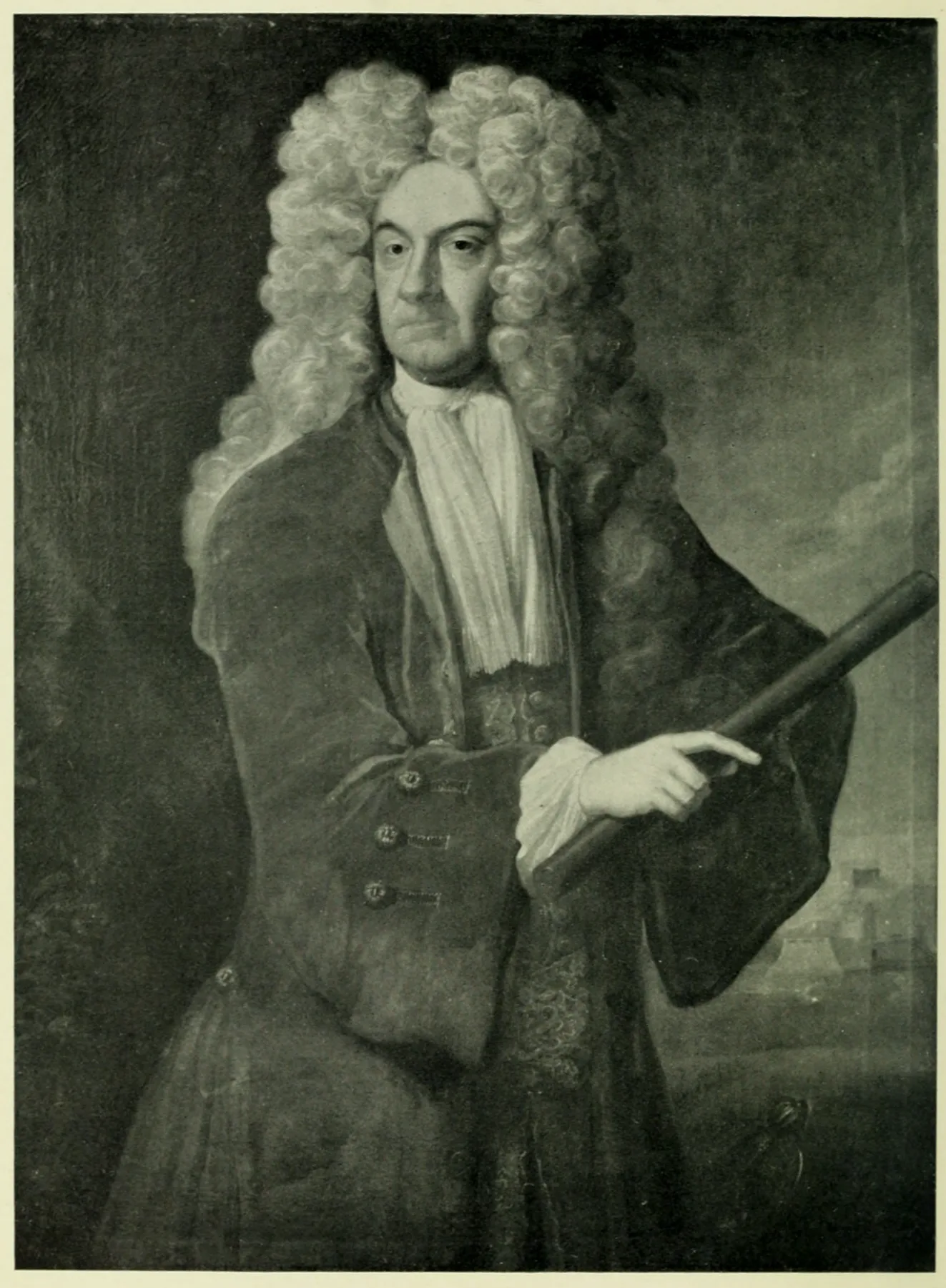
SIR GEORGE OXENDEN
[p. i]
THE ENGLISH FACTORIES IN INDIA 1661–64
BY
WILLIAM FOSTER, C.I.E.
PUBLISHED UNDER THE PATRONAGE OF HIS MAJESTY’S SECRETARY OF STATE FOR INDIA IN COUNCIL
OXFORD
AT THE CLARENDON PRESS
1923
[p. ii]
OXFORD UNIVERSITY PRESS
London Edinburgh Glasgow Copenhagen
New York Toronto Melbourne Cape Town
Bombay Calcutta Madras Shanghai
HUMPHREY MILFORD
Publisher to the University
Printed in England
PREFACE
[p. iii]
PREFACE
The present volume has been prepared on the same plan as the preceding one ; that is to say, a chronicle has been given, year by year (divided geographically), of the leading events, and these have been described mainly by means of quotations from the contemporary documents preserved at the India Office and the Public Record Office. The only change that has been made in the scheme is the suppression, to save space, of the separate chapters on Persia. So far as the letters to and from that country bear upon Indian topics, they have been dealt with in the sections devoted to the Surat Presidency ; and since the East India Company's trade with Persia at that time was at a very low ebb, the change has involved little or no loss from the point of view of the history of the Company. The letters contain, it is true, some interesting references to the internal affairs of Persia ; but these have had to be left to be dealt with by some other historian.
The change of method in this respect has been necessitated by the abundance of material more strictly germane to the professed object of the series and especially by the appearance of Bombay as a permanent feature in Anglo-Indian history. In the present volume the cession of the island to King Charles, the abortive expedition under the Earl of Marlborough to take possession, and the sufferings of the expeditionary force upon the island of Anjidiv, are for the first time fully described from original sources. Another topic which has helped to swell the work is that of the attack made by Sivāji upon Surat at the beginning of 1664, and the gallant defence of the English factory under Sir George Oxenden.
The portrait of Oxenden which forms the frontispiece is from an original painting in the possession of the family, which Lady Capel Cure kindly caused to be photographed for the purpose by [p. iv] Mr. Donald Macbeth. The name of the artist is not known. Since Oxenden did not return to this country after his departure for Surat in 1662, while the fortification in the background obviously refers to his post as Governor of Bombay (1668), it seems clear that the picture was painted after his death (1669); and this may account for certain details of the costume, which appear to be of later date. It is probable, however, that the features were taken from an earlier portrait.
Acknowledgements are also due to Lady Capel Cure for permitting me to consult and make use of Sir George Oxenden's letterbooks, &c. (referred to in the text as ‘Oxenden Papers’). These have since found a permanent resting-place in the Department of Manuscripts, British Museum.
The map of the west coast of India given in the 1655–60 volume will be found of great assistance in following the course of events in that region during the period covered by the present instalment.
CONTENTS
[p. v]
CONTENTS
1661. The Surat Presidency . . . . . 1
The Madras Agency . . . . . 32
The Bengal Agency . . . . . 60
1662. The Close of Andrews's Administration at
Surat . . . . . . . 72
Sir George Oxenden, President . . . . 92
The Expedition to Bombay . . . . 123
The Coast and Bay . . . . . 145
1663. Affairs at Surat . . . . . 186
Shipman at Anjidiv . . . . . 214
The Malabar Coast . . . . . 228
The Coromandel Coast . . . . . 266
The Bengal Factories . . . . . 287
1664. Sivaji's attack upon Surat . . . . 296
Other Events at Surat . . . . 316
The Expeditionary Force at Anjidiv . . . 332
The Malabar Coast . . . . . 341
The Madras Agency . . . . . 360
The English in Bengal . . . . . 392
References to Documents Quoted . . . . 404
Index . . . . . . . . . 409
1661. The Surat Presidency
[p. 1]
THE ENGLISH FACTORIES IN INDIA
1661–64
THE SURAT PRESIDENCY, 1661
In the last volume we noted the dispatch to England of the Richard and Martha and the Blackamoor in January, 1661, the return of the American1 from Gombroon, and the arrival of the long overdue Eagle from home in the middle of February. We now proceed to chronicle the other events of the early part of the year.
Owing to the break of twelve months in the series of 'Surat Letters Sent' and a still larger gap in the register of the letters received, we are dependent chiefly upon the few documents preserved in the Original Correspondence series and upon the extracts from the Surat Consultations, &c., given in Sir George Forrest's Selections from the Letters, &c., in the Bombay Secretariat, Home Series, vol. i, supplemented by the press list issued by the Bombay Record Office. From these sources we learn that in January the Vine was dispatched to Gombroon, the Swally to Lahrībandar, and the Hopewell to Bantam and Macassar, the last-named carrying Richard Bladwell and Thomas Coates as supercargoes;2 in February the American started again for Gombroon; in March the Surat Frigate departed for Mokha, with Ralph Lambton and Valentine Nurse; early in April the Eagle was sent to Kung and Gombroon; and in the same month the American sailed once again on a voyage to Gombroon and Basra, with George Cranmer and Robert Sainthill as merchants in charge.
The dispatch of the American on the former of these two errands was the occasion of serious contumacy on the part of Matthew [p. 2] Gray, the Secretary to the Council. It was known that a Second was needed at Gombroon, and Gray feared that the choice would fall upon him; wherefore he departed from Swally for Surat without permission, and wrote from the latter place to say that in no circumstances would he go to Persia. President Andrews and John Lambton (then the only other member of the Council) thereupon (9 February) held a consultation, at which Gray was dismissed from his post as Secretary, and was threatened with expulsion from the Company's service in the event of his continuing refractory. This had no effect upon the culprit, and so two days later he was summoned, and was asked point blank whether he would go to Gombroon. His emphatic refusal was followed by a resolution to dismiss him from the service, exclude him from the factory, and send him home; but evidently he made some sort of submission, for although for a time he was superseded by Francis Anderson, yet, when the latter went home at the close of the year, Gray was allowed to resume his post as Secretary.
The disastrous outcome of the voyage of the Swally is narrated in a letter to Bengal of 16 February:
A small pinnace, called the Swally, by the cowardise and basenesse of the master [Robert Tucker], though accompanied with 14 English men, left her floatinge in the sea, because they sawe 6 small frigots at a good distance from them and feared they would fight them. Neaver was such an action heard of; 14 English to runne away from a vessell with six gunns, full laden with the Companies goodes, and neaver a stroke struck or any boarded them or shott a gunn at them; it being to the losse of the Company 3,000l. and more.
Early in April much excitement was caused by an affray between some Dutchmen and Englishmen at Mora (two miles north-east of Swally), in which two of the latter were slain. This led to considerable correspondence between the representatives of the two nations, and a protest by the President and Council against the Dutch Director, who would do no more than dispatch the man accused of the murder to Batavia for trial (see Forrest, op. cit., pp. 188-91 and O.C. 2876-82). Andrews contented himself with sending the papers home; and no one appearing at Batavia to prosecute, the accused was after a time liberated (Batavia Dagh-Register, 1661, p. 366).
[p. 3]
The next item of interest is the loss of the Welcome. This vessel, having returned from Achin very leaky, was docked at Umra (on the Tāpti, a little below Surat). After being patched up, she was got out into the river on 5 April; but she repeatedly grounded in going down the stream and at last stuck fast. It was then decided to break her up, and use the materials in building a pinnace to replace her.
These occurrences were narrated to the Company in a letter, dated 10 and 13 April, which was sent overland (list of packet: O.C. 2885); but all that has survived of it is an extract relating to the affray at Mora (O.C. 2882). Its contents, however, may be inferred in part from the Company's reply (19 March, 1662) given later. In the same month Joseph Hinmers and William Forster were dispatched in the Vine to Queda and Johore, and Francis Cobb on a junk to Achin. The Eagle was sent on a voyage to Gombroon, arriving there on 9 May.
The loss of the letter just referred to is the more to be regretted because it contained some account of the disaster which had overtaken the factors stationed at Rājāpur. The exact date of this event is not known, but it was probably soon after 16 February, 1661, when Revington, Randolph Taylor, and Giffard wrote to the Company a letter filled mainly with accusations against President Andrews (particularly on the score of private trading), but speaking cheerfully of their own prospects. They had sold all their stock of goods except the brimstone ('which is fallen in price since Panella Castle was taken'), and mostly at a good profit. Since they had nothing to do, owing to the want of stock and the non-receipt of instructions from Surat, Revington and Taylor were proposing to go to Goa for a month:
And there we doe intend to talk with the Governours freindly (and not like Mr. Andrews, who abused them by his letters) and see what can be done for the obteyning of any one place of theirs; in which designe if we miss of our expectation in doing nothing to the purpose, its no more then if we satt still in Rojapore doing nothing.
A postscript added that Richard Napier, 'who came out of England a mellencholly person, and so continued', was dangerously ill, and not expected to live.
[p. 4]
In the absence of any account of the disaster from the English records, the story must be pieced together from other sources. After the escape of Sivāji from Panāla, as related in the last volume, the King of Bījāpur, annoyed at the ill-success of his general, Sidi Johār, assumed the command of the army himself, with the result that several of Sivāji's forts, including Panāla, were captured. The rains enforced a pause in the operations; and the Marātha chief took the opportunity to fill his treasury by plundering Rājāpur. According to Grant Duff (History of the Mahrattas, ed. Edwardes, vol. i. p. 143), ‘in the beginning of the year [1661] he again appeared before Rajapoor, which he took and plundered. On this occasion the English sustained some loss, and several of their factors were seized and confined in a hill fort for two years, on an accusation, never substantiated, of having assisted Seedee Johur with mortars and shells, at the siege of Panalla.’ In a note the author adds that ‘the unfortunate Englishmen were not finally released without paying a ransom. There appears to have been some reason for
Sivajee's suspicion, though the fact was never fully ascertained'. The papers printed in the last volume prove that the charge was true, and explain Sivāji's harsh treatment of Revington and his companions. Some details are supplied by letters from the Dutch Chief at Vengurla, as summarized in the Batavia Dagh-Register, 1661 (p. 215):
Concerning the English, the Resident [at Vengurla] writes that . . . they have received no compensation for the munitions of war which they lent to the King of Bījāpur for use against Sivāji; but they have suffered great damage from that rebel on this account. For he, so soon as the old Queen had departed for Mokha, raised his head once more, and, reflecting on the injury he had received at the hands of the English, about the middle of March [N.S.] sent 1000 horse and about 3000 foot-soldiers to take possession of Rājāpur. This force, on reaching the town, invited the principal inhabitants to come out and escort it in, according to custom, promising to do no harm. These simple men, suspecting no evil, went to the place of meeting, accompanied by the English Resident, Revington, with two or three other Englishmen, who thought it well to pay this mark of respect. They were all immediately seized and their property confiscated, after tortures had been inflicted. Revington and those who accompanied him were placed in one of Sivāji's fortresses ; while the Englishmen who had remained behind in Rājāpur were [p. 5] likewise imprisoned, and one died under torture. Their factory was entirely stripped, even the floor being dug up in search of hidden treasure. The robbers also plundered many foreign merchants, who yearly bring goods to Rājāpur from Persia and Muskat. Several Rājas and others gathered troops together; but Sivāji's men, satisfied with their plunder, made off without awaiting the attack. A later letter, written at Vengurla on 29 July (ibid. p. 448), says : The English resident, Revington, is still imprisoned with his colleagues by Sivāji in a certain inland fort, named Soangur.1 Salābat Khān2 has sent an envoy to obtain their release, and is himself at present in the field with a great army against Bahlol Khān.
Our next piece of information comes from a letter sent to Surat by Revington and his fellow prisoners (the two Taylors and Philip Giffard), dated at 'Soangur', 10 June, 1661. No contemporary version is available, and all we have to go upon is a transcript (with altered spelling) made by Robert Orme in 1785 from a volume now missing. This transcript is to be found in the Orme MSS. in I.O. Library, vol. 155, p. 1. The original letter was written at intervals (as here numbered), and the date refers to the last section only :
(I) Yours of the 2d. of May I receiv'd in Soangur Castle the 8th June, unto which I reply. The original of our disaster adds no fuel to our discontent, it being first our duty to our masters to stand or fall with their estate, and innocency in ourselves, which made us fear no evil, that we did not run away (although we could have done it) at Sevagee's approach. . . . God be thanked, we are not in fault, but in misery for our sins towards God, not Sevagi, out of whose hand pray God deliver us by His provident and our own endeavours; which prompted us to write to you before from Waysetty Castle,3 and now we are further encouraged by your letter to write again, which we accept of, in hopes you, following our advice in this particular, will be a ready way to gain our liberty, vizt. Sevagi, you may please to know, was the only person we had to work withall about Danda R[ajapore] C[astle]; and to that purpose talk'd with Dowrowgis,4 his chief servant, the last year about it, and understood that, if that castle were taken from the [p. 6] Siddy, all this country about it would fall into Sevagi’s hands, and that, if we assisted him in that business, there would be nothing in reason, either for money or port towns, but should be given or granted. Upon this subject his Braman at Rajahpore, when we were prisoners, talked with us something, promising us a handsome seat, called Meate Bunder,1 upon the coast; but at this time we told him our intentions was lost through his imprisoning and robbing us. . . . After this he set a [lakh?] of pagodas on our heads to gain our liberty, and so sent us prisoners to Waysetty Castle. Now his reason for this is meerly arbitrary, and more we know not what to say, unless you can give yourselves a reason why he robbs all Banians, Moorsmen, Persians, and Arabians, and afterwards imprisons, frown and drubb them for more money. . . . Here are several brave Persians and Arabians, that he trapaned from aboard ship this year, who suffers worse then we do; and the only reason, we [beleive, is ?] he hopes to have our assistance against Danda Rajapore Castle; for we beleive his demanding a [lakh ?] of pagodas from us is only to bring us to secure him in that particular.
They advise, therefore, that the following proposals be made: (1) That Sivāji should grant the prisoners their liberty, and restore what has been taken from them (‘or at least our liberty’). (2) That he should undertake to pay the charges of the English ships engaged in the reduction of Danda Rājpuri. If he omits to inquire how much this will be, a means will be provided ‘to creep out of our obligation, if we please, by asking more than he will give’. If he does ask, the reply might be 10,000 pagodas for each of four ships. In that case, ‘we have another hole for to creep out at, for we may demand all the money beforehand, which he will never do’. (3) That he should give the Company a convenient port town, with liberty to build a fort, he providing the labour and materials. (4) That he should allow the English to receive half the customs revenue of that town, their own imports and exports being duty free. (5) That he should consent to the establishment of ‘a tanksall [taksāl: mint] for a current coyning of silver all over his country, and that no Mallabars shall be countenanced by him; which we think fit to put in, because at Rajahpore he told us he was a Mallabar [p. 7] himself and has of them at command’. (6) That the English should be allowed to buy saltpetre freely. (7) That a warehouse should be given to them in the port town to be ceded. These are the lines they propose to go upon in any conference with Sivāji, and it would be well if the Surat authorities would write to him to the same effect. It is possible that, ‘being a perfidious man himself’, he may doubt whether the English will perform their promises, once he has released the prisoners. The answer should be that, as the grant of a town, &c., is to be contingent on the English carrying out their contract, it would be more reasonable to expect security from him.
If he should be insolent, and say we were now in his hands and he would keep us and our money till the business was done, [the reply is ?] that keep us and kill [us ?] he may, but for money and service he never would have from us so long as he kept us. We expect every day to be called by [ ] Rowgee Pundett [Raoji Pandit], who is sent by Sevagi to examine us, we having not seen Sevagi since we parted Rajapore. . . . This day the Braman enordered a Moorman to be tortured with stripes before our face, we suppose to terrify us; and this day we have privately given it out, to one that is likely to tell him again, that, if we are not released, there were those in Surat that would grant Oranzeebs desire in transporting an army into Decan; which hitherto the English would never do, because they were friends with the Queen of Decan, but she being now deposed and gone, it would be as little prejudice as trouble to us, were it to be revenged; and this, we beleive, will fright him more than the stick did us. And let us tell you a profer to Shasta Ckaune,1 who lies about the hill not above 7 gow2 or 40 course off us, would be very acceptable to the C[kaune ?], as the business may be carryed, and then Sevagi may be soon routed, for all the difficulty is in Chasta Ckaunes coming down the hill; but of this let nothing be said or done before we advise you to it. . . . If he [Sivāji] writes for money, please to tell him (as we have done by letters) our masters will never pay a pice for our liberties, and although you have money of theirs in your hands, yet you dare not pay 1000 pagodas, much less a greater sum. And one thing more we must give you a caution of, not to beleive any [p. 8] report that speaks we should do or say anything contrary to this; for it is possible they will write to you we have agreed to pay so much money for our liberty, to hear what you will say.
In writing about Danda Rājpuri, it would be advisable to leave Revington some latitude ‘to steer another way’, if necessary. It would be best to tell Sivāji that the negotiations are left to Revington and his associates.
Our granadoes were not sold to the Sciddy of Dandah, but to Sciddy Joar, the Kings General, who hath now Carapatan [Khārepātan] and the island too, and himself gone to his country. Our cosset [messenger: kāsid] in his way saw Rustan Jemah, who told him he [had] written three letters to me to go away. I am glad to hear so much, for by that he must know of Sevagi’s intentions; but he speaks a gross untruth. . . .
(II) On reconsideration, they think it advisable to name no precise sum to Sivāji as the expense of the ships. ‘Pray prefer our liberty before anything else; which when he hath granted, then tell him you will confirm what we shall have concluded with him; otherwise not.’ Should they write for money, ‘let it signify nothing, and let the Rajah know so much’. To their letter the Portuguese Captain of Chaul has replied evasively, referring them to Goa as being nearer to them (which is untrue), but saying that, ‘if he hath your order, he will send what we want’. Napier died at Rājāpur ‘about a month since’. A merchant who owes money to the Company has been ‘drubb’d to death in Kelna’. He has money in Persia, the proceeds of which may be returned in the Bījāpur junks. These should be seized.
They will pay the Company etc. all they have lost, with advantage for this affront. For now the Queen is banished, most of the Umbraws [nobles: umara] make it their business to rob and spoil this part of the country; and they only keep the bastard king a time for name’s sake, because they know not who else to set up, Shasta Ckaun having taken Durveice,1 the heir to this crown, in one of Sevagi’s castles.
Revington begs for some shirts, breeches, and cotton waistcoats; also ‘a small tooth comb, for among 70 prisoners he cannot keep [p. 9] himself so clean as he would do'. Any goods bought this year should be brought down to Kārwār.
We hear of an army coming from Agra; and Sevagi is providing for them, and hath lately enlarged and strengthened his country by overcoming the two Rajahs of Dulvice and the Rajah of Singapore;1 by which means he commands all the coast from Danda Rajahpore Castle to Carapatam, which he threatens and resolves the next monzoon to command as far as Goa, and then farewell Goa in a short time.
The losses of the Company and of the prisoners amount to 12,000 pagodas, of which the Company's share is from two to three thousand. The latter sum is almost covered by debts due in the country; 'so that the Company will not be much loosers, but we shall, if our masters right us not'.
(III) The Brahman has not yet spoken to them. Several prisoners have been cruelly tortured. 'I pray God deliver us from the hell we are in, and from another.'
(IV) They have now had an interview with the Brahman. He demanded money; to which they replied that they themselves had none, and that their masters would sooner spend money in taking vengeance for their wrongs. He then asked 'what business we could do for his master'. They made their proposals about Danda Rājpuri, suggesting that they should be released immediately, 'and after the rains were over, we would send to Sevagi to conclude the business'. He professed to mistrust them; whereupon they suggested that he might keep the money of which they had been plundered; 'to which he answered, when we were gone, we should not value the money'. After further talk, he said that his master might assign Dābhol to the English. They replied that it was useless to speak of any business unless he were ready to give them [p. 10] their liberty. He next objected that the English, if they took Danda Rājpuri Castle, might keep it for themselves. Reply was made that the ships would only beat down the defences and the actual assault would be left to Sivāji's men. Finally, he came back to the question of ransom.
He must have money; for his master Sevagi could not attend the other business. Therefore bid us set down quiet for a month or two, and afterwards it may be his master would look upon us; [upon] which we rose, telling him his master might slight the business, yet the Mogull would give the English three lack of rupees to take it [Danda Rājpuri] for them; therefore bid him chew upon that cudd; upon which he said How, how, how, what's that? and sat down again. And we told it him again, and went away; while he only said he would give us a jebob [answer: jawāb] for that too. Two days after, Sevagi came to Marr town,1 below this hill, where he staid about two days, called for the Persians and Arabs, and demanded money from them; and so commanded them to the castle, and hath delivered them and all the prisoners into Rowgie Punditts hands, to do with them as he thinks fit, which is very bad. But for us we are to sit still till his return from Cullean Boondy,2 a town which the Mogul took lately from him, which he hopes to retake this rainy times, and then we shall hear and see him.
The factors went to the Brahman and desired to know what answer Sivāji would give to the Surat letter. He said 'he had little to reply unto it', but would write. He bade them send for money, as without that they would not be released. They asked what amount they should say; to which he replied 100,000 pagodas. On their telling him that the Surat factors could not raise such a sum, he answered, 'let them write what they will give, and I will tell you what I will take'. They assured him that nothing would be offered, but he insisted upon their writing. In replying, it [p. 11] would be well to claim only the amount lost by the Company, rating it at about 3,500 pagodas; they themselves 'shall be content to loose the rest', if only their release can be obtained. They send a draft of a letter to Sivāji for this purpose.
Vauggee is dead, and severall vessels cast away upon the coast. All the Umbraws are divided, and we beleive Vizapore [Bījāpur] will be plundered.
An offer might be made to 'Rowgy Punditt' of 666 rupees which Revington claims from the Company as wages; but Surat should stand firmly against paying anything more. The letter should be sent by somebody 'who knows how to speak the honour of our country and the English, and how willing we were to make Sevagi our friend'; for this 'Hossan' might do, 'having learned his lesson'. Some money and clothes should be sent for the prisoners as well. Whoever comes must try to persuade Sivāji that the English are in earnest about Danda Rājpuri, for that 'is the only aim he hath'. If the Council disapprove of the conditions, 'let not him know so much, for if you do not like them, you may make some evasion or other when we are at liberty'. In any case, the English cannot take the castle for themselves 'without good store of men, and where will you have them but from Sevagi?' The envoy should be careful to deliver the letter into Sivājī's own hands, 'for we fear these Bramans make letters to speak what they please'.
The records are then silent until 7 December, 1661, when the President and Council wrote to the Company, referring to their previous letter (now missing) dispatched in April:
From whence now we shall begine, ending that subject where then we concluded, which was with Mr. Henry Revingtons imprisonment by Sevagy, a rebell unto the King of Decan; who kept him and seven more English in prison six months, demanding a vast summe of mony for their releasement. Though we writt many perswasive letters unto him for releasement, yet they would not be taken notice of, till Mr. Revingtons sicknes (being a dropsey) caused a feare of his death, that upon his peroll [i. e. parole] and promise of returne when well, leaveing all the rest but his chyrurgion behind him, he was sent away from him, and came to us the 17th of October passed, in a weake condition. Noe meanes nor care was nor is omitted for the restauration of his health, but [we] feare his recovery. The rest are all in prison, and [we] have not [p. 12] heard from them since Mr. Revingtons arrivall. The country all in a cumbustion; noe tradeing nor civill commerce. The rebell of one side, the King of this country for the other, and divers discontented nobles within the kingdome, rent it all to peeces. What will be the end, God knowes; but to gaine the other Englishes liberty we shall use all meanes possible.
It is pleasant to notice that, now Revington had returned to Surat ruined and broken in health, the former ill-feeling between him and the President had vanished. Further on in the same letter the Company was assured that, ‘if it please God to spare his life, none of his friends at home, nor selfe here, shall have the least cause to complaine for want of respect or courtesy to be shewed unto him; as his experience hath allready approved’.
The death of Revington evidently followed within a few days. On 12 December a consultation was held at Surat, where it was recorded that he had died intestate and heavily indebted, by reason of his losses in the Deccan, and it was decided that (apart from some few personal belongings, which were to be sold to defray the wages of his servants) the little estate remaining should be put into the Company’s cash and applied, so far as it would go, in the discharge of the debts of the deceased.
We now return to our chronicle of the course of events at Surat. In July came fresh trouble with the Governor. This seems to have arisen partly from the seizure of a Malabar vessel by the English, but chiefly from a dispute between the Governor (Mustafa Khān) and President Andrews over certain moneys claimed by the former. As regards the first point, we find from the instructions given to the commanders of the Surat Frigate and the American (Forrest, ut supra, pp. 186, 188) that all ships belonging to Malabar ports other than Calicut were to be seized and destroyed, unless they had English passes.1 Evidently the result of these, or similar orders to other vessels, had been the bringing of a Malabar prize to Swally. Some years before, there had been friction between the Surat authorities and the English over the capture by the latter of Malabar [p. 13] vessels trading to that port (see English Factories, 1642–5, p. 3); and now Mustafa Khān forced the President and Council to relinquish their prey. The other dispute was more serious. Of its origin in 1657 something has been said in the last volume (p. 124). The bargain then made, by which Revington sold a number of guns for the reduction of Surat Castle, had of course nothing to do with the Company, since the guns were private property; but it had been stipulated that part of the purchase money should be deducted annually out of the sum to be paid as customs, and this had accordingly been done, the money being doubtless handed over to Revington. Mīrza Arab, when Governor, had objected strongly to the arrangement; and his successor, Mustafa Khān, made a still more determined stand against its continuance. He insisted that the price agreed upon was excessive, and declared that he would return the guns and that the President and Council must pay up the sums they had deducted on that account. This being refused, the factory was strictly blockaded, until on 27 July it was decided at a consultation to comply with the Governor's demands. Even this did not satisfy him, and he proceeded to require that (1) all goods should in future be landed at Surat and pay customs there, and (2) the President should not either sail on the river or quit the city without express permission. The intention of the first stipulation was to prevent any goods being smuggled up country direct from Swally; but any such measure would have a serious effect upon the trade of the English, inasmuch as it would not only force them to pay customs on goods which were merely landed at Swally for trans-shipment to Persia and elsewhere, but also much impede the re-embarkation of such goods. In consequence another consultation was summoned on 29 July, at which the fiery President proposed to his colleague that the Eagle should be ordered to seize the junks returning from Mokha; but to this Lambton would by no means consent.1 In the end the matter seems to have been arranged by the mediation of some of the principal merchants.
The following account of the whole dispute was given to the Company by the President and Council in their letter of 7 December, 1661:
[p. 14]
Next we are to give you an accomptt of our imprisonment. In the prementioned last letter we acquainted Your Worships with the takeing of a Mallabar laden with rice; and upon the ladeing of the Eagle all freight goods were hindered and ourselves detained in Soorutt, unlesse that [were] returned; it being forct out of our hands at that time we proceeded to act in your affaires. The monzoone noe sooner done, but another quarrell was picked. Moneys were owing upon accomptt of customes; which by the Governour were at the begineing of the raines earnestly calleed for, when that the constant practiced custome is to cleare that accomptt in August. But though we (to live quiettly) sent him the custome moneys, yet it would not content him, unlesse we would allsoe pay the mony that had been received by Mr. Revington etc. upon gunns bought of him by a former Governour, Meirza Ameena, in the time of the warrs betwixt Morad-bux and Dora Shaw, sonns to Shaw Jehaun. The demaunds concerned not Your Worships nor ourselves; therefore we returned answeare that we would write unto Mr. Revington, and desired soe much time as wee might have answear, to be freed from trouble. His reply was that, unlesse we would signe a bill to pay the mony if Mr. Revington would not, he would have the mony presently and returne the gunns. We answear’d that the gunns were not the Companies nor ours, and we had nothing to doe with them; and soe ended the dispute for that time. He continued calling for the moneys three or four dayes, and still we returned the same answear, resolveing to pay none of your money soe unjustly; that the 17th of July he shutt up our dores, sett a watch about the house, and would not suffer water or provisions for four dayes to come into the house, we being in all (with servants) 40 persons. On the 23rd we had 20 seers of flesh, 5 seers of butter, 30 halfe penny breads, and this given in through the wickett of our gate, keepeing a watch of nearest 300 or two [sic] men about the dore. And soe continued for 15 dayes, until that he was weary that way, and then opened our dores, endeavoureing to surprize us by subtilety and faire words to get us out of the house and keepe us in prison in his owne; but we, feareing his falcenesse, kept ourselves safe; untill all the merchants in the towne cryed out upon his abuse, and then he sent severall persons to compose the difference; which in the conclusion was his takeing of the gunns, and things to runn in the old channell. We visitted him, and he us; which cost Your Worships a piscash for our beateing; and this is the custome of this country. This trouble held us untill the arrivall of the Constantinople; which if had arrived before their jouncks from Mocha, we should have made them sensible of their unjustice; but they all being in the river, we thought the better practice would be to shew a faire outside, as they did; for twas but a faire outside, as we have now cause to complain and the latter end of our letter will acquaint Your Worships.
[p. 15]
Such was the account given to their employers by Andrews and Lambton; but in the Batavia Dagh-Register, 1661 (p. 411), we have a version, derived from the Dutch factors at Surat, which shows that the conclusion was not so favourable to the English as is made out above. After narrating the rise of the dispute, the Dutch say that an agreement was made to refer it to the decision of the Emperor. Mustafa Khān thereupon wrote to the court; but Andrews neglected to put his side of the case. Aurangzeb decided that the price agreed upon for the cannon (21½ rials of eight the double maund) was too high, and that only 16 rials should be allowed; if the English would not agree to the reduction, they must take back the guns. This decision was very unpalatable to the President, who was at the same time being pressed by the Company's creditors; and he resolved to withdraw secretly from Surat, with two or three of his chief associates, and continue the negotiations from on board ship. For this purpose two small vessels were prepared, and it was intended that the party should go aboard disguised as Muhammadans to avoid discovery. The design was, however, betrayed by one of the factory servants to the Governor, who thereupon ordered the Kotwāl to place a guard upon the factory and allow no one to leave. After a time the President sent an order to the vessels, which had dropped down the river, to come up again and watch for him, should he manage to escape. This note fell into the hands of the Governor, who doubled the guard, resolving to starve the English into surrender. Andrews maintained a defiant attitude for some time, but at last on 23 July was forced to make overtures to the Governor for a reconciliation. Mustafa Khān insisted that, as a preliminary, the two English boats should be hauled on land and dismantled. Then the Shāhbandar and certain of the chief merchants, including Vīrji Vora, negotiated an agreement, by which (1) the English were allowed four months in which to pay the amount owing, the price of the guns being reckoned at the reduced rate; (2) the President was always to obtain the Governor's permission before leaving the city; (3) the two vessels were to remain where they were until the next English ships arrived; (4) goods brought to Swally were to remain there under a guard of soldiers, to prevent their illicit disposal. Thus the dispute ended and the blockade of the factory was raised.
[p. 16]
On 5 September appeared the Constantinople Merchant from England, under Robert Brown, bringing a letter from the Company which will be dealt with later. There had been a general expectation that a new President would arrive from England this season, since Andrews had been notified in 1659 that he would be at liberty to return home at the expiration of three years’ service ‘in this Stocks imployment’ (see the last volume, p. 309), and this period would expire in the middle of September, 1661. The Company’s letter, however, made it clear that they had no immediate intention of superseding Andrews; and the President took occasion to reassert his authority over his restive subordinates. He called a general assembly of the factors on 3 October, the proceedings at which will be found recorded in Sir George Forrest’s Selections (p. 195). The Company’s letter was read to the assembly and its members were called upon to say whether they would submit to the commands of the President and Council. Naturally, no one was bold enough to defy Andrews, who then, ‘exhorting them to love and amity, dismissed them’.
Later in the same month (25 October), a consultation was held, at which Andrews, Lambton, and Revington discussed the feasibility of carrying out the Company’s former instructions regarding the dispatch of a fleet to Gombroon to enforce their claims. This design, it will be remembered, had been postponed the previous season for want of the necessary means; and the Council came to the conclusion that for the same reason no action was now possible. They noted that the Company had sent out only one ship instead of the promised three, and that, whereas eight vessels were requisite, only two—the Constantinople Merchant and the Surat Frigate— were actually available, for the American must be sent home, the Eagle could not be kept back another year (owing to defects and the discontent of her mariners), and the Vine and Hopewell were still absent. The ships were in want of necessaries and of men; their burden was too small to contain the goods which would have to be taken out of the junks in the process of searching them; and experienced factors to superintend this work were lacking. Further considerations were:
5ly. The power of the Dutch is too great to be overruled by our small force. The number of their shipping in Persia the two passed [p. 17] yeares assures us they are acquainted with our designe, and await an opportunity to affront us. 6ly. The danger of our employers estate remayning in Persia undisposed off . . . which upon approach of our shipping will certainly be seized on. 7ly. The danger of those persons [that] shall remayne here while the design is acting; for wee cannot block up the Persian Gulph but this King will be sensible of the injury done to his port; and if wee lately received so great injuries from these people without offence given, what may wee expect when they have a pretended cause? Lastly, the want of a place or harbour for securitie of our shipping to winter in at our retourne from Persia, which at soonest will be the latter end of May, and then this coast is too dangerous to adventure on.
It was therefore decided that ‘this Persian affaire’ should be ‘referred to our masters further consideration for a larger supply of shipping and men’. Finally,
The President propounded the Companies commission for the taking of Danda Rojapore Castle; but there was the same want of men and shipping objected. The President also having a commission directed to President Wyche,1 which was not to be opened untill the Persian action was finished (and yet remayns sealed), supposing the same may give further instructions concerning Danda Rojapore, that affaire lies dormant untill a greater force awake it.2
In communicating this decision to their employers (7 December), Andrews and Lambton did not hide their annoyance at the lack of support from home.
We begg leave to intimate the designe cannot be putt in execution by force soe small as you are pleased at any time to send unto us; nor are you rightly informed at home, nor is the business stated as it ought. . . . And should we (with that nothing of force in comparison with the opposition we shall meete with) begine it, we should be baffled. . . .
All thoughts of warlike operations having perforce been laid aside, Andrews busied himself in preparing cargoes for the two vessels that were to go home at the end of the year. The Constantinople Merchant had brought out a stock of over 30,000l., of which two-thirds were in ‘rex dollers’,3 rials of eight, or silver ingots; and [p. 18] this supply of money, together with the proceeds of the merchandise, enabled the Council to go to work with a will. The Eagle had already been sent down the Malabar Coast for pepper, and had been followed, towards the end of September, by the Constantinople Merchant (O.C. 2897), with instructions to visit Goa, Kārwār, Cochin, and Porakād. The Surat Frigate, which sailed in her company, was to stay at Cochin, there to lade and send letters to Kāyal. From Porakād, having taken in pepper and cassia lignum, the Constantinople Merchant was to return to Cochin, pick up the Surat Frigate, and sail straight for Swally. All Malabar vessels met with were to be seized, as being ‘our auncient enemyes’; and in addition, any belonging to Bījāpur ports, ‘from St. Johns1 unto Goa’, in retaliation for the imprisonment of the Rājāpur factors.
The Constantinople Merchant returned (without her consort) at the end of November; and the goods she brought, together with those collected at Surat, sufficed to lade the American, which had arrived from Basra on 8 November. The latter vessel sailed accordingly on 11 December, and reached England in the following June.
Before dealing further with the letter which she carried home (dated 7 December), some account must be given of the one from the Company to which it replied. In this communication (dated 27 March, 1661) the Committees, after detailing the cargo sent out, announced some important changes:
Wee haveing received many greate discoragements by losse during this Stock, and seriously considering with our selves the vast charg that wee are at, by continuing many unnecessary factories in your parts, to the inriching of our factors and other our servants and to the impoverishing of our stock and disheartning of the adventurers (the Stock now, after three yeares, being sould at 85 per cent.), wee have thereupon resolved, and doe hereby order, that the factories of Agra, Amadavad, Mocha, and Bussora bee imediatly discerted, and that our howses and all remaynes in each and every of those factories bee sold and disposed of to the best advantage of the Company. Our factories at Scynda and Gombroone rests yet under our consideration, having relation to that action of Persia, of which wee hope to receive a good accompt from you, and accordingly shall then give our directions, either for their discerting [p. 19] or continuance, as occasion shall require. The factories of Surratt, Rajapore, Carwarr, and Caile Vella wee apoint to bee kept up and continued, till wee shall alsoe bee advised from you of the successe of the Persians businesse, and whither, according to our comission, you have gotten into your posession Danda Rajapore or some other place on that coast; and then peradventure wee shall thinke fitt to make some alteration.
It was next intimated that the Committees had resolved to place the Bengal factors under the Agent at Madras. They had ‘had some thoughts likewise of reducing our Presidency in Surratt to an Agency’, but had been deterred by the consideration that Andrews had held the post for some time and was probably rendering eminent service by successfully carrying through ‘the Persian designe’.
Wee shall therefore, till the next succession, continue it a Precidency, and doe hereby allow to Mr. Mathew Andrewes the sallary of 300l. per annum, to comence from the death of Precident Wyche and to end at his coming for England or leaving or dismising from this our service.
After expressing confidence that Andrews would justify the trust reposed in him and would promote ‘love and amitie’ among his subordinates, the Committees proceeded to strengthen his authority :
Wee expect and require that all subordinat factors and all others whomsoever shall yeild all due obedience to such orders and directions as shall from time to time and at all times bee given them from our President and Counsell. And if any shall apose the same, either by willfull refractorinesse or negligence, wee give you, our President and Councill, full power to displace them and settle others in their imployments; as also upon eminent miscariages to retorne them for England, drawing up their charg, attested under the hands of such as can prove the fact against them.
The letter went on to say that the reduction in the number of factories would render it unnecessary to entertain any more factors. The Company refused, therefore, to confirm the recent appointments made by the President and Council, though they approved the retention of Henry Gary and Thomas Hoskins, and sanctioned the engagement of Francis Jacobs, Richard Ball, and Samuel Barnard, at 20l. per annum each. All others employed without the Company’s authority were to be dismissed and sent home. After [p. 20] renewing previous orders that ‘all matters bee acted and concluded on by the joynt advice of our President and Counsell’, and that all letters, accounts, &c., should be open to the latter, the Committees continued:
Wee are advised from experienced persons that there hath bine, and still is, a very ill custome continued amongst you, namely, that only such persons (or few others) are admited into our warehouses, to see and buy our goodes, but those whoe are brought thither by your howse broker, and that our warehouses are not constantly kept open for all buyers; which hath questionlesse bine prejuditiall unto us. Wee therefore hereby require you that for the future you restraine noe persons whomsoever, either brokers or others, to visitt our warehouses and view all comodities which they shall desire, and that some person or persons bee apointed to attend that worke constantly, that soe, when any buyers shall apeare, they may bee admited into our warehowses to see and buy such goodes as they shall desire.
With a view to promote the sale of their imported goods, the factors were authorized to take even a small profit on them; in the case of broadcloth, about 20 per cent. advance on cost might be accepted. This course, it was hoped, would obviate the need of sending out so much treasure (which was ‘not very well relished’ at home) and also ‘give a wound to private trade’. The Constantinople Merchant was believed to have on board many prohibited goods, for which a strict search should be made upon her arrival; any private trade thus discovered should be seized and only surrendered upon payment of the mulcts laid down in the charter-party. After notifying the appointment of Captain John Hunter as Agent at Bantam and of Captain John Dutton to receive the island of Pulo Run from the Dutch and act as its Governor, the Committees went on to direct the disposal of the Vine and other local shipping. As factories were not to be maintained in future at Basra or Mokha, it was thought that one of these small vessels would suffice for all purposes at Surat; a second was therefore to be sent on a voyage to Achin and thence to Madras, where she was to be left at the disposal of the Agent there; and the third was similarly to be placed at the disposal of the Bantam Agent. The commanders might be allowed to return to England, should they so desire, others being appointed in their places. A further change [p. 21] was next announced in the general policy as regards shipping. Hitherto it had been a frequent practice to retain vessels from England for a year in Indian waters upon demurrage before sending them back.
Wee are resolved, by the Almighties asistance, for the time to come not to keepe any shiping, either in your or any other parts, upon demorage, haveing already, by what ships are come home, found the charg to bee exceeding greate (divers other ships being still in India upon the same accompt), and the profitt made by their voyages in India not countervailing the one half of their charg of demorage. Wee therefore, having descerted the premencioned factories, shall make it our endeavour to drive a full and a larg trade yearley, out and home.
The factors were accordingly desired to be ‘very active and sedulous’ in getting cargoes ready, so as to avoid the detention of ships beyond the dates named in their charter-parties for the commencement of the homeward voyage.
There remained a number of miscellaneous topics to be mentioned. The Committees desired that their thanks be conveyed to Vīrji Vora for some calicoes, &c., sent by him as a present to the Company. Any deficiency in Malabar pepper should be supplied in that from ‘Quiloane’ (Quilon), ‘of which wee desire a larg quantitie yearely’. Directions were given that Malabar pepper should be discriminated in the invoices from that of ‘Quiloane’: that, if two sorts of pepper were sent home in one ship, one kind should be put up in bales, the other being laden loose: and that ‘none bee shott in the bread roome’. A postscript complained of a great deficiency in the pepper sent home in the Coast Frigate, and gave an important ruling on the point whether the subordinate factories were at liberty to address the Company direct, or whether this was a privilege reserved for the President and Council. The Committees ordered that notice should be given to all such factories that they would be expected to ‘advise us of all necessary transactions with them . . . and what elce may beeAuto-generated from context: and what elce may bee producible to the conducive to the promoting of our affaires’.
The contents of this letter could not have been very palatable to President Andrews and his colleague Lambton; and when the former came to draft the reply, he could not entirely suppress his [p. 22] ill-humour. After noticing the small supply sent out, the letter says that it is useless to dwell upon the point, since the Company ignore ‘reasonable advices’ as to the need of more money.
Only we must acquaint you that twice the summe will not advance your creditt here. Our reason we will give allsoe. Perticuler persons that have been entertained in your service have dyed in debt, and the declaration made by your command by us of the not owneing of any hath locked up the purses of all merchants here, and allsoe their breasts, for entertaineing the least good thought of us, as were formerly practiced.
They have done their best to sell the goods sent out, and have succeeded in disposing of the broadcloth at over the 20 per cent. advance stipulated for. Such sales, however, will not ‘wound private trade’ so long as the Company permit as much more broadcloth to be brought out by private persons. This the President and Council could not remedy :
For though we sett a person on board to take notice and seize of all private trade according to order, and watch a shoare allsoe, yet we could not seize one peece, it being carryed away in the night by boates ; which we knew not of till we heard of it in the custome house, and there we are in soe low esteeme that we could not seize it.
They have, however, sold all the goods the Company sent out, and could have disposed of as many more. The silver ingots have turned out
Much to Your Worships lose, espetially this yeare ; this dominereing Governour not being content to hinder all trade by takeing into his custody all ryalls of each merchant that comes to this port, but he allsoe hindered the usuall persons, shroffes, that use yearely to buy Your Worships silver, that we were forced to quoyne it ourselves1 ; and that takeing soe much time, we have not yet dispatcht it, [he] not suffering to doe that untill 15 dayes past.
As regards the abandonment of various factories, the Council point out that none has existed at Agra for some time : the factors at Ahmadābād must be retained for a while, but they shall be recalled when the investment is finished ; and none will in future be sent to Basra. Anthony Smith remains at Mokha until his stock of goods is sold. The private debts he left at Ahmadābād are causing considerable [p. 23] trouble, as his creditors will not allow the Company's goods to leave until they obtain some satisfaction. Any surplus buildings will be sold as soon as a reasonable price can be obtained. Kāyal they are willing to make over to the Madras Agency, if the Company approve. Concerning Bengal they have only an unfavourable report to make, for 'the factory in the Bay is very distractedly managed'. Andrews then thanks the Company for confirming him in the post of President, but protests against the reduction of his salary, which he looks upon as a breach of agreement. He intimates his intention of returning to England as soon as the Company's business will permit. As regards the directions to send home certain factors, the only one that can now be released is Anderson, who returns accordingly in the American. Of the rest, Hinmers, Coates, Clopton, and William Forster are absent on voyages.
Those with us, as William Tyrwhitt, Streynsham Master, and two young men more, we cannot part with and doe your busines; for bookes cannot be coppyed, nor businesse dispatched, without help. Therefore we humbly begg your pardon that we send them not home; their industry and ingenuity being more then those that we have here by you entertained, and should be sent home, were not perticuler intrest of some persons (great amongst you) preferred privately. . . . Six you appointed for the Office; and noe more then Mr. Gray (Secretary) and Streynsham Master can we trust unto, the rest being young and learners. And others that have been in severall factory's, Seconds etc., thinke it a great debaseing and scorne to write in the Office, though little experience may be made more only there; but conceipt is above practice; and enough of such we have here, and (to be plaine) dare not send them home, for feare ourselves are sent for allsoe, soe little are we encouraged by yourselves. Here's hands enough, but the worke never the lighter.
Next comes an indignant repudiation of the suggestion that any matters are kept secret; while against the assertion that their broker has hindered certain merchants from dealing, an equally emphatic protest is made.
We are soe farr from it that none did lesse vallue the house broker (that hath been vallued by others for their owne ends) then we doe; all knowing, that are here, [that] the poorest broker and the strangest may come as freely (and doth come) as the richest or he that speakes most English; for we have not been soe long in [p. 24] your service but that we understand something of language and custome of the country; yet keepe the English custome allsoe, that he which bids most takes it. Whosoever was the informer was very ignorant, or elce he would have advised allsoe that never were Chout and the rest in soe small esteeme in the towne as now, because of any persons comeing to buy without him freely, as our buying of any without him.
The reply to the Company's caution against excessive expenditure on housekeeping is interesting for its reference to the drought of 1660-1.
We humbly answear that noe country under the sunn hath the same plenty in one yeare as another. When that the gentleman or men that were here which advised it, twas enough; it might be a plentifull yeare. But the two yeares past, never corne was soe deare, but only in a great famine 40 yeares since,1 we say, as the two yeares past; and not only corne, but all other provisions, caused by little raine. If you will be pleased to make us pay for filling our bellies, we must submit; but we humbly conceive that noe servants in England, of our quallity, eate their victualls in feare of an after reckoning; espetially when we neither feast it nor feed on dainty's, but plaine food. And to plead a little for ourselves, and satisfye the curious, tis but rice, mutton, beefe, and henns; nothing elce, not any other variety doe we spend your mony in.
In conformity with the Company's orders, one of the smaller vessels (viz. the Surat Frigate) will be sent to Bantam. The Hopewell and Vine have not yet returned. The new Royal Welcome, built at Surat (partly from the materials of the wrecked Welcome) at the cost of nearly 2,000l., will probably be ventured to England the next season. It is a mistake to keep vessels in Indian waters for any length of time.
We have noe place of resort, to command carpenters, timber, etc. from the country, nor noe stores sent out from yourselves; that the conclusion must be ruine, which hath been since to many of your ships that might have been raigneing still; and will be soe to those you have now. For tis not small cost or careening that can hinder a worme from the planke, when two sheathings in two yeares are eaten off, as constantly they are here. Here is noe tarr to be gott, [p. 25] noe beefe, and men (Englishmen) [that,] upon any accident of a long voyage can live, like these heathens, on rice. Here is noe nailes (propper for use) procureable; noe anchors, yet tis impossible but some will be lost, espetially when noe cables are sent out to keepe them that we have; for they weare out with useing, before the anchor. Nor is there any other stores attaineable, that is as necessary as the sayles.
The writers agree with the Company as to the inadvisability of detaining chartered ships.
The keepeing of any charterparty shipp in the country cannot be proffitable; first, because of theire small obedience to command; next, because of the uncertainety of employment of freight, and [the] small stock you are pleased to employ; and last of all, because of their ill fitting out for the most part.
The Eagle, for example, is in a wretched condition; and though the American is better in this respect, the mate (John Mallison), who succeeded to the command on the death of the master, has given ‘exceeding trouble, both for his owne ends and allsoe in respect to demorage’, for, knowing that the delay would be paid for at a high rate, he has purposely hindered the embarkation of goods. It is ‘better to lade ten shipps of Your Worships then one hired one’. The decision of ‘driveing a full trade out and home’ is also a wise one; though it is suggested that a trade from Surat to China and the Philippines would prove advantageous. It is impossible to provide beforehand the large quantity of goods desired, unless the Company will send out a double stock, in order that there may always be money in hand for investment.
In addition to answering, as above, the Company’s letter of 27 March, 1661, Andrews and Lambton had something to say concerning the piece-goods ordered in the preceding one of 24 September, 1660 (see the previous volume, p. 336). Some of these were only procurable in Agra and its neighbourhood; others only at Ahmadābād, the factory at which place was to be given up.
All that know India know that at Soorutt neither Mercoolees or Eckbarees, nor any quantity of Deriabauds, is procureable, but by chance; and though we have writt up to Banians to provide such goods, and we have faire words, yet we knowe none will venture soe much money in those three sortes of cloth, upon an uncertainety and choice of ours whether we like them or noe; and if we possitively [p. 26] agree to take them, experience too to often hath taught us we shall be most uncontionably cheated. The factory's at both places will quitt their cost, for two or three persons is enough in each; and if those sortes of goods are wanted, there, if to expectation (that is, if good, and lenghts and breadths answeareable), there they must be provided. For it hath been our busines to seeke out both for Mercoolees and Deriabauds; 20 corge we have not as yet attained of the former, and not a peece in Ahmadavad or Soorutt of the latter, that is, of the large Deriabauds; nor will not, till the caphila arrives, which will be in February. The factory in Ahmadavad cannot be dissolved, if you will have chints and quilts; unlesse you will put all into Banians hands, and then youle need noe English neither in Soorutt. And if Eckbarees were procured in Agra and sent downe to be chinted in Ahmadavad, the chints will come downe farr finer and cheaper. . . . The other sortes of goods, as Dungarees and Sovaguzzees, are the only commodity of Rajapore, or rather Collapore, and therefore not procureable. And indeed for such a quantity of cloth etc. spice as is enordered, we have not mony to buy a quarter part; being in debt to Vergee Vorah and house servants very much, and soe must be, if, when we intreate soe earnestly (and shew reason for it), you will please to send out noe more.
The Company's order that no coffee should be sent home had arrived too late. A quantity had already been bought at Mokha (‘soe cheape as never any was’), and as prices were low at Surat and the American needed ballast, it had now been shipped in her. For the latter reason some red earth,1 procured at Gombroon, had also been sent home. The pepper in that vessel was procured at the price limited, but for ready money, as ‘we cannot bartar at Quiloan or Porcatt with any goods’.
The letter refers to a communication received from some of the factors at Achin, making charges against their chief, Henry Gary.2 These will be investigated;
But by what we are informed, the young men are ambitious to be Cheifes, and despise Mr. Gary for his poverty, though cannot blame him for his abillity. We hope by the Eagle to give you a full accompt, both of this and of the place; which now is hardly worth sending unto, the Dutch haveing engrossed the pepper, and [p. 27] the goods sent selling for losse; the gold procureable being allsoe deare.
Finally, we have a fresh complaint against Mustafa Khān:
At this time we are hindered by the Governour from dispatching the Constantinople by this Governours practices; being that few dayes since a Mallabar was taken, of small vallue,1 yet because two or three of the rogues escaped on shoare and brawled unto him that they were merchant men, not pirats, he would force us to deliver the vessell unto him, by stopping our goods and hindering all he cann your affaires. We need not discourse of the necessity of a place of your owne to reside in, being that since the open trade we have by these people (that looke upon us as women, not men) been still abused for noe cause, takeing all pretences for an occasion of affronting us.
With this letter went home a list giving particulars of the staffs of the factories immediately under the control of the President and Council. The first section contained the names of those who had been approved by the Company. At Surat, besides President Andrews and John Lambton (Accomptant), were Thomas Rolt (Warehousekeeper), Matthew Gray (Secretary), Robert Ward (Surgeon), Charles James (employed on Swally Marine), Francis Jacobs (employed in the Cloth Warehouse), and William Broxon2 (Steward); also George Cranmer and Robert Sainthill, ‘voyadgers’. At Achin were Henry Gary, Francis Cobb, John Widdrington, and John Atkins. At ‘Scindy’: Nicholas Scrivener, William Bell, Valentine Nurse, and John Cox. At Ahmadābād: Richard Craddock and Ralph Lambton. At Broach: Thomas Hoskins and Thomas Carver. At Kārwār: Robert Master3 and Richard Ball. At Kāyal: Walter Travers, John Harrington, and Alexander Grigsby. At Mokha: Anthony Smith. In Persia: Nicholas Buckeridge (Agent), Stephen Flower, and Edward Swinglehurst. The absentees were: Randolph Taylor, Richard Taylor, and [p. 28] Philip Giffard (all ‘prisoners in Decan’); and Richard Bladwell, on a voyage in the Hopewell. Since the last shipping the following had died: Richard Napier and Samuel Barnard in Rājāpur; Matthew Forster and Richard Brough in Persia; and Henry Revington and Francis Rushworth in Surat. The second section of the list gave the names of persons employed without the sanction of the Company. Seven of these were in Surat, viz. William Tyrwhitt (Assistant to the Accomptant), Streynsham Master and John Child (writers in the office), Henry Bromfield (employed on the Marine), Richard Lambton, Robert Commins, and Robert Jacobs. In Persia: Robert Garway and John Yard. At Ahmadābād: William Rolt. At Achin: Benjamin Clopton. At Kārwār: Edward Lloyd. At Kāyal: Francis Nelthrop. Sent to Johore in the Vine: Joseph Hinmers and William Forster. Voyaging in the Hopewell: Thomas Coates. Sent in a junk to Queda: William Marshall. Prisoner in the Deccan: Robert Ferrand.
The President and Council had still to lade the Eagle and Constantinople Merchant; and, despite the return of the Surat Frigate, they found it no easy task. Whilst thus engaged, they received a letter from Agent Chamber at Madras, informing them that, as he was unable to provide a cargo for the Truro, he had sent that vessel to Surat to be laden for England, promising to give the Presidency credit for any expenditure incurred in so doing. This letter, dated 27 September, arrived on 12 December, 1661, and three days later Andrews and Lambton relieved their feelings in a furious epistle to Chamber, declaring his promise worthless, recording a protest against him for all losses that might ensue from his unjustifiable action, and intimating that they intended to take no notice of the ship on its arrival. Furious letters, however, could not stop the Truro, which anchored at Swally on 5 January, 1662, having on board towards her lading merely 50 tons of pepper and 10 of saltpetre. An examination of the vessel increased the President’s exasperation, for it appeared that she was in a bad state and would need a considerable amount of time and money to fit her for the homeward voyage. He flung an angry protest at her captain, George Swanley, for coming to a port not named in his charter-party and with his ship in such a state (O.C. 2914); to which Swanley replied that he had simply obeyed the orders of the Agent [p. 29] on the Coast, and that it was no fault of his if the Company’s servants failed to find a lading for the ship (O.C. 2915).
Amidst all their vexations, President Andrews and his colleagues had at all events one thought to sweeten their Christmas feast. The marriage of King Charles II with Catherine of Braganza (May, 1661) was an event of deep significance to Europeans in the East, for, apart from the cession of Bombay as part of the new Queen’s dowry, it threw the shield of English protection over the Portuguese, now hard pressed by the Dutch. The East India Company took no steps to make the alliance known to its servants in India; but the news filtered through, and was reflected in the following passage, which occurs in a letter from Surat to Masulipatam dated 15 December, 1661:
We are friends with the Governour [of Surat]; though ’tis noe matter if we are out, our Royall King being marryed to the Infanta of Portugall, and in dowry, besides a vast summe of ready mony, hath Goa and many other places. Twelve shipps are comeing out and 4,000 men; which we have letters allready of from Allepo. Every day we waite the confirmation.
A still more exaggerated rumour had reached the Dutch at Batavia in October, viz. that the dowry of the Princess was to include all the Portuguese possessions in the East (Batavia Dagh-Register, 1661, p. 330). This report merely served to stimulate the Dutch to push on the more energetically with their campaign against the Portuguese, in order to secure as much as possible before being brought to a standstill.
At the beginning of the new year Robert Master and Richard Ball were dispatched to Kārwār in the Seaflower (hired from Beni Dās), with orders (3 January, 1662) to send back in that vessel a cargo of pepper and seed-lac, remaining themselves to establish a factory. They were to present the Governor with a horse and to deliver to him a letter from the President and Council. An agreement was to be made with him as to the rate of customs to be paid and other necessary conditions, including the contribution to be made by him (as offered) towards the cost of erecting a factory house. This should be ‘in a convenient place on the river’ and should be well fortified. The cost was not to exceed 2,000 pagodas, of which the Governor ought to provide 1,500.
[p. 30]
In the middle of January, 1662, the Constantinople Merchant and the Eagle departed for England, carrying a letter from the President and Council, dated 11 January. This complained bitterly of the trouble caused by the arrival of the Truro; but intimated that, should she be repaired in time to save the monsoon, they had enough pepper, cassia lignum, cotton yarn, and Karmān wool to lade her home. Complaint was also made of the ‘pragmaticall’ and ‘dominering’ behaviour of the purser of the Eagle (Charles Conyers), whose impatience had nearly led to that vessel leaving Kārwār without the pepper she had been sent to fetch. The two vessels had now good cargoes of olibanum, myrrh, pepper, cowries, and other goods; but saltpetre could not be obtained, ‘the Captaine of this townes castle ingrossing it, under pretence of the Kings service’. The factory at Ahmadābād had been closed, Craddock and his colleagues having come down to Surat. The Hopewell had not returned from Bantam; and the Surat Frigate was lying in Swally Road much out of repair.
Mr. Master and Mr. Ball we have sent to Carrwar, there to settle, carrying with them a cargazoone in money and cloth to the amountt of ma[hmūdi]s 75,458 : 18. And this we have laden on Benedas his vessaill, allowing him freight and by that meanes clearing his debt. There is noe trade at Rajapore; the whole country being a meere feild of blood; the King of Decan [i.e. Bījāpur] at open warrs with this King Oranshaw, severall rebells within the country of Decan warring both with their owne King, one another, and this King allsoe, that we cannot but feare it will reach hither suddenly. Wee shall endeavour to cleare the factory of Mocha this yeare, and send noe more to Bussora. Allsoe Scyndy, we suppose, will not be worth the charge. To Porcatt we shall send three factors to reside, pepper being in the raine times procured 30 per cento cheaper and better then in the monzoone; which will be worth the charge. To Persia allsoe we shall send an Agent; but to Atchein will be to noe purpose, because since the opening of the port soe many junckes have swarmed thither that there is noe vend of goods there nor noe buying to proffitt. And indeed we have noe stocke to spare to any place; soe little money are you pleased to send us. Yet, if possible, we shall send (as you have enordered) to Bantam; hopeing that the Hopewell and Vines arriveall will reimburse us, as allsoe furnish us with moneys to pay for the ladeing of a new vessaill that your President intends (God willing) to come home upon, if your (as yet unknowne) commands hinder not; for seeing [p. 31] that you are pleased to cutt off his sallary and allsoe intimate the dismissing your service, as to pay for the expences above your allowance, he cannot serve at that rate, and therefore humbly desires approbation of his intention. . . . We could not get any rariety's, either of beasts or birds, though we sent farr and neare, that were fitt to be presented His Royall Majesty ;1 only the finest Broach bafta's procureable we have laded on board the Constantinople, and the captain hath promised a perticuler care, which we hope will come safe to your reception.
A postscript added two days later recommended for employment Benjamin England (‘in your service at Persia’); mentioned a dispute over the ownership of certain goods carried by Col. Rainsford to Muskat, and thence forwarded to Buckeridge in Persia; and notified the grant of a passage to ‘our late minister, Mr. Thomas Thompson’, who was returning at his own request, and had proved himself ‘a very able and honest preacher’. This letter reached the hands of the Company at the beginning of June, 1662.
The letters from Persia during the year contain little of importance for our present purpose. Matthew Forster, who had reached Gombroon as Agent on 8 December, 1660, died on 102 May, 1661, and Richard Brough succumbed also on the 23rd of the same month, leaving Stephen Flower, Edward Swinglehurst, and Francis Rushworth to carry on the business at the port. Nicholas Buckeridge was all this time at Ispahān, endeavouring to obtain as large a proportion as possible of what was due to the Company as its share of the Gombroon customs, and also to procure an answer from the King to the letter addressed to him by the East India Company. By the middle of August he had been joined by Flower and Rushworth; and all three seem to have returned to Gombroon towards the close of the year. Buckeridge had succeeded in obtaining 600 tūmāns (2,000l.) as the Company's share of customs, and this was deemed satisfactory, though the total revenue from that source was reckoned to be between fifteen and sixteen thousand tūmāns, and the Shāhbandar was reported to have embezzled about four thousand more. As a result of his extortions, Gombroon was being deserted by shipping, in favour of Kung and Bandar Rig. A reply to the Company's letter had not [p. 32] been forthcoming. Buckeridge proceeded to Surat, arriving there 19 December.
Concerning the voyage of the American to Basra (see p. 1) we have some details in a letter sent to the Company from thence by Cranmer and Sainthill on 7 August, 1661. The vessel, after calling at Gombroon, reached Basra on 16 July. Her commander, Thomas Crowther, died twelve days later, and was succeeded by John Mallison. At the time of writing, three other vessels were lying in the port 'under the English cullers', viz. the Ormus Merchant, the Diamond, and the Seaflower. These did not belong to the Company (the last two being the property of their Surat broker, Beni Dās), and their wearing an English flag was probably in virtue of their having an English pass. The letter mentions that the house promised by the Bāsha, 'in satisfaction for money longe since lent', was being erected. The vessel was to leave Basra on 20 September. Whether she did so at the time fixed is not known; but (as we have seen) she got back to Surat on 8 November.
The Madras Agency
THE MADRAS AGENCY, 1661
The letter which Agent Chamber and his colleagues (William à Court and William Gifford) sent to the Company by the Katherine on 11 January, 1661, has been analysed in the last volume. At the end of the month the Madras Merchant and the East India Merchant, which had both arrived from Balasore a few days previously, were also dispatched to England, the former carrying another letter to the Company, dated 28 January. In this references were made to several matters touched upon in the preceding volume of this series.
The greate dearth, that hath bin in these parts now these 18 monethes, hath bin noe small obstruccion to our trade. . . . If Mr. William Isaacson had bin desirous to have stayed in this countrey, wee should have enterteyned him. But haveing possessions fallne to him by the death of freinds, hee was sollicitous to us to take passage last yeare on the Mayflower (haveing then payd him 300 rialls for 18 monethes in this new Stock); but shee missing of her passage, hee came back upon the Trueroe. In his absence, Captain [p. 33] Porter1 spared us his minister till hee came out of the Bay. But the alteraccions that have bin soe lately in England, now soe many spirituall promotions are to bee conferred, they are both bound home, one upon the Madras and the other on the East India Merchantt. Soe that you may please to take into consideracion that wee may bee furnished with some godly divine to performe the ministeriall function, which must now light upon the Agent himselfe, till you shall send one forth for some continuance. Notice hath bin given that Mr. Isaacson hath a paper about two Franciscan fryers,2 of whome Your Worshipps have bin severall times advised. They have bin continued by Sir Andrew Cogan, Mr. Day, Mr. Thomas Ivie, Mr. Aaron Baker, and Agent Greenhill; and there is more reason for their resideing now then formerly, because there are soe many Christians that inhabite in your towne, which otherwise would all goe to St. Thoma; and those gentlemen before specifyed, that are at home, can resolve you more fully of this, and how necessary their resideing is, unlesse you shall please to send out a competent number of our owne countrey inhabitants; whereof Mr. Thomas Chamber shall further certify you, when hee shall personally come before you. In the meane season, wee shall see that they use their ceremonyes to themselves, and in their profession give offence to none.
The letter also contained the usual details about the cargoes of the vessels and other commercial topics. The Company was advised to send out coral (‘wee knowe noe more staple commodity for this country’), lead, quicksilver, vermilion, alum, and brimstone, but very little broadcloth. The Anne, it was mentioned, was riding in the roads, ‘being uncapeable to voyage home’. She was valued at 1,368l., and it would be decided later whether to leave her where she was or to employ her on a coasting voyage. A postscript of 30 January excused errors in the marking of bales and copying of accounts by stating that, owing to shortage of factors, two soldiers of the garrison had been employed on those duties.
About a fortnight before these two ships sailed for England, the Concord (Captain Roger Kilvert), which had arrived from Bengal a few days earlier, was dispatched to Gombroon, with Francis Rushworth as supercargo. In a letter entrusted to his care, dated 15 January, the Agent in Persia was reminded that a considerable [p. 34] sum was due to Madras on account of cargoes consigned to him for sale, and was urged to make a speedy return, ‘for the Company requyres from us this yeare 20,000l. sterling more then wee have to pay for’. Rushworth might remain behind, if necessary, to look after any unsold goods, but in that case he should return to Madras in a later ship. A yearly supply of horses and of wine, &c., for household use was requested.
On 19 February the Madras factors were still without definite information concerning the great events that had taken place at home, though, as they mentioned in a letter to Walter Travers at Tuticorin :
Our Dutch freinds att Pollicatt have advised us of brave newes from England ; the principall is that the King (Charles the Second) was received into London with greate pomp the 29 May last, with many other circumstances of his inthroneing.
Three days later they asked the Surat President and Council for confirmation of these reports, as they understood that a letter and printed papers on the subject had been received via Persia from the English Consul at Aleppo ; adding that ‘meane time wee could doe noe lesse then testify our allegiance by a solemne thancksgiveing day’. The main purpose of their letter, however, was to represent their financial needs, and to plead for an early remittance of the money due to the Madras Agency for cargoes sent to Surat and Persia, amounting (apart from freight money and profit) to 34,725 pagodas. The balance in their books against the Company exceeded 15,000 pagodas, and the yearly investment ordered for England alone was nearly 65,000 pagodas. They therefore begged for instructions whether they were to borrow the requisite funds or ‘sitt still till more stock arrive’. The Anne was riding at anchor without employment, being indebted to the Company over 600l. sterling. Orders were requested whether she was to be left as she was, or seized for the debt.
Captaine Knox being left on Zeiloan, there’s none of her officers nor shipps company dare undertake to sell her. . . . Wee finde the mariners remayning averse from makeing a voluntary surrender of her into the Companies hands, either att a sett price or otherwise, though themselves confesse there is noe other way of saving any thing of her for the owners.
[p. 35]
With regard to Edward Winter's liabilities, the letter said that his agents were believed to have taken steps to avoid bringing back to India any part of his estate from Queda or Pegu, lest seizure should be made thereof; but 'if you shall advise us therein, wee shall in a legall manner question his factors for such debts as shall appeare just and dew to our masters'.
In these parts wee have remayned hitherto free from the warres which have disturbd other parts of India; but now some rumours of the approach of some forces of Oram Zaib this way cawseth a generall apprehension of feare; yet not without some hopes that it is only to receive the ordinary tribute.
The position of the Anne was so dangerous, owing to the worn condition of her rigging and her shortage of crew, that the Madras Council did not wait for orders from Surat or for a voluntary surrender, but on 15 March, 1661, seized the vessel for debt, at the same time undertaking that the Company would allow the owners the amount of her estimated value.1 Ralph Hodgkins (formerly mate in the Concord) was confirmed in the command of the ship; her name was changed to The Hope; and in the middle of April she was dispatched to Achin with William Gifford as supercargo. The letter she carried to the English factors there intimated that she was chiefly sent to bring back elephants on freight terms, as on her previous voyage.
Which was soe much money absolutely gained to the Honourable Company our masters. And this is the first ship that ever received that sort of creatures aboard for them; other of our masters comanders allwayes excuseing the takeing in of ellephants, because they cannot cutt downe the sides of their ships, as the Moors juncks doe.
A small lading of calicoes, iron, and salt was sent; but even these goods had been obtained on credit, 'the Company being indebted here nearest 6,000l., and noe quick stocke remaining'. If returned speedily, the vessel would be sent again to Achin in August. Gifford was given permission, if no elephants were offered as freight, to buy some on the Company's account; in which case they were to [p. 36] be brought to Madras rather than to Masulipatam, as being the better market. An attempt on the part of the Masulipatam factors to execute the orders received from England and Surat regarding interlopers had evidently produced a commotion there; for, writing on 23 April to that place, Chamber and À Court said :
As touching the Winter Frigott being made ready by Mr. Thomas Turner and Mr. William Jearsey to voyage to Pegu : seeing that you have seized upon her, and have wrote to the Presidency of Suratt to know their pleasure, it cannot be long now before you will receive their orders. . . . You may well know that all this might have bin saved, if Mr. Jearsey, Mr. Turner, and the rest that call themselves freemen had bin sent up to the Fort (as hath beene often enordred from Suratt and us) and so to have voyaged home, according to the Honourable Companies orders. But if it be so difficult a matter to unroost them that wee must come there ourselves to doe it, it wilbe in such a manner as will not be to their likeing ; and so much you may acquaint them.
Some additional particulars are given in a letter from Chamber to Surat, dated 24 May, 1661 :
Wee have received grevious complaints from the Cheifes of all the factory's in and about Metchlepatam of Mr. Thomas Turner and Mr. William Jearsey, about their attempting to send a vessell of Mr. Winters to Pegue, and other insolent behaviours, in holding out the great house at Maddapollam with great gunns and armed men. These, and others that call themselves freemen, are harboured in those parts contrary to our consents. Wee understand that they have sent you a coppy of all passages, of their protesting and answers ; so beleeve you have given them their orders and directions before this. Wee advise them still forthwith to be observant to your comaund, and to execute the same, that noe tyme be lost.
And in another letter from Chamber to the Vīravāsaram factors of the same date, answering one of 11 April :
Whereby you give to understand that Mr. Jearsey hath taken up his quarters at Maddapollam, and that Mr. Turner is much strengthned by his assistance ; for now, you say, they are able to make 100 Rashboots or peons and have fortified their house with a couple of small gunns mounted at the topp thereof, aswell as severall others mounted in all passages below. You say 't must be a considerable charge to reduce them to their obedience, and would know our pleasure what you should further doe herein. . . . Now wee [p. 37] can say noe more then what you have bin often told, that is, to advise you to execute such lawfull comands as you have or shall receive from the Companies President and Councill. And whereas you mencion that they make this resistance purposely to gett what they please ashoare from the Great George1 at her arrivall; but in such case, when you shall heare the Great George to be arrived, wee hold it very convenient (for the full executeing of the Suratt Presidents injunctions) that you forthwith force the house to yeild, by stormeing or otherwise, with all the force you are able to make; for noe question the power of the Suratt President etc. is sufficient to justify your actions. As yett wee have had noe ship arrived; but very likely, before the George's arrivall, we may have a ship from Persia or England, and then at their arrivall at Metchlepatam wee shall enorder that their ships company give you all the assistance they are able.
We do not hear that any attempt was made to storm the interlopers' stronghold. Probably the factors felt by no means assured that the authority of the Surat Council, or even of the Company itself, would be sufficient to secure immunity for them in England, should such an attempt result in loss of life; and in any case they were not obliged to act until either the St. George arrived from Queda or fresh instructions came from Surat.
The letter to Masulipatam of 23 April referred also to a proposal from that place to detain the incoming junks until certain debts were paid. To this suggestion Chamber and À Court replied by advising a reference to the President at Surat.
A letter to Masulipatam from Madras, dated 9 May, announced the death of William à Court five days previous, after an illness of about three weeks. Chamber, thus left without a Council (since Gifford had gone to Achin), wrote to Thomas Shingler at Petapoli (9 May) to hand over charge to Ambrose Salisbury and repair to Fort St. George. This he accordingly did, after a delay of some weeks, and was duly appointed Accomptant.
At Surat President Andrews and his colleague Lambton were watching Chamber's proceedings with much disfavour. Writing to Bengal on 16 February, 1661, they commented in scathing terms on the actions of the Madras factors. Probably, therefore, they were [p. 38] not sorry to take a step which they knew would annoy Chamber, by insisting upon the expulsion of the two French padres. Their letter, dated 15 February, 1661, has not been preserved, but its tenor is evident from Chamber's reply of 24 May.
The Company hath not wrote of them [the padres] since Agent Ivyes comeing out, which was in the yeare 1643; nor can wee tell whether they did then meane them, for their word is only Popish preists. And six yeares after that, Padre Ephraim was treacherously seized upon by the padres of St. Thoma and sent to the Inquisition at Goa,1 where he might have layen till this tyme, if he had not beene redeem'd by President Merry and his then Councill; for his crymes were very heynous in their profession, for his holding disputacions with them on all occasions against praying to saints and carved images. And if these padres crymes were soe greate then as the Portugall padres take them to be, they are much aggravated since; for upon all occasions of christnings, burialls, and weddings they come to our divine service and heare preaching and praying according to the manner and institution of the Church of England; so that if ever they light againe into the Portugalls hands, they will certenly be burnt, for there hath beene ever bitter enmity betwixt that church and this of the French padres, and one of the reasons of there continuance many yeares agoe was the great controversyes betweene ours and their nacion and the churches. And this is the last reason why you would have them put out of towne, because of the many affronts you suffer by the Portugalls in your parts; so it will follow that the reason why you would putt them out was one maine cause why other Presidents and Agents continued them in the towne. When Mr. Thomas Chamber came first to Fort St. George (which is 15 yeares agoe), he did as much admire [i. e. wonder] as any man elce that they had a church and other grounds given them and liberty to exercise their superstition; till these reasons were given of their admittance. First, it was concluded by those eminent persons that have had the governement of Fort St. George •since the first building thereof: (1) that if the French padres went away, the Portugalls would leave the towne; (2) these padres were invited to recide in the towne for the gaining Portugalls to inhabitt; (3) the dispeopling of the towne of Christians was accompted a weakning to the Fort; (4) the residence of the Portugalls was reckoned a cause of encrease of trade and the Companies customes; (5) the terrour and awe that many white men in the towne strikes to our neighbours; (6) the honour and reputacion that redounds to the Company among the princes of India in the [p. 39] multitude of their people; (7) it was sayd that the glory of a king was the multitude of his subjects. And these padres and towne dwellers have oftentymes offered to take an oath to be true and loyall to the King and Company, as Catholiques use to doe in England. For these reasons they have beene invited and continued by Sir Andrew Cogan, Mr. Francis Day, Mr. Thomas Ivie, twice by Mr. Aaron Baker (for he hath bin three tymes President in India,1 and this last tyme had 600l. per annum), and lastly by Agent Henry Greenhill. Now it need not be told you how much Mr. Thomas Chamber is inferiour in quality to any of the aforesaid gentlemen, nay, not worthy to carry pen and inke after some of them, who soe much excelled in the governement of the Fort and towne and mannagement of the Companies trade; for in most of their tymes there was never less than 60 Englishmen in the garrison, whereas now the Company hath but 30 that are able to serve, and but eight of them their servants and thothers pickt up as they were scattered here and there. You may consider that the countrey is all in an uprore, by 15,000 of the Generals souldiers that have left his armey and putt all the countrey in a hurley burley.2 The Companies priviledges are in some hazard, the King sending downe from Gulcondah a Moores Governour into the towne with a huge trayne to receive his part of customes. But the Companies priviledges shalbe mainteyned, if things may runn in their old channell; but it will neither be safe for the Fort nor towne, if the French padres should be at this tyme excluded. Now, if you will please to looke upon the Companyes proffitts, it wilbe divers tymes asmuch againe as it is now by the expiracion of tenn yeares, and may likely pay all the charges of the Fort and factory. For at the Companies first beginning to build a fort, there was here but only the French padres3 and about six fishermens houses; soe, to intice inhabitants to people the place, proclamacion was made in the Companies name that for the terme of 30 yeares noe custome of things to be eaten, dranke, or worne should be taken of any of the towne dwellers. Now 21 yeares of that tyme is expired, and soe much art being used to bring the Companies towne in the beauty that now it is, and multitude of inhabitants (which are those that payes the dutyes), it will be much damage, both in poynt of customes and other taxes, to our masters to give their subjects for soe long tyme the customes of foresaid things freely; and now the proffitts within so short a tyme [are ?] to returne to the choultrey, wilbe to unmake what hath [p. 40] beene soe long a makeing, if the towne should be soe suddenly dispeopled. Now you have received the reasons why the French padres were invited hither, as also the reasons why they have bin continued ; and if you still persist in their expulsion, now the people are unquiett and the countrey all in an uprore, Mr. Thomas Chamber is not of sufficiency to undergoe soe hard a taske as is now on his hands, or to rectify or amend any thing that hath bin acted or practiced by men of such excellent judgements as hath beene here Presidents and Agents, especially what hath bin setled and allowed by President Baker, whoe was twice sent by the Honourable Company to purge the Coast. Therefore you may please to thinke of said Chamber his abilityes ; and if you find him not fitt for his employment, he shall willingly embrace what buisnes in your judgements shalbe suitable to his capacity.
The expulsion of the two Capuchins would have been both ungrateful and unwise, and Chamber's sturdy refusal commands our respect. President Andrews, it would seem, deemed it prudent to ignore the challenge thus given him, for he took no step to remove the defiant Agent.
Reverting to Chamber's letter to Surat of 24 May, we find a reference made therein to a design on the part of President Andrews to send a ship to Queda for the purpose of seizing the St. George with a view to her restoration to the Nawāb. Chamber said that he was keeping the design ‘very private’ and had instructed Johnson to promise ‘Tappa Tap’1 that satisfaction should be given to his master. The purchase of a vessel called the Little George was defended on the ground of the necessity of fetching from Porto Novo, Pondicherri, and ‘Connimeere’2 some of the Company's goods, ‘which lay in great danger to be stole by a great army that lay not far off’. The President was thanked for sanctioning the borrowing of funds for investment, and the limit he had fixed of 9 per cent. interest was declared to be sufficient.
Writing on the same day to Masulipatam, Chamber said :
It is the Presidents and Councills earnest desire that the value of the Nabobs juncke should be satisfied to him or his factor in Metchlepatam, and that wee should enorder Mr. Johnson to make an end of that long difference which hath beene betweene him and [p. 41] the Company. What wee can say now is but what wee have sayd before: that when shee shalbe arrived, upon the ending of all differences with the Nabob shee should be delivered to Tappa Tap. But upon the delivery there must be a great caution that there be taken a firme acquittance or discharge. Otherwise we shall never know when we have done; for they will receive any thing that shalbe given them, and afterwards be demanding more and more still.
On 4 July the Royal James and Henry, under Captain Maurice Blackman, arrived from England by way of Guinea, bringing from the latter place gold dust to the value of 12,500l., but no goods from home. By her a letter was received from the Company dated 12 September, 1660 (Letter Books, vol. 2, p. 330). This renewed former complaints against the Madras factors for delaying the homeward voyage of the Love by ordering her to call at Porto Novo, with the result that 'shee is lost and perished in the sea'; and expressed a fear that for a similar reason the Mayflower had met the same fate. Positive orders were therefore given that for the future no ship quitting Madras for England after 1 December should touch at Porto Novo. The calicoes obtained at that place were approved as 'well made and desireable here', but henceforth they were to be fetched to Madras in small vessels in readiness for transport to England. Note was taken of the fact that in 1659 the Marigold had left behind unsold most of the Company's goods she had carried from Madras to Macassar, and a conviction was expressed that this was due to the amount of freight goods carried thither.
This your sending of freight goods in our ships wee conclude is not consistant with our proffit, but much to our disadvantage, and principally serves for the colouring of that exorbitancy of private trade which hath a long time binne and is still practized among you, selling your owne goods and retourning their proceeds on the ship, and leaving ours to awaite a further market. Therefore wee are resolved not to give liberty for the lading aboard any of our ships any goods whatsoever but what shall properly and solely aperteine to the accompt of us the Company in gennerall, and require you to take espetiall notice hereof and see it performed accordingly.
The Royal James and Henry was to be sent back to England as soon as possible, with a lading of saltpetre, sugar, calicoes, and [p. 42] pepper (if procurable). A second ship, if available, should be returned at the same time.
Wee cannot but admire that, wee having sent out from hence to the Coast and the Bay to the amount of about 120,000l., and that what you have returned us, and what is lost, doth not much exceed the one half of the said some, that yet you should complaine for want of stock, and further say that, after you had laded your homeward bound shipping, that you should bee out of stock and enforced to make use of your creditts. . . . Wee must therefore conclude that you have not binn only ill manadgers of our buisnesse but also wastfully and lavishly expend our monies in building warehouses and buying jouncks to maintaine your private trade, not only without but contrary to our order, which prohibits all unnecessary charges and confined you to a yearly allowance in your expences, which wee expect you exactly confine your selves unto; which expence wee doubt not might bee defraied by the yearly proffitt which ariseth from the sale of our goods and bullion.
The factors were therefore again required to forbear all unnecessary outlay, and were ordered to sell the Winter Frigate, as one ship per annum would suffice in future for the trade with Bantam, &c. The private goods on board the Marigold, which the factors had described as provisions and other necessaries for Winter and his family, had proved to be largely private trade, as Chamber and his colleagues might have discovered, had they made ‘a more strickter inquisition’. The letter then referred to the seizure of Mīr Jumla’s junk, and the resulting troubles in Bengal.
Wee hope Mr. Trevisa hath composed the difference; which wee expect the estate of Mr. Greenhill and Mr. Chambers shall make good unto him [the Nawāb], being it was acted by them without our order or direction and never owned by us, nor divers of our factors there when the seizure was made, but objected against, and the said Mr. Greenhill etc. entreated to make a surrender of the jounck back to the Nabob, which hee would not consent unto. Wee observe what estate of Mr. Greenhills you have secured, and hope that the buisnesse will bee so composed that you will have sufficient to give a reasonable satisfaction to the Nabob.
The dispatch of a ship to Achin, when one was available, was approved, especially as the proceeds of its cargo would be returned in gold. Homeward-bound vessels were to start not later than 1 January; no goods were to be stowed otherwise than in the hold, [p. 43] and no ship was to be overloaded. Fine goods were to be distributed among the returning vessels, instead of being put all together in one. Particulars were given of the shipping intended for dispatch to the Coast the following season. No cannon or ammunition would be sent out until further advice. Winter would be required to account for the stock entrusted to him, and meanwhile the outstanding debts should be collected, or else recovered from his estate. Permission was given for the return of William Betts, a soldier in the Fort, and of Francis Harvey, who went out in the Marigold.
Wee entend very suddenly to present to our Kings Majestie (who is now, by Gods providence, retorned and setled in the goverment of his kingdomes) a narration of those abuses which have binn put upon us by the Dutch; amongst which wee will inscert their proceedings at Porto Nova, in frustrating you of the promised freight by their threatening of those country people and confiscating of their goods; and wee doubt not but, by the assistance of his Royall Majestie, to receive satisfaction from them for all our damages, and to bring them to a better conformity in the future.
Should saltpetre be procurable at 20 or 25 new pagodas per ton, two or three hundred tons should be provided yearly for ballast. ‘Ten lusty blacks, men and women’, might be expected from Guinea, for transmission to the intended settlement at Pulo Run. In future more calicoes would be required for England, of which particulars would be sent by the next ship.
After a short interval the Royal James and Henry was dispatched (23 July) from Madras to Masulipatam, where she was to land a supply of money, and then await instructions before proceeding to Bengal.
On 9 August, 1661, the Coast Frigate (Captain John Elliott) and the Discovery (Captain John Gosnoll) arrived at Madras from England, with cargoes aggregating 53,800l. They brought letters from the Company, dated 28 January (Letter Books, vol. 2, p. 364) and 6 February, 1661. The first of these directed that the Discovery should proceed to Jambi, Macassar, and Bantam. It then announced an important change in the administration on the eastern side of India, to which reference has already been made on p. 19: [p. 44] Wee having seriously considered and debated how our affaires in your parts may for the future bee manadged to the encoragement of the Company in the advancement of our stock, have concluded, and doe hereby order, that the Agency in the Bay shall from henceforth bee reduced to a factory and bee under the power and subordination of the Agency at Fort St. George, and that all the factories, both on the Coast of Coromandell and in the Bay of Bengala, that shall bee found necessarie to bee continued, shall from time to time receive order and directions for the manadgment of our businesse from our Agent and his Counsell that wee now doe, or shall hereafter, settle and establish at Fort St. George; which place, wee conceive, is most propper for the residency of the Agency. Howsoever, wee require you that by the next oportunity you seriously consider, and retorne us your opinions, touching the conveniency or inconveniency of the place, or of any other place which may bee more proper and comodious for the setling the cheife residency upon, for the advance of trade. . . . In the meane time wee desire you to make it your worke to improve the manufacture of cloath at and about the Fort what possibly you can, both for varietie of sorts, quantities, well makeing, and cheapnes of prices, and to reduce our charge into as narrow a compasse as may be, not exceeding those allowances which wee have formerly allotted unto you.
The loss of the Love and the non-arrival of the Mayflower had seriously discouraged the Company’s shareholders, ‘whoe cannot now (after three yeares) dispose of their subscriptions but at 6 or 8 per cent. losse’1; and the blame for this state of things was placed largely upon the Madras factors. Nevertheless, the Company did not make any immediate change in the administration, but ordered that
Mr. Thomas Chamber, if upon the place at the arriveall hereof and that then his resolution bee not to retorne for England but to remaine there (which wee leave to his owne choice), shall bee our Agent, and that Mr. William Acourt shall be Second; whoe, with the rest of Counsell joyntly, wee doe apoint to carry on our busines, both on the Coast and Bay, for this next yeare, or untill wee from hence shall give further directions. If Mr. Thomas Chamber bee purposed to come for England, wee doe then ordayne [p. 45] Mr. William Atdourt to bee our Cheife till our further order. Wee doe also apoint that the Counsell shall consist of four persons upon the place, with the Cheifes of the other factories when present; whoe shall joyntly act and manadge all our affaires and businesse, and that all matters bee debated and concluded of by consultacion, and not, as formerly, singly by our Agent and such as hee hath deputed; which wee utterly dislike and will by noe meanes allow off in the future.
The Committees then alluded to their great desire for cinnamon 'of any sort', and to this end ordered the Agent to send a fit person to Ceylon to treat with the king for the establishment of a factory there. A belief was expressed that the Dutch would not dare to hinder this project, in view of the restoration of King Charles, whose protection was confidently expected. If, however, the Dutch should give any trouble, a protest should be recorded against them, and particulars, duly attested, should be sent home. The letter then explained that the amalgamation of the two Agencies had been decided upon because of 'the discontents and animosities' that had arisen between them; and expressed a hope that the Agent and Council at Madras, having now 'noe co-equall, either to contend with or to opose you', would justify the confidence reposed in them. The two junior members of the Council were to be selected by Chamber and À Court, with the consent of the Chiefs of the other factories. The Council were to have unrestricted access to all books and papers, and all decisions were to be taken by the majority. In case of the death of a member, his successor was to be chosen by the survivors; but every appointment to the Council was to be subject to the approval of the Company. Two 'able and discreete persons' were to be dispatched in the Coast Frigate to Masulipatam, one of whom was to proceed to Bengal; these were to be provided with suitable instructions 'for the setling of all our affaires in the severall factories'. Power was given to the Agent and Council 'to dispose of our factors, in all our factories, as may most conduce to our advantage', and to replace any who should prove refractory, sending the offenders home. No Bengal sugar was to be provided in future, either for England or Persia.
Also now considering that England may not for the future vend so much saltpeeter as it used to doe, so that wee supose about 6 or 800 tonns anually from all ports of India will be suffitient to suply [p. 46] our marketts; of which wee judg wee must bee necessitated anually to bring from Surrat about 100 tonns, for kintladge of those ships which shall come from thence; and you haveing in your last letters advised us that quantities of that spetie may be provided at the Coast, if mony beforehand, to be invested in the proper seasons: wee doe rather desire that our quantitie may be suplyed at the Coast then to fetch it from the Bay; and hope you will procure it as good and as cheape as that from the Bay. But if it should come out somthing dearer in its prime cost then that in the Bay, yet, considering our keepeing a factory for it purposely at Pattana, and our ships goeing thither to fetch it, wee conceive it will be nothing to our disadvantage. Wee therefore desire you to encourage the makeing of it on the Coast, that at leastwise wee may anually have 150 tonns, which may be sent to the South Seaes [i. e. Bantam], for kintlage for our ships which come thence; wee being compelled, for want of kintlage in those parts, to bring thence ginger, sugar, etc., on which (all things considered) is little advanced. And the rest of the saltpeeter which you shall provide at the Coast will serve to come from thence to England.
After alluding (in a passage quoted later) to the manufacture of taffetas in Bengal, the Committees made complaints about defects in those recently received, and ordered that more care should be exercised in future. They transmitted a list of goods required, together with a pattern of fine ‘parcallaes’, to show the amount of ‘stifning’ desired in the cotton goods, which should all be ‘well whited, and a small eye1 of blew infused into them’. Attention was next directed to the fate of the captives in Ceylon:
The friends of Mr. Samuell Vassall, John Morginson, and Thomas Marsh, whoe were cast away in our ship the Persian Merchant and afterward seized upon by the Mallabars at Zeilon . . . hath procured an order from His Majestie unto us that speedie care bee taken that the prenamed persons bee inquired after and freed from their bondage. Wee therefore require that you carefully, and with what expedicion may bee, endeavour to comply with the said order, and procure the liberty and freedome of the said persons; and also to make inquiry what is become of those ten men whome Mr. Trevisa advised us left him and intended to goe overland for Collimba [Colombo], and procure theire freedome alsoe; adviseing us by your next what you shall doe herein. . . .
The second letter from the Company, dated 6 February, 1661, [p. 47] gave particulars of the cargo of the Coast Frigate and ordered her early dispatch to Bengal. The factors at Macassar were to be supplied with ‘steele in small gadds [i. e. bars], procureable with you’. Note was taken of the suggestion that a present for the King of Golconda should be sent out by the Company; but a desire was expressed for information first ‘what advantage and priviledges wee receive from or by the said King’. A request was then made for ‘any rarietie of birds or beasts, etc.’ for presentation to King Charles II. In a previous letter (see p. 399 of the last volume) the Committees had refused to sanction the employment of Dearing, Noell, and Bridges; but the matter had since been reconsidered, and they were accepted as factors, at a salary of 20l. per annum each. A certain Peter Thomas, understood to be ‘in your parts’, was also to be employed, at a like salary. Each year a list of factors, &c., was to be sent home. The vessels were to be searched for private trade, and any such goods found were to be detained until the owners paid the appointed mulcts. Every effort was to be made to dispose of the commodities sent out. If low prices would ensure an increased trade in such goods, the factors were authorized to accept a very reasonable profit (20 per cent. in the case of broadcloth). Coarse calicoes were to be provided for the Far Eastern market. Although the Bengal factors were now placed under the Madras Agent, this should not prevent them from writing direct to the Company about matters of trade, as opportunity offered. Finally, permission was given to engage John Burnell as a factor, should he be thought qualified; his salary would be fixed by the Company after receiving a report upon his abilities.
Four days after the arrival of these two ships from home, the Concord appeared from Gombroon; and she was closely followed by the Barbadoes Merchant from Bantam, with a cargo of 5,100l. On 15 August the Concord was dispatched to Masulipatam, carrying goods and money for investment, and advices of the instructions received from the Company. Amongst other things, the Masulipatam factors were told that, since no investment was to be made for Persia, the Petapoli factory would probably be of little use, and Ambrose Salisbury might therefore, if they pleased, be recalled from thence to help them. From Masulipatam the Concord and the Royal James and Henry were to sail in company for Bengal.
[p. 48]
The opportunity was taken to send a letter via Masulipatam to the President and Council at Surat, acquainting them of the change by which the Bengal factories had been placed under the Agent at Madras, and of the state of affairs at the latter place. Complaint was made of the very small returns received from Persia, and a fear was expressed that the end of the season would find the Madras factors heavily in debt. With reference to the instructions contained in the dispatch just quoted to send factors to make investigations at Masulipatam and Hūgli, Chamber and Shingler said that they were shorthanded, owing to the death of A Court and Symonds, the detention of Rushworth in Persia, and the sickness of Shingler, Charlton, and Noell; but, on the arrival of the Truro, if some one could possibly be spared, he should be sent to Bengal to inquire into the state of affairs there.
But if it be true (as wee heare) that Mr. Jonathan Trevisa hath not yet sent the Company any accompts since the entring into his charge, nor is able to render an accompt of the Companies cash and goods (which it seemes he hath kept alwayes in his owne custody), wee purpose then to remannd him to Fort St. George, with Mr. Thomas Hopkins and Mr. Ion Kenn, or at least one of them, to advise us of all passages; for otherwise 'twilbee a thing impossible to have things remidied. As yet wee know not what remedy you have given them; but wee hold it very expedient that Mr. Jonathan Trevisa doth not take charge, neither of moneys nor godownes, till wee understand better of his proceedings. Therefore have made this yeares consignement expressly to him and Mr. Thomas Hopkins etc. factors.
Chamber was evidently uneasy about the Company's intention to hold him partly responsible for the seizure of Mīr Jumla's junk, for the letter continues :
Wee shall further implore you that you would certify us how you have proceeded about getting the Nabobs junke from Keddah, and what effects is there found of Mr. Winters; for there be them that will now seeme to taske Mr. Thomas Chamber to be partaker of that action, which was singly done by Agent Henry Greenhill, who had provoakement enough from the Nabobs ministers in these parts, as you have often heard. The matter was done by the deceaseds absolute comaund, without the least consultacion or advice taken with said Chamber. Wee have had in the Companies stocke of Agent Greenhills ever since his decease . . . more then [p. 49] 8,000 pagodas, which is worth twice as much as his juncke, though 'twere never returned.
The President and Council were earnestly begged to settle the difference with Mīr Jumla in a satisfactory manner; in which case ‘wee shall alwayes acknowledge ourselves to be much obliged unto you’.
On 24 August the Coast Frigate sailed from Madras for Masulipatam with goods and treasure. After landing these, she was to proceed to Bengal to take in cargo for England. The Discovery followed her to Masulipatam on 9 September, with orders to return speedily, bringing the calicoes provided in those parts for Bantam. A week later the Barbadoes Merchant departed for the same destination, having on board Thomas Shingler, James Noell, and Peter Thomas. The two last-named were to remain in those parts as factors, but Shingler’s was a temporary mission (carrying out the Company’s orders already noted) to look into the state of affairs at Masulipatam, the Chief of which (Johnson) had long been ill. Shingler performed his task in about a month’s time and returned to Madras in the same vessel.
On 22 September the Truro arrived at Fort St. George from Bantam, bringing only a small quantity of pepper and three factors belonging to the Coast establishment, viz. Ralph Coningsby, Robert Dearing, and John Sledd. As it was too late for her to proceed to Bengal, and the Agent and Council had more ships to lade for England than goods to send in them, it was decided to send the Truro to Masulipatam, carrying Coningsby and Sledd to reinforce the staff of factors, and thence to dispatch her to Surat, on the chance that a cargo for home could be provided for her there. This action, as we have seen in a previous chapter, much exasperated the President and Council; but it was not altogether unreasonable, seeing that the Company’s servants were bound by charter-party to send the vessel home that season, that the Coast had three ships to lade for England while Surat was believed to be short of shipping, and that the Presidency was considerably in debt to the Coast Agency.
On her way from Masulipatam to Surat, the Truro called at Madras. Chamber took the opportunity of sending a letter to the [p. 50] President, dated 19 October, 1661, which contained some passages of interest:
Wee have not had a generall from Mr. Trevisa etc. nigh this 12 monethes. . . . The Anne (or Hope) was dispeeded from thence [Achin] the 16 July last, and the 15 October was not arrived at Metchlepatam. What is become of her, God Allmighty only knowes. . . . You tell us now that the factories in and about Metchlepatam are immediately subordinate unto us (which wee knowe), as likewise those in Bay Bengala, which makes in us an addition only of care and sorrow. Notwithstanding, wee shall allwayes direct them to observe what you shall enjoyne them to bee acted for our masters benefitt. And one thing is that of expulsing interloopers in and about those factories; and if they are not of power to doe it, if you command us, wee will goe downe our selves to see it performed, though twill bee chargeable to our employers in piscashes as will bee expected to bee given to severall great men, as is accustomary. Wee are much aggrieved to heare how you are abused by the Surat Governour, and that hee hath confined you prisoners to the Companies howse. If this bee indured by these governours, they will presume further; and wee have the like complaint to present concerning Xaigee1 (whoe is father to him that is the Visapore [Bījāpur] generall and hath Mr. Revington in durance); for hee came in July last to Porta Nova and robbed and pillaged the towne; whereof the Companies merchants were the greatest loosers, having taken from them in ellephants, callicoes, broad cloth, copper, benjamen [benzoin], etc. goodes to the value of 30,000 pardawes, and are utterly unable to pay the Company their remaynes in their hands, being about 4,000 pa[godas], unlesse our masters will licence us to vindicate them by their shipping at sea, for this Xaigee hath now Porta Nova in possession. And shall expect your advice how you will direct us for the vindicating of our masters in this businesse and their merchants. These hapning but two dayes before the arriveall of Capt. Kilvert in the Concord in that port; whome wee had appoynted to take in those effects, but instead of goodes brought us these sad tidings. . . .
About 20 November the Discovery left Fort St. George for Bantam. A letter she carried to the Agent there is chiefly occupied with commercial details, but the following passages may be quoted:
By the Berbadoes Merchant wee sent you seven slaves, and doe [p. 51] now, by order from the Honourable Company, send more ten coffrees,1 men and woemen, that they appoynted to come from Guiney on the Royall James and Henry, to bee transported from hence to you for service in the isle of Pollaroone. And wee have added more to them thirteen slaves of these natives, understanding you want such people for servile offices in the factoryes subordinate to your Agency. . . . Wee have sent Mr. Robert Dering on this shipp . . . whome you may have occasion to employ in Japarra or Maccasser. . . . Likewise there is one Samuell Hanmer, whome the Company hath appoynted, with some other English, to goe uppon the shipp for Pollaroone. This Hanmer hath had employement from us in Porta Nova and Pullecherry, in imbaling our goodes and looking to our washers, till the places were destroyed by the Vizapore’s army. . . . With this same Hanmer there goeth six English [soldiers] . . . for supply of Pollaroone, being all that wee can spare. . . . These men are all payd their full salary to the end of December; our custome here being to allowe our English souldiers four rials of eight2 per moneth for their dyett and all wages dew to them. . . . As for such South Sea goodes here requested . . . there is nothing wee can say is staple, except it bee copper and tuttanague3 . . . but for gold, it never failes; but silver is att such a lowe ebb that 19 rialls, Mexicoe or Sevill, will but make 10 pagodas; which is a farr greater difference betwixt the proporcion of silver and gold then was when Capt. Hunter4 lived on this coast.
The first vessel to leave for England at the end of the season was the Barbadoes Merchant, which sailed on 28 November, with a long letter from Chamber and Shingler to the Company of that date. In this, after an account of shipping arrived and departed, an answer was given to the letters received during the year from home. It was declared that there was now no reason for ships to call at Porto Novo, since ‘the towne is wholly destroyed and the merchants totally ruined by Xagee, the Visapore King’s generall’. That the Company’s money had been wasted in buying vessels and in erecting buildings was strenuously denied. The Muskat Frigate was bought from Winter by the order of the Surat President; and the Little[p. 52]George, purchased from Winter's 'procurators', had already earned twice her cost.
For what wee have layd out in making goedownes and finishing outworkes about the Christian towne, wee knowe there is none that shall surveigh the worke but will count it a necessary expence, now you having greater occasions then in praeceding yeares for warehowses to stowe your goodes; greate part thereof being layed out in Agent Greenhill's lifetime; the rest of the charges will appeare when the point by the river side is finished.1
Out of the supplies sent to the Coast, considerable consignments had been made to Bantam, Persia, and Surat, and the returns were still outstanding. As for the expenses of the Agency being defrayed from the proceeds of the commodities received from England, this could hardly be the case if the cost of the Fort St. George garrison were included; for the remaining outlay, 'it might be donne in some yeares', especially if more discrimination were used in the goods sent out. The homeward bound ships arrived from Bengal so late that there was no time to search them thoroughly for private trade. With regard to the Nawāb's junk, she was believed to be still at Queda; but the Surat Council had undertaken to settle that business. Chamber denied responsibility for her seizure, and begged the Company to suspend judgement until his return. Betts and Harvey would be released and sent home, as ordered, though 'your Fort is but weakely manned; and this is a time not to bee unprovided, when wee have noe lesse then five or six armies within the compasse of 100 miles about us'. The measures taken regarding the Bengal factories were then detailed, and assurances were given that an effort would be made to improve the manufacture of calicoes upon the Coast.
Your Worships doe seeme to propound whither Fort St. George or some other place might bee the fittingest to make the cheife residency on this coast. . . . The worst inconvenience of trade here is at some time of fowle weather, insomuch that wee cannott send boates off now and then in 7 or 8 dayes togeather. . . . All that wee shall say is that when Metchlepatam was in its greatest flourishing condicion and your towne here nothing but [p. 53] a heape of sand, that place was not thought fitt for the Agency. Having then such large priviledges graunted by the Gentue Nague, then Governour of this countrey, which have bin confirmed by the Gentue King, Nabob, and all Vice-Roys since, it is soone answered whither 'twere better to make a place anew or continue in that you have allready made; for to have a towne with fortifications as this is, in any of the King of Golconda's dominions, if 'twere now to doe, it would not bee money that could purchase it; and for to have any fortification allready built to your hands, unlesse St. Thoma and Trincombarr [Tranquebar], there's none. . . . And for St. Thoma, the Dutch have bin endeavouring to gripe it into their hands, if the King of Golconda would consent unto it; having att severall times piscashed him with large presents that hee would stand newter.1 But a place of that circuite as is St. Thoma cannott bee sufficiently guarded without five times the number of souldyers as are enterteyned in your Fort St. George. For the scituation of either, there cannott bee much difference, being but two miles asunder. As for the Dutch, they, it seemes, have found their castle of Pollicat, but nine leagues from us, to bee the place most proper and commodious for the cheife residency of their affaires, for that governour's jurisdiction reacheth from Japhnagapatam2 to Bay Bengall it selfe.
With regard to the proposed settlement in Ceylon :
The bad tidings related you of the interception of the Anne or Hope's men at Cottiarro will bee some discouragement for setling a factory in any part of Zeiloan; for nothing can bee there undertaken without a fortification and souldyers kept continually in guerrison. And in that place wee acquaynted you in our last that the Dutch began to fortify; but have understood of late that they have deserted it. And this is the place, as wee have said, where the Anne lost her menn; but whither trade bee there to bee had, wee cannott say. For the Dutch, though they have many fortifications on Zeiloan, can gett but small quantitys of cinamon, for it never bore the like price in India as it doth now. But for a place for riding of shipps and comeing on shoare, neither the Dutch nor Portugalls have the like in India as is Cuttiarro3; and [wee] beleive some at home allready have related unto you soe much. If not, Capt. Charles Wylde, in the Berbadoes Merchant, can sufficiently informe you of the place and the commodiousnesse of the harbour, being there in the Sea Flower, with Mr. Marmaduke Grimstone, 15 [p. 54] yeares agonne. But 'tis a question, though it should bee fortyfyed, whither any trade of cinnamon could bee procured to countervaile the charge; but you need not question but 'twill bee an unparalelled place for the receptacle of goodes and rendezvous of shipping. To gett the liberty of Mr. Vassall and the other English that were surprized of the Persia Merchants and Anne's menn, there can bee noe other course taken then to lye before that port with a couple of vessells, though but of 30 tuns and four gunns a peece; and then the King would understand that the port was blockt up, and probably would come to some conclusion about the goodes likewise that hee hath stopped of the Anne Frigott for the money lent out on respondentia; and all the goodes the freighters laded on her is all seized on, and the freight not yet recovered a penny. And in these contingencyes the peoples eyes are only uppon Your Worships, and to have a couple of small ketches or hoyes come out in quarters in a shipps hold, and men shipt out to mann them; and then noe doubt but all would bee recovered. Wee meane as well the goodes that are imbargued, as the persons of our countrey men that are made prisoners.
The home authorities were then assured that all accounts and correspondence were 'allwayes in the office for each factor in the Fort to take cognizance of at their pleasure'. The administrative changes ordered were noted. Since À Court was dead, William Johnson would be called shortly to head-quarters to confer about the choice of fresh members of the Council.
When Your Worships were wrote unto two yeares agone about provision of a faire present for the King of Golconda, it was at the motion of our freinds that were principalls of Verash'roone and Pettepolee; being incited thereunto at their first comeing by some people that had relacion to some of the King's officers. But since wee heare that there hath bin a large present given to the King's Bramony by Mr. Johnson etc. in Metchlepatam of pagodas old 386. 5. 4. For it is not only the present that is to bee looked uppon, but the manner of its presentacion; which must bee by the principall servants on the Coast, attended on by a large traine, which will bee as expensive as the present it selfe. But when Pollaroone is brought to perfection,1 it cannott bee avoyded. But His Majestie is indifferently well satisfyed, haveing furnished him with the granadoes (as wee advised) and severall greate gunns in time of open trade; which though hee paid for, hee takes as kindly as if part of them were given him. In the interim, if you shall please to send us four or six culvering iron (of the old mettall) and two of [p. 55] brasse of the largest length, wee have occasion at present to use them about the outmost points of the towne. And if need bee that the King must bee presented before your said island becomes fruitfull, one or two of these gunns at most will bee sufficiently satisfactory, without removeing further. Neither need wee feare to furnish him with any of this sort of ammunition as against our selves ; for when they are once gonne, they will bee carried away farr enough for ever returning againe. The priviledges that you enjoy from the King of Golconda are noe other in these parts (as wee have said) then was at the first building of your fort and towne ; which is, that you have such a circuite belonging to the towne of Madraspatam, and the inhabitants to bee counted as your subjects, and the justice to bee executed by you ; only, one halfe of the customes to bee paid to the Diwan, [by] which is meant the King's Vice Roy or cheife governour of the countrey. But your priviledges in Metchlepatam are of a larger extent ; for there, by His Majesties cowle, you pay noe customes in any of his territories called his Antient Patrimoney (for these parts goe by the name of his New Conquests). . . .
The dispatch of the Truro to Surat was next related ; and particulars were given of the cargo of the Discovery, sent to Bantam. No freight goods had been accepted for the latter, in obedience to the Company's order.
This hath bin a very unhealthfull yeare on Coast Chormandell ; for . . . wee have not only lost Mr. William a Court (in whose place Mr. Thomas Shingler is constituted Accomptant Gennerall by the Praesident and Councill of Surat), but alsoe in Metchlepatam and Verashroone Mr. William Daniell, Cheife in the latter factory, and Mr. Thomas Symonds, that was appoynted to keepe the accompts in the roome of Mr. Ellis, have breathed their lasts, the first the beginning of September, and the other about a moneth before.
The shortage of assistants in those parts and the illness of Johnson led the Agent to dispatch thither Shingler and Noell, the former of whom had since returned to Madras. The factors whose engagement has been sanctioned have been employed accordingly, except John Burnell, who refused to sign indentures ‘for any sett time’. The Winter Frigate, which the Company ordered to be sold, had been directed from Surat to proceed on a voyage to Achin. She had been refitted at Narsapur, and recently made for Madras, but was driven by bad weather into Porto Novo.
Finally, the letter recounted what had been done to meet the [p. 56] Company’s wishes for contributions to King Charles’s collection of strange animals :
Wee have sent downe both to Metchlepatam and Bay Bengala,1 desiring our freinds in both places to lay out for what rareities of beasts, fowle, etc. procureable. Wee have putt aboard here two greate and one small antelops, two pellicans, and two noorees 2 or Maccasser parrots ; wishing they may live home, and in such a case, that Your Worships may make of them a royall present to the King’s Majestie.
The Coast Frigate reached Madras from Balasore on 5 January, 1662, bringing William Gifford, who had returned from Achin in the Hope, and who now resumed his post on the Council. Eleven days later that ship was dispatched to England, with a letter to the Company dated 15 January. This announced the safety of the Hope (formerly the Anne), which after a long voyage had been driven by fierce winds into Balasore. She brought only two elephants, one of which died before it could be landed, while ‘for the other was paid 600 rupees for her head’. The Bengal factors intended, it was understood, to send the vessel
To the Maldivas to fetch cowrees, and with some probability likewise to gaine some part or all the treasure that was lost in the Persia Merchant; for there hath bin some passengers come into the Bay that have averred that they saw some chists with Your Worships marke in the Kings custody, and that hee kept it till some should come to demand it. Soe Mr. Henry Aldsworth was appointed to goe factor on the ship in prosecution hereof.
The Hope’s voyage to Achin had been a failure, for the markets there were so ‘clogged’ that goods fetched less than cost price. It was well that the ship had not been sent home, as she proved so leaky that she had sometimes four feet of water in her hold. The Winter Frigate was still at Porto Novo, and needed further repairs. Already her ‘trimming’ had cost as much as would have sufficed to buy a vessel at home of double her burden; and probably the best course would be to break her up. The Concord had reached Masulipatam from Bengal so late that orders had been sent to the factors there to dispatch her direct to England from that port.
[p. 57]
Kilvert, her commander, died at Balasore,1 and Ralph Hodgkins succeeded to his post. The Royal James and Henry had not yet returned to Madras, and would probably make a voyage to Persia, for want of sufficient cargo to take home.
To make an investment in peetre att Metchlepatam is alltogeather frustrated by the late famine, that hath undone all the poore workemen. Besides, the President etc. hath absolutely forbidden any thinge to bee layd out in that commodity, sayeing that the Bay is the onely place that you require the procury thereof.
Hopkins, Rogers, and Chamberlain had died in Bengal, and Coningsby at Masulipatam. William Bradford had accordingly been taken into the service, after having served more than ten years without wages. Vacancies would be filled after the arrival of Johnson, who had been summoned to Madras. All the goods received from England had been sold, but the broadcloth did not realize more than 20 per cent. advance. Less should be sent in future of this commodity, for the country had been glutted with it ‘since the time of open trade’. Rigging and other ships’ stores were much needed. Outstanding debts were very heavy, but some recoveries were hoped for.
The Royal James and Henry anchored at Madras from Balasore on 22 January, 1662, and three days later was dispatched to Gombroon, with a letter to the factors begging them to remit the money they owed to Fort St. George, and also to send a supply of young horses, as ‘wee have promised our Great Governour some’. The return of Rushworth was also desired. A quantity of gumlac was on board, belonging to Mīr Jumla; in view of his power in Bengal, the Company’s dues on that parcel should be remitted.
The Concord reached Fort St. George on 24 January, and after six days’ delay resumed her voyage to England. She took with her a letter from Chamber and his Council, dated 29 January, 1662, which contained little beyond a disquisition on the state of affairs in Bengal, and an answer to the complaints made from Surat concerning the dispatch of the Truro to that port.
Allusion has already been made to the agitation, for which the [p. 58] Rev. William Isaacson was largely responsible, against the French padres at Madras. On his arrival in England in the autumn of 1661, Isaacson brought the matter before the Court of Committees, at whose instance he submitted also a list of other abuses at Fort St. George.1 This is of sufficient interest to warrant a lengthy quotation.
The maine inconveniencie I have observ'd hath bin the want of a good and knowing Councell to assist the Agent: such a Councell as will not, for any by-respects on the one side or feare on the other, relinquish their free vote in any thing that shall concerne the Honourable Company. On this depends the whole management of Your Worships affaires in those parts; the want of which hath bin of late a great obstruction to the good government of Your Worships towne, whilst onely the Agent and Timana2 (a blacke servant) are privy to all passages, and those that were appointed by the Honourable Company to be of the Councell shold never be calld to advise with them. This complaint I have heard severall times from some of the Councell. In the second place, whereas Your Worships desire is that the inhabitants of your towne, as painters, weavers, etc., shold be encouraged by a good treatment of them, they have on the contrary bin much discouraged by the enhanceing the price of rice; which is occasioned by the engrossing all into the hands of one man (its easily imagined whose); which is no better then a monopoly of his owne raysing, and by this meanes makes a famine where God sends none. So that the painters and weavers are forc't to sett a higher value upon their worke and cloth, and consequently the Honourable Company must needes feele it. But into whose purse the gaines of all this goes may easily be conjectured. Another inconveniency which I have observ'd is the unkind usage of those that wold willingly furnish the towne with rice and other privisions, so they might have free liberty to sell their goods publikely, after discharging the usuall custome; which of late hath not bin granted, and I have had severall complaints from honest men about it; which discourages them from bringing rice and other provisions to our port, and forces them to cary it to other places where they may have more freedome.
Attention is next drawn to the practice, when ships are dispatched [p. 59] to Macassar, of sending little stock on account of the Company, but mainly goods belonging to private persons (on freight terms).
But when men that are intrusted by their masters shall, in the names of great men, Moores of the countrey (pretending that they have done great courtesies to the Honourable Company, and therefore cannot take fraight for their goods) shall send 40 or 50 bales of goods for their owne proper accompt under this notion, and so cheate the Honourable Company, I leave it to Your Worships considerations to judge whither these men are to be trusted any longer.
Another ‘inconveniencie’ which Isaacson found ‘very preposterous’ was:
That the Honourable Company shold want [i.e. lack] a church for the service of God in their owne towne, when the Romane Catholiques have one that stands in the heart of the towne; where they have likewise a churchyard to bury their dead, whilst wee are forc’t to cary our dead corpses out of the towne. Besides, there are so many of their pittifull Christians dye of fowle diseases, that in time of the heates it is enough to breed infection. I am certaine the sentt is very noysome to them that live neere the burying place. I have spoken sufficiently of the two French padres insolencyes in another writing; therefore shall not farther enlarge upon that subject. There is one thing more which I shall propose to Your Worships considerations, which in my opinion seemes somewhat incongruous to the good government of the soldiers in the Honourable Companyes fort, vizt. that foure of the cheife officers belonging to the garison shold be suffered to keepe punch houses; for by this meanes they that shold see good order kept amongst the soldiers doe for their owne benefitt occasion the greatest disorder. I hope I shall not need to putt Your Worships in mind of sending over not onely an able minister, but a schoole master likewise, for the education of young children. They are both so necessary that the place cannot well subsist without them. If no minister, then the French padres will have the more advantage over our Christians, if they are suffered to remaine in Your Worships towne. If you please to send a schoole master, many of those that now have their education under the French padres wilbe brought to the English schoole.
There can be no doubt that Isaacson’s unfavourable report of the state of affairs at Madras helped to decide the Company to recall Chamber.
The Bengal Agency
[p. 60]
THE BENGAL AGENCY, 1661
We have now to follow more particularly the fortunes of the factories in ‘the Bay’, viz. Hūgli, Patna, Kāsimbāzār, and Balasore, which were all under the superintendence of Agent Trevisa. Something has already been said upon this subject in the previous chapter, and, owing to the paucity of documents surviving (only four in all 1) that originated in the Agency, there is not much to add. Most of our information is derived from letters addressed to Bengal from Surat or Madras.
The first letter that calls for notice is one from the President and Council at Surat to Trevisa and his colleagues, dated 16 February, 1661. This answered one of 18 October, 1660, which had been nearly four months on the road. It noted that
The Nabob [Mīr Jumla] is more civill then you expected. That it may be encreased, and a trade continued, wee have writt unto our friendes on the Coast to make an end of talkinge and act something in order to the satisfaction of the Nabob, that he may not returne to a troubling you againe. Though wee feare the worst, yet our endeavours with the Kinge by our agents at courte shall not be wanting, to maintaine quietnesse; and hope that neither in perticular nor generall you will have any cause to complaine. Tis noe small content to heare that he proceeded no further, for he might, having all the power in his hand, and picking 2 more engadged to him then any in his kingdome. But that wee knowe he feares the consequence, he would not have spared the satisfying his covetous appetite.
The next letter from Surat—a private one from Andrews and Lambton to Trevisa himself, dated 15 May, 1661—shows that the Agent’s persistence in keeping everything in his own hands, and his contemptuous treatment of his colleagues, had not only roused much ill feeling among the latter but had also created some alarm at head-quarters. Trevisa is blamed for not writing more frequently: for not reporting the departure of Matthias Halstead for England: [p. 61] and for not appointing a Second and entrusting him with the keeping of the accounts, in accordance with the Company's orders.
Next, that you should be soe indiscreet as to take moneys of Merejumbla's,1 when the other busines2 is not cleared, we cannot sufficiently admire. And lastly, that you cannot refraine your passion, but let it runn soe high as to excite all those fellow servants of yours to be set against you; with many other things that they complaine of, which we omitt.
Trevisa is urged to be more punctual in correspondence: to be ready to repay Mīr Jumla's money on demand: to make up his accounts: and to reconcile himself to the other factors.
The Royal James and Henry—the first ship that reached the Coast from England during the year—brought out a letter from the Company to the Bengal factors, dated as far back as 14 September, 1660 (Letter Books, vol. ii. p. 334). In this a brief reply was made to parts of the letter from Bengal dated 23 November, 1659, of which some account was given in the preceding volume (p. 295). A hope was expressed that the differences with Mīr Jumla had been adjusted. Since saltpetre could be bought on the Coromandel Coast at 8l. or 9l. a ton, the chief provision would be made there in future, and not above 200 tons per annum need be procured at Patna. Sugar should not be sent to England (prices having fallen too low) or provided for Persia. Raw silk might be bought for sending home, if it could be had at prices not exceeding 7s. 6d. the pound of 24 ounces; also taffetas, and 'silke clouts' for the trade in Guinea.
This letter was sent on to its destination by the same ship, which (as already noted) left Madras on 23 July, 1661. Little more than a fortnight later the Agent and Council at Fort St. George received the Company's letter of 28 January, 1661 (see p. 43), which advised them that the Agency in Bengal had been abolished and the factors there placed under the supervision of Chamber and his colleagues. With this came a letter addressed to the Bengal [p. 62] factors, of the same date, notifying them of the change, and charging them to obey any directions they might receive from Madras. In forwarding this letter to Trevisa and his colleagues on 14 August, 1661, Chamber and Shingler made a vigorous effort to reform what was amiss in the Bengal factories. Understanding that Trevisa ‘doth keepe himselfe altogether at Hughly’, and required all letters to be sent up to him from Balasore unopened, they expressly ordered Thomas Hopkins, if at the latter place, to ‘open the generall packett’ before forwarding it to Hūgli, where, after perusal, copies were to be made of the letters for transmission to Patna and Kāsimbāzār, for the information of the heads of those factories. At the same time Ion Ken was directed to take over from Trevisa the charge of the Company’s cash and warehouses, unless by a general consultation it was decided to entrust this duty to some other of the subordinate factors. Instructions were given as to the goods to be provided for the season’s shipping, and a hope was expressed that many had already been procured, ‘haveing soe large a quick stocke as 76,000 rupees of the Nabobs in your hands’. Reference was also made to the Company’s letter to Madras of 28 January, 1661, in which, besides recommending that saltpetre should be purchased on the Coromandel Coast in order to obviate the maintenance of a factory at Patna, the Committees replied as follows to certain suggestions made in the Bengal letter of 23 November, 1659:
Our last letters from Hughly say that some conveniencies must be made at Casambazar (besides what is already built) for silk winders, weavers, and for warehouse roome. Wee doe confesse that wee doe find good advance on the taffataies made there, they being bought theare cheaper then in other places; but wee doubt that, considering our keepeing of a factory purposely for their procurie, as also if wee should goe on in this way of building as is by them desired, and (which is the worst of all) our advanceing monies beforehand to such a needy genneration as weavers are, espetially where wee have noe power, may in the end make them deare unto us. Therefore in the first place wee doe propose unto you to make treyall whither you can soe contrive as to make a contract with some of those merchants which reside at Casambazar, to deliver you at Hughly 20,000 long and 10,000 short peices, of the same goodnesse as the musters are which they shall leave with you. For wee are soe farr from intending to comply with them, in licensing [p. 63] them to goe on with building at Casambazar, that our desires are, if with conveinency possibly it may be done, to reduce all our factories in the Bay onely to Hughly, though wee allowed two or three men the more to live at Hughly, one or more of which might bee imployed to Casambazar or Pattana, as occations should require. And in the next place, to try whither you cannot procure the makeing of taffataies at and about Fort St. George, by the bringing of your silk from the Bay and procureing the weavers etc. to transplant themselves from Casambazar, or any other places, to the Fort. If this last could take place, it would highly conduce to our advantage. And wee might trust the people freer, where wee have the jurisdiction, then wee can in other places; whereas now our indeavours onely are to improve the manufacture there, where its possible, as soone as it is come to maturity, wee be at their mercy to stop or doe as they please. And they in those parts are very apt to pick quarrells and abuse us, as they did the last yeare, to stop all our trade in the Bay, under the pretence of warrs amongst themselves and a difference aboute the Nabob. Wee therefore desire that wee may keepe as few factories in all places as possible; for experience hath taught us that factories are very expensive; and wee neaver yet knew, though kept for a season, but that debts were made and wee came of with losse. But if neither of these twoe propositions ... can take, wee doe propose a third ... which is, whither you may not procure the makeing of the taffataies at Hughly, by procuring the weavers etc. to come and live there, being it lieth all in one river and is not above [blank] miles distance. And though they should cost us somthing more the makeing there then they doe at Casambazar, yet it would be saved by excuseing the charge of a factory, and might in effect prove as cheape, if not cheaper, then now they doe, all things considered. These our propositions wee leave to your serious consideracions, and to act therein as may most conduce to our profitt. However, take espetiall care that wee may be furnished, one way or other, with the quantities of taffataies and saltpeeter desired, although wee continue our factory at Casambazar (where wee absolutly forbid building) for the provition of taffataies, and the factory at Pattana for saltpeeter; desiring you to have an espetiall care so to contrive both these and all other our negotiations, that our charg thereby may bee lesned and not increased.
With regard to the Company's suggestion that some Bengal weavers should be induced to emigrate to Fort St. George, the Madras Agent and Council said :
Pray lett us have your opinions how this proposicion may be [p. 64] effected; for wee hold the difficulty not to be so great, seeing the Portugalls in their tyme of prosperity did bring their buisnes soe well about that their taffatyes were made at Chaul; which are the best for true makeing in all poynts that are made in any other part of India. Now it would be farr easier for us to bring silke and workemen for Madraspatam then 'twas for the Portugalls to carry them to Chaul.
It was also announced that Captain Elliott of the Coast Frigate and Captain Kilvert of the Concord were willing
To adventure their ships up to Hughly. You know it hath bin the Companies desire, if it could be brought about; but former commanders have bin backward. . . . Wee understand it may be a months tyme gained in their dispeed backe to the Coast; and if the adventure were so great as some would make it, the Dutch would not send soe many great ships up to Hughly every yeare as they doe.
If the Balasore factors should find the two captains still of the same mind, 'and noe appearance of much danger', the attempt should be made. As regards the distribution of factors, Chamberlain was to remain at Patna, and Hopkins at Balasore; while, if Ken were made Accountant at Hūgli, Sheldon should take charge at Kāsimbāzār. Attention was directed to the Company's desire for a reduction in the number of factories maintained in Bengal.
By the same conveyance went a short letter to Hopkins and his associates, also dated 14 August, advising them to obey all instructions received from the Surat Council, and begging them to communicate 'what salve they have used for your soare'. When an account has been taken from Trevisa, the Madras factors would be glad to know how matters stand, 'for wee shall make mad worke, if wee let things run on with that confusion as wee feare they are now in'.
On 8 September Chamber and Shingler sent a further letter overland to Hūgli, in which they ordered Trevisa, Hopkins, and Ken to come to Fort St. George by the last ship of the season, bringing with them complete accounts of each factory from the beginning of the New General Stock. The object was to make a careful examination of the state of affairs. This was expected to take about a month; after which the three factors would be sent back to their stations in the Little George.
[p. 65]
When writing to the Company on 28 November, 1661, the Madras factors recounted the steps they had taken to remedy the confusion in Bengal, and explained that Trevisa and his colleagues had been summoned to Fort St. George because the shortage of suitable factors at the latter place made it impossible to depute one to make an investigation on the spot, as the Company had ordered. With regard to the suggestion that taffetas should be made at Madras instead of in Bengal, the writers observed :
It must bee a worke of time. Neither may you ever expect that the commodity can bee made here to bee affoorded as reasonably as in Bengalah ; for all provisions of victuall, when at the cheapest, is here three times dearer then in Cassambazar and Huighly, where these taffaties are made, and consequently the weavers and other workemen employed therein can maintaine themselves at ⅔ lesse then those that shalbee employed in this your towne. It will not bee long till wee shall have two or three pieces (for a muster) made by some of these weavers, and shall guesse by them if making of taffaties may possibly here bee donne.
In the subsequent letter to the Company dispatched on 15 January, 1662, the Madras factors reported that their colleagues in Bengal were of opinion that
'Twil bee difficult to bring inhabitants from Cassambazar to live in Hughly, for the makeing of taffaties and workeing of silke ; but they make it something probable that condicions may bee made with the merchants and weavers in Cassambazar to bring that manufacture downe to Hugly. But to perswade any of those inhabitants to come to your towne and jurisdiction in Madraspatam, it cannot bee hoped ; for their cast or linage is such that they shall loose their birthright if they come upon salt water. But to that which is of most consequence wee have received noe reply, whether saltpeetre may bee brought downe to Hughly without maintaining a factory at Pattana ; for on that grosse comodity depends most the tonage of all the shipping.
With regard to Captain Elliott's undertaking to carry his vessel up the Hūgli River, Chamber and his colleagues reported that
Hee arrived with us from Ballasore the 5 current. Wee understanding that hee had not performed conditions, wee had the matter in strict examinacion. At length for his justificacion hee brought us testimony that hee was urgent with Mr. Jonathan Trevisa etc. factors to performe his covenant, but was forbid by them to prosequite [p. 66] the designe, and that [he] should wait for his ladeing to bee brought him by boats from Hūgly. . . . If Mr. Jonathan Trevisa comes up as wee enordered (which wee question, because the Suratt President and Councill say tis unnecessary), wee shall endeavour to remidy what is amisse in all those factories ; and, if it bee possible, soe to contrive that all your shipping hence forward may goe up directly for Hūgly. Then Ballasore factory will bee unnecessary, finding it onely expensive (as are all the other factories too much), and then you may expect that your Bay busines will bee brought into some decorum, which is now out of frame. For the Dutch (as you will understand from Capt. Elliot) have had this yeare noe lesse then 8 ships, some whereof were 600 tunns, that have tided it up to Hūgly ; and the difficulty and danger is not soe much as is supposed, as said Capt. Elliot can informe you. And if a gratuity be given for encouragement to them that shall begin it,1 Your Worships will in the conclusion receive the benefit by saveing the expences that is yearly disbursed in transporting your course goods from Hūgly to Ballasore Road. Besides, the ships will bee better secured in the stormy weather that commonly happens in October, and the mens healths preserved.
In the same letter it was stated that certain accounts had been received from the Bengal factories and were being sent to England, but that others were still awaited. The deaths of three factors in those parts, viz. Hopkins,2 Rogers, and Chamberlain, were also reported.
The Madras letter to the Company of 29 January, 1662, contained likewise some passages relating to Bengal affairs.
Wee are afraid wee shall scarcely meet suddenly with any commander soe willing to voyage up as was Capt. Elliott ; for when wee have made the proposicion, other commanders have demanded security from us, in case of miscarriage to pay the value of their ship and the proffitts of the voyage, what she would have earned by freight. Therefore wee shall say itt over againe, that it will bee necessary for Your Worships to bind your ships by charter party to goe up to Hūgly ; or else, as your trade is now beaten in the Bay, wee can depend upon noe certainty of kintlage or other goods you require ; for as yet wee never had a ship come from thence fully impleated, and sometimes not a peece of goods. . . . Since the Bay accompts were dispeeded on the Coast, we have had a little time to [p. 67] peruse copies of those books, and find their expences to bee more then ordinary, or you to approve of. And when wee shall make complaint to them of it . . . wee question whether wee shall bee heard or not, for soe much as the Surat President wrote them that, though their Agency is reduced to a factory, yet their port and comport of living ought to bee the same. And whereas that Presidency was adviced that Your Worships had made it subordinate to this Agency, they wrote to the Bay they would maintaine their prerogative, and to us that the goverment is theirs; wherein they have ride us of much trouble, for which wee heartily thanck them, and hope they will admonish our Bay friends to make compliance in their investments for the future; else wee must bee forced to kintlage your shipping with stones instead of course goods, they haveing severall times prohibited the buying of saltpeetre in and about Metchlepatam. There is one Mr. Henry Powell, that by authority from the President etc. in Suratt is enordred to bee enterteined in Bengall in your service. Hee hath sent us his indenture and bond for your security, which is now remitted to you. Wee cannot tell by whose appointment our Bay friends hath built for Your Worships accompt a ship called the Mathew and Thomas, which they determine shall voyage to the Maldivas for cowrees;1 and believe she will bee the ruine of the Hope or Anne, whose triming by this means will bee neglected, that nothing will come of her. The Nabob (or Mier Jumlah) doth indeavour to ingrosse all commodities in Bengall (whereof wee hinted something to you two years agon), and now proffers your factors to furnish them yearly with saltpeetre, such a quantytie as they shall agree upon. It may bee because hee would make a proffitt of it, [that he] hath bin an obstacle of the procuring it. Wee are advised that the merchants in Pattana owes for 6,000 maunds Bengall, which will make 30,000 baggs; but how the debt of petre will bee now gott in, wee cannot at present give you an accompt.
The suggestion in the above letter that the Surat President was interfering unduly in Bengal affairs appears to have been a malicious distortion of the truth. It happens that we possess the letter written by Andrews to Hūglī (26 September), and obviously its main object was to soothe the ruffled feelings of the Bengal factors, and to assure them of protection against any arbitrary action on the part of Chamber, whose general conduct was viewed at Surat with suspicion. It says:
[p. 68]
Though the Agencie is by the Honourable Company reduced, yet the power is the same, and the order better, being accomptable to the Fort as your accompt currant, and so consequently freed from trouble, being to lade the goods you buy for their disposall there; and therfore your respects to each other is not to be lessen'd, nor care. Wee suppose that from the Agent at the Fort you will receive large instructions, though hee apprehends more than hee needs of wee know not what power, which is not so. Yet that which concerns the Companies affaires you are to take notice of; and hope hee will endeavour their advantage really, as well as profess it. Wee shall not from hence thwart in things that are necessary to be observed, and (to prevent mistakes) advise him what wee enorder you, that there may be no confusion. For the lading of the shipps, and how many, hee can give you a more immediate accompt then wee; only wee shall desire to be taken notice of, that wee shall maintain our prerogative.
The same letter makes a further reference to the money received by Trevisa from Mīr Jumla :
The Nabobs money wee possitively enorder, without disputing or pretences, to be paid by Mr. Trevisa back, and that accompt cleared; and that for the future none undertake such an unthankfull and trespassing part of service. His ship wee shall endeavour to recover, and hope in March next to give you certaine advice of our proceedings therin.
Such is the story of the year, as far as it can be gathered from the English records.1 Some further information is furnished by letters from the Dutch factors in Bengal (summarized in Batavia Dagh-Register, 1661), which also throw some interesting light upon local history. The first of them (p. 6), dated in November, 1660, mentions that 'Badorchan' (Bahādur Khān), the rightful heir of the island of Hijili—by which term appears to be meant the district along the coast from the Rūpnārāyan to the Subarnarekha— had escaped from the prison into which Shāh Shuja had thrown him, and had made himself master of that territory. This had moved Mīr Jumla, now dignified with the title of Khānkhānān, to press the Dutch, Portuguese, and English to lend vessels to assist in the reconquest of the district; but the enterprise had been stayed [p. 69] by the coming of Khān Daurān, to be Governor of Orissa.1 A second letter (p. 43), written on 28 December, 1660, says that Mīr Jumla, having induced the Emperor to allot the Hijili district to Bengal, was making preparations to subdue Bahādur Khān, and had requisitioned an English sloop and a Dutch galliot. He was also pressing the Dutch to dispatch a vessel to Arakan in pursuit of Shāh Shuja. The King of Arakan had sent an ambassador to the Nawāb with a letter couched in imperious terms, demanding the restoration of certain districts belonging to him which had been occupied by the imperial troops. Mīr Jumla dismissed the envoy with a courteous answer and a small present.
The same letter reports serious disturbances in Orissa. ‘The Great Raja, Kirstna Bens’,2 with two or three other important chiefs and several thousands of attendants, came to wait upon the new Governor, Khān Daurān, in order to do homage to him as the Emperor’s representative; whereupon they were suddenly attacked— with the connivance, it was thought, of the Governor—and a frightful slaughter ensued. The result was a rebellion.
The next letter (p. 75) is from Hūgli, under date of 29 January, 1661. It refers to an attempt (mentioned also in the preceding communication) on the part of Mīrza Lutfullah Beg, the Dīwān of Patna, to monopolize the sale of saltpetre for the benefit of the imperial revenues. He was forcing the dealers to deliver their saltpetre to him, regardless of their contracts with the Dutch. The latter averred that these proceedings were prompted secretly by Chamberlain, acting through the English broker, Ganga Rām, who had promised that his employers would take from the Dīwān all the saltpetre thus secured. The Director at Hūgli, Matheus van den Broek, complained both to Mīr Jumla and to Trevisa. The latter disclaimed any participation in the design, and readily agreed with the Dutch chief to have no dealings with the Dīwān, and to make no purchases except at first hand and on the old footing. Hopes of a settlement of the dispute were, however, entertained, owing to [p. 70] the dispatch of a parwāna from Mīr Jumla to Lutfullah Beg, forbidding him to hinder the Dutch from trading freely in that commodity. The Nawāb was continuing his operations against Bahādur Khān, and the Dutch had dispatched a vessel to Hijili to assist.
A letter of 7 March (p. 238) continues the story. Hijili had now been conquered, thanks to the assistance rendered by the Dutch. The rebel leader, Kamāl Khān (brother of Bahādur Khān), had been killed, and Bahādur Khān himself taken prisoner. A galliot which the Dutch had built at Hūgli for the Nawāb was about to be sent up to him at Dacca, manned by six or seven English runaways, under the command of ‘Mr. Dortson’.1 Trevisa, in view of the small amount of business done by the English and the disturbed state of the country, had abolished the factory at Balasore2 and summoned the factors to Hūgli, asserting that in future their ships would come up the river to that town, as was the practice of the Dutch. The English were in high spirits at the news of the restoration of their king.
The next communication from Bengal (p. 387) is dated 10 October, 1661. From this we learn that on 6 May Bahādur Khān, with eleven companions, was brought a prisoner to Dacca; but Mīr Jumla had shown no gratitude to the Dutch for their share in the campaign. The galliot already mentioned had reached Dacca towards the end of May. Its English crew had shown a mutinous spirit, and Durson, in trying to enforce discipline, had been wounded in four places. Report said that Mīr Jumla had been ordered by the Emperor to attack ‘Hassou’,3 and that in his absence ‘Akalaschan’ (Mukhlis Khān?) would act as his deputy in Bengal. Chamberlain was accused of trying secretly to buy saltpetre from Lutfullah Beg, [p. 71] in spite of Trevisa's agreement with the Dutch. The Dīwān had scraped together about 10,000 maunds of saltpetre, mostly of poor quality. Trevisa, dissatisfied with Chamberlain's proceedings, threatened to remove him; but the other factors took his part, and protested against the Agent. However, the death of Hopkins, who was the ringleader of this opposition, and the intervention of President Andrews, enabled Trevisa to regain his authority; and so Chamberlain was obliged to repair to Hūgli, leaving many debts unpaid in Patna. Trevisa and Chamberlain went down together from Hūgli to Balasore on 10 August, to await the incoming ships. No business had been done at Balasore, as the governor would let no goods pass without examination and Khān Daurān had forbidden trade with the English before his permission was obtained. In consequence Trevisa had returned to Hūgli to escape these difficulties. The English factors in Bengal had been placed under the Agent at Madras. Apart from saltpetre the English trade was small; yet they were maintaining large factories at Patna, Kāsimbāzār, and Hūgli. At Dacca was residing a certain Mr. Pits,1 with five English sailors. He lived at the ships' timber wharf, where he was superintending the building of a galliot, though not entertained by the Nawāb for this purpose. He was also peddling broadcloth and other goods, in a way that was bringing discredit upon the English. He had no admittance to the Nawāb and no influence of any sort.
These letters contain also much information about Dutch trade in Bengal, which was evidently of far greater importance than that of the English. The profits for the year 1660 are stated (on p. 7) to have been 155,744 gulden, and those for the next twelve months are given (p. 397) as nearly 204,200.
1662. The Close of Andrews's Administration at Surat
[p. 72]
THE CLOSE OF ANDREWS’S ADMINISTRATION AT SURAT, 1662.
After dispatching, as already narrated, the Constantinople Merchant and the Eagle to England in the middle of January, President Andrews and his Council had still to lade the Truro for the same destination. This was not accomplished until 27 February, after considerable bickering between her captain and the President, who refused to give the vessel a formal dispatch, maintaining that by charter-party she ought to have gone home from the Coromandel Coast and that he could take no responsibility for the prolongation of her voyage. Owing to this and other disputes, the Truro, as recorded later, did not actually get away until late in March.
In the meantime several other vessels had sailed for various destinations. At a consultation held in Surat on 21 January, 1662, it was resolved to send the Surat Frigate to Bantam (in obedience to the Company’s orders), with Nicholas Scrivener (who had evidently given up his post in Sind) and Robert Sainthill as supercargoes : to dispatch Richard Craddock to Gombroon as Agent, with George Cranmer for second, and William Rolt as an assistant : to send a vessel to Mokha, under the charge of Ralph Lambton, mainly to fetch away Anthony Smith : and to take measures to settle a factory at Porakād, on the Malabar Coast. The reasons given for this last step are as follows :
The Honourable Company having desired yearly large quantities of pepper of the sort of Porcat, wee, knowing it in the season of the yeare to be provided 30 to 40 per cent. cheaper and better then at the arrivall of our shipping there, have drawne off from the factory at Cale-Velea two persons, vizt. John Harrington and Alexander Grigsby, well experienced in the trade of Porcat, with intention to settle them there and provide such quantities of cleane pepper, to be shipt off in October, as wee shall furnish them with stockes from hence to effect ; and have left only two persons at Cale-Velea, for the provission of a little cloth ; having formerly given our employers reasons why the factory of Cale-Velea is most propper to be subordinate to the Fort Agencie.
John Child was to be sent to assist in the factory at Kārwār ; Henry Bromfield, ‘ now employed on the Marine ’, was to be transferred [p. 73] at the close of the monsoon to Surat as an assistant to the Secretary; and [Samuel] Salisbury was appointed steward of the Surat factory.
In accordance with these decisions, the Surat Frigate, under Edward Collard, sailed at the end of January for Kārwār, Porakād, and Bantam. Besides Scrivener and Sainthill, she had on board Harrington, Grigsby, and Child (who were to be landed at their respective destinations), the surgeon who had been released by Sivāji to accompany Revington to Surat and who was now transferred to Bantam, and lastly Robert Tucker, the former commander of the Swally pinnace. That vessel, as already narrated (p. 2), had been captured a year before by Malabar pirates; and apparently intelligence had now been received that she was lying at some port near Kārwār, and would be surrendered on demand. The Surat Frigate was to proceed thither and 'fetch her off, either by composition or force'; after which she was to be laden at Kārwār, and dispatched to Surat. A visit was also to be paid to Calicut (Robert Master being taken on board for that purpose) in order to recover certain goods left there by Master. All 'Mallabarrs or Decanees' met with were to be captured, the vessels burnt, and the men set on shore.
The instructions given to Harrington and Grigsby were, upon their arrival at Porakād, to treat with the King for a monopoly of the pepper grown in his country.
And if the Dutch prevent not, you may also make an overture at Quiloan,1 by treating with the Principall of that place, on the same condition as mentioned. But take care that in the articles it may not be mentioned that they have leave to sell unto any other merchants but the factors of the Honourable Company. And which place you see yeild better pepper, more convenience of residence, cheapest goods attainable, and best harbour, there to reside. . . . You have no dependance on the factory of Cale Velea, but are imediately under the Presidencie. . . .
By the same conveyance went a letter for transmission to Travers at Kāyal, upbraiding him with his bad management of the Company's affairs. It complained that the factory had proved 'a deare bought experiment at the Companies cost', and hinted that it would [p. 74] probably be closed in the following autumn. The cloth provided there the previous year had proved unsaleable in many places and had at last been sent to England; but that recently received was much better, and a further consignment of the same quality was desired.
On the same day on which the Surat Frigate sailed, Henry Gary arrived from Achin, bringing but a poor return, which he excused on the grounds that trade was bad at that place (owing to the number of ships that had arrived) and that goods from the Coast were more saleable there than those from Surat. He was made acquainted with the charges which had been preferred against him by his assistants (see p. 26). To these he returned indignant denials (26 February), which were considered at a consultation held the following day. It was declared that his replies were ‘ample and satisfactory’; yet evidently the President and Council were not entirely convinced of his innocence, for they resolved to let the matter stand over until the arrival of the accusers, who, it was thought, might ‘bring further proofes of their charge’.
The Hopewell, which had left Swally a year before on a voyage to Bantam and Macassar, returned on 1 February, 1662. According to the Surat letter to the Company of the 27th of that month,
Having a long passage to Bantam, caused by the crossnesse of the deceased comander, Symon Freeman, she, though indeavouring to gett hir voyage to Macasser, could not obtaine it, but harboured in the mouth of the river of Syam; where the marchants your servants (Mr. Bladwell and Mr. Coates, his assistant) going on shoare, found courteous entertainment and a cleare remitting of the debt owed there to the Kinge, as delivery of the howse which was formerly Your Worshipp[s] and a great part of custome free; all this under the Kings chope [seal: chhāp]. But the intent of sending the shipp being onely to fetch of[f] the remaynes at Maccasser, wee laded but a small stocke of aboute 1000l. on hir, and that she there sould. But they seeing soe small a cargoe, caused one of the Kings Vissiers (a potent person in the court and citty) to abuse them; and the monsoon being done, hee being then the marchant to take his price for the small part of goods which the time then would not give leave, being to some owing1; which when [p. 75] they had procured what freight would be laden, voyadged to Atcheen and there tooke in some more and very considerable, amounting unto nearest 1500l. or there aboutes. But the opening of the trade may countervaile the coast [i. e. cost] and the mischance in loosing the voyadge, soe Your Worships please to make use of it; the Dutch in that place raysing a vast benifitt, lading 20 shipps every yeare from thence; it being now the mart of the South Seas for Chyney, Macasser, etc., esspetially since the Dutch have freighted [i. e. frighted] them from Macasser. The market may bee better supplyed from the Coast; and to that purpose wee shall send a list of those goods that the Kinge etc. grandees are desireous of, which they sent musters of. Mr. Coates, by the Kings command, is there left. Had wee a stocke to invest, it would bee done to good advantage from hence; but wee being in soe exceeding want, must lay it a side for the present to your servants at the Coast, unto whome wee shall sudainly send advices.
James Snow, the new commander of the Hopewell, having complained of the mutinous behaviour of his crew, President Andrews and John Lambton repaired on board (24 February) and held an inquiry, with the result that one sailor was condemned to be ducked three times from the yard-arm, and another to be sent home in chains for trial. The crew having thus been cowed into submission, the vessel departed early in March for Gombroon, with Craddock and Cranmer as passengers. Flower was to be allowed either to remain as Third in Persia or to return to Surat, at his choice. In place of William Rolt, Robert Manly was sent, to act as interpreter. Craddock’s instructions (3 March) permitted him to dispatch the Hopewell to Masulipatam and Bengal, if sufficient freight should be forthcoming; if not, she was to return to Swally. ‘Tockerse’ (Thākursi), the discarded broker at Gombroon, was to be forced, if possible, to repair to Surat, and for this purpose (as also to fetch any letters received overland) Captain Roger Middleton had been dispatched about 14 February to Gombroon in a small vessel called the Harry, commanded by James West. A new broker, ‘Suntocke Vetcheraz’ (Santokh Becharāj), was now sent with Craddock.
By the Hopewell was dispatched a letter to the Company, dated 27 February, 1662, to be forwarded overland. This narrated the course of events since the departure of the Eagle. The venture to Porakād was declared to have originated in [p. 76] The King of the place and country people earnestly sending to us for the settlement of a factory. The cheapnesse of pepper (in the absence of shipping) there bought will pay more then the charge ... if the prevailling Dutch, who now are indeavoring the taking of all those partes, hinder not our designe; they having 20 shipps of warr and 3 or 4,000 souldiers now beseiging Cochin, if not already have taken it.
As regards the new settlement at Kārwār, the President and Council said :
Carware is the best place that yealds the biggest and weightiest pepper. Unto which, upon the earnest desires of the Governour of the country and people, [we] have sent Mr. Robert Masters and Mr. Ball, with a young man, John Child, there to reside and to procure what their stocke will reatch unto; which is but small, being unfurnishd with money here to pay debts, and noe creditt at all. The [? dullness of] trade in this place, by the basenesse of the Governour and coruption of officers, both here and at court, hinders [i. e. obstructions] being the only practice, hath caused them soe to abuse all marchants that noe mony is procureable; and therefore to recruite both factories must waite the supply from your selves, or else both our hopefull intents and desires wilbe frustrated. For if money were sent to invest in the raine times at Carwarr, neare 20 or 25 per cent. might bee gained in price.
Other passages of interest are :
At present, nor these two moneths passed, none of your servants have resided at Ahmadavad. . . . On the Truroe . . . we proceeded to lade what wee had left, as cotton yarne, cassia lignum wood of Carwar, and pepper, with some few Ginney stuffs; ... The want of money to pay for what sent before and these now laded, with what also to bee laded on your new Royall Welcome, is very greate, and not to bee procured as formerly in this place. The reason is, as rehearsed formerly [see p. 22], you being pleased to disowne all debts (which is a new thinge here): next, the taking notice the small stocke you are pleased to send out and great quantity of shipping, which they knowe must bee laded and imployed, and knowe not when their money, if lent, may bee retourned : and last of all, the scarsity was never soe great as now, caused by the Governour taking all marchants money into his hands for accompt of the Kinge, which before they sould to whome they pleased and at what price they could best agree with the Shreofe of the towne; but he [i. e. the Governor] gives them his owne price and make[s] [p. 77] them what weight hee pleases.1 That hath frighted most of the marchants from this place, that to this day there is not a shipp gone out of the port to Persia, which is the onely port that supplyes them in the monsoon with money. The oppression and wronge of this Governour to all marchants, our selves, Dutch, Persians, are soe great that there is a generall complaint. Not a weeke passes our heads but he creates some new trouble towards us or other. The Dutch are not permitted to sell their goods as formerly, their copper being called into the Kings mint. The Persian[s] forced by delayes and demurrs to pay twice the custome of the place for dispatch. [So] that untill their pride, by a just calling them to accompt for injuries and delayes, bee brought downe, you cannot trade here with any freedome or profitt. All which wee leave to Your Worshipps consideration. . . . To supply the want of money soe often reitirated, and to lade the shipps dispeeded, wee have charged bills of exchange now to the amounte of 14,549l., and hope you will not onely make punctuall payment, but bee pleased to looke upon it as a peece of service worthy your thanckes. Mr. Rushworth deceased here in December last, upon his arrivall from Persia. . . .
The bills of exchange here mentioned were in repayment of cash paid into the Company's treasury at Surat by President Andrews and John Lambton, who were probably glad of this pretext for remitting home part of their private fortunes. The Company, however, were very indignant at this procedure, and refused to accept the bills when presented.2
The letter from which we have just quoted reached London on 21 October, 1662, accompanied by one from Craddock and Cranmer, dated from Gombroon 3 May. The latter document is not extant; but according to the Company's reply to Surat of 24 March, 1663, it forwarded ‘the copie of the King of Persiaes comaund to the Shabander, requireing him to make payment to us of the full moyetie of the customes, and that the English bee respectfully used’.
The factors had also advised that the Hopewell had been disappointed of a rich freight, owing to Andrews's own vessel, the Ormus Merchant, arriving first and carrying away the goods. [p. 78] They had further charged Andrews with lading his own ship with pepper, and sending none in the Hopewell.
The next ship to leave Swally was the Seaflower, under the command of Nicholas Collastathe, engaged for a round voyage to Mokha, Basra, Gombroon, and back. The merchants sent in her were Bladwell, Ralph Lambton, and Bromfield, and their instructions were dated 18 March, 1662. At the first of the places named they were to sell their calicoes and buy coffee, any surplus money being brought away in ‘Lackere and Pullerre dollors,1 old and new, or Mexico and Sevill’. Bladwell, accompanied (it was hoped) by Anthony Smith, after closing the factory in obedience to the Company’s orders, was to return direct to Surat ‘on the Gunsavoy [Ganjsawāi], one of this Kings jounks’; while the other two were to go in the Seaflower to Basra, or at all events to Gombroon, in order to dispose of their coffee. They were given a letter to Anthony Smith, complaining of his disobedience to reiterated orders for his return to Surat and of the hindrance caused to the Company’s trade at Ahmadābād by his unpaid debts, and urging him to clear his accounts at Mokha and come to Surat.
On 20 March an equally sharp letter was sent to Bell, who had succeeded Scrivener as the head of the factory in Sind. He was warned that, if he could not procure a steady supply of saltpetre and calicoes at reasonable prices, the factory would be withdrawn; he must get in the outstanding debts, and take particular care to keep within his allowance for expenses, for any excess would be charged to his own account. A similar letter of 16 April censured his extravagance and ordered him to be ready to come away in the Vine, which would arrive in the latter part of October.
While these ships were being got ready, the disputes with the captain of the Truro about her lading and dispatch continued; and Swanley gave the fiery President great offence by an incident which is thus described in the record of a consultation held on 20 March:
The slighting and dispising of the Presidents orders, and abuse in [p. 79] dishonouring a person of his qualitie, in wearing his flag in disrespect to the Company, when they have two shipps of their owne in the road, refusing to strike it, although so commaunded by the President : and when the President was on board the Companyes shipp, his not lowering his flag nor saluting him with a gunn, and putting out a piece of a torne auncient : are things not unregarded, even by the natives here, and very much conducing to the dis-repute of the Company whome hee represents.
At last, under a threat that if he did not sail by the 27th, he would be ordered to put the goods ashore again, Swanley lifted his anchor on the 23rd and, after some delay caused by the vessel grounding, departed on his homeward voyage the following day. In a packet which he carried with him were two letters from the President and Council, dated respectively 10 and 24 March. The second letter is mostly taken up with complaints of Swanley’s behaviour, but the first contains several passages that call for notice. In it Andrews wrote that Francis Jacobs had died on 7 March, and that Tyrwhitt was lying dangerously ill. The Vine had returned from Johore, having made a considerable freight; and it was intended to send her on a similar voyage to Basra. She was, however, in a bad state, and materials for repairing were not available.
Besides, the marriners, because of noe martiall law in use, are growne such despisers of government practised in a greate manner, that they will ordinarily mutiny and abuse commanders, and not forbeare our selves ; caused by their large stay out, and accustomed to liberty without feare.
It was stated that the cost of building the Royal Welcome (370 tons) at Surat, including her gear and stores, with three months pay to her crew, and allowing over 800l. for the materials salved from her wrecked namesake, had been about 4,000l. Andrews hoped to sail in her for England the ensuing season, having been prevented for the time being by lack of cargo.1 This deficiency he attributed mainly to ‘the folly, if not knavery’, of the Kārwār factors, who had [p. 80] sent back the Seaflower empty. It had now been decided to employ the Royal Welcome in a voyage to Gombroon. The letter concluded with an entreaty for a supply of money and ships' stores; while a postscript intimated that 'this day the Governour invited himselfe to your howse; which could not cost nothing'.
The Royal Welcome, under the command of Edward Mason, sailed for Persia at the end of March, laden with freight goods; and about 10 April she was followed by the Vine, which was to go on from Gombroon to Basra, after embarking George Cranmer. By the latter vessel a letter was dispatched to England, dated 10 April, 1662, which recorded with satisfaction that the freight money already earned by the Royal Welcome would defray about half her cost, while the freight on the Vine for this voyage was over 1,100l. Andrews plumed himself much on his success in securing so much freight, 'when noe lesse then 17 large jounckes of the Kinges and marchants etc. this yeare are now riding in the Hole, seecking freight'.
Letters from the Company were being anxiously awaited; and meanwhile the factors would do their best to collect cotton yarn, calicoes, saltpetre, &c., for the next fleet.
Pepper also, from Carwar; for none cann bee gott at Rojapore, nor the English released. Wee intend, if possible, to take some of their jounckes from Mocho, and gaine their liberty and restitution of estate of Your Worships etc. taken from Mr. Henry Revington; for many letters wee have sent to Sevagee that declares it, and received noe answeare; and shall now send unto the Kinge of the country; wishing our endeavours may bee more effectuall.
The President repeated the announcement of his intention to go home next season. The intelligence was also given that the Dutch had taken Crānganūr, and were besieging Cochin.
The letter sent by the same conveyance to Agent Craddock in Persia was chiefly occupied in explaining the reasons why it was necessary for him to dispatch Cranmer to Basra, one of which was that:
The cuttaries1 have promised large quantities of freight moneyes to returne it [i.e. the freight cargo] upon hir; therefore thincke it [p. 81] fitt hee should proceed, to assist in making the freight and lading the shipp.
Other reasons were developed in a special letter to Cranmer. He was to superintend the sale of the Seaflower's coffee, lade the Vine and send her (with Ralph Lambton on board) to Lahrībandar and Surat, and return himself in the Seaflower. Should the latter vessel fail to reach Basra, Cranmer was to embark in the Vine.
The Master of the Horses belonging unto the Basshaw of that place, you well knowe, came embassadore to this Kinge; unto whome wee have recomended the finishing the soe long expected buisnese of satisfaction for the Honourable Companies howse, taken away by the Basshaw. And now having received possitive order from the Company to disolve the factory of Bussora, wee advise you to take what moneys possible you can procure in lieu of the [ap]praised to bee build howse ... and leave it unto the Companie after to demand full satisfaction for wronge.
The reference, in the letter to the Company, to the capture of Crānganūr reminds us that the Dutch were actively pressing on with their scheme for mastering as many as possible of the Portuguese settlements in India. A force under Rijkloff van Goens occupied Quilon towards the end of November, 1661, and then sailed northwards to Cochin, which was the real object of the attack. As a preliminary, Van Goens determined to make himself master of Crānganūr, which lies eighteen miles to the north of Cochin; so, leaving three ships to blockade the latter port, he landed his troops near the former and commenced the siege. After a fortnight in the trenches, the Dutch decided to try the alternative of storming the fortress; and in this, despite a vigorous resistance, they were successful (5 January, 1662). Marching southwards, Van Goens next beleaguered Cochin, but here his good fortune deserted him. An attempt to carry the place by storm proved a failure, and, after losing many men from sickness, he abandoned the siege on 20 February.1
The news of the capture of Crānganūr was probably brought by [p. 82] the Dutch ships which arrived at Swally and landed from two to three hundred Portuguese prisoners. These the President and Council arranged to transport to Damān, and on 27 March orders were issued accordingly to Robert Tucker, now master’s mate of the Vine.
The ill feeling caused by the Dutch success was probably in part the occasion of a fresh scuffle between English and Dutch sailors, which took place on 6 April. The scene was ‘a tippling howse’ at ‘Little Damkin’,1 kept by ‘Black Harry, alias Jevah [Jīwa]’, and it resulted in the death of a Dutchman and the wounding of Robert Tucker. On the demand of the Dutch Director, an inquiry was held on 11 April. The English witnesses were unanimous that the Dutch were the aggressors; and no doubt an answer in that sense was returned to the Director.
At the beginning of May letters were dispatched (probably by country ships bound thither) to the factors in Achin and Siam (Ayuthia) respectively. The one addressed to Thomas Coates at the latter place regretted his enforced stay there. As little profit could be expected, the President and Council had no intention of sending a fresh stock from Surat, but they would acquaint the Madras Agent with the overtures made.
You may advise the Vissiers from us of our discouragment caused by his unhandsome dealings of returning goods soe much to losse when sould, contrary to the customes of all nations. The person[s] that were sent from the Kinge on the shipp are here safe in the towne; but [wee] knowe not what course they will take to come backe. The Dutch shipps, wee sopose, so many coming and going from that port, will afoard you the civillity and kindnesse of a passage to Bantam; and that, wee thincke, wilbee your best way to come of[f] that place, if soe bee a shipp from the Cost bee not sent. . . . Onely, before you leave the place, secure the howse and debt, and acquaint the Vissiers wee have advised the Honourable Company of the Kings favour and [? will] write their answeare, and that you are ordred to Bantam to fully informe the Companies servants there residing of the trade, that it may be setled to their content.
The letter to Achin intimated that no further investment in that [p. 83] direction was contemplated, as the prospects of trade were so poor. The factors were instructed to get in outstanding debts, and buy gold or copper as the only profitable means of making a remittance. The Vine had brought news that Clopton had gone from Achin to Johore with some goods, which had had, however, to be sold at a loss; this venture was disapproved, and a hope was expressed that he had returned to his post. Neither a stock for trade nor anything for presentation to the Queen was being sent on the present occasion.
The present sent (as said) by the Queen unto our soverigne lord the Kinge1 is soe dispicable that it deserves not the name nor title of one, and the ellephant given the President is of the same esteeme: one being unworthy soe royall a person, and the other being unprofitable. [So] that wee have noe reson to returne acknowledgment for either, but shall send it [i.e. the present] unto the Honourable Company and shall leave it unto them to dispose of. The begining of the next monsoon wee expect a new President, and then you may have new advices and orders.
Since there was not enough work for three factors, Widdrington and Clopton were to take the first opportunity of returning to Surat. This would give them the chance of substantiating their charges against Gary, and explaining their contumacious behaviour. Should they refuse to obey, Cobb was directed to exclude them from the factory and assume sole charge.
After waiting for nearly three weeks for the two factors to appear, ‘and the season of the yeare being now past’ for ships to arrive from Achin, Andrews and Lambton held a consultation on 20 May, at which they resolved that Gary had sufficiently vindicated his innocence and that he should be advanced to ‘the place and dignitie of one of the Councell of India etc.’; whereupon he took his seat accordingly. At the same consultation a severe censure was passed upon Robert Master for ‘his remissness in advices’. This, and his neglect to provide a cargo for the Seaflower, seemed to confirm a statement made by Edward Lloyd that, in suggesting the establishment of a factory at Kārwār, Master [p. 84] Had no other designe then to get himself Chief of the factory; telling said Lloyd (when hee asked him why hee told the President there was pepper, when hee knew 'twas all sent up the country) what did hee care, so hee could but get thether, whether there was pepper or no.
Nothing could be done for the present 'to remedie these evills', but it was intended 'to supply that factory with a better head' in the autumn. It was also resolved that Joseph Hinmers, now returned from Johore, should be employed to assist the Accountant, at a suitable recompense. The excuse made was that none of the factors appointed by the Company was available for this duty.
The next subject for the consideration of the Council was how best to provide the piece-goods ordered in a letter recently received from the Company. This was dated 2 September, 1661, and had been sent overland by way of Aleppo. Its contents show that Andrews had completely forfeited the confidence of his employers. Much displeasure was expressed at the continued bickerings between Revington and the President, as evinced in the latest letters received; and an intimation was given that the Committees did not believe the latter's assurances that he was practising frugality in household expenditure.
Wee are informed the contrary, and that you are more profuse, both in your howse expences, stable expences, etc. then your predecessors, using more ostentation in flaggs and other vanities at your goeing abroad then formerly hath beene accustomed; which must needs exhaust our stock farr beyond that anuall allowance which wee alloted to your factorie; of which wee cannot aprove, neither shall wee allow of it.
Andrews was also censured for expending the Company's money in 'buying and building of shipping' without authority. The accounts showed that the port-to-port trade of the Welcome, Vine, and Surat Frigate had resulted in a loss; and so the former orders were repeated for the transfer of two of these vessels to Bantam and the Coast. The reduction in the number of factories was also confirmed, and no new settlements were to be established.
Wee... absolutly herby require you not to settle any new factories, or to proceed in the planting or fortifying of Angediva,1[p. 85] or to ingage us in any new discoveries, or in the buying or building of any shipps or howses, without our espetiall order.
An intimation was next given that three ships would be dispatched to Surat in the spring of 1662, with a stock of about 60,000l. Returns were to be made in cowries, cardamoms, gumlac, cotton yarn, aloes, turmeric, camphor, cassia lignum, spices (especially cinnamon), drugs, Kāyal and other piece-goods, chintzes, quilts, and pepper. No saltpetre was to be sent, as that from Bengal was far cheaper.
Evidently the Council at Surat were sanguine of borrowing the necessary funds for the rest of the investment, for they had already dispatched Thomas Hoskins to Broach to buy goods, and on 18 May they had sent Benjamin England to help him. Moreover, on the very day that the consultation was held (20 May), they deputed Thomas Rolt and Streynsham Master to Ahmadābād1 to buy cotton yarn, lac, chintzes, piece-goods, &c., furnishing them with a supply of treasure,2 promising more, at all events on the arrival of the fleet, and bidding them to borrow in the meanwhile as much as was necessary. For pepper and cardamoms reliance was apparently placed upon Kārwār, whither on 22 May was dispatched a stinging letter of reproof to Master, ordering him not to fail to procure a supply of these commodities.
On 4 June a fresh consultation was held, at which the question of how to raise the necessary funds was again debated. The broker still professed his inability to obtain a loan, and
Now, by loss of severall jounks going to Bussorah from this port and retourne of others that have lost their voyadg, the towne is in that condition that no money can be now expected; and the President hath already furnished them with what estate hee hath in India. So that wee cannot in probabillity see how goods can be [p. 86] provided for the lading home of the shipps. The desired quantities of Deriabauds and Mercoles ... are not attainable in this towne, and, for want of the settlement of a factory at Agra or Lucnow, they can never be provided according to the dimencions and goodness required for the Europe market. In this affaire wee have been more then ordinary serious; first, by appointing a broker to goe up to Agra and settle himself for the provission of those goods against the time of the shipps arrivall, at which tyme wee promised to remitt moneys to him; but the long journey of two monthes, and want of moneys when there, gives us little hopes to expect any thence for this yeares shipping (this being the only tyme of yeare for their procury), and discourages him from going up. Having waved the first, wee next consulted with severall sherroffs for the provission of said goods on bemah [Hind. bīma] or ensurance, a way, though it be dishonourable to our employers and something unproffitable, yet certaine, and the only means left to be possessed with the said goods for the timely impleating the shipps. They promise to invest 100,000 rupees in Agra, if wee will pay them now ready money in Surat 20,000 rupees, a thing impossible for us to doe at this tyme, as before rehersed. So that, both these wayes failing us for want of money, wee cannot hope that any will be found in this towne before the shipps departure.
A letter sent from Surat to Kārwār on 23 June answers one of a month earlier from Master, who was then at Hubli. It was couched in the usual scolding terms, and blamed severely both Master and Ball; but, notwithstanding the general dissatisfaction expressed with their proceedings, the factors were ordered to provide large quantities of pepper, cardamoms, seed-lac, and calicoes, to be paid for in the autumn. Other letters were written about this time to the factors at Tatta, Ahmadābād, and Broach, about the provision of goods; and in all of them the President displayed the hectoring manner which he seems to have thought appropriate in all dealings with his subordinates.
Whilst thus the ordinary business of buying and selling was going on at Surat, Randolph Taylor and the other survivors of the Rājāpur factors were pining in a Marātha prison. They had now been removed to the hill-fortress of Rairi, which Sivāji about this time made his capital, renaming it Raigarh (‘the royal fort’). Their position may well have seemed to them hopeless, for the Marātha chieftain would not hear of their release except upon payment of [p. 87] a heavy ransom. They were allowed to send letters and to draw a bill of exchange (probably for current expenses) upon the Surat factory, where it was promptly paid; but the reply (10 March) of the implacable President afforded no consolation. Though some peevishness on their part might well have been excused in the circumstances, Andrews soundly rated them for their ‘disrespect and abusive language’, and pointed out that, had they obeyed his orders to leave Rājāpur, they would not have been in their present predicament. As for writing again to Sivāji, the Council had too much work on hand to spend time unnecessarily
In inditing and sending costly letters to a rogue that takes noe notice of them, for never yet any answeare was returned. . . . It may bee your closer imprisonment, caused by the nonsucceeding of your designe, hath made you more impatiently abusive, as you were in your last letter; which wee shall wave. . . . Knew wee how probably to obtaine it [i. e. their release] without answering the demands of those unreasonable men, wee should not faile to put it in practice; but our answeare to you, and them also, is to part with noe money; for though the good opinion you have of your selves have caused you to set a vallue upon your selves, yet indeed wee knowe not for what, unlesse disobeidience to orders, abusing superiours, bee commendable. . . . How you came in prison you knowe very well. ’Twas not for defending the Companies goods; ’twas for going to the seige of Pannella and tossing balls, with a flagg that was knowne to bee the Englishes. . . . It [i. e. Sivaji’s action] was but as any other would doe, having power to revenge himselfe of such affronts; for marchants are not to sell their goods, when if of that nature as granadoes, to goe and shoote them off against an enemy; for marchants, while trading in a strainge country and may live quietly, if not medling, must looke for a requitall of their deserts. . . . None but what rehearsed is the cause of your imprisonment; Mr. Revington himselfe having mentioned the comands of Savagee [? not] to sell any. . . .
This was cold comfort for the unhappy prisoners; and not much encouragement was afforded by a later communication, dated 17 May, if it ever reached them. By this time the President’s anger had abated, and he spared them further reproaches. He enclosed a letter for Sivāji on the subject of their release, and intimated that one was being sent to the King of Bījāpur for the same purpose; but if the ransom demanded was a large one, ‘wee [p. 88] have it not to spare’. Failing the success of these methods, it was proposed to employ force, by blockading the coast towns and seizing any vessels returning from Mokha or Persia.
’Tis reported the ould Queen is to returne;1 and if it bee our good fortune to light on hir, surely the King will not faile to procure your release for hir, beside a returne of satisfaction.... Wee most willingly would procure you freedome; but how to treate by sending a person into soe remote a country and into an enemyes (wee know not whether), is most [? un]certaine. Knew wee but any certainty of attaining your desires, and our expectation answeares such a mission, wee would not spare [sic] a parcell of money that wee could disburse....
In accordance with the promise thus given, a consultation was held at Surat on 21 July to discuss the blockade of the Malabar Coast. The Royal Welcome and Hopewell had been instructed to proceed from Gombroon to Goa or some adjacent port and there to spend the rainy season. It was now decided to employ them in seizing any junks returning to Malabar ports from Mokha, and instructions were accordingly sent to their commanders for one vessel (the Hopewell) to cruise off Rājāpur and Khārepātān, while the other watched Vengurla, Dābhol, and the neighbouring harbours. The blockade was to last until 20 September, when both ships were to proceed to Kārwār to fetch the pepper accumulated there. A particular watch was to be kept for the ‘Queen of Decan’, who, if captured, was to be brought to Swally, care being taken to ‘use hir with all the respect requisite to bee showed soe eminent a person’.
On the last day of July another consultation was held, to settle a further dispute with the Governor of Surat over the guns sold by Revington in 1657. In obedience to the Emperor’s orders, Mustafa Khān had taken over, at the reduced price, the fifteen of these guns that were at Swally; but he refused to have anything to do with [p. 89] the nine that were at Ahmadābād (which was outside his jurisdiction) and demanded the return of the money which had been paid for them. The Council decided to temporize.
It was therfore concluded that Mr. Lambton and Mr. Gary should vissit the Governour and desire him to give a reason why, contrary to his promise and the Kings commaund, hee refused payment for the gunns at Ahmadavad ; and then, if they found him to persist in his wilfullness for repayment of the money, they were to desire him to deferr the conclusion of the business untill such tyme as they had wrote unto the King and received his answere. To the first hee replyed that hee had lately received the Kings phirmaund to the contrary ; to their next hee would by no means consent, but would have the mony paid back presently. Since nothing that was just would prevaile with him, the President retourn'd Mr. Gary to desire him, since wee could neither receive money for the gunns nor have wee the gunns in our possession, that hee would give us a certificate that the gunns were not paid for. Neither would hee submitt to this equitie ; insomuch that, finding wee could bring him to no reason, wee subscribed to the premises.
Thereupon the President wrote (31 July) to Rolt at Ahmadābād, desiring him to induce, if possible, the Dīwān to write in their favour to the court or to Mustafa Khān. Andrews sent also a memorial to Aurangzeb, complaining of the Governor's action and beseeching His Majesty to intervene. This letter, as also many of the consultations of 1662, will be found printed at full length in Sir George Forrest's Selections from State Papers, Bombay, vol. i.
In the midst of this wrangle with the Surat authorities, the following record of a consultation held on 6 August, 1662, strikes a pleasant note of charity and consideration.
At the humble request of poore Tulcidas, a faithfull and industrious servant of the Honourable Companies, the President conveen'd his Councell, presented them with his indeed deplorable condition, that having lived many yeares in great repute, abounding with riches, much respected for his faithfull dealing, hee is reduced now (by reason of the great debts oweing unto him by some of our nation) to so great povertie, his condition so meane that the small proffit hee reap's by his employment in the Honourable Companies service (which is his whole dependance) is not sufficient for the subsistance of his family. Wee, being very sensible of the truth hereof, called to memory that many yeares since, when hee was in a flourishing condition, hee had an annuity of 500 mamoodoes allowed him [p. 90] by the Company; which wee doe now againe revive, not doubting our masters approbation thereof, since tis great charity and no less then his contynnuall attendance on their affaires merritts. . . .
A further light on the dispute with the Governor is thrown by the record of a consultation held on 18 August, 1662:
The President being this day informed by Chout Tocquer,1 made knowne to his Councell that our present differrence with this Governour was not occationed by any demaunds on accompt of the gunns, but for moneys due for custome of goods appertaining to Bannians and perticuler men, and entered by Deoldas in the Companyes name. This Councell, taking into consideration so great an abuse offerred to the Company, and the effects thereof daylie appearing in the affronts they receive from this Governour, thought fit to appeare [? before] the Governour, to adjust the accompt of customes and make knowne the proceedings of the broker. In performance whereof, it was manifest also that the said Deoldas, without our privitie or order, had receiv’d from the Governour 2500 rupees on a percell of lead sold by us, giving us no knowledg thereof; for which his unwarrantable actions wee delivered him to the justice of the Governour to cleare accompts with him; and at present his further censure was suspended by this Councell.
The matter was again considered at a consultation held eight days later. The President was for dismissing the culprit out of hand; but Lambton and Gary demurred, on the ground that Chhota Thākur had made himself responsible for his assistant’s liabilities and that the Company had not actually sustained any loss. Andrews, thus outvoted, was forced to acquiesce in the retention of Deodās, and to content himself with threatening a protest against his colleagues and an unfavourable report to the Company.
The letters of this month do not present much that is of special interest. On 6 August a few lines were written to the prisoners at Rairi, acquainting them with ‘our indeavours for your libertys’; and a longer letter was sent on 19 August to the following effect:
Wee received a letter from the marchant unto whome wee writt in Rajapore for the delivery of our letter unto the King of that country; who, according unto our desire, delivered it, and received a verball answeare that for him to write to Savage was to noe purpose: hee would not regard it; but an army of his was proceeding towards him, and he hoped that might accomplish his and our [p. 91] desires, for soe soon as able hee would set you free; and promised further hee would write in a few dayes unto us. Upon the receipt of his letter wee shall againe adresse our selves unto him; and hope, the monsoon being neare ended, some oppertunity will offer to put in practice our desires for your liberty, either by some person falling into our hands or procurey of them from the shoare. Our endeavours shall not bee wanting.
On 10 September Andrews and his Council addressed a letter to Master and his colleagues at Kārwār, replying to two communications recently received. The former of these was characterized as ‘mallapart’ and the writers were severely rated for their presumption. The price of pepper at Hubli, it was contended, ought not to exceed 8 or 9 pagodas a gunny, since a few years back it was procurable at Rājāpur at about that figure.
Take good notice of it; for, jugle never soe well, the Devill in good time may bee found out of his circle; and 15 dayes journey of oxen it is comonly from Hubely to Rajapore (which place furnishes that markett), but Hubely is not distant from the groath of pepper 3 dayes.
The quantity of cardamoms previously ordered was increased to 600 bales, in addition to the 600 tons of pepper required; and an assurance was given that funds would be provided to pay for these goods, which were to be sent up in the Hopewell and the Royal Welcome.
With this letter, and an unimportant one of the same date to Hoskins at Broach, the record of President Andrews’s administration comes to an end. On 19 September, 1662, the Richard and Martha, commanded by Edmund Seaman, anchored in Swally Hole, bringing Sir George Oxenden1 as President, and on the following day Andrews repaired on board with his colleagues and handed over charge.
Sir George Oxenden, President
[p. 92]
SIR GEORGE OXENDEN PRESIDENT, 1662.
That the Committees of the East India Company had long been dissatisfied with Andrews's management and suspicious of his good faith in the matter of private trade is obvious from many references in the foregoing pages; but in any case a change was overdue. The choice they made was a happy one. George Oxenden, a younger son of an ancient family, had been sent to the East as a boy to seek his fortune, and his success had been entirely due to his own exertions. His character for probity stood high; while his long experience had given him a thorough knowledge of the trade. His portrait (see the frontispiece) shows a shrewd face, with alert eyes and a firm mouth; and the record of his administration proves what sterling qualities underlay a somewhat homely exterior. At the time of his appointment he was in the prime of life, having been born in 1620. Apparently he was unmarried, and hence had no home ties to deter him from returning to India; while the ill success of his last voyage, which had involved him in a lawsuit that threatened to engulf his entire fortune, was another motive for seeking further employment. Finding him prepared to accept the post, the Committees quickly came to terms with him, and on 25 October, 1661, he was appointed President at a salary of 300l. per annum, with an additional yearly allowance of 200l., in consideration of his experience and of the extra trouble involved in reorganizing matters at Surat. By this arrangement the recent reduction of the President's salary was maintained, while at the same time Oxenden was able to draw a similar amount to that which had been given to President Wyche. An important change was made by tacitly excluding Madras, Bengal, and Bantam from his control. This was doubtless done with Oxenden's concurrence; he had no acquaintance with those parts, and his responsibilities in Western India were likely to need the whole of his attention. His correct title, as given in his commission (19 March, 1662), was 'President and Cheife Director of all our affaires in Surratt and all other our factories in the north parts of India [i. e. the East Indies], from Zeilon to the Redd Sea'. The dignity of the post was [p. 93] enhanced by the King’s bestowal of a knighthood upon Oxenden (24 November, 1661).
The new President sailed in the Richard and Martha about the end of March, 1662; and at the same time departed the King’s squadron, under the Earl of Marlborough, charged with the duty of taking over the island of Bombay from the Portuguese. Of this expedition something will be said on a later page.
Oxenden carried with him a letter, addressed to ‘Our President and Counsell in Surratt’, and dated 19 March, 1662. This commences by answering the missing letter already mentioned of 10 and 13 April, 1661, received on 16 December following. The question of sending an embassy to Delhi, ‘to congratulate the new Kings coming to the crowne’, is left to the decision of Oxenden and his Council. In response to a request for copper, ‘of that sort as the sugar vessells are made of’, a supply to the value of 2,000l. is being sent. With regard to the attempts made to undervalue the silver bullion received from England, it is insisted that each ingot is of the fineness invoiced, and the factors are instructed to stand out for the full value. The reasons given for exceeding the allowance fixed for household expenses at Surat are rejected as unsatisfactory, and any expenditure above the authorized rate is ordered to be charged to the President’s account; ‘and the rather, because the excesse hath arisen from the enterteynment of Mr. Andrewes owne servants, factors, and masters imployed in his vessells to severall places, to our very greate damage’. The amount already fixed will, it is hoped, suffice; but if the new President and his Council find it insufficient, ‘they shall have the liberty in some moderate measure to exceed our lymitted allowance’. The tyrannical proceedings of the Governor of Surat are next noticed, but the matter is left to the discretion of Oxenden and his colleagues. Investigation will probably show that Revington’s agreement about the sale of the guns was ‘a reall bargaine’, which ought to be carried out in its entirety.
The next thing that requires our observation is the large comendations which you give of Carwarr and Porcatt, and the large quantities of pepper and other comodities procureable in those places, both for sale in England and India; the King of Porcatt haveing built a howse at his owne charge for the reception of our factors and [p. 94] engaged to deliver all the pepper of the groweth of his country unto them. And because wee hope the prosecution of this designe may bee of considerable proffitt and advantage unto us, wee aprove of your sending of twoe factors to reside at Porcatt; and wee earnestly referr it to the serious consideration of our President and Counsell for the sending of more factors and setling of factories at those places where they may bee most comodious for us, and maturely to consult the best way for the bringing downe of the pepper from Carwarr Country to Carwarr Howse, and the gayning of as much cinamon and cashia lignum1 as you can procure. If (as you informe us) our lead and cloth will sell for ready mony at Raybagg and torne better to our accompt then in barter for pepper, being that pepper may bee bought at Carwarr with the same mony and at cheaper rates, wee shall not presse the bartering of our said comodities as formerly wee have done, but referr it wholly to your prudence and discretion to direct things as may most conduce to our proffitt.
In view of the commendations given of Henry Gary, he is allowed a salary of 50l. per annum, to commence from the time of his admission to the service, and he is appointed a member of the Council at Surat, unless it is thought advisable to send him to one of the other factories. A supply of cables and other ship’s stores is forwarded. Buckeridge is censured for his long stay at Ispahān and for employing Young again; these proceedings are to be investigated and satisfaction required from him. The calicoes formerly obtained at Kāyal were both good and cheap; the Committees are surprised, therefore, to find that factory decried as unprofitable, and they suspect bad management in the matter.
Though Mercolees and Derebands (as you write us) are not procureable at Surratt either soe good or soe cheape as at Agra, wee must bee content with the fewer and not settle that factory upon any pretence whatsoever; wee being best judges of our owne actions, and wee doubt not but the quantitie desired by us may bee furnished at Surratt etc. at cheaper rates then to keepe a chargeable factory on our hands only for their provision.
The continuance of a factory at Ahmadābād is left to the decision of the President and Council. The letter goes on to advise that the following factors have been engaged : John Goodier2 (66l. 13s. 4d.),
[p. 95]
Gerald Aungier (30l.), Charles Smeaton (30l.), Caesar Chamberlain (25l.), John Petit (25l.), Richard Francis (25l.), Charles Bendish (25l.), William Jones (20l.), William Blackman (20l.), Henry Oxenden1 (20l.), George Gibbon (20l.), Henry Chown (20l.), and William Shipman2 (20l.). Their salaries are to begin on arrival and to cease on dismissal or embarkation for England. Streynsham Master is allowed a salary of 30l. from the arrival of the Richard and Martha; Philip Giffard's remuneration is to be increased to 20l. from the same date; and leave is given to re-engage William Jesson, if he has cleared himself from his debts. Certain sailors are to be allowed to return to England. As ‘a large vent’ of English manufactures is desired, the permission formerly given to dispose of broadcloth at only 20 per cent. profit is renewed. It is hoped that a stock of goods is ready for dispatch to England. The arrangements for the dispatch of a squadron under Lord Marlborough to take possession of Bombay are next described. The Company has also freighted the Richard and Martha, and in her has sent Sir George Oxenden, who has been chosen to succeed to the post of President, and to investigate the transactions of Andrews and others. Particulars of the cargoes of the various ships are next given. That of the Richard and Martha consisted of broadcloth, lead, coral, quicksilver, copper, ivory, brimstone, and sundries, to the value of 15,030l., gold ingots to the value of 1,385l., silver ingots to the value of 13,725l., and rials of eight invoiced at 5,125l.: total, 35,265l. By the Convertine were sent goods to the value of 2,253l. and silver ingots worth 8,499l.; while the Mary Rose and the Dunkirk each carried 5,000l. in rials of eight. All the ships are to be returned to England as speedily as possible, except the Convertine. As for that vessel,
If our affaires bee setled in Persia, and that lading can possibly bee gayned, that you then send her for England. But if the Persia businesse bee not composed, then wee would have you to send her away timely with the Surratt Friggott or Vine to Gombroone, there to act according to such directions as you shall give, either for [p. 96] treating or otherwise, as wee have largly directed in our former instructions. . . . These twoe ships, wee conceive, will bee suffitient to carry on that worke, haveing the repute of His Majesties ships beeing with you.
If the differences with the Persians have been composed, but no cargo can be provided for dispatch to England in the Convertine, she should be sent to Gombroon with freight goods, and on her return be employed in a voyage to Bantam with a lading of Indian commodities to the value of 6,000l. From that port she will be sent home direct with a cargo of pepper. Should she return to England direct from Surat, some other vessel must be dispatched to Bantam in her place. On her way out she will transfer to the pinnace Chestnut part of her cargo, with which the latter will proceed to Mozambique, there to trade for gold, ivory, and ebony wood. The ebony wood, with some red earth (if she goes to Gombroon) and a quantity of cowries, will serve as kentledge for the Convertine on the homeward voyage. Some minor topics are next touched upon; and then the President and Council are directed to investigate certain claims made against Revington by some ‘Banian brokers’. Next, a strong proof of the Committees’ confidence in Oxenden is given.
When it shall please the Almightie to arrive our elected President, Sir George Oxinden, at Surratt, wee give him power and liberty that hee make choice of such able and honest persons, out of those whome wee have enterteyned, to bee of Counsell with him for the manadgment and carrying on of our affaires. But if it should soe happen (which God defend) that hee, the said Sir George Oxinden, should decease before his arriveall there, in such case wee doe apoint Mr. Henry Garry, Mr. John Lambton, Mr. John Goodier, and Mr. Anthonie Smith to bee Comissioners, and joyntly to manadge all our affaires untill a new President or further order and directions shall bee sent by us.
Oxenden and his Council are directed to inquire into the dismissal of Matthew Gray, whose salary, contingent on a favourable result, is raised to 30l. per annum. A similar increase is granted to Robert Master. After conferring with the new President, the following establishment is laid down : for Surat, Persia, and ‘Synda’, 16 persons, besides the President; for ‘Rajapore and Decan’, 6; for Calicut and Kāyal, 4; and for voyaging to Achin, &c., 4 more: [p. 97] in all, 30. The President and Council are given full power to place and displace any of the factors; also to dismiss contumacious members and ship them to England. The Committees next bethought themselves of the instructions given in 1660 (see the previous volume, p. 337) to undertake warlike operations against the Persians and afterwards to endeavour to secure Danda Rājpuri castle.
Upon a late debate of that comission and instructions which wee formerly gave and sent out on the Eagle, relating to the manadgment of our affaires in Persia, wee have concluded that if noe proceedings bee alreadie made against the Persians in a hostile manner, that then wee leave it to the discretion of our President and Counsell whither to proceed absolutely, accordingly to what directions wee formerly gave, or to omitt what part thereof you shall, upon mature and prudent consultation, thinck fitt; provided that you sell, or compound with the Persians for, noe more then only the areares of customes which shall bee due to the Company, wee intending to reserve and mainteyne our priviledges of receiveing the halfe customes, and our owne goodes custome free, in the port of Gombroone. If at the arriveall of these ships Danda Rajapore shall bee in posession for the use of the Company, then wee require that, with what conveniency you can and with discreete manadgment, you remove from Surratt and settle your Presidency in that place, and there secure and fortifie your selves as well as you can, with what English are in those parts, till wee shall bee advised from you of your condition; and then wee shall proceed to furnish you with all things needfull that your advices shall require.
Finally, some former instructions are reiterated that certain factors, employed by the United Joint Stock, who had helped themselves to the whole of their wages, should repay the sums they had drawn, pending a final settlement of the accounts of that Stock.
In the commission and instructions given to Oxenden, reference is made to a printed declaration promising a reward for the discovery of private trade in prohibited goods; this he is to distribute freely. After giving the President and Council full authority over the Company's servants, the document proceeds:
For all other English men that shall bee in your parts and have noe relation or dependance on us, but on the contrary remaine there and act to our prejudice, you have power herewith perticulerly given [p. 98] you, under the Kings Majesties privy seale, to seize their persons and forthwith to retorne them for England; which wee require you accordingly to put in execution.
Oxenden's engagement is declared to be 'for the terme of four or five yeares', at the remuneration already mentioned. Special instructions are given him for dealing with his predecessor and other offenders.
Wee have drawne up severall perticulers as a charge against Mr. Mathew Andrewes, and alsoe another against Mr. Henry Revington;1 which wee herewith deliver you and referr you unto them. And wee hereby require you that, imediatly upon your arriveall at Surratt, you secure the person and estate of the said Mr. Andrewes, and then strictly to call him to accompt for all those abuses and damages laid to his charge, and for what other you may there gett the knowledge off; and wherein it shall justly apeare that hee hath acted contrary to his trust and to our damage, wee doe require that hee make us sattisfaction, by paying the full value into our cash with interest. And then wee further require that hee, the said Mr. Andrewes, bee sent for England by the next shipping, and a full accompt given us how you have proceeded with him.
Revington is to be treated more mildly; and upon his making good any losses he had caused, it is left to the President and Council either to employ him again or send him to England, as they shall see fit. All other factors detected in malpractices are to be forced to make satisfaction. Should a settlement be arrived at in the case of Andrews and Revington, full releases must be taken, in order to prevent legal action in England either against Oxenden or the Company.
In perticuler wee desire you to examine the past actions of Chout Tocker and Somgee Chittee [Somaji Chitta], twoe of Mr. Andrewes creatures, whome hee makes use of to drive on his ends and manadge a trade togither. They have bought the ship Mayflower, as wee are informed, in partnership, and fitted her for a voyage and put aboard her noe lesse then 25 English men.
[p. 99]
The royal warrant referred to was in the following terms:
Charles R. Whereas complaint hath been made unto Us, on behalfe of the Company of Merchants Trading into the East Indies, that divers English men, having noe relation or dependance on the said Company, doe saile the Indian jouncks, teach the natives there to build and navigate ships, and trade in those parts to the greate prejudice of the English nation, contrary to Our royall charter graunted to the said Company, Our will and pleasure is that you cause all such disorderly persons, resideing within your jurisdiction and agency, as shall in the said manner violate the priviledges, imunities, and powers graunted by Our said charter to the said East India Company, to the prejudice and discouragment of trade in those parts, to bee forthwith seized and sent for England. And for so doing this shall bee suffitient warrant and authoritie unto you. Given at Our Court at Whitehall, the 21th of February, in the 13 yeare of Our reigne. By His Majesties comaund, Edward Nicholas.
Having thus reviewed the documents with which Oxenden was armed, we turn now to his account of his voyage and subsequent proceedings. This is contained in a long letter to the Company, dated 30 November, 1662, signed by Oxenden, Goodier, and Aungier. After mentioning a previous letter from Madeira, where the Earl of Marlborough was riding with the Dunkirk and the Mary Rose, the writers say that on 13 August they reached Johanna, where they found Lord Marlborough in the Dunkirk, and the Leopard from Lisbon with a Portuguese Viceroy1 on board. After visiting and conferring with the latter, Oxenden sent Aungier and Bendish aboard the Dunkirk, their instructions2 being to proceed to Goa, where, in accordance with an agreement already made, the Leopard was to be offered to the Viceroy to carry goods and passengers to Lisbon on freight terms; if not required, she was to come to Surat. This done, the Richard and Martha sailed again on 16 August, after taking out of the Dunkirk the treasure she was carrying for the Company. The ‘outward road of Swally’ was reached on 18 September.
[p. 100]
The next day mored in Swally Hole, and, in a few lynes1 expressing your commaunds, sent up Mr. John Goodier, signifieing your pleasure to Mr. Mathew Andrews, Mr. Lambton, etc. the Councell . . . with summons for their repayre downe to receive your further orders concerning them ; which they readily complyed with, and were with me the next day ; when haveing served Mr. Andrews etc. with a clause onely of your letter, keepeing all the rest private, hee and the rest all presently resigned in obediance to your comaunds. And haveing gratulated your servant in the Presidency, every one takeing their place, hee [Oxenden] related unto us how deeply you rescented the unhandsome usuage of the Governor and other the King of Indias ministers of Surratt towards your servants . . . with which you are soe much displeased that you have comaunded me to take an accomptt and demaund satisfaction, for you were resolved noe longer to suffer such indignities to be put upon your servants and nation ; His Majesty of England also, haveing taken cognizance of it, hath comaunded a squadron of his royall navy to right his subjects in faviour of the Honorable Company, and that you had comaunded your President to draw of and desert soe dishonourable and unproffitable a trade, and therefore was come to call away your servants from the severall factoryes, presently writteing away for Ahmadavad by expresse to require them to repayre downe. By this time the news was whispered up and downe and was flowne up to Surratt ; which brought downe all your Bannian servants, led up by your cheife broker Choutt ; unto whome your President declared that your buisness, by their tretcherous manadgment of it, was no[w]e come to an end in that place, and therefore willed them to repayre back againe to their severall habitations, for you had noe further employment for them, onely to present the Honorable Companies love to Virgee Vorah and to let him know that you had comanded us to satisfie what was due unto him . . . therefore desired him to send such bills by his servant to cleare his accompt and receive his moneys from aboard the ship, for wee had noe order to trust it ashoare ; wishing the brokers also to publish to the whole towne your resolutions that all persons should repaire to the Marine and receive satisfaction wherein they had any just demaunds upon you, although you could quitt scores by oppressions and wrongs sustained, but as for that you were resolved to take a more honourable way to right your selves. This nettles the Governor, who presently sends downe his tents and a person of quality to welcom your President thither, and a festivall entertainement, which was refused, wishing him to lett the Governor know hee had noe such children to deale with. Many [p. 101] promisses from the Governour he made, backt with perswasions and intreaties of his owne; but in the conclusion wee sent him ashoare againe with our greviances; which hee presently sent away, and waited at the water side for an answer. In this interim comes into the Hole 4 or 5 frigotts, wherein was two embassadors, one of the King of Indias, the other the Bashaw of Bussora[s],1 who had through the lateness of the yeare lost their voyadges. The Governor, being informed of their arrivall, wrott downe to them, desireing them to use their perswasions. The letter was read before us; wherein hee obliged himselfe for the performance of what ever they should promise in his behalfe. Soe they sent to desire that they might give the President a vissitt, and were admitted aboard your ship. These, after some cerimonies were over, fell to perswade with me with great importunity, that much time was spent; but at last I tould them it was lost labour: I was a servant under command, and limitted by my sovereigne and my masters, and must and would obey comission. They askt what twas would satisfie mee. I tould them publique acknowledgments for publique affronts, and some assureance that the like bee not offered to the nation in the future; and thereupon gave them a perticular accompt of all abuses wee had suffered; with which, sheweing some outward rescentment that wee could not be prevailed with to come ashoare, they tooke their leaves. And thus haveing spent the best part of the day, the next morning earely they went for Surratt; whither I also writt to the steward of your house to require all persons under your rooffe that they, presently upon receipt of my letter, pack up all their lomber and leave the towne. And endeed wee had two reasons that did prompt us to this; one was to cleare the house, before I came thither, of a great many persons that had harboured themselves and made their nest to your great expence, and also that their chests and things cleareing at the custome-house might make a noise to waken the people that the English were goeing away all and leaveing their house; which tooke it's desired effect, for wee have by that meanes cleared your house of a strange rable that had gott themselves seated there, eateing and drinkeing all upon your cost (which is one of the least mischeifes they did you), and secondly their leaveing your house empty caused great murmerings in the towne that they were all undone and ruined through the inconsiderate actings of a rash and heady Governor.
[p. 102]
And as this was in every mans mouth, comes up the two embassadours and delivered our complaints and that wee were prepareing to saile (as indeed wee made shew off, by causeing the captain to gitt up his topp masts and crost his yards at their goeing up, to quicken them). They tould the Governour every perticular what I had said, and their owne sence upon itt, in the open presence, blameing him for his usuage of us and that he had thereby spoyled the Kings port, which hee must looke to answer; and with such discourse baited him out of the cumpany and caused him to retire, desireing them at parting to thinke of a way how to pacifie us and reconsile the differance and he would consent to it. Whereupon there was a councell called of all the cheife merchants and other the emanent persons in the towne, and the result was that the Governour should send down his Dewan (who is the sole mannadger of the Kings buisness) and all the rest of the Kings officers and all the emanent merchants, aswell the inhabitants in towne as strangers, that were of quallity, takeing with them the Governours promise sollemply to performe what ever they should engage to us in. Which newes was brought to us long before they could come downe (soe good was our intelligence that wee had, in a few howres after, all things relating to our buisness). Soe that, being acquainted with their commission, upon thir request they were sent for; amongst the rest, your old freind, Virgee Vorah, which wee name because hee is perticularly knowne to you all. Much discourse and bandieing wee had. They promised a reformation in all that wee should desire, and a confirmation of all your antient rights and privilidges. Wee tould them words were wind and wee would not trust to them. To bee breife, there were great perswasions used and promises passed. At last wee started a doubt that the captain of the ship and chiefe offecers would not bee willing to lett us goe (wee haveing before prepared the captain in what hee should say). To bee breife, he was sent for into the great cabbin; who came, attended with his officers. They salluted him and the rest, and tould him they were in generall termes come from the Governor, but perticularly of their owne love and respect to us, to invite us to Surratt. The captain tould them wee had little incuradgment, when they should consider your preceeding Presidents usuage; whereupon they all engaged themselves to him also. Hee will give you the accompt, if you please to demaund it. Soe wee at last were wonn to accompany them ashoare, for without your President they would not goe. Soe wee considered the time spent apace, for 'twas the last of September before wee sett foote ashoare, and all your stock, for wee laid all by, not dareing to appeare too forward or countenance anything that was matter of trade whilst wee were upon termes; for they are a quick deserning people, and would suddenly have [p. 103] apprehended that our standing out was but a bare pretence, and soe have overthrowne all our designes and laught at our folly. Wee had two or three parts more to play, but (as said before) the time tooke us short, the ships calleing upon us for there dispatches downe the coast of Mallabarr, for the provision of a lardg quantity of goods for the ladeing His Majesties friggotts; which seariously waigheing, wee were unwilling to wast more. Soe the merchants and wee rested on the Marrine that night, and the next day went up to Surratt in company; [and] were received with acclamations and expressions of joy, the Governour useing many expressions of kindness for the future and [promising?] all the immunities and priviledges that former practice could entitle our nation too; excussing himselfe, protesting what had passed was forced upon him by the rash and inconsiderate actions of a young man whose yeares were too greene for soe weighty an employment. Wee tould him wee were sorry it had reflected soe much upon the nation; but he said that his honour was also invaded. And be pleased to know hee is a nobleman of the greatest quality of any that ever was Governor of Surratt, and maintaine[s] his port accordingly. Hee had at court the pay of 3000 horse (which is the manner of their takeing degree and place, and bespeakes their honour). The usuall compliaments and cerimones being passed, he vested your President with pamerins1 and gaive him a horse (which is brought to your accompt) and soe dismist us, accompanied with all the cheife merchants in towne, who brought us to your house, and soe tooke their leaves. Our next buisness was to make vissitts to the severall ambassidors and merchants that had obliged us in the same nature; [so] that it was the 5th October before wee could think of anything of buisness; when wee ordered your treasure and goods to bee laden into the hoyes, and is safely landed in this custome house.
Thus a notable success had been scored—and without recourse to the methods of violence favoured by President Andrews. By Oxenden's adroit diplomacy the Governor had been forced to agree to the English demands; yet he had the consolation of making the concession to a new-comer, and not to his former opponent, now disgraced; and moreover he could represent it as having been granted at the pressing instance of the whole mercantile community. To the latter the settlement was doubtless a source of satisfaction, if only as a salutary check to a ruler of whose arbitrary proceedings they themselves had cause to complain.
[p. 104]
Oxenden's statement that no business was transacted prior to 5 October is not strictly correct. He had already constituted his Council by choosing Lambton, Goodier, and Gary, and with their help had indited letters to various factories. Thus, on 22 September one was sent to the factors at Achin, countermanding Andrews's orders to them to bring their goods to Surat in a native junk. This being contrary to the Company's express commands, the factors were instructed to await the coming of the Vine, which would be dispatched to them about March, 1663. A letter to Fort St. George of the same date announced Oxenden's arrival and expressed a hope of 'freindly correspondance betweene us for the future, layeing asside all animosities'. The next two letters require some explanation. It was judged important to fetch up as early as possible the goods accumulated at Kāyal and at Porakād; but the only suitable vessel available for that purpose was the Hopewell, the building of which was one of the Company's grievances against Andrews. However, the Council made a virtue of necessity, and agreed with the late President that the vessel should be used for this purpose, without prejudice to the question of her ownership; if later on it should be decided that he was responsible for her, he was to be paid a suitable freight for the voyage now contemplated. She was accordingly prepared for a voyage to Porakād with a stock of goods and with letters for the factors at that place and at Kāyal. These enjoined Travers to send his goods from Kāyal to Porakād for shipment, and the factors at the latter place (Harrington and Grigsby) to supply him with any funds he might need. Travers was also directed to close temporarily the factory at Kāyal and repair to Surat, either with the goods or as soon after their dispatch as he could clear off any debts that were owing. His recall was only 'to discourse the whole buisness of that trade', and he was to 'satisfie the cuntry people that it is not our intents to desert the factory . . . and that you are designed to returne againe'. A further step taken by the Council on 3 October was to send a supply of money to Thomas Rolt and Streynsham Master at Ahmadābād, bidding them speed up their investments.
The Hopewell sailed on 9 October, accompanied by the Richard and Martha, bound for Kārwār. In a letter of that date, addressed to Master and Ball at that port, the President and Council sent [p. 105] them the necessary funds for the purchase of the pepper, cardamoms, &c., required, and urged them to do their utmost to procure large quantities of those commodities. Master was to return to Surat as soon as he could be spared, in order that ‘the conveniences and advantages of that trade’ might be discussed with him; and Caesar Chamberlain was sent to assist during his absence. The Hopewell carried also a letter to the Earl of Marlborough, who would, it was hoped, be found off Goa. It answered a communication from him (see p. 131), dated 26 September, acquainting them of the refusal of the Portuguese to surrender Bombay. This piece of news was very unwelcome to the President and Council, as foreshadowing a delay in placing His Lordship’s squadron at their disposal for refreighting, and they begged him to dispatch, if possible, one or more of his ships to Kārwār and Porakād to take in cargo. They also informed him that by this conveyance they were sending Henry Gary to Goa to relieve Aungier (who was to return to Surat) of the duty of relading the Leopard—a task for which Gary was well fitted by his experience and his linguistic abilities. His Lordship was asked to do anything in his power to obtain the release of the unhappy prisoners in the Deccan; and finally a word of caution was given in the following paragraph:
The worst of newes here is a credable report that this King is dead, which [will ?] cause some alterations. These people could and did acquaint us two or three dayes before your letters arived what passed twixt Your Lordship and those people, and of their refusing you to land your souldiers; wherefore some jeallosies [i. e. suspicions] were started to this Governour that you might probably be inclined to bring them hither; which hath given us some trouble (it being agrivated by the Kings death), but wee have at present passified him by assureing him and the rest of the Kings ministers here in towne that you were not nor would not bring them hither. For if any such thing should bee, you may certainely conclude all our buisnesse wilbe obstructed here; for wee cannot expect other then a seasure and stop upon the Companies goods and estate here, that wee shall not be able to send one ship home; which wee beseech Your Honour to take into your serious consideration.
This protest, however, failed to stop Lord Marlborough from coming to Swally, as related in the next chapter, on 18 October.
[p. 106]
In the circumstances, it was clearly impossible for the Earl to place his ships at the disposal of the President and Council by 20 October, as required by the agreement between the Company and the Commissioners of the Navy. It was therefore resolved, at a consultation held on 22 October, to ask him to hand over the Convertine, on her arrival, in order that she might carry home at least a portion of the goods that had been collected for the lading of the squadron. It was further decided not to proceed with the investment for Bantam.
A fresh cause of perplexity to Oxenden and his Council was the widespread belief (referred to above) that Aurangzeb was dead and that general unrest, if not civil war, would follow.1 Writing to the Ahmadābād factors on 1 November, they said :
Wee take notice of the arrivall of your new Govenour2 and the present you made him ; which was too much for our buisnes there, what ever hee expected ; for wee have weighed it and find that soe slender investments cannot possibly support the charge and expence that it is now under. . . . Wee are certainely informed the King is dead long since, and are very confident of the truth of our advices ; which gives us occasion to suspect troubles and riseings all about ; and probably, if wee should prolong time, our goods may be blockt up, or at best run a farr greater danger in the future.
The factors were accordingly instructed to bring away what goods they had ready, leaving the broker to gather in the rest and to take care of the Company's house and household stuff. As nothing was said upon the subject in the letter to the Company, it is evident that by the end of the month the President and Council had learned that the report of the Emperor's death was false.
Meanwhile Sivāji's prisoners at Rairi had heard of the arrival of a new President and of the Earl of Marlborough, and had written to both, beseeching their intervention for the purpose of securing their release. The one addressed to Lord Marlborough was sent by him to the President, as thus related in a letter from Aungier at Bombay, dated 26 September :
Yesterday there came aboard us one Mr. Matthew Noell from [p. 107] Chaull, who tells us that hee was sent thither by Mr. Andrewes in order to the releife of Mr. Randolph Taylor etc., the Companies servantts at Rojapore. Hee brought us letters from the said Mr. Taylor, giving a relation of their imprisonment, and likewise a way proposed for their release, by intercepting the Queen of Vizapore, remaining now incognita at Chaull.1 My Lord, being unacquainted with the nature of this affaire and unwilling to doe anything without Your Worships advice, hath sent you their papers under Capt. Browns covert, expecting Your Worships answer; having his hands full of his owne business, and little inclination to embroyle himselfe in such a concernment. I have taken care to send them those necessaries they write for, and should bee very glad to serve them in any thing I could, both as my countrymen and fellow servants.
The prisoners' letter to Surat arrived on 7 November, and a week later a reply was sent, assuring them that efforts were being made to obtain their freedom. The President and Council had already arranged that
Bennidas should use his contrivance, by a Braman to be sent to Sovagee to deale with his Bramans, if by this way he may be prevailed with; which wee are assured carries good probability with it. And Vealgee2 hath commission and order to doe what ever may be sutable to your release. Hee is voyadged downe the coast in ship Richard and Martha. And last of all, wee are our selves in action for your redemption by this Govenor, who is become highly civill unto our nation since the President arived, granting all whatever is desired from him with the greatest freedome imaginable, that wee live now in good reputation, being encouraged to make new requests. Wherefore, it being accustomary that all Presidents that are new commers doe present the Govenor etc. the Kings ministers of this towne, which wee are in hands to doe; at which time wee are invited to make our request in your behalves that this Govenor, with some other of the principall officers, would wright to this Kings gennerall, Shasta [Ckaune], who is reported to presse hard upon Sovagee; which being effectually importuned hence in a letter, may worke for your libertyes.
At the same time Oxenden deemed it only right to inform the imprisoned merchants that the Company at home regarded them as [p. 108] having brought their afflictions on themselves, and were disposed to claim from them compensation for the losses suffered through their ‘rash undertakeings’. They must be prepared, therefore, to justify themselves when released. As regards their letter to Lord Marlborough, the President and Council had entreated him to do anything in his power to effect the release of the prisoners;
But the dissatisfaction His Lordship received at Bumbay from the Vice King hath wrought upon him soe passionately that he came thence directly to Swally, whence he is resolved not to stirr, noe, not out of his ship (though all possible perswasions have most urgently been used), but weights the season for his returne for Europe againe. The Royall Wellcome, wee understand by letters lately received from her from Curwarr, lay off and on upon that coast, to fruitless expence of time without effecting any thing, till, haveing spent her commissionated time, [she] prosecuted what was further appointed to her to comply with.
The captives had asked leave to arrange terms of ransom; to this the President and Council agreed, ‘if an ordinary summe will redeeme you’. They acknowledged the receipt of the Company’s books, in a ‘totterd’ condition, and were having them copied. Randolph Taylor having made certain charges against Andrews, he was advised to send a written statement at once, as the late President was going home shortly and it was desired to transmit the charges to the Company at the same time.
To this letter the two Taylors and Giffard replied from Rairi (20 December) on a scrap of paper, intimating that
As yet there is no alteration in our condition. . . . Wee dayly expect the returne of the Governor of this castle, and then hope to conclude on somthing. God grant us once free of this misery; for the effecting of which wee purpose to enorder Herjee [Harji] at Chaul to voyage to Rajapore and try if the merchants there can prevaile with Rougy Pondit, Governor of those parts, to write to his master in our behalfe; which if that rogue will be perswaded to doe, it will be very advantageous to us.
The Royal Welcome returned on 14 November from her voyage down the coast; and two days earlier the Vine, from Basra, anchored at Swally. On her way she had called at Lahrībandar and embarked Bell and the other Sind factors, together with the saltpetre and calicoes they had provided. As her master (Joseph Blackman) [p. 109] reported that she was unfit for another voyage until repaired, a survey was ordered to be made of her defects.
Ralph Lambton and Henry Bromfield also arrived in the Vine, leaving at Basra Cranmer and Bladwell. A letter from these two, dated 30 September, 1662, was brought by Lambton. It was short and reported little more than that Cranmer had reached Basra on 2 July, and that eight days later the Seaflower had come in badly damaged, having lost her voyage to Mokha owing to foul weather, which had spoilt most of her cargo. The President's letter to the Bāsha had been delivered, but the factors could get 'noethinge but faire words'. Commenting on this in their letter to the Company of 30 November, Oxenden and his Council remarked upon the loss likely to accrue through Andrews's action in hiring the Seaflower from Beni Dās at 10,000 mahmūdis for the vessel alone, which was manifestly unfit for such a voyage.
The intelligence brought by the Royal Welcome, and the non-arrival of the Convertine, prompted a fresh application to Lord Marlborough, who at length consented to spare the Mary Rose for a voyage to Kārwār. She started accordingly on 20 November, carrying a letter to the factors there, bidding them to lade and return her without delay. Three days later the Hopewell appeared at Swally, her voyage to Porakād having been frustrated by the interference of the Dutch. The following account of the incident is given in a letter of 30 November from Oxenden to the English Consul at Aleppo:
The Dutch are now beseigeing Cochine both by sea and land, and will certainely carrie it, they haveing great force. Their insolence still continue[s], to the dishonour of our nation and danger to our masters.... Meeteing the Hopewell nere Cochine in persuance of her voyage, [they] carried her before the comaunder of their flett, detained her seven1 dayes there, and at last would not suffer her to proceed to her port, nor send soe much as an open letter to the factours there to acquaint them with their condition. Soe that, for want of the goods of these factories, I doubt His Majesties ships will goe home dead freighted; which doubtless will putt His Majesty in mind of the injuries that himselfe and his subjects suffer by the Dutch in these parts.2
[p. 110]
At the end of November a small vessel—the Ormus Merchant— was dispatched to Gombroon, carrying letters from the President and Council to the Company and from Lord Marlborough and Sir Abraham Shipman to the King and the Duke of York; also covering letters to Agent Craddock and to the English Consul at Aleppo, begging the early transmission of the packet to England. From the one to the Company we have already made lengthy quotations, but there still remain portions that call for notice. The first relates to a dispute with the Governor of Surat over broadcloth. For some years the chief officials had arrogated to themselves the right of taking the best of the broadcloth at their own price, alleging that it was for the Emperor’s service. Oxenden firmly resisted this, and after much dispute the Governor gave way; ‘but referred himselfe to your Presidents curtisie, that tould him the Kings money was as good as anothers, if it were as much’. It was hoped to dispose of all the cloth brought by the ships at a profit of 70 per cent. If private trade in this article could be stopped, the Company might safely send between six and seven thousand pounds worth. Of copper the factors could readily sell 1,000 maunds; but it should be sent in square cakes, unwrought, not in wrought plates like those recently supplied.
This commodity rises and falls according to what the Dutch brings in, who supplies this place with vast quantities yearely from the Southward. However, it is ready money, and will sell in a daye or twos warning at price currant. [So] that, if you can have it reasonable, by sending for it from the place from whence it comes,1 wee presume you will have it more cheaper and excuse you the trouble of sending out soe much bullion or plate yearely.
Of alum 4,000 maunds (36⅔ lb.) would sell at the equivalent of 8s. per maund; and of tin a similar quantity at 27s. or 28s. the maund. [p. 111] Rough amber and coral were in demand; of the latter 5,000l. or 6,000l. worth might be sent out. Lead to the value of 2,000l. would yield profit. Of quicksilver 300 maunds, and of vermilion 200, might be supplied. Brimstone was so dear in England that it could only be disposed of to profit on the Malabar Coast; still, 500 maunds might be ventured. The 'ellaphants teeth' sent out recently were too highly priced to be remunerative, especially as some of them were 'scabby'. In all from 40,000l. to 50,000l. worth of goods might be sent out yearly; but care must be taken to buy them at reasonable prices and especially to prevent the same articles being brought out as private trade.
The letter goes on to relate the discovery of gross frauds on the part of the Company's brokers, particularly 'Samgee Chitta, who have served you in this place these 40 or 50 yeares and ought to have beene for you'. So long as Andrews was in power, these men had the weavers at their mercy; but now a day of reckoning had come. Oxenden commenced by swooping down upon the warehouse and comparing the quality of the piece-goods there with the approved samples. The broker maintained that 'the goods were according to the muster'; whereupon the King's broker and several leading merchants were called in, who confirmed the President's judgement that the contrary was the case. A brief examination showed also a deficiency in the measurements, and Oxenden proposed to have each cloth measured, and a proportionate deduction made in the cases where they were short of the required dimensions. Somaji Chitta contrived to put off this ordeal for several days; until the President, losing patience, fixed a time and sent Goodier and 'Singa Saw' [Sinha Shāh], a broker formerly employed by Breton at Ahmadābād, to make the inquisition. Somaji Chitta 'refused to suffer them', and, being called before the Council, 'saucily' replied that he had bought the goods on his own credit and that the Company's factors should not have them unless they would take them as they were and at the prices originally agreed upon. He was at once told that he might keep the goods; and his dismissal promptly followed, Sinha Shāh being installed in his place. The weavers were next called upon for an explanation.
They desired to know what the bargaine was. Wee tould them, [p. 112] according to what your broker, Samgee Chitta, perswaded your late President, Mr. Andrews, was agreed upon to be, 6¼ mam[oodies] per peece. They replyed that they received noe more then 5⅜ mam[oodies], and that not paid them in money, but in leiw thereof in old worme eaten decayed corne and pice (which is a copper coyne whereof 32¼ goes to a rupee 1), which was given out to them at 1 and 1½ pice over and above the rupees reall vallue; whereupon they made the goods answerable to their payment; but if they had received what their stuffs were rated at, they would have answered our expectation and the sample.
It was also discovered that Somaji had received advances in rupees and had given them out to the weavers ‘at 12, 14, 15, and 16 mam[oodies] per cent. rupees exchange, and nothing brought to your accompt’. By such means he had cheated the Company (they reckoned) out of not less than 25 or 30 per cent., besides charging them for interest on the advances, and exacting 12 per cent. brokerage from the weavers. The advances to the weavers could not be avoided. In the first place, they were necessary to engage the weaver not to give priority to other work; in the second,
The goods are much better; for a weaver cannot, with all the skill he hath, make a peece of bafta or stuffe soe thick and well wove, notwithstanding he have the same yarne and the same quantity, in the dry time as they can in the raines or wett time.
Somaji’s frauds were not confined to piece-goods. Similar abuses had come to light in the purchase of cotton yarn.
It is made or spun in the out villadges by the porest sort of people; from whence it is gleaned up by persons that trade in it, with whom two of your brokers relations are joyned that are partners. These drive the same trade of giveing out old worme eaten decayed corne in the severall neighbouring villadges; which they take out in yarne, and in parcells bring it to your warehouses to sell, where these two forenamed kinsmen of Samgee Chittas sett as buyers in your behalfe, thereby makeing what prizes pleases them for their owne goods; the consequence whereof may easily be understood. Your President hath likewise an inckling of other grosse abuses to your prejudice in the raizeing the prizes of all commodities you deale in, by over rateing of charges; for they have underhand jougling with the washers, beaters, diers, nay, to the very [p. 113] packers, indeed in every thing; [so] that wee know not as yet where it will end.
As directed by the Company, the charges brought by Andrews against the broker Chhota had been investigated, and the most material had been proved against him. In addition, it had been found that he had been confederate with Somaji and partner in his thefts. The matter would be further probed after the departure of the fleet;
For your President is fully resolved to distroy this nest of vermine, if they prevent him not with foule play, by an untimely doass to send him out of the world before his time, which hee is tould is threatened; for it is very true that these Banians, that doe resent the killing of a fly, doe not scruple the killing of a man.
The letter having been kept open for a few days, owing to a delay in the sailing of the vessel, the President and Council were able to add that they had sold most of the broadcloth in one parcel at 11s. 3d. a yard. Their copper had also been disposed of at 22¼ rupees per maund of 36⅔ lb.
A price at present exceeding the marketts; but it came by faviour of the Governor, [who], contrary to his owne commands upon other merchants and the Kings express order, lycenced yours to be transported whether the buyers please; which is lookt upon as a very great kindness, and hath not onely procured you a chapman but advanct it in sale; whilst here is lodged in the towne upward of 20,000 maunds bought the last yeare from the Dutch, which the Governor require[s] may be brought into and made pice of.
The displaced brokers were holding many conferences with Vīrji Vora, who was doing his best to deter other merchants from purchasing the copper brought by the ships. Discovering this, the President and Council sought out other buyers, engaging themselves to take back the copper if the purchasers were ‘obstructed, which Virgee Vorah hath sufficiently endeavoured to doe, and still is very buisy in it’. The sale of their coral had likewise been hindered by Vīrji Vora ‘threatening all other buyers from dealing with us for it, whose greatness awes them all’, whereupon advice was sent to Ahmadābād, and some merchants of that city had promised to come down to view the coral. The charges against Andrews had not yet been examined. The Chestnut had arrived at Swally from Johanna [p. 114] on 27 November,1 bringing news that the Convertine might be expected shortly. The stoppage of the Hopewell by the Dutch was then narrated ; and finally, the news was given that ' Mr. John Lambton departed this life the 21th currant, and is most vastly in debt '.2
Although this letter does not mention the arrival of Sir Abraham Shipman in the Leopard, this must have happened before it was actually dispatched ;3 for, in a letter addressed to the English Consul at Aleppo, likewise dated 30 November, Oxenden names the Leopard among the ships arrived, and says :
Sir Abraham hath since bine at Goa, to deliver His Majesties letters to the Governours there ; who with their Councell have given their consents under hands for its delivery ; notwithstanding which, the Vice Roy will not deliver the island. Soe that My Lord of Marleburgh, in prossecution of his commission, is designed for England with His Majesties ships (which wee shall endeaviour to lade), leaveing the souldiers upon an island not many leagues from Goa, untill further orders are received from the Kings Majestie.
Shipman's force was to be left upon the island of Anjidiv (see p. 139), and it was to be conveyed thither by the Chestnut and the Leopard, the latter of which was thereafter to sail for England without returning to Swally. In order that she might not go home entirely empty, a quantity of pepper was placed aboard her, and she was further directed to call at Kārwār and Porakād, if possible, for more cargo. Before doing so, she was to seek the Dutch fleet blockading Cochin and desire its commander's assent, protesting in due form in the event of his refusal. Even in that case the vessel was to proceed to Porakād, to see whether the Dutch would go so far as to prevent all communication with the shore.
Letters to the factors at Kārwār and Porakād, dated 6 December, 1662, apprising them of these arrangements, and one to the [p. 115] Company, dated two days later, were delivered to Captain Minors. The one to Porakād instructed the factors not to quit that place, even though they had to remain idle, 'for wee will not leave our possession and right to the factories'. The letter to the Company contained also an account (see p. 139) of Shipman's visit to Goa, and the steps that were being taken to provide the Leopard with cargo. That this would in any case be poor, they attributed to the action of the Dutch in stopping the Hopewell. Unless a remedy were found for such abuses, the Company 'must bid ferwell to all India'; for, should Cochin fall, as was confidently expected,1 the Dutch would be absolute masters of the trade in pepper, cassia lignum, and cardamoms. The President and Council had also to relate an attempt to fire their warehouse, made by the kinsmen of Somaji Chitta, the dismissed broker. Gaining access on the pretext of looking for some pieces of calico belonging to them, they secretly set fire to some cotton-wool. The incendiaries had timed their plot for a day when the President and Council were at the Marine and the other factors might be expected to be 'abroad' in consequence.
But they were mistake. Wee returned the next evening unexpected, and came whilst the fire was kindling. It was discovered by a smoak that first gave the allarum and directed us to the warehouse, from whence it was perceived to proceed; which wee presently broke open, and found the roome filled with soe horred a smoake that wee were constrained to take turnes for the releeveing one another in runing in to pull out the yarne etc.; which by many hands was not long a doeing, and by that meanes put out the fire. It was discovered in time, that there was onely a part of the pillow a fier and entered upon the cotten yarne, but a very few seames2 burnt.
The possibility of an accidental origin of the fire was out of the question, and the motive was concluded to be, not so much to injure the Company, as
To prevent the sending home of such as wee had bought since they were cashered, that they might not bee compared with such of those as will goe home this yeare of their buyeing (the vast difference in [p. 116] price and goodnesse is such); but wee hope to prevent them. What their next attempt will be, time must produce; but as yet there is noe damage.
The Leopard and the Chestnut departed on 12 December, after taking on board the expeditionary force. Their experiences at Kārwār are narrated in the next chapter, and we are only concerned here with the former's attempt to carry out her instructions with regard to Porakād. As instructed, her captain sought out the Dutch fleet at Cochin to announce his errand. That city had just fallen, and Minors was told that Porakād was a dependency of Cochin, and no other Europeans could be allowed to trade there. An offer was made to fetch the goods from Porakād to Cochin for delivery to the Leopard, and, this being refused, it was intimated that she would be permitted to go thither herself for them, but only on condition that the factory was dissolved and that a promise was given that the English would not attempt to trade at Porakād in future.1 Minors had no authority to make any such arrangements; and as the Dutch refused to permit him to proceed on his voyage on any other terms, he sailed direct for England, on 23 January, 1663, and arrived there towards the end of June.
Returning to Surat and its affairs, we note that on 16 December, 1662, a consultation was held, at which William Bell was arraigned for various misdemeanours committed whilst acting as chief in Sind. He was accused of keeping in his own hands (contrary to standing orders) the management of the factory accounts, and of utilizing this to pay himself wages which were not due. He had failed to pay into the Company's treasury at Surat the money he had brought with him, 'and in the conclusion tould us hee had not wherewithall to satisfie it, and in a slight reply bid us charge it to his accompt'. He had taken about a month to produce an invoice of the few goods he brought from Sind, and still longer to finish his account, 'idleness is so habituall in him'. Finally, in his correspondence with President Andrews he had used 'most scurrilous and saucy language'. Having found him guilty on all these [p. 117] charges, the Council decided to send him home, ‘as a person most unfitt to serve the Company’.
Meanwhile Oxenden and his colleagues had been investigating the charges made against the late President. The Company had drawn up a formidable indictment, of which the principal articles were (1) that he had broken his engagement by indulging in private trade: (2) that he had exceeded the allowance made for housekeeping at Surat, spending part of it on his own employees: (3) that, after the accident to the Hopewell, which he had constructed for his own purposes, he turned her over to the Company and charged to them the cost of her building, without authority: (4) that he had sent his own vessels to the Malabar Coast, bought up goods, and then invoiced them to the Company at higher rates: (5) that he had bought the Mayflower ‘in Banians names’, and employed her and other country ships to various ports to the damage of the Company: (6) that the sale of the Company’s goods sent in the Surat Frigate to Macassar had been spoilt by the competition of his private trade sent in the same vessel: (7) that he had paid 1200l. to Mrs. Wyche out of the Company’s funds, pretending that there were sufficient effects to meet this; but afterwards he wrote that there had been such losses in various ventures that there was not enough remaining to discharge a debt to Tulsi Dās, and that the Company must take steps to make recovery from Mrs. Wyche: (8) that the loss of the Swally was caused by Andrews taking out her master to command his own Mayflower, and putting in his place ‘a runegate boy’: (9) that he had sent the Hopewell to Macassar filled mostly with private trade: (10) that a loss was caused by sending the Constantinople Merchant to Goa and Vengurla instead of to Rāybāg, as recommended by Revington: (11) that the same ill-advised action had led to the seizure by the Dutch of the munitions carried by that vessel: (12) that in order to carry on his private trade without hindrance, he sent Forster to Persia, and endeavoured to force Gray to go there also. All losses resulting from these delinquencies were ordered to be charged to Andrews’ account with interest.
To the accusations thus made, John Lambton, the Accountant at Surat, on 18 November, 1662, added a series of most damaging charges against his former chief. He accused him (1) of pocketing [p. 118] 4,000 mahmūdīs out of the freight money of the Welcome in 1659: (2) of selling, without the concurrence of his Council, some quicksilver and coral at a lower price than had been previously offered: (3) of imposing a fine upon a subordinate and retaining the money: (4) of selling his own goods to the Company at an excessive price: (5) of filling up the American with unvendible cargo, in order that his own Ormus Merchant might have all the freight for that voyage: (6) of sending home some saltpetre of his own, and charging for it at a price above that sanctioned by the Company: (7) of calculating the rial of eight at 4½ mahmūdīs in making payment for the bill of exchange he drew on the Company; the ordinary rate was 4¾ mahmūdīs to the rial, and by this device Andrews saved 13,226 mahmūdīs: (8) of detaining the Hopewell several days at Swally, in order to allow the Ormus Merchant, bound for the same destination, to get a good start and glean up the freight for goods waiting at Gombroon: (9) of neglecting to discharge Wyche's debt to Tulsi Dās, in consequence whereof the latter could not pay what he owed to the Company.
To both sets of charges Andrews (23 December) returned emphatic denials. His answers are too full to be gone into at length; and the same applies to the rejoinders sent to Andrews by the President and Council (18 January, 1663), and of the attestations made in their support. Suffice it to say that, at a consultation held on 23 December, 1662, Oxenden and his colleagues declared that Andrews had been justly charged and was liable to make satisfaction to the Company. He had averred that he had no estate left in India, and had desired that the case might be remitted to the home authorities, who, he alleged, had sufficient means of his in their hands as security, since they had refused to pay the bill of exchange he had drawn upon them. It was decided, however, that he should not be allowed to go home unless he would give a bond for 10,000l. to answer all demands the Company might make upon him. Seeing no other course open, he executed the required bond (18 January, 1663), and was thereupon allowed to embark for England in the Richard and Martha.
There was one question on which it was necessary to come to at least a provisional decision, and that was the disposal of the Hopewell and the Royal Welcome. The cost of building these vessels had [p. 119] been charged to the Company, but the ex-President’s right to do this was disputed, and it was doubtful whether the authorities at home would not throw them back on his hands. As a way out of the difficulty Oxenden offered to buy both of them for his own account, paying the money into the Company’s treasury and undertaking to make the vessels over to the Company should they desire to have them, which was unlikely in view of the orders already received that the port-to-port trade was to be abandoned (see pp. 20, 84).1
Upon his return to England, Andrews, after a long wrangle, settled his account with the Company; and at various dates between 1671 and 1680 he was elected a ‘Committee’ of that body. His town house appears to have been at Barn Elms, but he had also an estate at Walton-upon-Thames in Surrey (of which county he was Sheriff in 1674) and later at Mere in Wiltshire, where he bought a property named Woodlands. In April, 1675, he was knighted by King Charles, ‘aboard an East India ship’. From 1679 to 1681, and again from 1689 to 1698, he was M.P. for Shaftesbury. He died at Mere on 13 March, 1711, in his eighty-second year, his wife, Ann, having predeceased him in September, 1709. They were both interred in a vault under the north chancel aisle of Mere church; and their coffins were found when the vault was opened in 1891 (information kindly furnished by the Rev. F. E. Trotman).
The Richard and Martha appears to have got back to Swally in December, and the Mary Rose, with Aungier on board, early in the following month. The former vessel brought a letter from [p. 120] Master, Ball, and Chamberlain, dated at Kārwār 1 December, relating the steps taken, with Vālji's aid, to secure her lading and the sale of the goods she had brought. Master, it was stated, would proceed to Surat in the Mary Rose.
Mr. Snow in the Hopewell hath surprized a shipp of Mulluck Molla's (the King of Canara's merchant and the same man that Velgee bought the pepper of), who came from Zeilon, she being imploy'd by the Dutch factors at Bassinore1 to carry rice thither. Of this businesse you will heare more at large by Capt. Seaman and Robert Masters when he arrives; in the interim wee desire you to inquire after what was in her.
On 6 January, 1663, Lord Marlborough departed from Swally in the Dunkirk, intending to follow Shipman to Anjidiv, and see his force safely installed upon that island, before proceeding to England himself. To his care was entrusted a brief letter to the Company dated 5 January,2 giving an account of the dispatch of the Leopard to Porakād. Goods had been put aboard the Dunkirk to the value of 93,796 rupees. The conduct of Lord Marlborough was warmly praised, and both he and Capt. Brown were commended to the Company for their attention to its interests.
The Richard and Martha sailed for England about two weeks later, carrying a letter of 19 January, 1663. Of this only extracts are now to be found at the India Office; but the whole letter is available among the Oxenden Papers, in a volume containing copies of the Surat Letters Out from September 1662 to September 1663. In it the President and Council declared their opinion that an embassy to Delhi, to congratulate the new emperor, was inadvisable,
In regard your present and consumptive condition as to your stock will very ill beare the cutting out such large thongs as must foreceably goe to the undertaking of such a work; nor will any enlargements of privilidges and immunities which wee cann possibly expect to be granted answere the vast charge you must unavoydibly be att; soe great a summ is required to correspond [to] his greatness and our nations honour, especially to follow the Dutch, [p. 121] whose great Commandore of Surratt is butt lately returned from thence much unsatisfied, after the expence of six monthes time and 100,000 rupees which he hath given away to the King, his nobles and attendance for admittance; a considerable summ, and yett he vowes it was not regarded or scarce lookt upon, nor hath he gott any grant considerable.1 He hath brought downe two from the King.
The writers then discussed the concessions obtained by the Dutch, and affirmed that the only one of value was the reduction of one per cent. in the customs payable at Surat. The factory expenses had been reduced, and all possible frugality would be exercised in future. One obstacle to economy was that
The mamody, that useth alwayes in former time to bee at 20 and more pice, is now, by the dearness of the copper, fallen to 13½ and 14 pice, whilst provisions noe whitt the cheaper; and the stewards disbursments are for the most part in pice, afterwards reduced into mamodies.
The Governor continued to be extremely civil. The factories at Kārwār and Porakād must be retained, if possible. No information had been received from that at Kāyal. The factory at Ahmadābād would be withdrawn. Jesson was grateful for the Company’s offer of employment, but thought it well not to accept. The investments in piece-goods had been put in hand, but some of those required were not obtainable. Owing to the non-surrender of Bombay, the King’s ships were not yet available. Nothing had been done regarding the use of force against the Persians, and the matter was again referred to the consideration of the Company. The factory in that country was very expensive. After touching on various points, the letter reported the receipt of overtures for trade from Bhatkal, Cannanore, Vengurla, Bānda,2 and other places on that coast; and it went on to refer to Robert Master’s report upon the state of affairs at Kārwār, where the Governor was building a house for the Company’s servants, ‘two storyes high, made of very good square stone of a great thikness’. It was urged that the retention of this factory, for the supply of pepper and cardamoms, was of the [p. 122] highest importance. Andrews had refused to give account of his doings to the President and Council and had insisted upon his responsibility to the home authorities alone; but he was at last brought to sign a bond of 10,000l. to give the Company full satisfaction and had thereupon been permitted to proceed to England. An account of Oxenden's purchase of the Hopewell and Royal Welcome was next given; and the letter closed with some particulars regarding the estate of John Lambton.
Another letter to the Company, dated 25 January and sent by the Mary Rose, is likewise represented at the India Office by a fragment only, but is available among the Oxenden Papers. It forwarded, and commented upon, the accounts of the various factories, most of which had now been closed. A considerable reduction had been made in the house expenses at Surat, despite the increased number of factors there. William Bell was sent home by that vessel, and the charges against him were detailed. John Cox (formerly employed at Tatta) and Benjamin England were likewise returned. Bladwell would have been sent also, but he had absconded. Arrangements for the return of factors and seamen should be included in future charterparties, as the captains were very unwilling to accept such passengers. A request was forwarded from Tulsi Dās Pārak for support in his claims against Vīrji Vora. The arrival of the Convertine was reported. In her long voyage she had lost thirteen of her soldiers and seven of her crew. She was about to proceed to Anjidiv to land the rest of the soldiers, and would then be laded for Bantam.
An account of the cargoes carried home by the Dunkirk, Richard and Martha, and Mary Rose will be found in the Batavia Dagh-Register, 1663 (p. 308). They reached England towards the end of June, 1663.
The Expedition to Bombay
[p. 123]
THE EXPEDITION TO BOMBAY, 1662
The treaty of 23 June, 1661, between the Kings of England and Portugal, providing for the marriage of the former to the sister of the latter, contained several stipulations bearing upon English interests in the East.1 By a secret article appended to the treaty, King Charles undertook to negotiate a satisfactory peace between Portugal and the United Provinces, and, in the event of the latter refusing to make terms, an English force was to be sent to the East Indies to defend the Portuguese territories there against the Dutch. By the eleventh article, with a view to this contingency and for the improvement of English commerce in the East, the Portuguese monarch ceded the port and island of Bombay with all its rights, profits, territories, and appurtenances, and covenanted to yield possession thereof with all convenient speed, with the proviso that the inhabitants should be permitted to remain and to enjoy the free exercise of the Roman Catholic religion. By the twelfth article, English merchants were guaranteed the same privileges of trade at Goa, Cochin, and Diu as the Portuguese themselves ; but not more than four English families were to be resident at one time in any of those places. Further, by the fourteenth article, it was agreed that, should the English sovereign at any time recover from the United Provinces any towns or territories which had formerly belonged to Portugal, the latter power would lay no claim to them ; also that should Portugal recover Ceylon, the port of Galle should be ceded to Great Britain ; while if the English should obtain possession of that island, they should make over Colombo to the Portuguese ; in either event the cinnamon trade was to be equally divided between the two countries. To the attentive student of the records of the previous years it might appear that the cession of Bombay was due either to solicitation on the part of the British Government, inspired by the East India Company, or to pressure brought to bear upon the government [p. 124] at Lisbon by the authorities of Portuguese India, alarmed at the relentless encroachments of the Dutch, whose progress it seemed impossible to stay without foreign aid. As a matter of fact, either conclusion would be wrong. To the second a contradiction is supplied by the opposition that was offered in the East to the actual transfer; while, as regards the first, not only is material corroboration lacking, but all the evidence available points the other way. It is true that the Surat factors, exasperated by the treatment they had received at the hands of the Mogul authorities, had some time before urged upon their employers the desirability of securing a stronghold on the western coast, and had even opened negotiations with the Government of Goa for the transfer of Bombay or some neighbouring station for that purpose; while the Company at home had approached the Protector on the subject. But there is no evidence that representations had been made to King Charles upon the point; and indeed Bombay hardly fulfilled the conditions laid down by the Company (see the previous volume, p. 321) that the spot to be made the English head-quarters should be so situated ‘that trade from India might bee brought and drawne downe thereunto’, and that it should be ‘able to defray its owne charge’. There was no reason to think that the island of Bombay would yield at once sufficient revenue to pay the charges of maintaining fortifications and a garrison; while the mainland opposite offered small prospect of trade in itself and was too rugged and too exposed to the depredations of Sivāji’s troopers to encourage the hope that it could be made a channel of commerce. As a matter of fact, in the autumn of 1661 the Company was sounded by Lord Clarendon as to whether it was disposed to take over Bombay, or at least to bear part of the charge; but the Committees decided (Court Minutes, &c., 1660–3, p. 137) that it would not be advantageous to adopt either course, and so they respectfully declined. And again, in November, 1667, when they at last agreed to accept its transfer, they assured the Treasury Commissioners ‘that, if the Portugalls had offered them this island before His Majestie was possessed thereof, the Companie would not have accepted it’.
The real origin of the cession of the island is clear enough. Apart from the matrimonial alliance, which was a long-cherished scheme of the Queen-Regent of Portugal, that country had urgent [p. 125] need of support in its hard struggle against Spain and the United Provinces ; and such support King Charles was ready to give, at all events against further aggression on the part of the latter country. Not only was there in England a feeling of jealous alarm at the growth of Dutch commerce and Dutch sea power, which seemed a threat to the national security, but in addition there was special cause for apprehension in the progress made by the Hollanders in their attacks upon the Portuguese possessions in India. Should these succeed—and there appeared to be little doubt that they would—the Dutch would acquire a complete monopoly of the spice and pepper trade in the East, and the English share in that branch of commerce would be menaced with destruction. Portugal, therefore, was ready to bid high for an English alliance, and for this purpose territorial concessions seemed the most attractive bait. For some time it was rumoured that Goa itself—nay, all the Portuguese possessions in India—were to be ceded. Lord Winchilsea, touching at Lisbon on his way to Constantinople, wrote in November, 1660, to King Charles that Tangier (which was important for the security of English trade in the Mediterranean) was almost sure to be offered ; while to the Lord Treasurer he expressed the opinion that the cession of the Portuguese rights in Ceylon (which could then easily be recovered from the Dutch, either by treaty or conquest) would be of more value than Goa or any other place in India itself.1 Probably, however, the cession of Goa was not seriously considered. It would have been hard to reconcile Portuguese sentiment to such a loss, and moreover the control and defence of so large a slice of territory would have entailed a serious burden on the English Government. All that they really needed was a base in Indian waters, from which effective assistance could be given to the Portuguese, if required ; and for this Bombay appeared to be entirely suitable.
It may be mentioned in passing that the necessity for England to interfere actively in the war was obviated by the conclusion of a peace between Portugal and Holland within a few weeks of the signature of the Marriage Treaty. Had ratification followed quickly, the Portuguese might have been spared the loss of Cochin [p. 126] and Cannanore; but it was not until May, 1662, that the treaty was ratified at Lisbon, and then the Dutch delayed their ratification until the December following, with the result that the news did not reach Batavia until June, 1663.1
Preparations for taking possession of Bombay went on during the closing months of 1661, and on 27 December a committee of the Privy Council, headed by the Duke of York, was formed to look after ‘all affayres relating to Bonne Bay in the East Indies’ (Privy Council Registers, vol. lv. p. 506). The question of the exact limits of the new acquisition, as intended by the treaty, became later the subject of acute controversy; but clearly it was understood in London that the cession comprised not only the island on which Bombay was situated, but also the larger one to the northward, known as Salsette Island. Aungier (infra, p. 134) says that a map, showing all this territory as ceded, was delivered to King Charles during the negotiations; and Pepys, on the authority of Capt. Minors, declares that the Portuguese ‘made the King and Lord Chancellor, and other learned men about the King, believe that that and other islands which are near it were all one piece; and so the draught was drawn and presented to the King, and believed by the King and expected to prove so when our men came thither; but it is quite otherwise’ (5 September, 1663). Further confirmation of the statement as to the map2 is supplied by the letter to the Portuguese ambassadors of 25 July, 1663, referred to on a later page. Moreover, from the instructions given in August, 1661, to Sir Richard Fanshaw, who was about to set out for Lisbon as English ambassador, it appears that King Charles had sought to obtain in addition the town of Bassein, which guarded the channel running round the northern side of Salsette Island and so past Trombay into Bombay Harbour. The passage is as follows:
You shall very earnestly press that Bassine may likewise be put into our hands, which we insisted on in our demand, and understood by the answer made to us that the ambassador had had power committed to him to have consented to the same, but he protesting against having any such power prevailed with us to leave the same [p. 127] out of the treaty. Therefore you shall confer freely with him upon it and let him know that we depend upon him still to assist us in the procuring thereof; and in the managing those instances you shall govern yourself by his advice, and if he doth wish that you should for the present suspend any such demand, as presuming that it cannot be reasonable or effectual, you shall forbear it accordingly.1
For the post of governor of the island and commander of the troops sent thither, the choice fell upon Sir Abraham Shipman, of whose previous career little is known, save that he had served on the royalist side in the civil war.2 To provide the garrison, four new companies were raised, to be commanded respectively by Shipman himself, Col. John Hungerford (third son of Sir Anthony Hungerford), Capt. John Shipman, and Capt. Charles Povey. Sir Abraham was paid 2l. per day, Col. Hungerford 12s., and the other two officers 8s. each. All four received a pound for every man enlisted. Each company had seven subordinate officers, two drummers, and a hundred privates (at 9d. a day each). There was a small detail of artillery attached to each company, besides a chaplain, surgeon, &c., for the whole force. Out of compliment to the house of Braganza, the uniform had sea-green facings.3 To meet the expenses of the force a Treasury warrant was issued on 4 March, 1662, for the payment to Shipman of 10,907l. 4s., which, with 1,200l. previously assigned to him, was estimated to be sufficient to provide eighteen months' pay for all concerned (Calendar of Treasury Books, 1660–7, pp. 372, 375).
Sir Abraham Shipman was provided with a commission from King Charles, appointing him
Governor and Commander in Cheife in and upon Our said Island [p. 128] of Bombay, and of all Our forts and forces raised and to be raised there for Our service, either in the said island or in any other island or part of the firm land in the East Indies, which shall be either conquered by us or be rendred and delivered up to us.1
Of the instructions given to him at the same time we have only a copy2 (made in 1677) from the original draft, which was partly drawn up by Lord Clarendon. Shipman is directed upon arrival to demand and receive the island, ‘with the artillery, amunition, &c.’, and thereupon to put the fortifications into order, and to administer the oath of allegiance to the inhabitants. The document proceeds:
Our maine design in putting Our selfe to this great charge for making this addition to Our dominions being to gain to Our subjects more free and better trade in the East Indies, and to enlarge Our dominions in those parts and advance thereby the honour of Our Crown and the generall commerce and weale of Our subjects, you are with all convenient speed and advice to make use of the best ways and means for incouragment and invitation of Our subjects and strangers to resort and trade there; and you are especially to give all manner of incouragment, helpe, and assistance to the subjects of the King of Portugall in the East Indies, and to protect them, as much as in you lyeth, in their trade and navigation there. You are also to keep a very good correspondance with the Vice King of Goa and all other Portugall Governors, and likewise with the natives of the country, and to do all you can to settle a trade amongst them. . . . You are to give such encouragment as securely you may to such natives and others as shall submit to live peaceably under Our obedience and in due submission to the government of the island; and you are to suffer them to enjoy the exercise of their own religion without the least interuption or discountenance.
Shipman’s force was to be conveyed to Bombay by a squadron of the royal navy, consisting of the Dunkirk, the Mary Rose, the Leopard (a frigate of 44 guns), the Convertine (of 40 guns, captured from the Dutch in 1651), and the Chestnut (a 12-gun pinnace). The command of this squadron was given to James Ley, third Earl of Marlborough, whose earlier career will be found in the Dictionary of National Biography. As the royal treasury [p. 129] was in its usual state of depletion, an arrangement was negotiated with the East India Company, by which that body undertook to victual the ships and to lade them at Surat for the return voyage with merchandise, for which freight was to be allowed at the usual rates. If the amount of freight money thus earned for the government should be less than the sum advanced by the Company, the latter was to be allowed to deduct the difference out of its payments for customs (Calendar of Dom. State Papers, 1660-1, p. 440).
Some apprehension was felt lest the authorities at Goa should refuse to honour the draft made upon them from Lisbon; and it was therefore arranged between the two courts that a fresh Governor or Viceroy should be sent out in the English fleet (Lord Clarendon's autobiography, vol. i. p. 445). The personage chosen for the post was Antonio de Mello de Castro, and the vessel detailed for his conveyance from Lisbon to India was the Leopard, commanded by Captain Richard Minors.1 The instructions2 given (24 January) to Lord Marlborough by the Duke of York (as Lord High Admiral) included an injunction to use force, if necessary, to secure the landing of the Viceroy at Goa. The rest of the document was occupied by the usual directions as to the maintenance of discipline, &c.; and it was laid down that, in the event of Marlborough's death, the command of the squadron was to devolve upon Arnold Brown, the captain of the Dunkirk.
The voyage out, which commenced on 6 April, 1662, was chiefly marked by the inability of Marlborough's ships to keep company. As already mentioned, when Oxenden reached Madeira, he found there only the Dunkirk and the Mary Rose. On the voyage being resumed, the latter dropped behind; but on the other hand, the Leopard joined company from Lisbon, with the Portuguese Viceroy3[p. 130] on board, and the Dunkirk and she arrived at Johanna (Comoro Islands) on 11 August in safety. After waiting a week for the missing vessels, Marlborough decided to sail, fearing that otherwise he would lose the monsoon. Just before their departure, an unfortunate dispute arose with the Viceroy. The Portuguese had a grievance against the people of Johanna, who had, they alleged, robbed their factory; and De Mello de Castro took advantage of his presence there with two English ships to enforce an accommodation. This involved the surrender of 42 natives, who were claimed as Portuguese subjects, and Marlborough consented to allow these to be taken aboard the Leopard. The King of Johanna, fearing future trouble, asked for a written acknowledgement under the Viceroy's hand that he had received full satisfaction; and Marlborough, who felt some responsibility in the matter, seeing that the fear of his guns had been the chief reason why the islanders had acceded to the Portuguese demands, made this a condition of his undertaking the troublesome duty of carrying the native passengers. The Viceroy, however, stood upon his dignity and obstinately refused to give more than a formal receipt for the negroes, and that only under the hand of one of his officers. Lord Marlborough, on being appealed to, thought this ‘nott att all reasonable, in relation to the country people nor our selves’ (O.C. 2939), and intimated to De Mello de Castro that, unless he would comply with the demand, the passengers would be landed. The Viceroy ‘utterly refused to give any other discharge’, and thereupon ‘all the blackes were sett ashoare againe’, including (according to the Viceroy's account) some who had taken refuge in his cabin. De Mello de Castro was already nettled by the slights he considered that he had received from Captain Minors;1 and this last affront was deeply resented, although for the present he thought it best to make a show of keeping on good terms with Marlborough. Bombay was reached on 18 September, 1662.2 Lord Marlborough [p. 131] was now in a difficulty. There was no sign of the Mary Rose with Sir Abraham Shipman, who alone was commissioned to demand the transfer of the island; but it seemed undignified to wait indefinitely, and, moreover, Marlborough was impatient to be gone. He therefore decided to ask the Viceroy to make over the place at once to Col. Hungerford, Shipman's second-in-command. This request De Mello de Castro refused, with every show of justification. The English admiral had no credentials to produce, and the Viceroy's instructions were to require a letter from King Charles, specifying the person to whom the surrender was to be made.1 De Mello de Castro had thus a good excuse for declining Marlborough's request; and, apart from his own feelings of resentment, he had an urgent reason for adopting this course, in the strong objections entertained by his countrymen at Bombay to the proposed surrender. The Portuguese in India—many of whom were half-castes, while others never expected to see Portugal again—were very lukewarm in their patriotism, and were disposed to question the right of the Lisbon authorities to make over any part of their territory without their consent.2 Bombay had valuable possibilities as a port, and the island was well populated and fairly flourishing. Its Portuguese landowners were naturally up in arms against the proposed surrender; while the ecclesiastics backed them up by representing the wickedness of handing over Catholics to a Protestant power. At Goa, it is true, there was a party in favour of the cession, which would, it was hoped, secure English help against the Dutch, whose operations to the southwards were causing much alarm; but the influence of this party was not strong enough to overcome the opposition.
We turn now to the accounts given in the records of these events. The first is contained in a letter from Lord Marlborough at Bombay to Sir Geo. Oxenden, dated 26 September, 1662: [p. 132] Wee sett sayle from Johanna the 21th of August.... The 18th instant wee came to an ancor here. Not to trouble you or my selfe (who am not very well) with all the perticulars, it shall suffice for the present to tell you that all the art or contest I could use could not perswade the surrender of this paltry island (most basely deserted to the Arabians the last yeare1) till the arrivall of Sir Abraham Shipman; the cause pretended [was] want of a sufficient power given to Col. Hungerford in case of Sir Abrahams miscarriage or absence. Where the fault will light, I know not; the burthen and trouble, I am sure, will come most to my share for the present. I would have landed the souldiers, to have here expected the arrivall of Sir Abraham Shipman, but the souldiers would not land without theire armes, which is denyed by the Vice Roy; so as I am forced to take the souldiers on board againe. And for soe much as the Vice Roy hath declared that he cannot open the letters directed to the Governors of India,2 I am resolved to goe for Goa and deliver those letters; as alsoe the rather for that our men fall sick apace in this roade, neither can wee gett any thing worth the having for our money. I will dispatch from Goa with all hast, and call in here, as I come up, to see if Sir Abraham Shipman be come, and likewise to receive your advise upon the returne of this messenger; resolving to cause Mr. Nowell [see p. 106] to stay here for that purpose, as alsoe that with him I may safely leave such orders as are fitt for mee to give to any of the fleete that may happen to come to this place in mine absence; for there is none that I dare trust upon this place, being such as I feare to our cost wee shall find them.... I would I were with you, or at least from hence, where I can neither eate nor drincke. Our men alsoe fall downe apace.
By the same conveyance went letters from Captain Brown, of the Dunkirk (dated 20 September), and from Gerald Aungier (26 September), giving further particulars. The former, after describing the voyage from Johanna, wrote:
[p. 133]
Our admirall was pleased, a while after wee ankored, to goe aboard the Leopard to give the Governour1 the welcome to the port, and to declare to him the reason of our comming to the port was his orders led him hither to receive the island for His Majestys of Englands use by his souldiers, befor [he] proceeded for Goa ; therefore desired he would take it into consideration and take course that the island might bee speedily delivered, that wee might further prosecute our voyage to Goa. But to that (as I understood from My Lord) he gave little satisfaction, saying that he could doe nothing till he was seated in his power at Goa, yett he would speake with the Governors of the places here adjacent. Since which time he hath [done] nothing, butt delayed us ; and hath gott things from aboard the Leopard, and now resolves not to goe to Goa with us, pretending that he hath order from the King of Portingall to visitt those northerne factoryes, and therefore (being here now) he will stay to finnish that worke. . . . This time of our being here I have, by order of our Admirall, employed in sounding and discovering this island of Bombay ; which was most strangely represented to His Majesty our gracious King, with presumption that it conteyned from the bay to the north as farr as the entrance of Bassine, as alsoe to the east all Trombay etc. to the said entrance ; but we find it much contrary, for that that space containes three islands distinctly, vizt., Tanna, the northernmost (next to Bassine), which is the biggest :2 the next to that is Salsett, upon which is the harbour of Trombay, and is a good island : but the island of Bombay lyes not more then nine miles north and south, and narrower east and west, and is about 22 miles in circuite, a faire channell parting it from Salsett. A draught of which I shall make bould to present Your Worship, God sending me to see your face at Surratt. I am heartily sorry to see our expectations soe much shortned by this ; butt more that wee are not like peaceably to enter upon this, nor to land our souldiers in any equipag, through the pride of a perfidious Portingall.
Aungier's account was as follows :
His Lordship made a formall demand of the place, according to articles, the same day wee arrived. The Viceroy spent five dayes in consultation, and at last after many triviall and insignificant pretences, his result [i. e. resolution] was this, that his instructions [p. 134] out of Portugall1 ordered him not to surrender the place without His Majestie of Englands immediate letter, confirmed by his owne hand and seale; adding, morover, that his order was, though Sir Abraham Shipman were arrived with the Kings letter, not to deliver possession before the moonzoone were ended. The first My Lord could but conclude as prudentiall enough, and Your Worship may imagine what answer hee had to make, being soe ill provided (by whose fault I dare not censure) of such authenticke letters and necessary instructions in case Sir Abraham Shipman should not timely arrive. My Lords next demand was that the soldiers in the interim might bee received a shore; to which His Excellencies peremptory answer was that they might come a shore to refresh themselves, but without their armes, and gave this for his reason, that his men aboard the Leopard were not suffred to wear their armes. This pretence (considering the miserable condition of the place and people, the weakness and malice of the argument, and the necessity of delivering the fort to us according to articles) gave My Lord some disturbance. However, being willing to loose noe more time and to comply with the present conjuncture, hee makes this proposall: that the Vice Roy should assigne to the Collonell and soldiers some convenient place, and quarters sufficiently capable of such a nomber of men, wherein they might have roome to exercise their arms, and that, in case any of the soldiers were taken out of the circuit with their armes about them, they might justly bee punished as hee thought good. To this My Lord has received yet noe positive answer, though it bee two dayes since he sent it; soe that at present wee cannot divine what the issue of this affaire will prove. The want of the Mary Rose and Convertine, and espetially Sir Abraham Shipmans orders, putting us all to a stand; so that My Lord is not yet able to resolve what course to take. But I find him inclined to spend some five or six daies more here, in expectation of the ships... and afterwards to fall downe to Goa with the Leopard. But which gives him the greatest disturbance is that the place doth not answer our Kings expectation by four-fifths of what was represented to him; for by the draught which was delivered to His Majestie Bombay, Salsett, and Tanna were included all in one island and all under the name and royalty of Bombay; but Capt. Browne and myselfe, having sailed round this island, doe find it farr otherwise, being in extent scarce one-fifth part of the other two islands, and this is all the Portugalls intend to surrender at last to us; which how it will bee resented in England, I leave Your Worships wisdome to conjecture....
[p. 135]
There was nothing to be done but to await the arrival of the Mary Rose with Sir Abraham Shipman. That vessel made her appearance early in October; and Shipman promptly delivered to the Viceroy a letter from King Charles and exhibited his own commission. De Mello de Castro had now no refuge save in quibbling over the validity of Sir Abraham's credentials.1 Writing to him on 5 October, he expressed surprise that the form of these documents should differ from that of those sent to Lisbon and Tangier, and pointed out the following 'defects':
First, that the letter from His Most Serene Majesty of Great Brittan is not subscribed by the Secretary of State, as in Portugall the custome is (without which noe buisnese can be dispatched). Secondly, Your Lordships pattent is not subscribed by the hand of His Most Serene Majesty of Great Brittan, without which, according to the expresse lawes of Portugall, it can have noe force nor power, neither is to be obeyed by any; yea, he is to be punished that giveth obedience thereunto. Thirdly (which is of the greatest consequence), Your Lordship hath not produced any procuration from His Most Serene Majesty of Great Brittan, which ought to be incerted in the instrument to be made upon the surrender of the island, as ... was soe ordered by the instructions of the King my master ... and since this is an especiall clause, upon supposition whereof the King my master hath ordered the delivery of the island, it not appeareing, there is none can doubt that the power to make the surrender is not in me. Wherefore I desire Your Lordship to defferr the receiveing of actuall possession untill such time as a procuration from the Most Serene King of Great Brittan [p. 136] may in due time be brought hither, which, being acknowledged by the Secretary of State at Lisbon, will easily dispell these clouds of doubts. In the meane time I doe promise, in the name of the Most Serene King of Great Brittan, to preserve this island to be hereafter delivered, either to Your Lordship or any other who shall bring the procuration executed in manner as is aforesaid; and upon this condition onely I doe constitute my selfe his Governour, in the same manner as if I had bene actually constituted by His Most Serene Majesty of Great Brittone. And this is all that I can doe in this affayre.
This was of course the merest chicanery. As we have seen, the Viceroy's instructions were to ask for credentials from the English King and to make over the island to the person named therein. Shipman had produced a letter from King Charles to the Viceroy, which gave the necessary information, but De Mello de Castro affected to regard this as a private communication, and demanded the production of a formal procuration. Evidently his intention was to create as much delay as possible, and it was probably with the same object that he inserted the stipulation that the formal procuration should be certified by the Secretary of State at Lisbon. At the same time he was evidently uneasy as to the light in which his action would be viewed by his sovereign, who, as he doubtless knew, was sincerely bent upon fulfilling the conditions of the marriage treaty. To the latter he wrote a long apology, dwelling upon the wrongs he had received from the English and the alleged deficiencies in Shipman's credentials; arguing also that the treaty did not contemplate the transfer of the island until peace was concluded with the Dutch, or absolutely refused by them. He declared that Bombay was 'the best port Your Majesty possesses in India, with which that of Lisbon is not to be compared'; that the English would force its Catholic inhabitants to change their religion; and that the loss of the island would have the most serious consequences for the trade of Portuguese India. In conclusion, he urged that the English claim should be compromised by a money payment (up to a million crusados), asserting that Portuguese India would gladly assist in finding the necessary funds1. The [p. 137] Viceroy also addressed letters to King Charles and Queen Catherine, complaining bitterly of the treatment he had experienced at the hands of Lord Marlborough and Captain Minors, recommending the promotion of the master of the Leopard (who alone had been kind to him), and explaining the impossibility of handing over Bombay in the absence of a formal procuration (Public Record Office: C.O. 77, vol. viii. nos. 137–40).
Thus rebuffed, Marlborough and Shipman decided to quit Bombay, where their continued presence would be at once humiliating and purposeless. Shipman resolved to proceed in the Leopard to Goa, to see whether a more favourable answer could be obtained there; and Marlborough concluded to take the Dunkirk and Mary Rose, with the soldiers, to Swally. The sequel is thus related in the President and Council's letter to the Company of 30 November, 1662:
When wee had proceeded thus farr in our advice, came newes of the Dunkirks arrivall to the Barr foote. It was the 18 October, and the 19th in the evening wee repair'd to the Marine and went aboard to give the Lord Marleburgh a vissitt; and were informed he was quit[e] cast off by the Vice King etc. and were not suffered to land his souldiers, upon pretence that the instrument and letter designed to that purpose by the King of Portugall weer defective and that they could not surrender the island upon such lame consignements. The inclosed letter to your President from My Lord, and the Vice Kings to Sir Abraham Shipman, will give you their last result [i. e. resolution]; by which perceiveing nothing would prevaile, [he] left the place and repaired hither, to refresh his sick men and take in provisions to enable him to comply with his commission in saileing to the Morutious [Mauritius] and English Forrest1 to land his souldiers, keepeing on his way directly for England for further orders. Soe that, although the Hopewell mett them at Bonbay and delivered our letters, yet neither in the one nor the other could wee be complied with, that is, either the ships refraineing to bring up their land men hither or My Lord in the Dunkirk to saile to Curwarr, or send the Mary Rose to take in the goods there, according to directions; but they are both come up, and declare that they are enjoyned to follow commission and that, whilst they cannot dispose of their souldiers, they are not to entertaine any other employment. Sir Abraham Shipman is gonn [p. 138] downe in the Leopard, upon an expression the Vice Roy used that they could not make any surrender, but if the Governors at Goa were willing, hee would bee contented; and this, wee conjecture, is but a further delay, since it may very well bee beleived that they understand one another too well. . . . Which leads us to speak of the Leopard. The Lord Marleburgh hath sent her to Goa; wherein Sir Abraham is gon to take the Governours ultimate result what they will doe concerning the islands surrender; and My Lord saith that he can give us noe answer untill his returne. [So] that wee are much perplext what to doe in your behalfe. If wee draw back (though not totally desist) our provision, and they should afterwards present themselves to bee laden, wee feare what would follow, through the time lapst that they were by articles to resigne themselves. And on the other side, if they should bee forst, in complyance to their commission, to carry the men to the islands, they would be able to take in noe goods; and in such a case you may bee great sufferers by those vast quantities of goods that will necessarily remain with us dead stock.
Fryer tells us (New Account, p. 63) that Marlborough put his soldiers ashore upon the sands at Swally, but did not himself leave the Dunkirk. The former statement is borne out by a passage already quoted at p. 108, and by an entry in Shipman's accounts, which shows that he paid 6l. as compensation for a house at Swally accidentally set on fire by one of his soldiers.
From an account written by Aungier and Gary of their proceedings at Goa (where their attempts to hire out the Leopard to the Portuguese came to nought) we learn that Shipman arrived there on 10 October and at once opened up negotiations with the Governors, but did not succeed in obtaining an answer until twelve days later. When, however, it did come, it was eminently satisfactory. The Governors and their Council, less exposed than the Viceroy to local pressure, made no difficulty about giving their written opinion that the documents brought by Shipman were sufficient warrant for complying with his demand. With renewed hope, Shipman hastened back to Bombay in the Leopard. De Mello de Castro, however, was too deeply committed to change his attitude, and he obstinately maintained his former decision. Sir Abraham had no option but to continue his voyage to Swally, where he reported his failure to Marlborough and Oxenden.
The result of his negotiations is announced in a letter from the [p. 139] Surat Council to the Company of 8 December, 1662, which also carries on the story to that date:
My Lord with Sir Abraham not prevailing upon the Vice Roy and the more emanent inhabitants and owners of the island of Bonbay etc. (who indeed are the Jesuites more particularly and principally, as a place fittest for them to owne and be owners off, in respect of its fruitfullness and pleasantness), Sir Abraham resolved for Goa, if possibley the Governours (appointed by the King to governe that state) would better consider of the instrument and writeings brought from the King of Portugall; who declared them sufficient for the surrender of the island, acquainteing Sir Abraham soe much and also confirmeing what they had said under their hands to this new Vice Roy; which their oppinion was also signed by the Councell of Goa and other the more eminent inhabitants of the citty, reading the contents of the result to Sir Abraham before they closed it.1 With this Sir Abraham returnes back to Bonbay, perswadeing himselfe, from what the Vice King etc. had declared to him, that if the Governors at Goa were concenting and would signifie that the instrument brought out from the King of Portugall were sufficient, it should bee delivered up; but the event made it appeare mere delayes, for Sir Abraham was never the nerer, although hee did produce the Governors letters in his faviour. [So] that hee is also come up hither; where great debates hath binn, amongst the rest the attempteing Danda Rojapoore; but they were noe way willing too it, nor could they be perswaded. The reasons you will better understand at home. The next was how to dispose of the men in this their disapointment. That of transporting them to the Morutious and English Forrest (alias the island of Dom Maskarinous) appeared to them as casting them away. At last they have resolved and pitcht upon Anjedevah, that lyeth in the mouth of Carwarr. Which they were hardly brought too, but raither to continue their quarters here; against which wee strongly objected the jellosies of these people and their unwillingness that they should harbour here any longer. Unwilling they were to remove; but at last they were perswaded by the possitive comands of the Lord Marleburgh, to whome wee in your behalves are much obliged in his willingness to comply in all things that [tend?] to the accomidation of your affayres. Soe that the Leopard is to take them in with their provisions, and to put them a shore on the island.
The choice of Anjidiv was doubtless prompted by some one at [p. 140] Surat, where, as we know from the last volume (p. 332), this island had been at one time considered as one of the spots to which the Presidency head-quarters might be transferred; while its nearness to Goa may have commended it to Shipman as facilitating further negotiations with the Portuguese. The island was uninhabited, and, so far as the English knew, belonged to no one in particular. Lest, however, the King of Bījāpur should have any pretensions to it, the President and Council wrote (6 December) as follows to the factors at Kārwār:
Sir Abraham Shipman, the Comander in Cheife and Governor of the souldiers, is designed to wait the Kings orders for their future proceedings upon Anjedevah. Wee cannot immagine how any Governor or King under whome you live can possibly be offended at it. However, if any such thing shall arise, assure them there is noe ill intended them, but a principall good, and that by letters from your superiors you are required to assure them that the President and Councell intends to make it the most florishing port of India, and that wee doe intend to desert Surratt and bring all the trade thither. But this you must hint warily to one or two of the most emanent persons of them and noe more, encuradgeing them to expect great benifitt thereby.
This allegation that Oxenden and his Council contemplated making Anjidiv their head-quarters, in the near future is not, of course, to be taken seriously. It was merely to be used as a pretext for the temporary occupation of the island.
As we have seen, the Leopard left Swally on 12 December, 1662. From an entry in Shipman's accounts (P. R. O.: C.O. 77, vol. viii. nos. 125, 126) we learn that, before starting, he bought from Sir George Oxenden (for 40l.) a small sloop to be used in fetching provisions to the island.
What ensued is related in a letter from Captain Minors to Oxenden, dated in Kārwār Road, 22 December:
Wee arrived here two dayes since, and meeting with Mr. Masters aboard the Mary Rose (who was ready to saile for Surat), he gave Sir Abraham not only hopes but an assurance that Engediva would on demand be freely surrendred him. But his confidence raised us only to a fictitious Paradise; for Mr. Ball and Captain Middleton having since waited on the Governor of Carwarr (who is some miles up in the countrey) to receive his consent for Sir Abraham's landing with his people on the island, they are this noone return'd with a [p. 141] most unpleasant answer that the Governor will on no tearmes admit it, and if Sir Abraham but attempts it, he will with all his forces indeavour to destroy them, imprison your merchants ashore, and seize all their effects ; affirming that the Dutch have often and earnestly solicited him by letters and messengers, courted him with presents, to get it into their possession, but he would never condiscend thereto. So that now wee are in a very great perplexity, not knowing how to dispose of the souldiers, some of whom are allready dead, many others sick, and doe much pester and annoy the shipp. God preserve us from an infection in this hot bay. This disappointment is a great remora1 to our future proceedings, wee being not at present in a capacity to fit our ship for to saile from hence, till My Lord arrives and eases us of the souldiers ; which wee must patiently attend, it being not possible at present to prosecute your instructions in going for Porca ; which is no fault of mine.
This letter, with another from Shipman to Lord Marlborough, was sent on by Gary from Goa on 27 December, with a short note, saying that John Child, who had brought the packet from Kārwār, was on his way to Surat in a Portuguese vessel, which would carry him as far as Chaul. And here we must break off the narrative for the present, though it may be well to record Gary's views of the situation, as given in two letters (31 December, 1662 and 12 January, 1663) to some personage in London, extracts from which are preserved at the Public Record Office (C. O. 77, vol. ix. nos. 29 and 41). In the first, which was written from Goa, he says :
Bombay hath not bin delivered upp by this new Vice King, Antonio de Mello de Castro, though both the old Governors, vizt. Lewis de Mendouza Furtado and Don Pedro de Lancaster, etc. Councellours of this State, were cleerely for it. But soe farr as I cann understand by information received from many of the principallest fidalgos, with whom I converse daily, the reason that there was noe render made for His Majesties use was (they say) because My Lord of Malberough did not assist them with the fleet under his command for the succor of Cochine, which att present is very streightly beseidged again by the Hollander with 23 tall shipps by sea and 5,000 men by land, who batter it from three severall quarters night and day, they having attempted severall times to take it by storme, but were allwaies valliantly repulsed by the beseidged, who have a most brave and gallant gentleman to their [p. 142] Governor, whose name is Ignacio Sarminto Carvalho, my extraordinary greate freind. But I find by discourse held with the Vice King himself that hee is very much disaffected to our nation in generall and extreamly to Capt. Richard Minors in perticular, pretending not onely to have received ill usage from him whilest hee was on board His Majestys shipp Leopard, but that soe long as hee was in hir hee was afraid of his life, having bin told by somebody in the shipp that the Captain threatned to cutt of his head. That there happned severall differences in the terme of the voyadge between him and the shipps company I heard long before my departure from Surratt; but I am very confident that Capt. Minors is so civill a person and so discreet that hee would never utter any such speeches or use any menacyes as the Voice Roy saith hee did; though I beleive there hath not those bin wantinge on board to doe many badd offices between them, espetially one Anthony Archer, master of the shipp, a verie drunken and desulute man, who most part of the voyage from England did upon severall occasions insinuat many things unto the Vice Roy, telling him all that ever hee heard the Captain say, and many things else out of his own capricio and fancy; for which unworthiness, in my poore judgment, hee deserves to bee seveerely punished. I had not said much of these passages, were it not for that I heard the Vice Roy say that hee would write a letter of complaint against Capt. Minors unto His Majesty, concluding his discourse att that time thus in his own language: Sabera o Capit. Minors que eu sou vassale del Roy de Portugall, e nao estow escravo: Capt. Minors shall know that I am the King of Portugalls subject and not outlawed.1 I understand that hee hath dispeeded an expresse overland with letters to the King of Portugall with his weake reasons for his not delivering upp of Bombay, complayning also against My Lord of Malberough; but I hope, Sir, that, you being preadvised of his evill intentions, you may use some meanes to prevent or att leastwise mitigat His Majesties displeasure (in case of any) against the aforesaid Capt. Minors.2 It is most certain, and therefore not to bee questioned, that the Jesuits of Bandora3 (a place neare adjacent unto Bombain) and the fidalgos of Bagain4 (or Rassin) have carryed a greate stroake with Antonio de Mello de Castro in disswading him to deliver upp Bombay for His Majesties use, they being timorous [p. 143] that His said Majesty, through his vicinitie to them, might in a short space of time make himself master of the said places, which with Caranja 1 (an island in Bombay lying southerly) are the most beneficiall places belonging to the King of Portugall, Bagain yeilding greate quantity of sugars, and the island of Salsett (on which Bandora stands, next adjoyning to Bombay a little northerly) is very fertill and yeilding extraordinary great quantities of rice and other graine, and Caranja much salt (a second St. Ollvall 2), insomuch that these three places are able of themselves to supplye all the ports and townes scituate upon the coast of [Portuguese] India with corne, sugar, and salt. I must confess that Bombain of it selfe will yeild His Majesty little benefitt, because there is but little land belonging to it; and those that represented it in mapps unto His Majesty were not well acquainted with the scituation of it or what land belonged thereunto. But the port is famous and very commodious, and if the English doe settle there, noe question then but His Majesty will reape much benefitt by the customes that may bee raised, for then all the trade of Cambaja and Suratt will bee, with good management, soone drawne thither. If I am not mistaken, Capt. Arnold Browne hath made a draught of all the pretioned places very exactly, which is intended for to bee exposed to His Majesty and His Highness [i. e. the Duke of York] att My Lord of Malberoughs retourne and arrivall into England.
The second letter was dated on board the Leopard, off Anjidiv, and repeats the assertion that the Jesuits of ‘Bandora’ had bribed the Viceroy to withhold Bombay, the amount of the bribe being 40,000 zerafins. Gary promises to assist Shipman to the utmost of his power, as he is ambitious to do His Majesty ‘such service as that some notice might bee taken by him of it’. As for Bombay itself, it is of small value.
But that which our people understand to bee Bombain, in regard of the sound of the word Bombain, which they conster (though falsely) Good Bay (which indeed would bee soe were it called Bombaya), is a bay of att least 60 miles in circumference.
It reaches nearly to Thāna, ‘a towne where many silke stuffs and rare sc[r]utors and cabinets are made’; and on its brink stands a place called ‘Callian Biumdy’ [see p. 10], ‘where all the commodities of Hyndoss[t]an, Decann, and Gulcondah may bee brought downe more facilly and att farr lesser charge then to Surratt or [p. 144] Cambay’. So Bombay might be made very profitable to His Majesty, if he were to appoint some persons to manage the custom-house who are well acquainted with the country. Gary adds:
There came downe a Brahmin with My Lord from Suratt, sent thither to him by the inhabitants of Bombain and townes circumjacent to invite Sir Abraham Shippman thither with his souldiers, assuring him of their readyness to assist him with 1000 small shott, if hee would goe with him to make an attempt upon the place; those people being very much oppressed with the Portugezes that have dominion over them. But whither or noe any thing will bee done in it this yeare, in regard the sommer is allready farr spent, I cannot now resolve you.
These significant overtures are also mentioned in a letter from Sir George Oxenden to Lord Arlington of 6 March, 1665 (P. R. O.: C.O. 77, vol. ix. nos. 93, 101, 102):
When Sir Abraham Shipman first arrived to Bombaim, being informed that the Vice Roy would by no meanes deliver up the island according to the articles, they [i. e. the inhabitants] sent hither a Bramin (or one of their preists, unto whome they entrust their greatest secretts), who came in the name of all the inhabitants, both of Sallsett and Bombaim, to acquaint mee that, if wee would appeare there, they would deliver up the island in spight of the Portugalls, and likewise contrive it in that manner that there should not bee the losse of one mann; desiring, as a gratuity for this peece of service, onely that they and their children might bee free, and they would bee His Majesties most faithfull subjects; for that which most afflicts them is the tyranny of the Jesuites, who have brought them to that subjection that, when the father of a family dieth, what children hee hath are taken from their parents and brought up in the Jesuites colledges, never sufferring them to returne againe to their relations; which is a bondage very greivous to them.
The Coast and Bay
[p. 145]
THE COAST AND BAY, 1662
For the events of the remainder of Agent Chamber's administration (which now included the charge of the Bengal factories) we are dependent chiefly upon the register of letters dispatched from Madras (Factory Records, Fort St. George, vol. xiv). Of these the letters sent to England and to Persia in January, 1662, have already been noticed. The next communication to merit attention is one of 3 March, addressed to William Johnson, the Chief of the Masulipatam factory. He had been summoned to Madras to give an account of his stewardship, but, although he had been forty-two days at the Fort, he had failed to furnish any particulars. He was therefore ordered to deliver at once to Shem Bridges and William Bradford a list of the remains at Masulipatam and a copy of his journal, with a view to his immediate return to his post.
On 8 March, 1662, Chamber and his colleagues replied to the Surat letter of 15 December (see p. 28) in bitter terms, explaining, at the same time, that their animosity was directed only against President Andrews:
For Councell wee never understood hee had any; for Mr. John Lambton is and hath bin a long time resolved to putt his affermation to any writeing that shall bee brought him, least it should fare with him as it did with Mr. Mathew Forster, who, for questioning something that was sent him to subscribe unto, was turned out of Councell after hee was elected.
A long argument follows about the dispatch of the Truro to Surat and other controversial topics, including the determination which Chamber imputed to Andrews of retaining in his own hands the management of the Bengal factories. As regards the latter, it had been decided to send thither Edward Oldfield; while William Gifford would be dispatched to Masulipatam as Second.
About ten dayes agoe such a storme hapened in this port and severall others adjoyning that noe less then 22 juncks and vessells hath bin cast away. The Little George, that brought up [i. e. from Bengal] freight of rice and wheat etc., outrid eight in this roade and at last suffered with the rest. On which came Mr. Ion Ken, and likewise should Mr. Jonathan Trevisa, but excuseing it by his sickness, [p. 146] it hath bin another motive to send Mr. Oldfeild downe to bee his assistant in keeping and perfecting the accompts. And in regard Mr. Chamberlaine is deceased, Mr. Ion Ken is pitched upon for that employment in Pattana, for the accquireing of saltpetre, which is soe much desired for the accomplishing of the tonnage for the Companies shipping. St. Thoma hath a long time bin threatned to bee taken by the Dutch, and now is beseidged by the King of Golcondahs forces to prevent the Dutches surprizing of itt. The Portuguezees are desiring us to assist them ; but wee are fearefull to doe any such thing untill wee shall receive certaine intelligence that it belongeth to the Crowne of England,1 whereby wee may act securely; for you know the warrs with the Nabob hath brought us much trouble and charge. But you could have freed us from this doubt, if you had bin pleased to have wrote us the newes you received from Aleppo....
To Johnson, who had already left for Masulipatam, the Agent and Council wrote on 11 March, reminding him of what had been [p. 147] decided before his departure concerning the dispatch of Oldfield to Bengal and the investment to be made at Masulipatam in saltpetre and calicoes. Gifford would be leaving shortly for that place, and all account books, &c., must be completed by his arrival. Smyth and Sledd might be sent to Vīravāsaram, and Salisbury to Petapoli. With this letter was sent a formal protest against Thomas Turner and William Colthurst, who were acting as Edward Winter's agents and had as yet paid nothing of the amount due to the Company. They, with their principal, would accordingly be held responsible for all losses caused by their default.
On 7 April the Agent and his colleagues addressed the Surat President and Council, averring that the action of the latter in forbidding the purchase of saltpetre in the Masulipatam area had ruined the trade in that commodity (of which 300 tons used to be procured yearly) and had materially hindered the dispatch of ships to England, ‘for there is noe certainety or dependance on anything in Bay Bengalla’. Andrews's claim to control the factories on the eastern side of India, it was contended, did not agree with the Company's latest letters, ‘that wee had noe coequall to contend withall’; but this did not greatly matter, as they expected a change in the Surat administration by the next fleet. News having been received of the death of Francis Rushworth in Persia, John Lambton was desired to look after the late William à Court's interest in the estate. Among other current intelligence given we find the following:
St. Thoma is still beseidged by land and sea by the King of Golcondah's forces. The Capt. Moore1 and citizens have twice protested against us for not assisting them, which wee have denyed them till wee shall have order, least the brunt of the warre fall on our towne, which the Moores would quickely turne upon us, haveing more to loose then these our neighbours.
A letter from Madras to Masulipatam of 7 April, 1662, contains several passages of interest, including one bearing upon the above subject:
Wee cannot beleive what the Dutch report to bee true, that there should bee any English shipping arrived at Goa; for if it were soe, it would not bee long but wee should have the newes confirmed, it [p. 148] being ordinarily but 20 dayes journey for a pattamar from thence to this place. The Capt. Moore and cittizens of St. Thoma have againe protested against us for not giveing them releife of provisions and ammunition. They have spent enough allready in the towne to have served them a compleate yeare, if they had turned out, at their first beseidgeing, all unnecessary persons. The Moores would not bee sorry if they could finde us to give them any assistance; for they would then quickely turne the warre upon the Company, that have more to loose then the Portugalls. . . . Herewith wee send you a Jentue letter, which wee would have your Mullah turne into Persian; and give him a charge to have a care that the language bee such as is fitting to bee presented to a King, for you will perceive that it is intended for His Majesty of Golcondah on the Portugalls behalfe; which, when it is fairely wrote on rich guilded paper, wee would have you comend it to one of those great persons that are about [the] said King, that it may bee presented and come to his veiw. And wee desire Mr. William Johnson to sub[s]cribe the Agents name to it before you send it.
On 12 May the Madras factors wrote to their colleagues in Bengal (by the Matthew and Thomas):
St. Thoma was lost about 10 daies agoe1 to the King of Golcondah, and the Companies fort is much threatned; but (though wee have not order from the Company, as you call it) wee shall defend ourselves to the utmost of our power. And what wee cannot doe by land wee shall revenge ourselves by sea, as in the case of the Nabob, rather then wee will loose our trade and priviledges. And the Nabob should never have a cash, but the busines being acted where it is, in Bengalla, there must bee a submission, because you are a witnes against us.
The reference in the concluding passage is explained by what is said in the same letter concerning Mīr Jumla's junk:
Mr. Winters George, that should have bin long ere this delivered to the Nabobs factor in Metchlepatam, hath bin at Quedda, and voyageing from thence to Mallacca, mett with a firce storme about the Andeman Islands or Niccabar (wee know not well whether), wherewith shee was prest soe much that she spent all her standing masts, but made a shift with some jury ones to get into Mallacca; where wee heare by Mr. Cooper, her pilott, she is now laid up and utterly unfitt to proceede further, unlesse there bee more bestowed on her, in fitting her out, then her value. Yet you will perceive by the coppy of our generall consultation that wee have condescended [p. 149] and agreed, for the preservation of the Nabobs amity, that now the junck cannot bee restored, hee may take his choice either of the Anne, with all her ammunition and stores, or of your new built shipp. But this you must not seeme [to know ?] that wee doe any way condiscend to, soe that it may come to his knowledge; for you know the Nabob is five times more indebted to us, by his accompt; besides, hee doth yearely make use [of us ?], as this last yeare with 25 tonns of gumlacke, whereof hee payes noe freight, nor custome in Persia. Wee doubt not but the Company will thinke of some way to redeeme your charges to Deccah. There will bee but onely this obstacle in the way, of your receiving the 100,000 rupees of the Nabob; which hee will say you received the proffitts of in the behalfe of your expences in that journey; and when hee shall bee accompted withall, hee will not beleive that one tenth part is expended that is brought to accompt. It seemes Mr. Andrewes did justify your receiving the money; but, in case of your mortality, of whom would the Nabob have demanded the money? But you did much gratifie him when you told him the takeing of the junke was without the Companies order and none of their busines; for which the Company and their servants may in time have cause to thancke you.
Replying in the same letter to five communications from the Bengal factors, Chamber and his colleagues said :
Wee wonder in your first letter [i. e. 23 September, 1661] that you would have us to desert Ballasore factory, because you say that nothing but sannoes are there to bee required, and againe you doe excuse it, that if you should leave Ballasore the Governour would then obstruct the Companies busines; and wee thinke you know not very well what you say, doe, or write. . . . You promised us that all the ships should bee dispeeded some time in November, but doe continue keeping the Companies ships till January. Those upon the ships doe say that you are totally in the blame, and that they might bee dispeeded 20 dayes sooner, if you did not protract the time. . . . Yett it is some comfort unto us to understand, under your owne hands, that all discontents among you are solved, and that noe cause shall in the future bee given for the like disturbances.
Complaint was made that the accounts for Hūgli factory, 1658–9, and those for Kāsimbāzār and Patna for 1660–1, had not been furnished, nor had a general abstract been drawn up.
For the expences of all your factoryes, wee beleive, since the Company have had any trade in India, the like was never exparaleled. Soe that it makes not wonder that the Companies stocke now, after three yeares and a half commencing, should bee valued [p. 150] at 15 per cent. less then first money. . . . That you complaine of Mr. Halstead in leaveing noe bookes behind him to any purpose, you ought alltogether to bee blamed in permitting him to carry any writings at all belonging to the Companies affayres out of the factory.
The omission to supply invoices of various consignments was next censured ; and then some shipping news was given. The letter proceeds :
The Little George, with Mr. Ion Ken upon her, arrived here the 14 February. But to tell you the truth, there was little reason for him to come up without Mr. Trevisa, for hee could not informe us much of the Companies affaires in Ballasore ; and lesse reason for sending the Little George, whenas either the Coast, James and Henry, and Concord could have brought up more then was laden on her ; nay, one of the shipps could have brought up as much as you [have ?] laden on all three ; soe as you remember not what the Company and wee have wrote to you that noe ships should come up from you dead freighted, but you should rather lade rice, gumlacke, sticklacke, turmerike, cotton, or cotton yarne then there should bee any part unimpleated.
The fear formerly expressed that the building of the Matthew and Thomas ‘would bee the destruction of the Anne’ had been justified by the news that the former had been sent to the Maldives in place of the latter. She had lost her voyage and had come to Porto Novo on 13 March, where she sold her rice for nearly 1,200 new pagodas. The rice would only have yielded half that sum at Fort St. George.
Soe you may see what a fine accompt your corne comes to ; which must needes bee, when you give double the price the Dutch doe at Palmeraes.1 But by that time you have served the Honorable Company seven yeares longer you will know more or lesse in their affaires.
In accordance with the decisions taken at the general consultation, Ken was to be Chief at Patna and Sheldon at Kāsimbāzār, while Oldfield was to be Accountant at Hūgli and Edisbury his assistant. Letters, &c., were to be signed in the following order : Trevisa, Ken, Sheldon, Oldfield, and then the others present. The factors were blamed for not fulfilling their promises of saltpetre ; and a hope [p. 151] was expressed that Charnock was sending down a supply from Patna. Trevisa was enjoined to forward accounts of the estates in his custody belonging to deceased factors, &c.
Here taketh passage now unto you Mr. Ion Ken and Mr. Henry Aldworth upon your new ship, Mr. Henry Starkey commander; who is to touch at Metchlepatam to deliver Mr. William Gyfford and receive aboard Mr. Edward Oldfeild, your Accomptant. And in regard wee now lately heare that Mr. Kendricke Edisbury is deceased, wee shall, if occasion bee, send you another by the Europe ships.
A letter sent by the same conveyance to Masulipatam regretted the death of Peter Thomas and Kendrick Edisbury and the ill health of Mr. Johnson: urged the purchase of saltpetre: announced the dispatch of Gifford: and added:
This ship wee have kept here six or seven dayes extraordinary, because of the combustions of warrs about us, St. Thoma haveing yeilded up the goast to the King of Golcondah... and ourselves much threatned, though wee feare not what strength can come against us, soe long as wee have the sea open. There is one Alle Beague in Metchlepatam, that succeeds Tappa-Tap in the Nabobs employment. Wee would desire you to acquaint him how the George spent all her masts about the Niccabar Islands and is now laid up in Mallacca, being past recovery to bee delivered him. Hee being something gratious with him [i. e. the Nawāb] may mittigate or moderate the busines. And let him know how wee have permitted the gumlacke to goe on the James and Henry freightfree and noe customes to bee paid in Persia.
From a subsequent letter (25 May) from Madras to Masulipatam we learn that Oldfield had refused to go to Bengal, if he was only to rank as Fourth there, and had said that he would rather resign the service. In reply he was urged to accept the post, on the understanding that he would be recommended to the Company for promotion. The Agent and Council laid it down that 'tis not att every ones choice to leave the Companies busines when they please'; and Johnson was directed to order Oldfield to embark for the Bay, 'except hee give you under his hand that hee is uncapable and insufficient for the Accomptants employment'. Precedents were cited to show that 'it is noe new thing for an Accomptant to subscribe after the Cheifes of factoryes', even at Fort St. George.
The dispute was ended by the death of Oldfield, which is mentioned [p. 152] in another letter from Madras to Masulipatam, dated 27 June, 1662, answering one of the 4th of the same month. The letter was signed by Chamber alone, for (as announced therein) Shingler had died on 16 June. The factors at Masulipatam were asked their opinions as to appointing Gifford to be Accountant in Bengal, so soon as they could spare him. The James and Henry had arrived on 21 June from Persia, with a very disappointing return; and Chamber intimated to the Masulipatam factors that in consequence no money could be supplied to them until the arrival of ships from England. Nevertheless, they were urged to procure saltpetre, borrowing the necessary funds, to help in lading the James and Henry. Regret was expressed that Trevisa was ‘still indisposed to health’, and notice was taken of certain complaints made by him to the President at Surat. One of these related to some rudeness by a ship’s captain at Balasore (see p. 180), and this (Chamber observed) would have been dealt with, if reported to Madras. Another was that ‘wee have appointed him from Ballasore to Hughly, where nothing is to bee done’; in answer to which a proposal from Trevisa to dissolve Balasore factory was cited. To facilitate the entry of the Vīravāsaram and Petapoli accounts in the Masulipatam books, those factories were to be instructed to reckon eight cash to a fanam, ‘as you doe at Metchlepatam’. Amongst other matters mention is made that
Before Mr. Shinglers death, for three months and more hee was daily called or sent to for his cash accompt; but hee still deferred it, haveing much of the Companies moneys in his custody and had not to pay; saying sometimes that the money was lent out, and sometimes that it was in adventures abroad. But now since his decease wee finde noe mans bill that is indebted to him; therefore, if any in your parts owe him anything, or that any of his estate bee in your hands, pray certify.
This passage throws a lurid light on the practices of the Company’s factors in dealing with the funds entrusted to them.
During the first five months of 1662 the Surat President and Council had left alone the factories on the eastern side of the peninsula. At the end of May, however, letters arrived from Madras of 8 March and 7 April (already mentioned) and from Bengal of 1 April (not extant). To these President Andrews [p. 153] and John Lambton at once replied. The letter to Bengal, dated 3 June, expressed regret at the news of the death of ‘soe many friends’ and satisfaction at Trevisa’s recovery. The latter was urged to procure as much saltpetre as possible, and was blamed for building a ship without authority, ‘being that the Agency is reduced’. The accounts forwarded were censured as obscure and wanting in method, being little better than ‘a bedroll1 of lavish expences exceeding reason’, which must be left to the home authorities to sanction. As for the engagement of Powell, nothing could be done except to await the Company’s approval; but meanwhile ‘he may signe letters and bee noe strainger (as wee see he is not) unto the Companies affaires’. A hope was expressed that a new Agent was coming to the Coast, who ‘will send downe plentifull assistance into the Bay, as take care to rectify soe many disorders and reconcile differrences’. In the meanwhile Charnock and Sheldon were peremptorily ordered ‘to give respect and accompt of their actions unto Mr. Trevisa’. The latter was urged to repay the money lent to him by Mīr Jumla, and was again reminded of the necessity of a large supply of saltpetre. As regards the disposal of the estates of deceased factors he was referred to the Madras Agent.
The letter to Fort St. George was couched in violent language. The two communications under reply were stigmatized as ‘lying and mad mens dictates put into paper’, largely composed of ‘trash and dirt’.
Mr. Lambton acquaintes you that he never signed that hee approoved not of, and hath many times refused that that was not congruent with his judgement; and therefore not soe weake as you render him, for which he returnes you small thanckes. Next, all the letters . . . to the day of Mr. Fosters departure were signed by him in his order, and [he was] never turned out of the Councell.
The controversy over the Truro and other topics was continued at great length and with copious invective against Chamber and his colleagues. That the Bengal factors had been encouraged to be insubordinate was denied, as was also the statement that Surat was largely indebted to Madras for goods supplied; ‘for the rest [p. 154] in Persia, wee medle not with what you send, nor never did (onely what mentioned)’. To Chamber’s suggestion that Andrews had disgraced his presidential chair, the latter retorted inconsequently,
Tis like your religion; for hee that justifyes Popish prests and keeps them per force under his nose, contrary to expresse order, must worshipp stocks and stones rather then the Blessed Trinitie.
Oldfield was judged unfit for employment in Bengal. Either Gifford or Ken should be sent thither as Second, as both were qualified by experience. The letter goes on to reply, in the same tone of harsh abuse, to further sections of the two communications from Madras. Amongst other things, Chamber was censured for having summoned Trevisa and Ken from Bengal, thus hindering business in those parts; and he was told that, since he considered his authority to be absolute, he must not try to put upon the President the blame for the non-procury of saltpetre at Masulipatam. Approval was expressed of Trevisa’s action in sending a vessel to recover, if possible, some of the goods lost in the wreck of the Persia Merchant on the Maldives.
Tis well she escaped the storme. If she had escaped your hands, it had been better. But wee sopose you envy the good action; for you would not seeke after the wracke your selfe, or [the] poor men in the island of Zealoan, but are like the dog in the manger.
A postscript suggested that a small vessel should be sent from the Coast to Achin, to fetch away the stock there and keep the trade alive, since no money was available at Surat for that purpose. A copy of the letter to Coates at Siam (see p. 82) was forwarded, in case it should be thought desirable to make a venture thither or to Tenasserim.
To this long tirade Chamber and his colleagues returned on 28 July an unexpectedly mild reply. Matters of controversy were put aside for the present, ‘haveing more serious busines in hand’.
These are chiefly to acquaint you that about nine dayes past here arrived the Coronation from England, takeing Guinea in her way; bringing us but a very small matter from thence, in regard the Royall Charles was dispatch’t thither a little before her from England and parted from Guinea 42 dayes before the Coronation left that coast; which makes us much fearfull whether it bee well [p. 155] with the Royall Charles, she appearing not yet in sight; upon whom was laden to a great value in gold; Capt. [James] Barker commander, a man of great experience. The Company our masters doe advise us that in January they would send us another ship (which was then upon the stock's, Capt. Browne her master), which should bring us a large stocke, and may bee expected now in a very few dayes. The last night, as wee were about to dispatch the Coronation for Metchlepatam and Bay Bengalah, wee received advices from Mr. Johnson etc. that there is an absolute warr betwixt our nation and the Dutch;1 which newes came by letters from Holland dated in February last. Soe that wee concluded it more safe to deferr the dispeeding of this ship till the arriveall of Capt. Browne, that wee may not runn her into apparent danger.
Current news was next given, including the intended dispatch of Gifford to Bengal for the season, after which he was to fill the vacancy at Madras occasioned by the death of Shingler. An intimation was made that a ship would probably be sent to Achin; but no stock would be dispatched thither or to 'Denossere' [Tenasserim], the Company having now forbidden such port-to-port trading. No letters had arrived from home for Surat by the Coronation. As for those addressed to Madras and Bantam,
Rather then you shall want them, ... the Agent himselfe will coppy them out; for the Honourable Company have discharged all that are writers in their service, except the subscribers, that are now in Councill.
Besides Chamber, this letter was signed by James Noell, Shem Bridges, and Stephen Charlton. Its restrained tone was probably due in part to the unwillingness of these factors to take any share in the controversy with the Surat President, and in part to Chamber's own consciousness that the days of his Agency were numbered. On 11 October, 1661, the Company had decided to dismiss him from his post; and although the official letters made no reference to this, yet, as the Coronation did not sail until a month later, it is inconceivable that he had not heard of the decision, either from private correspondents or from those on board the ship.
The letter brought by the Coronation (commanded by Roger Milner) was of course subsequent to those dispatched by the Royal[p. 156]Charles; but as copies of the latter were received with the former, and the originals arrived soon after, it is convenient to deal with them all together. The first was dated 31 August, 1661, and acknowledged the receipt of the Madras letter of 11 January of that year. It advised the dispatch of the Royal Charles, with a cargo invoiced at 15,780l. She was to touch on the Guinea coast, and bring from thence all the gold available. The Committees next announced their decision to concentrate upon the outward and homeward trade, and gave strict injunctions that all ships should be dispatched to England not later than the end of December. The homeward cargoes must accordingly be got ready in good time. Saltpetre being necessary for kentledge, every vessel from the Bay of Bengal should bring down a supply and land it on the Coast, there to ‘lye readie’. To facilitate the carrying out of the new policy,
Wee require you not to ingage us in any trade, or in buying or building any vessell in the countrey (without our perticuler directions), that soe our stock may not bee lost, misimployed, or dispeirced, by which our retornes may be abated or our ships deteyned; but that you keepe our stock intire for retornes.
As the Royal Charles would probably reach Madras in May, she would have time to make a voyage to Achin or elsewhere without endangering her punctual dispatch home. If, however, such a course were found inadvisable, she should be sent at once to Bengal and return in time to sail for England in October or November. In addition to the goods already demanded, the factors should provide 8,000 pieces of the strongest white longcloth, costing about one old pagoda each. All the fine cloth for England should be sent off by the earliest ship, in order to minimize the risk of damage by storms and ‘to take the first of the marketts here’. A certain Roger Vivian, who had been for some years ‘in those parts’ and was recommended by one of the Committees, was to be taken into the service at 25l. per annum.
Wee have alsoe enterteyned John Feild, whoe cometh unto you on this ship. Hee is to serve us as an aprentice for the terme of seven yeares. Wee have allowed him 10l. per annum for the provision of clothes; which somme you are to pay him in the countrey, if hee shall have occasion. This youth hath had his education with [p. 157] his uncle, Captaine John Proud, and wee hope will prove civill and dilligent. Wee therefore refer him unto you to bee bred up in your comptinghowse and in such other imployment as you shall thinck fitting for him.
Should sufficient kentledge and cargo be ready upon the Coast, the Royal Charles might be sent back at once to England. Precautions were to be taken against the vessel being overladen. Fifteen young blacks were to be provided by the Guinea factors ; these should be sent on to Bantam at the earliest opportunity. If the Guinea factors should advise that fine ‘paintings’ would sell there, a suitable quantity should be dispatched to England for that purpose ; in any case, 150 or 200 pieces would be welcome ‘for our sale here’.
After closing this letter, the arrival of the East India Merchant and Madras Merchant, with one from Fort St. George of 28 January, 1661, caused the Committees to indite a fresh letter, bearing the same date as the foregoing. In this they complained of the negligence of the Bengal factors in omitting to forward invoices, and expressed a hope that Chamber, having now full control of those factories, would take steps to prevent such practices.
Wee have received a great complaynt from the Bay of the demaunds made by the Nabob from our factors about a pretended jounck, wherein this Stock, nor any member of it, is in the least concerned ; but if that pretence bee at all weell grounded, it concernes you our Agent, Mr. Thomas Chamber, to cleare it, whoe are the only person surviving in India whoe are lyable to any demaund about it. Its easy for you, our Agent, to say the Nabobs demaund is unreasonable ; but that will not free us from trouble and clamour, and therefore wee require that, one way or other, you see to cleare the businesse ; for wee must acquainte you that what ever prejudice wee have or may susteyne by it, wee shall expect reparation from you. Our letters from the Coast and Bay, espetially from the latter, are full of obscure passages. . . . They tell us all is subject to the Greate Kinge and all at peace in the Bay, but say not whoe the Greate King is, nor on what termes the peace is concluded ; as if, because they know these things, it necessarily followes that wee must alsoe, though at soe greate a distance. Wee would have you to advise them, and to take notice of it your selves, that wee shall expect punctuall and full advices of all passages, and in such language as may bee understood.
[p. 158]
Satisfaction was expressed at the sale of the goods sent out, and a further supply was promised. A minister would be provided the following season. The Madras factors had sent home a piece of silver, cut off from one of the ingots, which was declared to be much below standard; inquiry into this was now promised. The Committees next expressed surprise that so much of the stock was either ‘lying dead’, in stores, ships, and so forth, or had been employed in ventures to Persia, &c., when cash was wanting to provide cargoes for England. They therefore
Possitively forbidd the buying any other ship for us, or yet to send any ship upon trade from port to port, except what shall bee by us ordered soe to doe, or unlesse in case a ship shall loose her monsoone and you bee thereby constrained to doe it to prevent her lying idle; for wee soe ill like your manadging our stock too and froo in India [i. e. the Indies] that wee shall thinke of nothing elce but trading out and home. And therefore wee require that you make it your worke to cleare all old accompts of voyadges and sending noe more without our order; and then wee shall bee able to know what sommes of monie wee are to send yearely to enable you to bee providing goodes against the coming of our next ships.
The employment of soldiers to copy out books and bale and mark calicoes was disapproved. A bad report having been received of Johnson’s management of affairs at Masulipatam, he was to be relieved of his post and sent home. William Jearsey and William Daniel were thought to be suitable to succeed him; but this was left to the decision of the Agent and Council (‘yet soe that Mr. Jearsy bee setled in a place suitable to his abillities, if hee desire it’). John Burnell was to be dismissed and sent home.
The Hollands East India Company have lately had a court of sales, and wee find they have sold long cloth at neare 4l. per peece, and sallampores at about 40s. per peece, and morees, percallaes, and other fine cloth at greate prices. Wee therefore desire that you send us a proportion of each of these sorts (taking espetiall care that they bee well bought), that our marketts may bee sorted with them as well as the Dutch.
A short letter, dated 9 September, 1661, and also sent by the Royal Charles, repeated the instructions given in January, 1659, for the preparation of taffetas for the English market, and enjoined that special care be taken to prevent any being sent home on private account.
[p. 159]
The letter brought by the Coronation was dated 10 November, 1661, and opened with commendations of the longcloth made round Fort St. George and at Porto Novo. On the other hand, the calicoes procured at Vīravāsaram and Masulipatam were pronounced to be ‘exceeding badd’ and ‘meere raggs’, besides being short in length and breadth. The famine then raging in those parts was admitted to be some excuse, but better cloth must be sent in future. No more ‘flowred salpicadoes’ were to be provided. The ‘parcallaes’, ‘morees’, and ‘bettellees’ were approved, and a large supply was ordered of each. In future all white calicoes were to be specially packed in cotton-wool and wax cloth; while bales of fine cloth were to be covered with skins, as was formerly the practice. Directions were also given for sorting and numbering the bales, and for a rigorous examination of each piece, to see that it was up to the quality of the sample. The Coronation was bringing silver to the value of about 9,800l., besides the gold and ivory she was to embark in Guinea. Another ship would be sent in January, with a stock of 40,000l. at least. The Coronation should proceed to Bengal for her lading, and return to the Coast in time to leave for England by the end of the year. The silver sent home had been assayed in the Tower and certified to be of the value stated in the invoice. The report to the contrary must therefore have been a trick on the part of ‘your cheating, base sheroffs’; and in future the factors must maintain the correctness of the invoiced value. The Second at Fort St. George and the Chiefs of other factories were in future to undertake the duty of seeing that the calicoes were of full dimensions and of the required standard in other respects, and were themselves to make out the ticket for each bale. Inventories of the estates of deceased men were to be sent home promptly. Finally,
The Kings Majestie hath byn presented with some spotted deare which came this yeare from your parts, and they are very pleasing unto him. Wee therefore desire that you send us by every ship fower of the handsomest spotted deare that you can procure, vizt. two males and two females.
The next ship for Madras was not to leave England until the new year, and it was not until December, 1661, that the Court of Committees began seriously to consider the question of who was to [p. 160] be Chamber's successor. They had determined to dismiss Trevisa as well; and consequently a new Chief for the Bengal factories had also to be selected. There was no one on the spot in whom the Committees felt sufficient confidence, and hence in both cases they turned to men in England who had had previous experience of those parts. William Blake, who had been in Bengal from 1651 to 1659, had already offered his services; on 18 December, 1661, he was engaged as Chief in the Bay, and a little later his salary was fixed at 100 marks per annum. For the post of Agent at Fort St. George, Edward Winter and Quarles Browne were nominated on the 6th of that month. The latter had been a factor at Bantam and had been in January, 1658, nominated for the post of Agent there, but had declined the appointment. In the following season he was selected as Chief for Japan, though this also fell through, owing to the abandonment of the project. Winter's nomination aroused some uneasiness among the Committees, owing to his previous proceedings on the Coast; but this was allayed, and on 11 December, 1661, he was chosen for the post, at a salary of 100l. a year, on condition that he put 2,000l. into the Company's stock in addition to the usual security. It was agreed that he should hold the appointment for three years certain, with a prospect of an extension for two more, if his services proved satisfactory.1
Winter's reasons for wishing to go back to India, when he had so recently returned, with the intention apparently of settling down in England, can only be surmised. His natural restlessness and comparative youth (he was now about forty) may have contributed to this end; probably also a desire to look after the considerable stock he had left on the Coast to the management of others. Again, he had spent most of his life in India, and it is conceivable that he found a difficulty in accommodating himself to English ways and customs; and this is likely to have been still more the case with his Indian-born wife, who was probably overjoyed when he obtained permission to take her back with him. She returned, by the way, as Lady Winter, for her husband—not to be outdistanced by Oxenden—on 13 February, 1662, obtained the honour of knighthood. [p. 161] Winter himself seems to have hoped for a still higher distinction, and in his vanity to have assumed it in advance; for (doubtless at his instigation) in the formal documents relating to his appointment, he is styled 'Knight and Baronet'. Some years later, Jeremy Sambrook, one of the Council at Madras, deposed (O.C. 3231) that upon his
Speaking to Sir Edward Winter upon what accompt hee tooke the title of barronett upon him, hee confessing his patent was not yet taken out, the said Sir Edward Winter then, to confirme that hee was a barronett, did then produce a commission from His Majestie ... in which hee was stiled only Sir Edward Winter, Knight, and the word Barronet was interlined above the line, and as plainely appeared to bee done with another inke; upon which this deponent told him it might bee of ill consequence to take that title only upon that interlining, and received for answere from him that this deponent might bee sure it was putt in by those [that] wrote the commission, and that, had they not knowne him to bee a barronet, they [it ?] would not have bin putt in.
There is no evidence that a baronetcy was ever conferred upon him, and we may conclude that the matter did not go further than some preliminary negotiations. Having once assumed it, however, Winter used it freely for several years, and it was even conceded in the letters addressed to him by the King during the troubles of 1665–8; but it is noteworthy that the title is not claimed upon Winter's monument at Battersea.
Blake embarked in the Good Hope (Captain Zachary Browne) in February, 1662, and Winter in the Madras Merchant (Captain Cobham Doves), which sailed a little later. Leaving them on their respective voyages, we must now return for a moment to the events at Fort St. George immediately succeeding the arrival of the Coronation. By the same conveyance that carried the letter for Surat already mentioned, Chamber and his colleagues wrote two letters to Masulipatam, both dated 28 July. One of these was to Jearsey, inquiring whether he was willing to enter the Company's service and sign the usual bond. The other, addressed to Johnson and his colleagues, acquainted them with the Company's directions concerning that factory. It expressed some scepticism as to a breach with the Dutch, 'being noe probability of it in December last, which was the time the Coronation began her voyage'. It [p. 162] noted with satisfaction that a good stock of saltpetre had been procured already and more was expected; this would be a set-off against the shortage of calicoes reported by Johnson from Petapoli. The factors were again urged to send up their accounts as speedily as possible.
Only four days after the dispatch of this packet the Good Hope anchored in Madras Road. The Company had foreseen the probability that she would arrive before the Madras Merchant, and had furnished Blake with a document (dated 7 February, 1662) appointing him and five others to be joint commissioners to administer the Agency until the arrival of Sir Edward Winter. Chamber was to be immediately dismissed, and both he and Johnson were to be called upon for a strict account for any money due from them to the Company. In the event of refusal, their estates and persons should be seized. On finishing accounts with them, they should be required to sign sufficient releases, in order to prevent future claims on their part. If necessary, Blake was to proceed to Bengal before Winter's arrival, leaving the remaining commissioners to look after the Coast temporarily. Johnson might be retained in the service (though not as Chief at Masulipatam), if he succeeded in vindicating his conduct. Should Winter fail to reach Madras during the season, Blake was to act as Agent until further orders; and in the event of Winter dying or quitting his post, the same course was to be taken.
Blake's fellow commissioners, as nominated in this document, were À Court and Shingler (who were both dead) and three newcomers—Charles Proby, Hannibal Allen, and John Niclaes—who were afterwards to be members of Winter's Council. Immediately upon arrival, Blake, Proby, and Allen addressed to Chamber a peremptory demand that he should surrender his post and the Fort to the first-named as Agent pro tempore. He was allowed two days to make over the cash and records, and four more to perfect and deliver his accounts. At the same time it was resolved to defer the removal of Johnson until Jearsey's reply was received, as there was no other person available to take over the appointment. The next day (2 August) a letter was written to Masulipatam, acquainting the factors with Chamber's dismissal and asking for early information regarding the stock of goods in hand for England. They [p. 163] were to inquire into the origin of the report that war had broken out with Holland, the commissioners being themselves confident that it was false, seeing that they did not leave England until the beginning of March. A letter was also sent to Jearsey, desiring a reply to the offer made to him by Chamber.
The Company's letter by the Good Hope (dated 3 February, 1662) was opened by the commissioners, as they were authorized to do in the event of Winter's absence. It gave details of the lading of that vessel, amounting to a little over 25,500l., of which 13,205l. was in silver (mostly in ingots) and 7,893l. in gold (ingots). To the list of goods required for England was added a demand for 10,000 pieces of taffeta, besides a quantity of ginghams and 20 tons of cowries. In addition to Blake and his fellow commissioners, three experienced merchants (Robert Elloes or Elwes, John Budley, and Thomas Stiles) were sent out, with a commencing salary of 30l. a year, and the following juniors at 20l.: Thomas Haselwood, Robert Fleetwood,1 Joseph Spencer, John March, James Calthrop, Joshua Bumberry, Francis Minshull, Edward Herries, Gabriel Townsend, Matthias Vincent, and George Clay. In addition, three youths had been entertained, at 10l. per annum, viz. John Latton, John Hopkins, and Hackett Jones. This list included those who took passage in the Madras Merchant. As soon as possible, the Good Hope was to be dispatched to Bantam with saltpetre and calicoes, from which port she was to return direct to England. Inquiry was to be made into the voyage of the Barbadoes Merchant from Macassar to the Coast the previous year, and recovery effected of the freight money paid by private passengers. The Bantam factors had also reported that the piece-goods sent to them from India were far inferior to those brought by the Dutch; this must be remedied. The factors were again warned to concentrate on the outward and homeward trade. Should it be absolutely necessary to send a ship to some other port in the Indies, she was to carry only goods belonging to the Company; and if her destination was Macassar, or any other port to the eastward, she was to return from thence direct to England. The vessels from the Coast were still bringing many prohibited articles as private trade; this must be prevented [p. 164] by careful search aboard, and a watch ashore, all such goods being seized on discovery and only surrendered on payment of the appointed mulcts, half of which might be retained by the factors. For their further encouragement a promise was given that out of any mulct recovered at home, upon information given by them, one-eighth part would be made over to their accounts. William Dawes (who had returned to England in 1659) was sent out again, with a salary of 30l., to be employed as the Agent and Council thought fit. By agreement with Blake, the claims made against Ken, Hopkins, and Chamberlain, for commission deducted by them for lading the Love, &c., had been reduced to 140l., which sums they were to pay; while Blake had engaged to meet the Company's claims against the estate of Billidge. The Committees next proceeded to notice the information they had received (from Isaacson) concerning 'many evill practizes' at Madras. The French padres were to be strictly debarred from making public processions, baptizing English infants, or visiting English sick. They were only to 'exercise any of their ceremonies' inside their own walls, and were to bury no more in their usual burying-place inside the town, but to 'find out some place without our towne, and there to interr all their dead'. The Agent and factors were strictly forbidden to purchase rice or other provisions for resale, and were to do their best to keep such necessaries at a reasonable price.
Further, that you quietly permitt all the inhabitants and others to bring in and sell their rice freely, without any hindrance or restraint, in the markett of our towne of Madrass. And if any persons will bring in rice by sea, they shall only pay 1½ per cent. for custome and shall have the freedome of the markett likewise, without any restraint or paying any other tax or bribe whatsoever.
Blake was to carry to the value of 25,000l. to the Bay for the purchase of goods. If the dispute with the Nawāb Mīr Jumla should not have been composed, Chamber (or some one nominated by him) should be required to accompany Blake to Bengal and there fully satisfy the Nawāb's demands out of his (Chamber's) estate.
To complete our knowledge of the Company's wishes, account must be taken of certain other directions that occur in the commission [p. 165] given to Blake, which was dated 31 January, 1662. This appointed him ‘to bee Cheife in the manadgment of our affaires in our factories in the Bay of Bengala’, in subordination to the Agent at Fort St. George, with Chamberlain, Ken, or Hopkins, or any others that might be appointed from Madras, as his Council. On arrival he was to call to account Trevisa and the other factors.
For such English as you shall find in the Bay at your arriveall, whoe undermine or prejudice the trade, wee doe apoint that you require them to retorne for England. If you find that there bee not a phirmaund procured at your arriveall, then wee give you liberty to endeavour to procure it, and to take care that it bee such a one as may in the future free us from all taxes, tolls, customes, or other impositions; for the gayning whereof wee would not have you to exceed 5 or 600l. sterling.
All goods must be bought at the cheapest season of the year; and for this purpose 4,000l. should be sent annually to Patna to purchase saltpetre and a like sum to Kāsimbāzār for investment in taffetas. A sufficient quantity of saltpetre should be dispatched to the Coast to allow of at least 200 tons being left there yearly, to be sent to Bantam for kentledge of the homeward-bound ships. All business must be transacted jointly, and the consultations signed by those present, these books being forwarded annually to Madras for transmission to England. The Second at each factory should keep the accounts, and copies of these and of all correspondence must be furnished regularly. The Second at Hūgli and the Chief at any other factory was to see to the embaling, &c., of goods. Chamberlain was to succeed, in the event of Blake’s death. The factory at Hūgli might be repaired or added to, subject to the expenditure being limited to 1,000 rials of eight. Any factor found to be in debt to the Company should be seized, together with his estate, and held in custody until he has discharged his liability.
The Royal Charles reached Madras on 4 August, and on the same day Blake, Proby, and Allen held a consultation there to consider their course of action. They noted that there was little hope of cotton cloth from Masulipatam or from Porto Novo, which had been ‘plundred by a generall from the Viziapoore kyng’. The investment at Madras was to be entrusted to ‘Timane, the Companies ancient broker, a person only experienced and to bee [p. 166] trusted at present in this extremity of time and great want of goods.'1
It was decided to dispatch the Royal Charles to Masulipatam with a little over 4,000l. for investment. This stock was to be delivered to Jearsey, if he was willing to accept the employment offered. The Royal Charles was then to proceed to the Bay, with 11,000l. for employment there. Since Hopkins, Rogers, Chamberlain, and Priddy were dead, and by the latest advices Trevisa was in bad health, it was thought necessary to dispatch thither Elwes, March, Calthrop, and Vincent. The Royal Charles departed on 11 August, carrying letters for Johnson and Jearsey. The one to Jearsey formally appointed him to be Chief, and enclosed an order to Johnson to make over charge to him accordingly. Gifford was to remain Second. Johnson's accounts were to be demanded from him, and a strict inquisition made into his past proceedings. To Elwes was also entrusted a letter for the Bengal factors, dated 9 August. In this Trevisa was dismissed from the service and was required to hand over charge to Ken, who was appointed to act temporarily as Chief at Hūgli, with Elwes as his Second. Sheldon was to take charge at Kāsimbāzār, where the money sent was to be chiefly invested.
On 20 August, as Chamber had not yet vacated Fort St. George, a peremptory order was sent to him to deliver it over within twenty-four hours; and two days later he was acquainted with the Company's directions that he should either proceed to Bengal himself or send thither a representative with authority and means to make a settlement with the Nawāb. On 22 August the Royal James and Henry sailed for Masulipatam and the Bay, in order to lade sufficient saltpetre to serve as ballast on the homeward voyage, the rest of her lading being provided at Madras.
There being no sign of the arrival of Winter, it was decided, at a consultation held on 27 August, that Blake should proceed at once to Bengal in the Coronation, taking with him Allen, Townsend, [p. 167] and Minshull. His Council was to consist of Allen, Elwes, and the Chief of the local factory. Chamber (or his representative) was to go with Blake to settle the Nawāb's claim, which, according to the latest account, had entailed or would entail an expenditure of over 7,000l. The examination of the Company's charges against Chamber and Johnson was deferred until Winter's arrival. Should the former attempt to escape, he was to be confined to the Fort; otherwise he should be treated with respect and civility. For the time being the administration was left in the hands of Proby, Bridges, Noell, and Stiles; but Jearsey was to be summoned to be at Madras by 15 November, and was then to take charge until the arrival of Winter. The Good Hope was to be dispatched to Masulipatam shortly, to take in a cargo for Bantam. Blake was empowered to act as Chamber's representative in Bengal, should the latter so desire.1 He was to call at Masulipatam on his way, to settle matters there. Thomas Whitefield, minister, was to be continued as Chaplain at Fort St. George, on the terms agreed upon with him by Chamber. To provide funds for investment in Bengal, 20,000 rials of eight were to be borrowed from merchants.2
Blake left also instructions behind him, by which Proby was to keep the keys of the Fort and act as Chief (occupying the Second's chamber), Bridges was to be Accountant, Noell, Warehouse Keeper, and Stiles, Secretary. They were to maintain the regular garrison of the Fort; but the extra peons engaged by Chamber when the Golconda troops were besieging San Thomé were to be discharged;
Excepting 40 persons which are to keepe the five gates belonging to the towne and to stand in the cheif streets, soe to secure and have an eye of what goods shall be brought in or carried out of the towne, that soe our masters be not abated in their customs. Piones for attendance or to carrie letters or other casuall bussiness, you are to keep but 14; those to bee the Companies old servants.
The date of Blake's departure was 1 September. On reaching [p. 168] Masulipatam he found that Johnson had on 14 August yielded up his post to Jearsey and had died four days later. Blake left for Bengal on 11 September;1 but the Coronation encountered bad weather and, after struggling against the wind and currents for a month, was forced to give up the voyage and return to Masulipatam, arriving 8 October. Meanwhile Proby and his colleagues had dispatched the Good Hope to Masulipatam about 14 September, on her way to Bantam; and on the 18th the Discovery (under John Gosnoll) from Bantam anchored in Masulipatam Road. In the hope that they would meet the latter vessel and thus be enabled to answer at once the letters she was bringing from Bantam, Bridges and Stiles had embarked at Fort St. George in the Good Hope; but they failed to encounter the Discovery, and so were forced to proceed to Masulipatam.
The long-expected Madras Merchant reached Fort St. George on 22 September, 1662, when Sir Edward Winter landed and assumed charge as Agent. His commission from the Company (dated 20 February, 1662) followed the usual lines, and only two or three items call for special notice. The charge for housekeeping at Fort St. George was limited to 200l. per annum for six persons, with 15l. extra for each person added by the Company to the establishment. Chamber was reported to have made a fortune of 100,000l., and it was thought reasonable that he should pay half of this into the Company's cash, considering that the whole was probably 'gained siruptiously and by indirect waies, as by the ingrossing of rice and other unfaithfull dealings'. Finally,
Wee doe order all considerable differences or disputes, that shall happen to arise among any persons under your jurisdiction, to bee determined by the Agent and Counsell; if petty, then by an honest English man to bee apointed by them, and noe native to have that power in any place that belongs to the Company.
[p. 169]
The letter brought out by Winter bore the same date as his commission. It detailed the lading of the Madras Merchant, which amounted to about 23,000l., of which only 2,500l. was in merchandise and the rest in silver or gold. Referring to previous correspondence regarding the release of the Ceylon captives (i. e. the survivors of the Persia Merchant and the men kidnapped from the Anne), the Committees wrote:
Wee have bin lately peticioned by the relations of Capt. Knox and others of the Anns company that wee would give speedy and effectuall order for the releasment of the said Capt. Knox and those other persons which were taken captives with him. This wee seriously referr unto you; and if they are not alreadie freed from their captivity, as wee hope they are, wee doe require you to use your endeavours with all possible dilligence to effect it, either by moderate ransomes, presents, or what other lawfull meanes you shall thinck may gaine their liberty.
Should wills of deceased persons be found in any factory, they should be sent home; and in future the accounts, wills, and inventories of such estates must be punctually transmitted to the Company. Further, a list was to be furnished annually of all persons employed, specifying their various stations. Permission was given to dispatch the Madras Merchant on a voyage to Achin (but with freight goods only), provided that sufficient shipping was available to send to Bengal and that such employment would not hazard her return to England.
Wee doe order that you require all English that are not our servants, and that shall reside within the lymitts of your Agency, that they cleare their engagements in those places where they shall reside, and then come and live within our towne of Madras under the goverment of you, our Agent and Counsell. And for such as shall refuse, wee require that you comaund them to retorne for England. But for those English that shall come and live under your jurisdiction, and shall not endeavour to undermind our trade nor deale in any of our comodities, let such bee permitted to live peaceably and quietly without disturbance or discouragment.1
A hope was expressed that a factory had already been settled in [p. 170] Ceylon for the procury of cinnamon (see p. 45); if not, Winter was to do his best to effect it. A promise was given that large supplies of funds would be sent in future, to enable cargoes to be procured in advance. All factors were prohibited from dealing, either on account of themselves or of others, in any of the forbidden commodities. Charges against Gifford and Charlton on the score of private trade were to be investigated. Advice was given of the dispatch of a minister (the Rev. Charles Walsh1) at 50l. per annum, and a ‘Leivetennant in the Fort’ (Capt. Thomas Axtell) at 25l.; and permission was accorded to the engagement as surgeon of John Westrow, who went out in the Persia Merchant. Two houses belonging to Winter, in Masulipatam and Madapollam respectively, had been seized by Chamber and his Council. These the Company were willing to take over, if suitable for their purposes, at the valuation already fixed; and it was suggested that the one at Madapollam might make it unnecessary to retain a factory at Vīravāsaram.
With this letter were sent particulars of the Company’s charges and claims against Chamber and Johnson. The damages alleged to have been sustained by the misdoings of the former were reckoned at 43,900l.; and the list of his crimes included private trading, the overrating of goods, the seizure of Mīr Jumla’s junk, the unauthorized purchase of vessels, and the monopolizing of rice. Johnson’s offences were of a less serious character, negligence and profusion being the chief charges, apart from trading to the Company’s prejudice.
Winter’s late arrival left him little time to comply with his employers’ peremptory injunctions to lade and send home the ships by November and December. Nothing could be done to this end at Fort St. George; and so, three days after his arrival, he embarked again in the Madras Merchant (taking Proby with him) and hastened to Masulipatam. From thence on 7 October he, with Jearsey and other factors, addressed a letter to the merchants at Hūgli, ordering that the 15,000 rials of eight entrusted to Blake by Chamber should be paid into the Company’s cash, ‘for at [p. 171] present we have news that the Great King is dead and the Nabob routed’. The Royal James and Henry should be the first ship sent down from the Bay, to facilitate her departure for England. Ken was to be second to Blake, Sheldon third, Allen fourth, and Charnock fifth; but Allen was to return to Masulipatam by the first opportunity. No privately owned vessel was to be allowed to trade to any port without the Agent’s permission; and Powell and all other Englishmen not in the Company’s service were to be sent up to the Coast. Powell might come in his own vessel,1 so long as he did not deal in any prohibited commodity.
Winter’s next step was to dispatch the Good Hope to Bantam, which was done on 13 October. A week later he held another consultation, attended by Blake (who had returned to Masulipatam, as already noted), Jearsey, Gifford, and Allen. At this meeting Blake was absolved from making any attempt to reach Hūglī overland, as, apart from the risk of robbery on the way, he could not hope to arrive in time to be of any use that season. Gifford was declared to have cleared himself of the charges brought against him and was readmitted to the Council, as ‘Accomptant Generall of Fort St. George’. Steps were taken to examine Johnson’s accounts; but inquiry into the delinquencies of Chamber was deferred until the departure of the homeward-bound ships. It was decided to send the Discovery to England as soon as possible. The next resolution was :
That havinge received severall abuses from the Governer or by his order, as beseidginge the factorie, not sufferinge for many daies any thinge of provitions to be brought, raisinge battaries and plantinge great gunns against the house, and at another time, comminge home from the garden, without any occation given assalted us in hostile manner, kild one of our company (an Englishman), and daingerously wounded our Agent in severall places,2 that we write therefore to [p. 172] the Kinge of Gulconda, and acquaint him with these affronts and require justice. The goods available would probably not lade more than three ships; and so it was proposed to employ the Madras Merchant on a voyage to Siam, while the dispatch of the Coronation to Gombroon (if she too could not procure a cargo for England) was also contemplated. Finally, the list of factors, both old and new, was examined and their stations and precedence settled. Chamber had repaired to Masulipatam with Winter; and on 1 November we find an undertaking signed by him. In this he engaged to answer within a month the charges made against him; should his explana-
Thrice twenty mounted Moors he overthrew
Singly on foot; some wounded, some he slew;
Dispersd the rest. What more cou’d Sampson do ?
[p. 173]
tions be deemed inconclusive, he desired that they should be transmitted to the Company, and he expressed his willingness (if he were not permitted to go home) to remain within the precincts of the Agency until a reply arrived from England; in the event of his death in the interim, he undertook that his executors should pay any money that might appear to be legally due to the Company.
The differences with the Governor of Masulipatam had now reached a crisis. At a consultation held aboard the Coronation in Masulipatam Road on 4 November it was recorded that two attempts had been made to murder Winter and Blake; that letters complaining to the King of Golconda had been intercepted by ‘Seer Mejafa,1 the next man to the Kinge’; that ‘certaine intelligence’ had been received that there was a plot to seize Winter and imprison him ‘in some fort of the countrey, hopinge thereby to force him to theire owne termes’, and that the Golconda troops intended to lay siege to Fort St. George. It was therefore decided that Winter should proceed at once to the latter place in the Madras Merchant, leaving Blake and others at Masulipatam to negotiate further and to endeavour to save the Company’s estate. Should these negotiations fail, or should an attempt be made upon Fort St. George, the English ships were to seize any junks they could get hold of, in order to enforce satisfaction.
Evidently Winter on reconsideration abandoned the idea of going to Madras, for on 9 November we find him presiding over another consultation. The Governor had countered all attempts to get off goods and men by stopping communication between the ships and the shore, with the result that the English vessels were beginning to suffer for want of water and provisions. Moreover (as explained on a later page) it was feared that any prize taken would be immediately plundered by the sailors, and this would cause further trouble. It was therefore resolved that Winter should go with well-armed boats to the mouth of the river ‘to see if the Moores will come to any treatie with us’. Any reasonable propositions were to be accepted, in the hope that justice would be obtained from [p. 174] the Golconda Court and that in any case opportunities would be afforded for drawing off the Company’s servants and estate. The result was satisfactory; for at a subsequent consultation it was stated that the Governor and merchants had given an undertaking in writing that ‘our bussinesse here should not be molested’, and that the King should give satisfaction for the abuses complained of previously. Thereupon it was resolved to send the Coronation at once for Persia, and that, if the merchants refused to put any freight on board, a stand should be made against granting passes to any of their vessels. The Madras Merchant was to go by way of Madras to Siam, as formerly proposed, charging for freight ten per cent. outwards and five per cent. back.1 Winter’s presence being no longer necessary, he was to return to Fort St. George in the Madras Merchant, while Blake, Gifford, and others were to repair thither in the Discovery, leaving Jearsey in charge at Masulipatam.
Winter appears to have reached Madras towards the end of November, 1662. Meanwhile, on the 16th of the month Shem Bridges and his colleagues there had addressed a letter to Masulipatam, reporting upon the situation. Goods were coming in slowly, and further advances of money were recommended. James Noell had died on 30 October.
According to Your Worships &c. order, wee have layed aside and are provideing necessaryes for defence of the Fort. But wee hope, and upon probable grounds conjecture, that they will not trouble us here; for the Gentue is something powerfull about the Tangore countrey, and if hee overcomes Balle Caun [Bahlol Khān], the Vizapore’s servant, ’tis thought hee’ll meete with litle or noe opposition in all these parts; to which purpose Raja Cooly’s2 camp is fix’d about Trivaloore [Tiravallūr], and the consequence will prove too dangerous to spare any of his force to beseidge us. Wee [p. 175] have not declared any thing to the towne's people concerning the inthimation wee received from you, nor have the French fryers, whoe concurre in opinion with us; but wee shall privately (as afore mentioned) make provision of victualls in a large quantity, that, if occasion should bee, wee may furnish those of whose assistance wee may stand in need, and whoe will bee something unprovided, by reason of litle or noe warning. Wee have a long time willingly have expected Your Worshipps arriveall here, where your presence will bee very availeable; for wee have had some (and noe small) trouble with our turbulent painters, whoe have bin in a greate uproare, and all to bring in a Cheife Painter (Colleastre [Kālāstri] by name) which they formerly turned out. But with menaces and strict watch over them wee have at present quelled them, deferring to alter any thing at their request or appoynment, but left it to Your Worships at your arriveall to decide.
On 9 December, Winter, Bridges, and Budley wrote to Masulipatam for wheat, gram, building timbers, and 'red betelaes for flaggs'. The Discovery had not then arrived, having overshot her port. Jearsey was summoned to Madras for purposes of consultation. News having been received of the loss of the James and Henry, an attempt must be made to lade another ship for England in her place. The Discovery reached Madras on 15 December; and two days later Winter, Blake, Gifford, and Bridges wrote another letter to Masulipatam, repeating the summons to Jearsey, and likewise ordering Proby to obey the previous instructions to come to Madras. The Charles and the Coronation were now to go to England.
To prevent the worst, wee are daily makeing provision against whatsoever enemy shall assault us; yet at present wee doe not suspect that there is any will attempt it. As concerning the Agent's goeing up to Golcondah, we shall say litle to it untill our businesse bee over; and afterwards it may bee debated amongst us whither his goeing may bee requisite or not. In the meane time wee have returned our answere unto Sied Mier Jaffer and Christopher Wilkins.1
The Governor of Masulipatam, 'Foote la Bege' [Fath-ullāh Beg], having complained of the non-issue of passes for ships, it has been decided that these should now be given.
The wreck of the Royal James and Henry, to which allusion has [p. 176] just been made, is thus narrated in the Madras letter to the Company of 10 January, 1663:
About the 12 of October there happened a great storme in the Bay Bengall, which forced the James and Henry on shore 6 or 8 leages to the westward of the barr [of Balasore] towards Point Palmeroes, where she lyeth in the mudd so that boates cannot com at her, and they feare past recovery. But we doe not understand that Your Worships have lost any treasure, or that any men have lost theire lives. The Mesenger pinnace they write they have noe news of, wherein there was 400 maund of peeter for that accompt. The Dutch have likwise lost three or four great shipps1 in this storme, and the Charles cutt her mainmast by the board and lost four anchors; so at last rid by a cople of small anchors and hir gunns, and by great providence escaped the brunt, and is now supplyed againe with what shee lost.
The first ships to go home this season from Madras were the Royal Charles and the Discovery, which sailed on 13 January, 1663. The latter carried a private letter from Winter (dated 2 January), addressed to Sir Thomas Chamberlain, Deputy Governor of the Company, in which he said:
I have bin in much trouble to compose a difference with the Moores, created by them, who, at my being at Mesulapatam, one evening fell upon us and kild one of our English servants and wonded mee in severall places and hurt others, without any reason knowne to us. I have acquainted the King of Golgondah herewith. He disownes the action, and promises us satisfaction for that abuse. So that wee hope at present they will be quiet, and suffer us to trade freely; though wee have no reason to beleive it will bee lasting, for they infringe much upon our former privilidges, and boast they are able to live without the English or Dutch. But unless wee can bring them to a fayre correspondency and to let us enjoy what wee did before, there will bee no safety for our English in the out factoryes; which will bee very prejudiciall to the Companyes affayres.
Winter hoped that his employers would not judge him by the little he had yet been able to achieve, in the face of so many difficulties; [p. 177] and he urged the provision of a double stock, to enable goods to be purchased earlier and on better terms.
The general letter to the Company by these ships was dated 10 January. It is very lengthy, but a considerable part of it is occupied by a narrative of events which have been dealt with already. The factors promised to do their best to expedite the dispatch of ships to England, and to this end strongly recommended that those resorting to Bengal should be ordered to go up the river to Hūgli, in order to save time. They also insisted upon the necessity of either supplying a stock sufficient to permit of their reserving funds for investment during the following season, or giving leave to borrow freely for that purpose. Increased trade with Bengal was desirable, for the charges were necessarily high.
Whither you doe little or much, the Governor of Hughly demandeth 3000 rupees yearely to bee paid him in money, besides many other costley pishcashes, and great expences which in some measure cannot bee avoided, though perhaps hereafter they ... may bee moderated when it shall please the Allmightie to arrive Mr. Blake into the Bay.
For saltpetre they must depend on Bengal, for the makers round Masulipatam were so poor and so much in debt that it was risky to give them advances. Ken had written that 600 tons were being sent up by the Charles and the Matthew and Thomas, that 11,000 rupees had been remitted to Patna for investment, and that there was a large quantity of saltpetre still due. Blake would proceed to Bengal in the latter vessel towards the end of February. As regards dead stock, the safety of the Fort demanded that it should be adequately armed; and the Company were asked to supply a hundred good swords for the soldiers, ‘for at present they are furnished with no other then butchers knives’. The gold received from Guinea amounted to over 14,700l. As regards Bengal,
The Nabob, we understand, is gone about two months jurney to the north-east of Decca towards Arrakan;1 and we have had [p. 178] severall reports that he and his armie are in great streights. How trewe it is, [we] knowe not. The countrey at present is governed by a Duan of his, and the governors of all places are verrie abusive. He of Ballazore doth impeede the sendinge of your Europe commodities to Hughly ,and tells your factors there that he doth it because that, he saith, will be a meanes to draw the trade of that place away, and that, if we doe doe any such thinge, wee may remove our selves, for there are those that would possesse it and bringe a greater trade to the place then we doe ; spakinge verrie schornfully of us. It is the Dutches doeings, for they are about settleinge a factorie theire and have bin verrie lardge in there piscashes.
In reply to the Company’s instructions concerning the Ceylon captives, the letter said :
Wee have latlye heard somthinge from the captivated persons in Zelion, and understand that they are liveinge ; for wee have seene a noate from one Luke Plat, wherein he acknowledgeth that he hath received of the bearer 20 larees etc. necessaries to suplye him in his necessitie and desireth us in honour of the Kinge to repay it ; but mentioned not a word in what condition they are in, or that they desire us to contrive any way for there redemtion. But this man saith they are poore and allmost starved. He saith also Capt. Knox is up in the countrey and living.1 He did see, he saith, only tow of them, and those he supplyed with what he was able. They are not farr distant from Cuttiarow, where they weare taken. Wee intend to make use of this man to conveye a letter to them, which as yet we never had the opportuneitie to doe. We are intended to have sent a sloope with som fewe men and five or six gunns in her ; for which purpose wee have fitted one, and shall endevor by all meanes posible to redeeme them out of so sad and deplorable a condition. But we have advice that, if we should send a vessell there before wee have treated with him at a distance, hee will keepe these men also pris’ners. Wee have in remembrance what you enorder concerning settleinge of a factorie theire, but it will be no small charge.
Gifford’s reinstatement in Council and other minor matters were mentioned ; and then the Agent and his colleagues gave a list of the goods expected from Bengal that season. Sheldon had written [p. 179] that it was too late to provide many taffetas; however, Ken had sent up to Kāsimbāzār 10,000 rupees for the next investment. Ken had also advised that Trevisa had made out the remains in Hūgli to be over 51,000 rupees, and had handed over to him the goods included in this total. The Guinea factors had sent to Madras the names of calicoes suitable for that country, but no one there could understand these. Recovery should be made of the value of some piece-goods (the property of Indian merchants) which had been carried to Persia in the Concord and sold there; otherwise there would be trouble with 'the Governor of the countrey'. To increase the trade at Madras, less broadcloth should be sent and more vermilion, quicksilver, lead and coral, especially the last-named; 'for severall corrall merchants from Goa are cominge to live here', who would take from 30,000 to 40,000 pagodas' worth annually, part of which should be twice as good as that usually sent. Efforts would be made to suppress private trade; but more should be done at home to prevent its shipment. Winter and his Council complained that the Company had 'to much tyed us up and left nothinge to our libertie to act' in unforeseen circumstances, particularly as to the employment of ships which had to be kept back for want of lading. In this connexion the recent troubles at Masulipatam were described, and a hope was expressed that the Company would authorize immediate action to be taken in such contingencies without waiting for their permission.
Wee had begun to take such a course as was honourable; and had proceed[ed], had not we hard the commanders of the freighted shipps avouch that they would serve them selves in the first place, and that they would not or could not hinder theire men from plundSubject: [Akshara Archival Transcription System Constitution]eringe, if we should have taken a rich prize; which if we should have done, the Moores would have granted us any thinge we could aske. The truth is, if we will be abused, we may; but otherwise we may as easily right our selves. Our trade of India is much decayed within this fewe yeares, and the Moores doe trade more than ever they did. Therefore we desire Your Worships to give us an order that noe shipp of the Moores shall goe to any place without our spetiall licence.
Robert Dearing, who was being sent to Siam in the Madras Merchant, was recommended for an allowance for work done at Porto Novo and Pondicherri before he was granted a salary. The [p. 180] death of Johnson, and the arrangements made to secure his estate, were next announced. Shingler died indebted to the Company to the extent of 1,900 new pagodas. While writing, further advices had come from the Bengal factors.
They make great complaints againe of the commanders insolenceis in piscashinge the Governor and keepeinge of factories by them selves; so that indeed they live theire more like Agents then, as they are (or ought to bee), under our commands. But they justifie such actions, and make there braggs how they befoole the Companies servants. The last yeare happened a most remarkable affront, when they brake downe the Companies wall and entered the house per force of armes with above 30 musquiteers, and the commander him selfe, Capt. Ralph Hodgkins, with sword and pistoll. Wee hope hereafter Your Worships will binde them to all observance of your Cheife[s] orders, and that no commander dare to piscash any Governor unlesse owned by the Chiefe of said place . . . and that they bringe not any commoditie into theire howses, either to buy or sell; by which meanes they will not be in a condition to private trade. For they liveing every one particulerly by him selfe is, as it weare, so many and severall distinckt factories; whereby the prises of all commodities is inhaunced.
The advisability of the Company binding the ships to go up the river to Hūgli had been confirmed by the latest intelligence, which was that the expense and risk of carrying the saltpetre by boats to Balasore was as great as that incurred in bringing it down from Patna to Hūgli; moreover, the necessary boats were not always procurable. Attention was next directed to the weakness of the Madras garrison.
Wee have not above 26 Englishmen in the Fort. Therefore we are forced to take as many Portugalls as formerly to maintaine the out works; but their pay is most of them but one halfe of the English pay, and som of ¾. Wee have the greater confidence in them now, because of their alliance to the Crowne of England; but if you please to send us about 20 or 30 more Englishmen, it will be much for your honour and safgard for Your Worships garrison. For the Moores have played so unworthy an act in takinge of St. Thoma from the Portugall, contrarie to the Kinges firmand, that theire is no trustinge of them; and so we are necessitated to be at great expence to provide our selves for the worst that may fall out. Wee thinke there intent is to cutt us of all previledges and make us [p. 181] pay custom.1 The King hath sent for the Agent up to Gullcandah. Wee have not as yet resolved upon his goeing; but we thinke it will be verrie necessary that either by fare meanes or fowlle wee may bring things to a better passe; or elce farwell the trade to East India. But it will be som charge, and that noe small matter neither. Yet the previledges you may have obteyned thereby may be more equivolent to it; therefore you must not accompt it loste.
After some unimportant details, the letter went on to mention the arrival of the Royal Charles from Masulipatam on 2 January, and to express a hope that she would be able to sail for England with the Discovery. Passages had been granted to two Portuguese, who were charged with the mission of reporting upon the situation in India, ‘espetially the bussiness of St. Thoma’. The broadcloth received was in a bad state, probably due to its being ‘winter dryed’; and there had been much leakage of quicksilver, which should in future be put up in copper pots.
There are severall persons that com out upon the shipps as mid-shipmen and officers, which bringe great stocks of money with them of other mens. . . . Therefore Your Worships may please to consider of some meanes for preventions of such doeings at home.
Chamber, it was stated, seemed determined to avoid paying anything at Madras, ‘but refeares him selfe to Your Worships at home’. For the present they could find nothing of his worth seizing; but further information was promised.2 As it was essential that the [p. 182] Bengal ships should go up to Hūgli, it was advised that flatbottomed vessels of not more than 300 tons should be sent out. An alternative would be to furnish from England a couple of ketches of about 50 tons each.
Passing over some further details, we find the following list of factors: Fort St. George: Winter, Gifford, Bridges, Budley, Stiles, Dearing, Dawes, Herries, Haselwood, Charlton, John Grover and Richard Clay (both engaged by Chamber), John Field, Jones, and Hopkins. Masulipatam: Jearsey, Proby, Fleetwood, William Acworth, William Bradford, and John Westrow (surgeon). Petapoli: Salisbury, and Sledd. Vīravāsaram: Niclaes, William Smyth, and Spencer. Bay of Bengal: Blake, Allen, Ken, Sheldon, Charnock, Elloes (or Elwes), Aldworth, Calthrop, March, Townsend, Vincent, and Minshull. Reverting to the business of Chamber, the letter pointed out the difficulty of reaching a conclusion at Madras, none of his accusers being there. His answers to the charges were enclosed. But for the Company's express orders, the Agent and Council would gladly have allowed him to go home and dispute the matter. ‘He hath protested against us allreadie, and laide his death to our charge in case of mortallitie’. Apparently he had sent most of his estate to England in the Coast Frigate ‘and conveyed the rest away before we came’. A hundred fire-lock muskets were needed for the garrison, those in use being for the most part so decayed that they were dangerous to discharge. A supply of drumheads was also required. It would be useful if some of the ships were to bring out flint, stone, and chalk as ballast. For the Second at Madras to devote himself to embaling goods, as ordered, would mean neglecting more important duties; it was intended, therefore, to appoint a Warehouse Keeper to undertake this duty. After several minor matters had been discussed, the letter proceeded to say:
The Daines at Trigamber [Tranquebar] have a great difference with the Moores, and tak theire shipps wheresoever they can light upon them; and, that they may be the better provided, they entertaine any of our English that run away from the shipps; which may prove prejudiciall to us, if the Moores com to understand it. Mr.
he could not make up his own mind. Gifford added that Chamber had done good service and had been ill requited.
[p. 183]
Hopkins in the Bay was once in troble about such a bussiness. Therefore we conceive it might be prevented, if the Kinge of Denmark weare made acquainted with it. In the mean time, if our shipps meete with them, they shall have order to take them out.
The letter concluded with an explanation about the freight of goods from Macassar. A postscript announced the arrival of the Matthew and Thomas. She had brought Trevisa from Bengal to Masulipatam, whence he intended to come to Madras in the Coronation.
Wee understand that he hath not ended his accompt with the Nabob (he beinge now returned to Decca, as per advice from the Bay), haveing borrowed of him at severall times to the amount of 125,000 rupees. Therefore have resolved upon his goinge againe with Mr. Blake.
The Bengal books were too imperfect to send home; while those from Masulipatam were being kept back for examination. Finally, it was announced that the cargo of the Discovery amounted to 40,755 pagodas.
A copy of this letter was sent by the Coronation, which reached Madras on 28 January 1663,1 and sailed for England on 2 February. To what they had written by the previous ships, Winter and his Council added a postscript. This stated, amongst other things, that Hannibal Allen was dead, and that Trevisa had arrived in the Coronation.2 Many of the factors engaged at the commencement of the Stock had almost served their covenanted periods, and were likely to insist upon going home then, unless given more encouragement, such as better salaries. It would be advisable therefore to send out a supply of factors, and also to authorize the engagement of suitable men in India.
The trueth is Your Worships give youre servants such small encouragment that doth but very litle animate their endeavores; theire sallaryes are soe small, and debared tradeinge almost in any comoditie, especially them in Fort St. George, wher there is noe other comoditie stiring but cloth. The seamen are alsoe mightily disheartened, in regard of the strict course that is now taken with them in reference to investinge of there moneys; and tis our [p. 184] opineons that, if itt continue, Your Worships affaires will some way or other suffer more by itt. For what should the poore men doe that have moneyes to laye out, and have none other comodities to invest itt in but diamonds, when they may bee cheated 50 per cent. and they neaver the wiser, and soe all the labour and paines that they have taken in the voyage will bee for nothing; which certainly is to bee lamented.
By the same conveyance, under date of 30 January, Winter dispatched a private letter to Sir Andrew Riccard, the late Governor of the Company. In this the blame of the late departure of the Coronation was placed upon Jearsey's shoulders, and her not being fully laden was stated to be due to want of funds and the Company's refusal to allow of money being borrowed. Winter was contemplating a fresh journey to Masulipatam to get in the goods for which advances had been given by Johnson. Protesting his own determination to serve the Company faithfully, Winter complained that
Unlesse you send out two or three able and honest men to assist mee, I shall hartily wish I had stayed at home; for I find soe many selfe interesed and fickle minded men here that I shall bee wearyed out of my life. And you may please to take notice that, as I am ordered not to act without Councill, I know not, out of these men with us, how to make choice of such as are faythfull and true to the Company, but are soe farre carryed on by selfe interest that, if I should propose any thing for the Companye's advantage and not consistent with theirs, I should bee out voted.
This passage seems to show that Winter was at that time absolutely loyal to his employers and was determined to do his best for them; while at the same time it reflects his autocratic leanings and his impatience of control. He went on :
Since the Moores have taken St. Thoma, they keep there constantly 500 or 600 horse; soe that wee are in dainger of our lives, if wee doe but goe out farther then the reach of our guns; which makes our lives very uncomfortable to us, though at present they pretend fayrely with us, and I shall endeavour as fayrely to continue it. The charges wee have been at this yeare may bee lookt upon as somthing extroardinary.... The next yeare I doubt not but to make the towne, by an honest and just way, to bare good part of the charge. And bee confident your goods shall bee sent you home next yeare at least 15 per cent. cheaper then now they are, which was occasioned by the little time I had to provide them.
[p. 185]
Six days before this letter was written, Winter and his Council had dispatched a reply to one recently received from Surat, dated 6 November, 1662. The opportunity was taken to remind the Presidency of the need of regularising the position of the English in Bengal and Bihār.
Wee understood by the cossetts . . . that you had some diferences with the Moores; but wee hope ere this they are composed with honour to our nation, and that you have gott the Kings firmaund renewed, as the Dutch have. Patana is out of the Nabobs goverment, and it would be good that you would pleas to send coppie of that firmaund for that place (if procured) unto the Cheife there . . . because tis a bussiness of soe high concernment that otherwais the saltpeeter may bee absented from coming downe, and wee cannot tell who to adress ourselves unto for the cleareing of itt.
There is no separate series of records for Bengal at this period; but before concluding we may notice a few scattered documents, which are mostly to be found among the Original Correspondence. The first of these is a letter written by Job Charnock at Patna on 19 March, 1662, addressed to Trevisa at Hūgli, and bearing a fine impression of Charnock's Persian seal. It is concerned partly with a private speculation of the latter in musk, and partly with the procury of saltpetre. Then comes one from Trevisa and Powell at Hūgli (11 April) to the Agent and Council at Fort St. George, mentioning the departure of Ion Ken for Madras on 22 January in the Little George, and the sailing of the Matthew and Thomas on 2 February for the Maldives. The death of John Priddy early in that month at Kāsimbāzār was announced; also the continued sickness of Trevisa. Sheldon had refused to obey a summons to Hūgli; and in view of the continued affronts received from his subordinates, Trevisa hoped that some one would be sent up from Madras to take his place. Passing by a letter from Gifford at Fort St. George (15 April) to Aldworth, on matters of private trade, we come upon one addressed by Ken at the same place to Trevisa on 17 April. This advised the loss of the Little George, and the writer's impending return upon the Matthew and Thomas. Next in order of date are two letters from the President and Council at Surat to Sheldon and Charnock respectively (both dated 16 July, 1662). In the first of these Sheldon was reproved for his want of respect to Trevisa, and urged to obey the directions of the latter.
[p. 186]
The communication to Patna contained nothing of importance. A note from Charnock at that place to Aldworth at Balasore on 13 August complained of injuries done him by Chamberlain; and one from Powell at Hūgli to the same factor on 13 September dealt merely with their private trade. On 30 October Ken wrote from Hūgli to Aldworth, instructing him to recover ‘by faire or fowle meanes’ certain sums due to Trevisa; and some time in December we find Ken and Aldworth at the sea coast, busily engaged in dispatching the Royal Charles (O.C. 3027).
1663. Affairs at Surat
AFFAIRS AT SURAT, 1663.
During the early part of the year Sir George Oxenden’s Council consisted of Goodier and Aungier, the latter having been promoted to that position in consequence of the death of Lambton. The remaining member of the Council, Henry Gary, who ranked above Aungier, was absent at this time, but in June we find him again in his place.
The first event calling for notice is the dispatch, early in February, of Robert Master to Kārwār in the Convertine; of this an account will be given in a later chapter. On the 12th of the same month a consultation was held, at which, after much debate, it was decided to buy a quantity of saltpetre for the Convertine, upon her return, to carry to Bantam. At the same meeting
The President made knowne to his Councell that an opportunity now presented, by an acquaintance of his in towne who had a brother up at court in great creditt and respected there by most of the nobles, through whose means there was hopes of obtaining the like privilledges that the Dutch had lately graunted them after so vast an expence, and others of as great concernment, and that this might be done without sending any of our nation up to court and with the expence of no great summ.
This matter it was decided to leave in the hands of the President.
Some time in February, it would seem, arrived a letter, dated 2 December, 1662, from Thomas Coates in Siam.1 In this he gave [p. 187] a list of the piece-goods most in demand there, and mentioned that South was still with him, but was about to depart to Batavia in a Dutch ship. His funds were nearly exhausted, and he would be forced to borrow money from the King. He had asked leave from the latter to return to Surat via Malacca, but the King, ‘being very desirous that the English should come and reside here’, would not allow him to go unless formally recalled. Coates hoped to hear from the President accordingly, as he was anxious to get away.
On 17 February a letter from the Company, dated 25 August, 1662, and sent overland, reached Surat. This is chiefly concerned with the commodities to be purchased in readiness for the next fleet, viz. lac, coffee (20 tons), cardamoms, cassia lignum, cotton yarn, cowries, Malabar pepper, myrrh, turmeric, olibanum, camphor, spikenard (if good), ‘tyncall’, if procurable at about 50s. per cwt., aloes Socotrina (but not to cost more than 12d. per lb.), senna (if fresh), with a limit of 35s. per cwt., and all the cinnamon obtainable. Goat’s wool is not profitable, unless it can be supplied at 8d. per lb. The saltpetre received from Surat is far more expensive than that from Bengal; still, if a supply can be obtained at under 25s. per cwt., 100 tons may be sent home. No more red earth or sal-ammoniac should be provided unless expressly ordered. Detailed instructions are next given as to the piece-goods required. The Committees repeat the directions already given to Oxenden that the Second in Council at Surat and the Chiefs of subordinate factories are to examine and sort all piece-goods. Although the Agra factory has been abandoned, and the wars have hindered the provision of ‘sovaguzzees, dutties, and dungarrees’ at Rājāpur, the Company are still desirous of a large quantity of these goods. If it proves impossible to obtain ‘mercoolees’ and ‘derebands’ from the former place, the weavers round Surat should be induced to make an imitation cloth, 7⁄8 of a yard broad and 13 or 14 long, to replace the ‘derebands’. As for the Rājāpur goods, it is hoped that the wars are now ended and that the supply may be resumed. All calicoes provided must be of good quality and full dimensions, well bleached, and properly packed. The total quantity of goods ordered is calculated to amount to over 900 tons, and it is intended to send out next spring 50,000l. in money and goods to provide the necessary funds.
[p. 188]
The letter concludes with some items of general news. The loss of some homeward-bound Dutch ships was reported.
The long treaty betweene our Kings Majestie and the States of Holland is not yet come to a conclusion and it is suposed that, after all this time spent, it may breake off without a settlement.1 It is reported that the embassadors will suddenly depart. What the issue may bee, a small time will declare, and then wee shall take an opertunity to give you timely knowledge thereof. In the meane time wee desire you to bee very vigillant and carefull that you bee not circumvented, or any part of our estate distributed into any such hands or places that may render it lyable to their mercy.
A postscript offers the Company's servants encouragement to remit home their funds in the shape of diamonds, private trade in which was already permitted.
Mr. Mathew Andrewes, by our last shipping retorned from Surrat, sent for England a considerable quantitie of dyamonds, contracting to pay five per cent. for fraight and custome. If, therefore, any persons in Surratt or within your jurisdiction shall desire upon the same termes to make home what quantitie of dyamonds they have or shall provide, and consigne them to us, that is to say, to allow five per cent. for fraight and custome, and the interessed to beare the dangers of the seaes, wee doe hereby engage that the parcells so consigned unto us for reception shall, after receipt and the said five per cent. paid, bee faithfully delivered to such person or persons as order shall direct. This wee desire you to make publiquely knowne, that all persons may take knowledge thereof.
At the time when this packet reached Surat, Oxenden and his Council were preparing to send Rolt and Sainthill in an Indianowned ship to Mokha, ‘to looke after Mr. Anthony Smith and the Companies estate there’. At a consultation held on 28 February, Oxenden proposed to entrust to these merchants the duty of procuring the coffee, myrrh, and olibanum ordered by the Company. His colleagues, however, objected that their employers had positively forbidden the lading of any of their goods on ‘jounks’; and so a contract was entered into with an Indian merchant who was making a voyage to Mokha, to provide the said goods at a commission of two per cent., payable only upon their receipt at Surat. On the same day an agreement was made with ‘Peru Suddarung [p. 189] [Pīru Saddar-rang], of the Jooneja [? Jhunjār] Cast’, to provide by the end of the year 20,000 pieces of ‘Deriabauds’ and 10,000 of ‘mercoles’, in consideration of an advance of Rs. 10,000, a further payment of Rs. 15,000 on the dispatch of the goods, and the balance a month after their receipt. His commission was to be 10½ per cent., and he was to be reimbursed all transport charges. In the event of the goods not arriving by the time fixed, only the ‘mercoles’ were to be taken for the Company, the rest being left on the broker’s hands.
The vessel in which Rolt and Sainthill were to voyage for Mokha was the St. Michael, belonging to ‘Cojah Minaz’, an Armenian merchant of Surat. Their instructions were, upon arrival, to endeavour to get into touch with Smith, or, in his absence, with the Governor, but not to land without assurance of safety, as it was reported that the English warehouses were sealed up on suspicion that a pirate, who had troubled the Red Sea during the previous year, was English. It was reckoned that Smith must have a large sum in hand, and he and the two factors now sent were to realize everything and come away with the proceeds on one of the Mogul Emperor’s ships returning to Surat. Private instructions were also given to Rolt and his companions, to be acted upon if they found that Smith was dead or had deserted his post. In these it was stated that only two letters had been received from Smith, both written from Ta‘izz, in Yemen. One was addressed to Andrews, and the other to Signor Hubert Hugo,1 who is said to be a rover and the passed [p. 190] yeare surprized many of these country vessailes, from whence hee is possest of much riches, shrouding themselves under sometyme English, sometyme Dutch colours, useing an unmercifull behaviour towards those who were so unfortunate as to fall into their hands; which their hostile and piraticall proceedings caused great jealousies in the Governor of Mocha who this should be; so that upon suspition, wee are informed, the howse where Mr. Smith dwelt was sealed up, and hee gone up into the country, from whence hee writes these letters.
In those letters Smith gave no account of what had happened to the Company’s estate or why he had left Mokha, but merely bewailed his own condition. In the event of his being found to have acted to the prejudice of the Company, the two factors were to endeavour to secure him and his goods, and also to recover anything belonging to his employers, threatening the Governor, if necessary, that, in the event of satisfaction not being given, the English would ‘force restitution from the port’.
Any anxiety as to Smith’s safety was allayed by the arrival (apparently in April) of a letter from him dated at Mokha 23 February, 1663. In this, after some reflections on ‘the whierles of fortune and the twirles of fate’ and his ‘extrordinary crosses and afflictions’, he gave the following account of his adventures.
When Signor Hubert Hugo with his French man of warr lay at the Babbs,1 I made an escape (in the absence of Sihud Zead2) up into the countrey to the Emam,3 who willingly heard my complaint, but delay’d to doe me any right, untill he heard that the French pirate made havocke in Mocha bunder and had twice beaten his Governor and burnt three jounks in the road, slaine his souldiers and tooke six of his great boates with 14 peices of artillery; which boates in derision he brought before the Governor and burnt them all on a row, and then went away with divers rich prizes that he had taken, and carried with him as prisoner Suroor Mushud [Surūr [p. 191] Mashhadi ?], Peer Ckawne [Pīr Khān], and divers others that were sent on board perforce by Sihud Zead to make peace. After which, upon arrivall of a Dutch shipp from Sealon, I was sent downe in great state, having a horse and a vest from the Emam and absolute order to Sihud Zead to doe me all honor; which was performed with great ceremoney, in presence of the Dutch and the whole citty, being vested and led, with kittle drums before me, to the house; which I found fast and sealed as I left it, but comeing up into the dewan cona1 found that the house had been robbed, for they had broken into the window and broke open my chamber dore, stole my plate, pistolls, and gold buttons, broken of the lid of the cash chest and tooke all that was in it, being five baggs containing 4,000 dollars fine. With which sad newes I went to the Governor, who was extreamely troubled at it, but, considering with himselfe a litle, he promised to find out the theves and recover all, or else to pay it himselfe. So that now the face of things is changed and, if you send a shipp of countenance, I doubt not but he will pay the money, and you will deliver [me].
This intelligence was satisfactory, so far as it seemed to clear Smith from suspicion and gave hopes that no obstacle would be placed by the Mokha authorities in the way of a resumption of trade; but obviously there was nothing to be done for the time being, except to await the result of the mission of Rolt and Sainthill. No further news arrived until 14 August, when the St. Michael returned, bringing a short letter from Smith, Rolt, and Sainthill, dated from Mokha on 27 July. This announced that
It pleased God the 30 March to arrive in safety to this port Mr. Rolt and Robert Sainthill, who were by this Governour, Sihud Zead Eben Ally, peaceably and respectfully received, Anthony Smith being then at port and the Governour, by command from Emam Ismaill, reconciled with him. So that since, having had all respectfull and faire usage, wee have by Gods assistance disposed of all or most part of merchantable goods in the house that was remayning; what is not yet sold being so inconsiderable that it shall no way deter us from clearing this place of all what ever belonging to the Honourable Company; being resolved, according to your order, to sell what is damaged or otherwise for what it will yeild, and then shipp our selves and money on the Gunsoffy [Ganjsawāī] and Saby [Sahābī], which wee hope in 8 or 10 dayes will set saile.
We know that the factors reached Surat in due course, but we [p. 192] have no record of the date of their arrival. A Dutch letter of 20 September mentions Smith’s return, and says that he had a bad reception from Oxenden, who blamed him for having remained four years at Mokha without sending proper advices (Batavia Dagh-Register, 1663, p. 680). That the President was far from satisfied with Smith’s excuses is shown in a later document (O.C. 3058), in which the latter is accused of quarrelling with the Governor of Mokha, of sheltering certain of Hugo’s men who were driven ashore in a boat, and of falsely asserting that the warehouse had been robbed during his absence.
Early in February Oxenden’s ship, the Royal Welcome, was dispatched to Gombroon. The letter she carried is no longer extant, but from the factors’ reply (28 February) we gather that the scheme of blockading the Persian ports in order to extort a larger payment on account of the customs had been shelved by the prudent President.
On 5 March a letter was sent overland from Surat to the Company. Of this there is a copy among the Oxenden Papers, but only a few extracts are available at the India Office. After announcing the capture of Cochin by the Dutch, the latter proceeded to answer the one from the Company of 25 August. The goods ordered would be supplied as far as possible, and obedience was promised to the Company’s other injunctions. Some general rule regarding the reckoning of tonnage was requested, as the same commodity had hitherto been reckoned at Surat at 16, 12, and even 10 cwt. to the ton. An account was given of the disposal of the goods brought out by Oxenden. The elephants’ teeth had proved the most difficult commodity to sell. By an ancient custom, only those tusks weighing 16 seers or upwards would fetch the full price; those of 10 to 16 seers, called ‘cundware’, were reckoned at a third less; while all under 10 seers, known as ‘burr’, would only realize half price. The Mozambique tusks were considered the best; then those from Achin; then those from Guinea (which were drier and more brittle). In future only the largest kind should be sent out. As the Dutch were cutting off access to the pepper ports to the southwards, the factory at Kārwār must be retained at all costs; and it was worth considering whether Anjidiv should not be permanently garrisoned for the security of that place. Lambton’s [p. 193] sudden death had left the accounts in much confusion. Search was being made for Bladwell, as yet without success. Some account was given of Hugo's piracy in the Red Sea. An endeavour was being made underhand to procure a similar concession as that obtained by the Dutch, viz. a reduction of one per cent. in the customs.
Wee are, with the expence of 2000l. or thereabouts, makeing our bargaine soe wariely in your behalfe that you are not to bee at any charge except the graunt be first had and obtained; which cearetainely will be of great advantage to you, for in your export and import you have not, when least, paid customes for less then 90 or 100,000l., the custome whereof at one per cent. will be 1000l.
The coral had been sold at a good profit, and the outlook for the future was promising, provided the Company could reduce the amount of private trade smuggled out, which was so great as to be past belief.
The Convertine returned to Swally towards the end of March, and her captain, John Tinker, then requested the removal from the ship of certain members of the crew who had behaved in a mutinous manner.1 A consultation was held accordingly on 31 March, at which it was ordered that four of the principal offenders should be removed to other vessels and kept in custody until an opportunity offered of sending them home for trial. That punishment was not inflicted on the spot seems to have been due to the fact that about thirty other members of the crew landed in support of the offenders and it was thought prudent to avoid provoking them.
In the Convertine came, as a prisoner, Richard Bladwell, whom we last heard of (p. 109) as being at Basra. He had got back to Surat somehow, and then, finding that charges had been made against him, had absconded, but had been found at Rājāpur, seized, and sent to Surat. He was arraigned before the President and Council at Swally on 7 April.2 He was charged with sending large quantities of goods in private trade to Macassar, Siam, and other places, thus [p. 194] injuring the sale of the Company's own goods, and with paying little or no freight for the same. His answer was that Andrews was responsible for all that was done during his Presidency and had given bond to answer for everything. Oxenden brusquely replied that Andrews was only accountable for his own proceedings, and that Bladwell must either pay the freight demanded or ‘lie in irons’ until he did so. Bladwell then requested to be sent home, where the Company had his bond as security; answer was made that this was entirely insufficient and that satisfaction must be given at Surat. Finding him obstinate, however, and seeing no chance of extracting any money from him, the Council finally decided to send him back to the Convertine, to be carried to England as a prisoner. They reported their proceedings in a postcript to their letter of 6 April, at the same time expressing a hope that the Company would properly resent Bladwell's plea that he was not liable to render account to any President save the one under whom he was employed.
The letter referred to (which was sent by the Convertine) was rather brief, partly because full advices had been dispatched overland only a month before, and partly because, as the Convertine was going home by way of Bantam, any intelligence sent by her was likely to ‘come too late for newes’. Certain passages, however, deserve quotation.
Wee have since further examined your bookes, and find very strange and extravagant expences, and so intricately woven that it will ask time to prick out every perticuler. . . . Wee know not how our King's Majestie will resent the Portugalls and Hollanders contempt, the one in not surrendring Bombay, the other in positively denying his shipps to put in at Porqua, upon pretence of their being lords of that port; which is a province or petty kingdome of it selfe and hath a Rajah or King by whom it is govern'd, as all that coast along hath. And therefore, if it should be resented to that height that warrs may insue, wee hope you will take especiall care to give us timely advice, that wee may dispose your affaires accordingly. . . . Nay, our hopes are you will so consult and setle the businesse that wee may not only be preadvised, but that His Majestie by your advice may put us in a capacity to strike first, and not suffer them to have advantage upon us allwayes. . . . Your lead . . . all went off upon the coast very currantly to good proffit . . . and wee beleive, if the Dutch will permit us to trade, and not cloy the marketts (the first of which cheifely to be feared), you may vend as much more [p. 195] yearely as came out this yeare; for both Mocha and this place vends considerable quantitys, but wee have not had occasion to take ashoare one pound. Here is a most irreconcilable hatred continued betwen the Dutch seamen and ours. They have been together by the eares againe, and a Dutchman slaine in the quarrell; but by their confessions taken and sent you, together with the affirmations of the Dutch that were examined, the Dutch man wounded the English man first. There was but two in the broile, by name John Wilkes and Joseph Brewer; whom wee have returned home on the Convertine, with their attestations and confessions of the insolence of the Dutch here. . . .1
By way of cargo for Bantam they had provided the ship with some saltpetre for ballast, some cowries (costing Rs. 3 or 3½ per maund), and a quantity of piece-goods. The total value was about Rs. 46,300. Among the instructions given to Tinker for his voyage, mention is made of two men, Robert Commins and George Penn, who ‘since the open trade remayned here in India’ but were now going home with him as passengers.
The next vessel to be dispatched was the Vine, which, having been repaired at considerable cost, was ordered to undertake a voyage to Achin, Queda, &c., under the command of Joseph Blackman, in the middle of April. In her Nicholas Scrivener and Valentine Nurse were sent to be Chief and Third respectively of the factory at Achin, with Cobb and Clopton as Second and Fourth. They were instructed to investigate further the charges made against Gary, which had been reaffirmed in letters brought from Achin by John Widdrington, who had arrived in a junk from that place towards the end of March. Widdrington himself, finding no employment offered him at Surat, petitioned the President and Council on 24 April for leave to proceed to the Coromandel Coast, promising that, if his services were not required there, he would go home by the next shipping.
Two privately owned ships, the Seaflower and the Hopewell, sailed for Gombroon and Basra about 6 March and 6 April respectively. On 10 June Craddock and Flower answered the two letters sent by those vessels, of which the Seaflower, after leaving Gombroon, [p. 196] had been wrecked on the shores of Arabia. All her goods were lost, together with the packet of letters for England, but those on board managed to get ashore safely. The two factors announced that they had succeeded in getting 650 tūmāns from the Shāhbandar as the Company's share of the 1662 customs, and that they were themselves about to proceed to Ispahān for the hot weather. It was probably in the latter part of May or during June1 that a further letter, sent overland by the Company, reached Surat. This was dated 25 September, 1662, and in it the Committees wrote:
In the preceeding wee advised you that the treaty betweene our Kings Majestie and the States of Holland was not come to a conclusion. But since then the peace betweene the twoe nations is agreed on, and three moneths sett for the rattification thereof.2 Soe that wee now hope our affaires in India will bee carried on by you and others intrusted with the manadgment thereof without receiveing any disturbance from the Hollanders. Wee alsoe in the preceeding advised that, if any person or persons with you shall send over any dyamonds or jewells upon the termes then mentioned, wee would undertake and engage for their delivery. Wee now further add and let you know that, as an inducement and incouragment unto all those that shall send hither any dyamonds or jewells, they to whome they shall consigne them will bee permitted to transport or send them hence to any other place without paying any dutie whatsoever for the same. And if any with you (paying the five per cent. into our cash with you) shall consigne any dyamonds or jewells unto us and desire their transmitting to any other place, wee doe hereby promise really to comply with their directions.
During the rains there was the usual lull in the activities of the factors, and it was not until the arrival from England of the Loyal Merchant on 26 September (under Nicholas Millett)3 that business [p. 197] again became brisk. She brought two letters from the Company, dated 24 March and 4 April, 1663, respectively. The first of these commences by referring to the letters recently received from Surat, particularly that of 27 February, 1662. The running comments made on these require no special notice. Oxenden is charged to investigate the charges made (see p. 77) by the Persia factors against the ex-President Andrews, whose bill of exchange, drawn upon the Company from Surat, had been refused acceptance pending satisfaction for his ‘miscariages’.
And in this place it will bee convenient to give you notice of our resolutions concerning bills of exchange in the future, namely, that if any person shall pay any somme or sommes of monie into our cash with you, and for the same shall take bills of exchange payable by us in England, that then the said bills shall bee made payable at a certeyne time (that is to say, 30 or 40 daies) after the shipps arriveall in England on which the said bills shall bee sent; and if any bills shall bee transmitted overland, let the payment referr to the ariveall of the next shipp in England that shall bee speeded from your port. By this cource it is our meaneing that the severall persons for whose accompts the monies shall bee paid into our cash shall runn the hazard and beare the adventure of their mony home to England. And this wee have resolved shall bee a standing order in all our factories, except it bee for the estates of such as shall decease in our imployment and the produce thereof brought into our cash.
After some animadversions upon the conduct of Andrews in permitting Bladwell to send so much private trade from Siam in the Hopewell, and after touching upon other topics, the letter goes on :
The adventurers in this present Stock haveing, in the preamble to the booke of subscription, concluded that at seaven yeares end a valuation of the said Stock should bee made, that thereby such of the adventurers as thought fitt might draw out their stock, wee doe therefore desire that, in complyance thereunto, you send us all your accompts perfected to the coming away of the shipping in January [1664] or December 1663, that is to say, the accompts of your owne factory and those of all the factories which wee have subordinated to your Presidency. And whereas your said accompts usually end about twoe or three moneths before our shipps dispeeding, wee therefore hereby order that a journall abstract and perfect [p. 198] inventory of all things whatsoever aperteyning unto us doe accompany the said bookes, and that an equall and just value, according to your best judgments, bee put upon them.... And expresse perticulerly what of our debts are good and what suposed to bee badd. Also send us the names of all our factors and seamen, and what shall bee due to them for sallary or otherwise upon the foote of their accompts.
As suggested by Oxenden, no more factors have been sent out; and orders are given that any now employed, who have not been either engaged in England or specially sanctioned by the Company, should be sent home. Care should be taken that no men be left ashore by the departing ships; if any should be, they and those ‘that have or shall receive them ashore’ are to be dispatched to England in the next shipping. The arrival of the Rev. Thomas Thomson, the late ‘minister’ at Surat, is next recorded.
To suply whose place, and that you may not bee destitute of one that may direct our people in the way to happinesse, wee have enterteyned Mr. John Le Scallett 1 at the sallary of 50l. per annum. Hee is a person of able parts to instruct by his teaching, and wee doe not doubt but his life and conversation will bee exemplary for sobriety and holinesse. He taketh his passage on the Loyall Merchant.
Directions are next given to send to St. Helena on the homegoing fleet
Some sheepe and deere; also a butt of rack [arrack] on each shipp. And procure a pound or twoe of indicoe seede, and a black that hath knowledg how to sow it and afterward to worke it to perfection.
Copies of charter-parties of the Loyal Merchant and the African are sent, and attention is directed to certain new features therein. Particulars are given of the cargoes of the two vessels. These amounted in all to 65,143l., of which 24,760l. represented the value of the goods and 40,383l. was in coin or bullion. Of the goods, the chief were broadcloth and perpetuanoes 2 (12,873l.), lead (2,407l.), quicksilver (4,475l.), vermilion (1,143l.), elephants’ teeth (2,969l.), and coral (538l.). The silver and gold were made up of gold ingots (1,969l.), silver ingots (11,702l.), rials (23,000l.), and crusados [p. 199] (3,712l.). Both ships are to be sent back at the end of the year. No cardamoms should be provided, as they are not much in request and there is a good stock at home. Indigo has risen in price, and so 300 bales of the best Lahore (if procurable at two mahmūdīs or less per lb.), and 200 of Sarkhej (half of the flat, and half of the round, at one mahmūdi or less per lb.) may be supplied. Richard Hardres, who was engaged as purser's mate for the Convertine but was left behind, has been allowed to embark in the Loyal Merchant; if he is not needed at Surat, he must return in that vessel. Francisco Picquett has been allowed to send 1,500 rials of eight to Oxenden for delivery to ‘certeyne Capuchine padrees’ in Surat. Copies of letters received from John Lambton are forwarded as evidence against Andrews. Inquiries are to be made regarding the estates of Samuel Cropley and Edward Flyer. An extra quantity of broadcloth has been sent, ‘it beeing our desires that as large a quantity of our manufactures and English commodities may bee vended in all parts of our trade as possibly may bee’; for which purpose lists should be regularly sent home of all such goods as are likely to sell.
The letter of 4 April was a brief one, and consisted mainly of an additional charge against Andrews regarding the freight money of the Eagle in her voyage to Persia. Permission was given to sell the broadcloth at whatever advance on the invoiced prices could be secured, ‘bee it 5, 10, or more or lesse per cent.’, in order to increase the sale of that commodity. A final paragraph advises that
Wee have delivered to Mr. John Le Scallett one booke in nine volumes, beeing Critici Sacri, and cost 16l.1 These you are to receive, and place them in your library for the publique use.
At a consultation held on 3 October, Oxenden and his Council decided to send the Loyal Merchant down the coast to obtain pepper and other goods; but it was resolved that, as she was a slow sailer and it was inexpedient to run any risk of her losing her voyage to England, she should not go lower than Mangalore. It was necessary that the goods awaiting shipment at Porakād should be fetched away; and since there was no vessel available [p. 200] belonging to the Company, Oxenden consented to spare the Hopewell for this purpose, leaving his colleagues to fix what should be allowed him for the men's wages, victuals, and 'the weare and teare of the ship'. A stock was ordered to be provided for her, to be used by the factors at Porakād 'for her impleating'; and it was determined that Randolph Taylor and Charles Bendish should manage the cargo of the Loyal Merchant. Details of these two voyages will be found in the chapter on the Malabar factories. The reference to the scarcity of food prevailing at Surat should not be missed.
The African (Captain Robert Fisher), though she had left England a week before the Loyal Merchant, did not put in an appearance at Swally till 12 October. There being no special call for her services elsewhere, she remained quietly at anchor, taking in cargo for the homeward voyage. Several letters from Thomas Hoskins at Broach and Baroda during the next three months show how actively the purchase and bleaching of calicoes for this purpose went forward. From the general report made by the President and Council in their letter of 28 January 1664, it is evident that the investment was rendered more than usually difficult by the recent failure of the rains.
Cotton is 80 per cent. dearer then usuall, and corne at double the rate; here falling very little raine the last yeare, not sufficient to produce corne except in some perticuler places, and there not more then halfe and quarter crops. And yet wee presume . . . not only to recommend the yarne but the tapseels, broad and narrow, to bee better, both in goodnesse, colours, and condition, then those were wont to bee sent you; and yet, notwithstanding the dearenesse of cotton and dearth of corne etc., they are also considerable cheaper; besides they are full lengths and bredths, which you were not wont to have, that by calculation wee reckon you have in the whole percell for nothing 45,000 covids of cloth over and above the dimentions of those formerly sent you. The like in all respects are the brawles, bird's eyes, neccanees, Guinea stuffs etc. . . . Wee were necessitated to bespeak the cloth that made the chints and quilts, broad and narrow, at Ahmadavad. . . . You will like them, not only in theire lengths and bredths but also in theire cure and chinting. . . . Wee have had a continued investment in all places round where weavers inhabit, that wee might comply with the quantityes you require of us in broad and narrow baftaes and sovaguzzes; setling buyers at Neriaud, Brodra, Daboy, Broach, Unclesear, here in Surat, Nausary, [p. 201] Gundave,1 etc. ; and yet cannot attaine to the quantityes you write for. One great obsticle is our strictnesse and severity to them in keepeing them to theire true lengths and bredths ; which they would with lesse trouble have been brought to, were it not for other buyers, that stand not upon it soe much as wee doe, especially our never faileing obstructers the Dutch, who looke neither to thicke nor thin, broad or narrow, if they want not above halfe or three quarters of a yard in length and two or three and a halfe inches in bredth ; which makes us thinke some times that they doe it on purpose to weary us out and hinder our buying any. What of these sorts wee could get together wee dare recommend. . . . You propound the contracting with a person here in Surrat, with whome you would have us make a set bargaine for the quantityes of Dereabauds and Mercoolees ; which wee have endeavoured without success, for here is no man that will oblidg himselfe to such performance. Theire objections are that goods are not always at one price ; oft times they rise by the scarcity of cotton or corne. And likewise goods bought are obstructed in theire transport by the mortality of princes, when the people rise to rob and plunder, not only upon the roade but great townes and villages ; and many more objections. Besides, they demaund 20 or 30 thousand rupees in hand, to binde us to receive the goods. Soe that they will not undertake it, except they are sure to make a certaine proffitt, and that soe considerable that, were there goods brought out of the country, as in former times, wee should buy them much cheaper then they will contract with you heere. For from the time of our arriveall to this day, wee could not buy 100 peeces of Dereabauds or any other Agra cloth ; which wee suspected by what wee found the last yeare, and therefore contrived the provission of what wee now send you of Dereabauds, broad and narrow, Mercoolees, and Ecbares ; else had you not had a peece ; but this was not done without some adventure. . . . Wee hope the successe wee have had, and the proffitt that will arise to you in the sale of these goods in Europe, will perswade with you to give us some more liberty for the future, in leaveing to us to contrive the best means for the procury of such goods as you shall require from us. . . . Thus much wee shall desire you to take notice of . . . that all the charges that ever you have been at is included in the price of the goods ; which if not understood, may make them seeme deare, compared with goods formerly sent you, which never did beare theire reall charges of the factours that were employed to provide them, but was charged apart in a paire of bookes, under the heads of Charges Merchandise, House Expences, Accompt Presents, Accompt Interest, Salary, etc. . . . whereas you will have no more [p. 202] to add to these goods then freight and customes and those other ordinary disbursements at home with you.
On 14 November came an opportunity of sending a letter to the Company by way of Persia and Aleppo. This furnishes a brief account of what had happened since the departure of the Convertine. A warning is given that pepper may not be procurable at all, nor saltpetre, ‘if you continue to tye us up to a price’; and the Committees are advised to alter their charter-parties accordingly. None of the goods recently received have been sold, except the silver, and that to great loss. The silver ingots cost 1s. 3d. in the pound more than those sent out in the Richard and Martha, and yet are not so good.
The monye changers, to whom all silver that is imported is sould, have had essays, which, in the presence of our owne people and the Kings minester, was publiquely tried in the Mint, and found one with another to issue out verry course; whereuppon wee denied to stand to the proofe then made, but have since sent for a goldsmith belonging to the house and have privately made a triall, and find a verry inconsiderable difference. Soe that more it will never yeild here, and less in other places, should wee send it abroad.... All which considered, wee parted with it the best wee could.
Some information is next given regarding the loss of a Dutch ship, the Dolfijn, off Ceylon (see the Batavia Dagh-Register, 1663, pp. 294, 331). The late arrival of the Loyal Merchant and her consort is noted, and it is pointed out that the clause in the charter-party, by which ships are allowed until the end of October to reach Surat, encourages the commanders to ‘loyter at the [Comoro] Islands’. They ought to be dispatched in time to be at Swally by the middle of September at the latest, to allow of their voyaging down the coast, if necessary. After a reference to Sir Abraham Shipman and his proffer of Anjidiv to the Company, the letter goes on:
The peace ratified betweene our Soveraigne Lord the King and the States of Holland [see p. 196] this Commandore here acquainted us with the 14th May last, and alsoe sent us the articles; which wee caused to be translated into English and sent to our Coast friends. The Portugalls are much joyed with the peace with the States Generall, yett disrelish their conditions. They are a miserable poore nation in these parts. Wee here nothing what the Dutch have done att Cochine this winter... only it is reported in the [p. 203] towne that the Dutch doe begine to article with the people of the countrye to whom they give passes, that they shall not bring any pepper from the southward to this towne or any other place or places to the northward.
An interesting account is given of the Council's relations with the local officials, and the way in which the 'Customer' had been brought to heel by the resolute attitude of the Dutch and English chiefs.
Wee cannot but acknowledge a great loss in our late Governor, whom the King hath called hence for his better preferrment. He became ever, from the time that wee were reconsiled, a verry civill, friendly person, full of kindness and respect. Hee is now att court, and there (wee are advised) made the Kings Steward. Your President had lately a verry curteouss letter from him, wherin hee confermes his promise (when hee went hence) that hee would bee our solicitor to the King in whatever your occasions shall att any time require his assistance in; and we have assurance, from his soe many affectionate expressions and abearances to your President, whilst hee was here, that hee will act verry cordially when ever wee shall make use of him in your behalfe. Hee is soe noble and genteele a person that wee must conclude, had not Mr. Andrews arrogant and lofty comportment bine unlimited, to the putting affronts daylie upon him, those differences could never have hapned, but on the contrarie hee might have lived as peaceably as his heart could wish. And soe wee will pass to our new Governour, who is likewise a person of honor. His quallity is 2,000 horse pay. Wee mett him some little distance out of the towne, and were received civilly. Hee made us great proffers of favors that hee would shew us uppon all occasions. Butt untill the Loyall Merchant cam, wee had noe great occasion to make use of him; but when wee had, hee cam short of his promise. His eldest sonn, who is Customer, a pert, nimble man, offering to putt restrictions and other confinements uppon us, as hee had done uppon the merchants that were subjects to this King, which wee were resolved not to suffer, wherfore admonished him severall times by our broker and, perceaving that would not doe, by the mouth of severall eminent merchants, by whom in returne hee would promise not to bee guiltie of the like, yet when ever wee had occasion to make use of him, hee still continued to obstruct or doe things as hee pleased, contrary to custome, supposing the power to bee in his owne hands and that hee was not to bee controulde; where uppon wee cast about what was to bee done and, holding a good correspondence with the Dutch Commandore, were resolved to try how hee relished the Customers tyrannicall usage, whose proud behavior [p. 204] had already disgusted all men with whome hee had to doe, out of a presumption that, being the Governours sonn, none dared to oppose him or once to complaine; for hee doth inflict punnishments and mulcts uppon all, without any regard to his father, though he should declare against it. Soe that, uppon these presumptions, he disobliges the Dutch alsoe; which wee endeavored to foment to that height that at last hee [i. e. the Dutch Chief] and your President made a league to stand by one another; which firmly concluded, wee knew hee could not stand. Yett hee regarded us not, untill your President and the Commandore mett and, by a servant from each of us, sent the Governour word we desired a conference with him in private, and were admitted. Soe we went alone, hee and your President (both speaking the language), and boldly of our selves told him our greviances, ripping upp all beefore him. Hee seemed much troubled, and promised us all respect and kindness. Wee replyed hee could shew it noe way better to our liking then to put his sonn out of the custome house, for wee would have noe more to doe with him. Hee said hee would take [care?] of our business him selfe; but that wee would not accept, and before wee did rise from him, wee made him conferme another of his sonns our Customer; and thereuppon gott the advantage of getting you a warehouse without the custome house, where all your goods are secured apart, which lay formerly tumbled confusedly amongst other Moore merchants goods in an open court within the custome house, and soe the Customer comes to your warehouse and cleares your goods; which is not only an advantage to you, that your goods are not tumbled too and fro, but a creditt and honour to our nation. But to continue the discourse. The Governour reproved his sonn, shewed him his beard, told him hee dishonored his gray haires. This was noysed all over the towne, that the two great nations were offended with the goverment and had joyntly complained; which was pleasing enough to the people, over whom the sonn had tiranized. But the greatest feare was that this should com to the Kings eare; wherfore all the eminent merchants in towne were imployed to reconsile the business; who wrought, if to bee effected singly. But the Commandore and the President had ingaged them selves neither to receive or returne a message apart, nor suffer our selves to bee treated with but joyntly; and after wee had had severall meetings and some days were spent, the Governour invites us both to a great feast, whereat was all the eminent men in towne; and there, in the presence, all the eminent merchants againe press[ed] reconsiliation. But wee were verry stout, untill after dinner they all rise from their seates and tooke us by the hands and armes, and would not bee satisfied but the Governours sonn and wee must bee made friends and imbrace one the other; which wee accordingly did, to the [p. 205] Governours great content. And have wrought soe well that from thence wee have received all possible respect and favor; nay, it is extended to every one that wares a hatt on his head. This wee advise for your satisfaction, in that you need not feare any obstruction of your business, or doubt of any estate you have here; for it is a port soe plentifully stored with shipping of the natives that, if any violence should bee putt uppon you, you will not bee long arighting your selves, when ever you please to enter uppon it. And that is what they know and feare, and what keepes them in soe much awe.
This account gives no indication of the date when the change of Governors took place; but here the Dutch records come to our assistance. A letter of 4 April from Surat reports that Mustafa Khān had been summoned to court in consequence of charges made against him (Batavia Dagh-Register, 1663, p. 305). Another of 3 June announces that Mustafa Khān has departed, but his successor has not arrived (ibid., p. 453). A third, of 8 August (p. 590), says that the new Governor, 'Anajetchan' (Ināyat Khān) reached Surat on 11 June.
Our staff, together with the English and the Moors, went to welcome him; but he, either from ignorance or from arrogance, received them somewhat coldly. Afterwards, however, when better informed, he assured us of his favour. The Directeur was invited to a feast which the Governor gave to the Moor officials and chief merchants, but for various reasons he abstained from going. He thought it well to keep aloof, since, if once you allow a Moor to tread on your neck, it will go hard with you afterwards. This refusal had a good effect, for at his last visit the Directeur was received in a very friendly fashion. The new Governor has made a bad start. Almost all the old officials have been turned out and their places filled by his favourites. At present things are going reasonably well.
The letter goes on to relate that the new Governor met his predecessor on the way down, and a fierce dispute ensued, though subsequently they were reconciled. At the time of writing, Mustafa Khān was at Burhānpur, but, according to report, had been summoned to court, for what purpose was unknown. Evidently, however, he was not wholly out of favour, for the Emperor had allotted him 40,000 rials of eight for the expenses of his journey.
[p. 206]
A further letter from the Dutch chief, of 20 September (p. 679), continues the story.
The merchants have suffered many affronts from the new Governor's son, who had been made head of the custom-house and arrogated to himself so much authority that one would have thought he was in his father's place. Our people and the English had many disputes with him, and the position became so unbearable that the Directeur was obliged to complain to the Governor. The latter made excuses, and demanded to see the farmāns granted to us by the Emperor; but when he had read these, he expressed his sorrow for what had occurred and promised us better treatment for the future.
On 6 December the Chestnut pink, which Shipman had sent to Bantam with private trade, returned to Swally Road.1 Small as was her burden, her captain, John Stevens, was acutely conscious of his dignity as an officer in the King's service; and he was much affronted when he noticed that the African continued to wear her flag in the maintop, regardless of his arrival. Going on board, he demanded to know by what right Capt. Fisher had omitted to strike his flag in the presence of His Majesty's colours; to which that officer calmly replied that he had orders from the President to wear his flag in the maintop during the absence of the Loyal Merchant, and he should continue to do so until he received other directions. On 7 December, therefore, Stevens wrote a letter of complaint to Oxenden, desiring him to put the matter right. What answer was returned is not recorded.
A couple of days before the arrival of the Chestnut, the Surat Frigate came in from Bantam. She brought a letter, dated 18 August, which announced that the Convertine had arrived on 10 June, but in such a state that it had been found necessary to careen her before she could proceed to England. It was hoped that she would start by the end of the month. Part of her lading had been fetched from Macassar and Jambi by the Surat Frigate, which was now being dispatched to Surat with a cargo of gold, tutenague, benzoin, &c., under the charge of John Hunter.2 Her speedy return was desired, as she was the only small vessel the [p. 207] Bantam factors had available for voyaging to Siam, Camboja, Tonkin, and Macao. Of the two passengers sent in the Convertine, Penn was continuing his voyage to England, but Commins had, at his earnest request, been permitted to return to Surat in the Surat Frigate, with the intention of going home overland. He was accompanied by Richard Mohun, who had been Second at Macassar for four years, and by John South, who had gone to Siam in the Hopewell and had been ‘to and againe about this end of the world this five or six yeares’. The Sultān of Bantam was desirous of having two or three Persian horses sent him by the Surat Frigate, and it was hoped that his wishes would be met, if possible.
At a consultation held on 10 December it was determined to provide a cargo for the Surat Frigate and send her back to Bantam, as desired. The President then called the attention of his colleagues to a plot he had discovered to take advantage of the permission given by the Company for the sale of their broadcloth at a very low price. The scheme was to buy the whole at a cheap rate, and, having thus cornered the market, to re-sell at a substantial profit. In this there was nothing reprehensible, if outside merchants had alone been concerned; but to Oxenden’s indignation he found that a leading member of the syndicate was Anthony Smith, by whose influence, it was hoped, the broadcloth would be secured on specially favourable terms. After offers of Rs. 4 and Rs. 4¼ per yard had been rejected, Smith proffered the President Rs. 4½ per yard, at the same time promising to give him a diamond worth about Rs. 1,000 if he would consent to the bargain. Oxenden indignantly refused the bribe and demanded the names of Smith’s partners in the venture. This information he could not obtain, though he afterwards found them to be Vīrji Vora and Chhota. The next best tender was from ‘Cojah Minaz, an able and well reputed Armenian merchant’. After some negotiation he offered Rs. 4⅝ per yard, and this the Council decided to accept.
The Loyal Merchant and African departed for England at the close of January, 1664, carrying with them a long letter from the President and Council, dated 28 January, from which some extracts have already been given.1 This opens with a series of replies [p. 208] to the letters of 24 March and 4 April brought by those vessels. The release of Sivājī's prisoners is reported, and a word of commendation is given to Revington. As for the renewal of trade in those parts,
The condition of Rajapore and the inland marts, being now in a confused manner in the possession of rebells, and dayly new commotions in the land, doth disswade us from engageing our selves in commerce, for wee can have no other assurance then the word of a theif or a rebell.
The order that no factory is to be maintained at either Agra or Ahmadābād is next noted. No difficulty is expected in procuring goods from the latter place, as it is comparatively near to Surat; but the case is different in regard to so remote a place as Agra. The goods from those parts cannot be bought in the open market in a state suitable for export to England, as they are really prepared to meet the tastes of Eastern buyers.
Those for Persia, Bussorah, and Mocha, if not starcht, slickt, and beat soe as they appeare as slickt paper, they are not vendable. Besides, they looke not that they should bee of an equall sortment, either in goodnesse, lengths, or bredths, but carry only these distinctions of 16, 18, and 20 covids, and by that they are sould. Whereas the linnen drapers with you except [i. e. raise objections] if over starcht, over beat, or against any peece that shall want of its pretended goodnesse, lenth, or bredth (which is not observed here); wherefore you must have them bought peece by peece, browne [i. e. unbleached], and numbred before they are delivered to the washers.
Nor is it possible to make a contract for such goods in Surat, except on disadvantageous terms. They are not, however, advocating the reopening of the factory at Agra, but merely ask permission to 'runn a common adventure with other merchants'. The Company have suggested that if the Agra cloths cannot be obtained, the Surat factors should
Cause our weavers to weave cloth of the dimentions they use to bee of; which wee have propounded to them, but none will undertake it, except wee will first pay for the altering of theire loomes, and also theire owne rates, which are soe extravagant that wee were quite discouraged, especially in reguard there were very few that would undertake it, they being full of other employments in weaving sundry sorts of goods for the merketts of Mocha, Persia, Bussorah, Atchin etc., that, if wee do not engage them by impresting [p. 209] moneys before hand, wee should not get halfe the callicoes wee send you.
The factors are grateful for the increased liberality of the Company in the matter of supplies.
Wee have, since our comeing hither, heard sad complaints of the scarcity of moneys, and that Mr. Andrewes could not procure at some times sufficient to pay bucher and baker that served the house, or your household servants; which was occasioned a great deale by disperseing your estates in voyages and building, but cheifely by his ill usage of those that deale in exchanges and his unmercantile behaviour to all that had any dealeings with him. But those complaints are over by your large supplys to us; which wee doe not doubt but in a very short time to make appeare much to your proffitt.
The accusations brought against Gary have been found to be of no serious importance. He has paid in what was considered to be due to the Company; and the rest of the charges seem to have arisen mainly from quarrels between the factors. Gary represents that he has served over nineteen years, and during that time has received only the usual third part of his salary. He begs that the remainder may be collected from the preceding Stocks and paid to his assignees, since he cannot return to England to claim the money, ‘in regaurd his family is here in the country’.1 Particulars are given of claims on Colonel Rainsford’s estate.
It is very well knowne to all the poeple, by the severall declarations [that] hath from time to time been set up at the custome house doores and other eminent places in the citty, both in Banian and Persian, whereby you disengage your selves from being responsable for your servants perticuler debts; yet doe wee feare at one time or other your businesse will bee obstructed, upon some nicke of time, for such there unwarrantable lending.... However, it is to our great content, although disoblidged, that you are pleased to give your selves the trouble of endeavouring the natives right, whose credulity hath undone many of them.
After touching upon various minor matters, a reference is made to the new chaplain, L’Escaliot.
Hee hath now lived some months amoung us to our great comfort; his comportment being sober and becomeing his function and [p. 210] call to divine and holy orders, that wee doe not at all question our future comfort and happiness from his piety and solid behaviour.
The desired butt of arrack will be sent to St. Helena, and also a supply of indigo seed.
But wee cannot by any means procure a black to sew it. The sheepe wee have wrote to Mr. Cradock to procure, male and female, from Persia, of those that have curled wool; which shall bee sent by the next ships, and deere also. But by Capt. Millett in the Loyall Merchant wee doe now send severall other seeds of roots and plants for food.
After replying to a few more points in the Company's letters, the President and Council proceed to enumerate the goods sent home, commenting on each item. No 'tincall' [i. e. borax] could be procured; but they send good quantities of lac, spikenard, aloes Socotrina, aloes hepatica ('or Gibley'1), turmeric, cowries, senna, coffee (20 tons), myrrh, and camphor. The Persia factors have advised that goat's wool cannot be obtained except at over 10d. a pound, besides charges. Cinnamon it is impossible to procure. Of saltpetre they have only been able to get 8 or 9 tons, owing to the limitation of price by the Company. It is suggested that, in future charter-parties, other goods besides saltpetre and pepper should be specified as suitable for kentledge. At present the commanders will not recognize any goods that are not 'reckoned at twenty hundred to the tonn'. Of cotton yarn the desired quantity is sent. The factors then go on to deal with the commodities they desire to receive from England. Of lead, which is at present Rs. 5 per maund, they can dispose of 20,000 maunds. Copper fetches from Rs. 20 to Rs. 22 per maund, and 10,000 maunds will sell. Of broadcloth they request only 1,000 half pieces, which may yield Rs. 5 per yard; but 500l. worth of superfine scarlet and green cloths may be added, if desired. Coral, if well chosen and of good quality, may sell to the amount of Rs. 40,000. The alum last sent out fetched Rs. 4¾ per maund, and 2,000 maunds will sell yearly; but it must be more carefully packed. Of brimstone only about Rs. 2,000 worth can be expected to sell (at Rs. 2½ per maund). Quicksilver commands from Rs. 85 to Rs. 90 per maund, and 300 maunds may be disposed of yearly. Vermilion is at the same price, [p. 211] and 100 maunds may be supplied. Of elephants’ teeth Rs. 20,000 worth will sell, at Rs. 25 to Rs. 28 the maund. Tin fetches Rs. 15 per maund, and 10,000 maunds would vend readily, if like that recently received from Bantam, invoiced at 17 rials of eight per cwt.
They come in long narrow, thinn peeces, that would bend or bowe any way and crackled at the bending, which is the proofe they make of its goodnesse. It was stampt with the rose and crowne.
Ten or fifteen anchors may be sent, ‘for the supply of the King’s jounks’. They must weigh about 110 maunds each, and will fetch Rs. 8 per maund. Yellow amber fluctuates in price, but probably Rs. 10,000 worth would yield good profit. If bought at first hand, the commodities should give a considerable advance, and render it less necessary to send out silver, ‘by which you are alwayes certaine loosers’.
Next we find the account of Sivājī’s raid on Surat, quoted on a later page; and then, after a passage about Achin, the letter proceeds to allude to the difficulty with which the pepper now sent home was procured, and to the claim of the Dutch to control the trade of the Malabar Coast. The writers pass on to personal matters. George Cranmer, who has been a year at Surat without suitable employment, has been permitted to go home. Richard Mohun, who came from Bantam, takes his passage in the Loyal Merchant. Future charter-parties should bind each ship to exchange ten men yearly for sailors who have been serving in the East.
For your poeple in the Suratt Frigatt and Vine are very clamarous, nay, to a mutinous condition, that they are forced to serve here as slaves and not sufferr’d to retourne to theire country after five and six yeares service. For wee can hardly perswade a[ny] commanders to carry home a man, they pretending they have theire complement, and that it is a losse to the owners, for, besides his lumber, they must lay in water and provissions, that takes up soe much roome.
Goodier desires a recompense for his extraordinary trouble over the accounts, which were in such a confused state that he had to go back to 1658 ‘and so to unravell all’; he trusts that he may be allowed the salary formerly given to the Second. Aungier, too, represents that his salary is insufficient for his present post of Warehouse Keeper. Some sharp practice on the part of Andrews [p. 212] regarding a parcel of indigo has given rise to a claim which they fear they will have to satisfy. Particulars are narrated of a further delinquency, and a statement is sent home of errors and omissions found in the accounts furnished by the late President. The Captain of Surat Castle has been friendly on several occasions, and they desire a supply of swordblades and knives for him, in accordance with patterns sent. Samuel Salisbury, who was made steward of the factory two years ago but has received no salary, is recommended for ‘some competent stipend’. Rolt protests against certain sums being charged to his account by Andrews, who used his name (and those of others) without permission. Articles for presentation are requested, as the stock is exhausted. A yearly supply of stationery, &c. is necessary; also of medicines.
Wee have seperated a place apart for God’s worship and decently adorn’d it; wherein stands your library, and amoungst them those severall voloms of the holy bible in the languages,1 which are much esteemed by those that are learned amoungst these poeple, that if any eminent person come to your house, his great desire is to see the chappell. Wherefore wee entreate you, for further ornament, to send us out a large table in a frame, gilded and handsomely adorned with Moses and Aaron holding the two tables containeing the ten commandments, the Lord’s prayer, and the creede, written in letters of gould, and in the midst at the top, in triangles, God’s name wrote in as many of these Eastern languages as can bee procured, as Arabick, Persian, etc.; which if you please to honour our chappell with, it will bee a glory to our religion, as that which is more takeing then any thing they shall read beside; and yet our meaneing is that the commandements etc. bee wrote in the English language.
The Company’s old servants, Chhota Thākur and Somaji Chitta, are among those whose houses were burnt in the recent raid by Sivāji, and they are now very poor. Nothing has been done regarding the Company’s claims upon them, as orders from home are awaited; but meanwhile they are clamouring for certain moneys due to them. Chhota declares that Andrews’s charges against him are wholly false; and the Council are inclined to take the same view. Somaji Chitta ascribes his overcharges to the influence of Andrews, who forced upon him some goods of his own at excessive prices; whereupon he overrated the goods he supplied to the Company, in [p. 213] order to make up the loss. The goods he took away upon his quarrel with Oxenden (which was instigated by Andrews) were all burnt when his house was fired; and he therefore begs the Company to have pity upon him.
With this letter was forwarded a list of the Company's servants. These comprised Oxenden, Goodier, Gary, Anthony Smith Aungier, Scrivener, Matthew Gray, Randolph Taylor, Thomas Rolt, Francis Cobb, Robert Barbor, Charles James, Charles Smeaton, Robert Sainthill, Streynsham Master, Ralph Lambton, Valentine Nurse, Thomas Hoskins, Richard Taylor, Richard Hardres, Richard Francis, Henry Oxenden, Charles Bendish, John Petit, Henry Chown, John ‘Lescalet’ (minister), Robert Ward (chirurgeon), and Samuel Salisbury (steward). William Jones is noted as ‘deceased’; and from a Surat letter of 4 April, 1664, it appears that he fell overboard from a boat in the river and was drowned.
Before concluding this chapter, we must glance for a moment at the state of affairs in Persia. During the year an important change was made by the reduction of the ‘Agency’ there to a ‘Chiefship’. In their letter to Surat of 24 March, 1663, the Company blamed severely the ‘extravagant expences and other exorbitances’ found in the accounts received from Persia, and required the President and Council to look into the matter. They added:
Wee further require you to take notice that wee have concluded that the title of Agent in Persia shall cease, and instead thereof all letters and other writings, that either from us or your selves shall be sent unto them, shall bee directed and superscribed to our Cheife and rest of our factors, without the title of Agent; for wee have experienced that titles doe elevate the persons, and are attended with an inlargement of expences and ostentation, which redownes to our losse.
Replying on 28 January, 1664, the President and Council censured severely the proceedings of the factors in Persia, and said that the latter had been forbidden further journeys to Ispahān, as being both useless and expensive, though they might retire from Gombroon some twenty miles or so in the hot season for the preservation of their health. Craddock had urged that force should be employed to obtain a settlement of the Company's claims; but Oxenden and his colleagues doubted the expediency of such a course. It seemed [p. 214] to them improbable that the Persian King would be brought to reason by a blockade of his ports, for ‘hee hath noe shiping’ and the merchants engaged in the trade to Gombroon were mostly Indians. In the second place, the Dutch would be likely to step into the breach and carry all the freight goods, thus rendering the blockade nugatory. Thirdly, the Mogul Emperor would almost certainly resent any restriction placed upon the trade between India and Persia. These considerations should be well weighed by the Company, who must not be ‘too credulous that a yeare or a few months will doe the bussinesse’. In the opinion of the President and Council, the Persians would not be sorry to find such an excuse ‘to out you of your royallty of customes’, and it would be better to suffer patiently the present grievances, hoping that their abstention from the usual visits to Ispahān would draw attention to their wrongs and pave the way for a reconciliation.
Shipman at Anjidiv
SHIPMAN AT ANJIDIV, 1663
We have seen (p. 140) that in December 1662, Sir Abraham Shipman, with the bulk of the troops that had been sent out to form the garrison of Bombay, left Swally in the Leopard and Chestnut for Kārwār, with the intention of making the little island of Anjidiv his temporary quarters; and that for a time he was held up by the refusal of the Governor of Kārwār to permit him to carry out this plan. On hearing of this, Lord Marlborough proceeded to Kārwār with the Dunkirk, and under the protection of this force, Shipman’s soldiers took possession of the island, in defiance of the Governor’s prohibition. An account of these proceedings is contained in a report made to the Navy Commissioners by Captain John Stevens, of the Chestnut, in a letter dated 14 January, 1663 (P. R. O.: C.O. 77, vol. ix. no. 2), who states that, on reaching Anjidiv on 27 December, 1662,
I found the infantry on shoare. I likewise landed mine; but nothing els was landed out of either shipp but what was necessary for the present, untill the arrivall [of] the Earle of Malbrough, which was the 11th instant. The 12th we landed most parte of our ammunition and provision; the 13th the remainer, and [p. 215] spread His Majesties colours upon the iland, [and] mounted six guns ashoare. The shipps discharged severall gunns, as likewise those on shoare. The circumference of the iland is not past two miles or thereabouts, but fortified both by nature and [the] industry of the Portugals. It affords very good water from the rocks in springs abundantly, and likewise a pond or tank made by hand in the iland, which will suffice thousands of people. For fire wood and other wood and long grasse to thetch withall it abounds, and doubtles will produce fruite, hearbs, and salletting, if planted, for there is good mould upon the iland.
A letter from Lord Marlborough to Oxenden of 14 January, 1663, found among the Oxenden Papers, says that on his arrival he found ‘as good as a warr’ between Minors and Shipman, the former protesting against his detention and the latter refusing to have any stores landed, ‘for that hee meant not to stay heere’, owing to the threats of the Governor of Kārwār. ‘I had an evill wellcome a board, and as bad thankes for my sending 6 gunns ashoare, with men of mine owne to mount them, as alsoe the boates mast for a flaggstaff. The ships carpenter had his pate broke ; others of my men well beaten and clapt upon the garde. Sir Abraham Shipman was in noe fault, but rather I or Capt. Browne, for sending a pipe of wine a shoare, which for the present hath made them all mad.’
Stevens’s account of Anjidiv may be supplemented from an illustrated article by Mr. F. J. Varley, I.C.S., published in the Geographical Journal for April, 1904.1 From this we learn that the island is a narrow one, about a mile long, practically inaccessible on the seaward side, though on the other, facing the mainland (which is about two miles away), it has two sandy bays and a good anchorage. Mr. Varley noticed that some of the guns on the old bastions were evidently of British origin, but he could find no trace of the graves of Shipman and his companions. As regards the history of the island, it appears that the Portuguese fortified it at the beginning of the sixteenth century, but deserted it soon after they established themselves at Goa. In 1682 they again took possession of it and raised the fortifications that still exist. For some time the island was used as a penal settlement. It remains the property of the [p. 216] Portuguese government, but only a tiny garrison is maintained, as the island is unhealthy.
By the Earl of Marlborough, who resumed his voyage for England as soon as possession had been taken of Anjidiv, Shipman sent a letter (10 January, 1663) to Sir William Morice, Secretary of State (P.R.O.: C.O. 77, vol. ix. no. 1). In this, referring to his negotiations with the Portuguese Viceroy, he says:
I have sinc tryed him againe by another letter, but fynd him more obstinate then formerly . . . I fynd the Viceroy to be an utter ennemy to the English nation, and I am confident will doe no thing in the busines of Bombaim, although you should procure new orders from Portugall. Iff His Majestie intends to proceed any further about it, it must be by sending over more men. A thousand, added to those I have here, may make the King considerable in these parts, and will not only take Bombay but Salsett and other neighboring ilands, which will lardgely recompenc the damadges that they have put the King to; the Portugalls here being very mutenous, saying that there King gives them no protection, and therefore they will obey him no further then it stands with there owne intrest. The Jesuists are the men that governe here, and are owners of Salsett, the iland next adjoyning to Bombaim; which was th' ocasion that we were not admitted to it, for they feared that, if we had that, there iland with the rest would soone fall into the English handes. Right Honorable, Bombaym and the ilands lying betweene [it and] Bursyne [i. e. Bassein] are the most fruictfull of all India, and supplyes all those parts with sugar, rice, coker nutts, and salt [and] some other manufactures. The harbour of Bombaim is the noblest that ever I see; the ayre healthfull, and is exceedingly well seated for trade, and would in two or three yeares undoe Surat by bringing hither all the trade. For the marchants liveing at Surat are under a very great tyranny, there mony being lyable to be taken away when the Magoll or his Governour pleaseth, and there persons abused. The customes in short tyme would be great.
Shipman then intimates that, if more men be sent, supplies of ammunition, pickaxes, &c. will be needed; also an engineer. ‘Otherwise I shall desyre that His Majestie will call me home.’
The Governor of Kārwār still remained hostile to the occupation of Anjidiv, except on his own terms. Writing to Oxenden on 26 January, Shipman said:
I have indeavoured by all meanes to gaine a peace with the [p. 217] Governor of Carwarre, but cannot obteine it upon any tearmes, unlesse I will admit 6 or 7 men of his to reside upon the island, to receive a custome upon all provisions that shall be brought into the island, and that I shall give him security to leave the island in two yeares time and not to fortifie it at all; none of which his proposalls can I consent to. I have presented him and his servants with about 50l., all which he still keepes and will agree to nothing but upon these condicions, which I can never consent to. Sir, you see into what a labarynth you and your Counsell have throwne me into, being so confident that wee should have his assistance and freindshipp and all things necessary for our sustentation and fortification; and now wee find neither; the raines approaching, and wee have got as yet neither timber nor workeman, nor know when wee shall. Now, if any inconvenience happens, either to the factors or factory [at Kārwār], you are to thank yourselfe.
In a bitter postscript he adds:
I know that you feared that wee might become a trouble to you, and so car'd not whither you sent us, so that you were rid of us. If these people miscarry, I must lay their lives at your dore; for at the first moving of it I told you that without his assistance wee could not stay there; which you assured me wee should have.
After all, the Governor's demands were not unreasonable. He would naturally fear that the intruders might decide to remain permanently on the island and thus dominate his port. The Kārwār factors, to whom his goodwill was of importance, seem to have regretted Shipman's attitude (see their letter of 28 January).
That the Governor of Kārwār was at first disposed to be friendly appears from a letter written by Henry Gary from Goa to Lord Marlborough in England, dated 16 February, 1663 (P. R. O.: C.O. 77, vol. ix. no. 3). Gary had gone from Goa to Anjidiv to lend Shipman the benefit of his experience and of his knowledge of Portuguese, and he now wrote to acquaint the Earl with what had happened since the latter's departure. Shipman, he declared, was being well supplied with provisions and other necessaries.
The v[ery ne]xt day after Your Lordshipps departure, the Governor of Carwar, Mahmud Ckaun, sent [him?] a very corteous letter, accompanied with a small present of sugger canes and cock[o nu]ts, shewing therein his readinesse to entertaine and keepe a faire correspondence with him; and commanded one of his servants that brought the letter to tell Sir Abraham privatly that hee would [p. 218] readyly furnish him with lime, tymber, and planke, and as many workemen as hee should desire.
Thereupon Gary went over to Kārwār to see the Governor, but found that he was at Ankola and would not be back for several days. Gary then proceeded to Goa, arriving on 19 January.1 The same evening a Dutch squadron of seven ships arrived at the bar and blockaded the port. They brought with them over 3,800 prisoners from Cochin, whom they promptly set on shore. Gary enclosed in his letter an account 2 of the siege and capture of that city, and mentioned that the Portuguese testified to the humanity shown by the Dutch. Its loss was serious for English trade, he said, since the pepper and cassia lignum procured there fetched in Europe at least three times the cost. The Rāja of Porakād having assisted the Portuguese, the Dutch had declared their intention of making war upon him. Cardamoms would now have to be bought from the Dutch, like all other spices. Rijkloff van Goens, the Dutch Commander, was contemplating an attack upon Diu, and if this should fall, the capture of Damān would probably follow.
This late losse of Cochine and the calamities which so much threatneth to fall uppon them suddenly . . . hath brought so much confusion and distraction uppon these people as that the principalest fidalgos and the whole Councill of this State hath severall times made them of late presse the Vice roy to make an offerr of Bombaim unto Sir Abraham Shipman ; which they all did by wrighting, every man giving in his reasone for the necessity thereof. Butt hee continues styll obstinatt and very ave[rse]. However, they are all in greate hopes that hee will ere long bee brought to give his consent ; which is my oppinion likewise, for I am confident that, unlesse hee lett Sir Abraham pass thither, they will never lett him enjoy any quiet, they having resolved that, yf hee will not deliver upp Bombaim for His Majesties use, to draw upp a remonstrance against him and send it for Europe with all the expedition that may bee.
So great was the discontent that there were whispers of a scheme to rebel and place Goa under the protection of the French King.
[p. 219]
Gary had suggested to his informants that it would better serve their interests if they took King Charles for their sovereign instead. The letter went on to solicit Lord Marlborough's assistance in getting the writer direct employment from the English government as His Majesty's ‘merchant or factor in India’. Gary was sure that he could do good service, (especially if Bombay were surrendered, in ‘modeling the bussinesse of this custome howse etc.’. His nineteen years of service to the East India Company had been but ill repaid, for he had had the mortification of being passed over for the Surat Council in favour of one (presumably Goodier) who was so illiterate that he ‘cann scarse wright his name right’.
The last letters I received from Angediva communicated that the fortifications there went forwards, there being good store of lime and workemen gone thither from Salsette many dayes since, Capt. Roger Middleton being the principalest person employed in this affaire.
A postscript stated that Gary had just been informed from two credible sources that the Viceroy had decided in Council to make over Bombay to Shipman. A second letter from Gary at Goa to Lord Marlborough, dated 7 March, 1663 (no. 5 in the same series), says :
What I communicated at foote of my said last, touching the Viceroy and Councills determination and resolution to deliver up Bombaim unto Sir Abraham Shipman, was very true, Antonio de Mello de Castro himselfe having declared the same unto me the 23th February, saying at the same time that for his honors sake he could not deliver it otherwise than as deposited untyll theyr Majestys of Greate Britaine and Portugalls orders should come with full determinations what should bee done; likewise that hee would oblidge Sir Abraham to assist him in case of necessity, boath with souldiers and ammunition what hee could spare; and that it should not be long before hee would acquaint him thereof by a person hee intended to send unto him on purpose.
Gary did his best to induce the Viceroy to carry out his resolve, but found that he continually procrastinated. On 3 March, having received a letter from Captain Minors at Cochin which declared that if the English left Anjidiv the Dutch would at once occupy that island, he took it to the Viceroy, having previously
Made a small addition of my owne to the letter (immitating his [p. 220] hand as well as I could) that the Dutch were makeing preparation to pass for Bombaim ; hopeing that that would serve as a spurr to putt him forwards to the accomplishing of what himselfe and his Councill had so many dayes before determined to putt in practize. But contrary to myne and all his Councills and nobilitys expectation and also extraordinary admiration [i. e. surprise], hee remayned mute, not speaking any thing thereof againe ; which makes him to bee looked uppon as a meere weather cock. Certaine it is, My Lord, that a more vitious person than him never came to governe this State : one that spends his time in nothing more than w——g, gaming, and robbing all that ever hee cann.
As soon as Shipman heard that the Viceroy was inclined to make over Bombay, he wrote to him (5 March), urging early action, as this would save the expenditure of large sums on stores and labour at Anjidiv. To the copy of this letter in the Public Record Office (no. 4 of the same series) Gary has added a note that he personally delivered the document to the Viceroy, who afterwards ‘ sent for me and tould me that Sir Abraham should have Bombaim delivered unto him for His Majestys of Greate Brittaines use ... But hee never performed his promiss ’.
Gary’s own impression, communicated to his brother [in law ?] in a letter from Surat of 12 August, 1663 (no. 8 in the same series), was that ‘ Bombay will not become the Englishes, without it bee gayned and taken from them [i. e. the Portuguese] by force of armes ’. Doubtless the news that peace had been concluded between Portugal and Holland had helped to stiffen the Viceroy’s attitude. There was now the less reason for securing the support of the English, and the local objections to the surrender of Bombay were allowed the greater weight.
Meanwhile the garrison at Anjidiv had received an accession to its strength. The Convertine, one of Lord Marlborough’s fleet, had taken so long over her outward voyage that she did not reach Swally until 22 January, 1663—a fortnight after Marlborough himself had started for Anjidiv and England. Her commander, Captain Tinker, was thereupon directed by the President and Council to proceed to Anjidiv to land the soldiers he had on board, and then to return to Surat. She sailed accordingly on 3 February, carrying with her Robert Master to be head of the factory at Kārwār. On her return (22 March) she brought with her the Chestnut, in which [p. 221] came Shipman's secretary. By these vessels Oxenden received two letters, one from Master and his colleagues, dated 27 February, and the other from Shipman, written two days earlier. The former said :
The 15th of this instant arrived here Robert Masters from you, who ever since his arrivall hath indeavoured to compose the differences between this Governor and Sir Abraham, but as yet can doe nothing in the businesse, the cause proceeding rather from Sir Abrahams standing upon some small puntilios then any thing materiall. . . . Sir Abraham has promis'd us not to disturbe this Governors dominions, who is resolved not to provoke him. . . . The Dutch hath added to Cochin the castle of Cannanore, and are now sole masters of the Malabar coast. It will be an easie matter for them to ingrosse all pepper, since they are of such power and force in these parts. It is supposed that the fleet which is before Goa will goe for Busseen or Choul. There hath been severall consultations in Goa since the taking of Cochin for the delivery of Bombay, all men being desirous that it might be delivered and almost ready to mutiny against the Vice Roy. Wee beleive that this newes of Cannanore will doe much, when they are advised of it. It is 20 dayes since it was taken.
Shipman for his part wrote :
I have sent you a bill for 40l. for those things you sent me. I presented most of them to the Governor of Carwarr, which was thought by Mr. Ball and the Banian most proper for him. I added many things of mine owne, as a rich crimson velvet saddle and furniture, a case of pistols, a great looking glasse, six sword blades, and severall things that I gave his servants, hoping to have had a peace with him. But instead of peace he hath commenc'd acts of hostilitie against me, stopping of boates that were comming to me, beating of the people, and threatning that if ever they came to this island againe to cut their throats; and this to people that were not of his countrey. Now, to take my presents and not to doe my businesse was strange; but to use hostilitie much more strange. Sir, I could very easily right my selfe for this injury, were it not for doeing injury to the factors ashoare, who say that if any thing happens they shall be sure to die for it, and likewise the factory and goods of the Company would be lost. Sir, I doe not now weigh his freindshipp, having got such things as I stood in need of from other places with very great trouble. If he had made peace with me at first, he would have done me a kindnesse; now none, for I doe not much care for it. . . .
[p. 222]
Some additional light is thrown upon the course of events by the Surat letter to the Company of 6 April, 1663.
The last advices wee had from the southward was the Lord of Marleburgh's arrivall to Anjedivah. That gave us an accompt of the disatisfi'd condition of the souldiers, that they were setled there, although they give no just reason for it, as hath appeared since; for the island is so fixed that they are supply'd with all manner of provisions and necessaries whatsoever from the north and south shoares in the countrey boates. But they addict themselves to nothing but drunkennesse, and will not so much as take the paines to build themselves shedds or houses to keep the weather from them. The Lord Marleburgh indeavourd to setle them the best he could, and sailed thence the 14 January; and in a few houres Capt. Minors followed, to receive in her lading at Porqua. ... Notwithstanding Sir Abraham's dislike of the place where he is now setled, pretending danger and the want of many things, which, if reall, certainly he would not have parted with his Chesnut pink the Lord of Marleburgh left with him; but he hath sent her hither with a factor and stock to invest and proceed for Bantam, and is now lading with the greatest part cummin seed and wheat, which with some small quantity of ill sorted cloth she is to depart with the 6th instant. What her successe will be there wee presume the Agent etc. will informe you.
The Chestnut duly sailed for Bantam. She returned towards the close of the year, having had little success in her trading operations.
Shipman wrote again to President Oxenden on 16 April. His letter shows that he had provided himself with storehouses and other accommodation, but was still sanguine that his departure from Anjidiv would not be long delayed.
Sir, If it be our good fortune to be removed hence at Michaelmasse or after, I desire to know what is to be done with this island; for, if it may be any advantage to the Company, I shall resigne it up to them, with all the necessarie accommodations now built upon it. For I well remember, when this businesse was first proposed to me, that it was then held to be of great consequence for trade, and that the Company had ordered Mr. Andrewes to expend some 2,000l. or upwards on it. Sir, I am sure the place is much improved in point of fortifications and much in buildings, having good store houses, which may be turned to warehouses, and a very good amunition house for powder and match. Now, Sir, if it may be any advantage to the Company, I tender it to you in their behalves, and desire to receive your answer to it. For I hope, the raines being over, that [p. 223] the Viceroy will bethink himselfe and give up Bombain. . . . [PS.] Sir, I desire that you would communicate this to your Councell, that it may not be said hereafter that I have quit a considerable place.
This letter reached Oxenden’s hands on 28 June, and three days later he convened his Council to consider it. The Company’s positive injunctions on the point (see p. 84) would in any case have prevented the acceptance of Shipman’s offer; but it was declared in addition that the island would be of no benefit to the Company, and that moreover there were no means available for garrisoning it. Further, it was stated that at a consultation with the ‘land and sea officers’ (during the time that Lord Marlborough was at Swally) the island was ‘concluded a fit place for His Majesties future service’. On these grounds it was decided to refuse the offer.
Shipman quite acquiesced in this decision. In a letter to Oxenden of 21 September (Oxenden Papers) he said that the road was too exposed to be safe, and that the island was useless as a centre for trade. The offer and its refusal were reported to the Company in the Surat letter of 14 November, which also stated that, according to report, Shipman had lost the greatest part of his force; ‘it is conceived more by their intemperateness, ill dyett, and want of being well stored with necessaryes then the malignity of the ayre’.
In fact, Shipman’s cheerfulness cannot have been long maintained. When the rains set in, the sufferings of the garrison, badly housed and ill-supplied, must have been intense. The result was seen in heavy losses from sickness. On 22 June Giffard and Ferrand wrote from Goa that two men had arrived from Anjidiv, and had reported that over two hundred had died there, including Shipman’s brother1; while on 25 August the Kārwār factors gave the intelligence that
Sir Abraham Shipman is very well himselfe, but hath buried most of his men. He had a month agoe but 130 men left, of which there were but three of the officers that came out of England; and allmost halfe of them that were left was sick.
The dispatch of the Loyal Merchant down the coast in October, 1663, enabled the Surat Council to forward to Anjidiv a letter from [p. 224] King Charles. This had been sent overland by the Company in October, 1662, with directions that, if the Earl of Marlborough, to whom it was addressed, had already departed, it was to be delivered to Shipman.1 Captain Millett,2 the commander of the vessel, was also the bearer of a sum of 1,000l., which had been sent out by the King to Shipman to defray expenses. In his letter of 5 November, Taylor says that he has delivered the packet to Shipman, whom he found ‘not very well’.
The Public Record Office contains (C.O. 77, vol. viii. no. 143) an undated letter from Shipman which was evidently sent by the Loyal Merchant, addressed to Sir George Carteret, Vice-Chamberlain of the Household. This mentions that
At Goa they are very much overjoyed for the peace made betweene them and Holland.3 They are rigging all the shipps they are able to make, which hath layn these seaven or eight yeares aground; and that towne, which hath tasted the lowest of fortune, is now like to become rich againe. For had the warr continued betweene them, I verily beleive they would not have had any footing left them in these parts in five yeeres. Sir, the Vice Roy very much doubts the losse of his head for not delivering Bombaim, but hee had donne well to have considered that before.
In a second letter to Carteret, dated 18 November, 1663,4 Shipman begs that the King may be informed that he has done his best to avoid expense, and with that object has abstained from appointing fresh officers in place of those who are dead. This has been much to his own detriment, ‘the making [of] officers beeing the greateste proffitt that I could expect here’. As a result, the money [p. 225] intended to last until August, 1663, is likely to suffice for a year beyond that, and he will not have to use the letter of credit sent to him.
Our wintringe here hath binn verry pestelentiall, boath to officers and souldiers, for of 450 wee brought out of the Downes [wee] are now redewced to under 150; and if wee bee forced to stay another winter, and sustaine but a tolerabell loss by mortalety, wee shall bee disenabled to keepe this place, the island being large and wee haveing butt fewe men; the Kinge of Decann being our mortalle enemie and neear naiebour, not much above halfe a mile from us, and is daiely threattning to beate us out. Therefore I desier you with all expedition to procuer us a supplie of men to bee sente us, for, wheather wee staye here or goe to Bombaime, wee shall wante men.
Shipman goes on to declare that no commander ever had such ‘debouste’ officers. Had he himself succumbed, Hungerford, his second in command, would soon have spent all the money available, ‘hee being very much given to drinke’. It is desirable that a Lieutenant-Governor should be sent out from England. Probably Captain Povey’s brother1 will urge the Duke of York to procure the post for him, but he is quite unfit for it or indeed for his present duties. Shipman has had to buy medicines in Goa at a dear rate, and he urges therefore a supply from home, as also of match. Their chaplain is dead and another one is needed. The men of the Chestnut are mutinous, demanding a larger proportion of their pay. She is of little use and a great expense, added to the cost of the sloop. Two or three good lieutenants would be useful. Shipman himself has had two ‘greate fittes of sickneses’, and is still unwell; he begs that the King will sanction his return to England, as he promised to do when Shipman took leave, should his health require it. ‘This buisnes hath more broken mee then 20 yeares paste.’
By the same conveyance Shipman sent a letter to Lord Marlborough (no. 21 in the same series), excusing its brevity on the score of his own ill-health. The mortality among his men had been very high.
At one time wee had not twenty sound men to stand to theire [p. 226] armes to doe there dewtie. . . . If it bee our elle fourtunes to stay another winter, I doe not know what will beecome of us, unless it please God to give helth to our peopell, for if any more dies wee shall bee in a verry sad condition.
On 23 November, 1663, Gary (then at Surat) wrote once more to Lord Marlborough (ibid., nos. 24, 25), saying that the transfer of Bombay was ‘concluded on and voted by three severall councills’ during his stay at Goa, but was frustrated by the Viceroy, who would, he hoped, be suitably punished. He enclosed a copy of a letter received from Shipman, dated 21 September (no. 14 in that volume), expressing a hope that reinforcements would soon arrive and stating his readiness to engage as soldiers any Europeans that could be induced to join him. As regards this, Gary declared that ‘to levy any soldiers heere to recrute him is alltogeather impossible’.
Another letter from Gary to Marlborough, of 25 January, 1664 (ibid., no. 24), shows that little more had been heard at Surat concerning the state of affairs at Anjidiv, except that the mortality there still continued, and that an idea was prevalent that the Earl would return with a fresh squadron to finish his work.
God deliver them from that insalubrious clime, or rather make them moré temperat, for I am perswaded that the major part dyes of surfeits. Every one heere longingly expects Your Lordshipps retourne; and the Brahmens are so comfident of it that many Banians have laid wagers that your arrivall heere will bee before this month bee quite out.
Gary himself would rejoice intensely to see Marlborough arrive; and much much more to see Antonio de Mello de Castro sent home laden with machos [fetters], though they should be of prata [silver]. His guiltie contience makes him tremble at every Englishman that arrives at Goa.
In the meantime the failure of the Portuguese to fulfil their obligations had caused much resentment in England.1 The news was first brought by an overland packet that arrived on 11 May, 1663, and an entry in Pepys’s diary, four days later, shows what a sensation it made. The Secretary of State wrote at once to Sir [p. 227] Richard Fanshaw, ambassador at Lisbon, that the King was ‘in the last resentments against this usage that can be imagined’ and that ‘less than the Viceroy’s head, and satisfaction for all the damages and expense . . . will not suffice to pay His Majesty for this affront’. In passing on these demands to the Portuguese government, the ambassador improved the occasion by suggesting that as a solatium Bassein should be added to the territory to be ceded; but of this the Portuguese would not hear, though they expressed regret for the Viceroy’s action and promised speedy redress. Marlborough himself arrived in England towards the end of June, and about a month later the Portuguese ambassador in London was notified that King Charles insisted upon (1) the punishment of the Viceroy, (2) reparations for the expenses incurred, amounting to at least 100,000l., and (3) the cession of all the territory shown in the map exhibited at the time of the treaty, including Salsette and Thāna. According to Dr. da Cunha (op. cit., p. 249) reply was made that fresh instructions were being sent to Goa, but that the intention of the treaty was to cede the island of Bombay alone.
The letter from the Portuguese King to the Viceroy, dated 16 August, 1663 (N.S.), expressed surprise and regret at his failure to carry out his master’s intentions, and ordered him to surrender Bombay without delay.1 On the English side, to meet one of the Viceroy’s objections, a commission was issued, dated 23 November, 1663, and signed by the King, appointing Shipman his ‘commissary, deputy, and procurator’ to receive the port and island of Bombay, ‘together with the fortifications and other things belonging to Us by the treaty’.2 With a curious lack of foresight, no provision was made for the possibility that Shipman might be dead when the commission arrived, for no authority was given to his successor to act in a like capacity.
This commission was dispatched overland, in a packet which contained also a letter from the Company to their President [p. 228] and Council at Surat, dated 17 November, 1663. In this letter, written at the instance of King Charles, the Governor and Deputy directed that all possible assistance should be afforded to Shipman. In the Public Record Office (C.O. 77, vol. ix. no. 18) is a draft of a letter from King Charles to Sir George Oxenden, 31 October, 1663,1 commending Shipman and his soldiers to the President's good offices; also (ibid., no. 17) a copy of a letter to Shipman of the same date, evidently from the Secretary of State. This transmitted the above-mentioned letter from the Portuguese King to his Viceroy, ordering the immediate surrender of Bombay. Shipman was directed to present the document to the Viceroy and to demand the execution of the instructions it contained; ‘and if in the surrender any thing be deteyned from you that you thinke the article in the treaty ... entitles His Majesty to, you are to take what is given and protest against the detention of the rest’. All these documents went out in the same overland packet (see C.O. 77, vol. ix, no. 50).
The Malabar Coast
THE MALABAR COAST, 1663
The comparatively scanty information available regarding the establishments in this region during 1661 and 1662 was included in the chapters dealing with the Surat Presidency. For 1663, however, we have sufficient materials to devote a special chapter to the subject, which increasingly engrossed the attention of Oxenden and his Council, in view of the fact that the Dutch had now mastered all the Portuguese possessions to the south of Goa and were doing their best to monopolize the trade of the pepper-producing districts. The success of the Hollanders had evidently alarmed the inhabitants of other coast towns, and invitations had been received at Surat for the settlement of factories at some of these (p. 121). Whatever might be done in that respect, it was vital for the English to retain [p. 229] their hold upon the trade they already had, or the supply of Malabar pepper would be entirely cut off.
The factories in existence were Kāyal, near Tuticorin, under Travers: Porakād,1 between Quilon and Cochin, under Harrington: and Kārwār, a little below Goa, under Master. Trade with Rājāpur had been at a standstill ever since that port had been raided by Sivāji and the English factors carried off prisoners. Of the latter, at the commencement of 1663, Randolph Taylor, Richard Taylor, Philip Giffard, and Robert Ferrand still remained in captivity.
At the beginning of February Robert Master, who had been summoned from Kārwār to give information regarding the situation there, of which he had furnished a glowing report (p. 121), was sent back to his post in the Convertine. In the commission delivered to him he was confirmed as Chief, with Richard Ball and Caesar Chamberlain as Second and Third respectively. The stock sent was not to be landed until Master had satisfied himself that the quarrel between Shipman and the Governor had been composed and that there was no danger of the factory being seized. Further supplies were promised, if Master was able to make a satisfactory report. The Hopewell, in her voyage to Porakād, had surprised a small vessel belonging to ‘Batticola’ [Bhatkal]; and this had led to overtures from that place to restore in exchange the Swally, which was riding in that port.2 The prize was accordingly sent down with the Convertine to Kārwār, and Master was directed to hand her over upon the arrival of the Swally. That vessel he was to fit out with ‘lascarrs and a mallum [pilot: Ar. mu’allim] or tondell’ [boatswain: Marāthi tandel], and dispatch her to Surat some time in October. A present for the Governor had not been provided, owing to his threats to imprison the factors should Shipman occupy Anjidiv. This menace was warmly resented.
For wee are merchants, and sought by all the princes of the world, and scorning to live but where wee may not only be free but [p. 230] courted with all manner of civill usage; and such wee also expect from him, if hee be desirous wee should contynnue in his country; else give us leave to depart peaceably as wee came, and wee shall neither trouble him, his port, nor his island.
The prisoners at Raigarh had not been forgotten, and in the instructions given to the commander of the Convertine he was directed to put into Jaitāpur and there seize two vessels which it was understood were being fitted out by Sivāji for a voyage to Mokha. Care was to be taken that their cargoes were not interfered with, as it was intended to make full restitution if the captives were released; and should Tinker be doubtful whether he could restrain his men from plundering, he was to desist from the enterprise.
Fortunately the employment of force proved unnecessary, as on his arrival off the port Tinker found that the factors had already been released. By the mediation of Shāhji Bhonsla (his father), Sivāji had come to terms with his nominal overlord, the King of Bījāpur, with the result that Rājāpur, amongst other districts, had been recognized as part of his territories.1 He had thus a direct interest in developing the trade of that port, and this was impossible so long as the English were hostile. He was inclined, therefore, to listen to the representations of the Rājāpur merchants in favour of a reconciliation, the first condition of which was obviously the release of Taylor and his companions. The beginning of the story was given in a letter from them of 17 January, 1663, which unfortunately is missing; but it is continued in one of 6 February dispatched from Rājāpur to Surat by an express messenger. This runs as follows:
The 17th past month wee wrote you from Raire, and therein advised our being sent for by Rougy Pundit [see p. 7] to Rajapore. Said day wee set out from Raire, and the 29th ditto arrived at this place, where wee were gladly received by all the merchants etc. inhabitants of the towne. Notwithstanding, our irons remayned still on us, which the timerousenesse of those that brought us would not admit should be taken of untill they had delivered us to Rougy [p. 231] Pondit ; and he being gone to Carapatam, wee remayned four dayes in the towne in said condicion, untill Rougy came, who then presently caused our irons to be knocked of. . . . He told us that he had wrote a letter to the President, and the contents thereof, as allsoe of the answer returned thereto, which he sayd gives hopes of an accomodation between his master and the English, which he declares to be very desirous of, and therefore sent for us to treat about the businesse ; which that wee might the clearlier doe, wee told him it would be necessary he declar'd us freemen and gave us liberty to speak our minds freely, which he accordingly did before many auditors. Then wee told him what wee had severall times done formerly, that wee were but inferiour servants and therefore could doe nothing of this nature without speciall direction from Your Worshipp ; but this wee were assured of by former experience, that our masters would never consent that an agreement should be made with any persons that their estates and servants have suffered by, without reperation be first made for the losses sustained ; . . . and that wee should but deceive him and abuse our selves to say any thing else to him. But he told us what was past must be forgotten, and that for the future never any such thing should happen againe, nor should wee ever suffer by his master to the value of a corne of rice losse ; giving in severall reasons for what had happened . . . as, his master then having warr with the King of Decan (which since is ended and they now certainly at amity), and therefore he robd his countrey ; as allso the great necessity that then were upon him, occasioned by his warring with two potent kings and Oran Shaw having spoild him of great parts of his dominions etc., but now his master had no such great necessity depending ; but although any such should happen againe, yet he now was fully resolved never hereafter to commit the like outrages as formerly, and would give us his inviolable oath wee should never be any wayes injured againe ; shewing us withall a writing from his master with his owne chop [i.e. seal] and others accustomary to it, as allso the print of the Rajah's hand on the top of the paper, done with sandall, declaring his resolve to tend as prementioned. To all which wee answered that, in confidence of the truth of what he had alledged, wee did beleive our masters would be perswaded to trade againe to these ports, that are now in the Rajah's possession, provided reperation be made to their former losses ; which wee hoped would be done, and assured him his master would not be a looser thereby. This was the substance of our discourse at first meeting ; so he wisht us to returne againe to our lodging, and at night he would send us home to our owne house handsomly ; which was performed last night accordingly. But before wee came from the Durbarr, where all the merchants were met, together with the cheife officers [p. 232] of the towne, he obliged us to sweare that wee would not attempt to goe from Rajapore without his knowledge, untill the difference between his and our masters were composed ; and that after he had promised to doe what in him lay to effect the same, he ingaged us to doe the like; which once being done (as wee hope speedily it will), he assures us of as great privilidges in all kinds as wee injoyed formerly. Wee then parted, being accompanied by all the merchants and most of the eminentest persons of the towne to our owne house with horses, trumpets, flaggs, and great concourse of people, all discovering great satisfaction for our happy returne.
The factors then ask that someone should be sent down, armed with full authority to conclude an agreement ; and for this purpose they suggest the employment of Vālji. No danger need be apprehended, as Raoji Pandit has given assurances on that point.
Wee are througly possest that, freindshipp being once concluded between us, wee may afterwards trade with safety in all Sevagys ports (having satisfaction for our former losses) ; for now it is certaine that the King hath given Sevagy a phirmaund for Rajapore etc. places that he is possest of, to injoy the benefit thereof. But for our better security wee may get the Kings phirmaund to secure us in all parts of his dominions, and that [then ?] wee shall be safe. At leastwise, if any thing should happen not suspected, the Company will have wayes enough to satisfie themselves, this being still part of the Kings dominions and Sevagy his subject; who, allthough [he] should be the veriest rogue in the world and have no regard to oath or promises so solemly made, yet thoughts of their owne convenience will diswade them from breach thereof; for, if ever these should be violated, no persons would ever after beleive them or remaine in his countrey.
On Vālji's arrival, Randolph Taylor proposes to repair himself to Surat to give fuller information. It would not be wise to press for this at present, much less for their all being allowed to go. The factors believe that Sivāji would willingly allow the English to settle in his territories, if they would assist him in taking Danda Rājpuri. The two ships for Mokha will not, they hope, be interfered with, as it would be unwise to excite Sivāji's resentment ; however, the factors do not wish their personal danger to be weighed against the general advantage, if unreasonable conditions should be demanded. They have drawn a bill on Surat for 200 rupees (at 360 rupees to 100 pagodas) to meet current necessities. They suggest [p. 233] that Vālji should be sent down in a small vessel, and should bring a handsome present for Raoji Pandit, to be delivered privately.
Three or four days after this letter was dispatched, news reached Rājāpur that the Convertine had arrived in Jaitāpur Road; and thereupon Randolph Taylor and Giffard repaired to that vessel, leaving Richard Taylor and Ferrand behind as pledges for their return. Captain Tinker showed them his instructions regarding the seizure of the two ships in the river; but they pointed out the inadvisability of thus rupturing the negotiations for an agreement, and the danger to which Ferrand and his companion would be exposed by such action. These arguments, reinforced by consideration of the difficulty of the task (which involved the sending of boats some distance up the river) and the assurances the factors were able to give that as yet the vessels had nothing in them of value, induced Tinker to abandon the scheme, much to the satisfaction of Taylor and his colleagues, who, in reporting these events to Surat in a letter of 18 February, 1663, urged that a breach with Sivāji might endanger the factory at Kārwār.
Vālji, whose name had been suggested by the Rājāpur factors as a suitable intermediary, was found to be on board the Convertine, having been sent by Oxenden to assist Tinker in the event of the ships at Jaitāpur being captured. He had, of course, no authority as yet to negotiate; but he consented to accompany Taylor and Giffard to Rājāpur, where he had an interview with Raoji Pandit. Vālji affirmed, as the factors had done, that no agreement was possible which excluded compensation for past losses; adding that the President and Council were determined to exact satisfaction and had given 'very severe orders' to the Convertine, which would have been executed but for the more favourable turn events had taken. After this interview, at which Raoji Pandit was very civil, Vālji returned to the Convertine, which then sailed (13 February) for Kārwār.
Wee have since the shipps departure had some discourse with Rougy, at what time have told him how necessary it will be for him, if he desires the good and setlement of the countrey, to conclude this businesse; in answer to which wee perceive his drift is to perswade us to receive satisfaction out of the customes of the towne, wee to receive half and he half, untill wee are satisfied; but wee tell him wee are sure this proposition will not be accepted, and unlesse he [p. 234] thinks of some other way, you will goe a nearer way to work; which if happen so, he must not blame us. He bids us stay untill the President’s answer comes, and then wee shall conclude on something.
In the meantime, say the factors, the two ships will probably have started for Mokha, and fears lest they should be intercepted on their return may induce Raoji Pandit to come to terms. If not, they should certainly be ‘laid out for’; but several vessels must be employed, as they may have orders not to return to Rājāpur, but to make for some other port, such as Khārepātan, Sātavli, Dābhol, or ‘Kelsy’.1
Wee heare there is three vessells from Dabull and one from Achara2 for Persia and Muskat, and should be glad if any of them could be met; for, if the businesse with Rougy be not speedily concluded on, wee hope to get all away before notice comes of any thing that is done, and that without falcifying our words unto him. But for the better effecting of that wee hope the Convertine will touch here againe at her returne. . . . Wee hope the President will be positive in his answer to Rougy’s letter, in case he sends no man downe to treat of the businesse. Wee beleive the whole amount of what lost will be 23 or 24,000 pago[das] . . . besides interest, the losse of two mens lives, and our two yeares imprisonment.
The story is continued in the letter from Surat to the Company of 6 April, which, after narrating the Convertine’s visit to Jaitāpur, says:
So she sail’d thence, and at her returne brought of both Mr. Randolph Taylor and Richard Taylor, leaving Mr. Gyfford and Mr. Farren [Ferrand] behind, but at liberty to keep house in town; that our next care must be to get them to us, wherein wee will use our indeavours.
Taylor’s departure is mentioned in a letter from Giffard at Rājāpur, dated 30 March, which shows also that Oxenden had promptly answered the appeals addressed to him.
Yours of the 24th February . . . came to my hands the 18 March, with the inclosed letters to Rougy and the merchants, which I immediately delivered them; upon perusall whereof they seemed much satisfied. I likewise told him (according to your order) you [p. 235] did not think us free till wee might come and goe when and where wee pleased, or where ordered from Surat, without any ingagements ; upon which he declared before the merchants that, if you did not think us at liberty here, wee might goe, upon your next letter, where you thought wee might be more at liberty, but he hoped that Mr. Taylor's goeing to Surat would remove all such suspicions ; protesting all his aime and desire was to setle this port, which he hoped was your intentions likewise. He propounded, as the spediest way likewise to end all differences, that a Banian might be sent with full power to treat on the businesse. Yesterday Rougy Pundit went for Chiploon ;1 but before he departed he deliver'd me the inclosed for the President. . . . He said, at his goeing out of towne, he would returne in four dayes ; but its thought he intends to visit his master at Raihgur before his returne. . . . The newes here stirring is that the Mogull2 with 12,000 horsemen is in the upper Chaul, abuilding houses for to winter in. Seven thousand horse more are in Rimatpore,3 being returned from persuit of Netagee, Sevagies l[ieutenan]t generall, who was gone to plunder into the Moguls countrey. They followed him so close that he was faine to travell 45 and 50 mile a day, and yet much adoe to escape with a small booty he had got. They left not of the persuit till they came within five leagues of Vizapore [Bijāpur] ; which put the King and Queen into so great a fright that with a 100 horse they presently marched to Bunckapore [Bankāpur]. Rustum Jeamah met the Mogull and made his owne peace. What will follow hereof is uncertaine ; but all here think the Mogull will take all the Kings countrey. If Your Worshipp etc. thinks it convenient I should retire any whether, upon notice of your intentions I question not but I can securely get away ; yet humbly conceive, if my remove be intented, the safest way would be to write to Rougy that you have ordered me to goe up to Callopore [Kolhāpur] to provide goods. . . .
The information here given about Netoji Pālkar's raid is supplemented in a further letter from Giffard, dated 8 April :
It's certaine that the King, Queen, and all the nobles in Vizapore are gone to Bunckapore, where they are denied entrance by Bulla Ckan's mother, by reason Bulla Ckan [Bahlol Khān] and the King are at great variance. Rustum Jeamah hath certainly met the Mogull, but upon what condicions wee cannot heare. After he met the Mogull, he perswaded them from persuing Netagee any further, [p. 236] by telling them that the countrey was dangerous for any strange army to march in, likewise promising them to goe himselfe and follow him; by which deceipt Netagee got away, though not without the losse of 300 horse and himselfe wounded. The house Rustum Jeamah was a building the English here in Rajapore not being finished, by reason of Sevagy's coming here, there is severall beames and posts which, if not taken care of, will certainly rot in the raines.
An opportunity had occurred of selling these, and instructions were requested. Four days later Giffard wrote again.
Rougy Pundit is returned. Presently upon his arrivall he desired me to write to Your Worship etc. to send some body to make an end of the businesse. He declared a great desire thereto. Yesterday arrived a letter from the Rajah, written by himselfe to Rougy, giving him an accompt how that he himselfe with 400 choice men went to Shasta Ckans camp; there, upon some pretence (which he did not incert in his letter), he got into his tent to salam, and presently slew all the watch, kill'd Shasta Ckan[s] eldest soonne, his sonne in law, 12 of his cheife women, 40 great persons atending him their generall; wounded Shasta Chan with his owne hand (and, he thought, to death, but since heares he lives), wounded six more of his wifes, two more of his sons; and after all this returnes, loosing but six men and 40 wounded; 10,000 horse under Rajah Jeswantsin1 standing still and never offered to persue him; so that it's generally beleived it was done with his consent, though Sevagy tells his men his Permisera2 bid him doe it.
This famous exploit of Sivāji (for a fuller account of which see Professor Jadunath Sarkar's Shivaji and His Times, p. 98) is alluded to also in letters from Giffard to Surat of 5 and 24 May, 1663, the former from Rājāpur and the latter from Kolhāpur. That of the 5th contains nothing of importance; but the later one, which is signed also by Robert Ferrand, is of considerable interest.
Yours of the 23th, with its copie, came both to hand the 12 instant; and in complyance with your order therein, wee set out for Collopore the 16th, whither wee arrived (thankes be to God) safe the 19th; no body hindering us, Rougy being gone along with the [p. 237] Rajah to Coodall1 and so to Vingurla. All the way as he goes along he gives his cowle, promising them that neither he nor his souldiers shall in the least doe any wrong to any body that takes his cowle; which promise he hitherto hath kept, but what he will doe when he returnes, it's as uncertaine as it is whither he intends to goe no further then Vingurla, where he heard the Dutch had brought great riches from Cochin. The Dutch as yet keeps their house, he not offering to molest them. . . . The newes stirring here is only that the King is returned from Bunkapore, where he hath brought Snepnaick2 to a composition of 7 lack of pago[das]; and that Shasta Ckan is not dead, but wounded, one sonne kil'd outright, 2 wounded, 6 women kil'd, 8 more wounded, and 40 persons attending their generall left dead in the place. In this businesse Sevegy himselfe was cheifest actor, he goeing into Shasta Ckans tent with 400 men, and returning (after he had kil'd as many men as he could) by 10,000 horse under Rajah Jestwuntsine, who never offered to stop him; so that it's generally beleived he advised him to it, promising to secure him. God willing, the 25th wee shall set out for Goa, though by Sevagy's going downe the coast the way is a litle dangerous; but wee think it more secure to travell thither then trust our selves here, it being a generall report wee burnt the Kings shipps at Mocho last yeare.3 For the reasons aforesaid, likewise wee (with advice of Narbaw Ramcushna [Nabd Rām Krishna] being at Goa) think it best to goe under the name of Persians that Sevagy tooke prisoners last yeare and now hath let goe. So wee have made us one sute of Mooremans clothes each, which when wee arrive at Goa wee shall sell for as much as wee can (so hope there will be but litle losse thereby). To secure us likewise the better from petty robbers on the way (who are now more stirring then ordinary, by reason, for feare of Sevagie, all the governours as far as Simgclay4 and Dutchele5 are fled), wee have hired four souldiers for the way, who shall returne at our arrivall to Goa.
The letter goes on to solicit a supply of money, and instructions how the writers are to get to Surat.
[p. 238]
A further account of the attack upon Shāista Khān is given in a letter from Surat to Madras of 25 May (Oxenden Papers).
Sovagee, the rebell in Decan . . . , did lately in his owne person, accompanied with 400 of his menn, sett upon the tent of Shafta [sic] Ckaun, his army lieing round it, killed 50 great persons, wounded Shafta Ckaun, killed 12 of his weomen and wounded 6, killed his eldest sonn and sonn in law, wounded 2 more, carried away his daughter and a great treasure of jewells and money. [He] hath lost but 6 menn and 40 wounded; 10,000 horse, under the commaund of Roja Jewansen, standing still and lookeing on while Sovagee was doeing this. Tis thought he would willingly had Shafta Ckaun removed out of the way; which had beene done, but that his sonn, seeing him in great danger, spake to him as to a common souldjer, sayeing: Souldjer, why dost thou adventure thy life, when thou maist save it? Tis not thou they looke after to kill, but Shafta Ckaun; by which words Sevagees menn, concludeing it was Shafta Ckaun that spake, left him and fell upon the sonn, whome they slew, whilst the father made the escape.
Evidently Oxenden and his Council had not thought it advisable to continue the negotiations for the re-establishment of the factory at Rājāpur, but had contented themselves with drawing off the merchants in safety. There was, however, one step to be taken, which was as much a matter of justice as of policy. It will be remembered that, at the time of the quarrel between President Andrews and the Rājāpur factors, the former had refused acceptance of the bills drawn by the latter. After Randolph Taylor's arrival at Surat, a consultation was held (13 May, 1663), at which it was resolved to pay these bills, amounting to Rs. 15,500, and, in the case of two of the creditors, to add interest to date. Bhāji Shripat,1 however, was considered to have injured the Company so much that it was decided to pay only the principal of his bill.
We now turn to Kārwār, to which place, as we have seen, Master had been dispatched from Surat at the beginning of February. Before his arrival the two factors there resident (Ball and Chamberlain) had written (28 January):
The Dutch hath solicited this Governor, by their letters lately, to have a factory in this place, and he hath granted their request. It [p. 239] will be much to the damage of our honourable imployers, and must if possible be hindred; which, untill Mr. Masters returnes, wee shall indeavour to doe. Through their meanes pepper is risen a pagoda in a gunny at Hubely of what wee paid, and litle likelihood of its being lesse, for all the time is at hand for new. What reason they have for to buy at Vingola I know not, unlesse it be to out buy us, and, as they have already ingross'd all other spices, so now to debarr us from pepper; which will not be much for them to doe, since they have taken Cochin and are masters of such a stock that they can out buy and out give us. This countrey at present is much unquiet, and dangerous for merchants caphilas to pass up and downe, by reason of the difference that is between the King of Canara and the King of Decan, who hath an army of 15,000 horse and 20,000 foot in readinesse to give his enemy battle; who is thought to be as potent as the other.
The King of 'Decan' is of course the Bījāpur monarch; while his opponent was Sivappa Nāyak, the Rāja of Ikkeri or Bednūr. The conclusion of the war has been referred to on p. 237.
Master reached Kārwār on 15 February, and twelve days later he and his colleagues reported to Surat that
He [the Governor] hath given us under his hand to trade here as wee did formerly, with all security, love, and freindshipp; which wee think is to be chosen rather then to disolve so hopefull a place as this is, especially as it could not be left possible without great remaynings and losses to the Honourable Company, both in their estate at present and allso to the indamaging of the Convertines voyage.... The Raja of Sunda and Ellapore,1 by the help of the King of Vigeapore [Bījāpur], hath newly regained his countrey, and made the wayes passable to goe to Hubely; unto which place wee are dispeeding of our goods, and intend to goe thither our selves as soone as possible, that wee may avoyd the soldiery; from whence wee shall write you more at large. Wee have wrote to Batticolla for them to send for their vessell and to send the Swally pinnace, but as yet have received no answer.
The serious view taken at Surat of the progress of the Dutch is shown in the letter to the Company of 6 April.
The Hollander hath added the castle of Canninore to their [p. 240] victory : it was delivered upp without a gun fired or sword drawn against it. [So] that now the whole coast of Mallabar they lay claime to, and allready forbid us to trade thither, as Capt. Minors will informe you. [So] that you have only Carwarr left from whence wee can furnish you with any pepper; but how long that will continue wee are doubtfull, for wee are advised the Dutch have sollicited for a factory there allso, and but 10 leagues below they are setled at Batticalla.
The next letter from Kārwār received at Surat was dated 15 June, and was signed by Master and Chamberlain. In this the factors complain of the long silence of the President and Council, and say that no other means of transport being available, they are sending the packet to Goa for transmission. They enclose letters from their colleagues at ‘Porqua’, and, as regards their own proceedings, report as follows.
The 19th of May Mr. Ball set forth for Hubyly [Hubli], from whence wee have received letters how that pepper is risen to 12½ and 13 pagodas per barkey,1 and every day doth rise ⅛ of [a] pagoda in a barkey, by reason that there vends a great quantity towards Brampore [Burhānpur] and Agra; as allso the warrs betwixt this King and Suppenag [Sivappa Nāyak] hath hindred the merchants from bringing that commodity from his parts, for whereas there was use to come from his countrey 10,000 oxen yearely, this yeare there hath not arrived one to Hubyly.
They would therefore await instructions before buying pepper, confining their operations to cardamoms and dungarees. The prize had been surrendered to the representatives of her owners. As for the Swally pinnace, for want of sails and rigging, she had not got further than ‘Mergee’ [Mīrjān], ‘the which is in Rustome Jeamah’s dominions’. There she was being laid up for the period of the rains, after which she would be brought to Kārwār.
Wee have had a great deale of trouble here with our Governour about a custome of a place called Simmascare.2 It is some five miles at the other side of the river; an unjust demand, for as yet [p. 241] wee never paid any custome to that place, neither did the Squires1 servants ever pay any custome there, neither doe our goods come into that towne. But, however, the Governour tells me he is resolved to have the said custome paid him, and threatens me, if I will not pay the said custome by faire meanes, he is resolved to have it by foule; and more, threatens to seaze upon our goods, and I doe not much question but that he may seize likewise upon our persons allso; but wee are resolved never to pay him one pice on that accompt without order from Your Worshipp. There is but a small quantity of pepper this yeare at Hubyly to be had; Mr. Ball advises us that there is but 500 barkey in towne. So that, if Your Worshipp have occasion of any great quantity, if you please to enorder either sending us or one of us to goe to the Rajah of Canara, wee shall obey your commands, and there strike a [bargain] for what quantity you shall have occasion for. It was reported here a few dayes since that Sevagee was come as far as Banda [see p. 121], and that he was intended to take all these countreys here abouts as farr as Mergee. But it seemes that, the Moguls forces comming so hot upon him, he was forced to recall his forces. But whither or no he doth intend to returne againe after the raines, it is not as yet known, but, however, much feared.
This letter, with the packet from Porakād, was sent on to Surat from Goa by Giffard and Ferrand on 22 June, accompanied by a note from themselves, describing their proceedings since leaving Kolhāpur.
The 26th May wee set out thence, and after a great deale of trouble and danger arrived at Goa the last ditto; both ill, and so continue. Your Worshipp sending us no money, wee were forced to take up 60 great pagodas in Rajapore, to pay in one month; so at our arrivall here, to comply with our promise, wee thought it best (exchange for Surat running very high) to write to Mr. Masters etc. at Carwarr to spare us so much; so sent thither, and they have promised to doe it. About 15 pagodas of it was due in Rajapore; 31¼ pagodas spent on the way, 4¾ of which was forced from us by two of the Kings governors, one at Chendurgurra,2 another at Ditchule [see p. 237].... Wee have received no answer from Rougy Pundit; nor no newes of Sevagy, more then that he is returned from Vingurla, leaving 2,000 men. Shasta Ckan is certainly alive, and hath kil’d him severall men, which caused his suddaine returne.
[p. 242]
This letter the two factors on 20 July supplemented by another, occasioned by one from Surat ‘to know where wee were’. They had had a reply from Raoji Pandit, but its nature is not mentioned.
The 19th [July] arrived a man from Collopore, who met with a jessud1 of the Kings aboute two dayes journey of[f] of Goa, who told him he left the King at Bunckapore, a castle in Carnatick, and was going to Punda2 with a letter to the Kings Governour there, which ordered him to joine his forces with the Cuddall Jessyes3 and some other petty Rajahs, and goe and rout Sevagy out of Rajapore and Carrap[atan], the King having given both those townes to Mamud Ckan, eldest sonne to Con Conno4 or Eagles Ckan. This man went likewise to Vizapore, with order from Mamud Ckan to the cheife of his horse, to prepare for Rajapore and secure his townes. The King hath likewise given Dabull and Chiploon to Fozell Ckān [Fazl Khān], eldest sonne to Abdala Ckan [Afzal Khān], who Sevagy kill’d at Jouly.5 This Fozell Ckan is now much in the Kings favour. The King likewise hath wrote to Sevagy to deliver those townes by faire meanes or take what followes. Its reported that the Mogull is in Mar [see p. 10] and Sevagy at Jouly; but the former wee cannot beleive. They say likewise that the Mogull hath kill’d Netagee, Sevagys generall; but how true this is wee know not.6 Rustum Jeamah, returning from whence the King had placed him to Hookery, his owne towne, by the Kings order is denied entrance. This jessud sweares before he came out of Bunckapore he saw irons put on Bussall Ckan7 and Shagee [Shāhji] (Shevgys father), but taken off of the latter in two dayes; who is now with the King without any command. Bussall Ckans mother denying the King entrance into Bunckapore, the King wrote to Shagee to perswade Bussall Ckan to come and stand to his mercy, for the King, being denied entrance, was so incenced that, if he stood out any longer, would never have pardoned him, and now he could not hope to be able to withstand him, the kingdome being at peace since the King conquered Snep-Nayck, a Carnattick Rajah, and brought him to a composition of 700,000 pagodas.8 The rebelling [p. 243] of this Rajah was the cause of the Kings going for Bunckapore. At last Shagee perswaded Bussall Ckan to goe to the King, upon condition that he would accompany him ; which he did, and so the King trapann'd them both. The King hath likewise wrote Syddy Mussad [Sīdi Mas'ūd], Syddy Zoars sonne in law, and to Syddy Zoars eldest sonne 1 (the former of which hath 14,000 horse, the latter 10,000) to come to him ; but they returne him answer that they dare not trust him that had murdered their father ; 2 upon which the King wrote them againe, that they had no reason to mistrust him, he having now imprisoned Bussall Ckan, who was the only cause of their fathers death.
The factors go on to say that Master has sent them ' 70 small pagodas, which makes 64 great ones '. Before the letter was dispatched, a postscript was added (23 July) to the following effect.
The 21th instant, late at night, wee received Your Worshipps etc. of the 23th June, which enorders our removall for Carwarre ; which order wee should very gladly have complyed with, but for these reasons following. First, Mr. Masters etc. being gone up for Hubely, on what accompt wee know not, but heare there was a great falling out between them and Mamud Ckan, the Governour of Carwarr, whose pune hath kill'd Mr. Master's cheife pune ; so doe not know how things goe with them, but wee shall write to Mr. Masters and desire his advice. Besides, if wee should goe to Hubely, it would cost about 40 pagodas, being 110 or 112 miles thither, and the way dangerous. And another reason is P[hilip] G[iffard] is very ill and cannot be removed. Wee have dispatched your letter to Mr. Masters. If Your Worshipp etc. pleases, when the raines are over, wee shall repaire to Carwarr in a curricurry or some other boat (if Mr. Masters be there), wee thinking that the cheaper and securer way.
What had happened at Kārwār is explained in a letter from Master and his colleagues, written at Hubli on 14 July. In this they refer to their previous letter of 15 June, and announce that Master and Chamberlain reached Hubli on 29 May. They say that pepper and cardamoms are both dear and scarce.
Cloth and lead wee have vended litle or none, all the Turnata and Sirringputtan 3 trade being at present at a stay, by reason of the [p. 244] difference that is between this King and the Rajah of Turnata, both hindering the egresse and regresse of merchandize; but there is some hopes that in few months they will agree and that trade will come againe in request here. But at present here is nothing to be done; and, had it not been for the many troubles wee received from our Governour below, wee had not left Carwarr, but had enordered Richard Ball’s returne to us; but, by reason of their dayly incivilities, were forced in a manner to retire to this place, to treat with them at more distance, and likewise to accquaint their master how his servants dealt by us there, and to know whether or no it was by his order or no; for the effecting of which, upon our arrivall here, wee wrote to our Governour of Carwarre, and were intended in few dayes to have dispeeded one of our Banians to Rustum Jeamah about his servants below. But it seemes he hath had intelligence of their basenesse towards us from some others, which caused him to send for our Governour to answer what [was] wrote against him, who is gone to him accordingly. Likewise yesterday wee received a letter from Rustum Jeamah, full of complements and good words, desiring that wee would not leave his port of Carwarre, and that all things that his men had done there was contrary to his order or knowledge, and that upon our accompt he had sent for the Governour from thence, to learne him for the future how to respect strangers, and that wee should have all our agreavances amended to our desires in all things. So that now tomorrow or next day wee are resolv’d to send a Banian unto him. . . . For what quantity of pepper shall be needfull this yeare must be bought of the Rajah of Turnata; therefore, as soon as your order comes, wee will dispeed our broker to him. There is no question of the procury of what quantity desired, but the lowest price will be the same that Velgee paid last November.
They go on to ask for sails and anchors for the Swally pinnace, and then announce that they have sent a man to ‘Mudgall’1 to procure ‘dungarees’, but could not hope to provide the full quantity required, as ‘here is no conveniency for the wasshing’. A postscript of the 22nd gives further news.
Since the writing of the foregoing lines, and after the dispeeding of our brokers servant to Rustum Jeamah, wee received a phirmaund from the King to returne againe to Carwarr and to trade there as formerly, without any feare of molestation. The King likewise hath wrote to Rustum Jeamah to give order to his servants at Carwarre to use us civily and not in any wise to give us the least [p. 245] distast. So that now in a short time wee intend againe for Carwarr, not intending to stay here much longer then wee have answer of our letters sent to Rustum Jeamah.
The factors' return to Kārwār is narrated in a letter from all three to Surat, dated 25 August.
Yours of the 16th ultimo came to our hands the 21th instant, being arrived here some few houres before our arrivall from Hubely. . . . The Banian that wee sent to Rustum Jeamah returned to us the 10th instant, being accompanied with one of his mauldars [officers: amaldār], who brought us Rustum Jeamah's phirmaund for our future security from all unjust demands, and order to returne with us to Carwarre. Likewise by him wee received three other phirmaunds (inclosed in ours) to this purpose, vizt. the first upon the Governour of Carwarre, commanding him to be civill to us and exact nothing from us more then his due, according to contract with us: the second upon the Governour of Seamiseer, commanding him to forbeare his unjust demands of any new custome whatsoever: the third upon the Governour of Cuddera, wherein wee have an abatement in our customes two pagodas per 100 oxen. In our phirmaund wee have the same promised to be performed to us, and security for our selves and whatsoever estate wee shall have in our custody. This Governour is not returned from his master, and it is doubtfull whether or no he will returne againe. It hath cost him about this businesse 500 pagodas ready mony to his master, besides other things and bribes to others; and from the Governours brother of Seamiseare (who is security to Rustum Jeamah for his brother) he hath taken 5,000 pagodas and hath imprisoned him, demanding as much more from him, for the incivilities his brother hath put upon us. . . . In yours wee find that you are fearefull of the seasure of the Honourable Companies estate and our persons, for which reason you command our stay in Hubely, and to be in readinesse to repaire to Batticalla1; which order wee should have observed, had wee received it before our arrivall from thence. But perhaps you may say: what reason had wee for to leave Hubely, being our businesse was more there then here? To which wee give these reasons: first, it had not been handsome to have denied to returne with Rustom Jeamah's man, that was sent on purpose to accompany us down, he having effected our desires, accquainted him by our broker's servant; secondly, that this King is about a peace with the Raja of Canara, which being once concluded, in his returne to Vizapore [he [p. 246] will pass ?] by Hubely, and should wee be there, wee could not avoid visiting him, as other merchants doe, and that would be very chargeable to the Honourable Company. Wee have disposed of most of the lead wee had at Hubely, and some of the cloth ; and hope, now peace is concluding, to sell what is remayning. Our investment in dungarees and cardimons goeth forward. For pepper, wee shall forbeare till your order come.
We have already noted that Harrington and Grigsby, the two factors at Porakād, had dispatched a packet of letters to Surat by way of Kārwār and Goa. This contained, among other documents, a letter of 17 April, 1663, with a copy of one of 25 February preceding, which had failed to reach its destination. This earlier letter mentioned that the factors had received nothing from Surat since their departure from that place more than a year before, and continued :
Wee cannot doubt but Your Worshipp hath ere this time heard of the taking of Cochin by the Dutch, per via of their own shipping to the norward. . . . And since the said forces have set out against Cannanore and taken that in by force of armes, and now are setling their remayning businesse in these parts, by force usurping all right of government from the Mallabar Kings to themselves ; and are now preparing against this place of Porqua, as wee can understand, meerly for our sakes ; who may make up his peace by turning us out, if he will. The coppie of our articles made and presented to this King herewith goe,1 though since these broiles he is unwilling to signe them, unlesse he might be assured from Your Worshipps of security from the Dutch wrongs ; which he hath promised, and more might be obteined.
The factors had heard that the Dutch had turned back first the [p. 247]Hopewell and then the Leopard, and they enclosed a protest they had sent to Rijkloff van Goens regarding the latter incident.
[Wee] hope the Honourable Company will vindicate such grosse affronts on the offerers thereof; which have not only overthrown their honour and reputation in these parts, but of the whole English nation it selfe; saying it is a litle mony will make up all at home amongst the greedy courtiers, and that, if not, there were shipps enough in Holland to repell force with force.
This letter was entrusted to the captain of a Bengal junk for delivery at Goa, but his vessel was driven back to Cochin and there laid up for the rainy season, and so he returned the packet to the factors. No further opportunity of forwarding it occurred until the arrival of a messenger from Master at Kārwār, whereupon it was dispatched in his charge to that place, accompanied by the fresh letter of 17 April, already mentioned. In this Harrington and Grigsby first narrated at some length the proceedings of the Hollanders.
The Dutch last yeare, having taken Quiloan the second time and Cranganor, left therein garrisons, in the former about 300, in the latter 900, souldiers, under the command of a French man, their Captain Major, with four vessailes in the river; which in August came over the bar of Pelliport1 and fell downe five leagues to the southward unto the barr of Cochin. Their infantry likewise by land arrived at Vipee [Vypīn], which is just over against the citty, and there drew up their artillery (which they had hid the last yeare) and fortified themselves in three places, without shooting the least shot to the townward, expecting the arrivall of their other forces; which at last came in 12 saile of good shipps from Battavia, under the Governour of Amboyna2 (most of which were the forces brought of after the lose of Ilha Fermza [Formosa]), being about 2000 men. And after refreshing themselves some few dayes, they landed three leagues to the southward of Cochin, in despite of the negro and four companies of shot from the towne, who after the first volley most manfully ranne away, and the Dutch immediately marched after, entred St Johns Feild, entrenched themselves, and blocked up the towne, commencing their batteries with shot and granados against the fort called Nossa Snora da Giha, beating it shrewdly, yet not assaultable. When in few dayes arrived their admirall, Generall Ricloffe van Goens, and presently incompassed the whole [p. 248] towne round with batteries, plying more then 50 peices continually, but most aiming at the place called Calvette [Calvetty], neare the river, being the weakest; where, plying out of one battery nine gunnes of 24 c[wt.], at least [last] made a breach fit for entry, and on Satterday (St. John's Day) entred the same, killed about sume 300 defenders, black and white, entred the houses for their security till more succour came; where they did much dammage to the Portugall, who sent out his souldiers by handfulls to be gleaned away by those who they could no way offend; where died many. At least [last], seeing it bootlesse to goe to beat them out, they consulted to defend themselves by new and more inward fortifications, and might possibly have done it, but in the meane time the married men treated for themselves and put abroad a white flagg on the other side of the towne. Whereupon they came to article, and in two dayes more surrendred to the Dutch, laying downe their armes, with the keyes of the citty, a mile out of towne at the Admiralls feet; the white men and women to goe all for Goa, there to passe at the will of the conquerour, to be either slave or free; the slaves to be still in the same condition (the Companies).1 After setling all things, they went with most of their forces and tooke in Canninore with much facility, after a very litle dispute; whence returning, the Admirall in person came against the King of Porqua, but most against us; and that tis so, his tearmes of pacification2 will prove true, it being nothing else then that this King should turne the English factors out of his countrey and should weigh all his pepper to the Dutch; which accordingly was concluded, and not only so, but the King commanded the Companies flagg, raised in front of the factory to seaward, to be taken downe, and gave way that the Dutch should set up theirs, litle to the northward of ours; so much could proffit and feare, or both, perswade in a breast not truly royall; but well may Your Worshipp see whose springs and wheeles made the clock strike so untuneably and harshly; against who, and for what, wee have protested, Your Worshipp may see by the inclosed.
The protests referred to were of the usual character, and neither they nor the Dutch replies call for special notice. The letter went on:
[p. 249]
The Dutch, by their contract with this King, will not suffer any buyers or sellers in any part of his countrey but themselves ; therefore wee shall wait with the next shipping for Your Worships orders for our comming away. Your Worship will find the amount of our cargazoone to be very small, and the third part thereof to be dead stock, neither the guns nor brimstone being here vendible. . . . The money wee long since invested in pepper and cassia lignum for the first occasion, but the merchants of this place would not be brought to contract for more without money in hand ; it being the nature of Mallabars to be mistrustfull, being exceeding covetous and greedy desirers of money ; still holding us on that whensoever our shipping came there could not be want of pepper (which indeed is true), and this they doe to have the better price at shipps arrivall, and cannot be helped by us, neither now nor indeed before. For in their fear of the Dutch they promised us fair and led us on till they had gotten us here, when wee found all their words to be but wind, all what they desired being but to shelter themselves, as they hoped, under the Companies protection ; which now they finding to availe them nothing, they deale with us as though they had never knowne us nor invited us hither. Only thus much wee are promised by the King and merchants, that if Your Worshipp sends downe any shipp for pepper, for this one time they will compleat her lading ; but wee cannot hope but the price will be very much raised, they being not to be brought to any manner of contract without mony in hand, which if wee had, wee could much remedy ourselves therewith. The Dutch have lined the whole coast with their factories, thereby to ingrosse all manner of proffitable commodities to themselves, both of selling and buying, and not giving pasports to any that meddle with them they call the Companies commodities, as cotton, cloth, lead, opium, silk, sugar, angelym,1 boards, &c. ; and for pepper they have a designe to contract with the inland kings not to let any passe the hills to the other coast ; which doing, wee may judge the hand they will make therof. Likewise they intend (to secure this all to themselves) to make a fort by force of armes in the Channell of Utiar,2 which is on the maine side between Zeilaon and the maine, so to hinder any passage thereof that way to Porto Novo and the Coast. The Mallabars as yet are in good tearmes with them, because yet they are blind and sencelesse, not finding the slavery they have brought themselves into, by receiving in a nation [p. 250] amongst them that will toll the very meat they eate in a short time, and barre them from speaking any tongue but Dutch.
No doubt the English factors, who had planned to exclude the Dutch from trade, were chagrined to find the tables turned upon them in this fashion; but the Rāja, who had given the Hollanders a good excuse for hostilities by aiding the Portuguese in the defence of Cochin, was hardly to be blamed if he made his peace at the price of the exclusion of other Europeans. Hopeless as the position was as regards future trade, Harrington and his companion adopted an attitude of passive resistance, and refused to leave until ordered to do so by their superiors at Surat. In a letter of 24 September to Master at Kārwār, they acknowledged the receipt of letters from the President and Council (which had been forwarded by him), and said that in these
Wee cannot read any thing of neuse that may strengthen and encourage this King and people in the Companies behalfe; the Dutch Admirall lately by embassage from Collombo threatning the King with utter perdition, if hee lett the English factors any longer reside in this porte; whereupon we had divers messages sent unto us to try whether wee would obey the summons; which wee utterly rejecting, told them that no meanes but force should worke us out of our factory before such time as wee had both convenience and order for our departure.1 And wheras, before this message from Rickloff from Zeilaon, the King and merchants promised us lading of pepper and what elce procurable for the next ship, immediately upon receipt of these letters I went secreetly by the night to the King to request him to give order for the provition therof against the shipps arrivall; to which hee answered that unlesse wee could come with force able to defend him against the Hollanders, who hath bound him not to sell pepper and cassia lignum to any but themselves, he dare [not], neither will, adventure to sell us, nor suffer our long stay here. Soe that wee are in condition, through these underworkings of the Dutch, for which the negro will give no evidence under his hand against them, only by word of mouth affirmes: wee are, I say, in condition disapointed and likewise to disapoint the President; and beleeve [wee] shall bring up our stock againe with us and touch at your porte.
[p. 251]
Being thus unable to lade anything on the ship expected from Surat, they requested Master to arrange for the purchase of extra goods at Kārwār, promising to meet the cost out of their stock. They also asked him to advise the President and Council of their predicament. The Dutch were boasting that they would expel the English from both Porakād and Kārwār. They had placed a guard of seven soldiers on the English factory, and kept a vessel on the coast to watch the course of events.
Towards the end of October the Surat Frigate, on her way back from Bantam, called at Porakād, and this afforded the factors an opportunity of sending to Surat a copy of the above letter, with a fresh one dated 30 October. In this they said that, having received instructions to supply the Kāyal factors with funds and having none available, they had applied to the purser of the Surat Frigate for 600 'crownes', but he had declined, on the plea of having no instructions. They must therefore await the arrival of the ship promised from Surat.
During the first eight and a half months of the year the President and Council heard nothing direct from Kāyal. The only news received of that factory was contained in the Porakād letter of 17 April, which said:
Mr. Travers and Mr. Nelthorpe, wee heare, are in good health, and have their cloth all provided and cured many months since, and hoped to have sent it about the Cape to have been here laded, if they could but have first heard of any shipps arrivall, and orders so to doe. . . . Wee have written to them diversly, advising them by the Messulapatan cosset to write Your Worshipp to the full.
This advice the factors took, and in a packet that arrived overland from Masulipatam on 12 September, the President and Council found two letters, dated 30 March and 5 July respectively, written by Travers from 'Alvatty,1 precincts of the factory of Cale Velha'
[p. 252]
(Nelthrop being at Kāyal itself). The first of these says :
Wee have now sate down these many monthes and idly eat the Companies bread ; which wee conceive to have befallen us as con trary to our expectation, so besides your purpose and intent ; at least if either of the two shipps Hopewell or Leopard . . . had any aspect this way. . . . In case their commission had hither extended, either of them might have come. . . . Wee conclude, therefore that neither of said shipps was to touch at this port ; yet wee suppose that by one of the two you might have enordered the Companies cloth to have been sent about for Porqua in a countrey boat, as upon a like order the like was done the yeare before ; whereunto in such cases wee should, as becomrneth us, have given all possible complyance . . . though therein have gone quite contrary to our judgement and experience. For besides the insufficiencie of such boates upon any occasion, the greatnesse of the charge (which exceeds proportion), and the unskillfullnesse of these people in the art of navigation, it is now usuall of late, upon the breaking up of the monzoone, for many boates to come down from the ports of Callicutt on a trading voyage to this coast ; who, being doubly mann’d, are in port merchants, at sea freebooters ; who lying up and down upon places of advantage, and relying upon their assured and known retreates, wee doe not see how any boat of ours could well evade the incounter of such harpies, nor consequently procure to it selfe an easie passage or escape.
The factors have over 140 corge of cotton cloth bleached and packed, ‘ including dupetins,1 alias halfe cachaes ’. They could procure far greater quantities, had they but cash in hand (‘ credit, it’s well known, wee have none ’). They have
To grapple with a beggarly crew, who by the medium of monthly excessive taxations are at their set periods like spunges squeezed into the common treasury ; in which scale of oppression to be weighed and found to[o] light, is in a manner treasonable, and so renders the wretched rabble the objects, not of pitty (a meer stranger to this government), but of mercilesse crueltie. Whensoever it happeneth (as not seldome it cometh to passe) that these two considerations doe meet in conjunction or a diametricall apposition, namely, as whether or no the Naique must faile of his accustomary tribute or wee of our contract, immediately thereupon is our businesse eclipsed, and the staffe, thus impined [impinged] falls to that side where the power lies to handle it.
However, by great diligence, they have kept the amount of debts due to them about equal to what they owe ; and the former [p. 253] (due to advances to the weavers) are likely to be all recovered. Their brimstone, which the Governor at last declined to buy, was sent to Porakād for disposal; and thither went also for a time Nelthrop, at the request of the Rāja, to represent the English during Harrington's absence. The Dutch at Tuticorin lately gave out that ‘they had disolved the English factorie at Porqua’, but on inquiry this was found to be untrue. In conclusion, Travers represents that his health has been bad for six months past and begs that he may be relieved and allowed to repair to Surat. A lengthy postscript, dated 4 July, states that the messenger sent to Porakād has returned with advices that the Rāja had been forced to come to terms with the Dutch and agree to exclude the English from trade there. ‘Now wee here are like Jonas's in the whale's belly; yet presume wee that this yeare, nor happily the next, he shall not spew us out.’ They will do their best to maintain their position and uphold the credit of the English. It seems strange to them that there should be any difficulty about sending a ship to their factory to carry back their goods to Surat in time for the homeward fleet. It must not, however, be a ‘jounk, for those . . . doe by a wind too much resemble in their motion the nature of crabbs, who looke one way and creep a contrary’. All other methods of conveyance having failed, the present letter is being sent by way of Madras— a route hitherto closed by ‘the warre now agitated between the Moores of Vizapore and this our Naique of Madurra’.1
The letter of 5 July is in the nature of a postscript of the foregoing, and was dispatched at the same time. It submits for consideration
The desires of certaine persons of quality, natives of Tutticorrim and heads of their nation, known by the name of Paravas,2 a maritime people, seated on this Pearle Coast, whose greatest livelihood is Natures bounty, which she in that kind annually bestowes and [p. 254] which art qualifies them in like manner to receive ... This nation about one hundred and thirty yeares agoe was a limb of heathenisme, out of which rough quarry it was hewen by papall industry and so became a jewell of the Triple Crown. The Jesuites, who at first converted them, for a long time after govern'd them in a way both ecclesiasticall and civill. This latter yoake time weares of[f] and delivers up civill concernments into the hand of the civill power, the corruption of [the] one kind of government being the generation of the other. In this state matters rested when, about five yeares agoe (the Portugall greatnesse being then farr declin'd from its zenith), the Dutch possesse[d] themselves of this coast, which ever since they have govern'd by way of judicature and awed by their power. This gave occasion for the persons above mentioned to recede, who cannot therefore be said to have defected from the Dutch, unto whose power they never submitted, and notwithstanding that the Dutch have been angling for them a long time and that these new upstart gamesters seem to outvie in largenesse of promises their late predecessors, yet no perswasions can prevaile with them to returne; for the Jesuites, perceiving themselves to be wholy excluded (in which only case the Dutch denie to gratifie them) have so possessed them on the one side with prejudice of things past and on the other side with hope of better things to come, as that they have hitherto been contented to make a virtue of necessity and to referre that to time which I doubt no time can worke, without better meanes and wayes to effect it. In this interim succeeds the losse of Cochin, which beares down all that the Portugall had in these parts of reputation left him, together with the hopes of these exiled persons (the appendix to that). This involves them in fresh cares, and those send them in quest of other props to stay themselves upon. The late great match between England and Portugall, which the Jesuites present to them in a multiplying glase of many conveniences, breathes them with fresh hopes and fixes them to a further dependance. With this humour we close, as pertaking much of the nature and alay of our present affaires; for reason as well as experience sheweth us that the Dutch will indeavour might and maine to extirpate this factorie ... against whom to oppose our single interest only could not elevate to that height of confidence as when wee shall twist it in a close imbrace with that of those for whom our Great Governour hath an extrordinary kindnesse and who on that score will not faile to improve it greatly to our furtherance. These things considered, meanes were used to have the matter obliquely propounded; which they upon the first intimation readily imbraced. Their desires therefore are that themselves, together with their adherents, may be taken into the protection of the English: that they with their padre (who is the hinge whereon [p. 255] they turne) may have their dwellings at Cale Velha, the seate of our factorie, free from violence: and their boates, by virtue of our passeports, to navigate the seas void of all disturbance.
Travers intimated that he could not entertain the overtures unless they were backed by the Governor; whereupon a writing was obtained from that functionary 'which in generall woords formally and amply includes all that was proposed'. The English factor then pointed out that some advantages ought to be held out to his employers, and demanded
First, they should be a meanes to the Governor, and he to the Naique, whereby such articles as wee should find necessary for our commerce might be signed : secondly, that the government of Cale Velha might be on the English conferr'd : thirdly, that a certaine custome, both inward and outward, on all such goods as by virtue of our pasports should be to and fro transmitted, might by way of accknowledgment to the Honourable Company be permitted and granted.
The negotiations have been interrupted by the death of one of the leading members, and no answer has yet been received. Travers doubts whether it will prove practicable to guarantee the native vessels against Dutch interference, as the latter hold the principal ports to which the trade of these parts is directed. Moreover, the Hollanders have already an excuse for adopting a hostile attitude against the Jesuits, who are behind the present proposal.
For the Dutch, some ten yeares since, holding a factory on this coast, were on the suddaine ignominiously outed, their goods for the major part seized, and house razed, a secret practize of the Portugalls, unto whom (they themselves, by reason of the truce then in force, in the action not appearing) these persons served in the nature of instruments, so that what the one clandestinely contrived the other publiquely and personally acted, at least the cheifest of them, Don Henrique de Cruz, who with another (now deceased) went up to the Naique, the warrant procured, and the businesse finally executed; in which occasion the Dutch pretend to have issued loosers to the amount of 30,000 dollers, and doe this person that publique honour as to credit him for the whole summe; whom as soon as they shall find, together with his adherents, the abettors of the same fact, thus heading with us, and meet with somewhat whereon to fasten, they will assuredly quit scores; whom [p. 256] then to bring of[f] without either detriment to them or touch of dishonour to our selves, is the point in question.
Travers thinks therefore that it would hardly be wise to agree to the proposals, unless the demand for protection be dropped ; but he requests instructions as to his course of action. He goes on :
The pearle fishing this yeare proves very meane, and will serve but as a decoy to most of our pearle merchants. The proffit the Dutch draw yearely thence is diversly reported. The Paravas (whom in this matter wee most credit) say 8,000 dollers ; they say not so much.1 This they levy by way of toll. Another benefitt devolves to them, and that is on chanck shells, a great commodity for Bengala. Here their proffit is more considerable, amounting, I suppose, yearely to treble the former summe. These are their prime incomes. Otherwise their dealings are not great. Provisions of rice indeed, &c., in some quantitie they yearely provide, as having many mouthes to fill. Clothes [i. e. cotton cloth] they buy litle. Gunny some store, at farr cheaper rates, [I] presume, then that of Guzzarat, but withall of somewhat a courser make ; which nevertheless, if fit for your occasion, might allso from hence be yearely furnished. They are much maligned upon this coast ; so that wee would not question, upon the least revolution of things, but to turne them from this standing ; in which case wee know such an overture would be made us.
‘ Rarities ’ for presents would be very useful, as ‘ wee have been lately noted as close fisted in this kind, but wee excuse it through our want of shipping ’. The letter ends with some further reflections on the encroachments of the Dutch, and a repetition of Travers’s plea for his early recall.
These letters crossed one from Surat, dated 15 July and sent by way of Kārwār. In this the President and Council briefly directed the factors at Kāyal to send their goods by sea to Porakād. They added that it would be more convenient if trade in those parts were left to be managed from Madras, and they had therefore contemplated recalling the factors and deserting the settlement. As, however, the cloth procured there was in some demand at home and, if the place were once left, the Dutch might prevent its reoccupation, they had decided 2 to defer the dissolution of the factory until orders should come from England. In the meantime Harrington [p. 257] had been directed to supply the factors with any money they might require for household expenses, &c.
In the chapter on events at Surat we have given an account of the dispatch in October of the Hopewell to Porakād and the Loyal Merchant to various ports on the Malabar Coast, with Randolph Taylor (assisted by Charles Bendish) as supercargo of the latter. The commission delivered to Taylor, dated 9 October, is an interesting document. It begins by referring to his sufferings at the hands of
that perfidious rebell Sevage, against whome as yet wee have not had either conveniency of force or tyme, since you were all freed from your bonds; which is the reason wee have desisted from calling him to an accompt. But forbearance is no acquittance. Wee are resolved to vindicate our masters wrongs and your sufferings so soone as wee can be provided for them; for as yet wee are altogether uncapable, for want of shipping and men necessary for such an enterprize. Wherefore Patientia.
They then explain the reason of his appointment.
Our sad experiment made the last yeare in sending downe our shipps barely consign'd to the Companies factours at Carwarr etc. places upon the Coast, by imperfect accompts of their proceedings and goods laden on them to our honourable masters great loss; wherefore, to prevent the like in the future, wee are resolved to appoint a cape merchant to voyage on every ship from hence forward, who shall be accomptable to us for all transactions during the tyme of the voyage.
He is given full discretion as to the ports to be visited, beginning at Rājāpur but not going lower than Mangalore. He should call at Goa to pick up Giffard, and carry him to Kārwār, if he has not already departed for that place, in obedience to the instructions sent him. He is there to replace Richard Ball, who is to come to Surat. From Kārwār Taylor is to bring away the goods provided and any cash in hand beyond 1,000l., which is all that it is thought prudent to leave there, in view of the disturbed state of the country. His main business is to procure 150 or 200 tons of pepper, and the most suitable place for this appears to be Bhatkal.
Carwarr hath totally failed us; wherefore Batticolla must be the place, if any . . . since wee are certainly informed there is some [p. 258] thouzands of tunns lodged in warehowses belonging to that King. Our necessitie is so great, and having no other place from whence wee can expect any ... therfore wee may not set you a price, but leave you to agree for it as you can.
Reparation is to be demanded from the Kārwār broker for the great shortage in the pepper shipped last year; and this time none is to be shot loose in the hold but all packed in ‘double dungaree baggs, well sewed with double threed’. Sails &c. are sent for the Swally, and Capt. Millet has promised to bring her to Surat ‘by towing or otherwise’.
You are sufficiently acquainted with the great scarcity of raines this yeare, even not sufficient to produce corne, whereupon all things are deare with us; that if you could procure us a quantity of good rice, it would be very acceptable ... or what other corne you can procure, and butter, if to be had reasonable and good.
Gunny being scarce and very dear at Surat, a good supply should be purchased, if possible. An experienced broker (Vālji) has been provided to assist Taylor in his transactions.
John Willet, who was in command of the Hopewell, was referred to the Porakād factors for his lading; but he was instructed to call on his way back at Calicut or Cannanore to buy rice. A broker was sent to assist him. The date of the sailing of the Hopewell has not been recorded; but it was prior to the departure of the Loyal Merchant1 on 17 October.
Oxenden and his Council had already, in a letter dated 28 September, sent by the roundabout route of Madras, replied to the letters of March and July from Travers at Kāyal. In this they informed him that the Agent at Madras had promised to ‘take care to draw up the Companies estate, with your person’; but if this had not been performed, he was instructed to ‘keep possession, untill you receive our further orders, signifying our masters determination therein’. If, owing to the fears he had expressed of the danger of sending goods round Cape Comorin, he still had his calicoes by him, he was to await orders from the Madras Agent for their disposal. As for his desire to return to England, his continuance in his post was deemed to be absolutely necessary for the present; but [p. 259] a promise was given that Sir Edward Winter should be asked whether a factor could be sent from Madras to relieve him. For ‘rarities’ for presentation and any thing else he might need, he should apply to Winter. Regarding the ‘Paravas’, Oxenden and his Council ‘know not what to say’. They would acquaint the Company with the overtures and await their decision; in the meantime Travers was to keep the applicants ‘in expectation of hopes, by an amicable correspondence’.
The dispatch of the Hopewell to Porakād offered a further opportunity of communicating with the Kāyal factors. A copy of the foregoing was therefore sent on board, with a postscript (9 October) explaining the circumstances and bidding Travers to follow the directions contained therein concerning the disposal of his goods.
We must now follow the Loyal Merchant in her voyage down the coast. Letters had previously been dispatched to Robert Ferrand (who, as no post had been found for him in the Company’s service, had apparently settled down in Goa), asking him to purchase some arrack in readiness for the arrival of shipping. In a letter of 26 September, which reached Surat on 21 November, he announced that he had discharged his commission, and added:
The great expectation of shipping, and the certaine newes of peace (which is undoubtedly beleived here) between them and the Dutch, hath lately raised the price of rack . . . Here is dayly expected an ambassadour from the Dutch, which comes from Vingerla. His name is Henerique Lopes. Here is a house fitted up, provisions and every thing in a readinesse for him. This Governour the 20th instant tooke the title of Vice Roy on him.1
The first actual intelligence received at Surat of the progress of the Loyal Merchant was contained in a letter from Taylor and Bendish, dated in Jaitāpur Road, 24 October. This gave the news that the ship had been delayed by want of wind and had only just arrived. Two Banians had been dispatched to Rājāpur with letters for Raoji Pandit, the Governor, whose reply was expected the following day. Taylor’s next letter, dated from Kārwār on
[p. 260]
5 November, resumed the narrative. On 25 October two representatives of Raoji Pandit came aboard the ship at Jaitāpur, ‘to discourse about the difference betwixt their master, Sevagy, and us’. It was found, however, that, whereas Raoji Pandit had promised to satisfy the English for their losses by paying half the amount in cash and allowing the remainder out of future customs, he now wished to settle the claim entirely by the latter method. This proposal Taylor refused to entertain; and on the 27th he sailed, leaving the dispute still open. He had intended to call at Vengurla, but gave up the idea on hearing that all the merchants had fled from thence, ‘for feare of Sevagy’. On the 29th at night the ship anchored off Goa. Taylor landed and presented Oxenden's letter to the Viceroy, who ‘appeared very civill and inquired much after Sir George's health’. He next visited Ferrand and, finding him very ill, took him on board the Loyal Merchant. Attempts to dispose of the goods he had brought failed, ‘by reason of jealousies risen between the Vice-Roy and most of the eminent merchants, insomuch that many of them dare not goe aboard of any shipp or by any actions appeare of that quality and degree they are of’. However, Taylor left some broadcloth, &c. under the charge of Bendish and a Banian named ‘Trickam Gopallge’ [Trivikram Gopālji]. An offer for some of the coral was rejected as too low. The vessel sailed on 2 November and reached Kārwār the following evening. Taylor found both Master and Giffard very ill. All their broadcloth had been sold at Hubli, for 1½ or 1¾ pagodas a yard, but most of the lead and some brimstone remained on hand. A fair stock of goods would be ready for shipment when the Loyal Merchant returned1 from Mīrjān and Bhatkal, whither she was now bound. The Porakād factors had advised that there was little likelihood of procuring pepper there, ‘through the roguish practizes of the Dutch’.
Wee are sorry to heare [that there] are great troubles between the King of Decan and the Rajah of those parts2 [i. e. Bhatkal etc.], [p. 261] whose cheife place of residence, called Biddruree, is like to be taken from him by said King, being that wayes in person.
This intelligence was repeated in an accompanying letter from Master, Ball, and Chamberlain, dated 6 November.
It is reported that the merchants in generall have all left Batticala and Bassilore [Basrūr] since the taking of Biddrure, their cheife citty, and have betaken themselves with their Rajah to the protection of the woods.
Taylor made no further report, other than verbal (on his return); but that he was successful in procuring pepper at Bhatkal appears from the following passage from the Surat letter to the Company of 28 January, 16641:
Wee account our selves fortunate in your behalfe that wee have this yeare procured for you a hundred and thirty or fourty tonns of pepper; which if Batticolla had failed us of, would have been impossible to get all this coast along from north to south. It cost you, first penny, neare 6d. per pound, soe strangely is the price of pepper risen already all these parts over. That which was formerly sould in this towne for 9, 10, and (when at the dearest) 11 mamoodies per maund, is now at 18 and 20; and supposed to bee at a farr greater rate within a few yeares more, for the Dutch intend to make it theire owne as absolutely as the spices of nutts [i. e. nutmegs] and mace; and to that intent have, in theire passes they give to the vessails that trade too and fro, prohibiteing [sic] all cotton and ophium to bee transported downe the coast (the two great commodityes vendable upon the coast of Mallabar), and all pepper and cassia lignum to bee brought thence. [So] that wee leave you to judge what expectations you can have of your servants ever heereafter procureing any of these goods for you; for wee declare it two to one that you got any pepper this yeare, and the odds is more the next, for if the Dutch doe contract with the King of Batticolla for his magazins of pepper, it is impossible for you to have any for the future. . . . The Swally pinnace is retourned to us againe; by which our amicable conclusion wee have made to us freinds of the Batticolla etc. Rajahs; which wee may say was very seasonably concluded, it being the only place for pepper left. . . . The vessayl is no way fitt for any service of yours; wherefore thinke to sell her and give the Mallabarr accompt credit for the money.
The Hopewell returned to Surat on 12 January, 1664,2 bringing [p. 262] a long letter from the Porakād factors, dated 17 Nov., 1663, explaining why they had been unable to procure any pepper for her lading.
It is no will of the countrey people that hath so put us upon the rack and disappointed our expectations, but the Dutch; who, as soone as Surat Frigot arrived, sent immediately to Cochin, set a guard about our brokers house and in divers places hard by our house neare the strand, thereby, as they first intimated to the King, to know whither he would be as good as his word with them not to sell to the English any pepper or cassia lignum. And assoone as she was gone and they knew that wee stayed behind, they sent from Cochin an expostulary writing how the King durst detaine us in his countrey, and why he spoke not to us to be gone. The King answered that this was not our Surat shipp, but when that came, he would speake to us, but neither could nor would force us out of the place, as they have requested him to doe, both now and formerly, when they desired him to prohibite all provisions to be carried to our house, that penury might force us thence. Divers private ollaes1 have passed lately betwixt them and the King about us, which out of feare they dare not let us see, but only in generall tearmes declare to us in secret. And the Dutch [inferring], as wee suppose, the Kings intent in keeping us here conjecturally, spake not so open in their writings as before, but with this stile: ‘Remember your word you passed to Heer Admirall, or else he will come and burne and destroy your land.’ Many more messages dayly have been sent since this shipps arrivall, all which the peoples feares at present smother, yet not so closely but that by the smoake wee know there is fire, and guesse by these effects at the threats and councell therein about us. . . . However, wee find the people much revived by Your Worships positive order for our continuance here.
The factors hope that this order means that the aggressions of the Dutch will be actively resented. They regret that the President did not write to the King on the subject, as this might have encouraged him to provide a lading for the Hopewell,
If any hopes of remedy against the Dutch’s power had therein been interwoven (of which he is very greedy). All that wee could suggest of comfort from Your Worshipps letter wee informed him of, which something tooke with him and, wee suppose, was the maine inducement to suffer our stay, though nothing of lading to be procured . . . it being so ordered by the Dutch and the contrary threatned. Our stay, wee beleive, they will indeavour to revenge [p. 263] upon him, and so on us; for this King is no more then a paper stuck on the Companies breast, which the Dutch aime and shoot at, that through it they may maime or kill the Companies advantages and proffits on this coast, and especially this port; and if remedy come not, farewell right and all here, from Cape Comerine to Cannanor. To number the insolencies committed by the Dutch against these foole-kings Malabarrs were matter of laughter or greife, or both: to see the Dutch Company play Emperour in Cochin etc., a King able to bring 100,000 Naires to the feild and is now in their power, allowed from the Dutch 15s. the day for all charges and service; they commanding the customes in the rivers, the royall rents and taxes and fines, judgements and executions, monopolies of tobacco, salt, wheat etc. throughout all the countrey. In a word, all pallmeyroes1 each2 coco's [pay?] one zerafine per cent.; which will so much proffit them as they, and none but they, will supply the other coast, from Cape to Porto Novo, where they are sold for 14 ryalls of eight the 1,000. They have ordered this throughout all the Mallabarrs land; which hath so exasperated the naturall that quarrells have been between them, and greater fires, I hope, will breake out for their destruction. The Princes wife, newly married, was not free from one of their captains demands, nor other Naire women from the force of other their souldiers in a broile; which is mightily resented by the people, they loosing by such conversation (though forced) the right of kindred. The Kings, that formerly were enemies, are now entered into strict league, mutually to defend each other from incroachments of the Dutch upon their rights; whose former enmities was the occasion and door to the Dutch successes in this late conquest of Cochin. The Samorin hath sent to this King to promote the league, and desired him by no meanes to turne the English out of his countrey, urging for reason of not giving themselves totally to be Dutch slaves. Whereupon, finding the King inclined to suffer us, wee desired the sealing of our articles (as presented) with ante date; to which he would not condiscend, but presented us with an other paper, the abridgement of our originall and first signed paper of Cale-Veale, which he would give us (coppie goeth herewith), and signed it, dated the [blank] November 1660, which was much about the time of the former presentation; which wee accepted, though wee find nothing therein to trust to for our own security from the Dutch power and malice (save the declaration of the Companies right, and that before they had to doe in Cochin), but rely wholly upon Your Worshipps care for us; for if they will, they can destroy us as equally and easily as they can the King himselfe, though wee doubt [p. 264] not but they will refraine from any such open act; though now they begin to shew themselves more open hearted and daring, by sending down a small vessell hither, whose steersman came to our house and told us that he was sent from the Governour of Cochin to forbid the lading of any pepper or cassia lignum in this port and disimbarquing any opium; for he said the land was theirs and by that right did prohibite it. And would have had the shipps boate, going and comming, to have made to their vessell to have been searched, but wee told him that could not be. Then [he] asked whither he might come on board and see if any such commodities were there and, if so, for leave to take them out; which wee would not suffer, nor they to come within board, and it was so order’d by the master.
The President and Council could do nothing to stem the tide of Dutch aggression, but were forced to refer the matter to the home authorities. In their letter of 28 January, 1664, they wrote:
Wee continue your factors at Porcat still, to keepe your propriety and claime to the port. But the Hopewell was not suffered to lade a corne of pepper or cassia lignum, notwithstanding your factors had contracted two yeares since for a percell; and all for feare of the Dutch, that have the natives in such great awe that they threaten them, if they sell a pound of these commodities to any but them, they will presently ruine them.... Please to advise what wee shall doe as to the continuance or draweing off those factors, for except the poeple can bee protected from the cruelty of the Dutch, you must expect nothing there, and in a short time no where else.... Wee must acquaint you (though not for newes) that the Dutch make no accompt of the articles of peace soe lately concluded between our two nations, wherein it is concluded and agreed that wee should have commerce and trade in the same freedome one with another that each respective nation hath or is graunted and allowed to the natives that are inhabitants, with all amity and freindship; whereas on the contrary they prosecute us (where they have noe reall pretence) in other Kings jurisdictions by threats and menaces of the people, if they shall at any time either furnish or sufferr us to have the least tradeing or commerce with them.
And so the question was left to be discussed between the diplomatists in Europe, for whose protracted debates the reader must be referred to the companion series of Court Minutes etc. of the East India Company. Needless to say, the proceedings of the Dutch, as here related, excited much resentment in England, especially as it was not in India alone that such tactics were adopted. The conclusion drawn, even by moderate men, was that the country’s foreign [p. 265] trade was being insidiously strangled by unfair methods and that force was the only remedy.
A letter from Travers at Kāyal, dated 21 Nov., failed to catch the Hopewell at Porakād; but a copy was received at Surat by a country ship at the end of March, 1664. The letter is very long and verbose, and it will suffice to notice merely a few points. As regards the proposed transfer of the Kāyal factory to the Coast Agency, Travers pointed out that it was impossible for an English ship to voyage from Madras thither by a direct route; while as for country boats, one of the channels was commanded by ‘Manar’ and the other by ‘Utiar’, ‘this in the tuition of the natives, that of the Dutch’, and at both places duties were arbitrarily levied. He would, however, now apply to Winter for directions as to the transmission of the goods in hand. Travers assured the President that he would not leave the factory without permission. He would acquaint the ‘Paravas’ with as much of the Surat letter ‘as will at present concerne them’. Finally, he enclosed a copy of a protest he had addressed to the Dutch and delivered to their Chief at Tuticorin, holding them responsible for all damages caused by their interference with the trade of the English at Kāyal.
It was probably in this packet that Travers forwarded an answer, dated 5 November, to certain objections raised by Andrews in January, 1662, to items in the accounts of the factory. This, a lengthy document of twelve pages, with a rambling ‘epistle dedicatory’ to the ‘apologie’, which is itself couched in the most highflown language. Neither the charges nor the answers made to them need a detailed notice.
The Coromandel Coast
[p. 266]
THE COROMANDEL COAST, 1663
In a previous chapter the narrative has been brought down to the departure of the Coronation (the last ship of the season) for England at the beginning of February, 1663. At this point the Factory Records fail us, and we are reduced to gleaning information from various documents scattered through other collections.
The first of these records a consultation held in Fort St. George on 28 February. Apparently the Matthew and Thomas was about to sail, carrying Jearsey back to his post at Masulipatam and Blake (accompanied by Bridges) to Balasore; and instructions to both were now drawn up. Jearsey was directed, upon his arrival at Masulipatam,
If he finde it safe for him to stay there, then to continue; ells to goe up to Maddapollam, and helpe to recover in the Companies debts at both places, by leaveing one or two at Metchlepatam for that purpose, although he himselfe should think it convenient to goe up to Madapollam; which wee esteeme a place of great convenience for the Companies affaires (being sittuated upon a river) for conveighance of our goods to the shipps, whereas from Verashroone they brought all by coolies (above six miles), and that place is quite decayed, the merchants all gone, and none to bee trusted there with above 100 pagodas.
Jearsey was given a free hand in the stationing of his subordinates, and he was allowed to have Proby as his Second. In accordance with the permission accorded by the Company (p. 170), Winter's house at Madapollam was taken over, the price being fixed at 2,000 new pagodas, and Jearsey was directed to arrange for its repair. The factories at Vīravāsaram and Petapoli were to be dissolved, 'because they are soe chargeable and the buisiness may as well bee done without them'. If at any time it should be found necessary to send factors to make purchases at either place, these should be allowed four old pagodas per month for expenses, besides 'charges merchandize'. As it was determined to send Stiles to Bengal, the Council decided to engage in his place (at Madras) 'Mr. Reade, a man fitting for that employment'.1 In accordance [p. 267] with the Company’s express order, Chamber was required in writing either to proceed himself to Bengal with Blake, or to send someone else, duly authorized and provided with the necessary funds, in order to make a final settlement of Mīr Jumla’s demands for compensation for his junk; should Chamber prefer it, he might for this purpose confirm the power of attorney which he had given to Blake in August, 1662. Money being scarce, the Council accepted a loan from Winter of 9,000 rials of eight, to be repaid out of the first funds available. Finally,
It is agreed that, whereas Sir Edward Winter was formerly forced (as hath bin affirmed) to give an obligation to Mr. Thomas Chamber to sattisfie 3,195 pagothaes 6 fannams 6 cash old to the Honourable Company for severall debts standing out of the Companies money delivered out by said Sir Edward Winter that yeare, that said debtors bee brought into Metchlepatam bookes to bee recovered by Mr. Jearsey etc.
In this way, without securing the previous permission of the home authorities (who, however, ought to have settled all claims before re-appointing him), Winter managed to shuffle out of the undertaking on the strength of which he had been permitted to go home in January, 1660 (see the last volume, p. 273). Obviously the chances of Jearsey’s recovering for the Company debts which had been judged bad in 1658 were small indeed.
On 2 April, 1663 Winter and his Council wrote to Surat, congratulating Oxenden on his success in bringing the Governor of Surat to terms, and narrating their own troubles with the local authorities.
Wee dealt with them here in the same manner, and wee had not only promises, but under hand and seale, not to be molested any more or affronted in that nature as wee had bin, but should injoy all our priviledges as formerly. And yet notwithstanding the Governor of Metchlepatam came to Pettepolae and tooke away a garden that hath belonged to the Company many yeares; upon which Mr. Salusbury spoke what was needfull, and the Governor bid him be silent, least he served him as he had already don his great Captain [i. e. Winter]. So they tooke our gardiner out of his house per force, only upon the addresses of a fellow (that was the Companies debitor too) that pretended it to be his. And at Metchlepatam, some of our people being sick, and they coming by the house feasting, as their usuall manner is in that place, with [p. 268] drums, trumpets, and clinckers1 all night long, they sent to them and desired to forbeare whilst they passed by the house, as in former time it was customary so to doe. They tooke it for an affront, and the Governor sent peons to the factory, where they broke open the goodownes, and had it not bin for the merchants in the towne they had proceeded to have done some further mischeife. Such are the insolencies of the Moores in these parts that wee cannot deeme any other but that they have a designe to deprive us of all our priviledges if they can. They have allready demanded the goverment of this towne and to have a bancksall2 built to receive the whole customes of the place; which wee shall never agree to so long as wee can hold out, and therefore wee expect suddainly to be beseiged. But wee are pretty well provided for them, let them come when they will. All our feare is that in case wee fall out with the Dutch and they come upon us by sea, then happily wee may be hard put to it; but otherwise wee have the shipp Anne riding in the road, which wee intend to send to Porto Nuovo to bring us provisions whenever wee shall have occasion. Some few dayes since, the King of Golcondah wrote a letter to Sir Edward Winter and invited him up thither, promising him what satisfaction he should desire, and that twas his desire to see him that he might setle our affaires to our content; whereupon wee esteemed it not safe for us to deny his invitacion, and resolved that the Agent should proceed thither, hoping thereby (though with some charges) to confirme our old priviledges and obtaine more. And so accordingly he was making provision for that designe; but since wee have heard of their perfidiousnesse and breach of their so late ingagement, wee could not esteeme it but very dangerous for Sir Edward to trust himselfe with them and to leave this place; therefore now he hath desisted from the journey, thinking it very strange that the King should so kindly write for him and at the same time to permit his Governor so to abuse us. And twas well his intentions were altered, for since wee have certaine advice that they did lie in waite for him all over the countrey to cut him of or to make him a prisoner in Gulcondah, and in the meane time to beseige the Fort. Wee have ordered Mr. Jearsey to desert Metchlepatam and goe to Madapollam, where there is a river to freind, that in case of further affronts he may wholy quit the place and come hither; there being at this time but a small matter of the Companies, besides debts standing out, which hereafter wee may find a time to demand. There is no security in living in Metchlepatam, for the great men at Gulcondah have fallen out amongst themselves, when severall were [p. 269] killed on both sides, and who can trust themselves under so bad government? . . . We understand that Mr. Mathew Andrewes is gone home. Mr. Chambers did desire to goe home on the same tearmes, but because it is the Companies expresse command to the contrary, he is yet here. He hath likewise made home the most part of his estate; which wee have advised the Company and desired their further order as touching him. We have formerly received the Companies order not to adventure any thing of theirs abroad in voyages to and fro here in India [i. e. the East Indies], they being resolved to drive a trade only out and home; but wee have nothing in our hands. They send us so small stocks that wee are forced to leave ourselves bare at the yeares end, because wee must comply with their tonnage that they are ingaged to impleat by charter party. So that they have already taken care that their estates shall not be circumvented by the Dutch. Wee were forced to borrow 5,000 pagothaes of Sir Edward Winter to send downe with Mr. Blake into the Bay for provision of the next yeares investment, for else wee should have bin disapointed of peter for quintilage of our shipping. Had wee had more money, wee could have allso sent home the Madrasse Merchant (for wee never want goods, but for want of effects to doe it). She is now gone on accompt freight to Siam, at 10 per cent. outwards and 5 home; which [wee] hope will more then defray her demurrage. God send her a safe delivery out of the Dutches clutches, if wee have warr with them. She departed hence the 19th March passado. . . . The Mathew and Thomas departed from this place the 4th of March, bound for the Bay, with Mr. William Blake etc. on her; also Mr. Jonathan Trevisa is returned thither, that all accompts with the Nabob may be cleared before he goeth home.
Copy of a letter from Coates at Siam, addressed to Andrews, was forwarded; and references was then made to some efforts for the redemption of the captives in Ceylon. After mentioning the note received from Luke Platt (see p. 178), it was reported that
Wee have agreed with a Moore of this countrey to carry our letters to them and to the King of Candy; and so long as he shall be out wee have agreed with him for 5 pagodas per month, which wee suppose may be about 6 or 8 months.
A postscript stated that
At this very instant wee have notice (by our owne people wee imploy to give us intelligence of all passages) that there are within a dayes journey 2,000 horse and 20,000 foote which intend to beseidge us; which if they should, wee shall doe them all the detriment wee can by sea, having the Anne frigat at present in this road, [p. 270] and doubt not but in fine (God assisting) to reduce them to better conditions.
On 11 April a copy of the above communication was dispatched to Surat via Masulipatam, with a short covering letter in which the Madras Council said :
Wee have understood by a particular letter from Mr. Henry Gary at Goa that Rieloffe, being very prowd with his late successe in taking Cochin, hath publiquely declared that their intentions in taking that place was not only for procuring the pepper and cassia lignum but to make it a magazine and harbour for their shipping (having a designe for taking Zeiloan); for which purpose they have sent 18,000 women for breeders to populate the place. Of which wee shall take all oppertunities to give the King of Candy notice, hoping thereby to make the Dutch more odious in his sight and to ingratiate ourselves; and possibly this may be a meanes for the redemption of our captivated freinds, as allso may prove an oppertunity for setling a factory there, according to the Honourable Companies desire.
In forwarding this letter (on 26 April) the Masulipatam factors (Jearsey and Proby) ridiculed the 'vast number of the female sex' reported to be employed by the Dutch, and added :
The King of Candy seeth sufficiently what they aime at, and wee doubt, if no other meanes bee used for the redeeming of those captives, wee shall misse of our intent. However, if it be thought possible to be attained by any such meanes, twill be strangely lookt at while wee are in freindshipp with them [i.e. the Dutch].... The Bishop etc.1 arrived here the 22 and delivered your letter of recommendation; and accordingly wee received them with the respect due to a person of his quality. A day or two hence they intend to Madras, having 4 months time to spend before they can goe for Siam, whither wee shall forward him as you have desired.
A subsequent letter (30 April) from Madras to Surat refers to the probability of the early return of Coates from Siam, as Jearsey had been asked to transmit to him instructions to that effect.
A letter of 7 July from Madras to Surat provides an interesting pendant to the story already given on pp. 189–91, of the proceedings of the Red Sea pirate, Hubert Hugo. Pīr Khān, who was one of those carried off by him from Mokha, had been left at St. Helena; [p. 271] and the Governor of that island, thinking that his testimony as to the real nationality of the pirate might be of importance to the English factors in India, put him aboard the George and Martha, which carried him to Madras. Winter paid the 100 rials of eight demanded for his passage, advanced him 120 more to defray his charges in making the overland journey to Surat, and gave him this letter explaining matters. A postscript advises that any future letters from Surat should be sent by way of Golconda instead of via Masulipatam, as this would save ten days.
In June the ships from England began to arrive at Madras. On the 17th of that month came in the George and Martha (Capt. John Eymout), followed by the American (Capt. John Mallison) on 9 July, and the East India Merchant (Capt. William Porter) a week later. The two former had called on the Guinea Coast and at St. Helena, and had thus been considerably delayed. They brought letters from the Company dated 11 July and 27 October, 1662 respectively, while the East India Merchant delivered one of 31 December. The first of these contained nothing noteworthy, except an order that the George and Martha should be sent to Bantam, and directions to dispatch to St. Helena at the first opportunity ‘four men and six women Gentues, such as are lusty, young, and perfect’. The letter by the American gave the information that
It haveing pleased our Kings Majestie to graunt the trade of Guinea to His Highnesse the Duke of Yorke and Royall Companie, our trade there will in a short time come to a period. Wee have therefore written to our Agent and factors in Guinea (where wee have a large stock in goods resting) that they endeavour by all meanes possible to make sale of as greate a quantitie of our said goods as they can, to bee converted into gold, and to send the same unto you on this ship.
Particulars were furnished of the shipping to be dispatched to the Coast later in the year. The American was to be returned to England, either immediately (if a cargo was available) or after a voyage to Bengal for saltpetre. The Bengal factors were blamed for not writing to the Company via Persia (by the James and Henry), and a hope was expressed that Trevisa had been called to account for his various misdemeanours. Reiterated orders were given that ships were not to be sent to Gombroon or elsewhere (unless so directed [p. 272] from home); and the letter ended with the news that an agreement had been concluded with the Dutch.
The letter by the East India Merchant was in much greater detail. Various items of intelligence in the letters received were passed in review, including some relating to Bengal, the references to which will be dealt with in the next chapter. Although the Coast factors had assured the Company that no freight goods had been allowed on the Discovery in her voyage to Bantam, information had been received that this was untrue, and that she carried several passengers and a great quantity of freight. An exact account of these was therefore required; and the factors were strictly charged not to allow either passengers or freight goods aboard any ship sent in future to Bantam. A hope was expressed that the doubtful debts at Masulipatam and Porto Novo had been recovered; and approval was given to the Agent's refusal to allow Johnson to seize junks at the former place to enforce satisfaction. The cargo of the East India Merchant was detailed, consisting of 15,207l. in silver, 7,829l. in gold, and 5,306l. in merchandise (lead, vermilion, copper, quicksilver, broadcloth, brimstone, coral, and alum), a total of 28,342l. She was to carry to Jambi and Bantam 200 tons of saltpetre and 6,000l. in piece-goods suitable for those markets. With the stock to be sent in the next two ships, it was expected that the factors would have enough both to furnish return cargoes and to provide for an investment for the following year. A full third part of what was received was to be sent to Bengal. Chamber was to be questioned whether he gave leave to Capt. Charles Wylde (as the latter avers) to take passengers to and from Macassar in the Barbadoes Merchant and to appropriate the passage money. In future, should the Company sanction the conveyance of passengers from one port to another, all payments for the accommodation of themselves and their goods must be brought to the Company's account. Far too much money had been expended on the Anne and the Winter Frigate. The former should be sent to Persia, if fit, with a cargo of goods, calling on her return at the Maldives for cowries; if unfit, she was to be sold or broken up. The Winter Frigate should be got rid of in like manner. Some changes were made in the list of piece-goods for England. Out of the silver sent, 4,000 rials of eight were intended for the factories at Jambi and [p. 273] Bantam. Accounts of the estates of À Court and other deceased factors were to be forwarded. For the benefit of the planters at St. Helena, some sugar-canes, potatoes, and any other suitable plants and roots, as also two hogsheads of butter, should be procured from Bengal and sent thither by the homeward bound ships. This course should be followed yearly.
On the 25th of November last arived at Amsterdam a small vessell, which came from Battavia the 22th Aprill, and brings newes that the Chinaes have taken the castle of Tywan on the island Formosa, with all the treasure the Company had there, valued at 300,000l. sterling, and that the Chinaes intended to follow their victory. Upon this newes their actions [i.e. shares] are falne 30 per cent.
On reconsideration it was ordered that, if the Winter Frigate was found fit for further service, she should be sent to Bengal, there laden with saltpetre, wheat, and butter, and then dispatched to Bantam, ‘to bee imployed in the service of our island of Polarone’. The East India Merchant was taking out as a passenger
A young man named Thomas Winter,1 whose relations are inhabitants in your parts; with whome hee intends to reside at his ariveall with you. But wee give you lybertie, when our ocasions shall require, that you imploy the said Thomas Winter in our service.
Winter and Gifford lost no time in apprising the Company of the arrival of these three ships, for on 20 July they wrote home by way of Surat announcing the fact, and answering some of the points in the letters received. The Anne (now the Hope) could not be fitted for a voyage to Persia without spending nearly 450l. upon her; so it was intended to sell her at her estimated value of 591l. 14s. The Winter Frigate was fit for nothing.
Wee had latlie newes from Mr. Blake that the Nabob was very ill; and since from Metchlepatam that tis generally reported by people that came from Checkercall [Chicacole] that hee is dead; and that which makes it seeme true is his factor Tapa Tapps removeing his howsehold stuffe and goods from his owne into other new howses. But by latter newes from Golquondah it is very [p. 274] certaine that hee is dead and that Oramzebs embasdor hath put a chopp upon the Nabobs godownes and seized upon his howses and goods.
The writers next asked for a free hand in engaging ‘such persons here ... as wee shall find inabled and capacitated for manageinge your affaires’. The American was being dispatched to Bengal with a stock of 36,217 pagodas. The Madras Merchant was expected to return from Siam in October or November.
By reason of the uncivill and disorderly government of the Cheife Governor of Metchlepatam (whose speedy removeall is promised us) wee have bin constrayned to send away all our English from thence to Madapolam;1 where Your Worships businesse is not in the least neglected, the same beinge as comodious a place for your affaires as Metchlepatam. Our last gave Your Woorships notice of some differences wee had with the Moors; which is now in a faire way of composure, the Kinge haveing sent our English residentary2 downe (which wee kept at Golquondah for the same purpose) to invite the Agent up to the court, haveinge honnoured the said person, before his cominge, with a tasheriff, promiseinge us as full and ample reparation and satisfaction for all juryes and wrongs as can possiblely be desired or expected from us; His Majesty haveinge put his hand upon his heart and sollemnly protestinge, upon the word of a Kinge, that our Agent should not have the least haire of his head to perish, and hath comanded 30 in 40,000 of his horsemen to meete him on the way and to conduct him up. Besides hee hath received many amicable invitations from the grandees and favoritts at the court. Whereupon our Agent hath entertained thoughts of goeinge up thither; the Kinge haveinge promised to make a league, offenceive and defenceive, with us, and wee hope hereby to obtaine such privelidges for Your Worships as may be.
A postscript (undated, but evidently written on 24 July) announced that the Madras surf had taken its toll of the newcomers.
Upon the 10 instant happened both a sad and suddaine accedent by the oversettinge of a mussula [i. e. surf-boat] in the surfe; where severall of our freinds lost theire lives, vizt. Capten John [p. 275] Mallison, comaunder of the American,1 Mr. William Colthurst, and Mr. Johnathan2 Budley, with three others, vizt. the captens servant and two of Sir Edward Winters blacks; and Mr. John Niclaes much hurt but since recovered.3
The Royal Katherine and the Castle Frigate had just arrived. The letter sent by the former came too late to stop the sale of the Anne, which had been disposed of ‘to Signor Joan Perera de Faria and a Raccan [Arakan] nocquedah’. However, she could not have been fitted out in time for Bantam. The gold received from Guinea in the various ships amounted to 1,564 marks, 6 ounces, and 2 ‘acas’.4
The Castle Frigate (Capt. Stephen Mitchell) brought a letter dated 2 January, 1663, in which the Committees ordered her immediate dispatch to Bengal and her early return to England. She was to call at Guinea on her way out and there embark gold and elephants’ teeth. Thomas Mollineux, one of the Guinea factors, had been authorized to proceed in her to Madras, where he was to be given employment; and Capt. Mitchell had been directed to procure at Guinea twenty ‘blacks’, for service on the Coast or at Bantam. The Royal Katherine (Capt. Charles Wylde) had been entrusted with no less than three letters. The first of these, dated 20 February, 1663, gave particulars of the vessel’s cargo, amounting to about 24,653l., of which 19,804l. was in silver bullion or rials of eight. The list included ‘a case of printed bookes for the Minister of Madrasspatam’ (58l. 10s.), the book of common prayer (10s.), two pipes of Malaga wine, for Madras and Bengal respectively (35l.), and four butts of beer (10l.). The ship was to proceed at once to Bengal, and on her return her lading was to be completed and she was to start for England by the end of the year. An effort to secure the release of the captives in Ceylon was again urged. William Bradford, if found deserving, was to be allowed a salary of 20l. per annum from his first engagement. As regards the Anne and the Winter Frigate, whichever could be got ready [p. 276] first should be sent to Bantam (for employment to Pulo Run), and the other should go to Persia later. As it was intended to plant and fortify the island of Pulo Run, when surrendered by the Dutch, any ‘Gentues’ who might be willing to go in the ship should be sent thither. Should there be sufficient goods on the Coast to lade the American without sending her to Bengal, this course should be adopted and the vessel dispatched to England in November, so as to ‘take the first of the marketts’. A couple of ‘Gentue barbers, such as are most expert amongst them in letting of blood’, should be purchased and sent to St. Helena, ‘there to remaine for the use of our people on that island’. Reference was next made to the intelligence received from Surat (see p. 74) regarding the desire of the King of Siam for the establishment of an English factory in his dominions. Although the Committees were still unwilling to disperse the Company’s estate in this manner, they asked for information about the commodities which the Dutch procured in Siam; if these were suitable for Europe and there were a reasonable prospect of selling English goods in that country, the question of settling a factory would be further considered. Orders were given, in similar terms to those in the letter to Surat on p. 197, for the transmission home of accounts, &c., and of lists of factors and seamen. The Bengal factors were to be strictly enjoined to send to the Coast full invoices by every ship, as also annual accounts; and copies of these were to be forwarded to the Company. A postscript gave notice of the arrangement regarding bills of exchange already recorded on p. 197, and further mentioned the receipt ‘by our last yeares shipping’ of a bale of ‘morees’ sent by the Madras chaplain to be sold ‘and retorned in bookes’. These calicoes had realized 85l., of which part (as already noted) was now sent in books, and the balance (less charges) in 23½ ‘peeces of gold’, which Capt. Wylde would deliver to the minister.
The second letter was dated a week after the first, and was occasioned by the arrival in the interim of the Concord, bringing the letter from Madras of 29 January, 1662 (see p. 57). Much of the Committees’ reply was concerned with Bengal, and will be noticed in the next chapter; but there are several matters of interest relating to the Coromandel Coast. Rather than that ships should be detained beyond the end of their year of arrival by the want [p. 277] of saltpetre from Bengal, they should be filled up with sugar. The charterparties of the Castle Frigate and the Royal Katherine bound their commanders ‘to goe up as neare to Hughly with their shipps as with safety they may’, and so it was hoped that there would be no further difficulty in procuring a regular supply of saltpetre; but as a precaution the Agent was urged to endeavour to obtain some from Masulipatam or other suitable places. Winter had signified, in letters written from Madagascar on his voyage out, his intention to engage as factors Thomas Turner, William Colthurst, Francis Turner, and Humphrey Swinglehurst. This was forbidden, as contrary to the Court’s order, and these men were to be sent back to England. If factors were needed, some would be dispatched from home. Further, the ships’ commanders were not to be allowed to leave anyone behind, and, in case of disobedience, all such persons found ashore were to be returned to England.
The third letter, dated 11 March, 1663, was a short one and related chiefly to a charge against William Gifford of sending home calicoes in the Coast Frigate for his own account. He was accordingly to be fined 157l. 5s.; and all the Company’s servants were warned that any similar attempts to defraud their employers, or to help others in so doing, would be severely punished.
A letter from Jearsey and Niclaes at Madapollam to Surat, of 30 July, gave the intelligence that the George and Martha had reached Masulipatam on 22 July, and mentioned the arrival of John Widdrington (see p. 195). Then comes a long silence, the next letter extant being one from Fort St. George to Surat, dated 21 November. This announced that the Madras Merchant was daily expected from Siam, and that news had been received, through the Dutch, of the death of her commander, Cobham Doves, at Malacca on the outward voyage. A promise was given to send a vessel to Kāyal in the coming January, with some factors to relieve Travers. Widdrington had gone from Masulipatam to Achin ‘upon Mr. Lock’s vessell’.
Wee have been in treaty with Necknam Caun this ten dayes (his camp being about a league of), but as yet have made no conclusion. He demands 500 pagodas rent per annum, and as much in piscashes. Severall other demands have been made, but this is the lowest. Wee hope yet to bring him to lower tearmes, yet are thinking that no smal matter shall make a difference.
[p. 278]
The dispatch of the George and Martha to Bantam in December, 1663, afforded the Agent and Council at Madras an opportunity of making a further report to their employers. The letter, which was signed by Winter, Gifford, and Reade, was dated 10 December. It acknowledged the receipt, by the five ships of the season, of a stock of 92,382l.,1 which would, however, be almost all consumed in providing cargoes for those vessels, leaving little for future investment. The East India Merchant had been dispatched on 15 September from Masulipatam to Jambi and Bantam, as directed. The George and Martha would have followed her sooner, had she not been detained for the security of the town.
Yecknam Caun [Neknām Khān], the new Nabob, is within one league of us with an armie of about 40,000 men, and wee are in treaty with him concerning the rent of this place . . . Their demands are soe great that wee can by noe meanes concent thereunto, vizt. that they should have a governour within our walls, a bancsall, and receive the exact moeity of the custome; which wee think but little reason, in regard Your Woorships have bin at such vast expences to bringe this place to the perfection it is now come to. It were better, [if?] they would pay but half the charges, as wee have proffered, to leave the place and repaire to some other, rather then to yeild to their unreasonable demands.
The date of dispatch of the homeward bound vessels must depend on their arrival from Bengal, and the saltpetre and other 'Bay commodities will never bee in a readinesse' there before the beginning of November. The commanders of the ships were of opinion that the middle of January was the best time to leave Madras; and moreover it was difficult to complete their lading earlier for want of boats and men, apart from the delays enforced by bad weather. The George and Martha was unable to call at the Maldives on the way out and the captain had made over to the Agent the money delivered to him for the purchase of cowries. The arrival of Pīr Khān and his dispatch to Surat was then narrated, with a hint that the charge made for his passage was unreasonable. The American might have been sent home with Coast goods only, as suggested, had the factors had sufficient stock to provide an investment beforehand, and had saltpetre been available for kentledge.
[p. 279]
The gold received in August could not possibly be coined into pagodas earlier than the end of October. The factors urged that they ought always to be supplied with stock over and above the requirements of the current year; wheras ‘commonly it soe happens that your tonage exceeds your stock’. Had they been in funds the Madras Merchant might have been sent to England instead of to Siam. She had not yet returned, but it was hoped that the freight she had earned would more than balance the demurrage. If the Company would authorize them ‘to imploy those shippinge that of force wee must detaine in the country’, the Agent and Council would make themselves responsible for the demurrage incurred.
This wee assure Your Woorships should bee noe prejudize unto you in the least, for wee would send them to such places where you your selves have noe commerce. This would bee a great encouragement for your servants here, and divert their thoughts from seekeinge out other wayes for a livelyhood.
Satisfaction was expressed at the news of the agreement with Holland; but it was not expected that the Dutch would cease from their covert endeavours
To ruinate your traffique in these parts; for they have allready gott all the spice trade into theire hands, and now intend to deprive you of the cloth, and intend to out Your Woorships from haveinge any thinge to doe in India (as some of the greate ones have reported), and have now given out four times more money then usiall. For it is theire maine end to gett the trade of this place from us, which hath cost us so many yeares endeavors to bringe it to this perfection; and wee feare that theire designe in time may prove much to Your Woorships prejudize, in regard they allwayes overbuy us and undersell us.
The writers suggested that a small vessel of the size of the George and Martha should be sent out, calling at the Maldives to buy cowries and inquire for the goods salved from the Persia Merchant;
And afterwards a vessail of such small demoreage would bee for your advantage to be continualy in the country. But if Your Woorships doe not thinke this convenyent, then please to give leave to your Agent etc. here to adventure one thither, and the one halfe of what shalbe recovered shalbe brought to your accompt.
They saw no reason why the Company should employ its ships [p. 280] to enforce satisfaction for the losses sustained by the merchants of Porto Novo. On the other hand
Why yourselves should dayly receive such affronts from the Moores, and not to lett them know you are masters of the seas as well as they of the land, wilbe but little consistent with the thriveinge estate of your affaires; for they are of such an insultinge disposition that, unlesse curbed, wee shall dayly finde it worse and worse. Therefore why wee should be soe timorous in engageinge with such an injuryous people, that have both robbed, wounded, and murthered us without cause, shewes us to bee but of very lowe spirrits. If wee had had Your Woorships order for it, wee should longe ere this have forsed them to doe us justice, and have bin able to have given you a good accompte of all the bad debts that have bin made in this Stock; but wee must creepe to them and piscash them, though wee our selves are the grand sufferrers. Your Woorships neither doe not well approve of piscashinge the Kinge of Golquondah, knowinge noe dependance that wee have upon him; but Your Woorships would doe well (as wee said before) to mainetaine that opinion by force, and then wee should bee able not onely to say soe but to find it soe; but whilest wee have a prohibition to act neither by faire meanes nor by fowle, how can Your Woorships expect that wee can have any good coorespondency with these people? If wee had order, it was a good time to fall out with them when the ships are dispatched.
The carping tone of this passage can hardly have been palatable to the Committees; and still less the succeeding paragraphs, in the first of which, referring apparently to the prohibition of sending ships to Bantam or elsewhere without express orders from home, the writers said that they had hoped for a good ‘correspondency’ between themselves and the Bantam factors, ‘but it seemes Your Woorships have ordered it otherwise, for reasons best knowne to your selves’.
Your Woorships seeme to bee very well satisfied with the supply of factors that you sent out upon the Good Hope and Madras Merchant; but wee assure you that wee have had but very little assistance from most of them; severall beinge very raw and unacquainted to doe businesse, others very ambitious of preferment before their experience hath made them capeable of what is required.
In spite of the prohibition against engaging factors on the spot, it had been found necessary to entertain Edward Reade until the [p. 281] dispatch of the fleet; as also Richard Clay, who had served the Company without salary for over five years ‘in the office under Mr. Nowell’. They hoped that the latter appointment would be confirmed. Bradford had gone to Siam in the Madras Merchant; on his return it would be ascertained whether he were willing to accept employment at so low a salary.
Your Woorships may please to understand that Sir Edward Winter takes it but for very small encouragments that hee should not bee permitted to receive such into your service here as hee should find most capeable; whereby hee finds soe much trouble that, if hee had thought hee should have mett with halfe soe much, hee would not have undertaken it uppon any accompte, but would rather have stayed at home. And if you are not contented with those entertained by us, upon your first orders they shall leave your employment; and then your businesse must bee done as well as it can.
The required proportion of the stock received had been sent to the Bengal factors. Broadcloth being in small demand there, in future less of that commodity should be supplied from England, and more of coral, vermilion, quicksilver, and lead. The intelligence of the sale of the Anne was repeated. It would have cost 400l. to fit her for a voyage to Bantam or Persia, and no freight was procurable for the former place. Winter had been obliged, in order to get rid of her, to take one-third share in her purchase, and she had been sent to Arakan for repair. If the Company should think the price too low, the purchasers would return her on repayment of what they had spent on her. The Winter Frigate was fit for nothing but firewood. Her rigging and guns had been taken out, and the latter placed in the Fort. The release of the Ceylon captives
Wee have longe since many wayes endeavored, and bin at great charges in sendinge advices to them, but never heared from them till of late; wherein Mr. William1 Vassall hath now given us an accompt of theire condition and prescribed unto us what meanes are to bee used for their releasment, which wee shalbe sure to follow; and for what moneys they have allready taken up there, or shall take up to supply their necessityes, wee shall see it satisfied. And in January next wee intend to send a vessaile to Cuttiarrow [Kottiar (Trinkomali)], where in our last letter to them wee appoynted them, if possible, to bee in a readinesse. Soe shall leave [p. 282] noe wayes unattempted to bringe them out of their afflicted condition. Copeyes1 of theire letters wee herewith send, for satisfaction of theire freinds.
As regards the trade of Siam, lists were forwarded of the Coast and Bay goods vendible in those parts.
The Moors at present doe supply that place with fine goods per via Tennassarre; but they carry them 40 dayes by land and pay severall customes, and are at above 50 per cent. charges more then the goods that goe by shippinge; soe that, if wee used that trade, wee shall quickly beate them out. The Dutch, it is true, lade many shipps from thence, but the most of them carry provissions for Malacca and Batavia; the rest are impleted with tynn, elephants teeth, lead, and sapan wood. There is allsoe brought unto this place by shippinge all sorts of South Sea commodities, as silke and silks, gold and pieces of eight, sugar, copper, tuttanague, amber-greece, muske, agula [eaglewood: Port. aguila], benjamen, etc. The times of theire arriveall are vizt.: in November and December the Jappan shipps: in January the Tunkeene ships: in February and March the Cochin China, Maccau, and Maneela ships. When Mr. Bladwell was theire, there was 15 sayle of Dutch shipps, besides their Jappan fleete, which allwayes, as they returne, touch there for provissions and give newes.
More information was promised after the arrival of the Madras Merchant; but the writers urged that, should a factory be established in Siam, it should be placed under Madras and not under Bantam. Neither elephants’ teeth nor ‘blacks’ came from Guinea in the Castle Frigate. ‘Capten Mitchell tould us that the blacks were unwillinge and hee had noe order to force them.’ Thomas Mollineux, the factor who was to be transferred from Guinea, was dead. As regards the settlement with the ex-Agent Chamber, Winter and his colleagues were awaiting advices from the Bengal factors ‘how the businesse wilbe composed about the jounke’. Chamber had disclaimed any knowledge as to freight goods carried in the Discovery and had denied having given instructions to Capt. Wylde about passage money in the case of the Barbadoes Merchant. The prohibition against granting passages to the South Seas in future had been noted; but it was impossible to refuse such favours to the Kings of Bantam and Macassar, and two servants of the latter had been allowed to go upon the George and Martha. The [p. 283] Company’s other instructions would be punctually obeyed. An increase of salary to Thomas Axtell, commander of the garrison at Fort St. George, was recommended. His existing salary of 25l. was insufficient, and he had lost over 200l. by ‘beinge absent from England’. In spite of the prohibition against spending money in shipping, ‘wee shalbe forced either to buy or build a small vessaile to goe to Tutticorine to fetch away your estate there’. If, after consultation with Travers, it should be thought desirable to continue a factory in those parts, two or three suitable persons would be sent from Madras; otherwise, one or two young men would be dispatched, merely to keep possession of the factory until further order, to prevent the intrusion of the Dutch. In addition to the King of Macassar’s servants, three or four inhabitants of Madras had been allowed to proceed in the George and Martha, in order ‘to recover in theire old remaines at Maccasser’; this might enable them to pay what they owed to the Company.
Wee did hope, ere the conclusion of this, to give Your Woorships an accompte of the issue of our treaty with the new Nabob, Yeckman Caun; but as yett wee have received noe satisfactory answer. Theire demands are high and demurs tedious; yett wee doe not doubt but wee shall make a good conclusion. . . . In the interim Your Woorships need not to feare, for wee are in a good posture of defence.
The American sailed for England on 7 January, 1664, carrying a letter dated the previous day, signed by Winter, Gifford, and Reade. After referring to Bengal matters and to some smaller items, this says:
When Your Worships shall receive our bookes of accompts, you will find the charges of diett for the Agents table and in the moneths of January, February, and March somwhat to exceed your alowance; but it could not bee avoyded, in regard of the greate company which was then here, as Mr. Jearsey, Mr. Blake, etc.; and besides Your Worships may please to take notise that provizions are extreame deare in this place since the Moors had Ste. Thoma. The charges of buildinge and reparation allsoe, wee must needs confesse, are very greate; but that not to bee valued in respect of the convenyent accomodation that there wilbe now within the Fort for Your Worships Agente etc., as allsoe a couple of large godownes for the preserveinge and better securytie of your goods. Wee have endeavored (as you will find) to ease that charge as much as wee [p. 284] could another way, by enjoyninge the merchants to pay 1,000 pagothaes towards it; soe that wee hope Your Worships will not bee much offended. The mansion howse is very noble, wherein may constantly abide the Agent, Second, Third, or Fowreth, besides a very beautifull chappell for divine service and convenyent lodgings for the Minister; as alsoe a faire dineing-rome and celler.1 And round about the saide mansion-howse are good accomodations for about 10 factors, and the Fort within all paved with stone. This wee thought convenyent the more largly to insist upon, in regard Your Worships may value it accordingly at the conclusion of your Stock.
Since timber was likely to be very dear in future, it was suggested that the outcoming ships should bring some from Madagascar. Muskets and swords for the garrison were wanted; also scales and weights for weighing gold. Ink and stationery should be regularly sent out. Private trade they could not prevent, for the stay of the ships at Madras was but short, and all available factors were then busy with other duties. The detection of such clandestine traffic must be effected in England. The dealers in it found ready accomplices in the Moors and the Dutch; and Winter and his colleagues were of opinion that it would be to the Company's advantage if such goods were allowed to be sold in Madras itself, as in that case it would be possible to regulate the sale and prevent any competition with the Company's own goods. Capt. Thomas Axtell had died since their last letter, and the dispatch of someone to succeed him was requested.
Mr. Thomas Whitfeild, Minister, is with us at present and willinge to stay here untill Your Worships please to send out another to supply his place; which wee desire may bee by the next shipinge, because hee is very importunate with us to goe home then. His bookes wee have thought requisite to buy of him, to bee continued as a standing library in your Fort for the better convenyencie of such as shall succeed, in case they bringe them not with them; soe hope that Your Worships will approve thereof.
The letter ends with the announcement that the East India Merchant left Madras on 28 August and the George and Martha[p. 285] on 10 December; while a postscript recorded that the Castle Frigate had just arrived from Bengal.
The American also carried a private letter, dated 7 January, from Winter to Sir Andrew Riccard, in which he refers to the dispute with the Golconda authorities over the rent of the Madras customs.
They sett a very high rate upon the customes of this towne, and because wee refuse to rent it at that rate they press us to have a governour of theyr owne placed here; which I know will be very prejudiciall to the Company and, it haveing bin free hitherto, shall never be allowed of by me without the Honourable Companys order for it. These differences hath bin some obstructions to our business here, which, together with the underhand dealings of [the] Dutch (who come about the countrey and buy all they find with ready money, though at a higher rate then usuall) hath occasioned our goods to be bought something dearer then I hoped. . . . I am verry sencible of the great charges wee are at in mainetaineing the garrison, but hope the Company will take the cause of it into theyr consideration; for the new Nabob hath long threatned us, and lately come with an army within five miles of us, and at this tyme lyes neare us; and what their intents towards us are wee cannot tell, and sure I am it is good to be provided that wee [do not?] loose all; which I well know the Dutch would rejoyce at, and have cause to beleive they endeavour with the Moores underhand to supplant us.
Winter adds that these troubles and ‘the small assistance or trust’ he has had from the factors have much discouraged him, and he hopes that the Company will not fail to send someone to replace him when his time expires, though he is willing, if required, to remain a year longer.
Wee are forced, upon the differences with the Moores, to keepe Rashputts and other servants to defend the towne without, at as much charge as the garrison within; which the towne pays, that they may keepe themselves from ruine.
Though the goods now sent home are not cheaper than last year’s, Winter has ‘made a rebatement upon the last yeares investment’ of 6,000 pagodas, besides the 1,000 pagodas already mentioned. The Royal Katherine has not yet come in; but the late dispatch of the ships is no fault of Winter.
The next vessel to sail for England was the Castle Frigate, by which a short letter was dispatched, dated 13 January, 1664, and [p. 286] signed by Winter, Gifford, Reade, Dawes, and William Smyth. This announced that the cargo of the American had amounted to 33,167 pagodas and that of the Castle Frigate to 40,760 pagodas (new). The Madras Merchant had arrived from Siam (via Masulipatam) on 13 January, and it was hoped to send her home at once. Their expectations of the success of her voyage to Siam had been disappointed, owing to the action of the Dutch, who
Tooke that time, just when your ship was there, to pick a quarell with the Kinge, which soone after they as easily reconciled, when they saw that wee had lost the oppertunytie of the sale of our goods. Capten Doves, Mr. Mollineux,1 and Mr. Thomas Turner dyed in the voyage. Mr. Robert Deringe and Mr. William Bradford stayed behind to looke after the goods and Your Woorships freight; which what that will amount to wee are not yett able to render an accompt of, more then as Mr. Dereinge advizeth us.2
Travers had reported from Tuticorin that ‘the Dutch have given 1000 ds. towards the outinge of your factors there’. Unless means were speedily adopted for countering the Dutch schemes English trade would be ruined. Capt. Wylde had protested against the Bay factors for detaining some of his men.3 The factors denied having enticed them away, alleging that the sailors had left the ship on account of the scanty allowance of food. It would be well if the Company would ascertain, before a ship sailed, whether she was properly provisioned and had an adequate crew. Two hogsheads of butter had been shipped for St. Helena; but ‘blacks’ could not be procured.
The Madras Merchant and the Royal Katherine sailed for England on 21 and 26 January, 1664, respectively, but of the letters sent in them no copy has survived. An account of the goods sent home in the ships of the season will be found at p. 158 of the Batavia Dagh-Register, 1664.
The Bengal Factories
[p. 287]
THE BENGAL FACTORIES, 1663
At the opening of the year Blake, the newly-appointed Chief of the Bay factories, was still at Madras, awaiting an opportunity to proceed to his post; and thither came also, towards the end of January, his predecessor Trevisa, who had been summoned to justify his administration. Meanwhile Ion Ken was in charge in Bengal.
The first document we meet with is a private note, dated 11 February, 1663, from Sheldon at Kāsimbāzār to Aldworth, who was with Ken at Hūgli. The second, dated the 27th of that month, was addressed by Charnock to the same correspondent, and is noteworthy only for the fact that it is dated from ‘Nanagur’,1 where a factory was started not long afterwards. On 28 April Ken himself wrote to Aldworth (who had by that time gone up to Patna), saying that a number of factors were daily expected (from Madras), and therefore, if he and Charnock intended to go home, they had better acquaint Blake on his arrival. Ken understood that he himself was to be sent to Patna as Chief, and that the factory at Balasore was to be given up. A postscript (apparently a joke) said that ‘orders [for] Signor Ion his embassie to the Mogull are dayly expected’.
In the meanwhile, as we saw in the last chapter, Blake had sailed from Madras on the Matthew and Thomas on 4 March, accompanied by Trevisa, who had to settle his private account with the Nawāb Mīr Jumla.2 At the consultation of 28 February already mentioned, Blake was instructed to sell the Matthew and Thomas on his arrival and to purchase with the proceeds two smaller vessels for carrying down goods from Hūgli to Balasore. Shem Bridges was to proceed from Madras with Blake and to be his assistant; and five other factors—Stiles, Minshull, Sledd, Haselwood, and Jones—were to [p. 288] accompany them. The pinnace Madras was also to be sent to the Bay. Ken was appointed to be Chief at Patna (ranking as second at Hūglī), and Sheldon was to hold the post of Chief at Kāsimbāzār and Third in Council; the other factors were to be disposed of by Blake. Edward Whiting was to proceed to Bengal as surgeon, at 50s. per month. The orders given to Chamber to take steps to settle Mīr Jumla’s claim on account of his junk have been already noticed (p. 167).
A letter from Charnock and Aldworth at Patna to Surat, dated 20 April, announced that Blake had reached Balasore on 271 March, and seconded the request made from Madras (see p. 185) that a copy of ‘the Great Kings phirmaund’ should be transmitted to them.
Some few dayes since came hither letters per the dogclowky2 from Deckan [Dacca] to the Nabob of this place, Dowell [Dāūd] Caun, and are speeded forward to the King, intimating the death of Meerjumla [see p. 178n]; whose phirwanna, by which wee act all the Honourable Companies affaires, both here and in Bangall formerly, will now be of no effect to us. So that wee very much feare, if wee have not this new Kings phirmaund (as well as the Dutch have) suddainly, wee shall scarce be suffer’d to carry on our masters affaires without excessive trouble and the paying of customes, every petty governor already taking occasion to demand it of us.
The Presidency, however, had not yet obtained any general farmān from Aurangzeb, and so the Bengal factors were obliged to content themselves with procuring from the Dīwān an order that the late Nawāb’s parwāna should be regarded as still in force (see p. 416 of the last volume).
Blake and Bridges wrote to Surat from Balasore on 28 April, mentioning their intention to start for Hūglī within four days. They too were greatly concerned at the obstruction to their trade likely to result from the death of Mīr Jumla.
The Governours in these parts, by reason of the Nabob (alias Caun Caun) [Khānkhānān] his so long absence and distance, have bin so insolent and illimitable in their extortions that they have [p. 289] very much impaired the trade here. Wee expected a remedie hereto if Caun Caun had lived, who wee allwayes found a freind to our nation, and shall have a sensible misse of, in these parts; but by his death (which the best information wee have speakes to be the 1st currant) wee may at present expect rather an augmentation then diminution of obstructions in the Companies businesse in these parts. Wee formerly writ to Mr. Charnock etc. to advise Your Worshipp how consequentiall it would be that you remitted a copy of the Great Kings phirmaund to Pattana (which was allwayes immediately under His Majestie), that so our salt peeter might not be obstructed in comming downe . . . but now wee desire that you would send the originall phirmaund (if the pressures of affaires with you does not require it's detention), the vew whereof by the Governours would much facilitate our businesse; for, this great subject Caun Caun being extinct, this countrey willbe immediately under Orang Shaw, and then wee must expect no businesse to be done without it. The Dutch had the King's phirmand arrived to them some moneths before the Nabob or Mierjumlah's death; so that their businesse goes on cleverly. If the originall phirmaund can be spared, after it's being shewen to the Governours and copies taken, wee shall suddainly againe remit it to you. If not, wee desire that Your Worship would, with as much convenient speed as may be, send three or four copies of it, attested by the Codgee [Kāzi], to Pattana. . . . Wee cannot be too solicitous to cleare our masters estates from damage. Soe that wee desire Your Worship (if thought convenient by you) to order your Resident at the Great Kings court (if any be) to remonstrate what complaints wee shall accquaint him with, as if they proceeded from your selves. The name of the person pray advise us. For first to send them to Surat, and by you to be sent to the court, will take up much time, and our masters businesse, before wee can have an answer, may suffer so much, that it will be neare as insignificant as a repreive after execution.
A letter of 7 May, from Sheldon at Kāsimbāzār to Aldworth at Patna, contains nothing that calls for special notice, except that it reflects the latter's discontent at finding himself placed below some of the newcome factors. The next document is a certificate by Trevisa, dated 23 June, that the accounts of his disbursements while Chief, kept for him by ‘Mortee Ram’ [Mūrti Rām], had all been burnt by him after he had checked them. That the investigation into Trevisa's transactions during his period of office was being actively prosecuted is shown also by the next document, which is a declaration by Henry Powell at Kāsimbāzār, 23 July, of the [p. 290] methods he had followed in drawing up the Bengal accounts under Trevisa's directions. Next comes a letter from Thomas Stiles at Patna to the Company, dated 15 August. This is chiefly occupied by particulars of the estate of the late Hannibal Allen, of which Stiles was the overseer; but the writer takes the opportunity to transmit an account (no longer extant) of the trade of the various factories on the Coast and in the Bay, adding :
If you conceive it worth my time, I am sufficiently paid; if otherwise, take notice I had nothinge elce to doe, and better it is to be doinge somethinge then be idle.... My bussinesse is to keepe the expence of your bread and cheese booke in Pattana.... I wish you come cleare of[f] with Mr. Travisa. I suppose he is bewitched, and judge him not compus mentis.
A letter from Ken to Aldworth, dated at 'Punpun' [Pūnpūn, near Patna], 27 August, shows that the latter had been detailed to take the saltpetre boats (thirteen in number) down to Hūgli. As we have seen, the outcoming ships from England had reached Madras in June and July, and the American, Royal Katherine, and Castle Frigate had been speedily sent on to Balasore.1 The letters they had brought out contained several references to Bengal matters. Thus the one of 31 December, 1662, expressed a hope that in future all ships would find it possible to go up to Hūgli, instead of discharging and loading at Balasore, and that consequently the factory at the latter place would be abandoned as unnecessary. Orders were given that the dispute with Mīr Jumla over his junk was to be settled without further delay; and a strict inquisition was to be made into Trevisa's accounts. His reasons for sending the James and Henry to Persia with a small lading were to be demanded, as also a justification for his heavy outlay in factory expenses and presents (particulars of which were forwarded). Inquiry was to be made whether saltpetre could not be brought down to Hūgli without maintaining a factory at Patna, as it was the Company's desire 'to keepe as few factories (both in the Bay and all other places) as possible'. Some former instructions (see the last volume, p. 275) for the dyeing of taffetas were repeated and expanded. The factors were directed to see [p. 291] That the silke bee first spunn or throwne, then boyled to gett out the gumm, then dyed, and then weaved; for in those formerly sent for England only the woofe (that is, the thread that runs thwart the stuffe) is boyled, and the warpe (or thread which runns from end to end) is dyed in the gumm, by which meanes that which is boyled is glossey and plyable, and the other stiffe and dull colloured, which renders them fitt for very few uses; whereas, were both warpe and woofe boyled before dyed, they would serve in most cases instead of Itallian silks. And though the stuffe made of silke thus boyled will apeare very lymber [i.e. flexible], it matters not, because they here be gummed much better then with you and made like any Italian silks.
Many of the taffetas previously received were short in measurements, and the prices appeared to have been fixed by guesswork. Unless more care were taken, it would scarcely be worth while to maintain a factory at Kāsimbāzār. In future half the taffetas sent home were to be white, and the rest green, yellow, &c. Of saltpetre the Bengal factors were to provide annually 500 or 600 tons, part of which should be stored on the Coast to provide kentledge for ships going to Bantam or straight back to England.
The Castle Frigate brought a letter from the Company, dated 2 January, 1663, addressed to the factors at Hūgli. Much of this was occupied in repeating the directions and information sent at the same time to Madras; but special instructions were given on one or two points. Stress was laid upon the need for the early dispatch of the ships from the Bay, and upon the advisability of their proceeding, on arrival, straight up to Hūgli; to encourage which, in the case of the Castle Frigate and Royal Katherine, the owners had been promised 10s. a ton extra, besides assistance with boats and pilots. Complaint was also made that recent consignments of saltpetre had been 'exceeding fowle', the percentage of waste having increased from 10 or 11 to 25.
The Company's letter of 27 February, 1663, to Madras, sent by the Royal Katherine, referred once more to Trevisa's delinquencies and censured the Bay factors for failing to supply the Coast with the full quantity of saltpetre. Rigid economy in their expenses was to be insisted upon. Henry Powell was to be dismissed and sent to England. The building of the Matthew and Thomas was disapproved, and order was given to hand her over to those who [p. 292] were responsible for that action. Trevisa had averred that he had Chamber's authority to send the James and Henry to Persia; the truth of this should be ascertained.
To these letters, as we have seen, the Madras Council replied at the end of the season. In theirs of 10 December, 1663, they advised that, according to advices from Blake, Trevisa lacked the means to meet his private debt to the late Mīr Jumla of Rs. 9,700, and they feared that the Company would be forced to pay the amount. Regarding his factory accounts, Trevisa had professed inability to give reasons for the various entries and had certified that all his papers had been sent to his surety in England.1 It was therefore Blake's intention to return him to Madras. As for Henry Powell, the Hūglī factors had given him so good a character, and pretended so great a necessity for his retention,2 that the Company would doubtless, after reading the papers forwarded, sanction his continued employment. The Madras factors' subsequent letter of 6 January, 1664, referred to the great delay that had occurred in dispatching the ships from the Bay. The first of these, the American, did not reach Madras until 27 December. The commanders, it was understood, blamed the weather.
It seemes the monzoones were very longe before they changed this yeare in the Bay, before which they durst not begin to lade. Yett theire caution did not prevent a great losse that hapned to Your Woorships in salt-petre and turmerick, about 100 tons, besides what flunge over board the pinnace Madrass3. . . . The comanders, wee understand, did refuse4 to goe over the barr into the river of Hughly, where seven Dutch shipps were this yeare in. But wee are of opinyon with Mr. Blake etc. that, untill you doe oblige some or other to doe soe, it is impossible for the ships to obtaine a quick dispatch; for they can but begin to lade towards the midle of November whilest they ride in Ballasore Road. Therfore it would bee convenyent that Your Worships would either freight or build one or two ships of a small draught and somthing flatt bottomed for that purpose, and then your expectations in that particuler may [p. 293] bee answered; otherwise ever frustrated. As yett wee heare nothinge of the junck businesse. Mr. Jonathan Travisa is come up againe unto us upon the Royall Katharine, wheron (if hee please) hee may take his passage for England, for wee understand by Mr. Blake etc. that there is nothinge to bee done in his businesse in this country.... Soe that, it beinge in this manner concluded in the Bay, wee thinke it not convenyent to detaine him here, but send him home to Your Worships, unto whose clemency wee referr him.
The American brought to Madras a letter, dated — November, 1663, addressed from Hūgli by Blake and Bridges to the President at Surat, replying to two of 15 June and 3 July, in which Oxenden had evidently inquired what special privileges for Bengal should be inserted in the farmān which it was intended to procure from the Emperor. The factors answered that they naturally had more trouble than their countrymen at Surat, because their chief investments
are most remote from the sea ports, and our residence not so propinque to the court as yours. Although this yeare, with much expence and faire promises that within a small time wee should produce the King's phirmaund, wee have carried on our masters businesse, yet the next wee cannot hope to escape an absolute obstruction in our affaires without it, or else an immensurable and vast expence. Wee have obtained from the present Nabob (Doud Caune) a liberty to deferr the present of 3,000 rupees annually given in this place and brought to the King's accompt, and hope to prolong the time; desiring Your Worships that, when you proceed to procure the King's phirmaund ... you will indeavour to have it mentioned in said phirmaund that this aforesaid forced annually present may not longer be exacted from us, and allso that wee (as the Dutch) may have permission to trade in bees wax, and that our boates may not upon any scores or pretences be press't out of ours to any other imployment. The priviledges wee formerly injoyed under the quondam Prince of Bengall, Sha Shuja, Your Worships may perceive by the inclosed coppie of his nessaun, which wee herewith remit, attesded under the Codge's hands.
Whether it was worth while to spend so much as 2,000l. or 3,000l. to procure the farmān, they left to the consideration of the President and Council, who, however, would doubtless bear in mind ‘how upon every slight and triviall occasion a merchant shall be here abused, when he has not protection’. The letter also mentioned [p. 294] that no less than eight Dutch ships had visited Bengal that year, and that 14,000 maunds of saltpetre had been lost by the Dutch on the way down from Patna.
One or two miscellaneous documents from Bengal itself remain to be considered. On 12 October, Charnock wrote from Patna to Aldworth (at Hūgli ?), who was then preparing to depart for England. Charnock and Ken hoped to come down ‘suddenly’, but probably not in time to see Aldworth before he left. He was asked to take home letters to Charnock’s father and Mr. Bateman.1
I know not wheather I shall bee ready to goe home this yeare; if not, God willing, the next I shall. Nay, perhappes I shall bee att home afore, because I intend still overland, and soe doth Mr. Ken.
Blake had evidently found it necessary to have some one at the seat of government to represent English interests, and to this end he continued an arrangement which had been made by Trevisa, at some date undetermined, with Thomas Pratt, an Englishman who was high in favour with Mīr Jumla and was employed by him in building boats and making ammunition for river fighting.2 In a document undated,3 but probably of October or November, 1663, Pratt demanded 180 rupees for salary and servants’ wages; and apparently it was agreed to pay him this sum for his services.
Next we find a copy of a letter sent by Blake and Bridges to the Company, dated at Balasore, 1 December. This states that, after sending down the goods for the American, they left Hūgli on 22 November and proceeded to Balasore. In a few days they hoped to dispatch the Royal Katherine, and the Castle Frigate would follow by 15 December at the latest. Various excuses were given for the delay, and reference was then made to the loss of [p. 295] goods in the Madras and other small vessels. The Company was urged to insist upon its vessels proceeding up to Hūgli; but even then it would be necessary to provide two sloops of about 80 tons burden as auxiliaries. Mention was made of a sloop called the Good Intent, which had escaped the disaster which had overtaken her consorts. A request was also made for ‘trusty persons. . to take charge of and navigate’ such vessels, and to ‘bee capable to pilot up shipps, as the Dutch doe’. They should be engaged for a set period, to prevent their quitting the service when they please.1
On the same date and by the same conveyance a letter was addressed to Fort St. George, giving much the same news, and requesting permission to build at once another sloop.
Aldworth sailed for England in the Royal Katherine, but died during the voyage (Court Minutes, 3 August, 1664). Trevisa was probably a passenger in the same ship. He reached London safely and presented himself at the East India House on 10 August, when a committee was appointed to go into his affairs and obtain satisfaction from him. The dispute was referred to arbitrators, whose award was ready by August, 1667. Trevisa seems, however, to have evaded compliance; for in May, 1668, orders were given to commence a suit against him. At his request, a fresh arbitration was agreed to in the following March, and the result was announced a month later. Trevisa must have died shortly after, for on 23 June, 1669, the Company decided to call upon his executors to make satisfaction. Apparently this was done, for two months later a discharge was ordered to be sealed.
1664. Sivaji's attack upon Surat
[p. 296]
SIVĀJI’S ATTACK UPON SURAT, 1664
In the early days of the new year, while Oxenden and his colleagues were busily engaged in lading the Loyal Merchant and the African and in writing their letters for England, the redoubtable Sivāji, whom everybody supposed to be a couple of hundred miles away, suddenly swooped down upon Surat—then an unwalled town—plundered it for some days, burnt a great part of it, and withdrew unmolested, laden with booty.
The main object of the Marātha chieftain, of course, was to recruit his treasury. With two such powerful and implacable foes as the Mughal Emperor and the King of Bījāpur, the maintenance of a strong military force was an absolute necessity. From his own people, had he desired to do so, he could hardly have wrung sufficient to provide for this outlay, in addition to the cost of the civil administration ; and so we find him continually seeking to plunder the coast towns or raiding far into enemy territory, thus securing treasure for the state and at the same time encouraging and rewarding his soldiery. The expedition against Surat was the longest and most daring that he had yet undertaken, but the results were commensurate. The richest and most important seaport of Aurangzeb’s empire was ransacked and an enormous booty was secured. To the material loss sustained by the Mughals was added the shame of the military incompetence revealed. The large army assembled at Aurangābād did nothing, either to prevent the raid or to intercept Sivāji’s retreat. The Surat officials took refuge in the castle, the garrison of which remained entirely on the defensive. Only the English and Dutch merchants displayed a bold front and defied the intruders. The latter showed no inclination to face the guns and swords of the Europeans, and even Sivāji contented himself with endeavouring, quite unsuccessfully, to frighten them into ransoming their property. Meanwhile, his followers were more congenially employed in plundering the unresisting inhabitants, and of actual fighting the Europeans had little experience.
The English factory of that time stood in the north-western part of the city, in what is now known as the Mulla’s Ward. Its position [p. 297] is shown at A in the accompanying plan, which has been compiled from (1) a French map in the British Museum, based upon one drawn by Captain De Gloss in 1753; (2) a MS. survey of Surat in 1817 by Lieuts. Adams and Newport, now in the India Office Map Room; (3) a large scale map of that portion of Surat, kindly furnished by Mr. F. G. H. Anderson, I.C.S., who has also taken much trouble to identify as far as possible the ancient sites. B is the sarāi and mosque of Mīrza Zāhid (Zāhid Beg), still standing. This is presumably the mosque mentioned in the narrative. C is a building known as the Dadhimār or Racket Court. It was originally a sarāi, and may have been the one in which some
Armenian and Turkish merchants secured themselves and their goods (see p. 308). D is the Armenian Church, now in ruins. E shows the position of the French factory established a little later. F is the site of the subsequent English factory, near the Mulla's Water Gate. Part of this building is still standing, and has been erroneously labelled as the original factory. The boundaries shown in the case of A are partly conjectural; nor can we determine precisely the position of the neighbouring buildings mentioned, including the warehouse of Zāhid Beg. A picture of the factory has been given in the 1634–6 volume of the present series.
With this prelude we turn to the contemporary accounts of the raid. Our first extracts are taken from the record of a consultation held by the English factors on 6 January, and show the composure [p. 298] with which, under the leadership of their intrepid President, they faced the menace of Sivāji's approach.
The 5th of this month comes an hot alarme of that grand rebell Sevage's approach to Gundave, and expected hourly to fall upon the towne. The President thereupon called his councell, and with as much composedness as the distracted time would permit, made these propositions.
In the first place, the broadcloth sold to Khwāja Minaz was, at his request, to be taken into the factory for safe custody. Secondly, it was resolved to instruct the ships at Swally to send up men and arms. Thirdly, directions were given to receive any goods brought in by the dyers and 'beaters' to whom advances of money had been paid.
4. It was unanimously resolved without delay to fortifie our howse, and to hazard the last life in defence of our honourable masters estate. And (having recommended our selves to the protection of the Almightie, who only was able to deliver us) the President employed his utmost care and prudence in strengthening all defective places, quartering his people in the severall avenues, where the enemy could most offend us, and appointing a strict watch day and night. All which being consented to with one heart by the subscribers every one betooke themselves to their respective charge, humbly beseeching the Almighties assistance and blessing on their endeavours.
What followed is best told in the original letter from the President and Council1 (28 January, 1664), now in the India Office. .
Just as wee had proceeded thus farr, being the 6 of January, the day appointed for our goeing to Swally to hasten the ships dispatch, some 3 or 4 houres before our intentions to proceed on our journey, was brought us a hot alarme that Sevogee, the grand rebell of Decan, was within 10 or 15 miles of the towne. This sudden surprize strucke such a terrour to all, both men, woemen & children, that the Governour and the rest of the Kings ministers and eminent merchants betooke themselves to the Castle; which the townes folke perceiveing left theire houses and what ever belonging to them, and fled with theire wives and children, some upon the river in vessayls and boates, some to the out villages, that in a few howers [p. 299] the whole towne was dispoepled, excepting that part of the towne about us, in hopes of our protection. Wee presently sent for forty men from the ships to our assistance, that came to us the next morning early, with whom wee your factors [and] servants joyned, and haveing drawne them out in ranke and file, with drum and trumpet, your President in the head, march[ed] through the body of the towne to the green before the Castle, where the Governour was, ready to pop in upon the first notice of theire approach. Wee past close by him and soe marcht on, taking a great circle round, that the enimy was at the gates before wee could reach our house. The next newes was the rebell had sent two men and a letter, requireing the Governour, Hodgee Zaed Beague [Hāji Zāhid Beg], Virgee Vorah, and Hodgee Cosum [Hāji Kāsim], the three eminent merchants & mony'd men in the towne, to come to him in person immediately and conclude with him; else hee immediately threatned the whole towne with fyre and sword; which hee presently put in practice, not receiveing a present answer, and that day, being the 5th [6th?] at night uninterrupted comes before the Castle and entrencht himselfe, and with his musketeers began to play upon the Castle, wee beleive with no expectation to take it, but to keepe in and frighten the Governour and the rest that had got in, as also the souldyers of the Castle from sallying out upon them whilst the others plundered and fired. In this interim Mr. Anthony Smith, comeing from Swally, was met with and carryed to Sevegee (for it is certainely beleived it was hee in person), who tooke 300 rupees ransome of him and sent him the next day to menace us. But before wee had received many threats, but wee still bid him keepe his poeple out of the reach of our gunns, else wee would shoot them. Hee retourned answere wee were freinds. Wee replyed: if so, why did [hee] detaine an English man, take a horse out of our stable, and make fences of our goods that lay before the custome house, and also sufferred them to bee plundered? All these things speake him an enimy, and therefore the President retourned answere wee would not trust him, or admit of any further treaty, and therefore hee should send us no more messages; if hee did, wee would kill the messinger. Wee had almost omitted to let you know, amoungst these embassaes hee sent to us to demaund homage, which wee presently concluded was all wee had and that a part would not serve his tourne, and that if wee refused it, hee would raze our house to the ground and not spare a life. Wee replyed wee were here on purpose to mainetaine your house to the death of the last man, and therefore not to delay his comeing upon us. By this time hee had broken open Hodgee Zaeds house and had one nights plunder out of it; which being soe very neare us, as one wall to part both houses, wee feared they would streingthen that place and afterward [p. 300] annoy us and by theire multitudes force theire way to undermine and blow us up, and they did begin with theire horse and foote to surround us, some of them then standing under our [ewes1] for no good. Wee caused a party of foote to sally forth the house and fight them, in which scuffle wee had three men slightly wounded, our men slew a horse and man, some say two or three, but wee routed them; and heareing that they had taken up theire randevouz in a muskeet [masjid] or Moores church joyneing close to our house, and also in Hodge Zaeds house and warehouses (haveing out of feare of us not done him the quarter of the mischeife they intended him), whilst our men were cleareing the muskeet, they in the house and warehouses opened the doores and fled. Soe wee shut up the doores and barracadoed them and made a passage from our into his house, and kept a garrison in a belcony that cleared all the street, and guarded all the other house of this Hodjees. When the rebell had heard what was past of the killing and routing his guards, hee falls athreating Mr. Smith, sometimes with the losse of his head, and sometime to cutt of his hands, and at last causes him to write a note to the President that, if wee persisted in fighting against him, hee would race our house to the ground and bee our destruction. By this time wee had more assistance from the ships; wherefore the President wrote [wee would persecute what wee had begun, and not at all moved at his threats, requireing him to save the labour of his servants running too and fro one messages and come himselfe with all his army. The next day hee sent] Mr. Smith upon his peroll, with an Armenian that hee had plundered and another of his servants, with another message to us and the Dutch, with offers of peace, promising to accept of what wee shall present him with; which if wee shall not accept, first hee will plunder and fire the towne, and then set upon us:2 to which wee retourned answere that Mr. Smith belonged to us and wee would not part with him now hee was in our custody, and that there was neither faith or trust in him, but a perfidious rebell, and therefore wee would not trust him. From that time none of his party dared to come neare us, but continued a great deale of tyranny and cruelty to the townes men, cuting of the hands of some and the heads of others, day and night robbing and burning downe the citty, untill the 11, which day hee made a generall fire round about the towne, which had like to have destroyed the Dutch house, it standing amoung tyled and thatcht howses more then your doth, that they were surrounded with flames; but they escaped, now standing quasi alone with but a very [p. 301] few houses neare it. But our quarters are all preserved neare a quarter of a mile round, soe fearefull were the villaines of comeing neare our house againe after the first [losse] they sustained. Soe that you may please to take notice that the greatest part of the towne is burnt to the ground, but what wee preserved; for which the inhabitants are very thankefull in theire acknowledgements, blesseing and praiseing our nation, ascribeing all to the valour of our companyes, who now and then did sally out even to the gates of the Castle. The 12th day, by the comeing in of his espies, that brought him intelligence of an approaching army, hee left the towne and retourned the way hee came, guarding his spoile from the persute of any that should follow him. Hee hath carryed away in gold, pearle, pretious stones and other rich goods to the valew of many hundred thousand pounds, and burnt of other goods and houses to the amount of as much more. The towne is utterly ruin'd, and very little left either of riches or habitation. The rogue was very cruell. Mr. Smith, in the time of his imprisonment, was present when hee cut of more then 26 hands in one day, and many heads. Who ever hee was that was taken and brought before him, who could not redeme himselfe, lost either his hands or his head; and his manner was first to plunder and then to cause the owner of his house to give him something over and above to redeeme his house from being burnt, and yet the perfidious villaine would fire it afterwards, although hee had oblidged himselfe to the contrary. Wee are now endeavoureing to improve this skimage1 of ours to your proffitt by the acclamations of the townes people, as well they that are suffirers as those whose howses were preserved; who, laying aside theire owne losses, cry out in thousands for a reward from the king to the English, that had by theire courage preserved them, when those to whome they were entrusted, as the Governour etc., dared not shew his head. Wee were with the noblemen of the army who came to our releife, from whome wee received great thankes for the service wee did the King and the country; whereupon your President, haveing a pistoll in his hand, laid it before the Cheife, saying with that hee did now lay downe his armes, leaveing the future care and protection of the citty to them; which was exceedingly well taken, telling the President hee did accept it, and in reward of the good service hee must give him a horse, a vest, and girt a sword about him; but your President told him they were things becomeing a souldier, but wee were merchants and expected favour from the King in our trade. Hee replyed: what hee spoke of was intended from himselfe as a souldyer, and that hee did not doubt but that the King, when hee should bee advised of the service [p. 302] wee did him, would gratifie us to our content. Whereupon your President hinted to him his expectations to have the customes remitted you, as a signall of the King’s grace and favour, and it would animate us to bee yet further serviceable to him upon all occasions. This wee have with a petition sent up to the King, backt with the affirmations of the Generall of the army, the King’s publique and private intelligencers (for hee maintains both in towne), the Shawbunder, etc., and also taken care that it bee incerted from the Governour of Ahmadavad, who is this King’s uncle, besides severall letters your President hath wrote to his freinds at court, as Mustapha Ckaun, Rozon Zemeir [Raushan Zamīr], etc. ; which being finished and sent away, the 16th wee repaired to the Maryne for the dispatch of the Europe ships ; who lade very slowly, notwithstanding the goods lay ready upon the Maryne ; but indeed they were hindered sometime for want of theire men which they sent to our rescue ; wherein they were very [forward] and liberall, which will deserve not only to bee gratified, but a perticuler acknowledgement in court to the commanders for theire future encouragement when ever your occasions shall require theire complyance in this nature ; for if they had confined themselves to charter party and spared us no more men then there they contracted to spare, you might have been great sufferers, you haveing then in cash in your warehouses upwards of 100,000 rupees, all your ellephants teeth, all your broad cloth (though sold, retourned againe, which wee thought as good receive as that merchant [that bought it], if plundered or burnt, to breake and runn away), a cargoe of 40,000 royalls from Bantam, virmilian, perpetuanaes, and a great many other goods, as well for sale as bought for Europe, that wee cannot compute your house to bee lesse worth to you then fourescore thousand pounds sterling, besides your President and Councell, which were intended dead corps, knoweing hee would valew us at more then wee and all our families are worth. But blessed bee God, that hath delivered us and you from soe great sufferrings ; and yet your losse will amount to nearest one thousand pounds, in mercooles that lay before the custome house to bee sent downe, and lead that was intended to bee weighed out to the King ; all which wee have advised of to court and required satisfaction.
Later on in the same letter the President and Council reported a fresh alarm, which fortunately proved groundless :
Wee have had second alarmes of Sevages retourne to Surat ; which did soe scare all the inhabitants that they all fled, some in boats and some into inland villages, to preserve themselves and their families from his cruelty, that the flight was worse then at his first plundering and burning the towne, and hee become so terrible that [p. 303] report of his approach is sufficient at any time to dispoeple the small remainder of the citty. . . . [Here] is arrived from Amadavad Mohobutt Ckawne [see p. 106], that Governour, who is the King’s uncle and lord of all these provinces ; who wee heare is much troubled at the ruine of this citty, as the choicest flower in his garden. Hee made what expedition possible after hee heard of Sevages approach. His army hath been here these three dayes, but hee himselfe hath not reacht further then Broach, and tis thought will come no further, now this second fright is over. Wherefore wee have sent Mr. Goodyer, Mr. Aungier and Mr. Rolt, fitingly accomodated, to him to procure his letter to the King for a reward for our good service done him ; which wee are much encouraged to beleive wee shall obtaine, his grandees here being so thouroughly possest of our good service in preserveing not only the greatest, but the best and richest, part of the towne, that wee hope by our next to give you a good accompt of this businesse.
Naturally this absorbing topic figures also in the President and Council’s letters to other correspondents. Writing on 22 January to the factors in Persia, they gave a brief account of Sivāji’s attack on the city, and said that his booty was generally estimated at ‘a crue [krore] of rupees’. The same news was imparted in a letter to the Kārwār factors of 10 February, and in another to Fort St. George of 16 February (printed by Sir George Forrest, op. cit., p. 33). The second letter estimated Sivāji’s force at between six and seven thousand men, and said that, notwithstanding that Mahābat Khān had now stationed 1,000 horse and 500 foot in the city, the majority of the inhabitants had not ventured to return.
From the first of this allarme (which was the 6 January) wee sent downe to the severall commanders in the Roade, and the next morning had 50 or 60 of theire seamen sent to our aid, well armed for our assistance. That day, being the 7th, hee entered the towne with fire and sword, hath rob’d and plundered Virgy Vorah, Hodjee Zaide Beague, those great and eminent merchants, of the greatest part of theire riches, with many more, though inconsiderable to them, yet of great estate and fortunes, all lying in gold, silver, and jewells, dugg all their howses and, when they had possest themselves of all, fired them theire howses downe to the ground ; all but Hodjee Zaid Beagues our neighbour, and that wee preserved in defence of our owne. Hee sent many messages to us. The first was that hee demaunded a liberall gift from us towards the maintaineance of his army, haveing been at great expences to come soe farre, which (as hee was a rebell, a theife) for our owne safties hee expected wee should [p. 304] beare in some measure. This allarmed us to stand upon our guards, concludeing that lesse then the whole would not satisfie him. Whereupon wee gott to us a second supply of men, that wee were (the Companies servants included) one hundred and three or foure score strong; till when hee [wee?] demur'd our answer, and then sent him word, by another messinger hee sent the next day, that wee knew no obligation wee had to give him anything, or hee any reason to demaund it, and that wee were resolved to maintaine our owne with our lives. Hee replyed that, if hee had not what hee expected, hee would raise our house to the ground and not leave a man alive; at which wee sent away the messinger and bid him assault us if hee dare: wee were ready to oppose him; and that hee send no further message or messinger, resolveing to treate no further with him; which if hee did, wee would shoote the messinger dead in the place; requireing him, and all that belonged unto him, not to come in the reach of [our?] gunns. The next day, or the day afterwards, hee sent a party of horse and foote with combustable stuffe to fire the severall Banians houses that were joineing to ours, hopeing thereby to doe as much to us. That they might not bee discovered, they kept under the eves of the houses, that wee could discerne only the blades of theire lances; whereupon wee sent a party out to fight them, that in a shorte time routed them out from thence; in which conflict there fell of theirs to the ground a horse and man and one of theire foote, besides what wounded; our poeple comeing of againe with one wounded deeply in the shoulder and another shott in the legg with an arrow. After which they came not more neare us, but minded theire plunder and fireing the towne at distance, untill said rebell had heaped to himselfe vast riches, to the amount of many hundreds of thousand pounds; which hee had gott together by the 13 in the morning and marcht away without any opposition or any ones lifting theire hands against him, except our selves, in the whole time of his ransackeing the towne. Since here hath arrived severall armyes out of the country, who served to no other end then to behould the ruine and desolation that hee hath made, the greatest part of the towne being burnt downe and laid in ashes.... Wee had allmost forgott to tell you that Mr. Anthony Smith in the time of troubles was so inconsiderate as to come from Swally hither alone, and was snapt comeing through the towne and carryed to the said Sevagy; who, after hee had threatened him with the losse of his head, caused him to bee bound with his armes behinde him amoungst the rest of the prisoners, demaunding 300,000 rupees for his ransome, but by the freindship of an Armenian that was of his acquaintance, of whom Sevagy asked his quality and condition, who assured him that hee was a common man, the next day tooke 300 rupees and sett him free, sending him to us upon his [p. 305] peroul, with a message full of threats and menaces; but haveing him in our possession wee were resolved not to sufferr him to returne, but sent our answere by those that came with him, that hee was a rebell and a theife and therefore valued not his threats, and that Mr. Smith was our servant and wee would keepe him. . . .
The story was repeated in a letter to Bantam of 19 March, but the only additional details given are that, in addition to the supply of men, the English received from their ships 'some brasse guns, which wee mounted before our doore and other convenient places', and that Sivāji's design was judged to be 'not altogether riches but a revenge upon this King'. A letter to Bengal of 30 April also recounts the incident, but without adding anything fresh.
Next we may give the account to be found in the log of the Loyal Merchant (Orme MSS., no. 263), then lying at Swally. It is partly, of course, based on hearsay.
Januarie 5. This day at 3 after noone came downe newes from the President of Savages, a great robber, being within 10 or 12 miles of Suratt; soe required from Mr. James to desire the commanders to send up 40 men armed to guard the Companies stock. Soe we sent up 10 men compleately armed. 6. This afternoone at half past two another noate came from the President that life and goods and all at stake; so desired to send up all our men except 10, with our longboats and skiffs; but by consultation did not think that fitting, so sent up 20 men more armed, and out of the other ships 22 more. That night the rogue gott into the towne and began to sett itt on fire, and fell to plundring. The men gott all safe into the English house; with those that were above before, [they] made up some 150 English and some 50 peones; [who] were resolved to defend the towne, the cowardly Governour haveing ranne into the Castle and left the towne to bee plundred, there being some 20,000 men and upwards in the towne, none standing to theire defence butt the English and Dutch. 7. The enemy fired and plundred the towne; and comeing to fire aboute the English quarters, the English sallied out and killed three men and a horse; and from that time they forbore any more to molest the English; wee and the rest of the shipps haveing sent up 100 men, and there was in the English house some 50 English and some 60 [sic] peones; soe that there was in all some 210. In all the English did behave themselves gallantly, which made the Armenians and other strangers stand on their defence; butt amongst them all noe party soe considerable to sally out to repulse them, hee wasteing with fier all the towne except the English quarters aboute them, and soe continued plundering without [p. 306] resistance, scorning to carry any thing away but gold, silver, pearles and diamants, and such pretious wares. The 10 at night, after [hee] had committed many cruelties, haveing destroyed ⅔ parts of the towne with fier and cutt of severall heads and hands, haveing had Mr. Anthony Smith prisoner, whom after 3 daies hee released for 350 [sic] rupees, haveing certifyed him that hee would cutt of his head, and hee had surely dyed, if a plott had taken effect, which was the murthering of Sivagee, a Moore stabbing att him, whose hand was cutt off before [hee] could give the blowe; hee closeing with the Generall, being all bloody, they tumbling downe, blooded the Generall; soe his men thought hee had been slaine, and the word was given to kill all the prisoners; butt the Moore being killed imediately, the Generall forbad the execution. Soe at night, hee having notice of some forces that were acomeing against him, haveing sufficiently enriched himselfe, haveing by report carried away with him above a million and halfe of mony (Suratt not haveing been soe rich, not in many yeares before), hee departed, with the curses of many undone people. This unhapy disaster did obstruct all our buisnesse, wee being forced to lay aside all buisnesse, haveing spared most part of our men. The 17th, the King’s army being in the towne, the President came downe with the applauses of all the townes people, the Governour of the towne being as much derided and scorned; for if hee had not gon into the Castle, hee might in all reason have saved the towne. At his comeing out of the Castle the people derided him and flung dirt at him; for which his sonne shott a poor Bannian, that was just come over the water with his packe on his backe, with an arrowe in at his mouth and killed him; sheweing the insulting pride and basenesse of those people, that durst not stand an enemy to save there estates, yett killed a poore Bannian that durst not doe him any jurye. The people of Suratt [were] still terrefied with fresh alarums of the rogue comeing; all being ready to leave the towne, and would, were it not for the English and Dutch. The Dutch had two peons killed; they not vent[u]ring themselves out, but sent out there servants. There was in this season the Malabars came up to the rivers mouth and tooke a boate [in] which a Moore had saved his estate; wherein they tooke much wealth; which caused an alarum by the feare of those poore Bannians that Sivagees men had sett the Buzar1 on fier. Soe I had 40 men, well armd, ashoare, but found no opposition, there feares not giveing them leave to beeleeve what they saw with there owne eyes was not soe.
A first-hand account is contained in a letter from Henry Gary to the Earl of Marlborough, dated 26 January, 1664, now preserved in [p. 307] the Public Record Office (C. O. 77, vol. ix. no. 24). It adds nothing to the foregoing narratives, except that Gary’s house, which adjoined the English factory, was garrisoned as well : that the number of houses burnt was upwards of three thousand : and that the amount of plunder carried away was ‘credibly reported neere unto tenn millions of rupees’. Consul Lannoy at Aleppo heard that the amount was ‘above one million of pounds sterling’ (Report on Finch MSS., vol. i. p. 313).
The fullest and most graphic narrative of all is to be found in a long letter from the lately arrived chaplain, the Rev. John L’Escaliot, dated 26 January, 1664. This was first printed in 1836 by Simon Wilkin, in his edition of the works of Sir Thomas Browne, from a copy found amongst the latter’s papers (now in the British Museum : Sloane MSS., no. 1861); but, as that version contains several inaccuracies, I have recently reprinted the text in the Indian Antiquary (December, 1921). As I have there shown, the letter was addressed, not (as usually stated) to Browne himself, but to one of the writer’s relatives at Norwich, probably his brother George. The narrative is too lengthy to reproduce in full here, and only a few salient quotations can be given.
It commences with a description of Surat, in the course of which we are told that
The whole towne is unfortefied, either by art or nature. . . . Their care hath beene soe little to secure it by art that thay have only made against the cheefe avenues of the towne some weake and ill built gates, and for the rest in some parts a dry ditch easely pasable by a footman, wanting a wall or other defence on the inner side; the rest is left soe open that scarce any signe of a dich is perceiveable.
An account is given of Sivāji and his exploits. As regards his appearance and character,
His person is discribed by them whoe have seen him to bee of meane stature (lower some what then I am), erect, and of an excellent proportion; active in excersise, and when ever hee speaks seemes to smile; a quicke and peercing eye; and whitter then any of his people. Hee is disstrustfull, seacret, subtile, cruell, perfidious, insulting over whomsoever he getts into his power, absolute in his commands, and in his punishments more then severe, death or dismembering being the punishment of every offence; if nesessitty require, venterous and desperate in execution of his resolves.
[p. 308]
The approach of the raiders, the terror and flight of the inhabitants, and the cowardly behaviour of the Governor are then described.
We the English in our house, the Duch in theirs, and some few marchants of Turky and Armenia, neighbours to our English house, possesed of a seraw1 or place of reception for straingers, were left by the Governour and his people to make what shift wee could to secure ourselves from the enemy. This might the English and Duch have done, leaveing the towne and goeing over the river to Swalley to our shipps, which were then riding in Swalley Hole; but it was thought more like English men to make ourselves ready to defend our lives and goods to the uttermost.
L’Escaliot then details the steps taken to fortify the factory.
Our four smaller guns are then carried up to the tope of the house, and three of them planted to scoure two great streets; the four[th] was bent upon a rich churles house (Hogee Said Beeg ...), because it was equally of hight and, being posesed by the enemy, might have beene dangerous to our house.... On one side wee tooke possesion of [a] pagod or Banian idol temple which was just under our house... on the other a Moorish meseete [i. e. mosque], where severall people were harboured and had windowes into our outward yard, was thought good to bee cleared and shutt up.
The capture of Anthony Smith is narrated, and then an account is given of the sally made by the English, which it appears took place on the Thursday afternoon and was led by Gerard Aungier. Smith’s release, and the various messages sent by Sivāji to Oxenden, are next recorded. Smith related, amongst other things, that
When hee came away, hee could not [but] guess, by the mony heaped up in tow great heapes before Sevagee his tent, than that hee had plundered 20 or 25 lack of rupees: that the day when hee came away in the morning there was brought in neere upon 300 porters, laden each with 2 baggs of rupees, and some hee guessed to be gold: that thay brought in 28 sere of large pearle, with many other jewells, great diamonds, rubies, and emeralds... and these, with an increedable quantety of mony, they found at the house of the reputed richest marchant in the wourld (his name is Verge Vora, his estate haveing beene esteemed to bee 80 lack of rupees): that they were still, every hower while hee was there, bringing in loods of mony from his house. His disire of mony is soe great that [p. 309] he spares noe barbour[ou]s cruelty to extort confessions from his prisoners; whips them most cruely, threatens death, and often executeth it, if thay doe not produce soe much as hee thinks they may or disires they should; at least cutts off one hand, sometymes both.
Smith also narrated the attempt of an emissary from the Governor to assassinate Sivāji, already mentioned in the extract from Captain Millet’s log. Smith himself had narrowly escaped execution among the prisoners.
It comes to Mr. Smith[s] turne; and his right hand being comanded to bee cutt of, hee cryed out in Indostan to Sevagee rather to cutt of his head; unto wich end his hatt was taken of, but Sevagee stopt execution, and soe (praised bee God) hee escaped. There were than about 4 heads and 24 hands cutt of.
L’Escaliot then relates the receipt of fresh threats from Sivāji (the Ethiopian ambassador being employed as the messenger), Oxenden’s reiterated defiance, the burning of the town, and the raiders’ withdrawal.
The account given by the Dutch factors of their experiences is of great interest, but much too long for detailed notice here. Their dwelling was in the southern part of the city, not far from the Castle. The Directeur, Dirck van Adrichem, had at his disposal a much smaller number of Europeans than Oxenden, and was compelled therefore to adopt a more cautious policy, standing strictly on the defensive. He and his companions had, however, a very anxious time, mainly owing to the danger to their factory from the conflagration raging around them. A fairly long summary, based upon advices from Surat, has been printed (in Dutch) in the Dagh-Register, Batavia, 1664 (p. 195); and a still fuller one, being a copy of the Surat Factory Diary for those days, is contained in the Hague Transcripts (at the India Office), series i. vol. xxvii. no. 719.1 I have printed a condensed translation of this in the Indian Antiquary (January, 1922), to which the reader must be referred.
Another account from a Dutch source is to be found in the narrative of Volquard Iversen, a German version of which was printed in 1696 in Adami Olearii Reise-Beschreibungen (part v. p. 141).
[p. 310]
Iversen was one of the staff of the Dutch factory at the time; but he tells us nothing of his own experiences, contenting himself with giving an abstract of the official account, above mentioned, which he copied at Surat. He adds that the loss sustained by Vīrji Vora was estimated at six tons of gold, and that two other Hindu merchants suffered to the extent of thirty tons. The Dutch ton gouds represented 100,000 gulden, and at this rate Vīrji Vora's loss would be about 50,000l.; but of course all such statements were based on guess-work.
To the foregoing accounts Bernier (Constable's edition, p. 188) adds a few details, of course from hearsay.
Seva-Gi (the holy Seva-Gi!) respected the habitation of the Reverend Father Ambrose, the Capuchin missionary. 'The Frankish Padrys are good men,' he said, 'and shall not be molested.' He spared also the house of a deceased Delale [Hind. dallāl] or Gentile broker, of the Dutch, because assured that he had been very charitable while alive.1 The dwellings of the English and Dutch likewise escaped his visits, not in consequence of any reverential feeling on his part, but because those people had displayed a great deal of resolution, and defended themselves well. The English especially, assisted by the crews of their vessels, performed wonders, and saved not only their own houses but those of their neighbours. The pertinacity of a Jew, a native of Constantinople, astonished everybody. Seva-Gi knew that he was in possession of most valuable rubies, which he intended to sell to Aureng-Zebe; but he persevered in stoutly denying the fact, although three times placed on his knees to receive the stroke of a sword flourished over his head. This conduct was worthy of a Jew, whose love of money generally exceeds his love of life.
Jean de Thevenot (Voyages, ed. 1727, vol. v. p. 85) gives an account of the raid, in which he also says that the house of the Capuchins was spared, because Father Ambrose had appealed in person to Sivāji not to harm the poor Christians of the city, and his request had been granted.
The Dutch letter from Surat already mentioned gives (as summarized in the Dagh-Register) the further intelligence that Mahābat [p. 311] Khān, with four or five thousand horse, reached the city a fortnight after the departure of Sivāji: that the Emperor, on learning the news, cashiered the Governor, the Captain of the Castle, and the ‘Commissaris’ [Kotwāl?], and ordered that a wall should be built round the city to guard against a repetition of the raid: and that, in compensation for their losses, all merchants, including the English and the Dutch, were granted a remission of customs duties for one year. A letter from Batavia to Holland, repeating this intelligence, will be found in the Hague Transcripts (series i. vol. xxvii. no. 711). This added that a new Governor had been appointed to Surat, named ‘Geadischan’ [see p. 314]. He arrived on 22 April (Dagh-Register, 1664, p. 423).
We now return to the English records. In a letter of 4 April, 1664,1 from Surat to the Company we find the following account of the remission of customs duties.
This King hath taken very heavily the plundering and burning of this towne and port of Surratt, and hath vowed revenge upon the rebell. Our last acquainted you how that wee were then in action, by solliciting the severall commanders of armies that came downe (though too late) upon notice given them of Sevages approach; also that wee were then writteing a petition to the King for a reward for our good service done him; which since wee are informed was by our freinds in court (to whom your President wrote) delivered into the Kings hand; wherein wee hinted our expectations that hee would remitt us all your customes. Whereupon the King, after hee had taken it into his most gratious consideration, hath sent downe an order that the whole customes of all merchants should bee remitted for one intire yeare. The benefitt wee hope you will reap in your next yeare[s] ships out and home; and Mohobutt Ckaun, the Governour of Ahmad[abad] and Generall of the province of Guzzeratt, adviseth your President that, upon his request to the King on our behalfes and the solicitation of freinds at court, it is resolved, upon the expiration of the yeare, the King, in leiw of our good service, will give us the ¼th part of all your customes free; and this when by our endeavours wee shall effect, wee shall hope for a sutable reward from you our masters; whilst the thing it selfe shall remaine as a lasting memoriall of our active willingnesse to promote your interest.
[p. 312]
On 19 May the President and Council, in a letter to Madras, said modestly that their action
Truly hath had the good hap to bee famed to deserve much beyound our merritt. . . . The King hath graunted to all custome free for one whole yeare for all that shall bee either exported or imported in this port; and since wee have received a letter from Gafferekaune [Jafar Khān], the King's Dewan, which is called a husbull huckum1 or the Kings speciall command, that acquaints us the King received our letter and petition of the accompt of the fight, and read it with soe great content, and soe much satisfaction that hee had those in his country that faced his enimy, that thereupon hee gave to all the favour exprest of a yeares custome gratis, and for our further encouragement, from the expiration of the yeare the halfe of our customes for ever. This improvement wee have already made, and are yett in expectation of greater honors; for wee strike whilst the iron is hott, verifying the old proverb: tis good to fish in troubled waters some times.
Later in the year (26 November) the President and Council repeated to the Company this news, and gave some additional information as to the course of events.
Wee are dayly in feare of Sevagees comeing againe, and soe have [been] ever since hee was heere; for hee dayly threatens heartily to visitt this towne once more, except the King will give him peacible[y] the fourths of what hee receives of the towne and country yearely; which is too dishonourable for the King to except. . . . Wee are in a peacible condition at present. All things goe on in an even channell. Pray God continue our quiett, for wee are dayly alarm'd, and the townes poeple are frighted and unsetled. Our Governour is a very good man, who is wonne by your Presidents late services done the King and him (by his ship Royall Welcome) to doe from time to time whatever your President moves for, and hath exceedingly earnestly wrote to the King in favour of our nation to bestow on us some further favours and immunities in recompence of the service done, thereby to expresse his princely favour. You have this whole yeares customes, both out and in, graunted you free, and, as an addition of honour, the Governour, upon your Presidents request, sufferred all your Europe goods and monyes to bee transported in your boats directly to your house, without comeing neare the custome house and without any notice taken of the goods by either Customer or weighters; which was not only admired at by all the towne, but many were disgusted at it; unto whom the
[p. 313]
Governour replyed that wee had soe deeply engaged the King and him that hee could in reason refuse us nothing wee could aske. Wee hope you will bee pleased to consider us in this good service done you, by an answerable reward; the purchaseing of which hath cost your President a considerable summe of mony, which hee doth not doubt your ready reimburseing him with, since the adventure was soe hazardous to him and gainefull to you; the accompt whereof shall bee given you in our next. Wee have received from court a letter to your President from the King's Dewan (which they heere call Husbull Huckum, which is as much as by the King's immediate commaund), wherein you have graunted you the halfe of your customes for ever. Wee doe endeavour (and this Governour labours with us) to procure all under a phirmaund immediately from the King; which will bee much more authentique to any Prince or Governour that shall come after.... Hodjee Zaied Beague and Virjee Vorah, the two great merchants of this towne, hould up theire heads still and are for great bargaines; soe that it seems Sevagy hath not carryed away all, but left them a competency to carry on theire trade. Hodjee Zaied had fared very ill, had his [house] not joyned to ours; for when they had entered his house, they could not [sic] annoy us at pleasure, nay indeed, destroy us with fire, soe much combustable stuffe was in the house next to us, being filled with poles, timber, caroo,1 cotton etc. stores for shipping. Wherefore wee, apprehending the danger of it, and knowing him [Sivāji] to bee a rouge that houlds neither faith nor truce, but designed us one of his last morcells, drue out a file or two of musketeers, cleared the house, shutt the doores within, and kept a guard of our owne there ever after; by which Hodgee Zaied was preserved. Thus wee have troubled you with peeces of storyes concerning Sevagy, who is the sole talke of court and country.
The letter of 2 January, 1665, referred to in the next chapter, continues the story.
Our present Governour begins to abate of his kindnesse, now that his turne is served and the King's businesse done to theire hands. But wee have not spared to lett him know our services, and the King's promises in the performance of them; [so] that at last hee is perswaded to doe us right in the cleareing of nearest a 1000 bales of goods of yours now intended for Europe, intending by delayes to putt it off untill such time as the graunt of the King's for custome free should bee expired. But perceiveing his drift, [wee] never left importuneing him untill wee gott his graunt for the getting of them away within the time. Now our next businesse will bee to gett this [p. 314] Governour to confirme this Kings Chancellour or Dewan's order, sent to us by the King's expresse commaund, that for the future wee should pay but ½ customes; which notwithstanding wee have it from this Dewan under his owne seale and by the King's expresse commaund, yett is it very much in this Governour etc. officers power to allow it, in reguard you have no person at court to represent your greivances; which makes those heere impose soe much upon us, which otherwise they dare not doe.
The assertion made in the above extracts that half the customs were to be remitted to the Company for the future seems to have been based on some misunderstanding, the fact being that they were granted a reduction of one-half per cent.,1 viz. from 2½ to 2. This appears from the text of the document itself, as represented in two translations, forming nos. 3025 in the original and duplicate series of the Original Correspondence. The second of these (from which we quote) was sent home with a letter of 7 November, 1671 (O.C. 3594); while the first appears from the handwriting to belong to the same period or a little later.
The document commences by referring to Oxenden's letter and expressing the Emperor's satisfaction with the behaviour of the English, and then continues:
The King haveing received and understood these things, and the inhabitants of Surrat haveing also wrote of these matters, the Governour of Surrat, Reaite [sic] Chaun, was turned out of that goverment, and in his place Ghasty Chaun2 is appointed by the King; and the King, out of his own favor to the merchants, Mahometans, Hindoes, Armenians, Hollanders, English, Portugez, French, and Mallabars, for jewells, gold, silver, horses, and all other goods that come from other ports to Surrat, and for all other goods that are carryed out from the happy Hindustan to other places, the whole customes thereof which are taken in the custome house for the Kings accompt he hath given free for one yeare. And moreover, haveing regard to the welfare and good condition of the Dutch and English, in the [p. 315] customes which are paid by other merchants and them hath freely rewarded you; for of the 2½ per cent. which you pay to the Kings custome house he hath given you ½ per cent. free, and hath wrote a phyrmaund to the officers of the bundar that they alwaies take 2 per cent. custome upon all your goods. Understand you the Kings favor and ask Gods blessing. Doe the King acceptable service and expect a reward. The 26 day of this month Sabaun in the 6 yeare of the reigne [i.e. 14 March, 1664].1
It will be seen that the concession was made to the Dutch as well as to the English; and this is confirmed by the Dagh-Register, Batavia, 1664 (p. 423), which agrees that the reduction was one-half per cent. It appears also that this applied only to imports, the duty paid on exports by the English continuing to be three per cent. until 1667.
Directly the English factors became conscious of the error they had made, they set to work to get the concession enlarged. It would appear, however, that all Oxenden’s efforts were fruitless, and the factors had to content themselves with the reduction already obtained. Even this lasted only for a time. In November, 1679, Streynsham Master noted in his diary the receipt of letters from Delhi, advising that
The King, being informed how our customes were paid at Surratt, demanded the ½ per cent. againe, both of the English and the Dutch, that was taken off for service done at Sevagees first plundering that towne, and turned out all the writers for leting it pass free soe long.2
The rewards which the factors expected from the Company did not arrive until 1668, when Oxenden received a sum of 200l., with a gold medal, Goodier 100l., and Gary and Aungier 60l. each; in addition, the Council was directed to distribute 400l. amongst those who took part in the defence of the factory (Yule’s Diary of William Hedges, vol. ii. p. 302). Prompter action was taken in the case of the officers and men of the Loyal Merchant and African. Plate to the value of 30l. and 20l. respectively was presented to Captains Millett and Fisher (besides a money reward to the former), 40s. each to the men landed, 5l. to the mates commanding them, and 20s. each to the men who remained in the ships; the owners of the [p. 316]Loyal Merchant were awarded 300l.; the purser 20l.; and Thomas Paine, 'whoe was shott in the legg on shoare', received 5l. as compensation (Court Minutes, 23 September and 2 December, 1664, and 4 April, 1665).
Other Events at Surat
OTHER EVENTS AT SURAT, 1664
The first occurrence of note after the withdrawal of Sivājī's force was the return of the Vine from Achin on 14 January.1 In the letter of 28 January already mentioned, the President and Council informed the Company that she had earned about 3,000l. in freight by the voyage, and that it was proposed to send her thither again, should sufficient freight be forthcoming. The Queen of Achin was desirous of making an arrangement by which 'the whole trade of her dominions' would be conceded to the English, on condition that they would protect her against the Dutch, who, she feared, were designing to make war upon her; 'but you are not in a condition to doe one or other'. However, no definite answer would be returned, pending the Company's instructions. Some years ago (see p. 83) the Queen sent a letter and present to King Charles, 'whose answer shee is very inquisitive after; please to order an enquiry after it'.
In the Vine had returned Scrivener, Cobb, and Nurse, leaving behind Benjamin Clopton, who, though no longer in the Company's employment, urged, in a letter to Surat of 29 November, 1663, that by remaining he was doing them a service, as it was important to have an Englishman resident at Achin. There had evidently been much dissension between those employed in the voyage, and immediately upon landing Scrivener preferred charges against Cobb and Joseph Blackman, the commander of the Vine. These were investigated at a consultation held on 25 March, when Cobb was acquitted, and Scrivener in his turn found himself accused of various offences. It had already been decided to send the Vine again to Achin, and now it was determined that she should leave some factors there, 'were it only to keepe a footing'. Gary was accordingly chosen to proceed in her to negotiate with the Queen, taking with him Cobb, [p. 317] Hardres, and Richard Taylor, who were to remain at Achin after the vessel's departure.
Meanwhile the lading of the Surat Frigate (Capt. Robert Gross) for Bantam, which had been delayed by Sivājī's raid, was steadily progressing; but it was not until 19 March that Oxenden was able to dispatch her. In a letter of that date to the Bantam President occur several passages of interest, one of which has already been quoted (p. 305). It was stated that the goods brought from Bantam by the Chestnut, having been put into a Banian's warehouse, had been burnt during the raid, and the vessel herself had gone to Anjidiv to report to Sir Abraham Shipman. An account was given of the sale of the Surat Frigate's cargo; and regret was expressed at being unable to send saltpetre in return. Two horses were sent for the King of Bantam, as desired. John Hunter, who had been 'a fellow souldier with us in the seige', was returned, in accordance with request; and passages had been granted to four servants of the King of Macassar, who had been on a pilgrimage to Mecca. John South, having abandoned the idea of going to England, had been permitted to return to Bantam, carrying some goods, on which he had promised to pay freight. The Surat Frigate had been refitted during her stay and was now 'compleate in all respects'. As regards the freight on board,
All Southerne voyages pay backward and forward to any port a quarter part of the product of the goods, which wee here take in kinde; but in case the ship doe not returne the goods she carryes, then no more then ⅛ is paid. And this wee thought good to acquaint you, it being our rule and standard by which wee compute all freights to the Southward.
At a consultation held in Surat on 11 February, it was resolved to employ the same person as before to procure piece-goods from Agra for the next season's ships. Four days later arrived a Dutch vessel from Persia, which brought a long letter from the Company, dated in London 10 August, 1663, and dispatched overland. The first part of this was occupied with details of the goods to be provided in readiness for the next fleet. These were of the usual kinds, and it is only necessary to note a renewed demand for indigo, and a prohibition of lac, sal-ammoniac, red earth, and 'Carmanian wooll', though cowries and ebony might be used for kentledge, if [p. 318] necessary. The Committees then proceeded to answer the letters from Surat of 30 November and 8 December, 1662, and 5, 19, and 25 January, 1663. Approval was expressed of Oxenden’s resolute action in regard to the Governor of Surat and of his dispatch of the Hopewell to Porakād; but his request to be given ‘a latitude in any case to deviate from our gennerall comaunds’ was firmly refused, on the ground that his successor might not be as worthy of confidence as he was. The sale of all the broadcloth sent out had given great satisfaction; ‘it is still our earnest desires that a large consumption may bee made thereof, though at the lesse advance’. It was admitted that some coral bought in London had been invoiced at the same price as the rest of the consignment, though the latter portion was procured from Leghorn and was of better quality. This was done in accordance with the usual custom of invoicing all goods at some advance. It had now been decided, however, that for the future goods sent to India should be rated at or very near the prime cost and charges. A petition had been presented to the King concerning the abuses received from the Dutch, and the Company were confident that due reparation would be exacted. Note was taken of the opinion expressed by the President and Council that the dispatch of an embassy to Delhi was not advisable.
Wee doe not, therefore, thinck it fitt to disburse the somme of 15 or 20,000 rupees; but rather desire our President and Counsells care may bee continued (as alreadie they have begun) to preserve those priveledges which wee alreadie have, and then wee doubt not but our affaires will goe on currantly without any impeeding or interuptions.
In future ships would be dispatched as early as possible from England, and the commanders would be bound down to arrive at Surat some time in September. The President and Council were desired to assist ‘Tulcidas Parrack’ to recover what was due to him from Vīrji Vora, and it was hoped that their success would enable the former to discharge his debt to the Company. The factory at Kāyal should be dissolved, as being altogether unnecessary; but those at Kārwār, &c., were left to the consideration of Oxenden and his colleagues. Any superfluous factors should be returned to England. Dissatisfaction was expressed at the Company’s claims [p. 319] against Andrews having been left for adjustment in England; for, granted that he had not sufficient means in India to make satisfaction, yet a settlement might have been reached there as to the exact amount due. The result had been that the Company had been forced to commence a lawsuit against him, which was likely to be both tedious and troublesome. Instructions were given to collect and send home further evidence concerning his malpractices. Action was also to be taken against Bladwell. The Lady Lambton having procured a letter from the King concerning the estate of her son, the late John Lambton, an exact account was to be sent home and her two surviving sons were to be permitted access to all relevant papers and were then to be sent home. Instructions were next given as to the keeping of accounts of freight and of seamen's wages. William Bell,1 an Armenian employed in Persia by Garway and Buckeridge as an interpreter, had petitioned the Company to be recommended for employment 'as one of those for the making of wine in Persia'; and his request had been granted. A postscript added coffee (8 or 10 tons) and borax to the list of goods desired. Rolt had written home, desiring the Company to recommend him to the President for advancement.
But in reguard wee have formerly left it to you to give imployment to the severall factors according to their capascities and merritts, wee doe not doubt but you will act accordingly, to him and all others, and not preferr any for other respects then their abillities and faithfullnes to our service; which wee recommend to you. And wee require you to take notice that, although wee give you lybertie to give imployment to our factors, according to their merritts and abillities, yet wee absolutly prohibite you the raising of their sallaries; but all such as shall bee soe raised in places shall referr themselves to us for augmentation of their sallarie or reward according to their merritts in our service.
In the same letter the Committees dealt with the position of the factory in Persia. In view of its chargeableness, they were unwilling to continue it, and they left it to Oxenden and his colleagues to adopt one of two alternatives. The first was that two or three persons should be found, if possible, who would reside at Gombroon at their own charges, to receive the Company's share of the customs [p. 320] and to make sale of any goods sent to them on the Company's behalf; as remuneration they might be given five per cent. on the amount recovered from the customs. The second plan was to withdraw all the factors, and merely send some one from Surat each year to demand the Company's share of the customs revenue. If a satisfactory settlement could not be effected, the President and Council should advise the Company 'how wee may rite ourselves'. It was further intimated that the President and all others sending goods to Persia or elsewhere in ships sailing under English colours would be expected to pay to the Company its full share of the customs due thereon; and care was to be taken that no goods belonging to Asiatics were passed as English, thus escaping the payment of dues to the Persians.
These proposals were communicated from Surat to the factors at Gombroon in a letter of 4 March, with an intimation that Flower and his juniors were at liberty to accept the first alternative, if they cared to do so; if not, they were to remain at Gombroon, but were to live as frugally as possible. Craddock, in accordance with his request, was to return to Surat at the first opportunity. Any further journey to Ispahān was forbidden, as a useless expense. To this letter Flower replied on 23 April, declining to accept the proposed arrangement, unless the Company, in lieu of a commission, would allow him to keep all but 200 tūmāns of the amount recovered yearly for customs. To this the Surat Council replied on 26 November, that his offer would be communicated to the Company.
To the letter from England of 10 August, 1663, Oxenden and his Council replied promptly on 4 April,1 entrusting their answer to the skipper of a junk bound for Gombroon and Basra. As regards indigo, none had been sent by the recent ships, as it was extremely dear and scarce, owing to the failure of the rains, the Lahore variety being at 67 rupees per maund of 37 lb. ('a price never heard of') and the Sarkhej 'answeareable'. As, however, the Company had definitely ordered a supply, arrangements were being made to procure some from Agra and Sarkhej. Should the rains fail again this year, the result would be to [p. 321] utterly dispoeple all these parts, it being theire manner to forsake theire habitations and with theire families to travail into other countryes where they heare corne is cheape, to preserve them from famishing. There are more then 500 families of weavers that are already fled, and the rest will certainely follow, if the famine should encrease; that wee shalnot dare to entrust them, as accustomary, and without it wee may not expect any goods. But wee hope the Almighty will bee mercifull to this land, and restore to them theire wanted plenty.
There was little expectation of procuring any Malabar pepper or cassia lignum, as the Dutch were strictly preventing their export by any but themselves. Steps were being taken to procure the desired piece-goods. Rāybāg and Kolhāpur being unavailable 'soe long as that grand rebell Sevagy raignes', an agent was being sent to Bhatkal to buy dungarees and dutties, that port being the only place to which the English could still trade without molestation. It might prove possible to obtain there the pepper required by the Company; but it seemed doubtful whether the latter would approve its purchase at a high rate. Already the price at Surat had risen from 9 or 10 mahmūdis the maund to 18, owing to the policy of the Dutch in engrossing that commodity. There were then in Swally Road three Dutch ships from Cochin, laden with pepper and cassia lignum, 'which they sell heere at strange unusuall rates'. Relations with the Governor of Surat were now on a good footing. As for broadcloth, the factors thought that to lower the price would not increase the sale, and therefore they had decided to 'hold up the prices to betwixt 4 and 5 rupees the yeard'. Concern was expressed at the Company's displeasure regarding the sending home of Andrews. His detention at Surat would in no way have helped, and all the evidence procurable, duly attested, was forwarded at the same time. Andrews steadily refused 'to be accomptable to us', and the Council were satisfied that the Company had enough of his estate in its hands to indemnify itself. His remaining at Surat was undesirable, for he was continually making mischief and had already managed to set Oxenden and Shipman at variance. The Council had no motive for favouring him in any way, and had already furnished further evidences of his malpractices. His accomplice, Bladwell, was sent home in the Convertine. The letter then proceeds to explain what had been done regarding the estate of [p. 322] John Lambton, and to vindicate Oxenden against the charges made. Ralph Lambton had recently gone to Mokha at his own request, and was not desirous of returning to England. A suspicion was expressed that the surviving brothers had secretly got possession of some of the deceased's assets, for it seemed strange that John should die indebted to the extent of 7,000 or 8,000l., and that his young brother Richard (‘whose sight is soe weake that hee can scarce see to write’) should already be worth from 2,000l. to 3,000l. An account was next given of the overtures received from the Queen of Achin. The trade would probably yield great profit; but the Dutch would never allow the English to enjoy it in peace, unless some agreement to that effect were made in Europe. It was intended, however, to send Gary thither to re-establish the factory. An account was then given of Dutch shipping losses, and of the failure of their expedition to Taiwan.
Mr. Cotes, who was left at Siam by Mr. Bladwell, is retourned here; who acquaints us that the Hollander[s], takeing advantage of the King of Siam's sending abroad 12 jounkes, which are expected to returne very richly laden from China and Japon, have pickt a quarrell with the port and blockt it up, intending to make prize of the vessayls.
Oxenden thanked the Company for permission to employ his own two ships in the port to port trade, and undertook that all goods aboard them should pay full customs at Gombroon. He sent them both thither twice last year, laden entirely with freight goods.
Which ships arriveing thither was no small reputation to our nation, and also advantage to your selves; for now that you have no shipeing or commerce in India, were it not for these two ships it would bee much more difficult for you to procure that pittance of customes [at Gombroon] now paid you. Wherefore, when ever your President sends them to that port (or indeed to any other) they goe alwayes consigned to your factors and reputed to belong to the Honourable Company.
After mentioning that the Queen of Achin desired to have a reply to her letter and present sent to King Charles, and referring to further charges against the late President Andrews, the letter ends.
The voyage of the Vine for Achin came to a speedy and disastrous conclusion. She set sail on 29 April, and an hour and a half later capsized [p. 323] and sank. The catastrophe was due, according to the testimony of the survivors, to the foolhardiness of the captain (Blackman) in carrying too great a press of sail, despite the remonstrances of his officers. Most of those on board escaped with their lives, but Francis Cobb and Richard Taylor were drowned, together with the captain, some of the English seamen, and many of the passengers.1 Blackman’s body, when recovered, was found to be much injured ; and some of his crew deposed that they had seen him at the last run his head against the timbers of the ship in order to beat out his brains. Some endeavour was made to recover the gold, &c., by means of divers, but without success.
In their commission to Gary for the voyage the President and Council had repudiated Clopton’s claim to be still a servant of the Company, and had ordered that, if he gave any trouble, he should be seized and brought to Surat, together with John Widdrington, who had found his way to Achin from Masulipatam, via Queda. Now, however, that the Vine had been lost, Oxenden wrote (25 April) a mild letter to Clopton, acquainting him with the disaster, and at the same time requiring him to give an account of some goods in his possession belonging to Cobb. A letter to Madras of 31 August said that Oxenden was proposing to send his Hopewell to Achin, ‘to keepe possession of our house and ground purchased from the Queene.’
During the summer the factors were busy collecting piece-goods, &c., for the ships expected in the autumn. The fear that the rains might fail again was happily not realized. Writing on 18 July to Hoskins at Broach, the President and Council remarked :
These inhabitants say there hath not soe much fallen in one yeare for the time these 20 yeares ; and indeed it hath powred downe heere for these 7 or 8 dayes and night[s] that wee feared a deluge. Pray God graunt the latter showers bee moderate, and then wee shall certainely have a very plentifull yeare.
On 18 September arrived from England the London (Capt. Robert Bowen), followed a week later by the Royal Charles (Capt. James [p. 324] Barker); while on 8 October the American (under Charles Higginson) anchored at Swally after a tedious voyage of about sixteen months. The first two brought a letter from the Company of 9 March, 1664, and the American one of 25 September, 1663. The latter merely announced that the ship had been hired ‘to make discovery for trade’ at Madagascar and the East Coast of Africa, and that the captain and supercargo had been instructed, in the event of sufficient cargo not being procured in those parts, to go to the Maldives, barter there rice for cowries, and so proceed to Surat, where the President and Council would provide a lading for England. As a matter of fact, none but the last of these instructions seems to have been carried out. The vessel called at Madeira and Santiago, then beat along the Guinea coast, and after a voyage of seven months, having lost her captain, supercargo, and pilot, put into St. Helena (Orme MSS., no. 263, p. 32). From thence she seems to have made her way as best she could to Surat.
The letter of 9 March is a lengthy document, replying in part to the Surat letters of 5 March and 6 April, 1663. As regards the encroachments of the Dutch, the Committees announced that they were ‘endeavouring a restitution for past wrongs and a settlement of trade for the future’, and that they were in hopes of a satisfactory agreement. They trusted, however, that the factory at Porakād was being continued, unless the factors were driven out by force, in which case a remedy would doubtless be found at home. The fact that as regards the Leopard ‘there was nothing past but meerly discourse’ had proved a hindrance in demanding satisfaction from the Dutch. Still greater prejudice had arisen from Oxenden giving a commission to that vessel to go to Cochin, instead of leaving her at Lord Marlborough’s disposal, ‘beeing it causeth a pretence of dead fraight by His Majesties Commissioners.’ The reasons alleged for relieving the Accountant of the duty of providing and embaling calicoes, and the appointment of Aungier to that task, were approved.
Wee like well of your sending a person to Agra to furnish the investments from that place, and . . . we likewise desire you to introduce the same as to other investments, that soe our out factories may bee reduced and thereby our charge and expences lessned.
[p. 325]
The opinion of the Council was desired as to the possibility of saving money by sending the Agra goods down the ‘Gangees’ to Bengal for shipment. Authority was given to borrow up to 15,000l., should this be absolutely necessary. More copper and lead had been sent this year. The quicksilver had been packed in bladders placed inside very thick glass bottles, the latter being then covered with skins and put into strong cases. Copper vessels had been found unsuitable for the purpose. No ivory had been sent, as it sold so badly. The Council were directed to do nothing in the way of ‘planting or fortifying’ at Anjidiv or any other place without the express sanction of the Company. Trade should be maintained at Kārwār and a ‘faire corespondency’ kept with the ‘King of Decan’ by all possible means. A hope was expressed that an agreement had been made with Sivāji, providing for compensation for past injuries and the continuance of a factory at Rājāpur. Andrews had submitted to the Company and had agreed to the business being referred to the decision of four of the Committees; so a suit at law against him would not be necessary. Action would be taken against Bladwell. Vīrji Vora should be told that the Company highly resented his countenancing such a wrongdoer, and demand should be made upon him for the Rs. 30,000 deposited by Bladwell. A fear was expressed that the pirate Hugo, or others of his kidney, encouraged by the failure of the attempts made in France to bring him to justice, might attempt a fresh enterprise. All traders to the Red Sea should be warned accordingly. To a request for guidance in such an event,
wee answere that, if our shipping shall happen to encounter any such men of warr whoe shall have noe comission, then, if our shipping bee able and of force suffitient, wee give you order to surprize him. And if the said men of warr shall have comission from any forraigne prince and shall attempt any matter of force upon our nation, in that case, if able, wee require you also to surprize him; but if they have commission and shall not make use thereof against our nation, but only make seizures and prizes of the jouncks and goods of the natives, wee cannot give you power or order to medle with them, beeing it may bee construed a breach of peace betweene the twoe nations. Wee conceive, if any men of warr shall come into your parts, it will bee shipps of force; and wee know not what attempt they may make on our shipps. Wee therefore require that our shipps bee kept in company and retorned home togither, for [p. 326] their mutuall asistance one to another in case any assault or attempt should bee made upon them.
Their previous letter disapproved of a proposal to spend a large sum in procuring a fresh grant from Delhi.
But in your last received letters you write us that you were working underhand to purchase those priveledges, and hoped to procure them with the expence of 2,000l. or thereabouts; of which wee cannot aprove, and therefore hope that you have not disbursed our monies on that accompt. . . . And therefore wee heereby confirme our former order in this perticuler, not doubting but our former priveledges, if well kept and performed, will bee suffitient, and that wee shall not need their inlargment.
Note was taken of the statement that the last fleet brought private trade to an extent that ‘passed beleife’. Endeavour would be made to prevent the like in future; but it would have been of material assistance if the names of the offenders had been furnished from Surat. Every effort must be used there to detect prohibited commodities; and to encourage this, a reward of one-quarter of the fines imposed was authorized to be given to informers. Particulars were requested of Shipman’s employment of his pink the Chestnut in trade to Bantam, as this was absolutely contrary to the agreement with the King’s Commissioners. The letter went on to give details of the goods sent out in the London and Royal Charles. The former (400 tons burden) was bringing a cargo of 32,749l., of which 16,892l. was in silver coin or bullion; the latter (550 tons) one of 38,381l., including gold to the value of 8,384l. and silver invoiced at 9,825l. A large quantity of broadcloth was sent out, and the factors were urged to push the sale of it, ‘as beeing one of the cheife manufactures of this kingdome’; the price was left to their discretion. ‘If a very large vent of this comodity may bee introduced in your parts, wee shall prize the vent equall with the proffitt.’ Inquiry was made as to the possibility of selling perpetuanoes, ‘cloth rashees’, or any other English or European manufactures. Orders were given for an annual supply of 100 bales of Lahore and 50 of Sarkhej indigo at current prices, or double those figures if the price did not exceed 1½ mahmūdis the lb. in the one case and ¾ mahmūdi in the other. The piece-goods to be procured annually from Agra were next enumerated, but any attempt to re-establish [p. 327] a factory there was strictly forbidden. Previous orders were modified to the extent of allowing some lac and red ‘Kermania wooll’ to be sent home. Since saltpetre had much fallen in price in London, permission was given to use cowries, lac, ebony, &c., as kentledge instead. Certain payments were ordered to be made on account of Col. Rainsford’s estate; but notice was to be given that in future the Company would not be responsible for such debts. According to advices from Bantam, the private trade sent thither from Surat in the Convertine exceeded the stock she carried for the Company, and was, moreover, chiefly in competing goods; while it was inferred that corresponding returns had been made by the Surat Frigate. The President and Council were judged to be blameworthy for permitting this traffic and were called upon for explanations. Lady Lambton had renewed her demands concerning her son John’s estate; directions were given accordingly. Later intelligence from France said that Hugo was setting out again with eight ships; precautions should be taken in consequence. After touching on minor matters, reference was made to an enclosed order of the Court concerning trade in jewels, musk, &c.,1 and directions were given for its observance. Andrews had alleged that he had been offered by Banyans for the Hopewell and Welcome 1,000l. more than was paid by Oxenden;2 particulars were to be furnished. Finally, order was given to send home Commins, John Swift, and any other [p. 328] interlopers. A postscript added that Andrews was endeavouring to smuggle an agent on board the ships; should he be discovered, he should be returned to England. John Bell [Belli], the Armenian, had been granted a free passage in the London; also Jacob Callender, another Armenian, who had paid 15l. for his passage and 25l. for permission to take out some amber. Seven Asiatics, carried to France by the pirate Hugo, were returned, having been boarded and clothed by the Company while in London. They should be induced upon arrival to declare publicly that the pirate was not English. A charge of private trade on the part of Thomas Rolt was to be investigated. Two Armenians had been granted passages in the Royal Charles. Some changes were made in the list of goods required. The Treasurer of the Navy was sending money to Shipman by the fleet. Understanding that it was usual to smuggle ashore any gold brought in the ships, in order to save the customs, the factors then appropriating any money saved thereby, the Company peremptorily ordered that this practice should cease; all treasure received must be fully declared in the custom-house, though an endeavour should be made to compound for the duties, and none should be landed that was likely to be sent to other ports. Finally, an account of the estate of Edward Flyer was demanded.
These letters were considered at consultations held on 3 and 8 October at Swally, when it was resolved to send the London (with Randolph Taylor and John Petit on board) to Kārwār and Bhatkal, and the Royal Charles to Porakād and Calicut, to seek pepper and piece-goods; while the American, as soon as she could be got ready, was to join the London. Disquieting reports as to the probability of war with Holland having arrived from the Consul at Aleppo, the stock put on board the ships was strictly limited, and the commanders were ordered to keep together as much as possible. On 22 November the Hopewell, returning from Basra, brought another letter from the Consul, containing the still more alarming news that it was believed that the Dutch had already declared war. The President's uneasiness was increased by the fact that already four Dutch ships were riding at Swally, while others were daily expected (including 'a man of warr out of Holland, in search of the French pirats'). It was feared that this concentration was part of a scheme to surprise and capture the English fleet; and in [p. 329] accordance with a decision taken at a consultation held on 23 November, Gary was hurriedly dispatched in Shipman's pink the Chestnut to search for the London and her consorts. He carried letters directing their commanders to take shelter at Goa and await further instructions, and he was instructed to see the Viceroy there and solicit his protection for the vessels.
These steps were detailed in a letter sent overland to the Company on 26 November. In a passage that is of interest as showing that the drafting of letters was still the business of the President, Oxenden excused any shortcomings on the ground of the sickness general among the factors.1
It hath pleased the Almighty to afflict us in generall throughout the whole family with agues and feavers, that wee can scarce say there is a man in your house hath escaped them, but hath been violently afflicted. Amoungst the rest your President hath very lately escaped death, haveing had the symtoms thereof upon him and given over by all, but it hath pleased God somewhat to recover him; yett still lyes very weake upon his bed, not able to sitt up for a dissinesse in his head and a weakenesse in his body, that hee is constrained to dictate these with some trouble. . . . The passed yeare[s] dearth these poeple affirme to bee the cause of the intemperature of the aire, as what alwayes followes a scarcity of raine and corne. All the townes and villages heereabouts are full of sicknesse, scarce a house free; amoungst which, to your prejudice, the weavers have theire share; that what with many thousands of them that are fled the passed yeare, and the remainder now infected, hath been a great hinderance to your investments.
Raw cotton had fallen in price 55 or 60 per cent.; but the factors judged it better to send home larger quantities of piece-goods. Whether much pepper or cassia lignum would be procurable was doubtful.
Synomon there is not an ounce to bee had, but from the Dutch, who sell it heere in this place at soe much a maund, 64 rupees; nuttmegs, 48 per maund; mace, 130 per maund; cloves, 122 per [p. 330] maund. And thus they sell the whole carg[azon] they bring yearely (to the amount of twixt 30 or 40,000l.) at one clap.
To collect these spices from those who had bought them would have made them almost as dear as in London. The provision of cargoes was therefore a difficult problem, and Oxenden expressed his regret that the Company had not seen fit to allow him greater latitude in the choice of goods. The loss of the Vine, the arrival of the ships from England, and their dispatch to the Malabar Coast, were duly advised; also the reports of war with Holland and the steps taken in consequence. According to advices received from Bantam, the Surat Frigate had arrived there on 6 May, and had been sent to China. The piece-goods that went to Bantam in the Convertine were so satisfactory that the Dutch authorities at Batavia sent specimens to Surat, in order that inquiry might be made why those shipped by the Dutch factors were not as good.
Which indeed cannot possible bee, whilst there are such large thongs cutt out of them by soe many Cheifes whose hands they goe thorow; for they buy and sell nothing but what they have certaine fees out of; nay, if it bee true, they have soe much out of the very packeing and packeing stuffe; which is accounted no robery, it is soe familier a practice amoungst them.
The delay in writing was excused on the ground of the difficulty of finding a conveyance, as ‘the feares of Hubert Hugoes being in the Gulfe’ had deterred ships from sailing. Should the letters expected from the Company bring news of an accommodation with the Dutch, it was hoped that the three ships would be able to sail for England, fully laden, some time in March.
A letter from Taylor and Petit, dated aboard the London in Goa Road, 5 December, gave the news that a few days earlier that ship and her two consorts, on their way from Kārwār, had met with Gary in the Chestnut and had received from him the letters directing them to take refuge at Goa. They accordingly put into that port on 2 December and delivered Oxenden’s letter to the Viceroy, who readily promised them protection from the Dutch, but advised them to anchor off the Aguada Fort rather than at Marmagao. A similar account was given in a letter from Gary from Goa, dated the following day.
[p. 331]
On 20 December Richard Craddock arrived from Persia,1 bringing another letter from the Aleppo Consul, dated 26 September. A consultation was held on 22 December, at which, after admitting Craddock to the Council (where he took rank after Goodier), the intelligence thus received was debated. This was to the effect
That the warr with Holland was not then broke out: that an embassadour was gone from the Hollanders to mediate with our Kings Majestie for an accord: and that His Majestie was sending over an Embassadour Extraordinary2 to them; so that it was thought by most that it might be brought to an accommodation.
Moreover, the Dutch ships at Swally were dispersing in different directions, and evidently had no warlike intent. In these circumstances it was thought best to call up the ships and dispatch them for England with all possible expedition; and messages to that effect were therefore sent the same day, both overland and in a ‘curricurry’ by sea.
With the letter from Aleppo came one from the Company, dated 27 May, giving a warning of a possible breach with Holland. After narrating the representations made by Parliament to King Charles concerning the injuries inflicted upon English commerce by the Dutch, and the remonstrances that had thereupon been addressed to Holland, the letter said that, although negotiations were proceeding, both sides were preparing fleets, and the issue was uncertain. The factors were therefore enjoined to take all possible precautions. The ships should stand upon their guard and be ready, on news of war, to take refuge either at Bombay or elsewhere. If any should be ready to start, they should sail without delay and be very vigilant on the way home. The factors in other parts of India and at Bantam should be warned also. A final paragraph ordered the supply of 300 bales of Lahore indigo, ‘it beeing at present a comodity in request.’
The receipt of this letter was acknowledged in an overland one from Surat to the Company, dated 2 January, 1665, and sent by a Dutch [p. 332] ship then about to start for Gombroon. In it the President announced the later news which had been received regarding the international situation and the measures that had been taken in consequence to recall the ships to Surat. A hope was expressed that it would be found possible to provide the desired indigo ; and an intimation was given that Craddock would probably go home in the fleet. As regards the activities of Shipman's pink, the Chestnut, it was stated that in the previous April she had sailed from the Malabar Coast for Persia with a cargo of cardamoms and dungarees. Finding the markets bad at Gombroon, she proceeded to Basra, where matters were still worse ; so she went back to Gombroon and disposed of her goods at prime cost, and then returned to Anjidiv. Other portions of the letter are quoted in the succeeding chapters.
The Expeditionary Force at Anjidiv
THE EXPEDITIONARY FORCE AT ANJIDIV, 1664
Of what was happening to Shipman's little force during the first three months of the year we know nothing. Apparently the soldiers had got inured to the climate, for deaths were few ; but their life must have been a miserable one. There was nothing to do save the dull round of military duty ; and it is scarcely surprising that men sank into apathy or distracted their thoughts with gambling and drink. Captain Charles Povey died some time in March, leaving Ensign John Thorne the only commissioned officer available. Shipman himself had been ill for some time ; and on 5 April he signed a commission1 appointing his secretary, Humphrey Cooke,2 to be Vice-Governor, and Thorne to act in the absence of Cooke. The next day Shipman died, and Cooke succeeded provisionally to the office of Governor. Writing to the Secretary of State on [p. 333] 26 August, 1664 (P.R.O.: C.O. 77, vol. ix. no. 51), the latter said :
The 6th of Aprill 1664 it pleased Almightie God to calle the Honourable Sir Abraham Shipman, our Govarnour, out of this world ; whom was pleased to nominate mee Liuetenant Govarnour to take caire and charge of His Majesties forces and affaires in these parts of India while further orders comes from England ; the which I have excepted, rather then all should goe to ruine, here not remaining any person fitt to mannaige the same. By axtidente I remained here my selfe. I shall now doe my dewty, and bee redey at all tymes to bee accountabell when evar His Majestie please to command. Wee are daylie expecting orders from His Majestie for our removeing to Bombaim, to bee cleared of this unhouldsum island, wheare wee have loste upwards of 250 menn, and at presant but one commition officer (an ensigne) alive of all that came out of England.1 There hath not binn any maide, because to make His Majesties monnys hould out.2
From certain charges made against Cooke in November 1667 (P.R.O.: C.O. 77, vol. x. f. 217) it appears that Shipman had been taken ill while on a visit to Salsette (near Goa), and that there had been some wild talk of a revolt in the event of his death. The passage runs :
In the time of Sir Abraham Shipmans being sick at Salcett, there hapned a damnable plott on Angedeiva by severall persons, who intended, soe soone as newes came of Sir Abrahams death, to seize on all the Kings money and share it between them and to cutt the throats of all that should oppose their wicked designe ; which being discovered caused Sir Abraham to come to the island sooner then his indisposition would permitt, intending to give the heads of this faction condigne punishment ; but it pleased God to call him out of the world before he could effect it. The prementioned Mr. Cooke, his successor, not only forbore to call them to an accompt, but tore the list of their names, and alsoe shortly after preferred the ringleaders.
The incident is referred to in a letter from Cooke to Oxenden of 11 April (Oxenden Papers), which states also that Shipman died about eight o'clock at night on 6 April, and ‘was buryed by the [p. 334] Kings flagg the 7th Aprill in the morneing, with all the solemnity wee could. All the ordinance weare shott three tymes, with valleyes of small shott betweene the ordinance; which all heere abouts admired att.’
A private letter from Master at Kārwār of 18 April (Oxenden Papers) mentioned that ‘Our Governor and Sir Abraham are at last come to an agreement. Soe that now they have free leave to trade from the island to the maine, and have alsoarts of fresh provisions carryed over to them.’ In a public letter of the same date the Kārwār factors announced Shipman’s death, and added some gossip from Goa :
Here is litle newes stirring. Only the Vice Roy of Goa thinks it crime enough for others to be rich, himselfe being poore; so takes an occasion to clap up most of the fidalgoes he can lay hold on; which hath caused most of them to fly for their safety.1 One Don and two gentlemen are fled to Anjediva; who affirme that he is much incensed with them that they should perswade him to deliver up Bombay to the English. There are severall plots against him, but as yet none have taken effect. About a month agoe, as he was going by Madre Deos in his boat, the castle fired two guns at him, but mist his boate but hit another and killed severall men. So he immediately returnes to the castle, enters it, seizeth on the offenders, and imprisons them.
The news of Shipman’s death reached England in July, 1665, and on the 14th of that month it was communicated to Lord Arlington by Thomas Kendall, Deputy Governor of the East India Company, in a letter now in the Public Record Office (C. O. 77, vol. ix. no. 55). This quoted from a (non-extant) letter from Surat of 26 November, 1664, which stated that:
The 16th June wee had newes of the death of Sir Abraham Shipman. Hee deceased the 8th [sic] Aprill. All his officers being before dead, hee constituted Mr. Humphry Cooke, that came out in quallity of his secretary, Leiutenant Governor of His Majesties [p. 335] forces. There is remaining on the island of Angediva about 130 soldiers ; two onely dyed there this yeare. They are now prepairing to take possession of the island of Bombaim, having permission from the Vice Roy of Goa.
Meanwhile the authorities at home had not been altogether unmindful of Shipman and his soldiers. Under date of 9 April, 1664, the Calendar of State Papers, Domestic, 1663–4, notes a warrant to pay 5,000l. (of which one-fifth had already been dispatched to Shipman) to the Treasurer of the Navy ;1 and a draft of the warrant will be found in C.O. 77, vol. ix (no. 48). This money was remitted by the outgoing fleet.
About the same time a warrant was drafted (ibid., no. 49), providing for a muster to be taken of the soldiers on Anjidiv. This was transmitted to Sir George Oxenden, who, in a letter to Kārwār, dated 8 October, 1664, commissioned Robert Master to undertake that duty. When, however, Gary (as mentioned later) was sent to Cooke's assistance, the duty was transferred to him. The muster was taken at Bombay in February, 1665.
The packet from England containing the orders from the King of Portugal to the Viceroy to surrender Bombay forthwith (see p. 228) made its way but slowly overland. It reached Basra from Aleppo when all the ships of the season had departed ; and but for the accidental appearance of the Chestnut on a trading voyage (see p. 332), it might have lain there for several months. Even then its delivery was delayed by the vessel's visit to Gombroon to sell her cargo, and it was not until October that the packet reached Cooke at Anjidiv. He at once dispatched the royal letter to Goa, as we learn from his report of 3 March, 1665,2 and a letter written from that place to Surat by Randolph Taylor on 24 October, which says :
The 22 came in the Chestnut pinck from Angedeva, and the American from Suratt, the former with His Majesties and the King of Porttugall[s] advices about Bombay ; which yesterday (being Sunday) Capt. Stevens and Ensigne Thorne, being sent for from above by the Vice Roy, went up to deliver His Excellency. They seeme to have a great deale of hopes of his complyance with the [p. 336] King of Portugalls order for the delivery of the playce, which they say is possatively commanded, with some kind of menaces incerted in case of not complyance ; but I am perswaded that Sir Abrahams death, or some such story, will bee thought on for a pretence to detayne the place in thare possesion ; and this I imagine from some expressions I have heard fall from some of the nobles of his Counsell (as His Excellency tearmes them). I wish I may prove a falce proffit in this perticuler.
Shipman's death did indeed provide an opening for further quibbling on the part of the Viceroy, for, as already noted, the procuration from King Charles nominated Shipman, and him alone, as the person to whom the island was to be surrendered. However, De Mello de Castro, in view of his master's definite commands, had now decided that he must hand over Bombay ; and he got over the difficulty by referring (24 October) to the Supreme Court at Goa the question whether Cooke was duly qualified, by his commission from Shipman, to receive the island.1 To this question the Court replied in the affirmative.2
Cooke was already considering how to get shipping to carry his men from Anjidiv to Bombay ; and on 30 October he dispatched the Chestnut to Surat, with a letter to Oxenden and his Council, requiring them to furnish the necessary assistance. To this document, received on 21 November, the President replied two days later (P.R.O.: C.O. 77, vol. ix. nos. 52, 53). As we have seen (p. 328), the Hopewell had just brought letters from Basra which seemed to show that war between England and Holland was imminent, if it had not actually broken out. In these circumstances it appeared to Oxenden and his colleagues dangerous for Cooke to take over Bombay, as the Dutch would in all probability attack the island as soon as it passed into the hands of the English. A better course would be to leave it for the time being in the possession of the Portuguese. In case, however, Cooke should decide that he had no option in the matter, they were sending Gary in the Chestnut to assist in procuring shipping at Goa in which to carry the soldiers to Bombay. Should he fail, Oxenden would endeavour to hire a vessel at Surat for the purpose. He had acquainted Gary with the hopes held out [p. 337] in Cooke’s letter of employment for him at Goa, and he trusted that his services in the matter would be duly recompensed.
While waiting for the answer from Surat, Cooke made an attempt to induce the captains of the three ships at Kārwār (the London, American, and Royal Charles) to undertake the duty. Writing on 26 November (ibid., no. 54), and styling himself ‘Comander in Chiefe of His Majesties Forces in East India, Governour of Bombay and Ange Deeva, etc.’, he required them in the King’s name to transport him and his men to Bombay, promising to make whatever satisfaction the Surat President should think fitting. To this demand the three captains returned two days later a refusal (ibid., nos. 58, 59), declaring that their ships were full, that they had orders to return direct to Surat, and that any deviation would imperil their start for England by the appointed date.1
Gary, as we have seen, reached Goa on 2 December. On receiving from the Chestnut Oxenden’s letter, Cooke sent Thorne over to that city. The letter from Taylor and Petit of 5 December from Goa says:
The 3d. instant arrived Ensigne Thorne from Anjadeva, with order to endeavour the procury of some vessalls to transport the souldiers for Bombay; and I heare the Vice Roy hath promised to spare them 6 friggotts to effect the worke.
And Gary reported on the following day that he had prevailed upon the Viceroy, ‘though not without some difficulty’, to lend six frigates. In addition, Gary had hired three boats,2 and he hoped to sail shortly with the whole nine to Anjidiv. Gary was feeling sore that Cooke had hitherto ignored all his exertions, and had not mentioned his name in the letter brought by Thorne. Another letter from Taylor and Petit, aboard the London at Goa (14 December), continues the story:
I advised . . . of the Vice Roys having promis’d six frigots to help transport the souldiers etc. from Anjedeva to Bombay; which [p. 338] he hath since performed, and the 9th instant they departed hence with three hired small vessells more, which together with the pink [i. e. the Chestnut] are thought sufficient to effect this businesse. Ere long wee expect to see them here ; and its wished that wee had order to accompany them to Bombay, where tis beleived [wee] might be as safe as here and be likewise assistant unto His Majesties affaires. . . . PS. . . . The frigots with His Majesties pink etc. are now return'd from Anjedeva, and [wee] beleive have brought all things away. They will be in this night.
The same two factors wrote to Surat on 7 January, 1665, that the actual date of the arrival of the flotilla from Anjidiv was 15 December, and that Cooke had not yet been able to make a start for Bombay.
Cooke's accounts (P.R.O.: C.O. 77, vol. viii, no. 125 ; I.O., Home Miscellaneous, vol. 48) show that the amount disbursed by him and his predecessor from the levying of the force in February, 1662, to 3 December, 1664, was 13,166l. 17s. 11d., and that its strength, at the time of the last muster on Anjidiv, apart from Cooke himself and Ensign Thorne, was 13 non-commissioned officers, 103 privates, and seven miscellaneous officials (storekeeper, gunners, surgeon, &c.). Besides this, the King had of course defrayed the cost of sending out the force.
Our information as to what happened upon Cooke's arrival at Goa is mainly derived from two letters written to him by the Viceroy, of which English versions are printed in the Materials, &c. (part i. p. 14).1 The first, written on 16 December, promised to appoint on the following day some one to proceed with Cooke for the purpose of handing over the island. The second (29 December) excused the delay that had taken place, and stated that
All the despatches are ready for Your Honour to depart and take possession of Bombay. . . . Mr. Henry Gary carries the memorandum Your Honour required of me, by which Your Honour will observe little difference can arise on the part of or with the ministers that are going with you, because all the articles are conformable to the treaty of peace and agreement between the two Crowns. Should Your Honour require any thing else of me, you will find me ready and with good will.
[p. 339]
The same volume of the Bombay Gazetteer contains (p. 15) a translation1 of the instrument signed by the Viceroy on 31 December, appointing Don Luiz Mendes de Vasconcellos (Vedor da Fazenda) and Doctor Sebastião Alvares Migos (Chancellor of the Court of Justice) to proceed with Cooke to Bombay and make over the island to him. Evidently, however, the Portuguese were in no hurry, and the English had to wait, with what patience they could muster, until the commissioners were ready to start.
Meanwhile the departure of a ship for Lisbon had afforded the Viceroy an opportunity for acquainting his royal master with the steps taken to fulfil his commands. This was done in a letter written on 26 December, of which a translation is given in Da Cunha's Origin of Bombay (p. 258).2 The Viceroy at the same time protested that
Only the obedience I owe Your Majesty as a vassal could have forced me to this deed, because I foresee the great troubles that from this neighbourhood will result to the Portuguese, and that India will be lost the same day in which the English nation is settled in Bombay.
Da Cunha gives also (p. 254) a translation3 of a letter written by the King of Portugal to the Viceroy towards the end of January, 1664, which evidently had not reached Goa when De Mello de Castro sent off the dispatch mentioned above. In it the King answered the letter from the Viceroy (p. 136) explaining why Bombay had not been surrendered, and expressed, with greater vigour than in the previous letter sent by way of England, the annoyance felt at Lisbon at the failure to carry out the provisions of the treaty. The Viceroy was ordered to take immediate action for the transfer of the island, if this had not already been effected.
To the inhabitants of the island you must say that they have misunderstood the article of capitulation shown them, as their estates will not be confiscated, but they will be allowed to remain in possession of them as heretofore. The only difference will be that they will live under the dominion of the King of Great Britain my brother, who will rule them with justice and in the freedom of [p. 340] the Roman Catholic religion, as it is the practice in Europe among many peoples and cities with similar treaties, and with his power he will defend them and secure them in their trade, that they may attain to the opulence they desire. The King of England also undertakes to protect the places I have in that State, and this was one of the [principal] reasons for my giving him that island.
On 30 December, 1664, Gary wrote from Goa to a correspondent in London (P.R.O.: C.O. 77, vol. ix. no. 61) a letter in favour of Francisco de Lima, who was about to sail for Europe. He added that of late he himself had been
Very active in removing Lieutenant Governor Cooke and his remayning mirmidons from Angediva and brought them to this place, where ever since the 12th currant I have constantly solicited the Vice King for a quick dispatch unto us and those persons who are appointed and nominated to goe with us to make the rendition; so that, yf Antonio de Mello de Castro deale not unhandsomly againe with us, I doubt not but wee may bee gone from hince by Munday next and possessed of the so long promissed island (God permitting) by the middle of the next month; where beeing arrived, I shall use my utmost endeavours to draw as many merchants as possibly I cann from Suratt, Cambay, Dio, Tattah, Ahmadabad, Boroach, etc. other places thither; not doubting but to see that island (yf no disturbance happeneth unto us by the Hollander) very opulent and prosperous; and also that my service to my King may meritt from him his favor to bee boath his Merchant and Cheiff Customer; the affayres of which [custom] house I question not but so to moddell as may bring into His Majestys coffers (when a trade is setled) that as will prove much to his satisfaction and Your Honour[s].
The opinion that the English ships would be as safe from the Dutch at Bombay as at Goa was not shared by the Surat Council. Writing to the Company on 2 January, 1665, they said:
What you write us of Bombay, as to the secureing of your ships there upon occasion, it is a meere nett (or rather the codd [i. e. bag] in a nett), where they are sure to bee taken or destroyed; it being an open roade or bay, which can no way offend an enimy or defend itselfe. Whereupon wee have given the Deputie Leiutenant our opinions to use the same caution with our selves, to desist takeing possession for some small time, in hopes for some peacible agreement betwixt the Hollander and His Sacred Majestie. But wee are advised they are impatient and resolve to possesse the island, come what will of it; which raises great feares in us, in reguard wee [p. 341] cannot learne there is left above 130 men of what came out of England, and of them but one feild officer, and hee an ensigne; that in case a breach happen, that island will certainely bee lost to His Majestie, for wee are informed they [i. e. the Dutch] have it in theire eye. Besides, they being new comers, weake and unfurnished of many things necessary for theire defence, and a bad neighbour of the Jesuite, makes it suspitious that they will bee disquieted, if not routed, by the natives, if a sudden supply of shipping, men, and monyes come not [to] theire aide, they being destitute of all, and consequently in no small danger. But these are only our conjectures, which wee pray may not befall them, but that all thinges succeed prosperously, to the honor of His Majestie and the benifitt of the nation and proffitt to our masters; for doubtlesse it will bee a great advantage to you to have a settlement in India under our owne goverment, where the Principall you shall appoint may reside, whom you designe to manage your whole affaires heere to the norward; that, being out of the power and command of the Moores, they may with more safety and greater terrour demaund satisfaction for juryes putt upon you; wee now lying lyeable to the affronts and abuses of every governour, who imposes upon us according to the tyranny or candour of his disposition, bee it tirannicall or gentle; whereas, if your Cheife Agents were not in theire custodyes, it is as easy to impose upon and commaund them as they have us.
The assumption made herein that Bombay would before long become the seat of the Presidency is worthy of note.
The Malabar Coast
THE MALABAR COAST, 1664
Since the trade at Old Kāyal had now been transferred to the care of the Agent at Madras, there only remained, at the beginning of this year, two factories to the southwards under the care of the Surat Presidency, viz. the one at Kārwār, where Master, Giffard, and Chamberlain were stationed, and that at Porakād, where Harrington and Grigsby, though cut off from their countrymen, were stubbornly endeavouring to maintain their footing, in spite of the threats and intrigues of the Dutch.
The correspondence with the former factory commences with a letter from Surat of 10 February, which is partly occupied by a criticism of the Kārwār accounts. The prices obtained for broadcloth [p. 342] and lead were declared to be lower than those procurable at Surat; the factors were reproved for leaving so much to their broker; and the dungarees received were described as ‘the worst of the sorte that ever were seen’. In view of the dangerous political situation and of the high rates of exchange prevailing, it had been decided (9 February) not to remit any money to Kārwār; so the factors were urged to manage for a time with what they had in hand or could recover from their debtors. Their extravagance in house expenses was censured, especially in the matter of servants. That letter was followed on 26 February by another, complaining that the cardamoms received from Kārwār were both poor in quality and high in price, as compared with those procurable at Surat.
A supply of pepper at Bhatkal for the forthcoming season had been already bespoken; but on 1 April a letter from Robert Ferrand at Goa was read to the Surat Council, announcing that:
The King of Batticalla’s 1 embassadour was arrived thither, with a present of 6000 fardles of rice, and offerred the Viz-King to repossess him of the castles of Onore, Bassalore, and Mangalore, and that the Viz-Roy and the embassadour were likely to conclude upon the tearmes.
This created some alarm lest the pepper desired should not be forthcoming; and it was at once resolved to dispatch the broker Vālji to Bhatkal, with 1,500l. in gold, to buy secretly 300 tons. He embarked accordingly in the Vine, which was to put him ashore at his destination on her way to Achin; but the loss of that vessel (already narrated) frustrated the plan. The broker was one of those that escaped from the wreck, but the gold was lost. Vālji was then (24 May) sent to Bhatkal by land, provided with letters of credit on Goa; while a letter to Kārwār on 10 June ordered the factors there to honour his bills on them up to Rs. 15,000. It was presumed that the factors had sold the cardamoms and dungarees they had in hand to the Chestnut for her voyage to the Persian Gulf (see p. 332); if so, they probably had a good stock of cash. Mention was made of the receipt of a letter from Ball at Goa, and surprise was expressed at his deserting the Kārwār factory.
[p. 343]
Six days later three letters from Kārwār arrived in Surat in one packet. The first was dated 16 February, and referred to the news received four days earlier (by the arrival of ‘Mr. Nowell’) of Sivājī’s attack upon Surat.
Not many dayes since it was reported that ditto Sevagee did send his embassadour to the Vice Roy of Goa, telling him that he had warrs with the Mogull and that he wanted mony to maintaine them; therefore desired the Vice Roy to send him some. At which the Vice Roy was much displeased, and enordered the embassadour to be imprisoned, where he remayned 3 or 4 dayes, and afterwards, through the perswasions of the fidalgoes, was released; and so is returned to his master. For which affront it’s reported that Sevagee will come and lay seige to Goa. . . . Likewise it is reported here that the Portugalls doe make what provisions they can, for feare of a seige; as allso it is reported that he doth intend to come and visit these parts about us; which if he should, wee desire Your Worships advice what to doe, for wee are not able to stand out against him in this pittifull house. Our Governour hath layen at us hard this 5 or 6 dayes for a passe for the Queen,1 who doth this yeare (as it is credibly reported) intend for Bussora to visit some religious place neare Bagdat. Wee have put him of, telling him that wee can give no passes without a phirmaund from the King. The Raja of Canara hath sent Mollup Molla2 to Goa as an embassadour, to treat with the Vice Roy about the delivering up to the Portugalls Onore and what else was theirs formerly on that coast; but what he hath done therein wee know not, for as yet he is not returned to his master.
The second letter, dated 18 April, was written after the receipt of those from Surat of 10 and 26 February. It confirmed that peace had been concluded between the King of Bījāpūr and the Rāja of Bednūr, whose capital had been restored to him.
But since the King of Biddrure is dead, and his sonne murdred by his Braminies and a kinsman3 set up in his place; which hath so incensed the King of Vizapore that he hath sent Bullul Caune against [p. 344] all the Raja's countrey the upper way, and Siud Elasse1 is gone towards Biddrure with 6000 horse. . . . It is likewise reported that Rustum Jeamah is comming down to goe this way against Batticalla etc.; preparations are making in this town to receive him. The Portuguezes and the Raja had concluded a peace; the Canaras were to deliver up all but Anore to the Portugall[s]; but now what will be done in this businesse wee know not, Mollup Molla, the Raja's embassadour to Goa, as yet being not returned from thence.
Richard Ball had intended to proceed to Surat in the Loyal Merchant, according to order, but could not finish his accounts in time. On 24 February he left for Goa, proposing there to await instructions from the President. That the broker was allowed too much liberty was denied; the criticisms on the goods sent to Surat were answered; and excuses were offered for the number of servants kept.
Pepper, by reason of vast quantities transported for Agra, is very deare, it being at 17 pagodas great per candy, each candy weighing about five hundred weight. . . . There is litle likelihood of peppers falling, by reason of the warrs with the Canara; for a great quantity hath been transported from Hubely, at 13½ great pagodas a barke [see p. 240], which is 12 maunds, each maund being about 27 pounds English.
The factors had bought 100 candy, thinking it safer to have pepper rather than money in their possession; but they would await instructions before purchasing more.
The third letter bore date 14 May, and advised that the messenger who carried the previous packet had been stopped at Goa and sent back, with a letter from the Viceroy addressed to the President, which was now forwarded. No goods had been sold since last writing.
Mr. Gyfford is at Ellapore [see p. 239], weighing of what pepper wee have bought there, which . . . will cost us neare 18 pagodas Sung[a]r2 per candy. . . . The King of Vizapore hath sent an army against Sevagee, which consists of about 4000 horse, besides foot. They are come down as farr as Corollee,3 which is two dayes [p. 345] journey from Goa; and they give out that they intend (and have the Kings order) to take from Sevagee as far as Choule.
To this budget Oxenden and his colleagues replied on 26 June. As regards the activities of the Marāthas, they said :
Sevagy is soe famously infamous for his notorious thefts that report hath made him an airey body and added winges; or else it were impossible hee could bee at soe many places as hee is said to bee at, all at one time. Sometimes hee is certainely beleived to bee in one, and in a day or two in another place, and soe in halfe a dozen remote one from another; and there burnes and plunders, all without controule. Soe that they ascribe to him to performe more then a Hirculian labour; that hee is become the talke of all conditions of poeple. Wee are heere allarmed to expect him by sea; for which intent report speakes him to bee fitting up some and building of others, to the number of 60 saile of frigotts,1 to surprize all jouncks and vessayls belonging to this port, and that hee intends to way lay them in their returne from Bussorah and Persia; and others give out hee hath another designe, to run up the river of Cambaya and land an army that they are to transport, who are to march up to Ahmadavad and doe by that as hee hath done by this towne. That hee will lay seige to Goa wee doe hardly beleive, in reguard it is none of his businesse to lay seige to any place that is fortified against him, for it will not turne him to account; hee is, and ever was, for a running banquett and to plunder and burne those townes that have neither defence or guard.
It was likewise thought improbable that he would come near the English factors, especially if the Bījāpur forces were attacking him. However, if there should be any risk, they must secure themselves in some suitable place, such as Hubli, which had the further advantage of being a good commercial centre. As regards pepper, they were to keep in touch with Vālji at Bhatkal, as, should he succeed in getting a supply there, they could then abstain from buying any and invest in dungarees instead; if he failed, they must do their best to procure a good quantity of pepper. Ball had written from Goa, asking for an allowance for diet and house rent; but the Council had decided to disown all factors who left their station without permission. The rest of the letter is occupied with commercial matters.
On 23 July the Kārwār factors replied to the Surat letter of 10 June, received on 17 July. They admitted that they had sold [p. 346] to Shipman the cardamoms and dungarees that had furnished a lading for the Chestnut. They were not, however, so well provided with cash as was imagined at Surat, because they had not as yet recovered any of the debts due to them. They would be unable, therefore, to supply Vālji with money. The factors added that they could themselves have procured pepper from Bhatkal, had they been commissioned to do so, and probably at cheaper rates. Ferrand had died at Goa 'about 20 dayes since'.
Rustum Jeammah is at Vizapore, where the King respects him well hitherto. Mahmud Ckaune, Governor of Carwarre, [and ?] his freinds that were Governors of Ancola, Seamiseare, Cuddera [Kadra], etc. are all turned out.... Wee heare from severall that Mahmud Ckaun hath left his master and is gone to the King, who hath sent him down generall of 4000 horse that lies at Coodall gainst Sevagee; their generall, whose name was Aziz Ckaune, being poisoned by Sevagee.1 The new Governors that are come down are three, vizt. one of Rustum Jeammahs sonnes, who is Governor of all the castles, and two others, who are Governors of the towns above mentioned. They have promised Rustum Jeammah to bring a great trade to this port, upon condition they may have the place for three yeares, which is granted; and they will, wee beleive, comply with their words, being both persons of great accquaintance with merchants, to severall of which they have wrote to come and live here. They are both great accquaintance[s] of Philip Gyfford's; so that they will not deny him any thing he can well demand. One of them, whose name is Siud Jaffer [Sayyid Jāfar], would not undertake the imployment, when proffered him, till he heard he was here.... Said Elasse lies hard upon the Canara Rajah, and hath taken three or four of his best castles, to wit Jerra Castle etc.; and the Naires on the Mallabarre side hath taken three castles more from ditto Nare within three dayes journey of Biddruree. Mollick Molla is dead of a feavour got at Goa,2 and the Portugalls have as yet concluded nothing with the Rajah, for feare lest, before things should be setled, the Rajah should loose his countrey.... Mollick Molla, before his departure from Goa, had brought the businesse to such a head that nothing else could well have broke it.
The reply from Surat (31 August) to this letter contains nothing of note, except a permission to buy pepper at Bhatkal, should Vālji 'miscarry upon the way'. The next letter received from Kārwār [p. 347] was dated 8 August, and was in answer to that from Surat of 26 June. With respect to Sivāji the factors wrote :
The army of Orung Zeebs that lay against him is returned home ; soe that hee now ranges at liberty, and hath sertainely plundred Andanewgur [Ahmadnagar], and its thought will venture hard for Dultavad [Daulatābād]. Yett for all that wee, I hope, shall not nead to feare him. Rustum Jammah, Fozull Ckaune, and Saddatt Ckaune [Sa'ādat Khān] are comeing downe against him ; the first of which is thought will come and see his townes ; which if he doth, wee desire Your Worships etca. to enorder us how wee shall entertaine him. He hath given order aboute our howse, that itt should be built, and hath wrote his son and the Governer that, if they any waies displease us, they must look for noe favour ; ney, though wee should bee the death of 4 or 5 men, they must not meddle with us.
Since nothing had been heard from Vālji, they feared that some misfortune had happened to him. In any case his mission was likely to be fruitless, for news had come from Goa that a fleet was being dispatched from thence to blockade the ports of the Rāja of Kanara and that the Bījāpur monarch was leading an army against him. In these circumstances, Giffard was being sent to Hubli to buy all the pepper he could get. The factors were not aware that (as stated from Surat) Yellāpur 'is a noted place for to buy dungares'; but Giffard would purchase any he found for sale.
With this letter came two from Giffard at Hubli, both dated 28 August. The second was unimportant ; but in the first he said that he had been inquiring everywhere for Vālji, but without success. According to report he was at 'Bimcapore' (Bankāpur) incognito, and was about to come for Hubli. It was likewise rumoured that he had sent a man to Yellāpur to buy pepper, and this might impede the efforts Giffard himself was making to secure what was available in that town.
Serja Ckaune [see p. 344] lyes very hard against [the] Cunnera [Kanara] Rajah, and the King [of Bījāpur] is listting 12,000 horse, which hee intends at Duelle1 to lead himselfe against ditto, besides the forces of his nobles. Rustum Jeamah (as is credible reported) is arived at Cooddall [see p. 237], and its thought will visitt us att Carwarr.
Giffard had returned to Kārwār by 16 October, when he joined [p. 348] Master and Chamberlain in making a further report to Surat. Vālji had been heard from, but he steadily refrained from advising them of his investments. Reference was made to the relations between the Portuguese and the Rāja of Bednūr.
Three or four dayes since went downe the armada, with one small man of warr, to take possesion (according to agreement) of Bassilore, Mangalore, and Onore expected; but it is thought they wil come to noe perfict agreement till they have what given them to. What there articles of agreement are, wee are alltogether ignorant of.1
A letter from Goa on 24 October refers to the same subject. Speaking of Bhatkal, it says :
To which parts this Vice Roy hath lately sent a small armada of about 13 frigots and a small vessell, they say to receave some of their former places of residence; but I have heard, from one that came from the southward, that the Rajah denies the delivery thereof.
We have already mentioned (p. 328) the dispatch of the London from Surat to Kārwār, &c., in October, with Taylor and Petit to act as supercargoes. A letter from Taylor to Surat, dated at Kārwār, 29 October, announced his arrival there on the 26th of that month, and added that, having landed his goods, &c., he intended to start for Bhatkal the next day. On his return he would leave a further stock of goods,
In case I am not diswaded therefrom by any further newes of Sewagy, who this day wee are advised hath latly burnt Vingurla to the ground, and repulst the King of Decans forces that were sent that way against him. . . . How this may encourage the roages to proceed further downe the coast, I know not; but hope hee will not adventure soe farr from home as hither. . . . I did acquant you of the Portugalls armada sent to Bazalor etc.; which they reporte are delivered into possesion as formerly, only Onor is denyed them.
Taylor's next letter was written at Bhatkal on 8 November. It stated that the London and American had reached that port on 31 October, having passed on their way part of the Portuguese armada returning to Goa. The officer in charge told Taylor that, as the Kanarese had not fully complied with the recent treaty, he [p. 349] had been watching for two vessels belonging to Bhatkal that were expected from Muskat, but they had not appeared. On the English ships reaching the port, Vālji came on board and informed them that he had been prevented by sickness from doing much business. It was then necessary to await the arrival of the Rāja's agent, 'Narne Molla',1 who was at Basrūr, negotiating with the Portuguese; 'which being finished by the delivery of the two forts at sayd place and promise of that at Mangalore', the agent arrived at Bhatkal on 7 November. Taylor was afraid that the full quantity of pepper would not be forthcoming, and so he had written to the Kārwār factors to provide a further amount. 'Narne Molla' had told him that
Three dayes since arrived at Bassalore two Dutch shipps with a great many men in them, and that there designe was not knowne. Some beleive they did intend to seaze on the two forts there and that at Mangalore, before the Portugall were possesed thereof (which they might have done, had they arrived two dayes sooner); which is probable, for, discoursing with said Narne Molla, they tould him they must not deliver the Portugall those castles (as hee was then adoeing) unless his master intended to warr with the Hollender; but the Braminy tould him that there delivery was enordred by his master the Rajah and that hee derst not neglect to performe the same. And to the Portugalls the Dutch discoursed as reasonable as they use to doe, telling them that, the Rajah being now in his minority and not capable to mannage his one [i. e. own] affayres, they ought not receive said places until hee came to age and yeares of discresion, and then who hee did deliver them to might justly posses them.
The ships left Bhatkal on 21 November and, after calling at Honāvar for more pepper, proceeded to Kārwār, where they arrived the 27th, finding there the Royal Charles. All three sailed again three days later, and shortly after, as already narrated, met Gary in the Chestnut, with orders to them to take refuge at Goa for fear of an attack from the Dutch. From that port Taylor and Petit wrote to Surat on 5 December, narrating their proceedings and giving the current news. The fears of the Kārwār factors had, they said, been allayed
[p. 350]
By Sevages returne, or stop at Punda [see p. 242] Castle, whether, I beleive, was the extent of his designed progress ; but what was that of the Dutch at Bassalore I am not yet fully satisfied. It is certaine they had three good shipps or more, and both the country people and the Portugalls doe assure us there was neere 1000 men aboard them. A great ster and clash they have made to hinder the delivery of those fortes promised the Portugalls ; which when they saw they could not prevent at Bassalore, either by meanacing the country people or there arguments and discourse to the Portugalls (against whome they made some protest, discovering a great deale of wrath that they were come to receve there owne before the Duch were in a readiness to prevent them), they presently sent two of there shipps to Mangalore. Being come, they sent there boat ashoare and ingeniously put up the Duch coulers on the walls before the Portugall had possesion ; which was soe much resented by the cuntry people that they were soone taken downe, towren, and stampt under foote ; at which the fudalgoes laugh in their sleives. This [is] all wee could larne of there proceedings ; only that they had sent two men up to the Rajah at Burdure [Bidarūr] with a piscash ; but I hope it will worke but little for there advantage, the cheife of the peopell being well satisfied what maner of men they are.
Gary, in his letter from Goa of 6 December, said that Rijkloff van Goens was at Cannanore with a large fleet and 1,500 men, ‘ against the Calutra and Ally Raja,1 who, [it] is sayd, have made an attempt against the castle which they [the Dutch] tooke from the Portugalls ’. He adds :
Yesterday, as I was goeing downe to the Pouderhouse,2 I mett the Dutches Cheife of Vingorla and another comeing up the river in a great boate laden with goods, which he brought hither (as the Vice Roy tould me) to secure in this citty from Sevagees fury, who now is destroying by fire and sword all that hee can of the King of Vigapores cuntry. Its credably reported that hee hath an army of 8,000 horse and 10,000 foote, all small shott men. I was also tould that the foresaid Dutch men were to retourne last night for Vingorla to fetch more goods.
Writing from Goa on 14 December, Taylor referred likewise to [p. 351] the arrival of the Dutch chief from Vengurla with a quantity of spice, ostensibly to save it from Sivāji.
But since I understand that the Vice Roy and he had made a private contract for it, which the other came to deliver, and possibly to receive the mony for it. The Vice Roy hopes to get well by this manner of dealing and other wayes of more oppression to the people, who murmure much at him; but certainly such gaine will not be pleasing in the end. . . . As yet wee have not disposed of any of the Companies goods aboard us, for, in regard of the troubles Sevagy hath made in the adjacent parts, these marketts are dull. And wee feare they will now be as bad at Carwarre and those parts; for wee are now informed from thence that it's certaine Sevagy hath robb'd Hubely and many rich townes thereabouts, taken severall eminent merchants prisoners, others hardly escaping, and doubtlesse they are to much frighted to returne thither againe suddenly, although the departure of said forces should permit them. Whether he intends to march next is not yet known; but our friends at Carwarre are providing for a speedy departure thence on his nearer approach. . . . The blazing starre1 that hath appeared here these 17 dayes doth as much trouble the minds of some, to know what it should portend, as Sevagy doth them of others, to know what shall be their end; but all must await Gods time for satisfaction.
As directed by Oxenden, Taylor had offered Richard Ball a passage to Surat, but had received a ‘slight unhandsome reply’. Suspecting that he was relying on promises from Cooke, Taylor spoke to the latter, who disavowed any intention of supporting Ball. Taylor suggested that Oxenden should write to Cooke on the subject, as this might induce Ball to obey the summons. A vessel belonging to Francisco de Lima was to sail in a few days for Portugal, piloted by ‘Mr. Tucker’, and another ship was expected to go thither later.
By a letter received from Rougy Pondit, when wee were at Carwarre, I have assurance of the sale of some [of] our goods in case a shipp would touch at Rajapore;2 which, in case they must make a winters voyage and wee have no warre with the Dutch, I think one may well doe; which please to licence or otherwise, as you know best. As yet [I] have not presented the Vice Roy with any [p. 352] [thing], at which [I] believe he is displeased. Please to advise if hereafter ought shall be given him.
Leaving the three ships at Goa, we have now to glance at the history during this year of the factory at Porakād, where, as already mentioned, Harrington and Grigsby were striving to keep a footing in spite of the Dutch. In a letter written to Surat on 20 January they described the efforts that were being made by the latter ‘for our eradication hence and planting a factory of their own here’. The Rāja, however, had steadily refused to turn out the English, and the factors begged for a letter to him from the President, to ‘fix him in beleife that the Company will stand to the defence of their right’. Oxenden was too prudent to make promises he could not redeem, and therefore he took no notice of this request. On 7 June Grigsby wrote another long letter to Surat, reporting that the Dutch were busily trading at Porakād, and that the Rāja had at last promised them to have no dealings with the English in future. The natives were growing sceptical of the factors’ assurances, and unless a strong ship came this autumn the reputation of the English would be lost.
Further, you may please to take notice that from Cochine to within 3 leagues of this place appertaines to there created King1 of the aforesaid Cochine, whose goverment is wholy at there command. And betwixt this place and Coulam (which is but 12 leagues south) are contained the kingdomes of Callycoulam, Marta, and Coulam.2 Besides, this last is devided into three goverments, to say : the Queene of Changanatt,3 one halfe : the Pulla de Barrate,4 one quarter : the other last quarter to the King of Travaner, who hath allwayes his deputy residing there ; from which were procured by Mr. Walter Travers etc. att Caileveale articles and leave for a factory, signed and cealed a part in three distinct pappars by the aforesaid three governors, and delivered mee for the use of the Honorable Company, the place and boundes of the factory being marked out ; and this was three yeares in January last past, a yeare [p. 353] before the Dutches second taking of the said port of Coulam; before which they had no articles from the countrey people. ... Butt, upon consideration, finding that it wold prove a greadeale [great deal] more difficult to have to do with three then one, whereupon resolved to settle in this place. ... Without all there three consents there is no contract or bargaine to be made. Besides, they are for the most part att difference one with the other; which the crafty Hollonder made use of, and for his mony gott great part of the natives to connive at his landing; for had they united themselves togeather, the Hollander[s] wold not have ventured to have landed there soldiers. Allso, if they had not made the Samarine1 there frind, by promiseing him Cranganor with halfe the plunder of Cochine, they could never have tacken said citty; butt when they had finished their work, they used him att their pleasure, making him to bee contented with what they pleased to give him. Therefore, if there should come an order directly out of Hollond to this King for our continuance and trade here, yett they would alwayes mollest him, by sturring up these other kings against him, who undoubtedly will comply, either for feare or to procure themselves more favor; and when neither of these effects itt not, their mony will, for these Mallabarrs are a sort of damnable coveteous people, and hee that hath mony may do what hee pleases with them; though as yett I think I may except this King, who without doubt hath had large profers made him to turne us out; therefore I suppose [he] hopes to bee made famous by us att last. ... The Governer of Cochine, with 100 soldiers and 200 of the Cochine Kings Nairoes, is now a treating with the inland kings (for none of those kings dominions aforementioned reaches above 4 leagues up the countrey, no pepper growing so neare the sea side), car[ry]ing along with him all sorts of commodityes and ready mony (to shew theire greatnes) to contract for pepper, asking of them articles to sell pepper to none but their Company, to doe which they offer them great summs of mony; which as yett they will nott bee brought unto, by reason it is currant news here that Cochin was taken in the tyme of peace and that itt will bee restored againe to the Portingalls.
Grigsby went on to plead his ill health and to solicit permission to leave by the first ship.
In a postscript of 18 June he added:
Since the abovesaid, the Governour of Cochine hath (for an unknowne summ of mony) prevailed upon the inland kings to signe [p. 354] their articles, which is, to sell pepper to none butt their Company; and the better to carry on their spitefull disignes, have settled a factory right up the countrey, just upon the borders of this Kings dominions, being the cheifest place that uses to supply this place.
Two months later (14 August) the two factors wrote another long letter, giving further details. They stated that the Governor of Cochin had first visited
The King of Tecancour,1 who is a prince in whose countrey great quantities of pepper groweth, and whom divers times before they had treated with, but could not be brought to comply; yet upon this new approach held no longer out but, after 15,000 xe[rafin]s shot into his purse, rendred himselfe and the commodities of his countrey into the power of their discretion; who immediately setled a factory in a principall place of his countrey, though with great grumbling and repugnance of the natives, who could hardly be brought to consent at first, yet the power of their King and the hopes of future gaine made that easy which at first seemed nauseous to their avaritious desires. And from thence the Dutch so bestirre themselves that not a graine of pepper bought is, or brought thence, that will escape their knowledge; and to prevent which they are building 12 boates of competent bignesse, to passe to and againe upon the great river, which upon notice shall seize on all they light on.
The English factors could do little, for want of authorization; but they
Applied our selves to the King of Baracancour2 twice, once by message and againe by letter ... with the charge of some 250 mamoodees bestowed on him and his courtiers (here being no accesse amongst them but by that key), and obtained from him an olla [see p. 262] or concession from him to us at any time to have liberty to buy and sell in his countrey ... and promise never to make perticuler concession to any other solely; which is as much as wee can procure at present, unlesse wee could defend them as well as those they feare to offend thereby. The Dutch had been tampering with him allso, and he was the second the Governour addressed himselfe unto, but had positive denyall; which had they obtained, there is not in any part of this coast of Mallabarre way open for any trade of pepper, though wee should stay here till Doomsday. The reasons [p. 355] are notable : the Dutch their great power : 2ly, the English seeming imbecillity and willingnesse to carry the others affronts, and the natives naturall timidity and fearfullnesse to displease the Dutch, who are visible conquerours and lords of this coast.
The natives are extremely anxious to shake off the Dutch yoke, and ‘the desires they have are now ardent for the English’, but they must be assured of the necessary support. Even the King of Porakād is afraid to give the factors leave to embark the pepper they have bought. Grigsby has gone to Old Kāyal about the debt due to the Company from Travers, and on his way will speak to the Queen of ‘Gundolo’ (i. e. Chinganad), about the application the Dutch have made to her.
The maine motive of this our application to Gundola is the grant wee, the factors then in Calevelha, had from this Queen etc. parted Governours of Quiloan for a residence there for such as the Honourable Company should order thither ; which after signing, ground allso was marked out to be freely given (according to articles) for a factory ; though whether it will availe the Company or no, by reason [of] the Dutch their first taking and afterwards deserting foresaid fort and town, taken from the Portugueze (in which time of deserting contract was made, when they had left an olla hinting their returne and challenge of ditto place), wee cannot determine, none manifesting the same to the Dutch as yet, since retaking ditto place, and contract since firmly made with the Queen etc. of Chengenat or Quilom. However, small will be the charge, and otherwise may be advantegeous.
The Dutch will find little demand for their spices in Porakād ; but opium, copper, lead, tin, cotton, sandal-wood, iron, steel, &c., would sell readily.
They bring a sort of opium from Bengala called Pachavette,1 worth 58 and 60 candys pepper each candy opium ; our Surat sort but 48, and must be good if it deserve that. . . . They [the Dutch] have reduced the citty of Cochin to a very small circuit, but will be extrordinary strong, as reported, when finished.2 Quiloan is no more then a factory, a warehouse, and two or three houses more, with 14 or 15 souldiers. All their credit is Cochin, which is enough, and with that they doe not a litle domineer ; though, had the [p. 356] Honourable Company but Quiloan (as with small suit they might formerly [have] had of the Portugalls), their pride would easily be quelled and abated.
Cornelis Valkenburg, the chief factor in Cochin, came to Porakād in a vessel for a lading of pepper. The English factors sent him a protest,1 which he returned. Shortly after, some more Dutch ships arrived, and their commander interviewed the King and offered to give two rials of eight per candy for pepper above the price current; so the end may easily be foreseen.
Grigsby's letter of 7 June appears to have reached Surat on 23 September; and on 3 October (as we have already seen) the President and Council resolved to send the Royal Charles to Calicut and Porakād. Two letters had been received earlier in the year from the former place, inviting the English to trade there; and on 16 August it had been decided to dispatch an Indian broker thither in a Malabar vessel with a small stock of money to begin an investment for pepper. It was now determined to put aboard the Royal Charles, under the charge of Charles Smeaton and Robert Barbor, a stock of about 4,500l. for investment at Calicut, where those two merchants were to establish a factory. In the instructions given to them (8 October), the President and Council said:
Wee have had severall invitations from the King of Callicut (or Samarin), who hath in a manner courted us once more to settle in his port of Callicut, promising all respect and civill usage. . . . Hee seems to esteeme much of us, and hath promised that, if wee will settle a factory, not to admit of any Dutch to come into his country.
In view of the Dutch encroachments, this was an opportunity not to be missed, and the factors were to do their best to establish themselves there. It was presumed that the house inhabited by their predecessors would be at their disposal. While they were getting a cargo together, the Royal Charles was to go on to Porakād to fetch any goods that might be waiting there. She carried a letter, dated 7 October, for the factors at that place, informing them of the resolute attitude taken up at home by the King and Parliament on the question of wrongs received from the Dutch: advising them of the Company's directions that the factory was to be continued: and [p. 357] begging them to remain one year longer, unless their lives were in danger, in which case they might come away in the ship.
Calicut was duly reached and Smeaton and Barbor were landed. Then, according to a letter from Captain Barker at Goa of 5 December, the Royal Charles
Arrived at Porcatt the 4 November. The King being out of towne, Mr. Harrington spoke not with him untill the 6 ditto, but could not prevaile to laid of any thing, but all his tone was that wee must be gon or elce hee should loose his country to the Dutch, who threatned, if hee did not turne them away, they would war against him. The 10th November in the morning, haveing received a letter from the King to Your Worships,1 wee sett sayle, and arrived at Callacutt the 13th ditto; where tooke in 1600 parcells of pepper, [and] departed the 18th ditto.
The Captain brought away letters from the factors both at Calicut and Porakād. The former wrote (17 November) that they had arrived on 27 October and had had much trouble with the broker previously sent from Surat, who had no pepper ready. They had been well received by the officials, who assigned them a house and gave them permission to display their flag. They had procured and laded a good quantity of pepper, though at rather dear prices. The letter from Porakād was dated 9 November and added little to the intelligence given by Captain Barker. The King was afraid to allow them to ship their pepper, unless the factors would go away as well; which he urged them to do, since he could not defend them against the Dutch. It seemed useless for them to remain, but in view of the Company's commands, they had resigned themselves to do so.
Writing to the Company on 26 November, the Surat Council gave an account of the position on the Malabar Coast. The factory established at Calicut might, they thought, procure 100 tons of pepper yearly. For the present the most promising place for this commodity was Bhatkal, but there Portuguese competition was to be feared.
The warrs between the Portugall and the Dutch for many yeares obstructed the Portugall from fetching it of, they not dareing to [p. 358] lade any vessells for Lisborne; in which time the King of Batticolla, not meeting with soe good a chapman, kept his annuall cropp by him, pretending hee would force it upon the Portugall at the rate hee had contracted. But since in these latter years, perceiveing the Portugalls poverty to increase, was sencible they could not possible performe with him, hee hath sent it abroad for sale to Mocho, Bussora, Persia, and Muscatt, in all which places hee hath more then 20 vessells gone this yeare; by which you may conclude that his warehouses are emptie and his former stock exhausted; the dependants for all is now the yearely income. Decan and all the south coast are all embroyled in civill warrs, king against king and country against country; and Sevagy raines victoriously and uncontrouled, that hee is a terrour to all the kinges and princes round about, dayly encreaseing in streingh. Hee hath now fitted up four score vessells and sent them downe to Batticolla and thereabouts, whilst hee intends to meete them overland with a flying army of horse; for hee is very nimble and active, imposeing strange labour upon himselfe that hee may endure hardship, and also exercises his cheifest men, that hee flyes too and fro with incredible dexterity. The news of him at present are that hee is intercepted in his journy downe to his fleete by a party of this King's army and fought; where between them six thousand men were slaine, himselfe worsted and forced to flye to a castle, where this army, following in persute, hath very strictly girt him in, that hee cannot stirr.1 Pray God what wee heare bee true, and then his fleete will moulder away; for nothing can bee done without him, hee keepeing all in his owne breast, trusting his councells with none, bee they never soe neare and deare unto him. The report is hee intended to fall upon Batticolla and those countryes, and make them his owne. The King of India hath sent a great army to fall upon the King of Vitchapoore [Bījāpur]; and the reason is because hee sufferrs this rebell Sevagy to infect his countryes, beleeveing they understand one another and therefore is suffered to range and plunder where hee thinkes are the most spoiles, though it bee the King's of Vitchapoores owne dominions; which the said King submitts too, without raiseing any forces to restraine him or protect his subjects. Rajapoore still continues under his goverment. 'Twas said some months since that the King of Vitchapoore had raised an army and sent against Sevagy; also that hee had sent severall forces to retake from him the severall port townes of Rajapore, Dabull, Chaul, and severall other to the number of 12 or 14; but there is juggelling between them, for nothing is done in it, hee remaineing possessed of all; and certainely will in a short time, if not prevented, will bee master of the whole sea coast. Pray [p. 359] God his vessells doe not prevent the quantety of pepper expected; rather then which wee hope your ships will make his vessells ribbs flye, for they are pitifull things, that one good shipp would destroy a hundred of them without running her selfe into any great danger.
In their subsequent letter of 2 January, 1665, the President and Council returned to the subject. The packet from Kārwār, they said, had been delayed,
Those that brought it being constrained to goe a great way about to avoyd that rebell Sevagee and his scouts, who range all over the country, makeing havock wherever hee comes with fire and sword, and hath lately plundered Vingurla, a port and place of great trade, from whence, 'tis said, hee hath carryed away vast riches, serveing another towne not farr from it in the like manner; by which you may perceive that what wee wrote you of him in our last was a false report; and such wee have dayly brought us, that wee know not what to beleeve; but this latter news, being confirmed by Mr. Randolph Taylor from Goa, perswades our beleife. . . .
The danger from the Dutch encroachments, as also from the renewed activities of the Portuguese, was next dwelt upon; and the Company was asked to say what should be done if no pepper were available for the homeward bound ships. It would be advisable also to alter the clause in the charter-party enforcing the provision of this commodity for kentledge, since the Company had forbidden the purchase of other goods that might serve the purpose, and the commanders would not accept any 'whose tunnage is not rated at 20 cwt. to the tunne'.
The Madras Agency
[p. 360]
THE MADRAS AGENCY, 1664
The materials for a history of the Coromandel Coast factories are more abundant than usual this year, since not only is the book of Madras Letters Out extant, but the correspondence with Surat is fully entered in the records of that Presidency. On the other hand, neither the Consultation Book nor the Register of Letters Received at Madras is available.
The first letter on record is one from the Agent and Council at Madras to Jearsey at Masulipatam, dated 18 January, ordering him to take out of a country ship just arrived all English pilots or sailors, and repeating a former summons to Niclaes, Sledd, Acworth, and Francis Turner to come to Madras. The next is one addressed to Walter Travers at Tuticorin, dated 2 February. It advised the dispatch of 500 new pagodas, together with a letter and some scarlet broadcloth, for presentation to the 'Varampulla'.1 Travers was to come to Madras, either by land or in the vessel that carried the letter, in order to consult about the maintenance of the factory, leaving an Englishman behind him to look after matters. A letter to Masulipatam of the same date contains little beyond an order for the dismissal of Niclaes from the service for insubordination, and another stationing William Smyth at Madapollam.
The letter to Tuticorin had not been sent off when two from Travers came to hand, urging assistance to the Nāyak against his enemies and complaining of an affront offered to Travers by Francis Nelthrop, his assistant. A fresh letter was accordingly written in reply on 6 February, in which the former instructions were cancelled and Travers was directed to remain at his post, in order to frustrate the Dutch designs he had described. As regards the Nāyak, Travers might 'feed him with such hopes'; but
Wee beleive you can bring noe instance that ever the English did assist any of the natives one against the other, either by sea or land.... Wee cannot put any thing in execution unlesse wee [had] orders from our masters for it. And besides the expences will bee vast upon such an accompt, and whither the trade which wee shall [p. 361] have in that place (unlesse wee had more stock) will countervaile the same is questionable. Therefore all thoughts of such an undertaking must bee laid aside.
As for Nelthrop’s insubordination,
If you can make proffe of what you have affirmed to us concerning it, you may your selfe bring him to publique correction (but to bee inflicted by an Englishman) in the very place where hee committed his outrage, and afterwards clapp him in irons and send him hither on the boate at her retorne; where hee shall receive the same punishment and afterwards bee sent in irons to England. Soe great a care wee shall have to preserve governement.
Evidently by the same vessel, Winter and his Council dispatched a letter of 6 February to ‘our loving and distressed friends’, the captives in Ceylon. They recalled that they had written previously on 24 October, and had then desired the brother of ‘Permola Cittie’ [Perumal Chetti] to supply the prisoners if necessary with 300 rials of eight. Further instructions had now been given to him to furnish them with all they might need. The vessel bringing the letter had been specially bought for the purpose of carrying to Kottiar a letter and present1 for the King of Kandy. These they might present themselves, if they could get leave to do so; and it was hoped that the result would be their own liberation and a grant from the King for English trade in the island. In that case they might, if they chose, remain to establish a factory. Should they obtain permission to come to Kottiar, the vessel and everything in it would be at their disposal. In answer to letters from Madras, the Dutch Governor of Colombo had held out hopes of his obtaining the redemption of the captives, provided that the English made no attempt to communicate directly with the King of Kandy—a condition it was thought fit to ignore, in view of the instructions received from the Company. A supply of paper and pens was sent, but no ink could be spared.
A letter from Winter, Gifford, and Reade to Masulipatam, dated 18 March, shows that relations were becoming strained between the [p. 362] masterful Agent and his equally masterful subordinate, William Jearsey.
As concerning the Governour of Metchlepatams civillity, wee remember an old sayeing that the Divill himselfe is good when hee is pleased. And for your piscashing him soe much, if the Company allowe of it, it is well; but you never received any order from hence soe to doe. Wee conceive hee might rather to have given us, haveing offered us such abuses.
That charges against Jearsey had gone home was his own fault, since he had not come to Madras to confute his accuser. Acworth's flight must have been with Jearsey's connivance, seeing that he went in the latter's ship. The delay in sending up the Masulipatam accounts was next censured. Jearsey was then blamed for shielding Niclaes, and for not demanding freight on goods carried to Siam on account of the ship's owners. Robert Fleetwood was being sent to replace Salisbury at Petapoli and to get in the outstanding debts.1 The expenses at Masulipatam were considered too great, and Jearsey was told that he would have himself to pay anything in excess of 40 old pagodas per month. Dawes was being dispatched from Madras to examine into complaints made by the Petapoli saltpetre merchants against Salisbury.
Four days later another letter was addressed to Masulipatam, answering one just received from that place. Since Niclaes still refused to repair to Madras, Jearsey must send him by force. As Sledd's period of service was expired, he might be allowed to remain for a while at his own charges, but must then come to Madras, as must also Turner. On 6 April a further letter to Masulipatam announced the failure of the venture to Ceylon and the return of the vessel (on 26 March).
Shee was within one dayes sayle of the place [i. e. Kottiar], but, meeting with a Dutch shipp,2 they carryed her back to Jafnapatam, because shee had not their passe; which made her to loose the monzoones.
[p. 363]
A protest was accordingly forwarded, for delivery to Cornelius Speelman, Governor of Pulicat, who was then at Masulipatam. On 16 April Winter wrote again to Jearsey, ordering him to permit John Widdrington to come to Madras, to give an account of his past proceedings1; and an invitation to that effect was sent at the same time to Widdrington himself. The letter to Jearsey added:
Wee have received a letter from Mr. Dering, advizeing us that the Dutch lye at the barr of Syam and are now commenceing a warr with the King, and have sworne that wee shall land noe more goodes in that place; they will only lycence us to fetch of our remaynes. By which you may see they are resolved to keepe the trade of all places to them selves, and uppon that accompt only have fallne out with the Syamers. Soe that wee desire your advice which will bee the best way to gett the Companies estate thence.
The war between the Dutch and the Siamese soon involved Winter in a quarrel with the former. A ship belonging to the King of Siam reached Madras from Tenasserim, bringing an ambassador to the King of Golconda, with a number of elephants and other goods. Acting—so the Dutch alleged—on a hint from Winter, the ship did not continue her voyage to Masulipatam (which would probably have led to her capture by the Dutch), but landed her cargo at Madras, whence part of it was taken to Masulipatam in a country vessel under the Agent's brother, Francis Winter. The Dutch sent a deputation from Pulicat to Fort St. George, to complain of these measures and to demand the surrender of the vessel and her cargo, on the strength of the recent treaty between England and Holland, by which each country bound itself to refrain from aiding the enemies of the other. To the protest handed to them by the Dutch factors, Winter and his colleagues replied on 25 April, declaring that they had received no notification from the Dutch of the declaration of war until after the cargo had been landed: that the English had not hindered the Siamese vessel from proceeding [p. 364] to Masulipatam: that they were 'not as absolute lords and kings of the place' (Madras) and could not interfere with a vessel 'consigned to the King of Golquondah': that the Siamese goods were carried to Masulipatam in the ordinary way of business, though, had the Dutch given warning in time, they would have been refused: and that the treaty did not bind the English to do more than to require the Siamese vessel to depart within twenty-eight days, and this they would do.1
In a letter to the Masulipatam factors on 3 May, orders were given for the arrest of 'Oringall',2 who was in debt to the Company's merchants and had, moreover,
Much prejudiced the Companies affayres and put us to vast expence in our treateing with Yeacknam Caun, wherein our expectations are quite frustrated by his recounting of fallsityes unto the said Yecknam Caun, whoe otherwise had granted us his phirmaund, which was once writen, signed and sealed for that purpose.
Later in the month (25 May) Winter and his Council wrote to Jearsey at Masulipatam that they had long expected his arrival at the Fort, and must now tell him in writing that, in view of his repeated disobedience to their orders, they intended to refrain from further communication with him until the Company's instructions were received. They further warned him of a report that he and Salisbury were buying saltpetre at Petapoli for their own account; for which, if true, satisfaction would be required.
About the same time a further effort was made to communicate with the King of Kandy, in order to secure the release of the English captives and the establishment of a factory in Ceylon. For this purpose a letter addressed to that monarch was sent (20 May) to Travers at Tuticorin, with injunctions to forward it by the speediest and safest conveyance.
Notwithstanding their petulant refusal to have anything more to do with Jearsey, the Madras Council on 6 June addressed a long letter to him. With regard to a warning given by the Dutch that they had commenced war against Siam and Achin, and that no English vessels would be allowed to trade to either country, Winter and his colleagues declared it to be their opinion that the Dutch [p. 365] had no right to prevent the English on such grounds from trading to any port where there was already an English factory, provided they did not assist the natives against the Dutch. It was, they contended, part of the policy of the latter to make war against any chief who admitted the English, and then to require, as a condition of peace, the exclusion of all other nations. Niclaes having formally protested against the Agent and Council, orders were given for his arrest and imprisonment.
A Dutch letter of this period (Batavia Dagh-Register, 1664, p. 437) says that the English had applied to the Nāyak of Tanjore for permission to settle at Devikottai, but the request had been refused.
Some time in June or early in July arrived a letter from Surat, dated 30 April, acquainting Winter with the Company's orders for the abandonment of the factory at Tuticorin, and requesting him to arrange accordingly. To this an answer was returned on 4 July, promising to consider the matter shortly. The same letter announced the arrival at Madras from England of the Happy Entrance (240 tons, Capt. William Barker) on 23 June and of the Morning Star (200 tons, Capt. John Godolphin) four days later. These brought a long letter from the Court of Committees, dated 16 December, 1663, the contents of which must have been very unpalatable to the fiery Agent. At the outset he and his colleagues were informed that ‘many and greate complaints’ had been received concerning their proceedings. These charges were next detailed. It was alleged that the Coronation was sent home only partly laden, while several hundreds of bales of the Company's calicoes were reserved for dispatch to Siam on private account, for which purpose the Madras Merchant was sent thither instead of being returned to England, as the Company had directed. Winter was charged with taking into the service, contrary to orders, several of his relatives, and with encouraging the ‘Popish mass’. He had, it was alleged, erected a gallows and, by threatening to hang ‘Bera Tymana’ [see p. 166] thereon, had extorted from him 15,000l., which had not yet been brought to account, though the broker had been re-employed, ‘that soe upon our damage hee may repaire himselfe’. Similarly it was rumoured that Winter had recovered a very large sum from Chamber, yet nothing of this appeared in the books. Further, it [p. 366] was declared that Winter, in order to terrify the factors and bend them to his will, had threatened to dismiss any who opposed him, and send them back to England by virtue of his commission from the King, which in reality gave him no such power. These and other misdemeanours had caused the Committees to consider making some alteration in the government; but they had desisted, on hearing read a letter from the Agent to his brother, Thomas Winter, making ‘high protestations’ of his zeal and honesty, and promising to bring to account anything received from Timmanna and to provide calicoes one-fifth cheaper this year than last. Hoping, therefore, that some of these accusations were ‘misreported’ and others ‘the product and fruites of inconsideratnes’, they had contented themselves with engaging Nicholas Buckeridge (the former Agent in Persia)
To voyage over to you on the Happy Entrance, for the taking an accompt how our affaires stand in those parts and to joyne with you and the prenamed Counsell in the rectifying those things which are amisse, and to retorne home to us and give us an accompt of his proceedings therein.
While at Madras Buckeridge was to act as Second in Council.1 He was authorized to visit any of the factories on the Coast for the purposes of his investigations, and while so doing was to take precedence of the Chief of a factory. In addition, Jeremy Sambrook was being sent out as Warehouse Keeper, and Gilbert Beavis had been authorized to proceed to Madras from Guinea.2 The Council was to consist of Winter, Buckeridge, Blake, Jearsey, Proby, Niclaes, Bridges, Sambrook, and Beavis, with power to co-opt others, subject to the assent of Buckeridge. Having announced these arrangements, the Committees proceeded to answer the letters received. They promised to send in future a large stock for investment; and in case of necessity they authorized temporary borrowing up to a limit of 20,000 new pagodas, at interest not exceeding 10 per cent. per annum. The expenses in Bengal, including the payment of 3,000 rupees yearly to the Governor of Hūgli, would, they hoped, be much lessened by Blake's care. Kentledge goods should be kept [p. 367] in hand on the Coast, in order to provide for the dispatch yearly of one ship to Bantam and another to England, without their needing to proceed to the Bay. The Happy Entrance was to go to Bantam; while the Marigold (or one of the other ships) was to return direct to England. The Anne and all other local shipping should be sold at once, ‘beeing wee have alwaies found that shipps in the country have beene a growing charge, and wee therefore resolve not to keepe any in our imployment’. In the future no vessel should be detained on demurrage, whatever the pretext. If differences continued with the local Governors, the Company should be advised; but the factors were not in the meantime ‘to breake out into any acts of hostillity with them or any others’. A hope was expressed that the captives in Ceylon had been released.
Wee hope you will bee carefull to reduce the charge[s] of our towne and garrison, which you write us are large, and to that purpose you intend to levy a tax upon the people of the towne. But this wee would have done with such moderation that the people bee not overburthened or disheartned, nor our trade thereby hindred or diminished; our desire beeing to have the port made free and our trade thereby increased, and all encouragments given to the weavers and others for the making of all sorts of callicoes within our towne.
The factors’ disclaimers on the subject of private trade were deemed unsatisfactory, and they were again urged to be diligent in detecting it. Should saltpetre be not available, sugar, cowries, lac, cotton-wool, or rice might be stowed as kentledge. Seeing that it was Chamber who appointed Shingler as Cashier, the latter’s debt must be made good by the former. It was hoped that Winter had not gone up to Golconda, for ‘visitting of Kings courts’ had always proved expensive. Trevisa should be called upon to account for the estates of certain deceased factors. All books and papers relating to such estates must be sent home by the next shipping; and for the future the practice should be continued, with information as to the date of death. A supply of soldiers,1 muskets, swords, &c., for the garrison was being sent out. It was needless to furnish ‘soopes or katchees’ to carry goods up the Hūgli, as all the ships were being encouraged to go up that river. The attention of the Chiefs of the various factories should be called to the permission [p. 368] given to them to write direct to the Company, and they should be directed to do so in future. Time-expired servants should be allowed to return, if they wished to do so; but permission to engage others in their places was refused. No person whatever was to be employed who had not been engaged by the Company, and no increase of salary was to be given without its prior sanction. Complaints were made of bad packing and ill-sorting of the calicoes ; and Timmanna was to be required to make good a loss of 482l. 16s. on this account. A shortage of taffetas was next reported, and 104l. 1s. was ordered to be debited to the account of Sheldon, who signed the invoice. The ‘longees’ were overrated, and the ‘ginghams’ short packed and poor in quality; unless better and cheaper could be furnished, no more should be sent home.
Your last letters . . . are not only transcribed by a very badd pennman, but also what therein advised us in severall places soe confusedly hudled up togither that wee can scarcely make sence or English of it. Wee therefore require that these defects in the future bee amended; and let our letters bee transcribed by a good penman (of which you are not in want) and the severall matters therein advised distinctly and plainly expressed. And also let a quarter part of the paper bee left for a margent, that wee may thereon abreviate your said letters.
John Grover and Richard Clay, engaged by Chamber as factors, were repudiated and ordered to England. It was believed that the Coronation was detained at Masulipatam solely for the convenience of Jearsey and his family; if so, he should be required to pay the demurrage, which was at least 131l. 5s. Every effort was to be made to get in outstanding debts, and future entanglements of this sort were to be avoided. No debts were to be allowed at Petapoli, Vīravāsaram, or Masulipatam, ‘where wee have already smarted for the same’. A reminder was given as to the valuation previously ordered; and a complete inventory of all things in the various factories was required yearly. The mother of Simon Heaman had petitioned that her son, who went out with Captain Knox in the Anne, was kept a prisoner in a castle called ‘Hammomett’,1 between Golconda and Masulipatam; if so, efforts were to be made for his release, and anything up to 300l. might be expended for the purpose.
[p. 369]
In view of the number of English soldiers sent out, as many as possible of the Portuguese employed for the defence of Fort St. George should be discharged. Details were given of the cargoes of the two ships. That of the Happy Entrance amounted to 17,262l., whereof 11,970l. was in gold ingots and 2,000l. in rials of eight (at 5s. each); that of the Morning Star to 17,146l., including 7,951l. in gold and 6,000l. in rials. The latter vessel should be dispatched at once to Bengal. A quarter of the stock received from England was to be sent to the Bay. The dissolution of the factory at Petapoli should be considered. Jeremy Sambrook, appointed Warehouse Keeper at 40l. per annum, was ordered to be employed in examining and packing the calicoes, he being well acquainted with that class of goods1. He was not to be sent to Bengal, except with his own concurrence. John Crandon, ‘an exquesite penman’ with some knowledge of accounts, who had been employed for two years at home, was sent out at 20l. per annum to transcribe letters, &c. William Smyth having served his five years, a report should be sent home, with a view to the consideration of some augmentation of his salary; and on his sending a letter of attorney, anything yet due on account of his wages would be paid to his father. Two of the finest speckled bucks and six does should be furnished for presentation to King Charles. It was hoped that accounts had been settled with Chamber; but if not, the Company would agree to a proposal made on his behalf that he should be allowed to come home at once, bringing his estate (in goods not prohibited), on his depositing 10,000l. in the Company's cash at Madras (at 5s. 6d. the rial) and consenting to stand to the award of two arbitrators for each side; but this must be conditional on ‘the Nabobs businesse’ having been fully settled. The old practice of the Chief of each factory keeping a diary was to be revived, and copies were to be sent home yearly. For the goods required for England reference was made to a list enclosed. Winter had been permitted to take out thirteen persons as ‘ordinary and domestique servants’, in addition to which he had ‘carried over with him’ several others. All these, it was understood, were being maintained at the Company's expense; in future he must pay for his own ‘meniall servants’ and must return [p. 370] the rest to England at his own cost. Gifford's reply to the charges made against him was not considered conclusive, and satisfaction was still awaited. Stephen Charlton and Robert Dearing were to be called to account for private trade; it was left to the Agent and Council to continue or dismiss them, provided that Buckeridge concurred in the decision. On reconsideration, Grover and Clay might be retained, if Buckeridge approved. Factors who were diligent and faithful should be given every encouragement. No freight or private goods of any kind were to be carried in the Happy Entrance to Jambi or Bantam.
And as wee prohibite the sending of callicoes on this shipp for perticuler accompts, soe wee doe also absolutly forbidd it to bee done on any other shipps whatsoever from any one port to another. And if any person whomsoever shall, contrary to this our order, presume to doe the same, the crime shall bee held and taken to bee the same as the bringing of callicoes from India to England, and the parties shall bee lyable to pay the full mulcts or penalties expressed in charter parties.
A short letter of the same date to the factors at Masulipatam reminded them that the Company expected them to advise direct on any material subjects, particularly regarding their investments.
The dispatch of Buckeridge on this delicate mission was doubtless the result of a compromise between Winter's friends and his enemies in the Court of Committees; but it was an ill-advised step and had serious consequences. It would have been far better to supersede Winter at once than to weaken his authority by sending him a colleague charged to investigate his proceedings and make a report upon which would depend, in a large measure, his retention of his post. Though for the time being Winter accepted the situation, he felt the slight deeply; and his sense of injury had doubtless its share in bringing about his rebellion against the Company's authority in the following year. For the present, however, he manifested no overt opposition. Buckeridge took his seat at the Council table, and matters proceeded as usual. The Morning Star was dispatched to Masulipatam on her way to Bengal, with a letter (4 July) ordering Jearsey to provide certain piece-goods for the Happy Entrance, and also some 'spotted deere' for King Charles. He was instructed to forward through Madras any letter he might address to the Company [p. 371] (in accordance with its instructions), leaving it open for perusal there. Inquiry was to be made whether Simon Heaman was living and whether he was willing to return to England (where an estate awaited him), ‘for wee have intillegence that hee is turned Moore’.
On 15 and 18 July respectively arrived two more ships from England, viz. the Rebecca (Capt. Wm. Badiley) and the Coronation (Capt. Roger Milner); while on the 26th the George and Martha, from Bantam, anchored in Madras Roads. The Rebecca brought a short letter from the Company, dated 8 January, 1664, stating the amount of her cargo at 11,908l., and ordering her speedy repair to Bengal. The captains of all ships returning were to be instructed not to entrust their letters to ‘the posts’ on arrival, but to send them up to London by the pursers or others. The letters brought by the Coronation were dated 26 and 27 January. The former gave the amount of her cargo as 15,990l. She too was to be sent to the Bay. Sambrook was a passenger in her, and also Simon Smythes, who had been engaged as minister at Fort St. George at 50l. per annum,1 and had been provided with a number of books which he was to leave behind at his departure. The Agent and Council at Madras, as also the factors in Bengal, were asked for their opinions as to the practicability of sending goods from Agra to Bengal for shipment. The second letter merely advised that Thomas Blackall was coming out in the Coronation, engaged as a ‘servant’. ‘Hee hath beene a person of quallity formerly, and hath traded as a marchant. Hee is also an engineer, and may bee serviceable to you in a better quallity’.
On 28 July the Marigold (Capt. Charles Thorowgood), which had started before her consorts, but had been delayed by calling at Guinea, reached Madras, and delivered yet another letter from the Company, bearing the date of 1 December, 1663. This ship had [p. 372] been sent out, by agreement with the Company of Royal Adventurers Trading into Africa, to clear the East India Company's settlements upon the Gold Coast, and carry the value of the remains to Madras, as also gold to the value of 10,000l. and over, for which payment would be made in London. On arrival the Marigold was to be sent to Bengal to be laden for England. According to a letter from Masulipatam to Bantam of 16 September, the value of the gold brought by the ship was upwards of 16,000l. sterling, besides 86 elephants' teeth.
The Rebecca and Coronation sailed from Madras for Masulipatam and Bengal on 3 August; and a little later Winter, Buckeridge, Gifford, and Sambrook repaired to the former place, leaving Edward Herries in charge at Fort St. George, with orders to dispatch the George and Martha to Masulipatam. From the latter port the Happy Entrance was sent away to Jambi and Bantam, carrying the letter mentioned above. Relations were already strained between Winter and Buckeridge, and by 23 September the former had withdrawn to Madapollam, where a little later he was joined by Sambrook, Dawes, and Gifford. Against the Agent were ranged, at Masulipatam, Buckeridge, Jearsey, Proby, and Niclaes, who (omitting the Bengal factors) formed a clear majority of the Council as constituted by the Company. Winter, however, refused to recognize either Buckeridge or Niclaes as entitled to a voice in the administration. He persisted in ordering the latter to England; whilst, as regards the former, he wrote on 4 October that
[I] doe not looke upon him as [a] person to bee consulted with in what wee are to act here in the cuntrey, his buissinesse being to examine those falce informations hath bin sent home, and to observe what wee act (and not to direct), and returne and informe the Company accordingly; and certeainely, if the Company had intended otherwise, they would have made choice of a more knoweing man in these parts and the trade thereof. But being confident they designed noe such buissinesse for him, I desire that hee may signe noe more; for it will sufficiently appeare how prejudicall his actions have bin already to the Company.
It is unnecessary to point out that this view of Buckeridge's position was quite irreconcilable with the Company's instructions. In a later letter to Jearsey (18 October) Winter confessed that he had no power to exclude Buckeridge from the Council, but maintained [p. 373] that he could refuse to take his advice when it did not coincide with his own view.
Winter still issued orders as he pleased, careless of the growing independence of his councillors. Both Proby (who had come to Madapollam on business) and Sambrook refused to sign one of the Agent's letters to Jearsey ; while Buckeridge and the Masulipatam factors took the bold step of writing to Bridges in Bengal (26 October) ‘bidding him stay there if he saw fit, ‘notwithstanding any order from Sir Edward Winter to the contrarie’. One incident particularly annoyed the Agent. A farmān from the King of Golconda arrived at Masulipatam, and Jearsey went out to receive it with due ceremony, without giving Winter an opportunity of coming in to do this himself.
From Madapollam Winter, in the middle of October, dispatched Gifford to Madras, and Sambrook and Dawes to Petapoli, thence to follow to the Fort in the George and Martha. Gifford and Sambrook arrived there on 8 November, having left Dawes to travel overland ; and on 10 November they wrote to the Agent a letter containing the following passages :
The souldiers in the Fort since Your Worships absence hath bin something strictly held to their duty, and according to your order they had noe free guard [i. e. time off duty]. Soe that the fresh souldiers which came forth this yeare, takeing up their habitation in the bleake winde in the hall, fell sick. Fower of them are dead ;1 aboute tenn remaine at this time very sick, and complaine (and it seemes not without reason) that their wages are not sufficient to supply them with what necessary now in the time of their sicknesse. Soe, rather then to see English men dropp away like doggs in that manner, for want of Christien charity towards them, wee have thought it very convenient that they might have an house on purpose for them, and people appointed to looke after them and to see that nothing comes in to them, neither of meate nor drinck, but what the doctor alloweth, and have for that purpose rented Mr. Cogans house at two pagotheas per moneth ; which wee hope you will soe well approve of as to continue it for the future. And in regard wee esteeme our selves to bee in a very quiett condition, not feareing any disturbances, wee thought good, as formerly, to appoynt them a free guard againe for their encouragement ; for it seemes they were much disheartened, and have long prayed for Your [p. 374] Worships comeing. Mr. Nelthrope, it seemes, was (as hee affirmeth) sent hither in irons, without any cause (as hee knoweth) deserveing such useage, and desired us to lett him knowe what those accusations are which Mr. Travers hath drawne up against him, and hee did not doubt but that hee should bee able to cleere himselfe of them all ; which, that hee might bee the better able to doe against your comeing, wee thought it but justice and reason to lett him have the puru[s]all of . . . . Wee have alsoe in charity given him his liberty after soe long confinement. . . . Nothing in a manner hath bin done since your goeing hence towards the finishing of the Fort buildings, for want of chanambe [i. e. chunam]. If to bee procured in those parts, and conveighance for it, it would doe well, and very necessary, that you supplyed that want.
On 22 November, Gifford, Sambrook, and Dawes wrote to Winter that
Permola Cittie’s brother is returned from Zeiloan, and brought us letters from Mr. Vassall and Mr. Morganson, wherein they give us a very full accompt of the state of their condition and prescribe wayes and meanes for their releasement.
Among other articles suggested for presents for the King of Kandy were two palankins, and these Winter might be able to procure at Masulipatam. Vassall had drawn a bill for 150 rials of eight, and this they had paid. Winter’s letters to the King
Wee are translating into English, to remitt them to Mr. Vassall, as hee desireth, because [hee] expects to bee sent for before him shortly, and then hee may (haveing the sight of our letters to him) bee the better able to answere him in his demands and treate with him about the setling of a factory.
Winter was back in Madras within a fortnight of the date of this letter, and on 8 December he and his colleagues at Madras dispatched a note to Vassall in Ceylon, addressing him as ‘Ralph Cartwright’, to save him from punishment should the letters fall into the wrong hands.1 An intention was announced of sending another vessel to Kottiar in February, with presents for the King. Vassall was advised not to make any attempt to escape
Untill you see what our piscash may worke with the King, togeather with our letters to him, which may bee a meanes not only to obteyne your owne liberty but all the rest of our countreymen’s, [p. 375] which (it may bee) may bee hindred, if any one should make an escape first; for that is your last remedy.
The previous attempt made to communicate with the captives was then narrated, and its frustration by the Dutch. This was followed by a summary of the letters already sent to the King, which were in
The highest stile wee could imagine for him, and large complements. In the first place wee supplicated him for your release; which if hee please to gratify us in and send you downe to any port of his, then some person from hence should bee sent to visite His Majestie, and that in a short time hee should see how willing wee would bee to serve His Majestie, if hee would grant us one of his ports there, to trade freely; and further wee acquainted His Majestie that 'tis only for want of his lycence that wee come with small boates, whereas, if wee had that, wee would come with greate ships that the Dutch could not hinder, and trade there (with his leave) in spight of them. Alsoe wee advized him that, when His Majesty of England comes to knowe of this affront of theirs, hee will make them pay for it; and that our King hath peace with all the world and trade every where, and that hee is beloved and favoured of all people.
Some supplies were sent, including paper, quills, and Chinese ink in powder. The letters and presents for the King would come by the ship.
If at any time you are called before the Emperour, you may propound to him that, if His Majesty please to give you leave, you will write to us to acquaynt the King of England how powerfull the Dutch are growne uppon Zeiloan, and how they encroach uppon the Emperour, and advize him to send some ships and force thither to the Emperour's assistance. In the meane time the Company shall knowe from us what you heare concerning the King of Candie's proffer or intentions to write to them for that purpose.
The following day a letter was sent to Travers at Tuticorin, rebuking him severely for his harsh treatment of Nelthrop, who had not yet recovered the use of his legs after being so long in irons. According to Nelthrop's own story, Travers had not only put him in irons but 'made him fast to a tree, where hee had nothing but rice in a broaken pott'. The evidence against him seemed to have been collected in suspicious circumstances, and certain of the witnesses had withdrawn their statements, as obtained under duress.
[p. 376]
Nelthrop was claiming to return to Tuticorin to confront the rest and get in some debts; and this could not be denied him. He had, however, been induced to agree to be reconciled to Travers and to give a written undertaking not to proceed against him by law. As he was in turn making charges against Travers, the latter was urged to accept these overtures, as otherwise he must be sent to England. The dissolution of the factory at Tuticorin had been decreed by the Company, but nothing would be done herein until the meeting of a ‘gennerall Council here’.
At the end of December a letter from the Company, dated 9 March, arrived from Surat by way of Masulipatam. This asked for a supply of broad ginghams, dyed red at Petapoli. A warning was given that Hubert Hugo was fitting out in France eight ships, with which, it was feared, he intended to repeat his former piracies; it was ordered therefore that the returning ships should sail in company and be prepared to repel attacks. A copy of the new order regarding trade in jewels (see p. 327) was sent for information. Sir Heneage Finch, the Solicitor-General, having intervened on behalf of Robert Dearing, the latter was to be continued in the service, provided he made a full disclosure to the Company of his past private trade. The salampores received from Masulipatam had been found to be much better and cheaper than those provided at Madras. A pound or two of ‘your Pera [Perak] or Pegu tynn’, and the like quantity of copper, were to be sent home as samples.
By 10 January, 1665, the five ships, viz. Marigold, Morning Star, Coronation, Rebecca, and George and Martha, were ready to depart for England. Chamber, Buckeridge, Ken, Sheldon, Gifford, and the Rev. Mr. Whitefield, went aboard as passengers; and by an order of that date the first-named was appointed ‘admirall’. The captains were warned of the danger of an attack from Hugo’s privateers and also of the risk of war having broken out with Holland. The packet for the Company (entrusted to Gifford) contained a letter of fifty pages, signed by Winter, Gifford, Sambrook, and Dawes, and dated 12 January, 1665.1 This advised that the George and Martha had brought from Bantam a cargo invoiced at 38,508 rials of eight, making up a total of stock received that year of [p. 377] 220,411 pagodas. Regret was expressed that the Company was ‘so ready to creditt misinformations and falce reports’, and that it should have discredited the Agent ‘in being so mistrustfull of him as to send a supervisor’. A denial was given to the allegation that the Madras Merchant had been sent to Siam for private ends or that more goods were available at the time of the dispatch of the Coronation. The bales of calico referred to were coarse cloth afterwards exchanged for finer; the former really belonged to Chamber, and were subsequently bought from him by Winter and others to send to Siam, in order to give the Madras Merchant employment. The only relative of Winter’s taken into the service was Reade, and this was done by a general consultation. The accusations regarding money received from Timmanna and Chamber had been investigated by Buckeridge, to whose report Winter referred himself.
If Your Worships remaine in the least unsattisfyed, if you order him home to give you farther sattisfaction, hee is ready to obey your commands, and should have tooke it as a favour if you had done it now, rather then to have sent one in that nature as you did; and cannot but wonder that one of so small experience in these parts should bee rendered capeable at his first comeing of a casting voice in the Councill. The Agent and the rest after that rate are nothing more then ciphers. . . . The Agent doth humbley advise Your Worships that hee hath refused to act any thing with the Councill you have appointed him; for hee lookes upon many of them [as] not capeable of adviseing any thing for your good, and most of them his utter enemyes, so that, let him propound what hee will for your benefitt, yet they will not assent to it. Therefore hee esteemes it to greate a shame for him to bee an Agent of wax, to bee moulded into what shape they please, in regard it hath still pleased Your Worships to looke upon him as the person whome you principally intrust with the manadgement of your affaires.
The main cause of these troubles was stated to be a deadly quarrel between Winter and Jearsey, who was probably hoping to succeed to the Agency. The former had tried to bring about a reconciliation, but without effect. Buckeridge, for his own interests, had taken Jearsey’s part; while others of the Council, who were under obligations to Jearsey, had followed his lead.
Thus they are tyed togeather in a string. So the Agent leaves them to doe their worke, and hee will doe his. And hee doth not [p. 378] question, but expects, that their will go more storyes this yeare againe of him to Your Worships then is true, or at least that hee need vallue. 'Tis their common custome, knowing the Agent to bee a passionate man, to provoake him to speake many things, on purpose that they might lay hold of them, either to advise Your Worships in gennerall or some of you in perticular; but hee hopes that his carefullness in his business and complying with Your Worships as to the mayne thing required, will not permitt one thought upon these our vaine differences, which tend not to your proffitt.
A hope was expressed that the Company would suspend judgement until Winter's version was heard, and would remember that the accusers had probably some personal motives. Buckeridge had done the Company an iil service by refusing to allow (except on unacceptable conditions) the George and Martha to be hired out for a voyage to Tenasserim instead of lying idle at Masulipatam. A sum of 2,000 pagodas had been offered, with security that she should be brought back in time to lade for England; while the Company's estate left in Siam was to be transported gratis. Winter denied that he had ever pretended to have power to send home factors, except by virtue of the Company's commission to him.
His Majestie[s] commission hee made use of for the sending home of English pilotts not enterteyned in Your Worships service; but his commands in that perticular and said commission were both alike regarded. The world is now come to that passe that all are Councellors and there's scarcely any left to bee commanded, and less that will obey any thing that is ordered from hence. And they now have received greater encouragement then ever, in regard their informations home have found so good an enterteynement and so much encouraged by Mr. Buckeridg. As touching Your Worships last accusation, the information is so rediculous a falcity that the Agent almost thinkes it better to answer it with silence; therefore will say no more then this, that Mr. Whitefeild, who was our minister, can testify to Your Worships that the Agent constantly himselfe attended publique prayers (except some dayes dureing the churches repaire) and commanded all under him so to doe, and punnished them with an amercement if they neglected; insomuch that thereby wee have a small stocke of money geathered for the poore. And for the Popish religion hee hath publiquely shewed his distaste against it, by banishing the towne two of their bishops who would have byn tampering with some who were baptised into our religion. And the same party had something left (by one that [p. 379] is gon home 1), to enjoy it so long as they kept the Protestant religion; measureppon the Agent permitted them not to possess it, unless they would renounce the Romish Church and come constantly to ours; which they performeing, doe enjoy their estate againe.
The advisability of sending out a double stock was again urged, as that was the only way to provide goods at a cheap rate. The factors could profitably employ in this manner 50,000l. or 60,000l. at Madras alone. The permission given to borrow was useless, as the rates of interest prescribed were less than half those current. If money were in hand throughout the year, goods could be bought 15 per cent cheaper, and one or two ships could be sent home annually in time for the summer sale, besides the same number for Bantam. Blake had written that with a double stock he could provide ordinary taffetas at 4½ rupees each or under, and the finer sort at 10½ rupees; whereas after the ships' arrival goods are dear and 'they are then forsed to take trash'. Despite all provocations they had kept the peace with the Governor of Masulipatam.
But because Your Worships are so willing to suffer, your business is daily impeeded in one way or other, and your name hath not that esteeme as formerly amongst them. One of the petty governours about Pettipolee stoped your petre upon the way and would force us to pay some unusuall tole never paid by the English before, and said, when the Englishes hornes or teeth grew, then hee would free us of that duty; meaneing that, untill wee had strength and power to remedy our selves, hee would exact it of us.
Turning next to the subject of the captives in Ceylon, the writers announced that Captain Knox, John Gregory, and the cook's mate of the Persia Merchant2 were dead; the remaining twenty-six were living, 'but in miserable condition'. Letters were received from Vassall and Morganson on 18 December, in reply to those from Madras of 16 June and 24 October.
It seemes tis treason for any to bring letters from them or carry any to them, or for themselves to write them; but, poore people, they venture hard for their liberty. They are in the midle of the island, dispersed 20, 30, and 40 miles distant from each other. [p. 380] Sometimes they make friends, two or three of them, to speake togeather.
The measures taken for their assistance were narrated. These might have succeeded, but for the action of the Dutch in stopping the vessel sent to Kottiar. The Hollanders had also given out that the captives were Dutch, with the result that the King looked upon them as spies. In answer to the protest made on the subject, the Dutch sent one about the Siamese ship at Madras. Among the presents suggested by Vassall for the King of Kandy was a lion. As it was impossible to procure one at Madras, the Company might endeavour to obtain a young lion from Turkey for the purpose. The King was reported to be regretful that the Dutch had intercepted the letters sent to him from Madras. As for settling a factory in Ceylon, Vassall had written that
There is no trusting of the natives unless wee have a fort to secure our selves against their falcity; and besides hee thinkes the Dutch will endeavour to hinder us to have to doe on that island. Hee heareth, hee saith, the Emperour intends to write to England to know whither our Kings Majestie or your selves will please to assist him against the Dutch, and with his assistance hee will give you possession of Gaule and Collumba. These things are worthey Your Worships consideration. The Emperour hath a perfect hatred for the Dutch, keepes all the embassadors they send, not one returnes, and hath cutt of all his greate men, feareing they should bee bribed to betray his countrey to them.
Economy in garrison charges at Madras was promised; as also endeavours to discover private trade, though this would exasperate the captains and pursers (‘which are the onely men of creditt with Your Worships’) and lead to their making false charges at home against the Agent, &c. Chamber had objected to satisfy Shingler’s debt to the Company, pleading that the latter had ordered that the Second should be entrusted with the cash. Winter did not go to Golconda, and so no expenditure was incurred. Broadcloth was in no demand; little or none should be sent for some time. Of coral, on the other hand, it would be impossible to send too much.
If you were constant in sending of it, this towne would take of 40,000 pagodas yearely; for a multitude of people would come and live here, onely for the worke of it. But now of late it usually [p. 381] comes so bad and ill sorted that tis 20 per cent in less esteeme then it hath byn within these 7 or 8 yeares.
Quicksilver and vermilion were ‘dull comodities’. As regards communications from the Chiefs of subordinate factories to the Company, the Agent and Council thought it but reason that those should be transmitted through them, open for their perusal; but Blake and Jearsey had refused to follow this rule, and a decision on the point was requested. Timmanna’s explanations regarding the calicoes were reported. Apologies were tendered for the bad penmanship of previous letters, and the blame was put upon the transcriber, who did not follow the draft, but ‘tooke his owne fantazie’, and, moreover, added a ‘sawcy’ postscript ‘of his owne head’. If the ‘dictation’ of the letters was not to the mind of the Company, an ‘able secretary’ should be sent out for that purpose. Winter could not question Jearsey about the detention of the Coronation.
For Mr. Jearsey doth pretend to have received this yeare from Your Worships both a letter and commission impowering him, and rather makeing this place subordinate to that then that to this; which is very strange. If such an order had byn published, wee should readily have obeyed it. Wee presume hee or others have possesed severall with such a beleife, for the Agent finds that hee is slighted in an unsufferable manner, but takes all patiently and desires to submitt to Your Worships pleasure; otherwise would teach some of them better manners and learne them to shew more respect.
Captain Thorowgood had been heard to declare that he would not follow the Agent’s orders without the consent of the Council; though he made no scruple about taking in his cargo at Madras on Winter’s authority. Jearsey must be held responsible for any bad debts contracted at Masulipatam.
Notwithstanding Your Worships have taken care to furnish us with men for the Fort, yet wee may expect, according as tis usuall, that most of them freshmen will dy; so that wee cannot well discharge any of the Portugues soldiers. Twere good indeed if wee had all our owne nation; but these Portuguesses have now no other habitation, and there’s no doubt but that they will bee faithfull to us against the Moores, espetially since their allyance. But if it bee Your Worships pleasure to have all English in the Fort, then you would doe very well to send over people sufficient, both of men and women, to inhabit here. The women may bee such as have byn [p. 382] brought up to spinning and knitting, and then they may bee imployed in makeing of cotton stockings and gloves; which in tyme may proove a good manufacture for Your Worships accompt, both for Europe and India. The people may take their passage upon your owne shipps; then you may lay in provision for them at a cheaper rate. Besides, the Gentues are now geathering to a head against the Moores; and if they should bee victorious, they would endeavour to doe us a discourtesy, in regard by the help of our guns and gunners (which formerly hath byn lent them [i. e. the Moors] by your Agents here) they [i. e. the Gentues] lost their countrey; and therefore it is of concernement to bee alwayes in a posture of defence.
It would not be wise to withdraw the factors from Petapoli, which now supplied saltpetre only. If the English abandoned the place, the trade would be snatched by the Dutch, ‘they haveing againe (after many yeares absence) renewed their factory in that place’. Smyth was given a good character; but it was feared that the Company was more influenced by ‘clandestine informations’ than by any recommendation from the Agent. Gifford was instanced as a case in point. No one at Madras would call him unfaithful; yet after nearly seven years’ service ‘hee must become an underling againe’, and rather than do this he had resigned and was going home. Explanations were given as to the charges against him, and why Winter had employed him again as Accountant at Madras. So far from aggravating the differences between Winter and Jearsey, Gifford had done his best to compose them. Sheldon and Ken were going home and would give any explanations required about their actions. Concerning Simon Heaman, Winter had written to ‘Mr. Chumley’ [see p. 274] at Golconda, who replied that the King had gone into the country ‘upon his recreation’ and nothing could be done for the present; further, that ‘pishcashes’ would be necessary. Jearsey had sent a large lookingglass to ‘Mussa Caun’ [Musa Khān] and was arranging for any other expenditure necessary; but he had reported that Heaman had turned Musalman. The efforts for his liberation would be continued. The keeping of a diary had been thought unnecessary, as Buckeridge was to give the Company a full account of everything.
It hath byn his onely business since hee came (and nothing elce), and so hee may deliver you a perfect journall of all petty passages [p. 383] of table talke or the like. But as when men talke much they err much, so when much is written by way of accusation there cannot chose but bee many untruths, which will be made appeare when the Agent hath an oportunity to understand what they are; which hee hopes Your Worships will acquaint him with before you pass any harsh censures on him. And wee hope Your Worships will expect from Mr. Buckeridg an accompt of every mans actions also, although hee said twas none of his business to enquire into Mr. Jearsey's. Wee hope, therefore, hee will give Your Worships an accompt of his time, what he did in Metchlepatam so long, and why hee had not retorned to the Fort with the Agent and have assisted in the business at the Fort.
Complaint was made of the action of Jearsey, Buckeridge, and others in absolving Bridges from coming to Madras, when ordered by the Agent and Council.
They have sold one another very good pennyworths of Madapollam house and Verashroone; ordered the building of a new factory at Metchlepatam; and presumed to open the letters directed to the Agent and Councill by themselves, without acquainting the Agent, though hee was then in the same towne with them. So that now Your Worships will doe well to direct your orders to the Councill and Agent, and not the Agent and Councill, unless you thinke fitt to check them for their presumption. Your Worships would have all things better mannaged if it might bee your pleasure so farr to preserve peace and quietness among us that every man might know his place by a direct order from you, and who to succeede him in case of mortallity, espetially in places of trust or creditt; or elce leave it to the Agent and Councills discretion (which wee thinke is most of reason for your good). But the Councill wee conceive best to be distinguished into an ordinary and extraordinary one; the ordinary to bee constant resident at the Fort (which are to bee men of quallity and experience, or elce they will not be obeyed); the extraordinary may bee Cheifes of factoryes, which upon very urgent occasions may be called to the Fort to consult. And it were to be wished that those whome you appoint of Councill might be men who have had no former grudges to each other, for where there is differences Your Worships get nothing by it in the conclusion.
The Agent has never charged more for diet than 200l. per annum, except when Blake and Jearsey were at the Fort, and for this they ought to make allowance in their own factory charges.
But the Agent hath just cause to complaine for Your Worships short allowance, in regard that since the takeing of St. Thomay all [p. 384] provisions are so deare that three tymes the summe doth not excuse him. The Englishmen soldiers also complaine (as they have reason) that their wages is so small and provisions so deare that they cannot mainteyne themselves with meate, drinke, and clothing, and therefore desired us to write to Your Worships in their behalfe.
The orders about diamonds were communicated to Masulipatam; but Buckeridge gave it as his opinion that they did not concern the Company's servants, 'and the rest carry those things so closely that, notwithstanding all our endeavours, wee cannot find any thing considerable; and wee cannot force them to give us an accompt here.'
Dearing was still in Siam, but would be employed at his return, as ordered. Commendations were given of Sambrook. The desired sample of tin had not arrived from Masulipatam; but 'a bagg of journett'1 was sent in order to learn its value in England, as there was a large quantity on hand. If the Madras saltpetre proved satisfactory, an ample supply could be provided yearly for kentledge.
There will be a necessity of keepeing our servants, in regard of the troubles are like to bee in the countrey betwene the Gentues and Moores, and that, notwithstanding our large expence at the camp, they will expect at length to receive the 380 pagodas yearely agreed with them for the rent of this towne, which hath not byn paid them for these three yeares past, because they demaunded a greater summe, contrary to their cowle. The rents and customes of this place cannot amount to so greate summes as wee could wish towards the large expences Your Worships are at, because Your Worships your selves have the whole trade of the place, and all customes in effect come out of your owne money.
The quarrel between Travers and Nelthrop was narrated. The factory at Tuticorin would probably be continued for a while. 'Our captivated friends at Zeilon' had been acquainted with the efforts about to be made for their release. Since the Company had intimated that the Agent would be held responsible for the cashier, Winter had resolved to entrust the care of the accounts to Sambrook and Dawes jointly. A petition from Susannah Fuddle, 'a poore and blind widdow,'2 was brought to the notice of the [p. 385] Company. A supply of alum was suggested, as it would sell well if the Dutch brought none from China. The cargoes of the five ships amounted to 191,915 pagodas. The Company was asked to require the pursers to take an account ‘at the sea side’ of all goods embarked, instead of leaving this to the boatswains. It was found necessary to employ a young man from the ships to assist in writing, there being so much to do at the fleet’s departure.
Wee could wish that Your Worships would send out three or foure young lads that can write well and need not bee to learene here, and bound prentizes to serve as writers, haveing greate neade of such for the dispatch of business upon such like occasions.
Buckeridge and his associates had not given Winter any information of their transactions; but Winter had judged it ‘convenient not to impeede’ Chamber from proceeding to England. A postscript suggested a supply of ‘sea-cole’.
It would bee very necessary in case of a seige, and besides save you some money which now you pay for wood. Your Worships formerly promised to send tenn charldron by every shipp. As also wee desire some standishes [i. e. ink-stands], rulers, penknives, black and red lead pensills, bookes bound up of severall sizes, with paper, inke, and quills. And wee returne Your Worships thankes for your beere and for the wine; though of all the wine wee had not quite three quarter caske, and the beare all sower. If Your Worships so please, Mum 1 would doe better and not turne sower.
This letter, it will be seen, gives no information regarding the terms upon which Chamber had been allowed to go home; but on that point we are enlightened by the private letter to Thomas Winter mentioned below. On arrival he managed to make his peace with the Company, as other delinquents had done before him; and with the large fortune he had brought home he proceeded to acquire lands and houses in various parts of the metropolis and the surrounding country. On 6 March, 1666, he received the honour of knighthood, being then described as of Bromley (Middlesex). In 1670 he purchased the manor of Hanworth in Middlesex, together with the ancient manor house, where Queen Elizabeth had spent part of her girlhood under the tutelage of Queen Katherine Parr. Here the erstwhile purser’s mate and his chi-chi wife lived in state, [p. 386] and their blood was mingled in their descendants with that of kings and nobles. Their only child, Thomas, married Mary, daughter of the second Earl of Berkeley; and of the two daughters resulting from this union, the elder, Mary, married Lord Vere Beauclerk (afterwards Baron Vere of Hanworth), the grandson of Charles II and Nell Gwynn, while her sister Anne1 became the wife of Richard Grenville, Earl Temple, the friend and brother-in-law of the elder Pitt. Sir Thomas Chamber died 29 February, 1692, and was buried at Hanworth, where a monument to his memory was placed by his son in the parish church. Both the manor house and the church have been destroyed; but the tablet was transferred to the present church, where it still, in letters of tarnished gold, protests feebly that Chamber left behind him Magnum integritatis nomen et virtutis exemplar.2 Lady Chamber survived until February, 1726.
The lengthy epistle to the Company just summarized was in the handwriting of that 'exquesite penman', John Crandon, who on his own account dropped into the letter bag two private notes which found their way into the Company's records. The first was addressed to Sir William Thomson, Governor of the Company, who was humbly thanked for his patronage and was begged to arrange that the writer should receive his full salary at Madras, as otherwise he could not maintain himself. The other letter was addressed to Humphrey Edwin, Crandon's fellow clerk at the East India House. It described the voyage out, which the writer found very pleasant, and then gave some account of events since his arrival.
On the 17 September in the afternoon I see a strange sight of [a] young woman agoeing to be buryed alive, which is as followeth: I being at that tyme in Metch[lepatam], I see this woman rideing through the towne upon four mens shoul[ders] before the corps of her dead husband, which was brought after her in the same manner, the womans face being all beesmeered [with] a yallow daubeing, as if she had by[n ]. She was carryed about a mile [ ] drums beateing before her in her [ ] the place where she was to be buryed, she ordered the grave [to] be made; which being done, her dead husband was set therein, for it is not the custome to lay [p. 387] them along as in England ; which being done, the woman performed severall ceremonyes to the standers by, as usuall, the way being cleared for her comeing to the grave, which shee did, and willingly went into it, setting her selfe close by her husband, embraceing him ; when at the mouth of the grave ther stood two greate matts full of sand, which emediately after her sitting downe was poured upon her [and] smoothered her, and so made a conclusion of the murther. This I see with my owne eys, or elce should not have acquainted you herewith. . . . Currall is the best comodity here, if very good . . . My expectations now are frustrated of that greate proffitt which I expected ; being quite extinguished, and contrary to the hope that brought mee oute. What doth the Fort yeild but cloth, which is not to be medled with ? . . . Here is dyamonds to be had, but those are happy that can gitt them. I must confess it is the onely delightsome place to live in on all the coast, but not a little expencive ; for although victualls is pretty cheape, drinck is excessive deare, for our tapsters sell not under 8d. a quart English beare, and to drinke water goes against the stummock. . . . But [I] must be content, although now against my will, to leave an English Elizium for a heathenish sandhill. . . . On the 4 day of December here appeared a blazeing starr. The streame which came from it appeared to bee above two yards in length ; and [it] hath continued these 37 nights. God alone knowes the event thereof.
The letter concluded with an allusion to the rumoured war with the Dutch, and a hope was expressed that they would be soundly beaten.
To his brother Thomas, the Agent wrote by the fleet a long letter, portions of which were copied into the Company's books.1 This is full of charges against Buckeridge, Jearsey, Proby, and Niclaes, and contains much curious matter which want of space forbids our quoting. Winter alleged that Buckeridge and Jearsey agreed to accept from Chamber, in satisfaction of the deposit of 10,000l. required by the Company, ‘an adventure Mr. Chambers hath att Syam, and in a parcell of tombe stones att Madras, with some other desperate debts he must leave behinde him’ ; to this the Agent refused to agree, holding that the Company had intended that Chamber should pay in cash, but, as he could get no support, he was forced to ‘leave the conclusion of that businesse to them’. Winter suggested that the Company should send out two persons, ‘sworne att home to be true to them’, to examine the situation [p. 388] thoroughly, and he professed his willingness to abide by their verdict. But they must have power to send home any found guilty, and the ships' commanders must be bound to bring the delinquents away, if sent on board ; Jearsey, for example, had declared that not even the king's commission should force him to go to England.
The Company, as I understand, are informed that I did imprison Timonah for his cheating them ; which was not soe, but because I had soe many mens evidence that he had imployed people to bewitch me to death ; and when I lay desperately sicke, Doctor Daves (who was then livinge) and Mr. Jordan (now here) did tell me that my distemper was more then an ordinary sicknes and that I was bewitched, and that he did verily beleeve, if I could but seize on the people that did doe me that mischiefe, my sicknes would sooner leave me ; whereuppon I did threaten Timonah and put him under restraynt in the Fort, and in a very little tyme I began to amend, whereas before I was in great torment and all that saw me thought I could not have lived. And its true I did then threaten to hang him for his sorcerye used to me, and that he should pay soundly for his roguery. . . . But I know him soe serviceable to them [i. e. the Company] that I would not, for any selfe interest, put him out, for he is the onely person that takes off all their goods, when none others will, and secures all bad debts ; which if he should not doe, we could not possibly send home full returnes annually nor be free from makeing some bad debts.
Sambrook would witness how indispensable Timmanna was. If the Company disapproved of the expenditure upon buildings at Madras, Winter would gladly take over 'what is built without the Fort'; but the existing accommodation was so small that he was obliged to let Sambrook have most part of his own house. Winter alleged that Jearsey's Dutch wife not only acquainted her fellow countrymen with all the Company's business, but actually levied three per cent. on all goods bought or sold at Masulipatam on the Company's account.
Of the charges levelled at Winter by Jearsey and Buckeridge we have no information. Another set of accusations, however, has survived, in the shape of a long document secretly handed to Buckeridge by Dawes on 10 January, 1665. Ostensibly Dawes was a supporter of Winter ; but apparently he foresaw his fall and thought it well to curry favour with the Company by denouncing his chief. He inveighed against the ascendancy of Timmanna, who, [p. 389] he said, had been in 1657 or 1658 ‘a pittyfull one or two pagodas per mensam servant’ and now had risen to absolute power, which he had consistently abused in Winter’s interest. The release of Timmanna was due, according to rumour, to a sum of 30,000 pagodas paid by him to the Agent, who was further accused of ‘takeing a many of the poore peoples shopps without any consideration, adding them to his dwelling house, and filling others up in the wall of defence’. The document ended with an entreaty that the Company would ‘conceale at least the author’.
Some further information regarding Winter’s relations with Timmanna is furnished in an affidavit by William Hutchins, sworn in London 15 March, 1667 (Fact. Rec., Miscell., vol. iii. p. 85). Hutchins went out in the same ship as Winter, though not in the Company’s service; and he remained on the Coromandel Coast for some time, apparently as the commander of a country ship. He testified that Winter on arrival
Found one Tymonah, a broker, to be charged with severall wrongs done to the Companie, for which Sir Edward Winter committed him to prison, and caused a gallows to be erected, on which he threatned to have him hanged. And that Sir Edward Winter continued him in very strict durance till he had extorted from him a considerable sume of money, from 12 to 20,000 pagothes, as was generallie reported, and particularlie by Mr. Dawes, who, by reason he could speake the country language, was employed by Sir Edward Winter. . . . This Tymonah was noe sooner released but Sir Edward Winter . . . employed him to be the Companies broker, to buy and sell all their merchandize, to receive the customes and profitts of the towne, and so farre intrusted him on all occasions (as Mr. Dawes affirmed) that neither the Companies factors nor he that was the Second in Councell knew much of the Companies affaires, the cheife transactions being privately managed by Tymonah and Sir Edward Winter.
The fleet departed on 13 January, 1665, and ten days later Winter wrote to his colleagues, Sambrook and Dawes, announcing his intention to go home by the next fleet, unless the Company rehabilitated him without delay. He further intimated that he could not continue advancing his own money and using his credit to provide an investment for his employers, and warned them to take steps accordingly.1 They replied in two letters (26 and [p. 390] 27 January), deprecating his decision. At the end of the month, as a Dutch ship was about to start for Persia, the opportunity was taken to send a packet, for conveyance overland to the Company, containing a copy of the letter of 12 January, with a fresh one dated 21 January. This referred to the stock gathered for the relief of sick and poor soldiers, amounting to about 300 fanams, and alleged that it had been carried home by Whitefield, who had probably forgotten the matter in the haste of his departure. A supply of English soldiers for the garrison was very necessary, owing to the number recently deceased, mainly through their debauched lives. Care should be taken to
Send us out such civill persons as might not be the cause of their owne ruin. And if they were decayed handicraftmen, as shoo-makers, taylors, carpentors, smiths, and such like, they would bee very usefull here, and in a capacity of getting more then their wages. Neither can wee . . . discharge the Portuguzes, who are less chargeable and better quallifyed, haveing for the most parte their familyes here and not knowing whither to go. Wee doe not doubt their faithfullness. Wee are in much want for drummers, haveing but one here, who doth all the duty, both within and without; therefore shall desire, of those you send, that three or foure may bee such as can beate the drumm.
The Agent had bought from Whitefield, on condition that he remained as chaplain, the books sent out to him by the Company, Winter’s intention being that these should form the nucleus of a library for the Fort. On Whitefield persisting in leaving, he was asked to repay the money and take back the books; this he refused to do. If the Company should not approve the retention of the books, they should demand the money from him.
To this letter a postscript was added, apparently on 30 January, but only part is now extant. This complained of the bad quality of the coral received.
These marketts require no currall that will not bee bored to make beades, though never so small; but for phisick or any other funierall uses it is not at all regarded.
They were already out of cash and had had to borrow 400 pagodas at 1½ per cent. monthly, which was the lowest interest obtainable. It was rumoured that the Dutch had been expelled [p. 391] rom Cochin; in that case the continuance of the factory at Tuticorin was thought to be advisable.
There hath been one Mr. Andrewes employed at Gulquondah from Surratt since Sir George Oxindens arrival, who lyes there to put to sayle such comodityes as wee receive from Your Worships. If hee bee there for Your Worships accompt, wee are very well sattisfied; if not, Your Worships may please to enquire, for it is no small disadvantage to the vending our goods.
A request was next made for two new seals; and then the manuscript breaks off in the middle of a sentence.
Before concluding, we may note a letter from Buckeridge to the Company (O.C. 3064 I), written when he was nearing England (19 August, 1665). This refers to an earlier one from Masulipatam of 2 January, 1665, no longer extant. Buckeridge says that he has visited the factories at Vīravāsaram and Madapollam. The house at the former place is much out of repair ‘and the trade in a manner lost’. The factory at Madapollam was built by Winter for himself ‘on a peece of ground formerly graunted for your use by the King of Gulcondah on the river side, for a wharfe or bunder convenient for building or repairing shiping; and as now it is repaired at your cost, it is a plesant place’. It is not, however, necessary. The house at Masulipatam was also originally Winter’s, but was transferred to the Company. The previous owner alleges that he was never paid for it, and demands it back again; while Winter has nothing to show by way of title, except a certificate from the then Governor that he had bought it. It is in a bad condition, and Jearsey is unwilling to spend money on it unless a better title can be made out.
Were that effected, yett the howse is soe ill contrived, and soe little ground or yard rome belongs to it, that it is noe wais fitting for a factorie. For there is a necesitie of new building a warehouse where the ould one stands, which is now ireparablie ruined, it standing upon the best and most convenient ground in Metchlepatam, and the towne affords not a house to bee rented that is fitting for your occasions; and over the warehouse may bee made convenient accommodation for your factors at an easie charge.
Jearsey spared for the Company four spotted deer (one buck and three does) and these came safe as far as St. Helena. There the buck swam ashore and made good his escape; and one of the does [p. 392] has since died. In obedience to instructions from Sir Thomas Chamberlain to purchase rarities for presentation to King Charles, Buckeridge bought twelve china dishes: ‘a sort reported to breake if any poyson bee put into them, but I dare not affirme that as a truth.’ He goes on to say that at Madras Winter denied him the sight of the accounts and invoices, and forbad the other factors to give him any information; he also hindered Buckeridge’s investigations at Masulipatam, though Jearsey and the other factors made no difficulty. Chamber, being in need of money to clear his engagements at Madras, requested Buckeridge and Proby to consent to his drawing a bill upon Jearsey for 1100 new pagodas, to be paid out of the money he had assigned to the Company there. He gave a written undertaking that he would pay this money again to the Company, together with any other sum necessary to complete the 10,000l. required to be deposited. To this Buckeridge consented, and he hopes his action will be approved. He explains that his reason for not recording an open protest against Winter for his many malpractices was a fear lest the latter should thereupon ‘conveigh his person and estate out of your power’ or take vengeance on those who had given information. Buckeridge states that he left Masulipatam on 5 January, reached Madras two days later, and sailed for England about the 12th. The rest of the letter is concerned with the events of the voyage.
The English in Bengal
THE ENGLISH IN BENGAL, 1664
During this year the factories in the three provinces of Bihār, Bengal, and Orissa, viz. Hūgli, Balasore, Kāsimbāzār, and Patna, continued under the charge of William Blake, subject to the general superintendence of the Agent and Council at Madras.
Blake’s action in making Bridges his principal assistant had excited some resentment among the senior factors, such as Ken, Charnock, and Sheldon; and at the close of 1663 the first named, whose contracted period of service had come to an end, handed over charge at Patna to Thomas Stiles and prepared to depart for England, without waiting for Blake’s permission (Hūgli Records, vol. i. p. 21). As he was understood to intend returning by way of Surat, his action was reported (in a letter of 18 March) by Winter and his [p. 393] colleagues to the President, ‘in expectation that he may receive some check or other from you’. Oxenden in reply (19 May) strongly reprehended Ken’s ‘deserting the Companies service’ and laid it down that no factor could leave without permission. As a matter of fact, Ken remained in Bengal for the rest of the year as a private person, and went home at its close with the sanction of the Fort St. George Agent.
Charnock, who had also decided to return to England, was persuaded by Blake to stay at least a little longer. In a letter of 23 February he agreed to remain until the end of September, on condition that he was made the head of the Patna factory; and he was accordingly appointed to that post.
The Madras letter referred to above mentions some ‘mischance that happened about Thomas Pratt at Decqua’ [Dacca], which had brought upon the English the displeasure of the Nawāb, Dāūd Khān. The reference is elucidated by Manucci (Storia do Mogor, vol. ii. p. 102), from whose account it appears that Pratt’s servants became involved in a quarrel with some soldiers, whereupon the latter attacked the house. Pratt fired upon the assailants, doing great execution, with the result that they decamped; and then, fearing the results of his action, he put a few goods on board a vessel and fled. Manucci’s further statement, that Pratt thereupon took refuge in Arakan and was there put to death by the King, is incorrect. That incident took place in 1667. A Dutch letter from Hūgli, written on 24 October, 1664 said that Pratt and four more Englishmen had reached Rājmahāl in a sloop mounting four guns, his object being to offer to the new Nawāb his services in building ships and making cannon (Dagh-Register, Batavia, 1664, p. 560). In a consultation held at Hūgli on 11 July, the English factors confirmed a previous order of 9 June, stopping Pratt’s pay and allowances until he had given satisfaction ‘for what layd to his charge’; but presumably this decision was rescinded later, for the Madras letter of 12 January, 1665, mentions that Blake ‘is forced to continue Mr. Pratt at Decca at greate charge’.
The death of Mīr Jumla, whose parwāna had protected the English traders against all claims for customs duties, had naturally led to some questioning of their right to this exemption, particularly as they themselves based it upon an old farmān from Shāh Jahān, [p. 394] which had not been confirmed by the reigning Emperor. As we have seen, the Bengal factors had for some months been hoping that the general farmān which the Surat authorities contemplated obtaining from Aurangzeb would include a grant of exemption from customs dues in Bengal and would in addition free the English from the annual present of Rs. 3,000 which had been made for many years. On the strength of this expectation, permission had been obtained to defer for three months the payment of this contribution for 1663; but at the expiration of that period the Governor of Hūgli took steps to enforce payment, and Robert Elwes, who was in charge of the factory there, was 'imprisned in the Durbar' until he gave security to pay the amount within five days. Accordingly at a consultation held on 4 February, it was resolved by Blake, Bridges, and Elwes to discharge the liability immediately.
A more serious matter of debate at that consultation was the news of the approach of a new Governor for Bengal. Discredited as he had been by Sivāji's successful attack on his camp, the removal of Shāista Khān from the command of the army in the Deccan had been deemed imperative, and Aurangzeb had seized the opportunity of the vacancy in the eastern provinces to transfer him thither (December, 1663). The English factors considered it advisable to take the earliest opportunity of securing his favour, and they therefore resolved
That Mr. Blake proceede suddainly up to meete the said Nabob in Rogamaull,1 and that he carrye up with him severall things considerable for a pressent, to be disposed of to the Nabob etc. emminent persons as he shall then finde convenyent to be given to each; by which he may be able to mediate and endeavor to redress abuses received and, if possible, to procure an order to command the Governer of this place from making any demands in the future for that annuall payment of 3,000 rupes; and further that he may endeavor to procure this Nabob[s] generall perwanna for a free trade, as formerly granted by his predecessors, throughout the above mentioned provinces.
The result of this mission is given in a letter from Hūgli to Surat of 21 June. Blake,
After one month giving his attendance at coart continually, and [p. 395] with no little charge, solliciting the Nabob, obteyned his perwanna,1 wherein he grants us the privilidges we enjoyed in the Princes [i.e. Shāh Shuja's] and his predecessors times; which we having gotten, did conceive our masters affaires might be carried on without receiving any molestation from him or his governers, but we soone after found the contrarie. In the month of May last we received a generall letter from Mr. Charnock in Pattana, wherein he advized us of the arrivall of Shester Cauns droga [agent: dārogha], with commition to buy 20,000 maund of saltpetre; also with orders to forbid the Dutch and the English from giving out any monyes to the petre men; and presently he hindred our weigheing and receiving of what petre we had formerly given out monyes for, putting his seale on severall places where it lay.... Daily persons run away that are the Companies debtors; so that he writes the trade is quite spoyled, and that by reason of the drogas abuses to the petre men the Nabob will not be able to procure any quantity. Concerning these abuses we have severall times complayned to Shester Caun and used all meanes for a remmedie, but can procure none. He one while demands of us 20,000 maund petre, pretending he hath occation for said quantity to carrie on the Kings warrs; now, upon our late complaints, in reply tells us possitively that he will not suffer us to weigh, buy, or bring downe any petre, unless we give him a writing enjagin[g] our selves not to sell any goods or silver that our ships may bring into this countrey unto any person but to him, and the price must be what his agents thinke or make; and then doth not say we shall have liberty to buy that commodity as formerly, but that he will furnish us with it. The stop of said trade hath been neere two months, being the only time to get in petre.... If Your Worship doth not procure a remedy for these abuses from the King, the trade of these parts will be quite lost. This Nabob is a person most adicted to covetiousnesse, and it is verrily beleeved that he will engross all goods in which he conceives a bennifit may be had.... News here [we] have not any, save this Nabob is preparing to make warr on Arracan, and demands English and Dutch men to serve him in said warrs, and doth expect to be furnished. So dishonnerable and covetious a person never came into these parts for a Governor.
This letter was sent by way of Patna, where Charnock (3 July) added his own account of the situation. He said that Shāista Khān's intentions were
To get this whole trade of peeter into his own hands, and so to sell it againe to us and the Dutch at his own rates, he well knowing [p. 396] the ships cannot goe from the Bay empty. But he is not likely to get above mds. 4 or 5,000 this yeare. His droga hath so abused the merchants that they are allmost all runne away. He pretends that all the peeter he buyes is for the King. It was never known he had occasion of more then mds. 1,000 or 1,500 yearely for all his warrs. . . . Here appeares dayly nothing else but grosse affronts and dishonour. . . . Mr. William Blake visited the Nabob at Rajamall and procured his dustuck long since; but it is of no value in this place, only in Bengall. . . . Dowet Caune [Dāūd Khān] Nabob is returned from Dacka, and at present remaines here. Sester Caunes sonne is gone in his roome, and hath received an overthrow by the Mogoos1 in those parts.
Charnock added that, if supplied with the necessary funds, he could procure 25 or 30,000 maunds of saltpetre yearly, whereas hitherto 18,000 had been the limit.
The Surat President and Council had already informed the Bengal factors, in a letter of 30 April, that the Company had vetoed the proposed mission to Delhi for the purpose of procuring a general farmān from the Emperor; though in a subsequent communication (19 May) to Madras they added that ‘wee watch a fitt time to petition the King for his phirmaun of favour to the Nabob in the Bay’. On receipt of the letters of 21 June and 3 July, they wrote again (3 September) to Hūgli, regretting their inability to make any move in the matter of the farmān and suggesting fresh representations to the Company.
Wee very well know your Nabob Shasta Ckaun and his covetious, gripeing disposition. It is no new practice that hee is now upon, but what hee hath all along dishonourablely acted. Hee monopolized his owne bazarr that followed his owne campe in the Decann warrs. . . . Wee once was troubled with him at Ahmadavad, when hee used us at the same rate. But curst cowes have short horns. Hee stayes not long any where. Wee are informed hee is worse then outed already, and wee pray and hope it is true that the King hath taken off all his revenue, that was upwards of 50 lack of rupees yearely, which hee increased to four score by his extortions. . . . Wee have it credibly reported that the King hath been soe much agrivated by his sonns dishonorable being worsted at Dahka that order is gon out to leave him but one lack of rupees for his future maintaineance [p. 397] yearely1; which will cut his combe soe close that hee must bee forced to disband apace to confine himselfe to his close order, although it is said hee hath a great treasury about him. . . . All are of oppinion heere that this degradeing will cause him forsake the world and turne fuckeer, and that hee will not except what the King hath appointed him. . . . Hee is the Kings uncle, in which relation hee is soe sleightened that hee dares doe more then the King himselfe. Wee are very confident, could wee procure a phirmaun upon him, it would not at all alter him, but hee would persist in his exactions. It seems the Dutch have the same usage with us, notwithstanding theres soe lately procured and then sent thither, a costly peece of paper to no purpose.
The extortions to which the factors were obliged to submit were evidently not exaggerated in these documents. Sheldon and Powell wrote from Kāsimbāzār on 23 June that a sum of 5,672 rupees had been forced from them on account of the late Nawāb's claims against Trevisa. At a consultation held at Hūgli on 11 July it was decided to give 500 rupees to 'Mirza Sied Jelleldee' [Mīrza Sayyid Jalāluddin], the new Governor, besides presents to his officers; and also to direct Powell to go up to Rājmahāl to meet the saltpetre boats from Patna and to pay whatever sum might be requisite to obviate their stoppage there. It was further decided to remind Shāista Khān of his promise to Blake that he would write to the Emperor to remit 'the annually exacted present of 3,000 rupees'. Bridges and Stiles (who had been recalled from Patna) were ordered to Balasore to meet the ships expected from the Coast.
The ships that reached Bengal this season brought a letter from the Company, dated 16 December, 1663, advising the factors of the steps taken to supply them with stock, and urging the speedy dispatch of the ships on their return voyage. Hopes were expressed that Blake had reduced expenses, that the trouble with Mīr Jumla had been composed, and that Trevisa's accounts had been cleared.
Wee having contracted with our shipps to saile up the river of Gangees, wee conceive the factory of Ballasore will bee altogither unecessary and uselesse, and therefore wee supose that factory is already disolved; but if not, let it bee done with all expedition.
[p. 398]
And for the factory of Cassambazar, wee have noe greate encouragment to continue the same, finding our taffataies to cost us deare, and little advance made in the sale. At our factory of Pattana wee also conceive it needlesse to continue a constant residence, but rather that some persons bee sent upp in the most propper seasons for the procury of saltpeeter. . . . Wee desire that all our factories may bee reduced, and a setled residence only kept at Hughly, that soe our expences may bee drawne into a narrow compasse and noe extravagant charges put upon us.
A reminder was given that the Company expected to hear regularly from the subordinate factories; and the letter concluded with a complaint of the large amount of wastage in the last consignment of saltpetre.
In forwarding this letter, the Madras Council (4 July) expressed a doubt whether it would be found possible to withdraw from either Patna or Kāsimbāzār. Trevisa having gone home, the settlement of accounts with him might be left to the Company.
But this puts us in minde of the long dispute aboute the Nabobs junck; but hope that his sonne hath forgott it, or at least that a full end of that is now made, and that the 15,000 rials of eight which Mr. Blake received of Mr. Chambers is (as formerly enordred) brought into the Companies cash with the interest thereof from the time it was received. The Company doth expect a full accompt of that buissinesse at the retorne of the shipping; therefore pray . . . let us understand the true state of it, that soe accordingly wee may treate with Mr. Chamber concerneing his goeing home for England.
Blake was warned to leave open, for perusal at Madras, any letter he might address to the Company, and to do his best to prevent private goods being put on board the ships for England. ‘Wee understand that there is noe hopes for your haveing a phirmaund for your parts. However, if it bee absolutely necessary, you were best to insert it in yours to the Company, with your reasons for it.’ Bridges was ordered to come to Madras,1 in order to take his place in Council, Gifford being about to go home. Some ‘spotted deere’ were requested, for transmission to England for presentation to King Charles.
A month later a fresh letter was addressed to Blake from Madras [p. 399] complaining of his silence. As Sheldon's time was expired, permission was given to him to go home; but Blake was blamed for his discourtesy to him, which was the chief cause of his quitting the service. Powell was to succeed Sheldon. Since the 'remaynes' in the Bay amounted to 50,000 pagodas, apart from the money received from Chamber, the full sum ordered by the Company to be remitted to Bengal had not been sent.
A letter from Winter and Sambrook at Madapollam to Hūgli, dated 8 October, replying to one of 7 August, contains the following passage :
You say there is an absolute necessity to furnish the Nabob with a sloope and men, and it will bee a greate furtherance to our masters buisinesse both this and the next yeare ; which if it bee soe and the Nabob will not bee sattisfied without it, you must endeavour to gett men and a sloope to assist him. But wee would have you to agree with him in paper written that, if hee should, by his invadeing the King of Arraccans cuntrey, disenable those people to pay us our debts, wee haveing a trade with them, that then hee should bee obliged to see us sattisfyed (which wee conceive to bee but reasonable) ; and hee must allow the charges of the sloope and menn. Wee take notice that the Moores threaten to demollish our factoryes, as alsoe the Dutch and Portugall buildings ;1 by which may bee seene that they doe not much desire our stay in their countrey.
On 4 October, Blake, Bridges, and Elwes addressed a letter to Surat, complaining further of the abuses received from Shāista Khān, who
One day, upon receipt of a gift, will grant a person priviledges by giving him his perwanna ; but no sooner gone from court but he, with them about him, find a meanes to make said invalid ; by which he is forced to a further charge, if he will keep in favour. . . . What salt peter this yeare sent down was by this Nabob stopped at Rajamall, and caused an expence of 2,600 rupees and upwards before wee could procure its inlargement.
It was hoped that the Company, on hearing of these troubles, [p. 400] would reconsider its decision not to seek for a farmān from the Emperor.
The report that you had, that the Dutch had withdrawn their factory, [we] suppose proceeded from a difference they had with the Governour of Ballisore, who, upon complaint of some boatmen, caused a Dutch writer1 to be made fast and drubb'd; upon which for a certaine time they withdrew from said factory and one at Piply, a place adjacent and under the same Governour; then with a sloop rid within the barre of Ballesore, pretending that they would stopp his shipps and what belonged to him. But they effected nothing; only, by their complaint to the Nabob of Orixa, got said person to be put out of his government of Pipley. The Dutch here are not free from troubles, but carry on their businesse with much difficulty and charge, which their vast trade can beare. Wee conceive no abuse will occasion their deserting of these parts, in that Japan etc. depends on the commerce or commodities which they carry from hence.
We know from a list of packet (O.C. 3036) that the Rebecca carried home a letter to the Company from the Bengal factors, dated 8 December, but no copy of it has survived. The only document of that date now extant is a note from Stiles at Balasore to Blake, apologizing for his past behaviour and begging to be allowed to stay. On the next day, by the Morning Star, Stiles sent a letter to the Company, explaining that his apology had been forced from him by Blake, under a threat that otherwise he would be deported to Madras. He defended his past conduct and made charges against Blake and Ken.
The letter from Madras to the Company of 12 January, 1665, contained several passages relating to affairs in Bengal. Concerning the claim on account of Mīr Jumla's junk nothing further had been heard.
All his papers are gon to the King. What the effect of there examination may bee [wee] know not. Nothing to bee feared to call the business to mind againe so much as a writeing which Mr. Trevisa gave in the Honourable Companyes name to give the Nabob sattisfaction for his shipp by such a tyme; and this is gon among his papers very probable, but hope it's miscarryage, and then wee beleive there will be an end of that business. The 15,000 ryalls which Mr. Chamber deposited in Mr. Blake his hands on that accompt wee have enordered to bee brought into Your [p. 401] Worships cash, with interest at one per cent. per moneth from the tyme it was received by him.
Shāista Khān's exactions and abuses were next narrated.
Your Worships must consider that these people are growne more powerfull then formerly, and will not bee so subject to us as they have byn, unless they bee a little bitten by us, that they may understand, if they impeede us by land, it lyeth in our power to requite them by sea. They accounted us formerly very powerfull there; but they looke not upon us nowadayes after that rate, and begin to slight our passes and say tis sufficient so they have but the Dutches. In fine, 'tis Mr. Blakes opinion that your affaires will bee quite ruined if this Nabob lives and reigneth long; and the same will bee here, unless they bee made to know that wee are able to right our selves when wee receive an injury.
Blake had built three boats to carry goods between Balasore and Hūgli;
Which now stands Your Worships in greate stead, for the countrey boats the last yeare were most of them spoyled with the storme, and the rest made use of for the Nabobs accompt; and the commanders of all the shipps refuseing to go up the river. Capt. Godolphin, goeing downe first, did not prosecute his intentions and resolutions to breake the ice; which if hee had, in probabillity the rest would all have followed. But hee intended to carry his shipp into Ballasore to remaine there while [i. e. until] the monsoones were over; but that little forewards Your Worships affaires. So that Mr. Blake feares the shipps will bee later this yeare then formerly, for want of conveyance. Therefore now Your Worships may see you cannot depend on the promises of commanders in England, and that hence forewards they must either be obliged by charterparty or elce Your Worships owne shipps must first venture.
As regards the reduction of the number of factories in Bengal,
Since the commanders refuse to go up the river Ganges, Mr. Blake tells us there is an absolute necessity of keepeing Ballasore, as also for the vend of your Europe comodities and procury of such goods by Your Worships required. Pattana also must bee resided in, in regard of the debts that are standing out, which requireth a constant attendance for the recovery thereof, as also for the quickening the saltpetre men in their business; so that wee confess wee cannot indeede conceive how it should be done, unless they made an agreement with some greate man to furnish them yearely with so much, and they write us none can doe it but [p. 402] the Nabob; which is the verey thing hee desires to engrosse, as hee hath done the salt, and then would hee force us and the Dutch to pay what hee pleased. Cassambazar can never bee reduced to Hughly. The weavers will not bee perswaded to go thither; so that, according to the encouragement that Your Worships shall receive from Mr. Sheldon this yeare, you may either absolutely desolve or continue it.
The Bengal factors had reported that they could supply blue and green taffetas; but it was feared that the colours would not stand, and they would cost a rupee more each piece. It was possible to convey goods from Agra to Hūgli by water, and thence overland in twenty days; but as to whether this route would be better than the land route to Surat, no opinion could be given. Blake had declared that the Bengal trade was ruined. He had also complained of shortage of stock, but this was due to Buckeridge's advice.
Mamood Ammy Caun,1 sonn to the Mierjumballa, hath now obteyned the governement of his father in Bengalla (as advised from Pattana), and suddainely will come thither. There is no hopes of getting free the 3000 rupees yearely paid at Hughly, the Nabob haveing that for his rents, and never will bee cleared unless complained of to the King.
Blake had accused Sheldon of spending money on building without his approval, though he confessed that this was ‘verey necessary’, and permission to do anything that was really needed had been obtained from Madras.
As already noted, Ken and Sheldon went home in the fleet. Charnock had changed his mind, and remained in Bengal. From a note appended to a list of packet (O.C. 3047), we learn that James Calthrop and Hackett Jones had ‘deceased in Bay Bengalah’ during the year.
In addition to the particulars already noted, the Dutch records of the time give evidence of the large private trade carried on by Blake and other English factors. They also corroborate what has been said above about the covetousness of Shāista Khān and his constant endeavours to extract money from all and sundry. His scheme for monopolizing the foreign commerce appears to have been dropped [p. 403] when he removed from Rājmahāl to Dacca, where his energies were absorbed in the task of freeing the province from the incursions of the Arakanese—a task in which, as we have already seen, he was demanding the assistance of the English and the Dutch. Evidently he was expecting more from the latter than from the former, for he dispatched an envoy to Batavia about the matter, carrying a letter and a present to the Governor-General.
NOTE.
The present volume supplies an answer to the question asked in a note on p. 33 of its predecessor, as to the identity of the ‘Raja de Carnatica’ mentioned by Tavernier. From p. 242 (supra) it seems clear that the Rāja of Ikkeri was intended.
References to Documents Quoted
[p. 404]
REFERENCES TO DOCUMENTS QUOTED
In the list given below the letters refer to the following volumes, while the figures give the page, folio, or number.
A. The Company's Letter Books, vol. 3 B. Original Correspondence, vol. 26 C. Original Correspondence, vol. 27 D. Original Correspondence, vol. 28 E. Factory Records, Surat, vol. 2 F. Factory Records, Surat, vol. 85 G. Factory Records, Surat, vol. 86 H. Factory Records, Surat, vol. 103
I. Factory Records, Surat, vol. 104 J. Factory Records, Fort St. George, vol. 1 K. Factory Records, Fort St. George, vol. 14 L. Factory Records, Fort St. George, vol. 15 M. Factory Records, Hūglī, vol. 1 N. Factory Records, Miscellaneous, vol. 2 O. Factory Records, Miscellaneous, vol. 3 P. Home Series, Miscellaneous, vol. 60
All the above are in the India Office. Some of the documents under B–D are represented also in the Duplicate O.C. series.
1661
January 15. Madras to Persia. K, 24 28. Madras to Company. K, 32, 38 February 6. Company to Madras. A, 5 6. Company to Hūglī. A, 7 8. Ispahān to Company. B, 2868 16. Rājāpur to Company. B, 2869 16. Surat to Bengal. C, 2921 19. Madras to Tuticorin. K, 45 22. Madras to Surat. K, 46 March 15. Seizure of Anne. K, 54 27. Company to Surat. A, 16 April 12. Madras to Achin. K, 54 23. Madras to Masulipatam. K, 59 May 9. Madras to Masulipatam. K, 64 9. Madras to Petapoli. K, 64 15. Surat to Trevisa. C, 2886 24. Madras to Surat. K, 65 24. Madras to Masulipatam. K, 71 24. Madras to Vīravāsaram. K, 72 July 23. Madras to Surat. K, 75 August 7. Basra to Company. C, 2893
14. Madras to Masulipatam. K, 85 14. Madras to Surat. K, 88 14. Madras to Bengal (two). K, 92, 98 16. Instructions to Shingler. K, 113 24. Madras to Bengal. K, 102 31. Company to Madras (two). A, 49, 52 September 2. Company to Surat. A, 55 8. Madras to Bengal. K, 106 9. Company to Madras. A, 54 26. Surat to Bengal. C, 2898 27. Madras to Surat. K, 122 October 19. Madras to Surat. K, 126 25. Consultation at Surat. C, 2900 November 10. Company to Madras. A, 66 20. Madras to Bantam. K, 132 28. Madras to Company. K, 141 December 7. Surat to Company. C, 2905; F, 257 7. List of factors. C, 2928; F, 269 12. Consultation at Surat. E, 52 b 14. Balasore to Aldworth. C, 2907 15. Surat to Madras. C, 2909; F, 271 15. Surat to Masulipatam. F, 274.
[p. 405]
1662
January 3. Instructions for Kārwār. F, 274 11. Surat to Company. F, 275 15. Madras to Company. K, 174 21. Consultation at Surat. E, 54 24. Madras to Gombroon. K, 185 24. Instructions to Lord Marlborough. P, 5 29. Madras to Company. K, 192 30. Instructions for Porakād. E, 59 31. Instructions to Surat Frigate. E, 56, 58 31. Surat to Kāyal. F, 285 31. Blake's commission. A, 74
February 3. Company to Madras. A, 86 7. Instructions to Blake, etc. A, 93 14. Instructions to Middleton. F, 293 20. Company to Madras. A, 97 20. Winter's commission. A, 101 21. Warrant to seize interlopers. A, 105 24. Consultation on Hopewell. E, 61 26. Gary's answer. E, 63 27. Consultation at Swally. E, 65 27. Surat to Company. F, 288
March 3. Instructions to Craddock. E, 67 3. Madras to Johnson. K, 200 8. Madras to Surat. K, 202 10. Surat to Company. F, 291 10. Surat to Rairi. F, 294 11. Madras to Masulipatam. K, 209 18. Instructions to Bladwell, etc. E, 71 18. Surat to Smith. F, 297 19. Charnock to Trevisa. C, 2927 19. Company to Surat. A, 113 19. Oxenden's commission. A, 122 —. Charges against Andrews. A, 128; E, 105 —. Charges against Revington. A, 130 20. Surat to Sind. F, 299 20. Consultation at Swally. E, 74 24. Surat to Company. F, 300 27. Instructions to Tucker. E, 77
April 7. Madras to Surat. K, 215 7. Madras to Masulipatam. K, 218 10. Surat to Company. F, 302 10. Surat to Persia. F, 304 10. Surat to Cranmer. F, 305 11. Consultation at Swally. E, 79 11. Hūgli to Madras. C, 2930 15. Gifford to Aldworth. C, 2929 16. Surat to Sind. F, 306 17. Ken to Trevisa. C, 2932
May 1. Surat to Achin. F, 307 1. Surat to Siam. F, 309 12. Madras to Bengal. K, 221 12. Madras to Masulipatam. K, 228
17. Surat to Rairi. F, 311 18. Surat to Broach. F, 313 20. Consultation at Surat. E, 82 20. Instructions for Ahmadābād. F, 312 22. Surat to Kārwār. F, 313 25. Madras to Masulipatam. K, 231
June 2. Surat to Madras. F, 317 3. Surat to Bengal. F, 326 4. Consultation at Surat. E, 83 23. Surat to Kārwār. F, 332 27. Madras to Masulipatam. K, 233
July 11. Company to Madras. A, 156 16. Surat to Kāsimbāzār. F, 339 16. Surat to Patna. F, 340 21. Consultation at Surat. E, 84 28. Madras to Surat. K, 236 28. Madras to Jearsey. K, 238 28. Madras to Masulipatam. K, 239 31. Consultation at Surat. E, 86 31. Surat to Ahmadābād. F, 350
August 1. Blake, etc. to Chamber. J, 43 1. Consultation at Madras. J, 45 2. Madras to Masulipatam. K, 241 2. Madras to Jearsey. K, 243 [2]. Andrews to the Emperor. E, 89 4. Consultation at Madras. J, 48 6. Consultation at Surat. E, 88 6. Surat to Rairi. F, 351 9. Madras to Johnson. K, 244 9. Madras to Jearsey. K, 245 9. Instructions to Elwes. J, 54 9. Madras to Hūgli. K, 247 13. Charnock to Aldworth. C, 2935 18. Consultation at Surat. E, 90 19. Surat to Rairi. F, 353 20. Order to Chamber. J, 60 22. Order to Chamber. J, 60 25. Company to Surat. A, 160 26. Consultation at Surat. E, 92 27. Consultation at Madras. J, 63 —. Instructions from Blake. J, 69
September 10. Surat to Kārwār. F, 360 13. Powell to Aldworth. C, 2937 20. Browne to Surat. C, 2939 22. Surat to Achin. F, 365 22. Surat to Madras. F, 366 25. Company to Surat. A, 166 26. Aungier to Surat. C, 2941 26. Lord Marlborough to Surat. C, 2942 29. Surat to Kāyal. F, 367 30. Basra to Surat. C, 2943
October 2. Surat to Porakād. F, 369 3. Surat to Ahmadābād. F, 373 [p. 406] 5. Viceroy to Shipman. C, 2946 7. Masulipatam to Hūgli. K, 270 8. Surat to Ld. Marlborough. F, 376;
C, 2949 9. Surat to Kārwār. F, 374 20. Consultation at Masulipatam. J, 77 22. Consultation at Surat. C, 2953 27. Proceedings at Goa. C, 2951 27. Company to Madras. A, 175 30. Ken to Aldworth. C, 2954
November
1. Surat to Ahmadābād. F, 389 1. Undertaking by Chamber. J, 84 4. Consultation at Masulipatam. J, 86 6. Surat to Madras. F, 391 9. Consultation at Masulipatam. J, 89
—. Consultation at Masulipatam. J, 90 14. Surat to Rairi. F, 395 16. Madras to Masulipatam. K, 276 18. Charges against Andrews. E, 107
1663
January
2. Winter to Chamberlain. C, 2964 2. Company to Madras. A, 199 2. Company to Hūgli. A, 200 10. Madras to Company. K, 287, 326 18. Charges against Andrews. E, 118–25 18. Andrews's bond. E, 125 19. Surat to Company. N, 11 24. Madras to Surat. K, 324; H, 238 25. Surat to Company. N, 12 26. Shipman to Surat. H, 247 28. Kārwār to Surat. H, 246
[30?]. Madras to Company. K, 326 30. Winter to Riccard. C, 2967
February
1. Instructions to Master. E, 128
2 and 3. Instructions to Tinker. E, 132,
134 2. Consultation at Alvatty. H, 301 6. Rājāpur to Surat. H, 233 11. Sheldon to Aldworth. C, 2968 12. Consultation at Surat. E, 135 18. Rājāpur to Surat. H, 248 20. Company to Madras. A, 228 23. Tinker to Surat. H, 251 23. Mokha to Surat. H, 260 25. Shipman to Surat. H, 252 25. Porakād to Surat. H, 276 27. Kārwār to Surat. H. 251 27. Company to Madras. A, 232 27. Charnock to Aldworth. C, 2969 28. Consultation at Madras. C, 2970 28. Consultation at Surat. E, 137 28. Instructions for Mokha. E, 138, 140 28. Contract with Pīru. E, 142 28. Gombroon to Surat. H, 241 20. Surat to Kārwār. F, 398 30. Surat to Gombroon. F, 400 30. Surat to Aleppo. F, 402 30. Surat to Company. F, 404
December
1. Kārwār to Surat. H, 221 2. Siam to Surat. H, 237 6. Surat to Kārwār. F, 430; C, 2958 6. Surat to Porakād. F, 431; C, 2959 8. Surat to Company. F, 433 9. Madras to Masulipatam. K, 279 16. Consultation at Surat. E, 101 17. Madras to Masulipatam. K, 282 20. Rairi to Surat. H, 224 22. Minors to Surat. H, 225 23. Andrews's answer. E, 109, 114 23. Consultation at Surat. E, 103 27. Gary to Surat. H, 227 31. Company to Madras. A, 180
March
5. Surat to Company. N, 1 11. Company to Madras. A, 235 16. Swally to Surat (two). H, 246 24. Company to Surat. A, 246 30. Rājāpur to Surat. H, 262 30. Kāyal to Surat. H, 293; D, 2974 31. Consultation at Swally. E, 143
April
2. Madras to Surat. H, 265 4. Company to Surat. A, 259 6. Surat to Company. D, 2975 7. Consultation at Swally. E, 145 8. Instructions to Tinker. E, 149 8. Rājāpur to Surat. H, 272 11. Madras to Surat. H, 268 12. Rājāpur to Surat. H, 268 16. Shipman to Surat. H, 272 17. Commissions for Achin. E, 151, 155 17. Porakād to Surat. H, 276 20. Patna to Surat. H, 270 24. Widdrington's petition. H, 261 26. Masulipatam to Surat. H, 269 28. Ken to Aldworth. D, 2976 28. Balasore to Surat. H, 274 30. Madras to Surat. H, 275
May
5. Rājāpur to Surat. H, 272 7. Sheldon to Aldworth. D, 2977 13. Consultation at Surat. E, 157 24. Kolhāpur to Surat. H, 273
June
10. Gombroon to Surat. H, 287 15. Kārwār to Surat. H, 282 22. Goa to Surat. H, 283 23. Certificate by Trevisa. D, 2980
[p. 407]
July
1. Consultation at Surat. E, 158
5. Kāyal to Surat. H, 298; D, 2981
7. Madras to Surat. H, 291
14. Hubli to Surat. H, 285
15. Surat to Kāyal. D, 2982
20. Goa to Surat. H, 284
20. Madras to Company. D, 2983
23. Declaration by Powell. D, 2984
24. Madras to Surat. H, 291
27. Mokha to Surat. H, 283
30. Madapollam to Surat. H, 292
August
10. Company to Surat. A, 292
15. Stiles to Company. D, 2985
18. Bantam to Surat. H, 317; D, 2986
25. Kārwār to Surat. H, 304
27. Ken to Aldworth. D, 2989
September
24. Porakād to Kārwār. D, 2992; H, 321
25. Company to Surat. A, 312
26. Goa to Surat. H, 316
28. Surat to Kāyal. D, 2993
October
3. Consultation at Surat. E, 162
9. Surat to Kāyal. D, 2993
9. Commission to Taylor. E, 164; D,
2994 10. Commission to Willet. E, 169; D,
2996
12. Charnock to Aldworth. D, 2997
24. Jaitāpur to Surat. H, 316
30. Porakād to Surat. H, 321; D, 2998
November
5. Travers's answers. I, 53
5. Kārwār to Surat. I, 1
6. Kārwār to Surat. I, 3
14. Surat to Company. D, 3001
17. Company to Surat. A, 322
17. Porakād to Surat. I, 10
19. Kārwār to Surat. I, 4
21. Kāyal to Surat. I, 42
21. Madras to Surat. I, 20
[29]. Achin to Surat. I, 17
—. Hūgli to Surat. I, 30
December
1. Company to Madras. A, 329
1. Balasore to Company. D, 3004
1. Balasore to Madras. D, 3006
7. Stevens to Oxenden. H, 316
10. Consultation at Surat. E, 175
10. Madras to Company. D, 2983
15. Balasore to Mitchell. D, 3012
16. Company to Madras. A, 334
16. Company to Masulipatam. A, 353
16. Company to Bengal. A, 351
1664
January
6. Consultation at Surat. E, 176
6. Madras to Company. D, 2983
7. Winter to Riccard. D, 3013
8. Company to Madras. A, 359
13. Madras to Company. D, 2983
18. Madras to Masulipatam. L, 27
20. Porakād to Surat. I, 40
22. Surat to Persia. G, 2
26. Company to Madras. A, 361
27. Company to Madras. A, 364
28. Surat to Company. D, 3019; G, 4
—. List of Factors at Surat. D, 3026;
G, 42
February
2. Madras to Tuticorin. L, 1
2. Madras to Masulipatam. L, 2
4. Consultation at Hūgli. M, 19
6. Madras to Tuticorin. L, 7
6. Madras to Ceylon. L, 8
9. Consultation in Surat. E, 181
10. Surat to Kārwār. G, 46
11. Consultation in Surat. E, 183
16. Surat to Madras. G, 52
16. Kārwār to Surat. I, 77
23. Charnock to Hūgli. M, 20
26. Surat to Kārwār. G, 60
March
4. Surat to Persia. G, 61
9. Company to Surat. A, 383
9. Company to Madras. A, 404
18. Madras to Masulipatam. L, 13
18. Madras to Surat. I, 76
19. Surat to Bantam. G, 64
22. Madras to Masulipatam. L, 21
25. Consultation at Surat. E, 185
April
1. Consultation at Surat. E, 188
4. Surat to Company. G, 72
6. Madras to Masulipatam. L, 24
6. Protest against Dutch. L, 25
16. Madras to Widdrington. L, 28
16. Madras to Masulipatam. L, 28
18. Kārwār to Surat. I, 79
23. Gombroon to Surat. I, 65
25. Surat to Achin. G, 92
25. Commission to Gary. E, 189
25. Reply to Dutch. L, 29
30. Surat to Madras. G, 87
30. Surat to Bengal. G, 89
May
3. Madras to Masulipatam. L, 32
14. Kārwār to Surat. I, 83
19. Surat to Madras. G, 95
[p. 408]
20. Madras to Tuticorin. L, 35 25. Madras to Masulipatam. L, 33 27. Company to Surat. A, 412 June 6. Madras to Masulipatam. L, 40 7. Porakād to Surat. I, 105 7. Loss of Vine. E, 199 10. Surat to Kārwār. G, 99 21. Hūgli to Surat. D, 3029; I, 97 23. Kāsimbāzār to Hūgli. M, 22 26. Surat to Kārwār. G, 102 July 3. Patna to Surat. I, 95 4. Madras to Surat. L, 47 4. Madras to Masulipatam. L, 49 4. Madras to Bengal. L, 51 11. Consultation at Hūgli. M, 23 18. Surat to Broach. G, 107 23. Kārwār to Surat. I, 92 August 3. Madras to Surat. L, 61; I, 124 4. Madras to Bengal. L, 63 8. Kārwār to Surat. I, 110 14. Porakād to Surat. I, 192 16. Consultation at Surat. E, 201 28. Hubli to Surat. I, 112 28. Hubli to Surat. I, 104 31. Surat to Madras. G, 111 31. Surat to Kārwār. G, 113 September 3. Surat to Bengal. G, 116 16. Masulipatam to Bantam. L, 74 October 3. Consultation at Swally. E, 203
4. Winter to Masulipatam. L, 83 4. Hūgli to Surat. I, 184 7. Surat to Porakād. G, 120 8. Consultation at Swally. E, 204 8. Surat to Kārwār. G, 124 8. Instructions for Calicut. E, 214 8. Madapollam to Surat. L, 88; I, 136 8. Madapollam to Bengal. L, 89 16. Kārwār to Surat. I, 149 18. Madapollam to Masulipatam. L, 96 24. Goa to Surat. I, 146 26. Masulipatam to Bridges. D, 3033 29. Kārwār to Surat. I, 148 November 8. Bhatkal to Surat. I, 157 9. Porakād to Surat. I, 197 10. Madras to Masulipatam. L, 101 17. Calicut to Surat. I, 186 22. Madras to Masulipatam. L, 105 23. Consultation at Surat. E, 218 26. Surat to Gombroon. G, 132 26. Surat to Company. G, 137 30. Surat to Madras. G, 129 December 5. Goa to Surat (two). I, 159, 166 6. Goa to Surat. I, 162 8. Stiles to Blake. D, 3037 8. Madras to Ceylon. L, 109 9. Madras to Tuticorin. L, 112 9. Stiles to Company. D, 3038 14. Goa to Surat. I, 190 22. Consultation at Surat. E, 222 22. Surat to Goa. G, 152
1665
January 2. Surat to Company. G, 155 2. Surat to Gombroon (two). G, 149, 151 7. Goa to Surat. I, 199 10. Madras to Chamber, etc. L, 124 [10]. Crandon to Thomson. D, 3044 10. Crandon to Edwin. D, 3045 10. Dawes to Buckeridge. O, 81
12. Madras to Company. D, 3037 I, 3046 12. Winter to his brother. O, 52 21. Madras to Company. D, 3037 I 23. Winter to Sambrook and Dawes. D, 3048 26. Sambrook and Dawes to Winter. D, 3049 27. Sambrook and Dawes to Winter. D, 3050
Index
[p. 409]
INDEX
Abbāsis, 85 n.
Abdullah Kutb Shāh, King of Golconda,
172 n., 174, 373, 382, 391; and Madras,
39, 146 n., 147, 364; and Dutch, 53, 146;
seizes San Thomé, 146-8, 151, 167, 180-1,
184, 283, 383; ambassador from Siam to,
363-4; presents for, 47, 54-5, 280, 382;
privileges from, 47, 53, 55, 268; representations to, 148, 172-3, 176; proposed visit of Winter to, 175, 181, 268,
274, 367, 380.
Achin, ships to and from, 3 (2), 20, 35 (2),
42, 50, 55-6, 104, 154-6, 169, 195, 316,
322; trade at, 26-7, 30, 56, 74-5, 83,
192, 208, 211; English at, 26-8, 74,
82-3, 96, 104, 195, 277, 316-17, 323,
363 n.; under Surat, 363 n.; English
house at, 323; Dutch and, 316, 322,
364; Queen of, 83, 316 (3), 322-3; offers
monopoly to English, 316, 322.
Āchra, 234.
À Court, William, 44-5, 147; signs letters,
32, 36-7; his death, 37, 48, 54-5; his
estate, 275.
Acworth, William, 182, 360, 362.
Africa, East Coast of, 96, 324.
Africa Company, the, 372.
African, the, 206; reaches Surat, 200, 202;
her cargo, 198; assists in defending the
factory, 298-300, 302-5; rewards for,
315-16; her return voyage, 207, 296, 302.
Afzal Khān, 242.
Agra, 240, 320, 344; factory withdrawn,
18, 22, 26; not to be re-established, 94,
208, 327; goods from, 25, 86, 187, 189,
208, 317, 324, 326; to be imitated at
Surat, 187, 208; question of sending
down goods via Bengal, 325, 371, 402.
Ali Ādil Shāh II, King of Bījapur, 4, 88,
140, 165, 242-4, 343, 346; Aurangzeb
and, 344 n.; his wars with the Moguls,
30, 235 (2), 358; his wars with Sivāji, 3,
4 (2), 90, 231, 242, 344-8, 350-1, 358;
peace concluded, 230-2; war with
Madura, 253; and the Rāja of Ikkeri,
237, 239-40, 242-5, 260-1, 343-4, 346-
7; the English and, 80, 244-6, 325;
letters to, 87, 90. See also Bījāpur.
Ali Beg, 151.
Ali Rāja of Cannanore, 350.
Allen, Hannibal, at Madras, 162, 165; at
Masulipatam, 171; appointed to Bengal,
166-7, 171, 182; his death, 183; his
estate, 290.
Aloes, 85; Socotrina, 187, 210; hepatica,
210.
Alum, 33, 272, 385; price of, 110, 210.
Alvārtirunagiri, 251.
Amaldār, 245.
Amber, 111, 328; price of, 211.
Ambergris, 83 n., 282, 327 n.
Amboyna, 247.
Ambrose, Father, 310 (2).
American, the, 275; at Surat, etc., 1 (4),
12, 16, 18, 25, 32, 118; goes home, 18,
23, 26; arrives at Madras (1663), 271;
goes to Bengal, 274, 290, 292-4; returns
to England, 271, 276, 278, 283, 285-6,
295 n.; arrives at Surat (1664), 324,
330; sent down the coast, 328-30, 335,
337, 348-9; her return, 330.
Amīn, Mīrza, 14.
Anchors wanted, 25, 211, 244.
Andamans, the, 148.
Anderson, Francis, 2, 23.
Andrews, Matthew, 40; President at Surat,
2-30, 72-91, 116, 203, 238, 265; confirmed, 16, 19, 23; his pay, 19, 23, 31;
his dealings with Chamber, 37, 40, 67,
145, 147 (3), 153-4; with Trevisa, 60, [p. 410] 67, 71, 152–3; his private trade, 3, 12 n., 77, 92, 98, 117, 188; intends to return to England, 23, 30, 79, 80; sends home his estate, 77, 118, 197; censured by the Company, 84, 93; superseded by Oxenden, 91, 100; charges against him, 3, 77, 98, 104, 108–9, 117 (2), 197 (2), 199 (2), 209, 211–13, 321–2; investigated, 95, 113, 118, 122, 319, 321; his charges against Oxenden, 119 n., 327; he goes home, 108, 118–22, 269; the dispute settled, 325; his subsequent history, 119, 328.
Andrews, Thomas, 391.
Angely-wood, 249.
Anjidiv Island, 192, 317, 332; settlement forbidden by the Company, 84, 325; descriptions of, 215; Millet's account of, 224; Portuguese and, 215–16; Portuguese refugees at, 334; Shipman's force goes to, 114, 116, 139, 143; Lord Marlborough visits, 120, 214–15, 220, 222; the Convertine goes to, 122, 220; Shipman at, 214–28; 332–41; the Governor of Kārwār's claims, 140–1, 214–17, 225; Shipman offers the island to the Company, 202, 222–3; rumoured Dutch designs on, 219; condition of Shipman's force, 222–3, 225–6, 332, 335, 341; the force to be mustered, 335, 338; the English leave the island, 336–8.
Anklesvar, 200.
Ankola, 218, 346.
Anne, the, 33–5, 67, 268–9, 368; prisoners from, in Ceylon, 34, 53–4, 169, 379 n.; renamed the Hope, 35, 50, 53, 67, 275; sent to Achin, 35; returns, 50, 56 (3); to go to the Maldives, 56, 150, 272; offered to Mīr Jumla, 149; disposal of, 272–3, 275, 281, 367.
Armenians, 189, 207, 297, 300, 304–5, 308, 314, 319, 327 n., 328 (3); their church at Surat, 297.
Arrack, 198, 210, 259.
Arsenic, yellow, 384 n.
Assam, 70 n., 177 n.
Atkins, John, 27.
Aungier, Gerald, 132 n., 302; sent out, 95; at Surat, 99, 186, 213; sent to Goa, 99, 105, 119, 138; and Bombay, 106, 126, 132–4; his pay, 211; helps to defend the factory at Surat, 308; reward for, 315.
Aurangzeb, 15, 30, 35, 70, 89, 113, 157, 203–6, 214, 231, 289, 310, 315, 344 n.; ships belonging to, 189, 191, 211; embassies to, 81, 101–3, 308 n., 309; Dutch embassy to, 120–1, 185–6, 193; proposed English mission to, 93, 120, 318, 326, 396; agent for English with, 60, 289; negotiations for grant of privileges from, 165, 185–6, 193, 288–9, 293, 326, 393–4, 396; privileges obtained by the Dutch from, 185, 288–9, 293; rumoured death of, 105–6, 171; his envoy to Basra, 101–3; to Golconda, 274; Shāista Khān and, 396, 397 n.; and the raid on Surat, 311; grants in consequence, 302–3, 311–14.
Bījāpur, anarchy in, 8, 11-12, 30; ships to be captured, 18, 73, 80, 88 (2); King of, see Ali Ādil Shāh II; Queen of, 235 (2); Dowager Queen of, 4, 7, 8, 88 (2), 88 n., 107, 190 n., 237 n., 343; city of, 235, 242, 245, 346.
Billidge, Thomas, 164.
Bills of exchange, rules for, 197, 276.
Bīma, 86.
‘Birds’ eyes’. See Cotton goods.
Blackall, Thomas, 371.
Blackamoor, the, 1.
Black Eagle, the, 189 n.
‘Black Harry’, 82.
Blackman, Joseph, 108, 195, 316; drowned, 323.
Blackman, Maurice, 41.
Blackman, William, 95.
Bladwell, Richard, his voyage in the Hopewell, 1, 28, 74, 197, 282, 322; in the Seaflower, 78, 109, 193; absconds, 122, 193; is captured and sent home, 193-4, 321; action against, 319, 325.
Blake, William, sent out as Chief in Bengal, 160-1, 164-5; arrives at Madras, 162; and administers the government, 162-6; sails for Bengal, 166-7, 168 n., 170; is driven back to Masulipatam, 168, 171-4; at Madras again, 174-5, 177, 182, 283, 287, 383; starts again for Bengal, 266-7, 269 (2), 287; arrives, 288; his administration, 288-95, 366, 379, 381, 392-402; his dealings with Shāista Khān, 394-7; his private trade, 402; letters from, 273, 288, 399.
Bombay, raided by Arabs, 132; ceded to [p. 412] the English, 29, 123-5; descriptions of, 133-4, 143; a force sent to take possession, 126-9; the surrender refused, 105, 108, 114, 131-44, 194, 216, 226; proposal to buy back the island, 136; the Viceroy ordered to hand it over, 227-8; he prepares to do so, 335 (2), 339; dispute over limits of, 126, 134, 227; maps of, 126, 133-4, 143 (3), 227; the Jesuits and, 131 n., 139, 142-4, 216, 341; overtures to English from natives of, 144; manor house at, 132 n.; meaning of the name, 143; commendations of, 139, 143, 216; fears of a Dutch attack upon, 220, 336, 340-1; Gary's schemes for development of, 340; to be the seat of the Presidency, 341; the East India Company and, 123-4. See also De Mello de Castro, Cooke, etc.
Broadcloth, 50, 249; sent out, 95, 198-9, 272, 326; sale of, 94, 110, 181, 207, 210, 243, 246, 260 (2), 298, 302, 318, 326; not in demand, 33, 57, 179, 281, 380; sold at reduced rates, 20, 22, 47, 57, 95, 199, 207; price of, 113, 207, 210, 260, 321, 341; as presents, 360, 361 n.; taken for the Emperor, 110.
Brokerage rates, 119 n.
Bromfield, Henry, 28, 72, 78, 109.
Brough, Richard, 28, 31.
Brown, Capt. Arnold, 107, 120, 129, 132, 134, 215; his map of Bombay, 133, 143.
Brown, Robert, 16, 31.
Browne, Quarles, 160.
Browne, Zachary, 155 (2), 161.
Broxon, William, 27.
Buckeridge, Nicholas, in Persia, 27, 31 (3), 94, 319; goes to Surat (and then home), 32; sent out to Madras, 366, 370 (3); at Masulipatam, 372-3, 383-4; his relations with Winter, 370, 372, 377-8, 382-3, 385, 387-8, 391-2; and with Jearsey, 377, 383, 392; accusations against, 377-8, 383, 402; returns to England, 376, 392; his report, 391-2.
Budley, Jonathan, 163, 175, 182, 275.
Bumberry, Joshua, 163.
Burhānpur, 205, 240.
Burnell, John, 47, 55, 158.
‘Burr’, 192.
Butter, 14, 258, 273 (2), 286.
Buzurg Umaid Khān, 396 (2).
Cabinets, 143.
‘Cachaes’. See Cotton goods.
Calicut, 12, 73, 96, 252, 258; broker sent to, 356; factory established at, 328, 356-7; Dutch and, 353, 356; Zamorin of, 263, 353, 356.
Callender, Jacob, 328.
Calthrop, James, 163, 166, 182, 402.
Calvetty, 248.
Cambay, 143-4, 340, 345.
Camboja, 207.
Camphor, 85, 187, 210.
Canara. See Ikkeri.
Candy, weight of, 344.
Cannanore, 121, 258, 262; taken by the Dutch, 115 n., 126, 221 (2), 239, 246, 248, 350; Rāja of, 350.
Cannon, supply of, 43, 54; given to King of Golconda, 54; price of, 15.
Cape merchants, employment of, 257.
Capitão mór, 147-8.
Capuchins at Surat, 199, 310 (2).
Cardamons, trade in, 121, 240, 243, 246, 332, 342 (2), 346; wanted, 85-6, 91, 105, 187; not required, 199; Dutch attempt to monopolize, 115, 218.
‘Carnatic’ (Kanara), 242-4, 403.
‘Caroo’, 313.
Carteret, Sir George, 224 (2).
Cartwright, Ralph, 374.
Carvalho, Ignatio Sarmiento, 142.
Carver, Thomas, 27.
Casa de Polvora (Goa), 350.
‘Cash’, value of, 152, 278 n.
Cassia lignum, 270, 321; wanted for England, 85, 187; supplies of, 18, 30, 76, 249-50, 329; unobtainable, 115, 261-2, 264 (2), 321; term explained, 94; value of, 218.
Charles II, 79 n., 219 (2), 224-5, 319;
restoration of, 34, 43-4, 70; marriage
of, 29, 123-5, 254; treaty with Holland,
188, 196, 202; and the cession of Bombay, 110, 123-44, 194, 227-8; and the
Ceylon captives, 46; and the Dutch, 109,
194, 318, 331 (2), 356; warrant from,
98-9; letters from, 114, 224, 228;
letters to, 110, 137, 142; birds, etc. for,
31, 47, 56, 159, 369-70, 391-2, 398;
present from Achin to, 83, 316, 322.
Charlton, Stephen, 48, 155, 170, 182, 370.
Charnock, Job, 171, 182, 392; at Patna,
151, 153, 185-6, 289, 393; letters from,
287-8, 294, 395; thinks of going home,
287, 294; decides to stay, 393, 402; his
seal, 185; his father, 294.
Constantinople Merchant, the, reaches Surat, 14, 16–17, 20; sent down the coast, 18 (3), 117; returns to England, 27–8, 30–1.
Convertine, the, 128, 199; cargo of, 95; to go to Persia and Bantam, 95–6; delay in her arrival, 109, 114, 134; arrives, 122, 220; goes to Anjidiv and Kārwār, 122, 186, 193 (2), 220, 229–30, 233–4, 239; goes home via Bantam, 95–6, 106, 122, 186, 194–5, 206–7, 321, 327, 330.
Conyers, Charles, 30.
Cooch Behār, 70, 177 n.
Cooke, Humphrey, 332 n., 351; goes to Bantam, 206 n., 221–2; Vice-Governor at Anjidiv, 332; acts as Governor, 332–4; requests to be confirmed, 333 n.; his title, 337; demands the surrender of Bombay, 335; proceeds to Goa with his force, 336–40; Gary assists, 335–40; payments by, 338; letters from, 333, 336–9.
Coolies, 266.
Cooper (Robert?), 148.
Copper, trade in, 50–1, 282, 355, 376; from Achin, 83; from Japan, 110, 113; from England, 93, 95, 110, 210, 272, 325.
Coral, from England, 95, 111, 113, 198, 272; sale of, 113, 118, 193, 210, 260; in demand, 33, 179, 281, 380, 387; use of, 390; price of, 318.
Corge, 26.
Coromandel Coast. See Madras, Masulipatam, Persia, etc.
Coronation, the, voyage to Madras, 154–5, 159 (2), 161; goes to Masulipatam and Bengal, 155, 159, 166, 168, 173, 183 (2), 368, 381; proposed voyage to Gombroon, 172, 174; returns to England, 175, 183–4, 365, 377; comes out again to Madras, 371 (2); her cargo, 371; goes to Bengal, 372; returns to England, 376.
Cotton and other piece-goods: frauds in supply of, 111–12; best made in rainy season, 112; advances necessary, 112; packing of, 159; port to port trade in, forbidden, 370; prices in Holland, 158; baftas, 31, 200; ‘bettellees’, 159, 175; ‘birds’ eyes’, 200; ‘brawles’, 200; ‘cachaes’, 252; chintz, 26, 85 (2), 200; ‘deriabauds’, 25–6, 86, 94, 187, 189, 201 (3); ‘dungarees’, 26, 187, 240, 244, 246, 258, 321, 332, 342 (2), 345–6; ‘dupetins’, 252; dutties, 187, 321;
Danda Rājpuri, 9, 12 n.; English designs upon, 17, 19, 97, 139; for their headquarters, 97; Marāthas desire English aid in taking, 5, 6, 8–11, 232.
Danes, the. See Tranquebar.
Daniel, William, 55, 158.
Dāra Shikoh, 14.
Darbār, 231.
Dārogha, 395–6.
[p. 415]
Daruji, 5.
Dastak, 396.
Dāūd Khān, 288, 293, 393, 396.
Daulatābād, 347.
Davies, Dr., 388.
Dawes, William, 164, 182, 362, 372–3,
384, 389; signs letters, 286, 373–4, 376,
389; his charges against Winter, 388–9.
Day, Francis, 33, 39.
Dearing, Robert, 49, 182, 370; goes to
Bantam, 51; and to Siam, 179, 286,
363, 384; employment of, 47, 376.
De Baugé. See Madras, French padres at.
De Cruz, Henrique, 255.
Deer for King Charles, 56 n., 159, 369–70,
391, 398; for St. Helena, 198, 210.
De Faria, João Pereira, 275.
De Gama, Vasco, 196 n.
De Lancastre, Pedro. See Goa, Governors
of.
De Lima, Francisco, 340, 351.
De Mello de Castro, Antonio, Governor of
Goa, 129–44, 197 n., 226, 329–30, 344;
Viceroy, 259; goes out in the Leopard,
99, 129–30; and Lord Marlborough,
108, 130–44; and Shipman, 134–44, 216,
218–20, 228; and Cooke, 332 n., 337–
40; and Taylor, 260, 351; refuses to
deliver Bombay, 114, 131–44, 216, 218–
20, 226, 334; ordered to do so, 227,
335; bribed by the Jesuits, 143; his
punishment demanded, 227; his correspondence with the King of Portugal,
136, 142, 227, 339; fears his displeasure,
224; writes to English sovereigns, 137,
142; pressed at Goa to deliver the
island, 218, 221; agrees to do so, 335–6;
his instructions for that purpose, 339;
his answer to Sivāji, 343; character of,
220; his administration, 260; unpopular,
334, 351; attempt to assassinate him,
334, 334 n.; his private trade, 350–1.
Dutch, the, trade of, 110, 113, 120; ships
lost, 176, 188, 202, 322; engross pepper,
26, 73, 260, 353–4; schemes on Malabar
Coast, 76, 115, 141, 192, 203, 211, 218–
19, 221, 228, 239 (2), 246–51, 253–6,
261–5, 321, 324, 352–7; war with Portuguese, 29, 76, 80–2, 109, 123–5, 127 n.,
218, 221, 228, 246–8, 255; conclude peace,
125, 202, 224, 259; embassy to Delhi,
120–1, 185–6, 193; dealings with Rāja
of Ikkeri, 349–50; turn back the Hopewell, 109, 114–15, 247; stop the Leopard,
116, 120, 141, 194, 247; quarrels with English, 2, 82, 117, 195, 324; English claims
against, 43; King Charles and, 109, 194,
318, 331, 356; intrigue against English,
279, 285–6, 382; treaty concluded, 188,
196, 202, 272, 279; ambassadors in
London, 188; fears of war with, 155,
161, 163, 268–9, 328, 330–1, 336, 340–1,
349, 376, 387; and of an attack upon
Bombay by, 220, 336, 340–1; esteemed
more powerful than the English, 401;
perquisites of factors, 330; Dutch East
India Company, 158. See also Achin,
Batavia, Bengal, Ceylon, Cochin, Persia,
Pulicat, Surat, Vengurla, etc.
‘Dutchele’, 237, 241.
Dutties. See Cotton goods.
Dutton, John, 20, 189 n.
Eagle, the, 13, 16, 25, 30, 97; arrives at
Surat, 1; sent to Persia, 1, 3, 14, 199;
to the Malabar Coast, 18, 30; goes
home, 26, 27 n., 28, 30.
Eaglewood, 282.
Eastgate, Stephen, 275 n.
East India Company, the, passim; value
of shares, 18, 44, 149; valuation of 1664,
197, 276, 368; permit private trade in
jewels, 188, 196, 327, 376, 384; repudiate [p. 416] responsibility for private debts, 22, 76, 209, 327. See also Joint Stock.
East India Merchant, the, goes home, 32–3, 33 n., 157; reaches Madras, 271–3; sent to Bantam, 278, 284.
Ebony wood, 96, 317, 327.
‘Eckbarees’. See Cotton goods.
Edisbury, Kendrick, 150–1.
Edwin, Humphrey, 386.
Elephants, 35, 50, 56, 83, 363; shipment of, 35.
Elephants’ teeth, trade in, 282, 302, 325; from England, 95, 111, 198; from Africa, 96, 159, 275, 282, 372; price of, 192, 211.
Elliott, John, 43, 64–6.
Ellis, John, 55.
Elloes. See Elwes.
Elwes, Robert, arrives at Madras, 163; in Bengal, 166–7, 182, 394 (2), 399.
Emeralds, 308.
Emery, Arthur, 379 n.
England, Benjamin, 31, 85, 122.
‘English Forest’. See Réunion.
English manufactures, sales to be pushed, 326.
Estates, accounts of, 273, 367.
Ethiopia, ambassador from, 308 n., 309.
Exchange, bills of, 197, 276.
‘Eye’, 46.
Eymout, Capt. John, 271.
Factors, ill-paid, 183; badly qualified, 280; lists to be sent home, 197, 276; to write direct to the Company, 21, 47, 367, 370, 381, 398 (2); not to leave without permission, 151, 393; promotion of, 319; salaries to be raised only by the Company, 319, 368; private debts of, repudiated by the Company, 22, 76, 209, 327. See also Apprentices.
Fakīr, 397.
Falcon, the, 66 n.
Famine in Gujarāt, 24, 200, 258, 321; on the Coromandel Coast, 32, 57, 159.
Fanam, value of, 152, 278 n.
Fanshaw, Sir Richard, 126, 127 n., 227.
Farmāns, passim.
Fath-ullāh Beg. See Masulipatam, Governor of.
Fazl Khān, 242 (2), 347.
Ferrand, Robert, 28, 223, 229–34, 236, 241; at Goa, 259–60, 334 n. (2), 342; dies, 346.
Field, John, 156, 182.
Finch, Sir Heneage, 376,
Fisher, Robert, 200, 206, 315.
Flags, disputes about, 79, 206; materials for, 175; use of, by factors, 84, 87; use of English colours by country ships, 32.
French priests, see Madras and Surat; pirates, see Hugo; bishop, 270; merchants, 314; factory at Surat, 297; a Frenchman in Dutch service, 247.
Fuddle, Susannah, 384.
Furtado, Luiz. See Goa, Governors of.
‘Gads’, 47.
Galle, 123, 380.
Gandevi, 201, 298.
Ganga Rām, 69.
Ganjsawāī, the, 78, 191.
Gargaon, 177 n.
Garway, Robert, 28, 319.
Gary, Henry, 19, 27, 74, 96, 181 n., 315; member of the Surat Council, 83, 89 (2), 90, 94, 104, 186, 213, 219; his house there, 307; his family, 209; his pay, 94, 209; charges against, 26, 74, 83, 195, 209; his account of Bombay, 143; his schemes for its development, 340; desires to enter the King’s service, 143, 219, 340; sent to Goa, 105, 138, 141, 217–19, 329–30, 337, 340, 349–50; at Anjidiv, 217–18; assists Cooke, 335–40; dispatched to Achin, 316, 322–3; nearly drowned, 323 n.; letters from, 217, 219–20, 226 (2), 270, 306, 337, 340, 350.
Gates, George, 67 n.
Gau, 7.
Gentues, 148, 271, 276 (2), 382, 384.
George, the, 171 n.
George and Martha, the, 278, 378; arrives at Madras, 271 (2); goes to Masulipatam and Bantam, 271, 277–8, 282–4; returns to the Coast, 371–3, 376; goes home, 376.
Ghiyās-uddīn, made Governor of Surat, 311, 314; the English and, 312–14, 321.
Gibbon, George, 95.
‘Gibley’ aloes, 210.
Giffard, Philip, captured by the Marāthas, 4–6, 28, 229; negotiations for release, 6–12, 80, 86–8, 90, 105, 107–8, 230; released, 208, 230–4, 236–7; his pay, 95; goes to Goa, 237, 241; and Kārwār, 257, 260, 341, 346–7; at Yellāpur, 344; at
Goa, 179; Governors of, 3, 114, 132, 138–
9, 141; Viceroy of, see De Mello;
schemes for revolt at, 218, 334; blockaded
by Dutch, 218, 221; rumoured cession
to English, 29, 125, 146; English ships
visit, 18, 88, 99, 117, 147, 257, 259–60,
329–30, 349, 351, 357; English to reside
at, 123; Englishmen at (see also Gary),
3, 114–15, 132–4, 137–9, 223, 237 (3),
241, 259, 342 (2), 344–6, 359; Cooke's
force at, 338–40; fears of an attack
from Sivāji, 9, 343, 345, 351; powder-house at, 350; Inquisition at, 38;
Supreme Court at, 336.
Goat's hair. See Karmān.
Godolphin, Capt. John, 365, 401.
Golconda, kingdom of, distinction between
the ‘ancient patrimony’ and the ‘new
conquests’, 55; Hindu rising feared,
382, 384; Dīwān of, 55, 57; King of, see
Abdullah Kutb Shāh.
Golconda, city of, disturbances at, 268;
letters to be sent via, 271; Englishmen
at, 274, 382, 391.
Gold, 282, 284; from England, 95, 163,
169, 198, 272, 326, 369 (2); from Africa,
41, 96, 155–6, 159, 177, 271, 275 (2),
372; from Achin, 27, 83; from Bantam,
206; smuggled ashore at Surat, 328;
its value on the Coast, 51; coinage of,
279.
Gold Coast, the. See Guinea.
Gombroon, 2, 26; ships to and from, passim; factory at, 18, 27–8, 30, 72, 75,
96, 121, 213, 319; brokers at, 75 (2);
Chiefs at, see Buckeridge, Forster
(Matthew), and Flower; trade at, 31,
208 (2), 214, 332; English share of
customs, 31, 97, 196, 214, 320, 322,
331 n.; farmān for, 77; schemes to
enforce payment, 16–19, 95, 97, 121, 192,
213, 320; Dutch at, 214, 317; Shāhbandar of, 31, 77, 196, 331 n. See also
Persia.
Good Hope, the, 155, 161, 280; reaches
Madras, 162; goes to Masulipatam, 167–
8; to Bantam, 163, 167, 171.
Goodier, John, 100, 111, 219; sent out,
94, 96; at Surat, 85 n., 99, 104, 186,
213, 303, 315; his pay, 211.
Good Intent, the, 295.
Goods for India to be rated at cost price,
318.
Goodyear. See Goodier.
Gosnoll, John, 43, 168.
Gram, 175.
Granadoes, 8, 54, 87, 98 n., 247.
Gray, Matthew, 2, 23, 27, 96, 117, 213.
Great George, the. See St. George.
Greenhill, Henry, 33, 39, 42, 48 (2), 52.
Gregory, John, 379.
Grigsby, Alexander, 27; at Porakād, 72–3,
104, 246–51, 341, 352–7; goes to Kāyal,
355.
Ikkeri, Rāja of, 120, 258, 358; wars with Bījāpur, 237, 239, 242–5, 260–1, 343–4, 346–7; Sivappa Nāyak murdered and a successor appointed, 343; the Portuguese and, 342–4, 346–9, 358; the Dutch and, 349–50.
Ināyat Khān, arrives as Governor of Surat, 203, 205; the English and Dutch complain to, 203–6; his behaviour during the raid, 298, 301, 305–6, 308–9; dismissed, 311, 314; his sons, 203–6, 306.
Indapur, 230 n.
Indigo, 212; for England, 199, 317, 320, 326, 331–2; price of, 199, 320, 326; seed for St. Helena, 198, 210.
Lac, trade in, 29, 57, 85–6, 149–51, 187, 210, 327 (2), 367; not wanted, 317.
Lahore indigo, 199, 320, 326, 331.
Lāhribandar, 1, 81, 108.
Lakri dollars, 78.
Lambton, John, 1 n., 2, 13, 16, 21, 27, 75, 77, 83, 89, 90, 96, 100, 104, 145, 147, 153; signs letters, 13, 17, 25, 28, 37, 60, 153; his charges against Andrews, 117, 199; his death, 114, 192; his estate, 114, 122, 319, 322, 327; his tomb, 114 n.
Lambton, Lady, 319, 327.
Lambton, Ralph, 27, 213, 319; sent to Mokha, etc., 1, 72, 78, 81, 109, 322.
Lambton, Richard, 28, 319, 322.
Lannoy, Benjamin. See Aleppo, consul at.
Lāris, 178.
Lascars, 229.
Latton, John, 163.
Lead, trade in, 179, 249, 281–2; sent out, 33, 95, 198, 272, 325; sale of, 94, 111, 194, 210, 243, 246, 260, 302, 355; price of, 210, 342.
Leopard, the, 128, 133–4, 137–40, 142; her outward voyage, 99, 129–30; arrives, 114–15; her relading, 99, 105; goes to Kārwār and Anjidiv, 114, 140, 143, 214, 252, 324; stopped by Dutch, 116, 120, 141, 194, 247, 324; goes home, 114, 116, 120. See also Minors, Capt.
L’Escaliot, Rev. John, 199; at Surat, 198, 209, 213; his account of Sivāji’s raid, 300 n., 307–9; and of an epidemic, 329 n.; letters from, 196 n.; his brother, 307.
Letters drafted by the President, 329; to be well written and a margin left, 368; [p. 420] not to be trusted to the English post,
371.
Madras, events at, 32–59, 145–84, 266–86,
360–92; Bengal factories placed under,
19, 44–5, 48, 50, 61, 67–8, 71, 147;
made independent of Surat, 92; its suitability as seat of the Agency, 44, 52; as
seat of the Presidency, 160 n.; founding
of, 39, 53; the King of Golconda and,
39, 146 n., 147, 364; privileges at, 53, 55,
180–1, 364; dispute over, 181 n., 268,
274, 280, 324; negotiations with Neknām
Khān, 277–8, 283, 285, 364; rent of,
384; customs duties at, 58, 164, 181,
268, 384; arrangements for administering
justice, 168; levies upon the inhabitants,
284–5, 367; disturbances at, 175, 267;
fears of an attack upon, 148, 151, 173–5,
180, 184, 268–9, 285, 382, 384; storm
at, 145; proposal to make taffetas at,
63–5; dearness of living at, 65, 283, 383, 387; expenses of housekeeping, 168, 184,
283, 383; the Company complains of
extravagance at, 42, 44, 369, 380, 383;
Isaacson’s account of abuses at, 58,
164; money scarce at, 34–5, 184, 267,
269, 390; English colonists for, 381,
390; fortifications at, 52, 55, 389;
garrison at, 39, 52, 158, 167, 170, 180,
285, 367, 369, 373, 381, 390 (2); arms
for, 177, 182, 284, 367; pay of soldiers,
51, 180, 373, 384; hospital for them,
373; fund for their relief, 378, 390;
church and school needed, 59; chapel
provided, 284, 378; chaplains (see also
Isaacson and Whitefield), 33, 158, 170,
371; books for, 275–6, 284, 371, 390;
library at, 390; burying grounds at, 59,
164; Roman Catholics at, 33, 38, 39,
146 n., 371 n., 378; their church, 59;
French padres, 33, 38–40, 58–9, 154,
164, 175; punch houses at, 59; Winter
rebuilds his quarters at, 283–4, 374,
388–9.
Madras Merchant, the, 280; sent home,
32–3, 157; goes to Madras, 161, 169;
arrives, 168; sent to Masulipatam, 170,
173–4; proposed voyage to Achin, 169;
sent to Siam, 172, 174, 179, 269, 274,
277, 279, 281–2, 365, 377 (2); returns
to Madras, 286; sails for England, 286.
Madras pinnace, 288, 292, 295.
Madura, Nāyak of, 252–5.
Maghs, 396.
Mahābat Khān, Viceroy of Gujarāt, 106,
311; marches to the relief of Surat,
302–3, 306, 310.
Mahād, 5 n., 10, 242.
Mahmūd Amīn, Shaikh, 14.
Mahmūdīs, passim; value of, 118, 121.
Mahmūd Khān (son of Ikhlās Khān), 242.
Mahmūd Khān. See Karwār, Governor of.
Malabar merchants, 314; ships to be captured, 18, 73, 88; seized, 12, 14, 27,
120; people, character of, 353.
Malacca, 148, 151, 187, 277, 282.
Malaga wine, 275.
Maldive Islands, the, voyages to, 56, 67,
150, 154, 185, 272, 278–9, 324; King
of, 56.
Masulipatam, 75, 159, 376, 384; events at,
26-7, 274, 360-5, 372-4; ships to and
from, passim; factors at (see also Jearsey and Johnson), 49, 55, 57, 145, 147, 151-2,
161, 182, 370, 384; privileges at, 55,
176; saltpetre from, 67, 147 (2), 151 (2),
177, 277; debts at, 266-8, 272, 368,
381; English attacked at, 168 n., 171-3,
176, 179, 267-8; they blockade the port,
172 n., 173; the dispute settled, 174;
Winter at, 170-4; his houses there, 170,
383, 391; famine at, 57, 159; sati at,
386; Dutch at, 168 n.; Governor of,
171-5, 267-8, 274, 362, 379.
Matthew and Thomas, the, 67, 148, 150-1,
153, 155, 177, 183, 185 (2), 266, 269,
287; to be offered to Mīr Jumla, 149;
to be disposed of, 287, 291.
Maund, passim; weight of, 110, 113, 320,
344.
Mauritius, 137, 189 n.
Mayflower, the, 32, 41, 44, 98, 117 (2).
Maynard, Thomas, 135 n.
‘Meate Bunder’, 6.
Mecca, 88 n., 317.
Medicines wanted, 212, 225.
‘Mercoolees’. See Cotton goods.
Merry, President, 38.
Messenger, the, 176.
Mexican rials, 51, 78, 167 n.
Middleton, Roger, 75, 140, 219.
Migos, Sebastião Alvares, 339.
Millet, Capt. Nicholas, 196, 210, 224, 258;
and the raid on Surat, 305, 315.
Milner, Roger, 155, 371.
Minors, Capt. Richard, 115-16, 126, 140,
215, 219, 222, 240; and the Viceroy,
130, 137, 142; accounts of, 129 n., 142 n.
Minshull, Francis, 163, 167, 182, 287.
Mīrjān, 240-1, 260.
Mīr Jumla, 53, 171; dispute over his junk, see Chamber and St. George; his agents, see Tapa Tapa and Ali Beg; and Shāh
Shuja, 69; made Khānkhānān, 68, 288-
9; conquers Hijili, 68-70; attacks Cooch
Behār, 70, 177 n.; and Assam, 70 n.,
177 n.; his naval force, 70, 70 n., 294;
his trading operations, 57, 67-8, 149,
151; the English and, 60, 63, 67, 146,
148, 289, 294, 393; his grant of privileges
to, 288 (2), 393; his loans to Trevisa,
61-2, 68, 149, 153, 183, 269, 287, 292,
397 (2); the Dutch and, 68-70; his
death, 178 n., 273-4, 288-9, 393; his
estate, 274; his son, 398, 402.
Mitchell, Capt. Stephen, 275 (2), 282.
Mohan Dās Pārak, 310 n.
Mohun, Richard, 207, 211.
Mokha, English trade with, 1, 72, 78, 109,
194, 208; Indian trade with, 4, 13-14,
80, 88 (2), 88 n., 188-91, 208, 230, 232,
234, 358; goods from, 26, 78, 188;
factory at, 20, 27, 72, 188-92, 322; to
be dissolved, 18, 22, 30, 78, 189, 191;
English house at, 191; Dutch at, 191;
Governor of, 189-92.
Mollineux, Thomas, 275, 282.
Mollineux, —, 286.
Mora, 2, 3.
‘Morees’. See Cotton goods.
Morganson, John, 46, 374, 379.
Morice, Sir William, 216.
Morning Star, the, 365, 369-70, 376, 400.
Mozambique, 96, 192.
Mu‘allim, 229.
Mudhol, 244.
Muhammad Amīn Khān, 398, 402.
Mukhlis Khān, 70.
Mulla, 148.
Mum, 385.
Murād Bakhsh, 14.
Mūrti Rām, 289.
Musa Khān, 382.
Musk, 185, 282, 327.
Muskat, 5, 31, 132 n., 234, 349, 358.
Muskat Frigate, the, 51.
Muskets, 182, 284, 367.
Mussula boat, 274.
Mustafa Khān, Governor of Surat, 29, 80,
103; disputes with the English, 12-15, [p. 422] 27, 88–90, 93, 203; obstructs trade, 22,
76–7, 80 n.; Oxenden and, 100–3, 107,
110, 113, 121, 203, 302, 318; Lord
Marlborough and, 105; recalled to court,
203, 205.
Myrrh, 30, 187–8, 210.
Nabd Rām Krishna, 237.
Nagar, 260 n.
Nairs, 263 (2), 346 (2), 353.
Nākhuda, 275.
Nānagarh, 287.
Napier, Richard, 3, 8, 28.
Nariād, 200.
Narna (Nānak?) Mulla, 349 (3).
Narsapur, 55.
Navsāri, 200.
Navy Commissioners, the, 114, 214.
‘Neccanees’. See Cotton goods.
Neknām Khān, 146 n., 174, 277–8, 283,
285, 364.
Nelthrop, Francis, at Kāyal, 28, 251–2; at
Porakād, 253; quarrels with Travers,
360–1, 374–6, 384; arrested and brought
to Madras, 374–5.
Netoji Pālkar, 235–6, 242.
Niclaes, John, at Madras, 162, 275, 366;
at Vīravāsaram, 182; at Masulipatam,
372; called to Madras, 360, 362 (2); to
be dismissed, 360, 365, 372; charges
against, 387.
Oxenden, Sir George, his previous career,
92; appointed President, 92, 98; his commission, 97; his salary and title, 92; to
choose his council, 96; knighted, 93; sails,
93, 95; arrives at Surat, 91, 99; his administration, 92–122, 186–214, 228–65.
296–332; Marlborough and, 99, 105–9,
137, 215; Shipman and, 140, 144, 216,
221–3; buys two ships, see Hopewell and Royal Welcome; relations with
the Madras factors, 267, 365, 391; and
the Bengal factors, 293, 393, 396; defends
Surat factory, 296–316; honours paid to,
301, 314 n.; reward from the Company,
313, 315; his correspondence with
Cooke, 336–7, 351; letters from King
Charles, 228, 228 n.; accusations against,
119, 327; bribe offered to, 207; speaks
Hindustani, 204; illness of, 329.
Persia, trade with, passim; Agency reduced
to a chiefship, 213; Company's wine-makers in, 319; Dutch in, 16, 214, 317;
King of, 31, 77. See also Gombroon,
Ispahān, etc.
Rebecca, the, reaches Madras, 371; goes to Bengal, 371–2; returns to England, 376, 400.
Red earth, 26, 96, 187, 317.
Regedor, 250 n.
Remora, 141.
Réunion, 137, 139.
[p. 424]
Revington, Henry, 3, 16, 80, 84, 87, 117,
208; captured by Marāthas, 4–6, 50;
negotiations for release, 6–11; released,
11, 73; letters from, 3, 5–11; illness
and death of, 11–12, 28; his estate, 12;
claims against, 96; charges against, 98;
his sale of guns to the Mughals, 13–14,
88–90, 93.
‘Rex’ dollars, 17.
Rhinoceros, 56 n.
Rials of eight, passim; Mexican and Seville,
51, 78, 167 n.; value of, 51, 118, 167 n.,
369; invoice value, 17 n., 95.
Riccard, Sir Andrew, 184, 285.
Rice, 342; trade in, 14, 143, 145, 150 (2),
174 n., 216, 256, 258 (2), 324, 367;
duty on, 164; monopoly at Madras, 58,
164, 168, 170.
Richard and Martha, the, 1, 99; sails, 93;
reaches Surat, 91, 95; her cargo, 95,
202; goes to Kārwār, 104, 107, 119;
goes home, 118, 120, 122.
Riza Kuli. See Neknām Khān.
Rogers, Walter, 57, 66, 166.
Rolt, Thomas, 27, 85, 85 n., 89, 104, 212–13,
303, 319; sent to Mokha, 188–91; his
private trade, 328.
Rolt, William, 28, 72, 75; dies, 331 n.
Royal Charles, the, 176; her voyage to
Madras, 154–6, 165; goes to Masulipatam and Bengal, 156, 166 (2), 177,
181, 186; returns to England, 157, 175–
6; reaches Surat, 323, 328, 330; her
cargo, 326; sent down the coast, 328–30,
337, 349, 356–7; her return voyage,
330.
Royal James and Henry, the, reaches
Madras, 41, 51; goes to Bengal, 43, 47,
57 (2), 61, 150; to Persia, 57, 151–2,
271, 290, 292; as to her return to
England, 41, 152, 166, 171; wrecked,
175–6.
Royal Katherine, the, 32, 277, 285, 291 (2);
arrives at Madras, 275 (2); goes to Bengal, 290, 293–4; returns to England,
275, 286, 295.
Royal Welcome, the, 76, 312; cost of, 24,
79; to go to England, 30, 79; to be
seized, 79 n.; goes to Persia, 80 (3), 192,
322; to blockade Malabar ports, 88, 91,
108 (2); Oxenden buys, 118, 119 n., 122,
327; tries to sell her, 327 n.
Shāista Khān, at Ahmadābād, 396; uncle to Aurangzeb, 397; his campaign against Sivāji, 7-9, 107, 235, 241-2; assaulted by him, 236-8; Rustam Zamān and, 235-6; Viceroy of Bengal, 393-5; Blake and, 394-7; parwāna from, 395-6; his extortions, 395-6, 399, 401-2; his revenue, 396, 402; his character, 395-6, 402; his war with Arakan, 395-6, 397 n., 399, 403; demands help from English and Dutch, 395, 399, 403; punished by the Emperor, 396, 397 n.; his sons, 236-8, 396 (2).
Shipbuilding disapproved, 84, 156; at Surat, see Royal Welcome; in Bengal, 67, 70-1, 294 (2), 393, 401; on the Coast, 283, 391, 393, 401.
Shipman, Sir Abraham, 95 n., 193 n., 321; appointment of, 127-8; commissions to, 127, 227; delayed on voyage, 131-2; reaches Bombay, 114, 135; the Viceroy and, 134-44, 216, 218-20, 228; goes to Goa, 114-15, 137-9; to Swally, 138; buys a sloop, 140; goes to Anjidiv, 114, 116, 139-40; his proceedings there, 214-29, 332-5; relations with Governor of Kārwār, 140-1, 214-18, 221 (2), 225, 229 (2), 334; offers Anjidiv to Company, 202, 222-3; sends Chestnut to Bantam, etc., 206, 220, 222, 317, 326, 332, 342, 346; funds for, 224, 228 n., 328, 335; payments by, 338; tries to recruit soldiers, 225-6; invited to Goa, 218 n.;
plot against, 333; letters from, 216 (2), 221-2, 224-5; letters to King Charles, 110; illness and death of, 225, 332-4, 336; his secretary, see Cooke.
Shipman, Capt. John, 127, 223.
Shipman, William, 95.
Shipping, not to be kept on demurrage, 21, 25; local, wanted from England, 54, 182, 279, 292, 295, 367; stores for, 24, 57, 80, 94. See also Shipbuilding, etc.
Silk goods, 61, 143, 249, 282, 361 n. See also Taffetas.
Silk, raw, 61, 282.
Silver, purity of, 158-9; its ratio to gold, 51; from England, passim; its exportation unpopular there, 20; coinage of, 6, 22; fineness of, 93, 202; sold at a loss, 211.
‘Simgclay’, 237.
‘Simmascare’, 240.
Sind, factory in, 18, 27, 30, 72, 78, 86, 96, 116, 122; dissolved, 108; goods from, 78, 108.
Sinha Shāh, 111.
Sivāji, 10, 50, 86, 237, 242 (2), 257, 260, 321, 325, 346; his character, 7, 301, 306-7, 309, 313, 358; his appearance, 307; imprisons Rājāpur factors, 3-5, 7, 27, 98 n., 229; negotiations for their release, 6-12, 80, 86-8, 90, 105, 107; liberates them, 11, 73, 208, 230; his designs upon Danda Rājpuri, 5, 6, 8-11, 232; campaigns against Bījāpur, 4 (2), 30, 90, 231, 241 (2), 344-8, 350-1, 358-9; makes peace, 230-2; war with the Mughals, 7-9, 107, 235-6, 241-2, 343, 345, 347, 358; assaults Shāista Khān, 236-8; conquers fresh territory, 9, 347; raids Vengurla, 237, 260, 348, 350-1, 359; his raid on Surat, 211-12, 296-316, 343; an attempt to assassinate him, 306, 309; demands chauth for Gujarāt, 312; requires help from the Portuguese, 343; his method of fighting, 345; builds [p. 426] ships, 345; suggested seizure of his
vessels, 88, 230, 232, 234; letters from,
231, 236.
Sivappa Nāyak. See Ikkeri, Rāja of.
Slaves, from Guinea, 43, 51, 157, 275, 282;
from India, 50-1; for St. Helena, 271,
276, 286; at Cochin, 248; at Madras,
275.
Smith, Anthony, 96, 213; at Mokha, 22,
27, 72, 78, 188-92; his debts at Ahmadābād, 22, 78; his offer for broadcloth,
207; captured by Sivāji, 299-301, 304-
6, 308-9.
Smyth, William, 147, 182, 286, 360; report on, 369, 382; his father, 369.
Sugar, 143, 216, 249, 282, 367; for England, 41, 277; not wanted, 45-6, 61.
Sugar-canes, 217, 273.
‘Sungar’ pagodas, 344.
Surat, passim; events at, 1-32, 72-122,
186-214, 296-332; Governors of, see
Arab (Mīrza), Ghiyās-uddīn, Ināyat Khān,
Mahmud Amīn, and Mustafa Khān;
Dīwān of, 102; Kotwāl of, 15, 311;
Shāhbandar of, 15, 203-6, 302; Captain of the castle, 30, 212, 311; mint
at, 22, 77, 202; castle at, 298-9, 301,
305-6; scarcity at, 200, 258; sickness at,
329; trade bad at, 22, 76-7, 80, 85;
Sivāji’s raid on, 211-12, 296-316, 343;
Aurangzeb orders a wall to be built, 311;
position of English factory, 296; its
library and chapel, 199, 212; Presidents
at, see Andrews and Oxenden; chaplains, see Thomson and L’Escaliot; negotiations for privileges, see Aurangzeb;
English granted a warehouse, 204;
question of reducing Presidency to an
Agency, 19; possible removal to Bombay, 341; or to Madras, 160 n.; brokers
at (see also Chhota, Somaji, and Vālji),
85, 203; abuses in the factory, 20, 23,
101; housekeeping expenses, 24, 84, 93,
117, 121-2, 209; amount of customs
paid at, 193; customs remitted after the
raid, 311-12; reduction of English customs, 302-3, 311-14; text of the grant,
314; reduction cancelled later, 315; rewards from Company for defence of, 313,
315; French priests at, 199, 310, 310 n.;
Dutch at, 2, 15, 77, 82, 120-1, 193, 201-
6, 229 n., 314-15, 328-31; their factory,
300, 309; defended against Sivāji, 296,
300, 305-6, 308-10.
Taffetas, supply of, 61, 63, 163, 165, 179,
291, 368, 402; price of, 379, 398, 402;
manufacture of, 46, 62, 158, 290-1;
made at Chaul, 64; proposal to make at
Madras, 63-5; and at Hūgli, 63, 65,
402; suggested contract at Hūgli for, 62,
65.
Winter, Sir Edward, 37 n., 42, 52, 392;
his debt to the Company, 35, 43, 48, 147,
267; appointed Agent at Madras, 160;
knighted, 160; claims to be a baronet,
161; goes out, 161; arrives, 168; his
administration, 169–86, 266–86, 360–92;
goes to Masulipatam, 170; wounded
there, 171–3, 176; plot to seize him,
173; returns to Madras, 173–4; proposed
visit to Golconda, 175, 181, 268, 274,
367, 380; goes again to Masulipatam,
184, 372; and Madapollam, 372–3; returns to Madras, 374; his dealings with
the Bengal factors, 183, 185, 292–3, 398–
9, 440–2; and Jearsey, 362–5, 372–3,
377, 381–3, 387–8; and Timmanna,
365–6, 377, 388–9; and Buckeridge, 370,
372, 377–8, 382–3, 385, 387, 391–2;
and the Dutch, 363–5; on decline of
English prestige, 379, 401; his buildings
at Madras, 283–4, 374, 388–9; his
houses, 170, 266, 389, 391 (2); his private
trade, 42, 174, 377; asks to be relieved,
285; charges against, 365–6, 369, 387–
9; his answers, 377–9, 383, 387–8;
suggests an independent examination,
387; nearly drowned, 275 n.; lends
money, 267, 269, 389; his wife, 160;
his other relatives, 129 n., 266 n., 273,
275 n., 363, 365–6, 377, 385; his servants, 369; his agents, 147. See also
St. George.